

Use of the FDA nozzle model to illustrate validation techniques in computational fluid dynamics (CFD) simulations
Open accessThe DOI matches its Crossref record; 46 of the 47 references it cites were found in a registry or an index.
Abstract
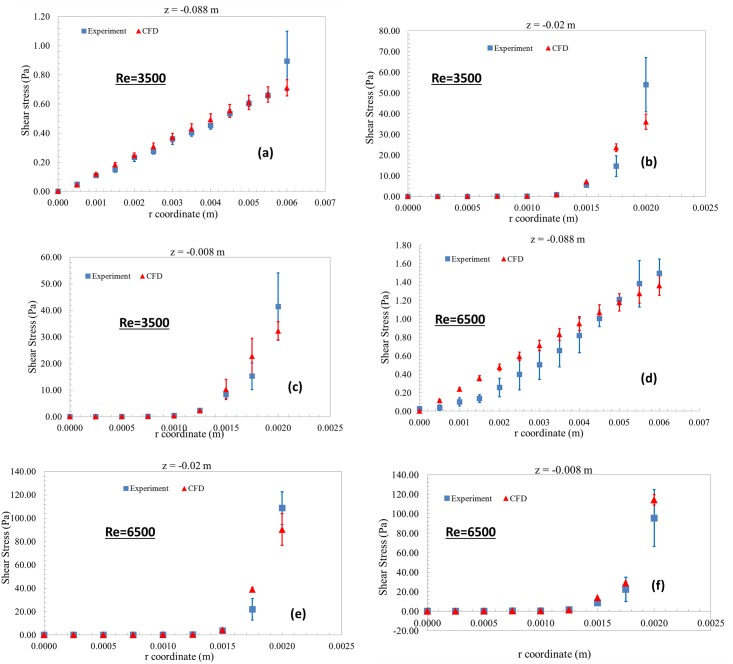
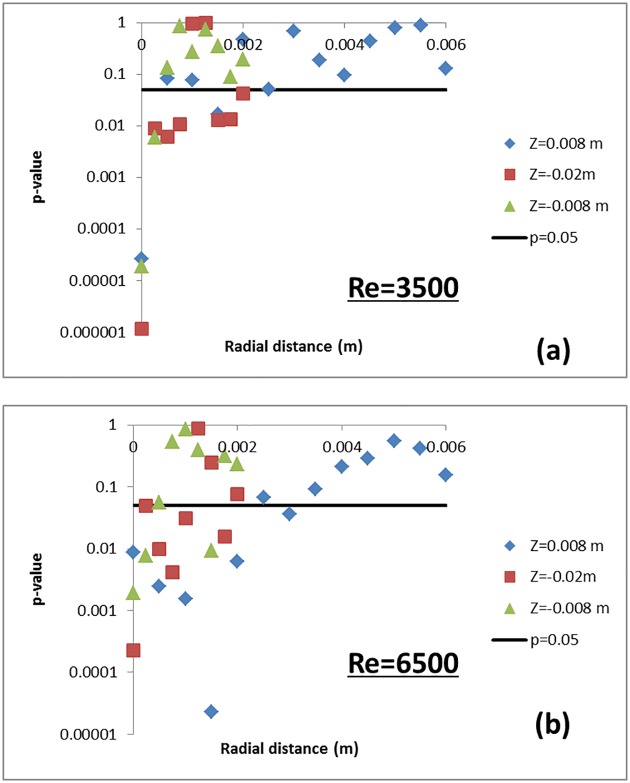
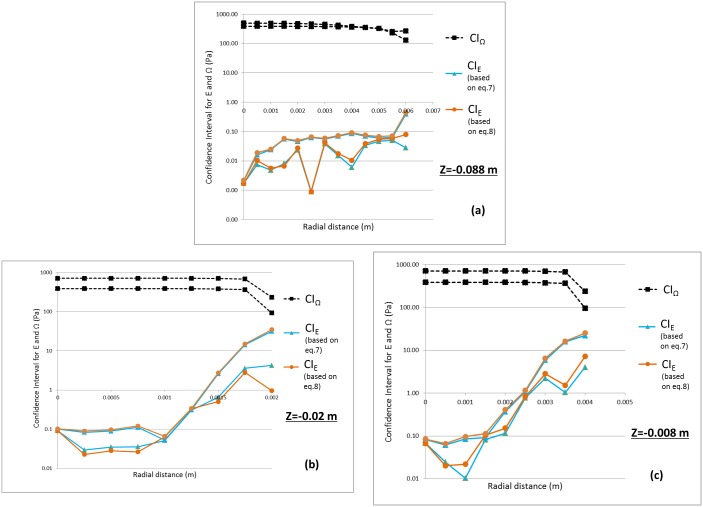
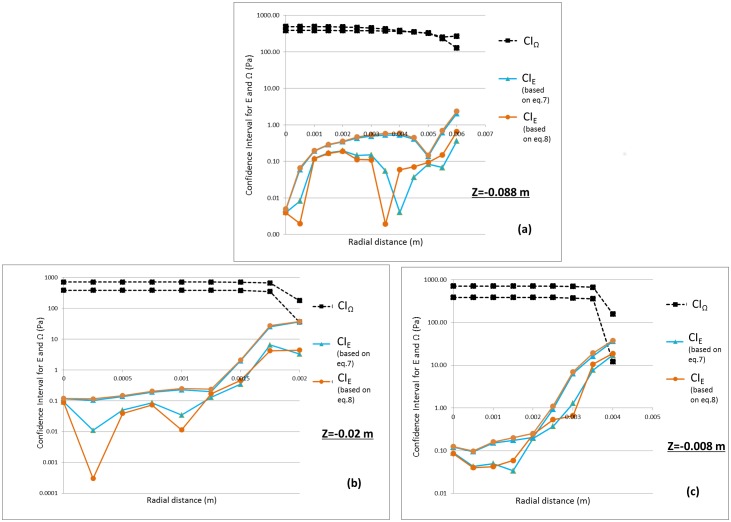
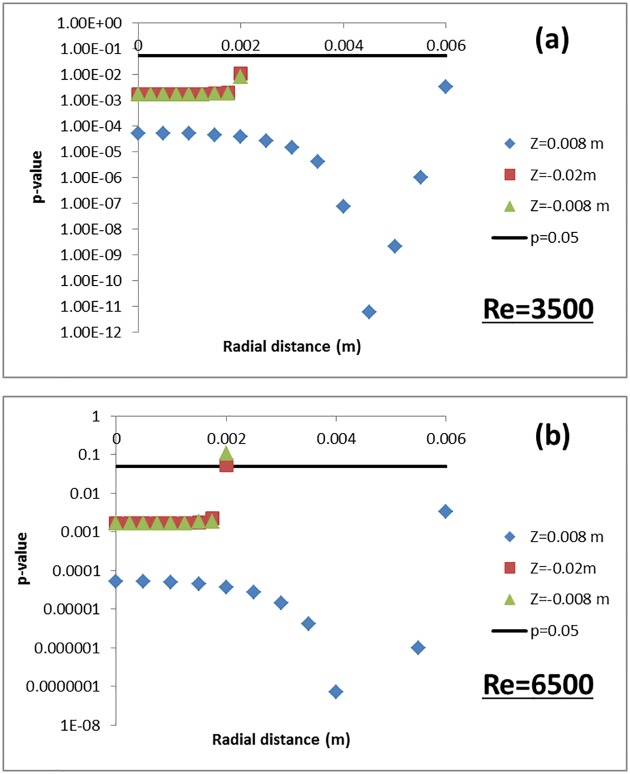
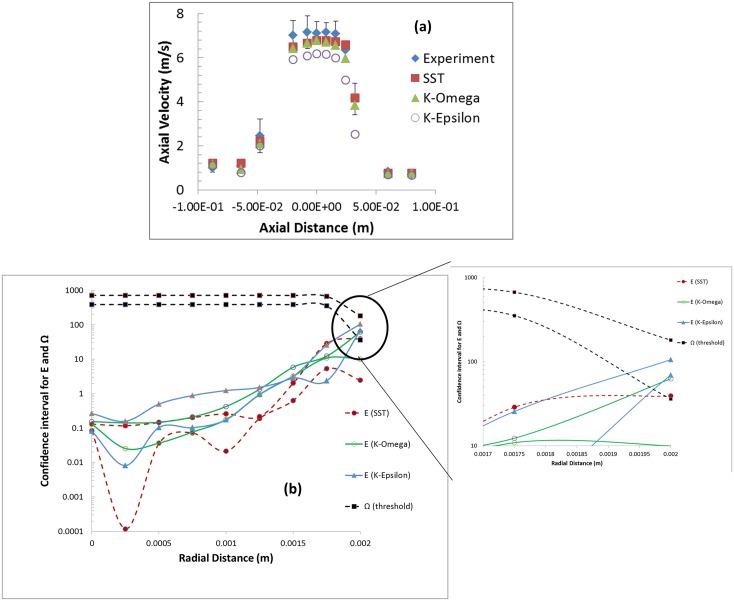
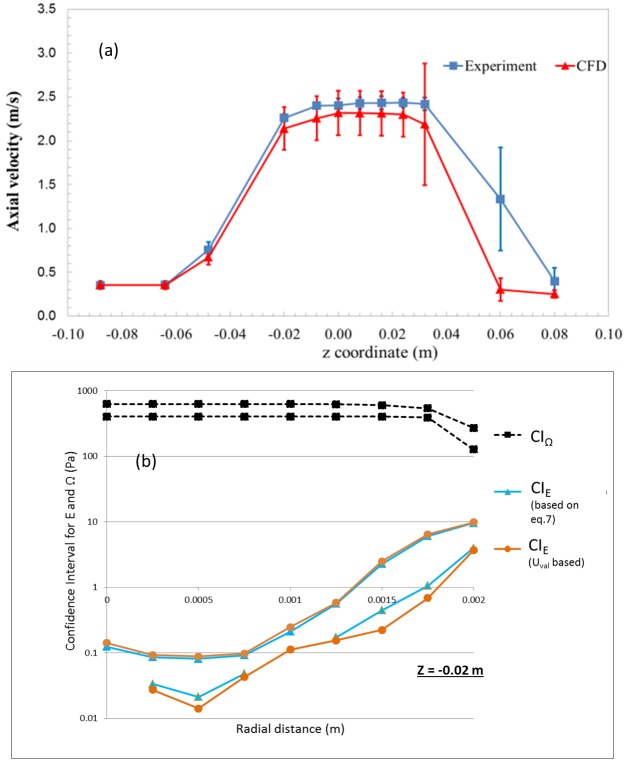
A "credible" computational fluid dynamics (CFD) model has the potential to provide a meaningful evaluation of safety in medical devices. One major challenge in establishing "model credibility" is to determine the required degree of similarity between the model and experimental results for the model to be considered sufficiently validated. This study proposes a "threshold-based" validation approach that provides a well-defined acceptance criteria, which is a function of how close the simulation and experimental results are to the safety threshold, for establishing the model validity. The validation criteria developed following the threshold approach is not only a function of Comparison Error, E (which is the difference between experiments and simulations) but also takes in to account the risk to patient safety because of E. The method is applicable for scenarios in which a safety threshold can be clearly defined (e.g., the viscous shear-stress threshold for hemolysis in blood contacting devices). The applicability of the new validation approach was tested on the FDA nozzle geometry. The context of use (COU) was to evaluate if the instantaneous viscous shear stress in the nozzle geometry at Reynolds numbers (Re) of 3500 and 6500 was below the commonly accepted threshold for hemolysis. The CFD results ("S") of velocity and viscous shear stress were compared with inter-laboratory experimental measurements ("D"). The uncertainties in the CFD and experimental results due to input parameter uncertainties were quantified following the ASME V&V 20 standard. The CFD models for both Re = 3500 and 6500 could not be sufficiently validated by performing a direct comparison between CFD and experimental results using the Student's t-test. However, following the threshold-based approach, a Student's t-test comparing |S-D| and |Threshold-S| showed that relative to the threshold, the CFD and experimental datasets for Re = 3500 were statistically similar and the model could be considered sufficiently validated for the COU. However, for Re = 6500, at certain locations where the shear stress is close the hemolysis threshold, the CFD model could not be considered sufficiently validated for the COU. Our analysis showed that the model could be sufficiently validated either by reducing the uncertainties in experiments, simulations, and the threshold or by increasing the sample size for the experiments and simulations. The threshold approach can be applied to all types of computational models and provides an objective way of determining model credibility and for evaluating medical devices.
Overview
The claims and statistics of this paper haven’t been checked yet.
Free: it reads the open-access text and checks the first 5 claims that cite a source we can check. Create a free account to check every claim.
Integrity signals
Registry
Cites
Statistics
Figures
Verification
Claims the paper makes
The claims and statistics of this paper haven’t been checked yet.
Free: it reads the open-access text and checks the first 5 claims that cite a source we can check. Create a free account to check every claim.
Claims other papers make about this one
Each is checked against this paper’s own text: does it say what the citing paper says it does?
The cited source says what the claim attributes to it.
In the citing paper
“The medical devices modeling community has developed frameworks and methods to assess credibility of computational models for medical devices, including the ASME V&V40 2018 Standard, FDA Guidance [2], and various supporting documents [3–7].”
From Credibility assessment of in silico clinical trials for medical devices (2024) · cites this paper as [6]
Self-check
Percentages, sums and reported differences re-computed from the paper’s own numbers.
The self-check needs the paper’s full text.
Citations
Cites
Fundamentals of Biostatistics.
(1969) · Annals of Internal Medicine · doi:10.7326/0003-4819-70-4-873 · Cited by 4,575
The American Society of Mechanical Engineers
(1925) · Science · doi:10.1126/science.62.1611.432-a · Cited by 1,053
Verification, validation, and predictive capability in computational engineering and physics
Oberkampf, W. L., Trucano, T. G., & Hirsch, C. (2004) · Applied Mechanics Reviews · doi:10.1115/1.1767847 · Cited by 719
Red Blood Cell Damage by Shear Stress
Leverett, L. B., Hellums, J. D., Alfrey, C. P., & Lynch, E. C. (1972) · Biophysical Journal · doi:10.1016/s0006-3495(72)86085-5 · Cited by 682
Zhang, Y. (2007) · The American Statistician · doi:10.1198/tas.2007.s79 · Cited by 523
ROSNER, B. A. (2011) · Cited by 467
Code Verification by the Method of Manufactured Solutions
SALARI, K., & KNUPP, P. (2000) · doi:10.2172/759450 · Cited by 313
Concepts of Model Verification and Validation
B.H.Thacker, S.W.Doebling, F.M.Hemez, Anderson, M. C., Pepin, J. E., & Rodriguez, E. A. (2004) · doi:10.2172/835920 · Cited by 272
Bayesian uncertainty analysis with applications to turbulence modeling
Cheung, S. H., Oliver, T. A., Prudencio, E. E., Prudhomme, S., & Moser, R. D. (2011) · Reliability Engineering & System Safety · doi:10.1016/j.ress.2010.09.013 · Cited by 267
Experimental uncertainty estimation and statistics for data having interval uncertainty.
Ferson, S., Kreinovich, V., Hajagos, J., Oberkampf, W., & Ginzburg, L. (2007) · doi:10.2172/910198 · Cited by 218
Morrison, T. M., Pathmanathan, P., Adwan, M., & Margerrison, E. (2018) · Frontiers in Medicine · doi:10.3389/fmed.2018.00241 · Cited by 186
Self-citationModeling of structural uncertainties in Reynolds-averaged Navier-Stokes closures
Emory, M. A., Larsson, J., & Iaccarino, G. (2013) · Physics of Fluids · doi:10.1063/1.4824659 · Cited by 178
Bayesian uncertainty quantification applied to RANS turbulence models
Oliver, T., & Moser, R. (2011) · Journal of Physics Conference Series · doi:10.1088/1742-6596/318/4/042032 · Cited by 170
Stewart, S. F. C., Paterson, E. G., Burgreen, G. W., Hariharan, P., Giarra, M., Reddy, V., Day, S. W., Manning, K. B., Deutsch, S., Berman, M. R., et al. (2012) · Cardiovascular Engineering and Technology · doi:10.1007/s13239-012-0087-5 · Cited by 158
Self-citationFDA Benchmark Medical Device Flow Models for CFD Validation
Malinauskas, R. A., Hariharan, P., Day, S. W., Herbertson, L. H., Büsen, M. R., Steinseifer, U., Aycock, K. I., Good, B. C., Deutsch, S., Manning, K. B., et al. (2017) · ASAIO Journal · doi:10.1097/mat.0000000000000499 · Cited by 153
Self-citationSankaran, S., & Marsden, A. L. (2011) · Journal of Biomechanical Engineering · doi:10.1115/1.4003259 · Cited by 146
Steinman, D. A., Hoi, Y., Fahy, P., Morris, L., Walsh, M. T., Aristokleous, N., Anayiotos, A. S., Papaharilaou, Y., Arzani, A., Shadden, S. C., et al. (2013) · Journal of Biomechanical Engineering · doi:10.1115/1.4023382 · Cited by 141
Hariharan, P., Giarra, M., Reddy, V., Day, S. W., Manning, K. B., Deutsch, S., Stewart, S. F. C., Myers, M. R., Berman, M. R., Burgreen, G. W., et al. (2011) · Journal of Biomechanical Engineering · doi:10.1115/1.4003440 · Cited by 139
Self-citationPredictive Capability Maturity Model for computational modeling and simulation.
Oberkampf, W., Trucano, T., & Pilch, M. (2007) · doi:10.2172/976951 · Cited by 125
Tran, J. S., Schiavazzi, D. E., Ramachandra, A. B., Kahn, A. M., & Marsden, A. L. (2016) · Computers & Fluids · doi:10.1016/j.compfluid.2016.05.015 · Cited by 118
Kainz, W., Neufeld, E., Bolch, W. E., Graff, C. G., Kim, C. H., Kuster, N., Lloyd, B., Morrison, T., Segars, P., Yeom, Y. S., et al. (2019) · IEEE Transactions on Radiation and Plasma Medical Sciences · doi:10.1109/trpms.2018.2883437 · Cited by 109
Self-citationValen‐Sendstad, K., Piccinelli, M., & Steinman, D. A. (2014) · Journal of Biomechanics · doi:10.1016/j.jbiomech.2014.04.018 · Cited by 105
Verification, Validation, and Predictive Capability in Computational Engineering and Physics
Oberkampf, W. L., Trucano, T. G., & Hirsch, C. J. (2003) · OSTI OAI (U.S. Department of Energy Office of Scientific and Technical Information) · doi:10.2172/809603 · Cited by 104
In Vitro Validation of Finite Element Analysis of Blood Flow in Deformable Models
Kung, E. O., Les, A. S., Figueroa, C. A., Medina, F. R., Arcaute, K., Wicker, R. B., McConnell, M. V., & Taylor, C. A. (2011) · Annals of Biomedical Engineering · doi:10.1007/s10439-011-0284-7 · Cited by 95
In Vivo Validation of Numerical Prediction of Blood Flow in Arterial Bypass Grafts
Ku, J. P., Draney, M. T., Arko, F. R., Lee, W. A., Chan, F. P., Pelc, N. J., Zarins, C. K., & Taylor, C. A. (2002) · Annals of Biomedical Engineering · doi:10.1114/1.1496086 · Cited by 88
In Vivo Validation of Numerical Prediction for Turbulence Intensity in an Aortic Coarctation
Arzani, A., Dyverfeldt, P., Ebbers, T., & Shadden, S. C. (2011) · Annals of Biomedical Engineering · doi:10.1007/s10439-011-0447-6 · Cited by 81
Yang, W., Chan, F. P., Reddy, V. M., Marsden, A. L., & Feinstein, J. A. (2014) · Journal of Thoracic and Cardiovascular Surgery · doi:10.1016/j.jtcvs.2014.08.069 · Cited by 80
Schiavazzi, D. E., Arbia, G., Baker, C., Hlavacek, A. M., Hsia, T. Y., Marsden, A. L., Vignon‐Clementel, I. E., & of Congenital Hearts Alliance (MOCHA) Investigators, T. M. (2016) · International Journal for Numerical Methods in Biomedical Engineering · doi:10.1002/cnm.2737 · Cited by 75
Kung, E. O., Les, A. S., Medina, F. R., Wicker, R. B., McConnell, M. V., & Taylor, C. A. (2011) · Journal of Biomechanical Engineering · doi:10.1115/1.4003526 · Cited by 72
Theory to Predict Shear Stress on Cells in Turbulent Blood Flow
Morshed, K. N., Bark, D. L., Forleo, M., & Dasi, L. P. (2014) · PLoS ONE · doi:10.1371/journal.pone.0105357 · Cited by 71
In Vitro Flow Analysis of a Patient-Specific Intraatrial Total Cavopulmonary Connection
de Zélicourt, D., Pekkan, K., Wills, L. E., Kanter, K. R., Forbess, J. M., Sharma, S., Fogel, M. A., & Yoganathan, A. P. (2005) · The Annals of Thoracic Surgery · doi:10.1016/j.athoracsur.2004.12.052 · Cited by 69
Morrison, T. M., Dreher, M. L., Nagaraja, S., Angelone, L. M., & Kainz, W. (2017) · Journal of Medical Devices · doi:10.1115/1.4035866 · Cited by 68
Self-citationTroianowski, G., Taylor, C. A., Feinstein, J. A., & Vignon-Clementel, I. E. (2011) · Journal of Biomechanical Engineering · doi:10.1115/1.4005377 · Cited by 64
Mulugeta, L., Drach, A., Erdemir, A., Hunt, C. A., Horner, M., Ku, J. P., Myers Jr., J. G., Vadigepalli, R., & Lytton, W. W. (2018) · Frontiers in Neuroinformatics · doi:10.3389/fninf.2018.00018 · Cited by 58
Self-citationKung, E. O., Kahn, A. M., Burns, J. C., & Marsden, A. L. (2014) · Cardiovascular Engineering and Technology · doi:10.1007/s13239-014-0184-8 · Cited by 40
Sarrami‐Foroushani, A., Lassila, T., Gooya, A., Geers, A. J., & Frangi, A. F. (2016) · Journal of Biomechanics · doi:10.1016/j.jbiomech.2016.10.005 · Cited by 35
Oakes, J. M., Marsden, A. L., Grandmont, C., Darquenne, C., & Vignon-Clementel, I. E. (2015) · Journal of Biomechanics · doi:10.1016/j.jbiomech.2015.01.004 · Cited by 33
Large eddy simulation of the FDA benchmark nozzle for a Reynolds number of 6500
Janiga, G. (2014) · Computers in Biology and Medicine · doi:10.1016/j.compbiomed.2014.01.004 · Cited by 33
Standard for Models and Simulations
Steele, M. J. (2016) · NASA STI Repository (National Aeronautics and Space Administration) · Cited by 33
Bhushan, S., Walters, D. K., & Burgreen, G. W. (2013) · Cardiovascular Engineering and Technology · doi:10.1007/s13239-013-0155-5 · Cited by 31
Large Eddy Simulation of FDA’s Idealized Medical Device
Delorme, Y. T., Anupindi, K., & Frankel, S. H. (2013) · Cardiovascular Engineering and Technology · doi:10.1007/s13239-013-0161-7 · Cited by 29
FDA’s Nozzle Numerical Simulation Challenge: Non-Newtonian Fluid Effects and Blood Damage
Trias, M., Arbona, A., Massó, J., Miñano, B., & Bona, C. (2014) · PLoS ONE · doi:10.1371/journal.pone.0092638 · Cited by 22
Computational Fluid Dynamics for Medical Device Design and Evaluation: Are We There Yet?
Sotiropoulos, F. (2012) · Cardiovascular Engineering and Technology · doi:10.1007/s13239-012-0095-5 · Cited by 20
Xie, J., Frazier, P. I., Sankaran, S., Marsden, A. L., & Elmohamed, S. (2012) · Allerton Conference on Communication, Control, and Computing · doi:10.1109/allerton.2012.6483247 · Cited by 17
Application of Genetic Algorithms to Problems in Computational Fluid Dynamics
Fabritius, B. (2014) · UPT. Syiah Kuala University Library (Syiah Kuala University) · Cited by 8
Down, L. A. (2011) · SHAREOK (University of Oklahoma; Oklahoma State University; Central Oklahoma University) · Cited by 1
Research works printed but not linked: 1
- Raghunathan R, Myagmar O, Day SW, editors. Magnetically levitated shear inducing device for the testing of cell fragility. Summer Biomechanics, Bioengineering and Biotransport Conference; 2016; National Harbor, MD: ASME.
Cited by
Morrison, T. M., Pathmanathan, P., Adwan, M., & Margerrison, E. (2018) · Frontiers in Medicine · doi:10.3389/fmed.2018.00241 · Cited by 186
“Computational models of anatomy or physiology include improved drug delivery in the cornea with ultrasound energy (24); physiological models of heart cells (25), renal circulation (26), hemodynamic responses to blood volume perturbations (27), left bundle branch block (28), gas dynamics in the…”
BackgroundSelf-citationKainz, W., Neufeld, E., Bolch, W. E., Graff, C. G., Kim, C. H., Kuster, N., Lloyd, B., Morrison, T., Segars, P., Yeom, Y. S., et al. (2019) · IEEE Transactions on Radiation and Plasma Medical Sciences · doi:10.1109/trpms.2018.2883437 · Cited by 109
“Another approach to judge the necessary validation rigor is to assess the safety margin between the model-predicted exposure, the danger thresholds, and to demand that the validation be sufficiently robust to keep the confidence interval associated with the model well below that safety margin [41].”
Self-citationKosiyaporn, H., Chanvatik, S., Issaramalai, T., Kaewkhankhaeng, W., Kulthanmanusorn, A., Saengruang, N., Witthayapipopsakul, W., Viriyathorn, S., Kirivan, S., Kunpeuk, W., et al. (2020) · PLOS ONE · doi:10.1371/journal.pone.0227973 · Cited by 83
Morrison, T. M., Hariharan, P., Funkhouser, C. M., Afshari, P., Goodin, M., & Horner, M. (2019) · ASAIO Journal · doi:10.1097/mat.0000000000000996 · Cited by 68
Self-citationCredibility of In Silico Trial Technologies—A Theoretical Framing
Viceconti, M., Juarez, M. A., Curreli, C., Pennisi, M., Russo, G., & Pappalardo, F. (2020) · IEEE Journal of Biomedical and Health Informatics · doi:10.1109/jbhi.2019.2949888 · Cited by 67
Metadata
- Authors
- Hariharan, P., D’Souza, G. A., Horner, M., Morrison, T. M., Malinauskas, R. A., & Myers, M. R.
- Affiliations
- United States Food and Drug Administration (US)
- Corresponding author
- Hariharan, Prasanna
- Venue
- PLoS ONE
- Publisher
- Public Library of Science (PLoS)
- Published
- 2017-06-08
- Volume
- 12
- Issue
- 6
- Pages
- e0178749
- ISSN
- 1932-6203 (ISSN-L)
- PMC
- PMC5464577
- OpenAlex
- W2623873284
- Cited by
- 35
- References
- 47
- Citations by year
- 2026: 4 · 2025: 1 · 2024: 1 · 2023: 3 · 2022: 2 · 2021: 9 · 2020: 3 · 2019: 7 · 2018: 4
- FWCI
- 1.72
- Type
- journal article
- Language
- en
- Open access
- gold
- doi.org
- Licence
- public-domain
- creativecommons.org/publicdomain/zero/1.0/ (vor)
- Locations
- PLoS ONE (publishedVersion, public-domain)
- Europe PMC (PubMed Central) (publishedVersion, public-domain)
- PubMed Central (publishedVersion, public-domain)
- PubMed (publishedVersion)
- RePEc: Research Papers in Economics (submittedVersion)
- DOAJ (DOAJ: Directory of Open Access Journals) (submittedVersion, cc-by-sa)
- Funders
- Food and Drug Administration (Critical Path Initiative Grant)
- Topics
- Health Sciences › Medicine › Cardiology and Cardiovascular Medicine › Mechanical Circulatory Support Devices
- Physical Sciences › Energy › Nuclear Energy and Engineering › Nuclear Engineering Thermal-Hydraulics
- Physical Sciences › Engineering › Computational Mechanics › Computational Fluid Dynamics and Aerodynamics
- Keywords
- CFD validation, model credibility, hemolysis, viscous shear stress, blood-contacting devices, uncertainty quantification, patient safety, context of use, high Reynolds number flow
- MeSH terms
- Computer Simulation, Models, Theoretical, Hydrodynamics
About these checks
Registry, retraction, Cites and statistics results are computed, not judged, with one exception: a printed reference that no index lists is read once by a model before it counts as a citation error. Claims are extracted by a model and kept only when their quote appears verbatim in the text; each cited source is then checked, with a model’s help, for whether it says what the claim relies on. Those verdicts can be wrong — read the claim’s quote and the cited source before relying on one.
Statistics and arithmetic are recomputed, not judged.
Confidence bands are shown only for fields calibrated on our annotated test set. None is calibrated yet, so no band is shown.
What counts as a claim ›How we measure confidence ›How we check this ›
Are you an author, or do you see a problem with this page? Request a review
Data sources
Bibliographic data: Semantic Scholar, OpenAlex, Crossref.
Contains information from the Semantic Scholar Academic Graph Datasets, made available under the ODC Attribution License (ODC-BY 1.0).
Semantic Scholar’s data is described in: Kinney, R., et al. (2023). The Semantic Scholar Open Data Platform. arXiv:2301.10140.
