

The DOI matches its Crossref record; 54 of the 54 references it cites were found in a registry or an index.
The effect of age on the intestinal mucus thickness, microbiota composition and immunity in relation to sex in mice
Open accessAbstract
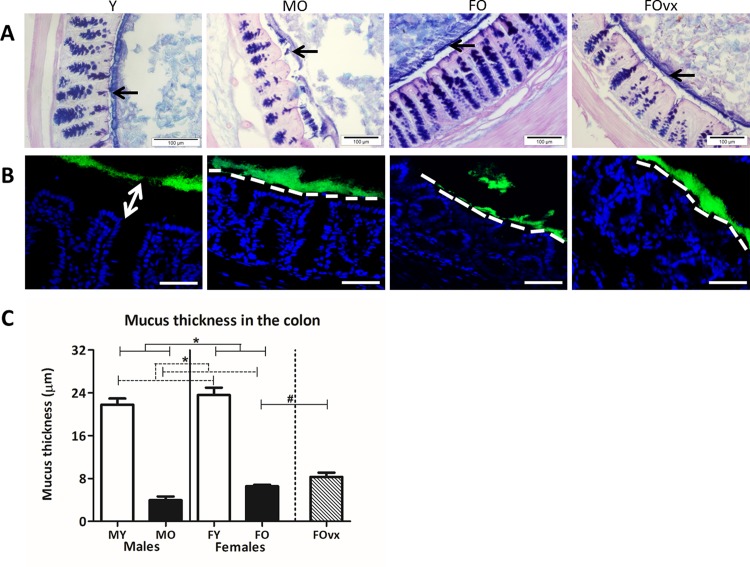
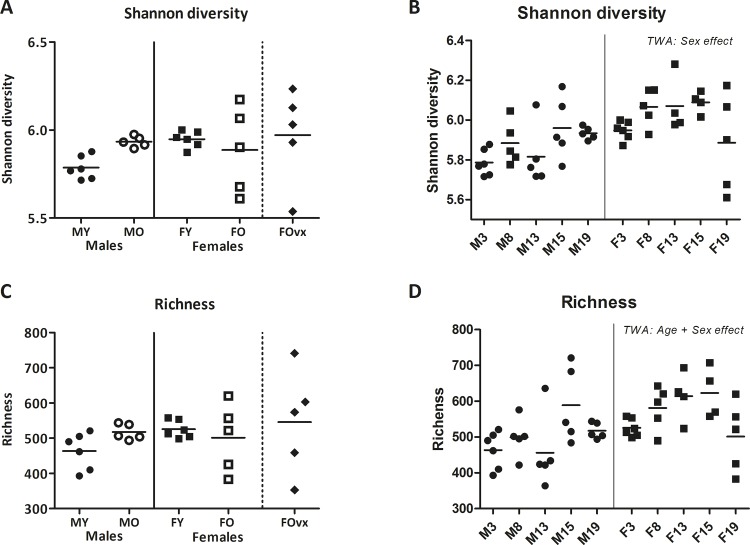
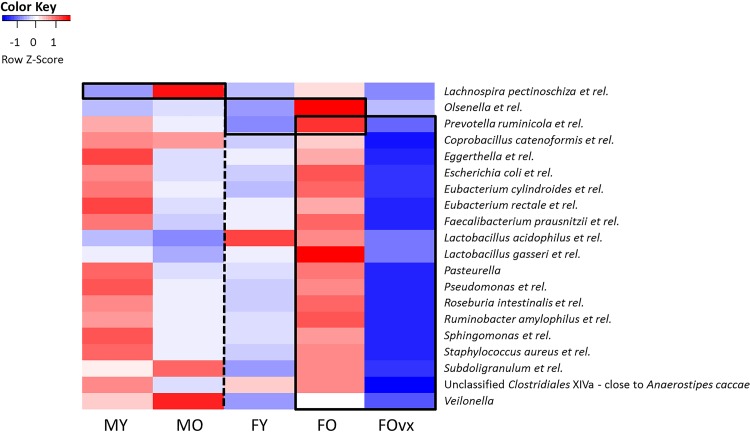
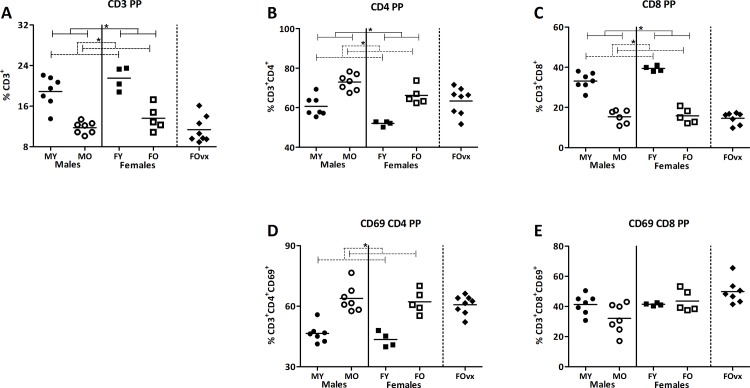
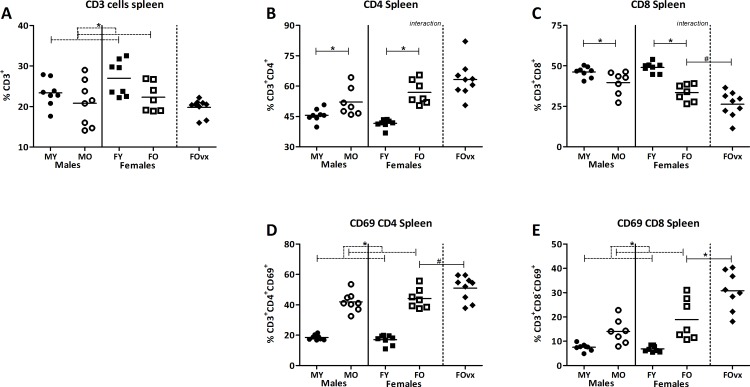
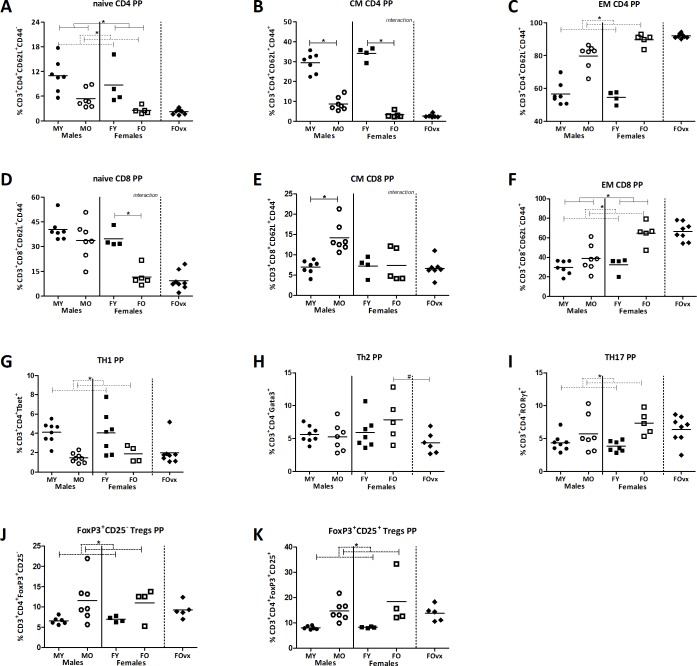
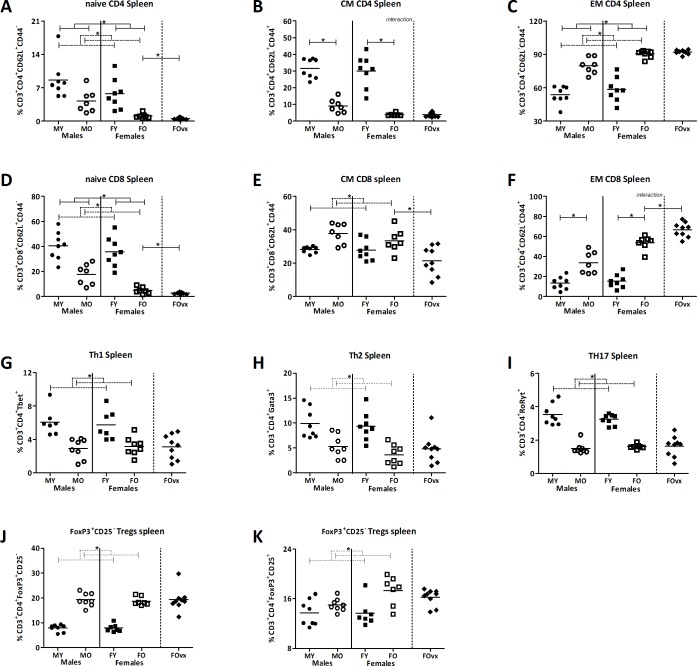
A mucus layer covers and protects the intestinal epithelial cells from direct contact with microbes. This mucus layer not only prevents inflammation but also plays an essential role in microbiota colonization, indicating the complex interplay between mucus composition-microbiota and intestinal health. However, it is unknown whether the mucus layer is influenced by age or sex and whether this contributes to reported differences in intestinal diseases in males and females or with ageing. Therefore, in this study we investigated the effect of age on mucus thickness, intestinal microbiota composition and immune composition in relation to sex. The ageing induced shrinkage of the colonic mucus layer was associated with bacterial penetration and direct contact of bacteria with the epithelium in both sexes. Additionally, several genes involved in the biosynthesis of mucus were downregulated in old mice, especially in males, and this was accompanied by a decrease in abundances of various Lactobacillus species and unclassified Clostridiales type IV and XIV and increase in abundance of the potential pathobiont Bacteroides vulgatus. The changes in mucus and microbiota in old mice were associated with enhanced activation of the immune system as illustrated by a higher percentage of effector T cells in old mice. Our data contribute to a better understanding of the interplay between mucus-microbiota-and immune responses and ultimately may lead to more tailored design of strategies to modulate mucus production in targeted groups.
Overview
The claims and statistics of this paper haven’t been checked yet.
Run the check — free, no account needed. It reads the open-access text and checks the sources it cites.
Integrity signals
Registry
Cites
Statistics
Figures
Verification
Claims the paper makes
The claims and statistics of this paper haven’t been checked yet.
Run the check — free, no account needed. It reads the open-access text and checks the sources it cites.
Claims other papers make about this one
Each is checked against this paper’s own text: does it say what the citing paper says it does?
In the citing paper
“In the aged GI tract, compromised epithelial and mucosal cell turnover, integrity, and function [32, 36, 76, 83] can lead to increased epithelial barrier permeability [19, 75, 118, 120]”
From Fecal microbiota transfer between young and aged mice reverses hallmarks of the aging gut, eye, and brain (2022) · cites this paper as [36]
Self-check
Percentages, sums and reported differences re-computed from the paper’s own numbers.
The self-check needs the paper’s full text.
Citations
Cites
Bolstad, B. M., Irizarry, R. A., Åstrand, M., & Speed, T. P. (2003) · Bioinformatics · doi:10.1093/bioinformatics/19.2.185 · Cited by 8,328
Summaries of Affymetrix GeneChip probe level data
Irizarry, R. A. (2003) · Nucleic Acids Research · doi:10.1093/nar/gng015 · Cited by 4,837
Treg induction by a rationally selected mixture of Clostridia strains from the human microbiota
Atarashi, K., Tanoue, T., Oshima, K., Suda, W., Nagano, Y., Nishikawa, H., Fukuda, S., Saito, T., Narushima, S., Hase, K., et al. (2013) · Nature · doi:10.1038/nature12331 · Cited by 2,872
Coombes, J. L., Siddiqui, K. R. R., Arancibia-Cárcamo, C. V., Hall, J. A., Sun, C., Belkaid, Y., & Powrie, F. M. (2007) · The Journal of Experimental Medicine · doi:10.1084/jem.20070590 · Cited by 2,708
ter Braak, C., & Šmilauer, P. (2002) · Cited by 2,496
Canoco Reference Manual and User’s Guide: Software for Ordination (version 5.0)
ter Braak, C. J. F., & Šmilauer, P. (2012) · Cited by 1,898
Regional specialization within the intestinal immune system
Mowat, A. M., & Agace, W. W. (2014) · Nature reviews. Immunology · doi:10.1038/nri3738 · Cited by 1,882
Evolving gene/transcript definitions significantly alter the interpretation of GeneChip data
Dai, M. (2005) · Nucleic Acids Research · doi:10.1093/nar/gni179 · Cited by 1,807
Intestinal barrier function: molecular regulation and disease pathogenesis
Groschwitz, K. R., & Hogan, S. P. (2009) · Journal of Allergy and Clinical Immunology · doi:10.1016/j.jaci.2009.05.038 · Cited by 1,775
Epidemiology and risk factors for IBD
Ananthakrishnan, A. N. (2015) · Nature Reviews Gastroenterology & Hepatology · doi:10.1038/nrgastro.2015.34 · Cited by 1,741
Cited by
Sorted by citations
Gut Microbiota–Derived Short-Chain Fatty Acids Promote Poststroke Recovery in Aged Mice
Lee, J., d’Aigle, J., Atadja, L. A., Quaicoe, V. A., Honarpisheh, P., Ganesh, B. P., Hassan, A. F., Graf, J., Petrosino, J. F., Putluri, N., et al. (2020) · Circulation Research · doi:10.1161/circresaha.119.316448 · Cited by 567
Materials for oral delivery of proteins and peptides
Brown, T. D., Whitehead, K. A., & Mitragotri, S. (2019) · Nature Reviews Materials · doi:10.1038/s41578-019-0156-6 · Cited by 527
Bao, H., Cao, J., Chen, M., Min, C., Chen, W., Chen, X., Chen, Y., Chen, Y., Chen, Y., Chen, Z., et al. (2023) · Science China Life Sciences · doi:10.1007/s11427-023-2305-0 · Cited by 402
Parker, A., Romano, S., Ansorge, R., Aboelnour, A., Le Gall, G., Savva, G. M., Pontifex, M. G., Telatin, A., Baker, D., Jones, E., et al. (2022) · Microbiome · doi:10.1186/s40168-022-01243-w · Cited by 368
The Gut Microbiota and Unhealthy Aging: Disentangling Cause from Consequence
DeJong, E. N., Surette, M. G., & Bowdish, D. M. E. (2020) · Cell Host & Microbe · doi:10.1016/j.chom.2020.07.013 · Cited by 370
Metadata
- Authors
- Elderman, M., Sovran, B., Hugenholtz, F., Graversen, K., Huijskes, M., Houtsma, E., Belzer, C., Boekschoten, M., de Vos, P., Dekker, J., Wells, J., & Faas, M.
- Affiliations
- University of Groningen (NL)
- Wageningen University & Research (NL)
- University Medical Center Groningen (NL)
- Corresponding author
- Elderman, Marlies
- ORCID
- Venue
- PLOS ONE
- Publisher
- Public Library of Science (PLoS)
- Published
- 2017-09-12
- Volume
- 12
- Issue
- 9
- Pages
- e0184274
- ISSN
- 1932-6203 (ISSN-L)
- PMC
- PMC5595324
- OpenAlex
- W2754189939
- Cited by
- 145
- References
- 54
- Citations by year
- 2026: 10 · 2025: 12 · 2024: 13 · 2023: 19 · 2022: 22 · 2021: 25 · 2020: 20 · 2019: 15 · 2018: 9
- FWCI
- 4.92
- Type
- journal article
- Language
- en
- Open access
- gold
- doi.org
- Licence
- Locations
- PLoS ONE (publishedVersion, cc-by)
- PubMed Central (publishedVersion, cc-by)
- PubMed (publishedVersion)
- University of Groningen research database (University of Groningen / Centre for Information Technology) (publishedVersion, cc-by)
- Socio-Environmental Systems Modeling (acceptedVersion, cc-by)
- DOAJ (DOAJ: Directory of Open Access Journals) (submittedVersion, cc-by-sa)
- Figshare (submittedVersion, cc-by)
- University of Groningen research database (University of Groningen / Centre for Information Technology) (submittedVersion, cc-by)
- Data Archiving and Networked Services (DANS) (submittedVersion, cc-by)
- Funders
- Top Institute Food and Nutrition (GH002)
- Topics
- Life Sciences › Biochemistry, Genetics and Molecular Biology › Molecular Biology › Gut microbiota and health
- Life Sciences › Agricultural and Biological Sciences › Animal Science and Zoology › Animal Nutrition and Physiology
- Health Sciences › Medicine › Gastroenterology › Gastrointestinal motility and disorders
- Keywords
- aging, sex differences, gut microbiota, colonic mucus layer, Lactobacillus, Bacteroides vulgatus, Clostridiales, effector T cells, intestinal immunity, mice
- MeSH terms
- Gastrointestinal Microbiome, Age Factors, Aging, Animals, Cell Differentiation, Colon, Dendritic Cells, Female, Gene Expression Regulation, Intestinal Mucosa, Male, Mucus, Peyer's Patches, Sex Factors, Spleen, T-Lymphocytes, Signal Transduction, Immunity, Mucosal, Gene Expression Profiling, Biodiversity, Mice, Metagenome, Metagenomics, Transcriptome
About these checks
Registry, retraction, Cites and statistics results are computed, not judged, with one exception: a printed reference that no index lists is read once by a model before it counts as a citation error. Claims are extracted by a model and kept only when their quote appears verbatim in the text; each cited source is then checked, with a model’s help, for whether it says what the claim relies on. Those verdicts can be wrong — read the claim’s quote and the cited source before relying on one.
Statistics and arithmetic are recomputed, not judged.
Confidence bands are shown only for fields calibrated on our annotated test set. None is calibrated yet, so no band is shown.
What counts as a claim ›How we measure confidence ›How we check this ›
Are you an author, or do you see a problem with this page? Request a review
