

Self-compassion moderates the perfectionism and depression link in both adolescence and adulthood
Open accessThe DOI matches its Crossref record; 65 of the 65 references it cites were found in a registry or an index.
Abstract
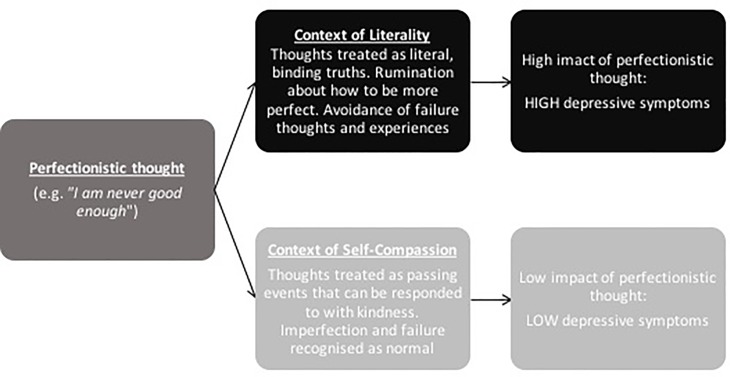
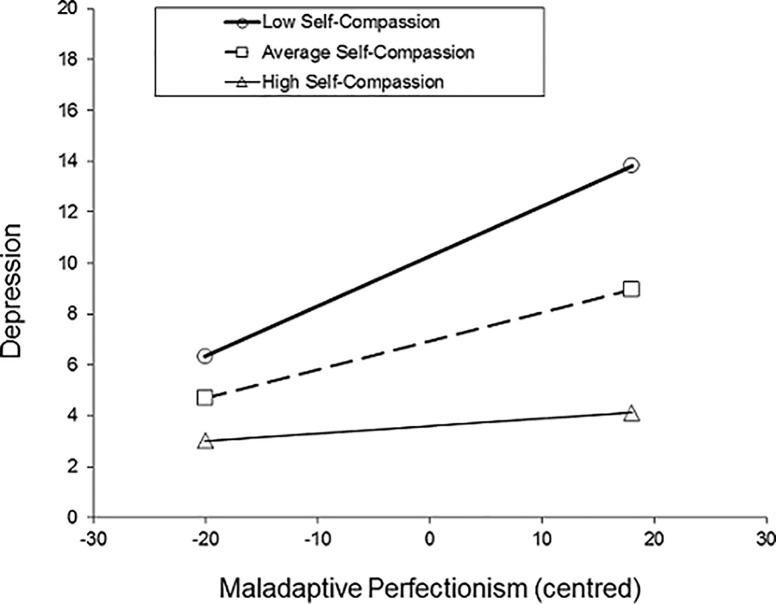
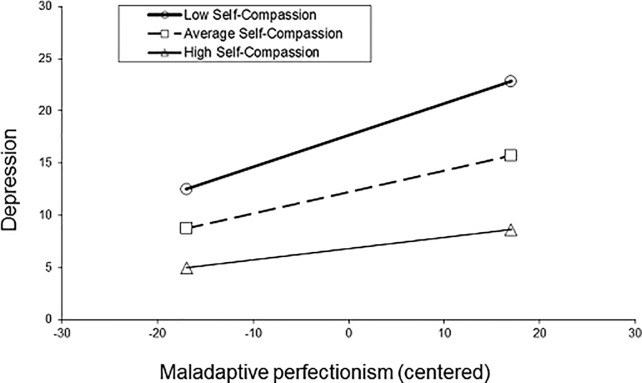
BACKGROUND: Psychological practitioners often seek to directly change the form or frequency of clients' maladaptive perfectionist thoughts, because such thoughts predict future depression. Indirect strategies, such as self-compassion interventions, that seek to change clients' relationships to difficult thoughts, rather than trying to change the thoughts directly could be just as effective. This study aimed to investigate whether self-compassion moderated, or weakened, the relationship between high perfectionism and high depression symptoms in both adolescence and adulthood. METHODS: The present study utilised anonymous self-report questionnaires to assess maladaptive perfectionism, depression, and self-compassion across two samples covering much of the lifespan. Questionnaires were administered in a high school setting for the adolescent sample (Study 1, Mage = 14.1 years, n = 541), and advertised through university and widely online to attract a convenience sample of adults (Study 2, Mage = 25.22 years, n = 515). RESULTS: Moderation analyses revealed that self-compassion reduced the strength of relationship between maladaptive perfectionism and depression in our adolescent Study 1 (β = -.15, p < .001, R2 = .021.) and our adult study 2 (β = -.14, p < .001, R2 = .020). LIMITATIONS: Cross-sectional self-reported data restricts the application of causal conclusions and also relies on accurate self-awareness and willingness to respond to questionnaire openly. CONCLUSIONS: The replication of this finding in two samples and across different age-appropriate measures suggests that self-compassion does moderate the link between perfectionism and depression. Self-compassion interventions may be a useful way to undermine the effects of maladaptive perfectionism, but future experimental or intervention research is needed to fully assess this important possibility.
Overview
The claims and statistics of this paper haven’t been checked yet.
Free: it reads the open-access text and checks the first 5 claims that cite a source we can check. Create a free account to check every claim.
Integrity signals
Registry
Cites
Statistics
Figures
Verification
Claims the paper makes
The claims and statistics of this paper haven’t been checked yet.
Free: it reads the open-access text and checks the first 5 claims that cite a source we can check. Create a free account to check every claim.
Claims other papers make about this one
Each is checked against this paper’s own text: does it say what the citing paper says it does?
The cited source says what the claim attributes to it.
In the citing paper
“Other studies have also demonstrated that self-compassion could buffer the effects of dysfunctional perfectionism on depressive moods.”
The cited source says what the claim attributes to it.
In the citing paper
“This buffering effect of self-compassion in the relationship between dysfunctional perfectionism and negative emotions is reported by several studies [39,40,45].”
Self-check
Percentages, sums and reported differences re-computed from the paper’s own numbers.
The self-check needs the paper’s full text.
Citations
Cites
Multiple regression: testing and interpreting interactions
(1992) · Choice Reviews Online · doi:10.5860/choice.29-3352 · Cited by 36,654
SPSS and SAS procedures for estimating indirect effects in simple mediation models
Preacher, K. J., & Hayes, A. F. (2004) · Behavior Research Methods, Instruments, & Computers · doi:10.3758/bf03206553 · Cited by 17,383 · cited 2×
“In both studies, we assessed moderation by conducting hierarchical multiple regression as recommended by Aiken and West [49] using the Preacher and Hayes PROCESS macros [50].”
Method(1991) · Cited by 7,187
The Development and Validation of a Scale to Measure Self-Compassion
NEFF, K. D. (2003) · Self and Identity · doi:10.1080/15298860309027 · Cited by 6,436 · cited 3×
“The Self-Compassion Scale [29] was used to measure levels of self-compassion.”
BackgroundMethodHenry, J. D., & Crawford, J. R. (2005) · British Journal of Clinical Psychology · doi:10.1348/014466505x29657 · Cited by 5,801
Self-Compassion: An Alternative Conceptualization of a Healthy Attitude Toward Oneself
NEFF, K. (2003) · Self and Identity · doi:10.1080/15298860309032 · Cited by 5,440 · cited 9×
“As noted by Neff [7], self-compassion is ‘a useful emotion regulation strategy, in which painful or distressing feelings are not avoided but are instead held in awareness with kindness, understanding, and a sense of shared humanity’ (p.”
BackgroundResultInfluentialLikert scales, levels of measurement, and the “laws” of statistics
Norman, G. (2010) · Advances in Health Sciences Education · doi:10.1007/s10459-010-9222-y · Cited by 4,850 · cited 1×
“However, as the sample size was large, transformation of the data did not produce any differences in results and therefore, non-transformed data was used in all analyses [51].”
MethodThe dimensions of perfectionism
Frost, R. O., Marten, P., Lahart, C., & Rosenblate, R. (1990) · Cognitive Therapy and Research · doi:10.1007/bf01172967 · Cited by 4,279 · cited 2×
“Perfectionism was measured using the combined score of four sub-scales from the Multidimensional Perfectionism Scale [9], as recommended by Kawamura and Frost [52].”
BackgroundMethodConstruction and factorial validation of a short form of the Self-Compassion Scale
Raes, F., Pommier, E., Neff, K. D., & Van Gucht, D. (2011) · Clinical Psychology & Psychotherapy · doi:10.1002/cpp.702 · Cited by 2,997
A pilot study and randomized controlled trial of the mindful self-compassion program
Neff, K. D., & Germer, C. K. (2013) · Journal of Clinical Psychology · doi:10.1002/jclp.21923 · Cited by 2,253
Psychometric properties of the Depression Anxiety Stress Scales (DASS) in clinical samples
Brown, T. A., Chorpita, B. F., Korotitsch, W., & Barlow, D. H. (1997) · Behaviour Research and Therapy · doi:10.1016/s0005-7967(96)00068-x · Cited by 1,860 · cited 1×
“This scale has demonstrated strong convergent and divergent validity for the depression subscale in both clinical [56] and community samples [57].”
BackgroundPositive Conceptions of Perfectionism: Approaches, Evidence, Challenges
Stoeber, J., & Otto, K. (2006) · Personality and Social Psychology Review · doi:10.1207/s15327957pspr1004_2 · Cited by 1,779
Introducing compassion-focused therapy
Gilbert, P. (2009) · Advances in Psychiatric Treatment · doi:10.1192/apt.bp.107.005264 · Cited by 1,435 · cited 2×
“In addition to self-compassion based meditation, entire intervention programs focusing on self-compassion have also been developed such as Compassion-Focused Therapy [63] for the treatment of psychological disorders and for improving psychological wellbeing [64–67].”
MethodSelf-compassion and Psychological Resilience Among Adolescents and Young Adults
Neff, K. D., & McGehee, P. (2010) · Self and Identity · doi:10.1080/15298860902979307 · Cited by 1,232 · cited 1×
“The current findings deepen our understanding of the previously found link between maladaptive perfectionism and depression [47, 59, 60].”
BackgroundPerfectionism as a transdiagnostic process: A clinical review
Egan, S. J., Wade, T. D., & Shafran, R. (2011) · Clinical Psychology Review · doi:10.1016/j.cpr.2010.04.009 · Cited by 961 · cited 2×
“Indeed, perfectionism has been identified as a transdiagnostic construct which underlies and maintains many forms of psychopathology including eating disorders, anxiety and even schizophrenia [11].”
BackgroundSobocki, P., Jönsson, B., Angst, J., & Rehnberg, C. (2006) · PubMed · Cited by 719
Perfectionism and psychopathology: a review of research and treatment
Shafran, R., & Mansell, W. (2001) · Clinical Psychology Review · doi:10.1016/s0272-7358(00)00072-6 · Cited by 661 · cited 1×
“SPP reflects a type of maladaptive perfectionism grounded in an external locus of control, strong needs for approval and fear of negative evaluation, and in student and clinical samples is closely linked to depression as measured by the Beck Depression Inventory [17, 20].”
MethodDimensions of perfectionism in unipolar depression.
Hewitt, P. L., & Flett, G. L. (1991) · Journal of Abnormal Psychology · doi:10.1037//0021-843x.100.1.98 · Cited by 598 · cited 2×
“A robust correlation between depression and socially prescribed perfectionism (SPP) has been found in adults [6].”
BackgroundHewitt, P. L., Flett, G. L., Turnbull‐Donovan, W., & Mikail, S. F. (1991) · Psychological Assessment · doi:10.1037//1040-3590.3.3.464 · Cited by 563 · cited 1×
“91) [52], and strong validity with other perfectionism measures [53, 54].”
BackgroundRaes, F. (2010) · Personality and Individual Differences · doi:10.1016/j.paid.2010.01.023 · Cited by 535
Perfectionism and depression: Longitudinal assessment of a specific vulnerability hypothesis.
Hewitt, P. L., Flett, G. L., & Ediger, E. (1996) · Journal of Abnormal Psychology · doi:10.1037//0021-843x.105.2.276 · Cited by 436 · cited 2×
“In addition, perfectionism has been shown to predict the development of later episodes of major depressive episodes [17].”
BackgroundMethodBrockman, R., Ciarrochi, J., Parker, P., & Kashdan, T. (2017) · Cognitive Behaviour Therapy · doi:10.1080/16506073.2016.1218926 · Cited by 427
Self-citationThe benefits of self-compassion and optimism exercises for individuals vulnerable to depression
Shapira, L. B., & Mongrain, M. (2010) · The Journal of Positive Psychology · doi:10.1080/17439760.2010.516763 · Cited by 381
Sharp, C., Goodyer, I. M., & Croudace, T. J. (2006) · Journal of Abnormal Child Psychology · doi:10.1007/s10802-006-9027-x · Cited by 358
Bluth, K., & Blanton, P. W. (2015) · The Journal of Positive Psychology · doi:10.1080/17439760.2014.936967 · Cited by 245 · cited 1×
“Despite this, our findings are in keeping with previous studies that have found significant correlations between maladaptive perfectionism, depression, and self-compassion [7, 58].”
ResultDimensions of Perfectionism, Unconditional Self-Acceptance, and Depression
Flett, G. L., Besser, A., Davis, R. A., & Hewitt, P. L. (2003) · Journal of Rational-Emotive and Cognitive-Behavior Therapy · doi:10.1023/a:1025051431957 · Cited by 200 · cited 1×
“Whilst this perfectionism-depression link has been widely documented [5, 6], potential moderators of this link remain under-researched.”
BackgroundSmith, M. M., Sherry, S. B., Rnic, K., Saklofske, D. H., Enns, M., & Gralnick, T. (2016) · European Journal of Personality · doi:10.1002/per.2053 · Cited by 197 · cited 2×
“credence to the conceptualisation of perfectionism as a premorbid personality type which increases vulnerability to depression [4].”
BackgroundMarshall, S. L., Parker, P. D., Ciarrochi, J., Sahdra, B., Jackson, C. J., & Heaven, P. C. L. (2015) · Personality and Individual Differences · doi:10.1016/j.paid.2014.09.013 · Cited by 194
Self-citationRice, K. G., Leever, B. A., Christopher, J., & Porter, J. D. (2006) · Journal of Counseling Psychology · doi:10.1037/0022-0167.53.4.524 · Cited by 192 · cited 1×
“For example, perceived social support and social connectedness has been shown to moderate the relationship between maladaptive perfectionism and depression [34, 35].”
BackgroundSoenens, B., Luyckx, K., Vansteenkiste, M., Luyten, P., Duriez, B., & Goossens, L. (2008) · Journal of Family Psychology · doi:10.1037/0893-3200.22.3.465 · Cited by 189 · cited 1×
“One adolescent study found that that perfectionistic tendencies predict depressive symptoms one year later [23].”
BackgroundKerns, K. A., & Brumariu, L. E. (2014) · Child Development Perspectives · doi:10.1111/cdep.12054 · Cited by 186
Cognitive-Based Compassion Training: A Promising Prevention Strategy for At-Risk Adolescents
Reddy, S. D., Negi, L. T., Dodson-Lavelle, B., Ozawa-de Silva, B., Pace, T. W. W., Cole, S. P., Raison, C. L., & Craighead, L. W. (2013) · Journal of Child and Family Studies · doi:10.1007/s10826-012-9571-7 · Cited by 173 · cited 3×
“Across all standardised self-report measures, however, no difference was found compared to waitlist control including anxiety and depression symptoms, emotional regulation or self-harm behaviours [67].”
BackgroundMethodResultInfluentialRhew, I. C., Simpson, K., Tracy, M., Lymp, J., McCauley, E., Tsuang, D., & Stoep, A. V. (2010) · Child and Adolescent Psychiatry and Mental Health · doi:10.1186/1753-2000-4-8 · Cited by 168 · cited 1×
“[45] found that the child-reported version of the SMFQ had reasonable diagnostic accuracy for the presence of a depressive disorder in adolescents aged 10–13 years according to receiver operating characteristic curve analyses (AUC = 0.”
MethodMcDonald, K. L., Bowker, J. C., Rubin, K. H., Laursen, B., & Duchene, M. S. (2010) · Journal of Youth and Adolescence · doi:10.1007/s10964-010-9519-4 · Cited by 166
Hill, R. W., Huelsman, T. J., & Araújo, G. (2010) · Personality and Individual Differences · doi:10.1016/j.paid.2009.12.011 · Cited by 163 · cited 1×
“This component of perfectionism has been labelled maladaptive perfectionism [13], and is the focus of the current study.”
BackgroundPerfectionism and Suicide Ideation in Adolescent Psychiatric Patients
Hewitt, P. L., Newton, J., Flett, G. L., & Callander, L. (1997) · Journal of Abnormal Child Psychology · doi:10.1023/a:1025723327188 · Cited by 160 · cited 1×
“The CAPS is the most widely used multidimensional measure for child and adolescent populations, both inpatient and community [38], and has demonstrated good factor structure and temporal stability [39].”
Predicting female depression across puberty: A two-nation longitudinal study
Patton, G. C., Olsson, C., Bond, L., Toumbourou, J. W., Carlin, J. B., Hemphill, S. A., & Catalano, R. F. (2008) · Journal of the American Academy of Child & Adolescent Psychiatry · doi:10.1097/chi.0b013e3181886ebe · Cited by 159
Perfectionism and the Five-factor Personality Traits as Predictors of Mortality in Older Adults
Fry, P. S., & Debats, D. L. (2009) · Journal of Health Psychology · doi:10.1177/1359105309103571 · Cited by 154 · cited 1×
“Perfectionism across the lifespan In recent years, clinicians and researchers are interested in how perfectionism develops and manifests itself across the developmental lifespan [18, 19].”
BackgroundA wait-list randomized controlled trial of loving-kindness meditation programme for self-criticism
Shahar, B., Szepsenwol, O., Zilcha‐Mano, S., Haim, N., Zamir, O., Levi‐Yeshuvi, S., & Levit‐Binnun, N. (2015) · Clinical Psychology & Psychotherapy · doi:10.1002/cpp.1893 · Cited by 139
How Do the Dimensions of Perfectionism Relate to Mental Health?
DiBartolo, P. M., Li, C. Y., & Frost, R. O. (2008) · Cognitive Therapy and Research · doi:10.1007/s10608-007-9157-7 · Cited by 134
Timing of menarche and depressive symptoms in adolescent girls from a UK cohort
Joinson, C., Heron, J., Lewis, G., Croudace, T., & Araya, R. (2011) · British Journal of Psychiatry · doi:10.1192/bjp.bp.110.080861 · Cited by 129 · cited 1×
“The SMFQ has successfully been used as a measure of depressive symptoms in community samples including adolescents aged 10–13 years [41] and 10–15 years [42–44].”
MethodPerfectionism Impedes Social Relations and Response to Brief Treatment for Depression
Shahar, G., Blatt, S. J., Zuroff, D. C., Krupnick, J. L., & Sotsky, S. M. (2004) · Journal of Social and Clinical Psychology · doi:10.1521/jscp.23.2.140.31017 · Cited by 124 · cited 1×
“It is possible that this pattern of striving in the context of isolation and self-judgment also explains why perfectionism predicts poor therapist alliance and poor response to psychological treatments for depression [61].”
BackgroundPerceived Social Support as Moderator of Perfectionism, Depression, and Anxiety in College Students
Zhou, X., Zhu, H., Zhang, B., & Cai, T. (2013) · Social Behavior and Personality: an international journal · doi:10.2224/sbp.2013.41.7.1141 · Cited by 114 · cited 1×
“For example, perceived social support and social connectedness has been shown to moderate the relationship between maladaptive perfectionism and depression [34, 35].”
BackgroundGoldney, R. D., Eckert, K. A., Hawthorne, G., & Taylor, A. W. (2010) · Australian & New Zealand Journal of Psychiatry · doi:10.3109/00048674.2010.490520 · Cited by 102 · cited 1×
“Introduction The increasing prevalence of depression is widely considered a global health epidemic [1].”
BackgroundSelf-Concealment as a Mediator in the Relationship Between Perfectionism and Psychological Distress
Kawamura, K. Y., & Frost, R. O. (2004) · Cognitive Therapy and Research · doi:10.1023/b:cotr.0000021539.48926.c1 · Cited by 101 · cited 2×
“91) [52], and strong validity with other perfectionism measures [53, 54].”
BackgroundMethodChen, H., & Lan, W. Y. (1998) · PubMed · Cited by 100
Mehr, K. E., & Adams, A. C. (2016) · Journal of College Student Psychotherapy · doi:10.1080/87568225.2016.1140991 · Cited by 98 · cited 2×
“One study to-date has specifically examined self-compassion in the context of perfectionism and depression [30].”
BackgroundBeaumont, E., Galpin, A., & Jenkins, P. (2012) · Counselling Psychology Review · doi:10.53841/bpscpr.2011.27.1.31 · Cited by 94
The structure and temporal stability of the Child and Adolescent Perfectionism Scale.
O'Connor, R. C., Dixon, D., & Rasmussen, S. (2009) · Psychological Assessment · doi:10.1037/a0016264 · Cited by 91 · cited 1×
“The CAPS is the most widely used multidimensional measure for child and adolescent populations, both inpatient and community [38], and has demonstrated good factor structure and temporal stability [39].”
Koval, P., Butler, E. A., Hollenstein, T., Lanteigne, D., & Kuppens, P. (2015) · Cognition and Emotion · doi:10.1080/02699931.2014.948388 · Cited by 91
Perfectionism, Stressful Life Events, and the 1-Year Outcome of Depression
Enns, M. W., & Cox, B. J. (2005) · Cognitive Therapy and Research · doi:10.1007/s10608-005-2414-8 · Cited by 84 · cited 1×
“Accumulating research has linked perfectionism to depressive symptoms across both clinical [14] and community samples [15].”
BackgroundRelationship between perfectionism and emotional symptoms in an adolescent sample
Einstein, D. A., Lovibond, P. F., & Gaston, J. E. (2000) · Australian Journal of Psychology · doi:10.1080/00049530008255373 · Cited by 81 · cited 3×
“Einstein, Lovibond and Gaston [21] observed significant correlations between SPP and both depression (r = .”
BackgroundResultSelf-citationLongitudinal Links Between Perfectionism and Depression in Children
Asseraf, M., & Vaillancourt, T. (2014) · Research on Child and Adolescent Psychopathology · doi:10.1007/s10802-014-9947-9 · Cited by 81 · cited 2×
“While in our moderation model we suggested that maladaptive perfectionism leads to depression and this effect is buffered by self-compassion, it is also possible depression could precede maladaptive perfectionism [25].”
BackgroundSironic, A., & Reeve, R. A. (2015) · Psychological Assessment · doi:10.1037/pas0000137 · Cited by 78
Jacobs, R. H., Silva, S. G., Reinecke, M. A., Curry, J. F., Ginsburg, G. S., Kratochvil, C. J., & March, J. S. (2009) · Journal of Clinical Child & Adolescent Psychology · doi:10.1080/15374410903259031 · Cited by 73 · cited 1×
“Another RCT for clinically depressed adolescents found that compared to low perfectionism, high baseline perfectionism predicted elevated depression scores 12 weeks in both control and intervention groups [24].”
ResultDecoupling as a Mechanism of Change in Mindfulness and Acceptance: A Literature Review
Levin, M. E., Luoma, J. B., & Haeger, J. A. (2015) · Behavior Modification · doi:10.1177/0145445515603707 · Cited by 71
Perfectionism, silencing the self, and depression
Flett, G., Besser, A., Hewitt, P., & Davis, R. A. (2007) · Personality and Individual Differences · doi:10.1016/j.paid.2007.03.012 · Cited by 71
Perfectionism, Performance, and State Positive Affect and Negative Affect After a Classroom Test
Flett, G. L., Blankstein, K. R., & Hewitt, P. L. (2009) · Canadian Journal of School Psychology · doi:10.1177/0829573509332457 · Cited by 68 · cited 4×
“In introductory psychology university students, Flett, Blankstein and Hewitt [22] observed negative relationships between SPP and test performance (r = -.27); and between SPP and negative affect after sitting a test (r = .30).”
BackgroundResultInfluentialSherry, S., Gautreau, C. M., Mushquash, A. R., Sherry, D. L., & Allen, S. L. (2014) · Personality and Individual Differences · doi:10.1016/j.paid.2014.04.035 · Cited by 66
McKenzie, D. P., Toumbourou, J. W., Forbes, A. B., Mackinnon, A. J., McMorris, B. J., Catalano, R. F., & Patton, G. C. (2011) · Journal of Affective Disorders · doi:10.1016/j.jad.2011.05.022 · Cited by 61
The Excess Cost of Depression in South Australia: A Population-Based Study
Hawthorne, G., Cheok, F., Goldney, R., & Fisher, L. (2003) · Australian & New Zealand Journal of Psychiatry · doi:10.1046/j.1440-1614.2003.01189.x · Cited by 59 · cited 1×
“, strain on healthcare systems, and loss of production through work absenteeism, early retirement and premature mortality) [3].”
BackgroundPerfectionism and depressive symptoms in early adolescence
Rice, K. G., Leever, B. A., Noggle, C. A., & Lapsley, D. K. (2007) · Psychology in the Schools · doi:10.1002/pits.20212 · Cited by 58 · cited 2×
“Perfectionism across the lifespan In recent years, clinicians and researchers are interested in how perfectionism develops and manifests itself across the developmental lifespan [18, 19].”
BackgroundHoare, E., Millar, L., Fuller-Tyszkiewicz, M., Skouteris, H., Nichols, M., Malakellis, M., Swinburn, B., & Allender, S. (2016) · BMJ Open · doi:10.1136/bmjopen-2015-010072 · Cited by 39
Sherry, S., Nealis, L. J., Macneil, M. A., Stewart, S. H., Sherry, D. L., & Smith, M. M. (2013) · Personality and Individual Differences · doi:10.1016/j.paid.2013.01.002 · Cited by 28 · cited 1×
“Longitudinal studies have shown the temporal precedence of self-critical perfectionism before depressive symptomology [16].”
BackgroundPereira, A. T., Monteiro, E., Castilho, P., Fonseca, L., Roque, C., Marques, M., Xavier, S. D., & Macedo, A. (2016) · European Psychiatry · doi:10.1016/j.eurpsy.2016.01.1559 · Cited by 1 · cited 1×
“The current findings deepen our understanding of the previously found link between maladaptive perfectionism and depression [47, 59, 60].”
Background
Cited by
Self-compassion interventions and psychosocial outcomes: a meta-analysis of RCTs
Ferrari, M., Hunt, C., Harrysunker, A., Abbott, M. J., Beath, A. P., & Einstein, D. A. (2019) · Mindfulness · doi:10.1007/s12671-019-01134-6 · Cited by 740
“This shift in cognitive patterns may be the mechanism through which selfcompassion treats multiple psychopathologies including depression (Ferrari et al. 2018; Krieger et al. 2016) and anxiety (MacBeth and Gumley 2012).”
BackgroundResultSelf-citationDevelopment and Validation of the Self-Compassion Scale for Youth
Neff, K. D., Bluth, K., Tóth-Király, I., Davidson, O., Knox, M. C., Williamson, Z., & Costigan, A. (2021) · Journal of Personality Assessment · doi:10.1080/00223891.2020.1729774 · Cited by 175
“Research indicates that self-compassion acts as a buffer for teens with trauma (Zeller, Yuval, Nitzan-Assayag, & Bernstein, 2015), non-suicidal self-injury (Jiang et al., 2016), and maladaptive perfectionism (Ferrari, Yap, Scott, Einstein, & Ciarrochi, 2018).”
BackgroundWakelin, K. E., Perman, G., & Simonds, L. M. (2022) · Clinical Psychology & Psychotherapy · doi:10.1002/cpp.2586 · Cited by 170
“Previous evidence suggests that self-compassion may have buffering effects against development of depression and intervention improvements in depression and self-compassion may be maintained afterwards (Ferrari et al., 2018, 2019).”
BackgroundLee, E. E., Govind, T., Ramsey, M., Wu, T. C., Daly, R., Liu, J., Tu, X. M., Paulus, M. P., Thomas, M. L., & Jeste, D. V. (2021) · Translational Psychiatry · doi:10.1038/s41398-021-01491-8 · Cited by 123
Egan, S. J., Rees, C. S., Delalande, J., Greene, D., Fitzallen, G., Brown, S., Webb, M., & Finlay-Jones, A. (2022) · Administration and Policy in Mental Health and Mental Health Services Research · doi:10.1007/s10488-021-01170-2 · Cited by 140
Metadata
- Authors
- Ferrari, M., Yap, K., Scott, N., Einstein, D. A., & Ciarrochi, J.
- Affiliations
- The University of Sydney (AU)
- Australian Catholic University (AU)
- RMIT University (AU)
- Macquarie University (AU)
- Corresponding author
- Ferrari, Madeleine
- Venue
- PLOS ONE
- Publisher
- Public Library of Science (PLoS)
- Published
- 2018-02-21
- Volume
- 13
- Issue
- 2
- Pages
- e0192022
- ISSN
- 1932-6203 (ISSN-L)
- PMC
- PMC5821438
- OpenAlex
- W2788088331
- Cited by
- 173
- References
- 65
- Citations by year
- 2026: 19 · 2025: 18 · 2024: 25 · 2023: 25 · 2022: 34 · 2021: 16 · 2020: 22 · 2019: 11 · 2018: 3
- FWCI
- 15.25
- Type
- journal article
- Language
- en
- Open access
- gold
- doi.org
- Licence
- Locations
- PLoS ONE (publishedVersion, cc-by)
- PubMed Central (publishedVersion, cc-by)
- PubMed (publishedVersion)
- RePEc: Research Papers in Economics (submittedVersion)
- RMIT Research Repository (RMIT University Library) (submittedVersion, other-oa)
- DOAJ (DOAJ: Directory of Open Access Journals) (submittedVersion)
- Figshare (submittedVersion, cc-by)
- Topics
- Social Sciences › Psychology › Clinical Psychology › Perfectionism, Procrastination, Anxiety Studies
- Social Sciences › Psychology › Clinical Psychology › Mindfulness and Compassion Interventions
- Social Sciences › Psychology › Experimental and Cognitive Psychology › Anxiety, Depression, Psychometrics, Treatment, Cognitive Processes
- Keywords
- self-compassion, maladaptive perfectionism, depression, moderation, adolescents, adulthood, self-compassion interventions, lifespan development
- MeSH terms
- Perfectionism, Adolescent, Adult, Child, Depression, Empathy, Female, Humans, Male, Young Adult
About these checks
Registry, retraction, Cites and statistics results are computed, not judged, with one exception: a printed reference that no index lists is read once by a model before it counts as a citation error. Claims are extracted by a model and kept only when their quote appears verbatim in the text; each cited source is then checked, with a model’s help, for whether it says what the claim relies on. Those verdicts can be wrong — read the claim’s quote and the cited source before relying on one.
Statistics and arithmetic are recomputed, not judged.
Confidence bands are shown only for fields calibrated on our annotated test set. None is calibrated yet, so no band is shown.
What counts as a claim ›How we measure confidence ›How we check this ›
Are you an author, or do you see a problem with this page? Request a review
Data sources
Bibliographic data: Semantic Scholar, OpenAlex, Crossref.
Contains information from the Semantic Scholar Academic Graph Datasets, made available under the ODC Attribution License (ODC-BY 1.0).
Semantic Scholar’s data is described in: Kinney, R., et al. (2023). The Semantic Scholar Open Data Platform. arXiv:2301.10140.
