

Self-compassion moderates the perfectionism and depression link in both adolescence and adulthood
Open accessThe DOI matches its Crossref record; 65 of the 65 references it cites were found in a registry or an index.
Abstract
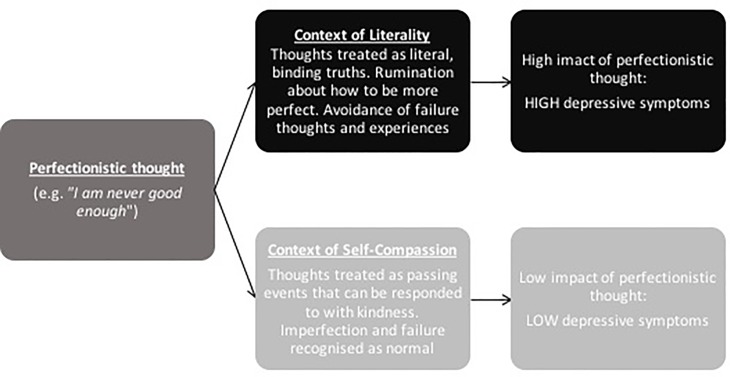
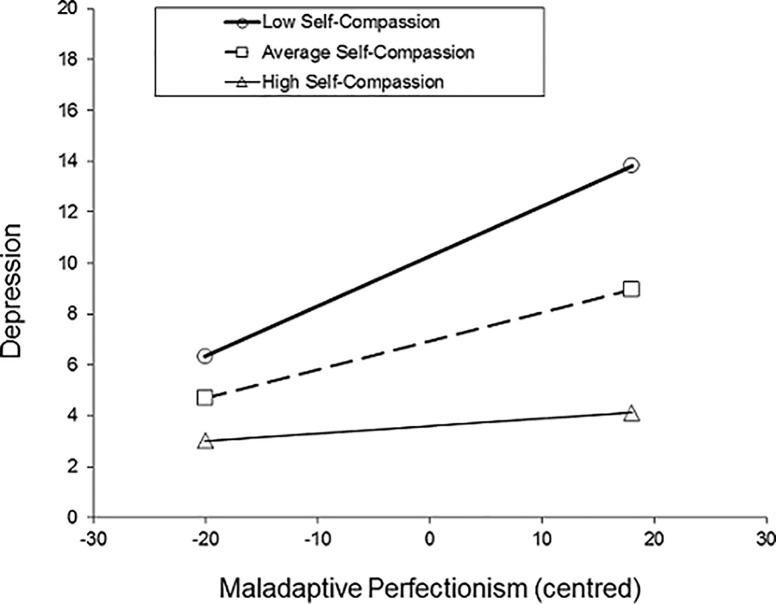
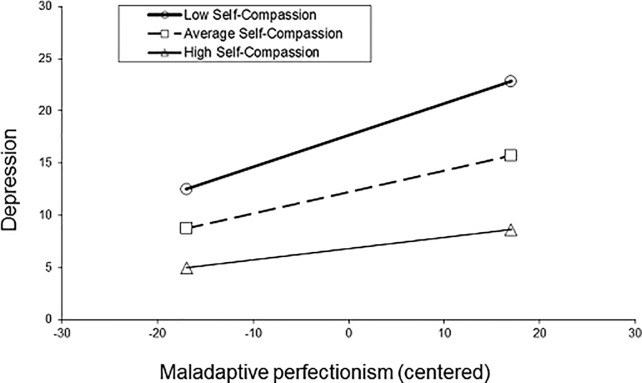
BACKGROUND: Psychological practitioners often seek to directly change the form or frequency of clients' maladaptive perfectionist thoughts, because such thoughts predict future depression. Indirect strategies, such as self-compassion interventions, that seek to change clients' relationships to difficult thoughts, rather than trying to change the thoughts directly could be just as effective. This study aimed to investigate whether self-compassion moderated, or weakened, the relationship between high perfectionism and high depression symptoms in both adolescence and adulthood. METHODS: The present study utilised anonymous self-report questionnaires to assess maladaptive perfectionism, depression, and self-compassion across two samples covering much of the lifespan. Questionnaires were administered in a high school setting for the adolescent sample (Study 1, Mage = 14.1 years, n = 541), and advertised through university and widely online to attract a convenience sample of adults (Study 2, Mage = 25.22 years, n = 515). RESULTS: Moderation analyses revealed that self-compassion reduced the strength of relationship between maladaptive perfectionism and depression in our adolescent Study 1 (β = -.15, p < .001, R2 = .021.) and our adult study 2 (β = -.14, p < .001, R2 = .020). LIMITATIONS: Cross-sectional self-reported data restricts the application of causal conclusions and also relies on accurate self-awareness and willingness to respond to questionnaire openly. CONCLUSIONS: The replication of this finding in two samples and across different age-appropriate measures suggests that self-compassion does moderate the link between perfectionism and depression. Self-compassion interventions may be a useful way to undermine the effects of maladaptive perfectionism, but future experimental or intervention research is needed to fully assess this important possibility.
Overview
The claims and statistics of this paper haven’t been checked yet.
Free: it reads the open-access text and checks the first 5 claims that cite a source we can check. Create a free account to check every claim.
Integrity signals
Registry
Cites
Statistics
Figures
Verification
Claims the paper makes
The claims and statistics of this paper haven’t been checked yet.
Free: it reads the open-access text and checks the first 5 claims that cite a source we can check. Create a free account to check every claim.
Claims other papers make about this one
Each is checked against this paper’s own text: does it say what the citing paper says it does?
The cited source says what the claim attributes to it.
In the citing paper
“Other studies have also demonstrated that self-compassion could buffer the effects of dysfunctional perfectionism on depressive moods.”
The cited source says what the claim attributes to it.
In the citing paper
“This buffering effect of self-compassion in the relationship between dysfunctional perfectionism and negative emotions is reported by several studies [39,40,45].”
Self-check
Percentages, sums and reported differences re-computed from the paper’s own numbers.
The self-check needs the paper’s full text.
Citations
Cites
Multiple regression: testing and interpreting interactions
(1992) · Choice Reviews Online · doi:10.5860/choice.29-3352 · Cited by 36,654
SPSS and SAS procedures for estimating indirect effects in simple mediation models
Preacher, K. J., & Hayes, A. F. (2004) · Behavior Research Methods, Instruments, & Computers · doi:10.3758/bf03206553 · Cited by 17,383 · cited 2×
“In both studies, we assessed moderation by conducting hierarchical multiple regression as recommended by Aiken and West [49] using the Preacher and Hayes PROCESS macros [50].”
Method(1991) · Cited by 7,187
The Development and Validation of a Scale to Measure Self-Compassion
NEFF, K. D. (2003) · Self and Identity · doi:10.1080/15298860309027 · Cited by 6,436 · cited 3×
“The Self-Compassion Scale [29] was used to measure levels of self-compassion.”
BackgroundMethodHenry, J. D., & Crawford, J. R. (2005) · British Journal of Clinical Psychology · doi:10.1348/014466505x29657 · Cited by 5,801
Self-Compassion: An Alternative Conceptualization of a Healthy Attitude Toward Oneself
NEFF, K. (2003) · Self and Identity · doi:10.1080/15298860309032 · Cited by 5,440 · cited 9×
“As noted by Neff [7], self-compassion is ‘a useful emotion regulation strategy, in which painful or distressing feelings are not avoided but are instead held in awareness with kindness, understanding, and a sense of shared humanity’ (p.”
BackgroundResultInfluentialLikert scales, levels of measurement, and the “laws” of statistics
Norman, G. (2010) · Advances in Health Sciences Education · doi:10.1007/s10459-010-9222-y · Cited by 4,850 · cited 1×
“However, as the sample size was large, transformation of the data did not produce any differences in results and therefore, non-transformed data was used in all analyses [51].”
MethodThe dimensions of perfectionism
Frost, R. O., Marten, P., Lahart, C., & Rosenblate, R. (1990) · Cognitive Therapy and Research · doi:10.1007/bf01172967 · Cited by 4,279 · cited 2×
“Perfectionism was measured using the combined score of four sub-scales from the Multidimensional Perfectionism Scale [9], as recommended by Kawamura and Frost [52].”
BackgroundMethodConstruction and factorial validation of a short form of the Self-Compassion Scale
Raes, F., Pommier, E., Neff, K. D., & Van Gucht, D. (2011) · Clinical Psychology & Psychotherapy · doi:10.1002/cpp.702 · Cited by 2,997
A pilot study and randomized controlled trial of the mindful self-compassion program
Neff, K. D., & Germer, C. K. (2013) · Journal of Clinical Psychology · doi:10.1002/jclp.21923 · Cited by 2,253
Cited by
Self-compassion interventions and psychosocial outcomes: a meta-analysis of RCTs
Ferrari, M., Hunt, C., Harrysunker, A., Abbott, M. J., Beath, A. P., & Einstein, D. A. (2019) · Mindfulness · doi:10.1007/s12671-019-01134-6 · Cited by 740
“This shift in cognitive patterns may be the mechanism through which selfcompassion treats multiple psychopathologies including depression (Ferrari et al. 2018; Krieger et al. 2016) and anxiety (MacBeth and Gumley 2012).”
BackgroundResultSelf-citationDevelopment and Validation of the Self-Compassion Scale for Youth
Neff, K. D., Bluth, K., Tóth-Király, I., Davidson, O., Knox, M. C., Williamson, Z., & Costigan, A. (2021) · Journal of Personality Assessment · doi:10.1080/00223891.2020.1729774 · Cited by 175
“Research indicates that self-compassion acts as a buffer for teens with trauma (Zeller, Yuval, Nitzan-Assayag, & Bernstein, 2015), non-suicidal self-injury (Jiang et al., 2016), and maladaptive perfectionism (Ferrari, Yap, Scott, Einstein, & Ciarrochi, 2018).”
BackgroundWakelin, K. E., Perman, G., & Simonds, L. M. (2022) · Clinical Psychology & Psychotherapy · doi:10.1002/cpp.2586 · Cited by 170
“Previous evidence suggests that self-compassion may have buffering effects against development of depression and intervention improvements in depression and self-compassion may be maintained afterwards (Ferrari et al., 2018, 2019).”
BackgroundLee, E. E., Govind, T., Ramsey, M., Wu, T. C., Daly, R., Liu, J., Tu, X. M., Paulus, M. P., Thomas, M. L., & Jeste, D. V. (2021) · Translational Psychiatry · doi:10.1038/s41398-021-01491-8 · Cited by 123
Egan, S. J., Rees, C. S., Delalande, J., Greene, D., Fitzallen, G., Brown, S., Webb, M., & Finlay-Jones, A. (2022) · Administration and Policy in Mental Health and Mental Health Services Research · doi:10.1007/s10488-021-01170-2 · Cited by 140
Liu, Q.-Q., Yang, X.-J., Hu, Y.-T., & Zhang, C.-Y. (2020) · Children and Youth Services Review · doi:10.1016/j.childyouth.2020.105397 · Cited by 103
Stress, psychological distress, burnout and perfectionism in UK dental students
Collin, V., O’Selmo, E., & Whitehead, P. (2020) · BDJ · doi:10.1038/s41415-020-2281-4 · Cited by 132
A systematic review of the relation between self‐compassion and depressive symptoms in adolescents
Pullmer, R., Chung, J., Samson, L., Balanji, S., & Zaitsoff, S. (2019) · Journal of Adolescence · doi:10.1016/j.adolescence.2019.06.006 · Cited by 75
Lunn, J., Greene, D., Callaghan, T., & Egan, S. J. (2023) · Cognitive Behaviour Therapy · doi:10.1080/16506073.2023.2211736 · Cited by 75
Self‐compassion and emotion regulation difficulties in obsessive–compulsive disorder
Eichholz, A., Schwartz, C., Meule, A., Heese, J., Neumüller, J., & Voderholzer, U. (2020) · Clinical Psychology & Psychotherapy · doi:10.1002/cpp.2451 · Cited by 65
“In two other studies, individuals with OCD showed higher emotion regulation deficits than healthy controls (Fernández de la Cruz et al., 2013; Yap et al., 2018).”
BackgroundResultInfluentialPerceived stress, self-compassion and job burnout in nurses: the moderating role of self-compassion
Abdollahi, A., Taheri, A., & Allen, K. (2020) · Journal of research in nursing · doi:10.1177/1744987120970612 · Cited by 84
“They also have a greater ability to dispense unhelpful thoughts, accept shortcomings in themselves and others, and are able to manage themselves kindly in stressful situations (Abdollahi et al., 2020b; Ferrari et al., 2018).”
BackgroundWorkplace mistreatment and emotional exhaustion: The interaction effects of self-compassion
Anjum, M. A., Liang, D., Durrani, D. K., & Parvez, A. (2020) · Current Psychology · doi:10.1007/s12144-020-00673-9 · Cited by 87
“Ferrari et al. (2018) provided similar insights, finding that the maladaptive perfectionism–depression relationship was moderated by SC such that the positive association between the two constructs was significant at low and average (at mean) levels of SC and non-significant at high levels of SC in…”
BackgroundFerrari, M., Ciarrochi, J., Yap, K., Sahdra, B., & Hayes, S. C. (2022) · Mindfulness · doi:10.1007/s12671-022-01897-5 · Cited by 46
“This is a recommendation some authors of this commentary have not followed in the past (Ferrari et al., 2018), but intend to in the future.”
BackgroundSelf-citationTobin, R., & Dunkley, D. M. (2021) · Behaviour Research and Therapy · doi:10.1016/j.brat.2020.103780 · Cited by 48
Callow, T. J., Moffitt, R. L., & Neumann, D. L. (2021) · Australian Psychologist · doi:10.1080/00050067.2021.1890984 · Cited by 74
“high standards and critical self-evaluation observed in adolescents and adults with maladaptive perfectionism and depressive symptoms (Ferrari et al., 2018).”
Matos, M., & Steindl, S. R. (2020) · Journal of Clinical Psychology · doi:10.1002/jclp.23055 · Cited by 43
Ong, C. W., Barney, J. L., Barrett, T. S., Lee, E. B., Levin, M. E., & Twohig, M. P. (2019) · Journal of Contextual Behavioral Science · doi:10.1016/j.jcbs.2019.06.005 · Cited by 40
Buffering against Maladaptive Perfectionism in Bipolar Disorder: The Role of Self-Compassion
Fletcher, K., Yang, Y., Johnson, S. L., Berk, M., Perich, T., Cotton, S., Jones, S., Lapsley, S., Michalak, E., & Murray, G. (2019) · Journal of Affective Disorders · doi:10.1016/j.jad.2019.03.003 · Cited by 40
“Self-compassion partially mediated the association between perfectionism and depression in university students (Mehr and Adams, 2016); while in another study (Ferrari et al., 2018), moderation analyses revealed that self-compassion was associated with diminished strength of the relationship between maladaptive perfect…”
ResultA multidimensional approach to perfectionism and self-compassion
Linnett, R. J., & Kibowski, F. (2019) · Self and Identity · doi:10.1080/15298868.2019.1669695 · Cited by 59
“However, preliminary findings suggest that at least some 119 dimensions of perfectionism are negatively related to self-compassion (Ferrari et al., 2018; 120 Hiçdurmaz & Aydin, 2017; Mosewich et al., 2011; Neff, 2003a; Yeshua, Zohar, & Berkovich, 121 2019).”
BackgroundResultA reliability generalization meta-analysis of the child and adolescent perfectionism scale
Vicent, M., Rubio‐Aparicio, M., Sánchez‐Meca, J., & Gonzálvez, C. (2018) · Journal of Affective Disorders · doi:10.1016/j.jad.2018.11.049 · Cited by 42
Ferrari, M., Beath, A., Einstein, D. A., Yap, K., & Hunt, C. J. (2022) · Current Psychology · doi:10.1007/s12144-022-03408-0 · Cited by 58
“, 2019), perfectionism and depression symptoms (Ferrari et al., 2018), and the link between academic difficulties and depressive symptoms (Lahtinen et al.”
BackgroundMethodSelf-citationHsieh, C., Yu, C., Chen, H., Chen, Y., Chang, N., & Hsiao, F. (2019) · Psycho-Oncology · doi:10.1002/pon.5106 · Cited by 36
“Self‐compassion significantly moderated the relationship between self‐coldness (ie, self‐judgment, isolation, and overidentification), maladaptive perfectionism, and depressive symptoms.(26,27) Fear of receiving compassion from others was positively associated with depression, anxiety, and stress.”
BackgroundPereira, A. T., Brito, M. J., Cabaços, C., Carneiro, M., Carvalho, F., Manão, A. A., Araújo, A. I., Pereira, D., & Macedo, A. (2022) · International Journal of Environmental Research and Public Health · doi:10.3390/ijerph19052740 · Cited by 66
Dietary Approaches to the Management of Autism Spectrum Disorders
Hartman, R. E., & Patel, D. (2020) · Advances in neurobiology · doi:10.1007/978-3-030-30402-7_19 · Cited by 50
Music performance anxiety and self-compassion in college-level music majors
Farley, A., & Kelley, J. (2022) · Psychology of Music · doi:10.1177/03057356221138129 · Cited by 39
Liu, Q., & Hu, Y. (2020) · Current Psychology · doi:10.1007/s12144-020-01034-2 · Cited by 37
Wong, M. Y. C., Fung, H. W., & Yuan, G. F. (2023) · Healthcare · doi:10.3390/healthcare11020233 · Cited by 41
“Research has shown that perfectionism reduced levels of self-compassion and, thus, increased the risk of depression [77], and this moderating relationship was shown to be more significant among adolescents [78].”
BackgroundKarababa, A. (2020) · The Journal of Genetic Psychology · doi:10.1080/00221325.2020.1745745 · Cited by 37
Liu, L., Han, Y., Lu, Z., Cao, C., & Wang, W. (2022) · Current Psychology · doi:10.1007/s12144-022-03036-8 · Cited by 35
Savari, Y., Mohagheghi, H., & Petrocchi, N. (2021) · Mindfulness · doi:10.1007/s12671-020-01584-3 · Cited by 38
Sahraian, K., Abdollahpour Ranjbar, H., Namavar Jahromi, B., Cheung, H. N., Ciarrochi, J., & Habibi Asgarabad, M. (2024) · BMC Psychiatry · doi:10.1186/s12888-023-05411-6 · Cited by 27
“One plausible rationale is that self-compassion could potentially discourage individuals from engaging in self-criticism, blame, or censure toward themselves and others when goals remain unmet (for example, the inability to get pregnant) [77].”
BackgroundSelf-citationModerating the Role of Self-Compassion in the Relationship between Perfectionism and Depression
Abdollahi, A., Allen, K. A., & Taheri, A. (2020) · Journal of Rational-Emotive & Cognitive-Behavior Therapy · doi:10.1007/s10942-020-00346-3 · Cited by 27
“Second, evaluative concerns perfectionists tend to self-blame, self-criticize, avoid intimacy, pay attention to their shortcomings, and set high standards for themselves and others (Abdollahi et al. 2018; Ferrari et al. 2018; Sherry et al. 2015).”
BackgroundWhat Predicts Meaning in Life? The Role of Perfectionistic Personality and Self-Compassion
Suh, H., & Chong, S. S. (2021) · Journal of Constructivist Psychology · doi:10.1080/10720537.2020.1865854 · Cited by 43
“Specifically, the negative association between PC and self-compassion was supported (e.g., Ferrari et al., 2018; Mehr & Adams, 2016; Stoeber et al., 2020) while there seem to be mixed findings in the directionality of association between PS and self-compassion depending on what perfectionism and…”
BackgroundA Systematic Review on the Psychological Effects of Perfectionism and Accompanying Treatment
Patterson, H., Firebaugh, C. M., Zolnikov, T. R., Wardlow, R., Morgan, S. M., & Gordon, B. R. (2021) · Psychology · doi:10.4236/psych.2021.121001 · Cited by 50
“Self-compassion was determined to be protective of depression and a lack the-reof present in perfectionists (Ferrari et al., 2018; Macedo et al., 2017; Mehr & Adams, 2016).”
BackgroundLiu, S., Li, C.-I., Wang, C., Wei, M., & Ko, S. Y. (2019) · Mindfulness · doi:10.1007/s12671-019-01275-8 · Cited by 37
Koutra, K., Mouatsou, C., & Psoma, S. (2023) · Behavioral Sciences · doi:10.3390/bs13110932 · Cited by 25
“In other words, individuals who tend to be kinder and less critical toward themselves, even when they are characterized by perfectionistic traits, seem to experience less negative affect [39,40] and lower levels of body image dissatisfaction [41].”
BackgroundResultEinstein, D. A., Dabb, C., & Fraser, M. I. (2023) · Australian Journal of Psychology · doi:10.1080/00049530.2023.2217961 · Cited by 39
“A smaller subset of this data has been analysed elsewhere ( n = 541; Ferrari et al., 2018).”
BackgroundSelf-citationSelf-Compassion Mediates the Perfectionism and Depression Link on Chinese Undergraduates
Wei, S., Li, L., Shi, J., Liang, H., & Yang, X. (2021) · Annals of Palliative Medicine · doi:10.21037/apm-20-1582 · Cited by 24
“The results indicated that selfcompassion weakened the strength of the relationship between maladaptive perfectionism and depression in both adolescent and adult groups as a moderator (28).”
BackgroundDepression in people with skin conditions: The effects of disgust and self‐compassion
Clarke, E. N., Thompson, A. R., & Norman, P. E. (2020) · British Journal of Health Psychology · doi:10.1111/bjhp.12421 · Cited by 37
“Self-compassion has been shown to moderate the effects of various cognitive vulnerabilities on depression, such as maladaptive perfectionism (Ferrari, Yap, Scott, Einstein, & Ciarrochi, 2018), dysfunctional attitudes towards motherhood (Fonseca & Canavarro, 2018), irrational beliefs (Podina, Jucan,…”
BackgroundOng, C. W., Lee, E. B., Petersen, J. M., Levin, M. E., & Twohig, M. P. (2021) · Journal of Clinical Psychology · doi:10.1002/jclp.23187 · Cited by 23
“between psychopathology and mental health outcomes, suggesting these skills may have protective effects on well-being by weakening the association between symptoms and outcomes (Ferrari et al., 2018; Gloster et al., 2017).”
BackgroundWell-Being and Perfectionism: Assessing the Mediational Role of Self-Compassion in Emerging Adults
Benedetto, L., Macidonio, S., & Ingrassia, M. (2024) · European Journal of Investigation in Health Psychology and Education · doi:10.3390/ejihpe14050091 · Cited by 41
Depression: Social and Cognitive Aspects
Ingram, R. E., Balderas, J. C., Khonle, K., & Fulton, J. (2023) · Oxford University Press eBooks · doi:10.1093/med-psych/9780197542521.003.0011 · Cited by 26
Beshai, S., Salimuddin, S., Refaie, N., & Maierhoffer, J. (2022) · Mindfulness · doi:10.1007/s12671-022-02008-0 · Cited by 22
“Second, both such protective dispositions are inversely associated with vulnerability factors implicating depression and anxiety, including but not limited to rumination (Odou & Brinker, 2014; Raes & Williams, 2010), perfectionism (Ferrari et al., 2018), cognitive biases (Hanley et al.”
BackgroundCompassionate Leadership: Essential for the Future of Tropical Medicine and Global Health
Harrel, E., Berland, L., Jacobson, J., & Addiss, D. G. (2021) · American Journal of Tropical Medicine and Hygiene · doi:10.4269/ajtmh.21-0832 · Cited by 29
Neuenschwander, R., & von Gunten, F. O. (2024) · Current Psychology · doi:10.1007/s12144-024-07053-7 · Cited by 47
Gu, H., Bao, X., & Xia, T. (2022) · Current Psychology · doi:10.1007/s12144-022-03758-9 · Cited by 24
Keutler, M., & McHugh, L. (2021) · Journal of Contextual Behavioral Science · doi:10.1016/j.jcbs.2021.11.006 · Cited by 26
Abdollahi, A., Gardanova, Z. R., Ramaiah, P., Zainal, A. G., Abdelbasset, W. K., Asmundson, G. J. G., Chupradit, S., Sultonov, S. K., Pashanova, O. V., & Iswanto, A. H. (2022) · Psychological Reports · doi:10.1177/00332941221087911 · Cited by 25
The Role of Self-Compassion Among Adaptive and Maladaptive Perfectionists in University Students
Kawamoto, A., Sheth, R., Yang, M., Demps, L., & Sevig, T. (2023) · The Counseling Psychologist · doi:10.1177/00110000221129606 · Cited by 19
“When investigating perfectionism, facets of the maladaptive dimension, PC, such as hyper-critical performance concerns, have usually been the focus of research on perfectionism (Ferrari et al., 2018; Fletcher et al., 2019; Mehr & Adams, 2016).”
BackgroundRacial Discrimination, Self-compassion, and Mental Health: the Moderating Role of Self-judgment
Browne, R. K., Duarte, B. A., Miller, A. N., Schwartz, S. E. O., & Graham-LoPresti, J. R. (2022) · Mindfulness · doi:10.1007/s12671-022-01936-1 · Cited by 22
Liu, C., Lin, P., & Xiong, Z. (2024) · Behavioral Sciences · doi:10.3390/bs14121149 · Cited by 37
Salinger, J. M., & Whisman, M. A. (2020) · Mindfulness · doi:10.1007/s12671-020-01554-9 · Cited by 22
With, S., Benoît, A., & Gaudreau, P. (2024) · Mindfulness · doi:10.1007/s12671-024-02388-5 · Cited by 23
“Several studies have already shown that responding to one’s own suffering with empathy and kindness (self-compassion; Strauss et al., 2016) minimizes the association between perfectionistic concerns and negative psychological outcomes (Ferrari et al., 2018).”
Li, S., & Hao, J. (2022) · The Journal of Genetic Psychology · doi:10.1080/00221325.2022.2083937 · Cited by 19
“Like self-esteem, self-compassion is beneficial for improving psychological health, increasing life satisfaction and life harmony, and decreasing depression and anxiety (Demirci et al., 2019; Ferrari et al., 2018; Gill et al., 2018; Neff, 2003a; Neff et al., 2008; Stefan, 2019).”
BackgroundCabaços, C., Macedo, A., Carneiro, M., Brito, M. J., Amaral, A. P., Araújo, A., Correia, D. T., Novais, F., Vitória, P., & Pereira, A. T. (2023) · Personality and Individual Differences · doi:10.1016/j.paid.2023.112314 · Cited by 15
Palmer-Cooper, E. C., Woods, C., & Richardson, T. H. (2023) · Journal of Affective Disorders · doi:10.1016/j.jad.2023.08.117 · Cited by 15
Forgiveness and Flourishing: The Mediating and Moderating Role of Self-Compassion
Mróz, J. (2022) · International Journal of Environmental Research and Public Health · doi:10.3390/ijerph20010666 · Cited by 22
“Previous research has focused particularly on the mediating role of self-compassion for negative variables, such as depressive symptoms [17,21,22,42], suicidal risk [48], anxiety [49,50], and personality disorders [51,52].”
BackgroundLi, W., Beath, A., Ciarrochi, J., & Fraser, M. I. (2023) · Current Psychology · doi:10.1007/s12144-023-05049-3 · Cited by 25
“Specifically, it has been found to weaken links between perfectionism and depressive symptoms (Ferrari et al., 2018), perceived stress and internalising symptoms (Lathren et al., 2019), academic difficulties and depressive symptoms (Lahtinen et al., 2020), and body dissatisfaction and suicidal…”
Self-citationSelf-Compassion as a Moderator between Clinical Perfectionism and Psychological Distress
Adams, V., Howell, J., & Egan, S. J. (2023) · Australian Psychologist · doi:10.1080/00050067.2022.2125281 · Cited by 12
“In a nonclinical sample, Ferrari et al. (2018) demonstrated high self-compassion weakened the relationship between perfectionism and depression.”
BackgroundMethodResultInfluentialMediation of Self-Compassion on Pathways from Stress to Psychopathologies among Japanese Workers
Kotera, Y., Young, H., Maybury, S., & Aledeh, M. (2022) · International Journal of Environmental Research and Public Health · doi:10.3390/ijerph191912423 · Cited by 19
Daniilidou, A. (2023) · Europe’s Journal of Psychology · doi:10.5964/ejop.11981 · Cited by 20
“To begin with, as it has already been suggested by the literature, maladaptive perfectionism is negatively associated to self-compassion (Ferrari et al., 2018; Stoeber, Madigan, & Gonidis, 2020; Yeshua et al., 2019).”
Xiong, Z., Liu, C., Song, M., & Ma, X. (2024) · Behavioral Sciences · doi:10.3390/bs14080628 · Cited by 26
“It provides positive self-talk and alleviates internal self-criticism, thereby helping individuals to better understand and respond to their own emotional states and reduce anxiety [42].”
BackgroundThe role of clinical perfectionism and psychological flexibility in distress and wellbeing
Nguyen, H., & Morris, E. M. J. (2024) · Clinical Psychologist · doi:10.1080/13284207.2024.2362440 · Cited by 16
Othman, S. M. E., Steen, M., Wepa, D., & McKellar, L. V. (2022) · The Open Psychology Journal · doi:10.2174/18743501-v15-e221020-2022-39 · Cited by 12
Król, T., Wojtyna, E., Hyla, M., Michalik, P., & Michalski, T. (2022) · European Review of Applied Psychology · doi:10.1016/j.erap.2022.100814 · Cited by 13
Self-Compassion as a Mediator Between Perfectionism and Life-Satisfaction Among University Students
Anadolu University, & Şahin, E. E. (2021) · International Journal of Progressive Education · doi:10.29329/ijpe.2021.382.14 · Cited by 9
“For example, it is stated that the strength of the relationship between maladaptive perfectionism and depression decreases with self-compassion (Mehr and Adams, 2016; Ferrari et al., 2018).”
BackgroundResultWei, Z., Xia, B., Jiang, L., Zhu, H., Li, L., Wang, L., Zhao, J., Fan, R., Wang, P., & Huang, M. (2024) · Frontiers in Psychiatry · doi:10.3389/fpsyt.2024.1490171 · Cited by 11
Neshat, Z., Bijari, A. F., & Dehshiri, G. (2023) · Cognitive Processing · doi:10.1007/s10339-023-01163-z · Cited by 10
“Research suggests that perfectionistic traits significantly reduce self-compassion (Ferrari et al. 2018).”
Asl, E. M., Abdi, L., Sadegh, A. M., & Behrouzian, F. (2021) · Journal of Education and Health Promotion · doi:10.4103/jehp.jehp_1485_20 · Cited by 12
“[23,52‐55] Self‐compassion mediates the relationship between maladaptive perfectionism and dissatisfaction with body image.[23]”
BackgroundSolomon, C., DiLorenzo‐Garcia, A., & Johnson, S. M. (2022) · The Journal of Humanistic Counseling · doi:10.1002/johc.12175 · Cited by 11
“More recent empirical findings include the benefit of self-compassion as a protective factor when facing psychological distress (Ferrari et al., 2018; Luo et al., 2019; Podina et al., 2015).”
BackgroundRelationship between multidimensional perfectionism and cognitive flexibility in university students
Çutuk, Z. A. (2020) · Journal of Human Sciences · doi:10.14687/jhs.v17i4.6090 · Cited by 14
Mitchell, J. S., Huckstepp, T., Allen, A., Louis, P. J., Anijärv, T. E., & Hermens, D. F. (2024) · Eating and Weight Disorders - Studies on Anorexia Bulimia and Obesity · doi:10.1007/s40519-024-01682-4 · Cited by 14
“Notably, several studies have found an association between perfectionism and low self-compassion [59, 60], a particularly important association in the context of EDs.”
BackgroundWang, Q., & Wu, H. (2022) · Current Psychology · doi:10.1007/s12144-022-02810-y · Cited by 13
“Ferrari and colleagues also detected the negative correlation of maladaptive perfectionism with self-compassion in both adolescents and adults (Ferrari et al., 2018).”
BackgroundSher, A., Wootton, B. M., & Paparo, J. (2024) · Journal of Clinical Psychology · doi:10.1002/jclp.23640 · Cited by 9
Lateef, H. A., Adams, L. B., Leach, B. C. B., Boahen-Boaten, B. B., Jallesma, F., Bernard, D. L., & Williams, E. G. (2024) · Journal of Racial and Ethnic Health Disparities · doi:10.1007/s40615-024-02098-7 · Cited by 7
“Research has shown that CBCT’s focus on self-compassion and mind-fulness can lead to improved psychological functioning and a reduction in depressive symptoms and suicidal ideation [48, 49].”
Goodwin, R. D., Garrett, L. E., & Block, A. P. (2025) · Academy of Management Journal · doi:10.5465/amj.2023.0187 · Cited by 7
The relationship between self-oriented perfectionism and athlete burnout: a longitudinal study
Fu, Y., Li, X., Sun, J., Li, C., Yang, P., Hong, F., & Pan, J. (2025) · Frontiers in Psychology · doi:10.3389/fpsyg.2025.1656816 · Cited by 10
“Cross-sectional studies have suggested that the occurrence of professional burnout is often accompanied by high levels of self-criticism and negative affect, a pattern that is particularly evident in high-stress work environments (Ferrari et al., 2018; Kim, 2024).”
The Role of Self-compassion to Depression in Teenagers Mediated by Emotion Regulation
Meilasari, A. , & Utami, M. S. (2022) · Jurnal Psikologi · doi:10.22146/jpsi.67752 · Cited by 15
“Ferrari et al. (2018) explained that teenagers with high self-compassion tend to behave well to oneself through acceptance of negative emotional experience, while they do not easily criticize themselves and care about criticism from other people.”
BackgroundNeshat, Z., Bijari, A. F., & Dehshiri, G. (2023) · Brain and Behavior · doi:10.1002/brb3.3227 · Cited by 7
“One of the harms resulting from this personality trait is the reduction of self-compassion (Ferrari et al., 2018) because they do not have unconditional acceptance of themselves (King & Pennebaker, 1998) and when failures, with harsh judgments toward others.”
BackgroundWegerer, M. (2023) · Verhaltenstherapie · doi:10.1159/000532044 · Cited by 14
“…of perfectionism: Self-compassion mediates (at least in part) the association between perfectionism and clinical syndromes such as depressiveness [Ferrari et al., 2018], anxiety [Fletcher et al., 2019], burnout [Pereira et al., 2022], and body-related dissatisfaction [Barnett and Sharp, 2016].”
BackgroundOthman, S., Steen, M., & Abdelnasser, N. (2025) · Aging & Mental Health · doi:10.1080/13607863.2025.2476653 · Cited by 5
Chen, H., Wang, K., Yang, N., Bi, K., & Chong, E. S. K. (2025) · Adolescent Research Review · doi:10.1007/s40894-025-00265-3 · Cited by 8
Cuchet, I., Maneval, A., & Dambrun, M. (2025) · Scientific Reports · doi:10.1038/s41598-025-00776-y · Cited by 8
Obohwemu, K. O., Yakpir, G. M., Simran, K., Ndioho, I. F., Owusuaa-Asante, M. A., Nourhan, A., Jamila, A., Karen, H., MSC IBIC Change, L., Omoregie, J., et al. (2024) · The American Journal of Social Science and Education Innovations · doi:10.37547/tajssei/volume06issue12-07 · Cited by 10
Adverse childhood experiences, adult emotional eating, and the role of self-compassion
Hong, A. E., Ehmann, M. M., Chwyl, C., & Hagerman, C. J. (2025) · Eating Behaviors · doi:10.1016/j.eatbeh.2025.101978 · Cited by 5
Novack, K., Dufour, R., Picard, L., Booij, L., & Chadi, N. (2022) · JMIR Research Protocols · doi:10.2196/37420 · Cited by 7
Self-Compassion as a Protective Factor for Adolescents Experiencing Adversity
Bluth, K., Lathren, C., & Park, J. (2022) · Lifelong learning book series · doi:10.1007/978-3-031-15290-0_12 · Cited by 12
Self-Compassion in Depression and Anxiety Disorders
Gürsoy, B. K., & AKKOYUN, A. Z. (2023) · Konuralp Tıp Dergisi · doi:10.18521/ktd.1202613 · Cited by 7
Tenhulzen, K. A., Claridge, A. M., Baker, K., & Carlson, K. (2023) · The Journal of Child Life Psychosocial Theory and Practice · doi:10.55591/001c.88114 · Cited by 8
“Child life students and professionals who experience negative effects of perfectionism may benefit from normalization of feelings of imposterism, supportive mentor-ship (Hutchins & Flores, 2021), and practices promoting self-compassion (Ferrari et al., 2018) and mindfulness (Ko-erten et al., 2020).”
Backgroundde Diego‐Cordero, R., Martínez-del-Carmen, C., Sierra, P. B., & Vargas‐Martínez, A. M. (2021) · Healthcare · doi:10.3390/healthcare9121661 · Cited by 5
and, C. J., & Kipperman, B. S. (2022) · Wiley eBooks · doi:10.1002/9781119791256.ch22 · Cited by 5
Keulen, J., Deković, M., Vervoort, L., & Bodden, D. H. M. (2025) · Current Psychology · doi:10.1007/s12144-025-08328-3 · Cited by 5
“However, higher levels of self-compassion buffered the effects of maladaptive perfectionism on depression (Ferrari et al., 2018 ).”
Altman, B. R., & Earleywine, M. (2020) · Clinical Case Studies · doi:10.1177/1534650120967993 · Cited by 4
“Self-compassion appears to play a role in the link between transdiagnostic processes and symptoms of internalizing disorders (Ferrari et al., 2018; Finlay-Jones, 2017).”
BackgroundA compassion focused intervention for trait perfectionism in non-clinical settings: a pilot study
Bırni, G., & Satıcı, B. (2023) · Current Psychology · doi:10.1007/s12144-023-05118-7 · Cited by 4
“…found that self-compassion moderates the rela - tion between maladaptive perfectionism and depression, meaning that when people with perfectionism be more self-compassionate, they can prevent themselves from depres - sive symptoms (Ferrari et al., 2018; Mehr & Adams, 2016; Tobin & Dunkley, 2021).”
BAŞCI, Z., & Hamamcı, Z. (2022) · Humanistic Perspective · doi:10.47793/hp.1048298 · Cited by 10
A House with Many Doors – Toward a More Nuanced Self-Compassion Intervention Science
Finlay‐jones, A. L. (2023) · Mindfulness in behavioral health · doi:10.1007/978-3-031-22348-8_24 · Cited by 8
Üniversite Öğrencilerinde Pozitif-Negatif Duygu ve Mükemmeliyetçiliğin Yordayıcısı Olarak Öz Anlayış
ÇARKIT, E., & YALÇIN, S. B. (2021) · Türk Eğitim Bilimleri Dergisi · doi:10.37217/tebd.697249 · Cited by 7
Ciarrochi, J., Hayes, L., & Sahdra, B. K. (2022) · Oxford University Press eBooks · doi:10.1093/oxfordhb/9780190064570.013.38 · Cited by 5
Self-citationPark, H.-J. (2025) · Frontiers in Psychology · doi:10.3389/fpsyg.2025.1570718 · Cited by 6
Network structure of depressive symptoms, school anxiety and perfectionism in Peruvian adolescents
Ramos‐Vera, C., Calle, D., & Vallejos-Saldarriaga, J. (2024) · Current Psychology · doi:10.1007/s12144-024-06570-9 · Cited by 3
“However, these concepts have not been studied exclusively in adults, but also in children and adolescents (Ferrari et al., 2018; Levine et al., 2019; Miloseva & Vukosavljevic-Gvozden, 2014; Rice et al., 2007).”
Metadata
- Authors
- Ferrari, M., Yap, K., Scott, N., Einstein, D. A., & Ciarrochi, J.
- Affiliations
- The University of Sydney (AU)
- Australian Catholic University (AU)
- RMIT University (AU)
- Macquarie University (AU)
- Corresponding author
- Ferrari, Madeleine
- Venue
- PLOS ONE
- Publisher
- Public Library of Science (PLoS)
- Published
- 2018-02-21
- Volume
- 13
- Issue
- 2
- Pages
- e0192022
- ISSN
- 1932-6203 (ISSN-L)
- PMC
- PMC5821438
- OpenAlex
- W2788088331
- Cited by
- 173
- References
- 65
- Citations by year
- 2026: 19 · 2025: 18 · 2024: 25 · 2023: 25 · 2022: 34 · 2021: 16 · 2020: 22 · 2019: 11 · 2018: 3
- FWCI
- 15.25
- Type
- journal article
- Language
- en
- Open access
- gold
- doi.org
- Licence
- Locations
- PLoS ONE (publishedVersion, cc-by)
- PubMed Central (publishedVersion, cc-by)
- PubMed (publishedVersion)
- RePEc: Research Papers in Economics (submittedVersion)
- RMIT Research Repository (RMIT University Library) (submittedVersion, other-oa)
- DOAJ (DOAJ: Directory of Open Access Journals) (submittedVersion)
- Figshare (submittedVersion, cc-by)
- Topics
- Social Sciences › Psychology › Clinical Psychology › Perfectionism, Procrastination, Anxiety Studies
- Social Sciences › Psychology › Clinical Psychology › Mindfulness and Compassion Interventions
- Social Sciences › Psychology › Experimental and Cognitive Psychology › Anxiety, Depression, Psychometrics, Treatment, Cognitive Processes
- Keywords
- self-compassion, maladaptive perfectionism, depression, moderation, adolescents, adulthood, self-compassion interventions, lifespan development
- MeSH terms
- Perfectionism, Adolescent, Adult, Child, Depression, Empathy, Female, Humans, Male, Young Adult
About these checks
Registry, retraction, Cites and statistics results are computed, not judged, with one exception: a printed reference that no index lists is read once by a model before it counts as a citation error. Claims are extracted by a model and kept only when their quote appears verbatim in the text; each cited source is then checked, with a model’s help, for whether it says what the claim relies on. Those verdicts can be wrong — read the claim’s quote and the cited source before relying on one.
Statistics and arithmetic are recomputed, not judged.
Confidence bands are shown only for fields calibrated on our annotated test set. None is calibrated yet, so no band is shown.
What counts as a claim ›How we measure confidence ›How we check this ›
Are you an author, or do you see a problem with this page? Request a review
Data sources
Bibliographic data: Semantic Scholar, OpenAlex, Crossref.
Contains information from the Semantic Scholar Academic Graph Datasets, made available under the ODC Attribution License (ODC-BY 1.0).
Semantic Scholar’s data is described in: Kinney, R., et al. (2023). The Semantic Scholar Open Data Platform. arXiv:2301.10140.
