

The DOI matches its Crossref record; 83 of the 83 references it cites were found in a registry or an index.
Estimating genetic kin relationships in prehistoric populations
Open accessPublished version of a preprint
Abstract
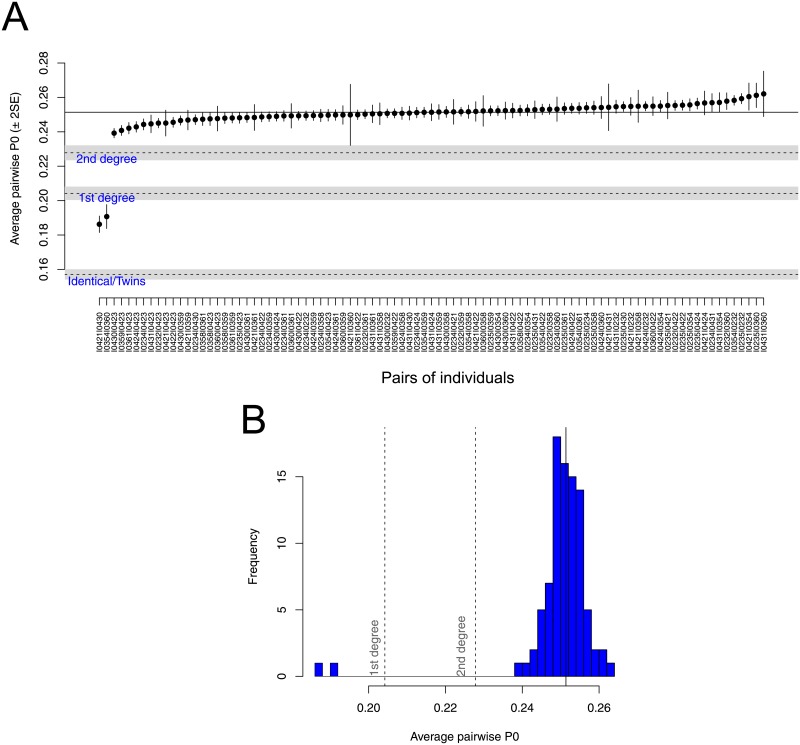
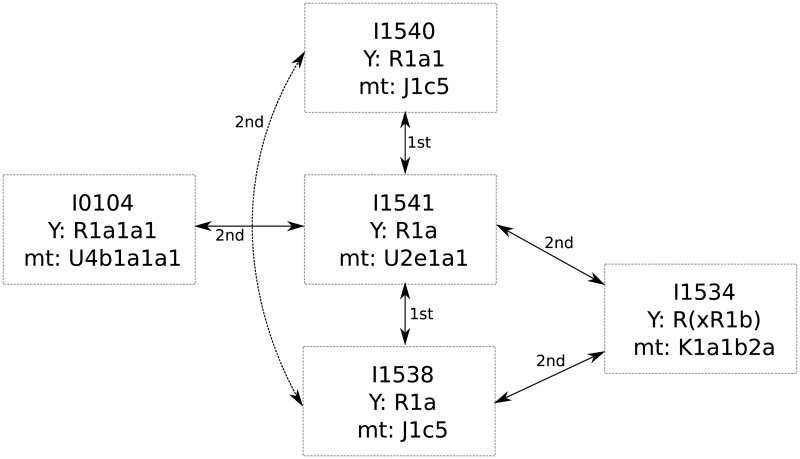
Archaeogenomic research has proven to be a valuable tool to trace migrations of historic and prehistoric individuals and groups, whereas relationships within a group or burial site have not been investigated to a large extent. Knowing the genetic kinship of historic and prehistoric individuals would give important insights into social structures of ancient and historic cultures. Most archaeogenetic research concerning kinship has been restricted to uniparental markers, while studies using genome-wide information were mainly focused on comparisons between populations. Applications which infer the degree of relationship based on modern-day DNA information typically require diploid genotype data. Low concentration of endogenous DNA, fragmentation and other post-mortem damage to ancient DNA (aDNA) makes the application of such tools unfeasible for most archaeological samples. To infer family relationships for degraded samples, we developed the software READ (Relationship Estimation from Ancient DNA). We show that our heuristic approach can successfully infer up to second degree relationships with as little as 0.1x shotgun coverage per genome for pairs of individuals. We uncover previously unknown relationships among prehistoric individuals by applying READ to published aDNA data from several human remains excavated from different cultural contexts. In particular, we find a group of five closely related males from the same Corded Ware culture site in modern-day Germany, suggesting patrilocality, which highlights the possibility to uncover social structures of ancient populations by applying READ to genome-wide aDNA data. READ is publicly available from https://bitbucket.org/tguenther/read.
Overview
The claims and statistics of this paper haven’t been checked yet.
Run the check — free, no account needed. It reads the open-access text and checks the sources it cites.
Integrity signals
Registry
Cites
Statistics
Figures
Verification
Claims the paper makes
The claims and statistics of this paper haven’t been checked yet.
Run the check — free, no account needed. It reads the open-access text and checks the sources it cites.
Claims other papers make about this one
Each is checked against this paper’s own text: does it say what the citing paper says it does?
The cited source says what the claim attributes to it.
In the citing paper
“We excluded two individuals from further analysis, as the genetic patterns observed using the method described in Kuhn et al.73. Showed that they were first-degree relatives of higher coverage samples in the dataset.”
From Ancient DNA from Chalcolithic Israel reveals the role of population mixture in cultural transformation (2018) · cites this paper as [73]
The cited source says what the claim attributes to it.
In the citing paper
“Using READ42 and NGSrelate243, we did not find any first- or second-degree relatives among the Ancient Rapanui (Supplementary Figs. 23 and 24 and Supplementary Information section 9) and detected a single pair of third- to fourth-degree relatives on the basis of IBD sharing (highest estimated IBD sharing >15 cM between any two individuals is <1,000 cM; Supplementary Information section 8 and”
From Ancient Rapanui genomes reveal resilience and pre-European contact with the Americas (2024) · cites this paper as [42]
The cited source says what the claim attributes to it.
In the citing paper
“Methods detecting genetic kinship generally make use of population panels in which expectations of identity-by-descent [G] (or allelic mismatch rates) can be derived in unrelated individuals [201][202][203] .”
From Ancient DNA analysis (2021) · cites this paper as [203]
Self-check
Percentages, sums and reported differences re-computed from the paper’s own numbers.
The self-check needs the paper’s full text.
Citations
Cites
R: A Language and Environment for Statistical Computing
R Core Team (2000) · doi:10.32614/r.manuals · Cited by 355,893
The Sequence Alignment/Map format and SAMtools
Li, H., Handsaker, B., Wysoker, A., Fennell, T., Ruan, J., Homer, N., Marth, G., Abecasis, G., Durbin, R., & 1000 Genome Project Data Processing Subgroup (2009) · Bioinformatics · doi:10.1093/bioinformatics/btp352 · Cited by 62,041
PLINK: a tool set for whole-genome association and population-based linkage analyses.
Purcell, S., Neale, B., Todd-Brown, K., Thomas, L., Ferreira, M. A. R., Bender, D., Maller, J., Sklar, P., de Bakker, P. I. W., Daly, M. J., et al. (2007) · The American Journal of Human Genetics · doi:10.1086/519795 · Cited by 34,089
A global reference for human genetic variation
The 1000 Genomes Project Consortium, authors, C., Auton, A., Abecasis, G. R., Steering committee, Altshuler, D. M., Durbin, R. M., Abecasis, G. R., Bentley, D. R., Chakravarti, A., et al. (2015) · Nature · doi:10.1038/nature15393 · Cited by 18,247
The variant call format and VCFtools
Danecek, P., Auton, A., Abecasis, G. R., Albers, C. A., Banks, E., DePristo, M. A., Handsaker, R. E., Lunter, G. A., Marth, G., Sherry, S. T., et al. (2011) · Bioinformatics · doi:10.1093/bioinformatics/btr330 · Cited by 16,450
Robust relationship inference in genome-wide association studies
Manichaikul, A., Mychaleckyj, J. C., Rich, S. S., Daly, K., Sale, M., & Chen, W.-M. (2010) · Bioinformatics · doi:10.1093/bioinformatics/btq559 · Cited by 3,541
The complete genome sequence of a Neanderthal from the Altai Mountains
Prüfer, K., Racimo, F., Patterson, N., Jay, F., Sankararaman, S., Sawyer, S., Heinze, A., Renaud, G., Sudmant, P. H., de Filippo, C., et al. (2014) · Nature · doi:10.1038/nature12886 · Cited by 2,254
Massive migration from the steppe was a source for Indo-European languages in Europe
Haak, W., Lazaridis, I., Patterson, N., Rohland, N., Mallick, S., Llamas, B., Brandt, G., Nordenfelt, S., Harney, E., Stewardson, K., et al. (2015) · Nature · doi:10.1038/nature14317 · Cited by 1,940
Prescribing Personalized Nutrition for Cardiovascular Health: Are We Ready?
Juma, S., Imrhan, V., Vijayagopal, P., & Prasad, C. (2014) · Lifestyle Genomics · doi:10.1159/000370213 · Cited by 1,908
The complete genome of an individual by massively parallel DNA sequencing
Wheeler, D. A., Srinivasan, M., Egholm, M., Shen, Y., Chen, L., McGuire, A., He, W., Chen, Y.-J., Makhijani, V., Roth, G. T., et al. (2008) · Nature · doi:10.1038/nature06884 · Cited by 1,838
Research works printed but not linked: 1
- Van Rossum G, et al. Python Programming Language. In: USENIX Annual Technical Conference. vol. 41; 2007.
Cited by
Sorted by citations
Items 201–300 of 328
Genetic stability in the lower Yangtze River basin from Song to Qing Dynasty
He, H., Kong, X., Le, T., Zhu, L., Wang, X., Xu, M., Chen, Y., Zhu, K., Yu, X. G., Chen, H., et al. (2025) · BMC Biology · doi:10.1186/s12915-025-02343-3 · Cited by 4
Lefeuvre, M., Marsolier‐Kergoat, M., & Bon, C. (2026) · Genome biology · doi:10.1186/s13059-026-04016-y · Cited by 4
Rare jackpot individuals drive rapid adaptation in Threespine Stickleback
Kwakye, A., Reid, K., Wund, M. A., Heins, D. C., Bell, M. A., & Veeramah, K. R. (2026) · Nature Communications · doi:10.1038/s41467-026-71236-y · Cited by 4
Population dynamics in Iron Age Xinjiang inferred from ancient genomes of the Zhagunluke site
Yang, X., Li, H., Wáng, B., Zhu, K., He, H., Ji, Z. J., Wang, B., Zhao, J., & Wang, C. (2025) · Archaeological and Anthropological Sciences · doi:10.1007/s12520-025-02186-7 · Cited by 4
Ran, J., Liu, Y., Wangdue, S., Yang, X., Wang, T., Gao, Y., Cao, P., Tong, Y., Dai, Q., Chen, S., et al. (2025) · iScience · doi:10.1016/j.isci.2025.113676 · Cited by 4
Ishiya, K., Mizuno, F., Gojobori, J., Kumagai, M., Taniguchi, Y., Kondo, O., Matsushita, M., Matsushita, T., Wang, L., Kurosaki, K., et al. (2026) · Proceedings of the National Academy of Sciences · doi:10.1073/pnas.2606162123 · Cited by 4
Genetic affinity of cave burial and Hmong-Mien populations in Guangxi inferred from ancient genomes
Guo, J., He, H., Xie, G., Le, T., Mai, X., Zhu, K., Qin, Q., Yang, X., Xie, Y., Wang, R., et al. (2024) · Archaeological and Anthropological Sciences · doi:10.1007/s12520-024-02033-1 · Cited by 4
Wu, X., Ding, B., Nie, L., Zhong, C., Liu, P., Liang, J., Wang, L., Gao, X., Wei, J., & Zhou, Y. (2024) · Frontiers in Microbiology · doi:10.3389/fmicb.2024.1471740 · Cited by 4
Genetic transitions in the Neolithic and Bronze Age at Mas d’en Boixos (Catalonia, Spain)
Roca‐Rada, X., Cuesta‐Aguirre, D. R., Vinueza‐Espinosa, D. C., Davidson, R., Ravishankar, S., Taufik, L., Armentano, N., Esteve, X., Souilmi, Y., Teixeira, J. C., et al. (2025) · iScience · doi:10.1016/j.isci.2025.112871 · Cited by 4
Tales from the end of the world: three decades of paleogenetic research in Patagonia
Castro, C. D. L. F., Motti, J. M. B., Arencibia, V., & Luisi, P. (2024) · Human Population Genetics and Genomics · doi:10.47248/hpgg2404010003 · Cited by 4
Arzelier, A., Belvalet, H. D., Pemonge, M., Garberi, P., Binder, D., Duday, H., Deguilloux, M., & Pruvost, M. (2024) · Proceedings of the Royal Society B Biological Sciences · doi:10.1098/rspb.2024.1215 · Cited by 3
Li, R., Zang, Y., Liu, Z., Yang, J., Wang, N., Liu, J., Wu, E., Wu, R., & Sun, H. (2025) · Genomics Proteomics & Bioinformatics · doi:10.1093/gpbjnl/qzaf055 · Cited by 3
Population discontinuity in the Paris Basin linked to evidence of the Neolithic decline
Seersholm, F. V., Ramsøe, A. D., Cao, J., Chambon, P., Sjögren, K.-G., McColl, H., Demeter, F., Gaunitz, C., Vinner, L., Stenderup, J. T., et al. (2026) · Nature Ecology & Evolution · doi:10.1038/s41559-026-03027-z · Cited by 3
Lefeuvre, M., Martin, M. D., Jay, F., Marsolier‐Kergoat, M., & Bon, C. (2024) · Human Population Genetics and Genomics · doi:10.47248/hpgg2404010001 · Cited by 3
Krzewińska, M., Varela, R., Arcini, C., Ahlström, T., Hertzman, N., Storå, J., & Götherström, A. (2021) · Journal of Archaeological Science Reports · doi:10.1016/j.jasrep.2021.102939 · Cited by 3
Dedet, B., Duday, H., Gruat, P., & Pruvost, M. (2022) · Gallia · doi:10.4000/gallia.6693 · Cited by 3
Historical genomes elucidate European settlement and the African diaspora in Delaware
Fleskes, R. E., Owsley, D. W., Bruwelheide, K. S., Barca, K. G., Griffith, D. R., Cabana, G. S., & Schurr, T. G. (2023) · Current Biology · doi:10.1016/j.cub.2023.04.069 · Cited by 3
Ancestry and kinship in a Late Antiquity-Early Middle Ages cemetery in the Eastern Italian Alps
Coia, V., Paladin, A., Zingale, S., Wurst, C., Croze, M., Maixner, F., & Zink, A. (2023) · iScience · doi:10.1016/j.isci.2023.108215 · Cited by 3
Zhang, F., Liu, Y., Ning, C., Zhang, J., Ma, P., Zhang, R., Yun, Z., Duan, C., Cai, D., & Yuan, H. (2023) · International Journal of Osteoarchaeology · doi:10.1002/oa.3274 · Cited by 3
Puurand, T., Möls, M., Kaplinski, L., Maal, K., Krjutškov, K., Salumets, A., Kivisild, T., & Remm, M. (2025) · Genome biology · doi:10.1186/s13059-025-03714-3 · Cited by 3
West African ancestry in seventh-century England: two individuals from Kent and Dorset
Sayer, D., Gretzinger, J., Hines, J., McCormick, M., Warburton, K., Sebo, E., Dulias, K., Pala, M., Richards, M. B., Edwards, C. J., et al. (2025) · Antiquity · doi:10.15184/aqy.2025.10139 · Cited by 3
Güler, M. N., Yılmaz, A., Katırcıoğlu, B., Kantar, S., Ünver, T. E., Vural, K. B., Altınışık, N. E., Akbaş, E., & Somel, M. (2025) · Molecular Ecology Resources · doi:10.1111/1755-0998.70032 · Cited by 3
Psonis, N., Vassou, D., Nafplioti, A., Tabakaki, E., Pavlidis, P., Stamatakis, A., & Poulakakis, N. (2024) · Forensic Science International Genetics · doi:10.1016/j.fsigen.2024.103060 · Cited by 2
Genetic Insights into Ancient Kinship and Human History: Methods, Applications, and Implications
Wang, L., Duan, C., & Ning, C. (2025) · Nature anthropology · doi:10.70322/natanthropol.2025.10009 · Cited by 2
Ancient genomes reveal demographic trajectories during the Classic Maya period
Murray, M., Nakamura, S., Fuentes, M., Canizales, R., Talavera, O., Varela, S., Madrid, Z., Carbajal, C., Ogawa, M., Yoneda, M., et al. (2025) · Current Biology · doi:10.1016/j.cub.2025.05.002 · Cited by 2
Exploration of hanging coffin customs and the bo people in China through comparative genomics
Zhou, H., Le, T., Zhao, Y., He, H., Shi, H., Yu, T., Guo, Y., He, Y., Liu, H., Wu, Y., et al. (2025) · Nature Communications · doi:10.1038/s41467-025-65264-3 · Cited by 2
Sex Identification and Kinship Typing of Human Archaeological Remains
Brown, T. A., Drosou, K., & Brown, K. A. (2023) · Wiley eBooks · doi:10.1002/9781119592112.ch30 · Cited by 2
Executable Map Paper (EMaP) for Archaeological LiDAR
Štular, B., & Lozić, E. (2023) · Journal of Computer Applications in Archaeology · doi:10.5334/jcaa.106 · Cited by 2
Középkori magyar uralkodók archeogenetikai vizsgálata
Varga, G. I. B., Kristóf, L. A., Maár, K., Kis, L., Schütz, O., Váradi, O. A., Kovács, B., Gînguță, A., Tihanyi, B., Nagy, P. L., et al. (2023) · A Magyarságkutató Intézet kiadványai · doi:10.53644/mki.lkszl.2023.137 · Cited by 2
Moilanen, U. (2023) · Routledge eBooks · doi:10.4324/9781003350026-5 · Cited by 2
Palaeogenomic insights into the origins of early settlers on the island of Cyprus
Heraclides, A., Aristodemou, A., Georgiou, A. N., Antoniou, M., Ilgner, E., & Davranoglou, L. (2024) · Scientific Reports · doi:10.1038/s41598-024-60161-z · Cited by 2
Wu, X., Liu, P., Yan, F., Jin, R., Zhong, C., Wang, L., Chen, K., Yang, F., Nie, L., Liang, J., et al. (2025) · Frontiers in Microbiology · doi:10.3389/fmicb.2025.1602625 · Cited by 2
Paladin, A., Zingale, S., Croze, M., Marzoli, C., Tecchiati, U., Zink, A., & Coia, V. (2023) · Journal of Archaeological Science Reports · doi:10.1016/j.jasrep.2023.104103 · Cited by 2
Oteo‐García, G., Martín, L. A., Beneyto, J. P., Foody, M. G. B., Yau, B., Pala, M., Edwards, C. J., & Richards, M. B. (2023) · Presses universitaires de Provence eBooks · doi:10.4000/books.pup.68218 · Cited by 2
Unveiling the narrative behind the neonate burials at Lepenski Vir in present-day Serbia
Žegarac, A., Jovanović, J., Blagojević, T., de Becdelièvre, C., & Stefanović, S. (2025) · Journal of Archaeological Science · doi:10.1016/j.jas.2025.106214 · Cited by 2
Co-occurrence of Yersinia pestis and other zoonoses during European prehistoryPreprint
de-Dios, T., Bonucci, B., Thompson, J. E., Panella, S., Barbieri, R., Keller, M., Saupe, T., Bernardini, S., Sasso, S., Thirolle, M., et al. (2026) · bioRxiv (Cold Spring Harbor Laboratory) · doi:10.64898/2026.02.20.707102 · Cited by 2
Amorim, C. E. G. (2023) · Wiley eBooks · doi:10.1002/9781119828075.ch13 · Cited by 1
Ezcurra, M. B., Rohrlach, A. B., Papac, L., Guillén, J. I. R., Barquera, R., Lecumberri, F. G., Lorente, R. L., Risch, R., Krause, J., Millán, J. V. P., et al. (2025) · Communications Biology · doi:10.1038/s42003-025-08668-7 · Cited by 1
Li, R., Wang, N., Dai, S., Chen, J., De-jian, L., Zang, Y., Liu, J., Wu, E., Chen, X., Zhong, Z., et al. (2025) · International Journal of Legal Medicine · doi:10.1007/s00414-025-03651-7 · Cited by 1
Social Stratification Without Genetic Differentiation at the Xisima Site in the Late Shang Dynasty
Tang, J., Wang, R., Wei, Q., He, H., Deng, C., Tao, L., Mao, X., Ma, H., Wang, X., Zou, X., et al. (2025) · Molecular Biology and Evolution · doi:10.1093/molbev/msaf316 · Cited by 1
Ancient genomes from the Qing Dynasty reveal unbroken genetic continuity in China's Central Plains
Zhou, Y., Lin, Y., Ma, H., Wang, R., Zhai, H., Qin, Z., Zeng, Y., Lou, Y., Xu, Y., Chen, H., et al. (2025) · Molecular Biology and Evolution · doi:10.1093/molbev/msaf335 · Cited by 1
An ancient DNA perspective on the Russian conquest of Yakutia
Crubézy, É., Guarino‐Vignon, P., Seguin‐Orlando, A., Sarkissian, C. S. I. D., Hanghøj, K., Duchesne, S., Gérard, P., Thèves, C., Alcouffe, A., Romanova, L., et al. (2026) · Nature · doi:10.1038/s41586-025-09856-5 · Cited by 1
Ancient DNA study provides clues to leprosy susceptibility in medieval Europe
Romeyer-Dherbey, J. H., Caliebe, A., Ӧzer, O., da Silva, N. A., Mejía, N. M., Myburgh, D., Fuchs, K., Pedersen, D. D., Boldsen, J. L., Larsen, L. A., et al. (2026) · Genome biology · doi:10.1186/s13059-025-03925-8 · Cited by 1
Ancient genomes uncover dynamic cultural and genetic interplay in the eastern Tianshan
Yang, X., Zou, X., Li, H., Yang, X., Wang, B., Ma, H., Wang, Y., Xu, Y., Li, C., & Wang, C.-C. (2026) · Molecular Biology and Evolution · doi:10.1093/molbev/msag057 · Cited by 1
Genetic genealogy of the Piast dynasty and related European royal families
Zeńczak, M., Handschuh, L., Marcinkowska, M., Stolarek, I., Golubiński, M., Juras, A., Trzciński, D., Chyleński, M., Dębski, A., Losik-Sidorska, A., et al. (2026) · Nature Communications · doi:10.1038/s41467-026-71457-1 · Cited by 1
Multiple Genetic Shifts at the Crossroads of the Eastern Steppe and Loess Plateau Over 4,000 Years
Chang, X., Xu, Y., Zhang, H., Ma, Q., Meng, H., Bai, T., Yang, X., Wang, K., Xiong, J., Du, P., et al. (2026) · Nature Communications · doi:10.1038/s41467-026-73369-6 · Cited by 1
Navarro, L. C., Metz, S., Bleasdale, M., Evans, J. A., Legge, M., Büster, L., Reich, D., & Armit, I. (2026) · Antiquity · doi:10.15184/aqy.2026.10353 · Cited by 1
Equal in death: Ancient genomic analysis of children’s early Christian burials
Krzewińska, M., Kjellström, A., Yaka, R., Varela, R., Pochon, Z., Lagerholm, V. K., Hedenstierna‐Jonson, C., Zachrisson, T., Kashuba, N., Sobrado, V., et al. (2026) · Science Advances · doi:10.1126/sciadv.aeb8588 · Cited by 1
Self-citationAncient human genes of North-Eastern Europe
Onkamo, P., Majander, K., Peltola, S., Salmela, E., & Nordqvist, K. (2019) · TRANSACTIONS OF THE INSTITUTE FOR THE HISTORY OF MATERIAL CULTURE Russian Academy of Science · doi:10.31600/2310-6557-2019-20-25-34 · Cited by 1
Statistical methods for kinship inference amongst ancient individuals
Seguin‐Orlando, A. (2021) · Words, bones, genes, tools · doi:10.51315/9783935751377.006 · Cited by 1
Cavé, M., Herrscher, E., Mathelart, P., Mendisco, F., Pruvost, M., Rollet, P., & Thiol, S. (2023) · Presses universitaires de Provence eBooks · doi:10.4000/books.pup.68775 · Cited by 1
Familial hypodontia in bronze age Northwest China (1046–771BC)
Wu, Y., Ma, Q., Han, B., Shen, Y., & Wen, S. (2024) · Archives of Oral Biology · doi:10.1016/j.archoralbio.2024.106104 · Cited by 1
Goude, G., Villotte, S., Salazar‐García, D. C., Rivollat, M., Arzelier, A., Pemonge, M., Deguilloux, M., & Schmitt, A. (2025) · Archaeological and Anthropological Sciences · doi:10.1007/s12520-025-02321-4 · Cited by 1
Penske, S., Schunke, T., Orschiedt, J., Rohrlach, A. B., Meller, H., Haak, W., & Risch, R. (2023) · Dipòsit Digital de Documents de la UAB (Universitat Autònoma de Barcelona) · doi:10.11588/propylaeum.1280.c18007 · Cited by 1
DNA insights into Neolithic society
Sirak, K. A. (2023) · Nature Human Behaviour · doi:10.1038/s41562-023-01668-9 · Cited by 1
Zvénigorosky, V. (2018) · theses.fr (ABES) · doi:10.70675/0b99a6d3zc4eez42f6zbe6bzc769beb1c826 · Cited by 1
A Primer on the Population Genetic Analysis of Ancient Genomes
Jeong, C. (2020) · Springer eBooks · doi:10.1007/978-981-15-1614-6_49-1
A Primer on the Population Genetic Analysis of Ancient Genomes
Jeong, C. (2021) · Springer eBooks · doi:10.1007/978-981-15-3354-9_49
da Silva, T. F. (2022) · Digital Library of Theses and Dissertations (Universidade de São Paulo) · doi:10.11606/t.41.2022.tde-04052022-183443
Középkori magyar uralkodók archeogenetikai vizsgálata
Varga, G. I. B. (2022) · A Magyarságkutató Intézet kiadványai · doi:10.53644/mki.maosmb.2022.79
Oteo‐García, G., Martín, L. A., Beneyto, J. P., Yau, B., Pala, M., Edwards, C. J., & Richards, M. B. (2023) · Presses universitaires de Provence eBooks · doi:10.4000/books.pup.68326
Senna-Martínez, J. C., & Luís, E. (2024) · Interdisciplinary Contributions to Archaeology/Interdisciplinary contributions to archaeology · doi:10.1007/978-3-031-52155-3_4
Additional file 2 of Genetic history of East-Central Europe in the first millennium CE
Stolarek, I., Zeńczak, M., Handschuh, L., Juras, A., Marcinkowska, M., Spinek, A. E., Dębski, A., Matla, M., Kóčka-Krenz, H., Piontek, J., et al. (2023) · Figshare · doi:10.6084/m9.figshare.23740746
Kinship, Gender, and Ancient DNA
Frieman, C. J., & McNeil, E. (2024) · Wiley eBooks · doi:10.1002/9781118924396.wbiea2533
Parasayan, O. (2022) · theses.fr (ABES) · doi:10.70675/9be776abz3596z4536za304zaf2ce4f0bab0
Multifaceted analysis reveals diet and kinship of Late Pleistocene ‘Tumat Puppies’
Runge, A. K. W., Niemann, J., Germonpré, M., Drucker, D. G., Bocherens, H., Boxleitner, K., Ramos‐Madrigal, J., Linderholm, A. E., Stanton, D. W. G., Kandyba, A. V., et al. (2025) · Quaternary Research · doi:10.1017/qua.2025.10
Ancient DNA reveals ancient kinship and social structures
Qi, Y., Yin, Z., & Wang, K. (2025) · Chinese Science Bulletin (Chinese Version) · doi:10.1360/csb-2025-0332
Fleskes, R. E., Palacios, H. M., Budner, H., Kollmann, D. D., Newby-Alexander, C. L., Harder, R., Bolnick, D. A., Pollard, M., Pollard, P., Schurr, T. G., et al. (2025) · American Journal of Biological Anthropology · doi:10.1002/ajpa.70110
Fault-tolerant pedigree reconstruction from pairwise kinship relations
Huang, E. C., Li, K. A., & Narasimhan, V. M. (2026) · Bioinformatics · doi:10.1093/bioinformatics/btag251
Wu, Y., Ma, Q., Shen, Y., Wei, P., & Wen, S. (2025) · International Journal of Paleopathology · doi:10.1016/j.ijpp.2025.08.002
Pruvost, M., Briceño, L., Belvalet, H. D., Ferrapie, L., Labille, R., Kazanski, M., Guillon, M., & Souquet, I. (2025) · HAL
Lin, X., Han, S., Sun, Q., Lei, Y., Liu, Z., & Ou, X. (2025) · Genes · doi:10.3390/genes16121513
Carress, H., Lawson, D. J., & Elhaik, E. (2021) · Figshare · doi:10.6084/m9.figshare.14609320
Guellil, M., Keller, M., Dittmar, J. M., Inskip, S. A., Cessford, C., Solnik, A., Kivisild, T., Metspalu, M., Robb, J., & Scheib, C. L. (2022) · Figshare · doi:10.6084/m9.figshare.19112814
Additional file 6 of Genetic history of East-Central Europe in the first millennium CE
Stolarek, I., Zeńczak, M., Handschuh, L., Juras, A., Marcinkowska, M., Spinek, A. E., Dębski, A., Matla, M., Kóčka-Krenz, H., Piontek, J., et al. (2023) · Figshare · doi:10.6084/m9.figshare.23740758
Additional file 10 of Genetic history of East-Central Europe in the first millennium CE
Stolarek, I., Zeńczak, M., Handschuh, L., Juras, A., Marcinkowska, M., Spinek, A. E., Dębski, A., Matla, M., Kóčka-Krenz, H., Piontek, J., et al. (2023) · Figshare · doi:10.6084/m9.figshare.23740770
Additional file 5 of Genetic history of East-Central Europe in the first millennium CE
Stolarek, I., Zeńczak, M., Handschuh, L., Juras, A., Marcinkowska, M., Spinek, A. E., Dębski, A., Matla, M., Kóčka-Krenz, H., Piontek, J., et al. (2023) · Figshare · doi:10.6084/m9.figshare.23740755
Rivollat, M., Rohrlach, A. B., Ringbauer, H., Childebayeva, A., Mendisco, F., Barquera, R., Szolek, A., Colleran, H., Roy, M. L., Aron, F., et al. (2023) · Ghent University Academic Bibliography (Ghent University) · doi:10.11588/propylaeum.1280.c18004
Guellil, M., Keller, M., Dittmar, J. M., Inskip, S. A., Cessford, C., Solnik, A., Kivisild, T., Metspalu, M., Robb, J., & Scheib, C. L. (2022) · Figshare · doi:10.6084/m9.figshare.19112802
Additional file 11 of Genetic history of East-Central Europe in the first millennium CE
Stolarek, I., Zeńczak, M., Handschuh, L., Juras, A., Marcinkowska, M., Spinek, A. E., Dębski, A., Matla, M., Kóčka-Krenz, H., Piontek, J., et al. (2023) · Figshare · doi:10.6084/m9.figshare.23740773
Additional file 4 of Genetic history of East-Central Europe in the first millennium CE
Stolarek, I., Zeńczak, M., Handschuh, L., Juras, A., Marcinkowska, M., Spinek, A. E., Dębski, A., Matla, M., Kóčka-Krenz, H., Piontek, J., et al. (2023) · Figshare · doi:10.6084/m9.figshare.23740752
Additional file 8 of Genetic history of East-Central Europe in the first millennium CE
Stolarek, I., Zeńczak, M., Handschuh, L., Juras, A., Marcinkowska, M., Spinek, A. E., Dębski, A., Matla, M., Kóčka-Krenz, H., Piontek, J., et al. (2023) · Figshare · doi:10.6084/m9.figshare.23740764
Additional file 1 of Genetic history of East-Central Europe in the first millennium CE
Stolarek, I., Zeńczak, M., Handschuh, L., Juras, A., Marcinkowska, M., Spinek, A. E., Dębski, A., Matla, M., Kóčka-Krenz, H., Piontek, J., et al. (2023) · Figshare · doi:10.6084/m9.figshare.23740743
Alaçamlı, E., Naidoo, T., Güler, M. N., Sağlıcan, E., Aktürk, Ş., Mapelli, I., Vural, K. B., Somel, M., Malmström, H., & Günther, T. (2024) · Figshare · doi:10.6084/m9.figshare.26759477
Self-citationAlaçamlı, E., Naidoo, T., Güler, M. N., Sağlıcan, E., Aktürk, Ş., Mapelli, I., Vural, K. B., Somel, M., Malmström, H., & Günther, T. (2024) · Figshare · doi:10.6084/m9.figshare.26759471
Self-citationAdditional file 3 of Genetic history of East-Central Europe in the first millennium CE
Stolarek, I., Zeńczak, M., Handschuh, L., Juras, A., Marcinkowska, M., Spinek, A. E., Dębski, A., Matla, M., Kóčka-Krenz, H., Piontek, J., et al. (2023) · Figshare · doi:10.6084/m9.figshare.23740749
Alaçamlı, E., Naidoo, T., Güler, M. N., Sağlıcan, E., Aktürk, Ş., Mapelli, I., Vural, K. B., Somel, M., Malmström, H., & Günther, T. (2024) · Figshare · doi:10.6084/m9.figshare.26759474
Self-citationAdditional file 2 of KIN: a method to infer relatedness from low-coverage ancient DNA
Popli, D., Peyrégne, S., & Peter, B. M. (2024) · Figshare · doi:10.6084/m9.figshare.26562118
Additional file 7 of Genetic history of East-Central Europe in the first millennium CE
Stolarek, I., Zeńczak, M., Handschuh, L., Juras, A., Marcinkowska, M., Spinek, A. E., Dębski, A., Matla, M., Kóčka-Krenz, H., Piontek, J., et al. (2023) · Figshare · doi:10.6084/m9.figshare.23740761
Additional file 3 of KIN: a method to infer relatedness from low-coverage ancient DNA
Popli, D., Peyrégne, S., & Peter, B. M. (2024) · Figshare · doi:10.6084/m9.figshare.26562121
Additional file 9 of Genetic history of East-Central Europe in the first millennium CE
Stolarek, I., Zeńczak, M., Handschuh, L., Juras, A., Marcinkowska, M., Spinek, A. E., Dębski, A., Matla, M., Kóčka-Krenz, H., Piontek, J., et al. (2023) · Figshare · doi:10.6084/m9.figshare.23740767
Additional file 1 of KIN: a method to infer relatedness from low-coverage ancient DNA
Popli, D., Peyrégne, S., & Peter, B. M. (2024) · Figshare · doi:10.6084/m9.figshare.26562115
Larocque, K. (2024) · Le dépôt institutionnel (Université du Québec à Trois-Rivières)
Developing an Advanced Method for Kinship from Ancient DNA Data
Alaçamlı, E. (2023) · KTH Publication Database DiVA (KTH Royal Institute of Technology)
Estimating relatedness with ancient DNA
Popli, D. (2024) · Qucosa (Saxon State and University Library Dresden)
Soyağacı simülasyonları kullanılarak genetik akrabalık araçlarının antik DNA için değerlendirmesi
Aktürk, Ş. (2023) · OpenMETU (Middle East Technical University)
Genomic insights into the ancestry and mortality of a historical era population from Southwest China
Dong, J., Peng, W., Jin, J., Yang, L., Zhang, R., Jia, J., Duan, C., Song, G., Zhao, F., Ye, R., et al. (2025) · Journal of Archaeological Science · doi:10.1016/j.jas.2025.106459
Qu, Y., Zhao, Z., Ning, C., Zhang, J., Li, T., Cai, D., & Zhao, D. W. (2025) · Archaeological and Anthropological Sciences · doi:10.1007/s12520-025-02369-2
Metadata
- Authors
- Monroy Kuhn, J. M., Jakobsson, M., & Günther, T.
- Affiliations
- Uppsala University (SE)
- Corresponding author
- Jakobsson, Mattias
- Günther, Torsten
- Venue
- PLOS ONE
- Publisher
- Public Library of Science (PLoS)
- Published
- 2018-04-23
- Volume
- 13
- Issue
- 4
- Pages
- e0195491
- ISSN
- 1932-6203 (ISSN-L)
- PMC
- PMC5912749
- OpenAlex
- W2950454348
- Cited by
- 330
- References
- 79
- Citations by year
- 2026: 31 · 2025: 47 · 2024: 53 · 2023: 62 · 2022: 40 · 2021: 42 · 2020: 23 · 2019: 19 · 2018: 11
- FWCI
- 14.33
- Type
- journal article
- Language
- en
- Open access
- gold
- doi.org
- Licence
- Locations
- PLoS ONE (publishedVersion, cc-by)
- bioRxiv (Cold Spring Harbor Laboratory) (acceptedVersion, cc-by-nc)
- Europe PMC (PubMed Central) (publishedVersion, cc-by)
- PubMed Central (publishedVersion, cc-by)
- PubMed (publishedVersion)
- Uppsala University Publications (Uppsala University) (submittedVersion, other-oa)
- DOAJ (DOAJ: Directory of Open Access Journals) (submittedVersion)
- Figshare (submittedVersion, cc-by)
- FreiDok plus (Universitätsbibliothek Freiburg) (submittedVersion)
- Funders
- Erasmus Mundus Master Programme in Evolutionary Biology
- Consejo Nacional de Ciencia y Tecnología
- European Research Council (311413)
- Vetenskapsrådet
- Wenner-Gren-Foundations
- Riksbankens Jubileumsfond
- Knut och Alice Wallenbergs Stiftelse
- Topics
- Life Sciences › Biochemistry, Genetics and Molecular Biology › Genetics › Forensic and Genetic Research
- Life Sciences › Biochemistry, Genetics and Molecular Biology › Genetics › Genetic diversity and population structure
- Social Sciences › Arts and Humanities › Archeology (arts and humanities) › Forensic Anthropology and Bioarchaeology Studies
- Keywords
- genetic relatedness, ancient DNA, prehistoric humans, Corded Ware culture, patrilocality, social structure, degraded DNA, shotgun sequencing, human remains
- MeSH terms
- DNA, Ancient, Computer Simulation, DNA, Mitochondrial, Family, Germany, Haplotypes, Humans, Male, Models, Genetic, Software, Sequence Analysis, DNA, Polymorphism, Single Nucleotide, Chromosomes, Human, Y, DNA Fragmentation
About these checks
Registry, retraction, Cites and statistics results are computed, not judged, with one exception: a printed reference that no index lists is read once by a model before it counts as a citation error. Claims are extracted by a model and kept only when their quote appears verbatim in the text; each cited source is then checked, with a model’s help, for whether it says what the claim relies on. Those verdicts can be wrong — read the claim’s quote and the cited source before relying on one.
Statistics and arithmetic are recomputed, not judged.
Confidence bands are shown only for fields calibrated on our annotated test set. None is calibrated yet, so no band is shown.
What counts as a claim ›How we measure confidence ›How we check this ›
Are you an author, or do you see a problem with this page? Request a review
