

The DOI matches its Crossref record; 83 of the 83 references it cites were found in a registry or an index.
Estimating genetic kin relationships in prehistoric populations
Open accessPublished version of a preprint
Abstract
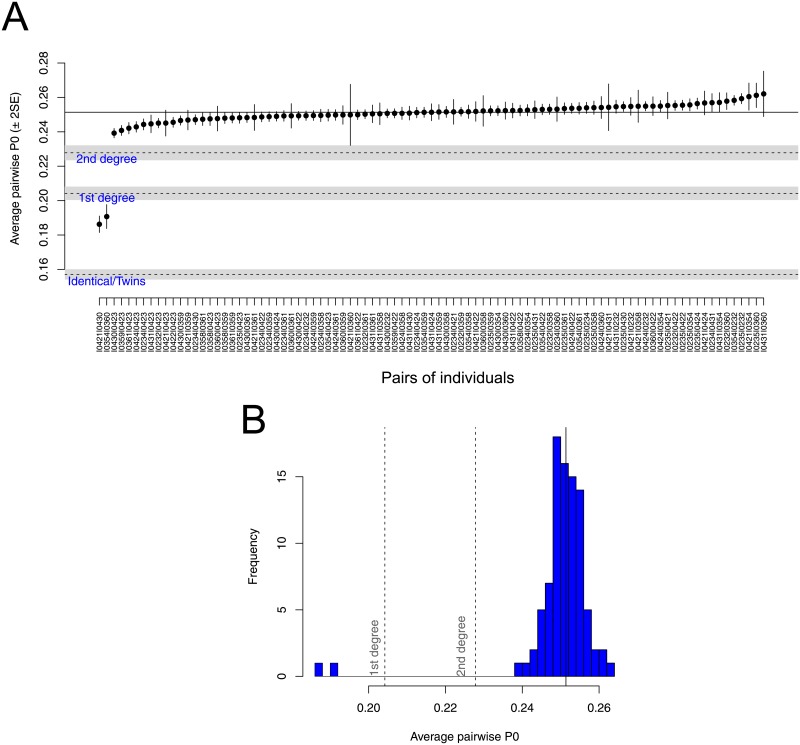
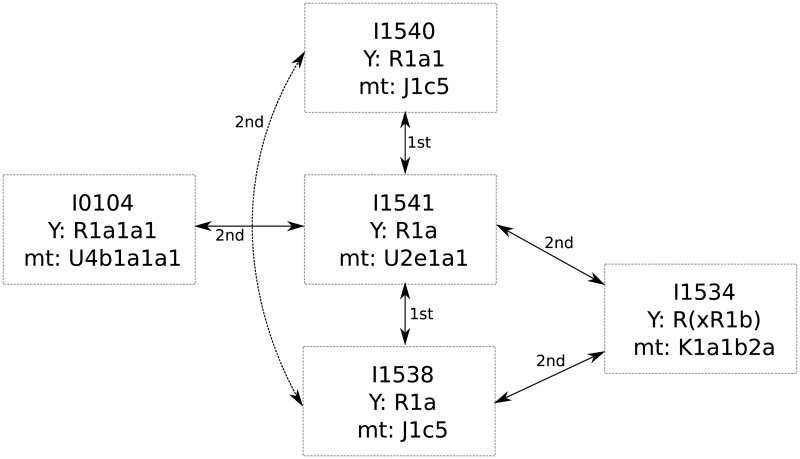
Archaeogenomic research has proven to be a valuable tool to trace migrations of historic and prehistoric individuals and groups, whereas relationships within a group or burial site have not been investigated to a large extent. Knowing the genetic kinship of historic and prehistoric individuals would give important insights into social structures of ancient and historic cultures. Most archaeogenetic research concerning kinship has been restricted to uniparental markers, while studies using genome-wide information were mainly focused on comparisons between populations. Applications which infer the degree of relationship based on modern-day DNA information typically require diploid genotype data. Low concentration of endogenous DNA, fragmentation and other post-mortem damage to ancient DNA (aDNA) makes the application of such tools unfeasible for most archaeological samples. To infer family relationships for degraded samples, we developed the software READ (Relationship Estimation from Ancient DNA). We show that our heuristic approach can successfully infer up to second degree relationships with as little as 0.1x shotgun coverage per genome for pairs of individuals. We uncover previously unknown relationships among prehistoric individuals by applying READ to published aDNA data from several human remains excavated from different cultural contexts. In particular, we find a group of five closely related males from the same Corded Ware culture site in modern-day Germany, suggesting patrilocality, which highlights the possibility to uncover social structures of ancient populations by applying READ to genome-wide aDNA data. READ is publicly available from https://bitbucket.org/tguenther/read.
Overview
The claims and statistics of this paper haven’t been checked yet.
Run the check — free, no account needed. It reads the open-access text and checks the sources it cites.
Integrity signals
Registry
Cites
Statistics
Figures
Verification
Claims the paper makes
The claims and statistics of this paper haven’t been checked yet.
Run the check — free, no account needed. It reads the open-access text and checks the sources it cites.
Claims other papers make about this one
Each is checked against this paper’s own text: does it say what the citing paper says it does?
The cited source says what the claim attributes to it.
In the citing paper
“We excluded two individuals from further analysis, as the genetic patterns observed using the method described in Kuhn et al.73. Showed that they were first-degree relatives of higher coverage samples in the dataset.”
From Ancient DNA from Chalcolithic Israel reveals the role of population mixture in cultural transformation (2018) · cites this paper as [73]
The cited source says what the claim attributes to it.
In the citing paper
“Using READ42 and NGSrelate243, we did not find any first- or second-degree relatives among the Ancient Rapanui (Supplementary Figs. 23 and 24 and Supplementary Information section 9) and detected a single pair of third- to fourth-degree relatives on the basis of IBD sharing (highest estimated IBD sharing >15 cM between any two individuals is <1,000 cM; Supplementary Information section 8 and”
From Ancient Rapanui genomes reveal resilience and pre-European contact with the Americas (2024) · cites this paper as [42]
The cited source says what the claim attributes to it.
In the citing paper
“Methods detecting genetic kinship generally make use of population panels in which expectations of identity-by-descent [G] (or allelic mismatch rates) can be derived in unrelated individuals [201][202][203] .”
From Ancient DNA analysis (2021) · cites this paper as [203]
Self-check
Percentages, sums and reported differences re-computed from the paper’s own numbers.
The self-check needs the paper’s full text.
Citations
Cites
R: A Language and Environment for Statistical Computing
R Core Team (2000) · doi:10.32614/r.manuals · Cited by 355,893
The Sequence Alignment/Map format and SAMtools
Li, H., Handsaker, B., Wysoker, A., Fennell, T., Ruan, J., Homer, N., Marth, G., Abecasis, G., Durbin, R., & 1000 Genome Project Data Processing Subgroup (2009) · Bioinformatics · doi:10.1093/bioinformatics/btp352 · Cited by 62,041
PLINK: a tool set for whole-genome association and population-based linkage analyses.
Purcell, S., Neale, B., Todd-Brown, K., Thomas, L., Ferreira, M. A. R., Bender, D., Maller, J., Sklar, P., de Bakker, P. I. W., Daly, M. J., et al. (2007) · The American Journal of Human Genetics · doi:10.1086/519795 · Cited by 34,089
A global reference for human genetic variation
The 1000 Genomes Project Consortium, authors, C., Auton, A., Abecasis, G. R., Steering committee, Altshuler, D. M., Durbin, R. M., Abecasis, G. R., Bentley, D. R., Chakravarti, A., et al. (2015) · Nature · doi:10.1038/nature15393 · Cited by 18,247
The variant call format and VCFtools
Danecek, P., Auton, A., Abecasis, G. R., Albers, C. A., Banks, E., DePristo, M. A., Handsaker, R. E., Lunter, G. A., Marth, G., Sherry, S. T., et al. (2011) · Bioinformatics · doi:10.1093/bioinformatics/btr330 · Cited by 16,450
Robust relationship inference in genome-wide association studies
Manichaikul, A., Mychaleckyj, J. C., Rich, S. S., Daly, K., Sale, M., & Chen, W.-M. (2010) · Bioinformatics · doi:10.1093/bioinformatics/btq559 · Cited by 3,541
The complete genome sequence of a Neanderthal from the Altai Mountains
Prüfer, K., Racimo, F., Patterson, N., Jay, F., Sankararaman, S., Sawyer, S., Heinze, A., Renaud, G., Sudmant, P. H., de Filippo, C., et al. (2014) · Nature · doi:10.1038/nature12886 · Cited by 2,254
Massive migration from the steppe was a source for Indo-European languages in Europe
Haak, W., Lazaridis, I., Patterson, N., Rohland, N., Mallick, S., Llamas, B., Brandt, G., Nordenfelt, S., Harney, E., Stewardson, K., et al. (2015) · Nature · doi:10.1038/nature14317 · Cited by 1,940
Prescribing Personalized Nutrition for Cardiovascular Health: Are We Ready?
Juma, S., Imrhan, V., Vijayagopal, P., & Prasad, C. (2014) · Lifestyle Genomics · doi:10.1159/000370213 · Cited by 1,908
The complete genome of an individual by massively parallel DNA sequencing
Wheeler, D. A., Srinivasan, M., Egholm, M., Shen, Y., Chen, L., McGuire, A., He, W., Chen, Y.-J., Makhijani, V., Roth, G. T., et al. (2008) · Nature · doi:10.1038/nature06884 · Cited by 1,838
mapDamage2.0: fast approximate Bayesian estimates of ancient DNA damage parameters
Jónsson, H., Ginolhac, A., Schubert, M., Johnson, P. L. F., & Orlando, L. (2013) · Bioinformatics · doi:10.1093/bioinformatics/btt193 · Cited by 1,669
The Simons Genome Diversity Project: 300 genomes from 142 diverse populations
Mallick, S., Li, H., Lipson, M., Mathieson, I., Gymrek, M., Racimo, F., Zhao, M., Chennagiri, N., Nordenfelt, S., Tandon, A., et al. (2016) · Nature · doi:10.1038/nature18964 · Cited by 1,584
Population genomics of Bronze Age Eurasia
Allentoft, M. E., Sikora, M., Sjögren, K.-G., Rasmussen, S., Rasmussen, M., Stenderup, J., Damgaard, P. B., Schroeder, H., Ahlström, T., Vinner, L., et al. (2015) · Nature · doi:10.1038/nature14507 · Cited by 1,550
The mystery of missing heritability: Genetic interactions create phantom heritability
Zuk, O., Hechter, E., Sunyaev, S. R., & Lander, E. S. (2012) · Proceedings of the National Academy of Sciences · doi:10.1073/pnas.1119675109 · Cited by 1,542
Genome-wide patterns of selection in 230 ancient Eurasians
Mathieson, I., Lazaridis, I., Rohland, N., Mallick, S., Patterson, N., Roodenberg, S. A., Harney, E., Stewardson, K., Fernandes, D., Novak, M., et al. (2015) · Nature · doi:10.1038/nature16152 · Cited by 1,515
The Impact of Genetic Relationship Information on Genome-Assisted Breeding Values
Habier, D., Fernando, R. L., & Dekkers, J. C. M. (2007) · Genetics · doi:10.1534/genetics.107.081190 · Cited by 1,364
Ancient human genomes suggest three ancestral populations for present-day Europeans
Lazaridis, I., Patterson, N., Mittnik, A., Renaud, G., Mallick, S., Kirsanow, K., Sudmant, P. H., Schraiber, J. G., Castellano, S., Lipson, M., et al. (2014) · Nature · doi:10.1038/nature13673 · Cited by 1,357
Ancient DNA: extraction, characterization, molecular cloning, and enzymatic amplification.
Pääbo, S. (1989) · Proceedings of the National Academy of Sciences · doi:10.1073/pnas.86.6.1939 · Cited by 1,020
Patterns of damage in genomic DNA sequences from a neandertal
Briggs, A. W., Stenzel, U., Johnson, P. L. F., Green, R. E., Kelso, J., Prüfer, K., Meyer, M., Krause, J., Ronan, M. T., Lachmann, M., et al. (2007) · Proceedings of the National Academy of Sciences · doi:10.1073/pnas.0704665104 · Cited by 981
Upper Palaeolithic Siberian genome reveals dual ancestry of Native Americans
Raghavan, M., Skoglund, P., Graf, K. E., Metspalu, M., Albrechtsen, A., Moltke, I., Rasmussen, S., Stafford Jr, T. W., Orlando, L., Metspalu, E., et al. (2014) · Nature · doi:10.1038/nature12736 · Cited by 963
Self-citationGenomic insights into the origin of farming in the ancient Near East
Lazaridis, I., Nadel, D., Rollefson, G., Merrett, D. C., Rohland, N., Mallick, S., Fernandes, D., Novak, M., Gamarra, B., Sirak, K., et al. (2016) · Nature · doi:10.1038/nature19310 · Cited by 955
Characterizing and measuring bias in sequence data
Ross, M. G., Russ, C., Costello, M., Hollinger, A., Lennon, N. J., Hegarty, R., Nusbaum, C., & Jaffe, D. B. (2013) · Genome Biology · doi:10.1186/gb-2013-14-5-r51 · Cited by 909
An early modern human from Romania with a recent Neanderthal ancestor
Fu, Q., Hajdinjak, M., Moldovan, O. T., Constantin, S., Mallick, S., Skoglund, P., Patterson, N., Rohland, N., Lazaridis, I., Nickel, B., et al. (2015) · Nature · doi:10.1038/nature14558 · Cited by 802
An aboriginal Australian genome reveals separate human dispersals into Asia
Rasmussen, M., Guo, X., Wang, Y., Lohmueller, K. E., Rasmussen, S., Albrechtsen, A., Skotte, L., Lindgreen, S., Metspalu, M., Jombart, T., et al. (2011) · Science · doi:10.1126/science.1211177 · Cited by 787
Insight into biases and sequencing errors for amplicon sequencing with the Illumina MiSeq platform
Schirmer, M., Ijaz, U. Z., D'Amore, R., Hall, N., Sloan, W. T., & Quince, C. (2015) · Nucleic Acids Research · doi:10.1093/nar/gku1341 · Cited by 743
A Revised Timescale for Human Evolution Based on Ancient Mitochondrial Genomes
Fu, Q., Mittnik, A., Johnson, P. L. F., Bos, K., Lari, M., Bollongino, R., Sun, C., Giemsch, L., Schmitz, R., Burger, J., et al. (2013) · Current Biology · doi:10.1016/j.cub.2013.02.044 · Cited by 709
Genome flux and stasis in a five millennium transect of European prehistory
Gamba, C., Jones, E. R., Teasdale, M. D., McLaughlin, R. L., Gonzalez-Fortes, G., Mattiangeli, V., Domboróczki, L., Kővári, I., Pap, I., Anders, A., et al. (2014) · Nature Communications · doi:10.1038/ncomms6257 · Cited by 667
Sequence-specific error profile of Illumina sequencers
Nakamura, K., Oshima, T., Morimoto, T., Ikeda, S., Yoshikawa, H., Shiwa, Y., Ishikawa, S., Linak, M. C., Hirai, A. M., Takahashi, H., et al. (2011) · Nucleic Acids Research · doi:10.1093/nar/gkr344 · Cited by 619
A Complete Neandertal Mitochondrial Genome Sequence Determined by High-Throughput Sequencing
Green, R. E., Malaspinas, A., Krause, J., Briggs, A. W., Johnson, P. L. F., Uhler, C., Meyer, M., Good, J. M., Maričić, T., Stenzel, U., et al. (2008) · Cell · doi:10.1016/j.cell.2008.06.021 · Cited by 608
Nuclear DNA sequences from the Middle Pleistocene Sima de los Huesos hominins
Meyer, M., Arsuaga, J.-L., de Filippo, C., Nagel, S., Aximu-Petri, A., Nickel, B., Martínez, I., Gracia, A., de Castro, J. M. B., Carbonell, E., et al. (2016) · Nature · doi:10.1038/nature17405 · Cited by 584
The genome of a Late Pleistocene human from a Clovis burial site in western Montana
Rasmussen, M., Anzick, S. L., Waters, M. R., Skoglund, P., DeGiorgio, M., Stafford, T. W., Rasmussen, S., Moltke, I., Albrechtsen, A., Doyle, S. M., et al. (2014) · Nature · doi:10.1038/nature13025 · Cited by 562
Self-citationOrigins and Genetic Legacy of Neolithic Farmers and Hunter-Gatherers in Europe
Skoglund, P., Malmström, H., Raghavan, M., Storå, J., Hall, P., Willerslev, E., Gilbert, M. T. P., Götherström, A., & Jakobsson, M. (2012) · Science · doi:10.1126/science.1216304 · Cited by 521
Self-citationSchmutzi: estimation of contamination and endogenous mitochondrial consensus calling for ancient DNA
Renaud, G., Slon, V., Duggan, A. T., & Kelso, J. (2015) · Genome Biology · doi:10.1186/s13059-015-0776-0 · Cited by 509
Separating endogenous ancient DNA from modern day contamination in a Siberian Neandertal
Skoglund, P., Northoff, B. H., Shunkov, M. V., Derevianko, A. P., Pääbo, S., Krause, J., & Jakobsson, M. (2014) · Proceedings of the National Academy of Sciences · doi:10.1073/pnas.1318934111 · Cited by 499
Self-citationRemoval of deaminated cytosines and detection of in vivo methylation in ancient DNA
Briggs, A. W., Stenzel, U., Meyer, M., Krause, J., Kircher, M., & Pääbo, S. (2010) · Nucleic Acids Research · doi:10.1093/nar/gkp1163 · Cited by 491
Temporal patterns of nucleotide misincorporations and DNA fragmentation in ancient DNA
Sawyer, S., Krause, J., Guschanski, K., Savolainen, V., & Pääbo, S. (2012) · PLoS ONE · doi:10.1371/journal.pone.0034131 · Cited by 489
Early farmers from across Europe directly descended from Neolithic Aegeans
Hofmanová, Z., Kreutzer, S., Hellenthal, G., Sell, C., Diekmann, Y., Díez-del-Molino, D., van Dorp, L., López, S., Kousathanas, A., Link, V., et al. (2016) · Proceedings of the National Academy of Sciences · doi:10.1073/pnas.1523951113 · Cited by 488
Jun, G., Flickinger, M., Hetrick, K. N., Romm, J. M., Doheny, K. F., Abecasis, G. R., Boehnke, M., & Kang, H. M. (2012) · The American Journal of Human Genetics · doi:10.1016/j.ajhg.2012.09.004 · Cited by 484
Detection of sharing by descent, long-range phasing and haplotype imputation
Kong, A., Masson, G., Frigge, M. L., Gylfason, A., Zusmanovich, P., Thorleifsson, G., Olason, P. I., Ingason, A., Steinberg, S., Rafnar, T., et al. (2008) · Nature Genetics · doi:10.1038/ng.216 · Cited by 447 · cited 1×
“Knowledge about IBD segments has been used for haplotype 4 phasing [1, 2], heritability estimation [3, 4], population history [5], inference of natural 5 selection [6] and to estimate the degree of biological relationship among individuals [7].”
MethodNew insights into the Tyrolean Iceman's origin and phenotype as inferred by whole-genome sequencing
Keller, A., Graefen, A., Ball, M., Matzas, M., Boisguerin, V., Maixner, F., Leidinger, P., Backes, C., Khairat, R., Forster, M., et al. (2012) · Nature Communications · doi:10.1038/ncomms1701 · Cited by 437
The Geography of Recent Genetic Ancestry across Europe
Ralph, P. L., & Coop, G. (2013) · PLoS Biology · doi:10.1371/journal.pbio.1001555 · Cited by 384
Genomic Diversity and Admixture Differs for Stone-Age Scandinavian Foragers and Farmers
Skoglund, P., Malmström, H., Omrak, A., Raghavan, M., Valdiosera, C. E., Günther, T., Hall, P. N., Tambets, K., Parik, J., Sjögren, K.-G., et al. (2014) · Science · doi:10.1126/science.1253448 · Cited by 380
Self-citationGenetic relatedness analysis: modern data and new challenges
Weir, B. S., Anderson, A. D., & Hepler, A. B. (2006) · Nature Reviews Genetics · doi:10.1038/nrg1960 · Cited by 371
Improving ancient DNA read mapping against modern reference genomes
Schubert, M., Ginolhac, A., Lindgreen, S., Thompson, J. F., AL-Rasheid, K. A., Willerslev, E., Krogh, A., & Orlando, L. (2012) · BMC Genomics · doi:10.1186/1471-2164-13-178 · Cited by 325
Ancient genomes show social and reproductive behavior of early Upper Paleolithic foragers
Sikora, M., Seguin-Orlando, A., Sousa, V. C., Albrechtsen, A., Korneliussen, T., Ko, A., Rasmussen, S., Dupanloup, I., Nigst, P. R., Bosch, M. D., et al. (2017) · Science · doi:10.1126/science.aao1807 · Cited by 312
Haak, W., Brandt, G., de Jong, H. N., Meyer, C., Ganslmeier, R., Heyd, V., Hawkesworth, C. J., Pike, A. W. G., Meller, H., & Alt, K. W. (2008) · Proceedings of the National Academy of Sciences · doi:10.1073/pnas.0807592105 · Cited by 309
Archaeogenomic evidence reveals prehistoric matrilineal dynasty
Kennett, D. J., Plog, S., George, R. J., Culleton, B. J., Watson, A. S., Skoglund, P., Rohland, N., Mallick, S., Stewardson, K., Kistler, L., et al. (2017) · Nature Communications · doi:10.1038/ncomms14115 · Cited by 301
Ancient genomes link early farmers from Atapuerca in Spain to modern-day Basques
Günther, T., Valdiosera, C., Malmström, H., Ureña, I., Rodriguez-Varela, R., Sverrisdóttir, Ó. O., Daskalaki, E. A., Skoglund, P., Naidoo, T., Svensson, E. M., et al. (2015) · Proceedings of the National Academy of Sciences · doi:10.1073/pnas.1509851112 · Cited by 278
Self-citationSlatkin, M., & Racimo, F. (2016) · Proceedings of the National Academy of Sciences · doi:10.1073/pnas.1524306113 · Cited by 265
Neolithic and Bronze Age migration to Ireland and establishment of the insular Atlantic genome
Cassidy, L. M., Martiniano, R., Murphy, E., Teasdale, M. D., Mallory, J. P., Hartwell, B., & Bradley, D. G. (2015) · Proceedings of the National Academy of Sciences · doi:10.1073/pnas.1518445113 · Cited by 256
40,000-Year-Old Individual from Asia Provides Insight into Early Population Structure in Eurasia
Yang, M. A., Gao, X., Theunert, C., Tong, H., Aximu‐Petri, A., Nickel, B., Slatkin, M., Meyer, M., Pääbo, S., Kelso, J. F., et al. (2017) · Current Biology · doi:10.1016/j.cub.2017.09.030 · Cited by 244
Estimating Kinship in Admixed Populations
Thornton, T. A., Tang, H., Hoffmann, T. J., Ochs‐Balcom, H. M., Caan, B. J., & RISCH, N. J. (2012) · The American Journal of Human Genetics · doi:10.1016/j.ajhg.2012.05.024 · Cited by 210
Identity by Descent Between Distant Relatives: Detection and Applications
Browning, S. R., & Browning, B. L. (2012) · Annual Review of Genetics · doi:10.1146/annurev-genet-110711-155534 · Cited by 206
Identification of the remains of King Richard III
King, T. E., Fortes, G. G., Balaresque, P., Thomas, M. G., Balding, D., Delser, P. M., Neumann, R., Parson, W., Knapp, M., Walsh, S., et al. (2014) · Nature Communications · doi:10.1038/ncomms6631 · Cited by 200
Extensive Farming in Estonia Started through a Sex-Biased Migration from the Steppe
Saag, L., Varul, L., Scheib, C. L., Stenderup, J. T., Allentoft, M. E., Saag, L., Pagani, L., Reidla, M., Tambets, K., Metspalu, E., et al. (2017) · Current Biology · doi:10.1016/j.cub.2017.06.022 · Cited by 186
NgsRelate: a software tool for estimating pairwise relatedness from next-generation sequencing data
Korneliussen, T. S., & Moltke, I. (2015) · Bioinformatics · doi:10.1093/bioinformatics/btv509 · Cited by 172
Maximum-likelihood estimation of recent shared ancestry (ERSA)Preprint
Huff, C. D., Witherspoon, D. J., Simonson, T. S., Xing, J., Watkins, W. S., Zhang, Y., Tuohy, T. M. F., Neklason, D. W., Burt, R. W., Guthery, S. L., et al. (2011) · Genome Research · doi:10.1101/gr.115972.110 · Cited by 164
gargammel: a sequence simulator for ancient DNA
Renaud, G., Hanghøj, K., Willerslev, E., & Orlando, L. (2017) · Bioinformatics · doi:10.1093/bioinformatics/btw670 · Cited by 150
Oliehoek, P. A., WINDIG, J. J., van Arendonk, J. A. M., & Bijma, P. (2006) · Genetics · doi:10.1534/genetics.105.049940 · Cited by 144
Ancient X chromosomes reveal contrasting sex bias in Neolithic and Bronze Age Eurasian migrations
Goldberg, A., Günther, T., Rosenberg, N. A., & Jakobsson, M. (2017) · Proceedings of the National Academy of Sciences · doi:10.1073/pnas.1616392114 · Cited by 135
Self-citationWaples, R. K., Albrechtsen, A., & Moltke, I. (2018) · Molecular Ecology · doi:10.1111/mec.14954 · Cited by 130
Natural Selection and the Distribution of Identity-by-Descent in the Human Genome
Albrechtsen, A., Moltke, I., & Nielsen, R. (2010) · Genetics · doi:10.1534/genetics.110.113977 · Cited by 108
Maximum Likelihood Estimation of Biological Relatedness from Low Coverage Sequencing Data
Lipatov, M., Sanjeev, K., Patro, R., & Veeramah, K. R. (2015) · doi:10.1101/023374 · Cited by 108
Diet and Mobility in the Corded Ware of Central Europe
Sjögren, K.-G., Price, T. D., & Kristiansen, K. (2016) · PLoS ONE · doi:10.1371/journal.pone.0155083 · Cited by 98
Assessment of DNA degradation and the genotyping success of highly degraded samples
Hughes-Stamm, S. R., Ashton, K. J., & van Daal, A. (2010) · International Journal of Legal Medicine · doi:10.1007/s00414-010-0455-3 · Cited by 84
Relationship Estimation from Whole-Genome Sequence Data
Li, H., Glusman, G., Hu, H., Shankaracharya, N. A., Caballero-Pérez, J., Hubley, R. M., Witherspoon, D. J., Guthery, S. L., Mauldin, D. E., Jorde, L. B., et al. (2014) · PLoS Genetics · doi:10.1371/journal.pgen.1004144 · Cited by 75
RelateAdmix: a software tool for estimating relatedness between admixed individuals
Moltke, I., & Albrechtsen, A. (2013) · Bioinformatics · doi:10.1093/bioinformatics/btt652 · Cited by 66
The archaeology of kinship: advancing interpretation and contributions to theory
(2014) · Choice Reviews Online · doi:10.5860/choice.52-0345 · Cited by 65
Genes mirror migrations and cultures in prehistoric Europe — a population genomic perspective
Günther, T., & Jakobsson, M. (2016) · Current Opinion in Genetics & Development · doi:10.1016/j.gde.2016.09.004 · Cited by 55
Self-citationEstimating IBD tracts from low coverage NGS data
Vieira, F. G., Albrechtsen, A., & Nielsen, R. (2016) · Bioinformatics · doi:10.1093/bioinformatics/btw212 · Cited by 44
Visualization of Shared Genomic Regions and Meiotic Recombination in High-Density SNP Data
Roberson, E. D. O., & Pevsner, J. (2009) · PLoS ONE · doi:10.1371/journal.pone.0006711 · Cited by 42
Identity‐by‐descent‐based phasing and imputation in founder populations using graphical models
Palin, K., Campbell, H. J., Wright, A. F., Wilson, J. F., & Durbin, R. M. (2011) · Genetic Epidemiology · doi:10.1002/gepi.20635 · Cited by 34
Deguilloux, M., Pemonge, M., Mendisco, F., Thibon, D., Cartron, I., & Castex, D. (2013) · Journal of Archaeological Science · doi:10.1016/j.jas.2013.09.006 · Cited by 33
Current Status of the Use of Single-Nucleotide Polymorphisms in Forensic Practices
Cantürk, K. M., Emre, R., Kınoğlu, K., Başpınar, B., Şahin, F., & Özen, M. (2014) · Genetic Testing and Molecular Biomarkers · doi:10.1089/gtmb.2013.0466 · Cited by 28
Cui, Y., Song, L., Wei, D., Pang, Y., Wang, N., Ning, C., Li, C., Feng, B., Tang, W., Li, H., et al. (2014) · Philosophical Transactions of the Royal Society B Biological Sciences · doi:10.1098/rstb.2013.0378 · Cited by 25
Early farmers from across Europe directly descended from Neolithic AegeansPreprint
Hofmanová, Z., Kreutzer, S., Hellenthal, G., et al. (2015) · bioRxiv (Cold Spring Harbor Laboratory) · doi:10.1101/032763 · Cited by 25
Accurate and Robust Prediction of Genetic Relationship from Whole-Genome Sequences
Li, H., Glusman, G., Huff, C. D., Caballero-Pérez, J., & Roach, J. C. (2014) · PLoS ONE · doi:10.1371/journal.pone.0085437 · Cited by 22
A method for positive forensic identification of samples from extremely low-coverage sequence data
Vohr, S. H., Najar, C. F. B. A., Shapiro, B., & Green, R. E. (2015) · BMC Genomics · doi:10.1186/s12864-015-2241-6 · Cited by 18
Fernandes, D., Sirak, K. A., Novak, M., Finarelli, J. A., Byrne, J., Connolly, E., Carlsson, J. E. L., Ferretti, E., Pinhasi, R., & Carlsson, J. (2017) · Scientific Reports · doi:10.1038/srep41529 · Cited by 14
Martin, M. D., Jay, F., Castellano, S., & Slatkin, M. (2017) · Molecular Ecology · doi:10.1111/mec.14188 · Cited by 13
Waples, R. K., Albrechtsen, A., & Moltke, I. (2018) · bioRxiv (Cold Spring Harbor Laboratory) · doi:10.1101/260497 · Cited by 11
Joint Estimation of Relatedness Coefficients and Allele Frequencies from Ancient Samples
Theunert, C., Racimo, F., & Slatkin, M. (2017) · Genetics · doi:10.1534/genetics.117.200600 · Cited by 7
Joint estimation of relatedness coefficients and allele frequencies from ancient samplesPreprint
Theunert, C., Racimo, F., & Slatkin, M. (2017) · bioRxiv (Cold Spring Harbor Laboratory) · doi:10.1101/103903 · Cited by 4
Research works printed but not linked: 1
- Van Rossum G, et al. Python Programming Language. In: USENIX Annual Technical Conference. vol. 41; 2007.
Cited by
Sorted by citations
The genomic history of the Iberian Peninsula over the past 8000 years
Olalde, I., Mallick, S., Patterson, N., Rohland, N., Villalba-Mouco, V., Silva, M., Dulias, K., Edwards, C. J., Gandini, F., Pala, M., et al. (2019) · Science · doi:10.1126/science.aav4040 · Cited by 552
Southern African ancient genomes estimate modern human divergence to 350,000 to 260,000 years ago
Schlebusch, C. M., Malmström, H., Günther, T., Sjödin, P., Coutinho, A., Edlund, H., Munters, A. R., Vicente, M., Steyn, M., Soodyall, H., et al. (2017) · Science · doi:10.1126/science.aao6266 · Cited by 519
Self-citationGenomic insights into the formation of human populations in East Asia
Wang, C., Yeh, H., Popov, А. N., Zhang, H., Matsumura, H., Sirak, K. A., Cheronet, O., Kovalev, A., Rohland, N., Kim, A. M., et al. (2021) · Nature · doi:10.1038/s41586-021-03336-2 · Cited by 437
Orlando, L., Allaby, R., Skoglund, P., Der Sarkissian, C., Stockhammer, P. W., Ávila-Arcos, M. C., Fu, Q., Krause, J., Willerslev, E., Stone, A. C., et al. (2021) · Nature Reviews Methods Primers · doi:10.1038/s43586-020-00011-0 · Cited by 411
Ancient genomes show social and reproductive behavior of early Upper Paleolithic foragers
Sikora, M., Seguin-Orlando, A., Sousa, V. C., Albrechtsen, A., Korneliussen, T., Ko, A., Rasmussen, S., Dupanloup, I., Nigst, P. R., Bosch, M. D., et al. (2017) · Science · doi:10.1126/science.aao1807 · Cited by 312
Metadata
- Authors
- Monroy Kuhn, J. M., Jakobsson, M., & Günther, T.
- Affiliations
- Uppsala University (SE)
- Corresponding author
- Jakobsson, Mattias
- Günther, Torsten
- Venue
- PLOS ONE
- Publisher
- Public Library of Science (PLoS)
- Published
- 2018-04-23
- Volume
- 13
- Issue
- 4
- Pages
- e0195491
- ISSN
- 1932-6203 (ISSN-L)
- PMC
- PMC5912749
- OpenAlex
- W2950454348
- Cited by
- 330
- References
- 79
- Citations by year
- 2026: 31 · 2025: 47 · 2024: 53 · 2023: 62 · 2022: 40 · 2021: 42 · 2020: 23 · 2019: 19 · 2018: 11
- FWCI
- 14.33
- Type
- journal article
- Language
- en
- Open access
- gold
- doi.org
- Licence
- Locations
- PLoS ONE (publishedVersion, cc-by)
- bioRxiv (Cold Spring Harbor Laboratory) (acceptedVersion, cc-by-nc)
- Europe PMC (PubMed Central) (publishedVersion, cc-by)
- PubMed Central (publishedVersion, cc-by)
- PubMed (publishedVersion)
- Uppsala University Publications (Uppsala University) (submittedVersion, other-oa)
- DOAJ (DOAJ: Directory of Open Access Journals) (submittedVersion)
- Figshare (submittedVersion, cc-by)
- FreiDok plus (Universitätsbibliothek Freiburg) (submittedVersion)
- Funders
- Erasmus Mundus Master Programme in Evolutionary Biology
- Consejo Nacional de Ciencia y Tecnología
- European Research Council (311413)
- Vetenskapsrådet
- Wenner-Gren-Foundations
- Riksbankens Jubileumsfond
- Knut och Alice Wallenbergs Stiftelse
- Topics
- Life Sciences › Biochemistry, Genetics and Molecular Biology › Genetics › Forensic and Genetic Research
- Life Sciences › Biochemistry, Genetics and Molecular Biology › Genetics › Genetic diversity and population structure
- Social Sciences › Arts and Humanities › Archeology (arts and humanities) › Forensic Anthropology and Bioarchaeology Studies
- Keywords
- genetic relatedness, ancient DNA, prehistoric humans, Corded Ware culture, patrilocality, social structure, degraded DNA, shotgun sequencing, human remains
- MeSH terms
- DNA, Ancient, Computer Simulation, DNA, Mitochondrial, Family, Germany, Haplotypes, Humans, Male, Models, Genetic, Software, Sequence Analysis, DNA, Polymorphism, Single Nucleotide, Chromosomes, Human, Y, DNA Fragmentation
About these checks
Registry, retraction, Cites and statistics results are computed, not judged, with one exception: a printed reference that no index lists is read once by a model before it counts as a citation error. Claims are extracted by a model and kept only when their quote appears verbatim in the text; each cited source is then checked, with a model’s help, for whether it says what the claim relies on. Those verdicts can be wrong — read the claim’s quote and the cited source before relying on one.
Statistics and arithmetic are recomputed, not judged.
Confidence bands are shown only for fields calibrated on our annotated test set. None is calibrated yet, so no band is shown.
What counts as a claim ›How we measure confidence ›How we check this ›
Are you an author, or do you see a problem with this page? Request a review
