

Manipulating graded exercise test variables affects the validity of the lactate threshold and V˙O2peak
Open accessThe DOI matches its Crossref record; 60 of the 64 references it cites were found in a registry or an index, and 3 are not checked yet.
Abstract
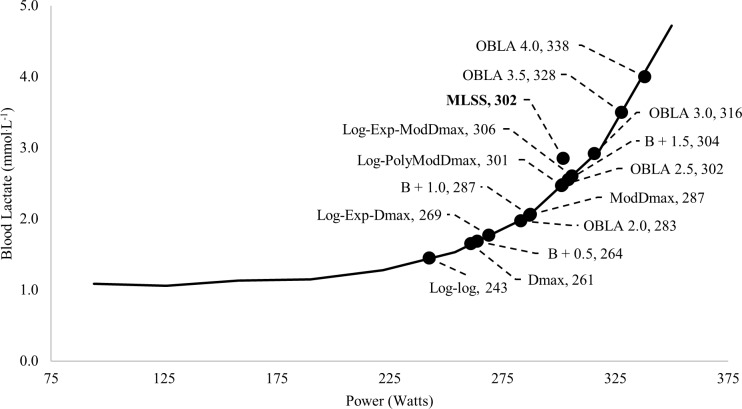
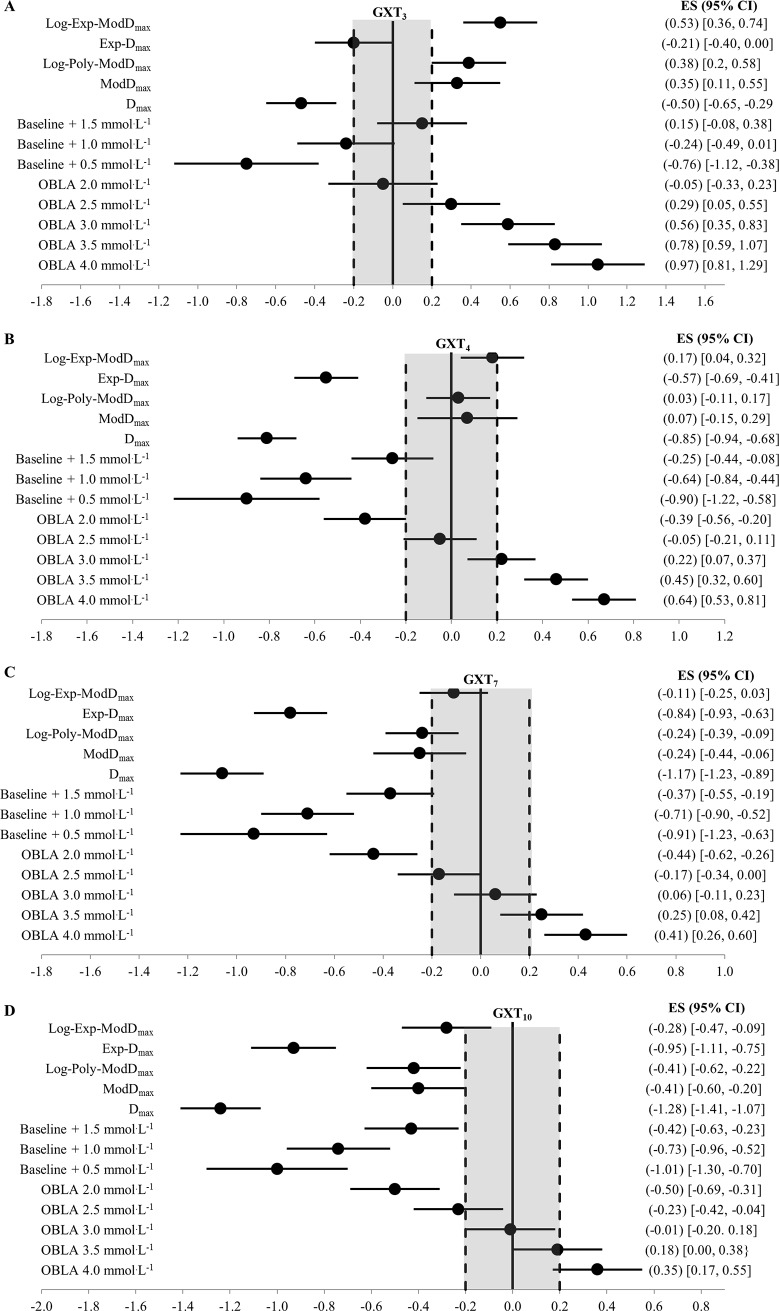
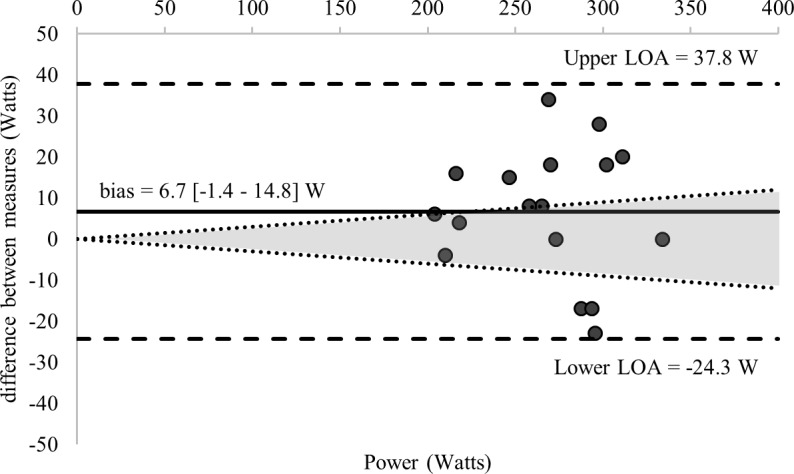
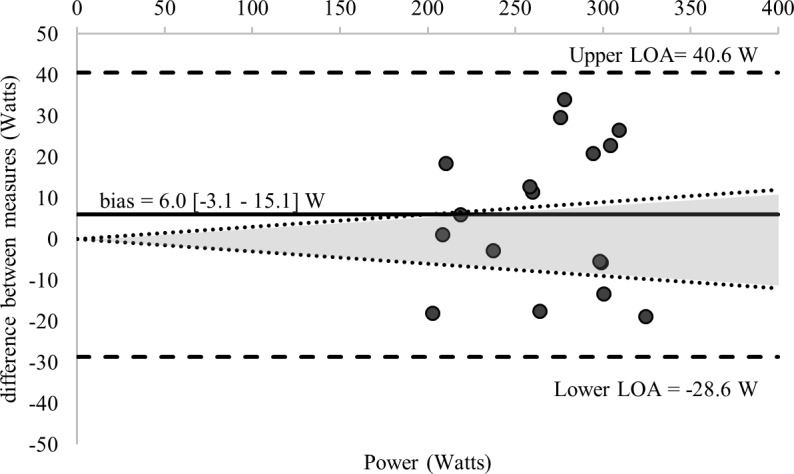
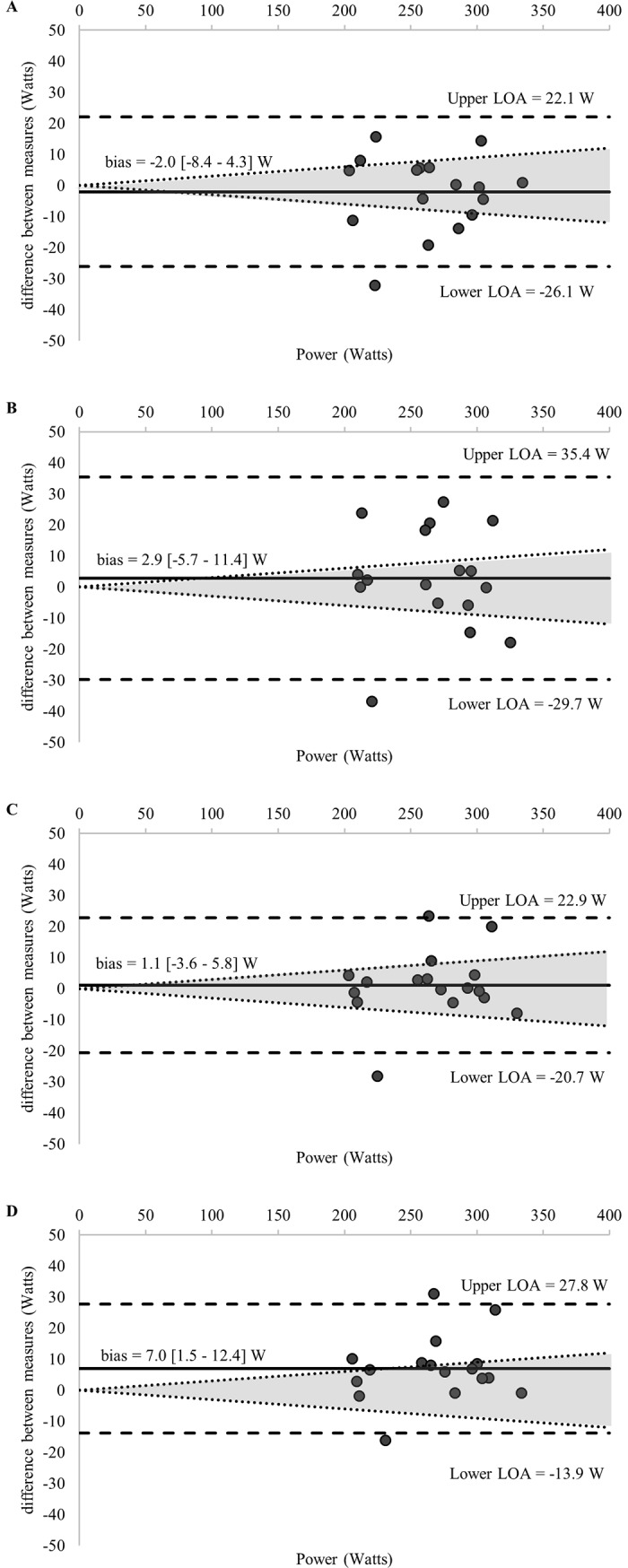
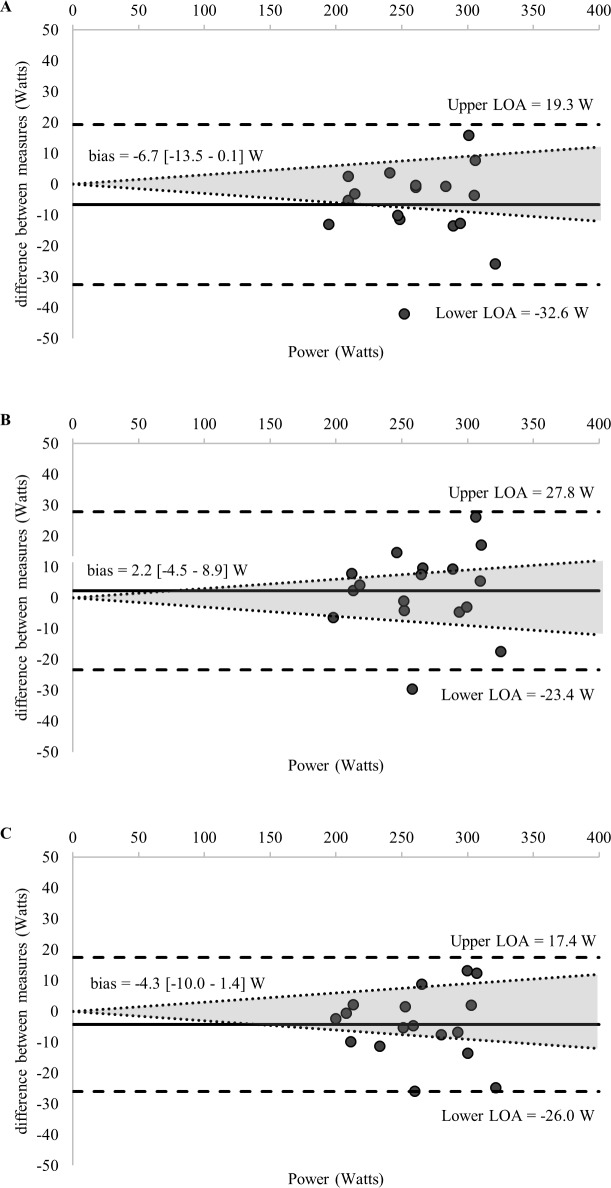
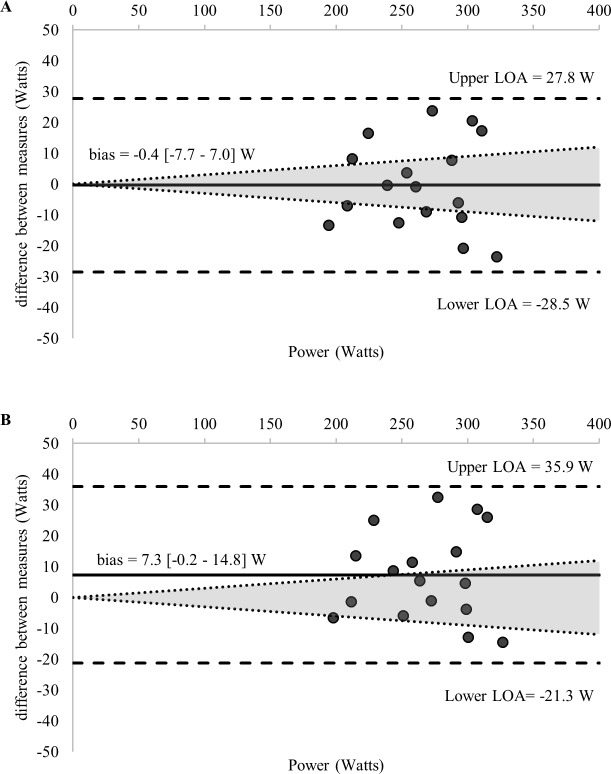
Background To determine the validity of the lactate threshold (LT) and maximal oxygen uptake ( _ VO 2max ) determined during graded exercise test (GXT) of different durations and using different LT calculations.Trained male cyclists (n = 17) completed five GXTs of varying stage length (1, 3, 4, 7 and 10 min) to establish the LT, and a series of 30-min constant power bouts to establish the maximal lactate steady state (MLSS)._ VO 2 was assessed during each GXT and a subsequent verification exhaustive bout (VEB), and 14 different LTs were calculated from four of the GXTs (3, 4, 7 and 10 min)-yielding a total 56 LTs.Agreement was assessed between the highest _ VO 2 measured during each GXT ( _ VO 2peak ) as well as between each LT and MLSS._ VO 2peak and LT data were analysed using mean difference (MD) and intraclass correlation (ICC). ResultsThe _ VO 2peak value from GXT 1 was 61.0 ± 5.3 mL .kg -1.min -1 and the peak power 420 ± 55 W (mean ± SD).The power at the MLSS was 264 ± 39 W. _ VO 2peak from GXT 3, 4, 7, 10 underestimated _ VO 2peak by ~1-5 mL .kg -1.min -1 .Many of the traditional LT methods were not valid and a newly developed Modified D max method derived from GXT 4 provided the most valid estimate of the MLSS (MD = 1.1 W; ICC = 0.96). ConclusionThe data highlight how GXT protocol design and data analysis influence the determination of both _ VO 2peak and LT.It is also apparent that _ VO 2max and LT cannot be determined in a single GXT, even with the inclusion of a VEB.
Overview
The claims and statistics of this paper haven’t been checked yet.
Free: it reads the open-access text and checks the first 5 claims that cite a source we can check. Create a free account to check every claim.
Integrity signals
Registry
Cites
Statistics
Figures
Verification
Claims the paper makes
The claims and statistics of this paper haven’t been checked yet.
Free: it reads the open-access text and checks the first 5 claims that cite a source we can check. Create a free account to check every claim.
Claims other papers make about this one
Each is checked against this paper’s own text: does it say what the citing paper says it does?
The source backs part of the claim, not all of it — or backs it for a different population, condition or comparison.
In the citing paper
“Furthermore, BLa threshold determinations are highly dependent on the structure of the GXT protocol used and the method chosen to calculate LT1 and LT2 (Jamnick et al., 2018).”
From Monitoring skeletal muscle oxygen saturation kinetics during graded exercise testing in NCAA division I female rowers (2025) · cites this paper as Jamnick et al., 2018
Experimental — accuracy not yet measuredThe source backs part of the claim, not all of it — or backs it for a different population, condition or comparison.
In the citing paper
“Work steps are ideally 3 min in duration or longer to permit physiological measures to reach a relative steady-state at each workload (25, 26).”
From Comparing the reliability of muscle oxygen saturation with common performance and physiological markers across cycling exercise intensity (2023) · cites this paper as [25]
Experimental — accuracy not yet measuredThe cited source says what the claim attributes to it.
In the citing paper
“But there is one main problem with maximal incremental tests to establish a lactate threshold, as there is a lack of consensus on the protocol to be used, i.e., in the variables of: total duration, duration of each stage, change in intensity of each stage, and total number of stages or incremental stages (Bentley et al., 2007; Jamnick et al., 2018).”
From The relationship of muscle oxygen saturation analyzer with other monitoring and quantification tools in a maximal incremental treadmill test (2023) · cites this paper as Jamnick et al., 2018
Self-check
Percentages, sums and reported differences re-computed from the paper’s own numbers.
The self-check needs the paper’s full text.
Citations
Cites
STATISTICAL METHODS FOR ASSESSING AGREEMENT BETWEEN TWO METHODS OF CLINICAL MEASUREMENT
Martin Bland, J., & Altman, D. (1986) · The Lancet · doi:10.1016/s0140-6736(86)90837-8 · Cited by 47,965
(2014) · Medical Entomology and Zoology · Cited by 9,400
Progressive Statistics for Studies in Sports Medicine and Exercise Science
HOPKINS, W. G., MARSHALL, S. W., BATTERHAM, A. M., & HANIN, J. (2009) · Medicine & Science in Sports & Exercise · doi:10.1249/mss.0b013e31818cb278 · Cited by 9,128 · cited 1×
“Agreement between the MLSS and the calculated LTs was evaluated using a two-way mixed intraclass correlation coefficient (ICC), standard error of the measurement (SEM), Lin’s concordance correlation coefficient (pc) [46], Bland-Altman plots [47], (r), CV% [48, 49] and a magnitude-based inference approach involving sta…”
MethodA concordance correlation coefficient to evaluate reproducibility.
Lin, L. I.-K. (1989) · Biometrics · doi:10.2307/2532051 · Cited by 8,785
Cohen, J. (1992) · Psychological Bulletin · doi:10.1037//0033-2909.112.1.155 · Cited by 8,771
Measures of Reliability in Sports Medicine and Science
Hopkins, W. G. (2000) · Sports Medicine · doi:10.2165/00007256-200030010-00001 · Cited by 4,635 · cited 6×
“Agreement between _ VO2 measured during each GXT and subsequent VEB was evaluated using intraclass calculation coefficient (ICC), SEM, and CV% [49].”
MethodInfluentialA new method for detecting anaerobic threshold by gas exchange
Beaver, W. L., Wasserman, K., & Whipp, B. J. (1986) · Journal of Applied Physiology · doi:10.1152/jappl.1986.60.6.2020 · Cited by 4,103
Thompson, P. D., Arena, R., Riebe, D., & Pescatello, L. S. (2013) · Current Sports Medicine Reports · doi:10.1249/jsr.0b013e31829a68cf · Cited by 1,823
Justification of the 4-mmol/l lactate threshold
Heck, H., Mader, A., Hess, G., Mücke, S., Müller, R., & Hollmann, W. (1985) · International Journal of Sports Medicine · doi:10.1055/s-2008-1025824 · Cited by 888 · cited 3×
“It is also worth noting that the original authors cautioned the use of this OBLA method, given the lack of a significant correlation when comparing OBLA methods from a GXT and the MLSS [24].”
BackgroundMethodLactate Threshold Concepts: How Valid are They?
Faude, O., Kindermann, W., & Meyer, T. (2009) · Sports Medicine · doi:10.2165/00007256-200939060-00003 · Cited by 882
Research works printed but not linked: 3
- Heck H, Mader A, Hess G, Mücke S, Müller R, Hollmann W. Justification of the 4-mmol/l lactate threshold. International Journal of Sports Medicine. 1985;(6): 117– 30. 4030186 · DOI · Paper page
- Kindermann W, Simon G, Keul J. The significance of the aerobic-anaerobic transition for the determination of work load intensities during endurance training. European Journal of Applied Physiology and Occupational Physiology. 1979; 42(1): 25– 34. 499194 · DOI · Paper page
- Hopkins W. Analysis of validity by linear regression (Excel spreadsheet). 2015; 19: 36– 44.
Cited by
An Examination and Critique of Current Methods to Determine Exercise Intensity
Jamnick, N. A., Pettitt, R. W., Granata, C., Pyne, D. B., & Bishop, D. J. (2020) · Sports Medicine · doi:10.1007/s40279-020-01322-8 · Cited by 424
Self-citationThe maximal metabolic steady state: redefining the ‘gold standard’
Jones, A. M., Burnley, M., Black, M. I., Poole, D. C., & Vanhatalo, A. (2019) · Physiological Reports · doi:10.14814/phy2.14098 · Cited by 298
The anaerobic threshold: 50+ years of controversy
Poole, D. C., Rossiter, H. B., Brooks, G. A., & Gladden, L. B. (2021) · The Journal of Physiology · doi:10.1113/jp279963 · Cited by 312
“…the individual anaerobic threshold, the respiratory (or ventilatory) compensation point/threshold (RCP/RCT), the La− turnpoint (Smith & Jones, 2001), the aerobic/anaerobic threshold, theMLSS and the fatigue threshold amongmany others (Figs 10 and 12) (rev. Faude et al. 2009; Jamnick et al. 2018).”
BackgroundMethodInfluentialPhysiological demands of running at 2-hour marathon race pace
Jones, A. M., Kirby, B. S., Clark, I. E., Rice, H. M., Fulkerson, E., Wylie, L. J., Wilkerson, D. P., Vanhatalo, A., & Wilkins, B. W. (2021) · Journal of Applied Physiology · doi:10.1152/japplphysiol.00647.2020 · Cited by 200
Identification of Non-Invasive Exercise Thresholds: Methods, Strategies, and an Online App
Keir, D. A., Iannetta, D., Mattioni Maturana, F., Kowalchuk, J. M., & Murias, J. M. (2022) · Sports Medicine · doi:10.1007/s40279-021-01581-z · Cited by 193
Metadata
- Authors
- Jamnick, N. A., Botella, J., Pyne, D. B., & Bishop, D. J.
- Affiliations
- Victoria University (AU)
- University of Canberra (AU)
- Edith Cowan University (AU)
- Corresponding author
- Jamnick, Nicholas A.
- Venue
- PLOS ONE
- Publisher
- Public Library of Science (PLoS)
- Published
- 2018-07-30
- Volume
- 13
- Issue
- 7
- Pages
- e0199794
- ISSN
- 1932-6203 (ISSN-L)
- PMC
- PMC6066218
- OpenAlex
- W2887008427
- Cited by
- 178
- References
- 64
- Citations by year
- 2026: 17 · 2025: 29 · 2024: 34 · 2023: 15 · 2022: 20 · 2021: 27 · 2020: 17 · 2019: 14 · 2018: 5
- FWCI
- 21.96
- Type
- journal article
- Language
- en
- Open access
- gold
- doi.org
- Licence
- Locations
- PLoS ONE (publishedVersion, cc-by)
- Europe PMC (PubMed Central) (publishedVersion, cc-by)
- PubMed Central (publishedVersion, cc-by)
- PubMed (publishedVersion)
- Australasian Journal of Paramedicine (submittedVersion, cc-by)
- Victoria University Research Repository (Victoria University) (submittedVersion, cc-by)
- RePEc: Research Papers in Economics (submittedVersion)
- DOAJ (DOAJ: Directory of Open Access Journals) (submittedVersion, cc-by-sa)
- Deakin Research Online (Deakin University) (submittedVersion)
- Figshare (submittedVersion, cc-by)
- Griffith Research Online (submittedVersion, cc-by)
- OSF Preprints (OSF Preprints) (submittedVersion)
- Funders
- Victoria University
- Topics
- Health Sciences › Medicine › Physiology (medical) › Cardiovascular and exercise physiology
- Health Sciences › Medicine › Orthopedics and Sports Medicine › Sports Performance and Training
- Health Sciences › Nursing › Nutrition and Dietetics › Muscle metabolism and nutrition
- Keywords
- lactate threshold, VO2max, incremental exercise test, test length, maximal lactate steady state, test protocol design, cyclists
- MeSH terms
- Adult, Exercise Test, Humans, Male, Anaerobic Threshold, Lactic Acid
About these checks
Registry, retraction, Cites and statistics results are computed, not judged, with one exception: a printed reference that no index lists is read once by a model before it counts as a citation error. Claims are extracted by a model and kept only when their quote appears verbatim in the text; each cited source is then checked, with a model’s help, for whether it says what the claim relies on. Those verdicts can be wrong — read the claim’s quote and the cited source before relying on one.
Statistics and arithmetic are recomputed, not judged.
Confidence bands are shown only for fields calibrated on our annotated test set. None is calibrated yet, so no band is shown.
What counts as a claim ›How we measure confidence ›How we check this ›
Are you an author, or do you see a problem with this page? Request a review
How to cite
Cite CoChat for the checks on this page, and the paper for its own findings.
- This page
- CoChat. (2026). Citation check: Manipulating graded exercise test variables affects the validity of the lactate threshold and V˙O2peak. https://app.cochat.ai/papers/10.1371/journal.pone.0199794
- The paper
- Jamnick, N. A., Botella, J., Pyne, D. B., & Bishop, D. J. (2018). Manipulating graded exercise test variables affects the validity of the lactate threshold and V˙O2peak. PLOS ONE. https://doi.org/10.1371/journal.pone.0199794
Data sources
Bibliographic data: Semantic Scholar, OpenAlex, Crossref.
Contains information from the Semantic Scholar Academic Graph Datasets, made available under the ODC Attribution License (ODC-BY 1.0).
Semantic Scholar’s data is described in: Kinney, R., et al. (2023). The Semantic Scholar Open Data Platform. arXiv:2301.10140.
