

Interlaboratory study to validate a STR profiling method for intraspecies identification of mouse cell lines
Open accessThe DOI matches its Crossref record; 23 of the 25 references it cites were found in a registry or an index.
Abstract
The Consortium for Mouse Cell Line Authentication was formed to validate Short Tandem Repeat (STR) markers for intraspecies identification of mouse cell lines. The STR profiling method is a multiplex polymerase chain reaction (PCR) assay comprised of primers targeting 19 mouse STR markers and two human STR markers (for interspecies contamination screening). The goals of the Consortium were to perform an interlaboratory study to-(1) validate the mouse STR markers to uniquely identify mouse cell lines (intraspecies identification), (2) to provide a public database of mouse cell lines with the National Institute of Standards and Technology (NIST)-validated mouse STR profiles, and (3) to publish the results of the interlaboratory study. The interlaboratory study was an international effort that consisted of 12 participating laboratories representing institutions from academia, industry, biological resource centers, and government. The study was based on 50 of the most commonly used mouse cell lines obtained from the American Type Culture Collection (ATCC). Of the 50 mouse cell lines, 18 had unique STR profiles that were 100% concordant (match) among all Consortium laboratory members, and the remaining 32 cell lines had discordance that was resolved readily and led to improvement of the assay. The discordance was due to low signal and interpretation issues involving artifacts and genotyping errors. Although the total number of discordant STR profiles was relatively high in this study, the percent of labs agreeing on allele calls among the discordant samples was above 92%. The STR profiles, including electropherogram images, for NIST-validated mouse cell lines will be published on the NCBI BioSample Database (https://www.ncbi.nlm.nih.gov/biosample/). Overall, the interlaboratory study showed that the multiplex PCR method using 18 of the 19 mouse STR markers is capable of discriminating at the intraspecies level between mouse cell lines. Further studies are ongoing to refine the assay including (1) development of an allelic ladder for improving the accuracy of allele calling and (2) integration of stutter filters to identify true stutter.
Overview
The claims and statistics of this paper haven’t been checked yet.
Free: it reads the open-access text and checks the first 5 claims that cite a source we can check. Create a free account to check every claim.
Integrity signals
Registry
Cites
Statistics
Figures
Verification
Claims the paper makes
The claims and statistics of this paper haven’t been checked yet.
Free: it reads the open-access text and checks the first 5 claims that cite a source we can check. Create a free account to check every claim.
Claims other papers make about this one
Each is checked against this paper’s own text: does it say what the citing paper says it does?
The source backs part of the claim, not all of it — or backs it for a different population, condition or comparison.
In the citing paper
“A multiplex PCR assay that targets 18 mouse-specific tetranucleotide STR markers (1-1, 1-2, 2-1, 3-2, 4-2, 5-5, 6-4, 6-7, 7-1, 8-1, 11-2, 12-1, 13-1, 15-3, 17-2, 18-3, 19-2, and X-1), as well as two human STR markers (D4S2408, and D8S1106) for contamination detection is widely used for mouse cell line authentication [75].”
From Genetic Insights into the Economic Toll of Cell Line Misidentification: A Comprehensive Review (2026) · cites this paper as [75]
Experimental — accuracy not yet measuredThe source backs part of the claim, not all of it — or backs it for a different population, condition or comparison.
In the citing paper
“This panel can distinguish between the identity of mouse cell lines with over 98% confidence [75].”
From Genetic Insights into the Economic Toll of Cell Line Misidentification: A Comprehensive Review (2026) · cites this paper as [75]
Experimental — accuracy not yet measuredThe cited source says what the claim attributes to it.
In the citing paper
“At STR 4-2, our finding is consistent with results from a recent study (Almeida et al., 2019), which show 19.3 and 20.3 STR repeats for NIH3T3 cells (Fig. 3C).”
From Short tandem repeat profiling via next-generation sequencing for cell line authentication (2023) · cites this paper as Almeida et al., 2019
The cited source says what the claim attributes to it.
In the citing paper
“The need for cell line authentication in mouse cell lines has also risen in recent years (Almeida et al., 2019, 2014), so much so that the ATCC is now offering mouse STR profiling as a service.”
From Short tandem repeat profiling via next-generation sequencing for cell line authentication (2023) · cites this paper as Almeida et al., 2019
The cited source says what the claim attributes to it.
In the citing paper
“It should also be noted that there have been some efforts recently to develop sets of STR markers for nonhuman species, specifically for dog 9,10 and mouse.11,12”
From CLASTR: The Cellosaurus STR similarity search tool ‐ A precious help for cell line authentication (2020) · cites this paper as [12]
1 more claim about this paper
Create a free account to see every claim other papers make about this one.
Self-check
Percentages, sums and reported differences re-computed from the paper’s own numbers.
The self-check needs the paper’s full text.
Citations
Cites
Nonparametric Statistical Methods
(1999) · Technometrics · doi:10.1080/00401706.1999.10485954 · Cited by 6,090
Brownstein, M. J., Carpten, J. D., & Smith, J. R. (1996) · BioTechniques · doi:10.2144/96206st01 · Cited by 1,284 · cited 2×
“In some cases, an additional guanine base (G) or a ‘‘PIGtail” sequence (GTTTCTT) was added to the 5’ end of the unlabeled reverse primer to promote complete adenylation and are underlined in the reverse primer [17].”
BackgroundMethodNonparametric Statistical Methods
Gibbons, J. D. (1974) · Technometrics · doi:10.1080/00401706.1974.10489221 · Cited by 1,115
Forensic DNA Typing: Biology, Technology, and Genetics of STR Markers
Butler, J. M. (2005) · Cited by 716
Check your cultures! A list of cross‐contaminated or misidentified cell lines
Capes‐Davis, A., Theodosopoulos, G., Atkin, I., Drexler, H. G., Kohara, A., MacLeod, R. A. F., Masters, J. R., Nakamura, Y., Reid, Y. A., Reddel, R. R., et al. (2010) · International Journal of Cancer · doi:10.1002/ijc.25242 · Cited by 520
Self-citationContinuous proliferation of murine antigen-specific helper T lymphocytes in culture.
Watson, J. (1979) · The Journal of experimental medicine · doi:10.1084/jem.150.6.1510 · Cited by 517 · cited 1×
“A spleen cell line, HT-2 clone A5E, reported in the literature as being derived from a BALB/c mouse strain [18] exhibited greater similarity with a C57BL strain by sharing over 50% alleles.”
BackgroundSequence Analysis and Characterization of Stutter Products at the Tetranucleotide Repeat Locus VWA
Walsh, P. S., Fildes, N. J., & Reynolds, R. (1996) · Nucleic Acids Research · doi:10.1093/nar/24.14.2807 · Cited by 411 · cited 1×
“Stutter is a PCR artifact that is caused by strand slippage of the polymerase enzyme during amplification resulting in a small peak that occurs either one repeat before or after the true allele at a STR marker [12, 13].”
BackgroundCross-contamination of cells in culture
Nelson-Rees, W. A., Daniels, D. W., & Flandermeyer, R. R. (1981) · Science · doi:10.1126/science.6451928 · Cited by 329 · cited 1×
“McCoy B cell line is of mouse origin, not human, and is a clear indication of misidentification [20].”
BackgroundHauge, X. Y., & Litt, M. (1993) · Human Molecular Genetics · doi:10.1093/hmg/2.4.411 · Cited by 245
Moretti, T., Baumstark, A., Defenbaugh, D., Keys, K., Smerick, J., & Budowle, B. (2001) · Journal of Forensic Sciences · doi:10.1520/jfs15018j · Cited by 243 · cited 2×
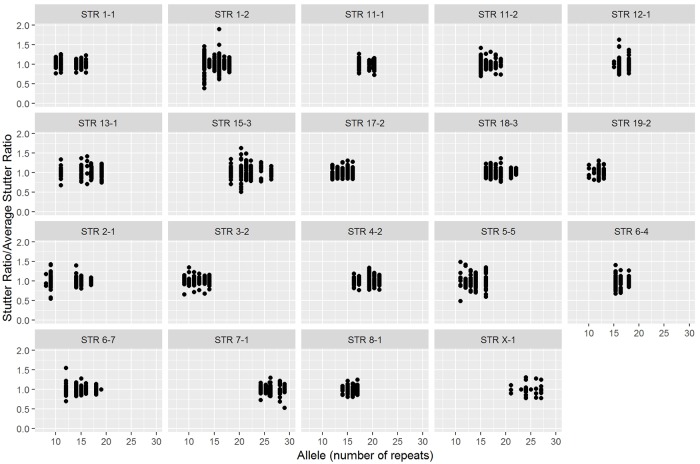
“Marker-specific stutter filters were computed as the average of all reported stutter ratios across alleles within a marker plus three standard deviations [16].”
MethodTransgenic Mouse Models in Cancer Research
Lampreht Tratar, U., Horvat, S., & Cemazar, M. (2018) · Frontiers in Oncology · doi:10.3389/fonc.2018.00268 · Cited by 214 · cited 1×
“Mouse models have been an important tool in biomedical research, especially with the advancement of transgenic mouse technologies, such as the CRISPR/Cas9 system [10].”
MethodMatch criteria for human cell line authentication: Where do we draw the line?
Capes‐Davis, A., Reid, Y. A., Kline, M. C., Storts, D. R., Strauss, E., Dirks, W. G., Drexler, H. G., MacLeod, R. A. F., Sykes, G., Kohara, A., et al. (2013) · International Journal of Cancer · doi:10.1002/ijc.27931 · Cited by 180 · cited 1×
“A pairwise comparison using Master’s algorithm (percent match = number shared alleles/total number of alleles in the questioned profile) [21] was calculated on the mouse cell lines and control diploid mouse strains from commercial sources (Jackson Laboratories and Zyagen, Inc.”
MethodSelf-citationSpecies identification in cell culture: a two-pronged molecular approach
Cooper, J. K., Sykes, G., King, S., Cottrill, K., Ivanova, N. V., Hanner, R., & Ikonomi, P. (2007) · In Vitro Cellular & Developmental Biology - Animal · doi:10.1007/s11626-007-9060-2 · Cited by 174 · cited 1×
“For non-human cell lines there are validated methods for interspecies identification such as DNA barcoding [8] and the species-specific multiplex PCR assay [9] (ASN-0004: Species-Level Identification and Cross-Contamination Screening in Animal Cells by Multiplex PCR–Working group in progress); however, these methods a…”
MethodThe ghosts of HeLa: How cell line misidentification contaminates the scientific literature
Horbach, S. P. J. M., & Halffman, W. (2017) · PLOS ONE · doi:10.1371/journal.pone.0186281 · Cited by 167 · cited 1×
“The impact of misidentification and cross-contamination of animal cell lines in the scientific community continues to be a serious problem [1, 2].”
BackgroundReproducibility: changing the policies and culture of cell line authentication
Freedman, L. P., Gibson, M. C., Ethier, S. P., Soule, H. R., Neve, R. M., & Reid, Y. A. (2015) · Nature Methods · doi:10.1038/nmeth.3403 · Cited by 136
Self-citationEradication of cross-contaminated cell lines: A call for action
Nardone, R. M. (2007) · Cell Biology and Toxicology · doi:10.1007/s10565-007-9019-9 · Cited by 134
A 26plex Autosomal STR Assay to Aid Human Identity Testing*†
Hill, C. R., Butler, J. M., & Vallone, P. M. (2009) · Journal of Forensic Sciences · doi:10.1111/j.1556-4029.2009.01110.x · Cited by 99 · cited 1×
“In addition to the mouse STR markers, two well characterized human STR markers D8S1106 and D4S2408, previously described to identify human and African green monkey DNA [22, 23], are also included in the kit to screen for contamination of mouse cell lines with human cells (Table 11).”
BackgroundMouse cell line authentication
Almeida, J. L., Hill, C. R., & Cole, K. D. (2014) · Cytotechnology · doi:10.1007/s10616-013-9545-7 · Cited by 75
Self-citationLazaruk, K. D., Wallin, J. M., Holt, C. L., Nguyen, T. H.-A., & Walsh, P. S. (2001) · Forensic Science International · doi:10.1016/s0379-0738(00)00388-1 · Cited by 73 · cited 1×
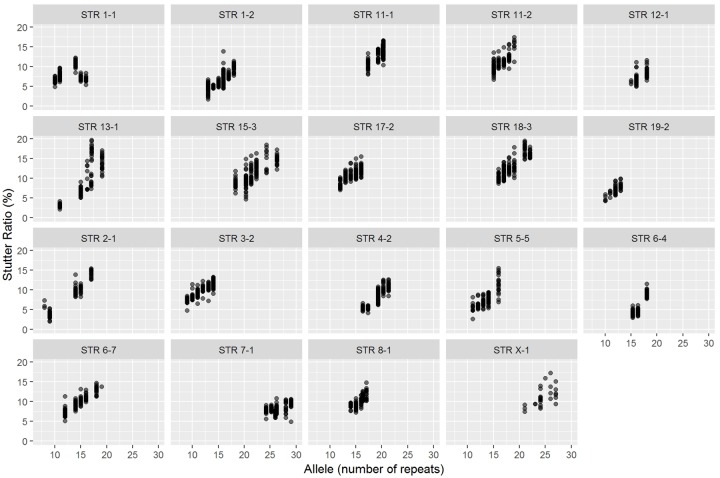
“As seen in literature, stutter ratios increased with increasing number of uninterrupted repeats (see Fig 1), except in some microvariant alleles where the longest uninterrupted repeat is shorter than what was found in the full repeat [14].”
BackgroundAuthentication of African green monkey cell lines using human short tandem repeat markers
Almeida, J. L., Hill, C. R., & Cole, K. D. (2011) · BMC Biotechnology · doi:10.1186/1472-6750-11-102 · Cited by 42 · cited 1×
“In addition to the mouse STR markers, two well characterized human STR markers D8S1106 and D4S2408, previously described to identify human and African green monkey DNA [22, 23], are also included in the kit to screen for contamination of mouse cell lines with human cells (Table 11).”
BackgroundSelf-citationThe Culture of Cell Culture Practices and Authentication—Results from a 2015 Survey
Freedman, L. P., Gibson, M. C., Wisman, R., Ethier, S. P., Soule, H. R., Reid, Y. A., & Neve, R. M. (2015) · BioTechniques · doi:10.2144/000114344 · Cited by 34 · cited 2×
“Although some journals require cell line authentication prior to publication [2], others only recommend it, allowing for non-validated materials and possible misinformation to enter the public domain.”
BackgroundSelf-citationAuthentication: A Standard Problem or a Problem of Standards?
Capes-Davis, A., & Neve, R. M. (2016) · PLOS Biology · doi:10.1371/journal.pbio.1002477 · Cited by 33
Fong, C. K. Y., Yang‐Feng, T. L., & Lerner-Tung, M. B. (1994) · Clinical and Diagnostic Virology · doi:10.1016/0928-0197(94)90042-6 · Cited by 5 · cited 1×
“There is limited information in the literature regarding a clear origin for the McCoy B cell line, which was initially described as originating from the parental cell line McCoy A, derived from synovial fluid in the knee from a human patient [19].”
Background
Cited by
A Beginner’s Guide to Cell Culture: Practical Advice for Preventing Needless Problems
Weiskirchen, S., Schröder, S. K., Buhl, E. M., & Weiskirchen, R. (2023) · Cells · doi:10.3390/cells12050682 · Cited by 148
“In this regard, the Consortium for Mouse Cell Line Authentication that has established a multiplex PCR assay comprising 19 mouse STR markers is pioneering [66,67].”
BackgroundCLASTR: The Cellosaurus STR similarity search tool ‐ A precious help for cell line authentication
Robin, T., Capes‐Davis, A., & Bairoch, A. (2020) · International Journal of Cancer · doi:10.1002/ijc.32639 · Cited by 85
“It should also be noted that there have been some efforts recently to develop sets of STR markers for nonhuman species, specifically for dog(9,10) and mouse.(11,12)”
BackgroundCell line authentication: a necessity for reproducible biomedical research
Souren, N. Y., Fusenig, N. E., Heck, S., Dirks, W. G., Capes‐Davis, A., Bianchini, F., & Plass, C. (2022) · The EMBO Journal · doi:10.15252/embj.2022111307 · Cited by 73
Crim, M. J., & Lawrence, C. (2020) · Lab Animal · doi:10.1038/s41684-020-00683-x · Cited by 50
Safety Assessment of Stem Cell-Based Therapies: Current Standards and Advancing Frameworks
Leonov, G. E., Grinchevskaya, L. R., Makhnach, O. V., Samburova, M. V., Goldshtein, D. V., & Salikhova, D. I. (2025) · Cells · doi:10.3390/cells14211660 · Cited by 32
Metadata
- Authors
- Almeida, J. L., Dakic, A., Kindig, K., Kone, M., Letham, D. L. D., Langdon, S., Peat, R., Holding-Pillai, J., Hall, E. M., Ladd, M., Shaffer, M. D., Berg, H., Li, J., Wigger, G., Lund, S., Steffen, C. R., Fransway, B. B., Geraghty, B., Natoli, M., Bauer, B., Gollin, S. M., Lewis, D. W., & Reid, Y.
- Affiliations
- National Institute of Standards and Technology (US)
- American Type Culture Collection (US)
- Charles River Laboratories (United States) (US)
- Duke University (US)
- The Francis Crick Institute (GB)
- LabCorp (United States) (US)
- Microsynth (Switzerland) (CH)
- University of Arizona (US)
- University of Cambridge (GB)
- University of Maryland, College Park (US)
- University of Pittsburgh (US)
- Corresponding author
- Almeida, Jamie L.
- Dakic, Aleksandra
- Kindig, Karin
- Kone, Maikan
- Letham, Deborah L. D.
- Langdon, Scott
- Peat, Ruth
- Holding-Pillai, Jayamalini
- Hall, Erin M.
- Ladd, Mark
- Shaffer, Megan D.
- Berg, Heath
- Li, Jinliang
- Wigger, Georges
- Steffen, Carolyn R.
- Fransway, Barbara B.
- Geraghty, Bob
- Natoli, Manuela
- Bauer, Beth
- Gollin, Susanne M.
- Lewis, Dale W.
- Reid, Yvonne
- Venue
- PLoS ONE
- Publisher
- Public Library of Science (PLoS)
- Published
- 2019-06-20
- Volume
- 14
- Issue
- 6
- Pages
- e0218412
- ISSN
- 1932-6203 (ISSN-L)
- PMC
- PMC6586308
- OpenAlex
- W2953016756
- Cited by
- 57
- References
- 25
- Citations by year
- 2026: 10 · 2025: 8 · 2024: 5 · 2023: 12 · 2022: 14 · 2021: 2 · 2020: 4 · 2019: 1
- FWCI
- 3.16
- Type
- journal article
- Language
- en
- Open access
- gold
- doi.org
- Licence
- public-domain
- creativecommons.org/publicdomain/zero/1.0/ (vor)
- Locations
- PLoS ONE (publishedVersion, public-domain)
- PubMed Central (publishedVersion, public-domain)
- PubMed (publishedVersion)
- UA Campus Repository (The University of Arizona) (acceptedVersion, public-domain)
- DOAJ (DOAJ: Directory of Open Access Journals) (submittedVersion, cc-by-sa)
- Figshare (submittedVersion, cc-by)
- The Francis Crick Institute (public-domain)
- Funders
- University of Arizona
- University of Pittsburgh
- Francis Crick Institute (10003)
- Cancer Research UK (22310)
- National Institute of Standards and Technology
- Topics
- Life Sciences › Biochemistry, Genetics and Molecular Biology › Genetics › Genetic diversity and population structure
- Life Sciences › Biochemistry, Genetics and Molecular Biology › Molecular Biology › Identification and Quantification in Food
- Life Sciences › Biochemistry, Genetics and Molecular Biology › Molecular Biology › Molecular Biology Techniques and Applications
- Keywords
- mouse cell lines, short tandem repeat profiling, cell line authentication, interlaboratory comparison, multiplex PCR
- MeSH terms
- Alleles, Animals, Cell Line, Genotype, Humans, Microsatellite Repeats, Mice, Genotyping Techniques, Multiplex Polymerase Chain Reaction
About these checks
Registry, retraction, Cites and statistics results are computed, not judged, with one exception: a printed reference that no index lists is read once by a model before it counts as a citation error. Claims are extracted by a model and kept only when their quote appears verbatim in the text; each cited source is then checked, with a model’s help, for whether it says what the claim relies on. Those verdicts can be wrong — read the claim’s quote and the cited source before relying on one.
Statistics and arithmetic are recomputed, not judged.
Confidence bands are shown only for fields calibrated on our annotated test set. None is calibrated yet, so no band is shown.
What counts as a claim ›How we measure confidence ›How we check this ›
Are you an author, or do you see a problem with this page? Request a review
Data sources
Bibliographic data: Semantic Scholar, OpenAlex, Crossref.
Contains information from the Semantic Scholar Academic Graph Datasets, made available under the ODC Attribution License (ODC-BY 1.0).
Semantic Scholar’s data is described in: Kinney, R., et al. (2023). The Semantic Scholar Open Data Platform. arXiv:2301.10140.
