

Hate speech detection: Challenges and solutions
Open accessThe DOI matches its Crossref record; 36 of the 36 references it cites were found in a registry or an index.
Abstract
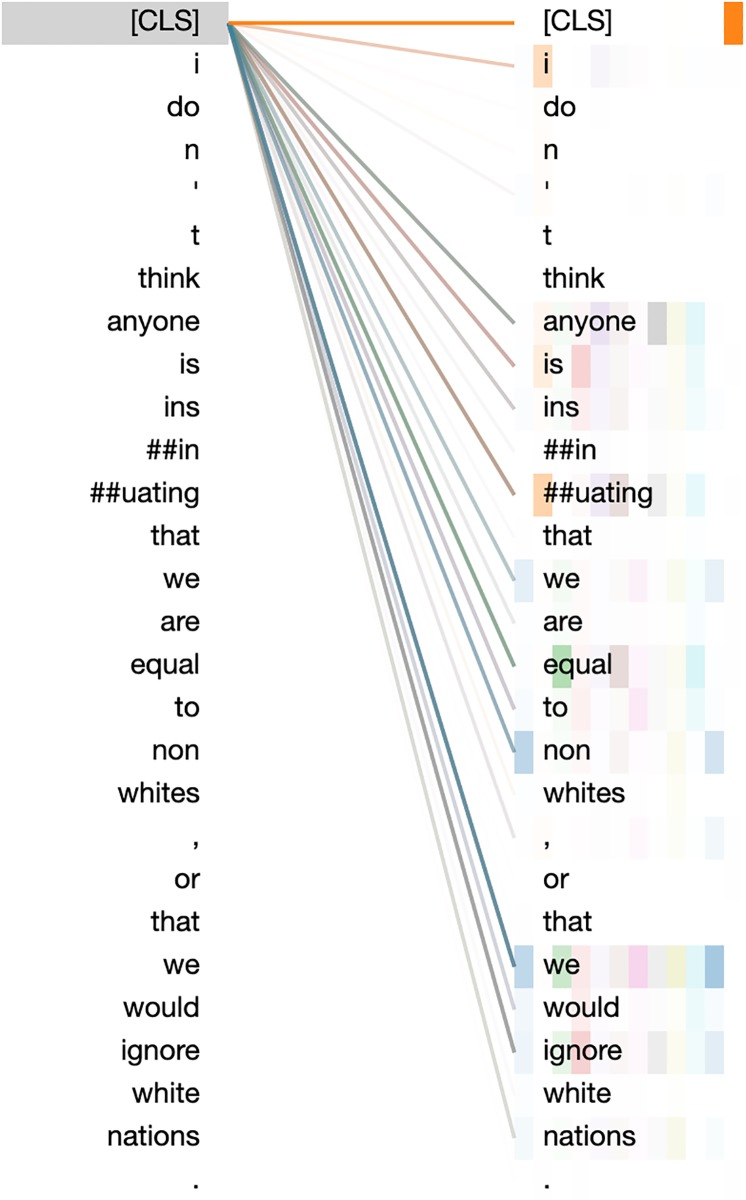
As online content continues to grow, so does the spread of hate speech. We identify and examine challenges faced by online automatic approaches for hate speech detection in text. Among these difficulties are subtleties in language, differing definitions on what constitutes hate speech, and limitations of data availability for training and testing of these systems. Furthermore, many recent approaches suffer from an interpretability problem-that is, it can be difficult to understand why the systems make the decisions that they do. We propose a multi-view SVM approach that achieves near state-of-the-art performance, while being simpler and producing more easily interpretable decisions than neural methods. We also discuss both technical and practical challenges that remain for this task.
Overview
The claims and statistics of this paper haven’t been checked yet.
Free: it reads the open-access text and checks the first 5 claims that cite a source we can check. Create a free account to check every claim.
Integrity signals
Registry
Cites
Statistics
Figures
Verification
Claims the paper makes
The claims and statistics of this paper haven’t been checked yet.
Free: it reads the open-access text and checks the first 5 claims that cite a source we can check. Create a free account to check every claim.
Claims other papers make about this one
Each is checked against this paper’s own text: does it say what the citing paper says it does?
The cited source says what the claim attributes to it.
In the citing paper
“Detecting hate speech is a challenging endeavour as there are several definitional conflicts and variances.”
From Misogynoir: challenges in detecting intersectional hate (2022) · cites this paper as MacAvaney et al. 2019
The cited source says what the claim attributes to it.
In the citing paper
“According to(MacAvaney etal. 2019), these opposing definitions complicate the assessment of hate speech systems, resulting in datasets derived from disparate sources and capturing disparate information.”
From Misogynoir: challenges in detecting intersectional hate (2022) · cites this paper as MacAvaney et al. 2019
Self-check
Percentages, sums and reported differences re-computed from the paper’s own numbers.
The self-check needs the paper’s full text.
Citations
Cites
BERT: Pre-training of Deep Bidirectional Transformers for Language Understanding
Devlin, J., Chang, M.-W., Lee, K., & Toutanova, K. (2018) · arXiv · doi:10.48550/arxiv.1810.04805 · Cited by 73,173 · cited 13×
“BERT is a recent transformer-based pre-trained contextualized embedding model extendable to a classification model with an additional output layer.”
BackgroundMethodInfluentialScikit-learn: Machine Learning in Python
Pedregosa, F., Varoquaux, G., Gramfort, A., Michel, V., Thirion, B., Grisel, O., Blondel, M., Müller, A., Nothman, J., Louppe, G., et al. (2012) · arXiv · doi:10.48550/arxiv.1201.0490 · Cited by 71,016
Convolutional Neural Networks for Sentence Classification
Kim, Y. (2014) · Proceedings of the 2014 Conference on Empirical Methods in Natural Language Processing (EMNLP) · doi:10.3115/v1/d14-1181 · Cited by 14,831 · cited 1×
“Their network structure is similar to the one proposed by [30], with convolutions of length 3 pooled over the entire document length.”
BackgroundA vector space model for automatic indexing
Salton, G., Wong, A., & Yang, C. S. (1975) · Communications of the ACM · doi:10.1145/361219.361220 · Cited by 7,521 · cited 1×
“In this setting, there are various ways to assign weights to the terms that may be more important, such as TF-IDF [23].”
BackgroundBag of Tricks for Efficient Text Classification
Joulin, A., Grave, E., Bojanowski, P., & Mikolov, T. (2017) · Proceedings of the 15th Conference of the European Chapter of the Association for Computational Linguistics: Volume 2, Short Papers · doi:10.18653/v1/e17-2068 · Cited by 4,545
Bag of Tricks for Efficient Text Classification
Joulin, A., Grave, E., Bojanowski, P., & Mikolov, T. (2016) · arXiv · doi:10.48550/arxiv.1607.01759 · Cited by 4,542 · cited 1×
“FastText [32].”
Popular Ensemble Methods: An Empirical Study
Opitz, D., & Maclin, R. (1999) · Journal of Artificial Intelligence Research · doi:10.1613/jair.614 · Cited by 2,953 · cited 1×
“Combining machine learning classifiers is not a new concept [35].”
BackgroundAutomated Hate Speech Detection and the Problem of Offensive Language
Davidson, T., Warmsley, D., Macy, M., & Weber, I. (2017) · Proceedings of the International AAAI Conference on Web and Social Media · doi:10.1609/icwsm.v11i1.14955 · Cited by 2,610
Jain, S., & Wallace, B. (2019) · Conference of the North American Chapter of the Association for Computational Linguistics: Human Language Technologies (NAACL-HLT) · doi:10.18653/v1/n19-1357 · Cited by 2,023 · cited 2×
“These observations are in line with prior work that has found attention signals to be noisy and not necessarily indicative of term importance [39, 40].”
ResultHateful Symbols or Hateful People? Predictive Features for Hate Speech Detection on Twitter
Waseem, Z., & Hovy, D. (2016) · Proceedings of the NAACL Student Research Workshop · doi:10.18653/v1/n16-2013 · Cited by 1,655 · cited 3×
“Waseem and Hovy also provide a dataset from Twitter, consisting of 16,914 tweets labeled as racist, sexist, or neither [17].”
BackgroundMethodInfluential
Research works printed but not linked: 3
- Nockleby JT. Hate Speech. Encyclopedia of the American Constitution. 2000; 3: 1277– 79.
- Mikolov T, Sutskever I, Chen K, Corrado GS, Dean J. Distributed Representations of Words and Phrases and their Compositionality. In: Burges CJC, Bottou L, Welling M, Ghahramani Z, Weinberger KQ, editors. Advances in Neural Information Processing Systems 26. Curran Associates, Inc.; 2013. p. 3111–3119.
- Waseem Z. Are You a Racist or Am I Seeing Things? Annotator Influence on Hate Speech Detection on Twitter. In: NLP+CSS @ EMNLP; 2016. · DOI · Paper page
Cited by
Items 201–300 of 579
Masadeh, M., Davanager, H. J., & Muaad, A. Y. M. (2022) · International Journal of Advanced Computer Science and Applications · doi:10.14569/ijacsa.2022.0130991 · Cited by 12
“The authors of [24] determined and discussed challenges encountered by online automatic techniques for hate speech detection in text.”
BackgroundMultimodal Deep Learning with Discriminant Descriptors for Offensive Memes Detection
Alzu’bi, A., Younis, L. B., Abuarqoub, A., & Hammoudeh, M. A. A. (2023) · Journal of Data and Information Quality · doi:10.1145/3597308 · Cited by 15
“[21] developed a multi-view approach to detecting hate speech, utilizing a collection of Support VectorMachine (SVM) classiiers tomake decisions.”
MethodContent Moderation for Evolving Policies using Binary Question Answering
Mullick, S. S., Bhambhani, M., Sinha, S., Mathur, A., Gupta, S., & Shah, J. (2023) · Proceedings of the conference - Association for Computational Linguistics. Meeting · doi:10.18653/v1/2023.acl-industry.54 · Cited by 26
“(Fortuna and Nunes, 2018; MacAvaney et al., 2019).”
GUIR at SemEval-2020 Task 12: Domain-Tuned Contextualized Models for Offensive Language Detection
Sotudeh, S., Xiang, T., Yao, H.-R., MacAvaney, S., Yang, E., Goharian, N., & Frieder, O. (2020) · International Workshop on Semantic Evaluation (SemEval) · doi:10.18653/v1/2020.semeval-1.203 · Cited by 12
Self-citationAnalyzing extremist social media content: a case study of Proud Boys
Minh, H. N., & Gokhale, S. S. (2022) · Social Network Analysis and Mining · doi:10.1007/s13278-022-00940-6 · Cited by 11
Characterizing information leaders in Twitter during COVID-19 crisis.Preprint
Pastor-Escuredo, D., & Tarazona, C. (2020) · arXiv (Cornell University) · Cited by 13
Predicting discriminative personality profile of haters from digital texts
Canbay, P. (2024) · Knowledge-Based Systems · doi:10.1016/j.knosys.2024.111460 · Cited by 11
Mansur, Z., Omar, N., Tiun, S. B., & Alshari, E. M. (2024) · PLoS ONE · doi:10.1371/journal.pone.0299652 · Cited by 13
Sentir el odio: análisis de la gravedad percibida de los discursos de odio en la población española
Brändle, G., Zapatero, M. D. C., & Rebollo, M. A. P. (2024) · Revista Española de Sociología · doi:10.22325/fes/res.2024.219 · Cited by 15
The hatred of all against all? Evidence from online community platforms in South Korea
Koo, J., Suh, C. S., Chung, J. W., Sohn, K.-A., & Han, K. (2024) · PLoS ONE · doi:10.1371/journal.pone.0300530 · Cited by 13
Giorgi, S., Bellew, D., Habib, D. R. S., Sedoc, J., Smitterberg, C. W., Devoto, A., Himelein-Wachowiak, M., & Curtis, B. L. (2024) · Proceedings of the International AAAI Conference on Web and Social Media · doi:10.1609/icwsm.v18i1.31328 · Cited by 19
Dietrich, F. (2024) · AI and Ethics · doi:10.1007/s43681-024-00610-7 · Cited by 19
“While members of one group are frequently confronted with the deletion of their posts, members of the other group are able to spread hate speech largely unhindered [21, 24].”
A deep dive into automated sexism detection using fine-tuned deep learning and large language models
Vetagiri, A., Pakray, P., & Das, A. (2025) · Engineering Applications of Artificial Intelligence · doi:10.1016/j.engappai.2025.110167 · Cited by 11
Enhancing cross-lingual hate speech detection through contrastive and adversarial learning
Almahdi, A. J., Mohades, A., Akbari, M., & Heidary, S. (2025) · Engineering Applications of Artificial Intelligence · doi:10.1016/j.engappai.2025.110296 · Cited by 12
Identifying Social Media Content Supporting Proud Boys
Fahim, M., & Gokhale, S. S. (2021) · IEEE International Conference on Big Data (BigData) · doi:10.1109/bigdata52589.2021.9671823 · Cited by 10
Munn, L. (2023) · Big Data & Society · doi:10.1177/20539517221148136 · Cited by 11
“Such ambi-ence poses an additional challenge for machine learning models, which already struggle with hate speech as some-thing ambiguous and context-dependent (MacAvaney et al. 2019; Kovács et al. 2021).”
BackgroundDefersha, N. B., Kekeba, K., & Kaliyaperumal, K. (2021) · International Conference on Computing and Communications Technologies (ICCCT) · doi:10.1109/iccct53315.2021.9711850 · Cited by 12
ToxCCIn: Toxic Content Classification with InterpretabilityPreprint
Xiang, T., MacAvaney, S., Yang, E., & Goharian, N. (2021) · arXiv (Cornell University) · doi:10.48550/arxiv.2103.01328 · Cited by 20
“In some cases, toxicity can be expressed in subtle or implicit ways, such as through sarcasm or metaphor (MacAvaney et al., 2019; Waseem et al., 2017).”
BackgroundSelf-citationAn Information Retrieval Approach to Building Datasets for Hate Speech DetectionPreprint
Rahman, M. M., Balakrishnan, D., Murthy, D., Kutlu, M., & Lease, M. (2021) · arXiv (Cornell University) · doi:10.48550/arxiv.2106.09775 · Cited by 23
“Online hate speech constitutes a vast and growing problem in social media [45, 64, 50, 34, 98, 23].”
BackgroundMeasuring Online Hate on 4chan Using Pre-Trained Deep Learning Models
Bermudez-Villalva, A., Mehrnezhad, M., & Toreini, E. (2025) · IEEE Transactions on Technology and Society · doi:10.1109/tts.2025.3549931 · Cited by 11
“The site is known for its minimal moderation and the anonymity it affords its users, factors that have contributed to its reputation as a breeding ground for controversial and often extremist content [1].”
Chutia, T., Baruah, N., & Sonowal, P. (2025) · Procedia Computer Science · doi:10.1016/j.procs.2025.04.335 · Cited by 9
Journalism in Democracy: A Discourse Analysis of Twitter Posts on the Ferrerasgate Scandal
Sanz, I. R., Prieto, P. B., & Izquierdo, J. H. (2023) · Media and Communication · doi:10.17645/mac.v11i2.6314 · Cited by 9
Jikeli, G., & Soemer, K. (2023) · Journal of Computational Social Science · doi:10.1007/s42001-023-00219-6 · Cited by 9
PEACE: Cross-Platform Hate Speech Detection - A Causality-Guided Framework
Sheth, P., Kumarage, T., Moraffah, R., Chadha, A. R., & Liu, H. (2023) · Lecture notes in computer science · doi:10.1007/978-3-031-43412-9_33 · Cited by 16
Arayankalam, J., Soral, P., Khan, A., Krishnan, S., & Bose, I. (2024) · Information & Management · doi:10.1016/j.im.2024.103919 · Cited by 13
Multilingual Sentiment Analysis and Toxicity Detection for Text Messages in Russian
Bogoradnikova, D., Makhnytkina, O. V., Matveev, A., Zakharova, A., & Akulov, A. (2021) · Conference of Open Innovations Association (FRUCT) · doi:10.23919/fruct52173.2021.9435584 · Cited by 11
“Up to this point, the identification of hateful and offensive statements was performed within the framework of solving the problem of detecting and classifying hate speech [7], work on which continues to this day [4], [8], [9].”
BackgroundA Neighborhood Framework for Resource-Lean Content Flagging
Sarwar, S. M., Zlatkova, D., Hardalov, M., Dinkov, Y., Augenstein, I., & Nakov, P. (2022) · Transactions of the Association for Computational Linguistics · doi:10.1162/tacl_a_00472 · Cited by 16
“This includes SVMs (MacAvaney et al., 2019), CNNs (Georgakopoulos et al., 2018; Badjatiya et al., 2019; Agrawal and Awekar, 2018), LSTMs (Arango et al., 2019; Agrawal and Awekar, 2018), BiLSTMs, with attention (Agrawal and Awekar, 2018), Capsule networks (Srivastava et al., 2018), and fine-tuned Transformers (Glavaˇs…”
MethodA Novel Methodology for Developing Automatic Harassment Classifiers for Twitter
Arora, I., Guo, J., Levitan, S. I., McGregor, S. E., & Hirschberg, J. (2020) · Workshop on Online Abuse and Harms (WOAH) · doi:10.18653/v1/2020.alw-1.2 · Cited by 17
“We also implemented a transformer-based approach for this sub-task, based on (MacAvaney et al., 2019), which uses pre-trained BERT for sequence classification, fine-tuned for 10 epochs.”
MethodDetecting Abusive AlbanianPreprint
Nurce, E., Keci, J., & Derczynski, L. (2021) · arXiv (Cornell University) · doi:10.48550/arxiv.2107.13592 · Cited by 11
“(2016) cited in Macavaney et al. (2019), having a concise definition of what hate speech is could positively contribute to the research of hate speech, by making the task of annotation more reliable and easier. This is also reflected in the limitations present in Natural Language Processing (NLP) research Waseem and H…”
BackgroundInfluentialRuscher, J. B. (2024) · Cambridge University Press eBooks · doi:10.1017/9781009534666 · Cited by 12
Hate Speech Detection using mono BERT model in custom Content-Management-System
Veerasamy, S., Khare, Y., Ramesh, A., Adarsh, S., Singh, P. K., & Anjali, T. (2022) · International Conference on Smart Systems and Inventive Technology (ICSSIT) · doi:10.1109/icssit53264.2022.9716428 · Cited by 9
“An efficient model proposed was able to show a 7% improvement on the Stormfront dataset, using their custom mSVM model[2].”
MethodEnhanced Task-based Knowledge for Lexicon-based Approach in Vietnamese Hate Speech Detection
Hoang, S. N., Nguyen, B. T., Nguyen, N. P., Luu, S. T., Phan, H. T., & Nguyen, H. D. (2022) · International Conference on Knowledge and Systems Engineering/Proceedings · doi:10.1109/kse56063.2022.9953615 · Cited by 8
“Sean et al. [1] fits an n-gram TF-IDF to Multiple-view SVM and then applies it to a pretrained model.”
BackgroundMethodStances on hate speech: Population opinions and attitudes
Zapatero, M. D. C., Brändle, G., & Rebollo, M. A. P. (2023) · El Profesional de la Informacion · doi:10.3145/epi.2023.jul.10 · Cited by 14
The Effect of Arabic Dialect Familiarity on Data Annotation
Farha, I. A., & Magdy, W. (2022) · Arabic Natural Language Processing Workshop (WANLP) · doi:10.18653/v1/2022.wanlp-1.39 · Cited by 9
“However, these differences can be disruptive when considering subjective tasks such as sentiment analysis (Medhat et al., 2014; Abu Farha and Magdy, 2021), sarcasm detection (Abu Farha et al., 2022a), hate speech (MacAvaney et al., 2019) and many others.”
BackgroundDamayanti, N. P., Prameswari, D. E., Puspita, W., & Sundari, P. S. (2024) · Journal of Information System Exploration and Research · doi:10.52465/joiser.v2i1.229 · Cited by 8
On Predicting Behavioral Deterioration in Online Discussion Forums
Tshimula, J. M., Chikhaoui, B., & Wang, S. (2020) · IEEE/ACM International Conference on Advances in Social Networks Analysis and Mining (ASONAM) · doi:10.1109/asonam49781.2020.9381428 · Cited by 11
Khan, H., & Phillips, J. L. (2021) · ACM Southeast Regional Conference (ACMSE) · doi:10.1145/3409334.3452077 · Cited by 8
“For example, "Calling Muslims terrorist is a stereotype", is a sentence that can be misunderstood by such classifiers as Hateful/Islamophobic as it contains negative words [11].”
BackgroundMethodDetecting Offensive Content on Twitter During Proud Boys Riots
Fahim, M., & Gokhale, S. S. (2021) · International Conference on Machine Learning and Applications · doi:10.1109/icmla52953.2021.00253 · Cited by 8
#NotAWhore! A Computational Linguistic Perspective of Rape Culture and Victimization on Social Media
Suvarna, A., & Bhalla, G. (2020) · Annual Meeting of the Association for Computational Linguistics: Student Research Workshop (ACL SRW) · doi:10.18653/v1/2020.acl-srw.43 · Cited by 10
“cal form of error encountered in even hate speech detection tasks (MacAvaney et al., 2019) where keywords marked for positive examples leads to classification errors.”
BackgroundAddressing Hate Speech with Data Science: An Overview from Computer Science Perspective
Srba, I., Lenzini, G., Pikuliak, M., & Pecar, S. (2021) · Springer eBooks · doi:10.1007/978-3-658-31793-5_14 · Cited by 10
“For instance, MacAvaney et al. (2019) report that “de-mographics of the posting user, location, timestamp, or even social engagement on the platform can all give further understanding of the post in different granu-larity” (p. 7).”
BackgroundAutomating News Comment Moderation with Limited Resources: Benchmarking in Croatian and Estonian
Shekhar, R., Pranjić, M., Pollak, S., Pelicon, A., & Purver, M. (2020) · LDV-Forum/Journal for language technology and computational linguistics · doi:10.21248/jlcl.34.2020.224 · Cited by 14
“…(Pavlopoulos et al., 2017a); and many successful approaches to automated hate and offensive speech detection and categorisation exist (see e.g. MacAvaney et al., 2019; Schmidt & Wiegand, 2017), with datasets and shared tasks made available for several major EU languages (see e.g. Zampieri et…”
BackgroundOllagnier, A., Cabrio, E., & Villata, S. (2023) · Social Network Analysis and Mining · doi:10.1007/s13278-023-01061-4 · Cited by 14
“Concerning linguistic-based features, Part of Speech (PoS) tagging and dependency parsing obtain the best performances by providing a deeper understanding of hateful content (Alrehili 2019; MacAvaney et al. 2019; Themeli et al. 2021).”
BackgroundMethodGarcía‐Rudolph, A., Saurí, J., Cegarra, B., & Bernabeu, M. (2020) · JMIR Medical Informatics · doi:10.2196/17903 · Cited by 8
“Facebook AI also achieved impressive breakthroughs, such as by tackling harmful or improper content by means of Whole Post Integrity Embeddings (WPIE) [2].”
BackgroundCUSATNLP@HASOC-Dravidian-CodeMix-FIRE2020:Identifying Offensive Language from ManglishTweetsPreprint
Renjit, S., & Idicula, S. M. (2020) · arXiv (Cornell University) · doi:10.48550/arxiv.2010.08756 · Cited by 8
“Automatic approaches for hate speech also includes keyword-based approaches and TF-IDF based multiview SVM, which is described in [11].”
MethodViTHSD: exploiting hatred by targets for hate speech detection on Vietnamese social media texts
Vo, C. N., Huynh, K. B., Luu, S. T., & Do, T.-H. (2025) · Journal of Computational Social Science · doi:10.1007/s42001-024-00348-6 · Cited by 11
“Through the use of derogatory language and the spread of negative stereotypes, hate speech based on race perpetuates harmful attitudes toward individuals and particular communities, further reinforcing harmful biases and prejudices [28].”
Using Social Media Categorical Reactions as a Gateway to Identify Hate Speech in COVID-19 News
de Oliveira, L. G., & Azevedo, J. (2022) · SN Computer Science · doi:10.1007/s42979-022-01421-5 · Cited by 8
“One of the main current challenges of hate speech recognition is the automatic detection of irony [33] because people verbalize an idea while implying the opposite meaning; thus, textual features alone fail in recognizing the implicit meanings of the discourse.”
BackgroundA short review on hate speech detection: challenges towards datasets and techniques
Shridhara, M. G., Pristaš, V., Kotvytskiy, A., Antoni, Ľ., & Semanišin, G. (2023) · World Symposium on Digital Intelligence for Systems and Machines (DISA) · doi:10.1109/disa59116.2023.10308906 · Cited by 9
“Manually labeled datasets from media outlets, internet news sources, and YouTube channels have become valuable resources for training hate speech detection models [6], [7].”
BackgroundBans vs. Warning Labels: Examining Bystanders’ Support for Community-wide Moderation Interventions
Jhaver, S. (2025) · ACM Transactions on Computer-Human Interaction · doi:10.1145/3715116 · Cited by 12
“Prior research on addressing hate speech has focused on the challenges of defining and bounding it [70] and developing natural language processing tools to detect it [124].”
Hybrid Feature and Optimized Deep Learning Model Fusion for Detecting Hateful Arabic Content
Gasmi, K., Ltaifa, I. B., Abdalrahman, A. E. M., Hamid, O. H., Altaieb, M. O., Ali, S., Ammar, L. B., & Mrabet, M. (2025) · IEEE Access · doi:10.1109/access.2025.3591673 · Cited by 9
“Several classification techniques have been used; the most common ones are decision trees [47], random forests [35], and Support Vector Machines (SVMs) [23].”
Detox: NLP Based Classification And Euphemistic Text Substitution For Toxic Comments
Jain, S., Kaushik, G., Prabhu, P., & Godbole, A. (2021) · International Conference on Computing, Communication and Networking Technologies (ICCCNT) · doi:10.1109/icccnt51525.2021.9579846 · Cited by 7
“Accuracy Unigrams[1] 75% Sentiment and Lexicon[5] 80% Sentiment, Semantic, Unigrams[9] 78.4% Detox: Sentiment, Semantic, Unigrams 90.7% The results of the extensive research have been summarised in the following Table V.”
BackgroundMethodInfluentialKalkenings, M., & Mandl, T. (2022) · International Workshop on Semantic Evaluation (SemEval) · doi:10.18653/v1/2022.semeval-1.98 · Cited by 8
“The identification of problematic content based on text has made progress, but the performance is still not satisfying (MacAvaney et al., 2019; Modha et al., 2020b).”
BackgroundNot All Swear Words Are Used Equal: Attention over Word n-grams for Abusive Language Identification
Jarquín-Vásquez, H., Montes-y-Gómez, M., & Villaseñor-Pineda, L. (2020) · Lecture notes in computer science · doi:10.1007/978-3-030-49076-8_27 · Cited by 7
“…macro-average F 1 ) Dataset GRU GRU+ATT CNN-GRU+ATT State-of-the-art DS1 0.76 ± 0.0078 0.81 ± 0.0067 0.83 ± 00.0066 0.82 [19] DS2 0.74 ± 0.0081 0.77 ± 0.0086 0.79 ± 00.0072 0.77 [11] DS3 0.75 ± 0.0062 0.79 ± 0.0059 0.84 ± 00.0083 0.83 [10] DS4 0.58 ± 0.0078 0.61 ± 0.0081 0.63 ± 0.0078 0.64 [1]”
InfluentialCHILab @ HaSpeeDe 2: Enhancing Hate Speech Detection with Part-of-Speech Tagging
Gambino, G., & Pirrone, R. (2020) · Accademia University Press eBooks · doi:10.4000/books.aaccademia.7057 · Cited by 7
“While the ability to freely express oneself is a human right, inducing and spreading hate towards another group is an abuse of this liberty (MacAvaney et al., 2019).”
BackgroundHate versus politics: detection of hate against policy makers in Italian tweets
Duzha, A., Casadei, C., Tosi, M., & Celli, F. (2021) · SN Social Sciences · doi:10.1007/s43545-021-00234-2 · Cited by 10
“Source [31]. is that many recent approaches based on word embeddings [9], Deep Learning algorithms and BERT Pre-trained transformers [15] [41] [33], are vulnerable to undesirable bias in training data, especially in the political domain [42], and suffer from poor interpretability [27].”
MethodBaydogan, C., & Alataş, B. (2021) · Fırat Üniversitesi Mühendislik Bilimleri Dergisi · doi:10.35234/fumbd.986500 · Cited by 7
Unified and Multilingual Author Profiling for Detecting Haters
Schlicht, I. B., & de Paula, A. F. M. (2021) · RiuNet (Universitat Politècnica de València) · doi:10.48550/arxiv.2109.09233 · Cited by 12
“However, majority of the prior studies formulates the problem as a text classification [13, 7] that determines whether an individual post is hate speech.”
BackgroundHateful Memes, Offensive or Non-offensive!
Khedkar, S., Karsi, P., Ahuja, D., & Bahrani, A. (2021) · Advances in intelligent systems and computing · doi:10.1007/978-981-16-2597-8_52 · Cited by 7
A free market in extreme speech: Scientific racism and bloodsports on YouTube
de Keulenaar, E. V., Tuters, M., Osborne-Carey, C., Jurg, D. H. M., & Kisjes, I. (2021) · Digital Scholarship in the Humanities · doi:10.1093/llc/fqab076 · Cited by 13
Explainable AI for Hate Speech Moderation: A Stakeholder‐Centered and Sociotechnical Review
Qureshi, M. D. M., Qureshi, M. A., & Rashwan, W. (2026) · Wiley Interdisciplinary Reviews Data Mining and Knowledge Discovery · doi:10.1002/widm.70076 · Cited by 12
A Novel Annotation Scheme to Generate Hate Speech Corpus through Crowdsourcing and Active Learning
Meedin, G. S. N., Caldera, M., Perera, S., & Perera, I. (2022) · International Journal of Advanced Computer Science and Applications · doi:10.14569/ijacsa.2022.0131146 · Cited by 6
“Hate speech is a broad and contested term [4], and there is no common standard definition for hate speech [5].”
BackgroundThe problem of varying annotations to identify abusive language in social media content
Seemann, N., Lee, Y. S., Höllig, J., & Geierhos, M. (2023) · Natural Language Engineering · doi:10.1017/s1351324923000098 · Cited by 7
“Moreover, MacAvaney et al. (2019) identify and explore the challenges faced by automated online approaches to hate speech detection in texts.”
BackgroundFillies, J., Hoffmann, M. P., & Paschke, A. (2023) · IEEE International Conference on Big Data (BigData) · doi:10.1109/bigdata59044.2023.10386244 · Cited by 10
“Previous research reveals that there is no universally accepted definition of hate speech, and that there is even a lack of agreement on partial aspects of its definition [11].”
BackgroundIbrahim, Y. M., Essameldin, R., & Darwish, S. M. (2024) · Computers, materials & continua/Computers, materials & continua (Print) · doi:10.32604/cmc.2024.047840 · Cited by 17
Perceiving and Countering Hate: The Role of Identity in Online Responses
Ping, K., E.Hawdon, J., & Rho, E. H. R. (2025) · Proceedings of the ACM on Human-Computer Interaction · doi:10.1145/3711045 · Cited by 9
“Online counterspeech can take various forms (e.g., memes or pictures, written text, etc.[39]) and use different strategies, such as using humor [70, 75], showing empathy [47], or warning the perpetrators [70, 75].”
Detecting Offensive Tamil Texts Using Machine Learning And Multilingual Transformer Models
Subramanian, M., Adhithiya, G. J., Gowthamkrishnan, S., & Deepti, R. (2022) · International Conference on Smart Technologies and Systems for Next Generation Computing (ICSTSN) · doi:10.1109/icstsn53084.2022.9761335 · Cited by 6
PRaNA: PRNU-based Technique to Tell Real and Deepfake Videos Apart
Amerini, I., Conti, M., Giacomazzi, P., & Pajola, L. (2022) · International Joint Conference on Neural Networks (IJCNN) · doi:10.1109/ijcnn55064.2022.9892413 · Cited by 9
“Popular ACM areas are the hate speech detection on textual and images contents [23]–[25], bot detection [26], and deepfake detection [27].”
BackgroundLi, K. (2022) · International Conference on Computers, Information Processing and Advanced Education (CIPAE) · doi:10.1109/cipae55637.2022.00058 · Cited by 6
“Besides, the European legislators criticized the typical platform Twitter of not responding timely to deal with HS from its online webinars[6].”
BackgroundMethodInfluentialAnger Breeds Controversy: Analyzing Controversy and Emotions on Reddit
Chen, K., He, Z., Chang, R.-C., May, J., & Lerman, K. (2023) · Lecture notes in computer science · doi:10.1007/978-3-031-43129-6_5 · Cited by 16
A Context Aware Embedding for the Detection of Hate Speech in Social Media Networks
Kavatagi, S., & Rachh, R. R. (2021) · International Conference on Smart Generation Computing, Communication and Networking (SMART GENCON) · doi:10.1109/smartgencon51891.2021.9645877 · Cited by 8
Sarcasm Detection in Politically Motivated Social Media Content
Nguyen, H. M., Moon, J.-H., Paul, N., & Gokhale, S. S. (2021) · IEEE International Symposium on Parallel and Distributed Processing with Applications (ISPA) · doi:10.1109/ispa-bdcloud-socialcom-sustaincom52081.2021.00207 · Cited by 6
Classification of Hate Speech Language Detection on Social Media: Preliminary Study for Improvement
Muzakir, A., Adi, K., & Kusumaningrum, R. (2022) · Lecture notes on data engineering and communications technologies · doi:10.1007/978-3-031-15191-0_14 · Cited by 7
Offense Detection Using BERT and CNN
Mehta, M., Gada, D., Sharma, R., Chavan, K., & Kanani, P. (2022) · IEEE Global Conference for Advancement in Technology (GCAT) · doi:10.1109/gcat55367.2022.9971862 · Cited by 6
Reddy, B. A. C., Chandra, G. K., Sisodia, D. S., & Anuragi, A. (2023) · International Conference for Innovation in Technology (INOCON) · doi:10.1109/inocon57975.2023.10101157 · Cited by 6
Social Media Hate Speech Detection Using Machine Learning Approach
Haider, F., Dipty, I., Rahman, F., Assaduzzaman, M., & Sohel, A. (2023) · IFIP advances in information and communication technology · doi:10.1007/978-3-031-38296-3_17 · Cited by 6
You Are What You Tweet: Profiling Users by Past Tweets to Improve Hate Speech Detection
Chaudhry, P., & Lease, M. (2022) · Lecture notes in computer science · doi:10.1007/978-3-030-96960-8_13 · Cited by 6
TAR on Social Media: A Framework for Online Content ModerationPreprint
Yang, E., Lewis, D. D., & Frieder, O. (2021) · arXiv (Cornell University) · doi:10.48550/arxiv.2108.12752 · Cited by 11
“shtml [22, 31, 33, 34, 35, 36] or offensive language in general [23, 37, 38, 39, 40, 41, 42].”
BackgroundSelf-citationThakur, D., Hankerson, D. L., Luria, M., Savage, S., Rodriguez, M., & Valdovinos, M. G. (2022) · OSF Preprints (OSF Preprints) · doi:10.31219/osf.io/bwta3 · Cited by 6
Kuuse, S. F., Kangur, U., Chakraborty, R., & Sharma, R. R. (2025) · International World Wide Web Conference (WWW) · doi:10.1145/3701716.3717533 · Cited by 7
“Furthermore, user relation information and metadata might be helpful in automated bias detection but are often not available or utilized due to privacy concerns [31].”
How to measure disagreement as a premise for learning from controversy in a social media context
Malzahn, N., Schwarze, V., Eimler, S. C., Aprin, F., Moder, S., & Hoppe, H. U. (2022) · Research and Practice in Technology Enhanced Learning · doi:10.58459/rptel.2023.18012 · Cited by 6
Dismantling Hate: Understanding Hate Speech Trends Against NBA Athletes
Klutse, E. K., Nuamah-Amoabeng, S., Lyu, H., & Luo, J. (2023) · Lecture notes in computer science · doi:10.1007/978-3-031-43129-6_8 · Cited by 6
Adhari, N. R., Sundawa, D., Darmawan, C., & Syaifullah, S. (2024) · KnE Social Sciences · doi:10.18502/kss.v9i19.16508 · Cited by 5
“Social media platforms have become tools for spreading hate speech [8].”
BackgroundMiqdadi, I. E., Hourri, S., Idrysy, F. Z. E., Hayati, A., Namir, Y., Nikolov, N. S., & Kharroubi, J. (2024) · Data Mining and Knowledge Discovery · doi:10.1007/s10618-024-01059-2 · Cited by 5
“However, relying solely on keywords can lead to many false positive predictions (MacAvaney et al. 2019) which means that the model would classify a significant amount of non-racist content as racist.”
InfluentialShilpashree, S., & Ashoka, D. V. (2024) · Social Network Analysis and Mining · doi:10.1007/s13278-024-01345-3 · Cited by 5
“Multilingual and cross-platform generalization: Many existing solutions are limited in their ability to generalize across different languages and online platforms (Gambäck and Sikdar 2017; MacAvaney et al. 2019).”
Enhanced Multimodal Hate Video Detection via Channel-wise and Modality-wise Fusion
Zhang, Y., Chen, T., Zhang, Y., & Fu, Z. (2024) · IEEE ... International Conference on Data Mining workshops · doi:10.1109/icdmw65004.2024.00030 · Cited by 17
“MacAvaney et al. [5] proposed a multi-view Support Vector Machine (SVM) method for detecting hate speech, leveraging distinct feature views to enhance accuracy while offering greater interpretability of classification decisions.”
Cross-Platform Violence Detection on Social Media: A Dataset and Analysis
Chen, C., Beland, S., Burghardt, I., Byczek, J., Conway, W. J., Cotugno, E., Davre, S., Fletcher, M., Gnanasekaran, R. K., Hamilton, K. B., et al. (2025) · ACM Web Science Conference (WebSci) · doi:10.1145/3717867.3717877 · Cited by 8
“The inherent subtleties of language interpretation and varying definitions of hate speech continue to complicate automated detection efforts [15].”
Content Moderation and Hate Speech on Alternative Platforms: A Case Study of BitChute
Erickson, J., & Yan, B. (2025) · Proceedings of the ACM on Human-Computer Interaction · doi:10.1145/3710950 · Cited by 8
“While there may be disagreement about what constitutes hate speech [45], hate speech can generally be distinguished from toxic, uncivil, or unpleasant comments based on its character and intention.”
Violent Views Detection in Urdu Tweets
Akram, M. H., & Shahzad, K. (2021) · International Conference on Open Source Systems and Technologies (ICOSST) · doi:10.1109/icosst53930.2021.9683934 · Cited by 6
Bibliometric Analysis of Deep Learning for Social Media Hate Speech Detection
Mutanga, R. T., Olugbara, O. O., & Naicker, N. (2023) · Journal of Information Systems and Informatics · doi:10.51519/journalisi.v5i3.549 · Cited by 5
“However, these approaches have been criticised for their lack of interpretability when making decisions[69].”
BackgroundHegde, T., Sanjay, K. S., Thomas, S. M., Kambhammettu, R., Kumar, M. A., & Ramanna, S. (2023) · Procedia Computer Science · doi:10.1016/j.procs.2023.10.050 · Cited by 5
Towards Agile Text Classifiers for Everyone
Mozes, M., Hoffmann, J., Tomanek, K., Kouate, M., Thain, N., Yuan, A., Bolukbasi, T., & Dixon, L. (2023) · Findings of the Association for Computational Linguistics: EMNLP (Findings of EMNLP) · doi:10.18653/v1/2023.findings-emnlp.30 · Cited by 20
Hate Speech Detection for Transliterated English and Sinhala Code-Mixed Data
Muthuthanthri, M., & Smith, R. (2024) · International Conference on Advanced Research in Computing (ICARC) · doi:10.1109/icarc61713.2024.10499768 · Cited by 5
“MacAvaney et al. [2] highlight the added difficulties stemming from the absence of a universal hate speech definition and data imbalances of existing data between hate and non-hate.”
BackgroundMethodInfluentialGHA: A Gated Hierarchical Attention Mechanism for the Detection of Abusive Language in Social Media
Jarquín-Vásquez, H., Escalante, H. J., Montes-y-Gómez, M., & Gonzalez, F. A. (2024) · IEEE Transactions on Affective Computing · doi:10.1109/taffc.2024.3483010 · Cited by 8
“Ac-cordingly, different collections and evaluation campaigns have considered different kinds of AL for their study [4], [67].”
Hate Speech Detection in Arabic Text: Survey
Ghaly, R. S., ElKorany, A., & Ahmed, C. (2024) · Procedia Computer Science · doi:10.1016/j.procs.2024.10.222 · Cited by 5
Hate Speech Detection Model Using Bag of Words and Naïve Bayes
Pandey, Y., Sharma, M., Siddiqui, M. K., & Yadav, S. S. (2022) · Lecture notes in networks and systems · doi:10.1007/978-981-16-5689-7_40 · Cited by 5
Xu, J. (2022) · International Workshop on Semantic Evaluation (SemEval) · doi:10.18653/v1/2022.semeval-1.65 · Cited by 5
“Most research on harmful language detection has focused on more explicit and aggressive topics such as hateful speech (MacAvaney et al., 2019), offen-”
BackgroundPolicycorpus XL: An Italian Corpus for the detection of Hate Speech Against Politics
Celli, F., Lai, M., Duzha, A., Bosco, C., & Patti, V. (2022) · Accademia University Press eBooks · doi:10.4000/books.aaccademia.10505 · Cited by 5
Laugwitz, L. L. (2021) · SocArXiv (OSF Preprints) · doi:10.31235/osf.io/gt28f · Cited by 6
Meler, A. (2024) · International World Wide Web Conference (WWW) · doi:10.1145/3589335.3651264 · Cited by 4
“However, the limitations of sentiment analysis from text dictate caution when attempting to apply it to issues such as hate speech labeling [28].”
BackgroundFrom Monolingual to Multilingual: Enhancing Hate Speech Detection with Multi-channel Language Models
Kia, M. A., & Samiee, D. (2024) · Procedia Computer Science · doi:10.1016/j.procs.2024.09.401 · Cited by 4
Metadata
- Authors
- MacAvaney, S., Yao, H.-R., Yang, E., Russell, K., Goharian, N., & Frieder, O.
- Affiliations
- Georgetown University (US)
- Corresponding author
- MacAvaney, Sean
- Venue
- PLOS ONE
- Publisher
- Public Library of Science (PLoS)
- Published
- 2019-08-20
- Volume
- 14
- Issue
- 8
- Pages
- e0221152
- ISSN
- 1932-6203 (ISSN-L)
- PMC
- PMC6701757
- OpenAlex
- W2969662548
- Cited by
- 566
- References
- 36
- Citations by year
- 2026: 33 · 2025: 79 · 2024: 86 · 2023: 116 · 2022: 103 · 2021: 104 · 2020: 42 · 2019: 3
- FWCI
- 28.43
- Type
- journal article
- Language
- en
- Open access
- gold
- doi.org
- Licence
- Locations
- PLoS ONE (publishedVersion, cc-by)
- Europe PMC (PubMed Central) (publishedVersion, cc-by)
- PubMed Central (publishedVersion, cc-by)
- PubMed (publishedVersion)
- DOAJ (DOAJ: Directory of Open Access Journals) (submittedVersion, cc-by-sa)
- Figshare (submittedVersion, cc-by)
- Topics
- Physical Sciences › Computer Science › Artificial Intelligence › Hate Speech and Cyberbullying Detection
- Physical Sciences › Computer Science › Artificial Intelligence › Sentiment Analysis and Opinion Mining
- Social Sciences › Sociology and Political Science › Misinformation and Its Impacts
- Keywords
- hate speech detection, online texts, interpretability, model interpretability, definition of hate speech, limited training data
- MeSH terms
- Machine Learning, Hate, Humans, Language, Violence, Data Mining, Social Media, Datasets as Topic
About these checks
Registry, retraction, Cites and statistics results are computed, not judged, with one exception: a printed reference that no index lists is read once by a model before it counts as a citation error. Claims are extracted by a model and kept only when their quote appears verbatim in the text; each cited source is then checked, with a model’s help, for whether it says what the claim relies on. Those verdicts can be wrong — read the claim’s quote and the cited source before relying on one.
Statistics and arithmetic are recomputed, not judged.
Confidence bands are shown only for fields calibrated on our annotated test set. None is calibrated yet, so no band is shown.
What counts as a claim ›How we measure confidence ›How we check this ›
Are you an author, or do you see a problem with this page? Request a review
Data sources
Bibliographic data: Semantic Scholar, OpenAlex, Crossref.
Contains information from the Semantic Scholar Academic Graph Datasets, made available under the ODC Attribution License (ODC-BY 1.0).
Semantic Scholar’s data is described in: Kinney, R., et al. (2023). The Semantic Scholar Open Data Platform. arXiv:2301.10140.
