

Hate speech detection: Challenges and solutions
Open accessThe DOI matches its Crossref record; 36 of the 36 references it cites were found in a registry or an index.
Abstract
As online content continues to grow, so does the spread of hate speech. We identify and examine challenges faced by online automatic approaches for hate speech detection in text. Among these difficulties are subtleties in language, differing definitions on what constitutes hate speech, and limitations of data availability for training and testing of these systems. Furthermore, many recent approaches suffer from an interpretability problem-that is, it can be difficult to understand why the systems make the decisions that they do. We propose a multi-view SVM approach that achieves near state-of-the-art performance, while being simpler and producing more easily interpretable decisions than neural methods. We also discuss both technical and practical challenges that remain for this task.
Overview
The claims and statistics of this paper haven’t been checked yet.
Free: it reads the open-access text and checks the first 5 claims that cite a source we can check. Create a free account to check every claim.
Integrity signals
Registry
Cites
Statistics
Figures
Verification
Claims the paper makes
The claims and statistics of this paper haven’t been checked yet.
Free: it reads the open-access text and checks the first 5 claims that cite a source we can check. Create a free account to check every claim.
Claims other papers make about this one
Each is checked against this paper’s own text: does it say what the citing paper says it does?
The cited source says what the claim attributes to it.
In the citing paper
“Detecting hate speech is a challenging endeavour as there are several definitional conflicts and variances.”
From Misogynoir: challenges in detecting intersectional hate (2022) · cites this paper as MacAvaney et al. 2019
The cited source says what the claim attributes to it.
In the citing paper
“According to(MacAvaney etal. 2019), these opposing definitions complicate the assessment of hate speech systems, resulting in datasets derived from disparate sources and capturing disparate information.”
From Misogynoir: challenges in detecting intersectional hate (2022) · cites this paper as MacAvaney et al. 2019
Self-check
Percentages, sums and reported differences re-computed from the paper’s own numbers.
The self-check needs the paper’s full text.
Citations
Cites
BERT: Pre-training of Deep Bidirectional Transformers for Language Understanding
Devlin, J., Chang, M.-W., Lee, K., & Toutanova, K. (2018) · arXiv · doi:10.48550/arxiv.1810.04805 · Cited by 73,173 · cited 13×
“BERT is a recent transformer-based pre-trained contextualized embedding model extendable to a classification model with an additional output layer.”
BackgroundMethodInfluentialScikit-learn: Machine Learning in Python
Pedregosa, F., Varoquaux, G., Gramfort, A., Michel, V., Thirion, B., Grisel, O., Blondel, M., Müller, A., Nothman, J., Louppe, G., et al. (2012) · arXiv · doi:10.48550/arxiv.1201.0490 · Cited by 71,016
Convolutional Neural Networks for Sentence Classification
Kim, Y. (2014) · Proceedings of the 2014 Conference on Empirical Methods in Natural Language Processing (EMNLP) · doi:10.3115/v1/d14-1181 · Cited by 14,831 · cited 1×
“Their network structure is similar to the one proposed by [30], with convolutions of length 3 pooled over the entire document length.”
BackgroundA vector space model for automatic indexing
Salton, G., Wong, A., & Yang, C. S. (1975) · Communications of the ACM · doi:10.1145/361219.361220 · Cited by 7,521 · cited 1×
“In this setting, there are various ways to assign weights to the terms that may be more important, such as TF-IDF [23].”
BackgroundBag of Tricks for Efficient Text Classification
Joulin, A., Grave, E., Bojanowski, P., & Mikolov, T. (2017) · Proceedings of the 15th Conference of the European Chapter of the Association for Computational Linguistics: Volume 2, Short Papers · doi:10.18653/v1/e17-2068 · Cited by 4,545
Bag of Tricks for Efficient Text Classification
Joulin, A., Grave, E., Bojanowski, P., & Mikolov, T. (2016) · arXiv · doi:10.48550/arxiv.1607.01759 · Cited by 4,542 · cited 1×
“FastText [32].”
Popular Ensemble Methods: An Empirical Study
Opitz, D., & Maclin, R. (1999) · Journal of Artificial Intelligence Research · doi:10.1613/jair.614 · Cited by 2,953 · cited 1×
“Combining machine learning classifiers is not a new concept [35].”
BackgroundAutomated Hate Speech Detection and the Problem of Offensive Language
Davidson, T., Warmsley, D., Macy, M., & Weber, I. (2017) · Proceedings of the International AAAI Conference on Web and Social Media · doi:10.1609/icwsm.v11i1.14955 · Cited by 2,610
Jain, S., & Wallace, B. (2019) · Conference of the North American Chapter of the Association for Computational Linguistics: Human Language Technologies (NAACL-HLT) · doi:10.18653/v1/n19-1357 · Cited by 2,023 · cited 2×
“These observations are in line with prior work that has found attention signals to be noisy and not necessarily indicative of term importance [39, 40].”
ResultHateful Symbols or Hateful People? Predictive Features for Hate Speech Detection on Twitter
Waseem, Z., & Hovy, D. (2016) · Proceedings of the NAACL Student Research Workshop · doi:10.18653/v1/n16-2013 · Cited by 1,655 · cited 3×
“Waseem and Hovy also provide a dataset from Twitter, consisting of 16,914 tweets labeled as racist, sexist, or neither [17].”
BackgroundMethodInfluential
Research works printed but not linked: 3
- Nockleby JT. Hate Speech. Encyclopedia of the American Constitution. 2000; 3: 1277– 79.
- Mikolov T, Sutskever I, Chen K, Corrado GS, Dean J. Distributed Representations of Words and Phrases and their Compositionality. In: Burges CJC, Bottou L, Welling M, Ghahramani Z, Weinberger KQ, editors. Advances in Neural Information Processing Systems 26. Curran Associates, Inc.; 2013. p. 3111–3119.
- Waseem Z. Are You a Racist or Am I Seeing Things? Annotator Influence on Hate Speech Detection on Twitter. In: NLP+CSS @ EMNLP; 2016. · DOI · Paper page
Cited by
Items 301–400 of 579
Wei, D., Chau, M., & Li, Z. (2025) · MIS Quarterly · doi:10.25300/misq/2025/18416 · Cited by 6
Zeng, J., Guan, Q., Matamoros-Fernández, A., & Liu, X. (2025) · Platforms & Society · doi:10.1177/29768624251383735 · Cited by 7
“Detecting implicit hate speech – especially when conveyed through satire, humour, or irony – has long posed a challenge for deep learning models and remains a signi fi cant obstacle for LLMs as well (MacAvaney et al., 2019).”
An Evaluation of the Automatic Detection of Hate Speech in Social Media Networks
Omar, A., & Hashem, M. E. (2022) · International Journal of Advanced Computer Science and Applications · doi:10.14569/ijacsa.2022.0130228 · Cited by 4
Hate Speech in The Context of Digital Violence in Türkiye: Perceptions and Biases on Afghan Identity
Subay, Ö. Ö., & Gökalp, B. (2023) · Liberal Düşünce Dergisi · doi:10.36484/liberal.1314063 · Cited by 5
Hate Speech Detection in Multi-social Media Using Deep Learning
Kumar, A., & Kumar, S. (2023) · Communications in computer and information science · doi:10.1007/978-3-031-45121-8_6 · Cited by 4
Role of Artificial Intelligence in Cyberbullying and Cyberhate Detection
Kaur, M., & Saini, M. (2023) · International Conference on Computing, Communication and Networking Technologies (ICCCNT) · doi:10.1109/icccnt56998.2023.10308090 · Cited by 4
“…of hate speech in Text,” published by “ACM Computing Surveys” [22], followed by “Common sense reasoning for Detection, prevention, and Mitigation of Cyberbullying” by “ACM Transactions on Interactive Intelligent Systems” [23] and “Hate speech detection: challenges and solutions” by PLOS One [24].”
BackgroundDimensions of Online Conflict: Towards Modeling Agonism
Canute, M., Jin, M., holtzclaw, H., Lusoli, A., Adams, P. R., Pandya, M., Taboada, M., Maynard, D., & Chun, W. H. K. (2023) · Findings of the Association for Computational Linguistics: EMNLP (Findings of EMNLP) · doi:10.18653/v1/2023.findings-emnlp.816 · Cited by 10
Brinjal: A Web-Plugin for Collaborative Hate Speech Detection
Hee, M. S., Singh, K., Min, C. N. S., Choo, K. T. W., & Lee, R. K.-W. (2024) · International World Wide Web Conference (WWW) · doi:10.1145/3589335.3651250 · Cited by 5
“Most critically, the perception of what constitutes HS is inherently subjective, varying according to an individual’s viewpoints and beliefs [16].”
BackgroundRaj, S., Saha, S., Singh, B., & Pedanekar, N. (2025) · IEEE Transactions on Computational Social Systems · doi:10.1109/tcss.2025.3539884 · Cited by 5
“Prior works have utilized video and text modalities for tasks such as sentiment analysis (SA) [4], emotion recognition (ER) [5], dialogue systems (DSs) [6], cy-berbully detection (CD) [7], [8], and hate speech detection [9].”
Jafari, N., & Allan, J. (2025) · ACM Conference on User Modeling, Adaptation and Personalization (UMAP) · doi:10.1145/3708319.3733712 · Cited by 4
“…in capturing cultural nuances [17, 18, 22] and contextual subtleties [24]; (2) lack of interpretability and explainability, limiting the trust in automated decisions [19]; (3) biases in ML models and LLMs due to biased training data [12]; and sensitivity of LLM outputs to prompt instructions [21].”
Class-wise Calibration: A Case Study on COVID-19 Hate Speech
Obadinma, S., Guo, H., & Zhu, X. (2021) · doi:10.21428/594757db.da1a3d44 · Cited by 6
Salminen, J. O., Linarez, M. J., Jung, S., & Jansen, B. J. J. (2021) · International Conference on Behavioral, Economic, and Socio-Cultural Computing · doi:10.1109/besc53957.2021.9635436 · Cited by 7
“Similarly, some forms of hate can be subtle or obfuscated [18] , in that no common “hateful” words are used but the meaning, to a human, is still hateful.”
BackgroundAnalyses of Hate and Non-Hate Expressions during Election using NLP
Solitana, N. T., & Cheng, C. K. (2021) · International Conference on Asian Language Processing · doi:10.1109/ialp54817.2021.9675186 · Cited by 4
Machine Learning for Identifying Abusive Content in Text Data
Nayak, R., & Baek, H. S. (2022) · Learning and analytics in intelligent systems · doi:10.1007/978-3-030-93052-3_9 · Cited by 4
Digitale Hate Speech: Interdisziplinäre Perspektiven auf Erkennung, Beschreibung und Regulation
Jaki, S., & Steiger, S. (2023) · Springer eBooks · doi:10.1007/978-3-662-65964-9 · Cited by 68
When Sarcasm Hurts: Irony-Aware Models for Abusive Language Detection
Frenda, S., Patti, V., & Rosso, P. (2023) · Lecture notes in computer science · doi:10.1007/978-3-031-42448-9_4 · Cited by 5
Transformer based model for offensive content recognition in dravidian languages
Divya, S., & Sripriya, N. (2023) · Brazilian Journal of Development · doi:10.34117/bjdv9n12-006 · Cited by 4
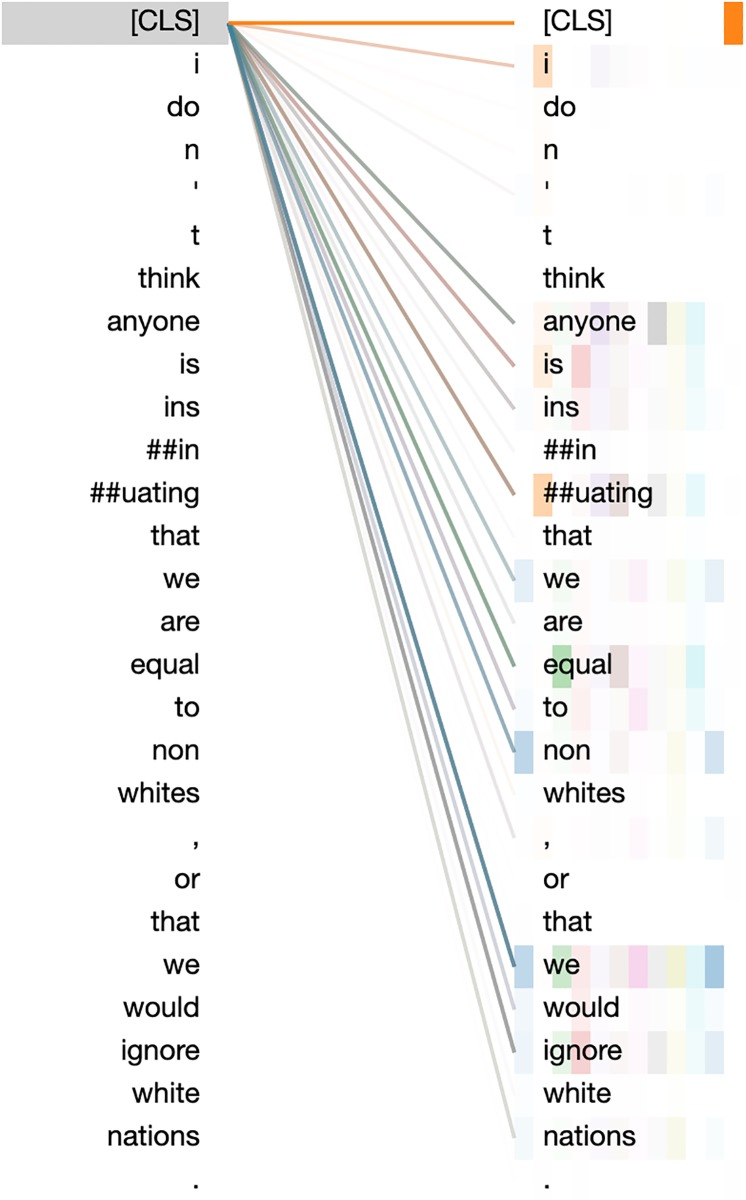
“Challenges in automating the offensive word identification are analyzed and a multi-view Support Vector Machine (SVM) [4] model is proposed that attains a performance closer to the state-of-the-art model.”
MethodInfluentialWhat if Hate Speech Really Was Speech? Towards Explaining Hate Speech in a Cross-Modal Approach
Neitsch, J., Niebuhr, O., & Kleene, A. (2021) · Springer eBooks · doi:10.1007/978-3-658-31793-5_6 · Cited by 4
Neitsch, J., & Niebuhr, O. (2020) · Interspeech (USB) · doi:10.21437/interspeech.2020-1611 · Cited by 4
“Research in the field of speech technology or computational linguistics basically does the same, although more recent approaches also take into account some metadata of a post as well as its larger semantic-pragmatic context [11,12].”
BackgroundUR_NLP @ HaSpeeDe 2 at EVALITA 2020: Towards Robust Hate Speech Detection with Contextual Embeddings
Hoffmann, J., & Kruschwitz, U. (2020) · Accademia University Press eBooks · doi:10.4000/books.aaccademia.6967 · Cited by 4
“, 2018) outperformed a BERT-based approach on the standard HatebaseTwitter benchmark dataset (MacAvaney et al., 2019).”
MethodEvaluation of social bot detection models
Torusdağ, M. B., Kutlu, M., & Selçuk, A. A. (2022) · TURKISH JOURNAL OF ELECTRICAL ENGINEERING & COMPUTER SCIENCES · doi:10.55730/1300-0632.3848 · Cited by 5
“However, OSNs can also be used to harm others in various forms, such as sharing misinformation [1], cyberbullying [2], spreading malware, and others.”
BackgroundClassification of aesthetic natural scene images using statistical and semantic features
Biswas, K. K., Shivakumara, P., Pal, U., Lü, T., Blumenstein, M., & Lladós, J. (2022) · Multimedia Tools and Applications · doi:10.1007/s11042-022-13924-7 · Cited by 4
“Similar to aesthetic image classification, the methods [9, 22] are developed for the classification of images of hate speech using the combination of visual and text-based features, and keyword-based features based on deep learning and language models [9, 22].”
MethodAva, L. T., Karim, A., Hassan, M. M., Faisal, F., Azam, S., Haque, A. S. M. F. A., & Zaman, S. (2023) · Procedia Computer Science · doi:10.1016/j.procs.2023.01.444 · Cited by 4
Faria, R. (2023) · Springer eBooks · doi:10.1007/978-3-031-38248-2_11 · Cited by 5
Leveraging Multi-domain, Heterogeneous Data using Deep Multitask Learning for Hate Speech DetectionPreprint
Kapil, P., & Ekbal, A. (2021) · arXiv (Cornell University) · doi:10.48550/arxiv.2103.12412 · Cited by 7
“(MacAvaney et al., 2019) utilized BERT, that make use of Transformer (Vaswani et al., 2017), an attention mechanism helping to capture the contextual representation between words and sub-words of a sentence that is utilized to perform the classification task on (de Gibert et al., 2018).”
MethodMulti-Model Learning to Detect Twitter Hate SpeechPreprint
Patil, D. R., & Pattewar, T. M. (2022) · Research Square · doi:10.20944/preprints202203.0333.v1 · Cited by 5
Deep Learning for Hate Speech Intensity Analysis: DistilBERT Classification Algorithm
Riyadi, S., Masyhur, A. M., & Andriyani, A. D. (2024) · IEEE Symposium on Industrial Electronics & Applications (ISIEA) · doi:10.1109/isiea61920.2024.10607351 · Cited by 5
“The authors also address the difficulties associated with the availability and interpretability of data in hate speech detection systems [7].”
BackgroundMulticlass hate speech detection with an aggregated dataset
Walsh, S., & Greaney, P. (2025) · Natural language processing. · doi:10.1017/nlp.2024.62 · Cited by 3
Detecting Hate Speech in the Digital Age: AI Solutions for Real-Time Moderation
Babu, C. V. S., & Darshini, S. D. (2025) · Advances in social networking and online communities book series · doi:10.4018/979-8-3693-9904-0.ch012 · Cited by 3
Herlambang, R. G. A. N. P., & Pamungkas, E. W. (2025) · International Conference on Smart Computing, IoT and Machine Learning (SIML) · doi:10.1109/siml65326.2025.11081055 · Cited by 3
“Automated hate speech detection is essential but remains challenging, especially with noisy social media data [9, 10].”
Hatespeech, aber normal? Empirische Evidenz von Hatespeech im Bundestagwahlkampf 2021 auf Facebook
Sponholz, L., Meuth, A.-M., & Weiberg-Salzmann, M. (2023) · Springer eBooks · doi:10.1007/978-3-658-39008-2_12 · Cited by 3
Modelling Political Aggression on Social Media Platforms
Rawat, A. S., Nafis, N., Bhadane, D., Kanojia, D., & Murthy, R. (2023) · Workshop on Computational Approaches to Subjectivity, Sentiment and Social Media Analysis (WASSA) · doi:10.18653/v1/2023.wassa-1.43 · Cited by 3
“, 2020), hate speech detection (Warner and Hirschberg, 2012; MacAvaney et al., 2019; Paz et al., 2020), aggression detection (Kumar et al.”
BackgroundThe Far-Right Online Communities and the Dissemination of Hate
Al‐Rawi, A. (2024) · Springer eBooks · doi:10.1007/978-3-031-61819-2_2 · Cited by 3
Lekscha, J., & Mirbabaie, M. (2025) · i-com · doi:10.1515/icom-2025-0005 · Cited by 6
BERT-BU12 Hate Speech Detection Using Bidirectional Encoder-Decoder
Gupta, S., Kaur, M., & Lakra, S. (2021) · International Journal of System Dynamics Applications · doi:10.4018/ijsda.20220701.oa4 · Cited by 4
“Multiview SVM was used by MacAvaney et al., (2019) for the classification task that uses Multiview stacked SVM using features that are fitted over linear SVM. Implementation, Parameter Tuning and Evaluation Metrics: The model was pre-trained on text passages ignoring labels, lists, and headers.”
MethodInfluentialAdvanced Deep Learning Approaches for Hate Speech Detection
Wang, Q. (2023) · Highlights in Science Engineering and Technology · doi:10.54097/hset.v41i.6801 · Cited by 4
Hateful Comment Detection and Hate Target Type Prediction for Video Comments
Gupta, S., Priyadarshi, P., & Gupta, M. (2023) · ACM International Conference on Information and Knowledge Management (CIKM) · doi:10.1145/3583780.3615260 · Cited by 7
Machine Learning Techniques for Hate Speech Detection on Social Media
Bhatt, C., Saini, N., Chauhan, R. S., & Sahoo, A. K. (2023) · International Conference on Innovative Sustainable Computational Technologies (CISCT) · doi:10.1109/cisct57197.2023.10351228 · Cited by 3
“MacAvaney [14] used Multiview SVM.”
Elias, A. (2024) · Emerald Group Publishing Limited eBooks · doi:10.1108/978-1-83753-512-520241004 · Cited by 3
Moderating Democratic Discourse with LLMs
Bhatia, A., & Sukthankar, G. (2024) · Lecture notes in computer science · doi:10.1007/978-3-031-72241-7_12 · Cited by 5
Together we can do it! A roadmap to effectively tackle propaganda-related tasks
Rodríguez-García, R., Centeno, R., & Rodrigo, Á. (2024) · Internet Research · doi:10.1108/intr-05-2024-0785 · Cited by 4
Tuning Hyper-Parameters of Machine Learning Methods for Improving the Detection of Hate Speech
Saeed, F., Al-Sarem, M., & Alromema, W. (2020) · Advances in intelligent systems and computing · doi:10.1007/978-981-15-6048-4_7 · Cited by 3
Misogynous Text Classification Using SVM and LSTM
Devi, M. D., & Saharia, N. (2021) · Communications in computer and information science · doi:10.1007/978-981-16-0401-0_26 · Cited by 4
Yantseva, V., & Kucher, K. (2021) · doi:10.1109/sweds53855.2021.9637718 · Cited by 6
Beutel, I., Kirschler, O., & Kokott, S. (2022) · Central and Eastern European eDem and eGov Days · doi:10.24989/ocg.v.342.2 · Cited by 4
O Discurso de Ódio Homofóbico no Twitter a partir da Análise de Dados
dos Santos, V. S., Henriques, F. D. R., & Guedes, G. P. (2022) · Anais do Brazilian Workshop on Social Network Analysis and Mining (BraSNAM) · doi:10.5753/brasnam.2022.222916 · Cited by 3
Niebuhr, O., & Neitsch, J. (2022) · Journal of Speech Sciences · doi:10.20396/joss.v11i00.16153 · Cited by 3
Silva, C., & Carvalho, P. C. Q. D. F. (2023) · Comunicação e Sociedade · doi:10.17231/comsoc.43(2023).4135 · Cited by 8
“Defining HS is daunting and complex, as there is no universal consensus on pinning down one definition (Brown, 2017; MacAvaney et al., 2019).”
BackgroundBailén, A. H., & Peres-Neto, L. (2023) · Espejo de Monografías de Comunicación Social · doi:10.52495/c12.emcs.19.p105 · Cited by 4
Sánchez, A. M. S., Ruiz‐Muñoz, D., & Sánchez‐Sánchez, F. J. (2023) · Cuadernos info · doi:10.7764/cdi.56.60093 · Cited by 3
Amnouychokanant, V. (2023) · International Journal of Learning Teaching and Educational Research · doi:10.26803/ijlter.22.10.2 · Cited by 7
“Additionally, sharing misleading content might lead to cyberbullying and hate speech (Giumetti & Kowalski, 2022; Craig et al., 2020; Matamoros-Fernández & Farkas, 2021; Paz et al., 2020; MacAvaney et al., 2019).”
BackgroundMulti-lingual text classification models to detect hate and offensive text
Kumar, P. S., Garg, P., Chitkara, M., & Dhillon, G. (2023) · AIP conference proceedings · doi:10.1063/5.0177435 · Cited by 3
Hate Sentiment Recognition System For Persian Language
Jey, P. S., Hemmati, A., Toosi, R., & Akhaee, M. A. (2022) · International Conference on Computer and Knowledge Engineering · doi:10.1109/iccke57176.2022.9959986 · Cited by 3
“The proposed method is compared with the ParsBert model [14] and another state-of-the-art model proposed in [15].”
MethodAbusive Language Detection with Graph based Multi-task Learning
Zhang, C., Zhang, X., Wang, Q., Liang, J., Zhang, G., Guo, S., Zang, W., & Zhang, Y. (2022) · IEEE International Conference on Big Data (BigData) · doi:10.1109/bigdata55660.2022.10020761 · Cited by 3
“A framework that primarily relies on rules and keywords will miss abusive language that does not contain these terms or regulations [25] and keywords usually require human annotation.”
MethodA Novel Perspective of Text Classification by Prolog-Based Deductive Databases
Nguyen, K. V., Huynh, T. V., & Nguyen, A. G.-T. (2021) · Lecture notes in computer science · doi:10.1007/978-3-030-79463-7_12 · Cited by 3
Krochmal, G. (2020) · RePEc: Research Papers in Economics · doi:10.48550/arxiv.2010.03493 · Cited by 3
“…medias, where there is easily accessible data almost everywhere, that the method has almost unlimited variety of possible applications, e.g.: • Hate speech detection (MacAvaney et al., 2019; Petrocchi & Tesconi, 2017) • Marketing research (Rambocas & Gama, 2013) • National security (Earhart, n.d.).”
BackgroundExploring Explainable Artificial Intelligence Techniques for Hate Speech Detection
Mittal, D., Singh, H., & Rani, S. (2024) · Lecture notes in networks and systems · doi:10.1007/978-981-97-4149-6_37 · Cited by 2
Prabakaran, S., Muthunambu, N. K., & Jeyaraman, N. (2024) · ACM Transactions on Asian and Low-Resource Language Information Processing · doi:10.1145/3695251 · Cited by 4
“The proposed model first recognized the importance of pejoratives and profanities in determining offensive material, then it presents a hand-created syntactic standard for locating verbally abusive provocation [ 17 ].”
GASCOM: Graph-based Attentive Semantic Context Modeling for Online Conversation Understanding
Agarwal, V., Chen, Y., & Sastry, N. R. (2024) · Online Social Networks and Media · doi:10.1016/j.osnem.2024.100290 · Cited by 2
AL-Sukhani, H., Bsoul, Q., Elhawary, A. H., Nasr, Z. M., Mansour, A. E., Batyha, R. M., Alqadi, B. S., Alqurni, J. S., Alfagham, H., & Madbouly, M. M. (2025) · SN Computer Science · doi:10.1007/s42979-025-03741-8 · Cited by 2
“MacAvaney et al. [12] addresses challenges in hate speech detection and proposes BERT-based models for better interpretability, contributing to the improvement of detection systems.”
DDML: Multi-Student Knowledge Distillation for Hate Speech
Liu, Z., Shao, Z., Wang, H., & Li, B. (2025) · Entropy · doi:10.3390/e27040417 · Cited by 2
“As social media continues to evolve and its content expands, the proliferation of hate speech also increases [3], making automatic detection of hate speech a crucial element in combating it.”
Subdued but Unbroken: The Cohesion of Far-Right Extremist Followers after Deplatforming
Zhong, W., & Zhang, M. M. (2025) · Perspectives on Politics · doi:10.1017/s1537592725101941 · Cited by 3
Tempska, P., Urbaniak, R., Dowgiałło, M., Ptaszynski, M. E., Zajączkowski, A., Milewska, M., Leliwa, G., Marcińczuk, M., Brochocki, M., & Wroczyński, M. (2025) · Information Processing & Management · doi:10.1016/j.ipm.2025.104316 · Cited by 3
A transformer-based deep learning approach for detecting online hate speech in Spanish
Sánchez-Gómez, J. M., Batista, F., Vega-Rodríguez, M. A., & Pérez, C. J. (2025) · Applied Soft Computing · doi:10.1016/j.asoc.2025.114259 · Cited by 2
Characterizing Language Use in Online Accessibility Discussion Forums
Venkatraman, N., Aiyer, A. R., Prakash, Y., Jayarathna, S., Lee, H.-N., & Ashok, V. G. (2026) · ACM Transactions on the Web · doi:10.1145/3757745 · Cited by 3
“Given the wealth of knowledge contained in these forums, they have been of considerable interest to the research community for applications such as opinion mining [25], answer extraction [3], hate speech detection [63], chatbot knowledge augmentation [96], and conversation disentanglement [31].”
Automatic Misogyny Detection using Supervised Artificial Neural Networks
Akinduyite, C. O., & Chris-Umoru, O. (2026) · Annals of Data Science · doi:10.1007/s40745-025-00673-1 · Cited by 2
“Users can freely express themselves and, in most cases, anonymously via fast online communication forums, including social media, which allow communication at nearly zero marginal cost to users [17].”
Dixit, G., & Kushwaha, A. K. (2022) · Journal of Business Analytics · doi:10.1080/2573234x.2022.2100834 · Cited by 2
“This sentence structure approach is different from the keywords-oriented approach, where hate keywords are used (MacAvaney et al., 2019).”
MethodSystematic detection and analysis of hate speech in social networking
Rajendran, M. P., Ramaswamy, K., Sekar, R., Kumar, V., Varadharajan, V., Pallaiyah, S., & Govindaraj, J. (2024) · AIP conference proceedings · doi:10.1063/5.0194201 · Cited by 2
YOSHIDA, R., Yoshida, S., & Muneyasu, M. (2024) · IEICE Transactions on Fundamentals of Electronics Communications and Computer Sciences · doi:10.1587/transfun.2024smp0004 · Cited by 2
An Investigation of Hate Speech in Italian: Use, Identification, and Perception
Cruschina, S., Gianollo, C., Bianchi, C., Zuloaga, M. B., Safina, E. S., Pascale, S. D., Cavirani, E., Marzo, S., Zingaretti, M., Garraffa, M., et al. (2024) · Helsinki University Press eBooks · doi:10.33134/hup-27 · Cited by 3
Kalinin, V. S. (2024) · Тrаnscarpathian Philological Studies · doi:10.32782/tps2663-4880/2024.38.42 · Cited by 2
From Words to Hate: Analyzing Predictive Features for Hate Speech Detection on X
Rawat, T., Bhatt, S., Rawat, D., Vats, S., & Sharma, V. (2024) · IEEE International Conference on Innovations in High Speed Communication and Signal Processing (IHCSP) · doi:10.1109/ihcsp63227.2024.10960044 · Cited by 2
“…messages, fuels rapid information dissemination, with 500 million daily tweets In 2019 study was done by Hao-Ren Yao, Eugene Yang and Katina Russell [6] Social networking has revolutionized online communication, granting ordinary individuals the power to instantly connect with thousands.”
Kühn, R., Mitrović, J., & Granitzer, M. (2025) · ACM Computing Surveys · doi:10.1145/3744554 · Cited by 4
“Neglecting the existence of rhetorical figures can result in higher error rates and misclassification, particularly in scenarios where implicit language, such as sarcasm or metaphors, is prevalent [63].”
Understanding Facial Expression Expressing Hate from Online Short-form Videos
Montefalcon, M. D., Padilla, J. R., Paulino, J., Go, J. G., Rodriguez, R. L., & Imperial, J. M. (2021) · International Conference on E-Society, E-Education and E-Technology (ICSET) · doi:10.1145/3485768.3485785 · Cited by 2
“In the following works [12–14], examined different approaches and discussed the current limitations of the research which includes data scarcity, poor generalization ability on unseen data and multi-lingual application.”
BackgroundInfluentialMasud, S., Pinkesh, P., Das, A., Gupta, M., Nakov, P., & Chakraborty, T. (2022) · ACM International Conference on Web Search and Data Mining (WSDM) · doi:10.1145/3488560.3501392 · Cited by 2
“Subsequently, neural models based on CNNs, RNNs, and Transformers were used [3, 5, 7, 8, 15, 16, 20, 22, 24, 28, 33, 38, 39, 44, 46, 51, 53, 58–61].”
A Survey on Detecting and Preventing Hateful Comments on Social Media Using Deep Learning
Karthika, I., Boomika, G., Nisha, R., Shalini, M., & Srivarshini, S. P. (2022) · Smart innovation, systems and technologies · doi:10.1007/978-981-19-3575-6_30 · Cited by 3
Stance Classification of Social Media Texts for Under-Resourced Scenarios in Social Sciences
Yantseva, V., & Kucher, K. (2022) · Data · doi:10.3390/data7110159 · Cited by 3
“We report macro-averaged results as they favor minority classes for imbalanced data classification [93,94], but also list the F1 score [95] results for the majority class for reference in Table 1.”
BackgroundResultEvaluation of Different ML and Text Processing Techniques for Hate Speech Detection
Shawkat, N., Simpson, J. R., & Saquer, J. M. (2022) · International Conference on Data Intelligence and Security (ICDIS) · doi:10.1109/icdis55630.2022.00040 · Cited by 6
“Encyclopedia of the American Constitution, European Union Commission, international minorities associations, and the policies of Facebook, YouTube, and Twitter have their own definitions of hate speech [6].”
BackgroundShibly, F. H. A., Sharma, U., & Naleer, H. M. M. (2022) · Journal of Pharmaceutical Negative Results · doi:10.47750/pnr.2022.13.s03.072 · Cited by 7
Text Analysis On Twitter Data Using LSA and LDA
Sai, T. K. V., Lohith, K. A., Sai, M. P., Tejaswi, K., Kumar, P. M. A., & Karthikeyan, C. (2023) · International Conference on Computer Communication and Informatics (ICCCI) · doi:10.1109/iccci56745.2023.10128417 · Cited by 2
Can Contextualizing User Embeddings Improve Sarcasm and Hate Speech Detection?
Breitwieser, K. (2022) · Workshop on Natural Language Processing and Computational Social Science (NLP+CSS) · doi:10.18653/v1/2022.nlpcss-1.14 · Cited by 3
“Similar to sarcasm detection, the classification of hateful content has also evolved from traditional methods, such as handcrafted rules (MacAvaney et al., 2019; Mondal et al., 2017), to employing neural network architectures such as RNNs and CNNs (Kovács et al., 2021).”
MethodCyber harassment of children with special reference to digital games
Baltezarević, V., Baltezarević, R., & Baltezarević, I. (2023) · Temida · doi:10.2298/tem2302261b · Cited by 6
NLP Based Hate Speech Detection And Moderation
Singh, R. K., Sanjay, H. A., A, P. J. S., Rishi, H., & Bhardwaj, S. (2023) · International Conference on Computation System and Information Technology for Sustainable Solutions (CSITSS) · doi:10.1109/csitss60515.2023.10333320 · Cited by 3
“In [6] For the purpose of identifying hate speech, it suggests a multiview svm technique and employs the following four datasets: Stormfront, Trac (Facebook), Hate base Twitter, and HatEval.”
MethodDetection of Hate Speech Code Mix Involving English and Other Nigerian Languages
Ndabula, J. N., Olanrewaju, O. M., & Echobu, F. O. (2023) · Journal of Information Systems and Informatics · doi:10.51519/journalisi.v5i4.595 · Cited by 2
“Hate speech is not universally understood, and there is no general agreement on a single definition [2].”
BackgroundHate Speech Detection Using Deep Learning
Gautam, A., Singh, A., Verma, A., & Sinha, J. (2024) · International Journal for Research in Applied Science and Engineering Technology · doi:10.22214/ijraset.2024.61475 · Cited by 2
Bhattacharya, A., Chakrabarti, T., Basu, S., Knott, A., Pedreschi, D., Chatila, R., Leavy, S., Eyers, D. M., Teal, P. D., & Biecek, P. (2024) · ACM Web Science Conference (WebSci) · doi:10.1145/3630744.3663607 · Cited by 4
“Additionally, discrepancies in how hate speech [20] is classified and defined across various datasets further complicate matters, making it challenging to compare the effectiveness of different machine-learning models.”
BackgroundHybrid Deep Learning for Detecting Hate Speech Across Social Media Platforms
Kevin, L., Yee, C. T., Liang, C. Z., Yong, S., Han, Y., Mukred, M., & Mohammed, F. (2025) · Studies in computational intelligence · doi:10.1007/978-3-031-75091-5_16 · Cited by 3
Thandil, R. K., Muneer, V. K., Houlath, K., & Sabique, P. V. (2025) · Humanities and Social Sciences Communications · doi:10.1057/s41599-025-06268-8 · Cited by 2
Identifying Social Media Content Supporting Proud Boys
Fahim, M., & Gokhale, S. S. (2021) · IEEE International Conference on Big Data (BigData) · doi:10.1109/bigdata52589.2021.9672065 · Cited by 2
“Precision is the percentage relevant from the set detected and recall is the percentage relevant from within the global population [15].”
BackgroundReducing Exposure to Hateful Speech Online
Bowker, J., & Ophoff, J. (2022) · Lecture notes in networks and systems · doi:10.1007/978-3-031-10467-1_38 · Cited by 2
RAEEUCCI2023-Comparative study of Hate Speech detection using different Machine Learning Classifiers
Sonare, B., Dewan, J. H., Jadhav, A. R., Bamboriya, A., Gaikwad, M., & Kokare, G. (2023) · International Conference on Recent Advances in Electrical, Electronics, Ubiquitous Communication, and Computational Intelligence (RAEEUCCI) · doi:10.1109/raeeucci57140.2023.10134512 · Cited by 2
“So, the results were not calculated using raw counts of classes[13].”
MethodA Comparative Study of Automatic Hate Speech Detection Using Machine Learning
Siddiqui, J. A., Yuhaniz, S. S., & Memon, Z. A. (2024) · IEEE Karachi Section Humanitarian Technology Conference (KHI-HTC) · doi:10.1109/khi-htc60760.2024.10482049 · Cited by 2
“As evidenced by events like the U.S. presidential election including Donald Trump [2], the assaults in Manchester and London [3], and the terrorist attacks in New Zealand [4], recent surveys link the popularity of hate speech online and the occurrence of hate crimes.”
BackgroundAnsari, G., & Saxena, C. (2024) · The Springer series in applied machine learning · doi:10.1007/978-3-031-63821-3_11 · Cited by 3
DAMPAK UJARAN KEBENCIAN DI MEDIA SOSIAL PADA PENGGUNAAN BAHASA INDONESIA PADA WARGA KEPUNDUHAN
Subekti, R., & Anismaditya, P. (2020) · Jurnal Ilmiah SEMANTIKA · doi:10.46772/semantika.v2i01.263 · Cited by 2
Bhoi, A., & Balabantaray, R. C. (2021) · Advances in intelligent systems and computing · doi:10.1007/978-981-16-0171-2_59 · Cited by 2
A Peer Recommendation Model to Avoid Hate Speech Engagements in Multiplex Social Networks
Caldera, H. M. M., Meedin, G. S. N., & Perera, I. (2020) · From Innovation to Impact (FITI) · doi:10.1109/fiti52050.2020.9424905 · Cited by 2
“The criteria for making a hate speech supporter is if the user has a high value in Multi-view SVM [20].”
BackgroundProfiling Hate Speech Spreaders on Twitter.
Carracedo, Á. A., & Mondéjar, R. J. (2021) · CLEF (Working Notes) · Cited by 2
Barkhashree, & Dhaliwal, P. (2021) · International Conference on Advances in Computing, Communication Control and Networking (ICAC3N) · doi:10.1109/icac3n53548.2021.9725393 · Cited by 2
“Sean, et al. [14] illustrates the different datasets discussing the percentage of different type of hateful contents.”
BackgroundAn Introduction to Detection of Hate Speech and Offensive Language in Slovak
Sokolová, Z., Staš, J., & Hládek, D. (2022) · International Conference on Advanced Computer Information Technologies (ACIT) · doi:10.1109/acit54803.2022.9913104 · Cited by 2
“Recent research offers several possible solutions for detecting and eliminating hate speech on social media [6], [7].”
BackgroundPerformance Comparison of Word2Vec Models for Detecting Arabic Hate Speech on Social Networks
Al-Saqqa, S., Awajan, A., & HAMMO, B. H. (2022) · International Conference on Emerging Trends in Computing and Engineering Applications (ETCEA) · doi:10.1109/etcea57049.2022.10009734 · Cited by 3
“Hate speech is the expression of hate and offensive language against a person or a group based on a specific trait such as religion, race, gender, or ethnic origin [1].”
Background
Metadata
- Authors
- MacAvaney, S., Yao, H.-R., Yang, E., Russell, K., Goharian, N., & Frieder, O.
- Affiliations
- Georgetown University (US)
- Corresponding author
- MacAvaney, Sean
- Venue
- PLOS ONE
- Publisher
- Public Library of Science (PLoS)
- Published
- 2019-08-20
- Volume
- 14
- Issue
- 8
- Pages
- e0221152
- ISSN
- 1932-6203 (ISSN-L)
- PMC
- PMC6701757
- OpenAlex
- W2969662548
- Cited by
- 566
- References
- 36
- Citations by year
- 2026: 33 · 2025: 79 · 2024: 86 · 2023: 116 · 2022: 103 · 2021: 104 · 2020: 42 · 2019: 3
- FWCI
- 28.43
- Type
- journal article
- Language
- en
- Open access
- gold
- doi.org
- Licence
- Locations
- PLoS ONE (publishedVersion, cc-by)
- Europe PMC (PubMed Central) (publishedVersion, cc-by)
- PubMed Central (publishedVersion, cc-by)
- PubMed (publishedVersion)
- DOAJ (DOAJ: Directory of Open Access Journals) (submittedVersion, cc-by-sa)
- Figshare (submittedVersion, cc-by)
- Topics
- Physical Sciences › Computer Science › Artificial Intelligence › Hate Speech and Cyberbullying Detection
- Physical Sciences › Computer Science › Artificial Intelligence › Sentiment Analysis and Opinion Mining
- Social Sciences › Sociology and Political Science › Misinformation and Its Impacts
- Keywords
- hate speech detection, online texts, interpretability, model interpretability, definition of hate speech, limited training data
- MeSH terms
- Machine Learning, Hate, Humans, Language, Violence, Data Mining, Social Media, Datasets as Topic
About these checks
Registry, retraction, Cites and statistics results are computed, not judged, with one exception: a printed reference that no index lists is read once by a model before it counts as a citation error. Claims are extracted by a model and kept only when their quote appears verbatim in the text; each cited source is then checked, with a model’s help, for whether it says what the claim relies on. Those verdicts can be wrong — read the claim’s quote and the cited source before relying on one.
Statistics and arithmetic are recomputed, not judged.
Confidence bands are shown only for fields calibrated on our annotated test set. None is calibrated yet, so no band is shown.
What counts as a claim ›How we measure confidence ›How we check this ›
Are you an author, or do you see a problem with this page? Request a review
Data sources
Bibliographic data: Semantic Scholar, OpenAlex, Crossref.
Contains information from the Semantic Scholar Academic Graph Datasets, made available under the ODC Attribution License (ODC-BY 1.0).
Semantic Scholar’s data is described in: Kinney, R., et al. (2023). The Semantic Scholar Open Data Platform. arXiv:2301.10140.
