

Identifying post-marital residence patterns in prehistory: A phylogenetic comparative analysis of dwelling size
Open accessThe DOI matches its Crossref record; 111 of the 111 references it cites were found in a registry or an index.
Abstract
Post-marital residence patterns are an important aspect of human social organization. However, identifying such patterns in prehistoric societies is challenging since they leave almost no direct traces in archaeological records. Cross-cultural researchers have attempted to identify correlates of post-marital residence through the statistical analysis of ethnographic data. Several studies have demonstrated that, in agricultural societies, large dwellings (over ca. 65 m2) are associated with matrilocality (spouse resides with or near the wife's family), whereas smaller dwellings are associated with patrilocality (spouse resides with or near the husband's family). In the present study, we tested the association between post-marital residence and dwelling size (average house floor area) using phylogenetic comparative methods and a global sample of 86 pre-industrial societies, 22 of which were matrilocal. Our analysis included the presence of agriculture, sedentism, and durability of house construction material as additional explanatory variables. The results confirm a strong association between matrilocality and dwelling size, although very large dwellings (over ca. 200 m2) were found to be associated with all types of post-marital residence. The best model combined dwelling size, post-marital residence pattern, and sedentism, the latter being the single best predictor of house size. The effect of agriculture on dwelling size becomes insignificant once the fixity of settlement is taken into account. Our results indicate that post-marital residence and house size evolve in a correlated fashion, namely that matrilocality is a predictable response to an increase in dwelling size. As such, we suggest that reliable inferences about the social organization of prehistoric societies can be made from archaeological records.
Overview
The claims and statistics of this paper haven’t been checked yet.
Free: it reads the open-access text and checks the first 5 claims that cite a source we can check. Create a free account to check every claim.
Integrity signals
Registry
Cites
Statistics
Figures
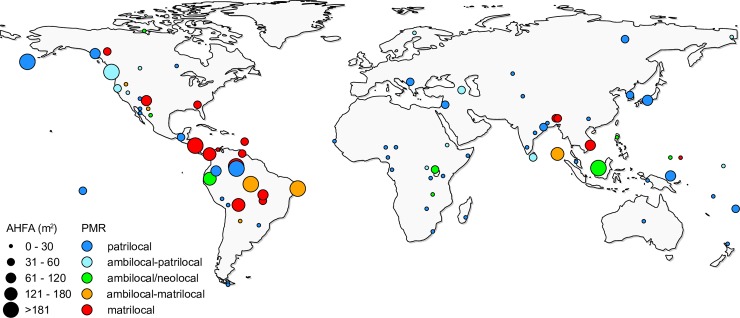
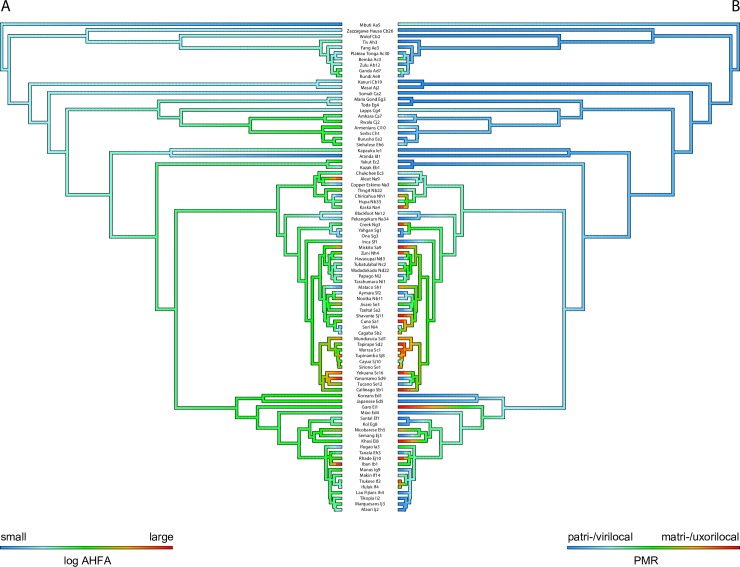
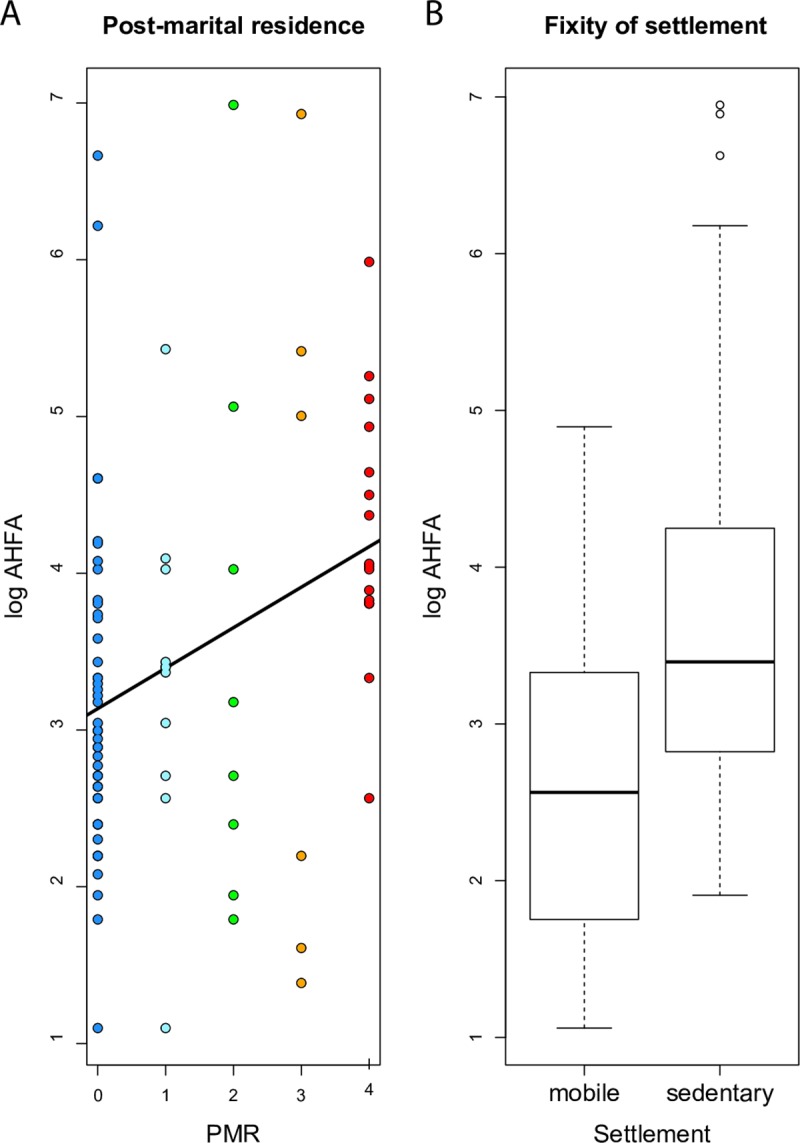
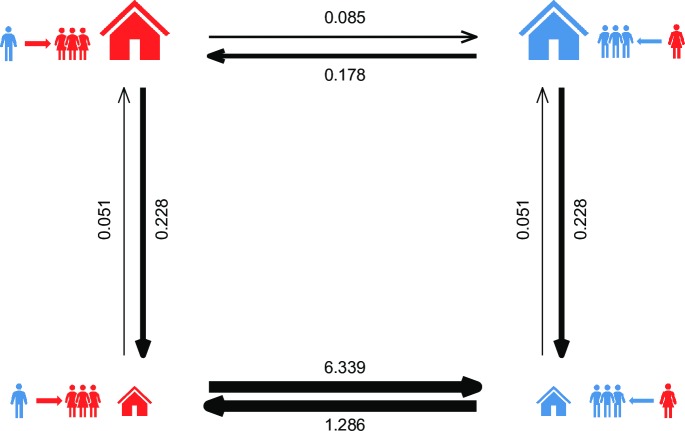
Verification
Claims the paper makes
The claims and statistics of this paper haven’t been checked yet.
Free: it reads the open-access text and checks the first 5 claims that cite a source we can check. Create a free account to check every claim.
Claims other papers make about this one
Each is checked against this paper’s own text: does it say what the citing paper says it does?
The source backs part of the claim, not all of it — or backs it for a different population, condition or comparison.
In the citing paper
“Comparative ethnology can provide models that allow artifactual remains (i.e., settlement and dwelling size) be used to interpret populations features such as sedentary lifestyle, marital residence, marriage patterns, kinship and social organization, warfare, political hierarchy, and even religious practices”
From An Ethnological Analogy and Biogenetic Model for Interpretation of Religion and Ritual in the Past (2022) · cites this paper as Václav et al., 2020
Experimental — accuracy not yet measured
Self-check
Percentages, sums and reported differences re-computed from the paper’s own numbers.
The self-check needs the paper’s full text.
Citations
Cites
phytools: an R package for phylogenetic comparative biology (and other things)
Revell, L. J. (2012) · Methods in Ecology and Evolution · doi:10.1111/j.2041-210x.2011.00169.x · Cited by 9,277
Inferring the historical patterns of biological evolution
Pagel, M. (1999) · Nature · doi:10.1038/44766 · Cited by 5,200
(1994) · Proceedings of the Royal Society of London. Series B: Biological Sciences · doi:10.1098/rspb.1994.0006 · Cited by 1,859 · cited 4×
“We tested for correlated evolution between dichotomized (binary) versions of AHFA and PMR using Pagel’s [70] test for correlated evolution as implemented in the fitPagel function of the R package phytools [68].”
InfluentialStrontium Isotopes from the Earth to the Archaeological Skeleton: A Review
Alexander Bentley, R. (2006) · Journal of Archaeological Method and Theory · doi:10.1007/s10816-006-9009-x · Cited by 1,311
Standard cross-cultural sample
Murdock, G. P., & White, D. R. (1969) · Ethnology · doi:10.2307/3772907 · Cited by 1,149 · cited 1×
“Anthropologists have attempted to minimize Gal-ton’s problem by using subsets of distantly related societies that were assumed to be effectively independent, such as the Standard Cross-Cultural Sample [59].”
FRITZ, S. A., & PURVIS, A. (2010) · Conservation Biology · doi:10.1111/j.1523-1739.2010.01455.x · Cited by 1,057
(2015) · Wiley eBooks · doi:10.1002/9781118900772 · Cited by 956
Hunter-gatherers and human evolution.
Marlowe, F. W. (2005) · Evolutionary Anthropology: Issues, News, and Reviews · doi:10.1002/evan.20046 · Cited by 944
Murdock, G. P. (1967) · Ethnology · doi:10.2307/3772751 · Cited by 913
Natural selection and social behavior
Barash, D. P. (1982) · Ethology and Sociobiology · doi:10.1016/0162-3095(82)90029-2 · Cited by 685
Research works printed but not linked: 8
- Murdock GP. Social Structure. London: Macmillan Company; 1949.
- Duda P, Zrzavý J. Towards a global phylogeny of human populations based on genetic and linguistic data In: Sahle Y, Reyes-Centeno H, Bentz C, editors. Modern Human Origins and Dispersal. Words, Bones, Genes, Tools: DFG Center for Advanced Studies Series. 1 ed Tübingen: Kerns Verlag; 2019 p. 331– 59.
- Orme D, Freckleton R, Thomas G, Petzoldt T. The caper package: comparative analysis of phylogenetics and evolution in R. R package version 5.2. 2013; 1– 36.
- Wagley C, Galvão E. The Tapirapé In: Steward JH, editor. Handbook of South American Indians, Vol 3, The Tropical Forest Tribes. Washington D.C.: Smithsonian Institute; 1948 p. 167– 78.
- Métraux A. The Tupinamba In: Steward JH, editor. Handbook of South American Indians, Vol 3, The Tropical Forest Tribes. Washington D.C.: Smithsonian Institution; 1948 p. 95– 133.
- Harrell S. Human Families: Social Change in Global Perspective. Boulder: Westview Press; 1999.
- Veniaminov I. Zapiski ob ostravach Unalaᘜkinskago otděla. St. Petersburg: Tip. Imp. Rossijskoj Akad.; 1840.
- Playfair A. The Garos. London: David Nutt; 1909.
Cited by
Female lineages and changing kinship patterns in Neolithic Çatalhöyük
Yüncü, E., Doğu, A. K., Kaptan, D., Kılıç, M. S., Mazzucato, C., Güler, M. N., Eker, E., Katırcıoğlu, B., Chyleński, M., Vural, K. B., et al. (2025) · Science · doi:10.1126/science.adr2915 · Cited by 48
Ringen, E. J., Martin, J. S., & Jaeggi, A. V. (2021) · EcoEvoRxiv · doi:10.32942/osf.io/wfp95 · Cited by 38
An Ethnological Analogy and Biogenetic Model for Interpretation of Religion and Ritual in the Past
Winkelman, M. J. (2022) · Journal of Archaeological Method and Theory · doi:10.1007/s10816-021-09523-9 · Cited by 24
“…remains (i.e., settlement and dwelling size) be used to interpret populations features such as sedentary lifestyle, marital residence, marriage patterns, kinship and social organization, warfare, political hierarchy, and even religious practices (also see Václav et al., 2020; Kahn, 2015).”
MethodPost-marital residence patterns in LBK: Comparison of different models
Hrnčíř, V., Vondrovský, V., & Květina, P. (2020) · Journal of Anthropological Archaeology · doi:10.1016/j.jaa.2020.101190 · Cited by 21
Self-citationThe potential to infer the historical pattern of cultural macroevolution
Lukas, D., Towner, M. C., & Mulder, M. B. (2021) · Philosophical Transactions of the Royal Society B Biological Sciences · doi:10.1098/rstb.2020.0057 · Cited by 18
Cintas-Peña, M., & Sanjuán, L. G. (2022) · Journal of Anthropological Archaeology · doi:10.1016/j.jaa.2022.101422 · Cited by 17
Mobile craftspeople and orientalising transculturation in seventh-century BC Iberia
González, A. B., Fernández, J. J. P., & Alejos, A. D. (2023) · Antiquity · doi:10.15184/aqy.2023.96 · Cited by 12
Tafani, A., Greco, E., Tykot, R. H., Barbieri, P., Gaspari, M., Gabriele, C., Toma, A., Culea, M., Manea, B., Darie, A., et al. (2025) · Scientific Reports · doi:10.1038/s41598-025-05671-0 · Cited by 10
Patrilocality at the Beginning of Farming? An Isotopic Approach from SE Moravia
Morell, B., Tvrdý, Z., Bonilla, M. D., Bickle, P., Tóth, P., Přichystal, M., Bedáňová, A., & Masclans, A. (2024) · Journal of World Prehistory · doi:10.1007/s10963-024-09181-1 · Cited by 9
Sex, Gender and the Third Science Revolution
Rebay‐Salisbury, K. (2024) · Themes in contemporary archaeology · doi:10.1007/978-3-031-68157-8_2 · Cited by 5
Enthrone, dethrone, rethrone? The multiple lives of matrilineal kinship in Aegean prehistory
Cveček, S. (2023) · Archaeological Dialogues · doi:10.1017/s1380203824000059 · Cited by 5
Vincenti, G., Molinaro, L., Sajjadi, S. M. S., Moradi, H., Pagani, L., & Fabbri, P. F. (2024) · American Journal of Biological Anthropology · doi:10.1002/ajpa.24911 · Cited by 4
Xiong, J., Chen, G., Yang, Y., Meng, H., Storozum, M. J., Allen, E., Wang, H., & Wen, S. (2022) · International Journal of Osteoarchaeology · doi:10.1002/oa.3146 · Cited by 3
Fakhriati, F., Kosasih, K., Mu'jizah, M., Fuad, M., & Warnis, W. (2023) · SAMARAH Jurnal Hukum Keluarga dan Hukum Islam · doi:10.22373/sjhk.v7i3.18797 · Cited by 4
Bachofen Redivivus ? Female-biased Kinship in World History
Duindam, J. (2022) · Corn publication series · doi:10.1484/m.corn-eb.5.129371 · Cited by 1
Exploring gender norms in Neolithic Northern China: A GIS analysis of the Jiangzhai site
Ren, X., Tian, Z., Allen, E., & Wen, S. (2024) · Journal of Archaeological Science Reports · doi:10.1016/j.jasrep.2024.104654 · Cited by 1
Tracing social inequalities in the Early Iron Age
ÁLVAREZ, S. N. (2024) · Documenta Praehistorica · doi:10.4312/dp.51.4 · Cited by 1
Syme, K., Motos, N., & Placek, C. D. (2026) · Royal Society Open Science · doi:10.1098/rsos.251766
Kin Selection Underpins Family Dynamics in Rural China
He, Q.-Q., Wang, M., Wu, J., Feng, T.-J., Zheng, X.-D., Yu, J., Tang, S., Deng, L.-L., Fu, C., Mace, R. H., et al. (2026) · Human Nature · doi:10.1007/s12110-026-09514-3
Mendo, K. F., & Tirado, J. B. (2026) · Arqueología de la Arquitectura · doi:10.3989/arq.arqt.2026.455
Suárez, M. V., Tvrdý, Z., Pena, L. D., Hamilton, D., Bíšková, J., & Morell, B. (2026) · Journal of Archaeological Science Reports · doi:10.1016/j.jasrep.2026.106176
Metadata
- Authors
- Hrnčíř, V., Duda, P., Šaffa, G., Květina, P., & Zrzavý, J.
- Affiliations
- Charles University (CZ)
- University of South Bohemia in České Budějovice (CZ)
- Czech Academy of Sciences, Institute of Archaeology, Prague (CZ)
- Corresponding author
- Hrnčíř, Václav
- Venue
- PLOS ONE
- Publisher
- Public Library of Science (PLoS)
- Published
- 2020-02-24
- Volume
- 15
- Issue
- 2
- Pages
- e0229363
- ISSN
- 1932-6203 (ISSN-L)
- PMC
- PMC7039508
- OpenAlex
- W3007046822
- Cited by
- 16
- References
- 111
- Citations by year
- 2026: 2 · 2025: 2 · 2024: 4 · 2023: 2 · 2022: 3 · 2021: 2 · 2020: 1
- FWCI
- 11.73
- Type
- journal article
- Language
- en
- Open access
- gold
- doi.org
- Licence
- Locations
- PLoS ONE (publishedVersion, cc-by)
- PubMed Central (publishedVersion, cc-by)
- PubMed (publishedVersion)
- DOAJ (DOAJ: Directory of Open Access Journals) (submittedVersion, cc-by-sa)
- Figshare (submittedVersion, cc-by)
- Funders
- Grantová Agentura České Republiky (GA18-23889S, GA19-16304S)
- Topics
- Social Sciences › Cultural Studies › Language and cultural evolution
- Social Sciences › Arts and Humanities › Archeology (arts and humanities) › Archaeological and Geological Studies
- Social Sciences › Psychology › Experimental and Cognitive Psychology › Evolutionary Psychology and Human Behavior
- Keywords
- postmarital residence, matrilocality, patrilocality, house size, prehistoric societies, pre-industrial societies, sedentism, social organization, phylogenetic comparative analysis
- MeSH terms
- Anthropology, Archaeology, Demography, Family Characteristics, Female, Housing, Humans, Male, Marriage, Phylogeny, Population Dynamics, Residence Characteristics, History, Ancient
About these checks
Registry, retraction, Cites and statistics results are computed, not judged, with one exception: a printed reference that no index lists is read once by a model before it counts as a citation error. Claims are extracted by a model and kept only when their quote appears verbatim in the text; each cited source is then checked, with a model’s help, for whether it says what the claim relies on. Those verdicts can be wrong — read the claim’s quote and the cited source before relying on one.
Statistics and arithmetic are recomputed, not judged.
Confidence bands are shown only for fields calibrated on our annotated test set. None is calibrated yet, so no band is shown.
What counts as a claim ›How we measure confidence ›How we check this ›
Are you an author, or do you see a problem with this page? Request a review
Data sources
Bibliographic data: Semantic Scholar, OpenAlex, Crossref.
Contains information from the Semantic Scholar Academic Graph Datasets, made available under the ODC Attribution License (ODC-BY 1.0).
Semantic Scholar’s data is described in: Kinney, R., et al. (2023). The Semantic Scholar Open Data Platform. arXiv:2301.10140.
