

The Virtual Operative Assistant: An explainable artificial intelligence tool for simulation-based training in surgery and medicine
Open accessThe DOI matches its Crossref record; 48 of the 49 references it cites were found in a registry or an index, and 1 are not checked yet.
Abstract
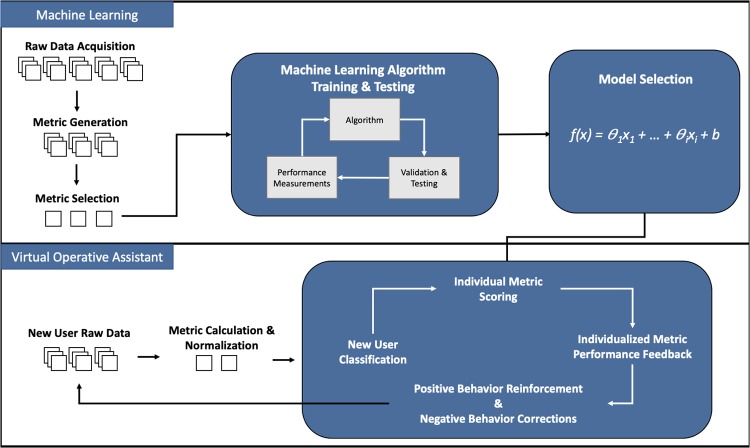
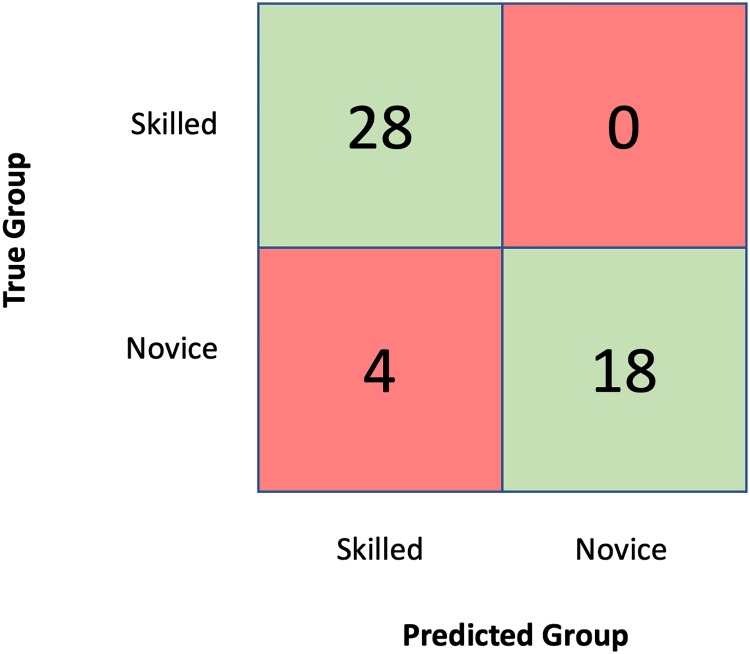
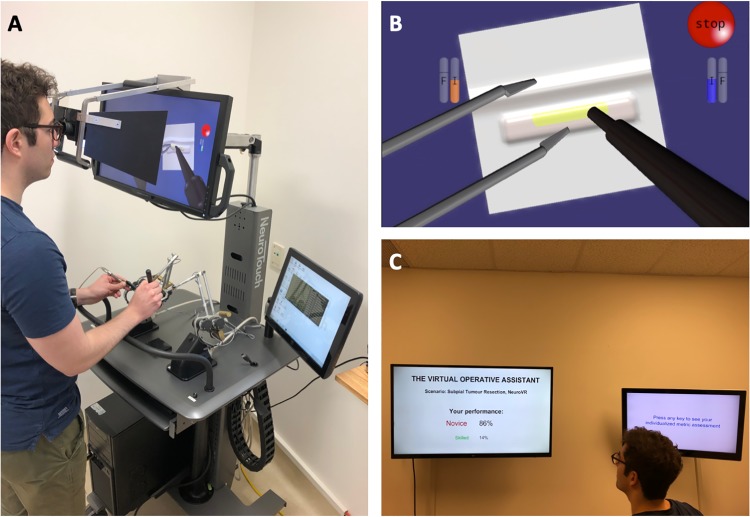
Simulation-based training is increasingly being used for assessment and training of psychomotor skills involved in medicine. The application of artificial intelligence and machine learning technologies has provided new methodologies to utilize large amounts of data for educational purposes. A significant criticism of the use of artificial intelligence in education has been a lack of transparency in the algorithms' decision-making processes. This study aims to 1) introduce a new framework using explainable artificial intelligence for simulation-based training in surgery, and 2) validate the framework by creating the Virtual Operative Assistant, an automated educational feedback platform. Twenty-eight skilled participants (14 staff neurosurgeons, 4 fellows, 10 PGY 4-6 residents) and 22 novice participants (10 PGY 1-3 residents, 12 medical students) took part in this study. Participants performed a virtual reality subpial brain tumor resection task on the NeuroVR simulator using a simulated ultrasonic aspirator and bipolar. Metrics of performance were developed, and leave-one-out cross validation was employed to train and validate a support vector machine in Matlab. The classifier was combined with a unique educational system to build the Virtual Operative Assistant which provides users with automated feedback on their metric performance with regards to expert proficiency performance benchmarks. The Virtual Operative Assistant successfully classified skilled and novice participants using 4 metrics with an accuracy, specificity and sensitivity of 92, 82 and 100%, respectively. A 2-step feedback system was developed to provide participants with an immediate visual representation of their standing related to expert proficiency performance benchmarks. The educational system outlined establishes a basis for the potential role of integrating artificial intelligence and virtual reality simulation into surgical educational teaching. The potential of linking expertise classification, objective feedback based on proficiency benchmarks, and instructor input creates a novel educational tool by integrating these three components into a formative educational paradigm.
Overview
The claims and statistics of this paper haven’t been checked yet.
Free: it reads the open-access text and checks the first 5 claims that cite a source we can check. Create a free account to check every claim.
Integrity signals
Registry
Cites
Statistics
Figures

Verification
Claims the paper makes
The claims and statistics of this paper haven’t been checked yet.
Free: it reads the open-access text and checks the first 5 claims that cite a source we can check. Create a free account to check every claim.
Claims other papers make about this one
Each is checked against this paper’s own text: does it say what the citing paper says it does?
The cited source says what the claim attributes to it.
In the citing paper
“Various uses were described, including surgical simulation with a virtual operative assistant [132], simulated patient physician medical interviews [120–123, 130], and interactions with avatars as standardized patients during clinical interviews [124–126].”
From Artificial intelligence in undergraduate medical education: an updated scoping review (2025) · cites this paper as [132]
The check wasn’t confident either way, so it gives no verdict — never disputed.
In the citing paper
“Simulation-based GenAI learning has been shown to enhance AI readiness and reinforce core nursing concepts [18].”
From Effects of generative artificial intelligence (GenAI) patient simulation on perceived clinical competency among global nursing undergraduates: a cross-over randomised controlled trial (2025) · cites this paper as [18]
Experimental — accuracy not yet measuredIn the citing paper
“AI simulations can adapt to a learner's performance, providing personalized, dynamic feedback that helps students practice clinical skills, refine decision-making, and improve their diagnostic reasoning in a controlled, risk-free environment [107].”
From Formative assessment and feedback in medical education: A practical guide: AMEE Guide No. 189 (2026) · cites this paper as [107]
Self-check
Percentages, sums and reported differences re-computed from the paper’s own numbers.
The self-check needs the paper’s full text.
Citations
Cites
Deep learning in neural networks: an overview
Schmidhuber, J. (2015) · Neural Networks · doi:10.1016/j.neunet.2014.09.003 · Cited by 18,570
The perceptron: A probabilistic model for information storage and organization in the brain.
Rosenblatt, F. (1958) · Psychological Review · doi:10.1037/h0042519 · Cited by 12,280 · cited 1×
“The system relies on a single processing unit known as the perceptron.[19] Building from this, the authors outline the rationale for employing the perceptron (also known as the linear Support Vector Machine) in this study in the S1 Appendix in S1 File.”
MethodSupervised Machine Learning: A Review of Classification Techniques
Kotsiantis, S. B. (2007) · Informatica · Cited by 6,007
Large-Scale Machine Learning with Stochastic Gradient Descent
Bottou, L. (2010) · Proceedings of COMPSTAT'2010 · doi:10.1007/978-3-7908-2604-3_16 · Cited by 5,795 · cited 1×
“[24, 25] An iterative cost reduction approach is employed during training,[26] whereby the algorithm alters values of the weights (θ) for each metric in order to reach the greatest predictive accuracy.”
MethodA guide to deep learning in healthcare
Esteva, A., Robicquet, A., Ramsundar, B., Kuleshov, V., DePristo, M., Chou, K., Cui, C., Corrado, G., Thrun, S., & Dean, J. (2019) · Nature Medicine · doi:10.1038/s41591-018-0316-z · Cited by 5,312
Cognitive load theory, learning difficulty, and instructional design
Sweller, J. (1994) · Learning and Instruction · doi:10.1016/0959-4752(94)90003-5 · Cited by 3,801 · cited 1×
“Following the principles of cognitive load theory,[31] the Virtual Operative Assistant aims to limit the amount of information immediately provided to the user to facilitate learning.”
MethodDeo, R. C. (2015) · Circulation · doi:10.1161/circulationaha.115.001593 · Cited by 3,466
Toward integrating feature selection algorithms for classification and clustering
Liu, H., & Yu, L. (2005) · IEEE Transactions on Knowledge and Data Engineering · doi:10.1109/tkde.2005.66 · Cited by 2,706
Feature Selection: A Data Perspective
Li, J., Cheng, K., Wang, S., Morstatter, F., Trevino, R. P., Tang, J., & Liu, H. (2018) · ACM Computing Surveys · doi:10.1145/3136625 · Cited by 2,442
Score normalization in multimodal biometric systems
Jain, A., Nandakumar, K., & Ross, A. (2005) · Pattern Recognition · doi:10.1016/j.patcog.2005.01.012 · Cited by 2,154
Research works printed but not linked: 1
- Norman D. The design of everyday things: Revised and expanded edition: Constellation; 2013.
Cited by
Items 201–300 of 327
Artificial Intelligence in Surgical Feedback: A Systematic Scoping Review
Barba, P. J., Younan, S. M., & Luu, K. (2026) · Journal of surgical education · doi:10.1016/j.jsurg.2026.103908 · Cited by 3
MUTUAL: Towards Holistic Sensing and Inference in the Operating Room
Quarez, J., Li, Y., Irzan, H., Elliot, M., MacCormac, O. J., Knigth, J., Huber, M., Mahmoodi, T., Prokar Dasgupta, A., Sebastien Ourselin, A., et al. (2025) · Lecture notes in computer science · doi:10.1007/978-3-031-77610-6_17 · Cited by 3
“Considerable research explores leveraging E-AI in surgical robotic systems [6,13,31] and virtual assistants [11,21].”
Prodromou, A., & Kountouridou, M. (2025) · IGI Global eBooks · doi:10.4018/979-8-3693-9040-5.ch017 · Cited by 3
Umamaheswari, U., Mamidi, P. L., Nimma, D., Venkateswarlu, D., Ansari, M. S. A., & Ponni Valavan, M. (2024) · IEEE International Conference on Green Industrial Electronics and Sustainable Technologies (GIEST) · doi:10.1109/giest62955.2024.10960251 · Cited by 4
Bonanad, C., Bañeras, J., Merenciano-Gonzalez, H., & Calle, D. G. (2022) · REC CardioClinics · doi:10.1016/j.rccl.2022.07.004 · Cited by 3
Video Analysis of Otologic Instrument Movement During Resident Mastoidectomies
Pipaliya, R. M., Raymond, M. J., Rowley, M. A., Jasper, P., & Meyer, T. (2022) · Otology and Neurotology · doi:10.1097/mao.0000000000003730 · Cited by 2
Visual Simulator for Mastering Fundamental Concepts of Machine Learning
Milaković, A., Drašković, D., & Nikolić, B. (2022) · Applied Sciences · doi:10.3390/app122412974 · Cited by 3
Optimising AI writing assessment using feedback and knowledge graph integration
Zhang, C. (2025) · PeerJ Computer Science · doi:10.7717/peerj-cs.2893 · Cited by 4
“Using arti fi cial intelligence, Mirchi et al. (2020) developed a Virtual Operative Assistant to provide trainees with automated feedback based on performance criteria during simulation-based medical training.”
Akefe, I. O., Adegoke, V. A., Akefe, E., Schweitzer, D. R., & Bolaji, S. (2025) · Trends in Higher Education · doi:10.3390/higheredu4030036 · Cited by 3
Krishnamurthy, R. J., Lo, V., Jang, J., Jalilvand, I., Date, A., DeCastro-Ambrosetti, D., Khayyam, H., Hasan, K., & Milani, A. S. (2025) · Computers in Human Behavior Reports · doi:10.1016/j.chbr.2025.100814 · Cited by 2
Silvestri, C. J., Hoagland, D. L., Woodward, J. M., Naaseh, A., McDermott, C. E., Carter, B. M., Lund, S. B., Prokop, L. J., Bernard, A., & Navarro, S. M. (2025) · Journal of surgical education · doi:10.1016/j.jsurg.2025.103758 · Cited by 2
Öncü, S., Guillén‐Gámez, F. D., & Çiğdem, H. (2026) · Springer eBooks · doi:10.1007/978-981-95-4871-2_6 · Cited by 2
Milicevic, F., Mahmoud, M. A., Ghandour, M. A., Khasawneh, M. Y., Ghasemi, A. R., Kabir, K., & Mert, Ü. (2026) · Die Orthopädie · doi:10.1007/s00132-025-04765-x · Cited by 3
“Lernverläufe können erkannt und Übungen adaptiv angepasst werden [38].”
AI-Assisted Formative Assessment in Clinical Education: From Algorithms to Agency
Nguyen, Q. T., Ha, T. M., & Mai, T. (2026) · JMIR Medical Education · doi:10.2196/93710 · Cited by 4
“Stronger empirical evidence currently comes from bounded, single-setting studies, including simulation-based evaluations and at least one randomized controlled trial [26-28].”
Uses of Artificial Intelligence in Healthcare: A Structured Literature Review
Collinsworth, A., & Benjamin, D. (2022) · Educational communications and technology: issues and innovations · doi:10.1007/978-3-030-84729-6_24 · Cited by 2
Based on CiteSpace Artificial Intelligence Application in the Teaching Evaluation were Reviewed
Liu, S., & Guo, H. (2023) · Journal of Education and Educational Research · doi:10.54097/jeer.v3i2.9016 · Cited by 2
“We must promote the work between the education and AI experts, because if we don't understand education context, don't understand education interactive features, don't know the real user needs, we will not be able to understand technical education potential[20].”
BackgroundMaleki, A., Khodabakhshzadeh, H., Zeraatpishe, M., & Baghaei, P. (2023) · The Journal of AsiaTEFL · doi:10.18823/asiatefl.2023.20.4.11.916 · Cited by 2
Disla, A. V., Kandany, V. N., & Valdez, P. R. (2024) · Ciencia y Salud · doi:10.22206/cisa.2024.v8i2.pp47-55 · Cited by 2
Shaaban, A. T. E., Tos, S. M., Mantziaris, G., Ríos-Zermeño, J., Almeida, J. P., Quiñones‐Hinojosa, A., & Sheehan, J. P. (2024) · World Neurosurgery · doi:10.1016/j.wneu.2024.07.072 · Cited by 2
AI generated route data pre - processing for faster decision making
Maas, R., Shevtshenko, E., & Karaulova, T. (2024) · International Young Engineers Forum (YEF-ECE) · doi:10.1109/yef-ece62614.2024.10625086 · Cited by 2
“While previous studies have successfully validated AI solutions [4, 5], there remains to be a gap in methods for enhancing decision-making quality when dealing with subpar training data.”
BackgroundMethodInfluentialLi, Z., Kanazuka, A., Hojo, A., Nomura, Y., & Nakaguchi, T. (2024) · Electronics · doi:10.3390/electronics13193882 · Cited by 3
AI in Healthcare Education: A Systematic Review of Applications in Teaching and Learning
Bakthavatchaalam, V., & Sivasankar, K. (2024) · Approaches to global sustainability, markets, and governance · doi:10.1007/978-981-97-9555-0_13 · Cited by 2
Yang, B. X., Zhou, F., Bai, N., Zhou, S., Luo, C., Wáng, Q., Wong, A. K. C., & Lin, F. (2025) · Frontiers of digital education. · doi:10.1007/s44366-025-0046-y · Cited by 2
“Additionally, AI-driven predictive models are used in clinical education to simulate patient outcomes and guide treatment planning (Mirchi et al., 2020).”
Amrullah, A., Gopindo, R., Ledyawati, & Pakpahan, F. N. (2024) · Business and Investment Review · doi:10.61292/birev.187 · Cited by 2
“A World Economic Forum (2020) study highlights that 50% of workers will require reskilling by 2025, particularly in digital literacy and analytical competencies.”
InfluentialThe Evolution of Simulation as a Teaching Strategy in Oncology: Global Bibliometric Insights
Ba, H., Zhang, L., He, X., & Li, S. (2025) · Annals of Pharmacy Education Safety and Public Health Advocacy · doi:10.51847/dp7gqm8vsz · Cited by 2
Multimedia Learning with Media
(2021) · Cambridge University Press eBooks · doi:10.1017/9781108894333.045 · Cited by 2
Bakhaidar, M., Alsayegh, A., Yilmaz, R., Fazlollahi, A. M., Ledwos, N., Mirchi, N., Winkler-Schwartz, A., Luo, L., & Maestro, R. F. D. (2023) · Operative Neurosurgery · doi:10.1227/ons.0000000000000813 · Cited by 3
Self-citationResearch on Virtual Training System of Robot-assisted Surgery based on Unity3D
Zhu, L. X., Cao, G., & Guo, Y. C. (2023) · IEEE International Conference on Mechatronics and Automation (ICMA) · doi:10.1109/icma57826.2023.10215884 · Cited by 2
Trainee Action Recognition through Interaction Analysis in CCATT Mixed-Reality TrainingPreprint
Mereddy, D., Quiñones-Grueiro, M., Ashwin, T. S., Davalos, E., Biswas, G., Etherton, K. C., Davis, T., Kay, K., Lear, J. D., & Goldberg, B. (2025) · arXiv (Cornell University) · doi:10.48550/arxiv.2509.17888 · Cited by 2
“…in fields like nursing and military training shows the potential of combining CTA models with MMLA pipelines to support structured, data-driven performance assessments (Vatral et al., 2021; Vatral et al., 2022a; Biswas et al., 2020; Di Mitri et al., 2019; Mirchi et al., 2020; Vatral et al., 2022b).”
Khan, D. Z., Mao, Z., Hudson, G., Wijekoon, A., Chen, J.-E., Borg, A., Dorward, N., BLANDFORD, A. E., Clarkson, M. J., McCulloch, P. G., et al. (2026) · medRxiv · doi:10.64898/2026.06.02.26354760 · Cited by 2
AIM in Interventional Radiology
Datta, S. (2021) · Springer eBooks · doi:10.1007/978-3-030-58080-3_283-1 · Cited by 2
Bellomo, T. R., Lella, S. K., Gaston, B., Dua, A., Eagleton, M. J., Zacharias, N., & Srivastava, S. D. (2024) · Journal of surgical education · doi:10.1016/j.jsurg.2024.07.003 · Cited by 1
Towards a Cognitive Model of a Research Paper
Владимировна, А. Е. (2024) · Studies in computational intelligence · doi:10.1007/978-3-031-76516-2_1 · Cited by 3
Cao, Y., Ma, J., Zhou, H., & Zhang, R. (2025) · International Journal of Human-Computer Interaction · doi:10.1080/10447318.2025.2536621 · Cited by 2
“For example, categorizing users by experience level and employing multimodal feedback strategies, such as visual agents and voice prompts, can enhance system comprehensibility and trust, thereby facilitating more targeted and effective feedback delivery (Mirchi et al., 2020; Weitz et al., 2021).”
Machine Learning for Corporate Learning in Virtual Environments: A Systematic Review
Bautista, C., Karlo, L. J., Osco, M., Elias, F., Vasquez, S. F. A., & Suazo, J. M. Á. (2024) · International Conference on Dependable Systems, Services and Technologies (DESSERT) · doi:10.1109/dessert65323.2024.11122200 · Cited by 1
Nkulu-Ily, Y. S., Gantwerker, E. A., Vaughan, N., Cheng, Q. S., & Dhanda, J. (2025) · Interactive Learning Environments · doi:10.1080/10494820.2025.2542893 · Cited by 1
“…represents an impactful yet underex-plored space for pedagogical research to expand (Albakr et al., 2022; Arshad et al., 2021; Baghdadi et al., 2021; Davey et al., 2020; Fazlollahi et al., 2022; Ledwos et al., 2022; Longo et al., 2021; Mirchi et al., 2020; Morsink, 2013; Nkulu-Ily, 2023b).”
Zaid, B. H., Hamood, A. S., & Kattab, A. S. (2025) · Lecture notes in networks and systems · doi:10.1007/978-3-031-90893-4_44 · Cited by 1
Lin, A., Zeng, M., Gan, W., Jiang, A., Liu, Y., Qi, C., Zhu, L., Mou, W., Zeng, D., Xiao, M., et al. (2026) · Journal of Translational Medicine · doi:10.1186/s12967-026-07912-w · Cited by 1
“Non-users’ concerns about AI-chatbots primarily focus on content accuracy [47] and the lack of emotional interaction capabilities [49, 50].”
Bibliometric mapping of artificial intelligence research in surgical education (1997–2025)
Wu, J., & Zhao, J. (2026) · Frontiers in Surgery · doi:10.3389/fsurg.2026.1759439 · Cited by 1
Wang, J., & Li, Y. (2026) · Cogent Education · doi:10.1080/2331186x.2026.2691562 · Cited by 2
Litsou, E. V., Tzotzis, I., Malisovas, T., ASIMAKOPOULOS, A. D., & Psychogios, G. V. (2026) · European Archives of Oto-Rhino-Laryngology · doi:10.1007/s00405-026-10560-x · Cited by 2
Empowering public health practitioners: Widening horizons of simulation in community medicine
Khan, I. A., & Priyanka, N. (2023) · Anuradhapura Medical Journal · doi:10.4038/amj.v17i3.7800 · Cited by 1
“As in other disciplines, simulation has become a potent teaching tool in medicine, with several applications in community medicine [5,6].”
BackgroundStudy of the association between anemia and prognosis of moderate-to-severe traumatic brain injury
Yin, R., & Wei, X. (2024) · Neurology Asia · doi:10.54029/2024pda · Cited by 1
Explainable AI techniques used in healthcare
Ticku, A., Qureshi, R., Jha, S., & Kumar, V. S. (2024) · AIP conference proceedings · doi:10.1063/5.0221511 · Cited by 1
The Challenges of Deep Learning in Artificial Intelligence and Autonomous Actions in Surgery
Taher, H., Grasso, S. V., Tawfik, S., & Gumbs, A. A. (2024) · Springer eBooks · doi:10.1007/978-3-031-68574-3_3 · Cited by 1
Appel, J. M. (2025) · Journal of Medical Ethics · doi:10.1136/jme-2024-110689 · Cited by 1
The current status of aortic training among vascular surgery trainees in the United States
Cui, C. L., West‐Livingston, L. N., Gilmore, B. F., Long, C. A., Coleman, D. M., Southerland, K. W., & Kim, Y. (2025) · JVS-Vascular Insights · doi:10.1016/j.jvsvi.2025.100241 · Cited by 1
Tanas, Y., Marey, A., Gasper, G., Hagopian, A. D. L. F., Valadez, S. C., Swed, S., & Spiegel, A. J. (2025) · Journal of Surgical Protocols and Research Methodologies · doi:10.1093/jsprm/snaf006 · Cited by 1
Collaborative Virtual Environments for Jaw Surgery Simulation
Khwanngern, K., Natwichai, J., Kaveeta, V., Meenert, P., & Sriyong, S. (2021) · Lecture notes in networks and systems · doi:10.1007/978-3-030-84913-9_16 · Cited by 1
Davids, J., Lam, K., Nimer, A., Giannarou, S., & Ashrafian, H. (2021) · Springer eBooks · doi:10.1007/978-3-030-58080-3_30-1
AIM in Interventional Radiology
Datta, S. (2022) · Springer eBooks · doi:10.1007/978-3-030-64573-1_283
Davids, J., Lam, K., Nimer, A., Giannarou, S., & Ashrafian, H. (2022) · Springer eBooks · doi:10.1007/978-3-030-64573-1_30
Teaching oral organisational storytelling skills in large-scale corporate environments
Simcoe, A. W. (2022) · Queensland University of Technology · doi:10.5204/thesis.eprints.228672
Systematic Mapping on the Creation of Learning Activities Using Virtual Reality
Valencia-Rosada, J. P., Aragón-Guzmán, S. A., Roa-Martínez, S. M., & Tobar-Muñoz, H. (2022) · International Journal on Advanced Science Engineering and Information Technology · doi:10.18517/ijaseit.12.2.16156 · Cited by 1
A Review of the Application Scope of Machine Learning in Medical Education and Teaching Evaluation
岳, 芳. (2022) · Advances in Education · doi:10.12677/ae.2022.127372
“高效、准确的能力评估提供了可能。 然而利用机器学习评估学生当前的水平并不是终点,形成性评价是医学教学评价中重要的评价方式, 机器学习,尤其深度学习曾被比喻为“黑匣子”,外界对其评价过程全然不知。但透明度和信任是确保 教育者和学习者之间成功联系的重要组成部分,近年来,Holden [11]、Mirchi [14]及 Latifi [12]等学者开 始进行透明化机器学习评价模型的研究,评价模型可基于学生的学习情况提供个性化的客观反馈,此方”
Harnessing Technology, A Step Forward to Become “Der Herr der Welt” of Neurosurgery
Maria, N.-U.-H., & Ammar, A. S. (2022) · Springer eBooks · doi:10.1007/978-3-031-02078-0_35
Khan, S., & Mirza, F. A. (2022) · Operative Neurosurgery · doi:10.1227/ons.0000000000000528
Kim, K. H., Lee, B., & Koo, H. (2023) · Journal of the Korean Physical Society · doi:10.1007/s40042-023-00779-w
A Practical Guide to Telehealth in Ophthalmology
Miguel, V.-M., Marlon, G.-R., Shrivastava, A., Alejandro, A.-G., López-Star, E. M., López-Star, B., Lansingh, V. C., Jessica, V.-L., González-Daher, P., & Díaz-Flores, T. (2023) · Springer eBooks · doi:10.1007/978-3-031-24052-2_2
Concept and use of Virtual Reality simulators and serious gaming
Shafa, G., & Madani, A. (2023) · Bohn Stafleu van Loghum eBooks · doi:10.1007/978-90-368-2905-2_4
Suharso, A. R., Hendartono, A., Herdawan, D., Artiyasa, M., Artiyasa, M., & Gustian, D. (2023) · INTERNATIONAL JOURNAL ENGINEERING AND APPLIED TECHNOLOGY (IJEAT) · doi:10.52005/ijeat.v6i2.90
Campos, A., Suarez, B., & Mansilla, J.-P. (2024) · Communications in computer and information science · doi:10.1007/978-3-031-58953-9_2
ABORDAGENS MODERNAS EM CIRURGIA DE URGÊNCIA E EMERGÊNCIA
de Oliveira, J. F., Araujo, R. C. E., Lens, L. N., do Couto, G. S., & Borchart, E. F. C. (2024) · International Journal of Health Management Review · doi:10.47172/ijhmreview.v10i1.345
Qasımov, E. M., Abdiyeva, Y. C., & Əlihüseynli, E. H. (2023) · Azerbaijan Journal of Ophthalmology · doi:10.30546/2709-4634.2023.45.0137
Juandi, T., Kaniawati, I., Samsudin, A., & Riza, L. S. (2024) · Journal of Advanced Research in Applied Sciences and Engineering Technology · doi:10.37934/araset.60.2.103123
Uses of Artificial Intelligence in Medicine
Rao, J. V. (2024) · Telangana journal of IMA. · doi:10.4103/tjima.tjima_18_24
Automated Feedback System for Surgical Skill Improvement in Endoscopic Sinus Surgery
Yamaguchi, T., Nakamura, R., Kuboki, A., & Otori, N. (2025) · Lecture notes in computer science · doi:10.1007/978-3-031-82007-6_15
AUGRAS, A. C., LONJOU, L., Ranvial, E., & Perrochon, A. (2025) · Revue scientifiques des travaux de fin d'étude en rééducation et réadaptation. · doi:10.25965/rse2r.485
Künstliche Intelligenz in der chirurgischen Weiterbildung: Ein Überblick
Deichsel, A., Oettl, F. C., Pawelczyk, J., Usov, L., & Haffer, H. P. H. (2025) · Die Unfallchirurgie · doi:10.1007/s00113-025-01558-x
Mohammadnezhad, M., Bagheri, M., Majd, S., Abdolhosseini, A., Panah, M. F. R., Rezaee, M., & Zandieh, M. A. (2025) · Letters In Animal Biology · doi:10.62310/liab.v5i2.228 · Cited by 1
Tee, T., Abboud, N., Tarabay, B., Albeloushi, A., Pachchigar, P., Alhantoobi, M. R., Hamdan, N. A., Yilmaz, R., Fazlollahi, A. M., & Maestro, R. F. D. (2025) · Canadian Journal of Neurological Sciences / Journal Canadien des Sciences Neurologiques · doi:10.1017/cjn.2025.10404 · Cited by 1
“31,38,41,50”
Self-citationInteligencia artificial: usos y aplicaciones desde el contexto universitario
Petit, A., Andrade-Girón, D., Aparicio, D. G. Q., Cervantez, D. O. O., Castellanos, E. G. E., Huambo, J. H. Z., Portillo, J. J. M., Portillo, K. M., Colina, L., Labrador-Ballesteros, L., et al. (2025) · doi:10.36881/ia2025
Forestales, U. N. D. C., Cervantez, D. O. O., Castellanos, E. G. E., & Canales, W. E. O. (2025) · doi:10.36881/ia2025.4
Artificial Intelligence in Total Ankle Arthroplasty—What does the Future Hold: A Narrative Review
Daniels, T. R., Halai, M. M., Ha, J., Park, J. Y., Cheung, J. A., Dodd, A. E., & Park, S. (2025) · Journal of Foot and Ankle Surgery (Asia Pacific) · doi:10.5005/jp-journals-10040-1383 · Cited by 1
Ríos‐Hernández, M., Jacinto‐Villegas, J. M., Vilchis-González, A. H., & Portillo-Rodríguez, O. (2025) · International Journal of Combinatorial Optimization Problems and Informatics. · doi:10.61467/2007.1558.2025.v16i4.940
Rezayi, S., Ghotbi, N., Shahmoradi, L., Ardali, Z. R., & Choobsaz, H. (2024) · Figshare · doi:10.6084/m9.figshare.26944104
Yilmaz, R. (2024) · eScholarship@McGill (McGill) · doi:10.82308/45515
Self-citationTee, T. (2024) · eScholarship@McGill (McGill)
Alkadri, S. (2024) · eScholarship@McGill (McGill) · doi:10.82308/9331 · Cited by 1
Artificial neural network approach to competency-based training
Reich, A. (2020) · eScholarship@McGill (McGill) · doi:10.82308/22777
Assessing a New Grading System for Virtual Reality Pedicle Screw Placement– A Case Series Study
Alhantoobi, M. R. (2024) · eScholarship@McGill (McGill) · doi:10.82308/6621
Artificial Intelligence Assessment of Expertise in Virtual Reality Spine Pedicle Screw Insertion
Pachchigar, P. (2024) · eScholarship@McGill (McGill) · doi:10.82308/1293
Lepage, A. (2023) · Bibliothèque et Archives nationales du Québec (Québec government) · doi:10.71781/5051 · Cited by 3
Quantitation of tissue resection utilizing a brain tumor model and 7-Tesla MR imaging technology
Tran, D. H. (2021) · eScholarship@McGill (McGill) · doi:10.82308/42973
Trends in AI Research Publications across Medical and Biomedical Journals: a Systematic Review
Pereira, M. V. C. D. B. (2025) · Portuguese National Funding Agency for Science, Research and Technology (RCAAP Project by FCT)
Giglio, B. (2025) · eScholarship@McGill (McGill) · doi:10.82308/40818
Development and Use of AI-Assisted Case-Based Learning in Dental and Medical Education
Mashod, M. N. B., Samsudin, N. A., Noordin, K. B. A. A., Safuwan, N. A. M., Abdullah, A., & Yusop, N. (2025) · Revista Española de Educación Médica · doi:10.6018/edumed.684171
Nawar, N. I., Islam, M. M., & Biswas, A. A. (2025) · SSRN Electronic Journal · doi:10.2139/ssrn.5995598
Artificial Intelligence and Skills Training in Resident Education
Kim, G. J. (2025) · Clinics in Colon and Rectal Surgery · doi:10.1055/a-2769-0941 · Cited by 1
Artificial Intelligence in Surgical Simulation Training
Tahir, A., Jawaid, A., Al-Omari, A., Rad, A. A., & Nia, P. S. (2026) · Biomedical visualization · doi:10.1007/978-3-032-06520-9_7
Nayak, A. K., Zina, A., & Kumar, N. (2026) · IGI Global eBooks · doi:10.4018/979-8-3373-9225-7.ch009
Management of Emergency Surgical Flow and Operating Rooms with AI Support
Catena, R., & Okpala, D. A. (2026) · Hot topics in acute care surgery and trauma · doi:10.1007/978-3-032-09357-8_23
Kako, T., Kato, D., Iguchi, T., Shiyu, Q., Ando, M., KOSEKI, S., SHIBAHARA, H., MOTOI, H., Isaka, R., Ikeda, N., et al. (2026) · Scientific Reports · doi:10.1038/s41598-026-37300-9
AI in Treatment and Patient Care
Tayebi, L., Shetty, S., & Imani, S. (2026) · Springer eBooks · doi:10.1007/978-3-032-15977-9_3
Recommendations for the design of a mobile application for medical simulations
Mendez, G., & Díaz, E. (2025) · International Conference on Information Systems and Software Technologies (ICI2ST) · doi:10.1109/ici2st68465.2025.00023
“Mirchi et al. [13] developed the Virtual Operative Assistant, an educational tool powered by explainable AI, designed for simulation-based training in surgical procedures.”
A function-based framework for AI-amplified, data-driven healthcare simulation research
Sá-Couto, C. (2026) · Advances in Simulation · doi:10.1186/s41077-026-00426-x
“Mirchi et al. [33] applied ML algorithms to metrics from a virtual reality (VR) tumor resection simulator to distinguish novice from skilled participants.”
Zagzoog, N. (2023) · TSpace (University of Toronto) · Cited by 2
Ye, F., Gu, Q., Cai, D., & Hu, W. (2026) · Global Medical Education · doi:10.1515/gme-2025-0020
Wang, C. J., & Zhang, L. (2026) · Research Square · doi:10.21203/rs.3.rs-8691386/v1
Metadata
- Authors
- Mirchi, N., Bissonnette, V., Yilmaz, R., Ledwos, N., Winkler-Schwartz, A., & Del Maestro, R. F.
- Affiliations
- Montreal Neurological Institute and Hospital (CA)
- Corresponding author
- Mirchi, Nykan
- Venue
- PLOS ONE
- Publisher
- Public Library of Science (PLoS)
- Published
- 2020-02-27
- Volume
- 15
- Issue
- 2
- Pages
- e0229596
- ISSN
- 1932-6203 (ISSN-L)
- PMC
- PMC7046231
- OpenAlex
- W3007803772
- Cited by
- 296
- References
- 48
- Citations by year
- 2026: 39 · 2025: 63 · 2024: 67 · 2023: 39 · 2022: 47 · 2021: 29 · 2020: 12
- FWCI
- 29.02
- Type
- journal article
- Language
- en
- Open access
- gold
- doi.org
- Licence
- Locations
- PLoS ONE (publishedVersion, cc-by)
- PubMed Central (publishedVersion, cc-by)
- PubMed (publishedVersion)
- RePEc: Research Papers in Economics (submittedVersion)
- DOAJ (DOAJ: Directory of Open Access Journals) (submittedVersion, cc-by-sa)
- Figshare (submittedVersion, cc-by)
- Funders
- Di Giovanni Foundation
- Topics
- Health Sciences › Medicine › Surgery › Surgical Simulation and Training
- Social Sciences › Education › Simulation-Based Education in Healthcare
- Health Sciences › Medicine › Health Informatics › Artificial Intelligence in Healthcare and Education
- Keywords
- explainable AI, surgical simulation training, virtual surgery, neurosurgical training, brain tumor resection, support vector machine, formative assessment
- MeSH terms
- Simulation Training, Virtual Reality, Algorithms, Artificial Intelligence, Brain Neoplasms, Computer Simulation, Education, Medical, Female, Humans, Male, Neurosurgery, Surgery, Computer-Assisted, Support Vector Machine
About these checks
Registry, retraction, Cites and statistics results are computed, not judged, with one exception: a printed reference that no index lists is read once by a model before it counts as a citation error. Claims are extracted by a model and kept only when their quote appears verbatim in the text; each cited source is then checked, with a model’s help, for whether it says what the claim relies on. Those verdicts can be wrong — read the claim’s quote and the cited source before relying on one.
Statistics and arithmetic are recomputed, not judged.
Confidence bands are shown only for fields calibrated on our annotated test set. None is calibrated yet, so no band is shown.
What counts as a claim ›How we measure confidence ›How we check this ›
Are you an author, or do you see a problem with this page? Request a review
Data sources
Bibliographic data: Semantic Scholar, OpenAlex, Crossref.
Contains information from the Semantic Scholar Academic Graph Datasets, made available under the ODC Attribution License (ODC-BY 1.0).
Semantic Scholar’s data is described in: Kinney, R., et al. (2023). The Semantic Scholar Open Data Platform. arXiv:2301.10140.
