

The Virtual Operative Assistant: An explainable artificial intelligence tool for simulation-based training in surgery and medicine
Open accessThe DOI matches its Crossref record; 48 of the 49 references it cites were found in a registry or an index, and 1 are not checked yet.
Abstract
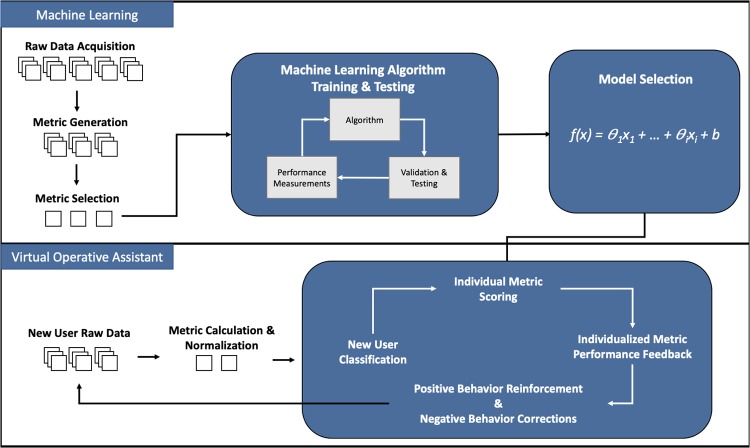
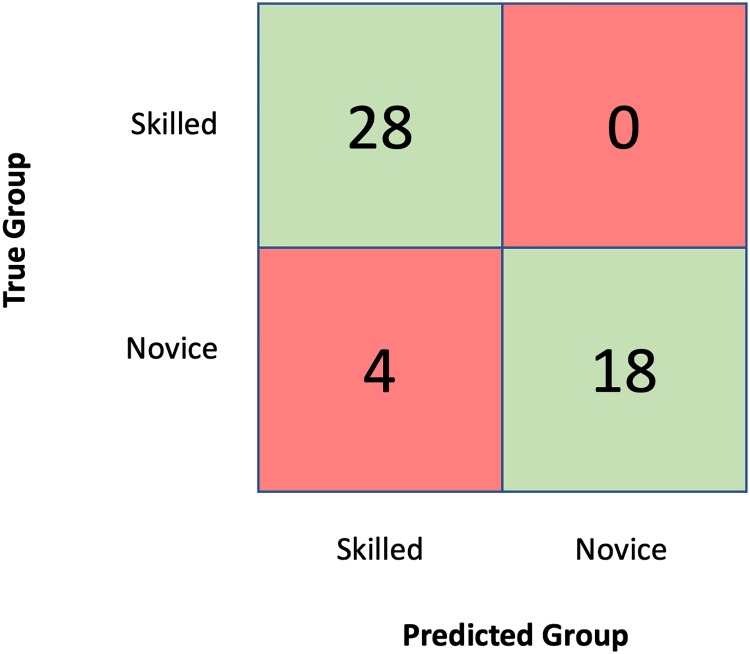
Simulation-based training is increasingly being used for assessment and training of psychomotor skills involved in medicine. The application of artificial intelligence and machine learning technologies has provided new methodologies to utilize large amounts of data for educational purposes. A significant criticism of the use of artificial intelligence in education has been a lack of transparency in the algorithms' decision-making processes. This study aims to 1) introduce a new framework using explainable artificial intelligence for simulation-based training in surgery, and 2) validate the framework by creating the Virtual Operative Assistant, an automated educational feedback platform. Twenty-eight skilled participants (14 staff neurosurgeons, 4 fellows, 10 PGY 4-6 residents) and 22 novice participants (10 PGY 1-3 residents, 12 medical students) took part in this study. Participants performed a virtual reality subpial brain tumor resection task on the NeuroVR simulator using a simulated ultrasonic aspirator and bipolar. Metrics of performance were developed, and leave-one-out cross validation was employed to train and validate a support vector machine in Matlab. The classifier was combined with a unique educational system to build the Virtual Operative Assistant which provides users with automated feedback on their metric performance with regards to expert proficiency performance benchmarks. The Virtual Operative Assistant successfully classified skilled and novice participants using 4 metrics with an accuracy, specificity and sensitivity of 92, 82 and 100%, respectively. A 2-step feedback system was developed to provide participants with an immediate visual representation of their standing related to expert proficiency performance benchmarks. The educational system outlined establishes a basis for the potential role of integrating artificial intelligence and virtual reality simulation into surgical educational teaching. The potential of linking expertise classification, objective feedback based on proficiency benchmarks, and instructor input creates a novel educational tool by integrating these three components into a formative educational paradigm.
Overview
The claims and statistics of this paper haven’t been checked yet.
Free: it reads the open-access text and checks the first 5 claims that cite a source we can check. Create a free account to check every claim.
Integrity signals
Registry
Cites
Statistics
Figures

Verification
Claims the paper makes
The claims and statistics of this paper haven’t been checked yet.
Free: it reads the open-access text and checks the first 5 claims that cite a source we can check. Create a free account to check every claim.
Claims other papers make about this one
Each is checked against this paper’s own text: does it say what the citing paper says it does?
The cited source says what the claim attributes to it.
In the citing paper
“Various uses were described, including surgical simulation with a virtual operative assistant [132], simulated patient physician medical interviews [120–123, 130], and interactions with avatars as standardized patients during clinical interviews [124–126].”
From Artificial intelligence in undergraduate medical education: an updated scoping review (2025) · cites this paper as [132]
The check wasn’t confident either way, so it gives no verdict — never disputed.
In the citing paper
“Simulation-based GenAI learning has been shown to enhance AI readiness and reinforce core nursing concepts [18].”
From Effects of generative artificial intelligence (GenAI) patient simulation on perceived clinical competency among global nursing undergraduates: a cross-over randomised controlled trial (2025) · cites this paper as [18]
Experimental — accuracy not yet measuredIn the citing paper
“AI simulations can adapt to a learner's performance, providing personalized, dynamic feedback that helps students practice clinical skills, refine decision-making, and improve their diagnostic reasoning in a controlled, risk-free environment [107].”
From Formative assessment and feedback in medical education: A practical guide: AMEE Guide No. 189 (2026) · cites this paper as [107]
Self-check
Percentages, sums and reported differences re-computed from the paper’s own numbers.
The self-check needs the paper’s full text.
Citations
Cites
Deep learning in neural networks: an overview
Schmidhuber, J. (2015) · Neural Networks · doi:10.1016/j.neunet.2014.09.003 · Cited by 18,570
The perceptron: A probabilistic model for information storage and organization in the brain.
Rosenblatt, F. (1958) · Psychological Review · doi:10.1037/h0042519 · Cited by 12,280 · cited 1×
“The system relies on a single processing unit known as the perceptron.[19] Building from this, the authors outline the rationale for employing the perceptron (also known as the linear Support Vector Machine) in this study in the S1 Appendix in S1 File.”
MethodSupervised Machine Learning: A Review of Classification Techniques
Kotsiantis, S. B. (2007) · Informatica · Cited by 6,007
Large-Scale Machine Learning with Stochastic Gradient Descent
Bottou, L. (2010) · Proceedings of COMPSTAT'2010 · doi:10.1007/978-3-7908-2604-3_16 · Cited by 5,795 · cited 1×
“[24, 25] An iterative cost reduction approach is employed during training,[26] whereby the algorithm alters values of the weights (θ) for each metric in order to reach the greatest predictive accuracy.”
MethodA guide to deep learning in healthcare
Esteva, A., Robicquet, A., Ramsundar, B., Kuleshov, V., DePristo, M., Chou, K., Cui, C., Corrado, G., Thrun, S., & Dean, J. (2019) · Nature Medicine · doi:10.1038/s41591-018-0316-z · Cited by 5,312
Cognitive load theory, learning difficulty, and instructional design
Sweller, J. (1994) · Learning and Instruction · doi:10.1016/0959-4752(94)90003-5 · Cited by 3,801 · cited 1×
“Following the principles of cognitive load theory,[31] the Virtual Operative Assistant aims to limit the amount of information immediately provided to the user to facilitate learning.”
MethodDeo, R. C. (2015) · Circulation · doi:10.1161/circulationaha.115.001593 · Cited by 3,466
Toward integrating feature selection algorithms for classification and clustering
Liu, H., & Yu, L. (2005) · IEEE Transactions on Knowledge and Data Engineering · doi:10.1109/tkde.2005.66 · Cited by 2,706
Feature Selection: A Data Perspective
Li, J., Cheng, K., Wang, S., Morstatter, F., Trevino, R. P., Tang, J., & Liu, H. (2018) · ACM Computing Surveys · doi:10.1145/3136625 · Cited by 2,442
Score normalization in multimodal biometric systems
Jain, A., Nandakumar, K., & Ross, A. (2005) · Pattern Recognition · doi:10.1016/j.patcog.2005.01.012 · Cited by 2,154
Research works printed but not linked: 1
- Norman D. The design of everyday things: Revised and expanded edition: Constellation; 2013.
Cited by
Items 101–200 of 327
Raghavan, N., Patel, P. C., Limon, D., Morris, M. X., Kempenich, J. W., & Rajesh, A. (2025) · The American Surgeon · doi:10.1177/00031348251397597 · Cited by 30
“Likewise, Mirchi et al 32 (2020) created a machine learning model which classi fi ed participants of a VR brain tumor resection task as “ novice ” or “ skilled ” with 92% accuracy.”
Artificial Intelligence developments in medical education: a conceptual and practical framework
Masters, K. (2020) · MedEdPublish · doi:10.15694/mep.2020.000239.1 · Cited by 25
“…be focused on undergraduate theoretical teaching, there are several useful projects that utilise AI or intelligent machine tutors specifically in clinical skills teaching (e.g. (Yang and Shulruf, 2019; Bakshi et al. , 2020; Mirchi et al. , 2020; Treceño-Fernández et al. , 2020; D.Wu et al. , 2020).”
BackgroundArtificial Intelligence And Innovative Applications In Education: The Case Of Turkey
Savaş, S. (2021) · Journal of Information Systems and Management Research · Cited by 54
Baucon, A., & de Carvalho, C. N. (2024) · Geoheritage · doi:10.1007/s12371-024-01011-2 · Cited by 26
“Transparency is another major issue, that is, it is chal - lenging to understand the sources and the reasoning behind the predictions of GPT-based models (Mirchi et al. 2020 ; Kasneci et al. 2023 ; Dalalah and Dalalah 2023 ).”
DAISI: Database for AI Surgical InstructionPreprint
Rojas-Muñoz, E., Couperus, K. S., & Wachs, J. P. (2020) · arXiv (Cornell University) · doi:10.48550/arxiv.2004.02809 · Cited by 23
“The Virtual Operative Assistant is an example of an automated educational feedback platform [21].”
BackgroundClinical needs and preferences for AI-based explanations in clinical simulation training
Kollerup, N. K., Johansen, S. S., Tolsgaard, M. G., Friis, M. L., Skov, M. B., & van Berkel, N. (2024) · Behaviour and Information Technology · doi:10.1080/0144929x.2024.2334852 · Cited by 23
“The use of AI for assessing performance, for example, in detecting inefficient or potentially harmful movements by the trainee, has been presented as a means to increase the realism and effectiveness of simulators by more closely resembling a supervisor (Mirchi et al. 2020; Salvetti et al. 2021).”
InfluentialInvestigating and acquiring motor expertise using virtual reality
Mangalam, M., Yarossi, M. P., Furmanek, M. P., Krakauer, J. W., & Tunik, E. (2023) · Journal of Neurophysiology · doi:10.1152/jn.00088.2023 · Cited by 25
Use of Artificial Intelligence in Education: A Systematic Review
DUARTE, N., Pérez, Y. M., Beltran, A., & García, M. B. (2023) · International Conference on Industrial Engineering and Operations Management (IEOM) · doi:10.46254/sa04.20230169 · Cited by 32
Maathuis, C., Cidota, M. A., Datcu, D., & Marin, L. (2025) · Mathematics · doi:10.3390/math13020290 · Cited by 23
The AI-Medic: an artificial intelligent mentor for trauma surgery
Rojas-Muñoz, E., Couperus, K. S., & Wachs, J. P. (2020) · Computer Methods in Biomechanics and Biomedical Engineering Imaging & Visualization · doi:10.1080/21681163.2020.1835548 · Cited by 22
“The Virtual Operative Assistant is an example of an automated educational feedback platform (Mirchi et al. 2020).”
BackgroundCurrent Trends in AI-Based Educational Processes—An Overview
Ivanović, M. D., Klašnja‐Milićević, A., Paprzycki, M., Ganzha, M., Bădică, C., Bădică, A., & Jain, L. C. (2022) · Learning and analytics in intelligent systems · doi:10.1007/978-3-031-04662-9_1 · Cited by 23
Yilmaz, R., Fazlollahi, A. M., Winkler-Schwartz, A., Wang, A. Y., Makhani, H. H., Alsayegh, A., Bakhaidar, M., Tran, D. H., Santaguida, C., & Maestro, R. F. D. (2023) · Journal of surgical education · doi:10.1016/j.jsurg.2023.11.001 · Cited by 20
Self-citationVR and machine learning: novel pathways in surgical hands-on training
Veneziano, D., Cacciamani, G. E., Rivas, J. G., Marino, N., & Somani, B. K. (2020) · Current Opinion in Urology · doi:10.1097/mou.0000000000000824 · Cited by 18
“Mirchi et al. [11] made some steps forward in a recent manuscript published in 2020 which describes their ‘Virtual OperativeAssistant’, an artificial intelligence based software that is able not only to collect data autonomously from a virtual outcomes of the training session .”
BackgroundHalman, J., Tencer, S., & Siemiński, M. (2025) · Medical Sciences · doi:10.3390/medsci13030126 · Cited by 17
“Mirchi et al. (2020) introduced the Virtual Operative Assistant (VOA), an AI-powered platform for brain tumor resection training.”
Vandevoorde, K., Vollenkemper, L., Schwan, C., Kohlhase, M., & Schenck, W. (2022) · Italian National Conference on Sensors · doi:10.3390/s22072481 · Cited by 12
“Nevertheless, new solutions are required to generate efficient and understandable instructions automatically; perhaps, methods applying the principles of explainable artificial intelligence can provide an answer [303].”
Neurosurgical skills analysis by machine learning models: systematic review
Titov, O., Bykanov, A., & Pitskhelauri, D. I. (2023) · Neurosurgical Review · doi:10.1007/s10143-023-02028-x · Cited by 21
“Two ML-based “electronic tutors” were developed, which could evaluate the quality of task performance on the Neu-roVR simulator: the virtual operative assistant (VOA) [21, 26] and the Intelligent Continuous Expertise Monitoring System (ICEMS) application [33].”
BackgroundMethodInfluentialUsing the DiCoT framework for integrated multimodal analysis in mixed-reality training environments
Vatral, C., Biswas, G., Cohn, C., Davalos, E., & Mohammed, N. (2022) · Frontiers in Artificial Intelligence · doi:10.3389/frai.2022.941825 · Cited by 17
“This is especially the case for SBT environments that are enhanced using mixed-reality tools, in domains such as emergency response, collaborative and embodied learning, and healthcare (Rosen et al., 2008; Mirchi et al., 2020; Rokhsaritalemi et al., 2020).”
BackgroundApplication of Artificial Intelligence within Virtual Reality for Production of Digital Media Art
Yun-xuan, W. (2022) · Computational Intelligence and Neuroscience · doi:10.1155/2022/3781750 · Cited by 21
“It will become the main technical support for various industries in the future [1–5]. traditional approach of creating digital media art is straightforward, but it also necessitates a high level of imagination and perception on the part of the artist.”
Galindo‐Domínguez, H., Delgado, N., de la Maza, M. S., & Expósito, E. (2024) · Edutec Revista Electrónica de Tecnología Educativa · doi:10.21556/edutec.2024.89.3509 · Cited by 18
Artificial Intelligence Applications in Musculoskeletal Imaging
Shariatnia, M., Bagherieh, S., Semnani, F., Rafiei, N., Avval, A. H., Ollivier, M. P., Musahl, V., & Pareek, A. (2025) · Current Reviews in Musculoskeletal Medicine · doi:10.1007/s12178-025-09997-0 · Cited by 17
“Immersive AI-driven virtual environments in training can provide personalized feedback for novice surgeons, performance metrics [29], and assist in tasks such as total knee arthroplasty (TKA), including bone resection, determining implant positioning, size, and range of motion [30].”
The use of generative artificial intelligence in surgical education: a narrative review
Rao, L., Yang, E., Dissanayake, S., Cuomo, R., Seth, I., & Rozen, W. M. (2024) · Plastic and Aesthetic Research · doi:10.20517/2347-9264.2024.102 · Cited by 23
Yilmaz, R., Ledwos, N., Sawaya, R., Winkler-Schwartz, A., Mirchi, N., Bissonnette, V., Fazlollahi, A. M., Bakhaidar, M., Alsayegh, A., Sabbagh, A. J., et al. (2022) · Operative Neurosurgery · doi:10.1227/ons.0000000000000232 · Cited by 13
Self-citationSurgical Artificial Intelligence in Urology
Goldenberg, M. G. (2024) · Urologic Clinics of North America · doi:10.1016/j.ucl.2023.06.003 · Cited by 12
Subchan, N. (2024) · JPUA Jurnal Perpustakaan Universitas Airlangga Media Informasi dan Komunikasi Kepustakawanan · doi:10.20473/jpua.v14i1.2024.1-14 · Cited by 14
Predictive Performance Assessment in Simulation Training using Machine Learning
Munim, Z., Kjeldsberg, F., Bustgaard, M., Bhagat, S., Haavardtun, P., Kim, T.-E., Lindroos, E., Thorvaldsen, H., Nyairo, F., & Lampiola, J. (2025) · International Journal of Artificial Intelligence in Education · doi:10.1007/s40593-025-00464-y · Cited by 5
“Applications of ML in predictive LA have already been demonstrated in medical research, where ANN were used to validate the framework created for performance assessment in medical simulator training (Alkadri et al., 2021; Mirchi et al., 2020).”
Artificial intelligence in orthopaedic education, training and research: a systematic review
Banskota, B., Bhusal, R., Yadav, P. K., & Banskota, A. K. (2025) · BMC Medical Education · doi:10.1186/s12909-025-08162-y · Cited by 13
Deep Neural Networks Can Accurately Detect Blood Loss and Hemorrhage Control Task Success From Video
Kugener, G., Zhu, Y., Pangal, D. J., Sinha, A., Markarian, N., Roshannai, A., Chan, J., Anandkumar, A., Hung, A. J., Wrobel, B., et al. (2022) · Neurosurgery · doi:10.1227/neu.0000000000001906 · Cited by 12
Lünse, S., Wisotzky, E. L., Beckmann, S., Paasch, C., Hunger, R., & Mantke, R. (2023) · Langenbeck s Archives of Surgery · doi:10.1007/s00423-023-03134-6 · Cited by 13
“The increasing use of surgical simulators in modern medicine can be enhanced by AI technology through personalized feedback to the user, identification of patient anatomy, 3D visualization devices, and augmented reality [29–33].”
BackgroundAlmansouri, A., Hamdan, N. A., Yilmaz, R., Tee, T., Pachchigar, P., Eskandari, M., Agu, C., Giglio, B., Balasubramaniam, N., Bierbrier, J. L., et al. (2024) · Operative Neurosurgery · doi:10.1227/ons.0000000000001044 · Cited by 14
“38-40 Quantitative data from instrument movement tracking from ex vivo models have the potential to be used in outlining surgical trainee learning curves 41 and developing and testing of AI-powered tutoring systems to prevent surgical error like the Virtual Operative Assistant 6 and the Intelligent Continuous Expertis…”
BackgroundInfluentialSelf-citationHanalıoğlu, Ş., Gurses, M. E., Baylarov, B., Tunç, O., Işıkay, İ., Çağıltay, N. E., Tatar, İ., & Berker, M. (2024) · Frontiers in Surgery · doi:10.3389/fsurg.2024.1386091 · Cited by 12
Alkadri, S., Maestro, R. F. D., & Driscoll, M. (2024) · Computers in Biology and Medicine · doi:10.1016/j.compbiomed.2024.108809 · Cited by 13
Dadon, Z., Butnaru, A., Rosenmann, D., Alper-Suissa, L., Glikson, M., & Alpert, E. A. (2022) · AEM Education and Training · doi:10.1002/aet2.10738 · Cited by 12
“18 In the field of cardiology, AI is being studied to improve image acquisition and aid in diagnostic evaluation such as estimating LVEF.”
MethodPescio, M., Marzola, F., Distefano, G., Leoncini, P., Ammirati, C. A., Barontini, F., Dagnino, G., & Arezzo, A. (2026) · Journal of Personalized Medicine · doi:10.3390/jpm16020071 · Cited by 15
Hernández, P. A., & Esquivel, G. H. (2024) · Estudios y Perspectivas Revista Científica y Académica · doi:10.61384/r.c.a..v4i1.185 · Cited by 11
Peng, M. J., Chen, H., Chen, P., Tan, Z., Hu, Y., To, M. K.-T., & He, E. (2024) · Quantitative Imaging in Medicine and Surgery · doi:10.21037/qims-23-1151 · Cited by 10
When time is of the essence: ethical reconsideration of XAI in time-sensitive environments
Wabro, A., Herrmann, M., & Winkler, E. C. (2024) · Journal of Medical Ethics · doi:10.1136/jme-2024-110046 · Cited by 10
“33 34 These latter environments share a common element: time pressure.”
Rashidian, N., Hilal, M. A., Frigerio, I. M., Guerra, M., Sterckx, S., Tozzi, F., Capelli, G., Verdi, D., Spolverato, G., Gulla, A., et al. (2024) · HPB · doi:10.1016/j.hpb.2024.12.016 · Cited by 12
Al-Saadawi, A., Tehranchi, S., Ahmed, S. S., & Nzeako, O. (2025) · Cureus · doi:10.7759/cureus.81671 · Cited by 11
“AI has demonstrated that it can overcome such challenges by enabling automated feedback systems that allow trainees to refine their skills in non-surgical training environments such as virtual reality (VR) [9].”
Yilmaz, R., Alsayegh, A., Bakhaidar, M., Fazlollahi, A. M., Hamdan, N. A., Tee, T., Shalmiev, A., Laroche, D., Santaguida, C., Donoho, D. A., et al. (2025) · npj Artificial Intelligence · doi:10.1038/s44387-025-00032-8 · Cited by 13
“The separation between instruments held in each hand is a key metric of surgical skill 7 : expert surgeons typically work with both instruments close togetherinahighlycoordinatedfashion.”
Self-citationLai, N. M., Lim, Y. S., Thein, W. M., Bhargava, P., Thomas, P., & Ong, Q. C. (2026) · JMIR Medical Education · doi:10.2196/88933 · Cited by 13
“AI-powered systems for teaching-learning include intelligent tutoring systems [14], adaptive learning platforms [15], and surgical training simulators such as the virtual operative assistant [16].”
Tran, D. H., Winkler-Schwartz, A., Tuznik, M., Gueziri, H.-E., Rudko, D. A., Reich, A., Yilmaz, R., Karlık, B., Collins, D. L., Maestro, A. D., et al. (2021) · World Neurosurgery · doi:10.1016/j.wneu.2020.12.141 · Cited by 12
Self-citationExplainable Artificial Intelligence (EAI) Based Disease Prediction Model
Akour, I. A., Nuseir, M. T., Alshurideh, M. T., Alzoubi, H. M., Kurdi, B. H. A., & AlHamad, A. (2024) · Studies in big data · doi:10.1007/978-3-031-31801-6_12 · Cited by 11
Li, F. Y., Qin, Z., Qian, K., Liang, S., Li, C., & Tai, Y. (2024) · Virtual Reality & Intelligent Hardware · doi:10.1016/j.vrih.2023.08.001 · Cited by 13
Alsayegh, A., Bakhaidar, M., Winkler-Schwartz, A., Yilmaz, R., & Maestro, R. F. D. (2021) · World Neurosurgery · doi:10.1016/j.wneu.2021.08.061 · Cited by 10
“WORLD NEUROSURGERY 155: e369-e381, NOVEMBER 2021 potential of these systems to be used in formative assessments is increasing with the application of intelligent tutoring systems.(26,27) Ex vivo simulation models that do not generate large datasets will have limited utility in artificial intelligence technologies.”
BackgroundSelf-citationPrevezanou, K., Seimenis, I., Karaiskos, P., Pikoulis, E. A., Lykoudis, P. M., & Loukas, C. (2024) · Applied Sciences · doi:10.3390/app14219677 · Cited by 10
The Intraoperative Role of Artificial Intelligence Within General Surgery: A Systematic Review
Othman, D., & Kaleem, A. (2024) · Cureus · doi:10.7759/cureus.73006 · Cited by 11
“It was able to successfully classify skilled and novice participants with an accuracy, specificity and sensitivity of 92%, 82% and 100%, respectively [16].”
Davidovic, V., Giglio, B., Albeloushi, A., Alhaj, A., Alhantoobi, M. R., Saeedi, R., Deraiche, S., Yilmaz, R., Tee, T., Fazlollahi, A. M., et al. (2025) · Journal of surgical education · doi:10.1016/j.jsurg.2025.103743 · Cited by 13
Self-citationApplications and Effects of EdTech in Medical Education
Hong, H., & Kim, Y. (2021) · Korean Medical Education Review · doi:10.17496/kmer.2021.23.3.160 · Cited by 10
Akour, I. A., Alshurideh, H. M., Alzoubi, H. M., Alshurideh, M. T., & Antouz, Y. A. (2023) · International Conference on Business Analytics for Technology and Security (ICBATS) · doi:10.1109/icbats57792.2023.10111284 · Cited by 10
“This gives teachers more time to engage on challenging educational tasks like group projects or critical class debates [3].”
BackgroundSung, S., Ding, X., Jiang, R., Sereiviene, E., Bulseco, D., & Xie, C. (2024) · Journal of Geoscience Education · doi:10.1080/10899995.2024.2384340 · Cited by 10
“Recent developments in artificial intelligence (AI) have propelled a wave of educational applications in assessment, tutoring, and feedback (Afzaal et al., 2021; Darvishi et al., 2022; Goldin et al., 2017; Hooda et al., 2022; Mirchi et al., 2020; Porter & Grippa, 2020).”
Education and training evolution in urolithiasis: A perspective from European School of Urology
Antoniou, V., Gauhar, V., Kallidonis, P. S., Skolarikos, A. A., Veneziano, D., LIATSIKOS, E. N., & Somani, B. K. (2023) · Asian journal of urology · doi:10.1016/j.ajur.2023.01.004 · Cited by 9
Shen, M., Shen, Y., & Shi, Z. (2025) · Nurse Education in Practice · doi:10.1016/j.nepr.2025.104612 · Cited by 8
Artificial intelligence: Friend or foe in the assessment of dental students?
Louca, C., Tonni, I., Leung, A., & Fine, P. D. (2025) · Journal of Dentistry · doi:10.1016/j.jdent.2025.105676 · Cited by 8
Neurosurgery reimagined: How AI is redefining patient care and surgical excellence
Mansour, M. A., El-Salamoni, M. A.-F., Zohney, M., Elshaer, A. M., Abdelwahab, M., Aziz, M. M., Ayoub, B. M., Mostafa, H. N., & Elsamman, A. K. (2025) · Intelligent Surgery · doi:10.1016/j.isurg.2025.06.002 · Cited by 12
Ethical Considerations in the Deployment of Artificial Intelligence in Surgery
Barrios, P. A., Meredyth, N. A., Morris, R., Haines, K., Kim, G. J., & Peterson, C. Y. (2025) · Journal of Surgical Research · doi:10.1016/j.jss.2025.08.019 · Cited by 9
AI and IoT Uses, Challenges and Opportunities for e-Health: a review
Ziadi, F., Fourati, H., & Saïdane, L. A. (2024) · International Wireless Communications and Mobile Computing Conference (IWCMC) · doi:10.1109/iwcmc61514.2024.10592569 · Cited by 10
“AI has gradually crept into everyday medical practice, making notable advances in medical image processing [8], medical procedure optimization [9], virtual assistance in surgery [10] and various other applications.”
BackgroundNkulu-Ily, Y. S. (2023) · Lecture notes in computer science · doi:10.1007/978-3-031-32883-1_41 · Cited by 8
Tusher, H. M., Nazir, S., Mallam, S., & Munim, Z. H. (2022) · IEEE International Conference on Industrial Engineering and Engineering Management (IEEM) · doi:10.1109/ieem55944.2022.9989816 · Cited by 8
Wang, Q., Li, Q., Cui, X., Xu, Y., Wang, N., & Wang, M. (2025) · Journal of Baltic Science Education · doi:10.33225/jbse/25.24.721 · Cited by 9
Khalifa, A., Tahhan, O., Albazooni, M., Saeed, M., Hamdi, R., Stanners, M., Malik, A., & Malik, A. A. (2025) · Cureus · doi:10.7759/cureus.100477 · Cited by 15
“Providing transparent, explainable outputs and aligning with expert human opinion facilitates adoption and trust in AI systems [26].”
InfluentialHarley, J. M., Tawakol, T., Azher, S., Quaiattini, A., & Maestro, R. F. D. (2024) · Global Surgical Education - Journal of the Association for Surgical Education · doi:10.1007/s44186-024-00284-z · Cited by 8
Rezayi, S., Ghotbi, N., Shahmoradi, L., Ardali, Z. R., & Choobsaz, H. (2024) · BMC Medical Education · doi:10.1186/s12909-024-05547-3 · Cited by 7
“The presented virtual operative assistant was validated for a complex neuro-surgical procedure [26].”
MethodSurgical training scalability through AI-based innovations
Jarry, C., Vela, J., Espinoza, V. D., Leeuwen, M. V., & Varas, J. (2025) · Global Surgical Education - Journal of the Association for Surgical Education · doi:10.1007/s44186-025-00348-8 · Cited by 7
“The virtual operative assistant (VOA) is an example of a platform that integrates AI for automated feedback in simulation-based training [43].”
AI-Powered Personalized Mobile Education for New Zealand Students
Charles, F. (2023) · International Journal of Technology Innovation and Management (IJTIM) · doi:10.54489/ijtim.v3i1.210 · Cited by 7
Universidad del Quindío. Grupo de Interés e Investigación en Cirugía (GIICx-UQ). Armenia, C., Gaitán-Buitrago, M. H., Velásquez-Salazar, M., Cardona, J. A. M., & Solano, L. F. M. (2024) · Revista Argentina de Cirugía · doi:10.25132/raac.v115.n2.1782 · Cited by 8
Zhuo, Y., Zhang, E., Yu, X., Pachpande, A., Fang, W., Chen, X., Kirkpatrick, A. W., Couperus, K. S., Colombo, C. J., Tran, O., et al. (2025) · Scientific Data · doi:10.1038/s41597-025-06365-y · Cited by 8
“For instance, the Virtual Operative Assistant 11 delivers real-time feed-back to neurosurgery trainees during tumor resections in a VR environment, significantly enhancing technical performance.”
Artificial Intelligence in Surgical Training and Applications to Otolaryngology: A Scoping Review
Xiao, J. B., Wolter, N. E., Davies, J., Propst, E. J., Crowson, M. G., & Siu, J. (2025) · The Laryngoscope · doi:10.1002/lary.32246 · Cited by 7
“Motion data was often collected via external sensors placed on instruments or surgeons' hands [7, 13, 14, 20, 21, 40–42], and on robotic arms like the da Vinci system [26–28] which tracks motion trajectories and force applied during procedures.”
The Evolving Role of AI in Simulation-Based Medical Education: A Narrative Review
Hasan, S. H., Ahmed, A., & Ismail, F. (2026) · Advances in Medical Education and Practice · doi:10.2147/amep.s581691 · Cited by 7
“29 A similar continuous evaluation and feedback deep learning application, the Intelligent Continuous Expertise Monitoring System (ICEMS), has been developed by Yilmaz et al for neurosurgical trainees.”
Akyön, Ş. H., & Akyön, F. Ç. (2025) · Ankara Medical Journal · doi:10.5505/amj.2025.63373 · Cited by 6
A scalable solution: effective AI implementation in laparoscopic simulation training assessments
Mackenna, E. C., Selman, R., Figueroa, Ú., Belmar, F., Jarry, C., Sanhueza, D., Escalona, G., Carnier, M., & Varas, J. (2025) · Global Surgical Education - Journal of the Association for Surgical Education · doi:10.1007/s44186-025-00355-9 · Cited by 6
Applications of artificial intelligence in neurosurgical education: a scoping review
Piñera-Castro, H. J., & Borges-García, C. (2025) · The Egyptian Journal of Neurology Psychiatry and Neurosurgery · doi:10.1186/s41983-025-01015-x · Cited by 7
Approaches to the Development of Virtual Surgical Training
Sharaeva, R. A., Kugurakova, V. V., Galieva, R. R., & Зинченко, С. В. (2022) · Russian Digital Libraries Journal · doi:10.26907/1562-5419-2022-25-5-489-532 · Cited by 6
Kumar, D., Ingole, A., & Choudhari, S. G. (2023) · Cureus · doi:10.7759/cureus.48482 · Cited by 7
“In addition, the lack of openness in the algorithms' decision-making processes has been a major critique of other uses of artificial intelligence (AI) in education [4].”
BackgroundExploring the Role of AI-Generated Feedback Tangential to Learning Outcomes
Sutherland, S. C., Machado, T., Mahajan, S., Mohaddesi, O., Matuk, C. F., Smith, G., & Harteveld, C. (2023) · IEEE Conference on Games (CoG) · doi:10.1109/cog57401.2023.10333239 · Cited by 6
“Mirchi et al. [31] stated that the lack of transparency in AI-generated feedback systems can lead students to frustration and discomfort.”
BackgroundArtificial intelligence in obstetric anaesthesiology – the future of patient care?
Kong, A. Y. H., Liu, N., Tan, H. S., Sia, A. T. H., & Sng, B. L. (2024) · International Journal of Obstetric Anesthesia · doi:10.1016/j.ijoa.2024.104288 · Cited by 7
Can I Trust You? Exploring the Impact of Misleading AI Suggestions on User's Trust
Pretolesi, D., Zechner, O., Schrom-Feiertag, H., & Tscheligi, M. (2024) · IEEE International Conference on Metrology for eXtended Reality, Artificial Intelligence and Neural Engineering (MetroXRAINE) · doi:10.1109/metroxraine62247.2024.10796402 · Cited by 7
“Intelligent coaching systems, for instance, leverage AI to provide tailored instruction and feedback to trainees [13], leading to significant improvements in training outcomes [14].”
Challenges to Medical Education on Surgical Services During the COVID-19 Pandemic
Schaffir, J., Strafford, K. E., Worly, B. L., & Traugott, A. L. (2020) · Medical Science Educator · doi:10.1007/s40670-020-01072-2 · Cited by 6
“Such devices have been used in surgical training, particularly in training for minimally invasive surgery and robotics [18, 19].”
MethodNegi, R., Chopra, D., Maheshwari, K., Mahajan, A., Badyal, D. K., & Venkataramani, P. (2025) · Medical Journal Armed Forces India · doi:10.1016/j.mjafi.2025.08.010 · Cited by 6
Thinnes, D., Francis, A. L., Sayman, V., Guagnin, D., Laschke, M. W., Menger, M. D., Roller, J., & Strauß, D. J. (2025) · IEEE Transactions on Human-Machine Systems · doi:10.1109/thms.2025.3601222 · Cited by 5
“…room (OR), with increasing technological development we can foresee the potential for using neuroergonomic cognitive assistants to support and facilitate attentional engagement during actual surgeries, especially under extenuating circumstances [8], [9], [10], [11], [12], [13], [14], [15].”
Ritter, N., & Straub, J. (2021) · Machines · doi:10.3390/machines9120361 · Cited by 5
Artificial intelligence for medical robotics
Loh, E., & Nguyen, T. (2022) · Elsevier eBooks · doi:10.1016/b978-0-12-821750-4.00002-5 · Cited by 6
Initial Work on the Development of a Hardware-Based Gradient Descent Trained Expert System
Ahmed, F., & Straub, J. (2022) · Systems · doi:10.3390/systems10050160 · Cited by 5
The future implementation of artificial intelligence technology in esophageal surgery
Peek, G., & Ross, S. B. (2023) · Artificial Intelligence Surgery · doi:10.20517/ais.2023.56 · Cited by 5
Andersen, I. B., Svendsen, M. B. S., Risgaard, A. L., Danstrup, C. S., Todsen, T., Tolsgaard, M. G., & Friis, M. L. (2025) · Medical Teacher · doi:10.1080/0142159x.2025.2555353 · Cited by 4
“This metric appears highly sensitive to the temporal scanning patterns that characterize expert performance [13,14,19].”
Artificial Intelligence in Surgical Research: Transformative Impacts and Evolving Ethical Challenges
Morris, M. X., Rustom, F., Chun, B. D., Limon, D., Raghavan, N., Guo, L., & Rajesh, A. (2025) · The American Surgeon · doi:10.1177/00031348251409740 · Cited by 5
“30,31 Such innovations suggest AI may not only enhance surgical precision and ef fi ciency but also safeguard surgeon performance and accelerate training.”
Alblooshi, A. S., AlMarzooqi, F. M., Almansoori, T. M., Ahmed, G., Al-Shamsi, S., & Alradini, F. A. (2026) · Frontiers in Medicine · doi:10.3389/fmed.2025.1692991 · Cited by 6
Unleashing the potential of education: embracing a new era of learning through feedback evolution
Hosseini, M. M., Qayumi, K. A., Zolfaghari, M. S., Hosseini, S. T. M., Haghighi, E., Rajabzadhe, S., & Sabet, B. (2026) · Discover Education · doi:10.1007/s44217-026-01110-y · Cited by 5
Artificial intelligence‐based approaches to augmenting and automating surgical training
Lin, J. S., Cella, L., Goldenberg, M. G., & Hung, A. J. (2026) · British Journal of Urology · doi:10.1111/bju.70229 · Cited by 6
Hui, L., Yu, E., Chung, A. D., & Kwan, B. Y. M. (2025) · Postgraduate Medical Journal · doi:10.1093/postmj/qgaf195 · Cited by 4
Mellal, A., González-López, P., Giammattei, L., George, M., Starnoni, D., Cossu, G., Cornelius, J. F., Berhouma, M., Messerer, M., & Daniel, R. T. (2024) · Brain and Spine · doi:10.1016/j.bas.2024.104163 · Cited by 4
“Given the results of our study, which showed similarly high ratings for VR (4.30 ± 0.67), it is evident that VR continues to prove its utility in neurosurgical training, as also supported by recent literature (Neyem et al., 2024; Sandralegar et al., 2024; Mirchi et al., 2020).”
InfluentialSocial eXplainable AI (Social XAI): Towards Expanding the Social Benefits of XAI
Naiseh, M. (2024) · Studies in neuroscience, psychology and behavioral economics · doi:10.1007/978-3-031-70355-3_13 · Cited by 8
Multimedia Learning with Simulations
Lajoie, S. P. (2021) · Cambridge University Press eBooks · doi:10.1017/9781108894333.048 · Cited by 5
Bhatia, M., Namazi, B., Matthews, J., Thomas, C., Doster, D. L., Martinez, C., Collings, A. T., Mitchell, S. A., Stefanidis, D., Sankaranarayanan, G., et al. (2023) · Global Surgical Education - Journal of the Association for Surgical Education · doi:10.1007/s44186-023-00142-4 · Cited by 5
“Moreover, the binary checklist can be a self-assessment tool for learners as they prepare to perform the procedure on the low-cost simulator as this could encourage them to be meticulous throughout the procedure while also providing clarity on the assessment measures [13, 28].”
MethodKicherova, M. N., Trifonova, I. S., & Игоревна, П. Т. (2024) · Science for Education Today · doi:10.15293/2658-6762.2403.03 · Cited by 5
How AI Is Ushering in a New Era in ELT: Teachers’ Perspectives
Mishu, A., Ahamed, M. M., Akan, M. F., Abdul-Rab, S. D., Chowdhury, G., Ahmad, J., & Sultana, I. (2025) · Theory and Practice in Language Studies · doi:10.17507/tpls.1502.29 · Cited by 5
Jarroudi, O. A., Adib, A. R. E., Chibani, H., Afqir, S., & Mouhaoui, M. (2025) · Medical Education Online · doi:10.1080/10872981.2025.2469779 · Cited by 4
“Advanced data processing capabilities have enabled the use of AI in surgical skills training [46].”
Kim, K. H., Lee, B., & Koo, H. (2023) · Applied Sciences · doi:10.3390/app13031243 · Cited by 4
Is open pancreatic surgery still relevant now in the era of minimally invasive pancreatic surgery?
Chan, K. S., Shelat, V. G., & Junnarkar, S. P. (2024) · Gland Surgery · doi:10.21037/gs-24-33 · Cited by 4
“For instance, an AI tool was developed to provide individualised performance feedback and grade the user’s level of expertise on a neurosurgery VR simulator (20).”
Robotic surgery: The convergence of digital innovations in head and neck surgery
Liu, Y., Zhao, X., Yu, D., Yu, D., & Liu, X. (2025) · Journal of Cranio-Maxillofacial Surgery · doi:10.1016/j.jcms.2025.08.018 · Cited by 3
Landy, N. (2025) · Law Technology and Humans · doi:10.5204/lthj.4031 · Cited by 3
Metadata
- Authors
- Mirchi, N., Bissonnette, V., Yilmaz, R., Ledwos, N., Winkler-Schwartz, A., & Del Maestro, R. F.
- Affiliations
- Montreal Neurological Institute and Hospital (CA)
- Corresponding author
- Mirchi, Nykan
- Venue
- PLOS ONE
- Publisher
- Public Library of Science (PLoS)
- Published
- 2020-02-27
- Volume
- 15
- Issue
- 2
- Pages
- e0229596
- ISSN
- 1932-6203 (ISSN-L)
- PMC
- PMC7046231
- OpenAlex
- W3007803772
- Cited by
- 296
- References
- 48
- Citations by year
- 2026: 39 · 2025: 63 · 2024: 67 · 2023: 39 · 2022: 47 · 2021: 29 · 2020: 12
- FWCI
- 29.02
- Type
- journal article
- Language
- en
- Open access
- gold
- doi.org
- Licence
- Locations
- PLoS ONE (publishedVersion, cc-by)
- PubMed Central (publishedVersion, cc-by)
- PubMed (publishedVersion)
- RePEc: Research Papers in Economics (submittedVersion)
- DOAJ (DOAJ: Directory of Open Access Journals) (submittedVersion, cc-by-sa)
- Figshare (submittedVersion, cc-by)
- Funders
- Di Giovanni Foundation
- Topics
- Health Sciences › Medicine › Surgery › Surgical Simulation and Training
- Social Sciences › Education › Simulation-Based Education in Healthcare
- Health Sciences › Medicine › Health Informatics › Artificial Intelligence in Healthcare and Education
- Keywords
- explainable AI, surgical simulation training, virtual surgery, neurosurgical training, brain tumor resection, support vector machine, formative assessment
- MeSH terms
- Simulation Training, Virtual Reality, Algorithms, Artificial Intelligence, Brain Neoplasms, Computer Simulation, Education, Medical, Female, Humans, Male, Neurosurgery, Surgery, Computer-Assisted, Support Vector Machine
About these checks
Registry, retraction, Cites and statistics results are computed, not judged, with one exception: a printed reference that no index lists is read once by a model before it counts as a citation error. Claims are extracted by a model and kept only when their quote appears verbatim in the text; each cited source is then checked, with a model’s help, for whether it says what the claim relies on. Those verdicts can be wrong — read the claim’s quote and the cited source before relying on one.
Statistics and arithmetic are recomputed, not judged.
Confidence bands are shown only for fields calibrated on our annotated test set. None is calibrated yet, so no band is shown.
What counts as a claim ›How we measure confidence ›How we check this ›
Are you an author, or do you see a problem with this page? Request a review
Data sources
Bibliographic data: Semantic Scholar, OpenAlex, Crossref.
Contains information from the Semantic Scholar Academic Graph Datasets, made available under the ODC Attribution License (ODC-BY 1.0).
Semantic Scholar’s data is described in: Kinney, R., et al. (2023). The Semantic Scholar Open Data Platform. arXiv:2301.10140.
