

A user-centred design framework for mHealth
Open accessThe DOI matches its Crossref record; 55 of the 61 references it cites were found in a registry or an index; 18 of the 41 sources its claims cite were checked for support.
Abstract
BACKGROUND: Mobile health (mHealth) has the potential to improve access to healthcare, especially in developing countries. The proliferation of mHealth has not been accompanied by a corresponding growth in design guidelines for mHealth applications. This paper proposes a framework for mHealth application design that combines the Information Systems Research (ISR) framework and design thinking. We demonstrate a use case for the proposed framework in the form of an app to read the result of the tuberculin skin test (TST), which is used to screen for latent tuberculosis infection. The framework was used in the re-design of the TST reading app but could also be used in earlier stages of mHealth app design. METHODS: The ISR framework and design thinking were merged based on how the modes of design thinking integrate with the cycles of the ISR framework. Using the combined framework, we re-designed an mHealth app for TST reading, intended to be used primarily in a developing context by healthcare workers. Using the proposed framework, the app was iterated upon and developed with the aid of personas, observations, prototyping and questionnaires. RESULT: The combined framework was applied through engagement with end-users, namely ten healthcare workers and ten graduate students. Through review of the literature and iterations of the app prototype, we identified various usability requirements and limitations. These included challenges related to image capture and a misunderstanding of instructions. These insights influenced the development and improvement of the app. CONCLUSION: The combined framework allowed for engagement with end-users and for low-cost, rapid development of the app while addressing contextual challenges and needs. The integration of design thinking modes with the ISR cycles was effective in achieving the objectives of each approach. The combined framework acknowledges the importance of engaging users when implementing mHealth technologies, especially in developing and under-resourced contexts. Findings from this study support the use of this framework as a guide in the design of user-centred mHealth interventions.
Overview
CoChat Summary
## TL;DR
The paper proposes a user-centred mHealth design framework that combines the Information Systems Research (ISR) framework with design thinking, and illustrates it by re-designing a tuberculosis skin test (TST) reading app. Applied with healthcare workers and graduate students, the framework helped identify usability issues and support rapid, low-cost iteration in an under-resourced context.
## Key findings
- The combined framework was applied with 10 healthcare workers and 10 graduate students; these engagements revealed usability requirements and limitations, including image-capture challenges and misunderstanding of instructions.
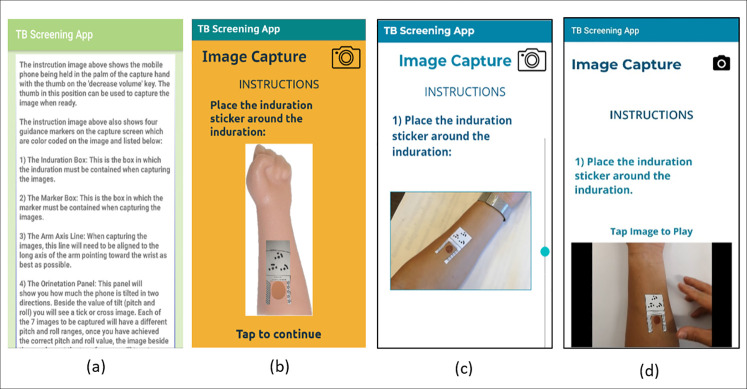
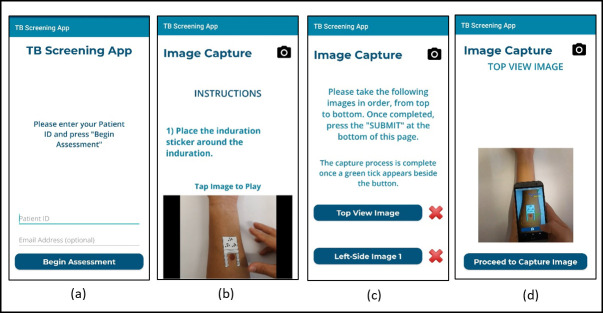
- In the test mode, common problems included not watching instruction videos, incorrect navigation, incorrect phone distance from the induration site, and rushing the final images.
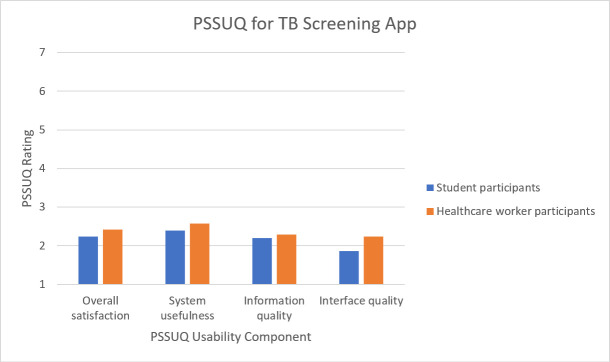
- PSSUQ results showed both participant groups had average scores below 3 for all usability factors, which the paper interprets as neutral to strong satisfaction.
- The re-designed app was translated into isiXhosa and improved through iterative prototypes, with the paper reporting that the framework enabled low-cost, rapid development while addressing contextual challenges.
## Methods
- The study proposed and demonstrated a combined framework by merging the ISR framework with design thinking and applying it to the re-design of an mHealth app for TST reading in a developing, under-resourced context.
- Data came from observations, unstructured interviews, think-aloud sessions, prototyping, and questionnaires; participants included 10 healthcare workers from public clinics and 10 graduate students.
- Analysis included thematic analysis of feedback and observations, assertional analysis of think-aloud responses, and summary of PSSUQ scores.
## Limitations
- The paper states that only a low number of participants were involved in the ideate mode, which limited the diversity and quantity of ideas.
- It also states that the design was limited because end-users (healthcare workers) were not engaged throughout, due to their time constraints and the burden of the health system.
- Evident from the text: the small sample and use of non-representative student participants in prototyping limit generalisability and mean some feedback was only for improvement rather than direct end-user validation.
Model-written summary. Check it against the paper before relying on it.
Integrity signals
Registry
Cites
Statistics
Figures
Verification
Claims the paper makes
14 Valid · 3 Not valid · 17 Not checked · 58 Own results and interpretations
The cited sources that could be checked couldn’t confirm or dispute this claim.
In the paper
“While the design and the relevance of an mHealth app influence its uptake and ultimately its success, design guidelines are not readily available [4, 5].”
§ A user-centred design framework for mHealth > Introduction
What the sources say
- Could not verifycites [4] Kumar S, Nilsen WJ, Abernethy A, Atienza A, Patrick K, Pavel M, et al Mobile health technology evaluation: the mHealth evidence workshop. American Journal of Preventive Medicine. 2013; 45(2): 228– 36. 10.1016/j.amepre.2013.03.017 23867031 PMC3803146 sourceExperimental — accuracy not yet measured
The Introduction discusses limited evidence for mHealth efficacy, and “Using Open Infrastructure and Data Standards” proposes common research standards (page numbers unavailable). Neither passage addresses whether design guidelines for mHealth applications are readily available. Searched for app-design guidelines and guidelines. (LLM, conf=0.70)
- Could not verifycites [5] Fiordelli M, Diviani N, Schulz PJ. Mapping mHealth research: a decade of evolution. Journal of Medical Internet Research. 2013; 15(5): e95 10.2196/jmir.2430 23697600 PMC3668610 sourceExperimental — accuracy not yet measured
The Discussion > Recommendations (page unavailable) says evidence of publicly available apps’ effectiveness appears to be missing, but it does not address whether app-design guidelines are readily available. A search for design guidelines and app-development guidance found no passage in our copy that settles the claim. (LLM, conf=0.73)
plain- Asserted: passes — The authors put it forward as true.
- Checkable: passes — It can be checked against evidence.
- Load-bearing: passes — The paper’s conclusions depend on it.
- Based: passes — The paper gives a reason why it holds.
- Could not verify
The sources with a verdict support this claim; the rest weren’t checked yet, have no full text we could read, or their verdicts aren’t rated yet.
In the paper
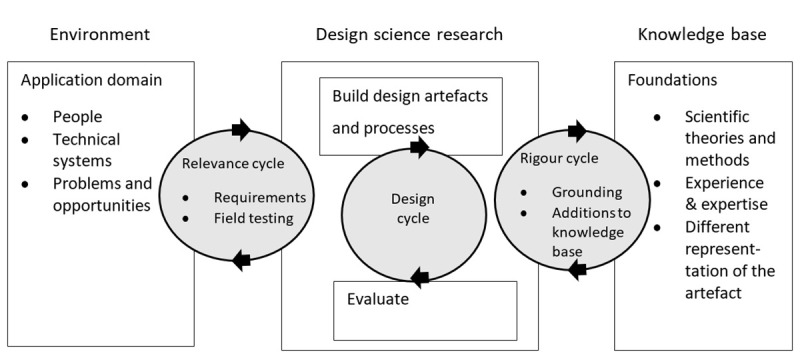
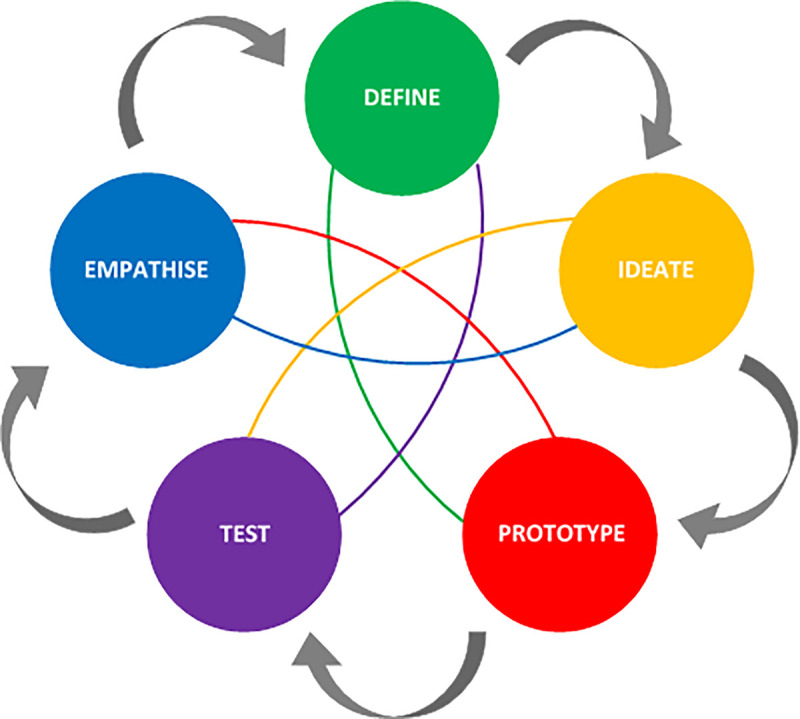
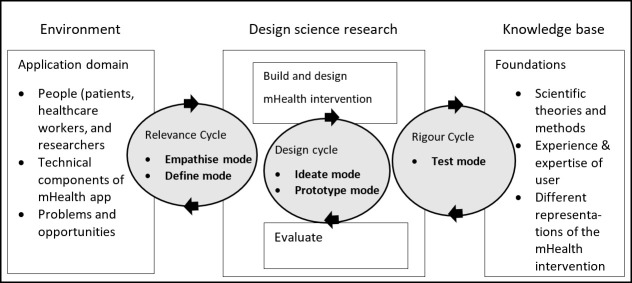
“The integration of DT with the ISR framework results in an adapted framework (Fig 3) which we propose for the design of mHealth apps. Based on the nonlinear and iterative nature of DT and the ISR framework [18, 20], both approaches are suited for the design and the re-design of mHealth apps.”
§ A user-centred design framework for mHealth > Introduction > Combined framework
What the sources say
- Supportedcites [18] Hevner AR. A three cycle view of design science research. Scandinavian Journal of Information Systems. 2007; 19(2): 87– 92.
The citation supports the attributed point that the ISR design framework is iterative: “The Design Cycle” describes repeated construction, evaluation, and refinement, while “The Relevance Cycle” describes further iterations after field testing. The adapted framework and its proposed use for mHealth apps are the citing authors’ own proposal, not a finding attributed to this source. (LLM, conf=0.88)
- Not checked — no full text of the sourcecites [20] Brown T. Design thinking. Harvard Business Review [Internet]. 2008; 86(6):[83–92 pp.]. Available from: https://hbr.org/2008/06/design-thinking. 18605031
plainstates a cause- Asserted: passes — The authors put it forward as true.
- Checkable: passes — It can be checked against evidence.
- Load-bearing: passes — The paper’s conclusions depend on it.
- Based: passes — The paper gives a reason why it holds.
- Supported
Every source the paper cites for this claim was checked and supports it.
In the paper
“Given the above considerations, we believe that the design approach described in this paper addresses the cost and time concerns associated with the application of the ISR framework highlighted by Schnall et al. [9].”
§ A user-centred design framework for mHealth > Discussion
What the sources say
- Supportedcites [9] Schnall R, Rojas M, Bakken S, Brown W, Carballo-Dieguez A, Carry M, et al A user-centered model for designing consumer mobile health (mHealth) applications (apps). Journal of Biomedical Informatics. 2016; 60: 243– 51. 10.1016/j.jbi.2016.02.002 26903153 PMC4837063 source
The Conclusions state that the multistage approach to using the ISR framework can be time consuming and costly. The citing authors' assertion that their own design approach addresses those concerns is their conclusion, not a claim attributed to Schnall et al. Our copy provides a section label but no page number. (LLM, conf=0.94)
hedgedstates an association- Asserted: passes — The authors put it forward as true.
- Checkable: passes — It can be checked against evidence.
- Load-bearing: passes — The paper’s conclusions depend on it.
- Based: passes — The paper gives a reason why it holds.
- Supported
The sources with a verdict support this claim; the rest weren’t checked yet, have no full text we could read, or their verdicts aren’t rated yet.
In the paper
“thus engagement with end-users could enable more appropriate app design [7–9].”
§ A user-centred design framework for mHealth > Introduction
What the sources say
- Supportedcites [7] Verhoeven F, Tanja-Dijkstra K, Nijland N, Eysenbach G, van Gemert-Pijnen L. Asynchronous and synchronous teleconsultation for diabetes care: A systematic literature review. Journal of Diabetes Science and Technology. 2010; 4(3): 666– 84. 10.1177/193229681000400323. 20513335 PMC2901046 source
The Conclusion and Discussion says that including patients in the design team can lead to applications better tailored to their needs. The Implications for Practice also recommends involving patients and other stakeholders in developing technology-based diabetes-care interventions. (LLM, conf=0.93)
- Not checked — no full text of the sourcecites [8] McCurdie T, Taneva S, Casselman M, Yeung M, McDaniel C, Ho W, et al mHealth consumer apps: The case for user-centered design. Biomedical Instrumentation & Technology. 2012; 46(s2): 49– 56. 10.2345/0899-8205-46.s2.49 23039777 source
- Supportedcites [9] Schnall R, Rojas M, Bakken S, Brown W, Carballo-Dieguez A, Carry M, et al A user-centered model for designing consumer mobile health (mHealth) applications (apps). Journal of Biomedical Informatics. 2016; 60: 243– 51. 10.1016/j.jbi.2016.02.002 26903153 PMC4837063 source
In “Inclusion of End-Users in App Design,” the paper says that effective mHealth tools should start with intended users’ needs and that engaging target users produced a more useful prototype. “Guidelines for Future Mobile App Development” also describes how end-user feedback informed improvements to the app. (LLM, conf=0.94)
hedgedstates a possible cause- Asserted: passes — The authors put it forward as true.
- Checkable: passes — It can be checked against evidence.
- Load-bearing: passes — The paper’s conclusions depend on it.
- Based: passes — The paper gives a reason why it holds.
- Supported
The cited sources support only part of this claim — read each source’s verdict below.
In the paper
“Currently, few frameworks allow for this holistic approach to mHealth app design in developing and under-resourced contexts. While frameworks are available for the design of mHealth apps [9, 14, 15], few are formulated for a developing context.”
§ A user-centred design framework for mHealth > Introduction
What the sources say
- Partly supportedcites [9] Schnall R, Rojas M, Bakken S, Brown W, Carballo-Dieguez A, Carry M, et al A user-centered model for designing consumer mobile health (mHealth) applications (apps). Journal of Biomedical Informatics. 2016; 60: 243– 51. 10.1016/j.jbi.2016.02.002 26903153 PMC4837063 sourceExperimental — accuracy not yet measured
The Objective and Discussion > Guidelines for Future Mobile App Development (pages not provided) describe a holistic mHealth design approach as relatively novel, supporting the general point that such approaches are limited. The paper does not assess how many frameworks are suited to developing or under-resourced contexts; its app-development example concerns HIV prevention for high-risk men who have sex with men. (LLM, conf=0.84)
- Partly supportedcites [14] Wilhide III CC, Peeples MM, Anthony Kouyaté RC. Evidence-based mHealth chronic disease mobile app intervention design: Development of a framework. JMIR Res Protoc. 2016; 5(1): e25 10.2196/resprot.4838 26883135 PMC4773596 sourceExperimental — accuracy not yet measured
The Introduction says there was “very little to guide” systematic mHealth app design, and the paper develops a framework for that purpose. It does not say that few frameworks serve developing or under-resourced contexts specifically; its mention of resource-poor settings concerns the potential reach of mHealth interventions, not the availability of design frameworks. (LLM, conf=0.83)
- Not matchedcites [15] Moqeem AA, Baig MM, Hosseini HG, Mirza F. Mobile Health Application Framework for an Ideal User Experience—A User-Centered Design Approach for Clinicians. Trends in Telemedicine & E-health. 2018; 1(3). TTEH.000511. 2018.
We searched by its title and found no matching paper.
plain- Asserted: passes — The authors put it forward as true.
- Checkable: passes — It can be checked against evidence.
- Load-bearing: passes — The paper’s conclusions depend on it.
- Based: passes — The paper gives a reason why it holds.
- Partly supported
32 more claims · 2 with their cited sources checked
Create a free account to see all 92 claims and to verify the 2 references still open.
- Probably not a substantial claim. 42
- It may state two separate claims as one. 24
Citations
Cites
Design Science in Information Systems Research1
Hevner, A. R., March, S. T., Park, J., & Ram, S. (2004) · MIS Quarterly · doi:10.2307/25148625 · Cited by 10,707 · cited 1×
“The ISR framework (Fig 1) has its foundations in design science and behavioural science, and is an information systems tool for innovation [17].”
BackgroundDesign science in information systems research
(2004) · Journal of the Association for Information Systems · doi:10.5555/2017212.2017217 · Cited by 8,254
Sampling for qualitative research
Marshall, M. N. (1996) · Family Practice · doi:10.1093/fampra/13.6.522 · Cited by 4,293 · cited 2×
“graduate students, who were recruited using convenience sampling [35].”
Rowe, P. G. (1987) · Cited by 2,481
Interaction Design: Beyond Human-Computer Interaction
Rogers, Y., Sharp, H., & Preece, J. J. (2002) · Open Research Online - ORO (The Open University) · Cited by 1,843
A Pragmatic View of Thematic Analysis
Aronson, J. (1995) · The Qualitative Report · doi:10.46743/2160-3715/1995.2069 · Cited by 1,758 · cited 2×
“Field observation notes were coded manually for patterns associated with the usability of the app and analysed thematically [40, 46].”
Method(2007) · Journal of the Association for Information Systems · Cited by 1,638
Combining IS Research Methods: Towards a Pluralist Methodology
Mingers, J. (2001) · Information Systems Research · doi:10.1287/isre.12.3.240.9709 · Cited by 1,380
The Persona Lifecycle: Keeping People in Mind Throughout Product Design
Pruitt, J., & Adlin, T. (2006) · Cited by 1,156
Methods to support human-centred design
MAGUIRE, M. (2001) · International Journal of Human-Computer Studies · doi:10.1006/ijhc.2001.0503 · Cited by 1,057 · cited 1×
“The review indicated that the context within which an app is used affects usability and quality of mobile apps [47], usability is primarily influenced by the user-interface [48], and clarity of instructions, which affects time to learn, is necessary for designing mobile apps [49].”
Background
Research works printed but not linked: 3
- WHO. mHealth: New horizons for health through mobile technologies: second global survey on eHealth. Geneva, Switzerland: World Health Organization, 2011.
- Michl J. On seeing design as redesign. Scandinavian Journal of Design History. 2002; 12(7): 7– 23.
- Saldaña J. The Coding Manual for Qualitative Researchers. London, United Kingdom: Sage; 2015.
Cited by
Educational Concepts of Digital Competence Development for Older Adults—A Scoping Review
Schirmer, M., Dalko, K., Stoevesandt, D., Paulicke, D., & Jahn, P. (2023) · International Journal of Environmental Research and Public Health · doi:10.3390/ijerph20136269 · Cited by 79
“Thereby, the usability and applicability in the living environment of the people affected plays a central role [16,17].”
BackgroundMobile Health Interventions for Substance Use Disorders
Businelle, M. S., Perski, O., Hébert, E. T., & Kendzor, D. E. (2024) · Annual Review of Clinical Psychology · doi:10.1146/annurev-clinpsy-080822-042337 · Cited by 59
Sustainable Development for Mobile Health Apps Using the Human-Centered Design Process
An, Q., Kelley, M. M., Hanners, A., & Yen, P.-Y. (2023) · JMIR Formative Research · doi:10.2196/45694 · Cited by 52
“…[34], workshop [42], and qualitative interview Need assessment Workshop [42] and member check [42] Design and development Focus group discussion [29], workshop [42], observation [29], think-aloud [29], and self-report questionnaires measuring the usability of mHealth, such as the PSSUQ a [29]…”
BackgroundMethodInfluentialDaley, B. J., Ni’Man, M., Neves, M. R., Huda, M. S. B., Marsh, W., Fenton, N., Hitman, G. A., & McLachlan, S. (2021) · Diabetic Medicine · doi:10.1111/dme.14735 · Cited by 62
Understanding User Requirements for a Senior-Friendly Mobile Health Application
Tajudeen, F. P., Bahar, N., Tan, M. P., Mustafa, M. B., Saedon, N. I., & Jesudass, J. (2022) · Geriatrics · doi:10.3390/geriatrics7050110 · Cited by 70
“In relation to this, Farao et al. [25] suggested an mHealth technology design paradigm that incorporates the frameworks of Information Systems Research (ISR) and design thinking.”
MethodTarricone, R., Petracca, F., Cucciniello, M., & Ciani, O. (2022) · Health Economics · doi:10.1002/hec.4505 · Cited by 54
“Engaging with end-users and following robust theories could enable a more appropriate app design, as well as reduce the ineffective use of the app (Farao et al., 2020; McCurdie et al., 2012; Schnall et al., 2016).”
BackgroundHuman drone interaction in delivery of medical supplies: A scoping review of experimental studies
Stephan, F., Reinsperger, N., Grünthal, M., Paulicke, D., & Jahn, P. (2022) · PLoS ONE · doi:10.1371/journal.pone.0267664 · Cited by 51
“A user-centered design (UCD) is an evidence-based approach that plays a key role in achieving user engagement [10, 39].”
BackgroundMethodDhinagaran, D. A., Martinengo, L., Ho, M. R., Joty, S., Kowatsch, T., Atun, R. A., & Car, L. T. (2022) · JMIR mhealth and uhealth · doi:10.2196/38740 · Cited by 42
“A description of these literature reviews can be found in Multimedia Appendix 1 [5,30-62] and Multimedia Appendix 2 [5,30-62].”
BackgroundMethodEvidence and User Considerations of Home Health Monitoring for Older Adults: Scoping Review
Chan, A., Cohen, R., Robinson, K.-M., Bhardwaj, D., Gregson, G., Jutai, J. W., Millar, J., Rincon, A. M. R., & Fekr, A. R. (2022) · JMIR Aging · doi:10.2196/40079 · Cited by 43
Schnall, R., Sanabria, G., Jia, H., Cho, H., Bushover, B. R., Reynolds, N. R., Gradilla, M., Mohr, D. C., Ganzhorn, S., & Olender, S. (2022) · Journal of the American Medical Informatics Association · doi:10.1093/jamia/ocac233 · Cited by 41
Co-design of a digital dietary intervention for adults at risk of type 2 diabetes
Tay, B. S. J., Edney, S. M., Brinkworth, G. D., Cox, D. N., Wiggins, B., Davis, A., Gwilt, I., Haveman‐Nies, A., & Ryan, J. C. (2021) · BMC Public Health · doi:10.1186/s12889-021-12102-y · Cited by 49
“Co-design considers users’ needs, desires, characteristics and abilities throughout the design process [13], that in this case address the central role of individual behaviour in chronic disease management [14].”
BackgroundPolhemus, A. M., Novák, J. M., Majid, S., Simblett, S. K., Morris, D., Bruce, S., Burke, P., Dockendorf, M. F., Temesi, G., & Wykes, T. (2022) · JMIR Mental Health · doi:10.2196/25249 · Cited by 46
Ko, K. K. H., Kim, S. K., Lee, Y., Lee, J. Y., & Stoyanov, S. R. (2022) · Health Informatics Journal · doi:10.1177/14604582221091975 · Cited by 32
“44,45 Furthermore, the user-centered design is an evidence-based approach and proven method of mHealth intervention that engages end-users to enable more appropriate app design.”
MethodMOBILE HEALTH (MHEALTH) INNOVATIONS FOR PUBLIC HEALTH FEEDBACK: A GLOBAL PERSPECTIVE
Okolo, C. A., Babawarun, O., & Olorunsogo, T. O. (2024) · International Medical Science Research Journal · doi:10.51594/imsrj.v4i3.915 · Cited by 44
Susanti, A. I., Ali, M., Hernawan, A. H., Rinawan, F. R., Purnama, W. G., Puspitasari, I. W., & Stellata, A. G. (2022) · International Journal of Environmental Research and Public Health · doi:10.3390/ijerph192113893 · Cited by 62
“The application menu should refer to the midwives’ competencies and service needs to ensure the quality of mHealth [44], as midwives need to be well prepared to have the capacity to change client health outcomes through the adoption of evidence-based practice.”
BackgroundDegavre, F., Kieffer, S., Bol, D., Dekimpe, R., Desterbecq, C., Pirson, T., Sandu, G., & Tubeuf, S. (2022) · Sustainability · doi:10.3390/su14095286 · Cited by 33
Puspitasari, I. W., Rinawan, F. R., Purnama, W. G., Susiarno, H., & Susanti, A. I. (2022) · Informatics · doi:10.3390/informatics9040088 · Cited by 45
“The chatbot’s knowledge system should be based on users’ needs and literature/evidence, and should then be compiled by health and informatics experts [26,27].”
Skeen, S. J., Jones, S. S., Cruse, C. M., & Horvath, K. J. (2022) · JMIR Human Factors · doi:10.2196/37350 · Cited by 26
Design and Implementation of a User Centered Design Framework for Software Development
Chilluri, V. S. B., Oli, S., Sharma, C., & Kumar, A. (2025) · International Conference on Advances in Computer Science, Electrical, Electronics, and Communication Technologies (CE2CT) · doi:10.1109/ce2ct64011.2025.10941419 · Cited by 27
“An evidence-based methodology known as "user-centred design" involves interacting with end users and giving their requirements first priority when creating a service or product [8].”
Sadler, S. G., Gerrard, J. M., Searle, A., Lanting, S. M., West, M., Wilson, R. L., Ginige, A., Fang, K. Y., & Chuter, V. (2023) · Journal of Medical Internet Research · doi:10.2196/47608 · Cited by 30
“…apps also supports information sharing, improves efficiency by reducing redundant assessments, and supports continuity of care within and among health care professions to help ensure a patient-centered approach to the assessment and management of chronic health conditions such as diabetes [56].”
Fink, F., Paulicke, D., Grünthal, M., & Jahn, P. (2023) · PLoS ONE · doi:10.1371/journal.pone.0285393 · Cited by 21
Chua, J. Y. X., Choolani, M. A., Chee, C. Y. I., Yi, H., Chan, Y. H., Lalor, J., Chong, Y. S., & Shorey, S. (2024) · International Journal of Nursing Studies · doi:10.1016/j.ijnurstu.2024.104906 · Cited by 21
Lobo, E. H., Abdelrazek, M., Frølich, A., Rasmussen, L. J., Livingston, P. M., Islam, S. M. S., Kensing, F., & Grundy, J. (2023) · Frontiers in Public Health · doi:10.3389/fpubh.2023.1027667 · Cited by 21
“The user-centered design had been endorsed by the World Health Organization (WHO) as an effective approach to ensure improved outcomes in terms of usability and functionality (35).”
MethodValenta, S., Ribaut, J., Leppla, L., Mielke, J., Teynor, A., Koehly, K., Gerull, S., Grossmann, F. F., Witzig-Brändli, V., Geest, S. D., et al. (2023) · Frontiers in Health Services · doi:10.3389/frhs.2022.977564 · Cited by 29
Design Processes for User Engagement with Mobile Health: A Systematic Review
Ikwunne, T. A., Hederman, L., & Wall, P. J. (2022) · International Journal of Advanced Computer Science and Applications · doi:10.14569/ijacsa.2022.0130235 · Cited by 23
Pallavicini, F., Orena, E. F., Santo, S. G. D., Greci, L., Caragnano, C., Ranieri, P., Vuolato, C., Pepe, A., Veronese, G., Dakanalis, A., et al. (2021) · Frontiers in Virtual Reality · doi:10.3389/frvir.2021.620225 · Cited by 21
Espinola, C. W., Nguyen, B., Torres, A., Sim, W., Rueda, A., Beavers, L., Campbell, D. M., Jung, H., Lou, W. Y. W., Kapralos, B., et al. (2024) · JMIR Serious Games · doi:10.2196/42813 · Cited by 21
“In addition, another possible explanation for the low compliance is that a user-centered design process was not adopted during app development; therefore, the study app may not be particularly targeted to HCWs as the end users [51,52].”
Cummins, K. M., Brumback, T., Chung, T. A., Moore, R. C., Henthorn, T., Eberson, S., Lopez, A., Sarkissyan, T., Nooner, K. B., Brown, S. A., et al. (2021) · JMIR mhealth and uhealth · doi:10.2196/24472 · Cited by 15
“Adoption of formal iterative development cycles can reduce the risks of unexpected usability barriers and optimize acceptability [49,50].”
Marengo, L. L., & Barberato-Filho, S. (2023) · Sensors · doi:10.3390/s23073597 · Cited by 24
“Considering that the development of wearable devices needs to be rapid, Farao et al. (2020) [46] highlighted that, even in development contexts with limited resources, combining the structure of a device with development based on user-centered holistic design allows rapid improvements throughout…”
BackgroundChapman, B. P., Lucey, E., Boyer, E. W., Babu, K. M., Smelson, D. A., & Carreiro, S. (2022) · Frontiers in Digital Health · doi:10.3389/fdgth.2022.969642 · Cited by 15
“The World Health Organization (WHO) has identified user experience as an important component in the design and evaluation of digital health intervention (18), and a usercentered design process is increasingly being recognized as the gold standard in mHealth (16, 17, 19).”
BackgroundOsma, J., Martínez-García, L., Prado-Abril, J., Peris-Baquero, Ó., & González-Pérez, A. (2022) · Internet Interventions · doi:10.1016/j.invent.2022.100577 · Cited by 17
Careful considerations for mHealth app development: lessons learned from QuestExplore
Subramaniam, A., Hensley, E., Stojancic, R., Vaughn, J., & Shah, N. (2022) · mHealth · doi:10.21037/mhealth-21-51 · Cited by 15
“A user-centered design (UCD) approach, an evidencebased process informed by the needs and understanding of the end-users (8), was used throughout the three phases of development (Figure 1).”
MethodLi, Z., Lei, Y., Bui, Q. V. P., DePaul, O., Nicol, G. E., Mohr, D. C., Lee, S. I., Fong, M. W. M., Metts, C. L., Tomazin, S. E., et al. (2024) · JMIR Rehabilitation and Assistive Technologies · doi:10.2196/50863 · Cited by 22
“…engage more stroke survivors and caregiver stakeholders in user-centered design activities, especially those from underserved communities, to identify which characteristics of the intervention, individual users, and the care environment best facilitate iSMART implementation and effectiveness [60].”
BackgroundFink, F., Kalter, I., Steindorff, J.-V., Helmbold, H. K., Paulicke, D., & Jahn, P. (2024) · JMIR Human Factors · doi:10.2196/51587 · Cited by 20
“It is an evidence-based approach that involves users in developing technologies and prioritizes their needs [20,24].”
BackgroundMethodInfluentialKang, B., Poddar, M., Luitel, A., Rimal, R. N., Ayalew, B. M., & Black, D. P. (2025) · Global Health Science and Practice · doi:10.9745/ghsp-d-24-00164 · Cited by 27
“39,49,56,59 Achievement of Design Principles HCD reporting included explicit descriptions of how projects achieved key design principles, evaluated their approach ’ s strengths and weaknesses, and outlined implications for future practice.”
InfluentialmHealth Applications in Saudi Arabia: Current Features and Future Opportunities
Alharthi, S. A. (2025) · Healthcare · doi:10.3390/healthcare13121392 · Cited by 24
“While prior frameworks have primarily focused on post-development evaluation and regulatory compliance, they often fall short in providing comprehensive, design-oriented guidance tailored to digital health [32,52,53].”
Kopka, M., Slagman, A. C., Schorr, C., Krampe, H., Altendorf, M. B., Balzer, F., Bolanaki, M., Kuschick, D., Möckel, M., Napierala, H., et al. (2024) · Smart Health · doi:10.1016/j.smhl.2024.100517 · Cited by 23
Roy, R., Alsaie, A., Malloy, J. A., & Kemper, J. A. (2024) · Sustainability · doi:10.3390/su16020928 · Cited by 18
Chua, J. Y. X., Choolani, M. A., Chee, C. Y. I., Yi, H., Chan, Y. H., Lalor, J., Chong, Y. S., & Shorey, S. (2023) · Patient Education and Counseling · doi:10.1016/j.pec.2023.107805 · Cited by 16
Developer and End-User Perspectives on Addressing Human Aspects in Mobile eHealth Apps
Shamsujjoha, M., Grundy, J., Khalajzadeh, H., Lu, Q., & Li, L. (2023) · Information and Software Technology · doi:10.1016/j.infsof.2023.107353 · Cited by 21
“An approach to identify usability requirements and limitations in mHealth app design that combines information systems research framework and design thinking is presented in [14].”
BackgroundNiyonsaba, M., Nkeshimana, M., Uwitonze, J. M., Davies, J. I., Maine, R. G., Nyinawankusi, J. D., Hunt, M., Rickard, R., Jayaraman, S., & Watt, M. H. (2023) · African Journal of Emergency Medicine · doi:10.1016/j.afjem.2023.07.002 · Cited by 15
Ramaswamy, S., Gilles, N., Gruessner, A. C., Burton, D., Fraser, M. A., Weingast, S. Z., Kunnakkat, S., Afable, A., Kaufman, D. R., Singer, J., et al. (2023) · Archives of Physical Medicine and Rehabilitation · doi:10.1016/j.apmr.2023.05.009 · Cited by 13
Denecke, K., Rivera-Romero, O., Giunti, G., van Holten, K., & Gabarrón, E. (2025) · Journal of Healthcare Informatics Research · doi:10.1007/s41666-025-00199-4 · Cited by 22
“Farao et al. combined the Information Systems Research framework with design thinking principles as a framework for mHealth application design [18].”
Shania, M., Handayani, P. W., & Asih, S. R. (2023) · JMIR Formative Research · doi:10.2196/48913 · Cited by 17
“User-centered design can increase user engagement when using the app [33].”
BackgroundDECENT: A sociotechnical approach for developing mobile health apps in underserved settings
Ikwunne, T. A., Hederman, L., & Wall, P. J. (2023) · Digital Health · doi:10.1177/20552076231203595 · Cited by 15
Human-centered design of a novel soft exosuit for post-stroke gait rehabilitation
Krishnan, C., Adeeko, O. P., Washabaugh, E. P., Augenstein, T. E., Brudzinski, M., Portelli, A., & Kalpakjian, C. Z. (2024) · Journal of NeuroEngineering and Rehabilitation · doi:10.1186/s12984-024-01356-3 · Cited by 11
“Design sprint #1 stared with user interviews (i.e., empathy interviews) during the Understand phase to gain insights from stroke patients and incorporate their perspectives into the development process [31].”
BackgroundSofro, Z. M., Wibowo, R. A., Wasityastuti, W., Kusumadewi, A. F., Utomo, P. S., Ekawati, F. M., Putri, R. E., Aldrin, E., Fatmawati, J. S., Chang, T. C., et al. (2023) · Heliyon · doi:10.1016/j.heliyon.2023.e18915 · Cited by 13
“The rise of information system-related problems in this co-creation process should be minimized by collaborating with information system researchers and embedding with framework and guidelines from an information system perspective before releasing the app to the public [48,49].”
BackgroundTadros, M., Li, S., Upton, E. L., Newby, J. M., & Werner‐Seidler, A. (2023) · JMIR Human Factors · doi:10.2196/44145 · Cited by 16
Suppan, M., Beckmann, T. S., Gercekci, C., Sigrist, T., Savoldelli, G. L., Fournier, R., & Samer, C. F. (2021) · Healthcare · doi:10.3390/healthcare9070799 · Cited by 10
“A modified version of the Information Systems Research (ISR) framework (Figure 1) [10], which adds design thinking (DT) modes to the original framework [11,12], was used to define and describe the development process of this mobile app.”
MethodWong, W., Ming, D. Y., Pateras, S., Fee, C. H., Coleman, C. L., Docktor, M., Shah, N., & Antonelli, R. C. (2023) · JMIR Formative Research · doi:10.2196/43993 · Cited by 13
“User-centered design with early end-user engagement is increasingly recognized as essential for digital health tool development [21-24].”
BackgroundTing, A., & McLachlan, C. S. (2023) · PeerJ · doi:10.7717/peerj.15366 · Cited by 10
Rêgo, A. D. S., Furtado, G. E., Bernardes, R. A., Santos‐Costa, P., Dias, R. A., Alves, F. S., Ainla, A., Arruda, L. M., Moreira, I. P., Bessa, J., et al. (2023) · Healthcare · doi:10.3390/healthcare11101361 · Cited by 11
“Furthermore, developing this MD (smart garment) will involve researchers from distinct areas of clinical, technological, and industrial expertise in a UCD approach [36].”
MethodPfammatter, A. F., Hughes, B. O., Tucker, B., Whitmore, H. R., Spring, B. J., & Tasali, E. (2022) · Journal of Medical Internet Research · doi:10.2196/39489 · Cited by 12
“The iterative user-centered design process used to develop our final app integrating CPAP tracking has notable strengths [37,38].”
MethodGonzales, A., Custodio, R., Lapitan, M. C., & Ladia, M. A. J. (2023) · JMIR Formative Research · doi:10.2196/41838 · Cited by 13
French, C., Burden, S. T., & Stanmore, E. (2024) · JMIR Research Protocols · doi:10.2196/50922 · Cited by 11
“Mobile apps are more likely to be usable and acceptable to older adults if they are codeveloped with them using principles of human-centered design [47,48].”
Praha, N., Sriyuktasuth, A., Puwarawuttipanit, W., Chuengsaman, P., & Kusakunniran, W. (2023) · Journal of Medical Internet Research · doi:10.2196/48623 · Cited by 16
“These factors might make the patients feel satisfied [13,76-78] and perceive the service as useful.”
Diabetes and hypertension MobileHealth systems: a review of general challenges and advancements
Stephen, B. U.-A., Uzoewulu, B. C., Asuquo, P. M., & Ozuomba, S. (2023) · Journal of Engineering and Applied Science · doi:10.1186/s44147-023-00240-6 · Cited by 12
“The proliferation of mHealth has not been accompanied by a corresponding growth in design guidelines for mHealth applications [213].”
BackgroundLobo, E. H., Abdelrazek, M., Frølich, A., Rasmussen, L. J., Livingston, P. M., Islam, S. M. S., Kensing, F., & Grundy, J. (2022) · Preprints.org · doi:10.20944/preprints202202.0093.v1 · Cited by 10
Em, S., Serey, M., Sam, R., Pen, D., & Chin, P. (2025) · IGI Global eBooks · doi:10.4018/979-8-3373-0654-4.ch003 · Cited by 8
Guracho, Y. D., Thomas, S. J., Almutairi, N., & Win, K. T. (2025) · Behaviour and Information Technology · doi:10.1080/0144929x.2025.2481639 · Cited by 12
“DSM promotes the involvement of key stakeholders, including healthcare professionals, patients, experts, and policy-makers, throughout the development process (Farao et al. 2020).”
"I Believe the Baby in the Picture is My Baby": User Experiences with Commercial Pregnancy Apps
Alsebayel, G., Troiano, G. M., & Harteveld, C. (2024) · Proceedings of the ACM on Human-Computer Interaction · doi:10.1145/3676511 · Cited by 11
“For that, designers of commercial pregnancy apps should be careful to properly balance a legitimate debrief of relevant medical information with a user-centered design that disengages users from unnecessary apprehensions [38].”
Three cycles of mobile app design to improve HIV self-management: A development and evaluation study
Kim, G. S., Kim, L., Baek, S., Shim, M., Lee, S., Kim, J. M., Yoon, J. Y., Kim, J., Choi, J. Y., & Choi, J. (2024) · Digital Health · doi:10.1177/20552076241249294 · Cited by 13
“15 To increase acceptance, we determined the aesthetic and design features considering the users ’ characteristics.”
MethodHofstetter, S., Ritter‐Herschbach, M., Behr, D., & Jahn, P. (2023) · JMIR Research Protocols · doi:10.2196/47025 · Cited by 9
Ghaben, S. J., Ludin, A. F. M., Ali, N. M., Gan, K. B., & Singh, D. K. A. (2023) · Digital Health · doi:10.1177/20552076231191014 · Cited by 16
“We have also mapped the UCD, agile iteration, and the users’ needs and characteristics as the most frequently used methods in conducting system design, all of which has been emphasized in the literature.(20,22) Furthermore, a previous review developed a more specific guideline for applying UCD to identify and prioriti…”
MethodTOWARDS USER-CENTRIC EXPLANATIONS FOR EXPLAINABLE MODELS: A REVIEW
Hassan, M. A., Sulaiman, R., Abdulgabber, M. A., & Kahtan, H. (2021) · Journal of Information System and Technology Management · doi:10.35631/jistm.622004 · Cited by 12
“Farao et al. (2020) presented a framework for mobile health app development that incorporates both Information Systems Research (ISR) and Design Thinking.”
Mofokeng, T. E. (2021) · African Journal of Science Technology Innovation and Development · doi:10.1080/20421338.2021.1958987 · Cited by 12
“On this view, trust is an antecedent of loyalty because of customers ’ positive evaluations of online services and their willingness to engage with a speci fi c e-commerce business on an ongoing basis (Bilgihan 2016; Faraoni et al. 2018; Gummerus et al. 2004).”
BackgroundResultInfluentialCollaboration for preliminary design of a mobile health solution for ambulance dispatch in Rwanda
Rosenberg, A., Rickard, R., RwandaBuild, K., et al. (2020) · Global Health Innovation · doi:10.15641/ghi.v3i2.986 · Cited by 8
Yamubon, U., & Thongseiratch, T. (2023) · JMIR Pediatrics and Parenting · doi:10.2196/48201 · Cited by 14
“Customization and personalization have been shown to be significant factors in the success of social media–based parenting programs [8,9,53,54].”
Thai Pregnant Mobile Application: Review and Development Report
Pinnarong, R., Siangpipop, S., Harncharnchai, A., Nimmolrat, A., & Thinnukool, O. (2021) · International Journal of Interactive Mobile Technologies (iJIM) · doi:10.3991/ijim.v15i13.23033 · Cited by 9
Gallant, A. J., Curran, J., Somerville, M., Wozney, L., Cassidy, C. E., Delahunty‐Pike, A., Mackay, R., MacPhee, S., Burns, E., Wong, H. W. L., et al. (2025) · International Journal of Nursing Studies Advances · doi:10.1016/j.ijnsa.2025.100362 · Cited by 6
“These methods have been used with patients and families to manage prediabetes and perinatal care, and can support intervention uptake and sustainability (Farao et al., 2020; Reid et al., 2022; Tay et al., 2021).”
Scialanca, M., Alexander, K., & Tofighi, B. (2025) · Journal of Medical Internet Research · doi:10.2196/69538 · Cited by 11
“Importantly, applying user experience methods ensures patient input with intervention design and delivery to improve usability and longitudinal engagement [49].”
Müller, A., & Schaaf, J. (2025) · Digital Health · doi:10.1177/20552076251375835 · Cited by 10
“24 This framework guides the design of mHealth apps by focusing on how users interact with these technologies and ensuring that their feedback is actively sought and implemented.”
Tong, F., Lederman, R., D’Alfonso, S., Berry, K., & Bucci, S. (2025) · Behaviour and Information Technology · doi:10.1080/0144929x.2025.2469672 · Cited by 11
“…to co-produce health apps is important for better engagement and outcomes, it is also necessary to consult mental health app users when constructing DTA scales that assess the quality of relationships between users and an app (Brotherdale et al. 2024; Farao et al. 2020; Shamsujjoha et al. 2021).”
Salgueiro‐Oliveira, A., Rêgo, A. D. S., Santos‐Costa, P., Bernardes, R. A., Filipe, L., Sousa, L. B., Barboza, R., Carvalho, M. A. F., Bouçanova, M., Lopes, M. C. F. D. G., et al. (2023) · International Journal of Environmental Research and Public Health · doi:10.3390/ijerph20186773 · Cited by 8
“These features were created based on a series of reasons and justifications that aimed to maximize comfort, accessibility, and autonomy for the users [16,18,28,29].”
Designing Disease-Specific mHealth Apps for Clinical Value
Keshavjee, K., Johnston-Jewell, D., Lee, B., & Kyba, R. (2022) · Smart and Pervasive Healthcare · doi:10.5772/intechopen.99945 · Cited by 6
“Several researchers and app developers have proposed design approaches, including some very generic, non-evidence-based approaches [8–10] and some based on highly respected frameworks used in other industries, such as the information systems research (ISR) framework [11, 12].”
BackgroundPostpartum heavy episodic drinking: A survey to inform development of a text messaging intervention
Dauber, S. E., West, A. L., Hammond, C., Cohen, I., & Thrul, J. (2021) · Drug and Alcohol Review · doi:10.1111/dar.13341 · Cited by 6
Teague, S. J., Shatte, A. B. R., Fuller‐Tyszkiewicz, M., & Hutchinson, D. M. (2025) · Behaviour and Information Technology · doi:10.1080/0144929x.2025.2502474 · Cited by 10
“The intervention was developed using an iterative, design science approach (Farao et al. 2020).”
Ppali, S., Constantinides, M., Liarokapis, F., Farao, J., Anvari, S. S., Yoo, M., Bertran, F. A., Rodgers, S., Han, J., Wehbe, R. R., et al. (2025) · Designing Interactive Systems Conference · doi:10.1145/3715668.3734181 · Cited by 7
Self-citationNanthanasit, A., Ppali, S., Farao, J., Tabbaa, L., Ang, C. S., Sukittanon, S., & Covaci, A. (2025) · Designing Interactive Systems Conference · doi:10.1145/3715336.3735802 · Cited by 6
“Digital technology is increasingly integrated into healthcare, driving advancements in accessibility and quality of care [25, 87, 93].”
Self-citationSchaaf, J., Weber, T., Wagner, M., Stephan, C., Carney, J., Köhler, S. M., Voigt, A., Noll, R., Storf, H., & Müller, A. (2023) · Healthcare · doi:10.3390/healthcare11152180 · Cited by 6
“We followed a human-centered design (HCD) approach according to the “ISO 9241-210:2019 Ergonomics of human-system interaction-Part 210: Human-centered design for interactive systems”, with the goal of involving the stakeholders in the development process [29–34].”
MethodCwintal, M., Ranjbar, H., Bandamiri, P., Guadagno, E., Osmanlliu, E., & Poenaru, D. (2023) · Journal of Pediatric Surgery · doi:10.1016/j.jpedsurg.2023.01.030 · Cited by 8
Bas‐Sarmiento, P., Fernández‐Gutiérrez, M., Poza‐Méndez, M., Carrasco-Bernal, M. Á., Cuenca‐García, M., Díaz-Rodríguez, M., Gómez-Jiménez, M. P., Paloma‐Castro, O., Torres‐Castaño, A., & Paz, A. J. M. (2023) · Digital Health · doi:10.1177/20552076231180466 · Cited by 9
“In addition, the proliferation of these apps has not been accompanied by the growth of a good design methodology for it.(23)”
MethodUsability of an mHealth application in India for type 2 diabetes mellitus
Goswami, R., Garner, S. L., & George, C. E. (2022) · Health Education Journal · doi:10.1177/00178969221138483 · Cited by 5
“Thus, both the technical and social elements of the app need to be considered’ (Farao et al., 2020: para.”
BackgroundJamil, P. A. S. M., Karuppiah, K., Yusof, N. A. D. M., Nata, D. H. M. S., Aziz, N. A., How, V., Tamrin, S. B. M., & Naeini, H. S. (2022) · Digital Health · doi:10.1177/20552076221103336 · Cited by 6
Fink, F., Otto, S. C., Grünthal, M., Lehmann, A., & Jahn, P. (2025) · JMIR Human Factors · doi:10.2196/80320 · Cited by 6
“To address these gaps, the present study is embedded within the PalliDrone project, which aims to co-create and evaluate a drone-based medication delivery system for palliative care [36,37].”
Doig, M., Cunningham, A., Bedford, V., Le, H. V., O'Connor, M. J., Bezak, E., Parange, N., Hutchinson, A. D., Gorayski, P., & Short, M. (2025) · Journal of Medical Radiation Sciences · doi:10.1002/jmrs.880 · Cited by 4
“In this qualitative descriptive study, we describe the first component of the generative phase of codesign, understanding the needs and experiences of HCP stakeholders [28, 29].”
Re, M. D., Espinoza, F., Belón-Hercilla, V., Anza‐Ramirez, C., Custodio, N., Montesinos, R., Cuba-Fuentes, M. S., Butler, C., & Calvo, R. A. (2025) · CHI Conference Extended Abstracts on Human Factors in Computing Systems (CHI EA) · doi:10.1145/3706599.3706662 · Cited by 6
“We present an 18-month process structured using the Information Systems Research (ISR) framework [27, 28], a methodology for conducting and evaluating design science research in information systems, incorporating Human-Centered Design (HCD) methods.”
Benavent, D., Iniesta-Chamorro, J. M., Novella-Navarro, M., Pérez-Martínez, M., Martínez-Sánchez, N., Kaffati, M., Juárez-García, M., Molinari-Pérez, M., González‐Torbay, A., Gutiérrez, M., et al. (2025) · JMIR Human Factors · doi:10.2196/58095 · Cited by 6
“We used a user-centered design approach [14], for which by definition must consider the needs and experiences of end users via a continuous series of evaluations [15,16].”
Nxele, S. R., Moetlhoa, B., Dlangalala, T., Maluleke, K., Kgarosi, K., Theberge, A. B., & Mashamba-Thompson, T. P. (2024) · Archives of Public Health · doi:10.1186/s13690-024-01376-4 · Cited by 4
“The included articles comprised two cross-sectional studies [26, 27], two qualitative studies [28, 29], a cohort study [30], three surveys [31–33], and one mixed method study [34].”
BackgroundInfluentialEngaging Women with Gestational Diabetes Mellitus in the Design of Self-Management Apps
Safiee, L., Rough, D. J., George, P., & Mudenha, R. (2024) · Designing Interactive Systems Conference · doi:10.1145/3643834.3661534 · Cited by 6
“UCD practices in developing eHealth technology most often take the form of a usability evaluation with end-users during or following system development [15].”
BackgroundTeixeira, P., Teixeira, L. C., & Eusébio, C. (2024) · Research Square · doi:10.21203/rs.3.rs-3837988/v1 · Cited by 5
Rovini, E., Galperti, G., Lorenzon, L., Radi, L., Fiorini, L., Cianchetti, M., & Cavallo, F. (2023) · International Journal on Interactive Design and Manufacturing (IJIDeM) · doi:10.1007/s12008-023-01676-z · Cited by 5
Fareed, N., Swoboda, C. M., Wang, Y., Strouse, R., Hoseus, J., Baker, C., Joseph, J. J., & Venkatesh, K. K. (2023) · JMIR Diabetes · doi:10.2196/46654 · Cited by 8
“…in a co-design process to develop mHealth apps that meet their requirements and represents a digitally inclusive approach to using mHealth apps [63]. mHealth apps that are comprehensive, personalized, and integrated within care team workflows are more likely to be effective [15], increase…”
BackgroundPrasad, A., Gascó‐Hernández, M., Gil-García, J. R., & Yuan, Q. (2023) · Annual International Conference on Digital Government Research · doi:10.1145/3598469.3598512 · Cited by 10
Dauber, S. E., Hammond, C., Hogue, A., Henderson, C. E., Nugent, J., Ford, V. L., Brown, J., Scott, L., & Ondersma, S. J. (2022) · JMIR Formative Research · doi:10.2196/37865 · Cited by 6
“Our 2-phase user-centered design process for the adaptation of the e-SBI into the e–SBI-HV combined agile methods [62] and design thinking principles [63].”
User centric explanations: a breakthrough for explainable models
Hassan, M. A., Abdulhak, M., bin Sulaiman, R., & Kahtan, H. (2021) · doi:10.1109/icit52682.2021.9491641 · Cited by 7
A Systematic Review of Usefulness Design Goals of Occupational mHealth Apps for Healthcare Workers.
Yingta, N., Nocera, J. A., Rehman, I. U., & Brew, O. (2021) · Electronic Workshops in Computing · doi:10.14236/ewic/hci2021.22 · Cited by 4
Farrand, P. A., Raue, P. J., Ward, E. C., Healey, S., & Baker, J. (2025) · Academia Mental Health and Well-Being · doi:10.20935/mhealthwellb7785 · Cited by 3
Müller, P., Gali, H. K. R., Rajanayagam, S., Twieg, S., Jahn, P., & Hofstetter, S. (2025) · Applied Sciences · doi:10.3390/app15021002 · Cited by 4
Ghaben, S. J., Ludin, A. F. M., Ali, N. M., & Singh, D. K. A. (2025) · Digital Health · doi:10.1177/20552076241307476 · Cited by 6
Metadata
- Authors
- Farao, J., Malila, B., Conrad, N., Mutsvangwa, T., Rangaka, M. X., & Douglas, T. S.
- Affiliations
- University of Cape Town (ZA)
- Corresponding author
- Farao, Jaydon
- Malila, Bessie
- Conrad, Nailah
- Mutsvangwa, Tinashe
- Rangaka, Molebogeng X.
- Douglas, Tania S.
- Venue
- PLoS ONE
- Publisher
- Public Library of Science (PLoS)
- Published
- 2020-08-19
- Volume
- 15
- Issue
- 8
- Pages
- e0237910
- ISSN
- 1932-6203 (ISSN-L)
- PMC
- PMC7444488
- OpenAlex
- W3052508109
- Semantic Scholar
- 9420a61d19c995bea0c9ca2bcd29d68ee943475e
- Cited by
- 203
- References
- 61
- Citations by year
- 2026: 28 · 2025: 46 · 2024: 35 · 2023: 43 · 2022: 31 · 2021: 17 · 2020: 3
- FWCI
- 24.52
- Type
- journal article
- Language
- en
- Open access
- gold
- doi.org
- Licence
- Locations
- PLoS ONE (publishedVersion, cc-by)
- PubMed Central (publishedVersion, cc-by)
- PubMed (publishedVersion)
- RePEc: Research Papers in Economics (submittedVersion)
- DOAJ (DOAJ: Directory of Open Access Journals) (submittedVersion, cc-by-sa)
- UCL Discovery (University College London) (submittedVersion)
- Funders
- National Research Foundation (98788)
- Fogarty International Center (U54EB027049)
- Topics
- Health Sciences › Health Professions › General Health Professions › Mobile Health and mHealth Applications
- Physical Sciences › Computer Science › Human-Computer Interaction › Usability and User Interface Design
- Physical Sciences › Computer Science › Human-Computer Interaction › Innovative Human-Technology Interaction
- Keywords
- mobile health, user-centered design, design thinking, tuberculin skin test, latent tuberculosis infection, usability requirements, image acquisition, resource-limited settings, developing countries, design guidelines
- MeSH terms
- Female, Health Personnel, Humans, Information Systems, Male, Surveys and Questionnaires, Telemedicine
About these checks
Registry, retraction, Cites and statistics results are computed, not judged, with one exception: a printed reference that no index lists is read once by a model before it counts as a citation error. Claims are extracted by a model and kept only when their quote appears verbatim in the text; each cited source is then checked, with a model’s help, for whether it says what the claim relies on. Those verdicts can be wrong — read the claim’s quote and the cited source before relying on one.
The claim verdicts this report counts are experimental: their accuracy is not yet measured.
A language model drew the claims from the paper on 2026-09-30, under version 3 of the claim definition (model deepseek-v4.1-flash, prompt extract-v3).
A second model labelled each claim on 2026-09-30 (model jev-1.13-20260917, definition revision gold-guideline-v0.2).
Cited sources are checked with a language model’s help (gpt-6-sol).
Statistics and arithmetic are recomputed, not judged.
Confidence bands are shown only for fields calibrated on our annotated test set. None is calibrated yet, so no band is shown.
What counts as a claim ›How we measure confidence ›How we check this ›
Are you an author, or do you see a problem with this page? Request a review
Data sources
Bibliographic data: Semantic Scholar, OpenAlex, Crossref.
Contains information from the Semantic Scholar Academic Graph Datasets, made available under the ODC Attribution License (ODC-BY 1.0).
Semantic Scholar’s data is described in: Kinney, R., et al. (2023). The Semantic Scholar Open Data Platform. arXiv:2301.10140.
