

A user-centred design framework for mHealth
Open accessThe DOI matches its Crossref record; 56 of the 61 references it cites were found in a registry or an index; 18 of the 41 sources its claims cite were checked for support.
Abstract
BACKGROUND: Mobile health (mHealth) has the potential to improve access to healthcare, especially in developing countries. The proliferation of mHealth has not been accompanied by a corresponding growth in design guidelines for mHealth applications. This paper proposes a framework for mHealth application design that combines the Information Systems Research (ISR) framework and design thinking. We demonstrate a use case for the proposed framework in the form of an app to read the result of the tuberculin skin test (TST), which is used to screen for latent tuberculosis infection. The framework was used in the re-design of the TST reading app but could also be used in earlier stages of mHealth app design. METHODS: The ISR framework and design thinking were merged based on how the modes of design thinking integrate with the cycles of the ISR framework. Using the combined framework, we re-designed an mHealth app for TST reading, intended to be used primarily in a developing context by healthcare workers. Using the proposed framework, the app was iterated upon and developed with the aid of personas, observations, prototyping and questionnaires. RESULT: The combined framework was applied through engagement with end-users, namely ten healthcare workers and ten graduate students. Through review of the literature and iterations of the app prototype, we identified various usability requirements and limitations. These included challenges related to image capture and a misunderstanding of instructions. These insights influenced the development and improvement of the app. CONCLUSION: The combined framework allowed for engagement with end-users and for low-cost, rapid development of the app while addressing contextual challenges and needs. The integration of design thinking modes with the ISR cycles was effective in achieving the objectives of each approach. The combined framework acknowledges the importance of engaging users when implementing mHealth technologies, especially in developing and under-resourced contexts. Findings from this study support the use of this framework as a guide in the design of user-centred mHealth interventions.
Overview
CoChat Summary
## TL;DR
The paper proposes a user-centred mHealth design framework that combines the Information Systems Research (ISR) framework with design thinking, and illustrates it by re-designing a tuberculosis skin test (TST) reading app. Applied with healthcare workers and graduate students, the framework helped identify usability issues and support rapid, low-cost iteration in an under-resourced context.
## Key findings
- The combined framework was applied with 10 healthcare workers and 10 graduate students; these engagements revealed usability requirements and limitations, including image-capture challenges and misunderstanding of instructions.
- In the test mode, common problems included not watching instruction videos, incorrect navigation, incorrect phone distance from the induration site, and rushing the final images.
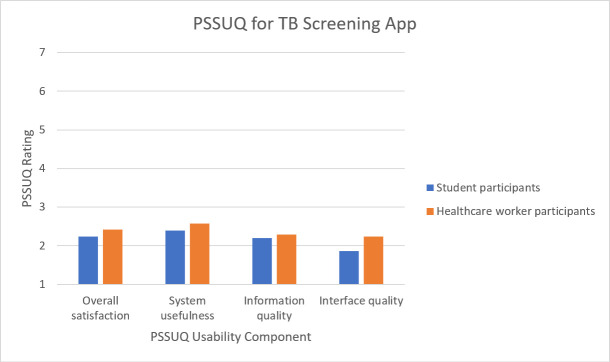
- PSSUQ results showed both participant groups had average scores below 3 for all usability factors, which the paper interprets as neutral to strong satisfaction.
- The re-designed app was translated into isiXhosa and improved through iterative prototypes, with the paper reporting that the framework enabled low-cost, rapid development while addressing contextual challenges.
## Methods
- The study proposed and demonstrated a combined framework by merging the ISR framework with design thinking and applying it to the re-design of an mHealth app for TST reading in a developing, under-resourced context.
- Data came from observations, unstructured interviews, think-aloud sessions, prototyping, and questionnaires; participants included 10 healthcare workers from public clinics and 10 graduate students.
- Analysis included thematic analysis of feedback and observations, assertional analysis of think-aloud responses, and summary of PSSUQ scores.
## Limitations
- The paper states that only a low number of participants were involved in the ideate mode, which limited the diversity and quantity of ideas.
- It also states that the design was limited because end-users (healthcare workers) were not engaged throughout, due to their time constraints and the burden of the health system.
- Evident from the text: the small sample and use of non-representative student participants in prototyping limit generalisability and mean some feedback was only for improvement rather than direct end-user validation.
Model-written summary. Check it against the paper before relying on it.
Integrity signals
Registry
Cites
Statistics
Figures


Verification
Claims the paper makes
14 Valid · 3 Not valid · 17 Not checked · 58 Own results and interpretations
The cited sources that could be checked couldn’t confirm or dispute this claim.
In the paper
“While the design and the relevance of an mHealth app influence its uptake and ultimately its success, design guidelines are not readily available [4, 5].”
§ A user-centred design framework for mHealth > Introduction
What the sources say
- Could not verifycites [4] S Kumar, 2013, Mobile health technology evaluation: the mHealth evidence workshop, American Journal of Preventive Medicine sourceExperimental — accuracy not yet measured
The Introduction discusses limited evidence for mHealth efficacy, and “Using Open Infrastructure and Data Standards” proposes common research standards (page numbers unavailable). Neither passage addresses whether design guidelines for mHealth applications are readily available. Searched for app-design guidelines and guidelines. (LLM, conf=0.70)
- Could not verifycites [5] M Fiordelli, 2013, Mapping mHealth research: a decade of evolution, Journal of Medical Internet Research sourceExperimental — accuracy not yet measured
The Discussion > Recommendations (page unavailable) says evidence of publicly available apps’ effectiveness appears to be missing, but it does not address whether app-design guidelines are readily available. A search for design guidelines and app-development guidance found no passage in our copy that settles the claim. (LLM, conf=0.73)
plain- Asserted: passes — The authors put it forward as true.
- Checkable: passes — It can be checked against evidence.
- Load-bearing: passes — The paper’s conclusions depend on it.
- Based: passes — The paper gives a reason why it holds.
- Could not verify
The sources with a verdict support this claim; the rest weren’t checked yet, have no full text we could read, or their verdicts aren’t rated yet.
In the paper
“The integration of DT with the ISR framework results in an adapted framework (Fig 3) which we propose for the design of mHealth apps. Based on the nonlinear and iterative nature of DT and the ISR framework [18, 20], both approaches are suited for the design and the re-design of mHealth apps.”
§ A user-centred design framework for mHealth > Introduction > Combined framework
What the sources say
- Supportedcites [18] AR Hevner, 2007, A three cycle view of design science research, Scandinavian Journal of Information Systems
The citation supports the attributed point that the ISR design framework is iterative: “The Design Cycle” describes repeated construction, evaluation, and refinement, while “The Relevance Cycle” describes further iterations after field testing. The adapted framework and its proposed use for mHealth apps are the citing authors’ own proposal, not a finding attributed to this source. (LLM, conf=0.88)
- Not checked — no full text of the sourcecites [20] T Brown, 2008, Design thinking, Harvard Business Review
plainstates a cause- Asserted: passes — The authors put it forward as true.
- Checkable: passes — It can be checked against evidence.
- Load-bearing: passes — The paper’s conclusions depend on it.
- Based: passes — The paper gives a reason why it holds.
- Supported
Every source the paper cites for this claim was checked and supports it.
In the paper
“Given the above considerations, we believe that the design approach described in this paper addresses the cost and time concerns associated with the application of the ISR framework highlighted by Schnall et al. [9].”
§ A user-centred design framework for mHealth > Discussion
What the sources say
- Supportedcites [9] R Schnall, 2016, A user-centered model for designing consumer mobile health (mHealth) applications (apps), Journal of Biomedical Informatics source
The Conclusions state that the multistage approach to using the ISR framework can be time consuming and costly. The citing authors' assertion that their own design approach addresses those concerns is their conclusion, not a claim attributed to Schnall et al. Our copy provides a section label but no page number. (LLM, conf=0.94)
hedgedstates an association- Asserted: passes — The authors put it forward as true.
- Checkable: passes — It can be checked against evidence.
- Load-bearing: passes — The paper’s conclusions depend on it.
- Based: passes — The paper gives a reason why it holds.
- Supported
The sources with a verdict support this claim; the rest weren’t checked yet, have no full text we could read, or their verdicts aren’t rated yet.
In the paper
“thus engagement with end-users could enable more appropriate app design [7–9].”
§ A user-centred design framework for mHealth > Introduction
What the sources say
- Supportedcites [7] F Verhoeven, 2010, Asynchronous and synchronous teleconsultation for diabetes care: A systematic literature review, Journal of Diabetes Science and Technology source
The Conclusion and Discussion says that including patients in the design team can lead to applications better tailored to their needs. The Implications for Practice also recommends involving patients and other stakeholders in developing technology-based diabetes-care interventions. (LLM, conf=0.93)
- Not checked — no full text of the sourcecites [8] T McCurdie, 2012, mHealth consumer apps: The case for user-centered design, Biomedical Instrumentation & Technology source
- Supportedcites [9] R Schnall, 2016, A user-centered model for designing consumer mobile health (mHealth) applications (apps), Journal of Biomedical Informatics source
In “Inclusion of End-Users in App Design,” the paper says that effective mHealth tools should start with intended users’ needs and that engaging target users produced a more useful prototype. “Guidelines for Future Mobile App Development” also describes how end-user feedback informed improvements to the app. (LLM, conf=0.94)
hedgedstates a possible cause- Asserted: passes — The authors put it forward as true.
- Checkable: passes — It can be checked against evidence.
- Load-bearing: passes — The paper’s conclusions depend on it.
- Based: passes — The paper gives a reason why it holds.
- Supported
The cited sources support only part of this claim — read each source’s verdict below.
In the paper
“Currently, few frameworks allow for this holistic approach to mHealth app design in developing and under-resourced contexts. While frameworks are available for the design of mHealth apps [9, 14, 15], few are formulated for a developing context.”
§ A user-centred design framework for mHealth > Introduction
What the sources say
- Partly supportedcites [9] R Schnall, 2016, A user-centered model for designing consumer mobile health (mHealth) applications (apps), Journal of Biomedical Informatics sourceExperimental — accuracy not yet measured
The Objective and Discussion > Guidelines for Future Mobile App Development (pages not provided) describe a holistic mHealth design approach as relatively novel, supporting the general point that such approaches are limited. The paper does not assess how many frameworks are suited to developing or under-resourced contexts; its app-development example concerns HIV prevention for high-risk men who have sex with men. (LLM, conf=0.84)
- Partly supportedcites [14] CC Wilhide III, 2016, Evidence-based mHealth chronic disease mobile app intervention design: Development of a framework, JMIR Res Protoc sourceExperimental — accuracy not yet measured
The Introduction says there was “very little to guide” systematic mHealth app design, and the paper develops a framework for that purpose. It does not say that few frameworks serve developing or under-resourced contexts specifically; its mention of resource-poor settings concerns the potential reach of mHealth interventions, not the availability of design frameworks. (LLM, conf=0.83)
- Not matchedcites [15] AA Moqeem, 2018, Mobile Health Application Framework for an Ideal User Experience—A User-Centered Design Approach for Clinicians, Trends in Telemedicine & E-health
We searched by its title and found no matching paper.
plain- Asserted: passes — The authors put it forward as true.
- Checkable: passes — It can be checked against evidence.
- Load-bearing: passes — The paper’s conclusions depend on it.
- Based: passes — The paper gives a reason why it holds.
- Partly supported
32 more claims · 2 with their cited sources checked
Create a free account to see all 92 claims and to verify the 2 references still open.
- Probably not a substantial claim. 42
- It may state two separate claims as one. 24
Citations
Cites
Design Science in Information Systems Research1
Hevner, A. R., March, S. T., Park, J., & Ram, S. (2004) · MIS Quarterly · doi:10.2307/25148625 · Cited by 10,707 · cited 1×
“The ISR framework (Fig 1) has its foundations in design science and behavioural science, and is an information systems tool for innovation [17].”
BackgroundDesign science in information systems research
(2004) · Journal of the Association for Information Systems · doi:10.5555/2017212.2017217 · Cited by 8,254
Sampling for qualitative research
Marshall, M. N. (1996) · Family Practice · doi:10.1093/fampra/13.6.522 · Cited by 4,293 · cited 2×
“graduate students, who were recruited using convenience sampling [35].”
Rowe, P. G. (1987) · Cited by 2,481
Interaction Design: Beyond Human-Computer Interaction
Rogers, Y., Sharp, H., & Preece, J. J. (2002) · Open Research Online - ORO (The Open University) · Cited by 1,843
A Pragmatic View of Thematic Analysis
Aronson, J. (1995) · The Qualitative Report · doi:10.46743/2160-3715/1995.2069 · Cited by 1,758 · cited 2×
“Field observation notes were coded manually for patterns associated with the usability of the app and analysed thematically [40, 46].”
Method(2007) · Journal of the Association for Information Systems · Cited by 1,638
Combining IS Research Methods: Towards a Pluralist Methodology
Mingers, J. (2001) · Information Systems Research · doi:10.1287/isre.12.3.240.9709 · Cited by 1,380
The Persona Lifecycle: Keeping People in Mind Throughout Product Design
Pruitt, J., & Adlin, T. (2006) · Cited by 1,119
Methods to support human-centred design
MAGUIRE, M. (2001) · International Journal of Human-Computer Studies · doi:10.1006/ijhc.2001.0503 · Cited by 1,057 · cited 1×
“The review indicated that the context within which an app is used affects usability and quality of mobile apps [47], usability is primarily influenced by the user-interface [48], and clarity of instructions, which affects time to learn, is necessary for designing mobile apps [49].”
BackgroundBeyond the five-user assumption: benefits of increased sample sizes in usability testing
Faulkner, L. (2003) · Behavior Research Methods, Instruments, & Computers · doi:10.3758/bf03195514 · Cited by 1,053 · cited 1×
“Ten participants were chosen at each stage of the recruitment process—the mean percentage of problems identified in usability studies rises from 85% to 95% when the number of participants increases from 5 to 10 [36].”
BackgroundMobile Health Technology Evaluation
Kumar, S., Nilsen, W. J., Abernethy, A., Atienza, A., Patrick, K., Pavel, M., Riley, W. T., Shar, A., Spring, B., Spruijt-Metz, D., et al. (2013) · American Journal of Preventive Medicine · doi:10.1016/j.amepre.2013.03.017 · Cited by 900 · cited 2×
“The combined framework for the design of mHealth apps includes a focus on end-user engagement (while innovation in mHealth has traditionally been technology-driven [4]) and the inclusion of rigour through observations, interviews, and literature to accommodate clinical and end-user needs [30].”
BackgroundA Description of Think Aloud Method and Protocol Analysis
Fonteyn, M. E., Kuipers, B., & Grobe, S. J. (1993) · Qualitative Health Research · doi:10.1177/104973239300300403 · Cited by 670
A user-centered model for designing consumer mobile health (mHealth) applications (apps)
Schnall, R., Rojas, M., Bakken, S., Brown, W., Carballo-Dieguez, A., Carry, M., Gelaude, D., Mosley, J. P., & Travers, J. (2016) · Journal of Biomedical Informatics · doi:10.1016/j.jbi.2016.02.002 · Cited by 583 · cited 6×
“…interventions is to promote healthy behaviours and facilitate a strengthening of health service delivery, prioritising patient and physician insights and needs becomes integral to the success of the intervention [6], thus engagement with end-users could enable more appropriate app design [7–9].”
BackgroundMethodInfluentialMapping mHealth research: a decade of evolution
Fiordelli, M., Diviani, N., & Schulz, P. J. (2013) · Journal of Medical Internet Research · doi:10.2196/jmir.2430 · Cited by 570 · cited 1×
“While the design and the relevance of an mHealth app influence its uptake and ultimately its success, design guidelines are not readily available [4, 5].”
BackgroundDesign Thinking in Health Care
Altman, M., Huang, T. T. K., & Breland, J. Y. (2018) · Preventing Chronic Disease · doi:10.5888/pcd15.180128 · Cited by 548
The think aloud method: a guide to user interface design
JASPERS, M., STEEN, T., BOS, C., & GEENEN, M. (2004) · International Journal of Medical Informatics · doi:10.1016/j.ijmedinf.2004.08.003 · Cited by 544 · cited 1×
“Observations [42], the “think-aloud” protocol [43], and the post-study system usability questionnaire [44] (a 19-item survey instrument to assess user satisfaction) were used as data collection tools, with the latter used in the final iteration once improvements had been made.”
MethodmHealth Consumer Apps : The Case for User-Centered Design
McCurdie, T., Taneva, S., Casselman, M., Yeung, M., McDaniel, C., Ho, W., & Cafazzo, J. (2012) · Biomedical Instrumentation & Technology · doi:10.2345/0899-8205-46.s2.49 · Cited by 478 · cited 1×
“User-centred design is an evidence-based approach that engages with, and prioritises the needs of, end-users during the development of a service or artefact [8, 11].”
BackgroundNumber of people required for usability evaluation: the 10±2 rule
Hwang, W., & Salvendy, G. (2010) · Communications of the ACM · doi:10.1145/1735223.1735255 · Cited by 410 · cited 1×
“However, a sample size of 10±2 is sufficient for discovering 80 per cent of usability issues [55].”
BackgroundObservation: A Complex Research Method
Baker, L. (2006) · Library Trends · doi:10.1353/lib.2006.0045 · Cited by 395 · cited 1×
“Observations [42], the “think-aloud” protocol [43], and the post-study system usability questionnaire [44] (a 19-item survey instrument to assess user satisfaction) were used as data collection tools, with the latter used in the final iteration once improvements had been made.”
MethodPsychometric Evaluation of the Post-Study System Usability Questionnaire: The PSSUQ
Lewis, J. R. (1992) · Proceedings of the Human Factors Society Annual Meeting · doi:10.1177/154193129203601617 · Cited by 387
API change and fault proneness: a threat to the success of Android apps
Linares-Vásquez, M., Bavota, G., Bernal-Cárdenas, C., Di Penta, M., Oliveto, R., & Poshyvanyk, D. (2013) · Proceedings of the 2013 9th Joint Meeting on Foundations of Software Engineering · doi:10.1145/2491411.2491428 · Cited by 259 · cited 1×
“The World Health Organisation (WHO) endorses this approach and advises that it be integrated within the lifecycle of mHealth interventions, in order to ensure effective outcomes [12], addressing both functionality and usability [13].”
BackgroundAsynchronous and synchronous teleconsultation for diabetes care: A systematic literature review
Verhoeven, F., Tanja-Dijkstra, K., Nijland, N., Eysenbach, G., & van Gemert-Pijnen, L. (2010) · Journal of Diabetes Science and Technology · doi:10.1177/193229681000400323 · Cited by 247
Advancing the science of mHealth
Nilsen, W., Kumar, S., Shar, A., Varoquiers, C., Wiley, T., Riley, W. T., Pavel, M., & Atienza, A. A. (2012) · Journal of Health Communication · doi:10.1080/10810730.2012.677394 · Cited by 226 · cited 2×
“Additionally, mHealth has the potential to alleviate social barriers to healthcare through increased access to health services; reduced health disparities; reduced burden on the healthcare system; and lowered health care costs [3]; this is particularly relevant in low-and middle-income countries.”
BackgroundMantoux test and its interpretation
Nayak, S., & Acharjya, B. (2012) · Indian Dermatology Online Journal · doi:10.4103/2229-5178.93479 · Cited by 218 · cited 1×
“We illustrate the use of the proposed framework through the re-design of an mHealth app to read the result of the Mantoux tuberculin skin test (TST), which is the standard method of detection and early prevention of LTBI [33].”
MethodModeling Trait Anxiety: From Computational Processes to Personality
Raymond, J. G., Steele, J. D., & Seriès, P. (2017) · Frontiers in Psychiatry · doi:10.3389/fpsyt.2017.00001 · Cited by 203
(2008) · PubMed · Cited by 200
Usability evaluation of mobile applications using ISO 9241 and ISO 25062 standards
Moumane, K., Idri, A., & Abran, A. (2016) · SpringerPlus · doi:10.1186/s40064-016-2171-z · Cited by 163 · cited 1×
“The review indicated that the context within which an app is used affects usability and quality of mobile apps [47], usability is primarily influenced by the user-interface [48], and clarity of instructions, which affects time to learn, is necessary for designing mobile apps [49].”
BackgroundTopological structures for modeling engineering design processes
Braha, D., & Reich, Y. (2003) · Research in Engineering Design · doi:10.1007/s00163-003-0035-3 · Cited by 148 · cited 1×
“Iterations involve the collection of information from end-users, including design specifications and requirements, and using it to inform the modification of the current design [22].”
MethodMobile connectivity in emerging economies
Silver, L., Smith, A. W., Johnson, C. N., Taylor, K. R., Jiang, J., Anderson, M., & Rainie, L. (2019) · Cited by 122
Thinking with diagrams in architectural design
Do, E. Y.-L., & Gross, M. D. (2001) · Artificial Intelligence Review · doi:10.1023/a:1006661524497 · Cited by 109 · cited 1×
“It is an iterative and interactive process where designing begins with a pictorial depiction of artefacts and evolves into more complex representations as detail is added [21].”
BackgroundActive Involvement of End Users When Developing Web-Based Mental Health Interventions
de Beurs, D., van Bruinessen, I., Noordman, J., Friele, R., & van Dulmen, S. (2017) · Frontiers in Psychiatry · doi:10.3389/fpsyt.2017.00072 · Cited by 97 · cited 1×
“The emphasis of the framework on user-centred design is an advantage and is broadly applicable to mHealth, given recent recognition of the benefits of end-user engagement and feedback during the mHealth lifecycle [56, 57].”
BackgroundEvidence-based mHealth chronic disease mobile app intervention design: Development of a framework
Wilhide III, C. C., Peeples, M. M., & Anthony Kouyaté, R. C. (2016) · JMIR Research Protocols · doi:10.2196/resprot.4838 · Cited by 81 · cited 1×
“While frameworks are available for the design of mHealth apps [9, 14, 15], few are formulated for a developing context.”
BackgroundDesign and feasibility of integrating personalized PRO dashboards into prostate cancer care
Hartzler, A. L., Izard, J. P., Dalkin, B. L., Mikles, S. P., & Gore, J. L. (2016) · Journal of the American Medical Informatics Association · doi:10.1093/jamia/ocv101 · Cited by 72
Usability metric for mobile application: a goal question metric (GQM) approach
Hussain, A., & Ferneley, E. (2008) · Proceedings of the 10th International Conference on Information Integration and Web-based Applications & Services · doi:10.1145/1497308.1497412 · Cited by 70
(2005) · Journal of the Association for Information Systems · Cited by 69
Tsolekile, L. P., Schneider, H. M., & Puoane, T. R. (2018) · Curationis · doi:10.4102/curationis.v41i1.1815 · Cited by 53 · cited 1×
“Community health worker (4) Members of a community who provide community-based care with a specific focus on HIV and TB care [38].”
BackgroundOVERVIEW OF THE PERSONA LIFECYCLE
Pruitt, J., & Adlin, T. (2006) · Elsevier eBooks · doi:10.1016/b978-012566251-2/50003-4 · Cited by 48
Motivational Factors for User Engagement with mHealth Apps
Zebene, W. A., David-Zacharie, I., André, H., Henna, M., Martin, M., Gerit, P., Keiichi, S., Christian, L., & Gunnar, H. (2018) · Studies in Health Technology and Informatics · doi:10.3233/978-1-61499-868-6-151 · Cited by 43 · cited 1×
“The emphasis of the framework on user-centred design is an advantage and is broadly applicable to mHealth, given recent recognition of the benefits of end-user engagement and feedback during the mHealth lifecycle [56, 57].”
BackgroundEthical issues in mHealth research involving persons living with HIV/AIDS and substance abuse
Labrique, A. B., Kirk, G. D., Westergaard, R. P., & Merritt, M. W. (2013) · AIDS Research and Treatment · doi:10.1155/2013/189645 · Cited by 40 · cited 1×
“In addition to safety concerns, Labrique et al. [53] emphasise that confidentiality of data is compromised should a phone with sensitive information be stolen.”
BackgroundCommunity health workers’ experiences of using video teaching tools during home visits—a pilot study
Coetzee, B., Kohrman, H., Tomlinson, M., Mbewu, N., Le Roux, I., & Adam, M. (2018) · Health & Social Care in the Community · doi:10.1111/hsc.12488 · Cited by 40 · cited 1×
“Coetzee et al. [51] report concerns of safety in a Cape Town township for community health-care workers who carry devices.”
BackgroundAntibiotic information application offers nurses quick support
Wentzel, J., Drie‐Pierik, R. J. H. M., Nijdam, L. C., Geesing, J., Sanderman, R., & van Gemert‐Pijnen, J. E. W. C. (2016) · American Journal of Infection Control · doi:10.1016/j.ajic.2015.12.038 · Cited by 36 · cited 1×
“While the use of DT in healthcare is increasing, many interventions using DT, especially ones that are patient-and health provider-facing, have reported mixed success [25–28].”
On the Use of Software Quality Standard ISO/IEC9126 in Mobile Environments
Idri, A., Moumane, K., & Abran, A. (2013) · 2013 20th Asia-Pacific Software Engineering Conference (APSEC) · doi:10.1109/apsec.2013.12 · Cited by 34 · cited 1×
“The review indicated that the context within which an app is used affects usability and quality of mobile apps [47], usability is primarily influenced by the user-interface [48], and clarity of instructions, which affects time to learn, is necessary for designing mobile apps [49].”
BackgroundThe influence of user interface usability on rural consumers' trust of e-health services
Fruhling, A. L., & Lee, S. M. (2006) · International Journal of Electronic Healthcare · doi:10.1504/ijeh.2006.010424 · Cited by 31 · cited 1×
“Data confidentiality should be a usability consideration when designing an app, since usability and trust is vital when attempting to implement electronic health interventions [54].”
BackgroundThe user-centered approach in the development of a complex hospital-at-home intervention.
Cafazzo, J. A., Leonard, K. J., Easty, A., Rossos, P. G., & Chan, C. T. (2009) · PubMed · Cited by 22
Naraghi, S., Mutsvangwa, T., Goliath, R., Rangaka, M. X., & Douglas, T. S. (2018) · Computers in Biology and Medicine · doi:10.1016/j.compbiomed.2018.05.009 · Cited by 22 · cited 12×
“The entry point of the app into the TB care cycle would be after an induration forms on a patient’s arm (within 48–72 hours of TST administration).”
MethodInfluentialSelf-citationTowards an application framework for context-aware m-health applications
Broens, T., van Halteren, A., Sinderen, M. J. V., et al. (2007) · International Journal of Internet Protocol Technology · doi:10.1504/ijipt.2007.012374 · Cited by 20 · cited 1×
“Furthermore, the context within which mHealth interventions operate, as well as the consequences of implementing the intervention, should be considered in their design [10].”
BackgroundHu, J., Geldsetzer, P., Steele, S. J., Matthews, P., Ortblad, K. F., Solomon, T., Shroufi, A., Cutsem, G. V., Tanser, F. C., Wyke, S., et al. (2018) · AIDS · doi:10.1097/qad.0000000000001924 · Cited by 17 · cited 1×
“Counsellors (2) Health workers that perform HIV and TB counselling, with a focus on adherence and testing assistance [39].”
BackgroundPrinciples in the Design of Mobile Medical Apps: Guidance for Those who Care
Lienhard, K. R., & Legner, C. (2017) · WIRTSCHAFTSINFORMATIK · Cited by 17
Advances in Information Technology and Communication in Health
McDaniel, J. G. (2009) · Medical Entomology and Zoology · Cited by 14
Verwey, R., van der Weegen, S., Spreeuwenberg, M. D., Tange, H. J., van der Weijden, T., & de Witte, L. (2014) · Studies in health technology and informatics · doi:10.3233/978-1-61499-415-2-264 · Cited by 12
Devitt, F., & Robbins, P. (2013) · Communications in computer and information science · doi:10.1007/978-3-319-04090-5_5 · Cited by 11 · cited 4×
“While DT does not have as clear a definition as the ISR framework does, it is derived from design philosophies [31] and has foundations in innovation and usercentred methodologies.”
BackgroundInfluential(2016) · Electronic Journal of Information Systems Evaluation · Cited by 8
Teste tuberculínico: pesquisa operacional no Mato Grosso do Sul
Oliveira, S. M. D. V. L. D., Ruffino-Netto, A., Paniago, A. M. M., Oliveira, O. A. D., Marques, M., Cunha, R. V. D., & Andreotti, R. (2011) · Jornal Brasileiro de Pneumologia · doi:10.1590/s1806-37132011000500012 · Cited by 6
Mirza, M. B. (2018) · Trends in Telemedicine & E-health · doi:10.31031/tteh.2018.01.000511 · Cited by 3 · cited 1×
“While frameworks are available for the design of mHealth apps [9, 14, 15], few are formulated for a developing context.”
Background
Research works printed but not linked: 5
- WHO, 2011, mHealth: New horizons for health through mobile technologies: second global survey on eHealth
- S Doorley, 2018, Design Thinking Bootleg.
- J Michl, 2002, On seeing design as redesign, Scandinavian Journal of Design History, 12, 7
- MN Marshall, 1996, Sampling for, 13, 522
- J Saldaña, 2015, The Coding Manual for Qualitative Researchers
Cited by
Educational Concepts of Digital Competence Development for Older Adults—A Scoping Review
Schirmer, M., Dalko, K., Stoevesandt, D., Paulicke, D., & Jahn, P. (2023) · International Journal of Environmental Research and Public Health · doi:10.3390/ijerph20136269 · Cited by 79
“Thereby, the usability and applicability in the living environment of the people affected plays a central role [16,17].”
BackgroundMobile Health Interventions for Substance Use Disorders
Businelle, M. S., Perski, O., Hébert, E. T., & Kendzor, D. E. (2024) · Annual Review of Clinical Psychology · doi:10.1146/annurev-clinpsy-080822-042337 · Cited by 59
Sustainable Development for Mobile Health Apps Using the Human-Centered Design Process
An, Q., Kelley, M. M., Hanners, A., & Yen, P.-Y. (2023) · JMIR Formative Research · doi:10.2196/45694 · Cited by 52
“…[34], workshop [42], and qualitative interview Need assessment Workshop [42] and member check [42] Design and development Focus group discussion [29], workshop [42], observation [29], think-aloud [29], and self-report questionnaires measuring the usability of mHealth, such as the PSSUQ a [29]…”
BackgroundMethodInfluentialDaley, B. J., Ni’Man, M., Neves, M. R., Huda, M. S. B., Marsh, W., Fenton, N., Hitman, G. A., & McLachlan, S. (2021) · Diabetic Medicine · doi:10.1111/dme.14735 · Cited by 62
Understanding User Requirements for a Senior-Friendly Mobile Health Application
Tajudeen, F. P., Bahar, N., Tan, M. P., Mustafa, M. B., Saedon, N. I., & Jesudass, J. (2022) · Geriatrics · doi:10.3390/geriatrics7050110 · Cited by 70
“In relation to this, Farao et al. [25] suggested an mHealth technology design paradigm that incorporates the frameworks of Information Systems Research (ISR) and design thinking.”
Method
Metadata
- Authors
- Farao, J., Malila, B., Conrad, N., Mutsvangwa, T., Rangaka, M. X., & Douglas, T. S.
- Affiliations
- University of Cape Town (ZA)
- Corresponding author
- Farao, Jaydon
- Malila, Bessie
- Conrad, Nailah
- Mutsvangwa, Tinashe
- Rangaka, Molebogeng X.
- Douglas, Tania S.
- Venue
- PLoS ONE
- Publisher
- Public Library of Science (PLoS)
- Published
- 2020-08-19
- Volume
- 15
- Issue
- 8
- Pages
- e0237910
- ISSN
- 1932-6203 (ISSN-L)
- PMC
- PMC7444488
- OpenAlex
- W3052508109
- Semantic Scholar
- 9420a61d19c995bea0c9ca2bcd29d68ee943475e
- Cited by
- 203
- References
- 61
- Citations by year
- 2026: 28 · 2025: 46 · 2024: 35 · 2023: 43 · 2022: 31 · 2021: 17 · 2020: 3
- FWCI
- 24.52
- Type
- journal article
- Language
- en
- Open access
- gold
- doi.org
- Licence
- Locations
- PLoS ONE (publishedVersion, cc-by)
- PubMed Central (publishedVersion, cc-by)
- PubMed (publishedVersion)
- RePEc: Research Papers in Economics (submittedVersion)
- DOAJ (DOAJ: Directory of Open Access Journals) (submittedVersion, cc-by-sa)
- UCL Discovery (University College London) (submittedVersion)
- Funders
- National Research Foundation (98788)
- Fogarty International Center (U54EB027049)
- Topics
- Health Sciences › Health Professions › General Health Professions › Mobile Health and mHealth Applications
- Physical Sciences › Computer Science › Human-Computer Interaction › Usability and User Interface Design
- Physical Sciences › Computer Science › Human-Computer Interaction › Innovative Human-Technology Interaction
- Keywords
- mobile health, user-centered design, design thinking, tuberculin skin test, latent tuberculosis infection, usability requirements, image acquisition, resource-limited settings, developing countries, design guidelines
- MeSH terms
- Female, Health Personnel, Humans, Information Systems, Male, Surveys and Questionnaires, Telemedicine
About these checks
Registry, retraction, Cites and statistics results are computed, not judged, with one exception: a printed reference that no index lists is read once by a model before it counts as a citation error. Claims are extracted by a model and kept only when their quote appears verbatim in the text; each cited source is then checked, with a model’s help, for whether it says what the claim relies on. Those verdicts can be wrong — read the claim’s quote and the cited source before relying on one.
The claim verdicts this report counts are experimental: their accuracy is not yet measured.
A language model drew the claims from the paper on 2026-09-30, under version 3 of the claim definition (model deepseek-v4.1-flash, prompt extract-v3).
A second model labelled each claim on 2026-09-30 (model jev-1.13-20260917, definition revision gold-guideline-v0.2).
Cited sources are checked with a language model’s help (gpt-6-sol).
Statistics and arithmetic are recomputed, not judged.
Confidence bands are shown only for fields calibrated on our annotated test set. None is calibrated yet, so no band is shown.
What counts as a claim ›How we measure confidence ›How we check this ›
Are you an author, or do you see a problem with this page? Request a review
Data sources
Bibliographic data: Semantic Scholar, OpenAlex, Crossref.
Contains information from the Semantic Scholar Academic Graph Datasets, made available under the ODC Attribution License (ODC-BY 1.0).
Semantic Scholar’s data is described in: Kinney, R., et al. (2023). The Semantic Scholar Open Data Platform. arXiv:2301.10140.
