

Kalopanaxsaponin A induces reactive oxygen species mediated mitochondrial dysfunction and cell membrane destruction in Candida albicans
Open accessThe DOI matches its Crossref record; 33 of the 33 references it cites were found in a registry or an index.
Abstract
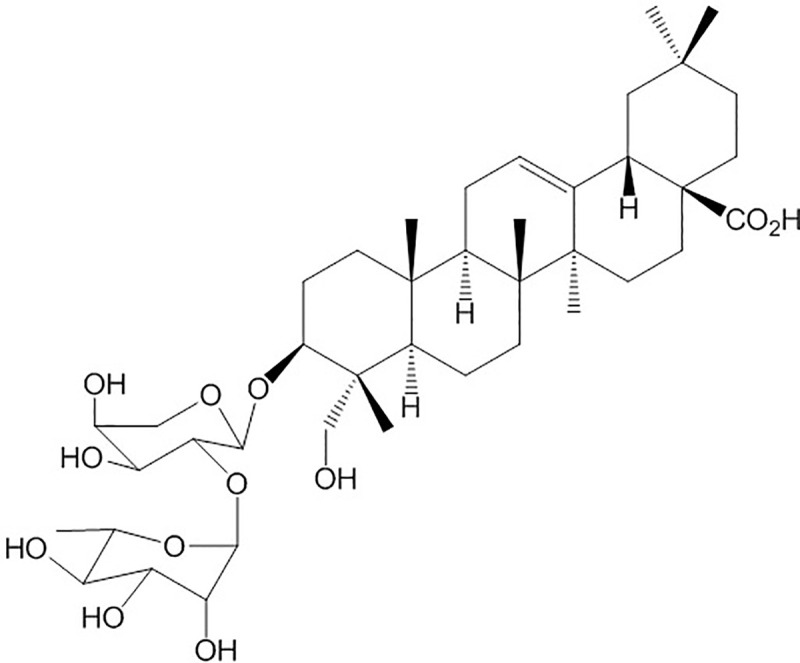
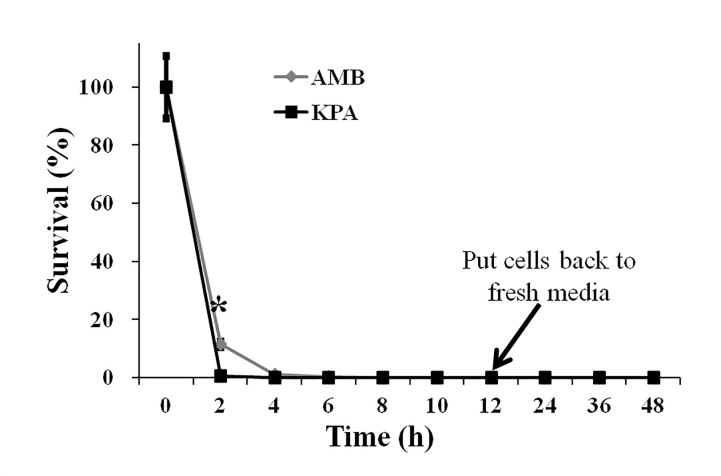
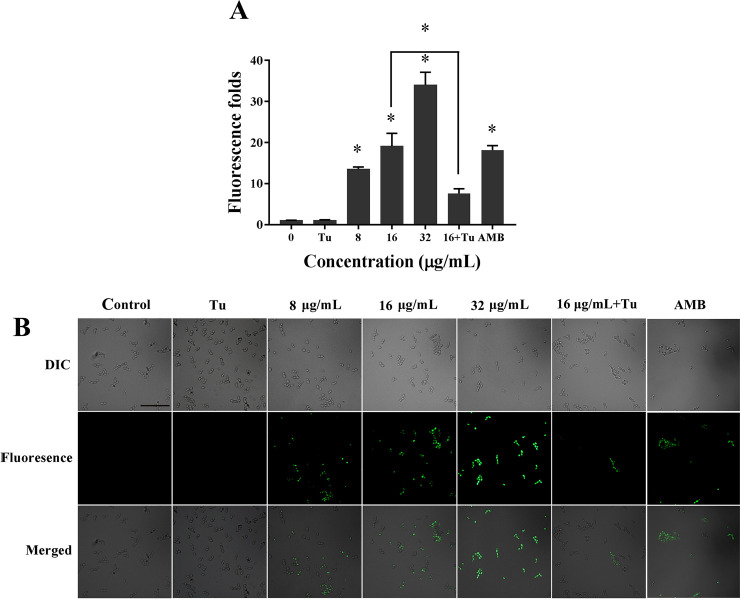
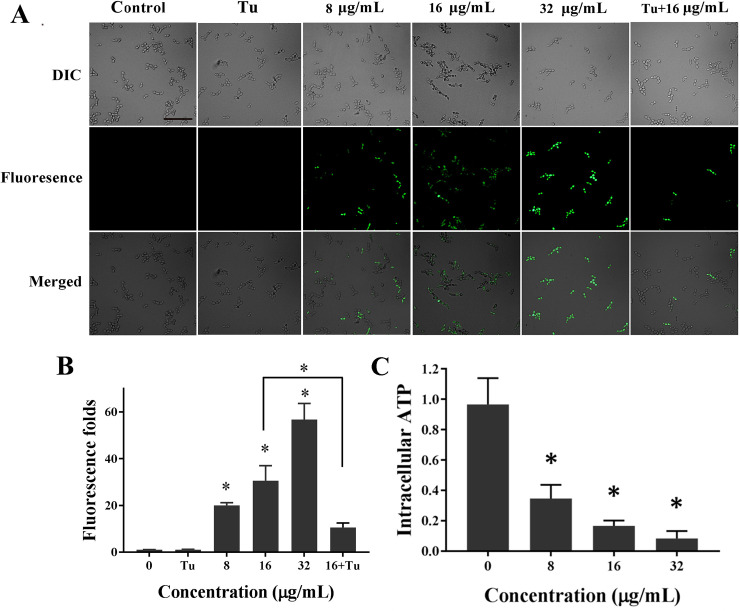
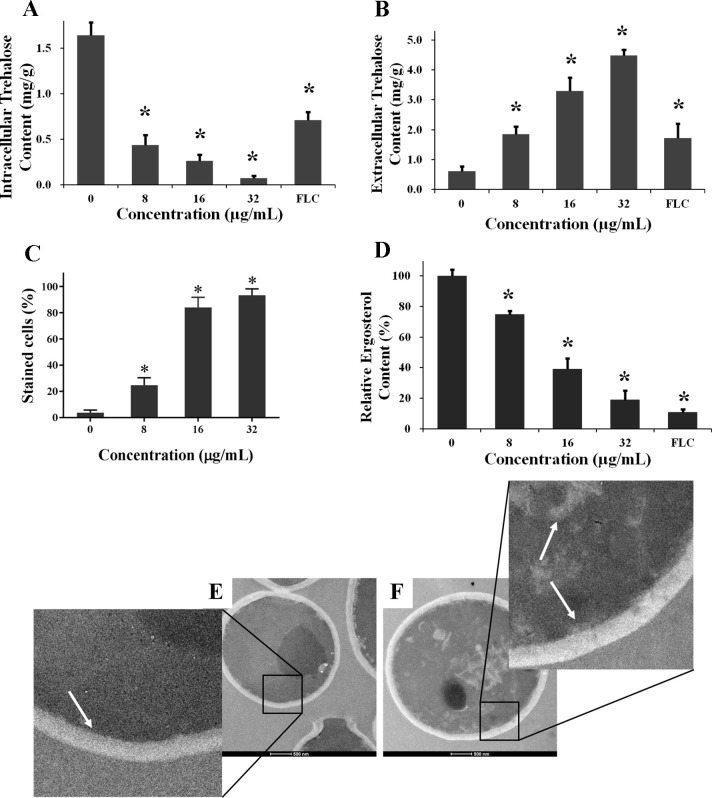
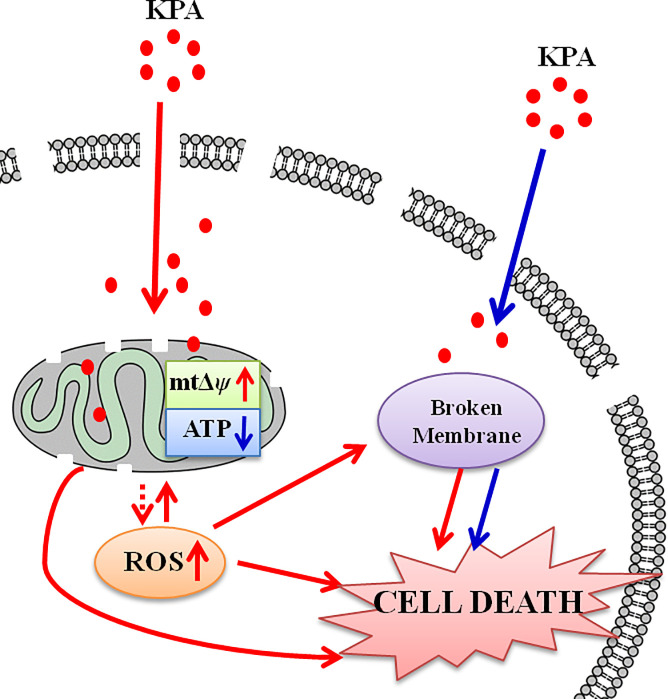
Candidiasis causes high morbidity and mortality among immunocompromised patients. Antifungal drug resistance and cytotoxicity highlight the need of effective antifungal therapeutics. In this study, we found that kalopanaxsaponin A (KPA), a triterpenoid saponin natural product, could inhibit the proliferation of various Candida species, and exerted a fungicidal effect against C. albicans. To further explore its antifungal action mode, spectrofluorophotometer, fluorescence microscopy and transmission electron microscopy were performed, showing that KPA treatment induced the accumulation of intracellular reactive oxygen species (ROS), resulting in mitochondrial dysfunction. Meanwhile, KPA treatment also broke down the membrane barrier of C. albicans causing the leakage of intracellular trehalose, the entrance of extracellular impermeable substance and the decrease of ergosterol content. Both ROS accumulation and membrane destruction contributed to the death of C. albicans cells. Our work preliminarily elucidated the potential mechanisms of KPA against C. albicans on a cellular level, and might provide a potential option for the treatment of clinical candidiasis.
Overview
The claims and statistics of this paper haven’t been checked yet.
Free: it reads the open-access text and checks the first 5 claims that cite a source we can check. Create a free account to check every claim.
Integrity signals
Registry
Cites
Statistics
Figures
Verification
Claims the paper makes
The claims and statistics of this paper haven’t been checked yet.
Free: it reads the open-access text and checks the first 5 claims that cite a source we can check. Create a free account to check every claim.
Claims other papers make about this one
Each is checked against this paper’s own text: does it say what the citing paper says it does?
The source backs part of the claim, not all of it — or backs it for a different population, condition or comparison.
In the citing paper
“In addition to the ROS pathway, KPA can directly destroy the C. albicans membrane, causing intracellular trehalose to leak out and a decrease in membrane ergosterol contents (71).”
From Recent Progress in Research on Mitochondrion-Targeted Antifungal Drugs: a Review (2023) · cites this paper as [71]
Experimental — accuracy not yet measuredThe cited source says what the claim attributes to it.
In the citing paper
“The accumulated ROS could further induce damage to membrane permeability.”
From Recent Progress in Research on Mitochondrion-Targeted Antifungal Drugs: a Review (2023) · cites this paper as [71]
Self-check
Percentages, sums and reported differences re-computed from the paper’s own numbers.
The self-check needs the paper’s full text.
Citations
Cites
Natural products as sources of new drugs from 1981 to 2014
Newman, D. J., & Cragg, G. M. (2016) · Journal of Natural Products · doi:10.1021/acs.jnatprod.5b01055 · Cited by 5,858 · cited 1×
“Food and Drug Administration (FDA) are either natural products or based thereon [9].”
BackgroundReactive oxygen species (ROS) as pleiotropic physiological signalling agents
Sies, H., & Jones, D. P. (2020) · Nature Reviews Molecular Cell Biology · doi:10.1038/s41580-020-0230-3 · Cited by 5,335 · cited 1×
“Fluorescence probe DCFH-DA was used to detect the level of intracellular ROS as it can be oxidized to the highly green fluorescent DCF by ROS [18,19].”
MethodLeBel, C. P., Ischiropoulos, H., & Bondy, S. C. (1992) · Chemical Research in Toxicology · doi:10.1021/tx00026a012 · Cited by 2,689 · cited 1×
“Fluorescence probe DCFH-DA was used to detect the level of intracellular ROS as it can be oxidized to the highly green fluorescent DCF by ROS [18,19].”
MethodOxidative stress: the mitochondria-dependent and mitochondria-independent pathways of apoptosis
Sinha, K., Das, J., Pal, P. B., & Sil, P. C. (2013) · Archives of Toxicology · doi:10.1007/s00204-013-1034-4 · Cited by 1,625 · cited 1×
“At the same time, mitochondria are an important target for the damaging effects of excessive ROS production via the disruption of electron transport, mtΔψ and ATP generation [28,29].”
BackgroundAntibiotics induce redox-related physiological alterations as part of their lethality
Dwyer, D. J., Belenky, P. A., Yang, J. H., MacDonald, I. C., Martell, J. D., Takahashi, N., Chan, C. T. Y., Lobritz, M. A., Braff, D., Schwarz, E. G., et al. (2014) · Proceedings of the National Academy of Sciences · doi:10.1073/pnas.1401876111 · Cited by 948 · cited 1×
“Redox-related physiological alterations are known as part of microbial lethality caused by antibiotics [11].”
BackgroundVitamin C selectively kills KRAS and BRAF mutant colorectal cancer cells by targeting GAPDH
Yun, J., Mullarky, E., Lu, C., Bosch, K. N., Kavalier, A., Rivera, K., Roper, J., Chio, I. I. C., Giannopoulou, E. G., Rago, C., et al. (2015) · Science · doi:10.1126/science.aaa5004 · Cited by 913 · cited 1×
“VC and VE are two popular antioxidant nutrients that easily exist in human blood or skin without significant toxicity through oral administration or makeup [20].”
BackgroundResistance of Candida species to antifungal agents: molecular mechanisms and clinical consequences
Sanglard, D., & Odds, F. C. (2002) · The Lancet Infectious Diseases · doi:10.1016/s1473-3099(02)00181-0 · Cited by 784 · cited 1×
“Additionally, resistance and cytotoxicity are the inevitable problems for most antifungal drugs [7,8].”
BackgroundThe Role of Reactive Oxygen Species in Antibiotic-Mediated Killing of Bacteria
Van Acker, H., & Coenye, T. (2017) · Trends in Microbiology · doi:10.1016/j.tim.2016.12.008 · Cited by 619 · cited 1×
“At the same time, mitochondria are an important target for the damaging effects of excessive ROS production via the disruption of electron transport, mtΔψ and ATP generation [28,29].”
BackgroundChanges in the epidemiological landscape of invasive candidiasis
Lamoth, F., Lockhart, S. R., Berkow, E. L., & Calandra, T. (2018) · Journal of Antimicrobial Chemotherapy · doi:10.1093/jac/dkx444 · Cited by 547
Arthington-Skaggs, B. A., Jradi, H., Desai, T., & Morrison, C. J. (1999) · Journal of Clinical Microbiology · doi:10.1128/jcm.37.10.3332-3337.1999 · Cited by 365 · cited 1×
“9 Determination of ergosterol content SC5314 cells (1 × 10(6) cells/mL in SD medium) were treated with different concentrations of KPA (0, 8, 16 and 32 μg/mL) at 30 ̊C for 3 h to determine the ergosterol content of cell membrane using the alcoholic KOH method according to previously described [16].”
Method
Research works printed but not linked: 2
- Testing AS, Guideline P. Reference Method for Broth Dilution Antifungal Susceptibility testing of Yeasts. Approved Standard M27-A3. 2002.
- Kamat JP, Devasagayam TP, Priyadarsini KI, Mohan H. Reactive oxygen species mediated membrane damage induced by fullerene derivatives and its possible biological implications. Toxicology. 2000; 155: 55– 61. 10.1016/s0300-483x(00)00277-8. 11154797 · DOI · Paper page
Cited by
Emerging Antifungal Targets and Strategies
Ivanov, M., Ćirić, A., & Stojković, D. (2022) · International Journal of Molecular Sciences · doi:10.3390/ijms23052756 · Cited by 160
“Fungicidal activity of kalopanaxsaponin A is also based on the interference with the permeability of the cell membrane [77].”
BackgroundAnti-Biofilm Activity of Cannabidiol against Candida albicans
Feldman, M., Sionov, R. V., Mechoulam, R., & Steinberg, D. (2021) · Microorganisms · doi:10.3390/microorganisms9020441 · Cited by 81
“In general, elevated intracellular ROS in fungi triggers mitochondria abnormal function [45,46] and decreases ATP generation [47].”
BackgroundAntimicrobial Activity and Action Mechanism of Thymoquinone against Bacillus cereus and Its Spores
Wang, S., Deng, H., Wang, Y., Rui, W., Zhao, P., Yong, Q., Guo, D., Liu, J., Guo, X., Wang, Y., et al. (2021) · Foods · doi:10.3390/foods10123048 · Cited by 44
Recent Progress in Research on Mitochondrion-Targeted Antifungal Drugs: a Review
Qin, Y., Wang, J., Lv, Q., & Han, B. (2023) · Antimicrobial Agents and Chemotherapy · doi:10.1128/aac.00003-23 · Cited by 38
“albicansmembrane, causing intracellular trehalose to leak out and a decrease in membrane ergosterol contents (71).”
BackgroundAntimicrobial Activity of the Peptide LfcinB15 against Candida albicans
Chang, C.-K., Kao, M., & Lan, C. (2021) · Journal of Fungi · doi:10.3390/jof7070519 · Cited by 41
“Additionally, KPA causes a significant decrease in the intracellular ATP level in a dose-dependent manner [59], and hepcidin 25 is able to reduce the mitochondrial membrane potential [56].”
Background
Metadata
- Authors
- Li, Y., Shan, M., Zhu, Y., Yao, H., Li, H., Gu, B., & Zhu, Z.
- Affiliations
- Xuzhou Medical College (CN)
- Corresponding author
- Zhu, Zuobin
- Venue
- PLOS ONE
- Publisher
- Public Library of Science (PLoS)
- Published
- 2020-11-30
- Volume
- 15
- Issue
- 11
- Pages
- e0243066
- ISSN
- 1932-6203 (ISSN-L)
- PMC
- PMC7703927
- OpenAlex
- W3109272883
- Cited by
- 35
- References
- 33
- Citations by year
- 2026: 2 · 2025: 5 · 2024: 9 · 2023: 8 · 2022: 4 · 2021: 6
- FWCI
- 0.59
- Type
- journal article
- Language
- en
- Open access
- gold
- doi.org
- Licence
- Locations
- PLoS ONE (publishedVersion, cc-by)
- PubMed Central (publishedVersion, cc-by)
- PubMed (publishedVersion)
- DOAJ (DOAJ: Directory of Open Access Journals) (submittedVersion, cc-by-sa)
- Funders
- National Natural Science Foundation of China (81701390, 81902040)
- Natural Science Foundation of Jiangsu Province (BK20170250)
- Xuzhou Science and Technology Innovation Project (KC19057)
- Topics
- Health Sciences › Medicine › Infectious Diseases › Antifungal resistance and susceptibility
- Physical Sciences › Chemistry › Organic Chemistry › Natural product bioactivities and synthesis
- Life Sciences › Agricultural and Biological Sciences › Food Science › Essential Oils and Antimicrobial Activity
- Keywords
- Candida albicans, candidiasis, antifungal activity, reactive oxygen species, mitochondrial dysfunction, cell membrane damage, ergosterol, triterpenoid saponins, antifungal resistance
- MeSH terms
- Antifungal Agents, Candida albicans, Candidiasis, Cell Membrane, Ergosterol, Humans, Mitochondria, Oleanolic Acid, Saponins, Reactive Oxygen Species, Drug Resistance, Fungal, Membrane Potential, Mitochondrial
About these checks
Registry, retraction, Cites and statistics results are computed, not judged, with one exception: a printed reference that no index lists is read once by a model before it counts as a citation error. Claims are extracted by a model and kept only when their quote appears verbatim in the text; each cited source is then checked, with a model’s help, for whether it says what the claim relies on. Those verdicts can be wrong — read the claim’s quote and the cited source before relying on one.
Statistics and arithmetic are recomputed, not judged.
Confidence bands are shown only for fields calibrated on our annotated test set. None is calibrated yet, so no band is shown.
What counts as a claim ›How we measure confidence ›How we check this ›
Are you an author, or do you see a problem with this page? Request a review
Data sources
Bibliographic data: Semantic Scholar, OpenAlex, Crossref.
Contains information from the Semantic Scholar Academic Graph Datasets, made available under the ODC Attribution License (ODC-BY 1.0).
Semantic Scholar’s data is described in: Kinney, R., et al. (2023). The Semantic Scholar Open Data Platform. arXiv:2301.10140.
