

Mental health and psychosocial support strategies in highly contagious emerging disease outbreaks of substantial public concern: A systematic scoping review
Open accessThe DOI matches its Crossref record; 64 of the 65 references it cites were found in a registry or an index, and 1 are not checked yet.
Abstract
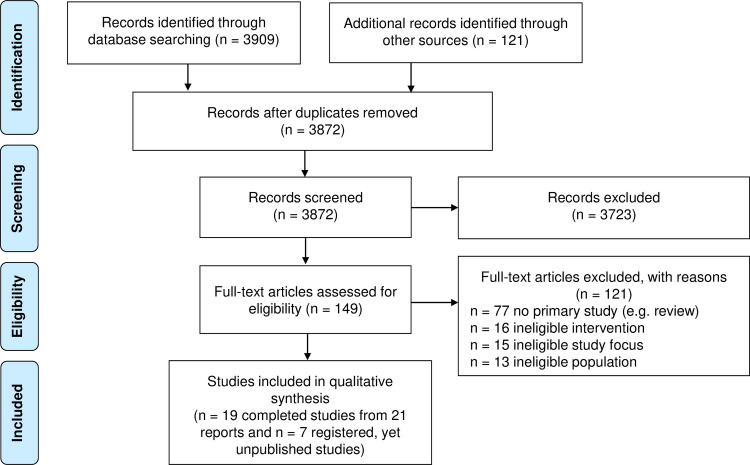
Background: Acute disease outbreaks such as the COVID-19 pandemic cause a high burden of psychological distress in people worldwide. Interventions to enable people to better cope with such distress should be based on the best available evidence. We therefore performed a scoping review to systematically identify and summarize the available literature of interventions that target the distress of people in the face of highly contagious disease outbreaks. Methods: MEDLINE, Cochrane CENTRAL, Web of Science (January 2000 to May 7, 2020), and reference lists were systematically searched and screened by two independent reviewers. Quantitative and qualitative studies investigating the effects of psychological interventions before, during, and after outbreaks of highly contagious emerging infectious diseases, such as SARS, MERS, Ebola, or COVID-19 were included. Study effects were grouped (e.g. for healthcare professionals, community members, people at risk) and intervention contents at the individual and organizational level summarized. We assessed the level of evidence using a modified scheme from the Oxford Centre for Evidence-based Medicine and the Australian National Health and Medical Research Council. Results: Of 4030 records found, 19 studies were included (two RCTs). Most interventions were delivered during-exposure and face-to-face, focused on healthcare workers and crisis personnel, and combined psychoeducation with training of coping strategies. Based on two high-quality studies, beneficial effects were reported for resilience factors (e.g. positive cognitive appraisal) and professional attitudes of healthcare workers, with mixed findings for mental health (e.g. depression). Across all studies, there was positive qualitative feedback from participants and facilitators. We identified seven ongoing studies mostly using online- and mobile-based deliveries. Conclusions: There is preliminary evidence for beneficial effects of interventions to enable people to better cope with the distress of highly contagious emerging disease outbreaks. Besides the need for more high-quality studies, the summarized evidence may inform decision makers to plan interventions during the current pandemic and to develop pandemic preparedness plans.
Overview
The claims and statistics of this paper haven’t been checked yet.
Free: it reads the open-access text and checks the first 5 claims that cite a source we can check. Create a free account to check every claim.
Integrity signals
Registry
Cites
Statistics
Figures
Verification
Claims the paper makes
The claims and statistics of this paper haven’t been checked yet.
Free: it reads the open-access text and checks the first 5 claims that cite a source we can check. Create a free account to check every claim.
Claims other papers make about this one
Each is checked against this paper’s own text: does it say what the citing paper says it does?
The source backs part of the claim, not all of it — or backs it for a different population, condition or comparison.
In the citing paper
“Similarly, findings for interventions that were studied during other epidemics (e.g. Ebola) [22, 23] may also only have limited informative value in the present pandemic context, because of differences in the characteristics of the pathogen and its harmfulness, in the spread of disease, and in containment measures and their duration [23–25].”
From Interventions to build resilience and to ameliorate negative psychosocial effects of the COVID-19 pandemic on children and adolescents: a systematic review and meta-analysis (2024) · cites this paper as [22]
Experimental — accuracy not yet measured
Self-check
Percentages, sums and reported differences re-computed from the paper’s own numbers.
The self-check needs the paper’s full text.
Citations
Cites
PRISMA Extension for Scoping Reviews (PRISMA-ScR): Checklist and Explanation
Tricco, A. C., Lillie, E., Zarin, W., O'Brien, K. K., Colquhoun, H., Levac, D., Moher, D., Peters, M. D. J., Horsley, T., Weeks, L., et al. (2018) · Annals of Internal Medicine · doi:10.7326/m18-0850 · Cited by 43,565
The psychological impact of quarantine and how to reduce it: Rapid review of the evidence
Brooks, S. K., Webster, R. K., Smith, L. E., Woodland, L., Wessely, S., Greenberg, N., & Rubin, G. J. (2020) · The Lancet · doi:10.1016/s0140-6736(20)30460-8 · Cited by 16,378
Wang, C., Pan, R., Wan, X., Tan, Y., Xu, L., Ho, C. S., & Ho, R. C. (2020) · International Journal of Environmental Research and Public Health · doi:10.3390/ijerph17051729 · Cited by 9,923
Lai, J., Ma, S., Wang, Y., Cai, Z., Hu, J., Wei, N., Wu, J., Du, H., Chen, T., Li, R., et al. (2020) · JAMA Network Open · doi:10.1001/jamanetworkopen.2020.3976 · Cited by 8,015
Guidance for conducting systematic scoping reviews
Peters, M. D. J., Godfrey, C. M., Khalil, H., McInerney, P., Parker, D., & Soares, C. B. (2015) · International Journal of Evidence-Based Healthcare · doi:10.1097/xeb.0000000000000050 · Cited by 7,472 · cited 1×
“Given the status of this work as a scoping review, which do not require a formal assessment of the methodological quality of included studies [30], we used a rating scheme with four levels in order to assess the level of evidence (level 1: randomized controlled trial; level 2: controlled trial without randomization, c…”
MethodSohrabi, C., Alsafi, Z., O'Neill, N., Khan, M., Kerwan, A., Al-Jabir, A., Iosifidis, C., & Agha, R. (2020) · International Journal of Surgery · doi:10.1016/j.ijsu.2020.02.034 · Cited by 6,069
The psychological impact of the COVID-19 epidemic on college students in China
Cao, W., Fang, Z., Hou, G., Han, M., Xu, X., Dong, J., & Zheng, J. (2020) · Psychiatry Research · doi:10.1016/j.psychres.2020.112934 · Cited by 5,843 · cited 1×
“social support) [71, 75, 76] have also been shown as protective factors during the current pandemic, these contents might serve as a first starting point or guidance for the development of health-promoting interventions in view of the COVID-19 pandemic.”
BackgroundImpact of COVID-19 pandemic on mental health in the general population: a systematic review
Xiong, J., Lipsitz, O., Nasri, F., Lui, L. M. W., Gill, H., Phan, L., Chen-Li, D., Iacobucci, M., Ho, R., Majeed, A., et al. (2020) · Journal of Affective Disorders · doi:10.1016/j.jad.2020.08.001 · Cited by 5,204
Qiu, J., Shen, B., Zhao, M., Wang, Z., Xie, B., & Xu, Y. (2020) · General Psychiatry · doi:10.1136/gpsych-2020-100213 · Cited by 4,307
Huang, Y., & Zhao, N. (2020) · Psychiatry Research · doi:10.1016/j.psychres.2020.112954 · Cited by 3,736
Research works printed but not linked: 9
- Department of Communicable Disease Surveillance and Response Global Influenza Programme. WHO global influenza preparedness plan. The role of WHO and recommendations for national measures before and during pandemics. Geneva: WHO; 2005.
- Inter-Agency Standing Committee (IASC) Reference Group on Mental Health and Psychosocial Support in Emergency Settings. Mental health and psychosocial support in ebola virus disease outbreaks. A guide for public health programme planners. Geneva: WHO; 2015.
- WHO and the governments of Guinea, and Sierra Leone. Ebola virus disease outbreak response plan in West Africa. Geneva: WHO; 2014.
- Centre for Evidence-Based Medicine. Oxford Centre for Evidence-based Medicine–Levels of Evidence (March 2009). 2009. Available from: https://www.cebm.net/2009/06/oxford-centre-evidence-based-medicine-levels-evidence-march-2009/
- National Institute of Clinical Studies. Emergency department stroke and transient ischaemic attack care bundle: information and implementation package. Melbourne: National Health and Medical Research Council; 2009.
- Klomp R, Spitalnick J, Reissman D. Virtual classroom immersion training: safeguarding the health, safety, and resiliency of emergency responders. T&D Journal. 2011; 65: 38– 43.
- Yau JKY, Chan CLW, Lee A, Chan CHY, Ng SM, Chan A. Growth through SARS: effectiveness of an intervention to build strength in adolescents in Hong Kong. Paper presented at the Fourth International Conference in Social Work on Health and Mental Health, Quebec, Canada; 2004.
- Bisson JI, Lewis C. Systematic review of Psychological First Aid; commissioned by the World Health Organization. Geneva: WHO; 2009.
- Lai J, Ma S, Wang Y, Cai Z, Hu J, Wei N, et al Factors associated with mental health outcomes among health care workers exposed to coronavirus disease 2019. JAMA Network Open. 2020; 3(3): e203976 10.1001/jamanetworkopen.2020.3976 32202646 PMC7090843 · DOI · Paper page
Cited by
Resilience Interventions Conducted in Western and Eastern Countries—A Systematic Review
Blessin, M., Lehmann, S., Kunzler, A. M., van Dick, R., & Lieb, K. (2022) · International Journal of Environmental Research and Public Health · doi:10.3390/ijerph19116913 · Cited by 40
Self-citationActive Coping and Anxiety Symptoms during the COVID-19 Pandemic in Spanish Adults
Moreno, R. L., Fernández-Daza, M. P., Cogollo, S. J. Z., Olivencia-Carrión, M. A., Jiménez-Torres, M. G., Olivencia-Carrión, M. D., Ogallar, A., & Godoy‐Izquierdo, D. (2021) · International Journal of Environmental Research and Public Health · doi:10.3390/ijerph18168240 · Cited by 31
“Both methods accurately represent the use of functional (active method) and dysfunctional (avoidant method) coping, so these results are similar to those found in the reviewed literature [19,28,31].”
ResultHalliday, E. C., Holt, V., Khan, K., Ward, F., Wheeler, P., & Sadler, G. (2021) · Health Expectations · doi:10.1111/hex.13416 · Cited by 27
“context, researchers have highlighted the need for mental health strategies that include community‐level action to foster social support and connectedness in local populations.(34,37) Yet, recent reviews show that the majority of available evidence on mental health interventions during crises is largely concerned with…”
BackgroundWendel, F., Bender, S., Breitinger, E., Coenen, M., Hummel, J., Immich, G., Kirschneck, M., Klünder, V., Kunzler, A. M., Lieb, K., et al. (2024) · European Child & Adolescent Psychiatry · doi:10.1007/s00787-023-02280-y · Cited by 19
Self-citationA meta-review of psychological resilience during COVID-19
Seaborn, K., Henderson, K., Gwizdka, J., & Chignell, M. (2022) · npj Mental Health Research · doi:10.1038/s44184-022-00005-8 · Cited by 20
“…Provide mental health support 4 19,21 – 23 Insuf fi cient evidence Provide personal protective equipment (PPE) 5 19 – 21, Effective leadership 4 19 – 21 Governmental Public education about COVID-19 2 20,21 Insuf fi cient evidence Public education about personal protection 1 21 Insuf fi cient…”
InfluentialYasuda, Y., Ishimaru, T., Nagata, M., Tateishi, S., Eguchi, H., Tsuji, M., Ogami, A., Matsuda, S., Fujino, Y., CORoNaWork project, et al. (2021) · Journal of Occupational Health · doi:10.1002/1348-9585.12259 · Cited by 16
Impact of work arrangements during the COVID-19 pandemic on mental health in France
Hecker, I., Aarbaoui, T. E., Wallez, S., Andersen, A. J., Ayuso‐Mateos, J. L., Bryant, R. A., Corrao, G., McDaid, D., Mediavilla, R., Mittendorfer‐Rutz, E., et al. (2022) · SSM - Population Health · doi:10.1016/j.ssmph.2022.101285 · Cited by 16
“These recommendations aim to reduce mental health inequalities between vulnerable groups and the population with Fiol--DeRoque et al., 2021; Kunzler et al., 2021; Sharifi, Asadi-Pooya, & Mousavi-Roknabadi, 2020).”
Neil‐Sztramko, S., Belita, E., Hopkins, S., Sherifali, D., Anderson, L. N., Apatu, E., Kapiriri, L., Tarride, J. E., Bellefleur, O., Kaasalainen, S., et al. (2023) · Frontiers in Public Health · doi:10.3389/fpubh.2023.1282296 · Cited by 19
Lan, F.-Y., Scheibler, C., Hershey, M. S., Romero-Cabrera, J. L., Gaviola, G. C., Yiannakou, I., Fernandez-Montero, A., Christophi, C. A., Christiani, D. C., Sotos-Prieto, M., et al. (2022) · Scientific Reports · doi:10.1038/s41598-022-10979-2 · Cited by 11
Kwon, H.-J., Leem, J., Kim, D.-W., Kwon, C., & Kim, S.-H. (2023) · PLoS ONE · doi:10.1371/journal.pone.0281207 · Cited by 8
Health system resilience and peacebuilding in fragile and conflict-affected settings
Lilja, J., & Ahmad, A. S. (2023) · Current Opinion in Environmental Sustainability · doi:10.1016/j.cosust.2023.101314 · Cited by 8
Analysis of the Predictive Role of Self-Compassion on Emotional Distress during COVID-19 Lockdown
Gutiérrez-Hernández, M. E., Fanjul, L. F., Díaz, A., Oyanadel, C., & Castro, W. P. (2022) · Social Sciences · doi:10.3390/socsci11040151 · Cited by 10
“In fact, the COVID-19 pandemic has had a considerable impact on the mental health of the general population, as shown by several systematic reviews (BuenoNotivol et al. 2020; Kunzler et al. 2021; Ren et al. 2020; Salari et al. 2020; Wu et al. 2021; Xiong et al. 2020).”
BackgroundWhat psychosocial support do first year university students need? A mixed creative methods study
Zaťková, T. Š., Tokovská, M., & Šolcová, J. (2024) · International Journal of Emotional Education · doi:10.56300/axlk4968 · Cited by 6
Qian, Y., Xu, H., Diao, J., Li, Q., Zhan, Q., & Fang, Y. (2021) · Medicine · doi:10.1097/md.0000000000025391 · Cited by 5
“COVID-19 and the closed environment of isolation wards will adversely affect patients([13]) psychologically.”
BackgroundHugelius, K., Johansson, S., & Sjölin, H. (2021) · International Journal of Environmental Research and Public Health · doi:10.3390/ijerph18179079 · Cited by 9
“Pandemics and associated protective measures, such as social isolation, can have considerable psychosocial impacts on individuals and communities in both the short and long term [28].”
BackgroundResultInfluentialSultan, S., Bashar, M., Tabassum, A., Iqbal, M. S., Nomani, I., Almasoudi, N. M., Tayeb, M., Munshi, G. W., & Matyuri, R. K. (2022) · The Egyptian Journal of Neurology Psychiatry and Neurosurgery · doi:10.1186/s41983-022-00590-7 · Cited by 7
Multiplikatorenkonzepte zu Stress- und Emotionsregulation im Rettungsdienst – ein Scoping-Review
Hummel, M., Steudtner, M., Gebauer, E., & Buruck, G. (2024) · Notfall + Rettungsmedizin · doi:10.1007/s10049-024-01318-1 · Cited by 4
Szőke, H., Sommer, M., Streit, E., Grah, C., Winkler, M., Busche, P., Pöchtrager, S., Mergelsberg, J., Wullschleger, C., Gerlach, K. L., et al. (2022) · Der Merkurstab · doi:10.14271/dms-21451-de · Cited by 4
Task-related competencies: knowledge, skills, and abilities of the helping professionals
Yılmaz, O., Demir, E. M., & Atay, B. (2023) · International Journal of Lifelong Education · doi:10.1080/02601370.2023.2262149 · Cited by 5
“…those of the previous studies that pointed out the importance of psychosocial support for a wide range of issues, including school outcomes (Zulu et al., 2020), cancer (Newton et al., 2021), illness and longevity (Smith et al., 2021), and COVID-19 pandemic (Hyun et al., 2020; Kunzler et al., 2021).”
BackgroundPark, H. Y., Lee, H., Lee, J.-Y., Song, K., Kim, Y., & Lee, S. H. (2023) · Infection and Chemotherapy · doi:10.3947/ic.2022.0161 · Cited by 3
“” Different approaches can be adopted depending on the severity of mental health [33].”
BackgroundGarriott, A., Phan, X., Roch, K. L., Bintu, F. M., Darciba, S. P., Koleti, P., & Murray, S. M. (2023) · Journal of Global Health · doi:10.7189/jogh.13.06010 · Cited by 4
Integrating Grief Counseling in Responses to Disasters and Epidemics
Ramamurthy, C., & Juvva, S. (2023) · Indian Journal of Social Psychiatry · doi:10.4103/ijsp.ijsp_78_22 · Cited by 2
Seadawy, M. G., Hussein, A. A. A., Baraka, M. M., Imran, A. A., El-Hosseny, M. F., Lotfy, M. M., & Zekri, A. N. (2026) · Journal of Biosafety and Biosecurity · doi:10.1016/j.jobb.2026.03.004 · Cited by 3
Tapping into the minds and hearts of the local public health workforce during the COVID-19 pandemic
Eisenhauer, M., Crupi, L., Ray, R., & Mann, T. A. (2022) · Canadian Journal of Public Health · doi:10.17269/s41997-022-00664-2 · Cited by 2
“Within the reviewed literature, front-line health care workers consistently expressed feelings of stress and uncertainty in pandemic or emergency situations (Kunzler et al., 2021).”
BackgroundAlkasaby, M. A., Philip, S., Douba, Z., Tu, H., Eaton, J., Mohammed, M., Essar, M. Y., Kamal, M. A., Riaz, M. M. A., Moussallem, M., et al. (2023) · medRxiv · doi:10.1101/2023.07.27.23293219 · Cited by 2
“Organisations have a duty of care to support their staff and equip them with psychological skills to help them cope with the mental health impact of crises Low Quality (Kunzler et al., 2021) (31) Scoping Review to identify and summarize the available literature on interventions that target the Ebola, MERS, SARS, Most…”
BackgroundInfluentialWirkzusammenhänge zwischen individueller und kollektiver Resilienzförderung
Gilan, D., Helmreich, I., Himbert, M., & Hahad, O. (2022) · Entrepreneurial Management und Standortentwicklung · doi:10.1007/978-3-658-37296-5_3 · Cited by 1
Self-citationBulan, P. M. P., Lagria, M. M. G., Pestaño, N. Y., Suerte, J. R. O., Trinidad, J. F. S., & Antonio, N. R. S. (2024) · Acta Medica Philippina · doi:10.47895/amp.vi0.8731 · Cited by 1
Madjitey, P., Hunt, M. R., & Andermann, A. A. J. (2025) · Disaster Medicine and Public Health Preparedness · doi:10.1017/dmp.2025.10229 · Cited by 1
Maulana, I., Shalahuddin, I., Eriyani, T., & Pebrianti, S. (2025) · Journal of Multidisciplinary Healthcare · doi:10.2147/jmdh.s566502 · Cited by 3
“9,10 11–16 However, the effectiveness of these interventions varies.”
Coping with Contagious Diseases: A Global Perspective
Siddique, M. P. (2022) · Journal of Islamic International Medical College · doi:10.57234/1543 · Cited by 1
Bulan, P. M. P., & Antonio, N. R. S. (2023) · Acta Medica Philippina · doi:10.47895/amp.vi0.7813 · Cited by 2
“17 20 It is also important to note the facilitators that complement the utilized strategies in managing academic occupational disruptions.”
BackgroundHealthcare Frontliners Experiences during COVID-19 Pandemic: A Phenomenological Study
Cabaguing, A. M., Macawili, H. J., Pacoma, M. J., & Porton, A. (2022) · International Journal of Research Publications · doi:10.47119/ijrp1001021620223298 · Cited by 1
Lived Experiences of COVID-19 Survivors in Samar, Philippines
Cabaguing, A. M. (2022) · INTERNATIONAL JOURNAL OF MULTIDISCIPLINARY RESEARCH AND ANALYSIS · doi:10.47191/ijmra/v5-i6-13
Plazy, M., Doucet, M., Songbono, C. T., Sanon, A., Issiaka, B., Martin, C. S., Da, I., L’hostellier, A., Marcy, O., Malvy, D. J.-M., et al. (2023) · PLOS Global Public Health · doi:10.1371/journal.pgph.0001545
“Social support is indeed important in times of hardship, especially in the case of emerging epidemics [35, 36], as well as in the West African collectivist context of strong solidarity [37].”
BackgroundSchoenfarber, A., & Langan, S. (2023) · Essential clinical social work series · doi:10.1007/978-3-031-31650-0_4
Hursztyn, P., Khan, A., Matvienko‐Sikar, K., Kõlves, K., Nyhan, M., & Browne, J. P. (2024) · HRB Open Research · doi:10.12688/hrbopenres.13850.1
“Additionally, research has explored the effectiveness of tele-mental health and technology mediated interventions 7,8 .”
MethodPositive Psychology Interventions Among Freshmen in Universities: An Integrative Literature Review
Monda, E. A., Mose, E. K., & Omare, J. M. (2024) · Springer eBooks · doi:10.1007/978-3-031-72520-3_10
Yavaş, Y., & Coşkun, S. (2025) · Ege Üniversitesi Hemşirelik Fakültesi Dergisi · doi:10.53490/egehemsire.1243077
Psychosocial Considerations for Children during Infectious Disease Outbreaks
Murray, J. S. (2026) · Educating the young child · doi:10.1007/978-3-032-13683-1_9
Psychosocial Aspects of Disasters
Khorram‐Manesh, A., Alefaio, S., MacDonald, C., & Gray, L. (2026) · Elsevier eBooks · doi:10.1016/b978-0-443-40509-9.00011-0
Bioterrorism: Epidemiological and microbiological investigations
Castro, A. E., & Pacial, D. R. (2026) · Elsevier eBooks · doi:10.1016/b978-0-443-40634-8.00036-2
Metadata
- Authors
- Kunzler, A. M., Stoffers-Winterling, J., Stoll, M., Mancini, A. L., Lehmann, S., Blessin, M., Gilan, D., Helmreich, I., Hufert, F., & Lieb, K.
- Affiliations
- Johannes Gutenberg University Mainz (DE)
- Leibniz Institute for Resilience Research (DE)
- Medizinische Hochschule Brandenburg Theodor Fontane (DE)
- Corresponding author
- Kunzler, Angela M.
- Lieb, Klaus
- ORCID
- Venue
- PLOS ONE
- Publisher
- Public Library of Science (PLoS)
- Published
- 2021-02-03
- Volume
- 16
- Issue
- 2
- Pages
- e0244748
- ISSN
- 1932-6203 (ISSN-L)
- PMC
- PMC7857635
- OpenAlex
- W3029341022
- Cited by
- 41
- References
- 64
- Citations by year
- 2026: 4 · 2025: 3 · 2024: 5 · 2023: 12 · 2022: 12 · 2021: 5
- FWCI
- 5.80
- Type
- journal article
- Language
- en
- Open access
- gold
- doi.org
- Licence
- Locations
- PLoS ONE (publishedVersion, cc-by)
- PubMed Central (publishedVersion, cc-by)
- PubMed (publishedVersion)
- Informationszentrum Lebenswissenschaften (ZB MED) (submittedVersion, cc-by)
- DOAJ (DOAJ: Directory of Open Access Journals) (submittedVersion, cc-by-sa)
- Funders
- Bundesministerium für Bildung und Forschung (01KX2021)
- Topics
- Social Sciences › Psychology › Clinical Psychology › COVID-19 and Mental Health
- Social Sciences › Psychology › Applied Psychology › Digital Mental Health Interventions
- Health Sciences › Medicine › Public Health, Environmental and Occupational Health › Maternal Mental Health During Pregnancy and Postpartum
- Keywords
- mental health interventions, psychosocial support, COVID-19 pandemic, psychological distress, healthcare workers, psychoeducation, coping strategies, resilience, depression, SARS, MERS, Ebola, mobile-based interventions, pandemic preparedness
- MeSH terms
- Psychosocial Support Systems, COVID-19, SARS-CoV-2, Adaptation, Psychological, Disease Outbreaks, Health Personnel, Humans, Mental Health, Resilience, Psychological
About these checks
Registry, retraction, Cites and statistics results are computed, not judged, with one exception: a printed reference that no index lists is read once by a model before it counts as a citation error. Claims are extracted by a model and kept only when their quote appears verbatim in the text; each cited source is then checked, with a model’s help, for whether it says what the claim relies on. Those verdicts can be wrong — read the claim’s quote and the cited source before relying on one.
Statistics and arithmetic are recomputed, not judged.
Confidence bands are shown only for fields calibrated on our annotated test set. None is calibrated yet, so no band is shown.
What counts as a claim ›How we measure confidence ›How we check this ›
Are you an author, or do you see a problem with this page? Request a review
Data sources
Bibliographic data: Semantic Scholar, OpenAlex, Crossref.
Contains information from the Semantic Scholar Academic Graph Datasets, made available under the ODC Attribution License (ODC-BY 1.0).
Semantic Scholar’s data is described in: Kinney, R., et al. (2023). The Semantic Scholar Open Data Platform. arXiv:2301.10140.
