

Mental health and psychosocial support strategies in highly contagious emerging disease outbreaks of substantial public concern: A systematic scoping review
Open accessThe DOI matches its Crossref record; 64 of the 65 references it cites were found in a registry or an index, and 1 are not checked yet.
Abstract
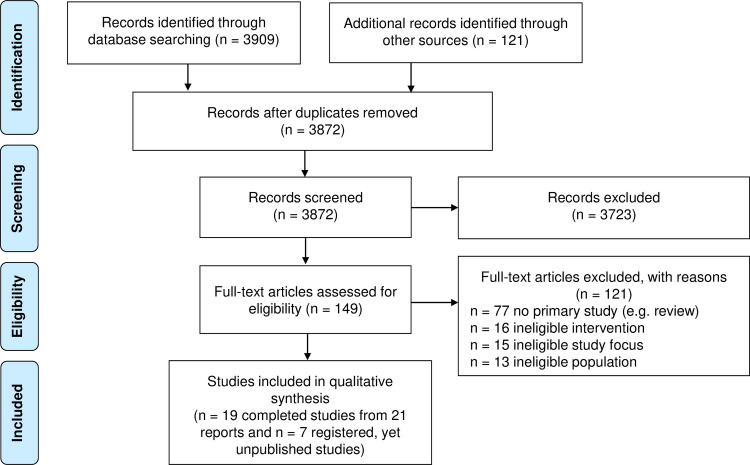
Background: Acute disease outbreaks such as the COVID-19 pandemic cause a high burden of psychological distress in people worldwide. Interventions to enable people to better cope with such distress should be based on the best available evidence. We therefore performed a scoping review to systematically identify and summarize the available literature of interventions that target the distress of people in the face of highly contagious disease outbreaks. Methods: MEDLINE, Cochrane CENTRAL, Web of Science (January 2000 to May 7, 2020), and reference lists were systematically searched and screened by two independent reviewers. Quantitative and qualitative studies investigating the effects of psychological interventions before, during, and after outbreaks of highly contagious emerging infectious diseases, such as SARS, MERS, Ebola, or COVID-19 were included. Study effects were grouped (e.g. for healthcare professionals, community members, people at risk) and intervention contents at the individual and organizational level summarized. We assessed the level of evidence using a modified scheme from the Oxford Centre for Evidence-based Medicine and the Australian National Health and Medical Research Council. Results: Of 4030 records found, 19 studies were included (two RCTs). Most interventions were delivered during-exposure and face-to-face, focused on healthcare workers and crisis personnel, and combined psychoeducation with training of coping strategies. Based on two high-quality studies, beneficial effects were reported for resilience factors (e.g. positive cognitive appraisal) and professional attitudes of healthcare workers, with mixed findings for mental health (e.g. depression). Across all studies, there was positive qualitative feedback from participants and facilitators. We identified seven ongoing studies mostly using online- and mobile-based deliveries. Conclusions: There is preliminary evidence for beneficial effects of interventions to enable people to better cope with the distress of highly contagious emerging disease outbreaks. Besides the need for more high-quality studies, the summarized evidence may inform decision makers to plan interventions during the current pandemic and to develop pandemic preparedness plans.
Overview
The claims and statistics of this paper haven’t been checked yet.
Free: it reads the open-access text and checks the first 5 claims that cite a source we can check. Create a free account to check every claim.
Integrity signals
Registry
Cites
Statistics
Figures
Verification
Claims the paper makes
The claims and statistics of this paper haven’t been checked yet.
Free: it reads the open-access text and checks the first 5 claims that cite a source we can check. Create a free account to check every claim.
Claims other papers make about this one
Each is checked against this paper’s own text: does it say what the citing paper says it does?
The source backs part of the claim, not all of it — or backs it for a different population, condition or comparison.
In the citing paper
“Similarly, findings for interventions that were studied during other epidemics (e.g. Ebola) [22, 23] may also only have limited informative value in the present pandemic context, because of differences in the characteristics of the pathogen and its harmfulness, in the spread of disease, and in containment measures and their duration [23–25].”
From Interventions to build resilience and to ameliorate negative psychosocial effects of the COVID-19 pandemic on children and adolescents: a systematic review and meta-analysis (2024) · cites this paper as [22]
Experimental — accuracy not yet measured
Self-check
Percentages, sums and reported differences re-computed from the paper’s own numbers.
The self-check needs the paper’s full text.
Citations
Cites
PRISMA Extension for Scoping Reviews (PRISMA-ScR): Checklist and Explanation
Tricco, A. C., Lillie, E., Zarin, W., O'Brien, K. K., Colquhoun, H., Levac, D., Moher, D., Peters, M. D. J., Horsley, T., Weeks, L., et al. (2018) · Annals of Internal Medicine · doi:10.7326/m18-0850 · Cited by 43,565
The psychological impact of quarantine and how to reduce it: Rapid review of the evidence
Brooks, S. K., Webster, R. K., Smith, L. E., Woodland, L., Wessely, S., Greenberg, N., & Rubin, G. J. (2020) · The Lancet · doi:10.1016/s0140-6736(20)30460-8 · Cited by 16,378
Wang, C., Pan, R., Wan, X., Tan, Y., Xu, L., Ho, C. S., & Ho, R. C. (2020) · International Journal of Environmental Research and Public Health · doi:10.3390/ijerph17051729 · Cited by 9,923
Lai, J., Ma, S., Wang, Y., Cai, Z., Hu, J., Wei, N., Wu, J., Du, H., Chen, T., Li, R., et al. (2020) · JAMA Network Open · doi:10.1001/jamanetworkopen.2020.3976 · Cited by 8,015
Guidance for conducting systematic scoping reviews
Peters, M. D. J., Godfrey, C. M., Khalil, H., McInerney, P., Parker, D., & Soares, C. B. (2015) · International Journal of Evidence-Based Healthcare · doi:10.1097/xeb.0000000000000050 · Cited by 7,472 · cited 1×
“Given the status of this work as a scoping review, which do not require a formal assessment of the methodological quality of included studies [30], we used a rating scheme with four levels in order to assess the level of evidence (level 1: randomized controlled trial; level 2: controlled trial without randomization, c…”
MethodSohrabi, C., Alsafi, Z., O'Neill, N., Khan, M., Kerwan, A., Al-Jabir, A., Iosifidis, C., & Agha, R. (2020) · International Journal of Surgery · doi:10.1016/j.ijsu.2020.02.034 · Cited by 6,069
The psychological impact of the COVID-19 epidemic on college students in China
Cao, W., Fang, Z., Hou, G., Han, M., Xu, X., Dong, J., & Zheng, J. (2020) · Psychiatry Research · doi:10.1016/j.psychres.2020.112934 · Cited by 5,843 · cited 1×
“social support) [71, 75, 76] have also been shown as protective factors during the current pandemic, these contents might serve as a first starting point or guidance for the development of health-promoting interventions in view of the COVID-19 pandemic.”
BackgroundImpact of COVID-19 pandemic on mental health in the general population: a systematic review
Xiong, J., Lipsitz, O., Nasri, F., Lui, L. M. W., Gill, H., Phan, L., Chen-Li, D., Iacobucci, M., Ho, R., Majeed, A., et al. (2020) · Journal of Affective Disorders · doi:10.1016/j.jad.2020.08.001 · Cited by 5,204
Qiu, J., Shen, B., Zhao, M., Wang, Z., Xie, B., & Xu, Y. (2020) · General Psychiatry · doi:10.1136/gpsych-2020-100213 · Cited by 4,307
Huang, Y., & Zhao, N. (2020) · Psychiatry Research · doi:10.1016/j.psychres.2020.112954 · Cited by 3,736
Timely mental health care for the 2019 novel coronavirus outbreak is urgently needed
Xiang, Y.-T., Yang, Y., Li, W., Zhang, L., Zhang, Q., Cheung, T., & Ng, C. H. (2020) · The Lancet Psychiatry · doi:10.1016/s2215-0366(20)30046-8 · Cited by 3,598
Salari, N., Hosseinian-Far, A., Jalali, R., Vaisi-Raygani, A., Rasoulpoor, S., Mohammadi, M., Rasoulpoor, S., & Khaledi-Paveh, B. (2020) · Globalization and Health · doi:10.1186/s12992-020-00589-w · Cited by 3,560
COVID-19 pandemic and mental health consequences: Systematic review of the current evidence
Vindegaard, N., & Benros, M. E. (2020) · Brain, Behavior, and Immunity · doi:10.1016/j.bbi.2020.05.048 · Cited by 3,221
Wang, C., Pan, R., Wan, X., Tan, Y., Xu, L., McIntyre, R. S., Choo, F. N., Tran, B., Ho, R., Sharma, V. K., et al. (2020) · Brain, Behavior, and Immunity · doi:10.1016/j.bbi.2020.04.028 · Cited by 2,571
Rogers, J. P., Chesney, E., Oliver, D., Pollak, T. A., McGuire, P., Fusar-Poli, P., Zandi, M. S., Lewis, G., & David, A. S. (2020) · The Lancet Psychiatry · doi:10.1016/s2215-0366(20)30203-0 · Cited by 2,407
The mental health of medical workers in Wuhan, China dealing with the 2019 novel coronavirus.
Kang, L., Li, Y., Hu, S., Chen, M., Yang, C., Yang, B. X., Wang, Y., Hu, J., Lai, J., Ma, X., et al. (2020) · The Lancet Psychiatry · doi:10.1016/s2215-0366(20)30047-x · Cited by 2,061
Organizational resilience: a capability-based conceptualization
Duchek, S. (2020) · Business Research · doi:10.1007/s40685-019-0085-7 · Cited by 2,027
Online mental health services in China during the COVID-19 outbreak
Liu, S., Yang, L., Zhang, C., Xiang, Y.-T., Liu, Z., Hu, S., & Zhang, B. (2020) · The Lancet Psychiatry · doi:10.1016/s2215-0366(20)30077-8 · Cited by 1,992
Psychological interventions for people affected by the COVID-19 epidemic
Duan, L., & Zhu, G. (2020) · The Lancet Psychiatry · doi:10.1016/s2215-0366(20)30073-0 · Cited by 1,885
Luo, M., Guo, L., Yu, M., Jiang, W., & Wang, H. (2020) · Psychiatry Research · doi:10.1016/j.psychres.2020.113190 · Cited by 1,615
Zhou, S.-J., Zhang, L.-G., Wang, L.-L., Guo, Z.-C., Wang, J.-Q., Chen, J.-C., Liu, M., Chen, X., & Chen, J.-X. (2020) · European Child & Adolescent Psychiatry · doi:10.1007/s00787-020-01541-4 · Cited by 1,464
González-Sanguino, C., Ausín, B., Castellanos, M. Á., Saiz, J., López-Gómez, A., Ugidos, C., & Muñoz, M. (2020) · Brain, Behavior, and Immunity · doi:10.1016/j.bbi.2020.05.040 · Cited by 1,373
Preventive strategies for mental health
Arango, C., Díaz-Caneja, C. M., McGorry, P. D., Rapoport, J., Sommer, I. E., Vorstman, J. A., McDaid, D., Marín, O., Serrano-Drozdowskyj, E., Freedman, R., et al. (2018) · The Lancet Psychiatry · doi:10.1016/s2215-0366(18)30057-9 · Cited by 1,271
Kisely, S., Warren, N., McMahon, L., Dalais, C., Henry, I., & Siskind, D. (2020) · BMJ · doi:10.1136/bmj.m1642 · Cited by 1,056
Organizational Resilience: A Valuable Construct for Management Research?
Hillmann, J., & Guenther, E. (2021) · International Journal of Management Reviews · doi:10.1111/ijmr.12239 · Cited by 989
Mental health services for older adults in China during the COVID-19 outbreak
Yang, Y., Li, W., Zhang, Q., Zhang, L., Cheung, T., & Xiang, Y.-T. (2020) · The Lancet Psychiatry · doi:10.1016/s2215-0366(20)30079-1 · Cited by 857
Bäuerle, A., Teufel, M., Musche, V., Weismüller, B., Kohler, H., Hetkamp, M., Dörrie, N., Schweda, A., & Skoda, E.-M. (2020) · Journal of Public Health · doi:10.1093/pubmed/fdaa106 · Cited by 597
Zhu, Z., Xu, S., Wang, H., Liu, Z., Wu, J., Li, G., Miao, J., Zhang, C., Yang, Y., Sun, W., et al. (2020) · eClinicalMedicine · doi:10.1016/j.eclinm.2020.100443 · Cited by 591
Pandemics: Risks, Impacts, and Mitigation
Madhav, N., Oppenheim, B., Gallivan, M., Mulembakani, P., Rubin, E., & Wolfe, N. (2017) · Disease Control Priorities, Third Edition (Volume 9): Improving Health and Reducing Poverty · doi:10.1596/978-1-4648-0527-1_ch17 · Cited by 558
Zhang, J., Wu, W., Zhao, X., & Zhang, W. (2020) · Precision Clinical Medicine · doi:10.1093/pcmedi/pbaa006 · Cited by 554 · cited 7×
“We identified three trials including parallel controls (one randomized study [31], one RCT [22], and one cluster-RCT [32]), 11 single-group studies [21, 33–41, 47, 48] including one interview study [47], four case reports/studies [23, 26, 42, 43], and one two-group study (delayed treatment model) [44, 45].”
BackgroundMethodResultInfluentialKrishnamoorthy, Y., Nagarajan, R., Saya, G. K., & Menon, V. (2020) · Psychiatry Research · doi:10.1016/j.psychres.2020.113382 · Cited by 550
Psychological symptoms among frontline healthcare workers during COVID-19 outbreak in Wuhan
Du, J., Dong, L., Wang, T., Yuan, C., Fu, R., Zhang, L., Liu, B., Zhang, M., Yin, Y., Qin, J., et al. (2020) · General Hospital Psychiatry · doi:10.1016/j.genhosppsych.2020.03.011 · Cited by 518
Psychosocial effects of an Ebola outbreak at individual, community and international levels
Van Bortel, T., Basnayake, A., Wurie, F., Jambai, M., Koroma, A. S., Muana, A. T., Hann, K., Eaton, J., Martin, S., & Nellums, L. B. (2016) · Bulletin of the World Health Organization · doi:10.2471/blt.15.158543 · Cited by 471
Ni, M. Y., Yang, L., Leung, C. M. C., Li, N., Yao, X. I., Wang, Y., Leung, G. M., Cowling, B. J., & Liao, Q. (2020) · JMIR Mental Health · doi:10.2196/19009 · Cited by 444
Leppin, A. L., Bora, P. R., Tilburt, J. C., Gionfriddo, M. R., Zeballos-Palacios, C., Dulohery, M. M., Sood, A., Erwin, P. J., Brito, J. P., Boehmer, K. R., et al. (2014) · PLoS ONE · doi:10.1371/journal.pone.0111420 · Cited by 405 · cited 1×
“resilience) to the challenges of pandemics appears to be an important approach to prevent the development of mental disorders in both healthcare workers and the general population [12, 13].”
BackgroundChang, J., Yuan, Y., & Wang, D. (2020) · PubMed · doi:10.12122/j.issn.1673-4254.2020.02.06 · Cited by 349
Dai, Y., Hu, G., Xiong, H., Qiu, H., & Yuan, X. (2020) · medRxiv · doi:10.1101/2020.03.03.20030874 · Cited by 290
Yang, H., & Ma, J. (2020) · Psychiatry Research · doi:10.1016/j.psychres.2020.113045 · Cited by 246
Disease Control Priorities, Third Edition (Volume 9): Improving Health and Reducing Poverty
Jamison, D. T., Gelband, H., Horton, S., Jha, P., Laxminarayan, R., Mock, C. N., & Nugent, R. (2017) · World Bank, Washington, DC eBooks · doi:10.1596/978-1-4648-0527-1 · Cited by 220
da Silva Neto, R. M., Benjamim, C. J. R., de Medeiros Carvalho, P. M., & Neto, M. L. R. (2021) · Progress in Neuro-Psychopharmacology and Biological Psychiatry · doi:10.1016/j.pnpbp.2020.110062 · Cited by 219
Simione, L., & Gnagnarella, C. (2020) · Frontiers in Psychology · doi:10.3389/fpsyg.2020.02166 · Cited by 199
The psychological impact of SARS: a matter of heart and mind
Sim, K. (2004) · Canadian Medical Association Journal · doi:10.1503/cmaj.1032003 · Cited by 195
Cleary, M., Kornhaber, R., Thapa, D. K., West, S., & Visentin, D. (2018) · Nurse Education Today · doi:10.1016/j.nedt.2018.10.002 · Cited by 177
'Resilience training for hospital workers in anticipation of an influenza pandemic'
Aiello, A., Khayeri, M. Y.-E., Raja, S., Peladeau, N., Romano, D., Leszcz, M., Maunder, R. G., Rose, M., Adam, M. A., Pain, C., et al. (2011) · Journal of Continuing Education in the Health Professions · doi:10.1002/chp.20096 · Cited by 159 · cited 2×
“training of resilience factors and coping strategies) [21, 22, 26, 31, 32, 35, 38, 40].”
BackgroundYoon, M.-K., Kim, S.-Y., Ko, H.-S., & Lee, M.-S. (2016) · International Journal of Mental Health Systems · doi:10.1186/s13033-016-0083-5 · Cited by 153
Maunder, R. G., Lancee, W. J., Mae, R., Vincent, L., Peladeau, N., Beduz, M. A., Hunter, J. J., & Leszcz, M. (2010) · BMC Health Services Research · doi:10.1186/1472-6963-10-72 · Cited by 129 · cited 6×
“We identified three trials including parallel controls (one randomized study [31], one RCT [22], and one cluster-RCT [32]), 11 single-group studies [21, 33–41, 47, 48] including one interview study [47], four case reports/studies [23, 26, 42, 43], and one two-group study (delayed treatment model) [44, 45].”
BackgroundMethodInfluentialSijbrandij, M., Horn, R., Esliker, R., O’May, F., Reiffers, R., Ruttenberg, L., Stam, K., de Jong, J., & Ager, A. (2020) · International Journal of Environmental Research and Public Health · doi:10.3390/ijerph17020484 · Cited by 115 · cited 12×
“We identified three trials including parallel controls (one randomized study [31], one RCT [22], and one cluster-RCT [32]), 11 single-group studies [21, 33–41, 47, 48] including one interview study [47], four case reports/studies [23, 26, 42, 43], and one two-group study (delayed treatment model) [44, 45].”
BackgroundMethodInfluentialChan, C., Chan, T. H. Y., & Rcmp, S. M. N. (2006) · Social Work in Health Care · doi:10.1300/j010v43n02_03 · Cited by 105
Schreiber, M., Cates, D. S., Formanski, S., & King, M. (2019) · Military Medicine · doi:10.1093/milmed/usy400 · Cited by 92
A Support Group for Home-Quarantined College Students Exposed to SARS: Learning from Practice
Pan, P. J. D., Chang, S.-H., & Yu, Y.-Y. (2005) · The Journal for Specialists in Group Work · doi:10.1080/01933920500186951 · Cited by 86
Horn, R., O'May, F., Esliker, R., Gwaikolo, W., Woensdregt, L., Ruttenberg, L., & Ager, A. (2019) · Global Mental Health · doi:10.1017/gmh.2019.2 · Cited by 61 · cited 5×
“Two studies did not examine the participants of training, but performed qualitative interviews with facilitators [47, 48].”
BackgroundMethodInfluentialNg, S. M., Chan, T. H. Y., Chan, C. L. W., Lee, A. M., Yau, J. K. Y., Chan, C. H. Y., & Lau, J. (2006) · Community Mental Health Journal · doi:10.1007/s10597-005-9002-y · Cited by 61
Training peers to treat Ebola centre workers with anxiety and depression in Sierra Leone
Waterman, S., Hunter, E. C. M., Cole, C. L., Evans, L. J., Greenberg, N., Rubin, G. J., & Beck, A. (2018) · International Journal of Social Psychiatry · doi:10.1177/0020764017752021 · Cited by 61
Decosimo, C. A., Hanson, J., Quinn, M., Badu, P., & Smith, E. G. (2019) · Global Mental Health · doi:10.1017/gmh.2019.1 · Cited by 57 · cited 2×
“The quality of the evidence ranged between level 1 and level 4, with two level-1 studies that were RCTs [22, 32], two (level 2) controlled studies without randomization [31, 44, 45], 11 single-group studies of level 3 [21, 33–41, 47, 48], and four case studies/reports of level 4 [23, 26, 42, 43].”
BackgroundMethodCole, C. L., Waterman, S., Hunter, E. C. M., Bell, V., Greenberg, N., Rubin, G. J., & Beck, A. (2021) · International Review of Psychiatry · doi:10.1080/09540261.2020.1750800 · Cited by 22
Evaluation of a support group for Ebola hotline workers in Sierra Leone
Kahn, D. M., Bulanda, J. J., Weissberger, A., Jalloh, S., Villa, E. V., & Williams, A. R. F. (2016) · International Journal of Culture and Mental Health · doi:10.1080/17542863.2016.1153121 · Cited by 19
Integrating psychosocial support at Ebola treatment units in Sierra Leone and Liberia
Levine, A. C., Weissbecker, I., Roshania, R., Cavallera, V., Mallow, M., Leichner, A., Antigua, J., & Gao, J. (2018) · Intervention · doi:10.4103/intv.intv_8_18 · Cited by 19
CDC Safety Training Course for Ebola Virus Disease Healthcare Workers
Narra, R., Sobel, J., Piper, C., Gould, D. W., Bhadelia, N., Dott, M. M., Fiore, A., Fischer, W. A., Frawley, M. J., Griffin, P. M., et al. (2017) · Emerging infectious diseases · doi:10.3201/eid2313.170549 · Cited by 18
CDC’s Multiple Approaches to Safeguard the Health, Safety, and Resilience of Ebola Responders
Klomp, R. W., Jones, L. A., Watanabe, E., & Thompson, W. (2019) · Prehospital and Disaster Medicine · doi:10.1017/s1049023x19005144 · Cited by 18
Waterman, S., Cole, C. L., Greenberg, N. L., Rubin, G. J., & Beck, A. (2018) · BJPsych International · doi:10.1192/bji.2018.7 · Cited by 16
Liao, Y., Wang, L., Luo, T., Wu, S., Wu, Z., Chen, J., Pan, C., Wang, Y., Liu, Y., Luo, Q., et al. (2020) · BMJ Open · doi:10.1136/bmjopen-2020-041364 · Cited by 13
Recovering from the Ebola crisis: ‘Social Reconnection Groups’ in a rural Liberian community
Morelli, M., Cyrus, G., Weissbecker, I., Kpangbai, J., Mallow, M., Leichner, A., Ryan, E., Wener, R. W., Gao, J., Antigua, J., et al. (2019) · Cambridge Prisms Global Mental Health · doi:10.1017/gmh.2019.13 · Cited by 12
The evolving nosology of mood disorders
Mondimore, F. M., & DePaulo, J. R. (2005) · International Review of Psychiatry · doi:10.1080/09540260500065006 · Cited by 6
A Process Description of Playing to Live! A Community Psychosocial Arts Program During Ebola
Decosimo, C. A., Hanson-DeFusco, J., Boland, C. R., SLAWSON, D. L., Littleton, M. A., & Quinn, M. (2017) · Journal of Social Behavioral and Health Sciences · doi:10.5590/jsbhs.2017.11.1.12 · Cited by 6
Sertraline in primary care: comments on the PANDA trial – Authors' reply
Lewis, G., & Lewis, G. (2019) · The Lancet Psychiatry · doi:10.1016/s2215-0366(19)30480-8 · Cited by 6
Research works printed but not linked: 9
- Department of Communicable Disease Surveillance and Response Global Influenza Programme. WHO global influenza preparedness plan. The role of WHO and recommendations for national measures before and during pandemics. Geneva: WHO; 2005.
- Inter-Agency Standing Committee (IASC) Reference Group on Mental Health and Psychosocial Support in Emergency Settings. Mental health and psychosocial support in ebola virus disease outbreaks. A guide for public health programme planners. Geneva: WHO; 2015.
- WHO and the governments of Guinea, and Sierra Leone. Ebola virus disease outbreak response plan in West Africa. Geneva: WHO; 2014.
- Centre for Evidence-Based Medicine. Oxford Centre for Evidence-based Medicine–Levels of Evidence (March 2009). 2009. Available from: https://www.cebm.net/2009/06/oxford-centre-evidence-based-medicine-levels-evidence-march-2009/
- National Institute of Clinical Studies. Emergency department stroke and transient ischaemic attack care bundle: information and implementation package. Melbourne: National Health and Medical Research Council; 2009.
- Klomp R, Spitalnick J, Reissman D. Virtual classroom immersion training: safeguarding the health, safety, and resiliency of emergency responders. T&D Journal. 2011; 65: 38– 43.
- Yau JKY, Chan CLW, Lee A, Chan CHY, Ng SM, Chan A. Growth through SARS: effectiveness of an intervention to build strength in adolescents in Hong Kong. Paper presented at the Fourth International Conference in Social Work on Health and Mental Health, Quebec, Canada; 2004.
- Bisson JI, Lewis C. Systematic review of Psychological First Aid; commissioned by the World Health Organization. Geneva: WHO; 2009.
- Lai J, Ma S, Wang Y, Cai Z, Hu J, Wei N, et al Factors associated with mental health outcomes among health care workers exposed to coronavirus disease 2019. JAMA Network Open. 2020; 3(3): e203976 10.1001/jamanetworkopen.2020.3976 32202646 PMC7090843 · DOI · Paper page
Cited by
Resilience Interventions Conducted in Western and Eastern Countries—A Systematic Review
Blessin, M., Lehmann, S., Kunzler, A. M., van Dick, R., & Lieb, K. (2022) · International Journal of Environmental Research and Public Health · doi:10.3390/ijerph19116913 · Cited by 40
Self-citationActive Coping and Anxiety Symptoms during the COVID-19 Pandemic in Spanish Adults
Moreno, R. L., Fernández-Daza, M. P., Cogollo, S. J. Z., Olivencia-Carrión, M. A., Jiménez-Torres, M. G., Olivencia-Carrión, M. D., Ogallar, A., & Godoy‐Izquierdo, D. (2021) · International Journal of Environmental Research and Public Health · doi:10.3390/ijerph18168240 · Cited by 31
“Both methods accurately represent the use of functional (active method) and dysfunctional (avoidant method) coping, so these results are similar to those found in the reviewed literature [19,28,31].”
ResultHalliday, E. C., Holt, V., Khan, K., Ward, F., Wheeler, P., & Sadler, G. (2021) · Health Expectations · doi:10.1111/hex.13416 · Cited by 27
“context, researchers have highlighted the need for mental health strategies that include community‐level action to foster social support and connectedness in local populations.(34,37) Yet, recent reviews show that the majority of available evidence on mental health interventions during crises is largely concerned with…”
BackgroundWendel, F., Bender, S., Breitinger, E., Coenen, M., Hummel, J., Immich, G., Kirschneck, M., Klünder, V., Kunzler, A. M., Lieb, K., et al. (2024) · European Child & Adolescent Psychiatry · doi:10.1007/s00787-023-02280-y · Cited by 19
Self-citationA meta-review of psychological resilience during COVID-19
Seaborn, K., Henderson, K., Gwizdka, J., & Chignell, M. (2022) · npj Mental Health Research · doi:10.1038/s44184-022-00005-8 · Cited by 20
“…Provide mental health support 4 19,21 – 23 Insuf fi cient evidence Provide personal protective equipment (PPE) 5 19 – 21, Effective leadership 4 19 – 21 Governmental Public education about COVID-19 2 20,21 Insuf fi cient evidence Public education about personal protection 1 21 Insuf fi cient…”
Influential
Metadata
- Authors
- Kunzler, A. M., Stoffers-Winterling, J., Stoll, M., Mancini, A. L., Lehmann, S., Blessin, M., Gilan, D., Helmreich, I., Hufert, F., & Lieb, K.
- Affiliations
- Johannes Gutenberg University Mainz (DE)
- Leibniz Institute for Resilience Research (DE)
- Medizinische Hochschule Brandenburg Theodor Fontane (DE)
- Corresponding author
- Kunzler, Angela M.
- Lieb, Klaus
- ORCID
- Venue
- PLOS ONE
- Publisher
- Public Library of Science (PLoS)
- Published
- 2021-02-03
- Volume
- 16
- Issue
- 2
- Pages
- e0244748
- ISSN
- 1932-6203 (ISSN-L)
- PMC
- PMC7857635
- OpenAlex
- W3029341022
- Cited by
- 41
- References
- 64
- Citations by year
- 2026: 4 · 2025: 3 · 2024: 5 · 2023: 12 · 2022: 12 · 2021: 5
- FWCI
- 5.80
- Type
- journal article
- Language
- en
- Open access
- gold
- doi.org
- Licence
- Locations
- PLoS ONE (publishedVersion, cc-by)
- PubMed Central (publishedVersion, cc-by)
- PubMed (publishedVersion)
- Informationszentrum Lebenswissenschaften (ZB MED) (submittedVersion, cc-by)
- DOAJ (DOAJ: Directory of Open Access Journals) (submittedVersion, cc-by-sa)
- Funders
- Bundesministerium für Bildung und Forschung (01KX2021)
- Topics
- Social Sciences › Psychology › Clinical Psychology › COVID-19 and Mental Health
- Social Sciences › Psychology › Applied Psychology › Digital Mental Health Interventions
- Health Sciences › Medicine › Public Health, Environmental and Occupational Health › Maternal Mental Health During Pregnancy and Postpartum
- Keywords
- mental health interventions, psychosocial support, COVID-19 pandemic, psychological distress, healthcare workers, psychoeducation, coping strategies, resilience, depression, SARS, MERS, Ebola, mobile-based interventions, pandemic preparedness
- MeSH terms
- Psychosocial Support Systems, COVID-19, SARS-CoV-2, Adaptation, Psychological, Disease Outbreaks, Health Personnel, Humans, Mental Health, Resilience, Psychological
About these checks
Registry, retraction, Cites and statistics results are computed, not judged, with one exception: a printed reference that no index lists is read once by a model before it counts as a citation error. Claims are extracted by a model and kept only when their quote appears verbatim in the text; each cited source is then checked, with a model’s help, for whether it says what the claim relies on. Those verdicts can be wrong — read the claim’s quote and the cited source before relying on one.
Statistics and arithmetic are recomputed, not judged.
Confidence bands are shown only for fields calibrated on our annotated test set. None is calibrated yet, so no band is shown.
What counts as a claim ›How we measure confidence ›How we check this ›
Are you an author, or do you see a problem with this page? Request a review
Data sources
Bibliographic data: Semantic Scholar, OpenAlex, Crossref.
Contains information from the Semantic Scholar Academic Graph Datasets, made available under the ODC Attribution License (ODC-BY 1.0).
Semantic Scholar’s data is described in: Kinney, R., et al. (2023). The Semantic Scholar Open Data Platform. arXiv:2301.10140.
