

The DOI matches its Crossref record; 125 of the 128 references it cites were found in a registry or an index, and 3 are not checked yet.
Psychological impacts from COVID-19 among university students: Risk factors across seven states in the United States
Open accessAbstract
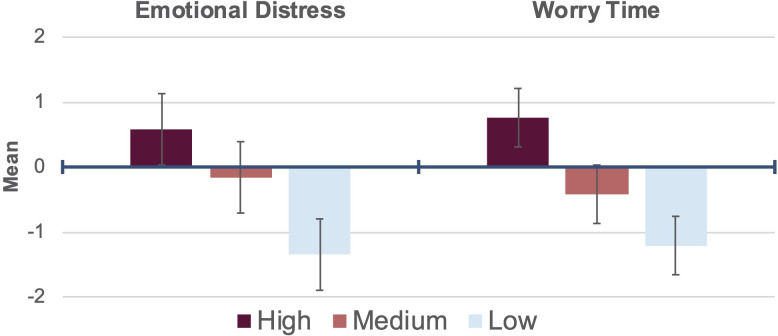
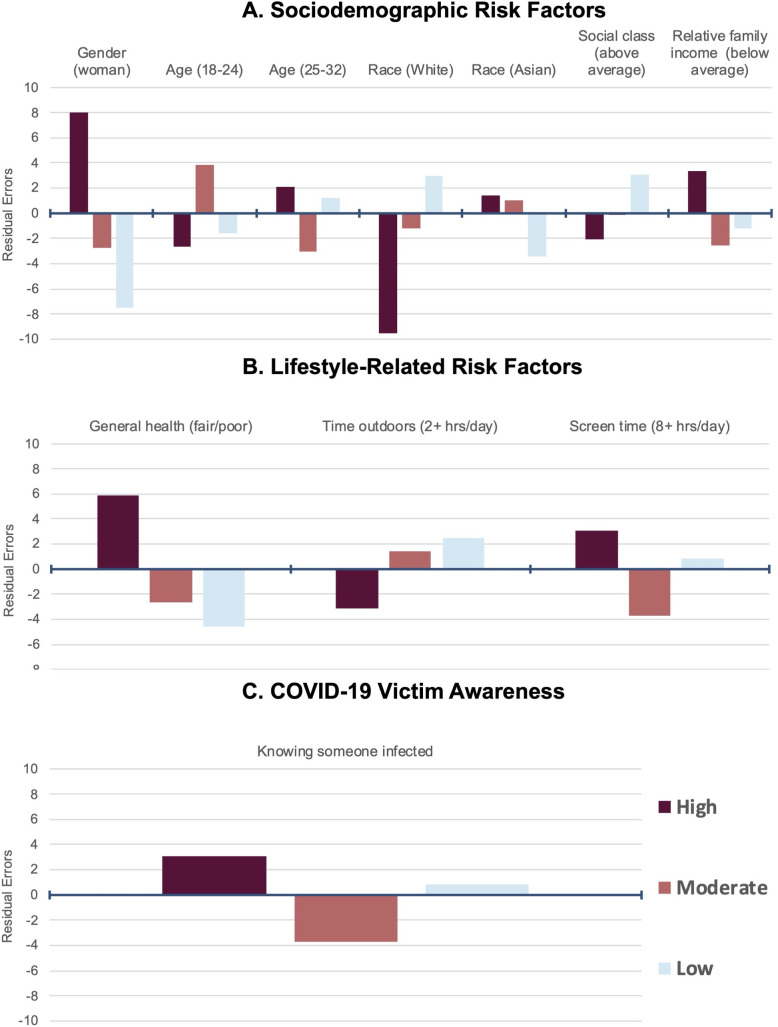
Background: University students are increasingly recognized as a vulnerable population, suffering from higher levels of anxiety, depression, substance abuse, and disordered eating compared to the general population. Therefore, when the nature of their educational experience radically changes—such as sheltering in place during the COVID-19 pandemic—the burden on the mental health of this vulnerable population is amplified. The objectives of this study are to 1) identify the array of psychological impacts COVID-19 has on students, 2) develop profiles to characterize students' anticipated levels of psychological impact during the pandemic, and 3) evaluate potential sociodemographic, lifestyle-related, and awareness of people infected with COVID-19 risk factors that could make students more likely to experience these impacts. Methods: Cross-sectional data were collected through web-based questionnaires from seven U.S. universities. Representative and convenience sampling was used to invite students to complete the questionnaires in mid-March to early-May 2020, when most coronavirus-related sheltering in place orders were in effect. We received 2,534 completed responses, of which 61% were from women, 79% from non-Hispanic Whites, and 20% from graduate students. Results: Exploratory factor analysis on close-ended responses resulted in two latent constructs, which we used to identify profiles of students with latent profile analysis, including high (45% of sample), moderate (40%), and low (14%) levels of psychological impact. Bivariate associations showed students who were women, were non-Hispanic Asian, in fair/poor health, of below-average relative family income, or who knew someone infected with COVID-19 experienced higher levels of psychological impact. Students who were non-Hispanic White, above-average social class, spent at least two hours outside, or less than eight hours on electronic screens were likely to experience lower levels of psychological impact. Multivariate modeling (mixed-effects logistic regression) showed that being a woman, having fair/poor general health status, being 18 to 24 years old, spending 8 or more hours on screens daily, and knowing someone infected predicted higher levels of psychological impact when risk factors were considered simultaneously. Conclusion: Inadequate efforts to recognize and address college students’ mental health challenges, especially during a pandemic, could have long-term consequences on their health and education.
Overview
The claims and statistics of this paper haven’t been checked yet.
Run the check — free, no account needed. It reads the open-access text and checks the sources it cites.
Integrity signals
Registry
Cites
Statistics
Figures
Verification
Claims the paper makes
The claims and statistics of this paper haven’t been checked yet.
Run the check — free, no account needed. It reads the open-access text and checks the sources it cites.
Claims other papers make about this one
Each is checked against this paper’s own text: does it say what the citing paper says it does?
The cited source says what the claim attributes to it.
In the citing paper
“undergraduate students in lockdown, namely that they suffered increasing severity of anxiety and depressive symptoms [48], manifested in poorer sleep quality, poorer academic performance and increased suicidal thoughts in the university populations [49,50,51,52,53,54,55,56,57,58].”
Self-check
Percentages, sums and reported differences re-computed from the paper’s own numbers.
The self-check needs the paper’s full text.
Citations
Cites
Tabachnick, B. G., & Fidell, L. S. (1983) · Cited by 79,882
Interrater reliability: The kappa statistic
McHugh, M. L. (2012) · Biochemia Medica · doi:10.11613/bm.2012.031 · Cited by 19,877
(1996) · Cited by 11,584
Qualitative research: Methods in the social sciences
(2006) · PsycEXTRA Dataset · doi:10.1037/e668352010-001 · Cited by 10,619
A general and simple method for obtaining R 2 from generalized linear mixed‐effects models
Nakagawa, S., & Schielzeth, H. (2013) · Methods in Ecology and Evolution · doi:10.1111/j.2041-210x.2012.00261.x · Cited by 10,356
Ellison, N. B., Steinfield, C., & Lampe, C. (2007) · Journal of Computer-Mediated Communication · doi:10.1111/j.1083-6101.2007.00367.x · Cited by 9,939
Evaluating the use of exploratory factor analysis in psychological research.
Fabrigar, L. R., Wegener, D. T., MacCallum, R. C., & Strahan, E. J. (1999) · Psychological Methods · doi:10.1037/1082-989x.4.3.272 · Cited by 9,587
Determining Validity in Qualitative Inquiry
Creswell, J. W., & Miller, D. L. (2000) · Theory Into Practice · doi:10.1207/s15430421tip3903_2 · Cited by 9,184 · cited 1×
“Each response was coded separately and reviewed for agreement [45, 46].”
BackgroundTARGET ARTICLE: "Posttraumatic Growth: Conceptual Foundations and Empirical Evidence"
Tedeschi, R. G., & Calhoun, L. G. (2004) · Psychological Inquiry · doi:10.1207/s15327965pli1501_01 · Cited by 7,154
The psychological impact of the COVID-19 epidemic on college students in China
Cao, W., Fang, Z., Hou, G., Han, M., Xu, X., Dong, J., & Zheng, J. (2020) · Psychiatry Research · doi:10.1016/j.psychres.2020.112934 · Cited by 5,843
Research works printed but not linked: 4
- ME Loades, 2020, J Am Acad Child Adolesc Psychiatry, 1
- Centers for Disease Control and Prevention, 2018, Healthy Days Core Module: HRQOL-14 Measure, 1
- J Nash, 2014, Stress and diabetes: The use of “worry time” as a way of managing stress, Journal of Diabetes Nursing, 18, 329
- S Galea, 2020, The mental health consequences of COVID-19 and physical distancing, 180, 817
Cited by
Sorted by citations
Items 401–500 of 887
Tsai, Y.-H. R., Janssen, T. W. P., Vu, T., Meeter, M., van Atteveldt, N., Jansen, B. R. J., & Magis‐Weinberg, L. (2023) · Acta Psychologica · doi:10.1016/j.actpsy.2023.103984 · Cited by 7
Self-citationCoulaud, P.-J., Jesson, J., Bolduc, N., Ferlatte, O., Bertrand, K., Salway, T. J., Jauffret‐Roustide, M., & Knight, R. (2023) · PLoS ONE · doi:10.1371/journal.pone.0289547 · Cited by 5
Pointon‐Haas, J., Byrom, N., Foster, J., Hayes, C., & Oates, J. (2023) · Education Sciences · doi:10.3390/educsci13090962 · Cited by 4
Using peer-ethnography to explore the health and well-being of college students affected by COVID-19
Teti, M., Myroniuk, T. W., Kirksey, G., Pratt, M., & Schatz, E. J. (2023) · International Journal of Qualitative Studies on Health and Well-Being · doi:10.1080/17482631.2023.2261841 · Cited by 4
Fu, R., & Xie, L. (2023) · International Journal of Mental Health Promotion · doi:10.32604/ijmhp.2023.041730 · Cited by 4
Rodrigues, T. C., Reijnders, T., Breeman, L. D., Janssen, V. R., Kraaijenhagen, R. A., Atsma, D. E., & Evers, A. W. M. (2023) · JMIR Formative Research · doi:10.2196/38803 · Cited by 5
Onorato, P. R., Rawana, J. S., & Flett, G. L. (2025) · Cognitive Therapy and Research · doi:10.1007/s10608-024-10566-x · Cited by 4
Sulistyawati, S., Hidayat, M., Wijayanti, S. P. M., Sukesi, T. W., Hastuti, S. K. W., Mulasari, S. A., Tentama, F., Rokhmayanti, R., Putra, U. Y., & Djannah, S. N. (2021) · International Journal of Public Health Science (IJPHS) · doi:10.11591/ijphs.v10i4.21012 · Cited by 4
Olawade, D. B., Wada, O. Z., Asaolu, F. T., Odetayo, A., Akeju, O. O., & Olorunsogbon, O. F. (2021) · Journal of Education Society and Behavioural Science · doi:10.9734/jesbs/2021/v34i1130377 · Cited by 4
Joseph, S. (2021) · Asia Pacific Journal of Health Management · doi:10.24083/apjhm.v16i4.1037 · Cited by 4
Kerestes, R. J., Clark, R. M., & Wu, Z. (2021) · IEEE Frontiers in Education Conference (FIE) · doi:10.1109/fie49875.2021.9637476 · Cited by 4
Estado emocional e coping em estudantes universitários no confinamento provocado pela COVID-19
Alexandre, J., Carvalho, H., Fonseca, A. M., & Castro, C. (2022) · Psicologia · doi:10.17575/psicologia.1782 · Cited by 4
Niu, L., Yao, Y., Kadri, N. M., & Sharifullah, F. (2022) · International Journal of Public Health Science (IJPHS) · doi:10.11591/ijphs.v11i2.21474 · Cited by 4
Κορνηλάκη, Α. (2022) · Psychology the Journal of the Hellenic Psychological Society · doi:10.12681/psy_hps.28859 · Cited by 5
Kochel, K. P., Bagwell, C. L., & Abrash, R. W. (2022) · Emerging Adulthood · doi:10.1177/21676968221119946 · Cited by 4
Liu, B., Huynh, E., Li, C., & Wu, Q. F. (2022) · BMJ Open · doi:10.1136/bmjopen-2022-061719 · Cited by 4
Addressing burgeoning unmet needs in college mental health
Singh, M. K., Malmon, A., Horne, L., & Felten, O. (2022) · Journal of American College Health · doi:10.1080/07448481.2022.2115302 · Cited by 4
Distress of tertiary education students in Australia during the COVID‐19 pandemic
Tuck, D., Wiley, J. F., Patlamazoglou, L., & Berger, E. (2022) · Journal of Clinical Psychology · doi:10.1002/jclp.23445 · Cited by 3
Features of the Social Activity of Russian Youth in Conditions of Forced Social Restrictions
Arendachuk, I. V., Usova, N. V., & Klenova, M. A. (2022) · Social Psychology and Society · doi:10.17759/sps.2022130411 · Cited by 4
Post-Secondary Student Belonging in a Virtual Learning Environment During COVID-19
Smith, N. B., Graham, J. M., Waddell-Henowitch, C. M., de Moissac, D., & Lam, M. (2023) · Canadian Journal of Higher Education · doi:10.47678/cjhe.v52i3.189851 · Cited by 4
Imagineering Anatomy Assessment Amidst COVID-19: Turning Obstacles into Achievements
Hadie, S. N. H., Choy, K. W., Teoh, S. L., Ghafar, N. A., Noor, N. F. M., Rushaidhi, M., Zamli, Z., & Abas, R. (2022) · Malaysian Journal of Medicine and Health Sciences · doi:10.47836/mjmhs.18.s14.17 · Cited by 4
Çelik, E., BALTACI, S., & Yaman, N. (2023) · Türk Psikolojik Danışma ve Rehberlik Dergisi · doi:10.17066/tpdrd.1198897e · Cited by 4
Hobbs, J., & Whitsett, L. (2023) · Journal of Curriculum and Pedagogy · doi:10.1080/15505170.2023.2187900 · Cited by 3
Hamamra, B. T., & Qabaha, A. R. (2023) · Interactive Learning Environments · doi:10.1080/10494820.2023.2215289 · Cited by 4
Gilavand, A., Khoshouie, B., & Mohamadpour, S. (2023) · Jundishapur Journal of Chronic Disease Care · doi:10.5812/jjcdc-137714 · Cited by 4
CİHAN, A., ALBAYRAK, D. K., Sart, Z. H., & Sünbül, Z. A. (2023) · Boğaziçi Üniversitesi Eğitim Dergisi · doi:10.52597/buje.989641 · Cited by 4
An Intentional Wholeness Focus and the Association With Burnout in Graduate Students
Cunningham, S. B., Montgomery, S., Distelberg, B. J., & Alemi, Q. (2023) · Journal of Occupational Therapy Education · doi:10.26681/jote.2023.070105 · Cited by 4
Rahman, H. A., Julaini, N. N., Zaim, S. N. N., Masri, N. A., & Mumin, K. H. A. (2023) · Healthcare · doi:10.3390/healthcare11162327 · Cited by 4
Li, M., & Li, F. (2023) · PeerJ Computer Science · doi:10.7717/peerj-cs.1586 · Cited by 4
Zhang, X., & Ju, S.-Y. (2023) · South Asian Journal of Social Sciences and Humanities · doi:10.48165/sajssh.2023.4509 · Cited by 4
Herres, J. L., Ortelli, O. A., Rodriguez, I., & Onyewuenyi, A. C. (2023) · Journal of American College Health · doi:10.1080/07448481.2023.2266039 · Cited by 4
Akca, S. O., Turan, A. P., & Söngüt, S. (2024) · Journal of pediatric nursing · doi:10.1016/j.pedn.2024.02.007 · Cited by 3
Kuravi, B. G., Gogineni, S., Bhargav, P. R. K., Mayilvaganan, S., Nilofaur, Dr.Mrs.D.Shanthi, V. U., & Ch, S. (2021) · The Journal of Obstetrics and Gynecology of India · doi:10.1007/s13224-021-01529-3 · Cited by 4
Analyzing the Mental Health of Students in Dealing with the Coronavirus Disease Pandemic (Covid-19)
Chamdani, M., Mahmudah, U., & Fatimah, S. S. (2021) · JPI (Jurnal Pendidikan Indonesia) · doi:10.23887/jpi-undiksha.v10i4.30119 · Cited by 4
Gao, H., Chen, X., & Zou, Y. (2022) · Cambridge Prisms Global Mental Health · doi:10.1017/gmh.2022.18 · Cited by 4
Emotional disturbance and risk factors among COVID ‐19 confirmed cases in isolation hotels
Ling, M.-S., Wang, C.-P., Hsieh, Y., Lin, Y., Lee, P., Sophia Huey-Lan, H. U., & Hung, F. (2022) · International Journal of Mental Health Nursing · doi:10.1111/inm.13063 · Cited by 4
Viskovich, S., Fowler, J. A., & Pakenham, K. I. (2023) · Australian Psychologist · doi:10.1080/00050067.2023.2212150 · Cited by 3
“I Feel Disconnected … but Do I?”: University Students’ Sense of Belonging in Time of Adversity
Bernadska, A., Grumbach, G., Campos-Moreira, L. D., Zell, M., & Hollis‐Sawyer, L. (2024) · NASPA Journal · doi:10.1080/19496591.2023.2297180 · Cited by 3
Dickerson, W., & Nelson, T. (2024) · American Journal of Qualitative Research · doi:10.29333/ajqr/14394 · Cited by 3
Yang, T., Bao, W., Belfi, B., & Haelermans, C. (2024) · Higher Education · doi:10.1007/s10734-024-01226-w · Cited by 3
Mukantwali, M. B., Niyonsenga, J., Uwingeneye, L., Kanyamanza, C. U., & Mutabaruka, J. (2024) · PLoS ONE · doi:10.1371/journal.pone.0306389 · Cited by 3
Tuck, D., Berger, E., Patlamazoglou, L., & Wiley, J. F. (2024) · Australian Psychologist · doi:10.1080/00050067.2024.2379939 · Cited by 5
Simionescu, M., Mahmoud, A. B., Striełkowski, W., & Jula, N.-M. (2024) · BMC Public Health · doi:10.1186/s12889-024-20949-0 · Cited by 3
García-Hirschfeld, E. C., Santos, M. Á. R., & López-Martín, C. (2025) · The International Journal of Management Education · doi:10.1016/j.ijme.2024.101124 · Cited by 7
Expansion of Colleges’ Legal Responsibilities Regarding Student Mental Health
Rolin, S. A., & Appelbaum, P. S. (2025) · Current Psychiatry Reports · doi:10.1007/s11920-025-01611-x · Cited by 3
Slimmen, S., Timmermans, O., Lechner, L., & Oenema, A. (2025) · Acta Psychologica · doi:10.1016/j.actpsy.2025.105584 · Cited by 8
Konrad, S., & Fitzgerald, A. (2022) · Nursing Forum · doi:10.1111/nuf.12788 · Cited by 3
Students Emotional Psychology on Online Learning During Pandemic Period
Bakkialakshmi, V. S., & Sudalaimuthu, T. (2022) · International Conference on Data Science, Agents & Artificial Intelligence (ICDSAAI) · doi:10.1109/icdsaai55433.2022.10028825 · Cited by 3
Rivera, B. R. G., Mendoza-Martínez, I. A., & García-Alcaráz, J. L. (2023) · Adversity and Resilience Science · doi:10.1007/s42844-023-00118-9 · Cited by 3
Валеріївна, А. О., & Byshevets, N. (2024) · Sport Science Spectrum · doi:10.32782/spectrum/2024-1-8 · Cited by 3
Flashbulb and first-hand memories for campus closings due to COVID-19: consistency and change
Xuan, Y., Greenberg, M., Umanath, S., & Coane, J. H. (2024) · Memory · doi:10.1080/09658211.2024.2404499 · Cited by 3
Orozco, A. L., Thomas, A. J., Raggatt, M. H., Scott, N., Eddy, S., Douglass, C. H., Wright, C. C. J., Spelman, T. D., & Lim, M. S. C. (2024) · Archives of Public Health · doi:10.1186/s13690-024-01397-z · Cited by 3
Unmasking the impact of COVID-19 on the mental health of college students: a cross-sectional study
Gandhi, S., Jordan, A., Glaman, R., & Morrow, B. (2024) · Frontiers in Psychiatry · doi:10.3389/fpsyt.2024.1453323 · Cited by 7
Online Racial Discrimination and College Student Mental Health: Social Support as a Moderator
Patel, A., & Wang, C. (2025) · Journal of Racial and Ethnic Health Disparities · doi:10.1007/s40615-025-02405-w · Cited by 4
Adapting After Adversity: Application and Outcomes from Resilience-Based Curricula
Ray, E. C., Oehme, K., Perko, A., Bradley, L., & Yoder-Maina, A. (2025) · Journal of Aggression Maltreatment & Trauma · doi:10.1080/10926771.2025.2490941 · Cited by 4
Yan, S., Li, H., Song, Y., Song, G., Su, Q., Liu, N., Zheng, Z., & Sun, Y. (2025) · Frontiers in Psychology · doi:10.3389/fpsyg.2025.1576596 · Cited by 4
Karikari, I., Karikari, G., & Kyere, E. (2021) · SN Social Sciences · doi:10.1007/s43545-021-00287-3 · Cited by 3
Validation of Malay Version of the COVID-19 Burnout Scale
Ang, C., Lee, K. W., Voon, S. P., Ho, M. C., Tan, C. E., Ching, S. M., & Ooi, P. B. (2022) · Oman Medical Journal · doi:10.5001/omj.2023.20 · Cited by 3
Perceptions of Entrepreneurship and Online Learning During the Coronavirus-2019 (COVID-19) Pandemic
Nungsari, M., Wong, D. N. S., Chin, J. W., Ngu, K., Chee, S. Y., Flanders, S., & Shian, P. Y. (2022) · Entrepreneurship Education and Pedagogy · doi:10.1177/25151274221104706 · Cited by 3
Mekonnen, G. T., Beyera, G. K., Tulu, A., & Roba, T. T. (2022) · Quality & Quantity · doi:10.1007/s11135-022-01485-8 · Cited by 6
Ebrahim, A. H., Helmy, M. S., Engel, E., AlQoud, K., & AlShakoori, H. (2022) · Studies in computational intelligence · doi:10.1007/978-3-030-99000-8_15 · Cited by 4
COVID-19 and changes in college student educational expectations and health by disability status
Halpern-Manners, A., McLeod, J. D., Anderson, E. M., & Ekl, E. A. (2022) · SSM - Population Health · doi:10.1016/j.ssmph.2022.101195 · Cited by 3
Ludin, S. M., & Asri, N. A. (2022) · INTERNATIONAL JOURNAL OF CARE SCHOLARS · doi:10.31436/ijcs.v5i2.247 · Cited by 3
DaLomba, E. J., Bonsaksen, T., & Mansur, S. (2022) · Occupational Therapy in Mental Health · doi:10.1080/0164212x.2022.2078757 · Cited by 4
COVID-19 and Turkish University Students With Visual Impairments: An In-Depth Inquiry
Sarıca, A. D., Ercan, E., & Coşkun, U. H. (2022) · Journal of Visual Impairment & Blindness · doi:10.1177/0145482x221144054 · Cited by 4
Smith, K. R., Haliwa, I., Chappell, A., Wilson, J. M., & Strough, J. (2023) · Journal of American College Health · doi:10.1080/07448481.2022.2155059 · Cited by 3
The Relationship of Self-Concept and Mathematics Performance of College Students in the New Normal
Adlawon, C. M. C., Valdevarona, A. M. G., & Miranda, A. T. (2022) · Asian Journal of Education and Social Studies · doi:10.9734/ajess/2022/v37i3805 · Cited by 3
Reinventing Students' Self-esteem in Classrooms: The Need for Humanistic Pedagogy
Omodan, B. I., & Mtshatsha, N. D. M. (2022) · JETL (Journal Of Education Teaching and Learning) · doi:10.26737/jetl.v7i2.3243 · Cited by 3
de Oliveira, M. D. J. A., Ximenes, M. A. M., Lima, M. M. D. S., Morais, J. A. D. S., Barros, L. M., & Caetano, J. Á. (2022) · Revista Enfermagem UERJ · doi:10.12957/reuerj.2022.70555 · Cited by 3
Social justice mentorship amidst a pandemic
Ramlackhan, K., Cranston-Gingras, A. M., Catania, N., Knox, I., & Palacios, Y. D. L. C. (2023) · Mentoring & Tutoring Partnership in Learning · doi:10.1080/13611267.2023.2178709 · Cited by 3
Trivedi, S., Clark, J. C., Long, L., Daniel, G. A., Anderson, S. M., & Zheng, Y. (2023) · Journal of Veterinary Medical Education · doi:10.3138/jvme-2022-0096 · Cited by 3
Thompson, M. P., Tyson, J. S., Hege, A., & Seitz, C. M. (2023) · Journal of American College Health · doi:10.1080/07448481.2023.2186140 · Cited by 3
Translation and Validation of the Malay Perceived Stress Scale Modified for COVID-19
Ibrahim, N., Wong, A., Cham, C. Q., Chu, S. Y., Kalaman, C. R., & Siau, C. S. (2023) · Malaysian Journal of Medical Sciences · doi:10.21315/mjms2023.30.2.15 · Cited by 3
Pennisi, S., Lathrop, A. H., & Pilato, K. A. (2023) · Educational Action Research · doi:10.1080/09650792.2023.2229402 · Cited by 3
Syifa, N., Purborini, N., Rachmawati, H., Sumadi, F. A. N., & Muhammad, I. (2023) · Journal of Public Health and Development · doi:10.55131/jphd/2023/2103115 · Cited by 6
Alqahtani, A., & Alhusseini, N. K. (2023) · Cureus · doi:10.7759/cureus.48854 · Cited by 3
He, T., Zhang, X., Li, L., Hu, H., Liu, S., & Lin, X. (2024) · Applied Psychology Health and Well-Being · doi:10.1111/aphw.12526 · Cited by 3
Brown, H. E., McKibbon, M., & Todd, A. M. (2024) · International Education Studies · doi:10.5539/ies.v17n1p25 · Cited by 3
Wiciak, M. T., Shazley, O., & Santhosh, D. (2024) · Journal of Primary Care & Community Health · doi:10.1177/21501319241228117 · Cited by 7
Psychological impact of COVID-19 lockdown period on students of healthcare colleges
Alayadi, H., Talakey, A. A., Alsadon, O., Vellappally, S., & Naik, S. (2024) · Journal of Family Medicine and Primary Care · doi:10.4103/jfmpc.jfmpc_719_23 · Cited by 4
An HBCU examination: flourishing and psychological well-being of college students during a pandemic
Jackson-Nevels, B., Davis-Wagner, D., Chung, I., Green, G. T., & Ericksen, K. S. (2024) · Social Work in Mental Health · doi:10.1080/15332985.2024.2314469 · Cited by 3
Academic Stress Measurement and Management of Radiologic Technology Students
Cruz, D. A. B., Campomanes, E. S. A., Belleno, E. E. L., & Alipio, M. (2024) · Asian Journal of Education and Social Studies · doi:10.9734/ajess/2024/v50i41309 · Cited by 6
Mostert, K., Beer, L. T. D., & de Beer, R. (2024) · African Journal of Psychological Assessment · doi:10.4102/ajopa.v6i0.143 · Cited by 3
The cost of being qualified: Current barriers faced by graduate students in forensic anthropology
Delgado, T. A., Depp, R. M., Meloro, R. M., & Lane, K. M. (2024) · American Journal of Biological Anthropology · doi:10.1002/ajpa.25005 · Cited by 3
Lourenço, P. J. D. S., Bastos, T. C. L., Pizarro, A. I. N., & Corredeira, R. (2024) · Psychiatry Research · doi:10.1016/j.psychres.2024.116093 · Cited by 3
Rosita, F. N. (2021) · PSIKODIMENSIA · doi:10.24167/psidim.v20i2.3507 · Cited by 8
Psychological Well-being of First-year Psychology Students Amid the COVID-19 Pandemic
SABAH, U. M., & Gang, G. C. A. (2022) · Lumen Proceedings · doi:10.18662/wlc2021/01 · Cited by 3
Dibble, K. E., & Connor, A. E. (2021) · Scientific Reports · doi:10.1038/s41598-021-04353-x · Cited by 3
Manan, K. A., Tajuddin, S. N. A. A., Ali, R., Bahari, K. A., Ahmad, Z. A., & Downing, K. J. (2022) · International Journal of Public Health Science (IJPHS) · doi:10.11591/ijphs.v11i2.21232 · Cited by 3
Where do we go from here? Rethinking the design studio after the Covid-19 pandemic
van Kampen, S., Galperin, A., Jager, K., Nöel, L.-A., & Strube, J. (2022) · Proceedings of DRS · doi:10.21606/drs.2022.345 · Cited by 3
Factors associated with subjective state of health in college students
Rezapour, M. (2022) · Frontiers in Psychology · doi:10.3389/fpsyg.2022.985982 · Cited by 4
College students’ perceptions on safety measures and campus engagement during the COVID-19 pandemic
Risisky, D., Duff, E., & Espinet, J. (2022) · Journal of American College Health · doi:10.1080/07448481.2022.2138717 · Cited by 3
THE IMPLICATIONS OF THE COVID-19 PANDEMIC ON MOROCCAN UNIVERSITY STUDENTS
Allison, S. Z. (2021) · Journal of Social Political Sciences · doi:10.52166/jsps.v2i2.47 · Cited by 3
Global pandemic fear and international students: Negative thoughts, mental and physical well-being
Jamshaid, S., Olorundare, A., Wang, L., Lo-Ngoen, N., Afzal, M. I., & Bibi, M. (2022) · Routledge eBooks · doi:10.1201/9781003265061-15 · Cited by 3
The Impacts of COVID-19 on Technological and Polytechnic University Students in Mexico
López, L. V., Zamora-Antuñano, M. A., Pérez, M. Á. C., Rodríguez‐Reséndiz, J., Ramírez, F. F., Paredes-García, W. J., Reséndiz, H. R., Cruz-Ramírez, M., & García-García, R. (2022) · Sustainability · doi:10.3390/su14106087 · Cited by 4
DaLomba, E. J., Bonsaksen, T., Greer, M. J., & Mansur, S. (2022) · Journal of Occupational Therapy Education · doi:10.26681/jote.2022.060206 · Cited by 4
Education sector risk assessment in the time of pandemic
Ignacio, H. T., Alinsunod, J. P., Guzman, H. C. D., & Esponilla, F. D. (2022) · International Journal of Evaluation and Research in Education (IJERE) · doi:10.11591/ijere.v11i3.22935 · Cited by 3
Sapiro, B., Shpiegel, S., Ventola, M., Quiroz, S. R., Nwankwo, O. H., & Munyereyi, T. (2022) · Child & Family Social Work · doi:10.1111/cfs.12983 · Cited by 3
Linden, B., Monaghan, C., Zheng, S., Rose, J., & Mahar, A. L. (2021) · Research Square · doi:10.21203/rs.3.rs-971271/v1 · Cited by 3
Savio, A. A. D., Velarde, K. G., & Pachas, A. (2021) · SSRN Electronic Journal · doi:10.2139/ssrn.3969247 · Cited by 3
Metadata
- Authors
- Browning, M. H. E. M., Larson, L. R., Sharaievska, I., Rigolon, A., McAnirlin, O., Mullenbach, L., Cloutier, S., Vu, T. M., Thomsen, J., Reigner, N., Metcalf, E. C., D'Antonio, A., Helbich, M., Bratman, G. N., & Alvarez, H. O.
- Affiliations
- Clemson University (US)
- North Carolina State University (US)
- University of Utah (US)
- Arizona State University (US)
- University of Montana (US)
- Pennsylvania State University (US)
- Utrecht University (NL)
- University of Washington (US)
- Corresponding author
- Browning, Matthew H. E. M.
- ORCID
- Venue
- PLOS ONE
- Publisher
- Public Library of Science (PLoS)
- Published
- 2021-01-07
- Volume
- 16
- Issue
- 1
- Pages
- e0245327
- ISSN
- 1932-6203 (ISSN-L)
- PMC
- PMC7790395
- OpenAlex
- W3118613563
- Cited by
- 888
- References
- 125
- Citations by year
- 2026: 23 · 2025: 71 · 2024: 133 · 2023: 222 · 2022: 279 · 2021: 159
- FWCI
- 135.73
- Type
- journal article
- Language
- en
- Update notices
- correction (2022-08-26)
- Open access
- gold
- doi.org
- Licence
- Locations
- PLoS ONE (publishedVersion, cc-by)
- Europe PMC (PubMed Central) (publishedVersion, cc-by)
- PubMed Central (publishedVersion, cc-by)
- PubMed (publishedVersion)
- TigerPrints (Clemson University) (submittedVersion)
- RePEc: Research Papers in Economics (submittedVersion)
- DOAJ (DOAJ: Directory of Open Access Journals) (submittedVersion, cc-by-sa)
- Utrecht University Repository (Utrecht University) (submittedVersion, other-oa)
- Topics
- Social Sciences › Psychology › Clinical Psychology › COVID-19 and Mental Health
- Social Sciences › Psychology › Developmental and Educational Psychology › Student Stress and Coping
- Health Sciences › Medicine › Public Health, Environmental and Occupational Health › Maternal Mental Health During Pregnancy and Postpartum
- Keywords
- COVID-19 pandemic, university students, student mental health, psychological impact, risk factors, anxiety, depression, substance abuse, disordered eating, sheltering in place, sociodemographic factors, health status, screen time, latent profiles, gender differences
- MeSH terms
- Social Factors, COVID-19, Adult, Cross-Sectional Studies, Female, Humans, Male, Mental Health, Middle Aged, Risk Factors, Students, United States, Universities, Young Adult
About these checks
Registry, retraction, Cites and statistics results are computed, not judged, with one exception: a printed reference that no index lists is read once by a model before it counts as a citation error. Claims are extracted by a model and kept only when their quote appears verbatim in the text; each cited source is then checked, with a model’s help, for whether it says what the claim relies on. Those verdicts can be wrong — read the claim’s quote and the cited source before relying on one.
Statistics and arithmetic are recomputed, not judged.
Confidence bands are shown only for fields calibrated on our annotated test set. None is calibrated yet, so no band is shown.
What counts as a claim ›How we measure confidence ›How we check this ›
Are you an author, or do you see a problem with this page? Request a review
