

Ecological momentary interventions for mental health: A scoping review
Open accessThe DOI matches its Crossref record; 82 of the 82 references it cites were found in a registry or an index.
Abstract
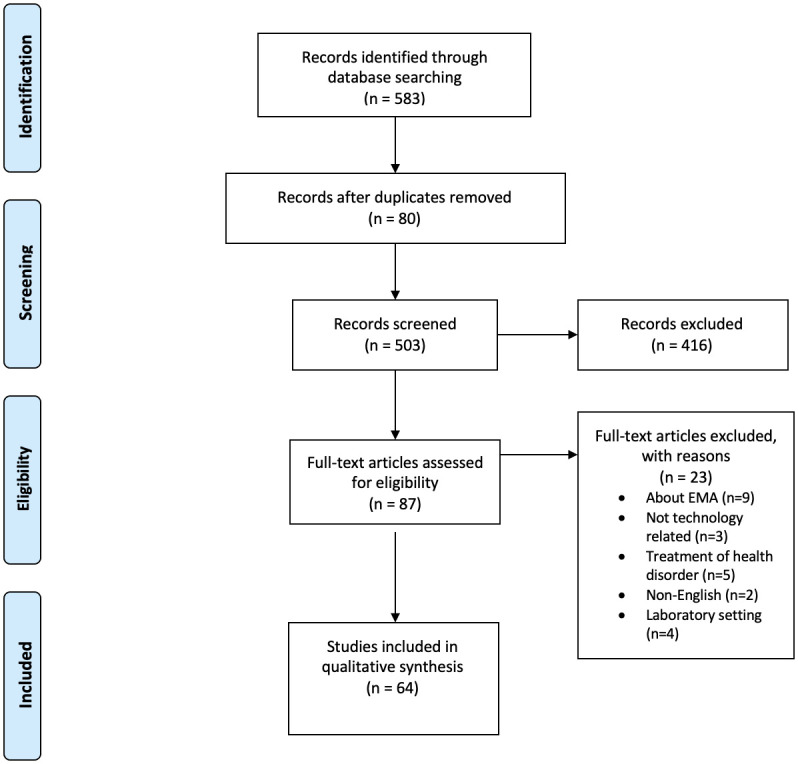
Background: The development of mobile computing technology has enabled the delivery of psychological interventions while people go about their everyday lives. The original visions of the potential of these “ecological momentary interventions” were presented over a decade ago, and the widespread adoption of smartphones in the intervening years has led to a variety of research studies exploring the feasibility of these aspirations. However, there is a dearth of research describing the different dimensions, characteristics, and features of these interventions, as constructed. Objective: To provide an overview of the definitions given for “ecological momentary interventions” in the treatment of common mental health disorders, and describe the set of technological and interaction possibilities which have been used in the design of these interventions. Methods: A systematic search identified relevant literature published between 2009 and 2020 in the PubMed, PsycInfo, and ACM Guide to the Computing Literature databases. Following screening, data were extracted from eligible articles using a standardized extraction worksheet. Selected articles were then thematically categorized. Results: The search identified 583 articles of which 64 met the inclusion criteria. The interventions target a range of mental health problems, with diverse aims, intervention designs and evaluation approaches. The studies employed a variety of features for intervention delivery, but recent research is overwhelmingly comprised of studies based on smartphone apps (30 of 42 papers that described an intervention). Twenty two studies employed sensors for the collection of data in order to provide just-in-time support or predict psychological states. Conclusions: With the shift towards smartphone apps, the vision for EMIs has begun to be realised. Recent years have seen increased exploration of the use of sensors and machine learning, but the role of humans in the delivery of EMI is also varied. The variety of capabilities exhibited by EMIs motivates development of a more precise vocabulary for capturing both automatic and human tailoring of these interventions.
Overview
The claims and statistics of this paper haven’t been checked yet.
Free: it reads the open-access text and checks the first 5 claims that cite a source we can check. Create a free account to check every claim.
Integrity signals
Registry
Cites
Statistics
Figures
Verification
Claims the paper makes
The claims and statistics of this paper haven’t been checked yet.
Free: it reads the open-access text and checks the first 5 claims that cite a source we can check. Create a free account to check every claim.
Claims other papers make about this one
Each is checked against this paper’s own text: does it say what the citing paper says it does?
The source backs part of the claim, not all of it — or backs it for a different population, condition or comparison.
In the citing paper
“Additionally, transformative digital mental health concepts such as ecological momentary assessment (EMA) and ecological momentary interventions (EMI) are on the rise and based on apps/smartphones [64–66].”
From Interventions to build resilience and to ameliorate negative psychosocial effects of the COVID-19 pandemic on children and adolescents: a systematic review and meta-analysis (2024) · cites this paper as [64]
Experimental — accuracy not yet measured
Self-check
Percentages, sums and reported differences re-computed from the paper’s own numbers.
The self-check needs the paper’s full text.
Citations
Cites
Scoping studies: towards a methodological framework
Arksey, H., & O'Malley, L. (2005) · International Journal of Social Research Methodology · doi:10.1080/1364557032000119616 · Cited by 36,742
Kessler, R. C., Berglund, P., Demler, O., Jin, R., Merikangas, K. R., & Walters, E. E. (2005) · Archives of General Psychiatry · doi:10.1001/archpsyc.62.6.593 · Cited by 20,391
Scoping studies: advancing the methodology
Levac, D., Colquhoun, H., & O'Brien, K. K. (2010) · Implementation Science · doi:10.1186/1748-5908-5-69 · Cited by 15,268
Murray, C. J. L., Vos, T., Lozano, R., Naghavi, M., Flaxman, A. D., Michaud, C., Ezzati, M., Shibuya, K., Salomon, J. A., Abdalla, S., et al. (2012) · The Lancet · doi:10.1016/s0140-6736(12)61689-4 · Cited by 8,888
From game design elements to gamefulness: defining "gamification"
Deterding, S., Dixon, D., Khaled, R., & Nacke, L. (2011) · Proceedings of the 15th International Academic MindTrek Conference: Envisioning Future Media Environments · doi:10.1145/2181037.2181040 · Cited by 8,402 · cited 1×
“Gamification refers to the use of game design elements in non-game contexts [78].”
BackgroundEcological momentary assessment
Shiffman, S., Stone, A. A., & Hufford, M. R. (2008) · Annual Review of Clinical Psychology · doi:10.1146/annurev.clinpsy.3.022806.091415 · Cited by 6,454
Nahum-Shani, I., Smith, S. N., Spring, B. J., Collins, L. M., Witkiewitz, K., Tewari, A., & Murphy, S. A. (2018) · Annals of Behavioral Medicine · doi:10.1007/s12160-016-9830-8 · Cited by 2,171 · cited 3×
“, a just-in-time adaptive intervention (JITAI) is “an intervention design aiming to provide the right type/amount of support, at the right time, by adapting to an individual’s changing internal and contextual state” [9].”
BackgroundInfluentialHeron, K. E., & Smyth, J. M. (2010) · British Journal of Health Psychology · doi:10.1348/135910709x466063 · Cited by 1,438
What are scoping studies? A review of the nursing literature
Davis, K., Drey, N., & Gould, D. (2009) · International Journal of Nursing Studies · doi:10.1016/j.ijnurstu.2009.02.010 · Cited by 855 · cited 1×
“A scoping review requires analytical reinterpretation of the literature and is commonly undertaken to clarify a complex concept and refine subsequent research inquiries [13].”
BackgroundPersonal Sensing: Understanding Mental Health Using Ubiquitous Sensors and Machine Learning
Mohr, D. C., Zhang, M., & Schueller, S. M. (2017) · Annual Review of Clinical Psychology · doi:10.1146/annurev-clinpsy-032816-044949 · Cited by 802 · cited 2×
“[17] was used to categorize sensors for automated monitoring, the features that are derived through data collected from sensors, and the prediction of behavioral markers and clinical targets.”
MethodSelf-citation
Cited by
Items 101–200 of 234
Bögemann, S. A., Krause, F., van Kraaij, A., Marciniak, M. A., van Leeuwen, J. M., Weermeijer, J. D. M., Mituniewicz, J., Puhlmann, L. M. C., Zerban, M., Reppmann, Z. C., et al. (2025) · Behavior Research Methods · doi:10.3758/s13428-025-02870-5 · Cited by 8
Gautam, K., Paudel, K., Bautista, B., Khati, A., Sujan, M. S. H., Xu, R., Copenhaver, M. M., Wickersham, J. A., Valente, P. K., Park, C. L., et al. (2026) · npj Digital Public Health · doi:10.1038/s44482-025-00006-2 · Cited by 4
“These fi ndings align with prior literature, highlighting that while EMA can empower margin-alizedgroupsbycenteringontheirdailylivedexperiences,itmayexacerbate disparitiesifissuesofaccessibility,digitalliteracy,andculturalsafetyarenot addressed 45,46 .”
Shrier, L. A., McCaskill, N. H., Smith, M. C., O’Connell, M., Gluskin, B. S., Parker, S., Everett, V., Burke, P. J., & Harris, S. K. (2024) · Journal of Substance Use and Addiction Treatment · doi:10.1016/j.josat.2024.209472 · Cited by 6
Dewitte, L., Dejonckheere, E., Dezutter, J., Vandenbulcke, M., Ahmed, R. M., & Irish, M. (2025) · npj Dementia · doi:10.1038/s44400-025-00023-1 · Cited by 5
Translating the Transdiagnostic: Aligning Assessment Practices With Research Advances
Vize, C. E., & Wright, A. G. C. (2023) · Assessment · doi:10.1177/10731911231194996 · Cited by 9
Episodic Future Thinking as Digital Micro-interventions
Persson, D. R., Yoo, S., Bardram, J. E., Skinner, T. C., & Bækgaard, P. (2023) · Lecture notes in computer science · doi:10.1007/978-3-031-48038-6_14 · Cited by 6
Armfield, N. R., Elphinston, R. A., Liimatainen, J., Requena, S. S., Eather, C.-E., Edirippulige, S., Ritchie, C., Robins, S., & Sterling, M. M. (2024) · JMIR mhealth and uhealth · doi:10.2196/55625 · Cited by 6
“Messaging can be used as a vehicle to promote behavior change and guide self-management through prompts, reinforcement, reminders, activity recording, feedback, and adaptivity to the individual [17,18].”
BackgroundSarnicka, I., Raj-Koziak, D., Skarżyńśki, H., Fludra, M., Karendys-Łuszcz, K., & Gos, E. (2024) · Journal of Hearing Science · doi:10.17430/jhs/191396 · Cited by 4
“Intervention content can be delivered in various ways – as notifications, text messages describing tasks to be performed, visual and audio images, conversational interventions (chatbots), and activation of a support network [66].”
BackgroundMethodInfluentialPsychotherapy research for compulsive buying-shopping disorder: Quo vadis?
Müller, A., Trotzke, P., Schaar, P., Thomas, T. A., Georgiadou, E., & Steins‐Loeber, S. (2025) · Addictive Behaviors Reports · doi:10.1016/j.abrep.2025.100591 · Cited by 7
“Likewise, ecological momentary interventions have been shown to be effective in reducing risky alcohol consumption (Balaskas et al., 2021), cannabis use (Beckham et al., 2024) and gambling (Merkouris et al., 2020).”
Zarski, A., Sextl-Plötz, T., Schmidt-Hantke, J., Hess, N. S., & Buntrock, C. (2025) · Frontiers in Public Health · doi:10.3389/fpubh.2025.1626428 · Cited by 5
Rahrig, H., Ma, L., Brown, K. W., Martelli, A. M., West, S. J., Lasko, E. N., & Chester, D. S. (2023) · Cognitive Affective & Behavioral Neuroscience · doi:10.3758/s13415-023-01136-x · Cited by 3
“…cognitive and emotional functioning (Heppner & Shirk, 2018) and given innovations in mobile health technologies (i.e., mhealth), smartphone-delivered guided mindfulness practices have been used to provide immediate support in real-world settings (Balaskas et al., 2021; Meinlschmidt et al., 2016).”
BackgroundBowman, R., Thieme, A., Cowan, B. R., & Doherty, G. J. (2025) · International Journal of Human-Computer Studies · doi:10.1016/j.ijhcs.2025.103618 · Cited by 4
Self-citationHohensee, N., Dietel, F. A., Schulte, J., Doebler, P., Klein, N., & Buhlmann, U. (2026) · Behavior Therapy · doi:10.1016/j.beth.2026.01.003 · Cited by 3
Paetzold, I., Gugel, J., Schick, A., Rauschenberg, C., Hirjak, D., Boecking, B., Doi, L., Schwannauer, M., & Reininghaus, U. (2024) · Psychology and Psychotherapy Theory Research and Practice · doi:10.1111/papt.12565 · Cited by 7
“…of personalized interventions in the everyday life of service users and facilitate ecological translation of strategies acquired, making them inherently low-threshold (Balaskas et al., 2021; Heron & Smyth, 2010; Myin-Germeys et al., 2011, 2016, 2018; Reininghaus, 2018; Reininghaus et al., 2015).”
Sleep Disruption Moderates the Daily Dynamics of Affect and Pain in Sickle Cell Disease
Ellis, J. D., Samiei, S. A., Neupane, S., DuPont, C. M., McGill, L., Chow, P. I., Lanzkron, S., Haythornthwaite, J. A., Campbell, C. M., Kumar, S., et al. (2024) · Journal of Pain · doi:10.1016/j.jpain.2024.01.342 · Cited by 3
Ebrahimi, O. V., & Asmundson, G. J. G. (2024) · Journal of Anxiety Disorders · doi:10.1016/j.janxdis.2024.102916 · Cited by 4
Gross, A. M., Rassaby, M. M., Hoffman, S. N., Depp, C. A., Moore, R. C., & Taylor, C. T. (2024) · Journal of Mood and Anxiety Disorders · doi:10.1016/j.xjmad.2024.100097 · Cited by 5
“Future research utilizing digital ecological momentary interventions (EMI) or just-in-time interventions (see [67] for a review) could explore how enhancing positive affect throughout the day impacts subsequent momentary social functioning.”
Wang, P., Zhao, M., & Liu, W. (2025) · Advances in Psychiatry and Behavioral Health · doi:10.1016/j.ypsc.2025.01.003 · Cited by 5
Abstracts from the 2022 Annual Meeting of the Society for Affective Science_Health
Laban, G., Serrano, A., & Cross, E. (2023) · Affective Science · doi:10.1007/s42761-022-00174-x · Cited by 3
Ecological Momentary Assessment in Mindfulness Research
Grégoire, S., & Doucerain, M. M. (2025) · Springer eBooks · doi:10.1007/978-3-031-47219-0_78 · Cited by 4
Daily Stressors and Nonsuicidal Self-Injury Urges and Behaviors in Post-Secondary Students
Kuburi, S., Hamza, C. A., Goldstein, A. L., & Heath, N. L. (2025) · Emerging Adulthood · doi:10.1177/21676968251395353 · Cited by 2
“Moreover, this work could inform the development of ecological momentary interventions (EMIs), which provide real-time support in daily life through mobile or electronic devices (Balaskas et al., 2021; Versluis et al., 2016).”
Darharaj, M., Roshanpajouh, M., Amini, M., Shrier, L. A., Hamraz, I., & Habibi, M. (2025) · Drug and Alcohol Dependence · doi:10.1016/j.drugalcdep.2025.112957 · Cited by 2
Ball, M. I., Flics, M. J., Maimone, J. S., Beck, S., Stein, M., Nock, M. K., Bentley, K. H., & Kleiman, E. M. (2026) · Journal of Affective Disorders · doi:10.1016/j.jad.2026.121248 · Cited by 2
“…affect and addressing cognitive inflexibility), as well as coping skills and safety planning strategies across different levels of suicide risk – an approach similar to the EMI examined in this study (Balaskas et al., 2021; Bentley et al., 2025; Jiménez-Muñoz et al., 2022; Kleiman et al., 2024).”
Turner, M. C., Basagaña, X., Burdorf, A., Canu, I. G., Gorny, A. W., Kolstad, H. A., Bröberg, K., Pronk, A., Selander, J., Mehlum, I. S., et al. (2026) · The Journal of Climate Change and Health · doi:10.1016/j.joclim.2025.100620 · Cited by 4
“Workers will install HowAmI (TNO, Leiden, the Netherlands), a mobile application on their smartphone to collect questionnaire data, based on a conceptual model, using ecological momentary assessment (EMA) at baseline and follow-up [42].”
Riedl, E. M., Bracklo, T., Wimmer, K., Perzl, J., Gdynia, H.-J., Thomas, J., & Surżykiewicz, J. (2026) · Anxiety Stress & Coping · doi:10.1080/10615806.2026.2659809 · Cited by 2
“However, particularly with respect to emotion regulation, a new class of ecological momentary interventions called just-in-time interventions, which aim to provide support “at the right time,” appears to be particularly promising (Balaskas et al., 2021).”
A framework for longitudinal health AI agents
Lin, G., Jiang, R., Elhadad, N., & Xu, X. (2026) · Nature Health · doi:10.1038/s44360-026-00141-x · Cited by 9
“Unlike highly structured medical conditions, mental health trajectories often involve a mix of formal clinical encounters, intermittent therapy, medication adjustments and extended periods of personal health management 61 .”
University students’ opinions towards mobile sensing data collection: A qualitative analysis
Cooper, J. R. H., Scarf, D., & Conner, T. S. (2023) · Frontiers in Digital Health · doi:10.3389/fdgth.2023.1125276 · Cited by 5
Zvolensky, M. J., Robison, J. H., Ayers, Z. S., Senger, A. R., Clausen, B. K., Businelle, M. S., & Gallagher, M. W. (2024) · Cognitive Behaviour Therapy · doi:10.1080/16506073.2024.2360054 · Cited by 4
“EMA could complement the longitudinal wave-based methodology and perhaps offer greater opportunity to isolate mechanisms underlying the observed associations (Gromatsky et al., 2020) and be utilized in a therapeutic framework (Balaskas et al., 2021).”
The CITY & the PSYCHE—A Chronology
Mehran, N., Kluge, U., & Adli, M. (2024) · Springer eBooks · doi:10.1007/978-3-031-64699-7_14 · Cited by 2
Heinz, M. V., Lekkas, D., Abreu, V., Lee, C. M., Marsch, L. A., & Jacobson, N. C. (2024) · npj Mental Health Research · doi:10.1038/s44184-024-00086-7 · Cited by 2
“Substance-related EMI studies to date have preferentially targeted alcohol use disorder, usually without exploration of co-occurring psychiatric disorders 34 .”
Amo, V., & Lieder, F. (2025) · JMIR Mental Health · doi:10.2196/57201 · Cited by 4
“Therefore, EMIs offer a scalable, cost-effective, and flexible platform for delivering mental health interventions, including psychotherapy [9,10].”
Validation of the ecological momentary well-being instrument (EMOWI) in Canadian adolescents
Buzzi, M., Patte, K. A., Kestens, Y., Moullec, G., Minary, L., O’Loughlin, J. L., Leatherdale, S. T., Agrinier, N., & Epstein, J. (2025) · Quality of Life Research · doi:10.1007/s11136-025-04001-1 · Cited by 3
“In this context, the interest in “Eco-logical Momentary Interventions” (EMIs) has risen steeply [7 –10].”
Berkowitz, T. S., Toumbourou, J. W., Evans, S., Fuller‐Tyszkiewicz, M., & Westrupp, E. M. (2025) · PLoS ONE · doi:10.1371/journal.pone.0327179 · Cited by 3
Yuan, G. F., Rong, Y., Liu, C., Zhu, Q., Wang, W., Xu, X., Liang, J., & Tao, Y. (2025) · Archives of Psychiatric Nursing · doi:10.1016/j.apnu.2025.151961 · Cited by 3
Persson, D. R., Ramasawmy, M., Khan, N., Banerjee, A., BLANDFORD, A. E., Bardram, J. E., & Bækgaard, P. (2025) · Journal of Medical Internet Research · doi:10.2196/72658 · Cited by 4
“While digital microinterventions are generally EMIs [47] and overlap with JIT and JITAI in the sense that some systems use these patterns [11,23], this is not universally the case.”
González-Robles, A., Romero-Ferreiro, V., Roca, P., Rodríguez‐Jiménez, T., & Díaz‐García, A. (2026) · General Hospital Psychiatry · doi:10.1016/j.genhosppsych.2026.03.008 · Cited by 3
Ecological Momentary Interventions—Can More Smartphone Use Result in Less Myopia?
Enthoven, C. A., Derks, I. P. M., & Polling, J. R. (2021) · JAMA Ophthalmology · doi:10.1001/jamaophthalmol.2021.3705 · Cited by 2
Remote detection of Cannabis-related impairments in performance?
Phillips, J. G., & Ogeil, R. P. (2022) · Psychopharmacology · doi:10.1007/s00213-022-06145-1 · Cited by 3
Fernández‐Felipe, I., Guillén, V., Castilla, D., Haro, M. V. N., & García‐Palacios, A. (2022) · Internet Interventions · doi:10.1016/j.invent.2022.100546 · Cited by 2
Marciniak, M. A., Shanahan, L., Yuen, K. S. L., Veer, I. M., Walter, H., Tüscher, O., Kobylińska, D., Kalisch, R., Hermans, E. J., Binder, H., et al. (2023) · doi:10.31234/osf.io/tyrp2 · Cited by 2
Cook, D. J., Walker, A., Minor, B., Luna, C. M., Farias, S. T., Wiese, L. K., Weaver, R. H., & Schmitter‐Edgecombe, M. (2024) · doi:10.2196/preprints.57018 · Cited by 2
Goodman, W., Allsop, M. J., Downing, A., Munro, J., Hubbard, G., & Beeken, R. J. (2025) · Journal of Medical Internet Research · doi:10.2196/57427 · Cited by 1
“Just-in-time adaptive interventions (JITAIs) are an approach to interventions whereby advice and support is offered in the moment based upon responses to certain measures or based upon contextual factors (eg location) [31,32].”
Barnes, S., Szastok, M., Para, M., Morawiec, F., Grzeszczuk, M., Wójcik, S., Karpowicz, B., Zinevych, P., Jaskulska, A., Kopeć, W., et al. (2025) · JMIR Research Protocols · doi:10.2196/66067 · Cited by 1
“One alternative approach to examining the role of EA may involve adopting the experimental method, that is, reducing EA through ecological momentary intervention (EMI) [37], and examining any resulting reduction in the deleterious outcomes of rumination.”
Riisager, L. G., Møeller, S. B., Larsen, J. E., Christiansen, T. B., Aagaard, J., & Huniche, L. (2025) · JMIR Formative Research · doi:10.2196/70511 · Cited by 3
“While there is an increasing focus on delivering treatment in patients’ daily lives and natural settings [13], interventions often consist of predefined assessment points with limited personalization [9].”
InfluentialFifield, K., Blackford, K., Snaith, B., Singhania, A., Tye, C., & Simblett, S. K. (2026) · Orphanet Journal of Rare Diseases · doi:10.1186/s13023-026-04287-5 · Cited by 1
“Finally, it may also lead to in-the-moment intervention which evidence is emerging in psychiatric disorders [29].”
Mei, X., Li, Y., Yeung, W., Hu, Y., Li, J., Li, M., & Yorke, J. (2025) · Journal of Nursing Management · doi:10.1155/jonm/9923240 · Cited by 3
“…collected from specifc moments in daily life, including ecological momentary assessments or a fxed timepoint obtained from individual experience [32]; (3) Comparison: No restrictions on the type of control groups, which may include attention control, standard care, routine care, or waitlist…”
Psychometric validation of the pictorial ecological momentary well-being instrument
Buzzi, M., Moullec, G., Kestens, Y., Minary, L., O’Loughlin, J. L., Lalloué, B., Agrinier, N., & Epstein, J. (2025) · Journal of Clinical Epidemiology · doi:10.1016/j.jclinepi.2025.111937 · Cited by 3
Chen, S., Kang, M., Hyun, J., & Yang, C. (2025) · Journal of Leisure Research · doi:10.1080/00222216.2025.2562130 · Cited by 2
“EMA-based interventions delivering real-time prompts or suggestions could be explored (Balaskas et al., 2021).”
Wierzba, E., Schick, A., Rauschenberg, C., Fechtelpeter, J., Hiller, S., Götzl, C., Durstewitz, D., Krumm, S., Koppe, G., & Reininghaus, U. (2026) · Journal of Medical Internet Research · doi:10.2196/85552 · Cited by 1
“A specific type of digital intervention are ecological momentary interventions (EMIs), which deliver intervention components in real time via digital platforms and apps and can therefore be directly incorporated in everyday life [15-17].”
Daniel, K. E., Kinchen, J. W., Chang, A., Finan, P. H., & Chow, P. I. (2025) · JMIR mhealth and uhealth · doi:10.2196/69244 · Cited by 5
“Further, interest among different DMIs is expected to vary within individuals across time and context [33].”
Rugendo, E., Lyimo, G. S., Daya, R., Githinji, M., Kashamba, K., Njoki, F., Yusufu, I., Osborn, T., Chase, R. P., Sando, M., et al. (2025) · BMC Psychology · doi:10.1186/s40359-025-03837-z · Cited by 1
“To capture this dynamic nature of emotions and intervene in real-time, ecological momentary assessment (EMA) [25] and ecological momentary interventions (EMIs) [26] are particularly well-suited approaches.”
InfluentialJaremba, A., O’Reilly, S., Mason, L., Nolte, T., Shaikh, M., & O’Driscoll, C. (2026) · Scientific Reports · doi:10.1038/s41598-026-39518-z · Cited by 3
Kwon, M., Song, J. Y., Hwang, J. Y., Seong, S. J., Park, K. J., Jo, Y. T., Kim, Y. J., Ahn, M. E., & Lee, S.-K. (2026) · Frontiers in Psychiatry · doi:10.3389/fpsyt.2026.1717544 · Cited by 2
“However, terminology and de fi nitions vary across the literature (23).”
Ecological momentary interventions for depression: A systematic review and meta-analysis
Yuen, S. Y., Lo, H. K. Y., Jin, J. X. H., Ho, F. Y., Poon, C.-Y., Yeung, W.-F., Yu, B. Y. M., Lee, C. T., Myin‐Germeys, I., & Chung, K. F. (2026) · Journal of Affective Disorders · doi:10.1016/j.jad.2026.121547 · Cited by 1
Mao, W., Schmidt, R., Presseller, E. K., Juarascio, A. S., & Hilbert, A. (2026) · International Journal of Eating Disorders · doi:10.1002/eat.70140 · Cited by 2
Veenman, M., Janssen, L. H. C., van Houtum, L. A. E. M., Wentholt, W. G. M., Wever, M. C. M., Tollenaar, M. S., Verkuil, B., Fried, E. I., & Elzinga, B. M. (2026) · Child & Youth Care Forum · doi:10.1007/s10566-026-09953-0 · Cited by 1
Gugel, J., Rauschenberg, C., Paetzold, I., Schick, A., Wierzba, E., Hirjak, D., Boehnke, J. R., Boecking, B., & Reininghaus, U. (2026) · Journal of Medical Internet Research · doi:10.2196/77150 · Cited by 3
Hilberdink, C. E., Huibregtse, M. E., Hinojosa, C. A., Dean, G. S., van Zuiden, M., & Schultebraucks, K. (2026) · Journal of Traumatic Stress · doi:10.1002/jts.70108 · Cited by 1
Schreuder, M. J., Schorrlepp, L., Maciejewski, D., Schipper, A., & van Roekel, E. (2026) · The Journal of Positive Psychology · doi:10.1080/17439760.2026.2737926 · Cited by 1
Mobile Devices, Connected Objects, and Sensors
Mondragón-González, S. L., Burguière, E., & N’Diaye, K. (2023) · Neuromethods · doi:10.1007/978-1-0716-3195-9_12 · Cited by 3
Gill, H., Hippman, C., Hanft-Robert, S., Nugent, L., Nováček, O., Kamel, M. M., Ryan, D. M., Demlová, R., Krausz, M. R., & Tabi, K. (2025) · Digital Health · doi:10.1177/20552076251325951 · Cited by 1
“However, this does not come without potential barriers as this data collection would likely require the use of sensors or other external wearable technology such as that used in some ecological momentary interventions, 34 which may deter patients.”
Gutiérrez, L. J., Castro, L. A., & Baños, O. (2022) · Lecture notes in networks and systems · doi:10.1007/978-3-031-21333-5_88 · Cited by 1
Sampling the self: investigating and improving self-esteem in pathways to psychopathology
Daemen, M. (2022) · Research Publications (Maastricht University) · doi:10.26481/dis.20220715md · Cited by 1
Gugel, J., Paetzold, I., Rauschenberg, C., Schick, A., Hirjak, D., Boehnke, J. R., Boecking, B., & Reininghaus, U. (2025) · doi:10.2196/preprints.77150 · Cited by 1
Skeen, S. J., Tokarz, S., Gasik, R. E., Smith, E. A., Theall, K. P., & Clum, G. A. (2025) · doi:10.2196/preprints.80705 · Cited by 1
Editorial: Advancing digital mental health for youth
Balaskas, A., Cai, W., Bond, R., & Doherty, K. (2026) · Frontiers in Digital Health · doi:10.3389/fdgth.2026.1828208 · Cited by 1
Self-citationDigital Health Research Methods and Global Public Health
Tan, R. K. J., Neo, P. H. M., Lim, J. M., & Ong, S. E. (2023) · Springer eBooks · doi:10.1007/978-3-030-96778-9_54-1
Psychophysiology in the digital age
van der Mee, D. J. (2023) · doi:10.5463/thesis.258
Digital Health Research Methods and Global Public Health
Tan, R. K. J., Neo, P. H. M., Lim, J. M., & Ong, S. E. (2023) · Springer eBooks · doi:10.1007/978-3-031-25110-8_54
Technology-Based EMIs for Alcohol Use Disorder: Challenges and Opportunities in the Mexican Context
Gutiérrez, L. J., Castro, L. A., & Baños, O. (2023) · ACM International Joint Conference on Pervasive and Ubiquitous Computing (UbiComp) · doi:10.1145/3594739.3612881 · Cited by 1
“EMIs also incorporate social support and self-monitoring, essential components of AUD treatment [14].”
BackgroundAdvancing mindfulness research through innovative Ecological Momentary Assessment approachesPreprint
Viravan, N., Lin, Y., & Braver, T. S. (2023) · PsyArXiv (OSF Preprints) · doi:10.31234/osf.io/6sb3w
Working your way through self-esteem
Postma, M. R. (2024) · Research Publications (Maastricht University) · doi:10.26481/dis.20240111mp
Goodman, W., Allsop, M. J., Downing, A., Munro, J., Hubbard, G., & Beeken, R. J. (2024) · doi:10.2196/preprints.57427
Strategies in Ecological Momentary Interventions for Mental Health Care in Adults: A Scoping Review
Ryu, G. W. (2024) · Journal of Digital Contents Society · doi:10.9728/dcs.2024.25.4.961
Langener, A. M. (2024) · University of Groningen research database (University of Groningen / Centre for Information Technology) · doi:10.33612/diss.1069770227 · Cited by 1
Technology-Based interventions to address internet addictive behaviors: systematic reviewPreprint
Mora, V. F. P., Granda, M. F., & Gonzalez, L. O. P. (2025) · Research Square · doi:10.21203/rs.3.rs-5737257/v1
Dantas, L. A. (2024) · Digital Library of Theses and Dissertations (Universidade de São Paulo) · doi:10.11606/t.55.2024.tde-15012025-155856 · Cited by 2
Riisager, L. G., Møeller, S. B., Larsen, J. E., Christiansen, T. B., Aagaard, J., & Huniche, L. (2024) · doi:10.2196/preprints.70511
A mixed‐methods investigation of a digital mental health tool to manage posttrauma anger
Metcalf, O., Pham, L., Lamb, K. E., Zaloumis, S. G., O'Donnell, M. L., Qian, T., Varker, T., Cowlishaw, S., & Forbes, D. (2025) · Journal of Traumatic Stress · doi:10.1002/jts.23126 · Cited by 3
“Early work in this space has shown that ecological momentary assessment (EMA), a method of prompting users regularly to report their mood and behavior through microsurveys delivered via smartphone, may increase self-awareness of mood states (Balaskas et al., 2021; Varker, Arjmand, et al., 2022).”
Barnes, S., & Prescott, J. (2025) · Emerald Group Publishing Limited eBooks · doi:10.1108/978-1-83797-428-320251009
Barnes, S., & Prescott, J. (2025) · Mental Health and Digital Technologies · doi:10.1108/mhdt-02-2025-036 · Cited by 1
Ethics of Digitalization and Artificial Intelligence in Mental Healthcare
Schwarz, E., & Meyer‐Lindenberg, A. (2025) · The International Library of Bioethics · doi:10.1007/978-94-024-2274-0_16 · Cited by 1
Menghini, L., Perinelli, E., & Balducci, C. (2025) · International Journal of Psychology · doi:10.1002/ijop.70040
Speech markers of psychedelic-induced psychological changePreprint
Kuć, J., McAlpine, R. G., Sellers, A., Blackburne, G., Lametti, D., & Skipper, J. I. (2025) · bioRxiv · doi:10.1101/2025.04.16.649217 · Cited by 1
Expanding the pyramidal staff training approach
Ólafsdóttir, A. B., Sveinbjörnsdóttir, B., & Gunnarsson, K. F. (2025) · Journal of Organizational Behavior Management · doi:10.1080/01608061.2025.2499447
“Studies employing multiple baseline designs across settings could evaluate how pyramidal BST generalizes to clinical environments, with Ecological Momentary Assessment (EMA) meth-ods documenting real-time implementation challenges and adaptations (see Balaskas et al., 2021 for a review on EMA).”
Engelskirchen, L., Asbrand, J., & Tuschen‐Caffier, B. (2025) · Cognitive Therapy and Research · doi:10.1007/s10608-025-10643-9 · Cited by 1
Burton, S. P., & Jones, A. (2025) · Substance Use & Misuse · doi:10.1080/10826084.2025.2553304 · Cited by 1
“…potential risk fact for alcohol use and (re)lapse (Gilbey & Wilcockson, 2024), and future studies might consider Ecological Momentary Interventions (Balaskas et al., 2021)which allow us to identify these fluctuations ‘in the moment’ and intervene by attempting to increase inhibitory control…”
Exploring the use of big data technology in mental health monitoring and intervention
Jin, L., & Hou, Y. (2025) · Applied Mathematics and Nonlinear Sciences · doi:10.2478/amns-2025-1125
Status of Technologies: Digital Tools
Baldetti, M. (2024) · Emerald Group Publishing Limited eBooks · doi:10.1108/979-8-88730-594-320251004
Götzl, C., Hiller, S., Rauschenberg, C., Schick, A., Fechtelpeter, J., Fischer Abaigar, U., Koppe, G., Durstewitz, D., Reininghaus, U., & Krumm, S. (2022) · Figshare · doi:10.6084/m9.figshare.21582095
Götzl, C., Hiller, S., Rauschenberg, C., Schick, A., Fechtelpeter, J., Fischer Abaigar, U., Koppe, G., Durstewitz, D., Reininghaus, U., & Krumm, S. (2022) · Figshare · doi:10.6084/m9.figshare.21582092
Götzl, C., Hiller, S., Rauschenberg, C., Schick, A., Fechtelpeter, J., Fischer Abaigar, U., Koppe, G., Durstewitz, D., Reininghaus, U., & Krumm, S. (2022) · Figshare · doi:10.6084/m9.figshare.21582101
Götzl, C., Hiller, S., Rauschenberg, C., Schick, A., Fechtelpeter, J., Fischer Abaigar, U., Koppe, G., Durstewitz, D., Reininghaus, U., & Krumm, S. (2022) · Figshare · doi:10.6084/m9.figshare.21582089
Götzl, C., Hiller, S., Rauschenberg, C., Schick, A., Fechtelpeter, J., Fischer Abaigar, U., Koppe, G., Durstewitz, D., Reininghaus, U., & Krumm, S. (2022) · Figshare · doi:10.6084/m9.figshare.21582098
Postma, M. R., Vrancken, S., Daemen, M., Meulen, I. H.-V. D., Volbragt, N., Delespaul, P., de Haan, L., van der Pluijm, M., Breedvelt, J., van der Gaag, M., et al. (2024) · Figshare · doi:10.6084/m9.figshare.26066107
Castilla, D., Haro, M. V. N., Suso‐Ribera, C., Díaz‐García, A., Zaragozá, I., & García‐Palacios, A. (2022) · Figshare · doi:10.6084/m9.figshare.19313581
Götzl, C., Hiller, S., Rauschenberg, C., Schick, A., Fechtelpeter, J., Fischer Abaigar, U., Koppe, G., Durstewitz, D., Reininghaus, U., & Krumm, S. (2022) · Figshare · doi:10.6084/m9.figshare.21582104
Junker, L., Schoedel, R., & Pargent, F. (2025) · Advances in Methods and Practices in Psychological Science · doi:10.1177/25152459251391174
“We argue that there are only a few scenarios in psychological research in which longitudinal causal effects can be identified without complex study designs, such as micro-randomized trials in social media usage studies (see Balaskas et al., 2021).”
Cauzo, U., Constanty, L., Glaus, J., Giovannini, J., Kheir, M. A., Miano, G., Lepage, C., Plessen, K. J., & Urben, S. (2026) · PLOS mental health. · doi:10.1371/journal.pmen.0000513
“Our findings, thus, may open new avenues in developing preventive interventions or personalized treatments such as ecological momentary interventions or just-in-time adapted interventions [for a scoping review see 71] to enhance adolescents’ mental health.”
Metadata
- Authors
- Balaskas, A., Schueller, S. M., Cox, A. L., & Doherty, G.
- Affiliations
- Trinity College Dublin (IE)
- University of California, Irvine (US)
- University College London (GB)
- Corresponding author
- Doherty, Gavin
- Venue
- PLOS ONE
- Publisher
- Public Library of Science (PLoS)
- Published
- 2021-03-11
- Volume
- 16
- Issue
- 3
- Pages
- e0248152
- ISSN
- 1932-6203 (ISSN-L)
- PMC
- PMC7951936
- OpenAlex
- W3135402573
- Cited by
- 235
- References
- 82
- Citations by year
- 2026: 55 · 2025: 54 · 2024: 47 · 2023: 37 · 2022: 36 · 2021: 6
- FWCI
- 27.98
- Type
- journal article
- Language
- en
- Open access
- gold
- doi.org
- Licence
- Locations
- PLoS ONE (publishedVersion, cc-by)
- PubMed Central (publishedVersion, cc-by)
- PubMed (publishedVersion)
- DOAJ (DOAJ: Directory of Open Access Journals) (submittedVersion, cc-by-sa)
- UCL Discovery (University College London) (submittedVersion)
- eScholarship (California Digital Library) (submittedVersion)
- eScholarship (California Digital Library) (submittedVersion, cc-by)
- Funders
- Science Foundation Ireland (17/RC-PHD/3488)
- European Regional Development Fund (Grant 13/RC/2106_P2)
- Topics
- Social Sciences › Psychology › Applied Psychology › Digital Mental Health Interventions
- Health Sciences › Health Professions › General Health Professions › Mobile Health and mHealth Applications
- Social Sciences › Psychology › Experimental and Cognitive Psychology › Mental Health Research Topics
- Keywords
- ecological momentary intervention, mobile mental health intervention, mobile application, sensors, machine learning, common mental disorders, intervention design
- MeSH terms
- Smartphone, Ecological Momentary Assessment, Mental Disorders, Humans, Psychotherapy, Brief, Mobile Applications
About these checks
Registry, retraction, Cites and statistics results are computed, not judged, with one exception: a printed reference that no index lists is read once by a model before it counts as a citation error. Claims are extracted by a model and kept only when their quote appears verbatim in the text; each cited source is then checked, with a model’s help, for whether it says what the claim relies on. Those verdicts can be wrong — read the claim’s quote and the cited source before relying on one.
Statistics and arithmetic are recomputed, not judged.
Confidence bands are shown only for fields calibrated on our annotated test set. None is calibrated yet, so no band is shown.
What counts as a claim ›How we measure confidence ›How we check this ›
Are you an author, or do you see a problem with this page? Request a review
Data sources
Bibliographic data: Semantic Scholar, OpenAlex, Crossref.
Contains information from the Semantic Scholar Academic Graph Datasets, made available under the ODC Attribution License (ODC-BY 1.0).
Semantic Scholar’s data is described in: Kinney, R., et al. (2023). The Semantic Scholar Open Data Platform. arXiv:2301.10140.
