

Ecological momentary interventions for mental health: A scoping review
Open accessThe DOI matches its Crossref record; 82 of the 82 references it cites were found in a registry or an index.
Abstract
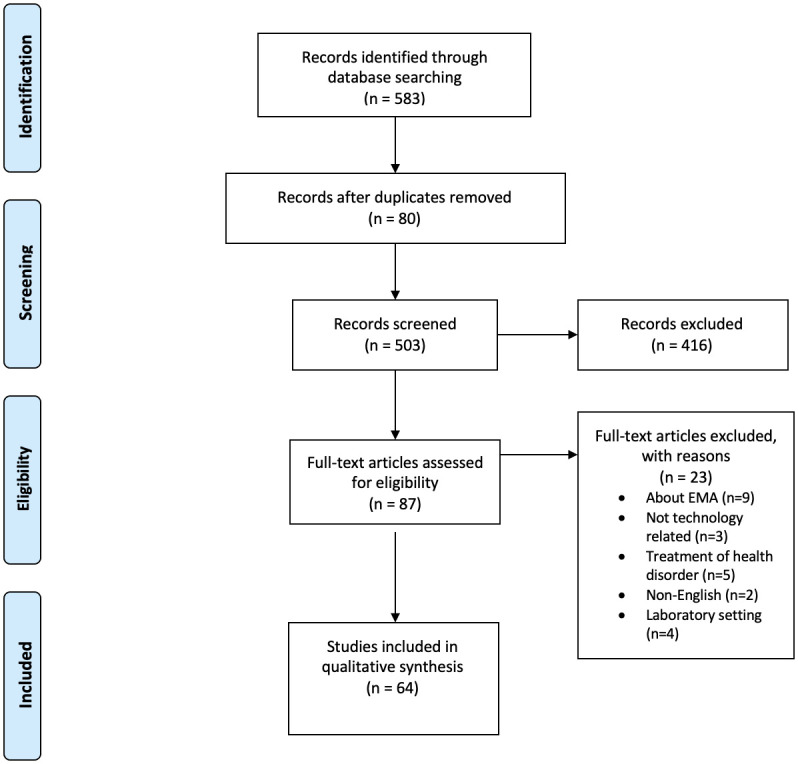
Background: The development of mobile computing technology has enabled the delivery of psychological interventions while people go about their everyday lives. The original visions of the potential of these “ecological momentary interventions” were presented over a decade ago, and the widespread adoption of smartphones in the intervening years has led to a variety of research studies exploring the feasibility of these aspirations. However, there is a dearth of research describing the different dimensions, characteristics, and features of these interventions, as constructed. Objective: To provide an overview of the definitions given for “ecological momentary interventions” in the treatment of common mental health disorders, and describe the set of technological and interaction possibilities which have been used in the design of these interventions. Methods: A systematic search identified relevant literature published between 2009 and 2020 in the PubMed, PsycInfo, and ACM Guide to the Computing Literature databases. Following screening, data were extracted from eligible articles using a standardized extraction worksheet. Selected articles were then thematically categorized. Results: The search identified 583 articles of which 64 met the inclusion criteria. The interventions target a range of mental health problems, with diverse aims, intervention designs and evaluation approaches. The studies employed a variety of features for intervention delivery, but recent research is overwhelmingly comprised of studies based on smartphone apps (30 of 42 papers that described an intervention). Twenty two studies employed sensors for the collection of data in order to provide just-in-time support or predict psychological states. Conclusions: With the shift towards smartphone apps, the vision for EMIs has begun to be realised. Recent years have seen increased exploration of the use of sensors and machine learning, but the role of humans in the delivery of EMI is also varied. The variety of capabilities exhibited by EMIs motivates development of a more precise vocabulary for capturing both automatic and human tailoring of these interventions.
Overview
The claims and statistics of this paper haven’t been checked yet.
Free: it reads the open-access text and checks the first 5 claims that cite a source we can check. Create a free account to check every claim.
Integrity signals
Registry
Cites
Statistics
Figures
Verification
Claims the paper makes
The claims and statistics of this paper haven’t been checked yet.
Free: it reads the open-access text and checks the first 5 claims that cite a source we can check. Create a free account to check every claim.
Claims other papers make about this one
Each is checked against this paper’s own text: does it say what the citing paper says it does?
The source backs part of the claim, not all of it — or backs it for a different population, condition or comparison.
In the citing paper
“Additionally, transformative digital mental health concepts such as ecological momentary assessment (EMA) and ecological momentary interventions (EMI) are on the rise and based on apps/smartphones [64–66].”
From Interventions to build resilience and to ameliorate negative psychosocial effects of the COVID-19 pandemic on children and adolescents: a systematic review and meta-analysis (2024) · cites this paper as [64]
Experimental — accuracy not yet measured
Self-check
Percentages, sums and reported differences re-computed from the paper’s own numbers.
The self-check needs the paper’s full text.
Citations
Cites
Scoping studies: towards a methodological framework
Arksey, H., & O'Malley, L. (2005) · International Journal of Social Research Methodology · doi:10.1080/1364557032000119616 · Cited by 36,742
Kessler, R. C., Berglund, P., Demler, O., Jin, R., Merikangas, K. R., & Walters, E. E. (2005) · Archives of General Psychiatry · doi:10.1001/archpsyc.62.6.593 · Cited by 20,391
Scoping studies: advancing the methodology
Levac, D., Colquhoun, H., & O'Brien, K. K. (2010) · Implementation Science · doi:10.1186/1748-5908-5-69 · Cited by 15,268
Murray, C. J. L., Vos, T., Lozano, R., Naghavi, M., Flaxman, A. D., Michaud, C., Ezzati, M., Shibuya, K., Salomon, J. A., Abdalla, S., et al. (2012) · The Lancet · doi:10.1016/s0140-6736(12)61689-4 · Cited by 8,888
From game design elements to gamefulness: defining "gamification"
Deterding, S., Dixon, D., Khaled, R., & Nacke, L. (2011) · Proceedings of the 15th International Academic MindTrek Conference: Envisioning Future Media Environments · doi:10.1145/2181037.2181040 · Cited by 8,402 · cited 1×
“Gamification refers to the use of game design elements in non-game contexts [78].”
BackgroundEcological momentary assessment
Shiffman, S., Stone, A. A., & Hufford, M. R. (2008) · Annual Review of Clinical Psychology · doi:10.1146/annurev.clinpsy.3.022806.091415 · Cited by 6,454
Nahum-Shani, I., Smith, S. N., Spring, B. J., Collins, L. M., Witkiewitz, K., Tewari, A., & Murphy, S. A. (2018) · Annals of Behavioral Medicine · doi:10.1007/s12160-016-9830-8 · Cited by 2,171 · cited 3×
“, a just-in-time adaptive intervention (JITAI) is “an intervention design aiming to provide the right type/amount of support, at the right time, by adapting to an individual’s changing internal and contextual state” [9].”
BackgroundInfluentialHeron, K. E., & Smyth, J. M. (2010) · British Journal of Health Psychology · doi:10.1348/135910709x466063 · Cited by 1,438
What are scoping studies? A review of the nursing literature
Davis, K., Drey, N., & Gould, D. (2009) · International Journal of Nursing Studies · doi:10.1016/j.ijnurstu.2009.02.010 · Cited by 855 · cited 1×
“A scoping review requires analytical reinterpretation of the literature and is commonly undertaken to clarify a complex concept and refine subsequent research inquiries [13].”
BackgroundPersonal Sensing: Understanding Mental Health Using Ubiquitous Sensors and Machine Learning
Mohr, D. C., Zhang, M., & Schueller, S. M. (2017) · Annual Review of Clinical Psychology · doi:10.1146/annurev-clinpsy-032816-044949 · Cited by 802 · cited 2×
“[17] was used to categorize sensors for automated monitoring, the features that are derived through data collected from sensors, and the prediction of behavioral markers and clinical targets.”
MethodSelf-citation
Cited by
Artificially intelligent chatbots in digital mental health interventions: a review
Boucher, E. M., Harake, N. R., Ward, H. E., Stoeckl, S. E., Vargas, J., Minkel, J., Parks, A. C., & Zilca, R. (2021) · Expert Review of Medical Devices · doi:10.1080/17434440.2021.2013200 · Cited by 440
“intervention and helping to reduce the likelihood of future problems [81].”
BackgroundDesigning for Emotion Regulation Interventions: An Agenda for HCI Theory and Research
Slovak, P., Antle, A., Theofanopoulou, N., Daudén Roquet, C., Gross, J., & Isbister, K. (2023) · ACM Transactions on Computer-Human Interaction · doi:10.1145/3569898 · Cited by 142
“, emerging EMA-as-intervention approaches [8])? (2) We lack research on innovative approaches to information delivery that would embed didactic learning into participants’ lives (rather than relying on traditional module-based delivery or simple reminders).”
BackgroundEvaluation of the Current State of Chatbots for Digital Health: Scoping Review
Xue, J., Zhang, B., Zhao, Y., Zhang, Q., Zheng, C., Jiang, J., Li, H., Liu, N., Li, Z., Fu, W., et al. (2023) · Journal of Medical Internet Research · doi:10.2196/47217 · Cited by 132
“The use of AI for diagnostics can help identify individuals at risk, enabling early intervention and minimizing future complications [33].”
Reimagining Healthcare: Unleashing the Power of Artificial Intelligence in Medicine
Iqbal, J., Cortés Jaimes, D. C., Makineni, P., Subramani, S., Hemaida, S., Thugu, T. R., Butt, A. N., Sikto, J. T., Kaur, P., Lak, M. A., et al. (2023) · Cureus · doi:10.7759/cureus.44658 · Cited by 94
“AI-assisted diagnostics, on the other hand, might aid in the early identification of those at risk, allowing for more effective intervention and problem avoidance [106,107].”
BackgroundGötzl, C., Hiller, S., Rauschenberg, C., Schick, A., Fechtelpeter, J., Fischer-Abaigar, U., Koppe, G., Durstewitz, D., Reininghaus, U., & Krumm, S. (2022) · Child and Adolescent Psychiatry and Mental Health · doi:10.1186/s13034-022-00522-6 · Cited by 105
“However, in context of mHealth apps, research on users’ perceptions has primarily focused on apps that don’t rely on machine learning algorithms or the use of multimodal data (eg, in form of EMA, sensor data) [25, 36, 37].”
BackgroundZarate, D., Stavropoulos, V., Ball, M., Collier, G. D. S., & Jacobson, N. C. (2022) · BMC Psychiatry · doi:10.1186/s12888-022-04013-y · Cited by 99
“Previous research has implemented the DP and related terminology to investigate depressive symptoms, and systematic reviews of the current literature have been conducted [7, 11, 34, 44].”
MethodGamification: a Novel Approach to Mental Health Promotion
Cheng, C., & Ebrahimi, O. V. (2023) · Current Psychiatry Reports · doi:10.1007/s11920-023-01453-5 · Cited by 72
Gkintoni, E., Vassilopoulos, S. P., & Νικολάου, Γ. (2025) · Medicina · doi:10.3390/medicina61030431 · Cited by 96
Daily social interactions related to daily performance on mobile cognitive tests among older adults
Zhaoyang, R., Scott, S., Martire, L. M., & Sliwinski, M. J. (2021) · PLoS ONE · doi:10.1371/journal.pone.0256583 · Cited by 79
“Using novel mobile technology, older adults’ daily social interactions and cognitive function could be closely monitored and enhanced by just-in-time adaptive interventions [37], which are designed to deliver highly personalized treatments in real time and in one’s natural environment [38, 39].”
Backgroundvan Genugten, C., Thong, M. S. Y., van Ballegooijen, W., Kleiboer, A. M., Spruijt‐Metz, D., Smit, A. C., Sprangers, M. A. G., Terhorst, Y., & Riper, H. M. (2025) · Frontiers in Digital Health · doi:10.3389/fdgth.2025.1460167 · Cited by 81
“This means that it is possible that interventions, when evaluated against the framework of Nahum-Shani et al. (20, 21), could be considered JITAI but are labeled differently, such as “ Ecological Momentary Interventions ” (EMI) (15, 22) or micro-interventions (72).”
The use of advanced technology and statistical methods to predict and prevent suicide
Kleiman, E. M., Glenn, C. R., & Liu, R. T. (2023) · Nature Reviews Psychology · doi:10.1038/s44159-023-00175-y · Cited by 54
Mengelkoch, S., Moriarity, D. P., Novak, A. M., Snyder, M. P., Slavich, G. M., & Lev‐Ari, S. (2023) · Journal of Clinical Medicine · doi:10.3390/jcm13010024 · Cited by 68
“Such interventions can enhance self-awareness, foster resilience, and promote adaptive coping mechanisms [62] to reduce the risk of burnout and promote overall well-being in the workplace.”
BackgroundCzyz, E. K., Koo, H. J., Al‐Dajani, N., King, C. A., & Nahum-Shani, I. (2021) · Psychological Medicine · doi:10.1017/s0033291721005006 · Cited by 78
“Many JITAIs and similar ecological interventions focusing on mental health (see reviews: Balaskas, Schueller, Cox, & Doherty, 2021; Bidargaddi, Schrader, Klasnja, Licinio, & Murphy, 2020; Wang & Miller, 2020) are motivated to break the link between states of vulnerability (i.e. conditions that…”
BackgroundUnderstanding users’ perspectives on mobile apps for anxiety management
Balaskas, A., Schueller, S. M., Cox, A. L., & Doherty, G. J. (2022) · Frontiers in Digital Health · doi:10.3389/fdgth.2022.854263 · Cited by 65
“…data can be collected based on collected answers from questionnaires, users ’ app history and interaction with app features, users ’ preferences for content delivery, and even through ubiquitous collection of data with the use of sensors, as in the case of ecological momentary interventions (82).”
BackgroundSelf-citationDigital health behaviour change interventions in severe mental illness: a systematic review
Sawyer, C. S., McKeon, G., Hassan, L., Onyweaka, H., Agulleiro, L. M. M., Guinart, D., Torous, J. B., & Firth, J. (2023) · Psychological Medicine · doi:10.1017/s0033291723002064 · Cited by 50
“…feasibility, acceptability, and usability (Greenhalgh et al., 2017; Jacob, Sezgin, Sanchez-Vazquez, & Ivory, 2022), measures were chosen from validated scales [e.g. the System Usability Scale (SUS) (Hyzy et al., 2022)] and in line with prior research (Balaskas, Doherty, Schueller, & Cox, 2021).”
MethodMe, My Health, and My Watch: How Children with ADHD Understand Smartwatch Health Data
Ankrah, E. A., Cibrian, F. L., Silva, L. M., Tavakoulnia, A., Beltran, J. A., Schuck, S. E. B., Lakes, K. D., & Hayes, G. R. (2023) · ACM Transactions on Computer-Human Interaction · doi:10.1145/3577008 · Cited by 48
Slow down and be critical before using early warning signals in psychopathology
Helmich, M. A., Schreuder, M. J., Bringmann, L. F., Riese, H., Snippe, E., & Smit, A. C. (2024) · Nature Reviews Psychology · doi:10.1038/s44159-024-00369-y · Cited by 39
PredictEYE: Personalized Time Series Model for Mental State Prediction Using Eye Tracking
Jyotsna, C., Amudha, J., Ram, A., Fruet, D., & Nollo, G. (2023) · IEEE Access · doi:10.1109/access.2023.3332762 · Cited by 46
“Along with the social determinants of health, other factors can increase our stress levels and harm our sense of well-being [32].”
BackgroundSocial Robots for Supporting Post-traumatic Stress Disorder Diagnosis and Treatment
Laban, G., Ben‐Zion, Z., & Cross, E. S. (2022) · Frontiers in Psychiatry · doi:10.3389/fpsyt.2021.752874 · Cited by 51
“We clearly acknowledge that various screen-based (or virtual), non-embodied technologies can also assist with some of the challenges, for example, via the use of EMA and EMI methodologies (e.g., 15, 17), or through use of a virtual agent on one’s mobile device (e.g., 19, 20).”
Murray, A. L., Xiao, Z., Zhu, X., Speyer, L. G., Yang, Y., Brown, R., Katus, L., Eisner, M., & Ribeaud, D. (2023) · Stress and Health · doi:10.1002/smi.3229 · Cited by 46
“These advantages have proven particularly valuable within the mental health field where an additional advantage commonly cited is the ability of EMA to provide a foundation for and inform ecological momentary interventions (e.g., Balaskas et al., 2021).”
Lifestyle medicine for anxiety symptoms: A meta-analysis of randomized controlled trials
Wong, V. W.-H., Ho, F. Y., Shi, N.-K., Sarris, J. J., Ng, C. H., & Tam, O. K.-Y. (2022) · Journal of Affective Disorders · doi:10.1016/j.jad.2022.04.151 · Cited by 42
Ecological Momentary Interventions in Public Mental Health Provision
Schulte‐Strathaus, J. C. C., Rauschenberg, C., Baumeister, H., & Reininghaus, U. (2022) · Studies in neuroscience, psychology and behavioral economics · doi:10.1007/978-3-030-98546-2_25 · Cited by 34
Murray, A. L., Brown, R., Zhu, X., Speyer, L. G., Yang, Y., Xiao, Z., Ribeaud, D., & Eisner, M. (2022) · Journal of Affective Disorders · doi:10.1016/j.jad.2022.11.014 · Cited by 55
Meyerhoff, J., Kornfield, R., Mohr, D. C., & Reddy, M. C. (2022) · Proceedings of the ACM on Human-Computer Interaction · doi:10.1145/3555203 · Cited by 47
“For instance, digital technologies to support mental health can be used in targeted ways that require short periods of engagement, increasing convenience [8,67], they can be used in private, and they have the ability to provide on-demand care when it is needed [6,92].”
BackgroundDigital Phenotyping: an Epistemic and Methodological Analysis
Coghlan, S., & D’Alfonso, S. (2021) · Philosophy & Technology · doi:10.1007/s13347-021-00492-1 · Cited by 42
“Such tailored interventions, delivered via smartphone apps and informed by sensing data, have come to be known as ecological momentary interventions (Balaskas et al., 2021) or just-in-time adaptive interventions (Nahum-Shani et al., 2018), and they offer another advantage of digital phenotyping…”
BackgroundBalaskas, A., Schueller, S. M., Cox, A. L., & Doherty, G. J. (2021) · JMIR mhealth and uhealth · doi:10.2196/26712 · Cited by 44
“…literature, in which much recent research concerns the vision of just-in-time adaptive interventions that allow the provision of intervention content when users are in need of support [12,56] and the interest in exploiting machine learning to optimize treatment delivery within mental health [57].”
BackgroundSelf-citationLangener, A. M., Stulp, G., Jacobson, N. C., Costanzo, A., Jagesar, R. R., Kas, M. J., & Bringmann, L. F. (2024) · Advances in Methods and Practices in Psychological Science · doi:10.1177/25152459231202677 · Cited by 45
“This is a promising field for developing just-in-time interventions (Balaskas et al., 2021; Jacobson & Chung, 2020).”
BackgroundInterdisciplinary perspectives on digital technologies for global mental health
Kuhn, E. M., Saleem, M., Klein, T., Köhler, C., Fuhr, D. C., Lahutina, S., Minarik, A., Musesengwa, R., Neubauer, K., Olisaeloka, L., et al. (2024) · PLOS Global Public Health · doi:10.1371/journal.pgph.0002867 · Cited by 43
“This information can then be harnessed to deliver an ecological momentary intervention (EMI), allowing for time-and context-specific targeting of individual needs [7].”
BackgroundSchillings, C., Meißner, E., Erb, B., Bendig, E., Schultchen, D., & Pollatos, O. (2024) · JMIR Mental Health · doi:10.2196/50454 · Cited by 61
“EMA represents a flexible approach to measure real-time data, including health data, in everyday life [33].”
BackgroundCuijpers, P. J., Harrer, M., & Furukawa, T. A. (2026) · World Psychiatry · doi:10.1002/wps.70002 · Cited by 37
“These interventions have also been described as “therapist in your pocket” approaches, and have been claimed to have the potential to revolutionize clinical treatment 78,80 .”
Loneliness and mood disorders: consequence, cause and/or unholy alliance?
Giacco, D. (2022) · Current Opinion in Psychiatry · doi:10.1097/yco.0000000000000832 · Cited by 36
“The widespread availability of smartphone and information technologies may help a more accurate measurement of social activities and contacts [67] and the development of interventions, which can reach and help patients outside of clinics [68].”
BackgroundTanaka, M. (2024) · Advances in Clinical and Experimental Medicine · doi:10.17219/acem/197425 · Cited by 27
Efficacy of lifestyle medicine on sleep quality: A meta-analysis of randomized controlled trials
Wong, V. W.-H., Ho, F. Y., Wong, Y. S.-H., Chung, K., Yeung, W., Ng, C. H., & Sarris, J. J. (2023) · Journal of Affective Disorders · doi:10.1016/j.jad.2023.02.111 · Cited by 26
Ethical Dimensions of Digital Phenotyping Within the Context of Mental Healthcare
D’Alfonso, S., Coghlan, S., Schmidt, S., & Mangelsdorf, S. N. (2024) · Journal of Technology in Behavioral Science · doi:10.1007/s41347-024-00423-9 · Cited by 28
“…of the latter are mental health apps and psychotherapy chatbots (Vaidyam et al., 2019), which can be powered by DP or other forms of AI in the way of content recommender systems (Valentine et al., 2022), ecological momentary interventions (Balaskas et al., 2021) or personalisation more generally.”
Effects of Actissist, a digital health intervention for early psychosis: A randomized clinical trial
Bucci, S., Berry, N., Ainsworth, J. D., Berry, K., Edge, D., Eisner, E., Emsley, R., Forbes, G., Hassan, L., Lewis, S. W., et al. (2024) · Psychiatry Research · doi:10.1016/j.psychres.2024.116025 · Cited by 28
“…quality, efficiency, cost and access, and to facilitate self-management, by making it possible to deliver near real-time, ecologically-valid therapy that extends the reach of standard healthcare delivery (Balaskas et al., 2021; Dao et al., 2021; Lattie et al., 2022; Nahum-Shani et al., 2018).”
Intensive Longitudinal Methods: Toward a Psychological Science of Daily Life
Laurenceau, J., DiGiovanni, A. M., & Bolger, N. P. (2025) · Annual Review of Psychology · doi:10.1146/annurev-psych-040325-025418 · Cited by 35
Wendel, F., Bender, S., Breitinger, E., Coenen, M., Hummel, J., Immich, G., Kirschneck, M., Klünder, V., Kunzler, A. M., Lieb, K., et al. (2024) · European Child & Adolescent Psychiatry · doi:10.1007/s00787-023-02280-y · Cited by 19
Diest, A. P.-V., Mortier, P., Ballester, L., Amigo, F., Carrasco, P., Falcó, R., Gili, M., Kiekens, G., Machancoses, F. H., Piqueras, J. A., et al. (2024) · Journal of Medical Internet Research · doi:10.2196/55712 · Cited by 27
“These data allow for the development of explanatory and predictive models at both an individual and group level [8] and enable individualized and contextualized interventions at critical moments when the risk of mental health problems may be high [3,11,12].”
Murray, A. L., Yang, Y., Zhu, X., Speyer, L. G., Brown, R., Eisner, M., & Ribeaud, D. (2023) · International Journal of Methods in Psychiatric Research · doi:10.1002/mpr.1972 · Cited by 22
“Mental health EMA and ecological momentary intervention (EMI) studies are increasingly popular across a wide range of mental health issues (Balaskas et al., 2021); however, concerns have been raised about whether psychiatric populations may have additional difficulty with complying with EMA/EMI…”
BackgroundMiller, M., Raugh, I. M., Strauss, G. P., & Harvey, P. D. (2022) · Biomarkers in Neuropsychiatry · doi:10.1016/j.bionps.2022.100047 · Cited by 16
Ecological momentary interventions for smoking cessation: a systematic review and meta-analysis
Eghdami, S., Ahmadkhaniha, H., Baradaran, H. R., & Hirbod‐Mobarakeh, A. (2023) · Social Psychiatry and Psychiatric Epidemiology · doi:10.1007/s00127-023-02503-2 · Cited by 25
“Considering these potentials, in recent years, there has been a growing interest among researchers to explore EMIs in the context of promoting mental health [28].”
BackgroundCastilla, D., Haro, M. V. N., Suso‐Ribera, C., Díaz‐García, A., Zaragozá, I., & García‐Palacios, A. (2022) · BMC Psychiatry · doi:10.1186/s12888-022-03800-x · Cited by 20
Santa-Cruz, J., Moran, L., Tovar, M. A., Peinado, J., Cutipé, Y., Ramos, L., Astupillo, A., Rosler, M., Raviola, G. J., Lecca, L. W., et al. (2022) · Cambridge Prisms Global Mental Health · doi:10.1017/gmh.2022.36 · Cited by 17
Plessen, K. J., Constanty, L., Ranjbar, S., Turri, F., Miano, G., Lepage, C., & Urben, S. (2023) · Frontiers in Psychiatry · doi:10.3389/fpsyt.2022.1058814 · Cited by 26
Schillings, C., Meißner, E., Erb, B., Schultchen, D., Bendig, E., & Pollatos, O. (2023) · Frontiers in Digital Health · doi:10.3389/fdgth.2023.1046202 · Cited by 23
A cognitive-computational account of mood swings in adolescence
Gregorová, K., Eldar, E., Deserno, L., & Reiter, A. M. F. (2024) · Trends in Cognitive Sciences · doi:10.1016/j.tics.2024.02.006 · Cited by 22
“Prospectively, such designs also allow for immediate interventions in real life (via the smartphone) when risk signs occur [125].”
Behrendt, D., Boß, L., Hannibal, S., Kunzler, A. M., Wessa, M., & Lehr, D. (2023) · Internet Interventions · doi:10.1016/j.invent.2023.100649 · Cited by 19
“The handy format, low-threshold use and 24–7 availability of mobile apps may offer the opportunity to use mobile apps to practice training-related skills even throughout a stressful workday (Marciniak et al., 2020; Balaskas et al., 2021).”
BackgroundFeneberg, A. C., & Nater, U. M. (2022) · Frontiers in Psychology · doi:10.3389/fpsyg.2022.927705 · Cited by 18
Examining young adults daily perspectives on usage of anxiety apps: A user study
Balaskas, A., Schueller, S. M., Cox, A. L., Rashleigh, C., & Doherty, G. J. (2023) · PLOS Digital Health · doi:10.1371/journal.pdig.0000185 · Cited by 21
Self-citationWeisz, J. R., Fitzpatrick, O. M., Venturo‐Conerly, K. E., Sternberg, A., Steinberg, J. S., & Ng, M. Y. (2023) · Journal of Child Psychology and Psychiatry · doi:10.1111/jcpp.13820 · Cited by 21
The experience sampling methodology in psychosis risk states: A systematic review
Bogudzińska, B., Jaworski, A., Zajdel, A., Skrzypek, K., & Misiak, B. (2024) · Journal of Psychiatric Research · doi:10.1016/j.jpsychires.2024.04.050 · Cited by 24
Testing a weekly utility value intervention in college physics and chemistry courses
Beymer, P. N., & Rosenzweig, E. Q. (2025) · Contemporary Educational Psychology · doi:10.1016/j.cedpsych.2025.102348 · Cited by 16
Designing personalized mental health interventions for anxiety: CBT therapists’ perspective
Balaskas, A., Schueller, S. M., Doherty, K., Cox, A. L., & Doherty, G. J. (2024) · International Journal of Human-Computer Studies · doi:10.1016/j.ijhcs.2024.103319 · Cited by 18
“Such data can be collected automatically with the use of sensors, based on responses to ecological momentary assessment (EMA) questionnaires, or manually by research staff and therapists (Balaskas et al., 2021a).”
InfluentialSelf-citationLi, J., Ponnada, A., Wang, W., Dunton, G. F., & Intille, S. S. (2024) · Proceedings of the ACM on Interactive Mobile Wearable and Ubiquitous Technologies · doi:10.1145/3699735 · Cited by 22
“…in-situ self-reports by health behavior researchers [8, 25, 57] and by human-computer interaction researchers [5, 16, 24] to study free-living behavior, and to gather person-and context-specific data to inform just-in-time adaptive interventions (JITAI) in digital health applications [3, 29, 53].”
Neukel, C., Bullenkamp, R., Moessner, M., Spieß, K., Schmahl, C. G., Bertsch, K., & Herpertz, S. C. (2022) · Borderline Personality Disorder and Emotion Dysregulation · doi:10.1186/s40479-022-00199-5 · Cited by 17
“Especially ecological momentary interventions that offer real-time and context-aware interventions in the patients’ everyday lives [28] will be important tools complementing psychotherapy.”
Steinberg, J. S., Fitzpatrick, O. M., Khurana, S., Kim, M. Y., Mair, P., Schleider, J. L., Hatzenbuehler, M. L., & Weisz, J. R. (2024) · Journal of Clinical Child & Adolescent Psychology · doi:10.1080/15374416.2024.2384026 · Cited by 21
Arigo, D., Brown, M. M., Shank, F., & Young, C. M. (2022) · Annals of Behavioral Medicine · doi:10.1093/abm/kaac031 · Cited by 13
Zainal, N. H., Tan, H. H., Hong, R. Y. S., & Newman, M. G. (2024) · Journal of Anxiety Disorders · doi:10.1016/j.janxdis.2024.102858 · Cited by 17
An Empathic GPT-Based Chatbot to Talk About Mental Disorders With Spanish Teenagers
Mármol-Romero, A. M., García-Vega, M., García-Cumbreras, M. Á., & Montejo-Ráez, A. (2024) · International Journal of Human–Computer Interaction · doi:10.1080/10447318.2024.2344355 · Cited by 11
“Chatbots for mental disorders have shown great potential as a tool for providing mental health support to individuals in need [21].”
Serre, F., Moriceau, S., Donnadieu, L., Forcier, C., Garnier, H., Alexandre, J., Dupuy, L., Philip, P., Levavasseur, Y., de Sevin, É., et al. (2023) · Frontiers in Psychiatry · doi:10.3389/fpsyt.2023.1143167 · Cited by 15
Fechtelpeter, J., Rauschenberg, C., Götzl, C., Hiller, S., Wierzba, E., Emonds, N., Krumm, S., Reininghaus, U., Durstewitz, D., & Koppe, G. (2025) · npj Digital Medicine · doi:10.1038/s41746-025-02252-3 · Cited by 13
“These insights are increasingly being used to tailor mHealth interventions to individual needs, enhancing personalization and clinical relevance 11,25 – 28 .”
Helle, A. C., Freeman, L. K., Pellegrini, A. M., Wycoff, A. M., Winograd, R., & Trull, T. J. (2023) · The American Journal of Drug and Alcohol Abuse · doi:10.1080/00952990.2022.2160340 · Cited by 13
“Additionally, several EMI studies were conducted in samples of individuals in recovery (see (9) for a review), employing smartphone-based intervention materials (e.”
BackgroundWang, Q., Ng, S., & Zhou, X. (2023) · PLoS ONE · doi:10.1371/journal.pone.0291168 · Cited by 17
Richards, V. L., Turrisi, R., & Russell, M. A. (2024) · Psychology of Addictive Behaviors · doi:10.1037/adb0000993 · Cited by 16
Liu, S., Haucke, M. N., Groß, R., Schneider, K., Shin, J., Arntz, F., Bach, P., Banaschewski, T., Beste, C., Deserno, L., et al. (2025) · Digital Health · doi:10.1177/20552076241311731 · Cited by 12
“37,38 Depending on the momentary settings (e.g. in work or leisure time) and personal preferences as well as momentary cognitive cap-acities, either the cognitive reappraisal or the physical activity intervention may be better suited to, for example, reduce momentary loneliness and alcohol craving.”
Alam, S., & Alam, M. A. U. (2026) · JMIR AI · doi:10.2196/57025 · Cited by 11
“While ecological momentary assessment has shown effectiveness in predicting burnout among residents [26], incorporating ML methods has the potential to enhance prediction performance [27].”
Lei, B., Liu, P., Fujiwara, K., Frei, M., Miller, C., Chua, Y. X., & Biljecki, F. (2025) · Cities · doi:10.1016/j.cities.2025.106443 · Cited by 14
Pervasive Therapy: Designing Conversation-Based Interfaces for Ecological Momentary Intervention
Bowman, R., Cooney, O., Thieme, A., Cowan, B. R., & Doherty, G. J. (2022) · IEEE Pervasive Computing · doi:10.1109/mprv.2022.3209068 · Cited by 12
“Approaches to prompt timing include prompting the patient at specific, random, or at event-based times, that is, when the system senses a certain situation, for example, using heart rate, sleep, or location data.(4) Sensor data could inform which device is most appropriate to deliver a prompt from.”
BackgroundInfluentialSelf-citationA survey of autonomous monitoring systems in mental health
Gopalakrishnan, A., Gururajan, R., Zhou, X., Venkataraman, R., Chan, K. C., & Higgins, N. (2024) · Wiley Interdisciplinary Reviews Data Mining and Knowledge Discovery · doi:10.1002/widm.1527 · Cited by 18
“However, AI diagnostics can help identify those at risk, opening the door to early intervention and reducing long-term danger (Balaskas et al., 2021).”
BackgroundPostma, M. R., Vrancken, S., Daemen, M., der Meulen, I. H.-V., Volbragt, N., Delespaul, P., de Haan, L., van der Pluijm, M., Breedvelt, J., van der Gaag, M., et al. (2024) · BMC Public Health · doi:10.1186/s12889-024-19143-z · Cited by 11
“Furthermore, personalized feedback on app progress can enhance self-awareness and motivation [15, 24, 40, 42], and goal-setting can increase motivation [14, 40].”
BackgroundInfluentialLangford, D. J., Sideris, A., & Poeran, J. (2024) · British Journal of Anaesthesia · doi:10.1016/j.bja.2024.10.010 · Cited by 9
Urben, S., Habersaat, S., Palix, J., Fegert, J. M., Schmeck, K., Bürgin, D., Seker, S., Boonmann, C., & Schmid, M. (2022) · Frontiers in Psychiatry · doi:10.3389/fpsyt.2022.939603 · Cited by 13
“A scoping review (96) was recently conducted on EMIs and retrieved 64 studies on EMIs.”
BackgroundGual-Montolio, P., Suso‐Ribera, C., García‐Palacios, A., Castilla, D., Zaragozá, I., & Bretón-López, J. M. (2023) · Internet Interventions · doi:10.1016/j.invent.2023.100601 · Cited by 14
Urben, S., Constanty, L., Lepage, C., Amoussou, J. R., Durussel, J., Turri, F., Wouters, E., Mürner-Lavanchy, I. M., & Plessen, K. J. (2022) · European Child & Adolescent Psychiatry · doi:10.1007/s00787-022-01972-1 · Cited by 11
“Such knowledge is of crucial importance when assessing outcomes of interventional studies or to develop ecological momentary interventions in a preventive approach [22].”
BackgroundA critical analysis of digital phenotyping and the neuro-digital complex in psychiatry
Fabián, R. D. L., Jiménez-Molina, Á., & Obaid, F. P. (2023) · Big Data & Society · doi:10.1177/20539517221149097 · Cited by 16
King, S. L., Lebert, J., Karpisek, L., Phillips, A. C., Neal, T. J., & Kosyluk, K. A. (2022) · JMIR Formative Research · doi:10.2196/35699 · Cited by 9
“Similar to Cope Notes, these programs attempt to improve symptoms through mobile technology–based psychoeducation, but only 2 deliver similar intervention-based SMS text messages [31].”
Self‐regulatory control processes in youths: A temporal network analysis approach
Turri, F., Jones, A., Constanty, L., Ranjbar, S., Drexl, K., Miano, G., Lepage, C., Plessen, K. J., & Urben, S. (2023) · JCPP Advances · doi:10.1002/jcv2.12200 · Cited by 12
“Such innovative interventions may increase the access to treatment (Shiffman et al., 2008) by providing the most appropriate intervention at the best time (for a scoping review, see Balaskas et al., 2021).”
BackgroundGandrup, J., Selby, D., & Dixon, W. G. (2024) · JMIR Formative Research · doi:10.2196/50679 · Cited by 7
“Just-in-time adaptive interventions are an emerging area of research that, until now, has primarily been deployed in mental health and behavior-change treatments [6,7].”
BackgroundMethods and theory for analyzing intensive longitudinal data in family research
Barber, J. S., & Liao, T. F. (2024) · Journal of Marriage and the Family · doi:10.1111/jomf.12993 · Cited by 8
Urben, S., Williams, A. O., Jemia, C. B., Amoussou, J. R., Lazaro, S. M., Giovannini, J., Kheir, M. A., Kaess, M., Plessen, K. J., & Mürner-Lavanchy, I. M. (2024) · European Child & Adolescent Psychiatry · doi:10.1007/s00787-024-02591-8 · Cited by 18
“Such knowledge is of crucial importance for developing ecological momentary interventions or just-in-time adapted interventions (see [134]).”
Ecological Momentary Interventions To Reduce Addictive Behaviors: A Systematic Review
Lo, C. K. M., Chan, E. W. W., Chan, E. Y. C., & Cho, Y. W. (2025) · Current Addiction Reports · doi:10.1007/s40429-025-00666-3 · Cited by 8
“…with the rise of mobile technology and the development of just-in-time adaptive interventions (JITAIs), which use advanced statistical methods and algorithms to adapt interventions in real time based on contextual and sensor data of one’s changing internal state and external environment [22–24 ].”
Westrupp, E. M., Bates, M. T., Bufton, K., Berkowitz, T. B., Popple, M., King, G., Jones, S., Stone, J., Kupper, J. F., Toumbourou, J. W., et al. (2025) · BMC Psychology · doi:10.1186/s40359-025-03018-y · Cited by 9
“These offer brief, in-the-moment support, triggered by real-time data from brief surveys assessing mood, behaviour, or other indicators [42].”
Marciniak, M. A., Shanahan, L., Yuen, K. S. L., Veer, I. M., Walter, H., Tuescher, O., Kobylińska, D., Kalisch, R., Hermans, E. J., Binder, H., et al. (2024) · Digital Health · doi:10.1177/20552076241249267 · Cited by 9
“…reviews and meta-analyses on EMI research have focused on the continuous delivery of interventions, wherein participants use the app consistently throughout the whole study 2,5,13 – 16 in contrast to the burst design, wherein the engagement of participants is only in pre-de fi ned time intervals.”
BackgroundBogaert, L., Joye, Y., Dejonckheere, E., Goossens, I., Mertens, K., & Raes, F. (2024) · Applied Psychology Health and Well-Being · doi:10.1111/aphw.12578 · Cited by 7
Privacy and security in digital therapeutics
Nurgalieva, L., & Doherty, G. J. (2022) · Elsevier eBooks · doi:10.1016/b978-0-323-90045-4.00002-2 · Cited by 9
Self-citationCook, D. J., Walker, A., Minor, B., Luna, C. M., Farias, S. T., Wiese, L. K., Weaver, R. H., & Schmitter‐Edgecombe, M. (2025) · JMIR mhealth and uhealth · doi:10.2196/57018 · Cited by 10
“In-the-moment sampling builds a foundation for designing effective just-in-time interventions [14].”
Kruger, M., Liu, J., Graver, H., Manasse, S. M., & Velkoff, E. A. (2025) · Journal of Eating Disorders · doi:10.1186/s40337-025-01329-4 · Cited by 9
“More recently, Balaskas and colleagues [16] provided an updated scoping review of the use of EMIs for mental health problems since 2009 (the end date for Heron & Smyth’s review period).”
InfluentialPruessner, L., Hartmann, S., Ehmann, A.-L., Barnow, S., Bauer, U. M. M., & Helm, P. (2025) · JAMA Network Open · doi:10.1001/jamanetworkopen.2025.38813 · Cited by 8
Wang, Y., Porges, E. C., DeFelice, J. S., & Fridberg, D. J. (2024) · Current Addiction Reports · doi:10.1007/s40429-024-00543-5 · Cited by 11
“As an extension to EMA, ecological momentary intervention (EMI; [23]) is a mHealth approach that offers feedback, interventions, or strategy reminders directly to users via mobile technology (e.g., smartphones via text message or in-app notifications), in their natural environment [24].”
Is it Time to Include Wearable Sleep Trackers in the Applied Psychologists’ Toolbox?
Menghini, L., Balducci, C., & de Zambotti, M. (2024) · The Spanish Journal of Psychology · doi:10.1017/sjp.2024.8 · Cited by 7
Murray, A. L., Xiao, Z., Zhu, X., Speyer, L. G., Yang, Y., Brown, R., Katus, L., Eisner, M., & Ribeaud, D. (2022) · doi:10.31234/osf.io/d9pc7 · Cited by 6
Julià, A., Jaén, I., García‐Palacios, A., Pascual, J. C., Sintes, A., Lara, A., Méndez, I., Romero, S., Puntí, J., Soler, J., et al. (2025) · Internet Interventions · doi:10.1016/j.invent.2025.100826 · Cited by 9
“EMIs can deliver tailored therapeutic interventions based on real-time assessments, known as Ecological Momentary Assessments (EMAs), providing psychological support to individuals in their natural environment when needed (Balaskas et al., 2021).”
Tomczyk, S., & Ewert, C. (2025) · Applied Psychology Health and Well-Being · doi:10.1111/aphw.70006 · Cited by 5
Ecological momentary interventions for bipolar disorder: a systematic review and meta-analysis
Hirbod‐Mobarakeh, A., Keshavarz‐Akhlaghi, A., Hadi, F., Eghdami, S., Hirbod-Mobarakeh, A., Kalhori, S. H., & Khanipour-Kencha, A. (2025) · Social Psychiatry and Psychiatric Epidemiology · doi:10.1007/s00127-025-02845-z · Cited by 8
Ecological Momentary Assessment in Mindfulness Research
Grégoire, S., & Doucerain, M. M. (2023) · Springer eBooks · doi:10.1007/978-3-030-77644-2_78-1 · Cited by 7
Schläpfer, S., Astakhov, G., Pawel, S., Eicher, M., Kowatsch, T., Held, L., Witt, C. M., & Barth, J. (2024) · Journal of Psychosomatic Research · doi:10.1016/j.jpsychores.2024.111864 · Cited by 6
Schmitter‐Edgecombe, M., Luna, C. M., & Cook, D. J. (2022) · Springer eBooks · doi:10.1007/978-3-031-11389-5_4 · Cited by 10
A cognitive-computational account of mood swings in adolescencePreprint
Gregorová, K., Eldar, E., Deserno, L., & Reiter, A. M. F. (2022) · doi:10.31234/osf.io/u62vr · Cited by 5
Experience-sampling methods for self-compassion research: A meta-analysis
Fraser, M. I., Yap, K., Sahdra, B. K., Li, W., Andreacchio, M. T., Wong, T. Y., & Ciarrochi, J. (2025) · Journal of Contextual Behavioral Science · doi:10.1016/j.jcbs.2025.100913 · Cited by 5
Technology-based interventions to address internet addictive behaviors: systematic review
Mora, V. F. P., Granda, M. F., & Parra, O. (2025) · Discover Mental Health · doi:10.1007/s44192-025-00187-5 · Cited by 9
Metadata
- Authors
- Balaskas, A., Schueller, S. M., Cox, A. L., & Doherty, G.
- Affiliations
- Trinity College Dublin (IE)
- University of California, Irvine (US)
- University College London (GB)
- Corresponding author
- Doherty, Gavin
- Venue
- PLOS ONE
- Publisher
- Public Library of Science (PLoS)
- Published
- 2021-03-11
- Volume
- 16
- Issue
- 3
- Pages
- e0248152
- ISSN
- 1932-6203 (ISSN-L)
- PMC
- PMC7951936
- OpenAlex
- W3135402573
- Cited by
- 235
- References
- 82
- Citations by year
- 2026: 55 · 2025: 54 · 2024: 47 · 2023: 37 · 2022: 36 · 2021: 6
- FWCI
- 27.98
- Type
- journal article
- Language
- en
- Open access
- gold
- doi.org
- Licence
- Locations
- PLoS ONE (publishedVersion, cc-by)
- PubMed Central (publishedVersion, cc-by)
- PubMed (publishedVersion)
- DOAJ (DOAJ: Directory of Open Access Journals) (submittedVersion, cc-by-sa)
- UCL Discovery (University College London) (submittedVersion)
- eScholarship (California Digital Library) (submittedVersion)
- eScholarship (California Digital Library) (submittedVersion, cc-by)
- Funders
- Science Foundation Ireland (17/RC-PHD/3488)
- European Regional Development Fund (Grant 13/RC/2106_P2)
- Topics
- Social Sciences › Psychology › Applied Psychology › Digital Mental Health Interventions
- Health Sciences › Health Professions › General Health Professions › Mobile Health and mHealth Applications
- Social Sciences › Psychology › Experimental and Cognitive Psychology › Mental Health Research Topics
- Keywords
- ecological momentary intervention, mobile mental health intervention, mobile application, sensors, machine learning, common mental disorders, intervention design
- MeSH terms
- Smartphone, Ecological Momentary Assessment, Mental Disorders, Humans, Psychotherapy, Brief, Mobile Applications
About these checks
Registry, retraction, Cites and statistics results are computed, not judged, with one exception: a printed reference that no index lists is read once by a model before it counts as a citation error. Claims are extracted by a model and kept only when their quote appears verbatim in the text; each cited source is then checked, with a model’s help, for whether it says what the claim relies on. Those verdicts can be wrong — read the claim’s quote and the cited source before relying on one.
Statistics and arithmetic are recomputed, not judged.
Confidence bands are shown only for fields calibrated on our annotated test set. None is calibrated yet, so no band is shown.
What counts as a claim ›How we measure confidence ›How we check this ›
Are you an author, or do you see a problem with this page? Request a review
Data sources
Bibliographic data: Semantic Scholar, OpenAlex, Crossref.
Contains information from the Semantic Scholar Academic Graph Datasets, made available under the ODC Attribution License (ODC-BY 1.0).
Semantic Scholar’s data is described in: Kinney, R., et al. (2023). The Semantic Scholar Open Data Platform. arXiv:2301.10140.
