

The DOI matches its Crossref record; 39 of the 39 references it cites were found in a registry or an index.
COVID-19 detection using federated machine learning
Open accessAbstract
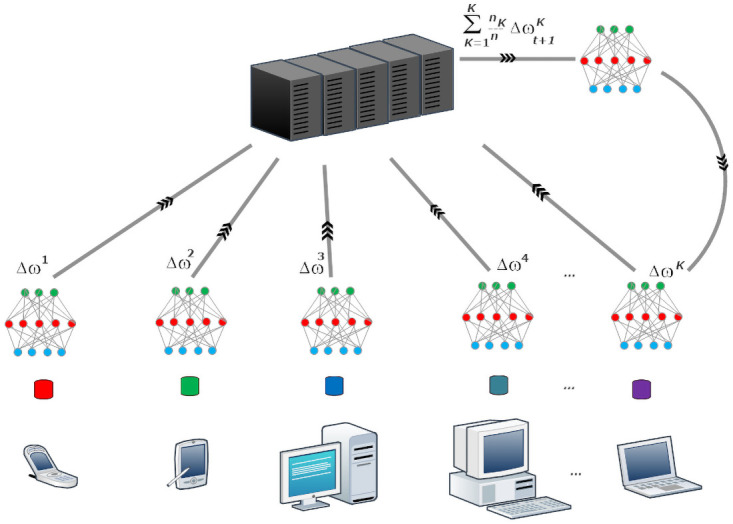
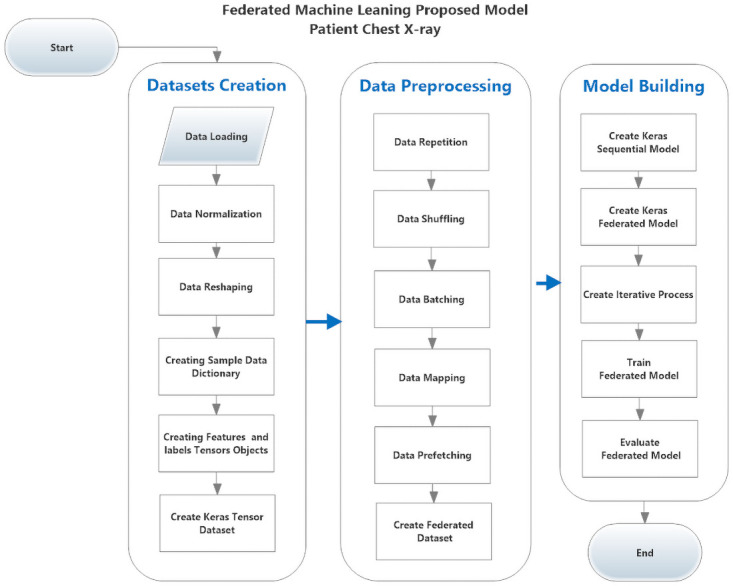
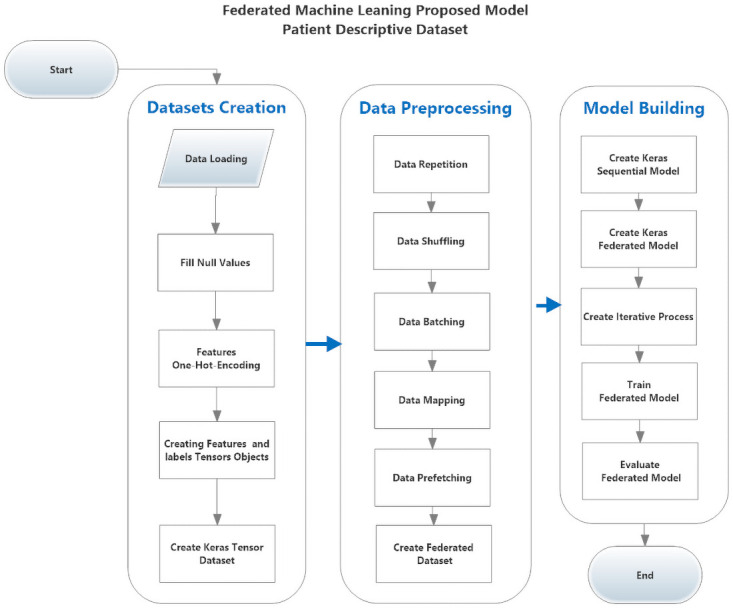
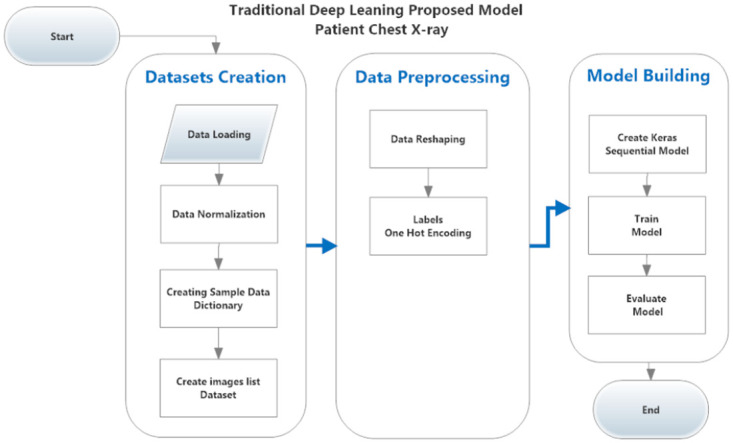
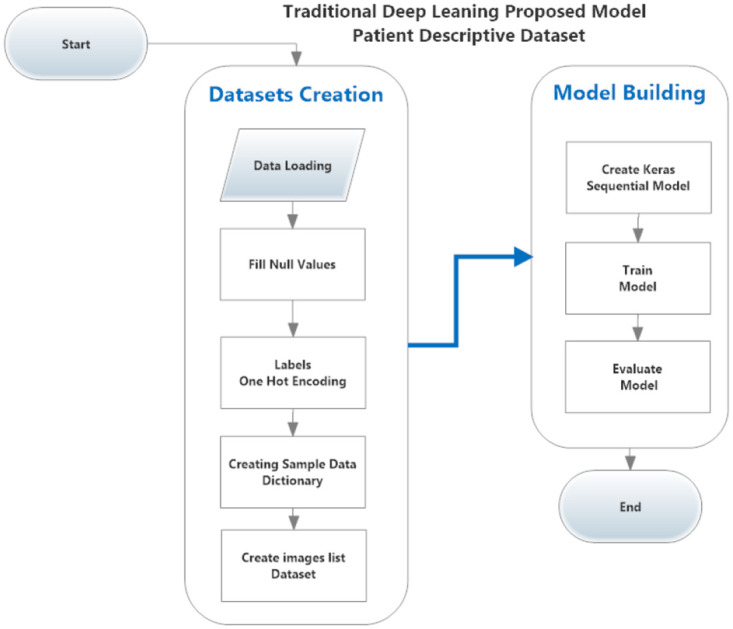
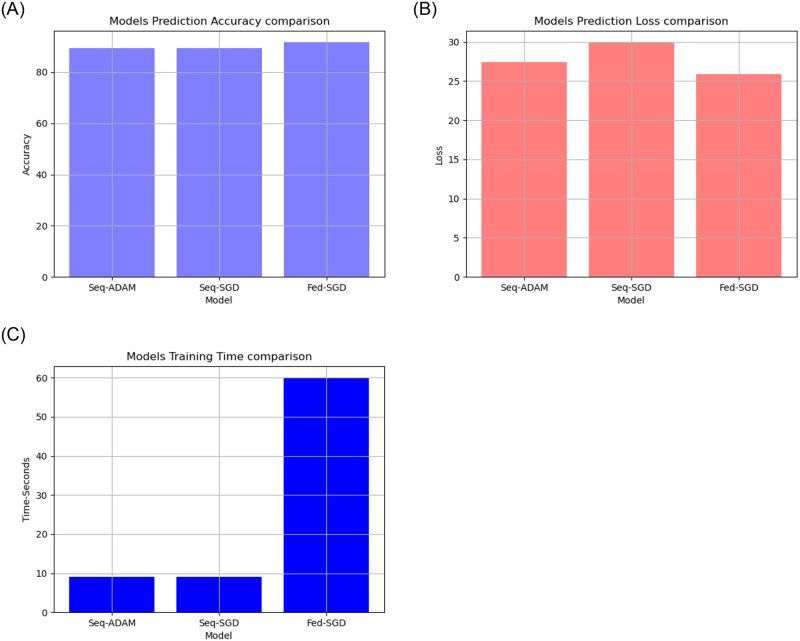
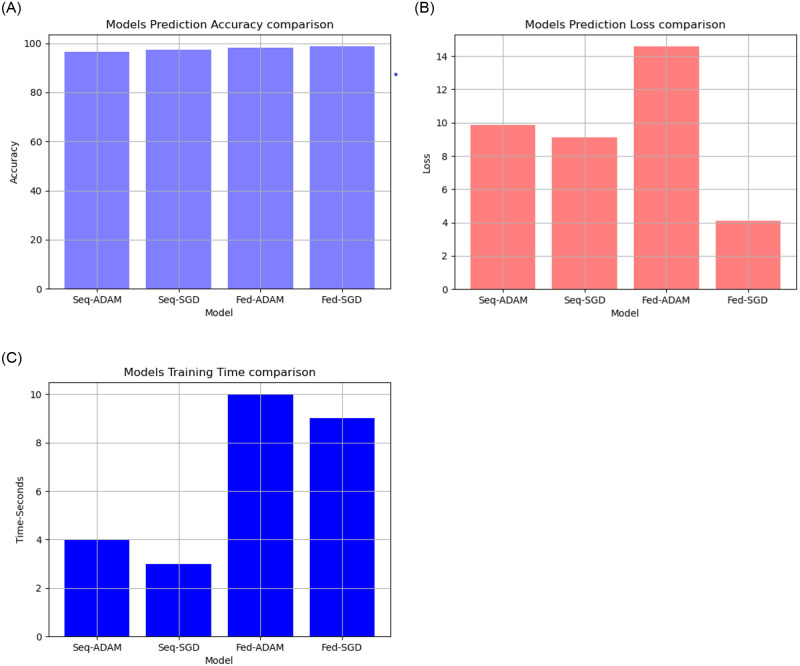
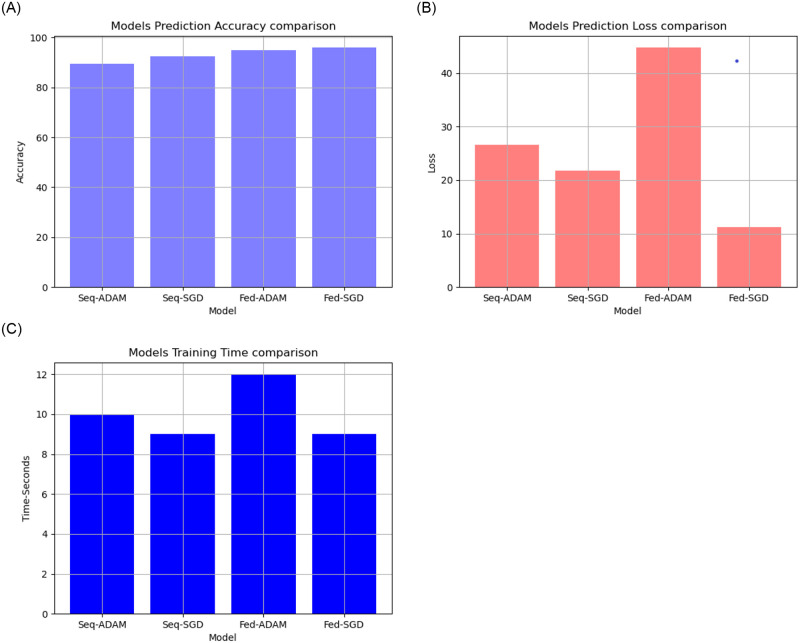
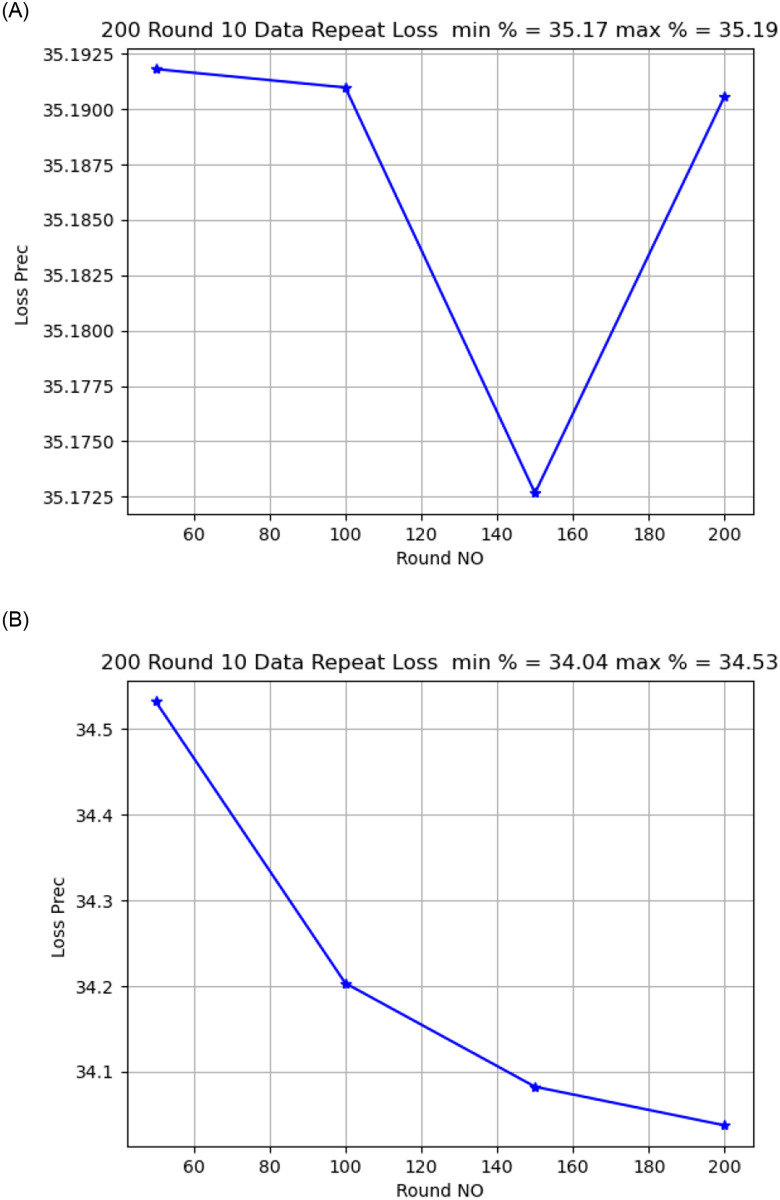
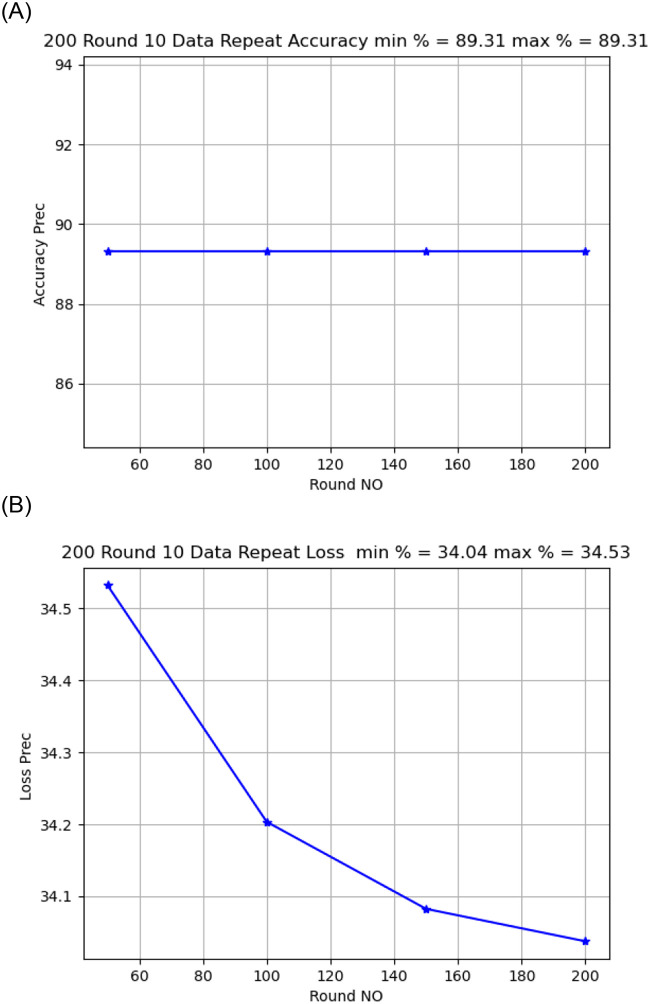
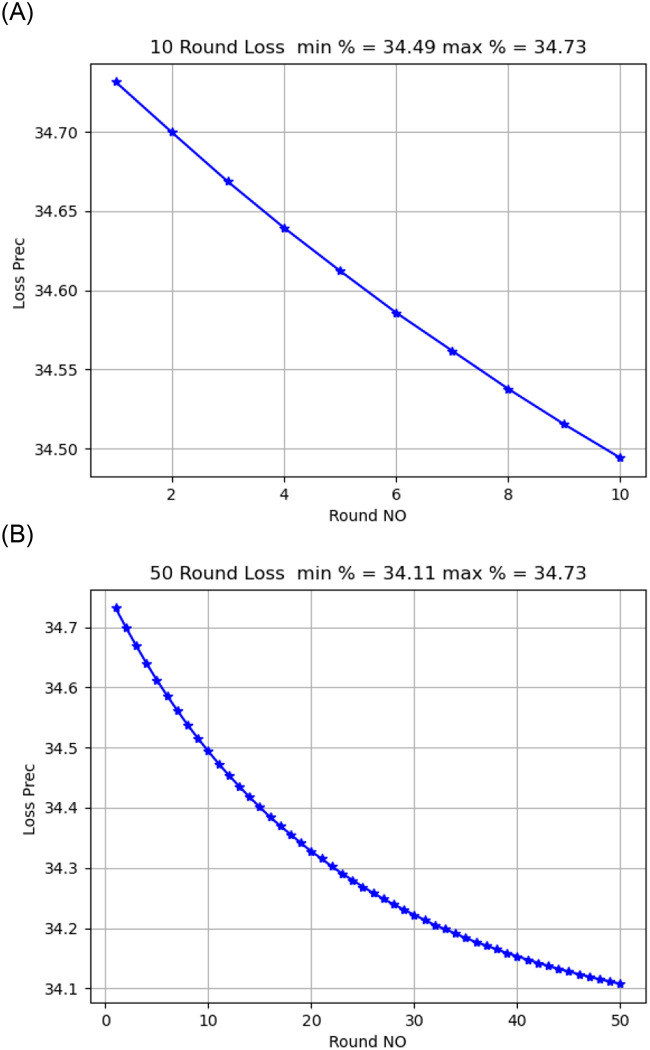
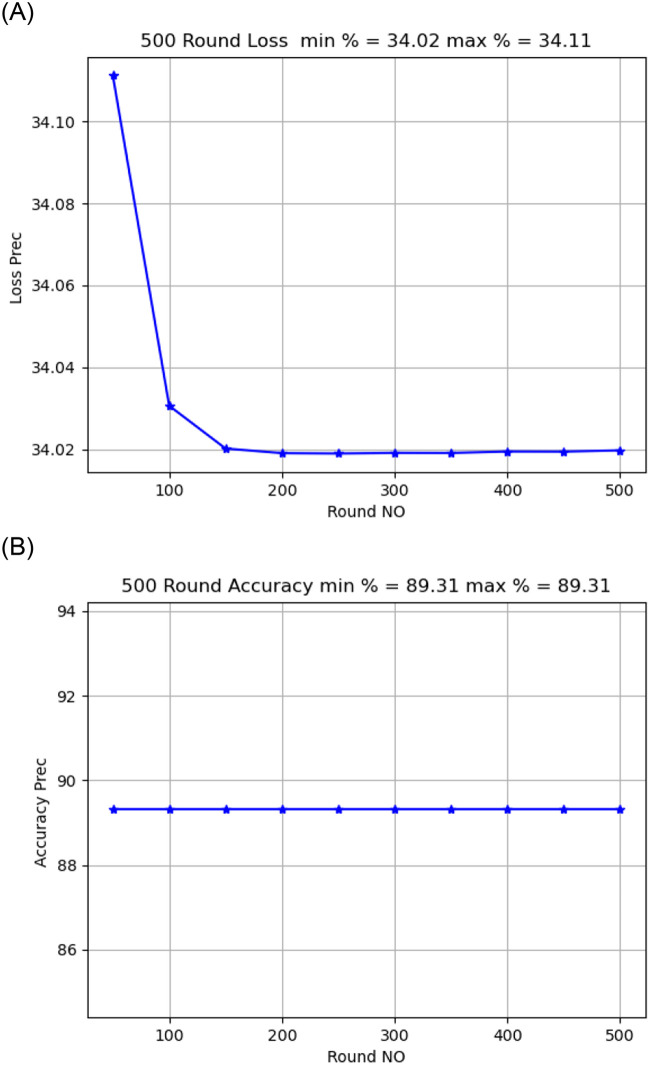
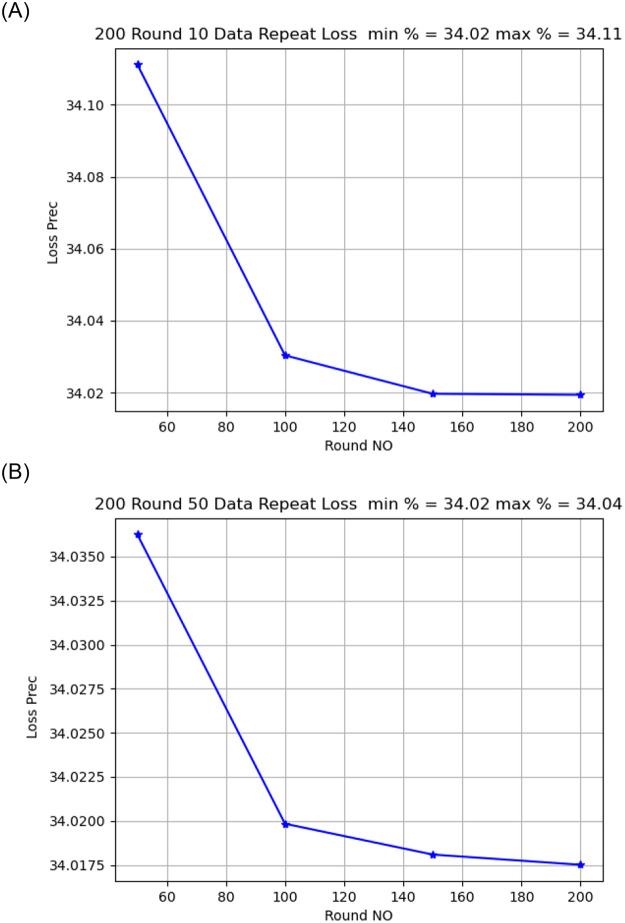
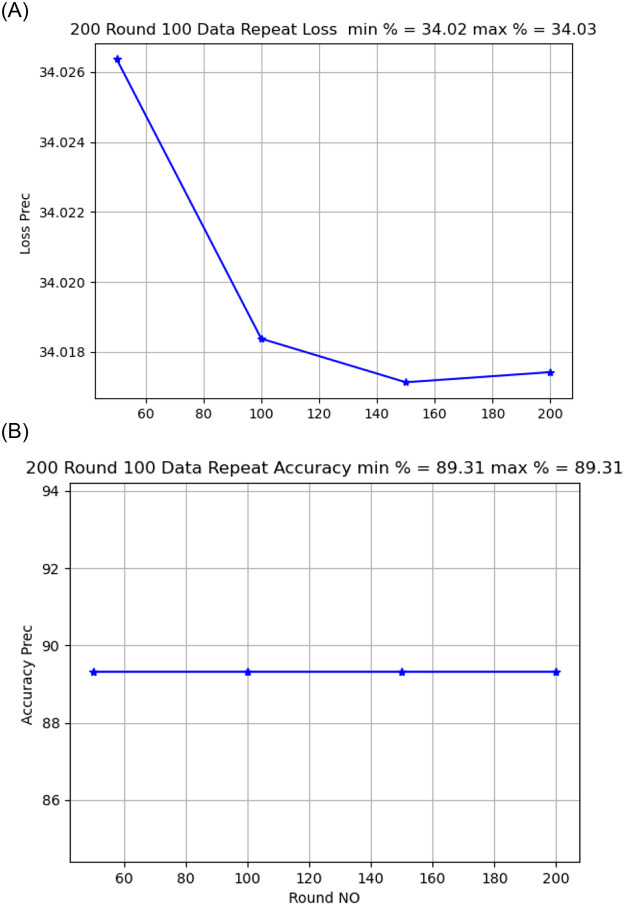
The current COVID-19 pandemic threatens human life, health, and productivity. AI plays an essential role in COVID-19 case classification as we can apply machine learning models on COVID-19 case data to predict infectious cases and recovery rates using chest x-ray. Accessing patient’s private data violates patient privacy and traditional machine learning model requires accessing or transferring whole data to train the model. In recent years, there has been increasing interest in federated machine learning, as it provides an effective solution for data privacy, centralized computation, and high computation power. In this paper, we studied the efficacy of federated learning versus traditional learning by developing two machine learning models (a federated learning model and a traditional machine learning model)using Keras and TensorFlow federated, we used a descriptive dataset and chest x-ray (CXR) images from COVID-19 patients. During the model training stage, we tried to identify which factors affect model prediction accuracy and loss like activation function, model optimizer, learning rate, number of rounds, and data Size, we kept recording and plotting the model loss and prediction accuracy per each training round, to identify which factors affect the model performance, and we found that softmax activation function and SGD optimizer give better prediction accuracy and loss, changing the number of rounds and learning rate has slightly effect on model prediction accuracy and prediction loss but increasing the data size did not have any effect on model prediction accuracy and prediction loss. finally, we build a comparison between the proposed models’ loss, accuracy, and performance speed, the results demonstrate that the federated machine learning model has a better prediction accuracy and loss but higher performance time than the traditional machine learning model.
Overview
The claims and statistics of this paper haven’t been checked yet.
Run the check — free, no account needed. It reads the open-access text and checks the sources it cites.
Integrity signals
Registry
Cites
Statistics
Figures
Verification
Claims the paper makes
The claims and statistics of this paper haven’t been checked yet.
Run the check — free, no account needed. It reads the open-access text and checks the sources it cites.
Claims other papers make about this one
Each is checked against this paper’s own text: does it say what the citing paper says it does?
In the citing paper
“Article [32] and [27] achieved an accuracy of 90.61% and 90% respectively.”
From A systematic review on federated learning in medical image analysis (2023) · cites this paper as [32]
Self-check
Percentages, sums and reported differences re-computed from the paper’s own numbers.
The self-check needs the paper’s full text.
Citations
Cites
1 retracted
RETRACTED ARTICLE: Hybrid genetic algorithm and a fuzzy logic classifier for heart disease diagnosis
Gadekallu, T. R., Maddikunta, P. K. R., Lakshmanna, K., Rajput, D. S., Kaluri, R., & Srivastava, G. (2019) · Evolutionary Intelligence · doi:10.1007/s12065-019-00327-1 · Cited by 407
RetractedFederated Machine Learning: Concept and Applications
Yang, Q., Liu, Y., Chen, T., & Tong, Y. (2019) · ACM Transactions on Intelligent Systems and Technology · doi:10.1145/3298981 · Cited by 6,322
Federated learning: Challenges, methods, and future directions
Li, T., Sahu, A. K., Talwalkar, A., & Smith, V. (2020) · IEEE Signal Processing Magazine · doi:10.1109/msp.2020.2975749 · Cited by 6,210
Lian, X., Zhang, C., Zhang, H., Hsieh, C., Zhang, W., & Liu, J. (2017) · arXiv (Cornell University) · doi:10.48550/arxiv.1705.09056 · Cited by 858
COVID-CAPS: A capsule network-based framework for identification of COVID-19 cases from X-ray images
Afshar, P., Heidarian, S., Naderkhani, F., Oikonomou, A., Plataniotis, K. N., & Mohammadi, A. (2020) · Pattern Recognition Letters · doi:10.1016/j.patrec.2020.09.010 · Cited by 718
Application of deep learning for fast detection of COVID-19 in X-Rays using nCOVnet
Panwar, H., Gupta, P. K., Siddiqui, M. K., Morales-Menéndez, R., & Singh, V. (2020) · Chaos Solitons & Fractals · doi:10.1016/j.chaos.2020.109944 · Cited by 645
Deep learning and medical image processing for coronavirus (COVID-19) pandemic: A survey
Bhattacharya, S., Maddikunta, P. K. R., Pham, Q., Gadekallu, T. R., Siva Rama Krishnan, S., Chowdhary, C. L., Alazab, M., & Piran, M. J. (2020) · Sustainable Cities and Society · doi:10.1016/j.scs.2020.102589 · Cited by 495
COVID-19 Outbreak Prediction with Machine Learning
Ardabili, S., Mosavi, A. H., Ghamisi, P., Filip, F., Várkonyi-Kóczy, A. R., Reuter, U., Rabczuk, T., & Atkinson, P. M. (2020) · Algorithms · doi:10.3390/a13100249 · Cited by 427
Kassani, S. H., Kassani, P. H., Wesolowskic, M. J., Schneidera, K. A., & Detersa, R. (2021) · Journal of Applied Biomedicine · doi:10.1016/j.bbe.2021.05.013 · Cited by 411
Automated Deep Transfer Learning-Based Approach for Detection of COVID-19 Infection in Chest X-rays
Das, N. N., Kumar, N., Kaur, M., Kumar, V., & Singh, D. (2020) · IRBM · doi:10.1016/j.irbm.2020.07.001 · Cited by 360
Machine learning based approaches for detecting COVID-19 using clinical text data
Khanday, A. M. U. D., Rabani, S. T., Khan, Q. R., Rouf, N., & Din, M. M. U. (2020) · International Journal of Information Technology · doi:10.1007/s41870-020-00495-9 · Cited by 330
Dynamic-Fusion-Based Federated Learning for COVID-19 Detection
Zhang, W., Zhou, T., Lu, Q., Wang, X., Zhu, C., Sun, H., Wang, Z., Lo, S. K., & Wang, F.-Y. (2021) · IEEE Internet of Things Journal · doi:10.1109/jiot.2021.3056185 · Cited by 329
An IoT-based framework for early identification and monitoring of COVID-19 cases
Otoom, M., Otoum, N. A., Alzubaidi, M. A., Etoom, Y., & Banihani, R. (2020) · Biomedical Signal Processing and Control · doi:10.1016/j.bspc.2020.102149 · Cited by 296
Deep neural network to detect COVID-19: one architecture for both CT Scans and Chest X-rays
Mukherjee, H., Ghosh, S., Dhar, A., Obaidullah, S. M., Santosh, K., & Roy, K. (2020) · Applied Intelligence · doi:10.1007/s10489-020-01943-6 · Cited by 209
Collaborative city digital twin for the COVID-19 pandemic: A federated learning solution
Pang, J., Huang, Y., Xie, Z., Li, J., & Cai, Z. (2021) · Tsinghua Science and Technology · doi:10.26599/tst.2021.9010026 · Cited by 186
Neural network powered COVID-19 spread forecasting model
Wieczorek, M., Siłka, J., & Woźniak, M. (2020) · Chaos Solitons & Fractals · doi:10.1016/j.chaos.2020.110203 · Cited by 172
A collaborative healthcare framework for shared healthcare plan with ambient intelligence
Javed, A. R., Sarwar, M. U., Beg, M. O., Asim, M., Baker, T., & Tawfik, H. (2020) · Human-centric Computing and Information Sciences · doi:10.1186/s13673-020-00245-7 · Cited by 144
Nguyen, T. T. (2020) · doi:10.36227/techrxiv.12743933.v1 · Cited by 128
Interpretable artificial intelligence framework for COVID‑19 screening on chest X‑rays
Tsiknakis, N., Trivizakis, E., Vassalou, E. E., Papadakis, G. Z., Spandidos, D. A., Tsatsakis, A. M., Sánchez‑García, J., López‐González, R., Papanikolaou, N. K., Karantanas, A. H., et al. (2020) · Experimental and Therapeutic Medicine · doi:10.3892/etm.2020.8797 · Cited by 118
Automatic identification of diseases in grains crops through computational approaches: A review
Manavalan, R. (2020) · Computers and Electronics in Agriculture · doi:10.1016/j.compag.2020.105802 · Cited by 117
The Number of Confirmed Cases of Covid-19 by using Machine Learning: Methods and Challenges
Ahmad, A., Garhwal, S., Ray, S. K., Kumar, G., Malebary, S. J., & Barukab, O. (2020) · Archives of Computational Methods in Engineering · doi:10.1007/s11831-020-09472-8 · Cited by 110
COVID-19 Detection using Artificial Intelligence
Salman, F. M., Abu-Naser, S. S., Alajrami, E., Abu-Nasser, B. S., & Alashqar, B. A. M. (2020) · PhilPapers (PhilPapers Foundation) · Cited by 108
Classification of COVID-19 individuals using adaptive neuro-fuzzy inference system
Iwendi, C., Mahboob, K., Khalid, Z., Javed, A. R., Rizwan, M., & Ghosh, U. (2021) · Multimedia Systems · doi:10.1007/s00530-021-00774-w · Cited by 91
Inflammatory Bowel Disease Care in the COVID-19 Pandemic Era: The Humanitas, Milan, Experience
Fiorino, G., Allocca, M., Furfaro, F., Gilardi, D., Zilli, A., Radice, S., Spinelli, A., & Danese, S. (2020) · Journal of Crohn s and Colitis · doi:10.1093/ecco-jcc/jjaa058 · Cited by 77
Carrillo-Larco, R. M., & Castillo‐Cara, M. (2020) · Wellcome Open Research · doi:10.12688/wellcomeopenres.15819.3 · Cited by 71
Kassani, S. H., Kassani, P. H., Wesolowski, M. J., Schneider, K. A., & Deters, R. (2020) · arXiv (Cornell University) · doi:10.48550/arxiv.2004.10641 · Cited by 59
Using Machine Learning to Estimate Unobserved COVID-19 Infections in North America
Vaid, S., Cakan, C., & Bhandari, M. (2020) · Journal of Bone and Joint Surgery · doi:10.2106/jbjs.20.00715 · Cited by 52
An Incentive Based Approach for COVID-19 planning using Blockchain Technology
Manoj, M., Srivastava, G., Somayaji, S. R. K., Gadekallu, T. R., Maddikunta, P. K. R., & Bhattacharya, S. (2020) · IEEE Globecom Workshops (GC Wkshps) · doi:10.1109/gcwkshps50303.2020.9367469 · Cited by 49
Experiments of Federated Learning for COVID-19 Chest X-ray ImagesPreprint
Liu, B., Yan, B., Zhou, Y., Yang, Y., & Zhang, Y. (2020) · arXiv (Cornell University) · doi:10.48550/arxiv.2007.05592 · Cited by 45
Carrillo-Larco, R. M., & Castillo‐Cara, M. (2020) · Wellcome Open Research · doi:10.12688/wellcomeopenres.15819.1 · Cited by 37
He, C., Annavaram, M., & Avestimehr, S. (2020) · arXiv (Cornell University) · doi:10.48550/arxiv.2004.08546 · Cited by 35
COVID-19 Imaging Data Privacy by Federated Learning Design: A Theoretical FrameworkPreprint
Ulhaq, A., & Burmeister, O. K. (2020) · arXiv (Cornell University) · doi:10.48550/arxiv.2010.06177 · Cited by 25
Dynamic Fusion based Federated Learning for COVID-19 DetectionPreprint
Zhang, W., Zhou, T., Lu, Q., et al. (2020) · arXiv (Cornell University) · doi:10.48550/arxiv.2009.10401 · Cited by 20
Carrillo-Larco, R. M., & Castillo‐Cara, M. (2020) · Wellcome Open Research · doi:10.12688/wellcomeopenres.15819.2 · Cited by 14
Haque, A. K. M. B., Pranto, T. H., Noman, A. A., & Mahmood, A. (2020) · International Journal of Artificial Intelligence & Applications · doi:10.5121/ijaia.2020.11406 · Cited by 9
Multi Deep Learning to Diagnose COVID-19 in Lung X-Ray Images with Majority Vote Technique
Jember, U., Fibriani, I., Widjonarko, W., Jember, U., Prasetyo, A., Jember, U., Raharjo, A. M., Jember, U., Irawan, D. E., & Bandung, I. T. (2020) · International journal of intelligent engineering and systems · doi:10.22266/ijies2020.1231.49 · Cited by 9
Collaborative City Digital Twin For Covid-19 Pandemic: A Federated Learning SolutionPreprint
Pang, J., Li, J., Xie, Z., Huang, Y., & Cai, Z. (2020) · arXiv (Cornell University) · doi:10.48550/arxiv.2011.02883 · Cited by 9
An Unsupervised Machine Learning Approach to Assess the ZIP Code Level Impact of COVID-19 in NYCPreprint
Khmaissia, F., Haghighi, P. S., Jayaprakash, A., Wu, Z., Papadopoulos, S., Lai, Y., & Nguyen, F. T. (2020) · arXiv (Cornell University) · doi:10.48550/arxiv.2006.08361 · Cited by 5
The Number of Confirmed Cases of Covid-19 by using Machine Learning: Methods and ChallengesPreprint
Ahmada, A., Garhwal, S., Ray, S. K., Kumar, G., Malebary, S. J., & Barukab, O. (2020) · arXiv (Cornell University) · doi:10.48550/arxiv.2006.09184 · Cited by 5
Research works printed but not linked: 1
- Ann Cavoukian, 2009, Privacy by design: The 7 foundational principles, Information and privacy commissioner of Ontario, Canada, 5, 12
Cited by
Sorted by citations
Rauniyar, A., Hagos, D. H., Jha, D., Håkegård, J. E., Bagci, U., Rawat, D. B., & Vlassov, V. (2024) · IEEE Internet of Things Journal · doi:10.1109/jiot.2023.3329061 · Cited by 315
Federated learning for secure IoMT-applications in smart healthcare systems: A comprehensive review
Rani, S., Kataria, A., Kumar, S., & Tiwari, P. (2023) · Knowledge-Based Systems · doi:10.1016/j.knosys.2023.110658 · Cited by 228
Prayitno, Shyu, C.-R., Putra, K. T., Chen, H.-C., Tsai, Y.-Y., Hossain, K. S. M. T., Jiang, W., & Shae, Z.-Y. (2021) · Applied Sciences · doi:10.3390/app112311191 · Cited by 210
“…in federated learning setting in healthcare, e.g., autism spectrum disorder (ASD) [18], cancer diagnosis [41,43,49], COVID ‐ 19 detection [40,44,48,54], human activity and emotion recognition [20,21,37,42,45], patient hospitalization prediction [52], patient mortality prediction…”
InfluentialFederated Learning for Healthcare Domain - Pipeline, Applications and Challenges
Joshi, M., Pal, A., & Sankarasubbu, M. (2022) · ACM Transactions on Computing for Healthcare · doi:10.1145/3533708 · Cited by 218
A systematic review on federated learning in medical image analysis
Sohan, M. F., & Basalamah, A. (2023) · IEEE Access · doi:10.1109/access.2023.3260027 · Cited by 114
Metadata
- Authors
- Abdul Salam, M., Taha, S., & Ramadan, M.
- Affiliations
- Cairo University (EG)
- Egyptian e-Learning University (EG)
- Corresponding author
- Ramadan, Mohamed
- Venue
- PLOS ONE
- Publisher
- Public Library of Science (PLoS)
- Published
- 2021-06-08
- Volume
- 16
- Issue
- 6
- Pages
- e0252573
- ISSN
- 1932-6203 (ISSN-L)
- PMC
- PMC8186799
- OpenAlex
- W3170020805
- Cited by
- 109
- References
- 37
- Citations by year
- 2026: 2 · 2025: 10 · 2024: 19 · 2023: 37 · 2022: 33 · 2021: 8
- FWCI
- 8.53
- Type
- journal article
- Language
- en
- Open access
- gold
- doi.org
- Licence
- Locations
- PLoS ONE (publishedVersion, cc-by)
- PubMed Central (publishedVersion, cc-by)
- PubMed (publishedVersion)
- RePEc: Research Papers in Economics (submittedVersion)
- DOAJ (DOAJ: Directory of Open Access Journals) (submittedVersion, cc-by-sa)
- Greater South Information System
- Topics
- Physical Sciences › Computer Science › Artificial Intelligence › Privacy-Preserving Technologies in Data
- Health Sciences › Medicine › Radiology, Nuclear Medicine and Imaging › COVID-19 diagnosis using AI
- Health Sciences › Medicine › Health Informatics › Artificial Intelligence in Healthcare and Education
- Keywords
- COVID-19 detection, federated learning, chest radiography, patient privacy, model accuracy comparison, hyperparameter effects, softmax activation, SGD optimizer, dataset size
- MeSH terms
- Machine Learning, COVID-19, Computer Simulation, Humans, Image Processing, Computer-Assisted, Thorax, Tomography, X-Ray Computed, Datasets as Topic
About these checks
Registry, retraction, Cites and statistics results are computed, not judged, with one exception: a printed reference that no index lists is read once by a model before it counts as a citation error. Claims are extracted by a model and kept only when their quote appears verbatim in the text; each cited source is then checked, with a model’s help, for whether it says what the claim relies on. Those verdicts can be wrong — read the claim’s quote and the cited source before relying on one.
Statistics and arithmetic are recomputed, not judged.
Confidence bands are shown only for fields calibrated on our annotated test set. None is calibrated yet, so no band is shown.
What counts as a claim ›How we measure confidence ›How we check this ›
Are you an author, or do you see a problem with this page? Request a review
