

The DOI matches its Crossref record; 29 of the 29 references it cites were found in a registry or an index.
Artificial intelligence in medical education curriculum: An e-Delphi study for competencies
Open accessAbstract
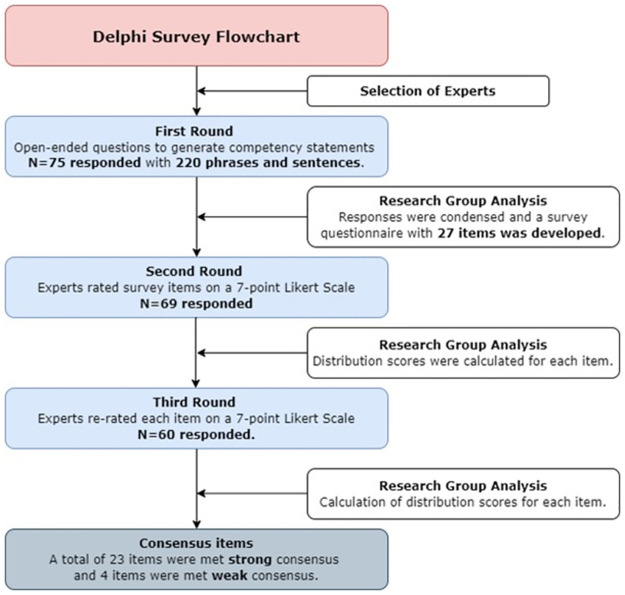
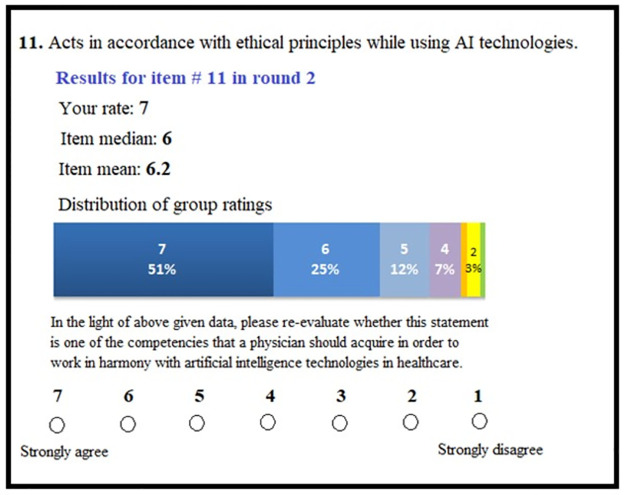
BACKGROUND: Artificial intelligence (AI) has affected our day-to-day in a great extent. Healthcare industry is one of the mainstream fields among those and produced a noticeable change in treatment and education. Medical students must comprehend well why AI technologies mediate and frame their decisions on medical issues. Formalizing of instruction on AI concepts can facilitate learners to grasp AI outcomes in association with their sensory perceptions and thinking in the dynamic and ambiguous reality of daily medical practice. The purpose of this study is to provide consensus on the competencies required by medical graduates to be ready for artificial intelligence technologies and possible applications in medicine and reporting the results. MATERIALS AND METHODS: A three-round e-Delphi survey was conducted between February 2020 and November 2020. The Delphi panel accorporated experts from different backgrounds; (i) healthcare professionals/ academicians; (ii) computer and data science professionals/ academics; (iii) law and ethics professionals/ academics; and (iv) medical students. Round 1 in the Delphi survey began with exploratory open-ended questions. Responses received in the first round evaluated and refined to a 27-item questionnaire which then sent to the experts to be rated using a 7-point Likert type scale (1: Strongly Disagree-7: Strongly Agree). Similar to the second round, the participants repeated their assessments in the third round by using the second-round analysis. The agreement level and strength of the consensus was decided based on third phase results. Median scores was used to calculate the agreement level and the interquartile range (IQR) was used for determining the strength of the consensus. RESULTS: Among 128 invitees, a total of 94 agreed to become members of the expert panel. Of them 75 (79.8%) completed the Round 1 questionnaire, 69/75 (92.0%) completed the Round 2 and 60/69 (87.0%) responded to the Round 3. There was a strong agreement on the 23 items and weak agreement on the 4 items. CONCLUSIONS: This study has provided a consensus list of the competencies required by the medical graduates to be ready for AI implications that would bring new perspectives to medical education curricula. The unique feature of the current research is providing a guiding role in integrating AI into curriculum processes, syllabus content and training of medical students.
Overview
The claims and statistics of this paper haven’t been checked yet.
Run the check — free, no account needed. It reads the open-access text and checks the sources it cites.
Integrity signals
Registry
Cites
Statistics
Figures
Verification
Claims the paper makes
The claims and statistics of this paper haven’t been checked yet.
Run the check — free, no account needed. It reads the open-access text and checks the sources it cites.
Claims other papers make about this one
Each is checked against this paper’s own text: does it say what the citing paper says it does?
The cited source says what the claim attributes to it.
In the citing paper
“Caliskan et al. identified 23 competencies with strong consensus among experts and four with weak consensus [161].”
From Artificial intelligence in undergraduate medical education: an updated scoping review (2025) · cites this paper as [161]
In the citing paper
“The advantages of using AI in healthcare include early disease detection and diagnosis, personalized medicine, improved workflow, decreased workload, reduced costs, and improved overall efficiency in healthcare systems globally [7–9].”
From Shaping the future: perspectives on the Integration of Artificial Intelligence in health profession education: a multi-country survey (2024) · cites this paper as [9]
In the citing paper
“While current publications on AI-related medical education emphasize key competencies or explore educational AI programs and concepts, they fail to specifically account for the four main pillars of biomedical ethics: autonomy, justice, non-maleficence, and beneficence [21–24].”
From Biomedical Ethical Aspects Towards the Implementation of Artificial Intelligence in Medical Education (2023) · cites this paper as [23]
Self-check
Percentages, sums and reported differences re-computed from the paper’s own numbers.
The self-check needs the paper’s full text.
Citations
Cites
High-performance medicine: the convergence of human and artificial intelligence
Topol, E. J. (2019) · Nature Medicine · doi:10.1038/s41591-018-0300-7 · Cited by 10,450
Research guidelines for the Delphi survey technique
Hasson, F. (2000) · Journal of Advanced Nursing · doi:10.1046/j.1365-2648.2000.01567.x · Cited by 5,951
The Delphi Technique: Making Sense of Consensus
Hsu, C.-C., & Sandford, B. A. (2007) · University of Massachusetts Amherst · doi:10.7275/pdz9-th90 · Cited by 4,500
Artificial intelligence in healthcare
Yu, K.-H., Beam, A. L., & Kohane, I. S. (2018) · Nature Biomedical Engineering · doi:10.1038/s41551-018-0305-z · Cited by 2,817
Boulkedid, R., Abdoul, H., Loustau, M., Sibony, O., & Alberti, C. (2011) · PLoS ONE · doi:10.1371/journal.pone.0020476 · Cited by 2,045
The Delphi Technique in Nursing and Health Research
Keeney, S., Hasson, F., & McKenna, H. (2011) · Wiley eBooks · doi:10.1002/9781444392029 · Cited by 1,568
A critical review of the Delphi technique as a research methodology for nursing
Keeney, S., Hasson, F., & McKenna, H. (2001) · International Journal of Nursing Studies · doi:10.1016/s0020-7489(00)00044-4 · Cited by 1,333
Managing Delphi Surveys Using Nonparametric Statistical Techniques*
Schmidt, R. C. (1997) · Decision Sciences · doi:10.1111/j.1540-5915.1997.tb01330.x · Cited by 1,240
The Delphi technique in health sciences education research
de Villiers, M., Villiers, P. J. T. D., & Kent, A. (2005) · Medical Teacher · doi:10.1080/13611260500069947 · Cited by 1,007
The Delphi technique: a critique
Goodman, C. (1987) · Journal of Advanced Nursing · doi:10.1111/j.1365-2648.1987.tb01376.x · Cited by 928
Research works printed but not linked: 1
- O Karaca, 2020, From Artificial Intelligence Theory to Application in Education, 346
Cited by
Sorted by citations
Large Language Models in Medical Education: Opportunities, Challenges, and Future Directions
Abd-alrazaq, A., AlSaad, R., Alhuwail, D., Ahmed, A., Healy, P. M., Latifi, S., Aziz, S., Damseh, R., Alabed Alrazak, S., & Sheikh, J. (2023) · JMIR Medical Education · doi:10.2196/48291 · Cited by 722
The rise of ChatGPT : Exploring its potential in medical education
Lee, H. (2024) · Anatomical Sciences Education · doi:10.1002/ase.2270 · Cited by 596
A scoping review of artificial intelligence in medical education: BEME Guide No. 84
Gordon, M., Daniel, M., Ajiboye, A., Uraiby, H., Xu, N. Y., Bartlett, R., Hanson, J., Haas, M., Spadafore, M., Grafton-Clarke, C., et al. (2024) · Medical Teacher · doi:10.1080/0142159x.2024.2314198 · Cited by 679
Ethical use of Artificial Intelligence in Health Professions Education: AMEE Guide No. 158
Masters, K. (2023) · Medical Teacher · doi:10.1080/0142159x.2023.2186203 · Cited by 302
Hirani, R., Noruzi, K. A., Khuram, H., Hussaini, A. S., Aifuwa, E., Ely, K., Lewis, J. M., Gabr, A. E., Smiley, A., Tiwari, R. K., et al. (2024) · Life · doi:10.3390/life14050557 · Cited by 280
Tolentino, R., Baradaran, A., Gore, G., Pluye, P., & Abbasgholizadeh-Rahimi, S. (2024) · JMIR Medical Education · doi:10.2196/54793 · Cited by 165
The Digital Health Competencies in Medical Education Framework
Car, J., Ong, Q. C., Erlikh Fox, T., Leightley, D., Kemp, S. J., Švab, I., Tsoi, K. K. F., Sam, A. H., Kent, F. M., Hertelendy, A. J., et al. (2025) · JAMA Network Open · doi:10.1001/jamanetworkopen.2024.53131 · Cited by 155
Franco D’Souza, R., Mathew, M., Mishra, V., & Surapaneni, K. M. (2024) · Medical Education Online · doi:10.1080/10872981.2024.2330250 · Cited by 147
Mapping the use of artificial intelligence in medical education: a scoping review
Rincón, E. H. H., Jimenez, D., Aguilar, L. A. C., Flórez, J. M. P., Tapia, Á. E. R., & Peñuela, C. L. J. (2025) · BMC Medical Education · doi:10.1186/s12909-025-07089-8 · Cited by 145
AI in the Health Sector: Systematic Review of Key Skills for Future Health Professionals
Gazquez-Garcia, J., Sánchez-Bocanegra, C. L., & Sevillano, J. L. (2025) · JMIR Medical Education · doi:10.2196/58161 · Cited by 94
Zhui, L., Li, F., Wang, X., Fu, Q., & Wei, R. (2024) · Journal of Medical Internet Research · doi:10.2196/60083 · Cited by 110
Busch, F., Adams, L. C., & Bressem, K. K. (2023) · Medical Science Educator · doi:10.1007/s40670-023-01815-x · Cited by 88
Artificial Intelligence and Healthcare Simulation: The Shifting Landscape of Medical Education
Hamilton, A. J. (2024) · Cureus · doi:10.7759/cureus.59747 · Cited by 117
Triola, M. M., & Rodman, A. (2025) · Academic Medicine · doi:10.1097/acm.0000000000005963 · Cited by 92
Issa, W. B., Shorbagi, A., Al-Sharman, A., Rababa, M., Al-Majeed, K., Radwan, H., Refaat Ahmed, F., Al-Yateem, N., Mottershead, R., Abdelrahim, D. N., et al. (2024) · BMC Medical Education · doi:10.1186/s12909-024-06076-9 · Cited by 78
Lee, Y.-M., Kim, S., Lee, Y.-H., Kim, H.-S., Seo, S. W., Kim, H., & Kim, K. J. (2024) · Academic Medicine · doi:10.1097/acm.0000000000005618 · Cited by 60
Artificial Intelligence in Orthopedic Radiography Analysis: A Narrative Review
Chen, K. S.-M., Stotter, C., Klestil, T., & Nehrer, S. (2022) · Diagnostics · doi:10.3390/diagnostics12092235 · Cited by 59
Artificial intelligence in undergraduate medical education: an updated scoping review
Simoni, J., Urtubia-Fernandez, J., Mengual, E., Simoni, D. A., Royo, M., Egaña-Yin, D., Hertog, O. L. A., López-Ortiz, L., Muñoz-Tomás, A., Santiago-Martínez, P., et al. (2025) · BMC Medical Education · doi:10.1186/s12909-025-08188-2 · Cited by 62
“Caliskan et al. identified 23 competencies with strong consensus among experts and four with weak consensus [161].”
Gin, B. C., LaForge, K., Burk-Rafel, J., & Boscardin, C. K. (2025) · Academic Medicine · doi:10.1097/acm.0000000000006117 · Cited by 36
Maccaro, A., Stokes, K., Statham, L., He, L., Williams, A., Pecchia, L., & Piaggio, D. (2024) · Journal of Personalized Medicine · doi:10.3390/jpm14050443 · Cited by 39
Thomae, A. V., Witt, C. M., & Barth, J. (2024) · JMIR Medical Education · doi:10.2196/50545 · Cited by 36
Gin, B. C., O’Sullivan, P., Hauer, K. E., Abdulnour, R.-E. E., Mackenzie, M. E., ten Cate, O., & Boscardin, C. (2024) · Academic Medicine · doi:10.1097/acm.0000000000005930 · Cited by 51
Li, X., Yan, X., & Lai, H. (2025) · PLoS ONE · doi:10.1371/journal.pone.0333411 · Cited by 38
Acquisition of Cardiac Point-of-Care Ultrasound Images With Deep Learning
Baum, E. J., Tandel, M. D., Ren, C., Weng, Y., Pascucci, M., Kugler, J., Cardoza, K. P., & Kumar, A. D. (2023) · CHEST Pulmonary · doi:10.1016/j.chpulm.2023.100023 · Cited by 33
McCoy, L., Ganesan, N., Rajagopalan, V., McKell, D., Niño, D. F., & Swaim, M. C. (2025) · Journal of Medical Education and Curricular Development · doi:10.1177/23821205251339226 · Cited by 40
Artificial intelligence: The future is already here
Dabija, D., & Vătămănescu, E. (2023) · Oeconomia Copernicana · doi:10.24136/oc.2023.031 · Cited by 29
Li, Z., & Xiao, Y. (2025) · BMC Medical Education · doi:10.1186/s12909-025-07669-8 · Cited by 38
Redefining Health Education in the Post-Pandemic World
de Almeida, R. S. (2023) · Advances in medical education, research, and ethics (AMERE) book series · doi:10.4018/978-1-6684-7164-7.ch001 · Cited by 27
Transforming medical education: the impact of innovations in technology and medical devices
Altıntaş, L., & Şahiner, M. (2024) · Expert Review of Medical Devices · doi:10.1080/17434440.2024.2400153 · Cited by 29
Ziapour, A., Darabı, F., Janjani, P., Amani, M. A., Yıldırım, M., & Motevaseli, S. (2025) · BMC Medical Education · doi:10.1186/s12909-025-06852-1 · Cited by 36
Scandiffio, J., Zhang, M., Karsan, I., Charow, R., Anderson, M. A., Salhia, M., & Wiljer, D. (2024) · Digital Health · doi:10.1177/20552076241238075 · Cited by 24
Itani, A., Gronseth, S. L., Musaad, S. M. A., Nguyen, T. T., Mirabile, Y. Z., & Beech, B. M. (2025) · International Journal of Educational Technology in Higher Education · doi:10.1186/s41239-025-00563-9 · Cited by 36
Transforming Nursing Education with Artificial Intelligence: A Systematic Review (2010–2025)
Alrazeeni, D. M., Alharrasi, M., Rony, M. K. K., Biswas, R. K., Tama, I. J., Halder, C. R., Deb, B., Bashar, F., & Akter, F. (2026) · SAGE Open Nursing · doi:10.1177/23779608261424597 · Cited by 39
Tenório, K., & Romeike, R. (2023) · Koli Calling International Conference on Computing Education Research · doi:10.1145/3631802.3631829 · Cited by 33
Twelve tips for developing and implementing AI curriculum for undergraduate medical education
Kim, D.-H., Kang, Y. J., & Lee, Y. (2025) · Medical Education Online · doi:10.1080/10872981.2025.2585637 · Cited by 28
Connolly, C., Hernon, O., Carr, P. J., Worlikar, H., McCabe, I., Doran, J., Walsh, J. C., Simpkin, A. J., & O'Keeffe, D. T. (2023) · Computers in the Schools · doi:10.1080/07380569.2023.2247393 · Cited by 27
A review of ChatGPT in medical education: exploring advantages and limitations
Cheng, Y., & Zhu, L. (2025) · International Journal of Surgery · doi:10.1097/js9.0000000000002505 · Cited by 26
Kıyak, Y. S. (2024) · Medical Science Educator · doi:10.1007/s40670-024-02146-1 · Cited by 24
GPT-4/4V's performance on the Japanese National Medical Licensing Examination
Kawahara, T., & Sumi, Y. (2024) · Medical Teacher · doi:10.1080/0142159x.2024.2342545 · Cited by 18
Based on Medicine, The Now and Future of Large Language Models
Su, Z., Tang, G., Huang, R., Yang, Q. W., Zhang, Z., & Dai, X. (2024) · Cellular and Molecular Bioengineering · doi:10.1007/s12195-024-00820-3 · Cited by 18
Psychiatry in the age of AI: transforming theory, practice, and medical education
Zhang, X., & Zhang, X. (2025) · Frontiers in Public Health · doi:10.3389/fpubh.2025.1660448 · Cited by 25
Forecasting Food Innovations with a Delphi Study
Zickafoose, A., Lu, P., & Baker, M. (2022) · Foods · doi:10.3390/foods11223723 · Cited by 16
Heung, Y. M. E., Yin, H., English, L. D., & Chiu, T. K. F. (2025) · Computers & Education · doi:10.1016/j.compedu.2025.105492 · Cited by 25
Meskó, B., Kristóf, T., Dhunnoo, P., Árvai, N., & Katonai, G. (2025) · Journal of Medical Internet Research · doi:10.2196/82820 · Cited by 11
Quantum leap in medical mentorship: exploring ChatGPT’s transition from textbooks to terabytes
Chokkakula, S., Chong, S., Yang, B., Jiang, H., Yu, J., Han, R., Attitalla, I. H., Yin, C., & Zhang, S. (2025) · Frontiers in Medicine · doi:10.3389/fmed.2025.1517981 · Cited by 12
Risana., V. U., Shirin, A., Purayil, R. N., Mathew, S. R., Soman, S., Sarath Chandran, C., & Kiron, S. S. (2024) · Discover Education · doi:10.1007/s44217-024-00297-2 · Cited by 15
Xia, Y., Huang, H., Halili, X., Wang, G., & Chen, Q. (2024) · Nurse Education in Practice · doi:10.1016/j.nepr.2024.104117 · Cited by 9
Arribas, C. M., Arcos, R., & Gertrudix, M. (2025) · Cogent Social Sciences · doi:10.1080/23311886.2025.2501759 · Cited by 9
Artificial intelligence in advanced practice nursing education: Opportunities and challenges
Allen, K. A., Costner-Lark, A., Serratt, T., & Gordon, J. A. (2025) · Journal of the American Association of Nurse Practitioners · doi:10.1097/jxx.0000000000001169 · Cited by 10
Funer, F., Tinnemeyer, S., Liedtke, W., & Salloch, S. (2024) · BMC Medical Ethics · doi:10.1186/s12910-024-01109-w · Cited by 9
Scott, I. A., Shaw, T. J., Slade, C., Wan, T. T., Barmanray, R., Coorey, C. P., Johnson, S. L., Bell, L. M., Herd, M., & Sullivan, C. M. (2025) · Internal Medicine Journal · doi:10.1111/imj.70112 · Cited by 8
Leal, J. A. (2025) · JAAOS Global Research and Reviews · doi:10.5435/jaaosglobal-d-25-00174 · Cited by 8
Ong, Q. C., Ang, C., Lai, N. M., Atun, R. A., & Car, J. (2025) · Journal of Medical Internet Research · doi:10.2196/72186 · Cited by 7
Artificial Intelligence and Competency‐Based Education: A Rapid Scoping Review
Faucher, M. A., Sing, E., Harris, S., Hutson, E., & Hoelscher, S. H. (2025) · Journal of Midwifery & Women s Health · doi:10.1111/jmwh.70009 · Cited by 12
Chuenjitwongsa, S., Arunratanothai, T., Rewthamrongsris, P., Sumrejkanchanakij, P., Tavedhikul, K., Samaranayake, L. P., & Osathanon, T. (2026) · International Dental Journal · doi:10.1016/j.identj.2026.109733 · Cited by 6
Baigi, S. F. M., Aval, R. N., Sarbaz, M., Tabatabaei, S. M., & Kimiafar, K. (2025) · BMC Medical Education · doi:10.1186/s12909-025-08328-8 · Cited by 6
AI Competency: Current State and Challenges
Tsuei, S. H. (2026) · JMIR Medical Education · doi:10.2196/86686 · Cited by 5
Ziyi, W., Supo, Z., & Białas, M. (2024) · BMC Medical Education · doi:10.1186/s12909-024-05932-y · Cited by 4
Lee, I., & Lee, Y. (2025) · Korean Medical Education Review · doi:10.17496/kmer.24.042 · Cited by 5
Baum, E. J., Tandel, M. D., Ren, C., Weng, Y., Pascucci, M., Kugler, J., Cardoza, K. P., & Kumar, A. D. (2023) · medRxiv · doi:10.1101/2023.04.12.23288497 · Cited by 4
Ota, Y., Asada, Y., Kubo, S., Kanno, T., Yagi, M., & Matsuyama, Y. (2025) · JMIR Medical Education · doi:10.2196/84535 · Cited by 8
Pudjiadi, A. H., Alatas, F. S., Faizi, M., Rusdi, R., Sulistijono, E., Nency, Y. M., Julia, M., Juliaty, A., Hartoyo, E., Susanah, S., et al. (2024) · Healthcare Informatics Research · doi:10.4258/hir.2024.30.3.244 · Cited by 3
Santos, L. F. F. M., Sánchez‐Tena, M. Á., Alvarez-Peregrina, C. C., Sánchez‐González, J., & Martínez-Pérez, C. (2025) · Technologies · doi:10.3390/technologies13020077 · Cited by 4
Luo, C., Xie, S., Yuan, R., Li, P., Yang, C., Cao, J., & He, Y. D. (2026) · Teaching and Learning in Medicine · doi:10.1080/10401334.2026.2627455 · Cited by 2
A Student-Centered Approach Towards Implementing Large Language Models (LLMs) in Medical Education
Herpin, L. P., Vadlamudi, P. S., Mahawa, R., Troftgruben, M. H. S., Hua, J., Dine, C. J., & Hashikawa, A. N. (2026) · Medical Science Educator · doi:10.1007/s40670-026-02675-x · Cited by 2
Teaching artificial intelligence in the emergency department: A practical guide for educators
Heslin, S. M. (2026) · Artificial Intelligence in Emergency Medicine · doi:10.1016/j.aiemed.2026.100026 · Cited by 2
Grunebaum, A. N., Dudenhausen, J., & Chervenak, F. (2026) · American Journal of Obstetrics and Gynecology · doi:10.1016/j.ajog.2026.06.011 · Cited by 3
Fu, C., Li, J., Fan, H., Ren, R., Kefei, C., Zhang, Y., Yu, J., & Li, J. (2026) · Frontiers in Medicine · doi:10.3389/fmed.2026.1871524 · Cited by 3
Ishikawa, N. (2007) · OpenGrey (Institut de l'Information Scientifique et Technique) · Cited by 2
Artificial Intelligence in the Health Sector: Key Skills for Future Health Professionals. (Preprint)Preprint
Gazquez-Garcia, J., Sánchez-Bocanegra, C. L., & Sevillano, J. L. (2024) · doi:10.2196/preprints.58161 · Cited by 2
Value Chain in the Production of Sacha Inchi Oil (Plukenetia volubilis L.) in Cuba
Hernández, M. O. N., Domínguez, M., González-Olmedo, J. L., Botino, Y., Fajardo, Y. A., & Pérez, M. (2024) · International Journal of Agricultural Economics · doi:10.11648/j.ijae.20240903.14 · Cited by 1
Surapaneni, K. M. (2025) · AJP Advances in Physiology Education · doi:10.1152/advan.00119.2025 · Cited by 1
Samaranayake, P. N., Hassan, A. K., Nelson, L., & Lieto, J. M. (2025) · Medical Science Educator · doi:10.1007/s40670-025-02608-0 · Cited by 1
ChatGPT Utility in Medical Education: A Systematic Review and Meta-Analysis
Hosseinzadegan, F., Hashemi, S. M., Sharifi, S. V., & Khoshnoodifar, M. (2025) · Health Science Monitor · doi:10.61882/hsm.4.3.173 · Cited by 1
Pantanowitz, J., Manko, C. D., Majewski, J., Berbis, M. A., Farris, A. B., Karsan, A., Bychkov, A., Luna, A., Williams, B., Delahunt, B., et al. (2026) · Journal of Pathology Informatics · doi:10.1016/j.jpi.2026.100661 · Cited by 1
AI-Assisted Formative Assessment in Clinical Education: From Algorithms to Agency
Nguyen, Q. T., Ha, T. M., & Mai, T. (2026) · JMIR Medical Education · doi:10.2196/93710 · Cited by 3
Artificial Intelligence in Spiritual Care: Modified Delphi Study
Winiger, F., Smith, C. E., Nourriz, S., Szilagyi, C., & Haußmann, A. D. (2026) · Journal of Medical Internet Research · doi:10.2196/97094 · Cited by 2
Digital competences for the health workforce: a systematic review
Meli, B. A., Bowman, C., Sacco, M. C., Fenech, A. G., Muscat, H. A., Hamilton, C., Scotter, C., Montebello, M., Chen, T., & Cordina, M. (2026) · International Journal of Medical Informatics · doi:10.1016/j.ijmedinf.2026.106702 · Cited by 1
A Systematic Review of the Application of Computational Technology in Microtia
Zhou, J., Cui, R., & Lin, L. (2024) · Journal of Craniofacial Surgery · doi:10.1097/scs.0000000000010210 · Cited by 1
Türkiye’de Tıp Eğitimi Müfredatlarında Yapay Zeka Derslerinin Durumunun Araştırılması
Gencer, K., & Gencer, G. (2024) · Bilgisayar Bilimleri ve Teknolojileri Dergisi · doi:10.54047/bibted.1520315 · Cited by 1
Artificial Intelligence and the Gartner Cycle: Time to Introduce in Undergraduate Medical Education
Burney, I. A., & Ahmed, N. (2024) · Journal of College of Physicians And Surgeons Pakistan · doi:10.29271/jcpsp.2024.03.253 · Cited by 1
Taheri, R., Foroughi, M., & Parang, K. (2026) · Research Square · doi:10.21203/rs.3.rs-9819693/v1 · Cited by 1
Bruijn, K., & Vlachopoulos, D. (2026) · Education Sciences · doi:10.3390/educsci16091470
Cognitive Technologies and Competence Development: Bibliometric Analysis
Іванова, Т. В. (2023) · Communications in computer and information science · doi:10.1007/978-3-031-48325-7_24
Introductory Chapter: Artificial Intelligence in Healthcare – Where Do We Go from Here?
Stawicki, S. P., Papadimos, T. J., Salibi, M., & Pappada, S. M. (2023) · Artificial intelligence · doi:10.5772/intechopen.111823
Artificial Intelligence: Revolutionizing the Medicolegal Field
Brigham, C. R., Buttar, W. A., Bucksbaum, M., & Talmage, J. B. (2023) · AMA guides newsletter · doi:10.1001/amaguidesnewsletters.2023.sepoct01
Kıyak, Y. S. (2024) · European Journal of Therapeutics · doi:10.58600/eurjther2248
Exploring student consensus about module-level ethnicity awarding gaps: a Delphi approach
Cheung, K. L., Thomas, M., Wong, B., Hills, L., Froome, H. M., Worsfold, N. T., & Bailey, D. P. (2024) · Journal of Further and Higher Education · doi:10.1080/0309877x.2024.2428722
Impact of Generative Artificial Intelligence Systems on Higher Education in India – A Delphi Study
Mani, G., Sharma, N., Jain, R., & Pohekar, S. D. (2025) · SN Computer Science · doi:10.1007/s42979-025-04449-5
Revisión bibliométrica sobre la adopción de inteligencia artificial en la educación superior
Jiménez, M. U., López-Mallama, O. M., & Espinosa, A. A. (2025) · Revista Guillermo de Ockham · doi:10.21500/22563202.7780
Training and Education for AI in Health Care
Hirosawa, T. (2025) · Springer eBooks · doi:10.1007/978-981-95-4338-0_14
Rahma, A. T., Hafeez, U., Waller, S., & Farooq, M. (2025) · doi:10.2196/preprints.90192
Shirin, A., Chandran, C. S., Soman, S., Mathew, S. R., Risana., V. U., Purayil, R. N., & Kiron, S. S. (2026) · Discover Artificial Intelligence · doi:10.1007/s44163-025-00579-0
Artificial Intelligence in Psychiatric Teaching and Training
Tom, A., Reddy, B. S. C., & Math, S. B. (2026) · Springer eBooks · doi:10.1007/978-981-95-1845-6_21
Mihara, H. (2026) · Education and human development · doi:10.5772/intechopen.1012733 · Cited by 1
Meddeb, K., Boussarsar, M., Ennouri, E., & Toumi, R. (2026) · Elsevier eBooks · doi:10.1016/b978-0-443-36554-6.00017-9
A Behavioral Health Practitioner’s Primer for the Use of Artificial Intelligence (AI)
Perle, J. G. (2026) · Journal of Technology in Behavioral Science · doi:10.1007/s41347-026-00636-0
Artificial Intelligence and Medical Distance Learning and Management
Madani, R., Richter, D. M., & Gomes, T. J. (2026) · Springer eBooks · doi:10.1007/978-3-032-19116-8_5
Rahma, A., Hafeez, U., Waller, S., & Farooq, M. (2026) · JMIR Medical Education · doi:10.2196/90192
Phillips, B., Romaniszyn, R., Metri, J., Buckley, K., Nelson, S. D., Luchen, G. G., Low, K., & Selby, A. R. (2026) · American Journal of Health-System Pharmacy · doi:10.1093/ajhp/zxag178
Metadata
- Authors
- Çalışkan, S. A., Demir, K., & Karaca, O.
- Affiliations
- Ege University (TR)
- İzmir Demokrasi Üniversitesi (TR)
- Corresponding author
- Çalışkan, S. Ayhan
- Venue
- PLOS ONE
- Publisher
- Public Library of Science (PLoS)
- Published
- 2022-07-21
- Volume
- 17
- Issue
- 7
- Pages
- e0271872
- ISSN
- 1932-6203 (ISSN-L)
- PMC
- PMC9302857
- OpenAlex
- W4286493308
- Cited by
- 115
- References
- 29
- Citations by year
- 2026: 37 · 2025: 33 · 2024: 28 · 2023: 14 · 2022: 2
- FWCI
- 5.80
- Type
- journal article
- Language
- en
- Open access
- gold
- doi.org
- Licence
- Locations
- PLoS ONE (publishedVersion, cc-by)
- PubMed Central (publishedVersion, cc-by)
- PubMed (publishedVersion)
- DOAJ (DOAJ: Directory of Open Access Journals) (submittedVersion, cc-by-sa)
- Topics
- Health Sciences › Medicine › Health Informatics › Artificial Intelligence in Healthcare and Education
- Social Sciences › Education › Innovations in Medical Education
- Health Sciences › Health Professions › General Health Professions › Health and Medical Education
- Keywords
- artificial intelligence in healthcare, medical curriculum, AI competencies, medical graduates, competency framework, AI literacy, expert consensus, curriculum integration
- MeSH terms
- Artificial Intelligence, Curriculum, Delphi Technique, Education, Medical, Humans, Consensus
About these checks
Registry, retraction, Cites and statistics results are computed, not judged, with one exception: a printed reference that no index lists is read once by a model before it counts as a citation error. Claims are extracted by a model and kept only when their quote appears verbatim in the text; each cited source is then checked, with a model’s help, for whether it says what the claim relies on. Those verdicts can be wrong — read the claim’s quote and the cited source before relying on one.
Statistics and arithmetic are recomputed, not judged.
Confidence bands are shown only for fields calibrated on our annotated test set. None is calibrated yet, so no band is shown.
What counts as a claim ›How we measure confidence ›How we check this ›
Are you an author, or do you see a problem with this page? Request a review
