

The DOI matches its Crossref record; 21 of the 21 references it cites were found in a registry or an index.
Western Australian medical students’ attitudes towards artificial intelligence in healthcare
Open accessAbstract
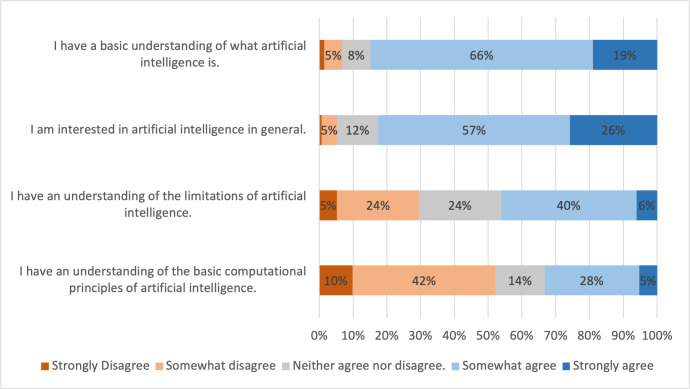
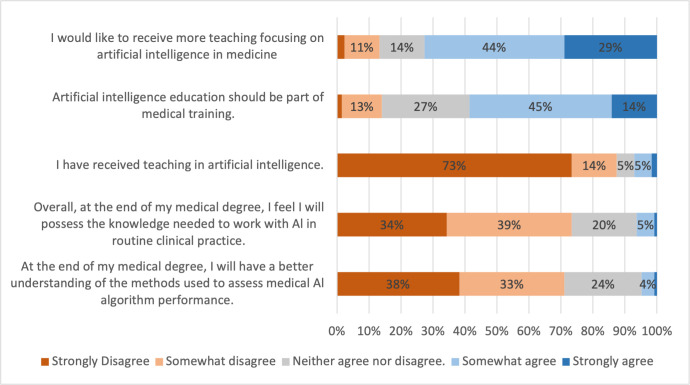
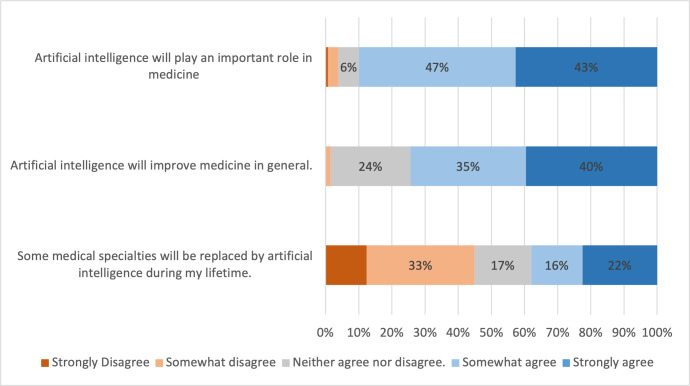
INTRODUCTION: Surveys conducted internationally have found widespread interest in artificial intelligence (AI) amongst medical students. No similar surveys have been conducted in Western Australia (WA) and it is not known how medical students in WA feel about the use of AI in healthcare or their understanding of AI. We aim to assess WA medical students' attitudes towards AI in general, AI in healthcare, and the inclusion of AI education in the medical curriculum. METHODS: A digital survey instrument was developed based on a review of available literature and consultation with subject matter experts. The survey was piloted with a group of medical students and refined based on their feedback. We then sent this anonymous digital survey to all medical students in WA (approximately 1539 students). Responses were open from the 7th of September 2021 to the 7th of November 2021. Students' categorical responses were qualitatively analysed, and free text comments from the survey were qualitatively analysed using open coding techniques. RESULTS: Overall, 134 students answered one or more questions (8.9% response rate). The majority of students (82.0%) were 20-29 years old, studying medicine as a postgraduate degree (77.6%), and had started clinical rotations (62.7%). Students were interested in AI (82.6%), self-reported having a basic understanding of AI (84.8%), but few agreed that they had an understanding of the basic computational principles of AI (33.3%) or the limitations of AI (46.2%). Most students (87.5%) had not received teaching in AI. The majority of students (58.6%) agreed that AI should be part of medical training and most (72.7%) wanted more teaching focusing on AI in medicine. Medical students appeared optimistic regarding the role of AI in medicine, with most (74.4%) agreeing with the statement that AI will improve medicine in general. The majority (56.6%) of medical students were not concerned about the impact of AI on their job security as a doctor. Students selected radiology (72.6%), pathology (58.2%), and medical administration (44.8%) as the specialties most likely to be impacted by AI, and psychiatry (61.2%), palliative care (48.5%), and obstetrics and gynaecology (41.0%) as the specialties least likely to be impacted by AI. Qualitative analysis of free text comments identified the use of AI as a tool, and that doctors will not be replaced as common themes. CONCLUSION: Medical students in WA appear to be interested in AI. However, they have not received education about AI and do not feel they understand its basic computational principles or limitations. AI appears to be a current deficit in the medical curriculum in WA, and most students surveyed were supportive of its introduction. These results are consistent with previous surveys conducted internationally.
Overview
The claims and statistics of this paper haven’t been checked yet.
Run the check — free, no account needed. It reads the open-access text and checks the sources it cites.
Integrity signals
Registry
Cites
Statistics
Figures
Verification
Claims the paper makes
The claims and statistics of this paper haven’t been checked yet.
Run the check — free, no account needed. It reads the open-access text and checks the sources it cites.
Claims other papers make about this one
Each is checked against this paper’s own text: does it say what the citing paper says it does?
In the citing paper
“Furthermore, studies from different parts of the world, such as Turkey [21], Australia [34], and India [17], demonstrated similar results and reported students had positive attitudes toward learning about AI technology during their education.”
From Shaping the future: perspectives on the Integration of Artificial Intelligence in health profession education: a multi-country survey (2024) · cites this paper as [34]
In the citing paper
“However, our results were consistent with a survey of Australian medical students (N = 134) in which only 14.8% were concerned about the impact of AI on their job security [34].”
From Shaping the future: perspectives on the Integration of Artificial Intelligence in health profession education: a multi-country survey (2024) · cites this paper as [34]
In the citing paper
“A comparison of our results with those of previous studies indicated variation in attitudes concerning the impact of AI technology on future healthcare professionals.”
From Shaping the future: perspectives on the Integration of Artificial Intelligence in health profession education: a multi-country survey (2024) · cites this paper as [34]
Self-check
Percentages, sums and reported differences re-computed from the paper’s own numbers.
The self-check needs the paper’s full text.
Citations
Cites
Medical students' attitude towards artificial intelligence: a multicentre survey
Pinto dos Santos, D., Giese, D., Brodehl, S., Chon, S. H., Staab, W., Kleinert, R., Maintz, D., & Baeßler, B. (2019) · European Radiology · doi:10.1007/s00330-018-5601-1 · Cited by 754
Burnout in medical students: A systematic review
IsHak, W., Nikravesh, R., Lederer, S., Perry, R., Ogunyemi, D., & Bernstein, C. (2013) · The Clinical Teacher · doi:10.1111/tct.12014 · Cited by 715
Sit, C., Srinivasan, R., Amlani, A., Muthuswamy, K., Azam, A., Monzon, L., & Poon, D. S. (2020) · Insights into Imaging · doi:10.1186/s13244-019-0830-7 · Cited by 507
Sapci, A. H., & Sapci, H. A. (2020) · JMIR Medical Education · doi:10.2196/19285 · Cited by 377
Gong, B., Nugent, J. P., Guest, W., Parker, W., Chang, P. J., Khosa, F., & Nicolaou, S. (2019) · Academic Radiology · doi:10.1016/j.acra.2018.10.007 · Cited by 325
Machine learning and medical education
Kolachalama, V. B., & Garg, P. S. (2018) · npj Digital Medicine · doi:10.1038/s41746-018-0061-1 · Cited by 320
Wood, E. A., Ange, B. L., & Miller, D. D. (2021) · Journal of Medical Education and Curricular Development · doi:10.1177/23821205211024078 · Cited by 261
Mousavi Baigi, S. F., Sarbaz, M., Ghaddaripouri, K., Ghaddaripouri, M., Mousavi, A. S., & Kimiafar, K. (2023) · Health Science Reports · doi:10.1002/hsr2.1138 · Cited by 255
What do medical students actually need to know about artificial intelligence?
McCoy, L. G., Nagaraj, S., Morgado, F., Harish, V., Das, S., & Celi, L. A. (2020) · npj Digital Medicine · doi:10.1038/s41746-020-0294-7 · Cited by 240
Grunhut, J., Wyatt, A. T., & Marques, O. (2021) · Journal of Medical Education and Curricular Development · doi:10.1177/23821205211036836 · Cited by 161
Cited by
Sorted by citations
A scoping review of artificial intelligence in medical education: BEME Guide No. 84
Gordon, M., Daniel, M., Ajiboye, A., Uraiby, H., Xu, N. Y., Bartlett, R., Hanson, J., Haas, M., Spadafore, M., Grafton-Clarke, C., et al. (2024) · Medical Teacher · doi:10.1080/0142159x.2024.2314198 · Cited by 679
Artificial intelligence in medical education - perception among medical students
Jackson, P., Ponath Sukumaran, G., Babu, C., Tony, M. C., Jack, D. S., Reshma, V. R., Davis, D., Kurian, N., & John, A. (2024) · BMC Medical Education · doi:10.1186/s12909-024-05760-0 · Cited by 185
Laupichler, M. C., Aster, A., Meyerheim, M., Raupach, T., & Mergen, M. (2024) · BMC Medical Education · doi:10.1186/s12909-024-05400-7 · Cited by 170
Busch, F., Hoffmann, L., Truhn, D., Ortiz-Prado, E., Makowski, M. R., Bressem, K. K., Adams, L. C., COMFORT Consortium, Abdala, N., Navarro, Á. A., et al. (2024) · BMC Medical Education · doi:10.1186/s12909-024-06035-4 · Cited by 108
Wang, X., Fei, F., Wei, J., Huang, M., Xiang, F., Tu, J., Wang, Y., & Gan, J. (2024) · Frontiers in Public Health · doi:10.3389/fpubh.2024.1433252 · Cited by 106
Pokrivcakova, S. (2023) · Journal of language and cultural education · doi:10.2478/jolace-2023-0031 · Cited by 81
Issa, W. B., Shorbagi, A., Al-Sharman, A., Rababa, M., Al-Majeed, K., Radwan, H., Refaat Ahmed, F., Al-Yateem, N., Mottershead, R., Abdelrahim, D. N., et al. (2024) · BMC Medical Education · doi:10.1186/s12909-024-06076-9 · Cited by 78
“Addressing ethical concerns involving AI technology while maintaining patient safety, privacy, and confidentiality will ensure future clinical leaders have expertise in both AI and medicine [34].”
BackgroundResultInfluentialYalcinkaya, T., Ergin, E., & Yucel, S. C. (2024) · Teaching and Learning in Nursing · doi:10.1016/j.teln.2024.07.008 · Cited by 57
Arvai, N., Katonai, G., & Mesko, B. (2025) · Journal of Medical Internet Research · doi:10.2196/66986 · Cited by 57
Halat, D. H., Shami, R., Daud, A., Sami, W., Soltani, A., & Malki, A. M. (2024) · Clinical and Experimental Dental Research · doi:10.1002/cre2.925 · Cited by 60
Status and perceptions of ChatGPT utilization among medical students: a survey-based study
Hu, N., Jiang, X. L., Wang, Y. D., Kang, Y. M., Xia, Z., Chen, H. H., Duan, S. N., & Chen, D. (2025) · BMC Medical Education · doi:10.1186/s12909-025-07438-7 · Cited by 51
Artificial Intelligence Literacy Levels of Perioperative Nurses: The Case of Türkiye
Kahraman, H., Akutay, S., Kaçmaz, H. Y., & Taşçı, S. (2025) · Nursing and Health Sciences · doi:10.1111/nhs.70059 · Cited by 46
The Mediating Effect of AI Trust on AI Self-Efficacy and Attitude Toward AI of College Students
Obenza, B. N., Baguio, J. S. I. E., Bardago, K. M. W., Granado, L. B., Loreco, K. C. A., Matugas, L. P., Talaboc, D. J., Zayas, R. K. D. D., Caballo, J. H. S., & Caangay, R. B. R. (2023) · International Journal of Metaverse · doi:10.54536/ijm.v2i1.2286 · Cited by 49
Bolgova, O., Ganguly, P. K., & Mavrych, V. (2025) · Anatomical Sciences Education · doi:10.1002/ase.70044 · Cited by 37
Ethical Challenges and Opportunities in Applying Artificial Intelligence to Cardiovascular Medicine
Lewin, S., Chetty, R., Ihdayhid, A. R., & Dwivedi, G. (2024) · Canadian Journal of Cardiology · doi:10.1016/j.cjca.2024.06.029 · Cited by 36
Self-citationMaaß, L., Grab‐Kroll, C., Koerner, J., Öchsner, W., Schön, M., Messerer, D. A. C., Boeckers, T. M., & Böckers, A. (2024) · Journal of CME · doi:10.1080/28338073.2024.2437293 · Cited by 40
Learner-Centered Experience-Based Medical Education in an AI-Driven Society: A Literature Review
Komasawa, N., & Yokohira, M. (2023) · Cureus · doi:10.7759/cureus.46883 · Cited by 27
Transforming medical education: the impact of innovations in technology and medical devices
Altıntaş, L., & Şahiner, M. (2024) · Expert Review of Medical Devices · doi:10.1080/17434440.2024.2400153 · Cited by 29
Large language models in physical therapy: time to adapt and adept
Naqvi, W. M., Shaikh, S. Z., & Mishra, G. V. (2024) · Frontiers in Public Health · doi:10.3389/fpubh.2024.1364660 · Cited by 24
Perceptions and Use of Generative Artificial Intelligence in Medical Students: A Multicenter Survey
Tran, C., Hryciw, B. N., Moore, S. W., Chaput, A., & Seely, A. J. E. (2025) · Journal of Medical Education and Curricular Development · doi:10.1177/23821205251391969 · Cited by 22
Neittaanmäki, N. (2025) · Frontiers in Education · doi:10.3389/feduc.2025.1517116 · Cited by 24
Optimization of diagnosis and treatment of hematological diseases via artificial intelligence
Wang, S., Huang, Z., Li, J., Wu, Y., Du, J., & Li, T. (2024) · Frontiers in Medicine · doi:10.3389/fmed.2024.1487234 · Cited by 32
Skalka, J., Przybyła‐Kasperek, M., Smyrnova‐Trybulska, E., Klimeš, C., Farana, R., Dagienė, V., & Dolgopolovas, V. (2025) · IEEE Access · doi:10.1109/access.2025.3573575 · Cited by 21
Radiography students’ perceptions of artificial intelligence in medical imaging
Arruzza, E. S. (2024) · Journal of medical imaging and radiation sciences · doi:10.1016/j.jmir.2024.02.014 · Cited by 15
Application of artificial intelligence in medical education: A meta-ethnographic synthesis
Li, W., Shi, H.-Y., Chen, X.-L., Lan, J., Rehman, A.-U., Ge, M., Shen, L.-T., Hu, F., Jia, Y., Li, X., et al. (2024) · Medical Teacher · doi:10.1080/0142159x.2024.2418936 · Cited by 16
Almarzouki, A. F., Alem, A., Shrourou, F., Kaki, S., Khushi, M., Mutawakkil, A., Bamabad, M., Fakharani, N., Alshehri, M., & Binibrahim, M. (2025) · BMC Medical Education · doi:10.1186/s12909-024-06446-3 · Cited by 16
Mudenda, S., Lubinda, R., Kasanga, M., Musakuzi, Z., Mohamed, S., & Mufwambi, W. (2024) · Creative Education · doi:10.4236/ce.2024.1512157 · Cited by 17
Li, C., Tsuei, S. H., & Wu, H. (2025) · JMIR Medical Education · doi:10.2196/80604 · Cited by 12
Gandhi, R. B., Parmar, A. J., Kagathara, J., Lakkad, D., Kakadiya, J. P., & Yogesh, M. (2024) · Cureus · doi:10.7759/cureus.67288 · Cited by 14
Chen, X., Chen, Y., Xie, Y., & Cheng, L. (2025) · BMC Nursing · doi:10.1186/s12912-025-03852-w · Cited by 8
Artificial Intelligence in Medical Education- Perception Among Medical Students
Jackson, P., S, G. P., Babu, C., Tony, C., Jack, D. S., Davis, D., R, R. V., Kurian, N., & John, A. (2024) · doi:10.21203/rs.3.rs-3833999/v1 · Cited by 187
Alkhayat, D., Alsubaiyi, H. N., Alharbi, Y. A., Alkahtani, L. M., Akhwan, A. M., & Alharbi, A. A. (2025) · Journal of Medical Education and Curricular Development · doi:10.1177/23821205251340129 · Cited by 7
Mudenda, S. (2025) · Creative Education · doi:10.4236/ce.2025.1611112 · Cited by 10
Shin, S., Sang, J., & Yoo, J. K. (2025) · Integrative Medicine Research · doi:10.1016/j.imr.2025.101216 · Cited by 7
Hanifa, H., Atia, M., Daboul, R., Alhamid, A. A. H., Alayyoubi, A., Naima, H. A., Alkassar, D., Nabhan, M. G., Alsaleh, B., & Abdula, F. (2025) · BMC Medical Education · doi:10.1186/s12909-025-07396-0 · Cited by 9
Sorte, S. R., Rawekar, A. R. A., Rathod, S. B., & Gandhi, N. S. (2025) · Journal of Education and Health Promotion · doi:10.4103/jehp.jehp_1030_24 · Cited by 8
Karayianni, I., Klidas, A. K., & Karakitsou, C. (2025) · TechTrends · doi:10.1007/s11528-025-01124-7 · Cited by 8
Chan, S. C. C., Young, H., & Parekh, R. (2025) · Medical Education · doi:10.1111/medu.70071 · Cited by 7
Alrazeeni, D. M., Alharrasi, M., Rony, M. K. K., Halder, C. R., Dhola, F.-T.-J., Aktery, A., & Tama, I. J. (2026) · Discover Public Health · doi:10.1186/s12982-026-01928-9 · Cited by 4
Dang, N. B., Phan, Q. N., & Tran, N. H. (2025) · International Medical Education · doi:10.3390/ime4030030 · Cited by 4
Hawal, M. V., Simon, M., Husain, N. H. A., Al-Harrasi, S. K. R., & Al-Hinai, L. N. S. (2025) · Journal of Medical Education Development · doi:10.61882/edcj.18.3.14 · Cited by 3
Paslı, B., & Beşer, C. G. (2026) · Anatomical Sciences Education · doi:10.1002/ase.70255 · Cited by 3
Equipping Future Physicians with Artificial Intelligence Competencies through Student Associations
Hopson, S., Mildon, C., Hassard, K., Urie, P. M., & Corte, D. D. (2024) · International Medical Education · doi:10.3390/ime3040029 · Cited by 3
Árvai, N., Meskó, B., & Katonai, G. (2025) · doi:10.2196/preprints.85373 · Cited by 3
What are the perceptions of AI in radiology among UK medical students and junior doctors?
Baker, J., Elliott, C., Boden, A., Antypas, A., Singh, S., Aggarwal, P., Jayasinghe, N., & Narasimhan, P. (2025) · Acta Radiologica · doi:10.1177/02841851251339010 · Cited by 2
Reshaping Anesthesia with Artificial Intelligence: From Concept to Reality
Dost, A., Alaraj, R., Mayet, R., & Agrawal, D. K. (2025) · Anesthesia and Critical Care · doi:10.26502/acc.087 · Cited by 4
Attitudes and Perceptions of Health Sciences Academicians on Artificial Intelligence
Yağcıoğlu, G. A., Akkurt, L., & Duygu, S. Ç. (2025) · Journal of Basic and Clinical Health Sciences · doi:10.30621/jbachs.1606219 · Cited by 2
Seçer, M. B., & Seçer, E. (2025) · İzmir Katip Çelebi Üniversitesi Sağlık Bilimleri Fakültesi Dergisi · doi:10.61399/ikcusbfd.1621606 · Cited by 5
“How about our stance?”: college students’ stance on using artificial intelligence educational tools
Bringula, R. P., Trillanes, A. O., & Catacutan-Bangit, A. E. (2025) · Education and Information Technologies · doi:10.1007/s10639-025-13859-0 · Cited by 2
The Role of Artificial Intelligence in Workforce Adaptation and Skill Development
Karmali, Y. (2026) · Biomedical visualization · doi:10.1007/978-3-032-06520-9_10 · Cited by 2
曹晞, Lu, Y.-Y., Li, J., Luo, X.-Y., Zeng, Y.-X., Wang, S.-H., & Gao, H. (2026) · BMC Medical Education · doi:10.1186/s12909-026-08698-7 · Cited by 3
Qiu, H., Zhang, G., Li, J., Yan, P., Chen, G., Xu, C., Li, Y., & Shang, L. (2026) · Academic Radiology · doi:10.1016/j.acra.2026.01.033 · Cited by 2
Ma, X., & Wang, H. (2026) · Frontiers in Public Health · doi:10.3389/fpubh.2026.1903509 · Cited by 4
Una revisión sistemática de estudios sobre IA: Aproximaciones desde la perspectiva del estudiantado
Chacón, M., Ramírez, J. C. C., Carrasco, S. A. N., & Encinas, K. L. P. (2025) · European Public & Social Innovation Review · doi:10.31637/epsir-2025-1704 · Cited by 7
AI ethics for the everyday intensivist
Tan, S. C., Modra, L. J., & Hensman, T. (2025) · Critical Care and Resuscitation · doi:10.1016/j.ccrj.2025.100115 · Cited by 2
GÜVEN, D. C., Kazancı, E. G., Ören, A., SEVER, L., & ÜNLÜ, P. (2024) · Journal of Bursa Faculty of Medicine · doi:10.61678/bursamed.1390634 · Cited by 3
Trainee Focus debate: Artificial intelligence will have a negative impact on emergency medicine
Hilbig, A. (2024) · Emergency Medicine Australasia · doi:10.1111/1742-6723.14460 · Cited by 2
Thinking machines: artificial intelligence in rehabilitation and beyond
Polastri, M. (2024) · International Journal of Therapy and Rehabilitation · doi:10.12968/ijtr.2024.0050 · Cited by 2
Constructing a Scale for Students’ Attitudes Toward AI-Enhanced Project-Based Learning
ALHarthy, S., Alkharusi, H., & Khalaf, M. A. (2025) · المجلة العربية للعلوم التربوية والنفسية · doi:10.21608/jasep.2025.429663 · Cited by 1
Shah, M. H., Faizan, M., Akbar, F., Nasir, H., Saddiqui, A. A., Fazal, Y., Abid, L., Maroof, S. M. H., Hasnain, S., Bibi, S., et al. (2025) · Cureus · doi:10.7759/cureus.97453 · Cited by 2
Simba, R., Hussein, H., & Mwogosi, A. (2026) · Information and Learning Sciences · doi:10.1108/ils-11-2024-0143 · Cited by 3
Akhmadieva, R. S., Sakhieva, R. G., Khvatova, M. A., Erokhova, N. S., Sizova, Z. M., & Shindryaeva, N. N. (2026) · Contemporary Educational Technology · doi:10.30935/cedtech/18082 · Cited by 2
Karaoba, D. D., Candiri, B., Yılmaz, R. C., & Perçin, A. (2026) · Acibadem Universitesi Saglik Bilimleri Dergisi · doi:10.31067/acusaglik.1846765 · Cited by 1
Hayes, J. (2026) · Journal of Medical Radiation Sciences · doi:10.1002/jmrs.70099 · Cited by 1
Fan, H.-Y., Zhou, Q., Deng, L.-L., Sun, L.-L., Tam, I. L., Wan, Z., Zhang, X.-L., Wang, M.-Q., Ho, H. K., Ng, C. H., et al. (2026) · BMC Nursing · doi:10.1186/s12912-026-04970-9 · Cited by 1
Joo, E., Ma, O., Woolley, T., & Haleagrahara, N. (2026) · International Medical Education · doi:10.3390/ime5030089 · Cited by 1
Mastour, H., Mirzaei, S., Sohrabi, S., & Toofaninejad, E. (2026) · BMC Medical Education · doi:10.1186/s12909-026-09630-9 · Cited by 3
“Jonathon Stewart [37] Most of the students (58.6”
InfluentialProcedure to Evaluate Artificial Intelligence (AI) Output for Educational and Clinical Tasks
Gilbertson, L., Busch, C. M., Spike, J., DeMoss, K., & Thompson, J. (2026) · Teaching and Learning in Communication Sciences & Disorders · doi:10.61403/2689-6443.1398
The potential misuse of AI in online medical admission interviewsPreprint
Hampshire, M., Howard, J., & James, D. K. (2024) · Research Square · doi:10.21203/rs.3.rs-4149316/v1
Impact of AI on Healthcare: A Descriptive Study
(2024) · REST Journal on Data Analytics and Artificial Intelligence · doi:10.46632/jdaai/3/1/2
Attitude towards artificial intelligence among medical students in Kerala
Gangadharan, K. J., & Singh, P. (2024) · E-Learning and Digital Media · doi:10.1177/20427530241276138
Kazzaz, H. H. A., Kazzaz, A. H., Kazzaz, S., & Mousawi, A. A. (2025) · F1000Research · doi:10.12688/f1000research.162415.1 · Cited by 1
Telugu Transcription for YouTube Videos Using LLMS
(2025) · REST Journal on Data Analytics and Artificial Intelligence · doi:10.46632/jdaai/4/1/71
AI Algorithms in Sustainable Healthcare
Vișan, A. I., & Neguț, I. (2025) · Advances in computational intelligence and robotics book series · doi:10.4018/979-8-3693-9725-1.ch001 · Cited by 1
Aljamaan, F., Mubarak, M., Altamimi, I., Alanteet, A. A., Alsalman, M., Dasuqi, S. A., Alballaa, R., Alarifi, M. I., Saadon, A. A., Alhaqbani, A. O., et al. (2025) · Research Square · doi:10.21203/rs.3.rs-6222830/v1
Yapay Zekaya ve Dersine Yönelik Tutum Ölçeği: Türkçeye Uyarlama, Geçerlik ve Güvenirlik Çalışması
Benzer, A. İ., Ünal, S., Yaşar, E. K., & Konuk, N. K. (2025) · Buca eğitim fakültesi dergisi (Online)/Buca Eğitim Fakültesi dergisi · doi:10.53444/deubefd.1574926
Li, C., Tsuei, S. H., & Wu, H. (2025) · doi:10.2196/preprints.80604
Martens, R., Holodinsky, J. K., Simon, J. E., & Marshall, Z. (2025) · doi:10.2196/preprints.80325
Moallem, E., Ghavami, V., Moghri, J., Marvi, A., Najafi, M., & Tabatabaee, S. S. (2025) · Journal of Health Administration · doi:10.61882/jha.28.1.40
Giavina-Bianchi, B., Bianchi, M. G., Wolosker, N., Amaro, E., & Machado, B. S. (2025) · Einstein (São Paulo) · doi:10.31744/einstein_journal/2025ao1401 · Cited by 1
Knowledge and Attitudes About Artificial Intelligence in Cuban Health Professionals and Students
Gil, A. M. C., Velázquez, M. S., Pérez, M. E. M., & Afrashtehfar, K. I. (2025) · Lecture notes in networks and systems · doi:10.1007/978-3-031-99699-3_4
Jackson, P., Ponath Sukumaran, G., Babu, C., Tony, M. C., Jack, D. S., Reshma, V. R., Davis, D., Kurian, N., & John, A. (2024) · Figshare · doi:10.6084/m9.figshare.26754622
Busch, F., Hoffmann, L., Truhn, D., Ortiz-Prado, E., Makowski, M. R., Bressem, K. K., & Adams, L. C. (2024) · Figshare · doi:10.6084/m9.figshare.27129365
Jackson, P., Ponath Sukumaran, G., Babu, C., Tony, M. C., Jack, D. S., Reshma, V. R., Davis, D., Kurian, N., & John, A. (2024) · Figshare · doi:10.6084/m9.figshare.26754625
Busch, F., Hoffmann, L., Truhn, D., Ortiz-Prado, E., Makowski, M. R., Bressem, K. K., & Adams, L. C. (2024) · Figshare · doi:10.6084/m9.figshare.27129362
Simoni, J., Mengual, E., Aschenbrenner-Noriega, I., Monforte-Martínez, C., Pérez-Merino, M., Sawczyn, G., Zurita, R., & Pereira, J. L. (2025) · MedEdPublish · doi:10.12688/mep.21319.1 · Cited by 6
Borzu, Z. A., Keikha, L., & Shahraki-Mohammadi, A. (2025) · Journal of Medical Education and Curricular Development · doi:10.1177/23821205251407758 · Cited by 1
Martens, R., Holodinsky, J. K., Simon, J. E., & Marshall, Z. (2026) · JMIR Research Protocols · doi:10.2196/80325
Generative AI's Impact on the Mental Health of Medical Students: Scenario Analysis
Árvai, N., Meskó, B., & Katonai, G. (2026) · JMIR Medical Education · doi:10.2196/85373 · Cited by 3
El-Helaly, M., Hussein, A. M., Taman, A., Farrag, N. S., Elfeky, A. A., Elhelaly, A. M., & Essam, N. (2026) · Scientific Reports · doi:10.1038/s41598-026-72964-3
Chouhan, K., Jangir, K., & Mathur, M. (2026) · Cureus · doi:10.7759/cureus.109790
Elifneh, Y. W. (2026) · Global Knowledge, Memory and Communication · doi:10.1108/gkmc-08-2025-0587
Tunç, H., ÖKCÜ, Ö., Turan, O., & Koç, Y. (2026) · Journal of Health and Allied Sciences NU · doi:10.25259/jhasnu_263_2025
Artificial intelligence perceptions and experiences among first and second year medical students
Knopf, E., Corrada, G. M. H., Luck, G. R., & Perumareddi, P. (2026) · Journal of Investigative Medicine · doi:10.1177/10815589261462547 · Cited by 1
Rizwan, M., & Khalid, A. M. (2026) · HITEC medical and dental journal. · doi:10.69884/hmdj.5.2.3456
Assessment Of Risk Factors Associated With Hypertension Among Medical Students
Adil, S., Nudrat, F., Javed, F., Noor, E., Abdullah, M., Aurangzaib, M. Z., Soban, M., Eman, N. U., Fatima, S., Asmat, F., et al. (2026) · HITEC medical and dental journal. · doi:10.69884/hmdj.5.2.7658
Chhtrapati, D., Solanki, S., & Bhatt, A. (2026) · Journal of Library Administration · doi:10.1080/01930826.2026.2687812
Elkashif, M. M. L., Ahmed, H. A. A., Abdellatif, M. S., Abdalla, D. A. G., & Koabar, S. M. M. (2026) · Frontiers in Medicine · doi:10.3389/fmed.2026.1871352
Gen Z perceptions of AI-supported prescription fulfillment in community pharmacy
Morrison, B., & Boyle, T. A. (2026) · Canadian Pharmacists Journal / Revue des Pharmaciens du Canada · doi:10.3138/cpj-25-0114
Aljamaan, F., Mubarak, M. F., Altamimi, I., Alanteet, A. A., Alsalman, M. A., Dasuqi, S. A., Alballaa, R., Alarifi, M. I., Saadon, A. A., Alhaqbani, A. O., et al. (2026) · Health Science Reports · doi:10.1002/hsr2.72904
Metadata
- Authors
- Stewart, J., Lu, J., Gahungu, N., Goudie, A., Fegan, P. G., Bennamoun, M., Sprivulis, P., & Dwivedi, G.
- Affiliations
- The University of Western Australia (AU)
- Fiona Stanley Hospital (AU)
- Curtin University (AU)
- Government of Western Australia Department of Health (AU)
- Corresponding author
- Stewart, Jonathon
- ORCID
- Venue
- PLOS ONE
- Publisher
- Public Library of Science (PLoS)
- Published
- 2023-08-31
- Volume
- 18
- Issue
- 8
- Pages
- e0290642
- ISSN
- 1932-6203 (ISSN-L)
- PMC
- PMC10470885
- OpenAlex
- W4386323538
- Cited by
- 104
- References
- 21
- Citations by year
- 2026: 33 · 2025: 41 · 2024: 27 · 2023: 3
- FWCI
- 4.18
- Type
- journal article
- Language
- en
- Open access
- gold
- doi.org
- Licence
- Locations
- PLoS ONE (publishedVersion, cc-by)
- PubMed Central (publishedVersion, cc-by)
- UWA Profiles and Research Repository (UWA) (publishedVersion, cc-by)
- PubMed (publishedVersion)
- RePEc: Research Papers in Economics (submittedVersion)
- DOAJ (DOAJ: Directory of Open Access Journals) (submittedVersion, cc-by-sa)
- Funders
- Western Australian Health Translation Network
- the Australian Government’s Medical Research Future Fund
- Topics
- Health Sciences › Medicine › Health Informatics › Artificial Intelligence in Healthcare and Education
- Social Sciences › Education › Innovations in Medical Education
- Social Sciences › Education › Artificial Intelligence in Education
- Keywords
- artificial intelligence in healthcare, medical students' attitudes, Western Australia, AI literacy, student perceptions of AI
- MeSH terms
- Adult, Artificial Intelligence, Attitude, Australia, Delivery of Health Care, Female, Humans, Obstetrics, Pregnancy, Students, Medical, Young Adult
About these checks
Registry, retraction, Cites and statistics results are computed, not judged, with one exception: a printed reference that no index lists is read once by a model before it counts as a citation error. Claims are extracted by a model and kept only when their quote appears verbatim in the text; each cited source is then checked, with a model’s help, for whether it says what the claim relies on. Those verdicts can be wrong — read the claim’s quote and the cited source before relying on one.
Statistics and arithmetic are recomputed, not judged.
Confidence bands are shown only for fields calibrated on our annotated test set. None is calibrated yet, so no band is shown.
What counts as a claim ›How we measure confidence ›How we check this ›
Are you an author, or do you see a problem with this page? Request a review
