

ChatGPT versus human in generating medical graduate exam multiple choice questions—A multinational prospective study (Hong Kong S.A.R., Singapore, Ireland, and the United Kingdom)
Open accessThe DOI matches its Crossref record; 30 of the 30 references it cites were found in a registry or an index.
Abstract
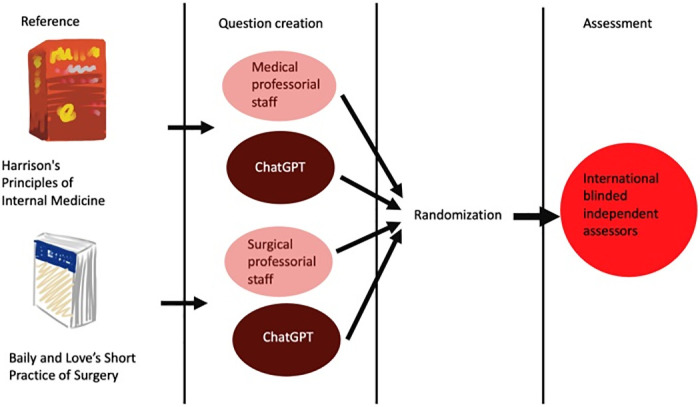
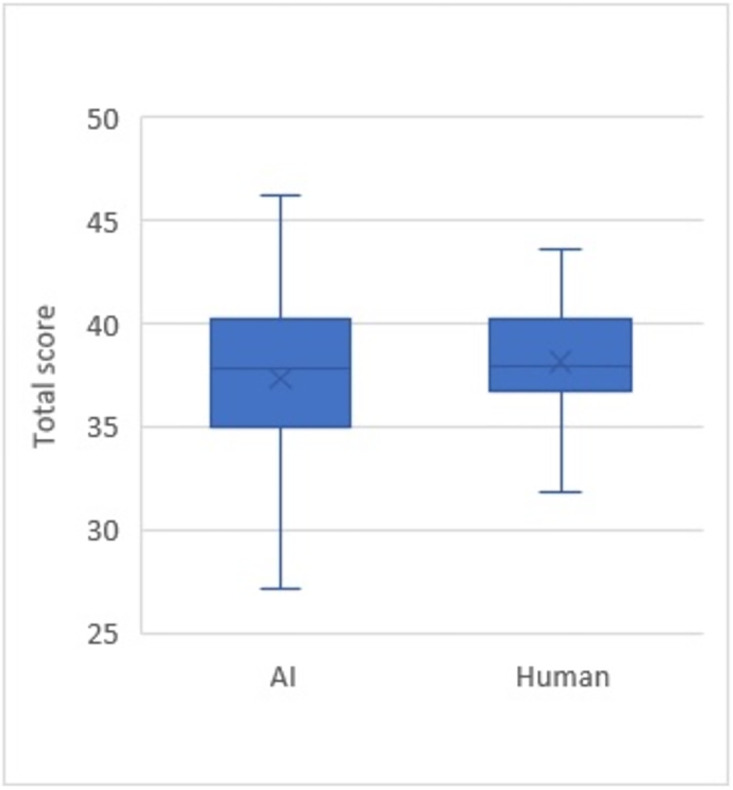
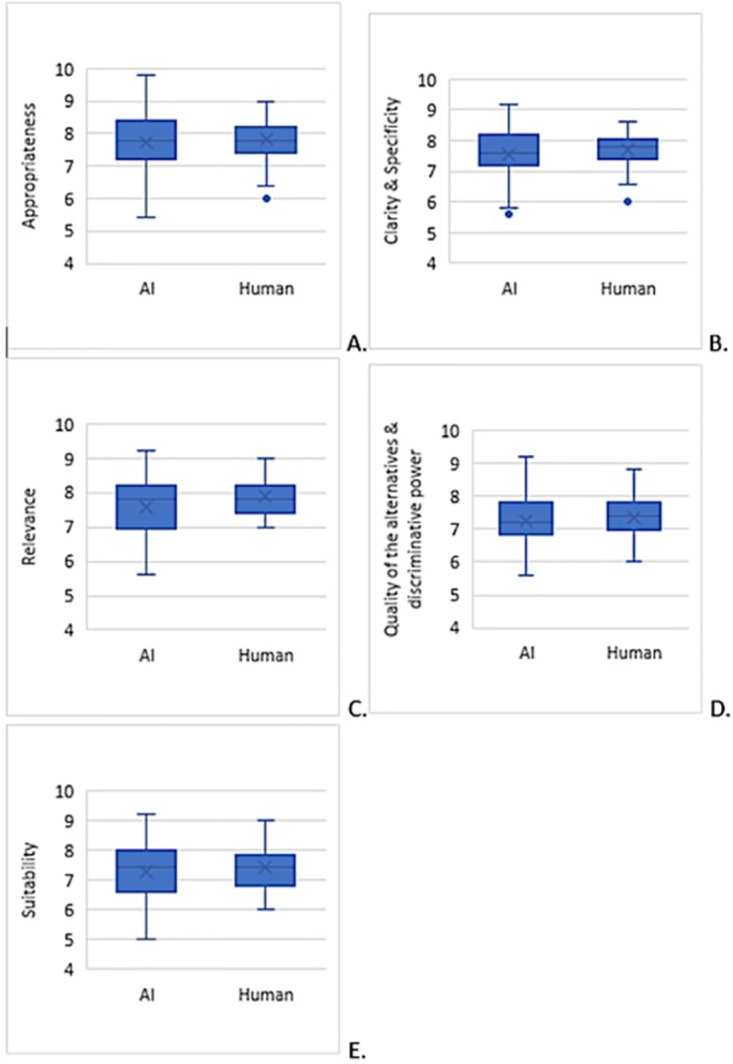
Introduction: Large language models, in particular ChatGPT, have showcased remarkable language processing capabilities. Given the substantial workload of university medical staff, this study aims to assess the quality of multiple-choice questions (MCQs) produced by ChatGPT for use in graduate medical examinations, compared to questions written by university professoriate staffs based on standard medical textbooks. Methods: 50 MCQs were generated by ChatGPT with reference to two standard undergraduate medical textbooks (Harrison’s, and Bailey & Love’s). Another 50 MCQs were drafted by two university professoriate staff using the same medical textbooks. All 100 MCQ were individually numbered, randomized and sent to five independent international assessors for MCQ quality assessment using a standardized assessment score on five assessment domains, namely, appropriateness of the question, clarity and specificity, relevance, discriminative power of alternatives, and suitability for medical graduate examination. Results: The total time required for ChatGPT to create the 50 questions was 20 minutes 25 seconds, while it took two human examiners a total of 211 minutes 33 seconds to draft the 50 questions. When a comparison of the mean score was made between the questions constructed by A.I. with those drafted by humans, only in the relevance domain that the A.I. was inferior to humans (A.I.: 7.56 +/- 0.94 vs human: 7.88 +/- 0.52; p = 0.04). There was no significant difference in question quality between questions drafted by A.I. versus humans, in the total assessment score as well as in other domains. Questions generated by A.I. yielded a wider range of scores, while those created by humans were consistent and within a narrower range. Conclusion: ChatGPT has the potential to generate comparable-quality MCQs for medical graduate examinations within a significantly shorter time.
Overview
The claims and statistics of this paper haven’t been checked yet.
Free: it reads the open-access text and checks the first 5 claims that cite a source we can check. Create a free account to check every claim.
Integrity signals
Registry
Cites
Statistics
Figures
Verification
Claims the paper makes
The claims and statistics of this paper haven’t been checked yet.
Free: it reads the open-access text and checks the first 5 claims that cite a source we can check. Create a free account to check every claim.
Claims other papers make about this one
Each is checked against this paper’s own text: does it say what the citing paper says it does?
The source backs part of the claim, not all of it — or backs it for a different population, condition or comparison.
In the citing paper
“Overall, while LLMs can quickly generate MCQs, their quality and difficulty often do not meet expectations.”
From MCQG-SRefine: Multiple Choice Question Generation and Evaluation with Iterative Self-Critique, Correction, and Comparison Feedback (2025) · cites this paper as Cheung et al. (2023)
Experimental — accuracy not yet measuredThe cited source says what the claim attributes to it.
In the citing paper
“This aligns with the previously mentioned finding of LLM-generated questions being less relevant than human-created ones [4].”
From Docimological Quality Analysis of LLM-Generated Multiple Choice Questions in Computer Science and Medicine (2024) · cites this paper as [4]
The cited source says what the claim attributes to it.
In the citing paper
“Cheung et al. reported that manual creation took 10 times longer than automatic generation [4].”
From Docimological Quality Analysis of LLM-Generated Multiple Choice Questions in Computer Science and Medicine (2024) · cites this paper as [4]
Self-check
Percentages, sums and reported differences re-computed from the paper’s own numbers.
The self-check needs the paper’s full text.
Citations
Cites
Machine learning: Trends, perspectives, and prospects
Jordan, M. I., & Mitchell, T. M. (2015) · Science · doi:10.1126/science.aaa8415 · Cited by 9,955
Artificial Intelligence in Education: A Review
Chen, L., Chen, P., & Lin, Z. (2020) · IEEE Access · doi:10.1109/access.2020.2988510 · Cited by 4,133
Kung, T. H., Cheatham, M., Medenilla, A., Sillos, C., De Leon, L., Elepaño, C., Madriaga, M., Aggabao, R., Diaz-Candido, G., Maningo, J., et al. (2023) · PLOS Digital Health · doi:10.1371/journal.pdig.0000198 · Cited by 4,115
Kung, T. H., Cheatham, M., ChatGPT, Medenilla, A., Sillos, C., De Leon, L., Elepaño, C., Madriaga, M., Aggabao, R., Diaz-Candido, G., et al. (2022) · doi:10.1101/2022.12.19.22283643 · Cited by 4,115
Haenlein, M., & Kaplan, A. (2019) · California Management Review · doi:10.1177/0008125619864925 · Cited by 2,655
Assessment in medical education
Epstein, R. M. (2007) · New England Journal of Medicine · doi:10.1056/nejmra054784 · Cited by 1,872
Artificial hallucinations in ChatGPT: implications in scientific writing
Alkaissi, H., & McFarlane, S. I. (2023) · Cureus · doi:10.7759/cureus.35179 · Cited by 1,540
Harrison's Principles of Internal Medicine
Bigby, J. (1988) · Archives of Dermatology · doi:10.1001/archderm.1988.01670020093028 · Cited by 1,234
On Faithfulness and Factuality in Abstractive Summarization
Maynez, J., Narayan, S., Bohnet, B., & McDonald, R. (2020) · Proceedings of the 58th Annual Meeting of the Association for Computational Linguistics · doi:10.18653/v1/2020.acl-main.173 · Cited by 1,185
On Faithfulness and Factuality in Abstractive Summarization
Maynez, J., Narayan, S., Bohnet, B., & McDonald, R. (2020) · arXiv · doi:10.48550/arxiv.2005.00661 · Cited by 1,185
Research works printed but not linked: 1
- 8. Wei J, Tay Y, Bommasani R, Raffel C, Zoph B, Borgeaud S, et al. Emergent abilities of large language models. arXiv preprint arXiv:220607682. 2022.
Cited by
Items 101–200 of 242
Evaluating AI performance in answering questions related to thoracic anatomy
Mavrych, V., & Bolgova, O. (2023) · MOJ Anatomy & Physiology · doi:10.15406/mojap.2023.10.00339 · Cited by 7
Bhattacharya, M., Pal, S., Chatterjee, S., Alshammari, A., Albekairi, T. H., Jagga, S., Ohimain, E. I., Zayed, H., Byrareddy, S. N., Lee, S., et al. (2024) · Current Research in Biotechnology · doi:10.1016/j.crbiot.2024.100194 · Cited by 7
Comparison of Automatic Item Generation Methods in the Assessment of Clinical Reasoning Skills
Emekli, E., & Karahan, B. N. (2024) · Revista Española de Educación Médica · doi:10.6018/edumed.637221 · Cited by 9
Anh, N. V., & Trang, N. T. (2025) · European Journal Of Dental Education · doi:10.1111/eje.70015 · Cited by 9
Furey, P., Town, A., Sumera, K., & Webster, C. A. (2024) · DOAJ (DOAJ: Directory of Open Access Journals) · doi:10.32114/cci.2024.7.2.34.54 · Cited by 12
Evaluation of ChatGPT as a Multiple-Choice Question Generator in Dental Traumatology
Özbay, Y. (2024) · Medical Records · doi:10.37990/medr.1446396 · Cited by 7
Ali, F. A., Sharif, S. Y., Ata, M., Patel, N. H., Rafay, M., Syed, H. R., & Iqbal, S. (2024) · Pakistan Journal Of Neurological Surgery · doi:10.36552/pjns.v28i1.963 · Cited by 7
Content and Item Response Theory Analysis of ChatGPT-4-Generated Multiple-Choice Items
Young, R., Courtney, E., Kah, A., Wilkerson, M., & Chen, Y.-H. (2025) · Teaching of Psychology · doi:10.1177/00986283241311220 · Cited by 6
“Researchers in other disciplines have succeeded in prompting variance of item dif fi culty (e.g., Bhandari et al., 2023; Cheung et al., 2023).”
Shuriaqi, S. A., Alzaabi, A. A., & Abdulsalam, A. A. (2026) · Machine Learning and Knowledge Extraction · doi:10.3390/make8020041 · Cited by 6
“Despite the previous improvements, many problems remain comparable across the studies, with distractor weakness (implausible, ambiguous, or more than one right answer) being the leading problem in the LLM-generated MCQs [5,20].”
AI Integration in MCQ Development: Assessing Quality in Medical Education: A Systematic Review
Ali, F., & Talat, H. (2024) · Life and Science · doi:10.37185/lns.1.1.643 · Cited by 6
UsmleGPT: An AI application for developing MCQs via multi-agent system
Jiang, Z., & Feng, S. (2025) · Software Impacts · doi:10.1016/j.simpa.2025.100742 · Cited by 9
Students’ mathematical justification abilities in analyzing ChatGPT’s answers
Ab, J. S., Pratama, E. Y., Andika Putra, R., Nasution, S. H., & Lestyanto, L. M. (2025) · Infinity Journal · doi:10.22460/infinity.v14i2.p445-460 · Cited by 6
Ahmed, M. M., Huang, F., & Chow, C.-M. (2025) · CJC Open · doi:10.1016/j.cjco.2025.03.013 · Cited by 8
Chen, M., Ma, J., Cui, X., Dai, Q., Hu, H., Wu, Y., Husaiyin, S., Wu, A., & Qiao, Y. (2025) · Medical Teacher · doi:10.1080/0142159x.2025.2513419 · Cited by 7
Assessing the psychometric properties of AI-generated multiple-choice exams in a psychology subject
Baudin, J. S. P. (2025) · Journal of Pedagogical Sociology and Psychology · doi:10.33902/jpsp.202536891 · Cited by 7
Lee, W., Chang, S., & Suh, J. (2025) · Education Sciences · doi:10.3390/educsci15111478 · Cited by 5
“Rapid generation of test questions and materials, reducing instructors’ workload and preparation time (Kıyak & Emekli, 2024; Cheung et al., 2023).”
Shu, C., Yao, N., Chen, Y., Wijeratne, V., Ma, L., Loo, J., Chai, K. K., Alam, A. S., & Abuelmaatti, A. (2025) · IEEE Global Engineering Education Conference (EDUCON) · doi:10.1109/educon62633.2025.11016449 · Cited by 9
“Unlike using textbooks as the input [11], using a source with selective curation ensures that generated MCQs remain relevant to the actual scope and depth of the module.”
Nielsen, J. P. S., Mikkelsen, A. K., Künzel, J., Sebelik, M., Madani, G., Yang, T., & Todsen, T. (2025) · Diagnostics · doi:10.3390/diagnostics15151848 · Cited by 5
“Cheung et al. also demonstrated that it took physicians significantly longer to create the MCQs compared with the LLM [19].”
Apornvirat, S., Pisutpunya, A., Atiroj, N., & Laohawetwanit, T. (2026) · Pathology International · doi:10.1111/pin.70083 · Cited by 7
An artificial intelligence-driven platform for practice question generation
Zahn, A., Overla, S., Lowrie, D. J., Zhou, C. Y., Santen, S. A., Zheng, W., & Turner, L. (2026) · Academic Medicine · doi:10.1093/acamed/wvaf074 · Cited by 5
Assessing the Utility of AI Versus Human-Created MCQs in Pediatric Medical Education
Knight, J., McGee, R. G., Malau‐Aduli, B. S., & For the ACHIEVE network (2026) · Journal of Medical Education and Curricular Development · doi:10.1177/23821205261427885 · Cited by 5
“14 This represents a signi fi cant opportunity for examiners, as MCQ questions are often time consuming to generate manually, particularly for inexperienced item writers, for whom a single high-quality question can take over 90 min to create.”
InfluentialTian, Y., Huynh, L., Christhilf, K., Chakraborty, S., Watanabe, M., Arner, T., & McNamara, D. S. (2026) · Electronics · doi:10.3390/electronics15061209 · Cited by 8
Qian, W., Li, K., Cao, F., Wang, S., Jin, M., & Wang, C. (2026) · npj Digital Medicine · doi:10.1038/s41746-026-02568-8 · Cited by 6
Shahat, K. A. (2024) · Cureus · doi:10.7759/cureus.69151 · Cited by 8
“In the author’s opinion, such automation has the potential to make the MCQ generation process smoother, less laborious, faster, and with minimum possibility of human errors [28].”
BackgroundLeveraging the Human Classroom with AI-Powered Resources
Adib, N., Sommer, N. M., & Waksmanski-Krynski, N. (2024) · IEEE Digital Education and MOOCS Conference (DEMOcon) · doi:10.1109/democon63027.2024.10747892 · Cited by 5
Kıyak, Y. S., Kononowicz, A. A., & Górski, S. (2024) · Bio-Algorithms and Med-Systems · doi:10.5604/01.3001.0054.9192 · Cited by 6
Harnessing the power of ChatGPT to develop effective MCQ-based clinical pharmacy exams
Ahmed, A., Jamil, E., Abubakar, M., Batool, A., Akhtar, M. M., Nasiri, M. I., & Ullah, M. (2024) · Journal of Research on Technology in Education · doi:10.1080/15391523.2024.2425435 · Cited by 5
“In other studies, Das et al. (2021), Cheung et al. (2023) and Kumar et al. (2023) have demonstrated that AI-generated MCQs could match human-generated ones in terms of difficulty and reliability and align with learning objectives.”
Quality Assessment of Pathology Board-Exam-Style MCQs Produced by ChatGPT3.5: A Comparative Study
Morton, A. B., Naeem, Z., Goldberg, A. F., Peedin, A. R., & Chan, J. S. Y. (2025) · International Medical Education · doi:10.3390/ime4040049 · Cited by 4
“One study compared internal medicine and surgery MCQs written by ChatGPT with MCQs written by experienced physicians, using popular textbooks as a reference [5].”
Sharma, K., & Rai, P. (2026) · American Journal of Distance Education · doi:10.1080/08923647.2026.2627737 · Cited by 4
AI for Assessment in Medical Education in Post LLM Era: A Scoping Review
Agarwal, P., Agarwal, R., & Iezhitsa, I. N. (2026) · Medical Science Educator · doi:10.1007/s40670-026-02653-3 · Cited by 5
Hölzing, C. R., Meynhardt, C., Meybohm, P., Koenig, S., & Kranke, P. (2026) · JMIR Formative Research · doi:10.2196/84904 · Cited by 6
“…where cohort studies have demonstrated that AI-gener-ated MCQs often achieve discrimination indices similar to expert-generated items but tend to be easier overall and still require expert review to ensure distractor plausibility and alignment with higher-order learning objectives [5,19-23].”
Dang, H. N. N., Luong, T. V., Vo, H. T. H., Nguyen, L. T. K., Tran, T. N., Pham, H. T. A., Truong, H. T., Tran, H., Tran, T. T., Hoang, T. A., et al. (2026) · BMC Medical Education · doi:10.1186/s12909-026-09305-5 · Cited by 5
“AI has been applied in diverse educational contexts, such as automated question generation [12], surgical skills training [13], and communication skill development [14].”
Answering Patterns in SBA Items: Students, GPT3.5, and Gemini
Ng, O., Phua, D. H., Chu, J., Wilding, L. V. E., Mogali, S. R., & Cleland, J. (2024) · Medical Science Educator · doi:10.1007/s40670-024-02232-4 · Cited by 4
“Much has been reported on the use of ChatGPT to answer examination questions in different examinations globally [8, 11–13].”
Naseer, M. A., Nasir, Y., Tabassum, A., & Ali, S. S. (2024) · Journal of Shalamar Medical & Dental College - JSHMDC · doi:10.53685/jshmdc.v5i2.253 · Cited by 5
Application Research of Large Language Models in Medicine: Status, Problems, and Future
Ao, G., Wang, G., Chen, Y., Xia, J., & Su, S. (2023) · International Conference on Information Technology in Medicine and Education · doi:10.1109/itme60234.2023.00151 · Cited by 4
Dagher, T., Haydon, R. C., Wolf, J. M., & Strelzow, J. (2025) · Current Problems in Surgery · doi:10.1016/j.cpsurg.2025.101943 · Cited by 3
Applicability of ChatGPT to generate multiple-choice questions for ophthalmology resident exam
Feizi, S., Hatami, F., Mirzaie, S. K., Shahriari, M. H., Dolikhani, M., Shirzadeh-Barough, S., & Esfandiari, H. (2025) · British Journal of Ophthalmology · doi:10.1136/bjo-2025-327632 · Cited by 3
Elkersh, N. M., Saif, N., Samir, W., Hussein, G. B. A., & Mohamed, H. (2026) · European Journal Of Dental Education · doi:10.1111/eje.70104 · Cited by 3
Artificial intelligence performance in generating colorectal surgery board questions
Zuo, J., Marty, M., Maniskas, S. A., Akopian, G., Zaghiyan, K. N., Fleshner, P. R., & Truong, A. (2026) · The American Journal of Surgery · doi:10.1016/j.amjsurg.2026.116860 · Cited by 4
Menze, D., Radović, S., & Seidel, N. (2026) · Frontiers in Computer Science · doi:10.3389/fcomp.2026.1831250 · Cited by 4
Saleem, N. H., Amaranathan, J., Dandoush, A., Rye, S., King, P. T., & Chin, M. H. (2026) · Medical Teacher · doi:10.1080/0142159x.2026.2691072 · Cited by 3
Fadillah, M. A., Husin, M., Usmeldi, U., & Asrizal, A. (2026) · International Journal of Educational Reform · doi:10.1177/10567879261464157 · Cited by 3
Human-in-the-loop validation of a sequential multi-LLM medical education pipeline
Nam, Y., An, T., Hwang, S. I., Jeon, C., Jeong, J. W., Jeong, J., Kim, D. Y., Kim, P. H., Kim, S. Y., Kim, S., et al. (2026) · npj Digital Medicine · doi:10.1038/s41746-026-02978-8 · Cited by 4
“As a rough comparator, manual MCQ authoring by faculty takes approximately 4 min per item 34 , which would translate to roughly 400 h for 6000 items.”
Cheung, B. H. H., Lau, K. K., Wong, G. T. C., Lee, E. Y. P., Kulkarni, D., Seow, C. S., Wong, R., & Co, M. T.-H. (2025) · PLoS ONE · doi:10.1371/journal.pone.0327290 · Cited by 3
Self-citationSaad, M., Moqeet, M. A., Mansoor, H., Khan, S., Sharif, R., Khan, F. U., Naqvi, A. H., & Ali, W. (2025) · Cureus · doi:10.7759/cureus.79688 · Cited by 3
“These chatbots, trained on vast datasets of text and code, have demonstrated the ability to understand and generate human-like text, making them suitable candidates for evaluating responses to clinical knowledge assessment questions [2].”
Wang, P., Mi, B., Lu, J., & Fen, Z. (2025) · Disability and Rehabilitation Assistive Technology · doi:10.1080/17483107.2025.2560673 · Cited by 4
RetractedAbdalrahim, A. M. A., & Mohammed, A. (2025) · The Arab Journal For Quality Assurance In Higher Education · doi:10.20428/ajqahe.v18i66.3263 · Cited by 2
Andreas, S., Pana, Z. D., Larentzakis, A. V., Kondylis, S., Maina, A. M., Ziogas, N. K., & Ntourakis, D. (2026) · Global Surgical Education - Journal of the Association for Surgical Education · doi:10.1007/s44186-025-00411-4 · Cited by 3
“In one study, Cheung et al. trained an AI model on a bank of internal medicine questions, subsequently generating new, faculty-reviewed exam items that were used in student quizzes [64].”
Al-Najafi, D., Krause, K. D., Wang, Y., Zuo, Q. K., Koblanski, M. E., Leong, C. J., Schmidt, E., Faran, M., Verma, V., Vyas, R., et al. (2026) · BMC Medical Education · doi:10.1186/s12909-026-09671-0 · Cited by 2
“This efficiency gain is consistent with the 5–10-fold acceleration reported in previous studies of AI-assisted MCQ generation in medical education [9, 10, 33].”
Emekli, E., Tepe, M., Demir, S., & Kıyak, Y. S. (2026) · Journal of Imaging Informatics in Medicine · doi:10.1007/s10278-026-02225-2 · Cited by 2
Sawamura, S., Kohiyama, K., Takenaka, T., Sera, T., Inoue, T., & Nagai, T. (2025) · Cureus · doi:10.7759/cureus.79183 · Cited by 2
“This suggests that although GPTs successfully mimicked the structure of exam questions, they may not have fully captured the nuanced difficulty levels or academic rigor required for the national licensure examination for physical therapists [9].”
InfluentialBuhl, L. K. (2025) · Medical Teacher · doi:10.1080/0142159x.2025.2497891 · Cited by 5
The Battle of Chatbot Giants: An Experimental Comparison of ChatGPT and Bard
Kabakuş, A. T., & Doğru, İ. A. (2024) · Uluslararası mühendislik araştırma ve geliştirme dergisi · doi:10.29137/umagd.1390083 · Cited by 5
Syn-STARTS: Synthesized START Triage Scenario Generation Framework for Scalable LLM EvaluationPreprint
Hagiwara, C., Nonaka, N., Hashimoto, Y., Uchimido, R., & Seita, J. (2025) · arXiv (Cornell University) · doi:10.48550/arxiv.2511.14023 · Cited by 2
A eficácia do ChatGPT no ensino de medicina por meio de mapeamento sistemático
da Silva, C. L., & Fregadolli, A. M. V. (2025) · Revista JRG de Estudos Acadêmicos · doi:10.55892/jrg.v8i18.2005 · Cited by 1
Muhamad, G. A., Alsulami, B. S., & Thabit, K. O. (2025) · International Conference on Advanced Innovations in Smart Cities (ICAISC) · doi:10.1109/icaisc64594.2025.10959667 · Cited by 1
Yee-King, M. J., & Fiorucci, A. (2025) · IEEE Global Engineering Education Conference (EDUCON) · doi:10.1109/educon62633.2025.11016587 · Cited by 1
Ma, P., Chen, S., Su, W., Sheng, J., Jia, X., Wei, C., Luo, Y., Xu, J., Song, Y., Yong, L., et al. (2025) · Journal of Agriculture and Food Research · doi:10.1016/j.jafr.2025.102086 · Cited by 2
Comparing Human- and ChatGPT-Generated Multiple-Choice Questions in Athletic Training Education
Davlin-Pater, C., & Jutte, L. S. (2025) · Journal of Athletic Training Education and Practice · doi:10.4085/1947-380x-24-066 · Cited by 1
The Efficacy of Using a Large-Language Model as an Item Writing Assistant
Jones, P. E., & Becker, K. (2025) · Applied Measurement in Education · doi:10.1080/08957347.2025.2580612 · Cited by 1
“Cheung et al. (2023) reported a ten-fold increase in first-draft generation efficiency with an LLM versus using human writers.”
Using LLM to Generate Questions and Answers for Statistics Education: Is It Adequate?
Cheng, Y., Sanders, M., & Le, A. T. (2026) · Artificial intelligence · doi:10.5772/intechopen.1012986 · Cited by 1
Xue, K., & Appleton, J. J. (2026) · Journal of Educational Measurement · doi:10.1111/jedm.70028 · Cited by 1
Mihara, H. (2026) · Education and human development · doi:10.5772/intechopen.1012733 · Cited by 1
Jin, Y., Feng, C., Zhao, J., Lin, W., & Li, B. (2026) · Journal of International Medical Research · doi:10.1177/03000605261438348 · Cited by 1
Lopiano, S., Cohen, E. S., Holan, G., & Grachan, J. J. (2026) · Cureus · doi:10.7759/cureus.107397 · Cited by 1
“…studies evaluating ChatGPT's ability to generate questions have used uploaded source material such as textbook chapters or self-learning guides [19-21], whereas its ability to generate questions without such input, a method most commonly used by students studying independently, is less studied.”
Exploring question answering: metric analysis and evaluation framework for enhanced interpretability
Navarro, L. C., Mucciaccia, S. S., Mutz, F. W., Paixão, T. M., Badue, C. S., Souza, A. F. D., & Oliveira-Santos, T. (2026) · Neural Computing and Applications · doi:10.1007/s00521-026-12053-8 · Cited by 2
CHEN, C. X. R., Xie, S., Luo, Z., Hu, Z., Du, X., Huang, D., Hu, H., & Peng, S. (2026) · Frontiers in Medicine · doi:10.3389/fmed.2026.1817855 · Cited by 2
“This approach should strategically combine insights from AI learning analytics with the nuanced judgment of human experts, such as faculty and clinical supervisors, to ensure a valid, reliable, and equitable evaluation of student performance and anesthesiology education effectiveness (31, 36, 40).”
Phillips, C., & Harrison, D. (2026) · JMIR Formative Research · doi:10.2196/87121 · Cited by 2
““AI-output detectors” detect the use of AI in academic work, with varying results against humans in detecting AI-generated questions [11], but they have successfully discriminated between most original and AI-generated abstracts [12].”
Artificial Intelligence in Statistics Education: Leveraging LLMs for Analysis and Learning
di di Bella, E., & Preti, S. (2026) · Trends in Higher Education · doi:10.3390/higheredu5020039 · Cited by 1
Shin, S., Choi, J., Hong, E., Lee, M., Go, J., Yu, S., & Lee, M.-J. (2026) · BMC Medical Education · doi:10.1186/s12909-026-09685-8 · Cited by 1
“It has been extensively studied for various applications in healthcare education, notably item generation [3, 4].”
Haines, C., Spano, S. J., Irons, H. R., Brewer, B. C., & Lareau, S. A. (2026) · Wilderness and Environmental Medicine · doi:10.1177/10806032261460022 · Cited by 1
Automatic Question Generation with Large Language Models: A Survey
de Oliveira, R. M., Hernández, A., Garbin, M. C., dos Reis, J. C., & Azevedo, R. (2026) · ACM Computing Surveys · doi:10.1145/3832773 · Cited by 1
Giray, L., Aquino, R., & Jara, M. B. (2026) · Discover Education · doi:10.1007/s44217-026-01976-y · Cited by 1
“In a study comparing the multiple-choice questions written by ChatGPT to university professori-ate staff for graduate medical examinations, no significant decrease in quality aside from the domain of relevance was found [20].”
Zhang, J., Yang, Y., & Zhang, H. (2026) · Acta Psychologica · doi:10.1016/j.actpsy.2026.107581 · Cited by 1
Joo, E., Ma, O., Woolley, T., & Haleagrahara, N. (2026) · International Medical Education · doi:10.3390/ime5030089 · Cited by 1
“This replaces considerable human effort, although human verification is still needed to ensure question quality [14–16].”
Large language models: implications of rapid evolution in medicine
Cheung, B. H. H., & Co, M. T.-H. (2023) · Hong Kong Medical Journal · doi:10.12809/hkmj2310890 · Cited by 1
Self-citationEvaluating the Accuracy of ChatGPT in the Japanese Board-Certified Physiatrist Examination
Kato, Y., Ushida, K., & Momosaki, R. (2024) · Cureus · doi:10.7759/cureus.76214 · Cited by 1
“During pretraining, the language model learns to predict the next word using a broad range of data from the Internet [8].”
Sanpablo, A. I. P., Rodríguez, M. D., Arquer-Ruiz, M. D. C., Ramírez-Morales, A. O., & Peñaloza, A. M. (2024) · Revista Mexicana de Ingeniería Biomédica · doi:10.17488/rmib.44.4.11 · Cited by 1
“Los resultados mostraron que ChatGPT Plus generó preguntas con calidad comparable a las del experto humano [22] .”
BackgroundThe Promise of ChatGPT in Medical Education: a systematic review (Preprint)Preprint
Tang, P., Xiao, R., Cao, Y., Ying, Z., Xiao, W., Wen, T., & Li, Y. (2025) · doi:10.2196/preprints.70796
Analyze ChatGPT Usage in University Students’ Academic Writings
Tias, E. P. A. N., Wicaksono, M. G., Setyaningsih, E., Widyaningsih, T., Qurratu’ain, B. S., & Andika, M. R. (2025) · Advances in Social Science, Education and Humanities Research/Advances in social science, education and humanities research · doi:10.2991/978-2-38476-386-3_20
Kohan, N., Ahmady, S., Yaseen, S., Hoshmandjah, M., Keshavarzi, M. H., & Rezaei, P. (2024) · JMIR Medical Education · doi:10.2196/56325
Analysis of ChatGPT Application Based on Literature in Universities at Home and Abroad
毕, 玲. (2025) · Advances in Social Sciences · doi:10.12677/ass.2025.145381
Hezam, A. M. M. (2025) · SSRN Electronic Journal · doi:10.2139/ssrn.5274561
Evaluating GPT-4 Turbo`s Ability to Design English Reading Test Items for Language Learners
Alshehri, S. M., & Alharbi, M. S. (2025) · English Language Teaching · doi:10.5539/elt.v18n7p48
“For example, Cheung et al. (2023)investigated certain characteristics related to the quality of items generated by the Plus version of ChatGPT compared with those drafted by humans concerning the options' clarity, appropriateness, relevance, suitability, and discriminative power.”
ChatGPT’s Opinion-Based Real-Time Student Age-Group Differentiation Application
Verma, C. (2025) · International Conference on Educational Technology Management (ICETM) · doi:10.1109/icetm63734.2025.11051969
García-Ramírez, Y. (2025) · Applied Sciences · doi:10.3390/app15168906
AVINA: Automated Visual Novel Generation Using LLMs from MCQ Inputs
Han, X., Maillarbaux, T., Doyle, C., Idowu, O., Garg, P., Killian, C., Wall, K. D., Xu, X., Macori, G., & Campbell, A. G. (2025) · IEEE Gaming, Entertainment, and Media Conference (GEM) · doi:10.1109/gem66882.2025.11155579
“Recent research has explored the use of LLMs to assist in constructing MCQs [1], with studies demonstrating that LLM-generated questions can be comparable in quality to those written by human experts [2].”
Avidov, D., Ezra, O., Cohen, G., Cohen, A., & Bronshtein, A. (2025) · European Journal of Open Distance and E-Learning · doi:10.65043/eurodl.156 · Cited by 3
“Considering that building an evaluation tool is a complex and time-consuming process, development with the help of Gen-AI was found to be faster (Cheung et al. 2023; Ionescu & Enescu 2023; Lee et al. 2023; Nasution 2023).”
Merino, M., & Duarte, S. R. (2025) · Advances in computational intelligence and robotics book series · doi:10.4018/979-8-3373-7574-8.ch004
Halder, A. N., Sultana, S., Hasan, R., & Ahmed, S. (2025) · Indian Journal of Marketing · doi:10.17010/ijom/2025/v55/i10/175611
Za, A. A., & Ratmo, R. (2025) · IJLHE International Journal of Language Humanities and Education · doi:10.52217/ijlhe.v8i1.1823
“In this regard, a balanced assessment approach that combines receptive and productive tasks is essential for comprehensive language learning (Cheung et al., 2023).”
RagPharma: A RAG-Based Chatbot for Medicine Leaflets with a Dual-Dataset Evaluation Framework
Navarro, L. C., Mutz, F. W., Paixão, T. M., Zanetti, G. G., Badue, C. S., Souza, A. F. D., & Oliveira-Santos, T. (2025) · Journal of the Brazilian Computer Society · doi:10.5753/jbcs.2025.5767 · Cited by 1
De la tiza al silicio: guía práctica para integrar la IA en docencia médica
Pedro Errázuriz, G. (2025) · Revista Chilena de Reumatología/Revista chilena de reumatología · doi:10.58450/rcr.v41i3.153
Alhammadi, M. S., Sawady, M., Fayed, M. M. S., Abdulrab, S., El-Zawahry, N. O., Fekry, M. A., Alamer, A. Y., & Halboub, E. S. (2025) · Journal of the World Federation of Orthodontists · doi:10.1016/j.ejwf.2025.10.007 · Cited by 2
Large Language Models as Item Writer
Alismail, A. (2025) · CHEST Journal · doi:10.1016/j.chest.2025.08.016
Husain, S., Ansari, Z., Hussain, A., Abbasi, S., Ayoob, T., & Mujahid, R. (2023) · ANNALS OF ABBASI SHAHEED HOSPITAL AND KARACHI MEDICAL & DENTAL COLLEGE · doi:10.58397/ashkmdc.v28i04.759 · Cited by 3
Additional file 1 of Large language models for generating medical examinations: systematic review
Artsi, Y., Sorin, V., Konen, E., Glicksberg, B. S., Nadkarni, G., & Klang, E. (2024) · Figshare · doi:10.6084/m9.figshare.26699639
Additional file 3 of Large language models for generating medical examinations: systematic review
Artsi, Y., Sorin, V., Konen, E., Glicksberg, B. S., Nadkarni, G., & Klang, E. (2024) · Figshare · doi:10.6084/m9.figshare.26699645
Additional file 2 of Large language models for generating medical examinations: systematic review
Artsi, Y., Sorin, V., Konen, E., Glicksberg, B. S., Nadkarni, G., & Klang, E. (2024) · Figshare · doi:10.6084/m9.figshare.26699642
Optimizing a Swedish Distractor Generator for Multiple-Choice Questions using AI Preferences
Lundgren, E. (2024) · KTH Publication Database DiVA (KTH Royal Institute of Technology)
Metadata
- Authors
- Cheung, B. H. H., Lau, G. K. K., Wong, G. T. C., Lee, E. Y. P., Kulkarni, D., Seow, C. S., Wong, R., & Co, M. T.-H.
- Affiliations
- University of Hong Kong (HK)
- University of Edinburgh (GB)
- National University Cancer Institute, Singapore (SG)
- Ollscoil na Gaillimhe – University of Galway (IE)
- Corresponding author
- Co, Michael Tiong-Hong
- ORCID
- Venue
- PLOS ONE
- Publisher
- Public Library of Science (PLoS)
- Published
- 2023-08-29
- Volume
- 18
- Issue
- 8
- Pages
- e0290691
- ISSN
- 1932-6203 (ISSN-L)
- PMC
- PMC10464959
- OpenAlex
- W4386249608
- Cited by
- 195
- References
- 28
- Citations by year
- 2026: 61 · 2025: 71 · 2024: 54 · 2023: 9
- FWCI
- 7.68
- Type
- journal article
- Language
- en
- Update notices
- correction (2025-06-27)
- Open access
- gold
- doi.org
- Licence
- Locations
- PLoS ONE (publishedVersion, cc-by)
- PubMed Central (publishedVersion, cc-by)
- PubMed (publishedVersion)
- DOAJ (DOAJ: Directory of Open Access Journals) (submittedVersion, cc-by-sa)
- Topics
- Health Sciences › Medicine › Health Informatics › Artificial Intelligence in Healthcare and Education
- Social Sciences › Education › Innovations in Medical Education
- Social Sciences › Education › Artificial Intelligence in Education
- Keywords
- ChatGPT, large language models, multiple-choice questions, medical education, medical textbooks
- MeSH terms
- Artificial Intelligence, Education, Medical, Graduate, Educational Measurement, United Kingdom, Hong Kong, Humans, Ireland, Prospective Studies, Singapore
About these checks
Registry, retraction, Cites and statistics results are computed, not judged, with one exception: a printed reference that no index lists is read once by a model before it counts as a citation error. Claims are extracted by a model and kept only when their quote appears verbatim in the text; each cited source is then checked, with a model’s help, for whether it says what the claim relies on. Those verdicts can be wrong — read the claim’s quote and the cited source before relying on one.
Statistics and arithmetic are recomputed, not judged.
Confidence bands are shown only for fields calibrated on our annotated test set. None is calibrated yet, so no band is shown.
What counts as a claim ›How we measure confidence ›How we check this ›
Are you an author, or do you see a problem with this page? Request a review
Data sources
Bibliographic data: Semantic Scholar, OpenAlex, Crossref.
Contains information from the Semantic Scholar Academic Graph Datasets, made available under the ODC Attribution License (ODC-BY 1.0).
Semantic Scholar’s data is described in: Kinney, R., et al. (2023). The Semantic Scholar Open Data Platform. arXiv:2301.10140.
