

ChatGPT versus human in generating medical graduate exam multiple choice questions—A multinational prospective study (Hong Kong S.A.R., Singapore, Ireland, and the United Kingdom)
Open accessThe DOI matches its Crossref record; 30 of the 30 references it cites were found in a registry or an index.
Abstract
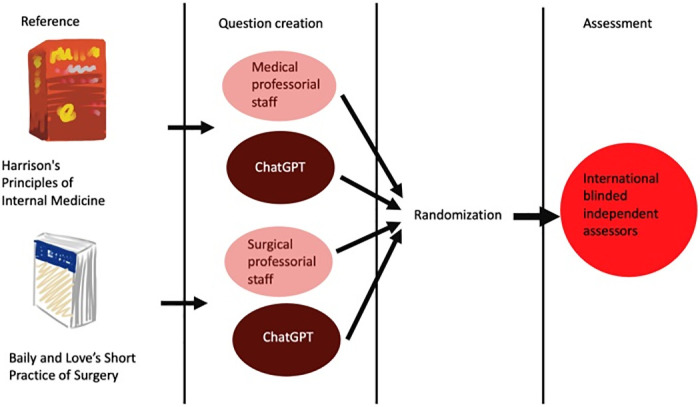
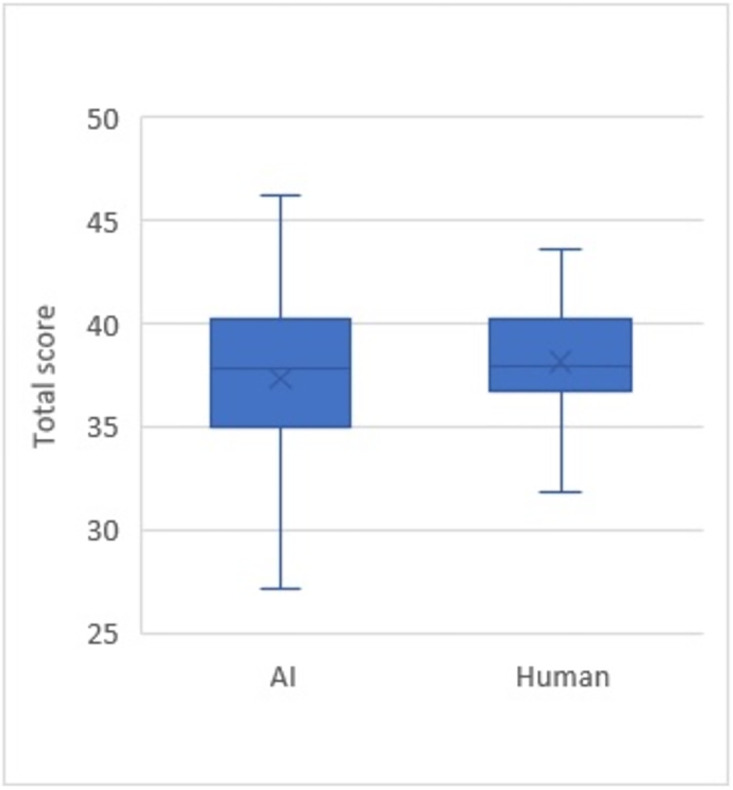
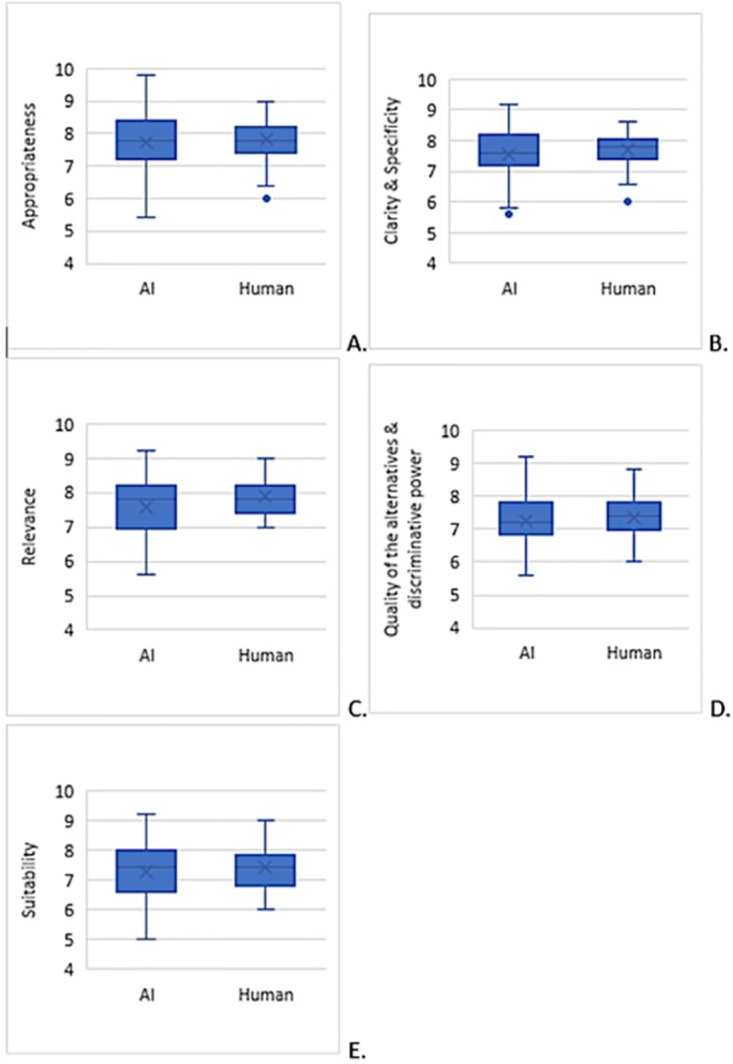
Introduction: Large language models, in particular ChatGPT, have showcased remarkable language processing capabilities. Given the substantial workload of university medical staff, this study aims to assess the quality of multiple-choice questions (MCQs) produced by ChatGPT for use in graduate medical examinations, compared to questions written by university professoriate staffs based on standard medical textbooks. Methods: 50 MCQs were generated by ChatGPT with reference to two standard undergraduate medical textbooks (Harrison’s, and Bailey & Love’s). Another 50 MCQs were drafted by two university professoriate staff using the same medical textbooks. All 100 MCQ were individually numbered, randomized and sent to five independent international assessors for MCQ quality assessment using a standardized assessment score on five assessment domains, namely, appropriateness of the question, clarity and specificity, relevance, discriminative power of alternatives, and suitability for medical graduate examination. Results: The total time required for ChatGPT to create the 50 questions was 20 minutes 25 seconds, while it took two human examiners a total of 211 minutes 33 seconds to draft the 50 questions. When a comparison of the mean score was made between the questions constructed by A.I. with those drafted by humans, only in the relevance domain that the A.I. was inferior to humans (A.I.: 7.56 +/- 0.94 vs human: 7.88 +/- 0.52; p = 0.04). There was no significant difference in question quality between questions drafted by A.I. versus humans, in the total assessment score as well as in other domains. Questions generated by A.I. yielded a wider range of scores, while those created by humans were consistent and within a narrower range. Conclusion: ChatGPT has the potential to generate comparable-quality MCQs for medical graduate examinations within a significantly shorter time.
Overview
The claims and statistics of this paper haven’t been checked yet.
Free: it reads the open-access text and checks the first 5 claims that cite a source we can check. Create a free account to check every claim.
Integrity signals
Registry
Cites
Statistics
Figures
Verification
Claims the paper makes
The claims and statistics of this paper haven’t been checked yet.
Free: it reads the open-access text and checks the first 5 claims that cite a source we can check. Create a free account to check every claim.
Claims other papers make about this one
Each is checked against this paper’s own text: does it say what the citing paper says it does?
The source backs part of the claim, not all of it — or backs it for a different population, condition or comparison.
In the citing paper
“Overall, while LLMs can quickly generate MCQs, their quality and difficulty often do not meet expectations.”
From MCQG-SRefine: Multiple Choice Question Generation and Evaluation with Iterative Self-Critique, Correction, and Comparison Feedback (2025) · cites this paper as Cheung et al. (2023)
Experimental — accuracy not yet measuredThe cited source says what the claim attributes to it.
In the citing paper
“This aligns with the previously mentioned finding of LLM-generated questions being less relevant than human-created ones [4].”
From Docimological Quality Analysis of LLM-Generated Multiple Choice Questions in Computer Science and Medicine (2024) · cites this paper as [4]
The cited source says what the claim attributes to it.
In the citing paper
“Cheung et al. reported that manual creation took 10 times longer than automatic generation [4].”
From Docimological Quality Analysis of LLM-Generated Multiple Choice Questions in Computer Science and Medicine (2024) · cites this paper as [4]
Self-check
Percentages, sums and reported differences re-computed from the paper’s own numbers.
The self-check needs the paper’s full text.
Citations
Cites
Machine learning: Trends, perspectives, and prospects
Jordan, M. I., & Mitchell, T. M. (2015) · Science · doi:10.1126/science.aaa8415 · Cited by 9,955
Artificial Intelligence in Education: A Review
Chen, L., Chen, P., & Lin, Z. (2020) · IEEE Access · doi:10.1109/access.2020.2988510 · Cited by 4,133
Kung, T. H., Cheatham, M., Medenilla, A., Sillos, C., De Leon, L., Elepaño, C., Madriaga, M., Aggabao, R., Diaz-Candido, G., Maningo, J., et al. (2023) · PLOS Digital Health · doi:10.1371/journal.pdig.0000198 · Cited by 4,115
Kung, T. H., Cheatham, M., ChatGPT, Medenilla, A., Sillos, C., De Leon, L., Elepaño, C., Madriaga, M., Aggabao, R., Diaz-Candido, G., et al. (2022) · doi:10.1101/2022.12.19.22283643 · Cited by 4,115
Haenlein, M., & Kaplan, A. (2019) · California Management Review · doi:10.1177/0008125619864925 · Cited by 2,655
Assessment in medical education
Epstein, R. M. (2007) · New England Journal of Medicine · doi:10.1056/nejmra054784 · Cited by 1,872
Artificial hallucinations in ChatGPT: implications in scientific writing
Alkaissi, H., & McFarlane, S. I. (2023) · Cureus · doi:10.7759/cureus.35179 · Cited by 1,540
Harrison's Principles of Internal Medicine
Bigby, J. (1988) · Archives of Dermatology · doi:10.1001/archderm.1988.01670020093028 · Cited by 1,234
On Faithfulness and Factuality in Abstractive Summarization
Maynez, J., Narayan, S., Bohnet, B., & McDonald, R. (2020) · Proceedings of the 58th Annual Meeting of the Association for Computational Linguistics · doi:10.18653/v1/2020.acl-main.173 · Cited by 1,185
On Faithfulness and Factuality in Abstractive Summarization
Maynez, J., Narayan, S., Bohnet, B., & McDonald, R. (2020) · arXiv · doi:10.48550/arxiv.2005.00661 · Cited by 1,185
Research works printed but not linked: 1
- 8. Wei J, Tay Y, Bommasani R, Raffel C, Zoph B, Borgeaud S, et al. Emergent abilities of large language models. arXiv preprint arXiv:220607682. 2022.
Cited by
A scoping review of artificial intelligence in medical education: BEME Guide No. 84
Gordon, M., Daniel, M., Ajiboye, A., Uraiby, H., Xu, N. Y., Bartlett, R., Hanson, J., Haas, M., Spadafore, M., Grafton-Clarke, C., et al. (2024) · Medical Teacher · doi:10.1080/0142159x.2024.2314198 · Cited by 679
A Scoping Review on How Generative Artificial Intelligence Transforms Assessment in Higher Education
Xia, Q., Weng, X., Ouyang, F., Lin, T. J., & Chiu, T. K. F. (2024) · International Journal of Educational Technology in Higher Education · doi:10.1186/s41239-024-00468-z · Cited by 493
“Overall, teachers should teach and assess the skills needed in an AI-influenced landscape (Chan, 2023; Cheung et al., 2023; Farazouli et al., 2023; Stutz et al., 2023).”
InfluentialMoulaei, K., Yadegari, A., Baharestani, M., Farzanbakhsh, S., Sabet, B., & Reza Afrash, M. (2024) · International Journal of Medical Informatics · doi:10.1016/j.ijmedinf.2024.105474 · Cited by 244
Peláez-Sánchez, I. C., Velarde-Camaqui, D., & Glasserman-Morales, L. D. (2024) · Frontiers in Education · doi:10.3389/feduc.2024.1392091 · Cited by 146
ChatGPT in the higher education: A systematic literature review and research challenges
Baig, M. I., & Yadegaridehkordi, E. (2024) · International Journal of Educational Research · doi:10.1016/j.ijer.2024.102411 · Cited by 208
Vrdoljak, J., Boban, Z., Vilović, M., Kumrić, M., & Božić, J. (2025) · Healthcare · doi:10.3390/healthcare13060603 · Cited by 163
“Similar findings were shown in another study that compared ChatGPT to humans in generating multiple-choice questions for the medical graduate exam [26] (Table 1).”
Kıyak, Y. S., & Emekli, E. (2024) · Postgraduate Medical Journal · doi:10.1093/postmj/qgae065 · Cited by 137
A Comparative Study of AI-Generated (GPT-4) and Human-crafted MCQs in Programming Education
Doughty, J., Wan, Z., Bompelli, A., Qayum, J., Wang, T., Zhang, J., Zheng, Y., Doyle, A., Sridhar, P., Agarwal, A., et al. (2024) · Proceedings of the 26th Australasian Computing Education Conference · doi:10.1145/3636243.3636256 · Cited by 132
Large language models for generating medical examinations: systematic review
Artsi, Y., Sorin, V., Konen, E., Glicksberg, B. S., Nadkarni, G., & Klang, E. (2024) · BMC Medical Education · doi:10.1186/s12909-024-05239-y · Cited by 128
Large Language Models in Medical Education: Comparing ChatGPT- to Human-Generated Exam Questions
Laupichler, M. C., Rother, J. F., Grunwald Kadow, I. C., Ahmadi, S., & Raupach, T. (2024) · Academic Medicine · doi:10.1097/acm.0000000000005626 · Cited by 107
Law, A. K.-K., So, J. L. T., Lui, C. T., Choi, Y. F., Cheung, K. H., Hung, K. K. C., & Graham, C. A. (2025) · BMC Medical Education · doi:10.1186/s12909-025-06796-6 · Cited by 127
Advancements in artificial intelligence transforming medical education: a comprehensive overview
Khakpaki, A. (2025) · Medical Education Online · doi:10.1080/10872981.2025.2542807 · Cited by 131
“…exams across diverse healthcare systems, the literature review concurrently reveals that rigorous validation frameworks and continuous expert oversight remain imperative to ensure educational relevance, minimize biases, and align with competency-based assessment standards in medical education [31].”
Saihi, A., Ben-Daya, M., Hariga, M., & As'ad, R. (2024) · Computers and Education: Artificial Intelligence · doi:10.1016/j.caeai.2024.100274 · Cited by 75
Saihi, A., Ben‐Daya, M., & Hariga, M. A. (2024) · Education and Information Technologies · doi:10.1007/s10639-024-13023-0 · Cited by 75
Large Language Models as Tools to Generate Radiology Board-Style Multiple-Choice Questions
Mistry, N. P., Saeed, H., Rafique, S., Le, T., Obaid, H., & Adams, S. (2024) · Academic Radiology · doi:10.1016/j.acra.2024.06.046 · Cited by 73
ChatGPT and Other Large Language Models in Medical Education — Scoping Literature Review
Aster, A., Laupichler, M. C., Rockwell-Kollmann, T., Masala, G., Bala, E., & Raupach, T. (2024) · Medical Science Educator · doi:10.1007/s40670-024-02206-6 · Cited by 75
Coşkun, Ö., Kıyak, Y. S., & Budakoğlu, I. İ. (2025) · Medical Teacher · doi:10.1080/0142159x.2024.2327477 · Cited by 64
“However, a recent study found promising results in an expert evaluation of questions generated by ChatGPT using simple prompts (Cheung et al. 2023).”
Applications of Artificial Intelligence in Medical Education: A Systematic Review
Hallquist, E., Gupta, I., Montalbano, M. J., & Loukas, M. (2025) · Cureus · doi:10.7759/cureus.79878 · Cited by 87
“Similarly, Cheung et al. used ChatGPT to generate 50 MCQs for medical examinations, finding their quality comparable to those written by university professors [29].”
Impact of Large Language Models on Medical Education and Teaching Adaptations
Zhui, L., Yhap, N., Liping, L., Wang, Z., Zhonghao, X., Xiaoshu, Y., Hong, C., Liu, X., & Wei, R. (2024) · JMIR Medical Informatics · doi:10.2196/55933 · Cited by 63
Al-Abri, A. (2025) · Education and Information Technologies · doi:10.1007/s10639-025-13484-x · Cited by 63
“LLMs can play a fundamental role by generating practice questions and quizzes appropriate to specific subjects (Cheung et al., 2023).”
InfluentialGupta, N., Khatri, K., Malik, Y., Lakhani, A., Kanwal, A., Aggarwal, S., & Dahuja, A. (2024) · BMC Medical Education · doi:10.1186/s12909-024-06592-8 · Cited by 58
Automatic item generation in various STEM subjects using large language model prompting
Chan, K. W., Ali, F., Park, J., Sham, K. S. B., Tan, E. Y. T., Chong, F. W. C., Qian, K., & Sze, G. K. (2024) · Computers and Education Artificial Intelligence · doi:10.1016/j.caeai.2024.100344 · Cited by 91
Generative AI in Undergraduate Medical Education: A Rapid Review
Hale, J., Alexander, S., Wright, S. T., & Gilliland, K. (2024) · Journal of Medical Education and Curricular Development · doi:10.1177/23821205241266697 · Cited by 46
Verghese, B. G., Iyer, C., Borse, T., Cooper, S., White, J., & Sheehy, R. M. (2025) · BMC Medical Education · doi:10.1186/s12909-025-07321-5 · Cited by 57
Zhang, Q., Huang, Z., Huang, Y., Wang, G., Zhang, R., Yang, J., Cheng, Y., Chen, B., Wang, H., Qiu, K., et al. (2025) · BMC Medical Education · doi:10.1186/s12909-025-08085-8 · Cited by 53
Shalong, W., Yi, Z., Bin, Z., Ganglei, L., Jinyu, Z., Yanwen, Z., Zequn, Z., Lianwen, Y., & Feng, R. (2025) · Medical Teacher · doi:10.1080/0142159x.2024.2413023 · Cited by 45
Bharatha, A., Ojeh, N. O., Rabbi, A. M. F., Campbell, M., Krishnamurthy, K., Layne-Yarde, R. N. A., Kumar, A., Springer, D., Connell, K., & Majumder, M. A. A. (2024) · Advances in Medical Education and Practice · doi:10.2147/amep.s457408 · Cited by 49
“6,7 14–16 While AI’s capabilities in answering queries and simulating scenarios are noteworthy, the depth and breadth of its understanding, especially concerning multiple-choice questions (MCQs) of medical exams, still need to be thoroughly evaluated.”
BackgroundGrévisse, C., Pavlou, M. A. S., & Schneider, J. G. (2024) · SN Computer Science · doi:10.1007/s42979-024-02963-6 · Cited by 41
Ignjatović, A., & Stevanović, L. (2023) · Journal of Educational Evaluation for Health Professions · doi:10.3352/jeehp.2023.20.28 · Cited by 38
Below average ChatGPT performance in medical microbiology exam compared to university students
Sallam, M., & Al-Salahat, K. (2023) · Frontiers in Education · doi:10.3389/feduc.2023.1333415 · Cited by 39
Sahin, M. C., Sozer, A., Kuzucu, P., Turkmen, T., Sahin, M. B., Sozer, E., Tufek, O. Y., Nernekli, K., Emmez, H., & Celtikci, E. (2024) · Computers in Biology and Medicine · doi:10.1016/j.compbiomed.2023.107807 · Cited by 36
Morjaria, L., Burns, L., Bracken, K., Levinson, A. J., Ngo, Q. N., Lee, M., & Sibbald, M. (2024) · International Medical Education · doi:10.3390/ime3010004 · Cited by 33
“…body of research that addresses ChatGPT performance on answering short-answer exam questions [22–24] and its ability to generate exam problems [15,25,26], there are presently no published studies that evaluate the ability of ChatGPT to score medical student answers to short-answer exam…”
Zhu, Y., Zhu, C., Wu, T., Wang, S., Zhou, Y., Chen, J., Wu, F., & Li, Y. (2025) · Education and Information Technologies · doi:10.1007/s10639-024-12898-3 · Cited by 33
“These AI-generated materials not only offer cost-effective solutions for developing assess - ment tools but also enrich the diversity and customization of assignments and assessments (Cheung et al., 2023).”
Lin, Y., Luo, Z., Ye, Z., Zhong, N., Zhao, L., Zhang, L., Li, X., Chen, Z., & Chen, Y. (2025) · JMIR Medical Education · doi:10.2196/71125 · Cited by 58
Opportunities and Challenges of Chatbots in Ophthalmology: A Narrative Review
Sabaner, M. C., Anguita, R., Antaki, F., Balas, M., Boberg‐Ans, L. C., Desideri, L. F., Grauslund, J., Hansen, M. S., Klefter, O. N., Potapenko, I. O., et al. (2024) · Journal of Personalized Medicine · doi:10.3390/jpm14121165 · Cited by 35
Crafting Medical MCQs with Generative AI: A How-To Guide on Leveraging ChatGPT
Stadler, M., Horrer, A., & Fischer, M. R. (2023) · GMS journal for medical education · doi:10.13140/rg.2.2.33494.22081 · Cited by 44
Bedi, S., Fleming, S. L., Chiang, C.-C., Morse, K., Kumar, A., Patel, B., Jindal, J. A., Davenport, C., Yamaguchi, C., & Shah, N. H. (2024) · Biocomputing 2025 · doi:10.1142/9789819807024_0005 · Cited by 28
“21 22 23 24 25 To address these gaps, our study evaluates GPT-4's ability to generate USMLE Step 2 CK-style exam questions.”
Shuriaqi, S. A., Abdulsalam, A. A., Masters, K., Zidoum, H. M., & Alzaabi, A. A. (2024) · Big Data and Cognitive Computing · doi:10.3390/bdcc8100139 · Cited by 35
GPT-4 versus human authors in clinically complex MCQ creation: A blinded analysis of item quality
Wu, H., Zerner, T., Lee, D., Court‐Kowalski, S., Devitt, P. G., & Palmer, E. (2025) · Medical Teacher · doi:10.1080/0142159x.2025.2505122 · Cited by 33
“…developed by an expert panel to facilitate consistent evaluation of human and AI-generated MCQs. Existing literature on the global evaluation of MCQ structural quality, with respect to accuracy and fitness for use with or without modification, was consulted to inform this process [17,25, 29,33].”
Villena, F., Véliz, C., García-Huidobro, R., & Aguayo, S. D. (2025) · Dentistry Review · doi:10.1016/j.dentre.2025.100160 · Cited by 31
“It can also develop detailed and adaptive rubrics and guidelines for specific tasks, assessing both theoretical knowledge and the specific clinical skills required for dental practice [27, 24].”
How Well Did ChatGPT Perform in Answering Questions on Different Topics in Gross Anatomy?
Bolgova, O., Shypilova, I., Sankova, L., & Mavrych, V. (2023) · European Journal of Medical and Health Sciences · doi:10.24018/ejmed.2023.5.6.1989 · Cited by 31
“ChatGPT demonstrated remarkable efficiency by producing 50 MCQs within 20 minutes, starkly contrasting to human examiners who expended over 211 minutes for an equivalent set of questions [19].”
BackgroundJin, H., Guo, J., Lin, Q., Wu, S., Hu, W., & Li, X. (2024) · Frontiers in Digital Health · doi:10.3389/fdgth.2024.1456911 · Cited by 31
Chauhan, A., Khaliq, F., & Nayak, K. R. (2025) · International Journal of Artificial Intelligence in Education · doi:10.1007/s40593-025-00471-z · Cited by 33
“Additionally, AI-generated questions exhibited a wider score range, while human-generated questions demonstrated more consistency(Cheung et al., 2023).”
Alkhateeb, A., Hezam, A. M. M., & Almuraikhi, A. A. (2025) · Cogent Education · doi:10.1080/2331186x.2025.2507553 · Cited by 26
A review of ChatGPT in medical education: exploring advantages and limitations
Cheng, Y., & Zhu, L. (2025) · International Journal of Surgery · doi:10.1097/js9.0000000000002505 · Cited by 29
Jaleel, A., Aziz, U., Farid, G., Zahid Bashir, M., Mirza, T. R., Khizar Abbas, S. M., Aslam, S., & Sikander, R. M. H. (2025) · JMIR Medical Education · doi:10.2196/68070 · Cited by 25
“A multinational prospective study conducted by Cheung et al [25] highlighted how ChatGPT demonstrated the ability to generate medical graduate exam multiple-choice questions efficiently [25].”
İş, E. E., & Menekşeoğlu, A. K. (2024) · Clinical Rheumatology · doi:10.1007/s10067-024-07154-5 · Cited by 31
Kıyak, Y. S. (2024) · Medical Science Educator · doi:10.1007/s40670-024-02146-1 · Cited by 28
“Moreover, evidence supporting the validity of these MCQs is growing [17–19].”
Artificial Intelligence in Medical Education: A Practical Guide for Educators
Patil, N. G., Kou, N. L., Baptista‐Hon, D. T., & Monteiro, O. (2025) · MedComm – Future Medicine · doi:10.1002/mef2.70018 · Cited by 31
Linh, D. T., & Park, M. J. (2025) · Journal of Internet Commerce · doi:10.1080/15332861.2025.2489561 · Cited by 24
“Nearly all of the main Chinese social media and e-commerce platforms, including JD.com, Pinduoduo, WeChat, and Alibaba’s Tmall and Taobao, as well as the short-video apps Kuaishou and Douyin (TikTok’s Chinese sister app), are contributing to the app’s wider popularity (Cheung et al. 2023).”
Exploring the potential of ChatGPT to create multiple-choice question exams
Rivera-Rosas, C. N., Calleja-López, J. R. T., Ruibal-Tavares, E., Villanueva-Neri, A., Flores-Félix, C. M., & López, S. T. (2024) · Educación Médica · doi:10.1016/j.edumed.2024.100930 · Cited by 29
Gill, G. S., Tsai, J., Moxam, J., Sanghvi, H. A., & Gupta, S. (2024) · Cureus · doi:10.7759/cureus.69612 · Cited by 22
Kaya, M., Sönmez, E., Halıcı, A., Yıldırım, H., & Çoşkun, A. (2025) · BMC Medical Education · doi:10.1186/s12909-025-07528-6 · Cited by 25
AI in radiography education: Evaluating multiple-choice questions difficulty and discrimination
Emekli, E., & Karahan, B. N. (2025) · Journal of medical imaging and radiation sciences · doi:10.1016/j.jmir.2025.101896 · Cited by 23
Elzayyat, M., Mohammad, J. N., & Zaqout, S. (2025) · Medical Education Online · doi:10.1080/10872981.2025.2554678 · Cited by 22
“This aligns with prior reports showing that LLM-generated items can match faculty-written questions in overall quality [5,18].”
InfluentialChatGPT: What Every Pediatric Surgeon Should Know About Its Potential Uses and Pitfalls
González, R., Poenaru, D., Woo, R. K., Trappey, A. F., Carter, S., Darcy, D., Encisco, E. M., Gulack, B. C., Miniati, D., Tombash, E., et al. (2024) · Journal of Pediatric Surgery · doi:10.1016/j.jpedsurg.2024.01.007 · Cited by 19
Bajčetić, M., Mirčić, A., Rakočević, J., Doković, D., Milutinović, K., & Zaletel, I. V. (2024) · Annals of Anatomy - Anatomischer Anzeiger · doi:10.1016/j.aanat.2024.152261 · Cited by 19
Güvel, M. C., Kıyak, Y. S., Varan, H. D., Sezenöz, B., Çoşkun, Ö., & Uluoğlu, C. (2025) · European Journal of Clinical Pharmacology · doi:10.1007/s00228-025-03838-2 · Cited by 17
Penny, P., Bane, R., & Riddle, V. (2024) · Cureus · doi:10.7759/cureus.76309 · Cited by 21
Jackson, F. I., Keller, N. A., Kouba, I., Kouba, W., Bracero, L. A., & Blitz, M. J. (2025) · Academic Medicine · doi:10.1097/acm.0000000000006137 · Cited by 18
Reid, M., French, M. B., Andreopoulos, S., Wong, C., & Kee, N. (2025) · Current Research in Physiology · doi:10.1016/j.crphys.2025.100160 · Cited by 15
Basil, M., Ahmed, W., Hajeomar, R., Strawbridge, J., Lynch, M. R., & Mukhalalati, B. (2026) · BMC Medical Education · doi:10.1186/s12909-025-08527-3 · Cited by 23
“Two studies discovered that Chat-GPT cannot correlate the generated text to clinical photos and radiology images, and lack mathematical calculation ability [115, 116].”
Fathy, E. A., Zidan, H. A. K. Y., Abdou, A. H. E. S. A., & Fouad, A. M. (2025) · Tourism and Hospitality Research · doi:10.1177/14673584251357510 · Cited by 17
Arif, T., Asthana, S., & Collins‐Thompson, K. (2024) · ACM Conference on Learning @ Scale (L@S) · doi:10.1145/3657604.3664714 · Cited by 23
Balu, A., Prvulovic, S. T., Perez, C. F., Kim, A., Donoho, D. A., & Keating, G. F. (2025) · Medical Teacher · doi:10.1080/0142159x.2025.2478872 · Cited by 18
Mudenda, S., Mufwambi, W., Mwale, R. S., Kathewera, B. S., & Lubanga, A. F. (2025) · BMC Medical Education · doi:10.1186/s12909-025-07833-0 · Cited by 16
Deng, A., Chen, W., Dai, J., Liu, J., Chen, Y., Chen, Y., Jiang, J., & Rao, M. (2024) · Medical Teacher · doi:10.1080/0142159x.2024.2399673 · Cited by 14
“As a widely available large language model, it can be utilized as an exam question writer for graduate medical exams with comparable performance to experienced human examiners [14].”
Automated Generation and Evaluation of MultipleChoice Quizzes using Langchain and Gemini LLM
Pawar, P., Dube, R., Joshi, A., Gulhane, Z., & Patil, R. (2024) · International Conference on Electrical Electronics and Computing Technologies (ICEECT) · doi:10.1109/iceect61758.2024.10739326 · Cited by 16
“While human-generated questions often score higher on relevance, the overall quality of AI-generated MCQs demonstrates the potential of these models to perform on par with human efforts, showing no significant differences in key areas such as difficulty and clarity [2].”
BackgroundLeveraging large language models to construct feedback from medical multiple-choice Questions
Tomova, M. T., Atanet, I. R., Sehy, V., Sieg, M., März, M., & Mäder, P. (2024) · Scientific Reports · doi:10.1038/s41598-024-79245-x · Cited by 17
Yao, Z., Parashar, A., Zhou, H., Jang, W. S., Ouyang, F., Yang, Z., & Yu, H. (2025) · Proceedings of the 2025 Conference of the Nations of the Americas Chapter of the Association for Computational Linguistics: Human Language Technologies (Volume 1: Long Papers) · doi:10.18653/v1/2025.naacl-long.538 · Cited by 27
Abouzeid, E., Wassef, R., Jawwad, A., & Harris, P. (2025) · JMIR Medical Education · doi:10.2196/69521 · Cited by 12
Challenging the curve: can ChatGPT-generated MCQs reduce grade inflation in pharmacy education
Almaghaslah, D. (2025) · Frontiers in Pharmacology · doi:10.3389/fphar.2025.1516381 · Cited by 15
What Are the Opportunities and Challenges of Using AI in Medical Education in Vietnam?
Nguyen, T. A., Nguyen, T. B., Nguyen, D. C., Vu, A. D., Dang, K. L., Le, N. Q., Ngo, D. A., Nguyen, D. K., Hoang, V. T., & Ngo, T. B. (2025) · JMIR Medical Education · doi:10.2196/77817 · Cited by 16
Kıyak, Y. S., & Emekli, E. (2024) · Revista Española de Educación Médica · doi:10.6018/edumed.612381 · Cited by 16
“As we are in the post-ChatGPT era (10), there is a potential to benefit from large language models (LLMs) in the development process of high-quality SCTs.”
MethodInfluentialSu, J., Hsu, S., Fang, T., & Wang, P.-C. (2024) · Computers in Biology and Medicine · doi:10.1016/j.compbiomed.2024.108765 · Cited by 12
Qiu, Y., & Liu, C. (2025) · Global Medical Education · doi:10.1515/gme-2024-0021 · Cited by 16
ChatGPT-Assisted Retrieval Practice and Exam Scores: Does It Work?
Yusof, I. J. (2025) · Journal of Information Technology Education Research · doi:10.28945/5474 · Cited by 21
Impact of AI use on postgraduate students: a systematic review
Mabungela, A. B., Nyusani, S., & Mthalane, N. (2025) · Insights into Regional Development · doi:10.70132/z4973888974 · Cited by 12
März, M., Himmelbauer, M., Boldt, K., & Oksche, A. (2024) · GMS journal for medical education · doi:10.3205/zma001702 · Cited by 18
“For example, ChatGPT has the potential to generate MCQ of comparable quality for final medical examinations in a short time [64], [65], [66].”
BackgroundMethodInfluentialCan ChatGPT generate surgical multiple-choice questions comparable to those written by a surgeon?
Kıyak, Y. S., Coskun, A. K., Kaymak, Ş., Çoşkun, Ö., & Budakoğlu, I. İ. (2024) · Baylor University Medical Center Proceedings · doi:10.1080/08998280.2024.2418752 · Cited by 13
“13 It can be recommended to use a custom GPT, 24 such as “ Case-Based MCQ Generator ” 25 based on published prompts in the literature, or Surgery Question Wizard specific for surgery residents.”
Leveraging ChatGPT for Enhancing Learning in Radiology Resident Education
Zheng, A., Barker, C. J., Ferrante, S. S., Squires, J. H., Branstetter, B. F., & Hughes, M. A. (2025) · Academic Radiology · doi:10.1016/j.acra.2025.06.019 · Cited by 11
Özer, N. E., Balci, Y., Bölükbaşı, G., İlhan, B., & Güneri, P. (2025) · European Journal Of Dental Education · doi:10.1111/eje.70034 · Cited by 12
“This is particularly important for addressing the heavy workload of dental or medical university staff, who balance re-sponsibilities such as patient care, teaching, student assessment, research and administrative duties [20–22].”
InfluentialZouakia, Z., Logak, E., Szymczak, A., Jaïs, J., Burgun, A., & Tsopra, R. (2026) · JMIR Medical Education · doi:10.2196/82116 · Cited by 11
Validity of AI-generated multiple-choice questions in medical education: a systematic review
Kıyak, Y. S., Kaya, A. B., & Emekli, E. (2026) · Postgraduate Medical Journal · doi:10.1093/postmj/qgag057 · Cited by 10
Andrew, K., & Montalbano, M. J. (2025) · Medical Science Educator · doi:10.1007/s40670-025-02332-9 · Cited by 10
Prazeres, F. (2025) · JMIR Medical Education · doi:10.2196/65108 · Cited by 10
Anatomy exam model for the circulatory and respiratory systems using GPT-4: a medical school study
ORHA, A. T., Karamus, N. F., & Çolak, T. (2025) · Surgical and Radiologic Anatomy · doi:10.1007/s00276-025-03667-z · Cited by 11
Lin, Y., Li, C., & Li, H. (2025) · Medical Teacher · doi:10.1080/0142159x.2025.2533401 · Cited by 10
Bowden, J. J., Mohanakrishnan, M., & Thompson, A. R. (2025) · Medical Science Educator · doi:10.1007/s40670-025-02587-2 · Cited by 10
Mapping the landscape: generative AI in higher education assessment (2020-2024) - a scoping review
Ng, S. H. S., Chan, H. Y., Wong, J. H. K., Sam, L. C. F., & Privitera, A. J. (2026) · Interactive Learning Environments · doi:10.1080/10494820.2026.2614079 · Cited by 9
“Those studies situated in the context of medical assessments reported similar findings (Cheung et al., 2023; Han et al., 2024; Zuckerman et al., 2023), although Han et al. (2024) also noted that some ChatGPT-generated MCQs may lack depth when compared to those created by experts.”
May, M., Körner-Riffard, K., Kollitsch, L., Burger, M., Brookman-May, S. D., Rauchenwald, M., Marszalek, M., & Eredics, K. (2024) · Urologia Internationalis · doi:10.1159/000537854 · Cited by 12
Qingquan, T., Feng, R., Bin, Z., Jing-yu, Z., Ganglei, L., Yanwen, Z., Zequn, Z., Qiyuan, W., & Wang, S. (2025) · BMC Medical Education · doi:10.1186/s12909-025-07414-1 · Cited by 9
Safadi, S., Amirahmadi, R., Tlimat, A., Rovinski, R., Sun, J., Lee, B. W., Seam, N., Tlimat, A., Staitieh, B., Clark, B. J., et al. (2025) · CHEST Journal · doi:10.1016/j.chest.2025.07.005 · Cited by 11
Dhanvijay, A. K. D., Kumari, A., Pinjar, M. J., Kumari, A., Ganguly, A., Priya, A., Juhi, A., Gupta, P., & Mondal, H. (2025) · AJP Advances in Physiology Education · doi:10.1152/advan.00197.2025 · Cited by 9
Borowitz, M. J., Blackford, A. L., Nagelia, S., & Hruban, R. H. (2025) · Modern Pathology · doi:10.1016/j.modpat.2025.100940 · Cited by 11
Reimagining pharmacology education
Guilding, C., Kelly-Laubscher, R. F., Cunningham, M., Dilles, T., Kennedy, D., Brinkman, D. J., Eid, A. H., Quesnelle, K. M., Engels, F., Maxwell, S., et al. (2026) · Pharmacological Reviews · doi:10.1016/j.pharmr.2026.100126 · Cited by 10
Lam, Y. Y., Chu, S. K. W., Ong, E. L. C., Suen, W. W. L., Xu, L., Lam, L. C. L., & Wong, S. M. Y. (2024) · Proceedings of the Association for Information Science and Technology · doi:10.1002/pra2.1054 · Cited by 8
“For example, Cheung et al. (2023) highlighted the potential of AI in reducing the workload of medical staff and improving the quality of medical education assessments.”
InfluentialRakauskas, T. R., Costa, A., Moriconi, C., Gill, G. S., Kwong, J. W., & Lee, N. (2024) · Journal of Hand Surgery Global Online · doi:10.1016/j.jhsg.2024.10.001 · Cited by 10
“Cheung et al 19 looked at ChatGPT medical examination questions against human-created ones showing that the two were comparable in quality.”
Insights Gained from Using AI to Produce Cases for Problem-Based Learning
Abouzeid, E., & Harris, P. (2025) · Online Workshop on Adaptive Education: Harnessing AI for Academic Progress · doi:10.3390/proceedings2025114005 · Cited by 9
Thesen, T., Lalchandani, R. R., Blumer, J., & Lee, M. W. (2025) · British Journal of Clinical Pharmacology · doi:10.1002/bcp.70119 · Cited by 9
Metadata
- Authors
- Cheung, B. H. H., Lau, G. K. K., Wong, G. T. C., Lee, E. Y. P., Kulkarni, D., Seow, C. S., Wong, R., & Co, M. T.-H.
- Affiliations
- University of Hong Kong (HK)
- University of Edinburgh (GB)
- National University Cancer Institute, Singapore (SG)
- Ollscoil na Gaillimhe – University of Galway (IE)
- Corresponding author
- Co, Michael Tiong-Hong
- ORCID
- Venue
- PLOS ONE
- Publisher
- Public Library of Science (PLoS)
- Published
- 2023-08-29
- Volume
- 18
- Issue
- 8
- Pages
- e0290691
- ISSN
- 1932-6203 (ISSN-L)
- PMC
- PMC10464959
- OpenAlex
- W4386249608
- Cited by
- 195
- References
- 28
- Citations by year
- 2026: 61 · 2025: 71 · 2024: 54 · 2023: 9
- FWCI
- 7.68
- Type
- journal article
- Language
- en
- Update notices
- correction (2025-06-27)
- Open access
- gold
- doi.org
- Licence
- Locations
- PLoS ONE (publishedVersion, cc-by)
- PubMed Central (publishedVersion, cc-by)
- PubMed (publishedVersion)
- DOAJ (DOAJ: Directory of Open Access Journals) (submittedVersion, cc-by-sa)
- Topics
- Health Sciences › Medicine › Health Informatics › Artificial Intelligence in Healthcare and Education
- Social Sciences › Education › Innovations in Medical Education
- Social Sciences › Education › Artificial Intelligence in Education
- Keywords
- ChatGPT, large language models, multiple-choice questions, medical education, medical textbooks
- MeSH terms
- Artificial Intelligence, Education, Medical, Graduate, Educational Measurement, United Kingdom, Hong Kong, Humans, Ireland, Prospective Studies, Singapore
About these checks
Registry, retraction, Cites and statistics results are computed, not judged, with one exception: a printed reference that no index lists is read once by a model before it counts as a citation error. Claims are extracted by a model and kept only when their quote appears verbatim in the text; each cited source is then checked, with a model’s help, for whether it says what the claim relies on. Those verdicts can be wrong — read the claim’s quote and the cited source before relying on one.
Statistics and arithmetic are recomputed, not judged.
Confidence bands are shown only for fields calibrated on our annotated test set. None is calibrated yet, so no band is shown.
What counts as a claim ›How we measure confidence ›How we check this ›
Are you an author, or do you see a problem with this page? Request a review
Data sources
Bibliographic data: Semantic Scholar, OpenAlex, Crossref.
Contains information from the Semantic Scholar Academic Graph Datasets, made available under the ODC Attribution License (ODC-BY 1.0).
Semantic Scholar’s data is described in: Kinney, R., et al. (2023). The Semantic Scholar Open Data Platform. arXiv:2301.10140.
