

The DOI matches its Crossref record; 158 of the 158 references it cites were found in a registry or an index.
A scoping review on the use of consumer-grade EEG devices for research
Open accessAbstract
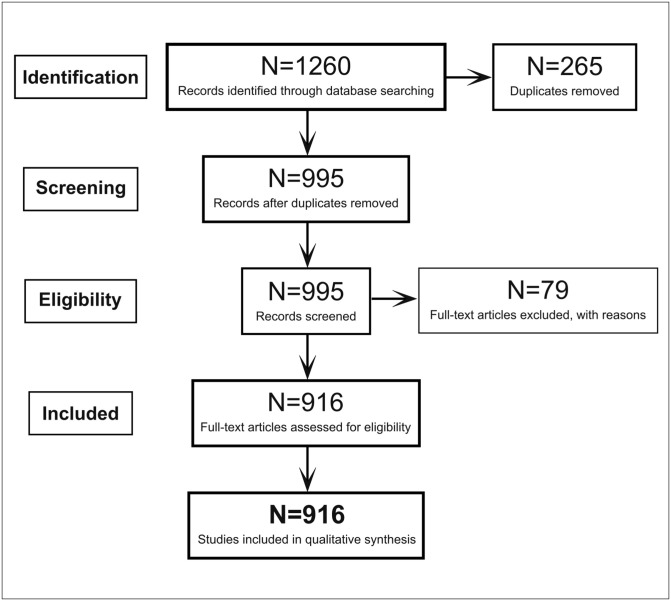
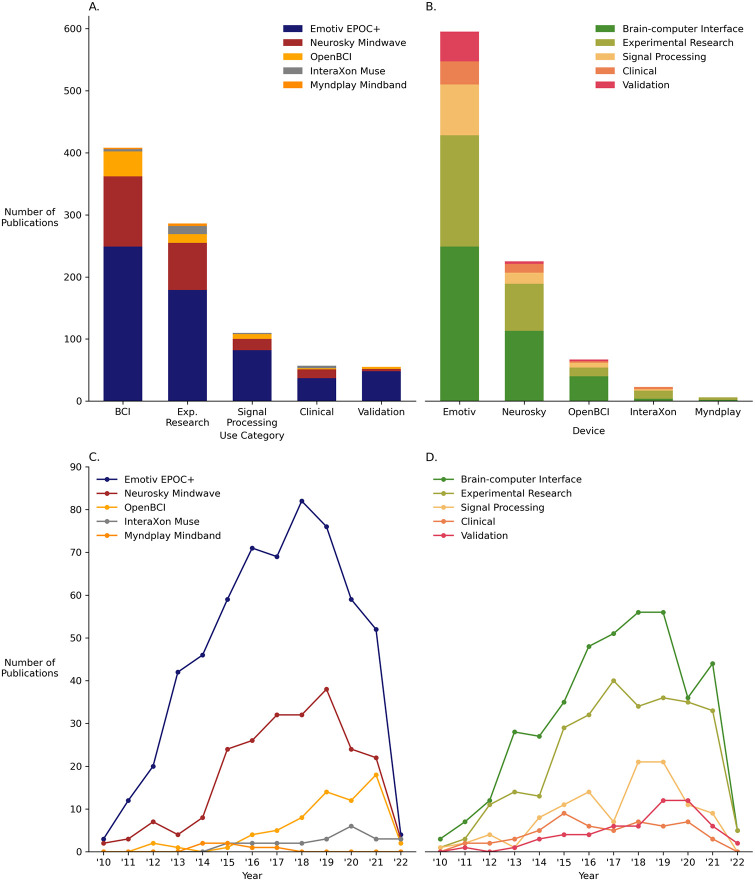
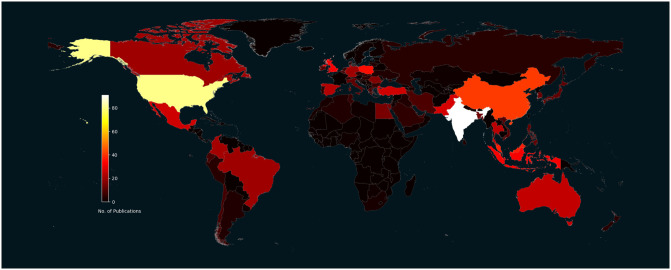
Background: Commercial electroencephalography (EEG) devices have become increasingly available over the last decade. These devices have been used in a wide variety of fields ranging from engineering to cognitive neuroscience. Purpose: The aim of this study was to chart peer-review articles that used consumer-grade EEG devices to collect neural data. We provide an overview of the research conducted with these relatively more affordable and user-friendly devices. We also inform future research by exploring the current and potential scope of consumer-grade EEG. Methods: We followed a five-stage methodological framework for a scoping review that included a systematic search using the Preferred Reporting Items for Systematic Reviews and Meta-Analyses Extension for Scoping Reviews (PRISMA-ScR) guidelines. We searched the following online databases: PsycINFO, MEDLINE, Embase, Web of Science, and IEEE Xplore. We charted study data according to application (BCI, experimental research, validation, signal processing, and clinical) and location of use as indexed by the first author’s country. Results: We identified 916 studies that used data recorded with consumer-grade EEG: 531 were reported in journal articles and 385 in conference papers. Emotiv devices were used most, followed by the NeuroSky MindWave, OpenBCI, interaXon Muse, and MyndPlay Mindband. The most common usage was for brain-computer interfaces, followed by experimental research, signal processing, validation, and clinical purposes. Conclusions: Consumer-grade EEG is a useful tool for neuroscientific research and will likely continue to be used well into the future. Our study provides a comprehensive review of their application, as well as future directions for researchers who plan to use these devices.
Overview
The claims and statistics of this paper haven’t been checked yet.
Run the check — free, no account needed. It reads the open-access text and checks the sources it cites.
Integrity signals
Registry
Cites
Statistics
Figures
Verification
Claims the paper makes
The claims and statistics of this paper haven’t been checked yet.
Run the check — free, no account needed. It reads the open-access text and checks the sources it cites.
Claims other papers make about this one
Each is checked against this paper’s own text: does it say what the citing paper says it does?
The cited source says what the claim attributes to it.
In the citing paper
“Practical deployment often limits channel count, as many commercial and mobile devices lack research-grade electrode coverage [3].”
From ERP-XTTN: interpretable prototype-guided cross-attention for cross-subject ERP classification (2026) · cites this paper as [3]
Self-check
Percentages, sums and reported differences re-computed from the paper’s own numbers.
The self-check needs the paper’s full text.
Citations
Cites
PRISMA Extension for Scoping Reviews (PRISMA-ScR): Checklist and Explanation
Tricco, A. C., Lillie, E., Zarin, W., O'Brien, K. K., Colquhoun, H., Levac, D., Moher, D., Peters, M. D. J., Horsley, T., Weeks, L., et al. (2018) · Annals of Internal Medicine · doi:10.7326/m18-0850 · Cited by 43,565
Delorme, A., & Makeig, S. (2004) · Journal of Neuroscience Methods · doi:10.1016/j.jneumeth.2003.10.009 · Cited by 24,371
The weirdest people in the world?
Henrich, J., Heine, S. J., & Norenzayan, A. (2010) · Behavioral and Brain Sciences · doi:10.1017/s0140525x0999152x · Cited by 12,641
Brain Computer Interfaces, a Review
Nicolas-Alonso, L. F., & Gomez-Gil, J. (2012) · Sensors · doi:10.3390/s120201211 · Cited by 2,143
MNE software for processing MEG and EEG data
Gramfort, A., Luessi, M., Larson, E., Engemann, D. A., Strohmeier, D., Brodbeck, C. J., Parkkonen, L. T., & Hämäläinen, M. (2013) · NeuroImage · doi:10.1016/j.neuroimage.2013.10.027 · Cited by 2,066
Motor imagery and direct brain-computer communication
Pfurtscheller, G., & Neuper, C. (2001) · Proceedings of the IEEE · doi:10.1109/5.939829 · Cited by 1,990
The P300 wave of the human event-related potential
Picton, T. W. (1992) · Journal of Clinical Neurophysiology · doi:10.1097/00004691-199210000-00002 · Cited by 1,908
Delorme, A., Sejnowski, T., & Makeig, S. (2007) · NeuroImage · doi:10.1016/j.neuroimage.2006.11.004 · Cited by 1,759
Deep learning-based electroencephalography analysis: a systematic review
Roy, Y., Banville, H., Albuquerque, I., Gramfort, A., Falk, T. H., & Faubert, J. (2019) · Journal of Neural Engineering · doi:10.1088/1741-2552/ab260c · Cited by 1,532
The PREP pipeline: standardized preprocessing for large-scale EEG analysis
Bigdely-Shamlo, N., Mullen, T. R., Kothe, C. A., Su, K., & Robbins, K. A. (2015) · Frontiers in Neuroinformatics · doi:10.3389/fninf.2015.00016 · Cited by 1,360
Research works printed but not linked: 5
- V. Lavermicocca, 2018, Neurofeedback in Parkinson’s disease: Technologies in speech and language therapy, Recenti Prog Med, 109, 130
- Jones P, Badcock N. SYRAS| Systematic Review Assistant. 2017.
- C.M. Wilkinson, 2022, Low cost, portable electroencephalograph may improve the accuracy of prehospital stroke diagnosis and detection of large vessel occlusion, Stroke, 53
- N. Ishaque, 2022, Quantitative electroencephalogram to assess neurovascular coupling post endovascular thrombectomy, Stroke, 53
- A.S. Malik, 2013, Fuzzification of epileptic data: An application for prediction and identification of partial seizure, J Neurol, 260, S193
Cited by
Ghadi, Y. Y., Shah, S. F. A., Waheed, W., Mazhar, T., Ahmad, W., Saeed, M. M. A., & Hamam, H. (2025) · Journal of Cloud Computing Advances Systems and Applications · doi:10.1186/s13677-025-00759-4 · Cited by 115
Improving Mental Skills in Precision Sports by Using Neurofeedback Training: A Narrative Review
Corrado, S., Tosti, B., Mancone, S., Libero, T. D., Rodio, A., Andrade, A., & Diotaiuti, P. (2024) · Sports · doi:10.3390/sports12030070 · Cited by 64
Zaim, T., Abdel-Hadi, S., Mahmoud, R., Khandakar, A. A., Rakhtala, S. M., & Chowdhury, M. E. H. (2025) · Bioengineering · doi:10.3390/bioengineering12020144 · Cited by 43
The Neuromarketing: Bridging Neuroscience and Marketing for Enhanced Consumer Engagement
Song, G., Gazi, M. A. I., Waaje, A., Roshid, M. M., Karim, R., Rahaman, M. A., Min, Z., & Senathirajah, A. R. B. S. (2025) · IEEE Access · doi:10.1109/access.2025.3545742 · Cited by 38
On the role of generative artificial intelligence in the development of brain-computer interfaces
Eldawlatly, S. (2024) · BMC Biomedical Engineering · doi:10.1186/s42490-024-00080-2 · Cited by 34
Beyond the lab: real-world benchmarking of wearable EEGs for passive brain-computer interfaces
Ronca, V., Cecchetti, M., Capotorto, R., Flumeri, G. D., Andrea, G., Germano, D., Borghini, G., Babiloni, F., & Aricò, P. (2025) · Brain Informatics · doi:10.1186/s40708-025-00290-x · Cited by 28
A Novel OpenBCI Framework for EEG-Based Neurophysiological Experiments
Cardona-Álvarez, Y. N., Álvarez-Meza, A. M., Peña, D. A. C., Duque, G. A. C., & Castellanos-Dominguez, G. (2023) · Sensors · doi:10.3390/s23073763 · Cited by 26
Da, C., Li, Y., Gao, X., Zhang, X., Yang, Y., Ma, H., Zhao, B., Hu, T., Ma, Y., Liu, J., et al. (2024) · Building and Environment · doi:10.1016/j.buildenv.2024.112058 · Cited by 24
Zhao, X., Lou, Z., Shah, P. T., Wu, C., Liu, R., Xie, W. B., & Zhang, S. (2025) · Sensors · doi:10.3390/s25154858 · Cited by 22
Resting-State EEG Power Spectral Density Analysis Between Healthy and Cognitively Impaired Subjects
Walters, K. F., Shukla, R., Kumar, V., Schueren, S., Yadav, H., Schilaty, N. D., & Jain, S. (2025) · Brain Sciences · doi:10.3390/brainsci15020173 · Cited by 18
Neurophysiological mechanisms of focused attention meditation: A scoping systematic review
Lieberman, J. M., McConnell, P. A., Estarellas, M., & Sacchet, M. D. (2025) · Imaging Neuroscience · doi:10.1162/imag.a.14 · Cited by 19
Howie, E. E., Harari, R., DIAS, R. D., Wigmore, S. J., Skipworth, R. J. E., & Yule, S. (2024) · Journal of Surgical Research · doi:10.1016/j.jss.2024.07.009 · Cited by 13
Khan, S., Noorani, S. H., Frnda, J., Rauf, U., Arsalan, A., & Saeed, S. M. U. (2025) · IEEE Access · doi:10.1109/access.2025.3571437 · Cited by 13
Consumer-Grade Neurofeedback With Mindfulness Meditation: Meta-Analysis
Treves, I. N., Bajwa, Z., Greene, K. D., Bloom, P. A., Kim, N., Wool, E., Goldberg, S. B., Whitfield, S., & Auerbach, R. P. (2025) · Journal of Medical Internet Research · doi:10.2196/68204 · Cited by 17
Schuller, S., Bergefurt, L., de Kort, Y. A. W., & Appel‐Meulenbroek, R. (2025) · Journal of Environmental Psychology · doi:10.1016/j.jenvp.2025.102642 · Cited by 11
Li, Y., Tsang, Y. P., Lee, C. K. M., & Su, H. (2024) · Advanced Engineering Informatics · doi:10.1016/j.aei.2024.102968 · Cited by 9
Bodda, S., & Diwakar, S. (2025) · Scientific Reports · doi:10.1038/s41598-025-00134-y · Cited by 9
Ruotsalo, T., Traver, V. J., Kawala‐Sterniuk, A., & Leiva, L. A. (2024) · IEEE Intelligent Systems · doi:10.1109/mis.2024.3391508 · Cited by 9
Rieck, C., Penava, P., & Buettner, R. (2025) · IEEE Access · doi:10.1109/access.2025.3586005 · Cited by 9
Wu, B. (2025) · Alexandria Engineering Journal · doi:10.1016/j.aej.2025.09.069 · Cited by 8
Massaro, A. S. (2025) · Electronics · doi:10.3390/electronics14061122 · Cited by 8
Jóźwiak, B., Kleka, P., & Laudańska–Krzemińska, I. (2025) · Frontiers in Public Health · doi:10.3389/fpubh.2025.1640512 · Cited by 6
A comprehensive review of neuroarchitecture measurement tools and methods
Jaberi, A., Tahsildoost, M., Rezvani, S., & Ardekani, A. (2025) · Building and Environment · doi:10.1016/j.buildenv.2025.114103 · Cited by 6
NAMI: A Neuro-Adaptive Multimodal Architecture for Wearable Human–Computer Interaction
Papakostas, C., Troussas, C., Krouska, A., & Sgouropoulou, C. (2025) · Multimodal Technologies and Interaction · doi:10.3390/mti9100108 · Cited by 5
Gerner, N., Pickerle, D., Höller, Y., & Hartl, A. J. (2025) · Brain Sciences · doi:10.3390/brainsci15050432 · Cited by 6
Comparison of patient non-specific seizure detection using multi-modal signals
Sigsgaard, G. M., & Gu, Y. (2023) · Neuroscience Informatics · doi:10.1016/j.neuri.2023.100152 · Cited by 5
Paranthaman, P. K., Graham, S., & Bajaj, N. (2024) · Electronics · doi:10.3390/electronics13112043 · Cited by 5
Portable electroencephalography in early detection of depression: Progress and future directions
Wang, P., Dai, A.-L., Guo, X.-R., & Jiang, H. (2025) · World Journal of Psychiatry · doi:10.5498/wjp.v15.i8.107725 · Cited by 7
Noël, G. P. J. C., Xiao, I., Chaouachi, M., Ilie, A., O’Brien, J., & McWatt, S. C. (2025) · Anatomical Sciences Education · doi:10.1002/ase.70126 · Cited by 4
Kurek, M., Różycka‐Tran, J., Radoń, S., Kania, A., Orlińska, K., Tùng, T. T., & Suffczyński, P. (2025) · Biological Psychology · doi:10.1016/j.biopsycho.2025.109133 · Cited by 4
Applications of Brain Wave Classification for Controlling an Intelligent Wheelchair
de Avelar, M. C. R. G. T., Almeida, P., Faria, B. M., & Reis, L. P. (2024) · Technologies · doi:10.3390/technologies12060080 · Cited by 4
Deep Learning and EEG Signal Based Biometric System: An Application of Brain Computer Interface
Sah, C. K., Ahirwal, M. K., & Tomar, D. S. (2025) · IEEE International Students' Conference on Electrical, Electronics and Computer Science (SCEECS) · doi:10.1109/sceecs64059.2025.10940880 · Cited by 3
Kanemoto, D., Takimoto, E., & Hirose, T. (2025) · IEEE International Symposium on Circuits and Systems proceedings · doi:10.1109/iscas56072.2025.11043415 · Cited by 3
Kahathuduwa, C. N., Blume, J., Mani, C., & Dhanasekara, C. S. (2025) · Physiologia · doi:10.3390/physiologia5040044 · Cited by 3
Real-Time Attention Measurement Using Wearable Brain–Computer Interfaces in Serious Games
Kadar, M. (2025) · Applied System Innovation · doi:10.3390/asi8060166 · Cited by 3
Crespo, M. F., Galve, M. I. R., Sánchez‐Aguadero, N., Sanchez-Sanchez, N., González‐Sánchez, J., Garcia-Yu, I. A., Lee, H., & Recio-Rodriguez, J. I. (2025) · Frontiers in Public Health · doi:10.3389/fpubh.2025.1712564 · Cited by 3
Ahmed, R., Coello, A., Pillutla, A. S., Telwar, G., & Stauss, H. M. (2025) · American Journal of Physiology-Regulatory, Integrative and Comparative Physiology · doi:10.1152/ajpregu.00219.2025 · Cited by 3
A Review of EEG Artifact Removal Techniques for Brain-Computer Interface
Dhole, P. V., Chaudhary, D. G., Dhangar, V. D., Shejul, S. D., Datwase, S. S., & Gawali, B. W. (2025) · SN Computer Science · doi:10.1007/s42979-025-04592-z · Cited by 6
A Systematic Review of Consumer-Grade EEG Applications in Directional Game Control via Motor Imagery
Xie, W., Wang, Y. M., Dou, S. S. Q. P., & Qu, X. (2026) · Communications in computer and information science · doi:10.1007/978-3-032-12764-8_9 · Cited by 3
van Bueren, N. E. R., van Hoogmoed, A. H., van der Ven, S. H. G., & Jonkman, L. M. (2026) · Behavior Research Methods · doi:10.3758/s13428-025-02905-x · Cited by 3
Comparative analysis of signal quality and usability for a novel wireless, wearable EEG sensor
Muvvala, V. K., Kazen, A. B., Newton, T. J., Tosi, Z., Elwood, M., Lehmkuhle, M. J., Loddenkemper, T., Spitz, M. C., Strom, L. A., Friedman, D. J., et al. (2025) · Clinical Neurophysiology Practice · doi:10.1016/j.cnp.2025.05.004 · Cited by 3
Chandler, J. A. (2025) · The Hastings Center Report · doi:10.1002/hast.70000 · Cited by 2
Tong, B., Liang, Z., He, X. M., Yang, F., Jing, L., & Gao, L. J. (2025) · Cogent Psychology · doi:10.1080/23311908.2025.2565063 · Cited by 2
Machine Learning-Empowered Depression Detection With Wearable Skin Electronics: A Review
Xu, Y., Zhao, Z., Zhu, H., Lai, S., Jia, Y., & Liu, G. (2026) · IEEE Sensors Journal · doi:10.1109/jsen.2026.3660322 · Cited by 3
Lee, Y., Gwon, D., Kim, K., Park, S., Sohn, S., Choi, M., Choi, M., Bae, J.-H., & Ahn, M. (2026) · Scientific Reports · doi:10.1038/s41598-026-39056-8 · Cited by 2
A scoping review of music-based digital therapeutics for stress, anxiety, and depression
Venkatesan, T., Demetriou, A. M., Hempel, A., & Bowling, D. L. (2026) · Frontiers in Human Neuroscience · doi:10.3389/fnhum.2026.1602004 · Cited by 3
Toward precision EEG: assessing the reliability of individual-level ERPs across EEG systems
Korisky, A., Rabinovitch, E., Yahav, P. H.-S., McCandliss, B. D., & Golumbic, E. Z. (2026) · Frontiers in Human Neuroscience · doi:10.3389/fnhum.2026.1763477 · Cited by 2
Gkintoni, E., Vantarakis, A., & Gourzis, P. (2026) · Revista de Neurología · doi:10.31083/rn49664 · Cited by 2
SANS TRACAS: Design and Evaluation of a Cross-Platform Tool for Conducting Online EEG Experiments
Desai, R., Roudaia, E., Sekuler, A. B., Chan, G., & Orji, R. (2025) · International Journal of Human-Computer Interaction · doi:10.1080/10447318.2024.2443268 · Cited by 1
Design of a Wearable EEG Signal Acquisition System for Brain-Computer Interaction
Fei, F., Wu, Y., Yang, R., Mao, L., & Zhang, Q. (2025) · Lecture notes in computer science · doi:10.1007/978-981-96-0795-2_29 · Cited by 1
Morokuma, S., Hayashi, T., MOTOMURA, N., Kanegae, M., Mizukami, Y., ASANO, S., KIMURA, I., Fujita, K., KOHDA, Y., Hiroshi, I. M. A. I., et al. (2025) · Proceedings of the Japan Academy Series B · doi:10.2183/pjab.101.032 · Cited by 1
Contrast-Based Artifact Removal Enables Microstate Analysis in Ambulatory EEG
Sattari, S., Virji‐Babul, N., & Wu, L. C. (2025) · IEEE Transactions on Biomedical Engineering · doi:10.1109/tbme.2025.3630112 · Cited by 1
Brain–computer interface applications in healthcare
Kim, J., Oh, J., & Lee, K. (2025) · Elsevier eBooks · doi:10.1016/b978-0-443-41624-8.00024-3 · Cited by 1
Epinat‐Duclos, J., Rossignon, A., Prado, J., der Henst, J. V., Paulignan, Y., Beaudoin‐Gobert, M., Lecaignard, F., & Bedoin, N. (2026) · PeerJ · doi:10.7717/peerj.20416 · Cited by 1
Theories and Models: Acting on the Difference Advances Organizational and Management Scholarship
Rousseau, D. M. (2026) · Organizational Psychology Review · doi:10.1177/20413866251413767 · Cited by 2
Tong, B., Jing, L., Liang, Z. H., He, X. M., Yang, F., & Gao, L. J. (2025) · International Conference on Smart Healthcare and Wearable Intelligent Devices (SHWID) · doi:10.1145/3788112.3788124 · Cited by 1
Biometric Identification Under Different Emotions via EEG: A Deep Learning Approach
Jamal, Z. A., & Sabir, A. T. (2026) · Information · doi:10.3390/info17030305 · Cited by 1
Jia, L. (2026) · Lecture notes in computer science · doi:10.1007/978-3-032-29548-4_9 · Cited by 1
Human-Computer Co-Regulation: A Review of Biofeedback for Meditative Practice
Liu, M., Peng, D., Bian, S., Ray, L. S. S., Cheng, Y., Zhou, B., Yuan, S., Chen, K., Kunze, K. S., Minamizawa, K., et al. (2026) · Proceedings of the ACM on Interactive Mobile Wearable and Ubiquitous Technologies · doi:10.1145/3831659 · Cited by 1
Brain activity and autonomic regulation in untreated migraine patients
Monteiro, I. D. O., Novakovic, J., Rodrigues, M. K., Neto, J. S. D. C., Rela, M. D. O. V., & Oliveira, M. F. (2025) · Arquivos de Neuro-Psiquiatria · doi:10.1055/s-0045-1808085 · Cited by 1
Communication in Brain Circuits and Systems: a Primer
Omelyusik, V., Gebhart, L. C., & Nair, S. S. (2025) · IEEE International Symposium on Circuits and Systems proceedings · doi:10.1109/iscas56072.2025.11044177 · Cited by 1
ERP-XTTN: interpretable prototype-guided cross-attention for cross-subject ERP classification
Genevier Wyman, C., & Hirshfield, L. (2026) · Journal of Neural Engineering · doi:10.1088/1741-2552/ae9f95
“Practical deployment often limits channel count, as many commercial and mobile devices lack research-grade electrode coverage [3].”
A Comparative Analysis of NeuroSky and Emotiv EEG Systems for Brain-Computer Interface Applications
Vashisht, S., & Sharma, B. (2024) · International Conference on Intelligent Cyber Physical Systems and Internet of Things (ICoICI) · doi:10.1109/icoici62503.2024.10696481
CHOUAG, F. (2024) · Research Square · doi:10.21203/rs.3.rs-5147616/v1
Extension of the visibility concept for EEG signal processing
Debenay, V., Turbelin, G., Issartel, J., Courmontagne, P., Chellali, A., & Ferrer, M.-H. (2025) · Journal of Neural Engineering · doi:10.1088/1741-2552/adb994
Expanding Human Capabilities with Neurotechnology
Chaudhary, U. (2025) · Springer eBooks · doi:10.1007/978-3-031-78991-5_10
Electroencephalogram as an Objective Method for Recording Pain after Endodontic Noxious Stimuli
Saad, A. M., Elashiry, M. M., Mansour, A. H., Elbokl, A. M., Nagy, M. M., & Hashem, A. A. R. (2025) · Journal of Endodontics · doi:10.1016/j.joen.2025.05.019
Sütő, J., & Kumar, R. (2025) · Technologies · doi:10.3390/technologies13090426
Park, N., Shin, Y., Kang, J., Lee, A., & Lee, A. (2026) · Journal of Medical Internet Research · doi:10.2196/84707
Towards Intelligent Human-Computer Interfaces: Simplified BCI for Subject Recognition
Chałupnik, R., & Białas, K. (2025) · Lecture notes in networks and systems · doi:10.1007/978-3-032-06611-4_18
Mitrevska, T., Kobiella, C., Feckl, J., Sakel, S., Butz, A. M., & Schneegass, C. (2025) · Australian Conference on Human-Computer Interaction (OzCHI) · doi:10.1145/3764687.3764696
Ghosh, I., Jayarajah, K., Waytowich, N. R., & Roy, N. (2026) · Lecture notes of the Institute for Computer Sciences, Social Informatics and Telecommunications Engineering · doi:10.1007/978-3-032-10554-7_6
Real-Time, Multi-Command Drone Navigation Using a Consumer-Grade EEG-Based SSVEP BCI
Wijaya, A. E., Nurizati, N., Hermawan, R., & Suhendra, M. A. (2026) · Indonesian Journal of Electronics Electromedical Engineering and Medical Informatics · doi:10.35882/ijeeemi.v8i1.295
EEG Signal Quality Analysis of Resting States Using the MUSE 2 Headband for Brain-Computer Interface
Yaacob, H. S., Bakar, N. S. A. A., Rahman, A. W. A., & Handayani, D. O. D. (2025) · International Conference on Information and Communication Technology for the Muslim World (ICT4M) · doi:10.1109/ict4m68001.2025.11363532
Ghosh, I., Jayarajah, K., Waytowich, N. R., & Roy, N. (2026) · Maryland Shared Open Access Repository (USMAI Consortium) · doi:10.13016/m2npdw-c2y1
Moreno, F. E., & Juárez, C. M. (2025) · Ediciones Comunicación Científica eBooks · doi:10.52501/cc.399.09
Innovaciones y estrategias para el aprendizaje y la enseñanza de la Física
(2025) · Ediciones Comunicación Científica eBooks · doi:10.52501/cc.399
Comparing Simultaneous Scalp EEG Recordings from the OpenBCI Cyton and Brain Products BrainAmp
D’Amico, A., & de Sa, V. R. (2026) · Sensors · doi:10.3390/s26041153
Estrella-Ibarra, L. F., García-Noguez, L. R., Pedraza-Ortega, J. C., Ramos-Arreguín, J. M., & Tovar‐Arriaga, S. (2026) · AI · doi:10.3390/ai7020075
Érzelmek a döntések hátterében
Fauszt, J. (2026) · Közgazdasági Szemle · doi:10.18414/ksz.2026.2.190
Kothakapu, S. C., Addula, S. R., Betheli, A. R., Medikonda, N. B., Nookala, P. R., & Gade, S. R. (2025) · International Conference of Advances in Engineering and Computing Technologies for Sustainable Development (AECTSD) · doi:10.1109/aectsd65988.2025.11411571
Impact of campus visual natural landscape structure on adolescents' emotions
Ren, Y., Cai, Z., Li, Y., & Han, B. (2026) · Ecological Frontiers · doi:10.1016/j.ecofro.2026.02.004
Sari, D. P., Darwito, P. A., & Widjiantoro, B. L. (2026) · Journal of Robotics and Control (JRC) · doi:10.18196/jrc.v7i1.27216
Oullier, O., Röser, F., Barbaste, P., & Vasques, X. (2026) · Clinical Neurology and Neurosurgery · doi:10.1016/j.clineuro.2026.109396
Exercise and Menopause: Benefits, Challenges and the Transition to Optimal Management
(2026) · Frontiers research topics · doi:10.3389/978-2-8325-7639-7
AI for EEG-Based Neurofeedback Training: Towards a Reliable and Effective Therapeutic Tool
Hou, Z., Li, X., & Chen, H. (2026) · AI in Neurology · doi:10.64187/ain.2026.v1.i2.003
Song, M., Wang, Z., & Chai, J. (2026) · Higher education and practice. · doi:10.62381/h261305
Zhang, Z., Li, M., Cao, J., Wang, X., Wang, X., Chen, Q., & Yin, X. (2026) · Trends in Food Science & Technology · doi:10.1016/j.tifs.2026.105851
Minimum data requirements and automated preprocessing for reliable EEG biomarkers in Rett syndrome
Oh, Y., Campbell, K., Justine Shults, A., Saby, J. N., & Marsh, E. D. (2026) · Frontiers in Neurology · doi:10.3389/fneur.2026.1791834
Borzęcka, K. A., Szwed, A., Soltys, A., Warzocha-Żurek, D. A., Polewczak-Karp, E. M., Wawrzonek, K., Andryszko, K., Dymon, M., Ziemba-Furgała, N. M., & Krysa, P. (2026) · International Journal of Innovative Technologies in Social Science · doi:10.31435/ijitss.2(50).2026.5446
Kammel, A., Heinz, A., & Hikes-Wurm, D. (2026) · Contributions to security and defence studies · doi:10.1007/978-3-032-23622-7
Rickli, J.-M., Knappe, T., Gill, T., & Drozynski, M. (2026) · Contributions to security and defence studies · doi:10.1007/978-3-032-23622-7_8
Parent, G., & Mercier, J. (2026) · Lecture notes in computer science · doi:10.1007/978-3-032-29548-4_11
Cueva, L. Á. M., Cortés, C. A. P., & Valencia, J. D. R. (2026) · Prospectiva · doi:10.15665/rvgt9394
Naganjaneyulu, S., Lakshmi, G. C. N. S., Reddy, G. D., & Bhargav, N. (2026) · International Conference on Computing Theory and Wireless Communications (ICCTWC) · doi:10.1109/icctwc68241.2026.11583592
Jin, F., Feng, L., Qian, Z., & Ao, X. (2026) · Communications in computer and information science · doi:10.1007/978-981-92-3560-5_36
Rokai, J., Rácz, M., Becske, M., Csipor, J., Köllőd, C. M., Ulbert, I., & Márton, G. (2026) · Scientific Reports · doi:10.1038/s41598-026-52672-8
Example of applications of neurosignal recordings in management
Cueva, L. Á. M., Cortés, C. A. P., & Ramírez, R. J. (2026) · LACCEI International Multi-Conference for Engineering, Education and Technology (LACCEI) · doi:10.18687/laccei2026.1.1.1637
Zhao, N., Hashim, N. S., Liu, Z., Kakuda, N., & Si, S. (2026) · Journal of Retailing and Consumer Services · doi:10.1016/j.jretconser.2026.105016
Duy, P. K., & Le, T. T. (2026) · Psychology and Marketing · doi:10.1002/mar.70249
Metadata
- Authors
- Sabio, J., Williams, N. S., McArthur, G. M., & Badcock, N. A.
- Affiliations
- The University of Queensland (AU)
- Macquarie University (AU)
- The University of Western Australia (AU)
- Corresponding author
- Sabio, Joshua
- Venue
- PLOS ONE
- Publisher
- Public Library of Science (PLoS)
- Published
- 2024-03-06
- Volume
- 19
- Issue
- 3
- Pages
- e0291186
- ISSN
- 1932-6203 (ISSN-L)
- PMC
- PMC10917334
- OpenAlex
- W4392536393
- Cited by
- 98
- References
- 158
- Citations by year
- 2026: 41 · 2025: 47 · 2024: 9
- FWCI
- 6.27
- Type
- journal article
- Language
- en
- Open access
- gold
- doi.org
- Licence
- Locations
- PLoS ONE (publishedVersion, cc-by)
- PubMed Central (publishedVersion, cc-by)
- PubMed (publishedVersion)
- UWA Profiles and Research Repository (UWA) (submittedVersion, cc-by)
- RePEc: Research Papers in Economics (submittedVersion)
- DOAJ (DOAJ: Directory of Open Access Journals) (submittedVersion)
- Funders
- Macquarie University Co-Funded Research Fellowship Scheme (83673928)
- Topics
- Life Sciences › Neuroscience › Cognitive Neuroscience › EEG and Brain-Computer Interfaces
- Physical Sciences › Computer Science › Artificial Intelligence › Emotion and Mood Recognition
- Physical Sciences › Computer Science › Human-Computer Interaction › Gaze Tracking and Assistive Technology
- Keywords
- consumer-grade EEG, brain-computer interface, NeuroSky MindWave, OpenBCI, EEG signal processing, clinical EEG
- MeSH terms
- Electroencephalography, Engineering, Peer Review, MEDLINE, Brain-Computer Interfaces
About these checks
Registry, retraction, Cites and statistics results are computed, not judged, with one exception: a printed reference that no index lists is read once by a model before it counts as a citation error. Claims are extracted by a model and kept only when their quote appears verbatim in the text; each cited source is then checked, with a model’s help, for whether it says what the claim relies on. Those verdicts can be wrong — read the claim’s quote and the cited source before relying on one.
Statistics and arithmetic are recomputed, not judged.
Confidence bands are shown only for fields calibrated on our annotated test set. None is calibrated yet, so no band is shown.
What counts as a claim ›How we measure confidence ›How we check this ›
Are you an author, or do you see a problem with this page? Request a review
