

The DOI matches its Crossref record; 158 of the 158 references it cites were found in a registry or an index.
A scoping review on the use of consumer-grade EEG devices for research
Open accessAbstract
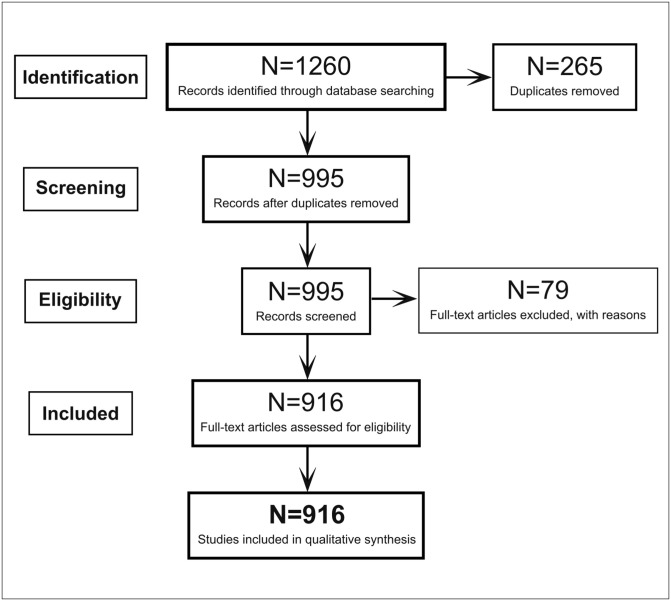
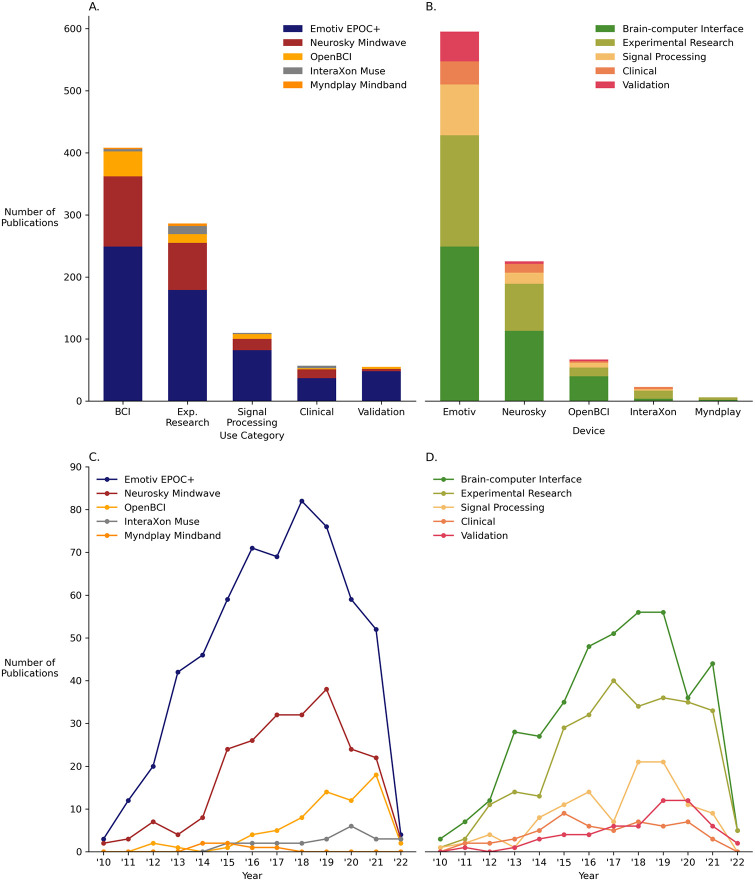
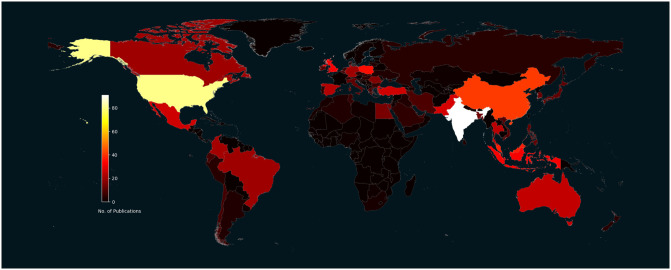
Background: Commercial electroencephalography (EEG) devices have become increasingly available over the last decade. These devices have been used in a wide variety of fields ranging from engineering to cognitive neuroscience. Purpose: The aim of this study was to chart peer-review articles that used consumer-grade EEG devices to collect neural data. We provide an overview of the research conducted with these relatively more affordable and user-friendly devices. We also inform future research by exploring the current and potential scope of consumer-grade EEG. Methods: We followed a five-stage methodological framework for a scoping review that included a systematic search using the Preferred Reporting Items for Systematic Reviews and Meta-Analyses Extension for Scoping Reviews (PRISMA-ScR) guidelines. We searched the following online databases: PsycINFO, MEDLINE, Embase, Web of Science, and IEEE Xplore. We charted study data according to application (BCI, experimental research, validation, signal processing, and clinical) and location of use as indexed by the first author’s country. Results: We identified 916 studies that used data recorded with consumer-grade EEG: 531 were reported in journal articles and 385 in conference papers. Emotiv devices were used most, followed by the NeuroSky MindWave, OpenBCI, interaXon Muse, and MyndPlay Mindband. The most common usage was for brain-computer interfaces, followed by experimental research, signal processing, validation, and clinical purposes. Conclusions: Consumer-grade EEG is a useful tool for neuroscientific research and will likely continue to be used well into the future. Our study provides a comprehensive review of their application, as well as future directions for researchers who plan to use these devices.
Overview
The claims and statistics of this paper haven’t been checked yet.
Run the check — free, no account needed. It reads the open-access text and checks the sources it cites.
Integrity signals
Registry
Cites
Statistics
Figures
Verification
Claims the paper makes
The claims and statistics of this paper haven’t been checked yet.
Run the check — free, no account needed. It reads the open-access text and checks the sources it cites.
Claims other papers make about this one
Each is checked against this paper’s own text: does it say what the citing paper says it does?
The cited source says what the claim attributes to it.
In the citing paper
“Practical deployment often limits channel count, as many commercial and mobile devices lack research-grade electrode coverage [3].”
From ERP-XTTN: interpretable prototype-guided cross-attention for cross-subject ERP classification (2026) · cites this paper as [3]
Self-check
Percentages, sums and reported differences re-computed from the paper’s own numbers.
The self-check needs the paper’s full text.
Citations
Cites
PRISMA Extension for Scoping Reviews (PRISMA-ScR): Checklist and Explanation
Tricco, A. C., Lillie, E., Zarin, W., O'Brien, K. K., Colquhoun, H., Levac, D., Moher, D., Peters, M. D. J., Horsley, T., Weeks, L., et al. (2018) · Annals of Internal Medicine · doi:10.7326/m18-0850 · Cited by 43,565
Delorme, A., & Makeig, S. (2004) · Journal of Neuroscience Methods · doi:10.1016/j.jneumeth.2003.10.009 · Cited by 24,371
The weirdest people in the world?
Henrich, J., Heine, S. J., & Norenzayan, A. (2010) · Behavioral and Brain Sciences · doi:10.1017/s0140525x0999152x · Cited by 12,641
Brain Computer Interfaces, a Review
Nicolas-Alonso, L. F., & Gomez-Gil, J. (2012) · Sensors · doi:10.3390/s120201211 · Cited by 2,143
MNE software for processing MEG and EEG data
Gramfort, A., Luessi, M., Larson, E., Engemann, D. A., Strohmeier, D., Brodbeck, C. J., Parkkonen, L. T., & Hämäläinen, M. (2013) · NeuroImage · doi:10.1016/j.neuroimage.2013.10.027 · Cited by 2,066
Motor imagery and direct brain-computer communication
Pfurtscheller, G., & Neuper, C. (2001) · Proceedings of the IEEE · doi:10.1109/5.939829 · Cited by 1,990
The P300 wave of the human event-related potential
Picton, T. W. (1992) · Journal of Clinical Neurophysiology · doi:10.1097/00004691-199210000-00002 · Cited by 1,908
Delorme, A., Sejnowski, T., & Makeig, S. (2007) · NeuroImage · doi:10.1016/j.neuroimage.2006.11.004 · Cited by 1,759
Deep learning-based electroencephalography analysis: a systematic review
Roy, Y., Banville, H., Albuquerque, I., Gramfort, A., Falk, T. H., & Faubert, J. (2019) · Journal of Neural Engineering · doi:10.1088/1741-2552/ab260c · Cited by 1,532
The PREP pipeline: standardized preprocessing for large-scale EEG analysis
Bigdely-Shamlo, N., Mullen, T. R., Kothe, C. A., Su, K., & Robbins, K. A. (2015) · Frontiers in Neuroinformatics · doi:10.3389/fninf.2015.00016 · Cited by 1,360
Research works printed but not linked: 5
- V. Lavermicocca, 2018, Neurofeedback in Parkinson’s disease: Technologies in speech and language therapy, Recenti Prog Med, 109, 130
- Jones P, Badcock N. SYRAS| Systematic Review Assistant. 2017.
- C.M. Wilkinson, 2022, Low cost, portable electroencephalograph may improve the accuracy of prehospital stroke diagnosis and detection of large vessel occlusion, Stroke, 53
- N. Ishaque, 2022, Quantitative electroencephalogram to assess neurovascular coupling post endovascular thrombectomy, Stroke, 53
- A.S. Malik, 2013, Fuzzification of epileptic data: An application for prediction and identification of partial seizure, J Neurol, 260, S193
Cited by
Items 101–114 of 114
Danayi, A., & Hamid Soltanian-zadeh, A. (2026) · PLoS ONE · doi:10.1371/journal.pone.0354976
Rajendiran, D. K. J., Priyadharshini, K., Chidambaram, G. B., & Visvesvaran, C. (2026) · Journal of Engineering Research · doi:10.1016/j.jer.2026.08.033
Non-invasive dry EEG electrodes: from laboratory prototypes to wearable neurotechnology systems
Razaghi, Z., Mohammadpour, R., Ebrahimpour, R., & zad, A. I. (2026) · Sensors and Actuators A Physical · doi:10.1016/j.sna.2026.118509
BOYNUKARA, M., & Dursun, Ö. Ö. (2026) · SAGE Open · doi:10.1177/21582440261491801
Cross-Modal Robust EEG Biomarkers for Sustained Attention in Multimodal Learning
Ullamgunta, H., Kumar, S., Bablani, A., & Sarma, H. (2026) · IEEE International Conference on Electronics, Computing and Communication Technologies (CONECCT) · doi:10.1109/conecct68978.2026.11700712
A 2-Channel Forehead EEG System for Real-Time Adaptive Attention Assessment
He, C., Chang, J.-H., Cheng, P.-H., & Liwei, K. (2026) · Asian Control Conference (ASCC) · doi:10.1109/ascc70886.2026.11702319
Song, Q., Zhang, G., Lyu, C., Xie, X., Yao, N., Chen, H., & Tian, F. (2026) · INTERNATIONAL CONFERENCE ON MULTIMODAL INTERACTION · doi:10.1145/3776574.3831177
Gazea, T., Machairas, I., Mitsopoulos, K., Fiska, V., Kartsidis, P. E., Bamidis, P. D., & Athanasiou, A. (2026) · Proceedings - IEEE Symposium on Computer-Based Medical Systems · doi:10.1109/cbms69103.2026.00074
Designing Context-Aware Generative Installations: A Modular Framework for Adaptive Public Space
Chua, V. Y. T., & Xi, L. (2026) · International Conference on Human-Computer Interaction with Mobile Devices and Services (MobileHCI) · doi:10.1145/3821581.3833135
BOYNUKARA, M., & Dursun, Ö. Ö. (2026) · Akdeniz Spor Bilimleri Dergisi · doi:10.38021/asbid.2039229
A Lightweight Hybrid-Attention Conformer for Affective State Recognition from Wearable EEG
Eriş, M., Eriş, F. G., & Yaman, O. (2026) · Sensors · doi:10.3390/s26216943
Naufal, Z., Melinda, M., Rusdiana, S., Yunidar, Y., Rafiki, A., & Vivita, L. (2026) · Journal of Electronics Electromedical Engineering and Medical Informatics · doi:10.35882/jeeemi.v8i4.1908
Ko, C.-P., Chen, T.-Y., Sun, S.-J., Dai, S.-L., Lai, C.-L., & Tseng, S.-Y. (2026) · Journal of Functional Morphology and Kinesiology · doi:10.3390/jfmk11040458
Signal Garden: A Longitudinal EEG Installation on Affective Conference Presence
Chua, V. Y. T., & Xi, L. (2026) · ACM International Conference on Multimedia (ACM MM) · doi:10.1145/3767308.3838302
Metadata
- Authors
- Sabio, J., Williams, N. S., McArthur, G. M., & Badcock, N. A.
- Affiliations
- The University of Queensland (AU)
- Macquarie University (AU)
- The University of Western Australia (AU)
- Corresponding author
- Sabio, Joshua
- Venue
- PLOS ONE
- Publisher
- Public Library of Science (PLoS)
- Published
- 2024-03-06
- Volume
- 19
- Issue
- 3
- Pages
- e0291186
- ISSN
- 1932-6203 (ISSN-L)
- PMC
- PMC10917334
- OpenAlex
- W4392536393
- Cited by
- 98
- References
- 158
- Citations by year
- 2026: 41 · 2025: 47 · 2024: 9
- FWCI
- 6.27
- Type
- journal article
- Language
- en
- Open access
- gold
- doi.org
- Licence
- Locations
- PLoS ONE (publishedVersion, cc-by)
- PubMed Central (publishedVersion, cc-by)
- PubMed (publishedVersion)
- UWA Profiles and Research Repository (UWA) (submittedVersion, cc-by)
- RePEc: Research Papers in Economics (submittedVersion)
- DOAJ (DOAJ: Directory of Open Access Journals) (submittedVersion)
- Funders
- Macquarie University Co-Funded Research Fellowship Scheme (83673928)
- Topics
- Life Sciences › Neuroscience › Cognitive Neuroscience › EEG and Brain-Computer Interfaces
- Physical Sciences › Computer Science › Artificial Intelligence › Emotion and Mood Recognition
- Physical Sciences › Computer Science › Human-Computer Interaction › Gaze Tracking and Assistive Technology
- Keywords
- consumer-grade EEG, brain-computer interface, NeuroSky MindWave, OpenBCI, EEG signal processing, clinical EEG
- MeSH terms
- Electroencephalography, Engineering, Peer Review, MEDLINE, Brain-Computer Interfaces
About these checks
Registry, retraction, Cites and statistics results are computed, not judged, with one exception: a printed reference that no index lists is read once by a model before it counts as a citation error. Claims are extracted by a model and kept only when their quote appears verbatim in the text; each cited source is then checked, with a model’s help, for whether it says what the claim relies on. Those verdicts can be wrong — read the claim’s quote and the cited source before relying on one.
Statistics and arithmetic are recomputed, not judged.
Confidence bands are shown only for fields calibrated on our annotated test set. None is calibrated yet, so no band is shown.
What counts as a claim ›How we measure confidence ›How we check this ›
Are you an author, or do you see a problem with this page? Request a review
