

Dispersion as an Important Step in the Candida albicans Biofilm Developmental Cycle
Open accessThe DOI matches its Crossref record; 70 of the 71 references it cites were found in a registry or an index.
Abstract
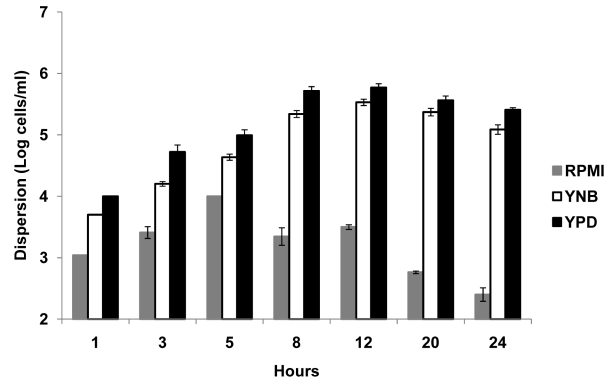
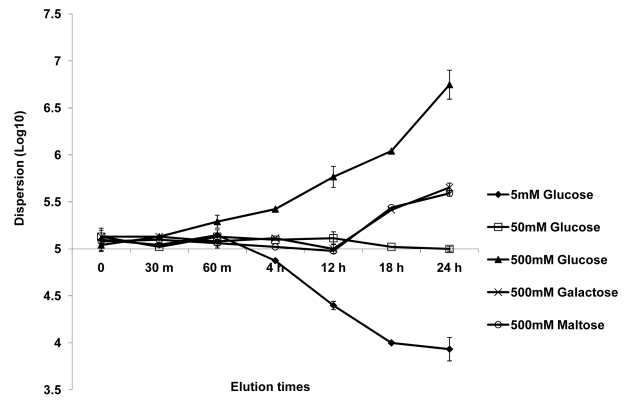
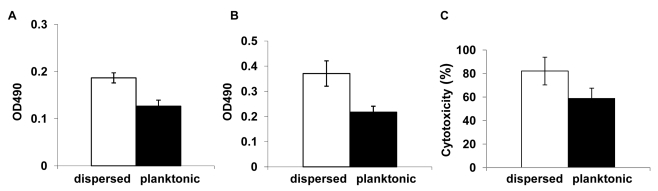
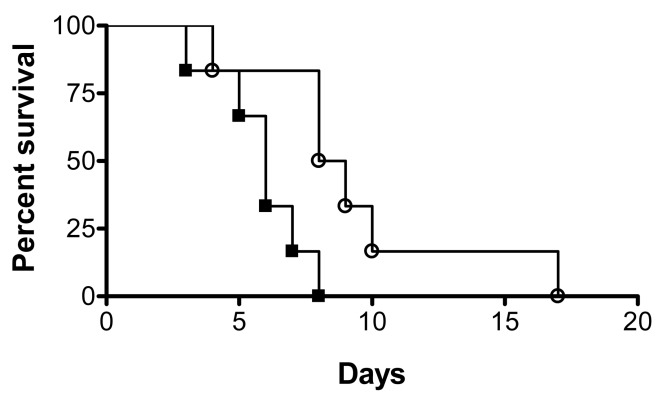
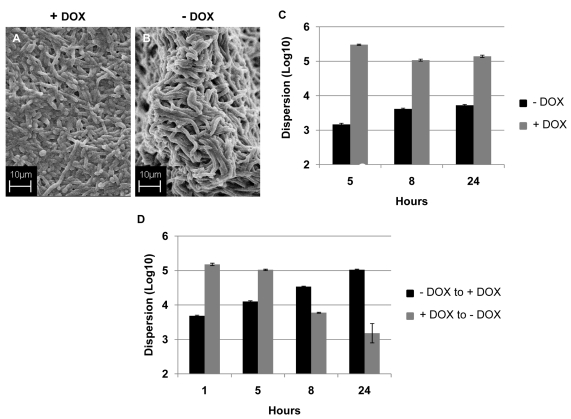
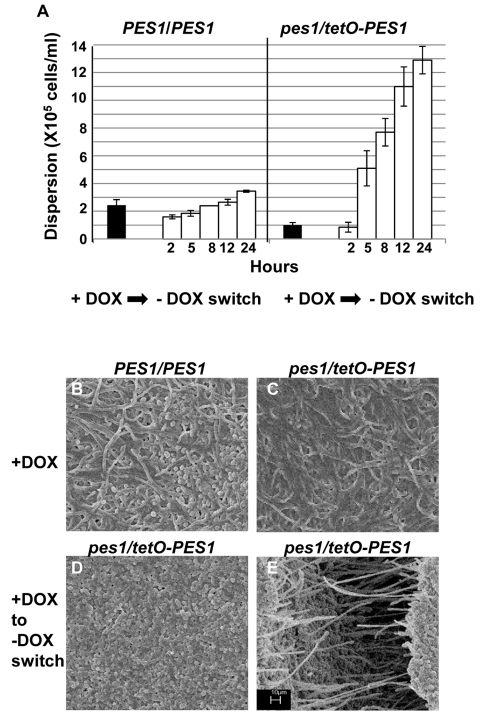
Biofilms are dynamic microbial communities in which transitions between planktonic and sessile modes of growth occur interchangeably in response to different environmental cues. In the last decade, early events associated with C. albicans biofilm formation have received considerable attention. However, very little is known about C. albicans biofilm dispersion or the mechanisms and signals that trigger it. This is important because it is precisely C. albicans cells dispersed from biofilms that are the main culprits associated with candidemia and establishment of disseminated invasive disease, two of the gravest forms of candidiasis. Using a simple flow biofilm model recently developed by our group, we have performed initial investigations into the phenomenon of C. albicans biofilm dispersion, as well as the phenotypic characteristics associated with dispersed cells. Our results indicate that C. albicans biofilm dispersion is dependent on growing conditions, including carbon source and pH of the media used for biofilm development. C. albicans dispersed cells are mostly in the yeast form and display distinct phenotypic properties compared to their planktonic counterparts, including enhanced adherence, filamentation, biofilm formation and, perhaps most importantly, increased pathogenicity in a murine model of hematogenously disseminated candidiasis, thus indicating that dispersed cells are armed with a complete arsenal of "virulence factors" important for seeding and establishing new foci of infection. In addition, utilizing genetically engineered strains of C. albicans (tetO-UME6 and tetO-PES1) we demonstrate that C. albicans biofilm dispersion can be regulated by manipulating levels of expression of these key genes, further supporting the evidence for a strong link between biofilms and morphogenetic conversions at different stages of the C. albicans biofilm developmental cycle. Overall, our results offer novel and important insight into the phenomenon of C. albicans biofilm dispersion, a key part of the biofilm developmental cycle, and provide the basis for its more detailed analysis.
Overview
The claims and statistics of this paper haven’t been checked yet.
Free: it reads the open-access text and checks the first 5 claims that cite a source we can check. Create a free account to check every claim.
Integrity signals
Registry
Cites
Statistics
Figures
Verification
Claims the paper makes
The claims and statistics of this paper haven’t been checked yet.
Free: it reads the open-access text and checks the first 5 claims that cite a source we can check. Create a free account to check every claim.
Claims other papers make about this one
Each is checked against this paper’s own text: does it say what the citing paper says it does?
The source backs part of the claim, not all of it — or backs it for a different population, condition or comparison.
In the citing paper
“Because the zinc cluster transcription factor Ume6 is known to be a key regulator of the switch from yeast to hyphal form and of biofilm formation in C. albicans (28–31), we explored its role in C. auris.”
From Ume6-dependent pathways of morphogenesis and biofilm formation in Candida auris (2024) · cites this paper as [31]
Experimental — accuracy not yet measuredThe cited source says what the claim attributes to it.
In the citing paper
“cells typically dispersed from C. albicans biofilms have been found to exist in the yeast form (15, 20)”
From A Histone Deacetylase Complex Mediates Biofilm Dispersal and Drug Resistance in Candida albicans (2014) · cites this paper as [15]
In the citing paper
“Two transcriptional regulators of C. albicans biofilm dispersal have been identified, Nrg1 and Ume6; transcriptional overexpression of either regulator increased the number of dispersed cells actively released from the biofilm (194, 195).”
From Candida albicans Biofilms and Human Disease (2015) · cites this paper as [194]
In the citing paper
“These include (relative to planktonic cells) increased adherence properties, the ability to form biofilms more efficiently, and enhanced virulence in mouse models of infection (194).”
From Candida albicans Biofilms and Human Disease (2015) · cites this paper as [194]
In the citing paper
“Cells are dispersed continuously throughout biofilm formation, and they are thought to be primarily (if not exclusively) in the round yeast form (194).”
From Candida albicans Biofilms and Human Disease (2015) · cites this paper as [194]
Self-check
Percentages, sums and reported differences re-computed from the paper’s own numbers.
The self-check needs the paper’s full text.
Citations
Cites
Wisplinghoff, H., Bischoff, T., Tallent, S. M., Seifert, H., Wenzel, R. P., & Edmond, M. B. (2004) · Clinical Infectious Diseases · doi:10.1086/421946 · Cited by 4,496 · cited 1×
“albicans remains its most frequent causative agent [1–4].”
BackgroundEpidemiology of Invasive Candidiasis: a Persistent Public Health Problem
Pfaller, M. A., & Diekema, D. J. (2007) · Clinical Microbiology Reviews · doi:10.1128/cmr.00029-06 · Cited by 4,174 · cited 1×
“albicans remains its most frequent causative agent [1–4].”
BackgroundPseudomonas aeruginosa Displays Multiple Phenotypes during Development as a Biofilm
Sauer, K., Camper, A. K., Ehrlich, G. D., Costerton, J. W., & Davies, D. G. (2002) · Journal of Bacteriology · doi:10.1128/jb.184.4.1140-1154.2002 · Cited by 1,691 · cited 2×
“Several reports have elucidated some of the molecular mechanisms orchestrating dispersion in bacterial biofilms [28–31].”
BackgroundChandra, J., Kuhn, D. M., Mukherjee, P. K., Hoyer, L. L., McCormick, T., & Ghannoum, M. A. (2001) · Journal of Bacteriology · doi:10.1128/jb.183.18.5385-5394.2001 · Cited by 1,578 · cited 4×
“The cycle is thought to continue with biofilm dispersion/detachment or dissolution, when cells released from the biofilm seed new surfaces, thus completing the biofilm life-cycle [10,21,22].”
BackgroundInfluentialCandida biofilms and their role in infection
Douglas, L. J. (2003) · Trends in Microbiology · doi:10.1016/s0966-842x(02)00002-1 · Cited by 1,150 · cited 1×
“albicans progresses through multiple development stages, beginning with attachment to a surface, microcolony formation, proliferation and development and maturation involving encapsulation within an exopolymeric matrix [21,47].”
BackgroundSecular Trends in the Epidemiology of Nosocomial Fungal Infections in the United States, 1980-1990
Sague, C. M. B., Jarvis, W. R., & System, N. N. I. S. (1993) · Journal of Infectious Diseases · doi:10.1093/infdis/167.5.1247 · Cited by 1,140
Candida Infections of Medical Devices
Kojic, E. M., & Darouiche, R. O. (2004) · Clinical Microbiology Reviews · doi:10.1128/cmr.17.2.255-267.2004 · Cited by 1,055 · cited 2×
“incorporated into these systems in order to mimic in vivo conditions in patients such as flow to simulate physiological blood flow, coating of substrate surfaces with various host blood and salivary proteins, variation in the nutrient composition of the media employed and use of common device materials [8,14–20].”
BackgroundMethodPierce, C. G., Uppuluri, P., Tristan, A. R., Wormley, F. L., Mowat, E., Ramage, G., & Lopez-Ribot, J. L. (2008) · Nature Protocols · doi:10.1038/nprot.2008.141 · Cited by 1,041 · cited 1×
“, the wells were washed twice with sterile PBS and the extent of cellular adhesion to the wells was quantified by the XTT assay as described earlier [37].”
MethodSelf-citationQuorum Sensing in the Dimorphic Fungus Candida albicans Is Mediated by Farnesol
Hornby, J. M., Jensen, E. C., Lisec, A. D., Tasto, J. J., Jahnke, B., Shoemaker, R., Dussault, P., & Nickerson, K. W. (2001) · Applied and Environmental Microbiology · doi:10.1128/aem.67.7.2982-2992.2001 · Cited by 983 · cited 1×
“albicans filamentation and biofilm formation [39,40] only led to a significant increase in dispersion when supraphysiological concentrations of this compound were used (Figure S2B).”
MethodSecular trends in nosocomial primary bloodstream infections in the United States, 1980–1989.
Banerjee, S. N., Emori, T. G., Culver, D. H., Gaynes, R. P., Jarvis, W. R., Horan, T., Edwards, J. R., Tolson, J., Henderson, T., Martone, W. J., et al. (1991) · The American Journal of Medicine · doi:10.1016/0002-9343(91)90349-3 · Cited by 880
Research works printed but not linked: 1
- Bird RB Stewart WE Lightfoot EN 1960 “Transport Phenomena”. 36 40 John Wiley & Sons, NY
Cited by
Items 301–400 of 450
In vitro ability of Fusarium keratoplasticum to form biofilms in venous catheter
Salvador, A., Veiga, F. F., Svidzinski, T. I. E., & Negri, M. (2022) · Microbial Pathogenesis · doi:10.1016/j.micpath.2022.105868 · Cited by 11
Ahmed, I. (2014) · doi:10.4155/9781909453708 · Cited by 10
Rhodotorula sp. and Trichosporon sp. are more Virulent After a Mixed Biofilm
Jarros, I. C., Barros, I. L. E., Prado, A., Corrêa, J. L., Malacrida, A. M., Negri, M., & Svidzinski, T. I. E. (2021) · Mycopathologia · doi:10.1007/s11046-021-00606-5 · Cited by 11
“These authors claim that scattered cells from mature biofilms appear to be more virulent and have a greater ability to adhere to surfaces to form new biofilms [26].”
BackgroundLagree, K., & Mitchell, A. P. (2017) · ASM Press eBooks · doi:10.1128/9781555819583.ch42 · Cited by 10
Shareef, M. A., Rajpurohit, H., Sirisha, K., Sayeed, I. B., Khan, I., Kadagathur, M., Ganapathi, T., Kumar, C. G., Kamal, Ä., & Babu, B. N. (2019) · ChemistrySelect · doi:10.1002/slct.201803572 · Cited by 10
Tseng, K.-Y., Huang, Y., Huang, Y.-T., Su, Y., Wang, A.-N., Weng, W.-Y., Ke, C.-L., Yeh, Y.-C., Wang, J.-J., Du, S.-H., et al. (2024) · PLoS Pathogens · doi:10.1371/journal.ppat.1012319 · Cited by 10
“Various in vitro models have been established to recapitulate C . albicans biofilm formation on an intravascular catheter in clinical infections, mainly focusing on the use of relevant plastic materials for microbial adhesion [24–28].”
Biofilm-Mediated Urinary Tract Infections
Agarwal, J., & Radera, S. (2019) · Springer eBooks · doi:10.1007/978-3-030-30757-8_13 · Cited by 13
Candida albicans Biofilm Development and Its Genetic Control
Desai, J. V., & Mitchell, A. P. (2015) · ASM Press eBooks · doi:10.1128/9781555817466.ch5 · Cited by 14
Candida albicans antibiofilm molecules: analysis based on inhibition and eradication studies
Guimarães, C. D. R. E., de Freitas, H. F., & Barros, T. F. (2022) · Brazilian Journal of Microbiology · doi:10.1007/s42770-022-00876-1 · Cited by 9
Evolution of regulatory networks inCandida glabrata: learning to live with the human host
Roy, S., & Thompson, D. A. (2015) · FEMS Yeast Research · doi:10.1093/femsyr/fov087 · Cited by 9
“…noted above, the Ume6 motif is enriched in meiosis genes in C. glabrata; however, given that the Ume6 ortholog in C. albicans is also a regulator of biofilm dispersion (Banerjee et al. 2008; Uppuluri et al. 2010; Nobile et al. 2012) the known function of CgUme6 is more akin to the C. albicans gene.”
BackgroundCandida spp. in Lower Respiratory Tract Secretions – A Ten Years Retrospective Study
Ciurea, C. N., Santini, A., Mare, A. D., Kosovski, I.-B., Toma, F., Vintilă, C., Pintea-Simon, I. A., & Man, A. (2021) · The Journal of Critical Care Medicine · doi:10.2478/jccm-2021-0016 · Cited by 11
“They are transcriptionally reprogramed to acquire nutrients and metabolise alternative carbon sources [50, 51].”
BackgroundQuorum Sensing: A Major Regulator of Fungal Development
Franco, A., Gacto, M., Gómez-Gil, E., Madrid, M., Vicente‐Soler, J., Vázquez-Marín, B., Cansado, J., & Soto, T. (2021) · Springer eBooks · doi:10.1007/978-3-030-77595-7_14 · Cited by 8
Wu, Y., Chen, J., Chen, L.-C., Chen, L., Huang, Y., & Liao, C. (2025) · Pathogens · doi:10.3390/pathogens14040308 · Cited by 9
“In a disseminated infection model in mice, yeast cells dispersed within mature biofilms have been shown to display higher virulence [2–5].”
Candida albicans: a historical overview of investigations into an important human pathogen
Shrivastava, M., & Whiteway, M. S. (2025) · Canadian Journal of Microbiology · doi:10.1139/cjm-2025-0036 · Cited by 7
Vm and ζ-potential of Candida albicans corelate with biofilm formation
Johnson, M. P., Albataineh, M. T., Sreedharan, S. P., Jelinek, H. F., & Hughes, M. P. (2025) · Scientific Reports · doi:10.1038/s41598-025-06371-5 · Cited by 7
“The study measured the levels of biofilm growth using a standard, semi-quantitative colorimetric 2 H-tetrazolium-5-carboxanilide (XTT) reduction assay 8,27 .”
Biofilm in food materials – A review
Shahid, S., Sheetal, Dasgupta, D., Pani, B., Singh, A. K., & Saji, V. S. (2025) · The Microbe · doi:10.1016/j.microb.2025.100518 · Cited by 10
Multi-Omics Profiling of Candida albicans Grown on Solid Versus Liquid Media
Alhameed, R. A., Semreen, M. H., Hamad, M., Giddey, A. D., Sulaiman, A., Bataineh, M. T. A., Al-Hroub, H. M., Bustanji, Y. K., Alzoubi, K. H., & Soares, N. C. (2023) · Microorganisms · doi:10.3390/microorganisms11122831 · Cited by 9
ABC genotyping and putative virulence factors of Candida albicans clinical isolates
Moron, L., & Cabrera, E. C. (2019) · Malaysian Journal of Microbiology · doi:10.21161/mjm.180307 · Cited by 7
Cheng, T., Torres, N. S., Chen, P., Srinivasan, A., Cardona, S. M., Lee, G. C., Leung, K. P., Lopez-Ribot, J. L., & Ramasubramanian, A. K. (2021) · mSphere · doi:10.1128/msphere.00186-21 · Cited by 8
“maturity, to complete the cycle, the cells are dispersed for reseeding at distant sites (4).”
BackgroundSelf-citationBarros, I. L. E., Veiga, F. F., Jarros, I. C., Corrêa, J. L., dos Santos, R. S., Bruschi, M. L., Negri, M., & Svidzinski, T. I. E. (2022) · Anais da Academia Brasileira de Ciências · doi:10.1590/0001-3765202220210189 · Cited by 7
INHIBITION OF CANDIDA BIOFILMS BY PYOCYANIN: AN IN- VITRO STUDY
Bhattacharyya, S., Gupta, P., Banerjee, G., Jain, A., & Singh, M. (2013) · International Journal of Current Research and Review · Cited by 7
Reduction of Pseudomonas aeruginosa biofilm formation through the application of nanoscale vibration
Robertson, S. N., Childs, P. G., Akinbobola, A., Henriquez, F. L., Ramage, G., Reid, S. D., Mackay, W. G., & Williams, C. (2019) · Journal of Bioscience and Bioengineering · doi:10.1016/j.jbiosc.2019.09.003 · Cited by 8
“In blood stream infections a biofilm phenotype has been 33 associated with a higher mortality rate in contrast to planktonic cells (12), possibly due to 34 dispersal of cells from the biofilm (13).”
BackgroundFrom Biology to Drug Development: New Approaches to Combat the Threat of Fungal Biofilms
Pierce, C. G., Srinivasan, A., Ramasubramanian, A. K., & Lopez-Ribot, J. L. (2015) · ASM Press eBooks · doi:10.1128/9781555817466.ch19 · Cited by 8
Self-citationPendrak, M. L., & Roberts, D. D. (2015) · PLoS ONE · doi:10.1371/journal.pone.0126919 · Cited by 8
Yeast-derived glycolipids disrupt Candida biofilm and inhibit expression of genes in cell adhesion
Watchaputi, K., Songdech, P., Jayasekara, L. A. C. B., Puttarak, P., Lamping, E., Cannon, R. D., & Soontorngun, N. (2025) · Scientific Reports · doi:10.1038/s41598-025-08816-3 · Cited by 7
Candida albicans Goliath cells pioneer biofilm formation
Kalinina, I. M., & Wilson, D. (2025) · mBio · doi:10.1128/mbio.03425-24 · Cited by 7
“Once formed, the biofilm can release yeast cells (23), seeding the bloodstream and resulting in persistent candidemia (24).”
Assessment of Dentifrices Against Candida Biofilm
Singh, N., Nayyar, A., Bhattacharjee, G., Singh, A. K., & Pruthi, V. (2012) · Applied Biochemistry and Biotechnology · doi:10.1007/s12010-012-9574-2 · Cited by 6
“albicans is ranked fourth in causing nosocomial infections, third in catheter-related infections, second highest in colonization to infection rate, and highest overall in crude mortality [9, 10].”
BackgroundLee, Y., & Wang, C. (2020) · The Journal of Microbiology · doi:10.1007/s12275-020-9522-8 · Cited by 6
Lim, S. J., Noor, N. D. M., Sabri, S., Ali, M. S. M., Salleh, A. B., & Oslan, S. N. (2023) · Medical Mycology · doi:10.1093/mmy/myad126 · Cited by 6
Fungal Biofilms: In Vivo Models for Discovery of Anti-Biofilm Drugs
Nett, J. E., & Andes, D. R. (2015) · ASM Press eBooks · doi:10.1128/9781555817466.ch2 · Cited by 8
Zhu, X., Jin, F., Yang, G., Zhuang, T., Zhang, C., Zhou, H., Niu, X., Wang, H., & Wu, D. (2024) · Journal of Fungi · doi:10.3390/jof10060391 · Cited by 5
Romero, O., & Geddes‐McAlister, J. (2025) · mBio · doi:10.1128/mbio.02303-24 · Cited by 6
“Biofilm maturation occurs with EPM accumulation and increased cellular growth, followed by detachment of yeast cells from the biofilm to promote dispersal to new locations for the formation of additional biofilms (119).”
Dowdy, H., Kumar, R. S., Almansour, A. I., Arumugam, N., Alaqeel, S. I., & Thangamani, S. (2022) · Pathogens and Disease · doi:10.1093/femspd/ftac013 · Cited by 6
The emerging pathogen Candida auris: host interactions and disease drivers
Sanya, D. R. A., Arevalo, A. V., Onésime, D., & Nobile, C. J. (2026) · Journal of Biomedical Science · doi:10.1186/s12929-026-01230-5 · Cited by 6
“These dispersed cells exhibit enhanced adhesion to and damage of endothelial cells, increased virulence, heightened antifungal resistance, and an augmented capacity to form secondary biofilms compared to planktonic cells [55].”
Physiological changes and growth behavior of Corynebacterium glutamicum cells in biofilm
Zhang, D., Shen, J., Peng, X., Gao, S., Wang, Z., Zhang, H., Sun, W., Niu, H., Ying, H., Zhu, C., et al. (2022) · Frontiers in Microbiology · doi:10.3389/fmicb.2022.983545 · Cited by 5
Biofouling Mitigation Strategies in Membrane Systems for Wastewater Treatment
Nair, A. M., & Singh, S. P. (2023) · Energy, environment, and sustainability · doi:10.1007/978-981-99-2062-4_15 · Cited by 8
Prusty, J. S., Kumar, A., & Kumar, A. (2024) · Critical Reviews in Microbiology · doi:10.1080/1040841x.2024.2418125 · Cited by 8
“…cells that disperse from fully developed biofilms look more virulent and possess a greater capacity to stick to surfaces to form biofilms (Uppuluri, chaturvedi, et al. 2010; Uppuluri, Pierce, et al. 2010). the formation of Candida biofilms and the role of these mandatory factors has been…”
Bujdáková, H., Kulková, N., & Černáková, L. (2012) · Archives of Industrial Hygiene and Toxicology · doi:10.2478/10004-1254-63-2012-2236 · Cited by 7
Prigitano, A., Dho, G., Lazzarini, C., Ossi, C. M., Cavanna, C., Tortorano, A. M., & for the ECMM-FIMUA study group (2012) · Journal of Chemotherapy · doi:10.1179/1120009x12z.00000000014 · Cited by 7
Polymicrobial biofilms: Impact on fungal pathogenesis
Costa-Orlandi, C. B., Bila, N. M., Vaso, C. O., Pires, A. C. M. D. S., Silva, S. D. M., Medina‐Alarcón, K. P., Marcos, C. M., Fusco‐Almeida, A. M., & Mendes‐Giannini, M. J. S. (2023) · Elsevier eBooks · doi:10.1016/b978-0-323-99977-9.00040-5 · Cited by 9
In Vivo Candida Device Biofilm Models
Andes, D. R. (2017) · Springer eBooks · doi:10.1007/978-3-319-50409-4_7 · Cited by 5
First Study of Naturally Formed Fungal Biofilms on the Surface of Intragastric Balloons
Prado, A., Brito, R. D. O., Pereira, E. D. C. A., Corrêa, J. L., Neto, M. G., Dayyeh, B. K. A., Negri, M., & Svidzinski, T. I. E. (2021) · Obesity Surgery · doi:10.1007/s11695-021-05730-1 · Cited by 4
Candidoses associées aux cathéters: Quelle place pour les verrous antifongiques ?
Cateau, E., Rodier, M., & Imbert, C. (2012) · médecine/sciences · doi:10.1051/medsci/2012288016 · Cited by 8
Candida Biofilm: Clinical Implications of Recent Advances in Research
Press, E. G., Shields, R. K., & Clancy, C. J. (2014) · Current Fungal Infection Reports · doi:10.1007/s12281-014-0176-z · Cited by 6
“At the point of dispersal, cells are released to the surrounding environment, potentially seeding new sites of infection and leading to disseminated infection [9, 38].”
BackgroundLim, S. J., Noor, N. D. M., Sabri, S., Ali, M. S. M., Salleh, A. B., & Oslan, S. N. (2024) · Microbial Pathogenesis · doi:10.1016/j.micpath.2024.106773 · Cited by 3
Biofilm formation and the biological response
Drago, L., & Toscano, M. (2016) · Elsevier eBooks · doi:10.1016/b978-0-08-100205-6.00002-1 · Cited by 4
Rąpała‐Kozik, M., Zawrotniak, M., Gogól, M., Bartnicka, D., Satała, D., Smolarz, M., Karkowska‐Kuleta, J., & Kozik, A. (2019) · IntechOpen eBooks · doi:10.5772/intechopen.81537 · Cited by 4
“Then, the dispersion of biofilmassociated yeast-like cells can occur with further fungal cell dissemination, often associated with invasive diseases [24, 26].”
BackgroundPreventing Candida albicans biofilm formation using aromatic-rich piperazines
Simon, G., Bérubé, C., Paquet-Côté, P.-A., Grenier, D., & Voyer, N. (2020) · Bioorganic & Medicinal Chemistry · doi:10.1016/j.bmc.2020.115810 · Cited by 3
Fuad, A. S. M., Mazlan, W. N. A. W., Wahab, R. A., Nasruddin, N. S., & Arzmi, M. H. (2023) · International Journal of Orofacial and Health Sciences · doi:10.31436/ijohs.v4i2.204 · Cited by 4
Fungal Biofilms: Formation, Resistance and Pathogenicity
Sardi, J. D. C. O., de Souza, N., Gullo, F. P., Fusco‐Almeida, A. M., & Mendes‐Giannini, M. J. S. (2015) · CRC Press eBooks · doi:10.1201/b18707-17 · Cited by 3
Seneviratne, C. J., Srivastava, N., Islam, I., & Allen, P. (2017) · CRC Press eBooks · doi:10.4324/9781315120119-1 · Cited by 3
Morimoto, Y., Yo, H., & Ohashi, H. (2018) · Journal of Orthopaedic Science · doi:10.1016/j.jos.2018.09.010 · Cited by 4
Zhu, S., Sun, J., Bi, X., Wang, Z., Yang, F., Ta, R., Su, C., Wu, X., Han, K., Lan, M., et al. (2025) · Journal of Ethnopharmacology · doi:10.1016/j.jep.2025.119844 · Cited by 2
Márton, R., Fenyvesi, É., Szente, L., Kese, I., & Molnár, M. (2025) · Periodica Polytechnica Chemical Engineering · doi:10.3311/ppch.41530 · Cited by 2
“Yeast-like cells released from biofilms exhibit increased infectivity and enhanced adherence to various surfaces compared to conventional planktonic cells, facilitating the easier formation of new biofilms [10].”
Singh, D., Brink, J., Hiebner, D., & Casey, E. D. (2026) · Biofilm · doi:10.1016/j.bioflm.2026.100353 · Cited by 2
“Dispersed cells have unique behaviour relative to their planktonic equivalents, characterized by increased adhesion, colonisation, and pathogenicity [15,33].”
A Simple 96-Well Plate-Based Method for Development of Candida Biofilms Under Static Conditions
Uppuluri, P. (2022) · Methods in molecular biology · doi:10.1007/978-1-0716-2549-1_16 · Cited by 2
Self-citationProbiotic Enterococcus faecium CRL 183 Inhibits Candida albicans Biofilm In Vitro
Lordello, V. B., de Annunzio, S. R., da Silva, E. P., Taranto, M. P., Fontana, C. R., & Cavallini, D. C. U. (2024) · Microbiology Research · doi:10.3390/microbiolres15040141 · Cited by 2
Candida Infections: An Update on Host Immune Defenses and Anti-Fungal Drugs
Gao, N., & Chen, C. (2016) · doi:10.11979/idtm.201601005 · Cited by 2
Genetic regulations of microbial biofilm
Sinha, B., Sengupta, C., Sahoo, P. K., Nath, T., & Mukherjee, O. (2022) · Elsevier eBooks · doi:10.1016/b978-0-323-88480-8.00018-2 · Cited by 4
Clinical Management of Fungal Biofilm Infections
Ramage, G., Short, B., McKloud, E., Alshanta, O. A., Butcher, M. C., McLean, W., & Brown, J. L. (2022) · Springer series on biofilms · doi:10.1007/978-3-031-10992-8_17 · Cited by 2
Candida Albicans Biofilm as a Clinical Challenge
Jadhav, A. K., & Karuppayil, S. M. (2017) · Springer eBooks · doi:10.1007/978-981-10-4768-8_13 · Cited by 4
Piispanen, A. E., & Hogan, D. A. (2014) · ASM Press eBooks · doi:10.1128/9781555817176.ch20 · Cited by 2
A incidência de doenças causada por leveduras Cândida albicans, glabrata e tropicalis
Souza, J. D. S., Morais, K. S. D., Barros, N. B. D., & Barros, R. R. (2022) · Brazilian Journal of Development · doi:10.34117/bjdv8n11-374 · Cited by 7
de Mello, T. P., Barcellos, I. C., Branquinha, M. H., & dos Santos, A. L. S. (2023) · Current Research in Microbial Sciences · doi:10.1016/j.crmicr.2023.100191 · Cited by 3
Occidiofungin inhibition of Candida biofilm formation on silicone elastomer surface
Kumpakha, R., & Gordon, D. M. (2023) · Microbiology Spectrum · doi:10.1128/spectrum.02460-23 · Cited by 2
“In addition, the presence of primarily yeast-form cells in C. tropicalis biofilm would be expected to provide a larger source of yeast-form cells for release into the media compared to the hyphal-rich C. albicans biofilm (24, 33, 41, 42).”
BackgroundResultClinical Significance, Molecular Formation, and Natural Antibiofilm Agents of Candida albicans
Abdulghani, M. M. M., & Zore, G. B. (2024) · Springer eBooks · doi:10.1007/978-981-97-5165-5_9 · Cited by 2
The Changing Face of Candida in Southeast Asia
Espiritu, L. M., Capule, P. R. D., Casulla, L. Y., Yu, P. K., Carascal, M. B., Ombao, D. J. N., Notarte, K. I., Guerrero, J. J. G., & Chaturvedi, V. P. (2025) · Springer eBooks · doi:10.1007/978-981-95-2640-6_6 · Cited by 1
Chau, E. C.-T., Hau, P., Murillo, M., Tsang, C., Tam, E. W. T., Seto, S. W., Lee, C., & Chow, F. W. (2025) · Extracellular Vesicles and Circulating Nucleic Acids · doi:10.20517/evcna.2025.49 · Cited by 2
Aguilar-Fuentes, A. N., Montes-García, J. F., Salcedo-Álvarez, M. O., Alonso, P. S., Vázquez‐Cruz, C., Rojas, L., Meneses, E. P., & Negrete‐Abascal, E. (2025) · Canadian Journal of Microbiology · doi:10.1139/cjm-2025-0135 · Cited by 1
Moisés, L. D. S., Viotto, H. E. D. C., Coelho, S. R. G., Marín, D. O. M., SOUZA, R. F., & Pero, A. C. (2026) · Journal of Applied Oral Science · doi:10.1590/1678-7765-2025-0526 · Cited by 1
Houam, A., Zeghib, A., Tamfu, A. N., Anouar, E. H., Zeghib, F., Yılmaz, M. A., Ceylan, Ö., Orhan, İ. E., Cakir, O., Tarhan, A., et al. (2026) · Chemistry & Biodiversity · doi:10.1002/cbdv.202503675 · Cited by 2
“This mechanism increases microbial pathogenicity, leading to the formation and dissemination of additional infection foci within the affected area [ 94, 95 ].”
Seo, J.-I., Lee, J.-W., & Shin, M. K. (2026) · Microbiology Spectrum · doi:10.1128/spectrum.00091-26 · Cited by 1
“Compared to planktonic cells, fungal cells in biofilm are 1,000 times more tolerant to antifungal drugs (5, 6).”
Gürcüoğlu, E., Çalışkan, G., Benli, M. T., & Timur, D. (2026) · Journal of Fungi · doi:10.3390/jof12080563 · Cited by 1
A bacterial metabolite rewires fungal metabolism, triggering the hyphae-to-yeast transition
Bharathwaj, M., Hofferek, V., Swaminathan, A., Turner, R. E., Olivier, F. A. B., Prabhakaran, M., Zhang, Y., McConville, M. J., Challis, G. L., Beilharz, T. H., et al. (2026) · Current Biology · doi:10.1016/j.cub.2026.07.057 · Cited by 1
Epidemiology, Diagnostics and Therapy of Vulvovaginal Fungal Infections
Frej−Mądrzak, M., Jama−Kmiecik, A., Górzyńska, A., Wahdan, N., & Nawrot, U. (2026) · Pathogens · doi:10.3390/pathogens15090914 · Cited by 1
Pierce, C. G., Srinivasan, A., Uppuluri, P., Ramasubramanian, A. K., & Lopez-Ribot, J. L. (2014) · Springer series on biofilms · doi:10.1007/978-3-642-53833-9_13 · Cited by 1
Self-citationBiofilm Antifungal Susceptibility of Candida Urine Isolated from Ambulatory Patients
Bullé, D. J., Becker, D. L., Rodrigues, P. L., dos Santos, O., Lana, D. F. D., & Fuentefría, A. M. (2016) · Revista de Epidemiologia e Controle de Infecção · doi:10.17058/reci.v6i3.6934 · Cited by 1
Gonzaga-Galeana, V. E., la Rosa-Gómez, I. D., & Olguín, M. T. (2018) · Desalination and Water Treatment · doi:10.5004/dwt.2018.22780 · Cited by 1
Microbial Biofilms: An Introduction to Their Development, Properties and Clinical Implications
Seneviratne, C. J., Srivastava, N., Islam, I., & Allen, P. (2017) · Routledge eBooks · doi:10.1201/9781315120119-2 · Cited by 2
Singh, D., & Mittal, N. (2023) · Elsevier eBooks · doi:10.1016/b978-0-323-99977-9.00031-4 · Cited by 1
The NET response to biofilm infections
Bhattacharya, M. (2023) · Elsevier eBooks · doi:10.1016/b978-0-323-85730-7.00054-0 · Cited by 1
Domi, O. K. H. B., & Darmani, H. (2023) · Journal of Herbs Spices & Medicinal Plants · doi:10.1080/10496475.2023.2196463 · Cited by 1
Cobrado, L. (2013) · Portuguese National Funding Agency for Science, Research and Technology (RCAAP Project by FCT) · doi:10.34626/zxa5-5g31 · Cited by 1
Novel nitric oxide donors for the dispersal and control of Pseudomonas aeruginosa biofilms
Poh, W. H. (2018) · DR-NTU (Nanyang Technological University) · doi:10.32657/10356/74583 · Cited by 1
Thomaz, D. Y. (2019) · Digital Library of Theses and Dissertations (Universidade de São Paulo) · doi:10.11606/t.5.2019.tde-13022019-163819 · Cited by 1
Lima, T. (2020) · Portuguese National Funding Agency for Science, Research and Technology (RCAAP Project by FCT) · doi:10.34626/5mtr-v706 · Cited by 2
Fungal Infections of Human Mammary Gland During Lactation
Łubiech, K., & Twarużek, M. (2020) · Elsevier eBooks · doi:10.1016/b978-0-12-809633-8.21033-9 · Cited by 1
Elizondo, V. Z., Zúñiga, M. A. V., & Mora-Brenes, N. (2011) · Revista Clínica Escuela de Medicina UCR-HSJD · doi:10.15517/rc_ucr-hsjd.v2i7.6502
Identification and Characterization of Genetic Factors Involved in Candida-Bacterial Interactions
Fox, S. (2013) · Digital Commons - East Tennessee State University (East Tennessee State University)
CANDIDA YEASTS AND CARCINOGENIC ACETALDEHYDE IN UPPER DIGESTIVE TRACT CARCINOGENESIS
Nieminen, M. T. (2014) · Helda - University of Helsinki Institutional Repository
ERG11-Mediated Azole Resistance in Candida albicans
Flowers, S. A. (2013) · doi:10.21007/etd.cghs.2013.0096
Regulation of Fungal Drug Resistance and Morphogenesis by Lysine Deacetylases
Li, X. (2015) · TSpace (University of Toronto)
Intraspecies diversity of Candida albicans: Genetic and functional studies
Schönherr, F. A. (2016) · Zurich Open Repository and Archive (University of Zurich) · doi:10.5167/uzh-130619
Carrano, G. (2018) · Communities in ADDI (Universidad del Pais Vasco)
Jarros, I. C., Veiga, F. F., Corrêa, J. L., Barros, I. L. E., Gadêlha, M. C., Voidaleski, M. F., Pieralisi, N., Pedroso, R. B., Vicente, V. A., Negri, M., et al. (2019) · bioRxiv (Cold Spring Harbor Laboratory) · doi:10.1101/701052
“In addition, more than 500,000 deaths per year are caused by biofilm-associated 548 infections [21,52].”
BackgroundBionanomaterials: current developments to prevent biofilm formation by Candida species
Cuéllar‐Cruz, M., Hernández‐Cruz, D., López-Romero, E., & Vega‐González, A. (2014) · doi:10.4155/ebo.13.424
Candida albicans Biofilm: Risks, Complications and Preventive Strategies
Pathak, P. (2019) · Springer eBooks · doi:10.1007/978-981-32-9409-7_9 · Cited by 2
Sobkova, J., of the Ministry of Defense of Ukraine, Покас, О. В., & Filonenko, G. V. (2017) · Naukovì dopovìdì Nacìonalʹnogo unìversitetu bìoresursiv ì prirodokoristuvannâ Ukraïni · doi:10.31548/dopovidi2017.02.004
Effets de fractions d'écorce de cannelle sur Candida albicans et les cellules épithéliales buccales
Veilleux, M.-P. (2019) · Corpus Université Laval (Université Laval)
Germination of a Field: Women in Candida albicans Research
Anderson, F. M., Polvi, E. J., Veri, A. O., & O’Meara, T. R. (2021) · Current Clinical Microbiology Reports · doi:10.1007/s40588-021-00169-5
Metadata
- Authors
- Uppuluri, P., Chaturvedi, A. K., Srinivasan, A., Banerjee, M., Ramasubramaniam, A. K., Köhler, J. R., Kadosh, D., & Lopez-Ribot, J. L.
- Affiliations
- The University of Texas at San Antonio (US)
- The University of Texas at San Antonio Health Science Center (US)
- Boston Children's Hospital (US)
- Corresponding author
- Lopez-Ribot, Jose L.
- Venue
- PLoS Pathogens
- Publisher
- Public Library of Science (PLoS)
- Published
- 2010-03-26
- Volume
- 6
- Issue
- 3
- Pages
- e1000828
- ISSN
- 1553-7366 (ISSN-L)
- 1553-7374
- PMC
- PMC2847914
- OpenAlex
- W1970770294
- Cited by
- 432
- References
- 71
- Citations by year
- 2026: 13 · 2025: 30 · 2024: 18 · 2023: 22 · 2022: 30 · 2021: 25 · 2020: 34 · 2019: 25 · 2018: 34 · 2017: 35 · 2016: 33 · 2015: 31 · 2014: 26 · 2013: 25 · 2012: 25
- FWCI
- 15.59
- Type
- journal article
- Language
- en
- Open access
- gold
- doi.org
- Locations
- PLoS Pathogens (publishedVersion, cc-by)
- PubMed Central (publishedVersion, cc-by)
- PubMed (publishedVersion)
- DOAJ (DOAJ: Directory of Open Access Journals) (submittedVersion, cc-by-sa)
- Figshare (submittedVersion, cc-by)
- Funders
- American Heart Association
- National Institutes of Health (1r56ai072705-01a2)
- National Institute of Allergy and Infectious Diseases (R56 AI072705, R21AI064715, 1R56AI072705, R21AI080930)
- Topics
- Health Sciences › Medicine › Infectious Diseases › Antifungal resistance and susceptibility
- Life Sciences › Biochemistry, Genetics and Molecular Biology › Molecular Biology › Fungal and yeast genetics research
- Life Sciences › Biochemistry, Genetics and Molecular Biology › Molecular Biology › Bacterial biofilms and quorum sensing
- Keywords
- Candida albicans, biofilm dispersal, candidemia, systemic candidiasis, virulence factors, Ume6, PES1, carbon source, pH, filamentation, yeast adherence, pathogenicity
- MeSH terms
- Animals, Candida albicans, Candidiasis, Carbon, Cell Adhesion, Disease Models, Animal, Fungal Proteins, Humans, Hydrogen-Ion Concentration, Mice, Inbred BALB C, Microscopy, Electron, Scanning, Models, Biological, Stress, Mechanical, Umbilical Cord, Virulence, Diffusion Chambers, Culture, Gene Expression Regulation, Fungal, Biofilms, Endothelial Cells, Mice
About these checks
Registry, retraction, Cites and statistics results are computed, not judged, with one exception: a printed reference that no index lists is read once by a model before it counts as a citation error. Claims are extracted by a model and kept only when their quote appears verbatim in the text; each cited source is then checked, with a model’s help, for whether it says what the claim relies on. Those verdicts can be wrong — read the claim’s quote and the cited source before relying on one.
Statistics and arithmetic are recomputed, not judged.
Confidence bands are shown only for fields calibrated on our annotated test set. None is calibrated yet, so no band is shown.
What counts as a claim ›How we measure confidence ›How we check this ›
Are you an author, or do you see a problem with this page? Request a review
Data sources
Bibliographic data: Semantic Scholar, OpenAlex, Crossref.
Contains information from the Semantic Scholar Academic Graph Datasets, made available under the ODC Attribution License (ODC-BY 1.0).
Semantic Scholar’s data is described in: Kinney, R., et al. (2023). The Semantic Scholar Open Data Platform. arXiv:2301.10140.
