

Dispersion as an Important Step in the Candida albicans Biofilm Developmental Cycle
Open accessThe DOI matches its Crossref record; 70 of the 71 references it cites were found in a registry or an index.
Abstract
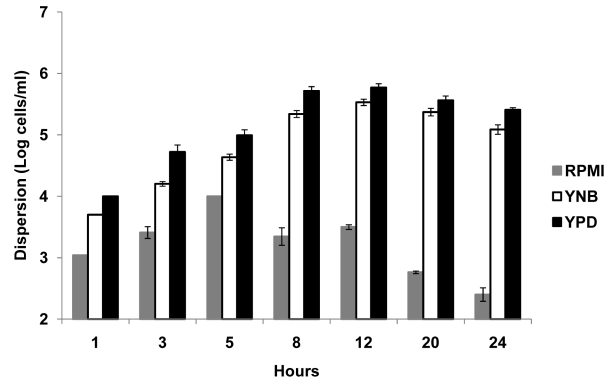
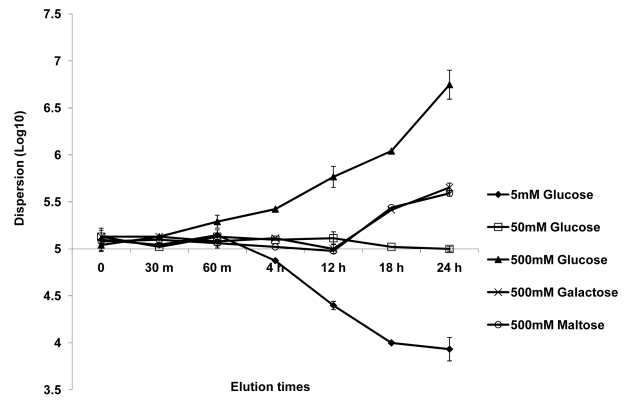
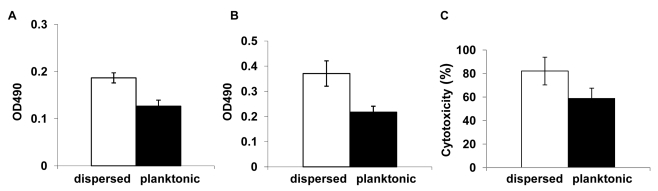
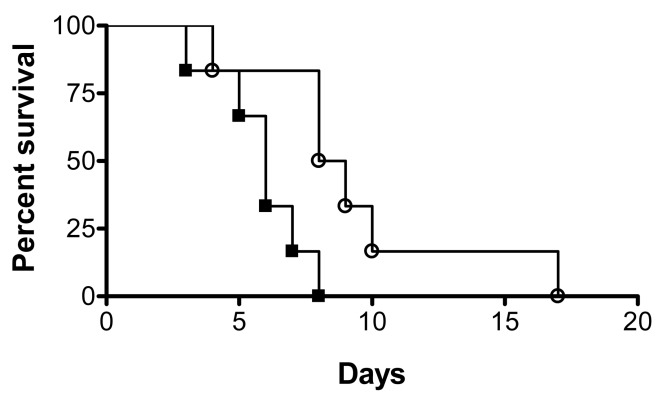
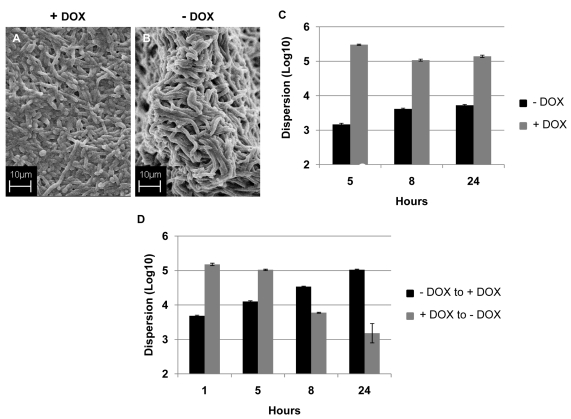
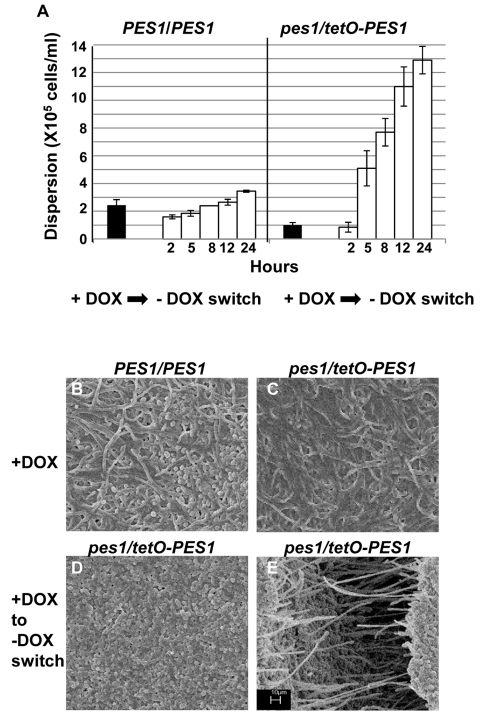
Biofilms are dynamic microbial communities in which transitions between planktonic and sessile modes of growth occur interchangeably in response to different environmental cues. In the last decade, early events associated with C. albicans biofilm formation have received considerable attention. However, very little is known about C. albicans biofilm dispersion or the mechanisms and signals that trigger it. This is important because it is precisely C. albicans cells dispersed from biofilms that are the main culprits associated with candidemia and establishment of disseminated invasive disease, two of the gravest forms of candidiasis. Using a simple flow biofilm model recently developed by our group, we have performed initial investigations into the phenomenon of C. albicans biofilm dispersion, as well as the phenotypic characteristics associated with dispersed cells. Our results indicate that C. albicans biofilm dispersion is dependent on growing conditions, including carbon source and pH of the media used for biofilm development. C. albicans dispersed cells are mostly in the yeast form and display distinct phenotypic properties compared to their planktonic counterparts, including enhanced adherence, filamentation, biofilm formation and, perhaps most importantly, increased pathogenicity in a murine model of hematogenously disseminated candidiasis, thus indicating that dispersed cells are armed with a complete arsenal of "virulence factors" important for seeding and establishing new foci of infection. In addition, utilizing genetically engineered strains of C. albicans (tetO-UME6 and tetO-PES1) we demonstrate that C. albicans biofilm dispersion can be regulated by manipulating levels of expression of these key genes, further supporting the evidence for a strong link between biofilms and morphogenetic conversions at different stages of the C. albicans biofilm developmental cycle. Overall, our results offer novel and important insight into the phenomenon of C. albicans biofilm dispersion, a key part of the biofilm developmental cycle, and provide the basis for its more detailed analysis.
Overview
The claims and statistics of this paper haven’t been checked yet.
Free: it reads the open-access text and checks the first 5 claims that cite a source we can check. Create a free account to check every claim.
Integrity signals
Registry
Cites
Statistics
Figures
Verification
Claims the paper makes
The claims and statistics of this paper haven’t been checked yet.
Free: it reads the open-access text and checks the first 5 claims that cite a source we can check. Create a free account to check every claim.
Claims other papers make about this one
Each is checked against this paper’s own text: does it say what the citing paper says it does?
The source backs part of the claim, not all of it — or backs it for a different population, condition or comparison.
In the citing paper
“Because the zinc cluster transcription factor Ume6 is known to be a key regulator of the switch from yeast to hyphal form and of biofilm formation in C. albicans (28–31), we explored its role in C. auris.”
From Ume6-dependent pathways of morphogenesis and biofilm formation in Candida auris (2024) · cites this paper as [31]
Experimental — accuracy not yet measuredThe cited source says what the claim attributes to it.
In the citing paper
“cells typically dispersed from C. albicans biofilms have been found to exist in the yeast form (15, 20)”
From A Histone Deacetylase Complex Mediates Biofilm Dispersal and Drug Resistance in Candida albicans (2014) · cites this paper as [15]
In the citing paper
“Two transcriptional regulators of C. albicans biofilm dispersal have been identified, Nrg1 and Ume6; transcriptional overexpression of either regulator increased the number of dispersed cells actively released from the biofilm (194, 195).”
From Candida albicans Biofilms and Human Disease (2015) · cites this paper as [194]
In the citing paper
“These include (relative to planktonic cells) increased adherence properties, the ability to form biofilms more efficiently, and enhanced virulence in mouse models of infection (194).”
From Candida albicans Biofilms and Human Disease (2015) · cites this paper as [194]
In the citing paper
“Cells are dispersed continuously throughout biofilm formation, and they are thought to be primarily (if not exclusively) in the round yeast form (194).”
From Candida albicans Biofilms and Human Disease (2015) · cites this paper as [194]
Self-check
Percentages, sums and reported differences re-computed from the paper’s own numbers.
The self-check needs the paper’s full text.
Citations
Cites
Wisplinghoff, H., Bischoff, T., Tallent, S. M., Seifert, H., Wenzel, R. P., & Edmond, M. B. (2004) · Clinical Infectious Diseases · doi:10.1086/421946 · Cited by 4,496 · cited 1×
“albicans remains its most frequent causative agent [1–4].”
BackgroundEpidemiology of Invasive Candidiasis: a Persistent Public Health Problem
Pfaller, M. A., & Diekema, D. J. (2007) · Clinical Microbiology Reviews · doi:10.1128/cmr.00029-06 · Cited by 4,174 · cited 1×
“albicans remains its most frequent causative agent [1–4].”
BackgroundPseudomonas aeruginosa Displays Multiple Phenotypes during Development as a Biofilm
Sauer, K., Camper, A. K., Ehrlich, G. D., Costerton, J. W., & Davies, D. G. (2002) · Journal of Bacteriology · doi:10.1128/jb.184.4.1140-1154.2002 · Cited by 1,691 · cited 2×
“Several reports have elucidated some of the molecular mechanisms orchestrating dispersion in bacterial biofilms [28–31].”
BackgroundChandra, J., Kuhn, D. M., Mukherjee, P. K., Hoyer, L. L., McCormick, T., & Ghannoum, M. A. (2001) · Journal of Bacteriology · doi:10.1128/jb.183.18.5385-5394.2001 · Cited by 1,578 · cited 4×
“The cycle is thought to continue with biofilm dispersion/detachment or dissolution, when cells released from the biofilm seed new surfaces, thus completing the biofilm life-cycle [10,21,22].”
BackgroundInfluentialCandida biofilms and their role in infection
Douglas, L. J. (2003) · Trends in Microbiology · doi:10.1016/s0966-842x(02)00002-1 · Cited by 1,150 · cited 1×
“albicans progresses through multiple development stages, beginning with attachment to a surface, microcolony formation, proliferation and development and maturation involving encapsulation within an exopolymeric matrix [21,47].”
BackgroundSecular Trends in the Epidemiology of Nosocomial Fungal Infections in the United States, 1980-1990
Sague, C. M. B., Jarvis, W. R., & System, N. N. I. S. (1993) · Journal of Infectious Diseases · doi:10.1093/infdis/167.5.1247 · Cited by 1,140
Candida Infections of Medical Devices
Kojic, E. M., & Darouiche, R. O. (2004) · Clinical Microbiology Reviews · doi:10.1128/cmr.17.2.255-267.2004 · Cited by 1,055 · cited 2×
“incorporated into these systems in order to mimic in vivo conditions in patients such as flow to simulate physiological blood flow, coating of substrate surfaces with various host blood and salivary proteins, variation in the nutrient composition of the media employed and use of common device materials [8,14–20].”
BackgroundMethodPierce, C. G., Uppuluri, P., Tristan, A. R., Wormley, F. L., Mowat, E., Ramage, G., & Lopez-Ribot, J. L. (2008) · Nature Protocols · doi:10.1038/nprot.2008.141 · Cited by 1,041 · cited 1×
“, the wells were washed twice with sterile PBS and the extent of cellular adhesion to the wells was quantified by the XTT assay as described earlier [37].”
MethodSelf-citationQuorum Sensing in the Dimorphic Fungus Candida albicans Is Mediated by Farnesol
Hornby, J. M., Jensen, E. C., Lisec, A. D., Tasto, J. J., Jahnke, B., Shoemaker, R., Dussault, P., & Nickerson, K. W. (2001) · Applied and Environmental Microbiology · doi:10.1128/aem.67.7.2982-2992.2001 · Cited by 983 · cited 1×
“albicans filamentation and biofilm formation [39,40] only led to a significant increase in dispersion when supraphysiological concentrations of this compound were used (Figure S2B).”
MethodSecular trends in nosocomial primary bloodstream infections in the United States, 1980–1989.
Banerjee, S. N., Emori, T. G., Culver, D. H., Gaynes, R. P., Jarvis, W. R., Horan, T., Edwards, J. R., Tolson, J., Henderson, T., Martone, W. J., et al. (1991) · The American Journal of Medicine · doi:10.1016/0002-9343(91)90349-3 · Cited by 880
Pappas, P. G., Rex, J. H., Lee, J., Hamill, R. J., Larsen, R. A., Powderly, W., Kauffman, C. A., Hyslop, N., Mangino, J. E., Chapman, S., et al. (2003) · Clinical Infectious Diseases · doi:10.1086/376906 · Cited by 845 · cited 1×
“mortality rates for patients with candidiasis lie in the 30–50% range [5–7].”
BackgroundHospital-Acquired Candidemia: The Attributable Mortality and Excess Length of Stay
Wey, S. B. (1988) · Archives of Internal Medicine · doi:10.1001/archinte.1988.00380120094019 · Cited by 831
Standardized Method for In Vitro Antifungal Susceptibility Testing of Candida albicans Biofilms
Ramage, G., Vande Walle, K., Wickes, B. L., & López-Ribot, J. L. (2001) · Antimicrobial Agents and Chemotherapy · doi:10.1128/aac.45.9.2475-2479.2001 · Cited by 753 · cited 1×
“We were thus able to study the phenomenon of biofilm dispersion in a controlled manner which is not possible by using ‘‘static’’ biofilm models such as the widely used 96-well microtiter plate model [19,50].”
MethodSelf-citationInhibition of Candida albicans Biofilm Formation by Farnesol, a Quorum-Sensing Molecule
Ramage, G., Saville, S. P., Wickes, B. L., & López-Ribot, J. L. (2002) · Applied and Environmental Microbiology · doi:10.1128/aem.68.11.5459-5463.2002 · Cited by 701 · cited 1×
“albicans filamentation and biofilm formation [39,40] only led to a significant increase in dispersion when supraphysiological concentrations of this compound were used (Figure S2B).”
MethodSelf-citationRamage, G., Saville, S. P., Thomas, D. P., & López-Ribot, J. L. (2005) · Eukaryotic Cell · doi:10.1128/ec.4.4.633-638.2005 · Cited by 678
Self-citationA Fatty Acid Messenger Is Responsible for Inducing Dispersion in Microbial Biofilms
Davies, D. G., & Marques, C. N. H. (2009) · Journal of Bacteriology · doi:10.1128/jb.01214-08 · Cited by 603 · cited 2×
“Several reports have elucidated some of the molecular mechanisms orchestrating dispersion in bacterial biofilms [28–31].”
BackgroundBiofilm formation by Candida species on the surface of catheter materials in vitro
Hawser, S. P., & Douglas, L. J. (1994) · Infection and Immunity · doi:10.1128/iai.62.3.915-921.1994 · Cited by 599 · cited 2×
“typical multilayered structure [10,15,19–22].”
MethodCandida biofilms on implanted biomaterials: a clinically significant problem
Ramage, G., MartÃnez, J. P., & López-Ribot, J. L. (2006) · FEMS Yeast Research · doi:10.1111/j.1567-1364.2006.00117.x · Cited by 575 · cited 1×
“albicans forms robust, architecturally complex biofilms on implanted synthetic material in vivo, a variety of manifestations of candidiasis are associated with biofilm formation on medically required foreign bodies, most notably intravascular catheters but also peritoneal dialysis catheters, ventriculo-peritoneal shun…”
BackgroundSelf-citationHow to build a biofilm: a fungal perspective
Blankenship, J. R., & Mitchell, A. P. (2006) · Current Opinion in Microbiology · doi:10.1016/j.mib.2006.10.003 · Cited by 530 · cited 5×
“albicans biofilms are made up of a mixture of yeast, pseudohyphae and hyphae [10,21,22], we hypothesized that the cells released from biofilms may also include all three morphological forms.”
BackgroundInfluentialCharacterization of Nutrient-Induced Dispersion in Pseudomonas aeruginosa PAO1 Biofilm
Sauer, K., Cullen, M. C., Rickard, A. H., Zeef, L. A. H., Davies, D. G., & Gilbert, P. (2004) · Journal of Bacteriology · doi:10.1128/jb.186.21.7312-7326.2004 · Cited by 515 · cited 4×
“A variety of chemical and enzymatic treatments can also be used to cause significant dispersion from bacterial biofilms [26,27].”
BackgroundInfluentialDow, J. M., Crossman, L., Findlay, K., He, Y.-Q., Feng, J.-X., & Tang, J.-L. (2003) · Proceedings of the National Academy of Sciences · doi:10.1073/pnas.1833360100 · Cited by 489 · cited 1×
“In bacteria, loss of cells from biofilms is known to be triggered by changes in the physiochemical environment, including changes in nutrients, starvation, quorum sensing, modifications in exocellular biofilm components and regulation at the molecular level of certain gene products [26–29,31,48,49].”
BackgroundRegulation of Cell-Surface Genes and Biofilm Formation by the C. albicans Transcription Factor Bcr1p
Nobile, C. J., & Mitchell, A. P. (2005) · Current Biology · doi:10.1016/j.cub.2005.05.047 · Cited by 464 · cited 1×
“While numerous studies have explored and are starting to unravel the molecular mechanisms underlying the initial stages of biofilm formation and development [14,23–25], the events associated with dispersion of cells from C.”
BackgroundBiofilm Formation and Dispersal under the Influence of the Global Regulator CsrA of Escherichia coli
Jackson, D. W., Suzuki, K., Oakford, L., Simecka, J. W., Hart, M. E., & Romeo, T. (2002) · Journal of Bacteriology · doi:10.1128/jb.184.1.290-301.2002 · Cited by 425 · cited 1×
“In many bacterial species capable of forming biofilms, availability of nutrients especially high glucose concentrations is known to suppress biofilm formation by increasing biofilm dispersion [56,57].”
BackgroundCowen, L. E., Singh, S. D., Köhler, J. R., Collins, C., Zaas, A. K., Schell, W. A., Aziz, H., Mylonakis, E., Perfect, J. R., Whitesell, L., et al. (2009) · Proceedings of the National Academy of Sciences · doi:10.1073/pnas.0813394106 · Cited by 413 · cited 1×
“More importantly, in combination with fluconazole, GDA is fungistatic in planktonic cells [69,70].”
BackgroundSelf-citationRomeo, T., Gong, M., Liu, M. Y., & Brun-Zinkernagel, A. M. (1993) · Journal of Bacteriology · doi:10.1128/jb.175.15.4744-4755.1993 · Cited by 386 · cited 1×
“Dispersion in Escherichia coli is mediated largely through the collective regulation of intracellular glycogen biosynthesis and central carbon metabolism, alteration of matrix components, activation of flagellum, and motility [65–67].”
BackgroundShear stress induced stimulation of mammalian cell metabolism
Frangos, J. A., McIntire, L. V., & Eskin, S. G. (1988) · Biotechnology and Bioengineering · doi:10.1002/bit.260320812 · Cited by 373 · cited 1×
“The cells were isolated following an established protocol [38] except that 0.”
BackgroundGrowth and Detachment of Cell Clusters from Mature Mixed-Species Biofilms
Stoodley, P., Wilson, S., Hall-Stoodley, L., Boyle, J. D., Lappin-Scott, H. M., & Costerton, J. W. (2001) · Applied and Environmental Microbiology · doi:10.1128/aem.67.12.5608-5613.2001 · Cited by 365 · cited 1×
“Dispersion in Escherichia coli is mediated largely through the collective regulation of intracellular glycogen biosynthesis and central carbon metabolism, alteration of matrix components, activation of flagellum, and motility [65–67].”
BackgroundEffect of venous shear stress on CD18-mediated neutrophil adhesion to cultured endothelium
Lawrence, M., Smith, C., Eskin, S., & McIntire, L. (1990) · Blood · doi:10.1182/blood.v75.1.227.227 · Cited by 359
Factors Governing Adherence of Candida Species to Plastic Surfaces
Klotz, S. A., Drutz, D. J., & Zajic, J. E. (1985) · Infection and Immunity · doi:10.1128/iai.50.1.97-101.1985 · Cited by 353 · cited 1×
“incorporated into these systems in order to mimic in vivo conditions in patients such as flow to simulate physiological blood flow, coating of substrate surfaces with various host blood and salivary proteins, variation in the nutrient composition of the media employed and use of common device materials [8,14–20].”
MethodComplementary Adhesin Function in C. albicans Biofilm Formation
Nobile, C. J., Schneider, H. A., Nett, J. E., Sheppard, D. C., Filler, S. G., Andes, D. R., & Mitchell, A. P. (2008) · Current Biology · doi:10.1016/j.cub.2008.06.034 · Cited by 351 · cited 1×
“albicans biofilms indeed were infectious particles, already ready to deploy at least two of the major virulence factors considered of critical importance during the pathogenesis of candidiasis [58–61].”
BackgroundRamage, G., VandeWalle, K., López-Ribot, J. L., & Wickes, B. L. (2002) · FEMS Microbiology Letters · doi:10.1016/s0378-1097(02)00853-4 · Cited by 334 · cited 1×
“albicans biofilms indeed were infectious particles, already ready to deploy at least two of the major virulence factors considered of critical importance during the pathogenesis of candidiasis [58–61].”
BackgroundHsp90 Orchestrates Temperature-Dependent Candida albicans Morphogenesis via Ras1-PKA Signaling
Shapiro, R. S., Uppuluri, P., Zaas, A. K., Collins, C., Senn, H., Perfect, J. R., Heitman, J., & Cowen, L. E. (2009) · Current Biology · doi:10.1016/j.cub.2009.03.017 · Cited by 311 · cited 1×
“yeast cells and thereby renders the cells highly avirulent in a mouse model”
BackgroundSelf-citationCsrA regulates glycogen biosynthesis by preventing translation of glgC in Escherichia coli
Baker, C. S., Morozov, I., Suzuki, K., Romeo, T., & Babitzke, P. (2002) · Molecular Microbiology · doi:10.1046/j.1365-2958.2002.02982.x · Cited by 280 · cited 1×
“Dispersion in Escherichia coli is mediated largely through the collective regulation of intracellular glycogen biosynthesis and central carbon metabolism, alteration of matrix components, activation of flagellum, and motility [65–67].”
BackgroundCharacterization of starvation‐induced dispersion in Pseudomonas putida biofilms
Gjermansen, M., Ragas, P., Sternberg, C., Molin, S., & Tolker‐Nielsen, T. (2005) · Environmental Microbiology · doi:10.1111/j.1462-2920.2005.00775.x · Cited by 269 · cited 2×
“A variety of chemical and enzymatic treatments can also be used to cause significant dispersion from bacterial biofilms [26,27].”
BackgroundIntravascular Catheter-Associated Infections
Crump, J. A., & Collignon, P. J. (2000) · European Journal of Clinical Microbiology & Infectious Diseases · doi:10.1007/s100960050001 · Cited by 252
Viudes, A., Pemán, J., Cantón, E., Úbeda, P., López-Ribot, J., & Gobernado, M. (2002) · European Journal of Clinical Microbiology & Infectious Diseases · doi:10.1007/s10096-002-0822-1 · Cited by 250 · cited 1×
“Removal of catheters is recommended for patients with Candida bloodstream infections to facilitate more rapid clearance of the bloodstream and better prognosis [5,12,13].”
BackgroundSelf-citationUME6 , a Novel Filament-specific Regulator of Candida albicans Hyphal Extension and Virulence
Banerjee, M., Thompson, D. S., Lazzell, A., Carlisle, P. L., Pierce, C., Monteagudo, C., López-Ribot, J. L., & Kadosh, D. (2008) · Molecular Biology of the Cell · doi:10.1091/mbc.e07-11-1110 · Cited by 243 · cited 1×
“albicans hyphal extension [43], whereas PES1”
Self-citationBdlA, a Chemotaxis Regulator Essential for Biofilm Dispersion in Pseudomonas aeruginosa
Morgan, R., Kohn, S., Hwang, S.-H., Hassett, D. J., & Sauer, K. (2006) · Journal of Bacteriology · doi:10.1128/jb.00599-06 · Cited by 239 · cited 1×
“Several reports have elucidated some of the molecular mechanisms orchestrating dispersion in bacterial biofilms [28–31].”
BackgroundThormann, K. M., Duttler, S., Saville, R. M., Hyodo, M., Shukla, S., Hayakawa, Y., & Spormann, A. M. (2006) · Journal of Bacteriology · doi:10.1128/jb.188.7.2681-2691.2006 · Cited by 236 · cited 1×
“putida and Shewanella oneidensis changes in oxygen, nutrient sources and several chemical parameters have been reported to induce dispersion [27,63,64].”
BackgroundEffect of Growth Rate on Resistance of Candida albicans Biofilms to Antifungal Agents
Baillie, G. S., & Douglas, L. J. (1998) · Antimicrobial Agents and Chemotherapy · doi:10.1128/aac.42.8.1900 · Cited by 234 · cited 1×
“A similar correlation between biofilm dispersion and flow rate has been previously reported by Baillie and Douglas: in their study biofilms grown on cellulose membrane subjected to a flow rate of 1 ml/min of YNB yielded biofilm dispersion rates similar to those observed in our study under similar conditions of flow [5…”
ResultCarlisle, P. L., Banerjee, M., Lazzell, A., Monteagudo, C., López-Ribot, J. L., & Kadosh, D. (2009) · Proceedings of the National Academy of Sciences · doi:10.1073/pnas.0804061106 · Cited by 215 · cited 3×
“albicans (tetO-UME6 and tetOPES1) in which levels of gene expression and morphogenetic conversions can be externally manipulated simply by addition or omission of doxycycline in the medium [34,35].”
BackgroundSelf-citationProduction of extracellular matrix by Candida albicans biofilms
Hawser, S. P., Baillie, G. S., & Douglas, L. J. (1998) · Journal of Medical Microbiology · doi:10.1099/00222615-47-3-253 · Cited by 183 · cited 2×
“incorporated into these systems in order to mimic in vivo conditions in patients such as flow to simulate physiological blood flow, coating of substrate surfaces with various host blood and salivary proteins, variation in the nutrient composition of the media employed and use of common device materials [8,14–20].”
BackgroundMethodYph1p, an ORC-Interacting Protein
Du, Y.-C. N., & Stillman, B. (2002) · Cell · doi:10.1016/s0092-8674(02)00773-0 · Cited by 178
Outcome of treatment of candidemia in children whose central catheters were removed or retained.
Eppes, S. C., TROUTMAN, J. L., & Lt, G. (1989) · PubMed · Cited by 178
Candida albicans Als3p is required for wild-type biofilm formation on silicone elastomer surfaces
Zhao, X., Daniels, K. J., Oh, S.-H., Green, C. B., Yeater, K. M., Soll, D. R., & Hoyer, L. L. (2006) · Microbiology · doi:10.1099/mic.0.28959-0 · Cited by 173 · cited 1×
“biofilms indeed were infectious particles, already ready to deploy at least two of the major virulence factors considered of critical importance during the pathogenesis of candidiasis”
BackgroundDATO, V. M., & DAJANI, A. S. (1990) · The Pediatric Infectious Disease Journal · doi:10.1097/00006454-199005000-00002 · Cited by 161 · cited 1×
“Removal of catheters is recommended for patients with Candida bloodstream infections to facilitate more rapid clearance of the bloodstream and better prognosis [5,12,13].”
BackgroundGenetic Architecture of Hsp90-Dependent Drug Resistance
Cowen, L. E., Carpenter, A. E., Matangkasombut, O., Fink, G. R., & Lindquist, S. (2006) · Eukaryotic Cell · doi:10.1128/ec.00274-06 · Cited by 159 · cited 1×
“More importantly, in combination with fluconazole, GDA is fungistatic in planktonic cells [69,70].”
BackgroundInfluence of growth history on sloughing and erosion from biofilms
Telgmann, U., Horn, H., & Morgenroth, E. (2004) · Water Research · doi:10.1016/j.watres.2004.05.020 · Cited by 155 · cited 1×
“Because we grow our biofilms under conditions of flow, the low levels of dispersion observed during the early stages of biofilm development may be due to passive dispersal of biofilms as a result of hydrodynamic parameters such as shear stress, a phenomenon also referred to as ‘‘erosion’’ [51,52].”
BackgroundCandida albicans Biofilm-Defective Mutants
Richard, M. L., Nobile, C. J., Bruno, V. M., & Mitchell, A. P. (2005) · Eukaryotic Cell · doi:10.1128/ec.4.8.1493-1502.2005 · Cited by 155
Digital image analysis of growth and starvation responses of a surface-colonizing Acinetobacter sp
James, G. A., Korber, D. R., Caldwell, D. E., & Costerton, J. W. (1995) · Journal of Bacteriology · doi:10.1128/jb.177.4.907-915.1995 · Cited by 150 · cited 1×
“In many bacterial species capable of forming biofilms, availability of nutrients especially high glucose concentrations is known to suppress biofilm formation by increasing biofilm dispersion [56,57].”
BackgroundEap1p, an Adhesin That Mediates Candida albicans Biofilm Formation In Vitro and In Vivo
Li, F., Svarovsky, M. J., Karlsson, A. J., Wagner, J. P., Marchillo, K., Oshel, P., Andes, D., & Palecek, S. P. (2007) · Eukaryotic Cell · doi:10.1128/ec.00049-07 · Cited by 148 · cited 1×
“albicans biofilms indeed were infectious particles, already ready to deploy at least two of the major virulence factors considered of critical importance during the pathogenesis of candidiasis [58–61].”
BackgroundCandidemia in a Tertiary Care Hospital: Epidemiology and Factors Influencing Mortality
Valle, H. A., Acha, O., García-Palomo, J. D., Fariñas-Álvarez, C., Fernández-Mazarrasa, C., & Fariñas, M. C. (2003) · European Journal of Clinical Microbiology & Infectious Diseases · doi:10.1007/s10096-003-0890-x · Cited by 140 · cited 1×
“albicans, since dispersed cells are responsible for candidemia and disseminated invasive candidiasis, which are among the gravest forms of infection and carry the highest mortality rates [11,44–46].”
BackgroundCandidemia in intensive care unit patients: Risk factors for mortality
Voss, A., Meis, J. F. G. M., Lunel, F. M. V., le Noble, J. L. M. L., & Foudraine, N. A. (1997) · Infection · doi:10.1007/bf02113499 · Cited by 138 · cited 1×
“albicans, since dispersed cells are responsible for candidemia and disseminated invasive candidiasis, which are among the gravest forms of infection and carry the highest mortality rates [11,44–46].”
BackgroundEffects of carbon and oxygen limitations and calcium concentrations on biofilm removal processes
Applegate, D. H., & Bryers, J. D. (1991) · Biotechnology and Bioengineering · doi:10.1002/bit.260370105 · Cited by 137 · cited 1×
“putida and Shewanella oneidensis changes in oxygen, nutrient sources and several chemical parameters have been reported to induce dispersion [27,63,64].”
BackgroundHonraet, K., Goetghebeur, E. J. T., & Nelis, H. J. C. F. (2005) · Journal of Microbiological Methods · doi:10.1016/j.mimet.2005.03.014 · Cited by 127 · cited 1×
“incorporated into these systems in order to mimic in vivo conditions in patients such as flow to simulate physiological blood flow, coating of substrate surfaces with various host blood and salivary proteins, variation in the nutrient composition of the media employed and use of common device materials [8,14–20].”
MethodYeast wall protein 1 of Candida albicans
Granger, B. L., Flenniken, M. L., Davis, D. A., Mitchell, A. P., & Cutler, J. E. (2005) · Microbiology · doi:10.1099/mic.0.27663-0 · Cited by 126 · cited 1×
“It is also theorized that the yeast cells in the biofilm might possess mechanisms that enable them to regulate the activity of their adhesins, thereby allowing them to become released from the overall biofilm structure [32].”
BackgroundMacphail, G. L. P., Taylor, G. D., Buchanan‐Chell, M., Ross, C., Wilson, S., & Kureishi, A. (2002) · Mycoses · doi:10.1046/j.1439-0507.2002.00741.x · Cited by 119 · cited 1×
“albicans, since dispersed cells are responsible for candidemia and disseminated invasive candidiasis, which are among the gravest forms of infection and carry the highest mortality rates [11,44–46].”
BackgroundProteins with GGDEF and EAL domains regulate Pseudomonas putida biofilm formation and dispersal
Gjermansen, M., Ragas, P., & Tolker-Nielsen, T. (2006) · FEMS Microbiology Letters · doi:10.1111/j.1574-6968.2006.00493.x · Cited by 107 · cited 2×
“Several reports have elucidated some of the molecular mechanisms orchestrating dispersion in bacterial biofilms [28–31].”
BackgroundSanchez, A. A., Johnston, D. A., Myers, C., Edwards, J. E., Mitchell, A. P., & Filler, S. G. (2004) · Infection and Immunity · doi:10.1128/iai.72.1.598-601.2004 · Cited by 101 · cited 1×
“albicans biofilms display enhanced adhesion to endothelial cells and cause increased endothelial cell damage Establishment of metastatic foci of infection of Candida species, a critical step in the pathogenesis of deep organ candidiasis, is presumably dependent on the fungus traversing the vascular endothelium [41,42].”
BackgroundGrubb, S. E. W., Murdoch, C., Sudbery, P. E., Saville, S. P., Lopez-Ribot, J. L., & Thornhill, M. H. (2008) · Infection and Immunity · doi:10.1128/iai.00332-08 · Cited by 87 · cited 3×
“albicans biofilms display enhanced adhesion to endothelial cells and cause increased endothelial cell damage Establishment of metastatic foci of infection of Candida species, a critical step in the pathogenesis of deep organ candidiasis, is presumably dependent on the fungus traversing the vascular endothelium [41,42].”
BackgroundSelf-citationShen, J., Cowen, L. E., Griffin, A. M., Chan, L., & Köhler, J. R. (2008) · Proceedings of the National Academy of Sciences · doi:10.1073/pnas.0809147105 · Cited by 71 · cited 7×
“albicans avirulent in Galleria mellonella model [35].”
BackgroundInfluentialSelf-citationUppuluri, P., Chaturvedi, A. K., & Lopez-Ribot, J. L. (2009) · Mycopathologia · doi:10.1007/s11046-009-9205-9 · Cited by 70 · cited 2×
“Biofilms were cultured in a simple flow biofilm model described recently by our group [20].”
MethodSelf-citationAdhesion of Candida albicans to Endothelial Cells under Physiological Conditions of Flow
Grubb, S. E. W., Murdoch, C., Sudbery, P. E., Saville, S. P., Lopez-Ribot, J. L., & Thornhill, M. H. (2009) · Infection and Immunity · doi:10.1128/iai.00518-09 · Cited by 66 · cited 1×
“albicans is considered to be most conducive for dissemination into the blood stream [41,53]; and the results of our study may serve as a proof of principle that release of these potentially infectious particles from biofilms may prove to be a major mechanism of candidemia and disseminated invasive infections that ofte…”
BackgroundSelf-citationYmele-Leki, P., & Ross, J. M. (2007) · Applied and Environmental Microbiology · doi:10.1128/aem.01319-06 · Cited by 61 · cited 1×
“Because we grow our biofilms under conditions of flow, the low levels of dispersion observed during the early stages of biofilm development may be due to passive dispersal of biofilms as a result of hydrodynamic parameters such as shear stress, a phenomenon also referred to as ‘‘erosion’’ [51,52].”
BackgroundA Candida albicans early stage biofilm detachment event in rich medium
Sellam, A., Al-Niemi, T., McInnerney, K., Brumfield, S., Nantel, A., & Suci, P. A. (2009) · BMC Microbiology · doi:10.1186/1471-2180-9-25 · Cited by 50 · cited 3×
“Differential gene expression analyses revealed that this early detachment episode was not orchestrated at the level of transcriptional regulation, and was only coordinated by a small population of surface adhered cells [33].”
BackgroundEffects of dietary sugars and saliva and serum on Candida bioflim formation on acrylic surfaces
Nikawa, H., Nishimura, H., Hamada, T., Kumagai, H., & Samaranayake, L. P. (1997) · Mycopathologia · doi:10.1023/a:1006851418963 · Cited by 46
Vats, N., & Lee, S. F. (2000) · Archives of Oral Biology · doi:10.1016/s0003-9969(99)00139-9 · Cited by 45 · cited 1×
“Streptococcus mutans enables biofilm dispersion by releasing enzymes that break down polysaccharide matrix material [62].”
BackgroundRamage, G., Wickes, B. L., & Lopez-Ribot, J. L. (2008) · Revista Iberoamericana de Micología · doi:10.1016/s1130-1406(08)70009-3 · Cited by 42 · cited 2×
“We were thus able to study the phenomenon of biofilm dispersion in a controlled manner which is not possible by using ‘‘static’’ biofilm models such as the widely used 96-well microtiter plate model [19,50].”
BackgroundMethodSelf-citationWang, Y., Dai, Y., Zhang, Y., Hu, Y., Yang, B., & Chen, S. (2007) · Science in China Series C Life Sciences · doi:10.1007/s11427-007-0044-y · Cited by 39
A role for Efg1p in Candida albicans interactions with extracellular matrices
Saville, S. P., Thomas, D. P., & López Ribot, J. L. (2006) · FEMS Microbiology Letters · doi:10.1111/j.1574-6968.2006.00109.x · Cited by 24 · cited 1×
“While numerous studies have explored and are starting to unravel the molecular mechanisms underlying the initial stages of biofilm formation and development [14,23–25], the events associated with dispersion of cells from C.”
BackgroundSelf-citation
Research works printed but not linked: 1
- Bird RB Stewart WE Lightfoot EN 1960 “Transport Phenomena”. 36 40 John Wiley & Sons, NY
Cited by
Candida albicans pathogenicity mechanisms
Mayer, F. L., Wilson, D., & Hube, B. (2013) · Virulence · doi:10.4161/viru.22913 · Cited by 1,848
Candida albicans Biofilms and Human Disease
Nobile, C. J., & Johnson, A. D. (2015) · Annual Review of Microbiology · doi:10.1146/annurev-micro-091014-104330 · Cited by 1,057
Candida albicans biofilms: development, regulation, and molecular mechanisms
Gulati, M., & Nobile, C. J. (2016) · Microbes and Infection · doi:10.1016/j.micinf.2016.01.002 · Cited by 738
“albicans biofilm dispersal have been identified, Nrg1, 339 Pes1 and Ume6; transcriptional overexpression of UME6 reduced the number of 340 dispersed cells, whereas overexpression of PES1 and NRG1 increased the number of 341 dispersed cells actively released from the biofilm [41,42].”
BackgroundA Recently Evolved Transcriptional Network Controls Biofilm Development in Candida albicans
Nobile, C. J., Fox, E. P., Nett, J. E., Sorrells, T. R., Mitrovich, Q. M., Hernday, A. D., Tuch, B. B., Andes, D. R., & Johnson, A. D. (2012) · Cell · doi:10.1016/j.cell.2011.10.048 · Cited by 711
Development and regulation of single- and multi-species Candida albicans biofilms
Lohse, M. B., Gulati, M., Johnson, A. D., & Nobile, C. J. (2018) · Nature Reviews Microbiology · doi:10.1038/nrmicro.2017.107 · Cited by 643
Metadata
- Authors
- Uppuluri, P., Chaturvedi, A. K., Srinivasan, A., Banerjee, M., Ramasubramaniam, A. K., Köhler, J. R., Kadosh, D., & Lopez-Ribot, J. L.
- Affiliations
- The University of Texas at San Antonio (US)
- The University of Texas at San Antonio Health Science Center (US)
- Boston Children's Hospital (US)
- Corresponding author
- Lopez-Ribot, Jose L.
- Venue
- PLoS Pathogens
- Publisher
- Public Library of Science (PLoS)
- Published
- 2010-03-26
- Volume
- 6
- Issue
- 3
- Pages
- e1000828
- ISSN
- 1553-7366 (ISSN-L)
- 1553-7374
- PMC
- PMC2847914
- OpenAlex
- W1970770294
- Cited by
- 432
- References
- 71
- Citations by year
- 2026: 13 · 2025: 30 · 2024: 18 · 2023: 22 · 2022: 30 · 2021: 25 · 2020: 34 · 2019: 25 · 2018: 34 · 2017: 35 · 2016: 33 · 2015: 31 · 2014: 26 · 2013: 25 · 2012: 25
- FWCI
- 15.59
- Type
- journal article
- Language
- en
- Open access
- gold
- doi.org
- Locations
- PLoS Pathogens (publishedVersion, cc-by)
- PubMed Central (publishedVersion, cc-by)
- PubMed (publishedVersion)
- DOAJ (DOAJ: Directory of Open Access Journals) (submittedVersion, cc-by-sa)
- Figshare (submittedVersion, cc-by)
- Funders
- American Heart Association
- National Institutes of Health (1r56ai072705-01a2)
- National Institute of Allergy and Infectious Diseases (R56 AI072705, R21AI064715, 1R56AI072705, R21AI080930)
- Topics
- Health Sciences › Medicine › Infectious Diseases › Antifungal resistance and susceptibility
- Life Sciences › Biochemistry, Genetics and Molecular Biology › Molecular Biology › Fungal and yeast genetics research
- Life Sciences › Biochemistry, Genetics and Molecular Biology › Molecular Biology › Bacterial biofilms and quorum sensing
- Keywords
- Candida albicans, biofilm dispersal, candidemia, systemic candidiasis, virulence factors, Ume6, PES1, carbon source, pH, filamentation, yeast adherence, pathogenicity
- MeSH terms
- Animals, Candida albicans, Candidiasis, Carbon, Cell Adhesion, Disease Models, Animal, Fungal Proteins, Humans, Hydrogen-Ion Concentration, Mice, Inbred BALB C, Microscopy, Electron, Scanning, Models, Biological, Stress, Mechanical, Umbilical Cord, Virulence, Diffusion Chambers, Culture, Gene Expression Regulation, Fungal, Biofilms, Endothelial Cells, Mice
About these checks
Registry, retraction, Cites and statistics results are computed, not judged, with one exception: a printed reference that no index lists is read once by a model before it counts as a citation error. Claims are extracted by a model and kept only when their quote appears verbatim in the text; each cited source is then checked, with a model’s help, for whether it says what the claim relies on. Those verdicts can be wrong — read the claim’s quote and the cited source before relying on one.
Statistics and arithmetic are recomputed, not judged.
Confidence bands are shown only for fields calibrated on our annotated test set. None is calibrated yet, so no band is shown.
What counts as a claim ›How we measure confidence ›How we check this ›
Are you an author, or do you see a problem with this page? Request a review
Data sources
Bibliographic data: Semantic Scholar, OpenAlex, Crossref.
Contains information from the Semantic Scholar Academic Graph Datasets, made available under the ODC Attribution License (ODC-BY 1.0).
Semantic Scholar’s data is described in: Kinney, R., et al. (2023). The Semantic Scholar Open Data Platform. arXiv:2301.10140.
