

Two Coregulated Efflux Transporters Modulate Intracellular Heme and Protoporphyrin IX Availability in Streptococcus agalactiae
Open accessThe DOI matches its Crossref record; 74 of the 75 references it cites were found in a registry or an index.
Abstract
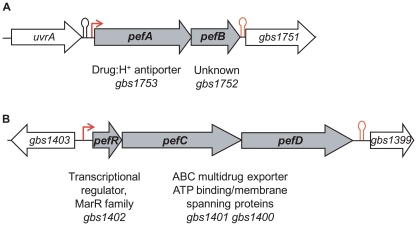
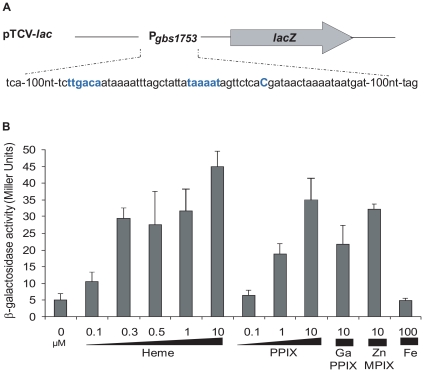
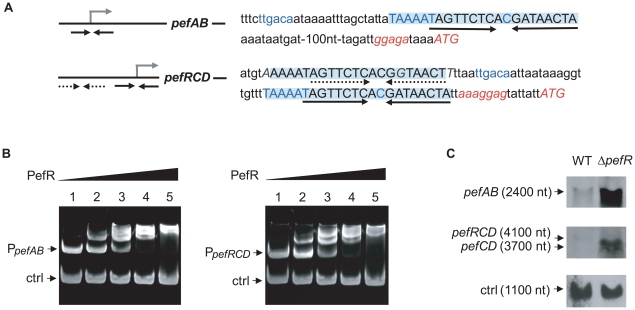
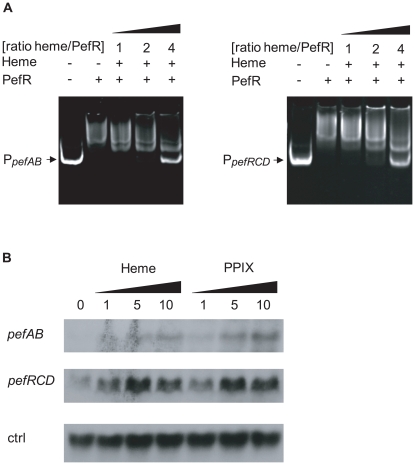
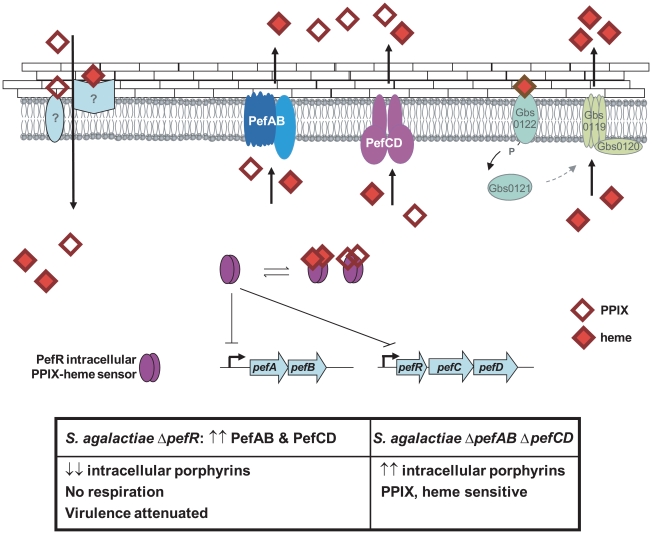
Streptococcus agalactiae is a major neonatal pathogen whose infectious route involves septicemia. This pathogen does not synthesize heme, but scavenges it from blood to activate a respiration metabolism, which increases bacterial cell density and is required for full virulence. Factors that regulate heme pools in S. agalactiae are unknown. Here we report that one main strategy of heme and protoporphyrin IX (PPIX) homeostasis in S. agalactiae is based on a regulated system of efflux using two newly characterized operons, gbs1753 gbs1752 (called pefA pefB), and gbs1402 gbs1401 gbs1400 (called pefR pefC pefD), where pef stands for 'porphyrin-regulated efflux'. In vitro and in vivo data show that PefR, a MarR-superfamily protein, is a repressor of both operons. Heme or PPIX both alleviate PefR-mediated repression. We show that bacteria inactivated for both Pef efflux systems display accrued sensitivity to these porphyrins, and give evidence that they accumulate intracellularly. The DeltapefR mutant, in which both pef operons are up-regulated, is defective for heme-dependent respiration, and attenuated for virulence. We conclude that this new efflux regulon controls intracellular heme and PPIX availability in S. agalactiae, and is needed for its capacity to undergo respiration metabolism, and to infect the host.
Overview
The claims and statistics of this paper haven’t been checked yet.
Free: it reads the open-access text and checks the first 5 claims that cite a source we can check. Create a free account to check every claim.
Integrity signals
Registry
Cites
Statistics
Figures
Verification
Claims the paper makes
The claims and statistics of this paper haven’t been checked yet.
Free: it reads the open-access text and checks the first 5 claims that cite a source we can check. Create a free account to check every claim.
Claims other papers make about this one
Each is checked against this paper’s own text: does it say what the citing paper says it does?
The source backs part of the claim, not all of it — or backs it for a different population, condition or comparison.
In the citing paper
“In addition to pefAB and pefRCD , S. agalactiae also encodes orthologs of hrtAB , which are transcribed at higher levels than pefAB and pefCD at high heme concentrations (27).”
From Overcoming the Heme Paradox: Heme Toxicity and Tolerance in Bacterial Pathogens (2010) · cites this paper as [27]
Experimental — accuracy not yet measuredThe cited source says what the claim attributes to it.
In the citing paper
“Streptococcus agalactiae encodes an orthologue of HrtAB, as well as a dual efflux system PefAB and PefRCD [223].”
From Heme Synthesis and Acquisition in Bacterial Pathogens (2016) · cites this paper as [223]
The cited source says what the claim attributes to it.
In the citing paper
“Orthologous HrtAB systems have been characterized for Streptococcus agalactiae , B. anthracis , and L. lactis (27, 85, 107).”
From Overcoming the Heme Paradox: Heme Toxicity and Tolerance in Bacterial Pathogens (2010) · cites this paper as [27]
The cited source says what the claim attributes to it.
In the citing paper
“PefAB and PefCD are two putative heme and protoporphyrin IX (PPIX) efflux pumps, although the role of PefB may be as an accessory protein rather than an actual pump (27).”
From Overcoming the Heme Paradox: Heme Toxicity and Tolerance in Bacterial Pathogens (2010) · cites this paper as [27]
The cited source says what the claim attributes to it.
In the citing paper
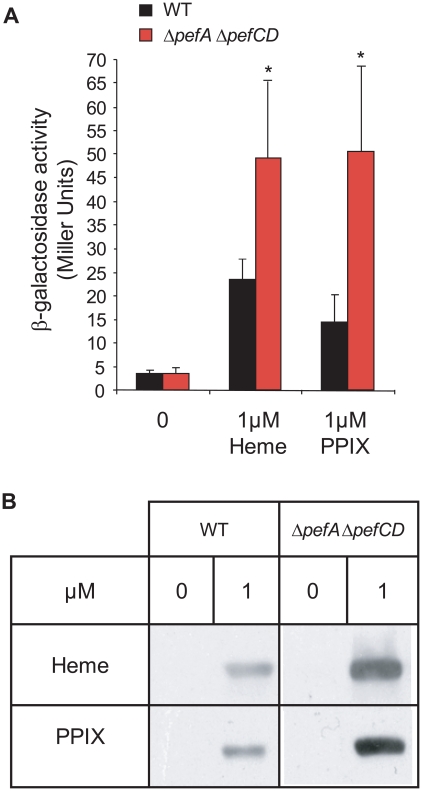
“When the pef operons are disrupted, the intracellular levels of heme and PPIX increase, causing enhanced sensitivity to heme toxicity (27).”
From Overcoming the Heme Paradox: Heme Toxicity and Tolerance in Bacterial Pathogens (2010) · cites this paper as [27]
10 more claims about this paper
Create a free account to see every claim other papers make about this one.
Self-check
Percentages, sums and reported differences re-computed from the paper’s own numbers.
The self-check needs the paper’s full text.
Citations
Cites
Molecular Cloning: A Laboratory Manual
Sambrook, J., Fritsch, E., & Maniatis, T. (1989) · UCLA - Biblioteca de Ciencias de la Salud · Cited by 133,589
Molecular cloning: A laboratory manual
Deininger, P. (1990) · Analytical Biochemistry · doi:10.1016/0003-2697(90)90595-z · Cited by 84,682
Single-step method of RNA isolation by acid guanidinium thiocyanate-phenol-chloroform extraction
Chomczynski, P., & Sacchi, N. (1987) · Analytical Biochemistry · doi:10.1016/0003-2697(87)90021-2 · Cited by 46,426 · cited 1×
“Total RNA was extracted with a guanidine isothycionate and phenol-chloroform step [67], using the TRIzol Reagent (Invitrogen).”
MethodDNA–DNA hybridization values and their relationship to whole-genome sequence similarities
Goris, J., Konstantinidis, K. T., Klappenbach, J. A., Coenye, T., Vandamme, P., & Tiedje, J. M. (2007) · International Journal of Systematic and Evolutionary Microbiology · doi:10.1099/ijs.0.64483-0 · Cited by 4,750 · cited 1×
“identity between these species at the genome level (Average Nucleotide Identity; calculated as in [46]).”
BackgroundAndrews, S. C., Robinson, A. K., & Rodríguez-Quiñones, F. (2003) · FEMS Microbiology Reviews · doi:10.1016/s0168-6445(03)00055-x · Cited by 2,702
Pao, S. S., Paulsen, I. T., & Saier, M. H. (1998) · Microbiology and Molecular Biology Reviews · doi:10.1128/mmbr.62.1.1-34.1998 · Cited by 2,297 · cited 2×
“The gbs1753 ORF encodes an integral membrane protein of the drug:H+ antiporter family, belonging to the major facilitator superfamily (MFS) [31].”
BackgroundProctor, R. A., von Eiff, C., Kahl, B. C., Becker, K., McNamara, P., Herrmann, M., & Peters, G. (2006) · Nature Reviews Microbiology · doi:10.1038/nrmicro1384 · Cited by 1,175
Free heme toxicity and its detoxification systems in human
Kumar, S., & Bandyopadhyay, U. (2005) · Toxicology Letters · doi:10.1016/j.toxlet.2005.03.004 · Cited by 852 · cited 1×
“In addition to its varied activities as a cofactor, heme promotes toxic oxygen radical production [4].”
BackgroundThe Stem Cell Marker Bcrp/ABCG2 Enhances Hypoxic Cell Survival through Interactions with Heme
Krishnamurthy, P., Ross, D. D., Nakanishi, T., Bailey-Dell, K., Zhou, S., Mercer, K. E., Sarkadi, B., Sorrentino, B. P., & Schuetz, J. D. (2004) · Journal of Biological Chemistry · doi:10.1074/jbc.m313599200 · Cited by 661 · cited 1×
“ABCG2 in humans is an ABC family transporter (like PefCD) that regulates eukaryotic intracellular heme levels under hypoxic conditions [54], [55].”
BackgroundEfficient insertional mutagenesis in lactococci and other gram-positive bacteria
Maguin, E., Prévost, H., Ehrlich, S. D., & Gruss, A. (1996) · Journal of Bacteriology · doi:10.1128/jb.178.3.931-935.1996 · Cited by 486 · cited 1×
“agalactiae with pG+host8::ISS1 basically as described [69].”
Self-citationHigh-efficiency gene inactivation and replacement system for gram-positive bacteria
Biswas, I., Gruss, A., Ehrlich, S. D., & Maguin, E. (1993) · Journal of Bacteriology · doi:10.1128/jb.175.11.3628-3635.1993 · Cited by 443 · cited 2×
“agalactiae strains and allelic exchange were done as described [70].”
MethodSelf-citationIdentification of a Human Heme Exporter that Is Essential for Erythropoiesis
Quigley, J. G., Yang, Z., Worthington, M. T., Phillips, J. D., Sabo, K. M., Sabath, D. E., Berg, C. L., Sassa, S., Wood, B. L., & Abkowitz, J. L. (2004) · Cell · doi:10.1016/j.cell.2004.08.014 · Cited by 430 · cited 1×
“gradient [52], [53].”
A Heme Export Protein Is Required for Red Blood Cell Differentiation and Iron Homeostasis
Keel, S. B., Doty, R. T., Yang, Z., Quigley, J. G., Chen, J., Knoblaugh, S., Kingsley, P. D., De Domenico, I., Vaughn, M. B., Kaplan, J., et al. (2008) · Science · doi:10.1126/science.1151133 · Cited by 404 · cited 1×
“gradient [52], [53].”
The crystal structure of MarR, a regulator of multiple antibiotic resistance, at 2.3 A resolution.
Alekshun, M. N., Levy, S. B., Mealy, T. R., Seaton, B. A., & Head, J. W. (2001) · Nature Structural Biology · doi:10.1038/90429 · Cited by 391 · cited 1×
“This configuration is typical of MarR binding sites [33], [41],[42].”
BackgroundSurface Proteins of Streptococcus agalactiae and Related Proteins in Other Bacterial Pathogens
Lindahl, G., Stålhammar-Carlemalm, M., & Areschoug, T. (2005) · Clinical Microbiology Reviews · doi:10.1128/cmr.18.1.102-127.2005 · Cited by 349 · cited 1×
“septicemia and subsequent meningitis [29], [30].”
Law, J., Buist, G., Haandrikman, A., Kok, J., Venema, G., & Leenhouts, K. (1995) · Journal of Bacteriology · doi:10.1128/jb.177.24.7011-7018.1995 · Cited by 327 · cited 1×
“TOP10 F- mcrA D(mrr-hsdRMS-mcrBC) W80lacZDM15 DlacX74 recA1 araD139 D(ara-leu)7697 galU galK rpsL (Str) endA1 nupG Invitrogen TG1repA supE hsd-5 thi D(lac-proAB)F9(traD36 proAB lacI lacZDM15) repA [71]”
BackgroundPoole, K., Tetro, K., Zhao, Q., Neshat, S., Heinrichs, D. E., & Bianco, N. (1996) · Antimicrobial Agents and Chemotherapy · doi:10.1128/aac.40.9.2021 · Cited by 324
Baughn, A. D., & Malamy, M. H. (2004) · Nature · doi:10.1038/nature02285 · Cited by 323 · cited 1×
“activate a respiration metabolic pathway [6]–[18].”
Mense, S. M., & Zhang, L. (2006) · Cell Research · doi:10.1038/sj.cr.7310086 · Cited by 305 · cited 1×
“signal transmission, metabolism, and metal homeostasis [1]–[3].”
Shi, L., Sohaskey, C. D., Kana, B. D., Dawes, S., North, R. J., Mizrahi, V., & Gennaro, M. L. (2005) · Proceedings of the National Academy of Sciences · doi:10.1073/pnas.0507850102 · Cited by 301 · cited 1×
“agalactiae, these bacteria biosynthesize heme and are autonomous for respiration [61]–[64].”
BackgroundKaatz, G. W., McAleese, F., & Seo, S. M. (2005) · Antimicrobial Agents and Chemotherapy · doi:10.1128/aac.49.5.1857-1864.2005 · Cited by 279
Ligand-responsive Transcriptional Regulation by Members of the MarR Family of Winged Helix Proteins
(2006) · Current Issues in Molecular Biology · doi:10.21775/cimb.008.051 · Cited by 261 · cited 4×
“Our results indicate that PefR, like numerous MarRtype proteins, acts as an intracellular sensor to regulate efflux of its ligands [40],[33], in this case, porphyrins.”
BackgroundInfluentialThe role of transporters in cellular heme and porphyrin homeostasis
KRISHNAMURTHY, P., XIE, T., & SCHUETZ, J. (2007) · Pharmacology & Therapeutics · doi:10.1016/j.pharmthera.2007.02.001 · Cited by 260 · cited 1×
“ABCG2 in humans is an ABC family transporter (like PefCD) that regulates eukaryotic intracellular heme levels under hypoxic conditions [54], [55].”
BackgroundDuwat, P., Sourice, S., Cesselin, B., Lamberet, G., Vido, K., Gaudu, P., Le Loir, Y., Violet, F., Loubière, P., & Gruss, A. (2001) · Journal of Bacteriology · doi:10.1128/jb.183.15.4509-4516.2001 · Cited by 244
Self-citationA Staphylococcus aureus Regulatory System that Responds to Host Heme and Modulates Virulence
Torres, V. J., Stauff, D. L., Pishchany, G., Bezbradica, J. S., Gordy, L. E., Iturregui, J., Anderson, K. L., Dunman, P. M., Joyce, S., & Skaar, E. P. (2007) · Cell Host & Microbe · doi:10.1016/j.chom.2007.03.001 · Cited by 241 · cited 3×
“(part of HssSR two-component system) to activate expression [27], [28].”
InfluentialStaphylococcus aureus Redirects Central Metabolism to Increase Iron Availability
Friedman, D. B., Stauff, D. L., Pishchany, G., Whitwell, C. W., Torres, V. J., & Skaar, E. P. (2006) · PLoS Pathogens · doi:10.1371/journal.ppat.0020087 · Cited by 222 · cited 1×
“aureus and shown to be involved in heme toxicity [37].”
BackgroundMolecular pathogenesis of neonatal group B streptococcal infection: no longer in its infancy
Doran, K. S., & Nizet, V. (2004) · Molecular Microbiology · doi:10.1111/j.1365-2958.2004.04266.x · Cited by 219 · cited 1×
“septicemia and subsequent meningitis [29], [30].”
CovS/CovR of group B streptococcus: a two‐component global regulatory system involved in virulence
Lamy, M., Zouine, M., Fert, J., Vergassola, M., Couve, E., Pellegrini, E., Glaser, P., Kunst, F., Msadek, T., Trieu‐Cuot, P., et al. (2004) · Molecular Microbiology · doi:10.1111/j.1365-2958.2004.04365.x · Cited by 218 · cited 1×
“Total RNA was extracted and analyzed by hybridization on NEM316 derived whole genome DNA macroarray as described [66].”
MethodSelf-citationHuycke, M. M., Moore, D., Joyce, W., Wise, P., Shepard, L., Kotake, Y., & Gilmore, M. S. (2001) · Molecular Microbiology · doi:10.1046/j.1365-2958.2001.02638.x · Cited by 209
Genomic diversity and evolution within the species Streptococcus agalactiae
Brochet, M., Couvé, E., Zouine, M., Vallaeys, T., Rusniok, C., Lamy, M.-C., Buchrieser, C., Trieu-Cuot, P., Kunst, F., Poyart, C., et al. (2006) · Microbes and Infection · doi:10.1016/j.micinf.2005.11.010 · Cited by 206 · cited 1×
“agalactiae isolates [43], and Streptococcus uberis encode the complete pef regulon.”
BackgroundSelf-citationRegulation of virulence by members of the MarR/SlyA family
Ellison, D. W., & Miller, V. L. (2006) · Current Opinion in Microbiology · doi:10.1016/j.mib.2006.02.003 · Cited by 202 · cited 1×
“Our results indicate that PefR, like numerous MarRtype proteins, acts as an intracellular sensor to regulate efflux of its ligands [40],[33], in this case, porphyrins.”
BackgroundSeoane, A. S., & Levy, S. B. (1995) · Journal of Bacteriology · doi:10.1128/jb.177.12.3414-3419.1995 · Cited by 201 · cited 1×
“means to limit cellular toxicity [47]–[51].”
Klein, A. H., Shulla, A., Reimann, S. A., Keating, D. H., & Wolfe, A. J. (2007) · Journal of Bacteriology · doi:10.1128/jb.00564-07 · Cited by 188 · cited 1×
“As PefCD requires ATPase activity, its activity likely varies according to growth conditions [59], [60].”
BackgroundPoyart, C., & Trieu-Cuot, P. (2006) · FEMS Microbiology Letters · doi:10.1111/j.1574-6968.1997.tb12726.x · Cited by 171 · cited 3×
“[32]”
InfluentialSignal transduction by heme-containing PAS-domain proteins
Gilles-Gonzalez, M.-A., & Gonzalez, G. (2004) · Journal of Applied Physiology · doi:10.1152/japplphysiol.00941.2003 · Cited by 167
Streptococcus uberis: A Permanent Barrier to the Control of Bovine Mastitis?
LEIGH, J. A. (1999) · The Veterinary Journal · doi:10.1053/tvjl.1998.0298 · Cited by 164 · cited 1×
“Since members of both these species share the same ecological niche (both are responsible for bovine intramammary infection [44], [45]), the presence of the Figure 5.”
BackgroundPoyart, C. (1997) · FEMS Microbiology Letters · doi:10.1016/s0378-1097(97)00423-0 · Cited by 160
Qi, Z., Hamza, I., & O’Brian, M. R. (1999) · Proceedings of the National Academy of Sciences · doi:10.1073/pnas.96.23.13056 · Cited by 158
Heme acquisition by hemophores
Cescau, S., Cwerman, H., Létoffé, S., Delepelaire, P., Wandersman, C., & Biville, F. (2007) · BioMetals · doi:10.1007/s10534-006-9050-y · Cited by 150
Bacteria capture iron from heme by keeping tetrapyrrol skeleton intact
Létoffé, S., Heuck, G., Delepelaire, P., Lange, N., & Wandersman, C. (2009) · Proceedings of the National Academy of Sciences · doi:10.1073/pnas.0903842106 · Cited by 149 · cited 2×
“turnover after iron extraction from heme; neither its regulation, nor its capacity to efflux heme have been reported [5], [56].”
BackgroundWilkinson, S. P., & Grove, A. (2004) · Journal of Biological Chemistry · doi:10.1074/jbc.m405586200 · Cited by 139
Endley, S., McMurray, D., & Ficht, T. A. (2001) · Journal of Bacteriology · doi:10.1128/jb.183.8.2454-2462.2001 · Cited by 138
Evidence for niche adaptation in the genome of the bovine pathogen Streptococcus uberis
Ward, P. N., Holden, M. T. G., Leigh, J. A., Lennard, N. J., Bignell, A., Barron, A., Clark, L., Quail, M. A., Woodward, J., Barrell, B. G., et al. (2009) · BMC Genomics · doi:10.1186/1471-2164-10-54 · Cited by 136 · cited 1×
“Since members of both these species share the same ecological niche (both are responsible for bovine intramammary infection [44], [45]), the presence of the Figure 5.”
BackgroundLim, D., Poole, K., & Strynadka, N. C. J. (2002) · Journal of Biological Chemistry · doi:10.1074/jbc.m111381200 · Cited by 134 · cited 1×
“This configuration is typical of MarR binding sites [33], [41],[42].”
BackgroundEnterococcus faecalis Heme-Dependent Catalase
Frankenberg, L., Brugna, M., & Hederstedt, L. (2002) · Journal of Bacteriology · doi:10.1128/jb.184.22.6351-6356.2002 · Cited by 127 · cited 1×
“) also encode heme-dependent catalases, which rely on exogenous heme for both their stability and activity”
BackgroundRezaïki, L., Cesselin, B., Yamamoto, Y., Vido, K., Van West, E., Gaudu, P., & Gruss, A. (2004) · Molecular Microbiology · doi:10.1111/j.1365-2958.2004.04217.x · Cited by 116
Self-citationYamamoto, Y., Poyart, C., Trieu‐Cuot, P., Lamberet, G., Gruss, A., & Gaudu, P. (2005) · Molecular Microbiology · doi:10.1111/j.1365-2958.2005.04555.x · Cited by 109 · cited 9×
“To confirm that the growth difference observed above was due to respiration metabolism, we performed the same growth experiments in the presence of 2-n-heptyl-4-hydroxyquinoline N-oxide (HQNO), which inhibits respiration but allows fermentation growth (data not shown; [17]).”
BackgroundMethodSelf-citationRespiration capacity and consequences in Lactococcus lactis
Gaudu, P., Vido, K., Cesselin, B., Kulakauskas, S., Tremblay, J., Rezaïki, L., Lamberet, G., Sourice, S., Duwat, P., & Gruss, A. (2002) · Antonie van Leeuwenhoek · doi:10.1023/a:1020635600343 · Cited by 107
Self-citationLactobacillus plantarum WCFS1 Electron Transport Chains
Brooijmans, R. J. W., de Vos, W. M., & Hugenholtz, J. (2009) · Applied and Environmental Microbiology · doi:10.1128/aem.00147-09 · Cited by 103
Pedersen, M. B., Garrigues, C., Tuphile, K., Brun, C., Vido, K., Bennedsen, M., Møllgaard, H., Gaudu, P., & Gruss, A. (2008) · Journal of Bacteriology · doi:10.1128/jb.00447-08 · Cited by 103 · cited 2×
“lactis and Bacillus anthracis [12], [26]–[28].”
MethodSelf-citationEnterococcus faecalis V583 Contains a Cytochrome bd -Type Respiratory Oxidase
Winstedt, L., Frankenberg, L., Hederstedt, L., & von Wachenfeldt, C. (2000) · Journal of Bacteriology · doi:10.1128/jb.182.13.3863-3866.2000 · Cited by 99
Way, S. S., Sallustio, S., Magliozzo, R. S., & Goldberg, M. B. (1999) · Journal of Bacteriology · doi:10.1128/jb.181.4.1229-1237.1999 · Cited by 95 · cited 1×
“agalactiae, these bacteria biosynthesize heme and are autonomous for respiration [61]–[64].”
BackgroundSijpesteijn, A. K. (1970) · Antonie van Leeuwenhoek · doi:10.1007/bf02069035 · Cited by 94
Kaatz, G. W., DeMarco, C. E., & Seo, S. M. (2006) · Antimicrobial Agents and Chemotherapy · doi:10.1128/aac.50.4.1276-1281.2006 · Cited by 92 · cited 1×
“PefR is an intracellular heme and PPIX sensor and regulator of pef expression A characteristic of MarR family regulators is their binding to effector molecules, which leads to induction or repression of their target genes [34]–[36].”
BackgroundStauff, D. L., Bagaley, D., Torres, V. J., Joyce, R., Anderson, K. L., Kuechenmeister, L., Dunman, P. M., & Skaar, E. P. (2008) · Journal of Bacteriology · doi:10.1128/jb.01921-07 · Cited by 83 · cited 1×
“lactis and Bacillus anthracis [12], [26]–[28].”
Allen, C. E., & Schmitt, M. P. (2009) · Journal of Bacteriology · doi:10.1128/jb.01784-08 · Cited by 82 · cited 1×
“iron status [20]–[25].”
Bacillus anthracis HssRS signalling to HrtAB regulates haem resistance during infection
Stauff, D. L., & Skaar, E. P. (2009) · Molecular Microbiology · doi:10.1111/j.1365-2958.2009.06684.x · Cited by 81
Epe, B., Pflaum, M., Häring, M., Hegler, J., & Rüdiger, H. (1993) · Toxicology Letters · doi:10.1016/0378-4274(93)90046-z · Cited by 79 · cited 1×
“cells, we exploited its reactivity upon exposure to visible light; when excited by light, PPIX generates reactive oxygen species [38],[39].”
BackgroundFarRRegulates thefarAB-Encoded Efflux Pump ofNeisseriagonorrhoeaevia an MtrR RegulatoryMechanism
Lee, E.-H., Rouquette, C., Folster, J. P., & Shafer, W. M. (2003) · Journal of Bacteriology · doi:10.1128/jb.185.24.7145-7152.2003 · Cited by 79
Bibb, L. A., Kunkle, C. A., & Schmitt, M. P. (2007) · Infection and Immunity · doi:10.1128/iai.01821-06 · Cited by 73
Generation of a Membrane Potential by Lactococcus lactis through Aerobic Electron Transport
Brooijmans, R. J. W., Poolman, B., Schuurman-Wolters, G. K., de Vos, W. M., & Hugenholtz, J. (2007) · Journal of Bacteriology · doi:10.1128/jb.00361-07 · Cited by 72 · cited 1×
“lactis [57], [17], [58].”
Karoui, M. E., Ehrlich, S. D., & Gruss, A. (1998) · Proceedings of the National Academy of Sciences · doi:10.1073/pnas.95.2.626 · Cited by 60
Self-citationProvidenti, M. A., & Wyndham, R. C. (2001) · Applied and Environmental Microbiology · doi:10.1128/aem.67.8.3530-3541.2001 · Cited by 59
Kaur, A. P., Lansky, I. B., & Wilks, A. (2009) · Journal of Biological Chemistry · doi:10.1074/jbc.m806068200 · Cited by 55
TolC-Dependent Exclusion of Porphyrins in Escherichia coli
Tatsumi, R., & Wachi, M. (2008) · Journal of Bacteriology · doi:10.1128/jb.00595-08 · Cited by 55 · cited 1×
“turnover after iron extraction from heme; neither its regulation, nor its capacity to efflux heme have been reported [5], [56].”
BackgroundCytochromes in Streptococcus faecalis var. zymogenes Grown in a Haematin-containing Medium
RITCHEY, T. W., & SEELEY, H. W. (1974) · Journal of General Microbiology · doi:10.1099/00221287-85-2-220 · Cited by 51
Fiorentino, G., Ronca, R., Cannio, R., Rossi, M., & Bartolucci, S. (2007) · Journal of Bacteriology · doi:10.1128/jb.00885-07 · Cited by 49 · cited 1×
“means to limit cellular toxicity [47]–[51].”
Hemin Reconstitutes Proton Extrusion in an H + -ATPase-Negative Mutant of Lactococcus lactis
Blank, L. M., Koebmann, B. J., Michelsen, O., Nielsen, L. K., & Jensen, P. R. (2001) · Journal of Bacteriology · doi:10.1128/jb.183.22.6707-6709.2001 · Cited by 48 · cited 1×
“lactis [57], [17], [58].”
NikA Binds Heme: A New Role for an Escherichia coli Periplasmic Nickel-Binding Protein
Shepherd, M., Heath, M. D., & Poole, R. K. (2007) · Biochemistry · doi:10.1021/bi700183u · Cited by 44
Malik, Z., Ladan, H., Nitzan, Y., & Ehrenberg, B. (1990) · Journal of Photochemistry and Photobiology B Biology · doi:10.1016/1011-1344(90)85115-d · Cited by 40 · cited 1×
“cells, we exploited its reactivity upon exposure to visible light; when excited by light, PPIX generates reactive oxygen species [38],[39].”
BackgroundKoebmann, B., Blank, L. M., Solem, C., Petranovic, D., Nielsen, L. K., & Jensen, P. R. (2008) · Biotechnology and Applied Biochemistry · doi:10.1042/ba20070132 · Cited by 38 · cited 1×
“As PefCD requires ATPase activity, its activity likely varies according to growth conditions [59], [60].”
BackgroundRoles of Environmental Heme, and Menaquinone, in Streptococcus Agalactiae
Yamamoto, Y., Poyart, C., Trieu‐Cuot, P., Lamberet, G., Gruss, A., & Gaudu, P. (2006) · BioMetals · doi:10.1007/s10534-005-5419-6 · Cited by 37
Self-citationGaillot, O., Poyart, C., Berche, P., & Trieu‐Cuot, P. (1997) · Gene · doi:10.1016/s0378-1119(97)00548-9 · Cited by 30
Han, Y.-H., Smibert, R. M., & Krieg, N. R. (1992) · Canadian Journal of Microbiology · doi:10.1139/m92-017 · Cited by 8
Cited by
Heme Synthesis and Acquisition in Bacterial Pathogens
Choby, J. E., & Skaar, E. P. (2016) · Journal of Molecular Biology · doi:10.1016/j.jmb.2016.03.018 · Cited by 343
Overcoming the Heme Paradox: Heme Toxicity and Tolerance in Bacterial Pathogens
Anzaldi, L. L., & Skaar, E. P. (2010) · Infection and Immunity · doi:10.1128/iai.00613-10 · Cited by 295
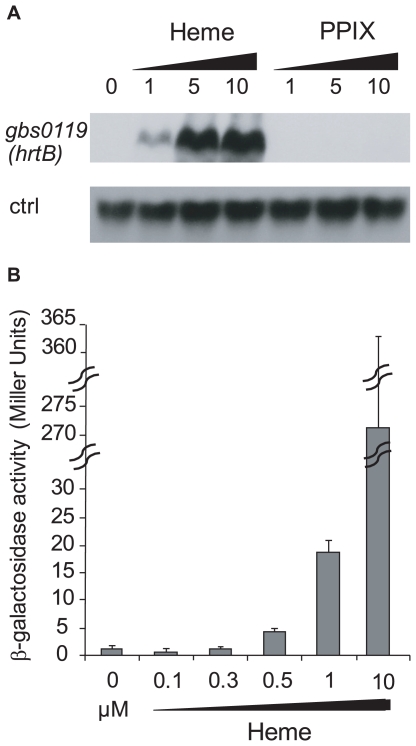
“3 M heme and plateaus at between 1 and 10 M heme (27).”
BackgroundInfluentialRecent developments in understanding the iron acquisition strategies of gram positive pathogens
Sheldon, J. R., & Heinrichs, D. E. (2015) · FEMS Microbiology Reviews · doi:10.1093/femsre/fuv009 · Cited by 272
“pyogenes, thereby facilitating heme or PPIX efflux in this bacterium (Fernandez et al. 2010; Sachla et al. 2014).”
BackgroundRecent insights into iron import by bacteria
Braun, V., & Hantke, K. (2011) · Current Opinion in Chemical Biology · doi:10.1016/j.cbpa.2011.01.005 · Cited by 264
St. Denis, T. G., Dai, T., Izikson, L., Astrakas, C., Anderson, R. R., Hamblin, M. R., & Tegos, G. P. (2011) · Virulence · doi:10.4161/viru.2.6.17889 · Cited by 242
Metadata
- Authors
- Fernandez, A., Lechardeur, D., Derré-Bobillot, A., Couvé, E., Gaudu, P., & Gruss, A.
- Affiliations
- Microbiologie de l’alimentation au service de la santé (FR)
- Centre National de la Recherche Scientifique (FR)
- Corresponding author
- Fernandez, Annabelle
- Gruss, Alexandra
- Venue
- PLoS Pathogens
- Publisher
- Public Library of Science (PLoS)
- Published
- 2010-04-22
- Volume
- 6
- Issue
- 4
- Pages
- e1000860
- ISSN
- 1553-7366 (ISSN-L)
- 1553-7374
- PMC
- PMC2858704
- OpenAlex
- W2133163464
- Cited by
- 65
- References
- 75
- Citations by year
- 2026: 3 · 2025: 5 · 2024: 1 · 2023: 3 · 2022: 3 · 2021: 4 · 2020: 2 · 2019: 3 · 2018: 4 · 2017: 2 · 2016: 6 · 2015: 2 · 2014: 5 · 2013: 5 · 2012: 7
- FWCI
- 3.95
- Type
- journal article
- Language
- en
- Open access
- gold
- doi.org
- Locations
- PLoS Pathogens (publishedVersion, cc-by)
- PubMed Central (publishedVersion, cc-by)
- PubMed (publishedVersion)
- HAL (submittedVersion, cc-by)
- DOAJ (DOAJ: Directory of Open Access Journals) (submittedVersion, cc-by-sa)
- Figshare (submittedVersion, cc-by)
- Funders
- Agence Nationale de la Recherche (ANR-06-MIME-0035)
- Lunds Universitet
- Institut National de la Recherche Agronomique
- Topics
- Life Sciences › Biochemistry, Genetics and Molecular Biology › Genetics › Bacterial Genetics and Biotechnology
- Health Sciences › Medicine › Pediatrics, Perinatology and Child Health › Neonatal and Maternal Infections
- Life Sciences › Immunology and Microbiology › Microbiology › Escherichia coli research studies
- Keywords
- Streptococcus agalactiae, heme homeostasis, protoporphyrin IX, efflux pumps, bacterial virulence, neonatal sepsis
- MeSH terms
- Animals, Bacterial Proteins, Heme, Operon, Protoporphyrins, Streptococcus agalactiae, Blotting, Northern, Blotting, Western, Gene Expression, Gene Expression Regulation, Bacterial, Reverse Transcriptase Polymerase Chain Reaction, Gene Expression Profiling, Electrophoretic Mobility Shift Assay, Membrane Transport Proteins, Mice
About these checks
Registry, retraction, Cites and statistics results are computed, not judged, with one exception: a printed reference that no index lists is read once by a model before it counts as a citation error. Claims are extracted by a model and kept only when their quote appears verbatim in the text; each cited source is then checked, with a model’s help, for whether it says what the claim relies on. Those verdicts can be wrong — read the claim’s quote and the cited source before relying on one.
Statistics and arithmetic are recomputed, not judged.
Confidence bands are shown only for fields calibrated on our annotated test set. None is calibrated yet, so no band is shown.
What counts as a claim ›How we measure confidence ›How we check this ›
Are you an author, or do you see a problem with this page? Request a review
Data sources
Bibliographic data: Semantic Scholar, OpenAlex, Crossref.
Contains information from the Semantic Scholar Academic Graph Datasets, made available under the ODC Attribution License (ODC-BY 1.0).
Semantic Scholar’s data is described in: Kinney, R., et al. (2023). The Semantic Scholar Open Data Platform. arXiv:2301.10140.
