

Two Coregulated Efflux Transporters Modulate Intracellular Heme and Protoporphyrin IX Availability in Streptococcus agalactiae
Open accessThe DOI matches its Crossref record; 74 of the 75 references it cites were found in a registry or an index.
Abstract
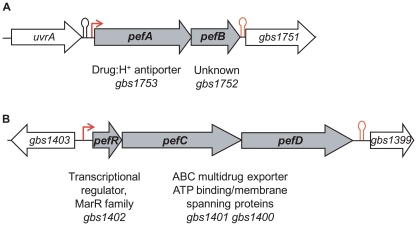
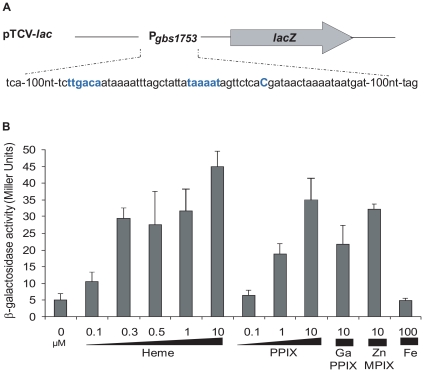
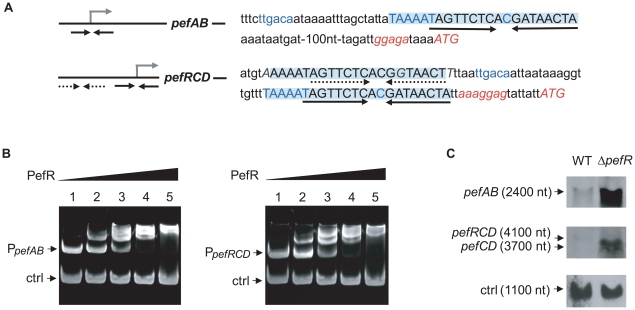
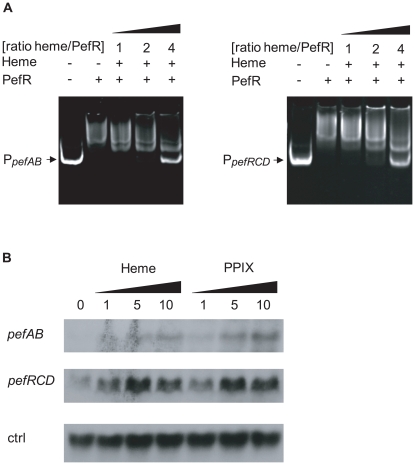
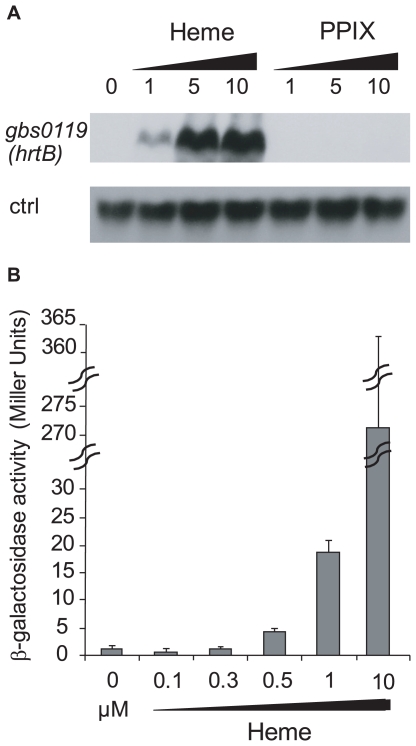
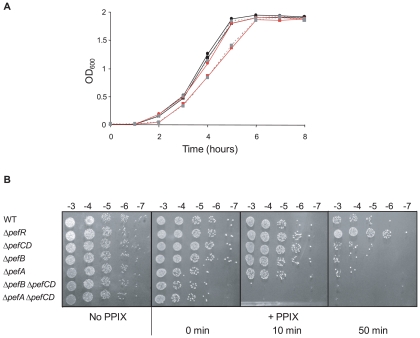
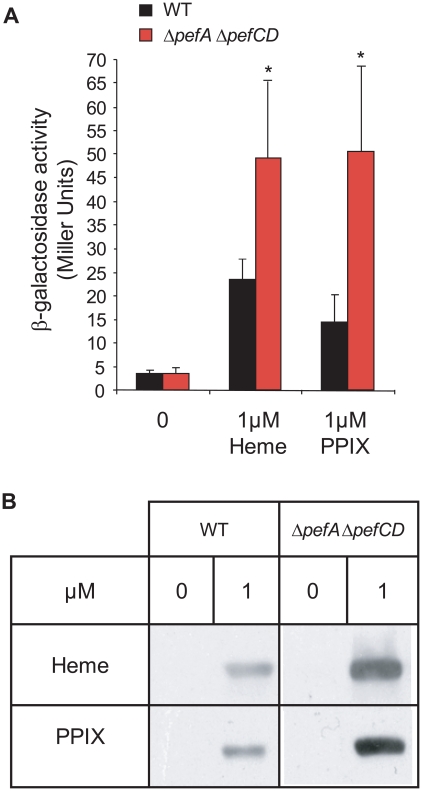
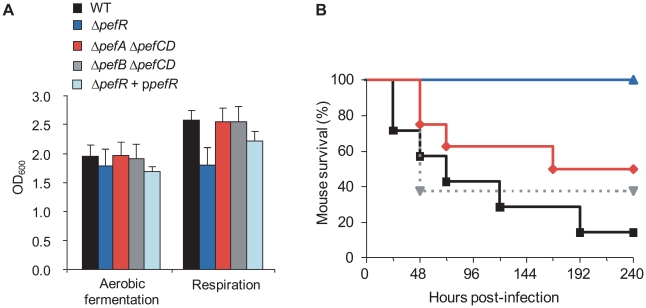
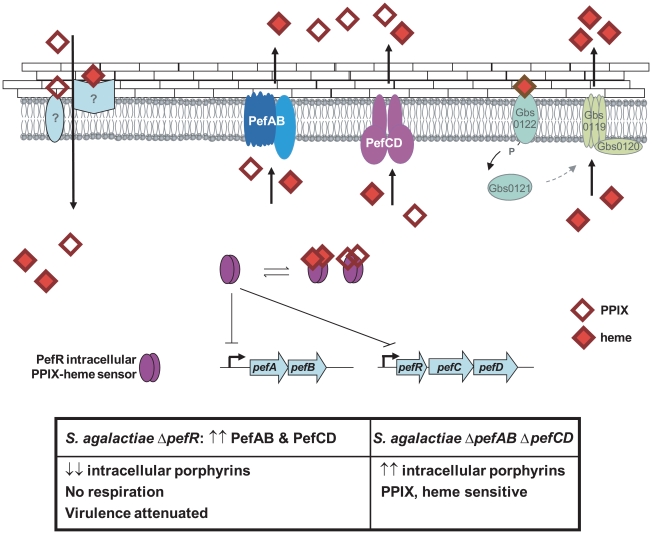
Streptococcus agalactiae is a major neonatal pathogen whose infectious route involves septicemia. This pathogen does not synthesize heme, but scavenges it from blood to activate a respiration metabolism, which increases bacterial cell density and is required for full virulence. Factors that regulate heme pools in S. agalactiae are unknown. Here we report that one main strategy of heme and protoporphyrin IX (PPIX) homeostasis in S. agalactiae is based on a regulated system of efflux using two newly characterized operons, gbs1753 gbs1752 (called pefA pefB), and gbs1402 gbs1401 gbs1400 (called pefR pefC pefD), where pef stands for 'porphyrin-regulated efflux'. In vitro and in vivo data show that PefR, a MarR-superfamily protein, is a repressor of both operons. Heme or PPIX both alleviate PefR-mediated repression. We show that bacteria inactivated for both Pef efflux systems display accrued sensitivity to these porphyrins, and give evidence that they accumulate intracellularly. The DeltapefR mutant, in which both pef operons are up-regulated, is defective for heme-dependent respiration, and attenuated for virulence. We conclude that this new efflux regulon controls intracellular heme and PPIX availability in S. agalactiae, and is needed for its capacity to undergo respiration metabolism, and to infect the host.
Overview
The claims and statistics of this paper haven’t been checked yet.
Free: it reads the open-access text and checks the first 5 claims that cite a source we can check. Create a free account to check every claim.
Integrity signals
Registry
Cites
Statistics
Figures
Verification
Claims the paper makes
The claims and statistics of this paper haven’t been checked yet.
Free: it reads the open-access text and checks the first 5 claims that cite a source we can check. Create a free account to check every claim.
Claims other papers make about this one
Each is checked against this paper’s own text: does it say what the citing paper says it does?
The source backs part of the claim, not all of it — or backs it for a different population, condition or comparison.
In the citing paper
“In addition to pefAB and pefRCD , S. agalactiae also encodes orthologs of hrtAB , which are transcribed at higher levels than pefAB and pefCD at high heme concentrations (27).”
From Overcoming the Heme Paradox: Heme Toxicity and Tolerance in Bacterial Pathogens (2010) · cites this paper as [27]
Experimental — accuracy not yet measuredThe cited source says what the claim attributes to it.
In the citing paper
“Streptococcus agalactiae encodes an orthologue of HrtAB, as well as a dual efflux system PefAB and PefRCD [223].”
From Heme Synthesis and Acquisition in Bacterial Pathogens (2016) · cites this paper as [223]
The cited source says what the claim attributes to it.
In the citing paper
“Orthologous HrtAB systems have been characterized for Streptococcus agalactiae , B. anthracis , and L. lactis (27, 85, 107).”
From Overcoming the Heme Paradox: Heme Toxicity and Tolerance in Bacterial Pathogens (2010) · cites this paper as [27]
The cited source says what the claim attributes to it.
In the citing paper
“PefAB and PefCD are two putative heme and protoporphyrin IX (PPIX) efflux pumps, although the role of PefB may be as an accessory protein rather than an actual pump (27).”
From Overcoming the Heme Paradox: Heme Toxicity and Tolerance in Bacterial Pathogens (2010) · cites this paper as [27]
The cited source says what the claim attributes to it.
In the citing paper
“When the pef operons are disrupted, the intracellular levels of heme and PPIX increase, causing enhanced sensitivity to heme toxicity (27).”
From Overcoming the Heme Paradox: Heme Toxicity and Tolerance in Bacterial Pathogens (2010) · cites this paper as [27]
10 more claims about this paper
Create a free account to see every claim other papers make about this one.
Self-check
Percentages, sums and reported differences re-computed from the paper’s own numbers.
The self-check needs the paper’s full text.
Citations
Cites
Molecular Cloning: A Laboratory Manual
Sambrook, J., Fritsch, E., & Maniatis, T. (1989) · UCLA - Biblioteca de Ciencias de la Salud · Cited by 133,589
Molecular cloning: A laboratory manual
Deininger, P. (1990) · Analytical Biochemistry · doi:10.1016/0003-2697(90)90595-z · Cited by 84,682
Single-step method of RNA isolation by acid guanidinium thiocyanate-phenol-chloroform extraction
Chomczynski, P., & Sacchi, N. (1987) · Analytical Biochemistry · doi:10.1016/0003-2697(87)90021-2 · Cited by 46,426 · cited 1×
“Total RNA was extracted with a guanidine isothycionate and phenol-chloroform step [67], using the TRIzol Reagent (Invitrogen).”
MethodDNA–DNA hybridization values and their relationship to whole-genome sequence similarities
Goris, J., Konstantinidis, K. T., Klappenbach, J. A., Coenye, T., Vandamme, P., & Tiedje, J. M. (2007) · International Journal of Systematic and Evolutionary Microbiology · doi:10.1099/ijs.0.64483-0 · Cited by 4,750 · cited 1×
“identity between these species at the genome level (Average Nucleotide Identity; calculated as in [46]).”
BackgroundAndrews, S. C., Robinson, A. K., & Rodríguez-Quiñones, F. (2003) · FEMS Microbiology Reviews · doi:10.1016/s0168-6445(03)00055-x · Cited by 2,702
Pao, S. S., Paulsen, I. T., & Saier, M. H. (1998) · Microbiology and Molecular Biology Reviews · doi:10.1128/mmbr.62.1.1-34.1998 · Cited by 2,297 · cited 2×
“The gbs1753 ORF encodes an integral membrane protein of the drug:H+ antiporter family, belonging to the major facilitator superfamily (MFS) [31].”
BackgroundProctor, R. A., von Eiff, C., Kahl, B. C., Becker, K., McNamara, P., Herrmann, M., & Peters, G. (2006) · Nature Reviews Microbiology · doi:10.1038/nrmicro1384 · Cited by 1,175
Free heme toxicity and its detoxification systems in human
Kumar, S., & Bandyopadhyay, U. (2005) · Toxicology Letters · doi:10.1016/j.toxlet.2005.03.004 · Cited by 852 · cited 1×
“In addition to its varied activities as a cofactor, heme promotes toxic oxygen radical production [4].”
BackgroundThe Stem Cell Marker Bcrp/ABCG2 Enhances Hypoxic Cell Survival through Interactions with Heme
Krishnamurthy, P., Ross, D. D., Nakanishi, T., Bailey-Dell, K., Zhou, S., Mercer, K. E., Sarkadi, B., Sorrentino, B. P., & Schuetz, J. D. (2004) · Journal of Biological Chemistry · doi:10.1074/jbc.m313599200 · Cited by 661 · cited 1×
“ABCG2 in humans is an ABC family transporter (like PefCD) that regulates eukaryotic intracellular heme levels under hypoxic conditions [54], [55].”
BackgroundEfficient insertional mutagenesis in lactococci and other gram-positive bacteria
Maguin, E., Prévost, H., Ehrlich, S. D., & Gruss, A. (1996) · Journal of Bacteriology · doi:10.1128/jb.178.3.931-935.1996 · Cited by 486 · cited 1×
“agalactiae with pG+host8::ISS1 basically as described [69].”
Self-citation
Cited by
Heme Synthesis and Acquisition in Bacterial Pathogens
Choby, J. E., & Skaar, E. P. (2016) · Journal of Molecular Biology · doi:10.1016/j.jmb.2016.03.018 · Cited by 343
Overcoming the Heme Paradox: Heme Toxicity and Tolerance in Bacterial Pathogens
Anzaldi, L. L., & Skaar, E. P. (2010) · Infection and Immunity · doi:10.1128/iai.00613-10 · Cited by 295
“3 M heme and plateaus at between 1 and 10 M heme (27).”
BackgroundInfluentialRecent developments in understanding the iron acquisition strategies of gram positive pathogens
Sheldon, J. R., & Heinrichs, D. E. (2015) · FEMS Microbiology Reviews · doi:10.1093/femsre/fuv009 · Cited by 272
“pyogenes, thereby facilitating heme or PPIX efflux in this bacterium (Fernandez et al. 2010; Sachla et al. 2014).”
BackgroundRecent insights into iron import by bacteria
Braun, V., & Hantke, K. (2011) · Current Opinion in Chemical Biology · doi:10.1016/j.cbpa.2011.01.005 · Cited by 264
St. Denis, T. G., Dai, T., Izikson, L., Astrakas, C., Anderson, R. R., Hamblin, M. R., & Tegos, G. P. (2011) · Virulence · doi:10.4161/viru.2.6.17889 · Cited by 242
Aerobic Respiration Metabolism in Lactic Acid Bacteria and Uses in Biotechnology
Pedersen, M. B., Gaudu, P., Lechardeur, D., Petit, M.-A., & Gruss, A. (2012) · Annual Review of Food Science and Technology · doi:10.1146/annurev-food-022811-101255 · Cited by 197
Self-citationKourtesi, C., Ball, A. R., Huang, Y.-Y., Jachak, S. M., Vera, D. M. A., Khondkar, P., Gibbons, S., Hamblin, M. R., & Tegos, G. P. (2013) · The Open Microbiology Journal · doi:10.2174/1874285801307010034 · Cited by 159
A battle for iron: host sequestration and Staphylococcus aureus acquisition
Haley, K. P., & Skaar, E. P. (2012) · Microbes and Infection · doi:10.1016/j.micinf.2011.11.001 · Cited by 157
Strategies to Potentiate Antimicrobial Photoinactivation by Overcoming Resistant Phenotypes †
Vera, D. M. A., Haynes, M. H., Ball, A. R., Dai, T., Astrakas, C., Kelso, M. J., Hamblin, M. R., & Tegos, G. P. (2012) · Photochemistry and Photobiology · doi:10.1111/j.1751-1097.2012.01087.x · Cited by 139
“modulate intracellular heme and protoporphyrin IX availability (54).”
BackgroundUsing heme as an energy boost for lactic acid bacteria
Lechardeur, D., Cesselin, B., Fernandez, A., Lamberet, G., Garrigues, C., Pedersen, M. B., Gaudu, P., & Gruss, A. (2011) · Current Opinion in Biotechnology · doi:10.1016/j.copbio.2010.12.001 · Cited by 142
“agalactiae, and probably other LAB, for heme homeostasis ([32 ]; DL, AF, AG, unpublished).”
BackgroundSelf-citationMenaquinone biosynthesis potentiates haem toxicity in Staphylococcus aureus
Wakeman, C. A., Hammer, N. D., Stauff, D. L., Attia, A. S., Anzaldi, L. L., Dikalov, S. I., Calcutt, M. W., & Skaar, E. P. (2012) · Molecular Microbiology · doi:10.1111/mmi.12063 · Cited by 94
“…Enterococcus faecalis, Corynebacterium diphtheriae, Lactococcus lactis, Listeria monocytogenes and Streptococcus agalactiae (Torres et al., 2007; Bibb and Schmitt, 2010; Fernandez et al., 2010; Lechardeur et al., 2012), indicating that the need to resist haem stress is widespread among bacteria.”
BackgroundLechardeur, D., Cesselin, B., Liebl, U., Vos, M. H., Fernandez, A., Brun, C., Gruss, A., & Gaudu, P. (2012) · Journal of Biological Chemistry · doi:10.1074/jbc.m111.297531 · Cited by 93
Self-citationHypericin‐mediated Photodynamic Antimicrobial Effect on Clinically Isolated Pathogens†
Yow, C. M. N., Tang, H. M., Chu, E. S. M., & Huang, Z. W. (2012) · Photochemistry and Photobiology · doi:10.1111/j.1751-1097.2012.01085.x · Cited by 82
Wang, B., Gan, Z., Cai, S., Wang, Z., Yu, D., Lin, Z., Lu, Y., Wu, Z., & Jian, J. (2016) · Fish & Shellfish Immunology · doi:10.1016/j.fsi.2016.03.159 · Cited by 85
“agalactiae is an intensely 329 investigated intracellular bacterial pathogen that is a major neonatal pathogen and causes severe 330 disease in tilapia [45, 46].”
BackgroundProtoporphyrin (PPIX) efflux by the MacAB‐TolC pump in Escherichia coli
Turlin, É., Heuck, G., Brandão, M. I. S., Szili, N., Mellin, J. R., Lange, N., & Wandersman, C. (2014) · MicrobiologyOpen · doi:10.1002/mbo3.203 · Cited by 85
“agalactiae pefR mutant with increased expression of PPIX and heme efflux pumps is attenuated for virulence (Fernandez et al. 2010).”
BackgroundInfluentialThe theft of host heme by Gram-positive pathogenic bacteria
Nobles, C. L., & Maresso, A. W. (2011) · Metallomics · doi:10.1039/c1mt00047k · Cited by 71
Liu, J., Chan, S. H. J., Brock‐Nannestad, T., Chen, J., Lee, S. Y., Solem, C., & Jensen, P. R. (2016) · Metabolic Engineering · doi:10.1016/j.ymben.2016.02.008 · Cited by 67
Johansson, P., Paulin, L. G., Säde, E., Salovuori, N., Alatalo, E., Björkroth, J. K., & Auvinen, P. (2011) · Applied and Environmental Microbiology · doi:10.1128/aem.00102-11 · Cited by 86
“No heme uptake transporters have been characterized in any LAB, despite numerous efforts (15, 31).”
BackgroundMike, L. A., Dutter, B. F., Stauff, D. L., Moore, J. L., Vitko, N. P., Aranmolate, O., Kehl-Fie, T. E., Sullivan, S., Reid, P. R., DuBois, J. L., et al. (2013) · Proceedings of the National Academy of Sciences · doi:10.1073/pnas.1303674110 · Cited by 50
“Functional hss/ hrt systems have been described in members of the genera Staphylococcus, Bacillus, Listeria, Enterococcus, and Streptococcus, establishing HssRS as a conserved heme responsive system in Gram-positive bacteria (7, 8).”
BackgroundEnvironmental Heme Utilization by Heme-Auxotrophic Bacteria
Gruss, A., Borezée‐Durant, E., & Lechardeur, D. (2012) · Advances in microbial physiology/Advances in Microbial Physiology · doi:10.1016/b978-0-12-394423-8.00003-2 · Cited by 58
Self-citationIron acquisition and regulation systems in Streptococcus species
Ge, R., & Sun, X. (2014) · Metallomics · doi:10.1039/c4mt00011k · Cited by 48
Heme auxotrophy in abundant aquatic microbial lineages
Kim, S., Kang, I., Lee, J., Jeon, C. O., Giovannoni, S. J., & Cho, J. (2021) · Proceedings of the National Academy of Sciences · doi:10.1073/pnas.2102750118 · Cited by 51
Knippel, R. J., Zackular, J. P., Moore, J. L., Celis, A. I., Weiss, A., Washington, M. K., DuBois, J. L., Caprioli, R. M., & Skaar, E. P. (2018) · PLOS Pathogens · doi:10.1371/journal.ppat.1007486 · Cited by 46
Heme proteins in lactic acid bacteria
Baureder, M., & Hederstedt, L. (2013) · Advances in Microbial Physiology · doi:10.1016/b978-0-12-410515-7.00001-9 · Cited by 45
Differential activation of Staphylococcus aureus heme detoxification machinery by heme analogues
Wakeman, C. A., Stauff, D. L., Zhang, Y., & Skaar, E. P. (2014) · Journal of Bacteriology · doi:10.1128/jb.01067-13 · Cited by 45
“The importance of HssRS/ HrtAB for bacterial survival within heme-rich environments such as the vertebrate host is evidenced by the presence of this system in numerous Gram-positive pathogens such as Bacillus anthracis, Enterococcus faecalis, Corynebacterium diphtheriae, Listeria monocytogenes, and Streptococcus agala…”
BackgroundIndependent and cooperative regulation of staphylopine biosynthesis and trafficking by Fur and Zur
Fojcik, C., Arnoux, P., Ouerdane, L., Aigle, M., Alfonsi, L., & Borezée‐Durant, E. (2018) · Molecular Microbiology · doi:10.1111/mmi.13927 · Cited by 44
“Binding was analyzed after incubating the gel in ethidium bromide (2 mg ml21) for 30 min, as previously described (Forster-Fromme and Jendrossek, 2010; Fernandez et al., 2010; Lechardeur et al., 2012).”
MethodSaillant, V., Lipuma, D., Ostyn, E., Joubert, L., Boussac, A., Guerin, H., Brandelet, G., Arnoux, P., & Lechardeur, D. (2021) · mBio · doi:10.1128/mbio.03392-20 · Cited by 43
“Heme efflux by HrtBA is reported as a bacterial detoxification mechanism that prevents intracellular heme overload (8, 14, 16, 17, 19).”
BackgroundSelf-citationLencina, A. M., Franza, T., Sullivan, M. J., Ulett, G. C., Ipe, D. S., Gaudu, P., Gennis, R. B., & Schurig-Briccio, L. A. (2018) · mBio · doi:10.1128/mbio.01034-18 · Cited by 47
“powering transporters and essential efflux pumps like PefAB (13, 48), (iv) contribution Streptococcus agalactiae NDH-2 Is Linked to Virulence ®”
BackgroundSelf-citationGenes Important for Catalase Activity in Enterococcus faecalis
Baureder, M., & Hederstedt, L. (2012) · PLoS ONE · doi:10.1371/journal.pone.0036725 · Cited by 38
Joubert, L., Dagieu, J.-B., Fernandez, A., Derré‐Bobillot, A., Borezée‐Durant, E., Fleurot, I., Gruss, A., & Lechardeur, D. (2017) · Scientific Reports · doi:10.1038/srep40435 · Cited by 42
“We previously proposed that HrtBA would protect cells in a heme-rich environment, e.g., during infection, when host red blood cells are degraded 19 .”
InfluentialSelf-citationTransition Metal Homeostasis in Streptococcus pyogenes and Streptococcus pneumoniae
Turner, A. G., Ong, C. Y., Walker, M. J., Djoko, K. Y., & McEwan, A. G. (2017) · Advances in microbial physiology/Advances in Microbial Physiology · doi:10.1016/bs.ampbs.2017.01.002 · Cited by 40
Structural and functional diversity of transient heme binding to bacterial proteins
Brewitz, H. H., Hagelueken, G., & Imhof, D. (2016) · Biochimica et Biophysica Acta (BBA) - General Subjects · doi:10.1016/j.bbagen.2016.12.021 · Cited by 36
Śmiga, M., & Olczak, T. (2025) · FEMS Microbiology Reviews · doi:10.1093/femsre/fuaf019 · Cited by 34
“Some bacteria can also export PPIX, an example being E. coli MacAB-TolC pump (Turlin et al. 2014 ), or can export both heme and PPIX, such as Staphylococcus agalactiae which uses P efAB and P efCD, respec-tiv el y (Fernandez et al. 2010 ).”
Global Transcriptome Analysis of Lactococcus garvieae Strains in Response to Temperature
Aguado-Urda, M., Gibello, A., Blanco, M. M., Fernández‐Garayzábal, J. F., López-Alonso, V., & López–Campos, G. (2013) · PLoS ONE · doi:10.1371/journal.pone.0079692 · Cited by 32
“lactis and Streptococcus agalactiae [55,58].”
BackgroundKrüger, A., Keppel, M., Sharma, V., & Frunzke, J. (2022) · FEMS Microbiology Reviews · doi:10.1093/femsre/fuac002 · Cited by 21
Heme in Bacterial Pathogenesis and as an Antimicrobial Target
Chen, P.-Y., & Skaar, E. P. (2025) · Chemical Reviews · doi:10.1021/acs.chemrev.5c00528 · Cited by 21
Soares, A. R. M., Taniguchi, M., Chandrashaker, V., & Lindsey, J. S. (2013) · New Journal of Chemistry · doi:10.1039/c3nj41041b · Cited by 20
dos Santos, P. T., Larsen, P. T., Menendez-Gil, P., Lillebæk, E. M. S., & Kallipolitis, B. H. (2018) · Frontiers in Microbiology · doi:10.3389/fmicb.2018.03090 · Cited by 20
“, 2012), Streptococcus agalactiae (Fernandez et al., 2010; Joubert et al., 2017), Corynebacterium diphtheria and Group A Streptococcus (Sachla et al.”
BackgroundMetal Homeostasis in Pathogenic Streptococci
Akbari, M. S., Doran, K. S., & Burcham, L. R. (2022) · Microorganisms · doi:10.3390/microorganisms10081501 · Cited by 21
“Heme PefAB, PefCD ABC transporter (import) [19]”
Keppel, M., Piepenbreier, H., Gätgens, C., Fritz, G., & Frunzke, J. (2019) · Molecular Microbiology · doi:10.1111/mmi.14226 · Cited by 19
“…Gram-positive species including Staphylococcus aureus (Torres et al. , 2007; Stauff and Skaar, 2009a), Bacillus anthracis (Stauff and Skaar, 2009a), Streptococcus agalactiae (Fernandez et al. , 2010) and can also be found in corynebacterial species (Bibb and Schmitt, 2010; Heyer et al. , 2012).”
BackgroundHeme homeostasis and its regulation by hemoproteins in bacteria
Li, Y., Han, S., & Gao, H. (2024) · mLife · doi:10.1002/mlf2.12120 · Cited by 17
“PefR from β ‐ hemolytic Streptococcus agalactiae controls transcription of two operons, pefAB and pefCD , for a drug:H + antiporter and an ABC multidrug exporter, respectively 121 (Figure 6C).”
BackgroundThe crimson conundrum: heme toxicity and tolerance in GAS
Sachla, A. J., Breton, Y. S. L., Akhter, F., McIver, K. S., & Eichenbaum, Z. (2014) · Frontiers in Cellular and Infection Microbiology · doi:10.3389/fcimb.2014.00159 · Cited by 21
“…stimulon includes genes whose functions are linked to regulation of redox stress management, including spxA2 (5 fold) and ctsR (2.5 fold) (Elsholz et al., 2010; Antelmann and Helmann, Frontiers in Cellular and Infection Microbiology www.frontiersin.org November 2014 | Volume 4 | Article…”
BackgroundInfluentialNishinaga, M., Sugimoto, H., Nishitani, Y., Nagai, S., Nagatoishi, S., Muraki, N., Tosha, T., Tsumoto, K., Aono, S., Shiro, Y., et al. (2021) · Communications Biology · doi:10.1038/s42003-021-01987-5 · Cited by 16
Poochai, W., Choowongkomon, K., Srisapoome, P., Unajak, S., & Areechon, N. (2014) · Fish Physiology and Biochemistry · doi:10.1007/s10695-014-9941-8 · Cited by 19
“(Fernandez et al. 2010).”
BackgroundHalpern, D., & Gruss, A. (2015) · BMC Microbiology · doi:10.1186/s12866-015-0616-0 · Cited by 16
Self-citationVerplaetse, É., André-Leroux, G., Duhutrel, P., Coeuret, G., Chaillou, S., Nielsen‐LeRoux, C., & Champomier‐Vergès, M. (2020) · Applied and Environmental Microbiology · doi:10.1128/aem.02847-19 · Cited by 19
“lactis and Streptococcus agalactiae (24, 37) were also identified in L.”
BackgroundHeme acquisition and tolerance in Gram-positive model bacteria: An orchestrated balance
Wang, M., Wang, Y., Wang, M., Liu, M., & Cheng, A. (2023) · Heliyon · doi:10.1016/j.heliyon.2023.e18233 · Cited by 15
“agalactiae employs porphyrin-regulated efflux system, PefAB and PefRCD, to export heme [12].”
BackgroundGaudu, P., Yamamoto, Y., Jensen, P. R., Hammer, K., Lechardeur, D., & Gruss, A. (2019) · Microbiology Spectrum · doi:10.1128/microbiolspec.gpp3-0035-2018 · Cited by 16
Self-citationDetection ofhssS,hssR,hrtA, andhrtBgenes and their expression by hemin inStaphylococcus epidermidis
Juárez-Verdayes, M. A., González-Uribe, P. M., Peralta, H., Rodríguez–Martínez, S., Jan‐Roblero, J., Escamilla, R., Cancino-Diaz, M. E., & Cancino‐Díaz, J. C. (2012) · Canadian Journal of Microbiology · doi:10.1139/w2012-086 · Cited by 12
Qiu, D., Xie, M., Dai, J., An, W., Wei, H., Tian, C., Kempher, M. L., Zhou, A., He, Z., Gu, B., et al. (2016) · Applied and Environmental Microbiology · doi:10.1128/aem.00203-16 · Cited by 10
“phyrin pool (38), which is under investigation.”
BackgroundCesselin, B., Derré‐Bobillot, A., Fernandez, A., Lamberet, G., Lechardeur, D., Yamamoto, Y., Pedersen, M. B., Garrigues, C., & Gaudu, P. (2010) · Japanese Journal of Lactic Acid Bacteria · doi:10.4109/jslab.21.10 · Cited by 10
Self-citationSachla, A. J., & Eichenbaum, Z. (2016) · BMC Microbiology · doi:10.1186/s12866-016-0687-6 · Cited by 11
“In GBS, the PefCD proteins export heme and PPIX [32].”
BackgroundInfluentialZhang, Z., Hu, B., Zhou, J., Li, J., Chen, J., Du, G., & Zhao, X. (2025) · Metabolites · doi:10.3390/metabo15030151 · Cited by 5
“…from the family of inner membrane ATP-binding cassette (ABC) transporters, which are often functionally redundant [40], have been shown to be involved in the efflux of porphyrins, such as MacAB in E. coli [41], PefCD in Streptococcus agalactiae [42], ABCB6 and ABCG2 in eukaryotes [43,44].”
Ricciardi, A., Parente, E., Ianniello, R. G., Radović, S., Giavalisco, M., & Zotta, T. (2022) · Microbiological Research · doi:10.1016/j.micres.2022.127096 · Cited by 5
Cao, Z., Zhang, X., Li, S., Cao, W., Li, Y., & Lu, F. (2026) · Journal of Agricultural and Food Chemistry · doi:10.1021/acs.jafc.5c17284 · Cited by 3
FapR regulates HssRS-mediated heme homeostasis in Bacillus anthracis
Pi, H., Burroughs, O. S., Carlin, S. M., Beavers, W. N., Hillebrand, G. H., Krystofiak, E., Stauff, D. L., & Skaar, E. P. (2025) · mBio · doi:10.1128/mbio.02057-24 · Cited by 2
“The heme sensing signaling system, HssRS, is a notable member of TCSs in Gram-positive bacteria (16, 20–22).”
Stasiuk, R., & Matlakowska, R. (2021) · Biomolecules · doi:10.3390/biom11121913 · Cited by 1
Gaudu, P., Yamamoto, Y., Jensen, P. R., Hammer, K., Lechardeur, D., & Gruss, A. (2019) · ASM Press eBooks · doi:10.1128/9781683670131.ch29
Self-citationSurvival of Pathogenic Bacteria: The Molecular Mechanism of the Heme-responsive Sensor Protein PefR
Sawai, H. (2023) · Seibutsu Butsuri · doi:10.2142/biophys.63.102
Biosensors for Detection of Labile Heme in Biological Samples
Dobill, K., Lechardeur, D., & Vidić, J. (2025) · Biosensors · doi:10.3390/bios16010004
“Interestingly, the corresponding PefCD transporter from the group A Streptococcus Streptococcus pyogenes is specific for protoporphyrin IX but not for heme or its derivatives [63].”
Self-citationUnveiling the Microbial Bullseyes: Microbial Target of Antimicrobial Blue Light
Seo, H. W., & Dai, T. (2026) · Springer eBooks · doi:10.1007/978-3-031-55858-0_114-1 · Cited by 2
Métabolisme du fer et de l'hème chez Lactobacillus sakei
Duhutrel, P. (2011) · theses.fr (ABES) · doi:10.70675/bfd9ff84z3925z4f76z96deza9085c27340b
Saillant, V. (2020) · theses.fr (ABES) · doi:10.70675/2c50a6ddz7c94z4048z81bdz04e5cce574fc
Hillebrand, G. H., Stephenson, H. A., Giacobe, E. J., Neel, A. S., Carlin, S. M., Kemp, F. D., & Hooven, T. A. (2026) · bioRxiv (Cold Spring Harbor Laboratory) · doi:10.64898/2026.05.15.725516
Metadata
- Authors
- Fernandez, A., Lechardeur, D., Derré-Bobillot, A., Couvé, E., Gaudu, P., & Gruss, A.
- Affiliations
- Microbiologie de l’alimentation au service de la santé (FR)
- Centre National de la Recherche Scientifique (FR)
- Corresponding author
- Fernandez, Annabelle
- Gruss, Alexandra
- Venue
- PLoS Pathogens
- Publisher
- Public Library of Science (PLoS)
- Published
- 2010-04-22
- Volume
- 6
- Issue
- 4
- Pages
- e1000860
- ISSN
- 1553-7366 (ISSN-L)
- 1553-7374
- PMC
- PMC2858704
- OpenAlex
- W2133163464
- Semantic Scholar
- 8ce81da20d93839dd77b3efbdc41b4667857633b
- Cited by
- 65
- References
- 75
- Citations by year
- 2026: 3 · 2025: 5 · 2024: 1 · 2023: 3 · 2022: 3 · 2021: 4 · 2020: 2 · 2019: 3 · 2018: 4 · 2017: 2 · 2016: 6 · 2015: 2 · 2014: 5 · 2013: 5 · 2012: 7
- FWCI
- 3.95
- Type
- journal article
- Language
- en
- Open access
- gold
- doi.org
- Locations
- PLoS Pathogens (publishedVersion, cc-by)
- PubMed Central (publishedVersion, cc-by)
- PubMed (publishedVersion)
- HAL (submittedVersion, cc-by)
- DOAJ (DOAJ: Directory of Open Access Journals) (submittedVersion, cc-by-sa)
- Figshare (submittedVersion, cc-by)
- Funders
- Agence Nationale de la Recherche (ANR-06-MIME-0035)
- Lunds Universitet
- Institut National de la Recherche Agronomique
- Topics
- Life Sciences › Biochemistry, Genetics and Molecular Biology › Genetics › Bacterial Genetics and Biotechnology
- Health Sciences › Medicine › Pediatrics, Perinatology and Child Health › Neonatal and Maternal Infections
- Life Sciences › Immunology and Microbiology › Microbiology › Escherichia coli research studies
- Keywords
- Streptococcus agalactiae, heme homeostasis, protoporphyrin IX, efflux pumps, bacterial virulence, neonatal sepsis
- MeSH terms
- Animals, Bacterial Proteins, Heme, Operon, Protoporphyrins, Streptococcus agalactiae, Blotting, Northern, Blotting, Western, Gene Expression, Gene Expression Regulation, Bacterial, Reverse Transcriptase Polymerase Chain Reaction, Gene Expression Profiling, Electrophoretic Mobility Shift Assay, Membrane Transport Proteins, Mice
About these checks
Registry, retraction, Cites and statistics results are computed, not judged, with one exception: a printed reference that no index lists is read once by a model before it counts as a citation error. Claims are extracted by a model and kept only when their quote appears verbatim in the text; each cited source is then checked, with a model’s help, for whether it says what the claim relies on. Those verdicts can be wrong — read the claim’s quote and the cited source before relying on one.
Statistics and arithmetic are recomputed, not judged.
Confidence bands are shown only for fields calibrated on our annotated test set. None is calibrated yet, so no band is shown.
What counts as a claim ›How we measure confidence ›How we check this ›
Are you an author, or do you see a problem with this page? Request a review
Data sources
Bibliographic data: Semantic Scholar, OpenAlex, Crossref.
Contains information from the Semantic Scholar Academic Graph Datasets, made available under the ODC Attribution License (ODC-BY 1.0).
Semantic Scholar’s data is described in: Kinney, R., et al. (2023). The Semantic Scholar Open Data Platform. arXiv:2301.10140.
