

HapX-Mediated Adaption to Iron Starvation Is Crucial for Virulence of Aspergillus fumigatus
Open accessThe DOI matches its Crossref record; 48 of the 48 references it cites were found in a registry or an index.
Abstract
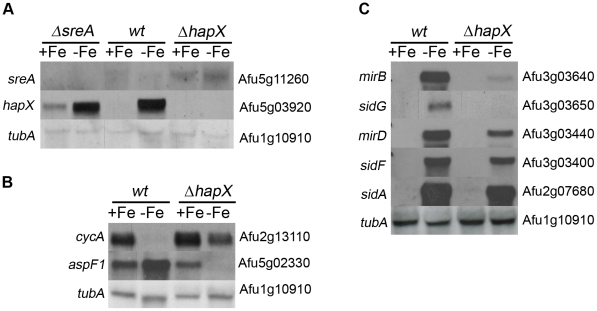
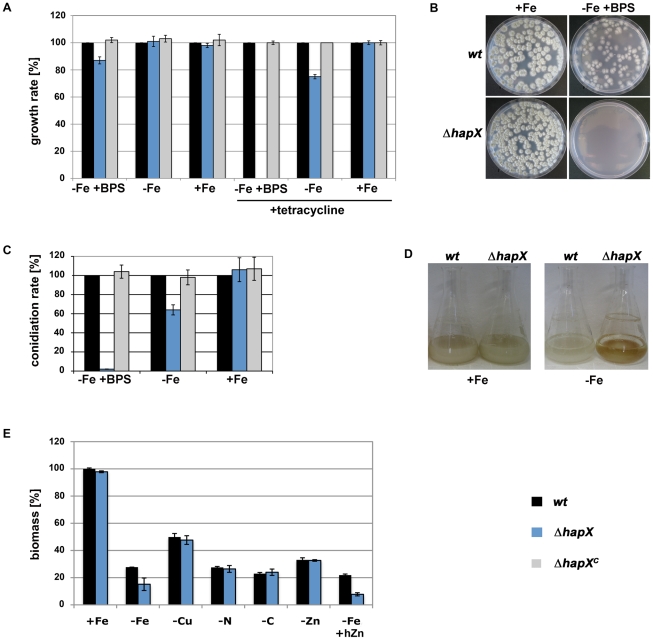
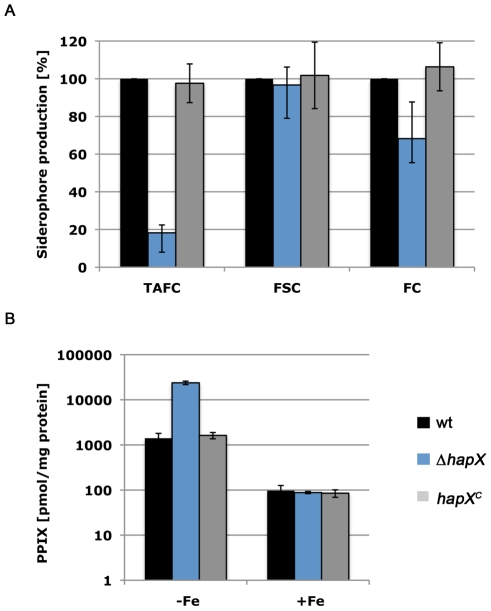
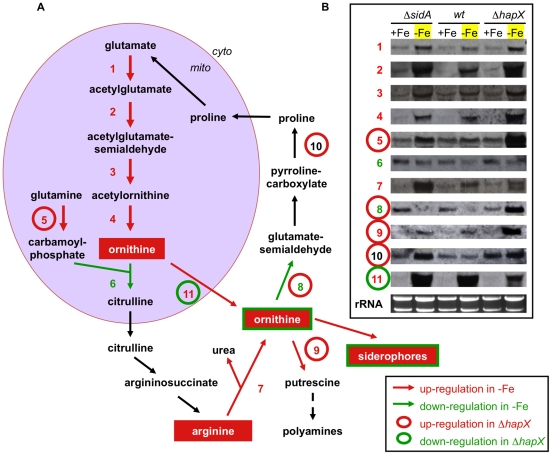
Iron is essential for a wide range of cellular processes. Here we show that the bZIP-type regulator HapX is indispensable for the transcriptional remodeling required for adaption to iron starvation in the opportunistic fungal pathogen Aspergillus fumigatus. HapX represses iron-dependent and mitochondrial-localized activities including respiration, TCA cycle, amino acid metabolism, iron-sulfur-cluster and heme biosynthesis. In agreement with the impact on mitochondrial metabolism, HapX-deficiency decreases resistance to tetracycline and increases mitochondrial DNA content. Pathways positively affected by HapX include production of the ribotoxin AspF1 and siderophores, which are known virulence determinants. Iron starvation causes a massive remodeling of the amino acid pool and HapX is essential for the coordination of the production of siderophores and their precursor ornithine. Consistent with HapX-function being limited to iron depleted conditions and A. fumigatus facing iron starvation in the host, HapX-deficiency causes significant attenuation of virulence in a murine model of aspergillosis. Taken together, this study demonstrates that HapX-dependent adaption to conditions of iron starvation is crucial for virulence of A. fumigatus.
Overview
The claims and statistics of this paper haven’t been checked yet.
Free: it reads the open-access text and checks the first 5 claims that cite a source we can check. Create a free account to check every claim.
Integrity signals
Registry
Cites
Statistics
Figures
Verification
Claims the paper makes
The claims and statistics of this paper haven’t been checked yet.
Free: it reads the open-access text and checks the first 5 claims that cite a source we can check. Create a free account to check every claim.
Claims other papers make about this one
Each is checked against this paper’s own text: does it say what the citing paper says it does?
In the citing paper
“Sites of local tissue hypoxia are commonly observed in experimental models of A. fumigatus infection (356).”
From Aspergillus fumigatus and Aspergillosis in 2019 (2019) · cites this paper as [356]
In the citing paper
“In contrast, other pathogenic fungi such as Aspergillus fumigatus, Cryptococcus neoformans, and C. albicans generally rely on iron-dependent regulation via GATA factor orthologs and the CCAAT-binding complex (12, 48–51).”
From A novel hybrid iron regulation network combines features from pathogenic and nonpathogenic yeasts (2016) · cites this paper as [12]
Self-check
Percentages, sums and reported differences re-computed from the paper’s own numbers.
The self-check needs the paper’s full text.
Citations
Cites
Molecular Cloning: A Laboratory Manual
Sambrook, J., Fritsch, E., & Maniatis, T. (1989) · UCLA - Biblioteca de Ciencias de la Salud · Cited by 133,589
Molecular cloning: A laboratory manual
Deininger, P. (1990) · Analytical Biochemistry · doi:10.1016/0003-2697(90)90595-z · Cited by 84,682
Oxygen toxicity, oxygen radicals, transition metals and disease
Halliwell, B., & Gutteridge, J. M. C. (1984) · Biochemical Journal · doi:10.1042/bj2190001 · Cited by 5,330 · cited 1×
“However, excess iron has the ability to generate toxic reactive species that can damage cellular components [1].”
BackgroundChopra, I., & Roberts, M. (2001) · Microbiology and Molecular Biology Reviews · doi:10.1128/mmbr.65.2.232-260.2001 · Cited by 4,517 · cited 1×
“HapX-deficiency also decreased resistance to tetracycline, an inhibitor of bacterial and mitochondrial protein synthesis [31], during iron-depleted but not iron-replete conditions (Fig.”
BackgroundThe Genetics of Aspergillus nidulans
Pontecorvo, G., Roper, J. A., Chemmons, L. M., Macdonald, K. D., & Bufton, A. W. J. (1953) · Advances in Genetics · doi:10.1016/s0065-2660(08)60408-3 · Cited by 2,302
Genomic sequence of the pathogenic and allergenic filamentous fungus Aspergillus fumigatus
Nierman, W. C., Pain, A., Anderson, M. J., Wortman, J. R., Kim, H. S., Arroyo, J., Berriman, M., Abe, K., Archer, D. B., Bermejo, C., et al. (2005) · Nature · doi:10.1038/nature04332 · Cited by 1,391 · cited 1×
“fumigatus Af293 DNA amplicon microarray containing 9,516 genes [47] was used in this study.”
MethodSelf-citationSchrettl, M., Bignell, E., Kragl, C., Joechl, C., Rogers, T., Arst, H. N., Haynes, K., & Haas, H. (2004) · The Journal of Experimental Medicine · doi:10.1084/jem.20041242 · Cited by 493 · cited 6×
“DsreA and DsidA were described previously [5,22]; generation of DhapX and DhapX is described below.”
BackgroundResultInfluentialSelf-citationSiderophores in Fungal Physiology and Virulence
Haas, H., Eisendle, M., & Turgeon, B. G. (2008) · Annual Review of Phytopathology · doi:10.1146/annurev.phyto.45.062806.094338 · Cited by 449 · cited 5×
“Siderophores are low molecular mass, ferric iron-specific chelators [6].”
BackgroundInfluentialSelf-citationPhilippe, B., Ibrahim-Granet, O., Prévost, M. C., Gougerot-Pocidalo, M. A., Sanchez Perez, M., Van der Meeren, A., & Latgé, J. P. (2003) · Infection and Immunity · doi:10.1128/iai.71.6.3034-3042.2003 · Cited by 415 · cited 1×
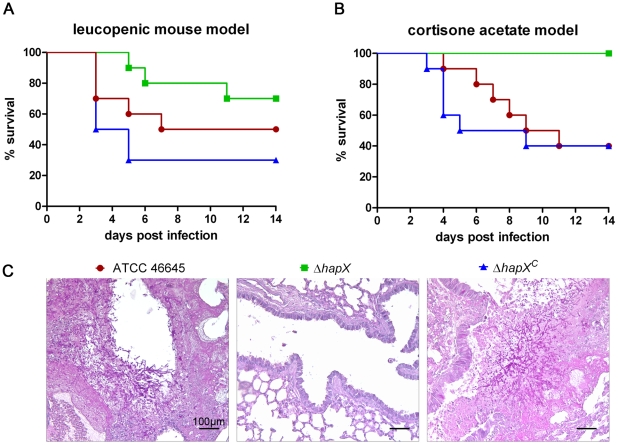
“fumigatus in the environment of the host, we compared the virulence of the DhapX strain with that of the complemented DhapX c strain and the wt strain in two different mouse models of pulmonary invasive aspergillosis: (i) a leucopenic mouse model using immunosuppression with both cortisone acetate and cyclophosphamide…”
MethodDistinct Roles for Intra- and Extracellular Siderophores during Aspergillus fumigatus Infection
Schrettl, M., Bignell, E., Kragl, C., Sabiha, Y., Loss, O., Eisendle, M., Wallner, A., Arst, H. N., Haynes, K., & Haas, H. (2007) · PLoS Pathogens · doi:10.1371/journal.ppat.0030128 · Cited by 405 · cited 7×
“fumigatus genes encoding respective enzyme activities have been identified [5,10]: sidA (N(5)-ornithine-monooxygenase), sidF (N(5)hydroxyornithine:cis-anhydromevalonyl coenzyme A-N(5)-transacylase), sidC (FC NRPS), sidD (fusarinine C NRPS) and sidG (fusarinine C:acetyl coenzyme A-N(2)-transacetylase).”
BackgroundResultInfluentialSelf-citation
Cited by
Aspergillus fumigatus and Aspergillosis in 2019
Latgé, J.-P., & Chamilos, G. (2019) · Clinical Microbiology Reviews · doi:10.1128/cmr.00140-18 · Cited by 1,400
Campoy, S., & Adrio, J. L. (2017) · Biochemical Pharmacology · doi:10.1016/j.bcp.2016.11.019 · Cited by 511
Aspergillus fumigatus morphology and dynamic host interactions
van de Veerdonk, F. L., Gresnigt, M. S., Romani, L., Netea, M. G., & Latgé, J.-P. (2017) · Nature Reviews Microbiology · doi:10.1038/nrmicro.2017.90 · Cited by 490
Synthesis, nature and utility of universal iron chelator – Siderophore: A review
Khan, A., Singh, P., & Srivastava, A. (2018) · Microbiological Research · doi:10.1016/j.micres.2017.10.012 · Cited by 413
Fungal siderophore metabolism with a focus on Aspergillus fumigatus
Haas, H. (2014) · Nat. Prod. Rep. · doi:10.1039/c4np00071d · Cited by 324
Self-citation
Metadata
- Authors
- Schrettl, M., Beckmann, N., Varga, J., Heinekamp, T., Jacobsen, I. D., Jöchl, C., Moussa, T. A., Wang, S., Gsaller, F., Blatzer, M., Werner, E. R., Niermann, W. C., Brakhage, A. A., & Haas, H.
- Affiliations
- Innsbruck Medical University (AT)
- J. Craig Venter Institute (US)
- Leibniz-Institut für Naturstoff-Forschung und Infektionsbiologie e. V. - Hans-Knöll-Institut (HKI) (DE)
- Corresponding author
- Haas, Hubertus
- ORCID
- Venue
- PLoS Pathogens
- Publisher
- Public Library of Science (PLoS)
- Published
- 2010-09-30
- Volume
- 6
- Issue
- 9
- Pages
- e1001124
- ISSN
- 1553-7366 (ISSN-L)
- 1553-7374
- PMC
- PMC2947994
- OpenAlex
- W1997487743
- Cited by
- 284
- References
- 48
- Citations by year
- 2026: 9 · 2025: 14 · 2024: 19 · 2023: 15 · 2022: 14 · 2021: 15 · 2020: 18 · 2019: 16 · 2018: 19 · 2017: 18 · 2016: 25 · 2015: 17 · 2014: 21 · 2013: 22 · 2012: 21
- FWCI
- 8.34
- Type
- journal article
- Language
- en
- Open access
- gold
- doi.org
- Locations
- PLoS Pathogens (publishedVersion, cc-by)
- PubMed Central (publishedVersion, cc-by)
- PubMed (publishedVersion)
- Research Explorer (The University of Manchester) (submittedVersion)
- DOAJ (DOAJ: Directory of Open Access Journals) (submittedVersion, cc-by-sa)
- Figshare (submittedVersion, cc-by)
- Funders
- Austrian Science Fund
- Topics
- Life Sciences › Biochemistry, Genetics and Molecular Biology › Molecular Biology › Fungal and yeast genetics research
- Health Sciences › Medicine › Infectious Diseases › Antifungal resistance and susceptibility
- Health Sciences › Medicine › Infectious Diseases › Fungal Infections and Studies
- Keywords
- Aspergillus fumigatus, iron starvation, virulence, siderophores, ornithine, transcriptional regulation, mitochondrial metabolism, iron-sulfur clusters, heme biosynthesis, tetracycline resistance, aspergillosis, opportunistic fungal pathogens
- MeSH terms
- Iron Deficiencies, Adaptation, Psychological, Allergens, Amino Acids, Animals, Anti-Bacterial Agents, Aspergillosis, Aspergillus fumigatus, Disease Models, Animal, DNA, Mitochondrial, Fungal Proteins, Ornithine, Repressor Proteins, RNA, Messenger, Tetracycline, Virulence, Blotting, Northern, Biomarkers, Gene Expression Regulation, Fungal, Survival Rate, Siderophores, Reverse Transcriptase Polymerase Chain Reaction, Oligonucleotide Array Sequence Analysis, Gene Expression Profiling, Drug Resistance, Fungal, Basic-Leucine Zipper Transcription Factors, GATA Transcription Factors, Mice, Antigens, Plant
About these checks
Registry, retraction, Cites and statistics results are computed, not judged, with one exception: a printed reference that no index lists is read once by a model before it counts as a citation error. Claims are extracted by a model and kept only when their quote appears verbatim in the text; each cited source is then checked, with a model’s help, for whether it says what the claim relies on. Those verdicts can be wrong — read the claim’s quote and the cited source before relying on one.
Statistics and arithmetic are recomputed, not judged.
Confidence bands are shown only for fields calibrated on our annotated test set. None is calibrated yet, so no band is shown.
What counts as a claim ›How we measure confidence ›How we check this ›
Are you an author, or do you see a problem with this page? Request a review
How to cite
Cite CoChat for the checks on this page, and the paper for its own findings.
- This page
- CoChat. (2026). Citation check: HapX-Mediated Adaption to Iron Starvation Is Crucial for Virulence of Aspergillus fumigatus. https://app.cochat.ai/papers/10.1371/journal.ppat.1001124
- The paper
- Schrettl, M., Beckmann, N., Varga, J., Heinekamp, T., Jacobsen, I. D., Jöchl, C., Moussa, T. A., Wang, S., Gsaller, F., Blatzer, M., Werner, E. R., Niermann, W. C., Brakhage, A. A., & Haas, H. (2010). HapX-Mediated Adaption to Iron Starvation Is Crucial for Virulence of Aspergillus fumigatus. PLoS Pathogens. https://doi.org/10.1371/journal.ppat.1001124
Data sources
Bibliographic data: Semantic Scholar, OpenAlex, Crossref.
Contains information from the Semantic Scholar Academic Graph Datasets, made available under the ODC Attribution License (ODC-BY 1.0).
Semantic Scholar’s data is described in: Kinney, R., et al. (2023). The Semantic Scholar Open Data Platform. arXiv:2301.10140.
