

HapX-Mediated Adaption to Iron Starvation Is Crucial for Virulence of Aspergillus fumigatus
Open accessThe DOI matches its Crossref record; 48 of the 48 references it cites were found in a registry or an index.
Abstract
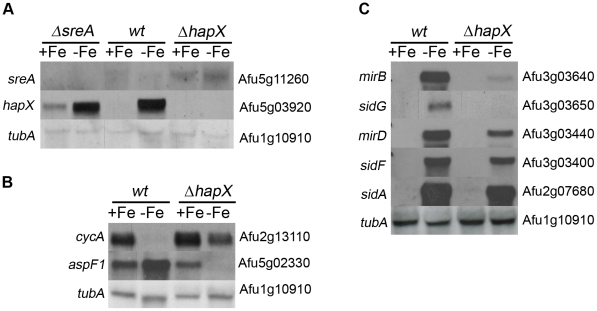
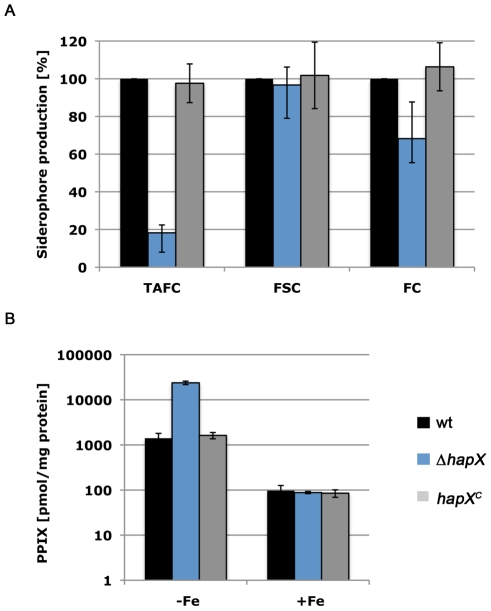
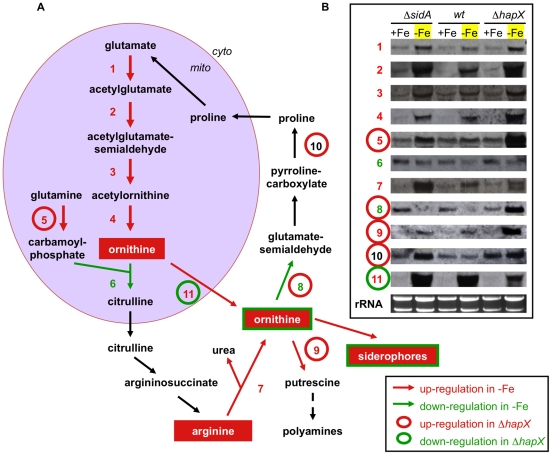
Iron is essential for a wide range of cellular processes. Here we show that the bZIP-type regulator HapX is indispensable for the transcriptional remodeling required for adaption to iron starvation in the opportunistic fungal pathogen Aspergillus fumigatus. HapX represses iron-dependent and mitochondrial-localized activities including respiration, TCA cycle, amino acid metabolism, iron-sulfur-cluster and heme biosynthesis. In agreement with the impact on mitochondrial metabolism, HapX-deficiency decreases resistance to tetracycline and increases mitochondrial DNA content. Pathways positively affected by HapX include production of the ribotoxin AspF1 and siderophores, which are known virulence determinants. Iron starvation causes a massive remodeling of the amino acid pool and HapX is essential for the coordination of the production of siderophores and their precursor ornithine. Consistent with HapX-function being limited to iron depleted conditions and A. fumigatus facing iron starvation in the host, HapX-deficiency causes significant attenuation of virulence in a murine model of aspergillosis. Taken together, this study demonstrates that HapX-dependent adaption to conditions of iron starvation is crucial for virulence of A. fumigatus.
Overview
The claims and statistics of this paper haven’t been checked yet.
Free: it reads the open-access text and checks the first 5 claims that cite a source we can check. Create a free account to check every claim.
Integrity signals
Registry
Cites
Statistics
Figures
Verification
Claims the paper makes
The claims and statistics of this paper haven’t been checked yet.
Free: it reads the open-access text and checks the first 5 claims that cite a source we can check. Create a free account to check every claim.
Claims other papers make about this one
Each is checked against this paper’s own text: does it say what the citing paper says it does?
In the citing paper
“Sites of local tissue hypoxia are commonly observed in experimental models of A. fumigatus infection (356).”
From Aspergillus fumigatus and Aspergillosis in 2019 (2019) · cites this paper as [356]
In the citing paper
“In contrast, other pathogenic fungi such as Aspergillus fumigatus, Cryptococcus neoformans, and C. albicans generally rely on iron-dependent regulation via GATA factor orthologs and the CCAAT-binding complex (12, 48–51).”
From A novel hybrid iron regulation network combines features from pathogenic and nonpathogenic yeasts (2016) · cites this paper as [12]
Self-check
Percentages, sums and reported differences re-computed from the paper’s own numbers.
The self-check needs the paper’s full text.
Citations
Cites
Molecular Cloning: A Laboratory Manual
Sambrook, J., Fritsch, E., & Maniatis, T. (1989) · UCLA - Biblioteca de Ciencias de la Salud · Cited by 133,589
Molecular cloning: A laboratory manual
Deininger, P. (1990) · Analytical Biochemistry · doi:10.1016/0003-2697(90)90595-z · Cited by 84,682
Oxygen toxicity, oxygen radicals, transition metals and disease
Halliwell, B., & Gutteridge, J. M. C. (1984) · Biochemical Journal · doi:10.1042/bj2190001 · Cited by 5,330 · cited 1×
“However, excess iron has the ability to generate toxic reactive species that can damage cellular components [1].”
BackgroundChopra, I., & Roberts, M. (2001) · Microbiology and Molecular Biology Reviews · doi:10.1128/mmbr.65.2.232-260.2001 · Cited by 4,517 · cited 1×
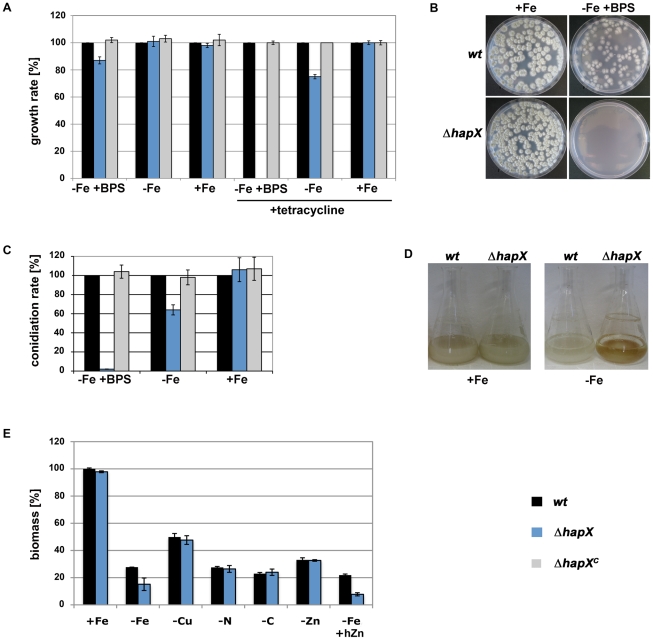
“HapX-deficiency also decreased resistance to tetracycline, an inhibitor of bacterial and mitochondrial protein synthesis [31], during iron-depleted but not iron-replete conditions (Fig.”
BackgroundThe Genetics of Aspergillus nidulans
Pontecorvo, G., Roper, J. A., Chemmons, L. M., Macdonald, K. D., & Bufton, A. W. J. (1953) · Advances in Genetics · doi:10.1016/s0065-2660(08)60408-3 · Cited by 2,302
Genomic sequence of the pathogenic and allergenic filamentous fungus Aspergillus fumigatus
Nierman, W. C., Pain, A., Anderson, M. J., Wortman, J. R., Kim, H. S., Arroyo, J., Berriman, M., Abe, K., Archer, D. B., Bermejo, C., et al. (2005) · Nature · doi:10.1038/nature04332 · Cited by 1,391 · cited 1×
“fumigatus Af293 DNA amplicon microarray containing 9,516 genes [47] was used in this study.”
MethodSelf-citationSchrettl, M., Bignell, E., Kragl, C., Joechl, C., Rogers, T., Arst, H. N., Haynes, K., & Haas, H. (2004) · The Journal of Experimental Medicine · doi:10.1084/jem.20041242 · Cited by 493 · cited 6×
“DsreA and DsidA were described previously [5,22]; generation of DhapX and DhapX is described below.”
BackgroundResultInfluentialSelf-citationSiderophores in Fungal Physiology and Virulence
Haas, H., Eisendle, M., & Turgeon, B. G. (2008) · Annual Review of Phytopathology · doi:10.1146/annurev.phyto.45.062806.094338 · Cited by 449 · cited 5×
“Siderophores are low molecular mass, ferric iron-specific chelators [6].”
BackgroundInfluentialSelf-citationPhilippe, B., Ibrahim-Granet, O., Prévost, M. C., Gougerot-Pocidalo, M. A., Sanchez Perez, M., Van der Meeren, A., & Latgé, J. P. (2003) · Infection and Immunity · doi:10.1128/iai.71.6.3034-3042.2003 · Cited by 415 · cited 1×
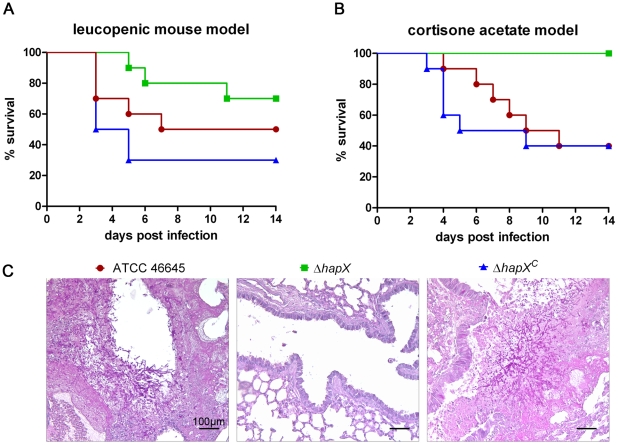
“fumigatus in the environment of the host, we compared the virulence of the DhapX strain with that of the complemented DhapX c strain and the wt strain in two different mouse models of pulmonary invasive aspergillosis: (i) a leucopenic mouse model using immunosuppression with both cortisone acetate and cyclophosphamide…”
MethodDistinct Roles for Intra- and Extracellular Siderophores during Aspergillus fumigatus Infection
Schrettl, M., Bignell, E., Kragl, C., Sabiha, Y., Loss, O., Eisendle, M., Wallner, A., Arst, H. N., Haynes, K., & Haas, H. (2007) · PLoS Pathogens · doi:10.1371/journal.ppat.0030128 · Cited by 405 · cited 7×
“fumigatus genes encoding respective enzyme activities have been identified [5,10]: sidA (N(5)-ornithine-monooxygenase), sidF (N(5)hydroxyornithine:cis-anhydromevalonyl coenzyme A-N(5)-transacylase), sidC (FC NRPS), sidD (fusarinine C NRPS) and sidG (fusarinine C:acetyl coenzyme A-N(2)-transacetylase).”
BackgroundResultInfluentialSelf-citation
Cited by
Aspergillus fumigatus and Aspergillosis in 2019
Latgé, J.-P., & Chamilos, G. (2019) · Clinical Microbiology Reviews · doi:10.1128/cmr.00140-18 · Cited by 1,400
Campoy, S., & Adrio, J. L. (2017) · Biochemical Pharmacology · doi:10.1016/j.bcp.2016.11.019 · Cited by 511
Aspergillus fumigatus morphology and dynamic host interactions
van de Veerdonk, F. L., Gresnigt, M. S., Romani, L., Netea, M. G., & Latgé, J.-P. (2017) · Nature Reviews Microbiology · doi:10.1038/nrmicro.2017.90 · Cited by 490
Synthesis, nature and utility of universal iron chelator – Siderophore: A review
Khan, A., Singh, P., & Srivastava, A. (2018) · Microbiological Research · doi:10.1016/j.micres.2017.10.012 · Cited by 413
Fungal siderophore metabolism with a focus on Aspergillus fumigatus
Haas, H. (2014) · Nat. Prod. Rep. · doi:10.1039/c4np00071d · Cited by 324
Self-citationChen, C., Pande, K., French, S. D., Tuch, B. B., & Noble, S. M. (2011) · Cell Host & Microbe · doi:10.1016/j.chom.2011.07.005 · Cited by 314
“This hap43DDmutant is also defective for virulence in amouse bloodstream infection model (Hsu et al., 2011), like mutants affecting orthologs in the fungal pathogens Aspergillus fumigatus (Schrettl et al., 2010) and C. neoformans (Jung et al., 2010).”
Gerwien, F., Skrahina, V., Kasper, L., Hube, B., & Brunke, S. (2018) · FEMS Microbiology Reviews · doi:10.1093/femsre/fux050 · Cited by 250
Boyce, K. J., & Andrianopoulos, A. (2015) · FEMS Microbiology Reviews · doi:10.1093/femsre/fuv035 · Cited by 246
“SreA represses iron uptake during iron sufficiency, whereas HapX represses ironconsuming pathways during iron starvation (Jung et al. 2006, 2010; Jung and Kronstad 2008; Schrettl et al. 2008; Schrettl et al. 2010; Haas 2012).”
BackgroundIron - a key nexus in the virulence of Aspergillus fumigatus
Haas, H. (2012) · Frontiers in Microbiology · doi:10.3389/fmicb.2012.00028 · Cited by 217
Self-citationCamps, S. M. T., Dutilh, B. E., Arendrup, M. C., Rijs, A. J. M. M., Snelders, E., Huynen, M. A., Verweij, P. E., & Melchers, W. J. G. (2012) · PLoS ONE · doi:10.1371/journal.pone.0050034 · Cited by 212
“Conversely, in conditions of iron sufficiency, HapX expression is repressed [65].”
BackgroundMethodTranscriptional regulatory elements in fungal secondary metabolism
Yin, W., & Keller, N. P. (2011) · The Journal of Microbiology · doi:10.1007/s12275-011-1009-1 · Cited by 184
Hypoxia and Fungal Pathogenesis: To Air or Not To Air?
Grahl, N., Shepardson, K. M., Chung, D., & Cramer, R. A. (2012) · Eukaryotic Cell · doi:10.1128/ec.00031-12 · Cited by 179
“acquisition/homeostasis mutants are also attenuated in virulence (59-62, 102, 103), 463 these studies suggest a potential role for SrbA mediated iron acquisition in fungal 464”
BackgroundBlatzer, M., Barker, B. M., Willger, S. D., Beckmann, N., Blosser, S. J., Cornish, E. J., Mazurie, A., Grahl, N., Haas, H., & Cramer, R. A. (2011) · PLoS Genetics · doi:10.1371/journal.pgen.1002374 · Cited by 175
“PLoS Genetics | www.plosgenetics.org 6 December 2011 | Volume 7 | Issue 12 | e1002374 As shown previously for A. fumigatus strain ATCC46445 [4,5], A. fumigatus strain CEA10 accumulates intracellular FC (ferricrocin) in the ferri-form during iron sufficiency and about 20 fold higher amounts in the desferri-form during…”
BackgroundMethodInfluentialSelf-citationMetabolism in fungal pathogenesis
Ene, I. V., Brunke, S., Brown, A. J. P., & Hube, B. (2014) · Cold Spring Harbor Perspectives in Medicine · doi:10.1101/cshperspect.a019695 · Cited by 169
“fumigatus, reinforcing the crucial role of iron adaptation mechanisms in the host (Schrettl et al. 2010).”
BackgroundBriard, B., Bomme, P., Lechner, B. E., Mislin, G. L. A., Lair, V., Prévost, M.-C., Latgé, J.-P., Haas, H., & Beauvais, A. (2015) · Scientific Reports · doi:10.1038/srep08220 · Cited by 161
Self-citationHsu, P.-C., Yang, C.-Y., & Lan, C.-Y. (2011) · Eukaryotic Cell · doi:10.1128/ec.00158-10 · Cited by 157
“fumigatus HapX has been shown to be required for virulence so far (79).”
BackgroundLópez-Berges, M. S., Capilla, J., Turrà, D., Schafferer, L., Matthijs, S., Jöchl, C., Cornelis, P., Guarro, J., Haas, H., & Di Pietro, A. (2012) · The Plant Cell · doi:10.1105/tpc.112.098624 · Cited by 152
Self-citationJung, W. H., Saikia, S., Hu, G., Wang, J., Fung, C. K.-Y., D'Souza, C., White, R., & Kronstad, J. W. (2010) · PLoS Pathogens · doi:10.1371/journal.ppat.1001209 · Cited by 155
“fumigatus also revealed both positive and negative regulatory influences [46].”
BackgroundJain, R., Valiante, V., Remme, N., Docimo, T., Heinekamp, T., Hertweck, C., Gershenzon, J., Haas, H., & Brakhage, A. A. (2011) · Molecular Microbiology · doi:10.1111/j.1365-2958.2011.07778.x · Cited by 140
“The major substrate required for the formation of siderophores is ornithine (Schrettl et al., 2010a).”
BackgroundResultInfluentialSelf-citationIron homeostasis—Achilles’ heel of Aspergillus fumigatus?
Schrettl, M., & Haas, H. (2011) · Current Opinion in Microbiology · doi:10.1016/j.mib.2011.06.002 · Cited by 139
Self-citationHackenberg, D., Wu, Y., Voigt, A., Adams, R. A., Schramm, P., & Grimm, B. (2011) · Molecular Plant · doi:10.1093/mp/ssr107 · Cited by 161
Gsaller, F., Hortschansky, P., Beattie, S. R., Klammer, V., Tuppatsch, K., Lechner, B. E., Rietzschel, N., Werner, E. R., Vogan, A. A., Chung, D., et al. (2014) · The EMBO Journal · doi:10.15252/embj.201489468 · Cited by 134
“With the exception of Saccharomyces 1 Division of Molecular Biology, Biocenter, Innsbruck Medical University, Innsbruck, Austria 2 Department of Molecular and Applied Microbiology, Leibniz Institute for Natural Product Research and Infection Biology (HKI), Jena, Germany 3 Department of Microbiology and Immunology, Gei…”
BackgroundInfluentialSelf-citationFungal iron homeostasis with a focus on Aspergillus fumigatus
Misslinger, M., Hortschansky, P., Brakhage, A. A., & Haas, H. (2020) · Biochimica et Biophysica Acta (BBA) - Molecular Cell Research · doi:10.1016/j.bbamcr.2020.118885 · Cited by 154
Self-citationGsaller, F., Hortschansky, P., Furukawa, T., Carr, P. D., Rash, B., Capilla, J., Müller, C., Bracher, F., Bowyer, P., Haas, H., et al. (2016) · PLOS Pathogens · doi:10.1371/journal.ppat.1005775 · Cited by 133
Self-citationThe negative cofactor 2 complex is a key regulator of drug resistance in Aspergillus fumigatus
Furukawa, T., van Rhijn, N., Fraczek, M., Gsaller, F., Davies, E., Carr, P., Gago, S., Fortune-Grant, R., Rahman, S., Gilsenan, J. M., et al. (2020) · Nature Communications · doi:10.1038/s41467-019-14191-1 · Cited by 139
Self-citationSass, G., Nazik, H., Penner, J., Shah, H., Ansari, S. R., Clemons, K. V., Groleau, M.-C., Dietl, A.-M., Visca, P., Haas, H., et al. (2018) · Journal of Bacteriology · doi:10.1128/jb.00345-17 · Cited by 128
“, hapX (59, 60), and suppressing the expression of genes that are expressed under high-iron conditions, e.”
BackgroundSelf-citationBarker, B. M., Kroll, K., Vödisch, M., Mazurie, A., Kniemeyer, O., & Cramer, R. A. (2012) · BMC Genomics · doi:10.1186/1471-2164-13-62 · Cited by 127
“These transcripts are further evaluated in Figure 13. has increased transcript levels at 2, 6, and 12 hours hypoxia, while HapX (Afu5g03920) transcripts are correspondingly slightly reduced.”
BackgroundInfluentialYasmin, S., Alcazar-Fuoli, L., Gründlinger, M., Puempel, T., Cairns, T., Blatzer, M., Lopez, J. F., Grimalt, J. O., Bignell, E., & Haas, H. (2012) · Proceedings of the National Academy of Sciences · doi:10.1073/pnas.1106399108 · Cited by 126
“fumigatus faces iron limitation during mammalian infection: (i) Defects impairing adaptation to iron limitation, such as inactivation of the siderophore system or the iron regulator HapX, attenuate virulence in murine models of pulmonary aspergillosis (3, 5, 21); (ii) RIA and the siderophore system are transcriptional…”
BackgroundSelf-citationTang, W., Ru, Y., Hong, L., Zhu, Q., Zuo, R., Guo, X., Wang, J., Zhang, H., Zheng, X., Wang, P., et al. (2014) · Environmental Microbiology · doi:10.1111/1462-2920.12618 · Cited by 130
“In A. fumigatus, the bZIP TFs regulate asexual development, gliotoxin production, sulphur assimilation, iron starvation, and virulence (Schrettl et al., 2010; Xiao et al., 2010; Amich et al., 2013).”
BackgroundCurrent progress on pathogenicity‐related transcription factors in Fusarium oxysporum
Zuriegat, Q., Zheng, Y., Liu, H., Wang, Z., & Yun, Y. (2021) · Molecular Plant Pathology · doi:10.1111/mpp.13068 · Cited by 126
“In previous studies, homologs of HapX were also thought to be involved in the virulence of several human fungal pathogens, such as A. fumigatus and C. albicans (Chen et al., 2011; Schrettl et al., 2010).”
BackgroundGauthier, G. M., & Keller, N. P. (2013) · Fungal Genetics and Biology · doi:10.1016/j.fgb.2013.08.016 · Cited by 128
Singh, R. P., Prasad, H. K., Sinha, I., Agarwal, N., & Natarajan, K. (2011) · Journal of Biological Chemistry · doi:10.1074/jbc.m111.233569 · Cited by 113
Feng, X., Krishnan, K., Richie, D. L., Aimanianda, V., Hartl, L., Grahl, N., Powers-Fletcher, M. V., Zhang, M., Fuller, K. K., Nierman, W. C., et al. (2011) · PLoS Pathogens · doi:10.1371/journal.ppat.1002330 · Cited by 112
“acquisition pathways, which have been shown to be necessary for virulence [41,42].”
BackgroundYeast AP-1 like transcription factors (Yap) and stress response: a current overview
Rodrigues‐Pousada, C., Devaux, F., Caetano, S. M., Pimentel, C., da Silva, S. M., Gaspar‐Cordeiro, A., & Amaral, C. (2019) · Microbial Cell · doi:10.15698/mic2019.06.679 · Cited by 117
“However, a functional homologue of HapX, named Php4, has been described in this species.”
BackgroundInfluentialLeal, S. M., Roy, S., Vareechon, C., Carrion, S. D., Clark, H., Lopez-Berges, M. S., diPietro, A., Schrettl, M., Beckmann, N., Redl, B., et al. (2013) · PLoS Pathogens · doi:10.1371/journal.ppat.1003436 · Cited by 111
“hapX [30] DhapX- hapX::hapX Complemented strain”
BackgroundInfluentialSelf-citationIron and copper as virulence modulators in human fungal pathogens
Ding, C., Festa, R. A., Sun, T., & Wang, Z. (2014) · Molecular Microbiology · doi:10.1111/mmi.12653 · Cited by 103
“In addition, Aspergillus HapX regulates Fe starvation and virulence (Schrettl et al., 2010).”
BackgroundMetabolic remodeling in iron-deficient fungi
Philpott, C. C., Leidgens, S., & Frey, A. G. (2012) · Biochimica et Biophysica Acta (BBA) - Molecular Cell Research · doi:10.1016/j.bbamcr.2012.01.012 · Cited by 105
“5-fold increase during iron-starved growth in hapX-deleted strain versus wild type [79].”
BackgroundJohnson, L. J., Koulman, A., Christensen, M. J., Lane, G. A., Fraser, K., Forester, N. T., Johnson, R. D., Bryan, G. T., & Rasmussen, S. (2013) · PLoS Pathogens · doi:10.1371/journal.ppat.1003332 · Cited by 109
Candida albicans specializations for iron homeostasis: from commensalism to virulence
Noble, S. M. (2013) · Current Opinion in Microbiology · doi:10.1016/j.mib.2013.09.006 · Cited by 104
Overview of carbon and nitrogen catabolite metabolism in the virulence of human pathogenic fungi
Ries, L. N. A., Beattie, S., Cramer, R. A., & Goldman, G. H. (2018) · Molecular Microbiology · doi:10.1111/mmi.13887 · Cited by 103
“Indeed, a relationship of Mig1 with HapX, a bZIP transcription factor required for adaptation to iron limiting and iron excess conditions and virulence in several fungal pathogens (Jung et al., 2010; Schrettl et al., 2010; Chen et al., 2011; Lopez-Berges et al., 2012; Gsaller et al., 2014), was identified in C.”
BackgroundLipid Biosynthesis as an Antifungal Target
Pan, J., Hu, C., & Yu, J.-H. (2018) · Journal of Fungi · doi:10.3390/jof4020050 · Cited by 98
Petrik, M., Haas, H., Laverman, P., Schrettl, M., Franssen, G. M., Blatzer, M., & Decristoforo, C. (2014) · Molecular Imaging and Biology · doi:10.1007/s11307-013-0654-7 · Cited by 94
“fumigatus [6].”
Self-citationSecondary metabolite arsenal of an opportunistic pathogenic fungus
Bignell, E., Cairns, T. C., Throckmorton, K., Nierman, W. C., & Keller, N. P. (2016) · Philosophical Transactions of the Royal Society B: Biological Sciences · doi:10.1098/rstb.2016.0023 · Cited by 92
In vitro and in vivo evaluation of selected 68Ga-siderophores for infection imaging
Petrik, M., Haas, H., Schrettl, M., Helbok, A., Blatzer, M., & Decristoforo, C. (2012) · Nuclear Medicine and Biology · doi:10.1016/j.nucmedbio.2011.09.012 · Cited by 92
Self-citationAmich, J., Schafferer, L., Haas, H., & Krappmann, S. (2013) · PLoS Pathogens · doi:10.1371/journal.ppat.1003573 · Cited by 95
“Deletion of genes coding for zinc or iron responsive factors demonstrated the importance of both elements for virulence [39,40].”
BackgroundMethodInfluentialSelf-citationOn the lineage of Aspergillus fumigatus isolates in common laboratory use
Bertuzzi, M., van Rhijn, N., Krappmann, S., Bowyer, P., Bromley, M. J., & Bignell, E. M. (2021) · Medical Mycology · doi:10.1093/mmy/myaa075 · Cited by 84
Blatzer, M., Schrettl, M., Sarg, B., Lindner, H. H., Pfaller, K., & Haas, H. (2011) · Applied and Environmental Microbiology · doi:10.1128/aem.00182-11 · Cited by 80
“Previously, both siderophore biosynthesis and reductive iron assimilation have been found to be induced at the transcriptional level during infection in a murine model of pulmonary aspergillosis (27, 29).”
BackgroundMethodInfluentialSelf-citationThe contribution of Aspergillus fumigatus stress responses to virulence and antifungal resistance
Brown, N. A., & Goldman, G. H. (2016) · The Journal of Microbiology · doi:10.1007/s12275-016-5510-4 · Cited by 86
Dietl, A.-M., Amich, J., Leal, S., Beckmann, N., Binder, U., Beilhack, A., Pearlman, E., & Haas, H. (2016) · Virulence · doi:10.1080/21505594.2016.1146848 · Cited by 77
“fumigatus during iron starvation suggested a role of this amino acid in metal homeostasis.(9) In a first step, we analyzed the role of histidine biosynthesis in heavy metal resistance by comparing the growth of wt, DhisB and hisB strains on plates with 1 mM histidine supplementation (Fig.”
BackgroundMethodInfluentialSelf-citationSheridan, K. J., Lechner, B. E., Keeffe, G. O., Keller, M. A., Werner, E. R., Lindner, H., Jones, G. W., Haas, H., & Doyle, S. (2016) · Scientific Reports · doi:10.1038/srep35306 · Cited by 73
“In this context it is interesting to note that cellular accumulation of the EGT precursor histidine was previously also found to be significantly increased during iron starvation compared to iron sufficiency 58 .”
BackgroundSelf-citationPhytotoxin production in Aspergillus terreus is regulated by independent environmental signals
Gressler, M., Meyer, F., Heine, D., Hortschansky, P., Hertweck, C., & Brock, M. (2015) · eLife · doi:10.7554/elife.07861 · Cited by 71
“In A. fumigatus and A. nidulans siderophore biosynthesis and uptake is regulated by the opposing transcription factors HapX and SreA depending on the presence or absence of iron (Schrettl et al., 2007, 2008, 2010).”
BackgroundPeng, Y., Wang, J., Lin, H., Ding, J., Feng, M., & Ying, S. (2020) · mSystems · doi:10.1128/msystems.00695-20 · Cited by 73
Parente, A. F. A., Bailão, A. M., Borges, C. L., Parente, J. A., Magalhães, A. D., Ricart, C. A. O., & Soares, C. M. A. (2011) · PLoS ONE · doi:10.1371/journal.pone.0022810 · Cited by 87
Iron–sulfur cluster signaling: The common thread in fungal iron regulation
Gupta, M., & Outten, C. E. (2020) · Current Opinion in Chemical Biology · doi:10.1016/j.cbpa.2020.02.008 · Cited by 74
The interplay between vacuolar and siderophore-mediated iron storage in Aspergillus fumigatus
Gsaller, F., Eisendle, M., Lechner, B. E., Schrettl, M., Lindner, H., Müller, D., Geley, S., & Haas, H. (2012) · Metallomics · doi:10.1039/c2mt20179h · Cited by 68
Self-citationKong, S., Park, S., & Lee, Y. (2014) · Environmental Microbiology · doi:10.1111/1462-2920.12633 · Cited by 70
Verma, S., Shakya, V. P. S., & Idnurm, A. (2018) · Virulence · doi:10.1080/21505594.2017.1414133 · Cited by 67
“fumigatus HapX is essential for adapting to iron starvation, and the hapX deletion mutant has attenuated virulence [111].”
BackgroundBaldin, C., Valiante, V., Krüger, T., Schafferer, L., Haas, H., Kniemeyer, O., & Brakhage, A. A. (2015) · PROTEOMICS · doi:10.1002/pmic.201400584 · Cited by 66
“qRTPCR experiments also confirmed our previous data on the HapX dependence of expression of the ornithine biosynthesis genes involved in siderophore biosynthesis [22](Fig.”
InfluentialSelf-citationWiemann, P., Albermann, S., Niehaus, E.-M., Studt, L., von Bargen, K. W., Brock, N. L., Humpf, H.-U., Dickschat, J. S., & Tudzynski, B. (2012) · PLoS ONE · doi:10.1371/journal.pone.0037519 · Cited by 63
The metalloreductase FreB is involved in adaptation of Aspergillus fumigatus to iron starvation
Blatzer, M., Binder, U., & Haas, H. (2011) · Fungal Genetics and Biology · doi:10.1016/j.fgb.2011.07.009 · Cited by 63
Self-citationHwang, L. H., Seth, E., Gilmore, S. A., & Sil, A. (2012) · Eukaryotic Cell · doi:10.1128/ec.05274-11 · Cited by 60
“NIT3 encodes the ortholog of hapX/Hap43, a bZip transcription factor that is transcriptionally regulated by iron and Sre1 orthologs in Aspergillus nidulans, Aspergillus fumigatus, and Candida albicans (5, 15, 17, 21, 33).”
BackgroundThe Cell Wall Integrity Signaling Pathway and Its Involvement in Secondary Metabolite Production
Valiante, V. (2017) · Journal of Fungi · doi:10.3390/jof3040068 · Cited by 64
“fumigatus, the production of siderophores is strongly regulated by iron homeostasis, and tightly controlled by two transcriptional regulators—HapX and SreA—that co-regulate iron-dependent genes, including those responsible for the biosynthesis of triacetylfusarinine C [66,67].”
BackgroundIron uptake and regulation in Schizosaccharomyces pombe
Labbé, S., Khan, M. G. M., & Jacques, J. (2013) · Current Opinion in Microbiology · doi:10.1016/j.mib.2013.07.007 · Cited by 70
The Immune Interplay between the Host and the Pathogen inAspergillus fumigatusLung Infection
Sales‐Campos, H., Tonani, L., Cardoso, C. R. D. B., & Kress, M. R. V. Z. (2013) · BioMed Research International · doi:10.1155/2013/693023 · Cited by 80
“The main A. fumigatus secreted protease is the alkaline serine protease Alp1/asp f 13, which had been shown to be abundant in infected lung tissue and able to degrade some complement components (C3b, C4b, and C5) [77].”
BackgroundAdditional oxidative stress reroutes the global response of Aspergillus fumigatus to iron depletion
Kurucz, V., Krüger, T., Antal, K., Dietl, A., Haas, H., Pócsi, I., Kniemeyer, O., & Emri, T. (2018) · BMC Genomics · doi:10.1186/s12864-018-4730-x · Cited by 67
“[35], and it was accompanied with down-regulation of the iron-sulfur protein Rli1 (Tables 2 and 3; Additional files 2 and 3).”
BackgroundResultInfluentialSelf-citationThe Monothiol Glutaredoxin Grx4 Regulates Iron Homeostasis and Virulence in Cryptococcus neoformans
Attarian, R., Hu, G., Caza, M., Sánchez‐León, E., Croll, D., Do, E., Bach, H., Missall, T. A., Lodge, J. K., Jung, W. H., et al. (2018) · mBio · doi:10.1128/mbio.02377-18 · Cited by 66
Wiemann, P., Lechner, B. E., Baccile, J. A., Velk, T. A., Yin, W.-B., Bok, J. W., Pakala, S., Losada, L., Nierman, W. C., Schroeder, F. C., et al. (2014) · Frontiers in Microbiology · doi:10.3389/fmicb.2014.00530 · Cited by 60
Self-citationFranken, A. C. W., Lokman, B. C., Ram, A. F. J., Punt, P. J., van den Hondel, C. A. M. J. J., & de Weert, S. (2011) · Applied Microbiology and Biotechnology · doi:10.1007/s00253-011-3391-3 · Cited by 70
“fumigatus (Schrettl et al. 2010).”
BackgroundRaymond-Bouchard, I., Carroll, C. S., Nesbitt, J. R., Henry, K. A., Pinto, L. J., Moinzadeh, M., Scott, J. K., & Moore, M. M. (2012) · Eukaryotic Cell · doi:10.1128/ec.00159-12 · Cited by 62
“In A. nidulans, expression of siderophore transporterencoding genes, as with siderophore biosynthesis, is regulated by the transcription factors SreA and HapX (20, 45, 52).”
BackgroundInfluentialAspergillus fumigatus biology, immunopathogenicity and drug resistance
van de Veerdonk, F. L., Carvalho, A., Wauters, J., Chamilos, G., & Verweij, P. E. (2025) · Nature Reviews Microbiology · doi:10.1038/s41579-025-01180-z · Cited by 70
“The transcription factors SreA and HapX regulate iron homeostasis and siderophore production, although only HapX was found to affect pathogenicity 18,19 .”
Ding, Z., Li, M., Sun, F., Xi, P., Sun, L., Zhang, L., & Jiang, Z. (2015) · PLoS ONE · doi:10.1371/journal.pone.0122634 · Cited by 67
“Ornithine is also a key amino acid precursor for polyamines formation, and polyamines are important for fungal growth and development [7,33].”
BackgroundMenacing Mold: Recent Advances in Aspergillus Pathogenesis and Host Defense
Tischler, B. Y., & Hohl, T. M. (2019) · Journal of Molecular Biology · doi:10.1016/j.jmb.2019.03.027 · Cited by 60
The CCAAT-binding complex (CBC) in Aspergillus species
Hortschansky, P., Haas, H., Huber, E. M., Groll, M., & Brakhage, A. A. (2016) · Biochimica et Biophysica Acta (BBA) - Gene Regulatory Mechanisms · doi:10.1016/j.bbagrm.2016.11.008 · Cited by 62
“secondary metabolism, oxidative stress response, iron homeostasis, virulence in animal and plant hosts, and azole resistance of fungal pathogens [12-17].”
BackgroundSelf-citationThe Siderophore Transporter Sit1 Determines Susceptibility to the Antifungal VL-2397
Dietl, A., Misslinger, M., Aguiar, M. M., Ivashov, V. A., Teis, D., Pfister, J., Decristoforo, C., Hermann, M., Sullivan, S. M., Smith, L. R., et al. (2019) · Antimicrobial Agents and Chemotherapy · doi:10.1128/aac.00807-19 · Cited by 57
“The lack of the transcription factor HapX, which is crucial for adaptation to iron starvation (21), or SrbA, which regulates ergosterol biosynthesis FIG 1 VL-2397 susceptibility is affected by iron availability.”
BackgroundSelf-citationIron Pathways and Iron Chelation Approaches in Viral, Microbial, and Fungal Infections
Chhabra, R., Saha, A., Chamani, A., Schneider, N., Shah, R., & Nanjundan, M. (2020) · Pharmaceuticals · doi:10.3390/ph13100275 · Cited by 58
“fumigatus led to a reduction in the spread of the fungal infection [171].”
BackgroundKim, J., Cho, Y.-J., Do, E., Choi, J., Hu, G., Cadieux, B., Chun, J., Lee, Y., Kronstad, J. W., & Jung, W. H. (2012) · Fungal Genetics and Biology · doi:10.1016/j.fgb.2012.08.006 · Cited by 53
The Hap Complex in Yeasts: Structure, Assembly Mode, and Gene Regulation
Mao, Y., & Chen, C. (2019) · Frontiers in Microbiology · doi:10.3389/fmicb.2019.01645 · Cited by 58
Potrykus, J., Ballou, E. R., Childers, D. S., & Brown, A. J. P. (2014) · PLoS Pathogens · doi:10.1371/journal.ppat.1003910 · Cited by 52
Song, J., Zhou, J., Zhang, L., & Li, R. (2020) · Microorganisms · doi:10.3390/microorganisms8101574 · Cited by 51
Peng, Y., Hou, J., Zhang, H., Lei, J., Lin, H., Ding, J., Feng, M., & Ying, S. (2022) · Environmental Microbiology · doi:10.1111/1462-2920.16032 · Cited by 51
O’Keeffe, G., Hammel, S., Owens, R. A., Keane, T., Fitzpatrick, D. A., Jones, G. W., & Doyle, S. (2014) · BMC Genomics · doi:10.1186/1471-2164-15-894 · Cited by 60
“fumigatus encodes two transcription factors, hapX and sreA, that maintain iron homeostasis whereby hapX represses sreA expression and subsequently ironconsuming pathways, and activates siderophore biosynthesis during iron-starvation, while sreA represses hapX during iron-sufficient conditions in a negative feedback lo…”
BackgroundLong, N., Orasch, T., Zhang, S., Gao, L., Xu, X., Hortschansky, P., Ye, J., Zhang, F., Xu, K., Gsaller, F., et al. (2018) · PLOS Genetics · doi:10.1371/journal.pgen.1007762 · Cited by 48
Self-citationMisslinger, M., Lechner, B. E., Bacher, K., & Haas, H. (2018) · Metallomics · doi:10.1039/c8mt00263k · Cited by 52
Self-citationThe monothiol glutaredoxin GrxD is essential for sensing iron starvation in Aspergillus fumigatus
Misslinger, M., Scheven, M. T., Hortschansky, P., López‐Berges, M. S., Heiss, K., Beckmann, N., Heigl, T., Hermann, M., Krüger, T., Kniemeyer, O., et al. (2019) · PLoS Genetics · doi:10.1371/journal.pgen.1008379 · Cited by 56
Self-citationCai, Z., Du, W., Zeng, Q., Long, N., Dai, C., & Lu, L. (2017) · Fungal Genetics and Biology · doi:10.1016/j.fgb.2017.08.003 · Cited by 49
The crucial role of iron uptake in Aspergillus fumigatus virulence
Moore, M. M. (2013) · Current Opinion in Microbiology · doi:10.1016/j.mib.2013.07.012 · Cited by 56
Joehnk, B., Bayram, Ö., Abelmann, A., Heinekamp, T., Mattern, D. J., Brakhage, A. A., Jacobsen, I. D., Valerius, O., & Braus, G. H. (2016) · PLoS Pathogens · doi:10.1371/journal.ppat.1005899 · Cited by 56
“Lungs from euthanized animals were removed, and fixed in formalin and paraffin-embeddedfor histopathological analyses according to standard protocols [39,78].”
MethodSelf-citationWang, Z., Ma, T., Huang, Y., Wang, J., Chen, Y., Kistler, H. C., Ma, Z., & Yin, Y. (2019) · PLoS Pathogens · doi:10.1371/journal.ppat.1007791 · Cited by 52
“fumigatus, HapX not only represses genes involved in iron-consuming pathways to spare iron, but also activates iron acquisition genes to acquire iron via suppressing another repressor SreA during iron starvation [50], which is consistent with our finding.”
BackgroundResultA novel hybrid iron regulation network combines features from pathogenic and nonpathogenic yeasts
Gerwien, F., Safyan, A., Wisgott, S., Hille, F., Kaemmer, P., Linde, J., Brunke, S., Kasper, L., & Hube, B. (2016) · mBio · doi:10.1128/mbio.01782-16 · Cited by 47
Linde, J., Hortschansky, P., Fazius, E., Brakhage, A. A., Guthke, R., & Haas, H. (2012) · BMC Systems Biology · doi:10.1186/1752-0509-6-6 · Cited by 45
“The known repression of mirB by SreA [32] was confirmed by our model.”
BackgroundResultInfluentialSelf-citationDietl, A., Meir, Z., Shadkchan, Y., Osherov, N., & Haas, H. (2018) · Virulence · doi:10.1080/21505594.2018.1482181 · Cited by 54
“phores, culture supernatants or lyophilized mycelia were saturated with FeSO4 and extracted as described previously [18].”
MethodSelf-citationAdaptation to iron deficiency in human pathogenic fungi
Martínez-Pastor, M. T., & Puig, S. (2020) · Biochimica et Biophysica Acta (BBA) - Molecular Cell Research · doi:10.1016/j.bbamcr.2020.118797 · Cited by 47
Merhej, J., Delaveau, T., Guitard, J., Palancade, B., Hennequin, C., Garcia, M., Lelandais, G., & Devaux, F. (2015) · Molecular Microbiology · doi:10.1111/mmi.12983 · Cited by 51
Wang, Y., Deng, C., Tian, L., Xiong, D., Tian, C., & Klosterman, S. J. (2018) · mSphere · doi:10.1128/msphere.00400-18 · Cited by 50
“, in Aspergillus nidulans (3, 4) and Aspergillus fumigatus (5).”
BackgroundMirhakkak, M. H., Chen, X., Ni, Y., Heinekamp, T., Sae-Ong, T., Xu, L.-L., Kurzai, O., Barber, A. E., Brakhage, A. A., Boutin, S., et al. (2023) · Nature Communications · doi:10.1038/s41467-023-39982-5 · Cited by 51
Self-citationAspergillus-Pseudomonas interaction, relevant to competition in airways
Sass, G., Nazik, H., Penner, J. C., Shah, H., Ansari, S. R., Clemons, K. V., Groleau, M., Dietl, A., Visca, P., Haas, H., et al. (2018) · Medical Mycology · doi:10.1093/mmy/myy087 · Cited by 46
Self-citationDonzelli, B. G. G., Gibson, D. M., & Krasnoff, S. B. (2015) · Fungal Genetics and Biology · doi:10.1016/j.fgb.2015.06.008 · Cited by 49
The Monothiol Glutaredoxin Grx4 Exerts an Iron-Dependent Inhibitory Effect on Php4 Function
Vachon, P., Mercier, A., Jbel, M., & Labbé, S. (2012) · Eukaryotic Cell · doi:10.1128/ec.00060-12 · Cited by 52
López‐Berges, M. S., Schäfer, K., Hera, C., & Pietro, A. D. (2013) · Fungal Genetics and Biology · doi:10.1016/j.fgb.2013.11.002 · Cited by 43
Systematic Identification of Anti-Fungal Drug Targets by a Metabolic Network Approach
Kaltdorf, M., Srivastava, M., Gupta, S. K., Liang, C., Binder, J., Dietl, A., Meir, Z., Haas, H., Osherov, N., Krappmann, S., et al. (2016) · Frontiers in Molecular Biosciences · doi:10.3389/fmolb.2016.00022 · Cited by 48
“There are several exciting transcriptome studies in A. fumigatus, in particular studies identifying invasion-related gene expression changes (McDonagh et al., 2008; Willger et al., 2008; Schrettl et al., 2010) and detailed analyses of PPI in fungal infections (Lamoth et al., 2015).”
BackgroundMethodInfluentialSelf-citation
Metadata
- Authors
- Schrettl, M., Beckmann, N., Varga, J., Heinekamp, T., Jacobsen, I. D., Jöchl, C., Moussa, T. A., Wang, S., Gsaller, F., Blatzer, M., Werner, E. R., Niermann, W. C., Brakhage, A. A., & Haas, H.
- Affiliations
- Innsbruck Medical University (AT)
- J. Craig Venter Institute (US)
- Leibniz-Institut für Naturstoff-Forschung und Infektionsbiologie e. V. - Hans-Knöll-Institut (HKI) (DE)
- Corresponding author
- Haas, Hubertus
- ORCID
- Venue
- PLoS Pathogens
- Publisher
- Public Library of Science (PLoS)
- Published
- 2010-09-30
- Volume
- 6
- Issue
- 9
- Pages
- e1001124
- ISSN
- 1553-7366 (ISSN-L)
- 1553-7374
- PMC
- PMC2947994
- OpenAlex
- W1997487743
- Cited by
- 284
- References
- 48
- Citations by year
- 2026: 9 · 2025: 14 · 2024: 19 · 2023: 15 · 2022: 14 · 2021: 15 · 2020: 18 · 2019: 16 · 2018: 19 · 2017: 18 · 2016: 25 · 2015: 17 · 2014: 21 · 2013: 22 · 2012: 21
- FWCI
- 8.34
- Type
- journal article
- Language
- en
- Open access
- gold
- doi.org
- Locations
- PLoS Pathogens (publishedVersion, cc-by)
- PubMed Central (publishedVersion, cc-by)
- PubMed (publishedVersion)
- Research Explorer (The University of Manchester) (submittedVersion)
- DOAJ (DOAJ: Directory of Open Access Journals) (submittedVersion, cc-by-sa)
- Figshare (submittedVersion, cc-by)
- Funders
- Austrian Science Fund
- Topics
- Life Sciences › Biochemistry, Genetics and Molecular Biology › Molecular Biology › Fungal and yeast genetics research
- Health Sciences › Medicine › Infectious Diseases › Antifungal resistance and susceptibility
- Health Sciences › Medicine › Infectious Diseases › Fungal Infections and Studies
- Keywords
- Aspergillus fumigatus, iron starvation, virulence, siderophores, ornithine, transcriptional regulation, mitochondrial metabolism, iron-sulfur clusters, heme biosynthesis, tetracycline resistance, aspergillosis, opportunistic fungal pathogens
- MeSH terms
- Iron Deficiencies, Adaptation, Psychological, Allergens, Amino Acids, Animals, Anti-Bacterial Agents, Aspergillosis, Aspergillus fumigatus, Disease Models, Animal, DNA, Mitochondrial, Fungal Proteins, Ornithine, Repressor Proteins, RNA, Messenger, Tetracycline, Virulence, Blotting, Northern, Biomarkers, Gene Expression Regulation, Fungal, Survival Rate, Siderophores, Reverse Transcriptase Polymerase Chain Reaction, Oligonucleotide Array Sequence Analysis, Gene Expression Profiling, Drug Resistance, Fungal, Basic-Leucine Zipper Transcription Factors, GATA Transcription Factors, Mice, Antigens, Plant
About these checks
Registry, retraction, Cites and statistics results are computed, not judged, with one exception: a printed reference that no index lists is read once by a model before it counts as a citation error. Claims are extracted by a model and kept only when their quote appears verbatim in the text; each cited source is then checked, with a model’s help, for whether it says what the claim relies on. Those verdicts can be wrong — read the claim’s quote and the cited source before relying on one.
Statistics and arithmetic are recomputed, not judged.
Confidence bands are shown only for fields calibrated on our annotated test set. None is calibrated yet, so no band is shown.
What counts as a claim ›How we measure confidence ›How we check this ›
Are you an author, or do you see a problem with this page? Request a review
Data sources
Bibliographic data: Semantic Scholar, OpenAlex, Crossref.
Contains information from the Semantic Scholar Academic Graph Datasets, made available under the ODC Attribution License (ODC-BY 1.0).
Semantic Scholar’s data is described in: Kinney, R., et al. (2023). The Semantic Scholar Open Data Platform. arXiv:2301.10140.
