

HapX-Mediated Adaption to Iron Starvation Is Crucial for Virulence of Aspergillus fumigatus
Open accessThe DOI matches its Crossref record; 48 of the 48 references it cites were found in a registry or an index.
Abstract
Iron is essential for a wide range of cellular processes. Here we show that the bZIP-type regulator HapX is indispensable for the transcriptional remodeling required for adaption to iron starvation in the opportunistic fungal pathogen Aspergillus fumigatus. HapX represses iron-dependent and mitochondrial-localized activities including respiration, TCA cycle, amino acid metabolism, iron-sulfur-cluster and heme biosynthesis. In agreement with the impact on mitochondrial metabolism, HapX-deficiency decreases resistance to tetracycline and increases mitochondrial DNA content. Pathways positively affected by HapX include production of the ribotoxin AspF1 and siderophores, which are known virulence determinants. Iron starvation causes a massive remodeling of the amino acid pool and HapX is essential for the coordination of the production of siderophores and their precursor ornithine. Consistent with HapX-function being limited to iron depleted conditions and A. fumigatus facing iron starvation in the host, HapX-deficiency causes significant attenuation of virulence in a murine model of aspergillosis. Taken together, this study demonstrates that HapX-dependent adaption to conditions of iron starvation is crucial for virulence of A. fumigatus.
Overview
The claims and statistics of this paper haven’t been checked yet.
Free: it reads the open-access text and checks the first 5 claims that cite a source we can check. Create a free account to check every claim.
Integrity signals
Registry
Cites
Statistics
Figures
Verification
Claims the paper makes
The claims and statistics of this paper haven’t been checked yet.
Free: it reads the open-access text and checks the first 5 claims that cite a source we can check. Create a free account to check every claim.
Claims other papers make about this one
Each is checked against this paper’s own text: does it say what the citing paper says it does?
In the citing paper
“Sites of local tissue hypoxia are commonly observed in experimental models of A. fumigatus infection (356).”
From Aspergillus fumigatus and Aspergillosis in 2019 (2019) · cites this paper as [356]
In the citing paper
“In contrast, other pathogenic fungi such as Aspergillus fumigatus, Cryptococcus neoformans, and C. albicans generally rely on iron-dependent regulation via GATA factor orthologs and the CCAAT-binding complex (12, 48–51).”
From A novel hybrid iron regulation network combines features from pathogenic and nonpathogenic yeasts (2016) · cites this paper as [12]
Self-check
Percentages, sums and reported differences re-computed from the paper’s own numbers.
The self-check needs the paper’s full text.
Citations
Cites
Molecular Cloning: A Laboratory Manual
Sambrook, J., Fritsch, E., & Maniatis, T. (1989) · UCLA - Biblioteca de Ciencias de la Salud · Cited by 133,589
Molecular cloning: A laboratory manual
Deininger, P. (1990) · Analytical Biochemistry · doi:10.1016/0003-2697(90)90595-z · Cited by 84,682
Oxygen toxicity, oxygen radicals, transition metals and disease
Halliwell, B., & Gutteridge, J. M. C. (1984) · Biochemical Journal · doi:10.1042/bj2190001 · Cited by 5,330 · cited 1×
“However, excess iron has the ability to generate toxic reactive species that can damage cellular components [1].”
BackgroundChopra, I., & Roberts, M. (2001) · Microbiology and Molecular Biology Reviews · doi:10.1128/mmbr.65.2.232-260.2001 · Cited by 4,517 · cited 1×
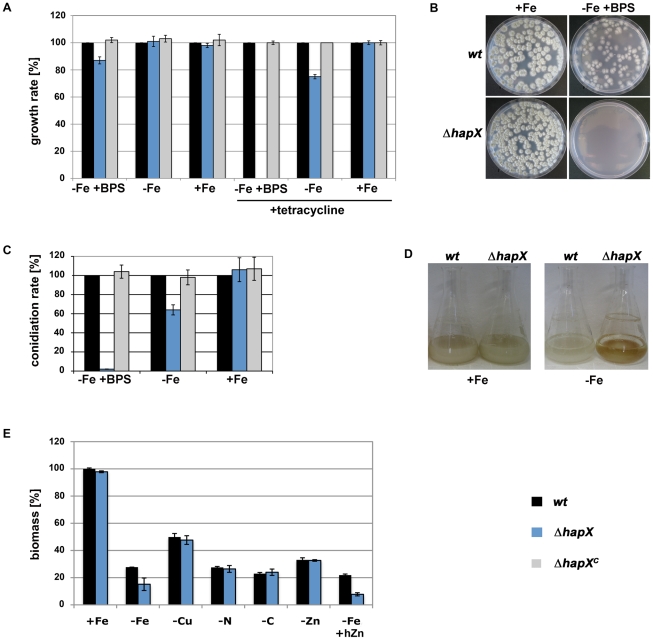
“HapX-deficiency also decreased resistance to tetracycline, an inhibitor of bacterial and mitochondrial protein synthesis [31], during iron-depleted but not iron-replete conditions (Fig.”
BackgroundThe Genetics of Aspergillus nidulans
Pontecorvo, G., Roper, J. A., Chemmons, L. M., Macdonald, K. D., & Bufton, A. W. J. (1953) · Advances in Genetics · doi:10.1016/s0065-2660(08)60408-3 · Cited by 2,302
Genomic sequence of the pathogenic and allergenic filamentous fungus Aspergillus fumigatus
Nierman, W. C., Pain, A., Anderson, M. J., Wortman, J. R., Kim, H. S., Arroyo, J., Berriman, M., Abe, K., Archer, D. B., Bermejo, C., et al. (2005) · Nature · doi:10.1038/nature04332 · Cited by 1,391 · cited 1×
“fumigatus Af293 DNA amplicon microarray containing 9,516 genes [47] was used in this study.”
MethodSelf-citationSchrettl, M., Bignell, E., Kragl, C., Joechl, C., Rogers, T., Arst, H. N., Haynes, K., & Haas, H. (2004) · The Journal of Experimental Medicine · doi:10.1084/jem.20041242 · Cited by 493 · cited 6×
“DsreA and DsidA were described previously [5,22]; generation of DhapX and DhapX is described below.”
BackgroundResultInfluentialSelf-citationSiderophores in Fungal Physiology and Virulence
Haas, H., Eisendle, M., & Turgeon, B. G. (2008) · Annual Review of Phytopathology · doi:10.1146/annurev.phyto.45.062806.094338 · Cited by 449 · cited 5×
“Siderophores are low molecular mass, ferric iron-specific chelators [6].”
BackgroundInfluentialSelf-citationPhilippe, B., Ibrahim-Granet, O., Prévost, M. C., Gougerot-Pocidalo, M. A., Sanchez Perez, M., Van der Meeren, A., & Latgé, J. P. (2003) · Infection and Immunity · doi:10.1128/iai.71.6.3034-3042.2003 · Cited by 415 · cited 1×
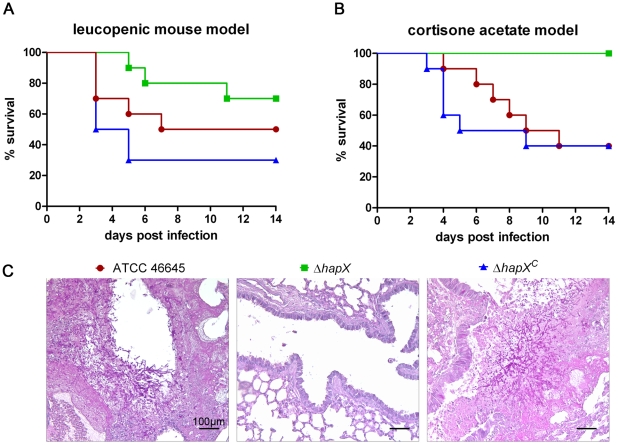
“fumigatus in the environment of the host, we compared the virulence of the DhapX strain with that of the complemented DhapX c strain and the wt strain in two different mouse models of pulmonary invasive aspergillosis: (i) a leucopenic mouse model using immunosuppression with both cortisone acetate and cyclophosphamide…”
MethodDistinct Roles for Intra- and Extracellular Siderophores during Aspergillus fumigatus Infection
Schrettl, M., Bignell, E., Kragl, C., Sabiha, Y., Loss, O., Eisendle, M., Wallner, A., Arst, H. N., Haynes, K., & Haas, H. (2007) · PLoS Pathogens · doi:10.1371/journal.ppat.0030128 · Cited by 405 · cited 7×
“fumigatus genes encoding respective enzyme activities have been identified [5,10]: sidA (N(5)-ornithine-monooxygenase), sidF (N(5)hydroxyornithine:cis-anhydromevalonyl coenzyme A-N(5)-transacylase), sidC (FC NRPS), sidD (fusarinine C NRPS) and sidG (fusarinine C:acetyl coenzyme A-N(2)-transacetylase).”
BackgroundResultInfluentialSelf-citationAspergillus fumigatus: saprophyte or pathogen?
Tekaia, F., & Latgé, J.-P. (2005) · Current Opinion in Microbiology · doi:10.1016/j.mib.2005.06.017 · Cited by 387 · cited 1×
“Nevertheless, it causes life-threatening invasive disease especially in immuno-compromised patients and has become the most common airborne fungal pathogen of humans [4].”
BackgroundOide, S., Moeder, W., Krasnoff, S., Gibson, D., Haas, H., Yoshioka, K., & Turgeon, B. G. (2006) · The Plant Cell · doi:10.1105/tpc.106.045633 · Cited by 351
Self-citationIron and immunity: a double-edged sword.
Weiss, G. (2002) · European Journal of Clinical Investigation · doi:10.1046/j.1365-2362.2002.0320s1070.x · Cited by 317 · cited 1×
“Moreover, the mammalian immune system utilizes iron-withholding mechanisms to deny invading microorganism’s access to free iron [2,3].”
BackgroundSreA‐mediated iron regulation in Aspergillus fumigatus
Schrettl, M., Kim, H. S., Eisendle, M., Kragl, C., Nierman, W. C., Heinekamp, T., Werner, E. R., Jacobsen, I., Illmer, P., Yi, H., et al. (2008) · Molecular Microbiology · doi:10.1111/j.1365-2958.2008.06376.x · Cited by 266
Self-citationBiogenesis of cytosolic ribosomes requires the essential iron–sulphur protein Rli1p and mitochondria
Kispal, G., Sipos, K., Lange, H., Fekete, Z., Bedekovics, T., Janáky, T., Bassler, J., Aguilar Netz, D. J., Balk, J., Rotte, C., et al. (2005) · The EMBO Journal · doi:10.1038/sj.emboj.7600541 · Cited by 234 · cited 1×
“Because of its fundamental role in translation initiation and ribosome biogenesis, RLI1 is one of the most conserved proteins present in all organisms except eubacteria and it is essential in all organisms tested [23].”
BackgroundInteraction of HapX with the CCAAT‐binding complex—a novel mechanism of gene regulation by iron
Hortschansky, P., Eisendle, M., Al‐Abdallah, Q., Schmidt, A. D., Bergmann, S., Thön, M., Kniemeyer, O., Abt, B., Seeber, B., Werner, E. R., et al. (2007) · The EMBO Journal · doi:10.1038/sj.emboj.7601752 · Cited by 232 · cited 2×
“However, several approaches to generate a DsreADhapX double mutant failed indicating that deletion of sreA and hapX is synthetically lethal as shown previously in A. nidulans (Hortschansky et al., 2007), which underlines the importance of iron regulation.”
BackgroundSelf-citationBalloy, V., Huerre, M., Latgé, J.-P., & Chignard, M. (2005) · Infection and Immunity · doi:10.1128/iai.73.1.494-503.2005 · Cited by 231 · cited 1×
“In contrast, the cortisone acetate model allows recruitment of neutrophils and monocytes, which, despite partially impaired phagocytosis, attack fungal cells and prevent rapid fungal dissemination [38].”
BackgroundJung, W. H., Sham, A., White, R., & Kronstad, J. W. (2006) · PLoS Biology · doi:10.1371/journal.pbio.0040410 · Cited by 222
Human Tear Lipocalin Exhibits Antimicrobial Activity by Scavenging Microbial Siderophores
Fluckinger, M., Haas, H., Merschak, P., Glasgow, B. J., & Redl, B. (2004) · Antimicrobial Agents and Chemotherapy · doi:10.1128/aac.48.9.3367-3372.2004 · Cited by 195 · cited 1×
“fumigatus conidia by lactoferrin-mediated iron depletion [15], and the human body produces proteins able to sequester fungal siderophores [16].”
BackgroundSelf-citationZarember, K. A., Sugui, J. A., Chang, Y. C., Kwon-Chung, K. J., & Gallin, J. I. (2007) · The Journal of Immunology · doi:10.4049/jimmunol.178.10.6367 · Cited by 186 · cited 1×
“fumigatus conidia by lactoferrin-mediated iron depletion [15], and the human body produces proteins able to sequester fungal siderophores [16].”
BackgroundOberegger, H., Schoeser, M., Zadra, I., Abt, B., & Haas, H. (2001) · Molecular Microbiology · doi:10.1046/j.1365-2958.2001.02586.x · Cited by 186 · cited 2×
“Analysis of siderophores, PpIX, and free amino acids Analysis of siderophore, PpIX and free amino acids was carried out by reversed phase HPLC as described previously [20,43,46].”
MethodSelf-citationMetabolic response to iron deficiency in Saccharomyces cerevisiae
Shakoury-Elizeh, M., Protchenko, O., Berger, A., Cox, J., Gable, K., Dunn, T. M., Prinz, W. A., Bard, M., & Philpott, C. C. (2010) · Journal of Biological Chemistry · doi:10.1074/jbc.m109.091710 · Cited by 182 · cited 1×
“cerevisiae only mildly [30] with low concordance to A.”
BackgroundHaas, H., Zadra, I., Stöffler, G., & Angermayr, K. (1999) · Journal of Biological Chemistry · doi:10.1074/jbc.274.8.4613 · Cited by 168 · cited 1×
“In Aspergillus nidulans, maintainance of iron homeostasis is mediated by two transcription factors, SreA and HapX, which are interconnected in a negative feed-back loop: SreA represses expression of hapX during iron sufficiency and HapX represses sreA during iron starvation [19,20].”
BackgroundSelf-citationEfficient PCR-based gene targeting with a recyclable marker for Aspergillus nidulans
Nielsen, M. L., Albertsen, L., Lettier, G., Nielsen, J. B., & Mortensen, U. H. (2006) · Fungal Genetics and Biology · doi:10.1016/j.fgb.2005.09.005 · Cited by 160
Kupfahl, C., Heinekamp, T., Geginat, G., Ruppert, T., Härtl, A., Hof, H., & Brakhage, A. A. (2006) · Molecular Microbiology · doi:10.1111/j.1365-2958.2006.05373.x · Cited by 157 · cited 2×
“fumigatus in the environment of the host, we compared the virulence of the DhapX strain with that of the complemented DhapX c strain and the wt strain in two different mouse models of pulmonary invasive aspergillosis: (i) a leucopenic mouse model using immunosuppression with both cortisone acetate and cyclophosphamide…”
MethodSelf-citationHost-Dependent Patterns of Tissue Injury in Invasive Pulmonary Aspergillosis
Stergiopoulou, T., Meletiadis, J., Roilides, E., Kleiner, D. E., Schaufele, R., Roden, M., Harrington, S., Dad, L., Segal, B., & Walsh, T. J. (2007) · American Journal of Clinical Pathology · doi:10.1309/ujrv9dlc11rm3g8r · Cited by 152 · cited 1×
“In the leucopenic host, a cellular immune response is virtually absent and development of invasive aspergillosis is characterized by extensive invasive growth of the fungus [37].”
BackgroundKontoyiannis, D. P., Chamilos, G., Lewis, R. E., Giralt, S., Cortes, J., Raad, I. I., Manning, J. T., & Han, X. (2007) · Cancer · doi:10.1002/cncr.22909 · Cited by 152 · cited 1×
“fumigatus, increased bone marrow iron stores represent an independent risk factor for invasive aspergillosis [14].”
BackgroundFungal ribotoxins: molecular dissection of a family of natural killers
Lacadena, J., Álvarez-García, E., Carreras-Sangrà, N., Herrero-Galán, E., Alegre-Cebollada, J., García-Ortega, L., Oñaderra, M., Gavilanes, J. G., & Martínez del Pozo, Á. (2007) · FEMS Microbiology Reviews · doi:10.1111/j.1574-6976.2006.00063.x · Cited by 146 · cited 1×
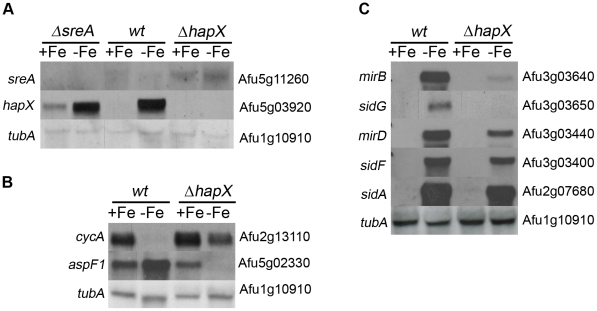
“fumigatus, the ribotoxin Aspf1 (Afu5g02330) [27].”
Hwang, L. H., Mayfield, J. A., Rine, J., & Sil, A. (2008) · PLoS Pathogens · doi:10.1371/journal.ppat.1000044 · Cited by 135 · cited 1×
“Recently, siderophores have also been implicated in virulence of Histoplasma capsulatum and various phytopathogenic ascomycetes [11,12,13].”
BackgroundCooperation of two mRNA-Binding proteins drives metabolic adaptation to iron deficiency
Puig, S., Vergara, S. V., & Thiele, D. J. (2008) · Cell Metabolism · doi:10.1016/j.cmet.2008.04.010 · Cited by 135 · cited 1×
“paralogous proteins Cth1 and Cth2, which promote decay of target mRNA’s during iron starvation [25].”
BackgroundHAAS, H., SCHOESER, M., LESUISSE, E., ERNST, J. F., PARSON, W., ABT, B., WINKELMANN, G., & OBEREGGER, H. (2003) · Biochemical Journal · doi:10.1042/bj20021685 · Cited by 134 · cited 1×
“Subsequent to chelation of iron, the ferric forms of FsC and TAFC are taken up by specific transporters [7].”
BackgroundSelf-citationWallner, A., Blatzer, M., Schrettl, M., Sarg, B., Lindner, H., & Haas, H. (2009) · Applied and Environmental Microbiology · doi:10.1128/aem.00479-09 · Cited by 124 · cited 1×
“fumigatus employs also intracellular siderophores: ferricrocin (FC) for hyphal storage and distribution of iron, and hydroxyferricrocin (HFC) for conidial iron storage [9,10].”
BackgroundSelf-citationThe Role of Iron In Protozoan and Fungal Infectious Diseases
WEINBERG, E. D. (1999) · Journal of Eukaryotic Microbiology · doi:10.1111/j.1550-7408.1999.tb05119.x · Cited by 115 · cited 1×
“Moreover, the mammalian immune system utilizes iron-withholding mechanisms to deny invading microorganism’s access to free iron [2,3].”
BackgroundMercier, A., Pelletier, B., & Labbé, S. (2006) · Eukaryotic Cell · doi:10.1128/ec.00199-06 · Cited by 113 · cited 1×
“cerevisiae, which employs entirely different regulators [6,21].”
Mercier, A., Watt, S., Bähler, J., & Labbé, S. (2008) · Eukaryotic Cell · doi:10.1128/ec.00446-07 · Cited by 104
Berger, H., Basheer, A., Böck, S., Reyes‐Dominguez, Y., Dalik, T., Altmann, F., & Strauss, J. (2008) · Molecular Microbiology · doi:10.1111/j.1365-2958.2008.06359.x · Cited by 91 · cited 1×
“Analysis of siderophores, PpIX, and free amino acids Analysis of siderophore, PpIX and free amino acids was carried out by reversed phase HPLC as described previously [20,43,46].”
MethodLiebmann, B., M�hleisen, T. W., M�ller, M., Hecht, M., Weidner, G., Braun, A. C., Brock, M., & Brakhage, A. A. (2004) · Archives of Microbiology · doi:10.1007/s00203-004-0667-3 · Cited by 89 · cited 2×
“fumigatus in the environment of the host, we compared the virulence of the DhapX strain with that of the complemented DhapX c strain and the wt strain in two different mouse models of pulmonary invasive aspergillosis: (i) a leucopenic mouse model using immunosuppression with both cortisone acetate and cyclophosphamide…”
MethodSelf-citationGREENSHIELDS, D. L., LIU, G., FENG, J., SELVARAJ, G., & WEI, Y. (2007) · Molecular Plant Pathology · doi:10.1111/j.1364-3703.2007.00401.x · Cited by 83 · cited 1×
“Recently, siderophores have also been implicated in virulence of Histoplasma capsulatum and various phytopathogenic ascomycetes [11,12,13].”
BackgroundKragl, C., Schrettl, M., Abt, B., Sarg, B., Lindner, H. H., & Haas, H. (2007) · Eukaryotic Cell · doi:10.1128/ec.00066-07 · Cited by 76 · cited 1×
“For release of iron, the siderophores are intracellularly hydrolyzed [8] and the iron is transferred to the metabolic machinery or stored.”
BackgroundSelf-citationMercier, A., & Labbé, S. (2009) · Journal of Biological Chemistry · doi:10.1074/jbc.m109.009563 · Cited by 74 · cited 1×
“pombe [20,26], these data suggest that the up-regulation of these genes in DsreA cells is caused by inactivation of HapX through the iron overload in DsreA.”
BackgroundIbrahim, A. S., Gebremariam, T., French, S. W., Edwards, J. E., & Spellberg, B. (2010) · Journal of Antimicrobial Chemotherapy · doi:10.1093/jac/dkp426 · Cited by 68 · cited 1×
“Consistently, the chelators EDTA and deferasirox enhance the efficacy of amphotericine B in animal models for invasive pulmonary aspergillosis [17,18].”
BackgroundSchrettl, M., Ibrahim-Granet, O., Droin, S., Huerre, M., Latgé, J.-P., & Haas, H. (2010) · Microbes and Infection · doi:10.1016/j.micinf.2010.07.005 · Cited by 67 · cited 1×
“fumigatus faces iron starvation after phagocytosis [39].”
Self-citationSchöbel, F., Jacobsen, I. D., & Brock, M. (2010) · Eukaryotic Cell · doi:10.1128/ec.00020-10 · Cited by 64
Self-citationSeifert, M., Nairz, M., Schroll, A., Schrettl, M., Haas, H., & Weiss, G. (2008) · Immunobiology · doi:10.1016/j.imbio.2008.07.010 · Cited by 51 · cited 1×
“In agreement, the siderophore system was shown to be essential to alter immune effector pathways and iron homeostasis of murine macrophages [40].”
BackgroundSelf-citationThe interplay between iron and zinc metabolism in Aspergillus fumigatus
Yasmin, S., Abt, B., Schrettl, M., Moussa, T. A. A., Werner, E. R., & Haas, H. (2009) · Fungal Genetics and Biology · doi:10.1016/j.fgb.2009.05.003 · Cited by 49 · cited 1×
“HapX inactivation increases zinc sensitivity We have previously shown that there is a close connection between zinc and iron metabolism [32].”
BackgroundSelf-citationA transformant of Aspergillus fumigatus deficient in the antigenic cytotoxin ASPFI
Paris, S. (1993) · FEMS Microbiology Letters · doi:10.1016/0378-1097(93)90178-5 · Cited by 44 · cited 1×
“fumigatus in a murine model of aspergillosis [29].”
BackgroundEDTA as an Adjunct Antifungal Agent for Invasive Pulmonary Aspergillosis in a Rodent Model
Hachem, R., Bahna, P., Hanna, H., Stephens, L. C., & Raad, I. (2006) · Antimicrobial Agents and Chemotherapy · doi:10.1128/aac.50.5.1823-1827.2006 · Cited by 37 · cited 1×
“Consistently, the chelators EDTA and deferasirox enhance the efficacy of amphotericine B in animal models for invasive pulmonary aspergillosis [17,18].”
BackgroundOk, M., Latgé, J., Bäuerlein, C. A., Ebel, F., Mezger, M., Topp, M. S., Kurzai, O., Killian, D., Kapp, M., Grigoleit, G.-U., et al. (2009) · Clinical and Vaccine Immunology · doi:10.1128/cvi.00175-08 · Cited by 20
Cited by
Aspergillus fumigatus and Aspergillosis in 2019
Latgé, J.-P., & Chamilos, G. (2019) · Clinical Microbiology Reviews · doi:10.1128/cmr.00140-18 · Cited by 1,400
Campoy, S., & Adrio, J. L. (2017) · Biochemical Pharmacology · doi:10.1016/j.bcp.2016.11.019 · Cited by 511
Aspergillus fumigatus morphology and dynamic host interactions
van de Veerdonk, F. L., Gresnigt, M. S., Romani, L., Netea, M. G., & Latgé, J.-P. (2017) · Nature Reviews Microbiology · doi:10.1038/nrmicro.2017.90 · Cited by 490
Synthesis, nature and utility of universal iron chelator – Siderophore: A review
Khan, A., Singh, P., & Srivastava, A. (2018) · Microbiological Research · doi:10.1016/j.micres.2017.10.012 · Cited by 413
Fungal siderophore metabolism with a focus on Aspergillus fumigatus
Haas, H. (2014) · Nat. Prod. Rep. · doi:10.1039/c4np00071d · Cited by 324
Self-citation
Metadata
- Authors
- Schrettl, M., Beckmann, N., Varga, J., Heinekamp, T., Jacobsen, I. D., Jöchl, C., Moussa, T. A., Wang, S., Gsaller, F., Blatzer, M., Werner, E. R., Niermann, W. C., Brakhage, A. A., & Haas, H.
- Affiliations
- Innsbruck Medical University (AT)
- J. Craig Venter Institute (US)
- Leibniz-Institut für Naturstoff-Forschung und Infektionsbiologie e. V. - Hans-Knöll-Institut (HKI) (DE)
- Corresponding author
- Haas, Hubertus
- ORCID
- Venue
- PLoS Pathogens
- Publisher
- Public Library of Science (PLoS)
- Published
- 2010-09-30
- Volume
- 6
- Issue
- 9
- Pages
- e1001124
- ISSN
- 1553-7366 (ISSN-L)
- 1553-7374
- PMC
- PMC2947994
- OpenAlex
- W1997487743
- Cited by
- 284
- References
- 48
- Citations by year
- 2026: 9 · 2025: 14 · 2024: 19 · 2023: 15 · 2022: 14 · 2021: 15 · 2020: 18 · 2019: 16 · 2018: 19 · 2017: 18 · 2016: 25 · 2015: 17 · 2014: 21 · 2013: 22 · 2012: 21
- FWCI
- 8.34
- Type
- journal article
- Language
- en
- Open access
- gold
- doi.org
- Locations
- PLoS Pathogens (publishedVersion, cc-by)
- PubMed Central (publishedVersion, cc-by)
- PubMed (publishedVersion)
- Research Explorer (The University of Manchester) (submittedVersion)
- DOAJ (DOAJ: Directory of Open Access Journals) (submittedVersion, cc-by-sa)
- Figshare (submittedVersion, cc-by)
- Funders
- Austrian Science Fund
- Topics
- Life Sciences › Biochemistry, Genetics and Molecular Biology › Molecular Biology › Fungal and yeast genetics research
- Health Sciences › Medicine › Infectious Diseases › Antifungal resistance and susceptibility
- Health Sciences › Medicine › Infectious Diseases › Fungal Infections and Studies
- Keywords
- Aspergillus fumigatus, iron starvation, virulence, siderophores, ornithine, transcriptional regulation, mitochondrial metabolism, iron-sulfur clusters, heme biosynthesis, tetracycline resistance, aspergillosis, opportunistic fungal pathogens
- MeSH terms
- Iron Deficiencies, Adaptation, Psychological, Allergens, Amino Acids, Animals, Anti-Bacterial Agents, Aspergillosis, Aspergillus fumigatus, Disease Models, Animal, DNA, Mitochondrial, Fungal Proteins, Ornithine, Repressor Proteins, RNA, Messenger, Tetracycline, Virulence, Blotting, Northern, Biomarkers, Gene Expression Regulation, Fungal, Survival Rate, Siderophores, Reverse Transcriptase Polymerase Chain Reaction, Oligonucleotide Array Sequence Analysis, Gene Expression Profiling, Drug Resistance, Fungal, Basic-Leucine Zipper Transcription Factors, GATA Transcription Factors, Mice, Antigens, Plant
About these checks
Registry, retraction, Cites and statistics results are computed, not judged, with one exception: a printed reference that no index lists is read once by a model before it counts as a citation error. Claims are extracted by a model and kept only when their quote appears verbatim in the text; each cited source is then checked, with a model’s help, for whether it says what the claim relies on. Those verdicts can be wrong — read the claim’s quote and the cited source before relying on one.
Statistics and arithmetic are recomputed, not judged.
Confidence bands are shown only for fields calibrated on our annotated test set. None is calibrated yet, so no band is shown.
What counts as a claim ›How we measure confidence ›How we check this ›
Are you an author, or do you see a problem with this page? Request a review
Data sources
Bibliographic data: Semantic Scholar, OpenAlex, Crossref.
Contains information from the Semantic Scholar Academic Graph Datasets, made available under the ODC Attribution License (ODC-BY 1.0).
Semantic Scholar’s data is described in: Kinney, R., et al. (2023). The Semantic Scholar Open Data Platform. arXiv:2301.10140.
