

The DOI matches its Crossref record; 58 of the 58 references it cites were found in a registry or an index.
HTLV-1 bZIP Factor Induces T-Cell Lymphoma and Systemic Inflammation In Vivo
Open accessAbstract
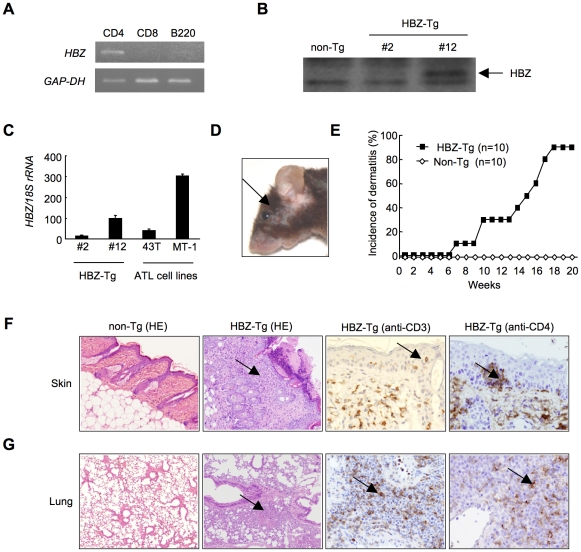
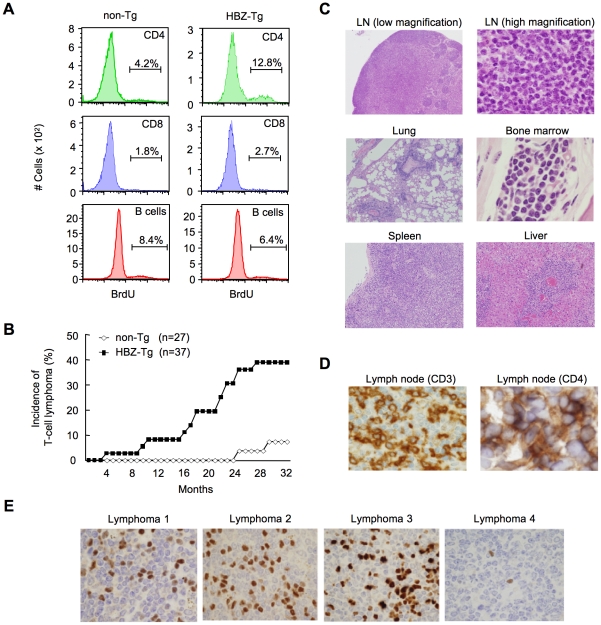
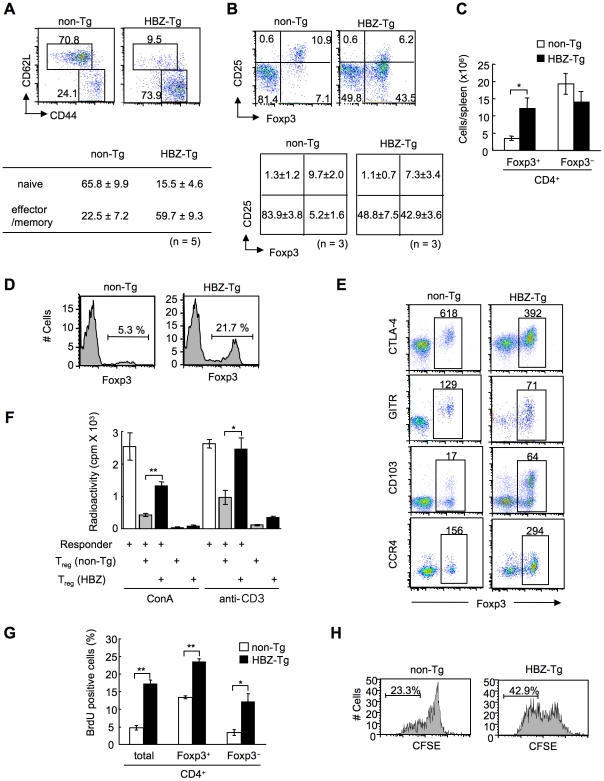
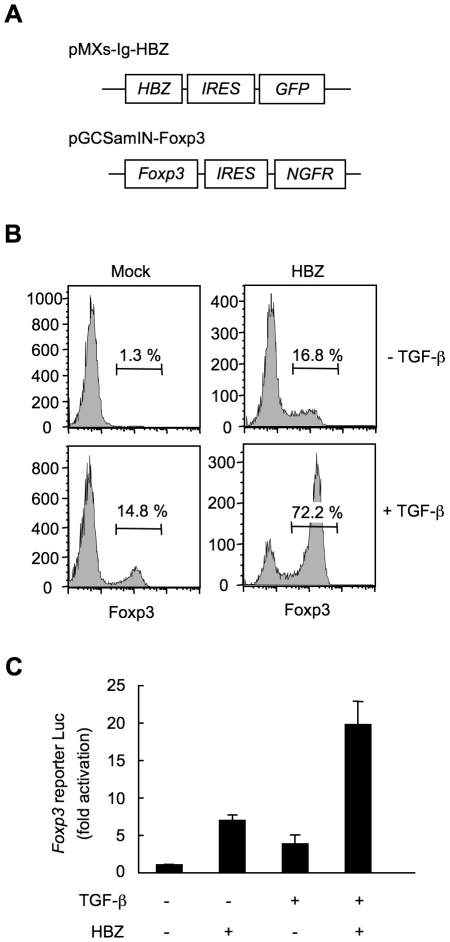
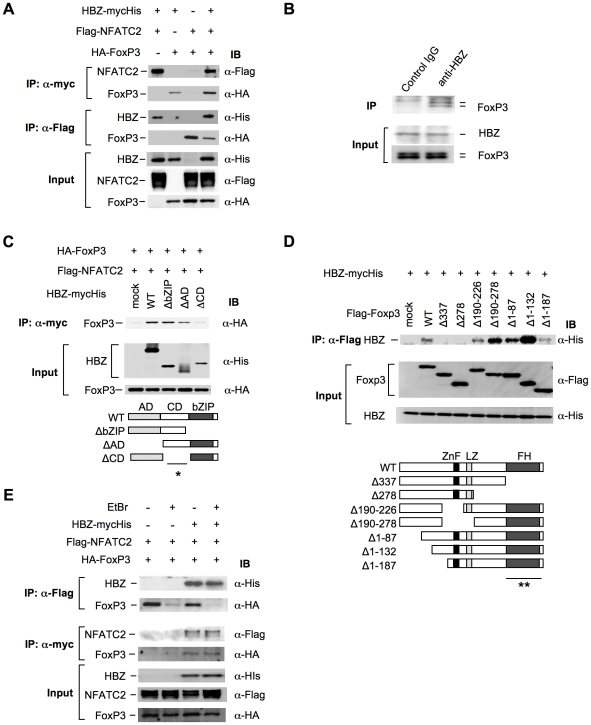
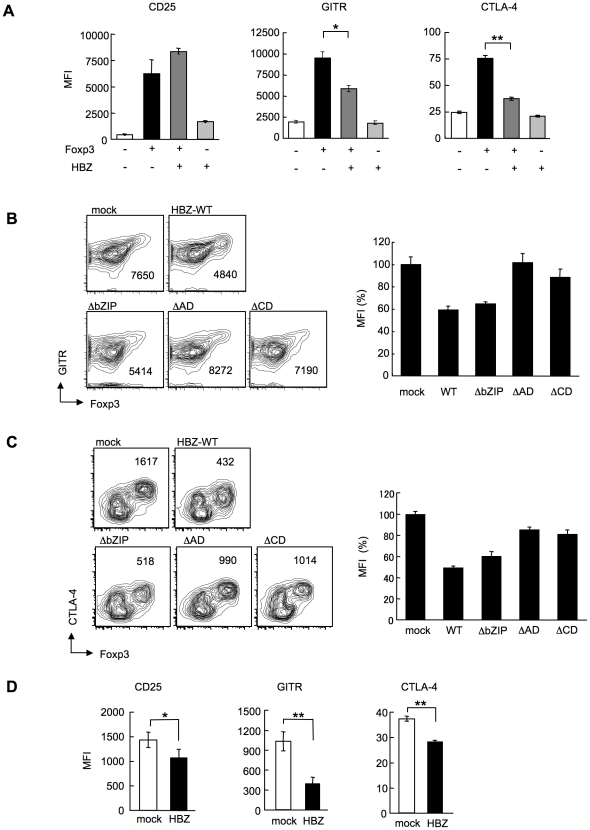
Human T-cell leukemia virus type 1 (HTLV-1) is the causal agent of a neoplastic disease of CD4+ T cells, adult T-cell leukemia (ATL), and inflammatory diseases including HTLV-1 associated myelopathy/tropical spastic paraparesis, dermatitis, and inflammatory lung diseases. ATL cells, which constitutively express CD25, resemble CD25+CD4+ regulatory T cells (T(reg)). Approximately 60% of ATL cases indeed harbor leukemic cells that express FoxP3, a key transcription factor for T(reg) cells. HTLV-1 encodes an antisense transcript, HTLV-1 bZIP factor (HBZ), which is expressed in all ATL cases. In this study, we show that transgenic expression of HBZ in CD4+ T cells induced T-cell lymphomas and systemic inflammation in mice, resembling diseases observed in HTLV-1 infected individuals. In HBZ-transgenic mice, CD4+Foxp3+ T(reg) cells and effector/memory CD4+ T cells increased in vivo. As a mechanism of increased T(reg) cells, HBZ expression directly induced Foxp3 gene transcription in T cells. The increased CD4+Foxp3+ T(reg) cells in HBZ transgenic mice were functionally impaired while their proliferation was enhanced. HBZ could physically interact with Foxp3 and NFAT, thereby impairing the suppressive function of T(reg) cells. Thus, the expression of HBZ in CD4+ T cells is a key mechanism of HTLV-1-induced neoplastic and inflammatory diseases.
Overview
The claims and statistics of this paper haven’t been checked yet.
Run the check — free, no account needed. It reads the open-access text and checks the sources it cites.
Integrity signals
Registry
Cites
Statistics
Figures
Verification
Claims the paper makes
The claims and statistics of this paper haven’t been checked yet.
Run the check — free, no account needed. It reads the open-access text and checks the sources it cites.
Claims other papers make about this one
Each is checked against this paper’s own text: does it say what the citing paper says it does?
The source backs part of the claim, not all of it — or backs it for a different population, condition or comparison.
In the citing paper
“Transgenic expression of HBZ in CD4+ T cells induced leukaemia and lymphoma following a long latent period [145].”
From Current State of Therapeutics for HTLV-1 (2024) · cites this paper as [145]
Experimental — accuracy not yet measured
Self-check
Percentages, sums and reported differences re-computed from the paper’s own numbers.
The self-check needs the paper’s full text.
Citations
Cites
Control of Regulatory T Cell Development by the Transcription Factor Foxp3
Hori, S., Nomura, T., & Sakaguchi, S. (2003) · Science · doi:10.1126/science.1079490 · Cited by 8,187
Self-citationFoxp3 programs the development and function of CD4+CD25+ regulatory T cells
Fontenot, J. D., Gavin, M. A., & Rudensky, A. Y. (2003) · Nature Immunology · doi:10.1038/ni904 · Cited by 7,745
Regulatory T Cells and Immune Tolerance
Sakaguchi, S., Yamaguchi, T., Nomura, T., & Ono, M. (2008) · Cell · doi:10.1016/j.cell.2008.05.009 · Cited by 5,485
Self-citationThe Role of Tumoral FOXP3 on Cell Proliferation, Migration, and Invasion in Gastric Cancer
Zhang, L., Xu, J., Zhang, X., Zhang, Y., Wang, L., Huang, X., & Xu, Z. (2017) · Cellular Physiology and Biochemistry · doi:10.1159/000479442 · Cited by 4,090
CTLA-4 Control over Foxp3 + Regulatory T Cell Function
Wing, K., Onishi, Y., Prieto-Martin, P., Yamaguchi, T., Miyara, M., Fehervari, Z., Nomura, T., & Sakaguchi, S. (2008) · Science · doi:10.1126/science.1160062 · Cited by 2,956
Self-citationAn essential role for Scurfin in CD4+CD25+ T regulatory cells
Khattri, R., Cox, T., Yasayko, S.-A., & Ramsdell, F. (2003) · Nature Immunology · doi:10.1038/ni909 · Cited by 2,860
ANTIBODIES TO HUMAN T-LYMPHOTROPIC VIRUS TYPE-I IN PATIENTS WITH TROPICAL SPASTIC PARAPARESIS
Gessain, A., Vernant, J. C., Maurs, L., Barin, F., Gout, O., Calender, A., & de Thé, G. (1985) · The Lancet · doi:10.1016/s0140-6736(85)92734-5 · Cited by 2,812
Sakaguchi, S. (2005) · Nature Immunology · doi:10.1038/ni1178 · Cited by 2,669
Self-citationHTLV-I ASSOCIATED MYELOPATHY, A NEW CLINICAL ENTITY
Osame, M., Usuku, K., Izumo, S., Ijichi, N., Amitani, H., Igata, A., Matsumoto, M., & Tara, M. (1986) · The Lancet · doi:10.1016/s0140-6736(86)91298-5 · Cited by 2,381
A function for interleukin 2 in Foxp3-expressing regulatory T cells
Fontenot, J. D., Rasmussen, J. P., Gavin, M. A., & Rudensky, A. Y. (2005) · Nature Immunology · doi:10.1038/ni1263 · Cited by 1,819
Induction of FoxP3 and acquisition of T regulatory activity by stimulated human CD4+CD25– T cells
Walker, M., Kasprowicz, D. J., Gersuk, V. H., Bénard, A., Landeghen, M. V., Buckner, J. H., & Ziegler, S. F. (2003) · Journal of Clinical Investigation · doi:10.1172/jci19441 · Cited by 1,242
FOXP3 Controls Regulatory T Cell Function through Cooperation with NFAT
Wu, Y., Borde, M., Heissmeyer, V., Feuerer, M., Lapan, A. D., Stroud, J. C., Bates, D. L., Guo, L., Han, A., Ziegler, S. F., et al. (2006) · Cell · doi:10.1016/j.cell.2006.05.042 · Cited by 1,229
Human T-cell leukaemia virus type 1 (HTLV-1) infectivity and cellular transformation
Matsuoka, M., & Jeang, K.-T. (2007) · Nature Reviews Cancer · doi:10.1038/nrc2111 · Cited by 829
Self-citationSmad3 and NFAT cooperate to induce Foxp3 expression through its enhancer
Tone, Y., Furuuchi, K., Kojima, Y., Tykocinski, M. L., Greene, M. I., & Tone, M. (2008) · Nature Immunology · doi:10.1038/ni1549 · Cited by 807
Spread of HTLV-I Between Lymphocytes by Virus-Induced Polarization of the Cytoskeleton
Igakura, T., Stinchcombe, J. C., Goon, P. K. C., Taylor, G. P., Weber, J. N., Griffiths, G. M., Tanaka, Y., Osame, M., & Bangham, C. R. M. (2003) · Science · doi:10.1126/science.1080115 · Cited by 755
Foxp3 controls regulatory T-cell function by interacting with AML1/Runx1
Ono, M., Yaguchi, H., Ohkura, N., Kitabayashi, I., Nagamura, Y., Nomura, T., Miyachi, Y., Tsukada, T., & Sakaguchi, S. (2007) · Nature · doi:10.1038/nature05673 · Cited by 683
Self-citationHTLV-I basic leucine zipper factor gene mRNA supports proliferation of adult T cell leukemia cells
Satou, Y., Yasunaga, J., Yoshida, M., & Matsuoka, M. (2006) · Proceedings of the National Academy of Sciences · doi:10.1073/pnas.0507631103 · Cited by 594
Self-citationThe tat Gene of Human T-Lymphotropic Virus Type 1 Induces Mesenchymal Tumors in Transgenic Mice
Nerenberg, M., Hinrichs, S. H., Reynolds, R. K., Khoury, G., & Jay, G. (1987) · Science · doi:10.1126/science.2888190 · Cited by 510
Gaudray, G., Gachon, F., Basbous, J., Biard‐Piechaczyk, M., Devaux, C. A., & Mesnard, J.-M. (2002) · Journal of Virology · doi:10.1128/jvi.76.24.12813-12822.2002 · Cited by 504
The Ubiquitous Glucose Transporter GLUT-1 Is a Receptor for HTLV
Manel, N., Kim, F. J., Kinet, S., Taylor, N. N., Sitbon, M., & Battini, J. (2003) · Cell · doi:10.1016/s0092-8674(03)00881-x · Cited by 486
Vukmanovic‐Stejic, M., Zhang, Y., Cook, J. E., Fletcher, J. M., McQuaid, A. J., Masters, J. E., Rustin, M. H. A., Taams, L. S., Beverley, P. C. L., Macallan, D. C., et al. (2006) · Journal of Clinical Investigation · doi:10.1172/jci28941 · Cited by 484
Lehmann, J., Huehn, J., de la Rosa, M., Maszyna, F., Kretschmer, U., Krenn, V., Brunner-Weinzierl, M. C., Scheffold, A., & Hamann, A. (2002) · Proceedings of the National Academy of Sciences · doi:10.1073/pnas.192162899 · Cited by 454
Surface phenotype of Japanese adult T-cell leukemia cells characterized by monoclonal antibodies
Hattori, T., Uchiyama, T., Toibana, T., Takatsuki, K., & Uchino, H. (1981) · Blood · doi:10.1182/blood.v58.3.645.bloodjournal583645 · Cited by 431
In vivo cellular tropism of human T-cell leukemia virus type 1
Richardson, J. H., Edwards, A. J., Cruickshank, J. K., Rudge, P., & Dalgleish, A. G. (1990) · Journal of Virology · doi:10.1128/jvi.64.11.5682-5687.1990 · Cited by 429
Sather, B. D., Treuting, P. R., Perdue, N., Miazgowicz, M. M., Fontenot, J. D., Rudensky, A. Y., & Campbell, D. (2007) · The Journal of Experimental Medicine · doi:10.1084/jem.20070081 · Cited by 406
Molecular mechanisms of cellular transformation by HTLV-1 Tax
Grassmann, R., Aboud, M., & Jeang, K. (2005) · Oncogene · doi:10.1038/sj.onc.1208978 · Cited by 384
Development of leukemia in mice transgenic for the tax gene of human T-cell leukemia virus type I.
Grossman, W. J., Kimata, J. T., Wong, F.-H., Zutter, M. M., Ley, T. J., & Ratner, L. (1995) · Proceedings of the National Academy of Sciences · doi:10.1073/pnas.92.4.1057 · Cited by 363
Pais-Correia, A.-M., Sachse, M., Guadagnini, S., Robbiati, V., Lasserre, R., Gessain, A., Gout, O., Alcover, A., & Thoulouze, M.-I. (2010) · Nature Medicine · doi:10.1038/nm.2065 · Cited by 344
Wattel, E., Vartanian, J., Pannetier, C., & Wain–Hobson, S. (1995) · Journal of Virology · doi:10.1128/jvi.69.5.2863-2868.1995 · Cited by 314
Karube, K., Ohshima, K., Tsuchiya, T., Yamaguchi, T., Kawano, R., Suzumiya, J., Utsunomiya, A., Harada, M., & Kikuchi, M. (2004) · British Journal of Haematology · doi:10.1111/j.1365-2141.2004.04999.x · Cited by 292
Self-citationCell-free HTLV-1 infects dendritic cells leading to transmission and transformation of CD4+ T cells
Jones, K. S., Petrow-Sadowski, C., Huang, Y. K., Bertolette, D. C., & Ruscetti, F. W. (2008) · Nature Medicine · doi:10.1038/nm1745 · Cited by 284
Hasegawa, H., Sawa, H., Lewis, M. J., Orba, Y., Sheehy, N., Yamamoto, Y., Ichinohe, T., Tsunetsugu‐Yokota, Y., Katano, H., Takahashi, H., et al. (2006) · Nature Medicine · doi:10.1038/nm1389 · Cited by 282
Hanon, E., Hall, S., Taylor, G. P., Saito, M., Davis, R., Tanaka, Y., Usuku, K., Osame, M., Weber, J. N., & Bangham, C. R. M. (2000) · Blood · doi:10.1182/blood.v95.4.1386.004k22_1386_1392 · Cited by 276
T-LYMPHOCYTE ALVEOLITIS IN HTLV-I-ASSOCIATED MYELOPATHY
Sugimoto, M., Nakashima, H., Watanabe, S., Uyama, E., Tanaka, F., Ando, M., Araki, S., & Kawasaki, S. (1987) · The Lancet · doi:10.1016/s0140-6736(87)91362-6 · Cited by 239
Interleukin-2 receptor (Tac antigen) expressed on adult T cell leukemia cells.
Uchiyama, T., Hori, T., Tsudo, M., Wano, Y., Umadome, H., Tamori, S., Yodoi, J., Maeda, M., Sawami, H., & Uchino, H. (1985) · Journal of Clinical Investigation · doi:10.1172/jci111992 · Cited by 237
In Vivo Infection of Human T-Cell Leukemia Virus Type I in Non-T Cells
Koyanagi, Y., Itoyama, Y., Nakamura, N., Takamatsu, K., Kira, J., Iwamasa, T., Goto, I., & Yamamoto, N. (1993) · Virology · doi:10.1006/viro.1993.1451 · Cited by 229
Discovery of adult T-cell leukemia
Takatsuki, K. (2005) · Retrovirology · doi:10.1186/1742-4690-2-16 · Cited by 222
Jones, K. S., Petrow‐Sadowski, C., Bertolette, D. C., Huang, Y., & Ruscetti, F. W. (2005) · Journal of Virology · doi:10.1128/jvi.79.20.12692-12702.2005 · Cited by 211
Human T-cell leukemia virus type-1 antisense-encoded gene, Hbz, promotes T-lymphocyte proliferation
Arnold, J., Zimmerman, B., Li, M., Lairmore, M. D., & Green, P. L. (2008) · Blood · doi:10.1182/blood-2008-04-154286 · Cited by 207
Self-citationThe discovery of the first human retrovirus: HTLV-1 and HTLV-2
Gallo, R. C. (2005) · Retrovirology · doi:10.1186/1742-4690-2-17 · Cited by 200
Saito, M., Matsuzaki, T., Satou, Y., Yasunaga, J.-I., Saito, K., Arimura, K., Matsuoka, M., & Ohara, Y. (2009) · Retrovirology · doi:10.1186/1742-4690-6-19 · Cited by 184
Self-citationPersistent clonal proliferation of human T-lymphotropic virus type I-infected cells in vivo.
Etoh, K., Tamiya, S., Yamaguchi, K., Okayama, A., Tsubouchi, H., IDETA, T., Mueller, N. E., Takatsuki, K., & Matsuoka, M. (1997) · PubMed · Cited by 182
Self-citationYamano, Y., Takenouchi, N., Li, H., Tomaru, U., Yao, K., Grant, C. W., Maric, D., & Jacobson, S. (2005) · Journal of Clinical Investigation · doi:10.1172/jci23913 · Cited by 168
HTLV-1 uses HSPG and neuropilin-1 for entry by molecular mimicry of VEGF165
Lambert, S., Bouttier, M., Vassy, R., Seigneuret, M., Petrow‐Sadowski, C., Janvier, S., Heveker, N., Ruscetti, F. W., Perret, G. Y., Jones, K. S., et al. (2009) · Blood · doi:10.1182/blood-2008-04-150342 · Cited by 160
Yasunaga, J., Sakai, T., Nosaka, K., Etoh, K., Tamiya, S., Koga, S., Mita, S., Uchino, M., Mitsuya, H., & Matsuoka, M. (2001) · Blood · doi:10.1182/blood.v97.10.3177 · Cited by 160
Self-citationRECOMMENDED DIETARY ALLOWANCES FOR EUROPE
HAUTVAST, J. G. A. J., Baya, C., Backer, G. G. D., Durnin, J. V. G. A., Ghione, S., Gustafsson, J.-Å., Leitzmann, C., Trichopoulou, A., Cruz, J. A. A., Ducimetière, P., et al. (1989) · The Lancet · doi:10.1016/s0140-6736(89)91827-8 · Cited by 157
Human T-cell Leukemia Virus minus strand transcription in infected T-cells
LaRocca, D., Chao, L. A., Seto, M. H., & Brunck, T. K. (1989) · Biochemical and Biophysical Research Communications · doi:10.1016/0006-291x(89)92322-x · Cited by 150
Toulza, F., Heaps, A. G., Tanaka, Y., Taylor, G. P., & Bangham, C. R. M. (2007) · Blood · doi:10.1182/blood-2007-10-118539 · Cited by 135
APOBEC3G Generates Nonsense Mutations in Human T-Cell Leukemia Virus Type 1 Proviral Genomes In Vivo
Fan, J., Ma, G., Nosaka, K., Tanabe, J., Satou, Y., Koito, A., Wain-Hobson, S., Vartanian, J.-P., & Matsuoka, M. (2010) · Journal of Virology · doi:10.1128/jvi.02239-09 · Cited by 130
Self-citationThe life span of naive alpha/beta T cells in secondary lymphoid organs.
von Boehmer, H., & Hafen, K. (1993) · The Journal of Experimental Medicine · doi:10.1084/jem.177.4.891 · Cited by 124
Cutaneous manifestations associated with HTLV‐1 infection
Bittencourt, A. L., & de Oliveira, M. D. F. P. (2010) · International Journal of Dermatology · doi:10.1111/j.1365-4632.2010.04568.x · Cited by 89
Chae, W., Henegariu, O., Lee, S., & Bothwell, A. L. M. (2006) · Proceedings of the National Academy of Sciences · doi:10.1073/pnas.0600225103 · Cited by 89
Toulza, F., Nosaka, K., Takiguchi, M., Pagliuca, T., Mitsuya, H., Tanaka, Y., Taylor, G. P., & Bangham, C. R. M. (2009) · International Journal of Cancer · doi:10.1002/ijc.24664 · Cited by 70
Animal models for human T-lymphotropic virus type 1 (HTLV-1) infection and transformation
Lairmore, M. D., Silverman, L. R., & Ratner, L. (2005) · Oncogene · doi:10.1038/sj.onc.1208974 · Cited by 68
Ishimoto, Y., Tomiyama‐Miyaji, C., Watanabe, H., Yokoyama, H., Ebe, K., Tsubata, S., Aoyagi, Y., & Abo, T. (2004) · Immunology · doi:10.1111/j.1365-2567.2004.01961.x · Cited by 62
Shimauchi, T., Kabashima, K., & TOKURA, Y. (2007) · Cancer Science · doi:10.1111/j.1349-7006.2007.00646.x · Cited by 56
HTLV Gene Regulation: Because Size Matters, Transcription is Not Enough
Journo, C., Douceron, E., & Mahieux, R. (2009) · Future Microbiology · doi:10.2217/fmb.09.13 · Cited by 55
Asano, T., Tomooka, S., Serushago, B., Himeno, K., & Nomoto, K. (1988) · PubMed Central · Cited by 26
Cited by
Sorted by citations
Historical review of the causes of cancer
Blackadar, C. B. (2016) · World Journal of Clinical Oncology · doi:10.5306/wjco.v7.i1.54 · Cited by 418
Aida, Y., Murakami, H., Takahashi, M., & Takeshima, S. (2013) · Frontiers in Microbiology · doi:10.3389/fmicb.2013.00328 · Cited by 231
Watanabe, T. (2017) · Blood · doi:10.1182/blood-2016-09-692574 · Cited by 190
Immunological homeostasis of the eye
Mochizuki, M., Sugita, S., & Kamoi, K. (2012) · Progress in Retinal and Eye Research · doi:10.1016/j.preteyeres.2012.10.002 · Cited by 178
HTLV-1 Infection and Adult T-Cell Leukemia/Lymphoma—A Tale of Two Proteins: Tax and HBZ
Giam, C., & Semmes, O. J. (2016) · Viruses · doi:10.3390/v8060161 · Cited by 171
Metadata
- Authors
- Satou, Y., Yasunaga, J.-I., Zhao, T., Yoshida, M., Miyazato, P., Takai, K., Shimizu, K., Ohshima, K., Green, P. L., Ohkura, N., Yamaguchi, T., Ono, M., Sakaguchi, S., & Matsuoka, M.
- Affiliations
- Kyoto University (JP)
- Kurume University (JP)
- The Ohio State University (US)
- Corresponding author
- Matsuoka, Masao
- ORCID
- Venue
- PLoS Pathogens
- Publisher
- Public Library of Science (PLoS)
- Published
- 2011-02-10
- Volume
- 7
- Issue
- 2
- Pages
- e1001274
- ISSN
- 1553-7366 (ISSN-L)
- 1553-7374
- PMC
- PMC3037353
- OpenAlex
- W1966278500
- Cited by
- 319
- References
- 58
- Citations by year
- 2026: 10 · 2025: 18 · 2024: 11 · 2023: 15 · 2022: 27 · 2021: 31 · 2020: 21 · 2019: 19 · 2018: 14 · 2017: 32 · 2016: 21 · 2015: 19 · 2014: 19 · 2013: 21 · 2012: 22
- FWCI
- 11.50
- Type
- journal article
- Language
- en
- Open access
- gold
- doi.org
- Locations
- PLoS Pathogens (publishedVersion, cc-by)
- PubMed Central (publishedVersion, cc-by)
- PubMed (publishedVersion)
- Institutional Repositories DataBase (IRDB) (submittedVersion, other-oa)
- DOAJ (DOAJ: Directory of Open Access Journals) (submittedVersion, cc-by-sa)
- UCL Discovery (University College London) (submittedVersion)
- Figshare (submittedVersion, cc-by)
- Kyoto University Research Information Repository (Kyoto University) (submittedVersion, cc-by)
- Funders
- Naito Foundation
- Sumitomo Foundation
- Uehara Memorial Foundation
- National Institutes of Health
- Japan Society for the Promotion of Science (22390193)
- National Cancer Institute (CA077556, R01CA077556)
- Topics
- Life Sciences › Immunology and Microbiology › Immunology › T-cell and Retrovirus Studies
- Life Sciences › Immunology and Microbiology › Immunology › T-cell and B-cell Immunology
- Health Sciences › Medicine › Oncology › Viral-associated cancers and disorders
- Keywords
- HTLV-1, bZIP transcription factors, HBZ, adult T-cell leukemia/lymphoma, T-cell lymphoma, regulatory T cells, Foxp3, NFAT, systemic inflammation, CD4+ T cells, transgenic mice, HTLV-1-associated myelopathy/tropical spastic paraparesis, transcriptional regulation
- MeSH terms
- Adult, Animals, Cell Transformation, Viral, Cells, Cultured, Gene Expression Regulation, Humans, Inflammation, Mice, Inbred C57BL, Mice, Transgenic, Human T-lymphotropic virus 1, HTLV-I Infections, CD4-Positive T-Lymphocytes, Lymphoma, T-Cell, Basic-Leucine Zipper Transcription Factors, Mice
About these checks
Registry, retraction, Cites and statistics results are computed, not judged, with one exception: a printed reference that no index lists is read once by a model before it counts as a citation error. Claims are extracted by a model and kept only when their quote appears verbatim in the text; each cited source is then checked, with a model’s help, for whether it says what the claim relies on. Those verdicts can be wrong — read the claim’s quote and the cited source before relying on one.
Statistics and arithmetic are recomputed, not judged.
Confidence bands are shown only for fields calibrated on our annotated test set. None is calibrated yet, so no band is shown.
What counts as a claim ›How we measure confidence ›How we check this ›
Are you an author, or do you see a problem with this page? Request a review
