

Brain Inositol Is a Novel Stimulator for Promoting Cryptococcus Penetration of the Blood-Brain Barrier
Open accessThe DOI matches its Crossref record; 80 of the 80 references it cites were found in a registry or an index.
Abstract
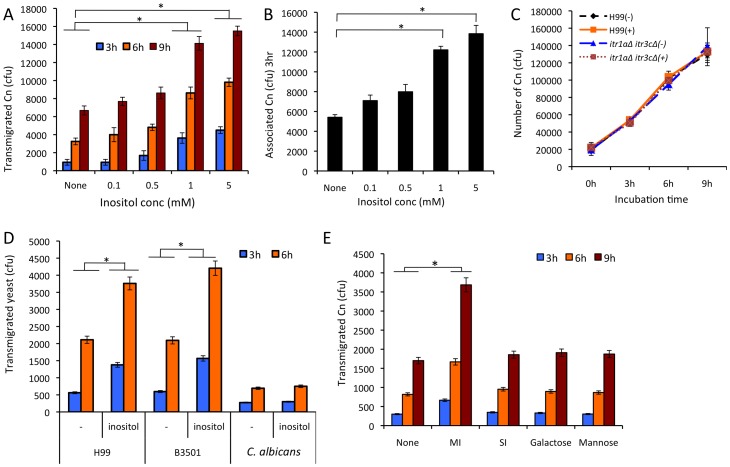
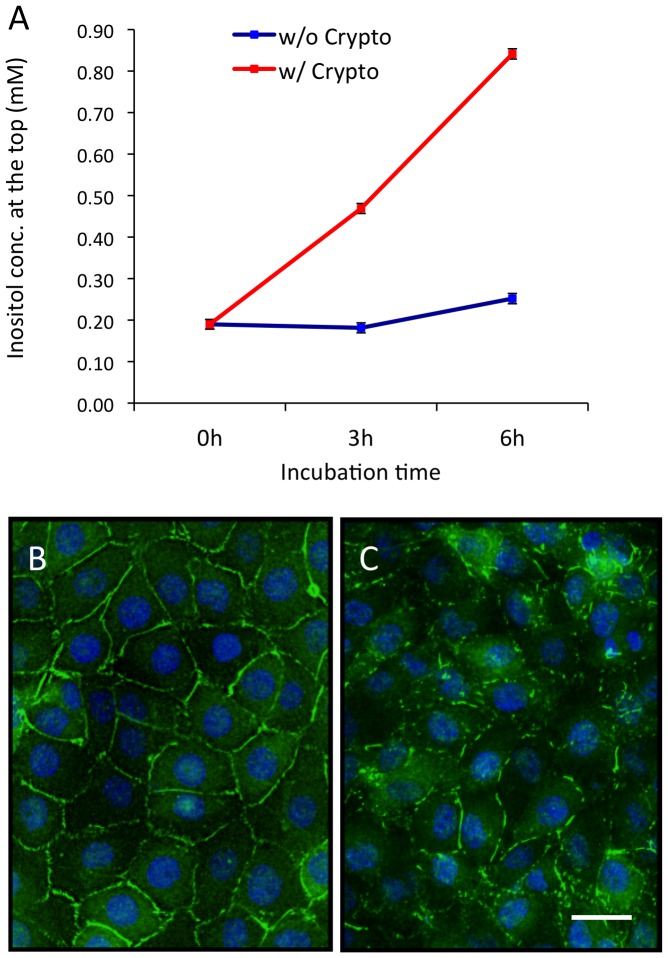
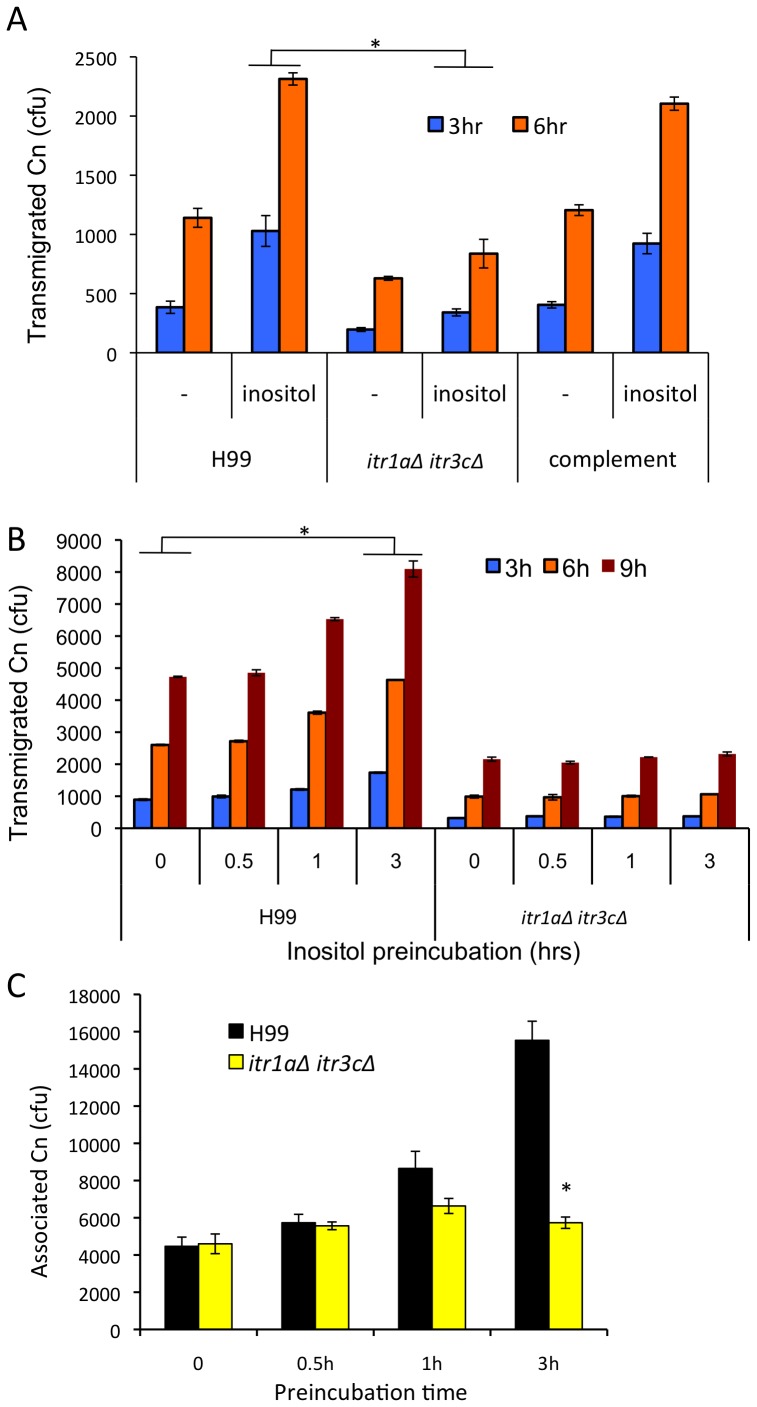
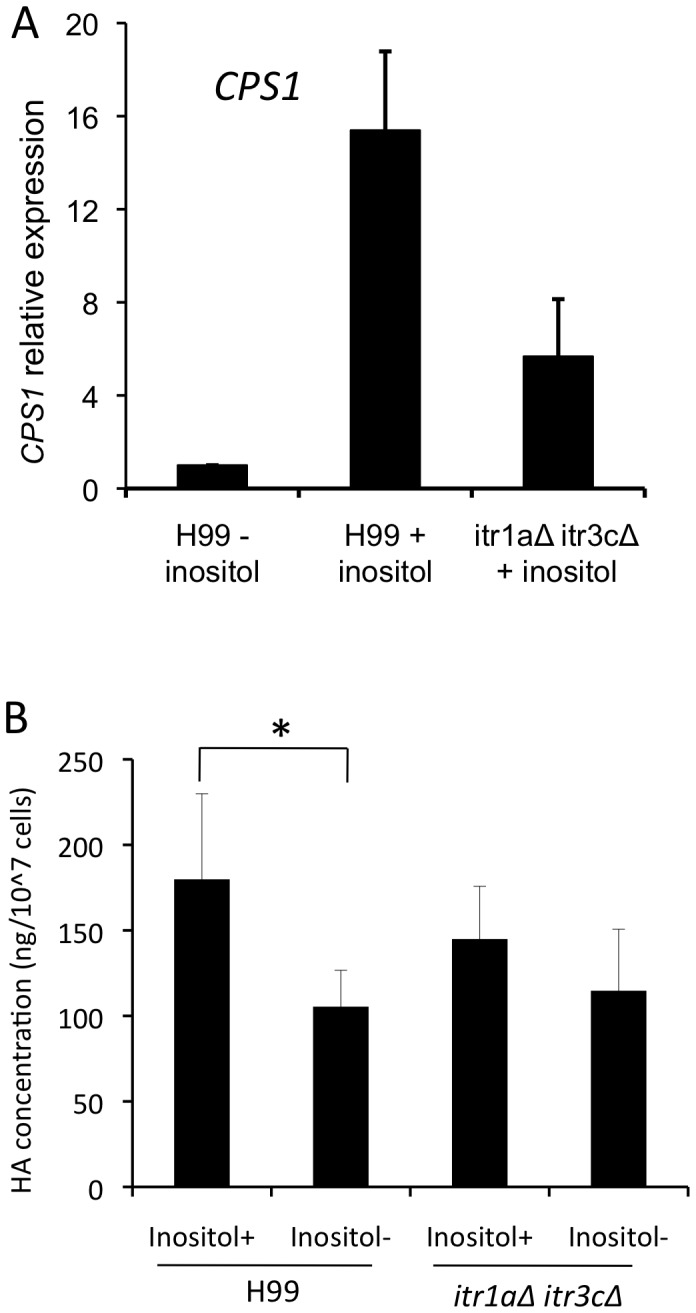
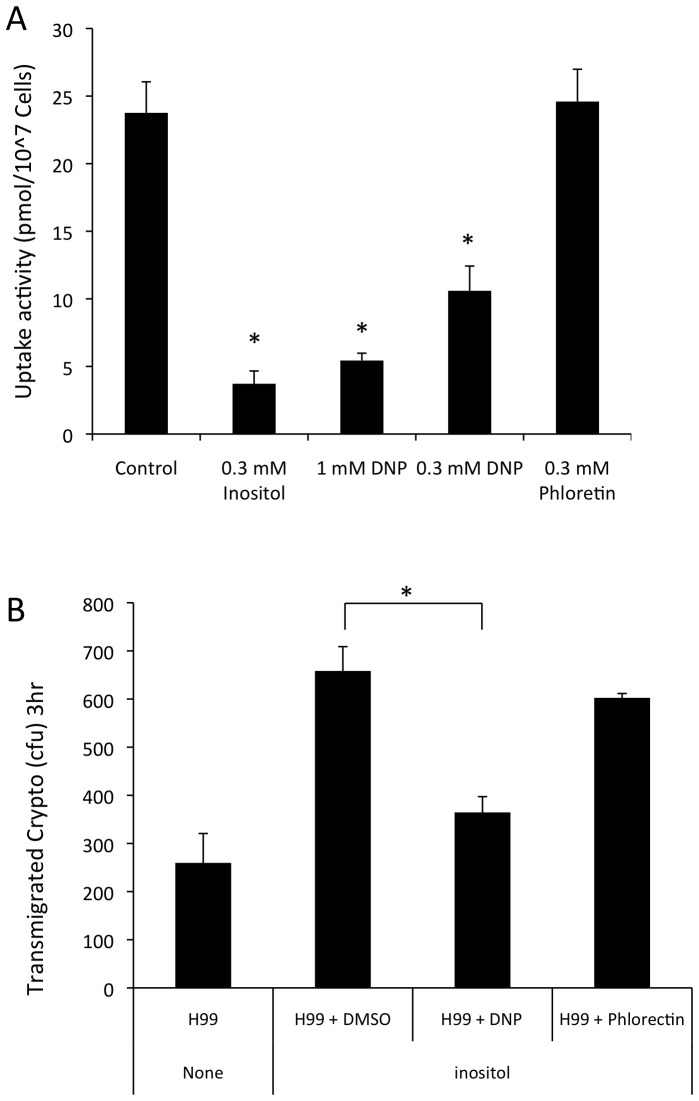
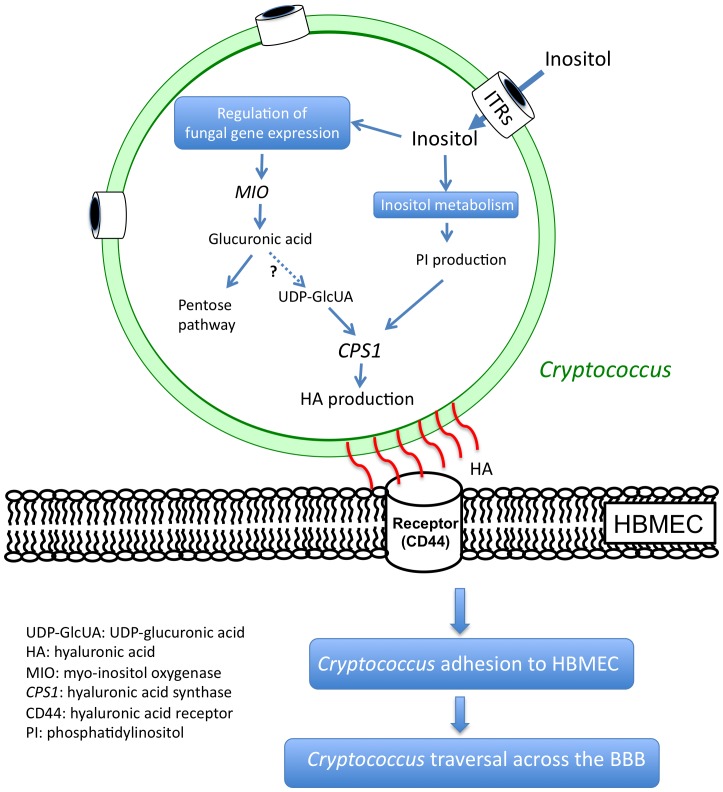
Cryptococcus neoformans is the most common cause of fungal meningitis, with high mortality and morbidity. The reason for the frequent occurrence of Cryptococcus infection in the central nervous system (CNS) is poorly understood. The facts that human and animal brains contain abundant inositol and that Cryptococcus has a sophisticated system for the acquisition of inositol from the environment suggests that host inositol utilization may contribute to the development of cryptococcal meningitis. In this study, we found that inositol plays an important role in Cryptococcus traversal across the blood-brain barrier (BBB) both in an in vitro human BBB model and in in vivo animal models. The capacity of inositol to stimulate BBB crossing was dependent upon fungal inositol transporters, indicated by a 70% reduction in transmigration efficiency in mutant strains lacking two major inositol transporters, Itr1a and Itr3c. Upregulation of genes involved in the inositol catabolic pathway was evident in a microarray analysis following inositol treatment. In addition, inositol increased the production of hyaluronic acid in Cryptococcus cells, which is a ligand known to binding host CD44 receptor for their invasion. These studies suggest an inositol-dependent Cryptococcus traversal of the BBB, and support our hypothesis that utilization of host-derived inositol by Cryptococcus contributes to CNS infection.
Overview
The claims and statistics of this paper haven’t been checked yet.
Free: it reads the open-access text and checks the first 5 claims that cite a source we can check. Create a free account to check every claim.
Integrity signals
Registry
Cites
Statistics
Figures
Verification
Claims the paper makes
The claims and statistics of this paper haven’t been checked yet.
Free: it reads the open-access text and checks the first 5 claims that cite a source we can check. Create a free account to check every claim.
Claims other papers make about this one
Each is checked against this paper’s own text: does it say what the citing paper says it does?
The cited source says what the claim attributes to it.
In the citing paper
“To complement histology and intravital microscopy, colony forming unit (CFU) determination has been used to study fungal dissemination in vivo [139, 141, 145, 151].”
From Mechanisms of fungal dissemination (2021) · cites this paper as [141]
In the citing paper
“Interestingly, in response to the high levels of inositol found in mammalian brains, C. neoformans upregulates its expression of CPS1 leading to an increased production of HA, and an enhanced association of cryptococcal cells and HBMECs [141].”
From Mechanisms of fungal dissemination (2021) · cites this paper as [141]
Self-check
Percentages, sums and reported differences re-computed from the paper’s own numbers.
The self-check needs the paper’s full text.
Citations
Cites
Perfect, J. R., Dismukes, W. E., Dromer, F., Goldman, D. L., Graybill, J. R., Hamill, R. J., Harrison, T. S., Larsen, R. A., Lortholary, O., Nguyen, M.-H., et al. (2010) · Clinical Infectious Diseases · doi:10.1086/649858 · Cited by 2,660 · cited 1×
“Despite its medical importance and significant research efforts [3,8,9,10], the molecular basis of cryptococcal CNS infection and host factors affecting disease development are poorly understood, which complicates efforts for rapid diagnosis and effective treatment.”
Self-citationPark, B. J., Wannemuehler, K. A., Marston, B. J., Govender, N., Pappas, P. G., & Chiller, T. M. (2009) · AIDS · doi:10.1097/qad.0b013e328322ffac · Cited by 2,014
Mechanisms of enzymatic glycoside hydrolysis
McCarter, J. D., & Stephen Withers, G. (1994) · Current Opinion in Structural Biology · doi:10.1016/0959-440x(94)90271-2 · Cited by 883
Casadevall, A., & Perfect, J. R. (1998) · ASM Press eBooks · doi:10.1128/9781555818241 · Cited by 661
Self-citationThe Saccharomyces cerevisiae Lipin Homolog Is a Mg2+-dependent Phosphatidate Phosphatase Enzyme*
Han, G.-S., Wu, W.-I., & Carman, G. M. (2006) · Journal of Biological Chemistry · doi:10.1074/jbc.m600425200 · Cited by 557
Urease as a Virulence Factor in Experimental Cryptococcosis
Cox, G. M., Mukherjee, J., Cole, G. T., Casadevall, A., & Perfect, J. R. (2000) · Infection and Immunity · doi:10.1128/iai.68.2.443-448.2000 · Cited by 522 · cited 2×
“Several factors, including urease [30,31], phospholipase B1 [32,33], as well as host plasmin [34], have been reported to be involved in the Cryptococcus invasion of the BBB.”
Self-citationGraybill, J. R., Sobel, J., Saag, M., van der Horst, C., Powderly, W., Cloud, G., Riser, L., Hamill, R., Dismukes, W., & NIAID Mycoses Study Group and AIDS Cooperative Treatment Groups (2000) · Clinical Infectious Diseases · doi:10.1086/313603 · Cited by 486
Cryptococcus neoformans mating and virulence are regulated by the G-protein α subunit GPA1 and cAMP
Alspaugh, J. A., Perfect, J. R., & Heitman, J. (1997) · Genes & Development · doi:10.1101/gad.11.23.3206 · Cited by 400
Self-citationFisher, S. K., Novak, J. E., & Agranoff, B. W. (2002) · Journal of Neurochemistry · doi:10.1046/j.1471-4159.2002.01041.x · Cited by 392
Chayakulkeeree, M., & Perfect, J. R. (2006) · Infectious Disease Clinics of North America · doi:10.1016/j.idc.2006.07.001 · Cited by 378
Self-citation
Cited by
Cryptococcus: from environmental saprophyte to global pathogen
May, R. C., Stone, N. R. H., Wiesner, D. L., Bicanic, T., & Nielsen, K. (2016) · Nature Reviews Microbiology · doi:10.1038/nrmicro.2015.6 · Cited by 541
Basic principles of the virulence of Cryptococcus
Zaragoza, O. (2019) · Virulence · doi:10.1080/21505594.2019.1614383 · Cited by 249
“secretion of hyaluronic acid, and some metalloproteases [56,169,170,171].”
BackgroundTrojan Horse Transit Contributes to Blood-Brain Barrier Crossing of a Eukaryotic Pathogen
Santiago-Tirado, F. H., Onken, M. D., Cooper, J. A., Klein, R. S., & Doering, T. L. (2017) · mBio · doi:10.1128/mbio.02183-16 · Cited by 238
Konradt, C., Ueno, N., Christian, D. A., Delong, J. H., Pritchard, G. H., Herz, J., Bzik, D. J., Koshy, A. A., McGavern, D. B., Lodoen, M. B., et al. (2016) · Nature Microbiology · doi:10.1038/nmicrobiol.2016.1 · Cited by 193
Kim, J., Lee, K.-T., Lee, J. S., Shin, J., Cui, B., Yang, K., Choi, Y. S., Choi, N., Lee, S. H., Lee, J.-H., et al. (2021) · Nature Biomedical Engineering · doi:10.1038/s41551-021-00743-8 · Cited by 172
Self-citation
Metadata
- Authors
- Liu, T.-B., Kim, J.-C., Wang, Y., Toffaletti, D. L., Eugenin, E., Perfect, J. R., Kim, K. J., & Xue, C.
- Affiliations
- Rutgers New Jersey Medical School (US)
- University of Kansas Medical Center (US)
- Duke University (US)
- Corresponding author
- Kim, Kee Jun
- Xue, Chaoyang
- Venue
- PLoS Pathogens
- Publisher
- Public Library of Science (PLoS)
- Published
- 2013-04-04
- Volume
- 9
- Issue
- 4
- Pages
- e1003247
- ISSN
- 1553-7366 (ISSN-L)
- 1553-7374
- PMC
- PMC3617100
- OpenAlex
- W2083908866
- Cited by
- 89
- References
- 80
- Citations by year
- 2026: 6 · 2025: 8 · 2024: 7 · 2023: 3 · 2022: 10 · 2021: 6 · 2020: 7 · 2019: 8 · 2018: 7 · 2017: 9 · 2016: 4 · 2015: 10 · 2014: 4
- FWCI
- 4.37
- Type
- journal article
- Language
- en
- Open access
- gold
- doi.org
- Locations
- PLoS Pathogens (publishedVersion, cc-by)
- Europe PMC (PubMed Central) (publishedVersion, cc-by)
- PubMed Central (publishedVersion, cc-by)
- PubMed (publishedVersion)
- DOAJ (DOAJ: Directory of Open Access Journals) (submittedVersion, cc-by-sa)
- Figshare (submittedVersion, cc-by)
- Funders
- American Heart Association (12SDG9110034)
- U.S. Public Health Service (R01A17386)
- National Institute of Mental Health (R01MH096625)
- National Institute on Drug Abuse (R01DA027729)
- National Institute of Allergy and Infectious Diseases
- Topics
- Health Sciences › Medicine › Infectious Diseases › Fungal Infections and Studies
- Life Sciences › Neuroscience › Neurology › Barrier Structure and Function Studies
- Life Sciences › Immunology and Microbiology › Microbiology › Bacterial Infections and Vaccines
- Keywords
- Cryptococcus neoformans, myo-inositol, blood-brain barrier, fungal meningitis, host-fungus interactions, hyaluronic acid, CD44 receptor, central nervous system infection
- MeSH terms
- Animals, Biological Transport, Blood-Brain Barrier, Brain, Central Nervous System Infections, Cryptococcosis, Cryptococcus neoformans, Female, Humans, Hyaluronic Acid, Inositol, Male, Mice, Inbred A, Monosaccharide Transport Proteins, Rabbits, Meningitis, Cryptococcal, Hyaluronan Receptors, Mice, Transendothelial and Transepithelial Migration
About these checks
Registry, retraction, Cites and statistics results are computed, not judged, with one exception: a printed reference that no index lists is read once by a model before it counts as a citation error. Claims are extracted by a model and kept only when their quote appears verbatim in the text; each cited source is then checked, with a model’s help, for whether it says what the claim relies on. Those verdicts can be wrong — read the claim’s quote and the cited source before relying on one.
Statistics and arithmetic are recomputed, not judged.
Confidence bands are shown only for fields calibrated on our annotated test set. None is calibrated yet, so no band is shown.
What counts as a claim ›How we measure confidence ›How we check this ›
Are you an author, or do you see a problem with this page? Request a review
Data sources
Bibliographic data: Semantic Scholar, OpenAlex, Crossref.
Contains information from the Semantic Scholar Academic Graph Datasets, made available under the ODC Attribution License (ODC-BY 1.0).
Semantic Scholar’s data is described in: Kinney, R., et al. (2023). The Semantic Scholar Open Data Platform. arXiv:2301.10140.
