

Brain Inositol Is a Novel Stimulator for Promoting Cryptococcus Penetration of the Blood-Brain Barrier
Open accessThe DOI matches its Crossref record; 80 of the 80 references it cites were found in a registry or an index.
Abstract
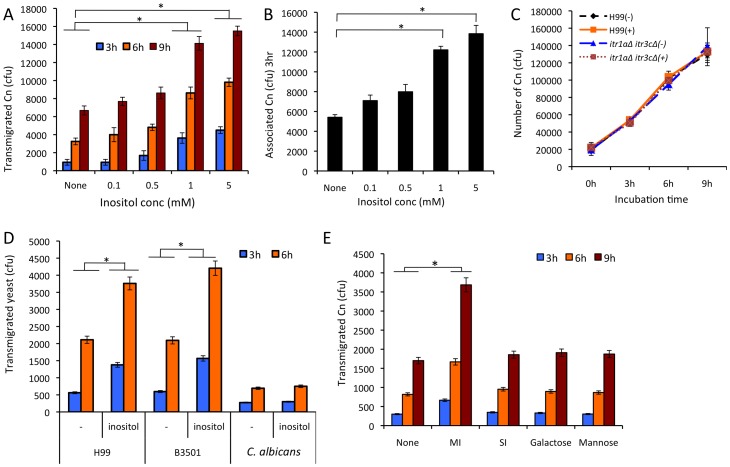
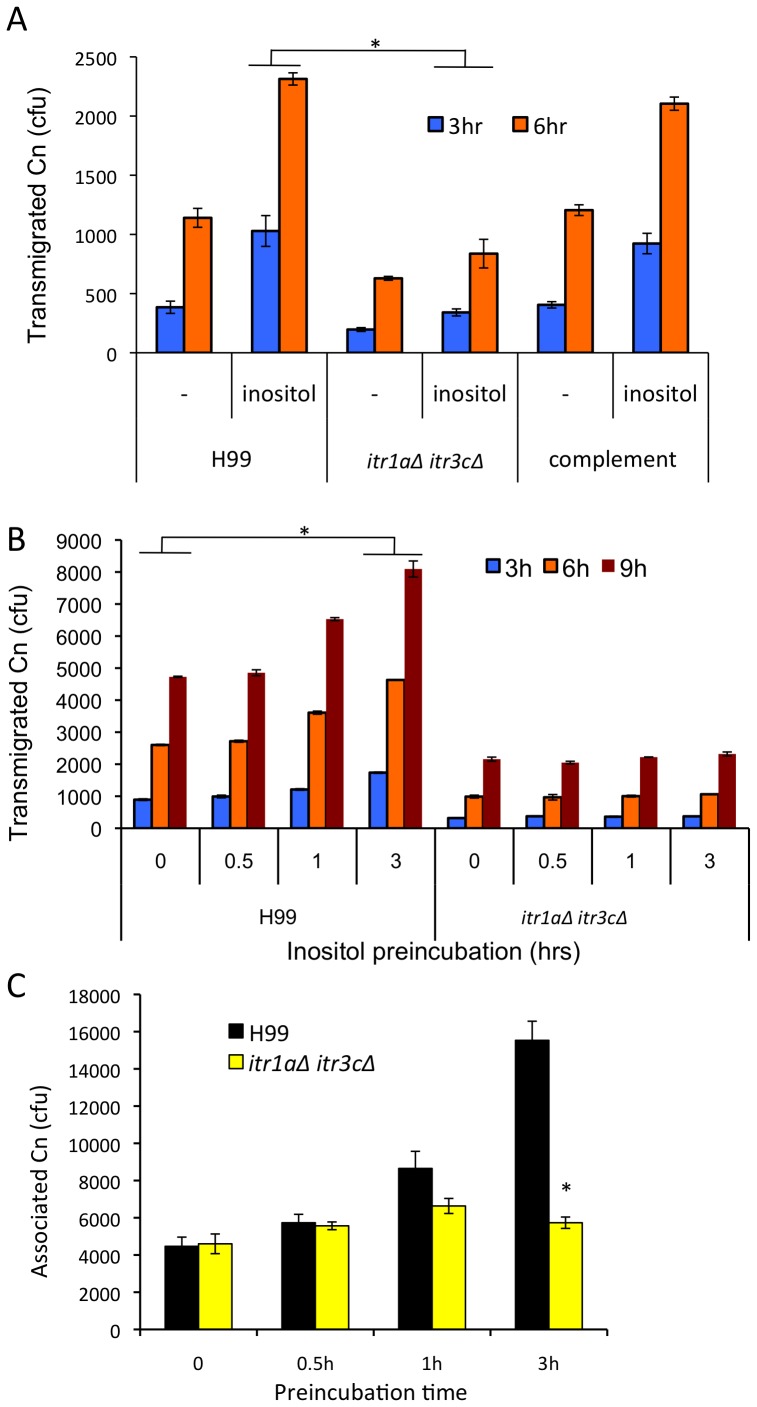
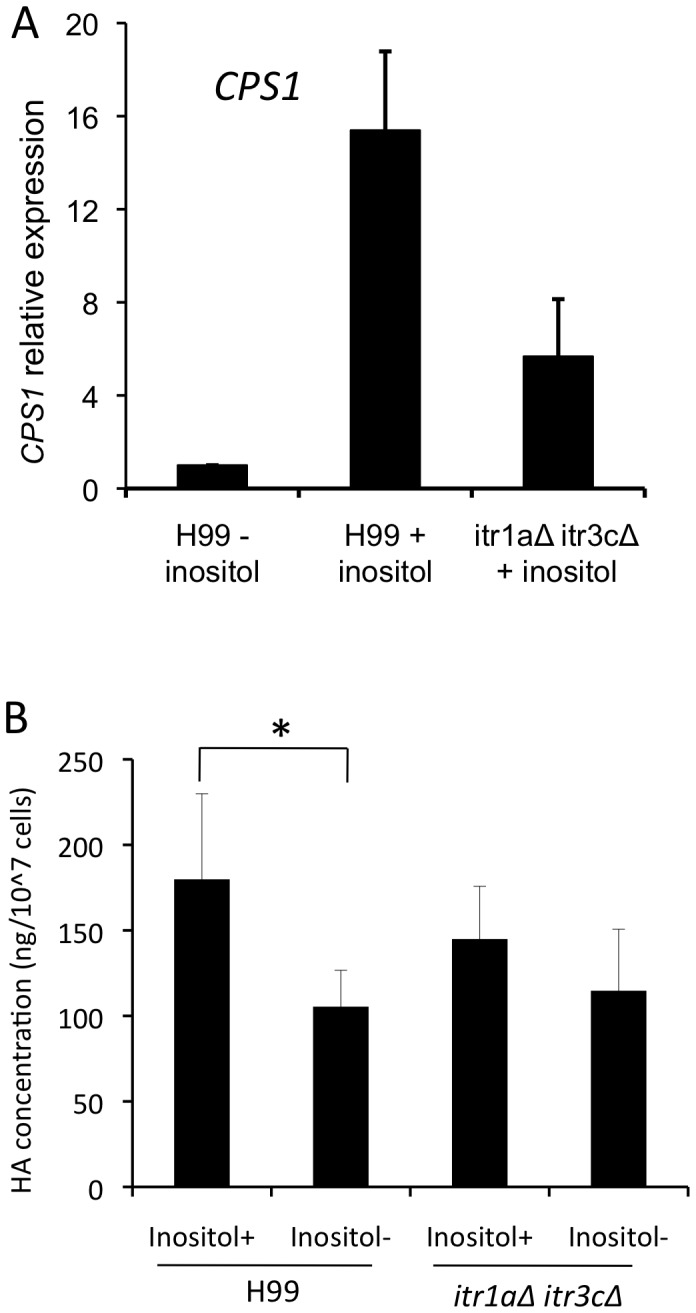
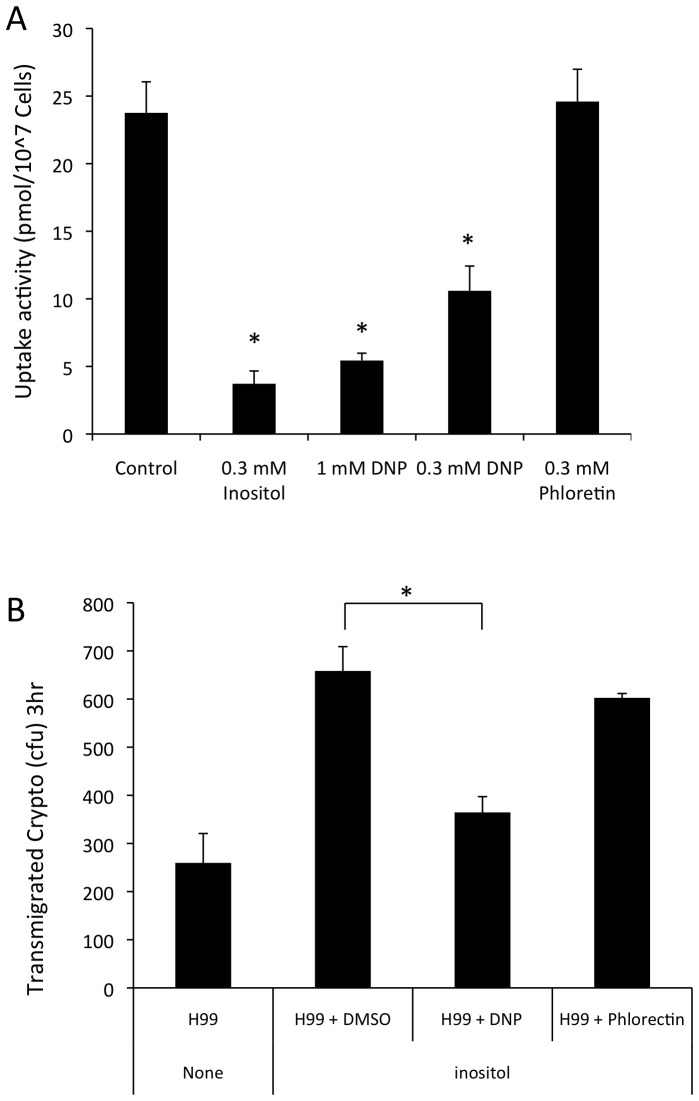
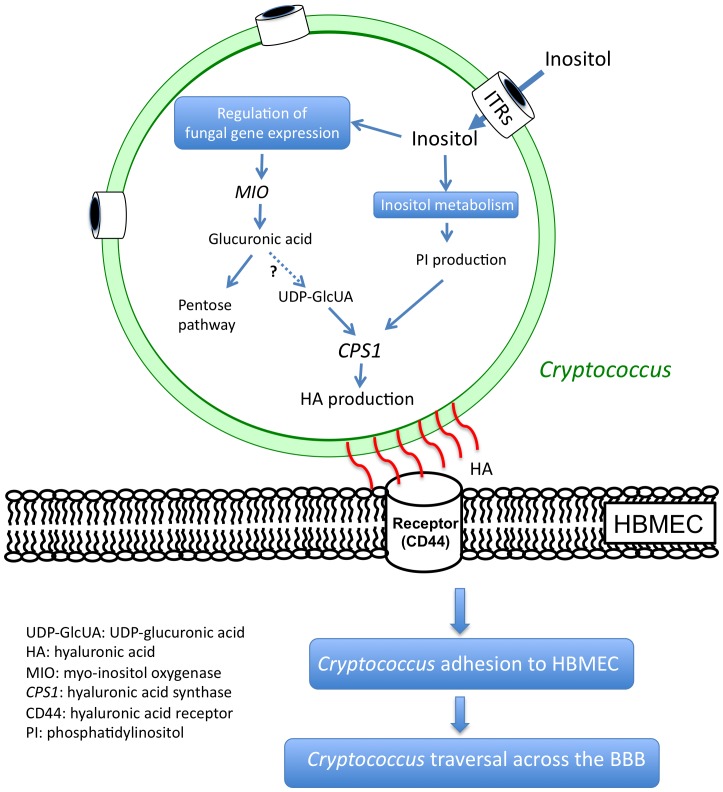
Cryptococcus neoformans is the most common cause of fungal meningitis, with high mortality and morbidity. The reason for the frequent occurrence of Cryptococcus infection in the central nervous system (CNS) is poorly understood. The facts that human and animal brains contain abundant inositol and that Cryptococcus has a sophisticated system for the acquisition of inositol from the environment suggests that host inositol utilization may contribute to the development of cryptococcal meningitis. In this study, we found that inositol plays an important role in Cryptococcus traversal across the blood-brain barrier (BBB) both in an in vitro human BBB model and in in vivo animal models. The capacity of inositol to stimulate BBB crossing was dependent upon fungal inositol transporters, indicated by a 70% reduction in transmigration efficiency in mutant strains lacking two major inositol transporters, Itr1a and Itr3c. Upregulation of genes involved in the inositol catabolic pathway was evident in a microarray analysis following inositol treatment. In addition, inositol increased the production of hyaluronic acid in Cryptococcus cells, which is a ligand known to binding host CD44 receptor for their invasion. These studies suggest an inositol-dependent Cryptococcus traversal of the BBB, and support our hypothesis that utilization of host-derived inositol by Cryptococcus contributes to CNS infection.
Overview
The claims and statistics of this paper haven’t been checked yet.
Free: it reads the open-access text and checks the first 5 claims that cite a source we can check. Create a free account to check every claim.
Integrity signals
Registry
Cites
Statistics
Figures
Verification
Claims the paper makes
The claims and statistics of this paper haven’t been checked yet.
Free: it reads the open-access text and checks the first 5 claims that cite a source we can check. Create a free account to check every claim.
Claims other papers make about this one
Each is checked against this paper’s own text: does it say what the citing paper says it does?
The cited source says what the claim attributes to it.
In the citing paper
“To complement histology and intravital microscopy, colony forming unit (CFU) determination has been used to study fungal dissemination in vivo [139, 141, 145, 151].”
From Mechanisms of fungal dissemination (2021) · cites this paper as [141]
In the citing paper
“Interestingly, in response to the high levels of inositol found in mammalian brains, C. neoformans upregulates its expression of CPS1 leading to an increased production of HA, and an enhanced association of cryptococcal cells and HBMECs [141].”
From Mechanisms of fungal dissemination (2021) · cites this paper as [141]
Self-check
Percentages, sums and reported differences re-computed from the paper’s own numbers.
The self-check needs the paper’s full text.
Citations
Cites
Perfect, J. R., Dismukes, W. E., Dromer, F., Goldman, D. L., Graybill, J. R., Hamill, R. J., Harrison, T. S., Larsen, R. A., Lortholary, O., Nguyen, M.-H., et al. (2010) · Clinical Infectious Diseases · doi:10.1086/649858 · Cited by 2,660 · cited 1×
“Despite its medical importance and significant research efforts [3,8,9,10], the molecular basis of cryptococcal CNS infection and host factors affecting disease development are poorly understood, which complicates efforts for rapid diagnosis and effective treatment.”
Self-citationPark, B. J., Wannemuehler, K. A., Marston, B. J., Govender, N., Pappas, P. G., & Chiller, T. M. (2009) · AIDS · doi:10.1097/qad.0b013e328322ffac · Cited by 2,014
Mechanisms of enzymatic glycoside hydrolysis
McCarter, J. D., & Stephen Withers, G. (1994) · Current Opinion in Structural Biology · doi:10.1016/0959-440x(94)90271-2 · Cited by 883
Casadevall, A., & Perfect, J. R. (1998) · ASM Press eBooks · doi:10.1128/9781555818241 · Cited by 661
Self-citationThe Saccharomyces cerevisiae Lipin Homolog Is a Mg2+-dependent Phosphatidate Phosphatase Enzyme*
Han, G.-S., Wu, W.-I., & Carman, G. M. (2006) · Journal of Biological Chemistry · doi:10.1074/jbc.m600425200 · Cited by 557
Urease as a Virulence Factor in Experimental Cryptococcosis
Cox, G. M., Mukherjee, J., Cole, G. T., Casadevall, A., & Perfect, J. R. (2000) · Infection and Immunity · doi:10.1128/iai.68.2.443-448.2000 · Cited by 522 · cited 2×
“Several factors, including urease [30,31], phospholipase B1 [32,33], as well as host plasmin [34], have been reported to be involved in the Cryptococcus invasion of the BBB.”
Self-citationGraybill, J. R., Sobel, J., Saag, M., van der Horst, C., Powderly, W., Cloud, G., Riser, L., Hamill, R., Dismukes, W., & NIAID Mycoses Study Group and AIDS Cooperative Treatment Groups (2000) · Clinical Infectious Diseases · doi:10.1086/313603 · Cited by 486
Cryptococcus neoformans mating and virulence are regulated by the G-protein α subunit GPA1 and cAMP
Alspaugh, J. A., Perfect, J. R., & Heitman, J. (1997) · Genes & Development · doi:10.1101/gad.11.23.3206 · Cited by 400
Self-citationFisher, S. K., Novak, J. E., & Agranoff, B. W. (2002) · Journal of Neurochemistry · doi:10.1046/j.1471-4159.2002.01041.x · Cited by 392
Chayakulkeeree, M., & Perfect, J. R. (2006) · Infectious Disease Clinics of North America · doi:10.1016/j.idc.2006.07.001 · Cited by 378
Self-citation
Cited by
Cryptococcus: from environmental saprophyte to global pathogen
May, R. C., Stone, N. R. H., Wiesner, D. L., Bicanic, T., & Nielsen, K. (2016) · Nature Reviews Microbiology · doi:10.1038/nrmicro.2015.6 · Cited by 541
Basic principles of the virulence of Cryptococcus
Zaragoza, O. (2019) · Virulence · doi:10.1080/21505594.2019.1614383 · Cited by 249
“secretion of hyaluronic acid, and some metalloproteases [56,169,170,171].”
BackgroundTrojan Horse Transit Contributes to Blood-Brain Barrier Crossing of a Eukaryotic Pathogen
Santiago-Tirado, F. H., Onken, M. D., Cooper, J. A., Klein, R. S., & Doering, T. L. (2017) · mBio · doi:10.1128/mbio.02183-16 · Cited by 238
Konradt, C., Ueno, N., Christian, D. A., Delong, J. H., Pritchard, G. H., Herz, J., Bzik, D. J., Koshy, A. A., McGavern, D. B., Lodoen, M. B., et al. (2016) · Nature Microbiology · doi:10.1038/nmicrobiol.2016.1 · Cited by 193
Kim, J., Lee, K.-T., Lee, J. S., Shin, J., Cui, B., Yang, K., Choi, Y. S., Choi, N., Lee, S. H., Lee, J.-H., et al. (2021) · Nature Biomedical Engineering · doi:10.1038/s41551-021-00743-8 · Cited by 172
Self-citationFu, M. S., Coelho, C., De Leon-Rodriguez, C. M., Rossi, D. C. P., Camacho, E., Jung, E. H., Kulkarni, M., & Casadevall, A. (2018) · PLOS Pathogens · doi:10.1371/journal.ppat.1007144 · Cited by 138
Mechanisms of fungal dissemination
Strickland, A. B., & Shi, M. (2021) · Cellular and Molecular Life Sciences · doi:10.1007/s00018-020-03736-z · Cited by 127
Schneider, S. (2015) · FEBS Letters · doi:10.1016/j.febslet.2015.03.012 · Cited by 118
Immunology of Cryptococcal Infections: Developing a Rational Approach to Patient Therapy
Elsegeiny, W. A. W., Marr, K. A., & Williamson, P. R. (2018) · Frontiers in Immunology · doi:10.3389/fimmu.2018.00651 · Cited by 117
A holistic review on Cryptococcus neoformans
Rathore, S. S., Sathiyamoorthy, J., Cheepurupalli, L., & Ramakrishnan, J. (2022) · Microbial Pathogenesis · doi:10.1016/j.micpath.2022.105521 · Cited by 139
Cryptococcal pathogenic mechanisms: a dangerous trip from the environment to the brain
Esher, S. K., Zaragoza, Ó., & Alspaugh, J. A. (2018) · Memórias do Instituto Oswaldo Cruz · doi:10.1590/0074-02760180057 · Cited by 126
Mechanisms of Cryptococcus neoformans-Mediated Host Damage
Casadevall, A., Coelho, C., & Alanio, A. (2018) · Frontiers in Immunology · doi:10.3389/fimmu.2018.00855 · Cited by 90
“The former mechanism involves undermining the integrity of the BBB (70) and is enhanced by brain inositol (71).”
BackgroundHost Cell Invasion by Medically Important Fungi
Sheppard, D. C., & Filler, S. G. (2015) · Cold Spring Harbor Perspectives in Medicine · doi:10.1101/cshperspect.a019687 · Cited by 89
Chen, Y., Shi, Z. W., Strickland, A. B., & Shi, M. (2022) · Journal of Fungi · doi:10.3390/jof8101069 · Cited by 123
A dissemination-prone morphotype enhances extrapulmonary organ entry by Cryptococcus neoformans
Denham, S. T., Brammer, B., Chung, K. Y., Wambaugh, M. A., Bednarek, J. M., Guo, L., Moreau, C. T., & Brown, J. C. S. (2022) · Cell Host & Microbe · doi:10.1016/j.chom.2022.08.017 · Cited by 80
Fungal kinases and transcription factors regulating brain infection in Cryptococcus neoformans
Lee, K.-T., Hong, J., Lee, D.-G., Lee, M., Cha, S., Lim, Y.-G., Jung, K.-W., Hwangbo, A., Lee, Y., Yu, S.-J., et al. (2020) · Nature Communications · doi:10.1038/s41467-020-15329-2 · Cited by 74
Boral, H., Metin, B., Döğen, A., Seyedmousavi, S., & İlkit, M. (2017) · Fungal Genetics and Biology · doi:10.1016/j.fgb.2017.10.008 · Cited by 79
The blood-brain barrier internalises Cryptococcus neoformans via the EphA2-tyrosine kinase receptor
Aaron, P. A., Jamklang, M., Uhrig, J. P., & Gelli, A. (2018) · Cellular Microbiology · doi:10.1111/cmi.12811 · Cited by 70
Genome-wide functional analysis of phosphatases in the pathogenic fungus Cryptococcus neoformans
Jin, J., Lee, K.-T., Hong, J., Lee, D., Jang, E.-H., Kim, J. Y., Lee, Y., Lee, S., So, Y.-S., Jung, K., et al. (2020) · Nature Communications · doi:10.1038/s41467-020-18028-0 · Cited by 59
Self-citationMeng, L., Chu, X., Xing, H., Liu, X., Xin, X., Chen, L., Jin, M., Guan, Y., Huang, W., & Gao, Z. (2019) · International Journal of Pharmaceutics · doi:10.1016/j.ijpharm.2019.118485 · Cited by 58
Plant myo-inositol transport influences bacterial colonization phenotypes
O’Banion, B. S., Jones, P. C., Demetros, A. A., Kelley, B. R., Knoor, L. H., Wagner, A. S., Chen, J., Muchero, W., Reynolds, T. B., Jacobson, D., et al. (2023) · Current Biology · doi:10.1016/j.cub.2023.06.057 · Cited by 62
Nutrient and Stress Sensing in Pathogenic Yeasts
Rutherford, J. C., Bahn, Y., van den Berg, B., Heitman, J., & Xue, C. (2019) · Frontiers in Microbiology · doi:10.3389/fmicb.2019.00442 · Cited by 64
Self-citationPathogen interactions with endothelial cells and the induction of innate and adaptive immunity
Konradt, C., & Hunter, C. A. (2018) · European Journal of Immunology · doi:10.1002/eji.201646789 · Cited by 56
Yu, C.-H., Sephton-Clark, P., Tenor, J. L., Toffaletti, D. L., Giamberardino, C., Haverkamp, M., Cuomo, C. A., & Perfect, J. R. (2021) · mBio · doi:10.1128/mbio.02313-21 · Cited by 59
Self-citationFungal colonization of the brain: anatomopathological aspects of neurological cryptococcosis
Colombo, A. C., & Rodrigues, M. L. (2015) · Anais da Academia Brasileira de Ciências · doi:10.1590/0001-3765201520140704 · Cited by 56
Na Pombejra, S., Salemi, M., Phinney, B. S., & Gelli, A. (2017) · Frontiers in Cellular and Infection Microbiology · doi:10.3389/fcimb.2017.00296 · Cited by 47
“Cn can cross the BBB by a transcellular pathway and a Trojan horse (i.e., monocyte-assisted)-mediated mechanism (Charlier et al., 2009; Shi et al., 2010; Huang et al., 2011; Liu et al., 2013; Vu et al., 2013, 2014; Santiago-Tirado et al., 2017).”
BackgroundModelling tuberculous meningitis in zebrafish usingMycobacterium marinum
van Leeuwen, L. M., van der Kuip, M., Youssef, S. A., de Bruin, A., Bitter, W., van Furth, A. M., & van der Sar, A. M. (2014) · Disease Models & Mechanisms · doi:10.1242/dmm.015453 · Cited by 61
The cause and effect of Cryptococcus interactions with the host
Ballou, E. R., & Johnston, S. A. (2017) · Current Opinion in Microbiology · doi:10.1016/j.mib.2017.10.012 · Cited by 44
Wang, Y., Wear, M. P., Kohli, G., Vij, R., Giamberardino, C., Shah, A., Toffaletti, D. L., Yu, C.-H. A., Perfect, J. R., Casadevall, A., et al. (2021) · mBio · doi:10.1128/mbio.02790-21 · Cited by 42
Self-citationDangerous Liaisons: Interactions of Cryptococcus neoformans with Host Phagocytes
Gaylord, E. A., Choy, H. L., & Doering, T. L. (2020) · Pathogens · doi:10.3390/pathogens9110891 · Cited by 33
Fungal Infection in the Brain: What We Learned from Intravital Imaging
Shi, M., & Mody, C. H. (2016) · Frontiers in Immunology · doi:10.3389/fimmu.2016.00292 · Cited by 33
Yu, C.-H. A., Chen, Y., Desjardins, C. A., Tenor, J. L., Toffaletti, D. L., Giamberardino, C. D., Litvintseva, A. P., Perfect, J. R., & Cuomo, C. A. (2019) · Microbial Genomics · doi:10.1099/mgen.0.000319 · Cited by 37
Self-citationHow Cryptococcus Interacts with the Blood–Brain Barrier
Tseng, H.-K., Huang, T.-Y., Wu, A. Y.-J., Chen, H.-H., Liu, C.-P., & Jong, A. (2015) · Future Microbiology · doi:10.2217/fmb.15.83 · Cited by 44
Al-Huthaifi, A. M., Radman, B. A., Al-Alawi, A. A., Mahmood, F., & Liu, T. (2024) · Journal of Fungi · doi:10.3390/jof10080586 · Cited by 46
Self-citationUeno, N., & Lodoen, M. B. (2015) · Current Opinion in Microbiology · doi:10.1016/j.mib.2015.05.006 · Cited by 30
Nutrient Sensing at the Plasma Membrane of Fungal Cells
Dijck, P. V., Brown, N. A., Goldman, G. H., Rutherford, J., Xue, C., & Zeebroeck, G. V. (2017) · Microbiology Spectrum · doi:10.1128/microbiolspec.funk-0031-2016 · Cited by 35
Self-citationLiu, T., Subbian, S., Pan, W., Eugenín, E. A., Xie, J., & Xue, C. (2014) · Cell Communication and Signaling · doi:10.1186/s12964-014-0051-0 · Cited by 31
Self-citationPombejra, S. N., Jamklang, M., Uhrig, J. P., Vu, K., & Gelli, A. (2018) · PLoS ONE · doi:10.1371/journal.pone.0203020 · Cited by 25
Yang, C., Wang, J., & Zou, L. (2017) · Experimental and Therapeutic Medicine · doi:10.3892/etm.2017.5220 · Cited by 31
The pathways and the mechanisms by which Cryptococcus enters the brain
Zhou, Y., Huang, Y., Yang, C., Zang, X., Deng, H., Liu, J., Zhao, E., Tian, T., Pan, L., & Xue, X. (2024) · Mycology: An International Journal on Fungal Biology · doi:10.1080/21501203.2023.2295409 · Cited by 23
Peptidases: promising antifungal targets of the human fungal pathogen, Cryptococcus neoformans
Gutierrez‐Gongora, D., & Geddes‐McAlister, J. (2022) · FACETS · doi:10.1139/facets-2021-0157 · Cited by 28
Cryptococcus neoformans Genotypic Diversity and Disease Outcome among HIV Patients in Africa
Kassaza, K., Wasswa, F. B., Nielsen, K., & Bazira, J. (2022) · Journal of Fungi · doi:10.3390/jof8070734 · Cited by 26
The Dynamics of Cryptococcus neoformans Cell and Transcriptional Remodeling during Infection
de Freitas, G. J. C., Gouveia‐Eufrásio, L., Emídio, E. C. P., Carneiro, H. C. S., Baltazar, L. D. M., da Costa, M. C., Frasés, S., Araújo, G. R. D. S., da Paixão, T. A., Sossai, B. G., et al. (2022) · Cells · doi:10.3390/cells11233896 · Cited by 23
Elements of dissemination in cryptococcosis
Bednarek, J. M., & Brown, J. C. S. (2024) · mBio · doi:10.1128/mbio.02155-23 · Cited by 22
Liu, Y., Peng, X., Weng, W., Zhu, J., Cao, H., & Xie, S.-B. (2019) · International Journal of Infectious Diseases · doi:10.1016/j.ijid.2019.08.034 · Cited by 19
Cerebrospinal fluid cytology in nonmalignant aseptic meningeal disorders
Martínez‐Girón, R., & Pantanowitz, L. (2017) · Diagnostic Cytopathology · doi:10.1002/dc.23797 · Cited by 17
RELATe enables genome-scale engineering in fungal genomics
Li, Z., & Kim, K. S. (2020) · Science Advances · doi:10.1126/sciadv.abb8783 · Cited by 16
Self-citationSelvan, L. D. N., Sreenivasamurthy, S. K., Kumar, S., Yelamanchi, S. D., Madugundu, A. K., Anil, A. K., Renuse, S., Nair, B. G., Gowda, H., Mathur, P. P., et al. (2015) · Molecular BioSystems · doi:10.1039/c5mb00187k · Cited by 16
Mechanism of Cryptococcus Meningoencephalitis
Miyazato, A. (2016) · Medical Mycology Journal · doi:10.3314/mmj.57.j27 · Cited by 14
Cryptococcal nutrient acquisition and pathogenesis: dining on the host
Perfect, J. R., & Kronstad, J. W. (2025) · Microbiology and Molecular Biology Reviews · doi:10.1128/mmbr.00015-23 · Cited by 16
Self-citationSiddiqui, R., Mungroo, M. R., Anuar, T. S., Alharbi, A. M., Alfahemi, H. H., Elmoselhi, A. B., & Khan, N. A. (2022) · Antibiotics · doi:10.3390/antibiotics11060749 · Cited by 12
Aaron, P. A., & Gelli, A. (2019) · ACS Infectious Diseases · doi:10.1021/acsinfecdis.9b00348 · Cited by 14
Role of the inositol pyrophosphate multikinase Kcs1 in Cryptococcus inositol metabolism
Liao, G., Wang, Y., Liu, T., Kohli, G. S., Qian, W., Shor, E., Subbian, S., & Xue, C. (2018) · Fungal Genetics and Biology · doi:10.1016/j.fgb.2018.01.006 · Cited by 12
Self-citationChen, Y., Li, C., Sun, D., Strickland, A. B., Liu, G., & Shi, M. (2021) · Cellular Microbiology · doi:10.1111/cmi.13330 · Cited by 12
Myo-inositol utilization by Citrobacter koseri promotes brain infection
Yuan, C., Pan, Y., Wang, J., & Jiang, L. (2019) · Biochemical and Biophysical Research Communications · doi:10.1016/j.bbrc.2019.07.112 · Cited by 10
Wen, S., Liu, M., Pan, C., Zhang, L., Yan, R., & Xu, Z. (2025) · Frontiers in Neuroscience · doi:10.3389/fnins.2025.1622349 · Cited by 9
Macropinocytosis as a potential mechanism driving neurotropism of Cryptococcus neoformans
Lanser, D. M., Bennett, A. B., Vu, K., & Gelli, A. (2023) · Frontiers in Cellular and Infection Microbiology · doi:10.3389/fcimb.2023.1331429 · Cited by 8
Matsumoto, Y., Azami, S., Shiga, H., Nagamachi, T., Moriyama, H., Yamashita, Y., Yoshikawa, A., & Sugita, T. (2019) · Drug Discoveries & Therapeutics · doi:10.5582/ddt.2019.01047 · Cited by 10
Yu, Q.-K., Han, L.-T., Wu, Y., & Liu, T. (2020) · Microorganisms · doi:10.3390/microorganisms8111730 · Cited by 8
Self-citationSahu, P. S., & Katwala, J. (2022) · Current Fungal Infection Reports · doi:10.1007/s12281-022-00444-y · Cited by 8
Gao, S., Li, X., & Han, B. (2024) · Expert Opinion on Drug Delivery · doi:10.1080/17425247.2024.2444364 · Cited by 9
Sensing and responding to host-derived stress signals: lessons from fungal meningitis pathogen
Jung, K., Lee, S., Lee, K.-T., & Bahn, Y. (2024) · Current Opinion in Microbiology · doi:10.1016/j.mib.2024.102514 · Cited by 9
Xue, C. (2015) · mBio · doi:10.1128/mbio.00109-15 · Cited by 9
Self-citationTransporter Proteins as Ecological Assets and Features of Microbial Eukaryotic Pangenomes
Milner, D. S., Galindo, L. J., Irwin, N. A. T., & Richards, T. A. (2023) · Annual Review of Microbiology · doi:10.1146/annurev-micro-032421-115538 · Cited by 5
Transcriptomic response ofCryptococcus neoformansto ecologically relevant nitrogen concentrations
Bosch, C., Bhana, Z., Toplis, B., Volschenk, H., & Botha, A. (2021) · FEMS Yeast Research · doi:10.1093/femsyr/foab028 · Cited by 5
Nutrient Sensing at the Plasma Membrane of Fungal Cells
Dijck, P. V., Brown, N. A., Goldman, G. H., Rutherford, J. C., Xue, C., & Zeebroeck, G. V. (2017) · ASM Press eBooks · doi:10.1128/9781555819583.ch19 · Cited by 5
Self-citationHuman‐Based In Vitro Brain Endothelial Cell Models
Wilson, H. K., & Shusta, E. V. (2015) · Wiley eBooks · doi:10.1002/9781118788523.ch11 · Cited by 5
Reconsidering the blood-brain barrier: histopathology and microanatomy of cryptococcal CNS infection
Sorrell, T. C., & Davis, J. M. (2025) · Microbiology and Molecular Biology Reviews · doi:10.1128/mmbr.00078-25 · Cited by 4
Novel flow cytometric analysis of the blood–brain barrier
Williams, D. W., Tesfa, L., & Berman, J. W. (2015) · Cytometry Part A · doi:10.1002/cyto.a.22683 · Cited by 4
Ma, X., Li, C., Ma, L., Zhao, X., Liu, Y., Hao, X., Zhang, P., & Zhu, X. (2022) · Medical Mycology · doi:10.1093/mmy/myac095 · Cited by 4
Fungal Infections of the Central Nervous System
de Oliveira, H. C., Castelli, R. F., Kuczera, D., de Souza, T. N., Marcos, C. M., Scorzoni, L., Nimrichter, L., & Rodrigues, M. L. (2020) · Elsevier eBooks · doi:10.1016/b978-0-12-809633-8.21019-4 · Cited by 5
Wang, G., Feng, C., Ma, Z., Zhao, L., Yosri, M., Wang, Y., Gao, X., Zhu, W., Li, H., Song, H., et al. (2025) · Cell Reports · doi:10.1016/j.celrep.2025.116658 · Cited by 2
Self-citationAlder-Rangel, A., Rangel, A. E. A., Casadevall, A., Gusa, A. A., Xue, C., Boone, C. M., Hittinger, C. T., Masuda, C. A., Olivares-Yáñez, C., Bell‐Pedersen, D., et al. (2025) · Fungal Biology · doi:10.1016/j.funbio.2025.101590 · Cited by 2
Self-citationPathogenesis of Cryptococcosis in Humans
Negroni, R., & Arechavala, A. I. (2015) · Wiley eBooks · doi:10.1002/9781118644843.ch49 · Cited by 2
Irere, H., Dangarembizi, R., Mukaremera, L., & Dambuza, I. M. (2026) · Frontiers in Cellular and Infection Microbiology · doi:10.3389/fcimb.2025.1727496 · Cited by 2
Munshi, M., Rella, A., & Poeta, M. D. (2014) · Springer eBooks · doi:10.1007/978-1-4471-6401-2_7 · Cited by 1
Pathogen-Specific Adaptations to Conserved Signaling Pathways in Cryptococcus neoformans
Ost, K. S. (2016) · DukeSpace (Duke University)
Cowen, L. E., & Polvi, E. J. (2020) · Faculty Opinions – Post-Publication Peer Review of the Biomedical Literature · doi:10.3410/f.737633112.793573927
Reposicionamento de fármacos para o tratamento de criptococose
de Oliveira, E. A. M. (2022) · doi:10.34019/ufjf/di/2022/00012 · Cited by 1
Fungal Colonization of the Brain: Anatomopathological Aspects of Neurological Cryptococcosis
Rodrigues, M. L., & Colombo, A. C. (2024) · Journal of Science Humanities and Arts - JOSHA · doi:10.17160/josha.11.2.983
Brain infections, encephalitis, and meningitis: Cryptococcus sp.
Ostrosky-Zeichner, L. L., & Zapata, D. A. (2024) · Elsevier eBooks · doi:10.1016/b978-0-443-19130-5.00030-7
Molecular mechanism of host-yeast interactions and prevention by nanoformulation approaches
Oshika, & Bari, V. K. (2025) · Microbial Pathogenesis · doi:10.1016/j.micpath.2025.107663
The Pain Is in the Brain With the Sugar-Coated Killer
Messina, J. A., & Perfect, J. R. (2025) · The Journal of Infectious Diseases · doi:10.1093/infdis/jiaf496
Self-citationColonization of the central nervous system as a key factor in the Cryptococcus gattii pathogenicity
de Freitas, G. J. C., Gouveia‐Eufrásio, L., Emídio, E. C. P., Peres, N. T. A., & Santos, D. A. (2025) · Virulence · doi:10.1080/21505594.2025.2594289
Rangdist, S., Kanklang, E., Pakdeesiriwong, N., Penkhrue, W., Wangboon, C., Weeranantanapan, O., Chumkiew, S., Chantree, P., Martviset, P., Chayakulkeeree, M., et al. (2026) · bioRxiv (Cold Spring Harbor Laboratory) · doi:10.64898/2026.01.30.702728
Krishnan, P., Udupi, G. A., Santhoshkumar, R., V., M. M., B, V. K. H., Netravathi, & Nagarathna, S. (2026) · Frontiers in Cellular and Infection Microbiology · doi:10.3389/fcimb.2026.1735570
An Inositol Receptor Orchestrates Carbon Utilization and Fungal VirulencePreprint
Wang, Y., Tancer, R. J., Wear, M. P., Jackson, K. M., Zhang, Y., Gao, Y., Nielsen, K., Casadevall, A., & Xue, C. (2026) · bioRxiv (Cold Spring Harbor Laboratory) · doi:10.64898/2026.03.02.708983
Self-citationHamad, H., Specht, C. A., Carlson, D. E., Yadav, V., Upadhya, R., Heitman, J., Gabel, C. K., Gabel, C. K., Karlath, F. A. P., Qamar, F., et al. (2026) · Open Forum Infectious Diseases · doi:10.1093/ofid/ofag334
Yu, S.-R., Jang, Y.-B., Choi, J. T., & Bahn, Y. (2026) · Current Opinion in Microbiology · doi:10.1016/j.mib.2026.102802 · Cited by 1
Metadata
- Authors
- Liu, T.-B., Kim, J.-C., Wang, Y., Toffaletti, D. L., Eugenin, E., Perfect, J. R., Kim, K. J., & Xue, C.
- Affiliations
- Rutgers New Jersey Medical School (US)
- University of Kansas Medical Center (US)
- Duke University (US)
- Corresponding author
- Kim, Kee Jun
- Xue, Chaoyang
- Venue
- PLoS Pathogens
- Publisher
- Public Library of Science (PLoS)
- Published
- 2013-04-04
- Volume
- 9
- Issue
- 4
- Pages
- e1003247
- ISSN
- 1553-7366 (ISSN-L)
- 1553-7374
- PMC
- PMC3617100
- OpenAlex
- W2083908866
- Cited by
- 89
- References
- 80
- Citations by year
- 2026: 6 · 2025: 8 · 2024: 7 · 2023: 3 · 2022: 10 · 2021: 6 · 2020: 7 · 2019: 8 · 2018: 7 · 2017: 9 · 2016: 4 · 2015: 10 · 2014: 4
- FWCI
- 4.37
- Type
- journal article
- Language
- en
- Open access
- gold
- doi.org
- Locations
- PLoS Pathogens (publishedVersion, cc-by)
- Europe PMC (PubMed Central) (publishedVersion, cc-by)
- PubMed Central (publishedVersion, cc-by)
- PubMed (publishedVersion)
- DOAJ (DOAJ: Directory of Open Access Journals) (submittedVersion, cc-by-sa)
- Figshare (submittedVersion, cc-by)
- Funders
- American Heart Association (12SDG9110034)
- U.S. Public Health Service (R01A17386)
- National Institute of Mental Health (R01MH096625)
- National Institute on Drug Abuse (R01DA027729)
- National Institute of Allergy and Infectious Diseases
- Topics
- Health Sciences › Medicine › Infectious Diseases › Fungal Infections and Studies
- Life Sciences › Neuroscience › Neurology › Barrier Structure and Function Studies
- Life Sciences › Immunology and Microbiology › Microbiology › Bacterial Infections and Vaccines
- Keywords
- Cryptococcus neoformans, myo-inositol, blood-brain barrier, fungal meningitis, host-fungus interactions, hyaluronic acid, CD44 receptor, central nervous system infection
- MeSH terms
- Animals, Biological Transport, Blood-Brain Barrier, Brain, Central Nervous System Infections, Cryptococcosis, Cryptococcus neoformans, Female, Humans, Hyaluronic Acid, Inositol, Male, Mice, Inbred A, Monosaccharide Transport Proteins, Rabbits, Meningitis, Cryptococcal, Hyaluronan Receptors, Mice, Transendothelial and Transepithelial Migration
About these checks
Registry, retraction, Cites and statistics results are computed, not judged, with one exception: a printed reference that no index lists is read once by a model before it counts as a citation error. Claims are extracted by a model and kept only when their quote appears verbatim in the text; each cited source is then checked, with a model’s help, for whether it says what the claim relies on. Those verdicts can be wrong — read the claim’s quote and the cited source before relying on one.
Statistics and arithmetic are recomputed, not judged.
Confidence bands are shown only for fields calibrated on our annotated test set. None is calibrated yet, so no band is shown.
What counts as a claim ›How we measure confidence ›How we check this ›
Are you an author, or do you see a problem with this page? Request a review
Data sources
Bibliographic data: Semantic Scholar, OpenAlex, Crossref.
Contains information from the Semantic Scholar Academic Graph Datasets, made available under the ODC Attribution License (ODC-BY 1.0).
Semantic Scholar’s data is described in: Kinney, R., et al. (2023). The Semantic Scholar Open Data Platform. arXiv:2301.10140.
