

Inflammatory Monocytes Orchestrate Innate Antifungal Immunity in the Lung
Open accessThe DOI matches its Crossref record; 77 of the 77 references it cites were found in a registry or an index.
Abstract
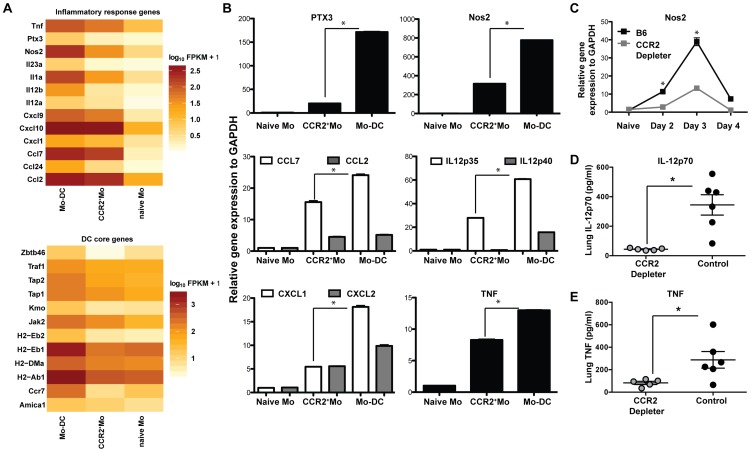
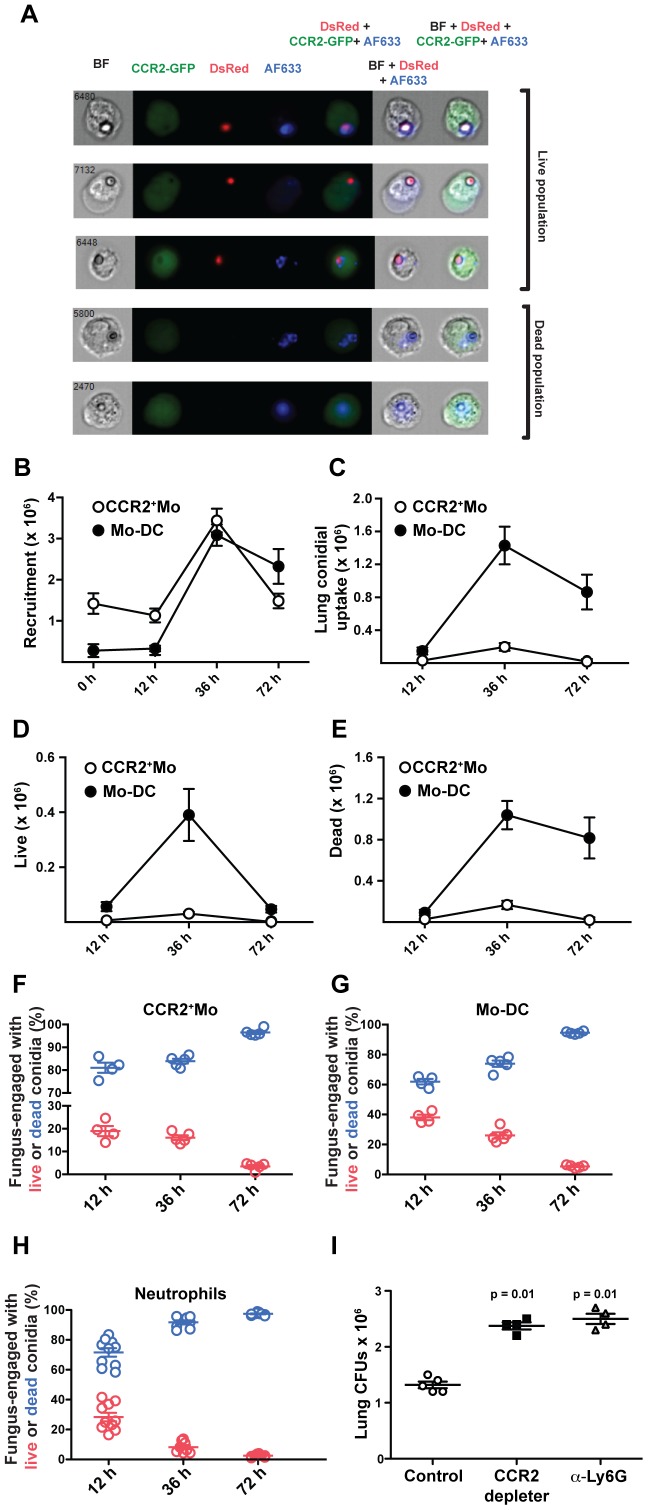
Aspergillus fumigatus is an environmental fungus that causes invasive aspergillosis (IA) in immunocompromised patients. Although -CC-chemokine receptor-2 (CCR2) and Ly6C-expressing inflammatory monocytes (CCR2⁺Mo) and their derivatives initiate adaptive pulmonary immune responses, their role in coordinating innate immune responses in the lung remain poorly defined. Using conditional and antibody-mediated cell ablation strategies, we found that CCR2⁺Mo and monocyte-derived dendritic cells (Mo-DCs) are essential for innate defense against inhaled conidia. By harnessing fluorescent Aspergillus reporter (FLARE) conidia that report fungal cell association and viability in vivo, we identify two mechanisms by which CCR2⁺Mo and Mo-DCs exert innate antifungal activity. First, CCR2⁺Mo and Mo-DCs condition the lung inflammatory milieu to augment neutrophil conidiacidal activity. Second, conidial uptake by CCR2⁺Mo temporally coincided with their differentiation into Mo-DCs, a process that resulted in direct conidial killing. Our findings illustrate both indirect and direct functions for CCR2⁺Mo and their derivatives in innate antifungal immunity in the lung.
Overview
The claims and statistics of this paper haven’t been checked yet.
Free: it reads the open-access text and checks the first 5 claims that cite a source we can check. Create a free account to check every claim.
Integrity signals
Registry
Cites
Statistics
Figures
Verification
Claims the paper makes
The claims and statistics of this paper haven’t been checked yet.
Free: it reads the open-access text and checks the first 5 claims that cite a source we can check. Create a free account to check every claim.
Claims other papers make about this one
Each is checked against this paper’s own text: does it say what the citing paper says it does?
The cited source says what the claim attributes to it.
In the citing paper
“Significant advances have been made in elucidating the main innate immune players and effector pathways for efficient control of Aspergillus infection in mouse models with the use of transgenic mice (189–202).”
From Aspergillus fumigatus and Aspergillosis in 2019 (2019) · cites this paper as [192]
The cited source says what the claim attributes to it.
In the citing paper
“Experimental data of acute pulmonary aspergillosis in mouse models and in patients with primary immunodeficiency with complete absence of cells of lymphoid origin demonstrate that adaptive immunity has a redundant role in protection from invasive disease (192, 196, 206).”
From Aspergillus fumigatus and Aspergillosis in 2019 (2019) · cites this paper as [192]
In the citing paper
“Importantly, inflammatory monocytes have a nonredundant role in innate defense against Aspergillus (192).”
From Aspergillus fumigatus and Aspergillosis in 2019 (2019) · cites this paper as [192]
Self-check
Percentages, sums and reported differences re-computed from the paper’s own numbers.
The self-check needs the paper’s full text.
Citations
Cites
Trapnell, C., Williams, B. A., Pertea, G., Mortazavi, A., Kwan, G., van Baren, M. J., Salzberg, S. L., Wold, B. J., & Pachter, L. (2010) · Nature Biotechnology · doi:10.1038/nbt.1621 · Cited by 15,556
TopHat: discovering splice junctions with RNA-Seq
Trapnell, C., Pachter, L., & Salzberg, S. L. (2009) · Bioinformatics · doi:10.1093/bioinformatics/btp120 · Cited by 11,617
Blood Monocytes Consist of Two Principal Subsets with Distinct Migratory Properties
Geissmann, F., Jung, S., & Littman, D. R. (2003) · Immunity · doi:10.1016/s1074-7613(03)00174-2 · Cited by 3,391 · cited 1×
“Interestingly, CD14CD16(2) monocytes express CCR2 and have been proposed to be analogous to murine CCR2 Mo [63].”
BackgroundFate Mapping Reveals Origins and Dynamics of Monocytes and Tissue Macrophages under Homeostasis
Yona, S., Kim, K.-W., Wolf, Y., Mildner, A., Varol, D., Breker, M., Strauss-Ayali, D., Viukov, S., Guilliams, M., Misharin, A., et al. (2013) · Immunity · doi:10.1016/j.immuni.2012.12.001 · Cited by 3,245 · cited 1×
“In both instances, the development of cell type-specific gene knockout strategies [57] will enable researchers to address these questions.”
BackgroundSerbina, N. V., & Pamer, E. G. (2006) · Nature Immunology · doi:10.1038/ni1309 · Cited by 1,669 · cited 7×
“In these models, the formation of monocyte-derived TNF- and inducible nitric oxide synthase-producing dendritic cells (Tip-DCs) correlated with microbial clearance [31,32,33].”
BackgroundInfluentialQuintin, J., Saeed, S., Martens, J. H. A., Giamarellos-Bourboulis, E. J., Ifrim, D. C., Logie, C., Jacobs, L., Jansen, T., Kullberg, B.-J., Wijmenga, C., et al. (2012) · Cell Host & Microbe · doi:10.1016/j.chom.2012.06.006 · Cited by 1,289 · cited 1×
“Although emerging evidence indicates that CCR2Mo and their derivatives contribute to innate defense against systemic candidiasis [47,48], it remains unclear whether CCR2Mo act to control the influx and activity of other effector cell populations or directly contribute fungicidal capacity at sites of infection.”
BackgroundTNF/iNOS-Producing Dendritic Cells Mediate Innate Immune Defense against Bacterial Infection
Serbina, N. V., Salazar-Mather, T. P., Biron, C. A., Kuziel, W. A., & Pamer, E. G. (2003) · Immunity · doi:10.1016/s1074-7613(03)00171-7 · Cited by 1,175 · cited 5×
“(Tip-DC) were found to play an essential role in innate defense against intracellular bacteria [31], a finding that has been extended to other intracellular pathogens, for example Leishmania and Toxoplasma [28,30,55,56].”
BackgroundInfluentialMonocyte-Mediated Defense Against Microbial Pathogens
Serbina, N. V., Jia, T., Hohl, T. M., & Pamer, E. G. (2008) · Annual Review of Immunology · doi:10.1146/annurev.immunol.26.021607.090326 · Cited by 1,123 · cited 1×
“In these models, the formation of monocyte-derived TNF- and inducible nitric oxide synthase-producing dendritic cells (Tip-DCs) correlated with microbial clearance [31,32,33].”
BackgroundSelf-citationPollock, J. D., Williams, D. A., Gifford, M. A. C., Li, L. L., Du, X., Fisherman, J., Orkin, S. H., Doerschuk, C. M., & Dinauer, M. C. (1995) · Nature Genetics · doi:10.1038/ng0295-202 · Cited by 921 · cited 1×
“These findings are recapitulated in animal models of IA in which antibody-mediated depletion of neutrophils leads to uncontrolled fungal growth in the lung and to mortality from IA [19,20,21,22,23].”
ResultDeciphering the transcriptional network of the dendritic cell lineage
the Immunological Genome Consortium, Miller, J. C., Brown, B. D., Shay, T., Gautier, E. L., Jojic, V., Cohain, A., Pandey, G., Leboeuf, M., Elpek, K. G., et al. (2012) · Nature Immunology · doi:10.1038/ni.2370 · Cited by 781
GATA2 deficiency: a protean disorder of hematopoiesis, lymphatics, and immunity
Spinner, M. A., Sanchez, L. A., Hsu, A. P., Shaw, P. A., Zerbe, C. S., Calvo, K. R., Arthur, D. C., Gu, W., Gould, C. M., Brewer, C. C., et al. (2014) · Blood · doi:10.1182/blood-2013-07-515528 · Cited by 712 · cited 1×
“The clinical manifestations of patients with MonoMAC syndrome support the notion that circulating myeloid cells, independent of neutrophils and tissue-resident macrophages, play an essential role in antifungal defense [64,65,66].”
BackgroundLeón, B., López-Bravo, M., & Ardavín, C. (2007) · Immunity · doi:10.1016/j.immuni.2007.01.017 · Cited by 704 · cited 3×
“(Tip-DC) were found to play an essential role in innate defense against intracellular bacteria [31], a finding that has been extended to other intracellular pathogens, for example Leishmania and Toxoplasma [28,30,55,56].”
BackgroundNon-redundant role of the long pentraxin PTX3 in anti-fungal innate immune response
Garlanda, C., Hirsch, E., Bozza, S., Salustri, A., De Acetis, M., Nota, R., Maccagno, A., Riva, F., Bottazzi, B., Peri, G., et al. (2002) · Nature · doi:10.1038/nature01195 · Cited by 669
Segal, B. H. (2009) · New England Journal of Medicine · doi:10.1056/nejmra0808853 · Cited by 661
Hsu, A. P., Sampaio, E. P., Khan, J., Calvo, K. R., Lemieux, J. E., Patel, S. Y., Frucht, D. M., Vinh, D. C., Auth, R. D., Freeman, A. F., et al. (2011) · Blood · doi:10.1182/blood-2011-05-356352 · Cited by 638 · cited 1×
“The clinical manifestations of patients with MonoMAC syndrome support the notion that circulating myeloid cells, independent of neutrophils and tissue-resident macrophages, play an essential role in antifungal defense [64,65,66].”
BackgroundTackling Human Fungal Infections
Brown, G. D., Denning, D. W., & Levitz, S. M. (2012) · Science · doi:10.1126/science.1222236 · Cited by 619 · cited 1×
“The incidence of fungal infections has been on the rise for several decades due to increased use of immunosuppressive and myeloablative therapies for malignant and non-malignant diseases [1,2,3].”
BackgroundChen, F., Liu, Z., Wu, W., Rozo, C., Bowdridge, S., Millman, A., Van Rooijen, N., Urban, J. F., Wynn, T. A., & Gause, W. C. (2012) · Nature Medicine · doi:10.1038/nm.2628 · Cited by 449
Gr1+ Inflammatory Monocytes Are Required for Mucosal Resistance to the Pathogen Toxoplasma gondii
Dunay, I. R., DaMatta, R. A., Fux, B., Presti, R., Greco, S., Colonna, M., & Sibley, L. D. (2008) · Immunity · doi:10.1016/j.immuni.2008.05.019 · Cited by 432
Philippe, B., Ibrahim-Granet, O., Prévost, M. C., Gougerot-Pocidalo, M. A., Sanchez Perez, M., Van der Meeren, A., & Latgé, J. P. (2003) · Infection and Immunity · doi:10.1128/iai.71.6.3034-3042.2003 · Cited by 415
Regulation of IgA production by naturally occurring TNF/iNOS-producing dendritic cells
Tezuka, H., Abe, Y., Iwata, M., Takeuchi, H., Ishikawa, H., Matsushita, M., Shiohara, T., Akira, S., & Ohteki, T. (2007) · Nature · doi:10.1038/nature06033 · Cited by 405 · cited 1×
“In these models, the formation of monocyte-derived TNF- and inducible nitric oxide synthase-producing dendritic cells (Tip-DCs) correlated with microbial clearance [31,32,33].”
BackgroundGarcia‐Vidal, C., Upton, A., Kirby, K. A., & Marr, K. A. (2008) · Clinical Infectious Diseases · doi:10.1086/591969 · Cited by 364 · cited 1×
“Although neutropenia has long been considered the most important risk factor for IA development in patients with hematologic malignancies and in allogeneic HCT patients, there is clinical evidence that monocytopenia represents an additional risk factor for IA development [67,68].”
BackgroundInflammatory Monocytes Facilitate Adaptive CD4 T Cell Responses during Respiratory Fungal Infection
Hohl, T. M., Rivera, A., Lipuma, L., Gallegos, A., Shi, C., Mack, M., & Pamer, E. G. (2009) · Cell Host & Microbe · doi:10.1016/j.chom.2009.10.007 · Cited by 337 · cited 9×
“The CCR2 depleter (CCR2-DTR) and CCR2 reporter (CCR2GFP) strains were generated on the C57BL/6 background as previously described [38,69].”
BackgroundMethodInfluentialSelf-citationVinh, D. C., Patel, S. Y., Uzel, G., Anderson, V. L., Freeman, A. F., Olivier, K. N., Spalding, C., Hughes, S., Pittaluga, S., Raffeld, M., et al. (2010) · Blood · doi:10.1182/blood-2009-03-208629 · Cited by 330 · cited 1×
“The clinical manifestations of patients with MonoMAC syndrome support the notion that circulating myeloid cells, independent of neutrophils and tissue-resident macrophages, play an essential role in antifungal defense [64,65,66].”
BackgroundRegulation of IgA production by naturally occurring TNF/iNOS-producing dendritic cells
手塚, 裕., 安部, 由., & 樗木, 俊. (2008) · 生体の科学 · Cited by 324
Regulation of IgA production by naturally occurring TNF/iNOS-producing dendritic cells
手塚, 裕., 安部, 由., & 樗木, 俊. (2008) · 生体の科学 · Cited by 322
Hebart, H., Bollinger, C., Fisch, P., Sarfati, J., Meisner, C., Baur, M., Loeffler, J., Monod, M., Latgé, J.-P., & Einsele, H. (2002) · Blood · doi:10.1182/blood-2002-01-0265 · Cited by 257 · cited 1×
“Previous studies have determined that innate and adaptive components of the immune system play essential roles in defense against IA [2,4,8,9,10,11,12,13,14,15,16,17].”
Aspergillus fumigatus : Principles of Pathogenesis and Host Defense
Hohl, T. M., & Feldmesser, M. (2007) · Eukaryotic Cell · doi:10.1128/ec.00274-07 · Cited by 237
Self-citationSwamydas, M., & Lionakis, M. S. (2013) · Journal of Visualized Experiments · doi:10.3791/50586 · Cited by 236 · cited 2×
“Bone marrow cells were obtained by flushing the femurs and tibia bone cavities with PBS. Bone marrow cell suspensions were enriched for neutrophils using a density gradientcentrifugation protocol as described by Swamydas, et al [74].”
MethodMorrison, B. E., Park, S. J., Mooney, J. M., & Mehrad, B. (2003) · Journal of Clinical Investigation · doi:10.1172/jci18125 · Cited by 234 · cited 1×
“Previous studies have determined that innate and adaptive components of the immune system play essential roles in defense against IA [2,4,8,9,10,11,12,13,14,15,16,17].”
Mircescu, M. M., Lipuma, L., van Rooijen, N., Pamer, E. G., & Hohl, T. M. (2009) · The Journal of Infectious Diseases · doi:10.1086/600380 · Cited by 216
Self-citationMaus, U. A., Waelsch, K., Kuziel, W. A., Delbeck, T., Mack, M., Blackwell, T. S., Christman, J. W., Schlöndorff, D., Seeger, W., & Lohmeyer, J. (2003) · The Journal of Immunology · doi:10.4049/jimmunol.170.6.3273 · Cited by 202 · cited 2×
“LPS-induced model of lung inflammation [49].”
BackgroundDe Trez, C., Magez, S., Akira, S., Ryffel, B., Carlier, Y., & Muraille, E. (2009) · PLoS Pathogens · doi:10.1371/journal.ppat.1000494 · Cited by 195 · cited 1×
“Essential protective functions for monocyte-derived DCs subsets have been demonstrated in other infection models [28,30,31,54,55].”
BackgroundDunay, I. R., Fuchs, A., & Sibley, L. D. (2010) · Infection and Immunity · doi:10.1128/iai.00472-09 · Cited by 185 · cited 6×
“(Tip-DC) were found to play an essential role in innate defense against intracellular bacteria [31], a finding that has been extended to other intracellular pathogens, for example Leishmania and Toxoplasma [28,30,55,56].”
BackgroundInfluentialDistinct Roles for Dectin-1 and TLR4 in the Pathogenesis of Aspergillus fumigatus Keratitis
Leal, S. M., Cowden, S., Hsia, Y.-C., Ghannoum, M. A., Momany, M., & Pearlman, E. (2010) · PLoS Pathogens · doi:10.1371/journal.ppat.1000976 · Cited by 177
Bonnett, C. R., Cornish, E. J., Harmsen, A. G., & Burritt, J. B. (2006) · Infection and Immunity · doi:10.1128/iai.00909-06 · Cited by 174 · cited 4×
“findings confirm the long-standing tenet that neutrophil function is essential for host defense against IA [19,20,21,22].”
BackgroundResultInfluentialRivera, A., Hohl, T. M., Collins, N., Leiner, I., Gallegos, A., Saijo, S., Coward, J. W., Iwakura, Y., & Pamer, E. G. (2011) · Journal of Experimental Medicine · doi:10.1084/jem.20100906 · Cited by 155 · cited 3×
“This is consistent with our previous studies in which B6 mice were able to effectively prevent conidial germination [37,50,51].”
BackgroundResultSelf-citationInnate Immune Activation and CD4+ T Cell Priming during Respiratory Fungal Infection
Rivera, A., Ro, G. S., Epps, H. L. V., Simpson, T. R., Leiner, I. M., Sant’Angelo, D. B., & Pamer, E. G. (2006) · Immunity · doi:10.1016/j.immuni.2006.08.016 · Cited by 148 · cited 1×
“This is consistent with our previous studies in which B6 mice were able to effectively prevent conidial germination [37,50,51].”
ResultSelf-citationEarly NK Cell-Derived IFN-γ Is Essential to Host Defense in Neutropenic Invasive Aspergillosis
Park, S. J., Hughes, M. A., Burdick, M., Strieter, R. M., & Mehrad, B. (2009) · The Journal of Immunology · doi:10.4049/jimmunol.0803462 · Cited by 137 · cited 3×
“In addition to neutrophils, protective immune functions have been ascribed to a variety of innate cells that include macrophages, NK cells, myeloid DCs and plasmacytoid DCs [17,19,21,24,25].”
BackgroundResultRoilides, E., Holmes, A., Blake, C., Venzon, D., Pizzo, P. A., & Walsh, T. J. (1994) · Journal of Infectious Diseases · doi:10.1093/infdis/170.4.894 · Cited by 137 · cited 1×
“fumigatus has long been recognized [46] and exogenous cytokines, including MCSF, IFN-c and IL-12, enhance antifungal effects of these cells in vitro [46,61,62].”
BackgroundInflammatory Monocytes Mediate Early and Organ-Specific Innate Defense During Systemic Candidiasis
Ngo, L. Y., Kasahara, S., Kumasaka, D. K., Knoblaugh, S. E., Jhingran, A., & Hohl, T. M. (2014) · The Journal of Infectious Diseases · doi:10.1093/infdis/jit413 · Cited by 137 · cited 1×
“Although emerging evidence indicates that CCR2Mo and their derivatives contribute to innate defense against systemic candidiasis [47,48], it remains unclear whether CCR2Mo act to control the influx and activity of other effector cell populations or directly contribute fungicidal capacity at sites of infection.”
BackgroundSelf-citationBen‐Ami, R., Lewis, R. E., & Kontoyiannis, D. P. (2010) · British Journal of Haematology · doi:10.1111/j.1365-2141.2010.08283.x · Cited by 133 · cited 1×
“fumigatus, is a frequent cause of infectious morbidity and mortality in patients with leukemia and in allogeneic hematopoietic cell transplant (HCT) recipients [4,5,6,7].”
BackgroundWeinberger, M., Elattar, I., Marshall, D., Steinberg, S. M., Redner, R. L., Young, N. S., & Pizzo, P. A. (1992) · MEDICINE · doi:10.1097/00005792-199201000-00003 · Cited by 133 · cited 1×
“Although neutropenia has long been considered the most important risk factor for IA development in patients with hematologic malignancies and in allogeneic HCT patients, there is clinical evidence that monocytopenia represents an additional risk factor for IA development [67,68].”
BackgroundCross-protective TH1 immunity against Aspergillus fumigatus and Candida albicans
Stuehler, C., Khanna, N., Bozza, S., Zelante, T., Moretti, S., Kruhm, M., Lurati, S., Conrad, B., Worschech, E., Stevanović, S., et al. (2011) · Blood · doi:10.1182/blood-2010-12-325084 · Cited by 131
Stephens-Romero, S. D., Mednick, A. J., & Feldmesser, M. (2005) · Infection and Immunity · doi:10.1128/iai.73.1.114-125.2005 · Cited by 131 · cited 4×
“findings confirm the long-standing tenet that neutrophil function is essential for host defense against IA [19,20,21,22].”
BackgroundResultInfluentialChai, L. Y. A., Van De Veerdonk, F., Marijnissen, R. J., Cheng, S., Khoo, A. L., Hectors, M., Lagrou, K., Vonk, A. G., Maertens, J., Joosten, L. A. B., et al. (2010) · Immunology · doi:10.1111/j.1365-2567.2009.03211.x · Cited by 127 · cited 1×
“Previous studies have determined that innate and adaptive components of the immune system play essential roles in defense against IA [2,4,8,9,10,11,12,13,14,15,16,17].”
Generation of highly purified and functionally active human TH1 cells against Aspergillus fumigatus
Beck, O., Topp, M. S., Koehl, U., Roilides, E., Simitsopoulou, M., Hanisch, M., Sarfati, J., Latgé, J. P., Klingebiel, T., Einsele, H., et al. (2006) · Blood · doi:10.1182/blood-2005-04-1660 · Cited by 127 · cited 1×
“Previous studies have determined that innate and adaptive components of the immune system play essential roles in defense against IA [2,4,8,9,10,11,12,13,14,15,16,17].”
Ly6G+ Neutrophils Are Dispensable for Defense against Systemic Listeria monocytogenes Infection
Shi, C., Hohl, T. M., Leiner, I., Equinda, M. J., Fan, X., & Pamer, E. G. (2011) · The Journal of Immunology · doi:10.4049/jimmunol.1101721 · Cited by 124
Self-citationGoncalves, R., Zhang, X., Cohen, H., Debrabant, A., & Mosser, D. M. (2011) · Journal of Experimental Medicine · doi:10.1084/jem.20101751 · Cited by 124
Jhingran, A., Mar, K. B., Kumasaka, D. K., Knoblaugh, S. E., Ngo, L. Y., Segal, B. H., Iwakura, Y., Lowell, C. A., Hamerman, J. A., Lin, X., et al. (2012) · Cell Reports · doi:10.1016/j.celrep.2012.10.026 · Cited by 123 · cited 5×
“While alveolar macrophages are capable of conidial killing in vitro [26] and in vivo [27], and likely contribute to innate defense, clodronatemediated alveolar macrophage ablation did not lead to IA, suggesting that AM fungicidal activity can be functionally compensated by other leukocytes in vivo [21].”
BackgroundMethodInfluentialSelf-citationRamirez-Ortiz, Z. G., Lee, C. K., Wang, J. P., Boon, L., Specht, C. A., & Levitz, S. M. (2011) · Cell Host & Microbe · doi:10.1016/j.chom.2011.04.007 · Cited by 121 · cited 2×
“In addition to neutrophils, protective immune functions have been ascribed to a variety of innate cells that include macrophages, NK cells, myeloid DCs and plasmacytoid DCs [17,19,21,24,25].”
BackgroundOsterholzer, J. J., Chen, G.-H., Olszewski, M. A., Curtis, J. L., Huffnagle, G. B., & Toews, G. B. (2009) · The Journal of Immunology · doi:10.4049/jimmunol.0902823 · Cited by 121 · cited 1×
“Mo-DCs have also been found to be important for initiation of fungusspecific T cell responses in the context Blastomyces vaccination and Histoplasma capsulatum infection in the lung [39,40,41,42].”
BackgroundSelective Expansion of the Monocytic Lineage Directed by Bacterial Infection
Serbina, N. V., Hohl, T. M., Cherny, M., & Pamer, E. G. (2009) · The Journal of Immunology · doi:10.4049/jimmunol.0900612 · Cited by 116 · cited 1×
“The CCR2 depleter (CCR2-DTR) and CCR2 reporter (CCR2GFP) strains were generated on the C57BL/6 background as previously described [38,69].”
MethodSelf-citationShi, C., Velázquez, P., Hohl, T. M., Leiner, I., Dustin, M. L., & Pamer, E. G. (2010) · The Journal of Immunology · doi:10.4049/jimmunol.0904160 · Cited by 106
Self-citationImmune responses against Aspergillus fumigatus: what have we learned?
Cramer, R. A., Rivera, A., & Hohl, T. M. (2011) · Current Opinion in Infectious Diseases · doi:10.1097/qco.0b013e328348b159 · Cited by 101
Self-citationDendritic Cells in Antifungal Immunity and Vaccine Design
Roy, R. M., & Klein, B. S. (2012) · Cell Host & Microbe · doi:10.1016/j.chom.2012.04.005 · Cited by 99
The Index Case for the Fungal Meningitis Outbreak in the United States
Pettit, A. C., Kropski, J. A., Castilho, J. L., Schmitz, J. E., Rauch, C. A., Mobley, B. C., Wang, X. J., Spires, S. S., & Pugh, M. E. (2012) · New England Journal of Medicine · doi:10.1056/nejmoa1212292 · Cited by 95 · cited 1×
“fumigatus, is a frequent cause of infectious morbidity and mortality in patients with leukemia and in allogeneic hematopoietic cell transplant (HCT) recipients [4,5,6,7].”
BackgroundRoilides, E., Sein, T., Holmes, A., Chanock, S., Blake, C., Pizzo, P. A., & Walsh, T. J. (1995) · Journal of Infectious Diseases · doi:10.1093/infdis/172.4.1028 · Cited by 92 · cited 1×
“fumigatus has long been recognized [46] and exogenous cytokines, including MCSF, IFN-c and IL-12, enhance antifungal effects of these cells in vitro [46,61,62].”
BackgroundRecent progress in vaccines against fungal diseases
Cassone, A., & Casadevall, A. (2012) · Current Opinion in Microbiology · doi:10.1016/j.mib.2012.04.004 · Cited by 90 · cited 1×
“The incidence of fungal infections has been on the rise for several decades due to increased use of immunosuppressive and myeloablative therapies for malignant and non-malignant diseases [1,2,3].”
BackgroundHealthy Human T-Cell Responses to Aspergillus fumigatus Antigens
Chaudhary, N., Staab, J. F., & Marr, K. A. (2010) · PLoS ONE · doi:10.1371/journal.pone.0009036 · Cited by 89 · cited 1×
“Previous studies have determined that innate and adaptive components of the immune system play essential roles in defense against IA [2,4,8,9,10,11,12,13,14,15,16,17].”
Distinct CD4+-T-Cell Responses to Live and Heat-Inactivated Aspergillus fumigatus Conidia
Rivera, A., Van Epps, H. L., Hohl, T. M., Rizzuto, G., & Pamer, E. G. (2005) · Infection and Immunity · doi:10.1128/iai.73.11.7170-7179.2005 · Cited by 88 · cited 2×
“This is consistent with our previous studies in which B6 mice were able to effectively prevent conidial germination [37,50,51].”
ResultSelf-citationCortez, K. J., Lyman, C. A., Kottilil, S., Kim, H. S., Roilides, E., Yang, J., Fullmer, B., Lempicki, R., & Walsh, T. J. (2006) · Infection and Immunity · doi:10.1128/iai.74.4.2353-2365.2006 · Cited by 85
Ersland, K., Wüthrich, M., & Klein, B. S. (2010) · Cell Host & Microbe · doi:10.1016/j.chom.2010.05.010 · Cited by 81 · cited 1×
“Mo-DCs have also been found to be important for initiation of fungusspecific T cell responses in the context Blastomyces vaccination and Histoplasma capsulatum infection in the lung [39,40,41,42].”
BackgroundLuca, A. D., Iannitti, R. G., Bozza, S., Beau, R., Casagrande, A., D’Angelo, C., Moretti, S., Cunha, C., Giovannini, G., Massi-Benedetti, C., et al. (2012) · Journal of Clinical Investigation · doi:10.1172/jci60862 · Cited by 77 · cited 1×
“Previous studies have determined that innate and adaptive components of the immune system play essential roles in defense against IA [2,4,8,9,10,11,12,13,14,15,16,17].”
Kim, H. S., Choi, E. H., Khan, J., Roilides, E., Francesconi, A., Kasai, M., Sein, T., Schaufele, R. L., Sakurai, K., Son, C. G., et al. (2005) · Infection and Immunity · doi:10.1128/iai.73.6.3714-3724.2005 · Cited by 76
Sundquist, M., & Wick, M. J. (2005) · The Journal of Immunology · doi:10.4049/jimmunol.175.5.3287 · Cited by 70 · cited 7×
“In these models, the formation of monocyte-derived TNF- and inducible nitric oxide synthase-producing dendritic cells (Tip-DCs) correlated with microbial clearance [31,32,33].”
BackgroundInfluentialDistinct Responses of Human Monocyte Subsets to Aspergillus fumigatus Conidia
Serbina, N. V., Cherny, M., Shi, C., Bleau, S. A., Collins, N. H., Young, J. W., & Pamer, E. G. (2009) · The Journal of Immunology · doi:10.4049/jimmunol.0803398 · Cited by 70 · cited 2×
“In contrast, CD14CD16 monocytes mounted robust inflammatory responses to conidia but did not prevent germination in vitro [45], suggesting distinct contributions of human monocyte subsets to antifungal defense.”
BackgroundInflammatory Monocytes and Neutrophils Are Licensed to Kill during Memory Responses In Vivo
Narni-Mancinelli, E., Soudja, S. M., Crozat, K., Dalod, M., Gounon, P., Geissmann, F., & Lauvau, G. (2011) · PLoS Pathogens · doi:10.1371/journal.ppat.1002457 · Cited by 66 · cited 5×
“Similar to neutrophils, Mo-DCs employ reactive oxygen species (ROS) as a conidiacidal mechanism, since NADPH-deficient Mo-DCs kill conidia less effectively than NADPH-oxidase sufficient counterparts (Figure S3).”
InfluentialCD4+T Cells Mediate the Protective Effect of the Recombinant Asp f3-Based Anti-Aspergillosis Vaccine
Díaz-Arévalo, D., Bagramyan, K. A., Hong, T., Ito, J. I., & Kalkum, M. (2011) · Infection and Immunity · doi:10.1128/iai.01311-10 · Cited by 62
Wüthrich, M., Ersland, K., Sullivan, T., Galles, K., & Klein, B. S. (2012) · Immunity · doi:10.1016/j.immuni.2012.02.015 · Cited by 61 · cited 1×
“Mo-DCs have also been found to be important for initiation of fungusspecific T cell responses in the context Blastomyces vaccination and Histoplasma capsulatum infection in the lung [39,40,41,42].”
BackgroundRole of NADPH Oxidase versus Neutrophil Proteases in Antimicrobial Host Defense
Vethanayagam, R. R., Almyroudis, N. G., Grimm, M. J., Lewandowski, D. C., Pham, C. T. N., Blackwell, T. S., Petraitiene, R., Petraitis, V., Walsh, T. J., Urban, C. F., et al. (2011) · PLoS ONE · doi:10.1371/journal.pone.0028149 · Cited by 60
Role of Neutrophils in Invasive Aspergillosis ▿
Feldmesser, M. (2006) · Infection and Immunity · doi:10.1128/iai.01551-06 · Cited by 57 · cited 4×
“findings confirm the long-standing tenet that neutrophil function is essential for host defense against IA [19,20,21,22].”
BackgroundResultInfluentialPark, S. J., Burdick, M. D., Brix, W. K., Stoler, M. H., Askew, D. S., Strieter, R. M., & Mehrad, B. (2010) · The Journal of Immunology · doi:10.4049/jimmunol.1002064 · Cited by 57 · cited 6×
“In addition to neutrophils, protective immune functions have been ascribed to a variety of innate cells that include macrophages, NK cells, myeloid DCs and plasmacytoid DCs [17,19,21,24,25].”
BackgroundResultInfluentialCornish, E. J., Hurtgen, B. J., McInnerney, K., Burritt, N. L., Taylor, R. M., Jarvis, J. N., Wang, S. Y., & Burritt, J. B. (2008) · The Journal of Immunology · doi:10.4049/jimmunol.180.10.6854 · Cited by 48 · cited 1×
“Unlike alveolar macrophages [58], the conidiacidal activity of CCR2Mo and their derivatives was partially dependent on NADPH oxidase.”
BackgroundRoilides, E., Tsaparidou, S., Kadiltsoglou, I., Sein, T., & Walsh, T. J. (1999) · Infection and Immunity · doi:10.1128/iai.67.6.3047-3050.1999 · Cited by 41
Hartigan, A. J., Westwick, J. K., Járai, G., & Hogaboam, C. M. (2009) · The Journal of Immunology · doi:10.4049/jimmunol.0901027 · Cited by 30 · cited 1×
“This finding correlated with reduced susceptibility to IA, consistent with a protective role of CD11bCD11c DCs at the site of respiratory fungal infection in neutropenic animals [53].”
ResultFungal infections: the next challenge
Netea, M. G., & Brown, G. D. (2012) · Current Opinion in Microbiology · doi:10.1016/j.mib.2012.07.002 · Cited by 22 · cited 1×
“fumigatus, is a frequent cause of infectious morbidity and mortality in patients with leukemia and in allogeneic hematopoietic cell transplant (HCT) recipients [4,5,6,7].”
BackgroundIndex Case for the Fungal Meningitis Outbreak, United States
Pettit, A. C., & Pugh, M. E. (2013) · New England Journal of Medicine · doi:10.1056/nejmc1300630 · Cited by 10
Cited by
Roles of the immune system in cancer: From tumor initiation to metastatic progression
Gonzalez, H., Hagerling, C., & Werb, Z. (2018) · Genes & Development · doi:10.1101/gad.314617.118 · Cited by 2,111
“…in cancer is more controversial, as previous studies have shown contradictory findings (Rollins and Sunday 1991; Manome et al. 1995; Lu and Kang 2009; Takahashi et al. 2009; Granot et al. 2011; Qian et al. 2011; Bonapace et al. 2014; Espinosa et al. 2014; Headley et al. 2016; Long et al. 2016).”
ResultAspergillus fumigatus and Aspergillosis in 2019
Latgé, J.-P., & Chamilos, G. (2019) · Clinical Microbiology Reviews · doi:10.1128/cmr.00140-18 · Cited by 1,400
Pathogenesis of pneumonia and acute lung injury
Long, M. E., Mallampalli, R. K., & Horowitz, J. C. (2022) · Clinical Science · doi:10.1042/cs20210879 · Cited by 390
Immune responses to human fungal pathogens and therapeutic prospects
Lionakis, M. S., Drummond, R. A., & Hohl, T. M. (2023) · Nature Reviews Immunology · doi:10.1038/s41577-022-00826-w · Cited by 379
Self-citationEarly local immune defences in the respiratory tract
Iwasaki, A., Foxman, E. F., & Molony, R. D. (2017) · Nature Reviews Immunology · doi:10.1038/nri.2016.117 · Cited by 328
Metadata
- Authors
- Espinosa, V., Jhingran, A., Dutta, O., Kasahara, S., Donnelly, R., Du, P., Rosenfeld, J., Leiner, I., Chen, C.-C., Ron, Y., Hohl, T. M., & Rivera, A.
- Affiliations
- Rutgers, The State University of New Jersey (US)
- Fred Hutch Cancer Center (US)
- Memorial Sloan Kettering Cancer Center (US)
- Rutgers New Jersey Medical School (US)
- Corresponding author
- Hohl, Tobias M.
- Rivera, Amariliz
- ORCID
- Venue
- PLoS Pathogens
- Publisher
- Public Library of Science (PLoS)
- Published
- 2014-02-20
- Volume
- 10
- Issue
- 2
- Pages
- e1003940
- ISSN
- 1553-7366 (ISSN-L)
- 1553-7374
- PMC
- PMC3930594
- OpenAlex
- W2040810194
- Cited by
- 169
- References
- 77
- Citations by year
- 2026: 5 · 2025: 8 · 2024: 11 · 2023: 10 · 2022: 12 · 2021: 10 · 2020: 15 · 2019: 11 · 2018: 16 · 2017: 27 · 2016: 16 · 2015: 16 · 2014: 12
- FWCI
- 16.58
- Type
- journal article
- Language
- en
- Open access
- gold
- doi.org
- Locations
- PLoS Pathogens (publishedVersion, cc-by)
- Europe PMC (PubMed Central) (publishedVersion, cc-by)
- PubMed Central (publishedVersion, cc-by)
- PubMed (publishedVersion)
- DOAJ (DOAJ: Directory of Open Access Journals) (submittedVersion, cc-by-sa)
- Figshare (submittedVersion, cc-by)
- Funders
- National Institutes of Health (RO1 AI093808)
- National Cancer Institute (R21CA167238, K22CA160874)
- National Institute of Allergy and Infectious Diseases (R21AI105617, F31AI098408, R01AI093808, R37AI093808)
- Topics
- Health Sciences › Medicine › Infectious Diseases › Antifungal resistance and susceptibility
- Health Sciences › Medicine › Pulmonary and Respiratory Medicine › Asthma and respiratory diseases
- Life Sciences › Immunology and Microbiology › Immunology › Immune responses and vaccinations
- Keywords
- Aspergillus fumigatus, invasive aspergillosis, CCR2+ monocytes, monocyte-derived dendritic cells, lung immunity, monocyte differentiation, immunocompromised patients
- MeSH terms
- Animals, Aspergillus fumigatus, Cell Differentiation, Dendritic Cells, Disease Models, Animal, Enzyme-Linked Immunosorbent Assay, Flow Cytometry, Immunity, Innate, Mice, Inbred C57BL, Monocytes, Spores, Fungal, Mice, Knockout, Mice, Receptors, CCR2, Pulmonary Aspergillosis, Real-Time Polymerase Chain Reaction
About these checks
Registry, retraction, Cites and statistics results are computed, not judged, with one exception: a printed reference that no index lists is read once by a model before it counts as a citation error. Claims are extracted by a model and kept only when their quote appears verbatim in the text; each cited source is then checked, with a model’s help, for whether it says what the claim relies on. Those verdicts can be wrong — read the claim’s quote and the cited source before relying on one.
Statistics and arithmetic are recomputed, not judged.
Confidence bands are shown only for fields calibrated on our annotated test set. None is calibrated yet, so no band is shown.
What counts as a claim ›How we measure confidence ›How we check this ›
Are you an author, or do you see a problem with this page? Request a review
Data sources
Bibliographic data: Semantic Scholar, OpenAlex, Crossref.
Contains information from the Semantic Scholar Academic Graph Datasets, made available under the ODC Attribution License (ODC-BY 1.0).
Semantic Scholar’s data is described in: Kinney, R., et al. (2023). The Semantic Scholar Open Data Platform. arXiv:2301.10140.
