

Modulation of Phagosomal pH by Candida albicans Promotes Hyphal Morphogenesis and Requires Stp2p, a Regulator of Amino Acid Transport
Open accessThe DOI matches its Crossref record; 67 of the 68 references it cites were found in a registry or an index.
Abstract
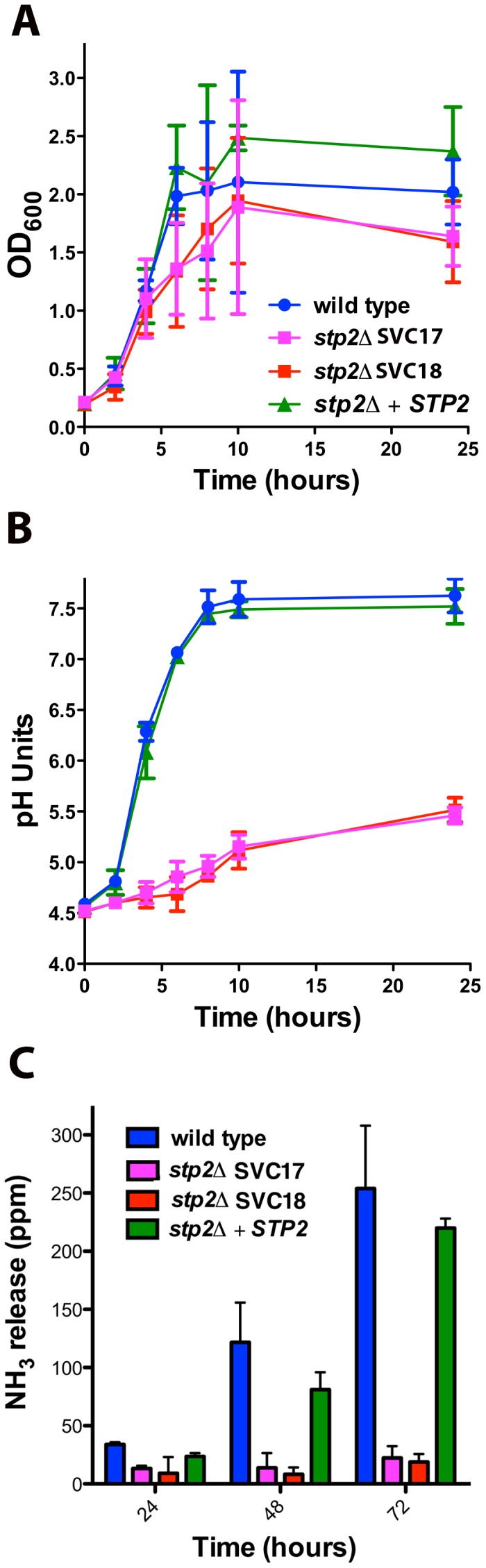
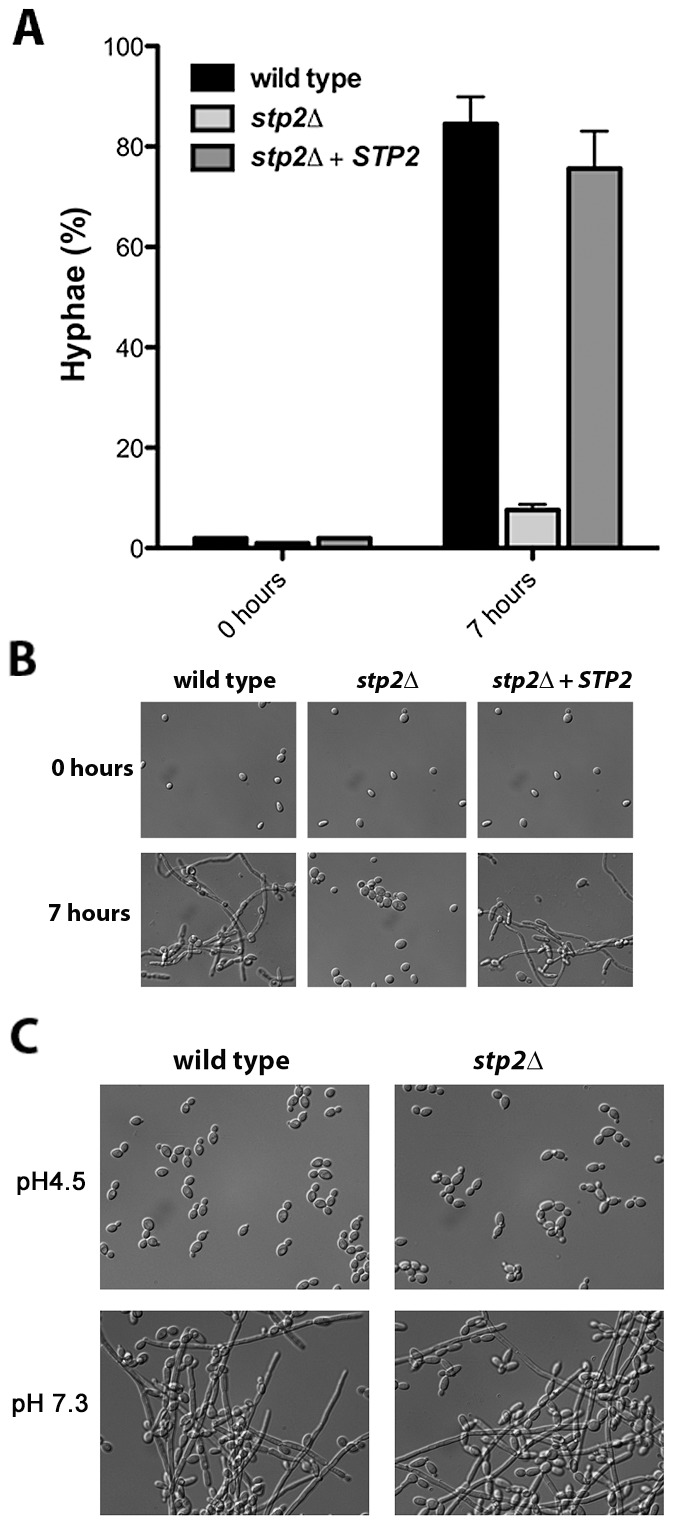
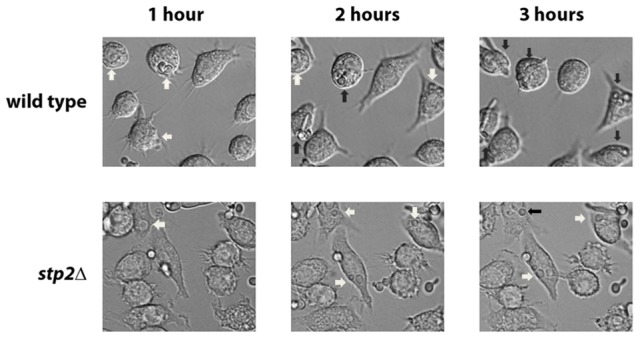
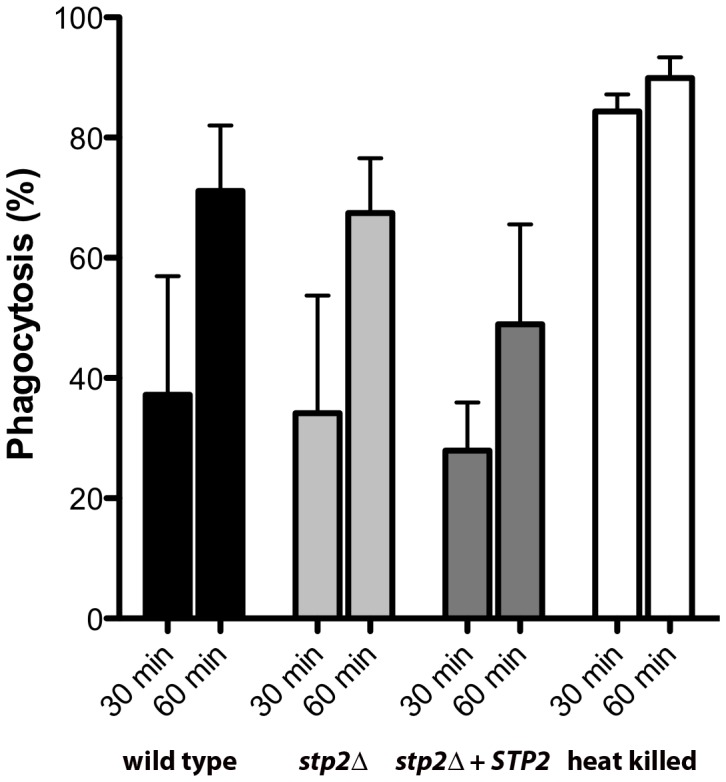
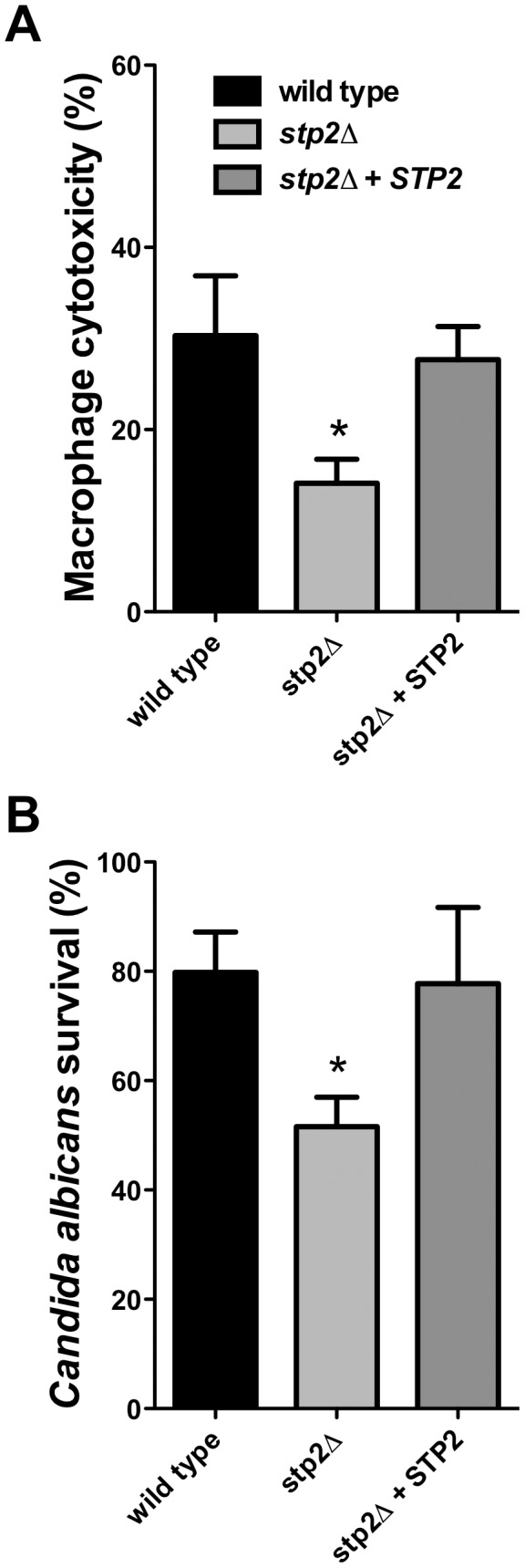
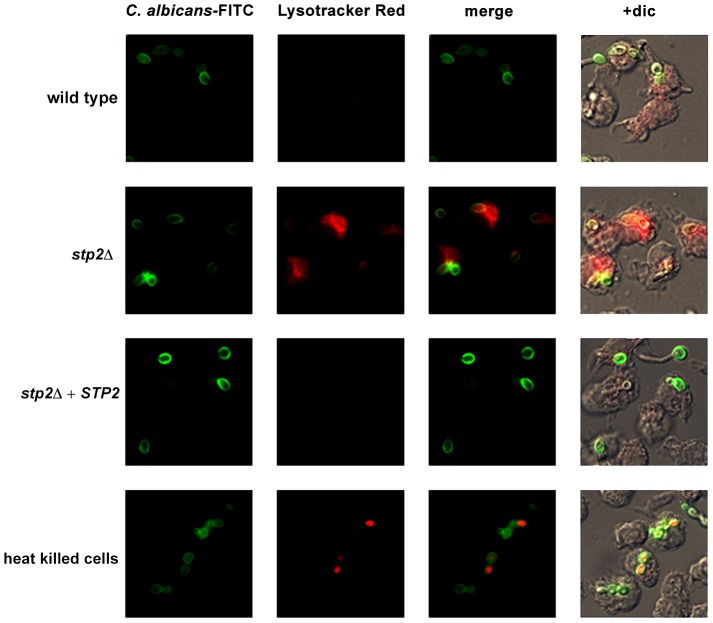
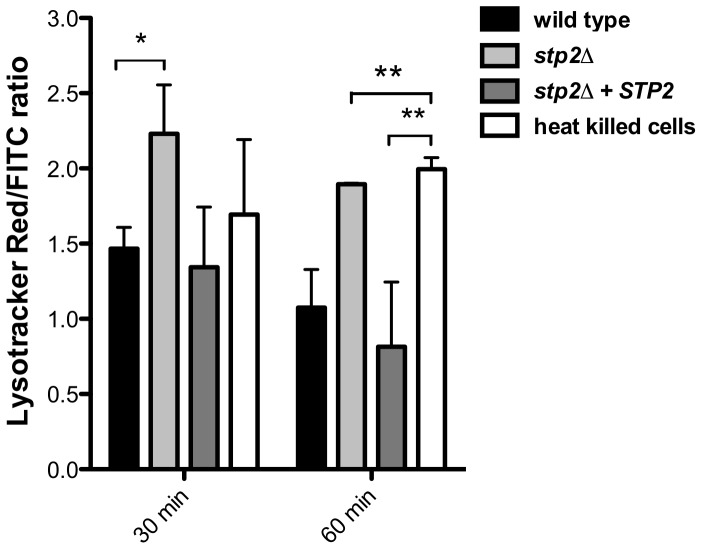
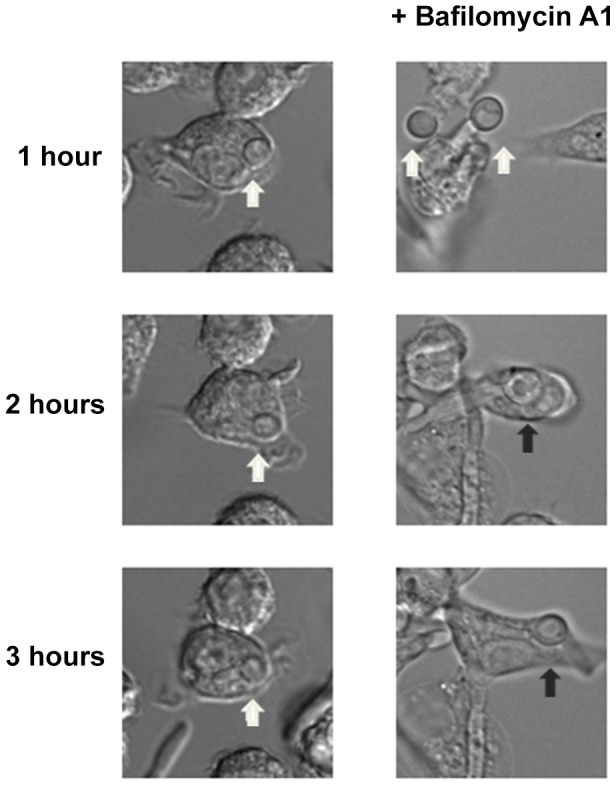
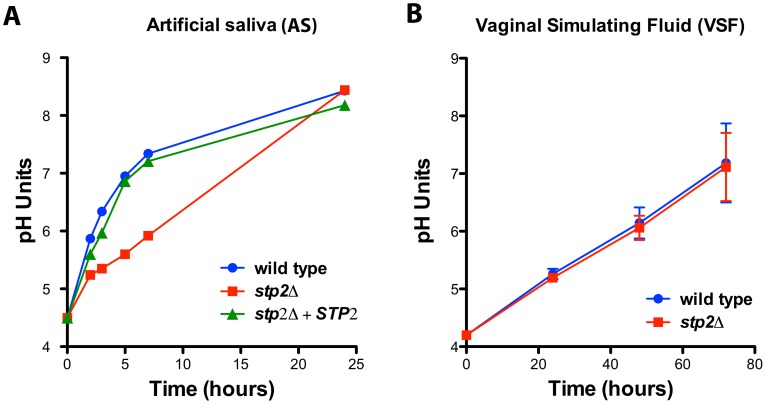
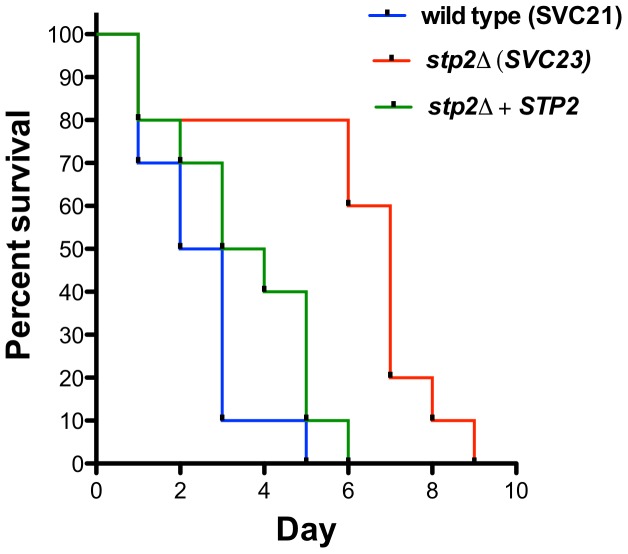
Candida albicans, the most important fungal pathogen of humans, has a unique interaction with macrophages in which phagocytosis induces a switch from the yeast to hyphal form, allowing it to escape by rupturing the immune cell. While a variety of factors induce this switch in vitro, including neutral pH, it is not clear what triggers morphogenesis within the macrophage where the acidic environment should inhibit this transition. In vitro, C. albicans grown in similar conditions in which amino acids are the primary carbon source generate large quantities of ammonia to raise the extracellular pH and induce the hyphal switch. We show here that C. albicans cells neutralize the macrophage phagosome and that neutral pH is a key inducer of germination in phagocytosed cells by using a mutant lacking STP2, a transcription factor that regulates the expression of multiple amino acid permeases, that is completely deficient in alkalinization in vitro. Phagocytosed stp2Δ mutant cells showed significant reduction in hypha formation and escaped from macrophages less readily compared to wild type cells; as a result stp2Δ mutant cells were killed at a higher rate and caused less damage to RAW264.7 macrophages. Stp2p-regulated import leads to alkalinization of the phagosome, since the majority of the wild type cells fail to co-localize with acidophilic dyes, whereas the stp2Δ mutant cells were located in acidic phagosomes. Furthermore, stp2Δ mutant cells were able to form hyphae and escape from neutral phagosomes, indicating that the survival defect in these cells was pH dependent. Finally, these defects are reflected in an attenuation of virulence in a mouse model of disseminated candidiasis. Altogether our results suggest that C. albicans utilizes amino acids to promote neutralization of the phagosomal pH, hyphal morphogenesis, and escape from macrophages.
Overview
The claims and statistics of this paper haven’t been checked yet.
Free: it reads the open-access text and checks the first 5 claims that cite a source we can check. Create a free account to check every claim.
Integrity signals
Registry
Cites
Statistics
Figures
Verification
Claims the paper makes
The claims and statistics of this paper haven’t been checked yet.
Free: it reads the open-access text and checks the first 5 claims that cite a source we can check. Create a free account to check every claim.
Claims other papers make about this one
Each is checked against this paper’s own text: does it say what the citing paper says it does?
The source backs part of the claim, not all of it — or backs it for a different population, condition or comparison.
In the citing paper
“amino acids, which are abundant inside macrophages are an important alternative carbon source for the immune evasion of C. albicans [24–28].”
From The F 1 F o -ATP synthase α subunit of Candida albicans induces inflammatory responses by controlling amino acid catabolism (2023) · cites this paper as [26]
Experimental — accuracy not yet measuredThe source backs part of the claim, not all of it — or backs it for a different population, condition or comparison.
In the citing paper
“However, amino acids, which are abundant inside macrophages, are an important alternative carbon source for C. albicans to escape macrophage killing [24–26].”
From The F 1 F o -ATP synthase α subunit of Candida albicans induces inflammatory responses by controlling amino acid catabolism (2023) · cites this paper as [26]
Experimental — accuracy not yet measuredThe source backs part of the claim, not all of it — or backs it for a different population, condition or comparison.
In the citing paper
“Phagocytized C. albicans produces NH3 through amino acid catabolism to neutralize the acidity of phagosomes, thereby inducing filamentation to destroy and escape from macrophages [26,27].”
From The F 1 F o -ATP synthase α subunit of Candida albicans induces inflammatory responses by controlling amino acid catabolism (2023) · cites this paper as [26]
Experimental — accuracy not yet measuredThe cited source says what the claim attributes to it.
In the citing paper
“Phagocytized C. albicans catabolizes amino acids to produce NH3 to neutralize the acidity of phagosomes [26,27], which induces filamentation for macrophage killing and escape [26,29], thus leading to host inflammatory responses [14].”
From The F 1 F o -ATP synthase α subunit of Candida albicans induces inflammatory responses by controlling amino acid catabolism (2023) · cites this paper as [26]
The cited source says what the claim attributes to it.
In the citing paper
“C. albicans induces filamentation by neutralizing the acidity of phagosomes through amino acid catabolism [26,27].”
From The F 1 F o -ATP synthase α subunit of Candida albicans induces inflammatory responses by controlling amino acid catabolism (2023) · cites this paper as [26]
Self-check
Percentages, sums and reported differences re-computed from the paper’s own numbers.
The self-check needs the paper’s full text.
Citations
Cites
Wisplinghoff, H., Bischoff, T., Tallent, S. M., Seifert, H., Wenzel, R. P., & Edmond, M. B. (2004) · Clinical Infectious Diseases · doi:10.1086/421946 · Cited by 4,496 · cited 1×
“rate of about 40% [3,4].”
Nonfilamentous C. albicans Mutants Are Avirulent
Lo, H.-J., Köhler, J. R., DiDomenico, B., Loebenberg, D., Cacciapuoti, A., & Fink, G. R. (1997) · Cell · doi:10.1016/s0092-8674(00)80358-x · Cited by 1,809 · cited 1×
“netic switch is required for virulence and has therefore been well studied [13,14].”
BackgroundOdds, F. C. (1979) · Medical Entomology and Zoology · Cited by 1,297
The glyoxylate cycle is required for fungal virulence
Lorenz, M. C., & Fink, G. R. (2001) · Nature · doi:10.1038/35083594 · Cited by 745 · cited 3×
“Our data suggests that this alkalinization phenomenon is driven by metabolic changes resulting from nutrient starvation imposed by the phagocyte; metabolism of non-fermentable carbon sources appears to be important during infection as disruption of some these carbon metabolic pathways impairs virulence [19,21–23].”
BackgroundSelf-citationThe SAT1 flipper, an optimized tool for gene disruption in Candida albicans
Reuß, O., Vik, Å., Kolter, R., & Morschhäuser, J. (2004) · Gene · doi:10.1016/j.gene.2004.06.021 · Cited by 742
Transcriptional Response of Candida albicans upon Internalization by Macrophages
Lorenz, M. C., Bender, J. A., & Fink, G. R. (2004) · Eukaryotic Cell · doi:10.1128/ec.3.5.1076-1087.2004 · Cited by 712 · cited 4×
“albicans within macrophages is broadly similar to that seen after nutrient starvation, including repression of translation and glycolysis and activation of metabolic pathways required to use less favored carbon sources, including the glyoxylate cycle, b-oxidation, and gluconeogenesis [17,18,21].”
BackgroundInfluentialSelf-citationSaville, S. P., Lazzell, A. L., Monteagudo, C., & Lopez-Ribot, J. L. (2003) · Eukaryotic Cell · doi:10.1128/ec.2.5.1053-1060.2003 · Cited by 655 · cited 1×
“netic switch is required for virulence and has therefore been well studied [13,14].”
BackgroundHajjeh, R. A., Sofair, A. N., Harrison, L. H., Lyon, G. M., Arthington-Skaggs, B. A., Mirza, S. A., Phelan, M., Morgan, J., Lee-Yang, W., Ciblak, M. A., et al. (2004) · Journal of Clinical Microbiology · doi:10.1128/jcm.42.4.1519-1527.2004 · Cited by 649
Noble, S. M., & Johnson, A. D. (2005) · Eukaryotic Cell · doi:10.1128/ec.4.2.298-309.2005 · Cited by 592 · cited 2×
“Numerous amino acid auxotrophic mutants retain full virulence in the mouse model, including those for leucine, arginine, trypto- phan, and histidine [57–60]; this is the basis for the genetic methodology developed by Noble and Johnson [61].”
BackgroundFradin, C., De Groot, P., MacCallum, D., Schaller, M., Klis, F., Odds, F. C., & Hube, B. (2005) · Molecular Microbiology · doi:10.1111/j.1365-2958.2005.04557.x · Cited by 455 · cited 1×
“albicans within macrophages is broadly similar to that seen after nutrient starvation, including repression of translation and glycolysis and activation of metabolic pathways required to use less favored carbon sources, including the glyoxylate cycle, b-oxidation, and gluconeogenesis [17,18,21].”
Background
Research works printed but not linked: 1
- Brown AJ (2002) Morphogenetic signaling pathways in Candida albicans In: Calderone R, editor. Candida and candidiasis. Washington: ASM Press.
Cited by
Bacterial–fungal interactions: ecology, mechanisms and challenges
Deveau, A., Bonito, G., Uehling, J., Paoletti, M., Becker, M., Bindschedler, S., Hacquard, S., Hervé, V., Labbé, J., Lastovetsky, O. A., et al. (2018) · FEMS Microbiology Reviews · doi:10.1093/femsre/fuy008 · Cited by 794
“Also, C. albicans has been shown to influence the pH of the phagolysosome to increase its chances of survival in phagocytic cells of the immune system (Vylkova and Lorenz 2014; Vylkova 2017).”
BackgroundInteractions of fungal pathogens with phagocytes
Erwig, L. P., & Gow, N. A. R. (2016) · Nature Reviews Microbiology · doi:10.1038/nrmicro.2015.21 · Cited by 626
Pathogenesis and virulence of Candida albicans
Lopes, J. P., & Lionakis, M. S. (2022) · Virulence · doi:10.1080/21505594.2021.2019950 · Cited by 477
“neutralization of the acidic phagosomal pH and yeastto-hyphae transition [102,103].”
Backgroundd'Enfert, C., Kaune, A.-K., Alaban, L.-R., Chakraborty, S., Cole, N., Delavy, M., Kosmala, D., Marsaux, B., Fróis-Martins, R., Morelli, M., et al. (2021) · FEMS Microbiology Reviews · doi:10.1093/femsre/fuaa060 · Cited by 347
Candida parapsilosis: from genes to the bedside
Tóth, R., Nosek, J., Mora-Montes, H. M., Gabaldon, T., Bliss, J. M., Nosanchuk, J. D., Turner, S. A., Butler, G., Vágvölgyi, C., & Gácser, A. (2019) · Clinical Microbiology Reviews · doi:10.1128/cmr.00111-18 · Cited by 327
Metadata
- Authors
- Vylkova, S., & Lorenz, M. C.
- Affiliations
- The University of Texas Health Science Center at Houston (US)
- Corresponding author
- Lorenz, Michael C.
- ORCID
- Vylkova, Slavena
- Venue
- PLoS Pathogens
- Publisher
- Public Library of Science (PLoS)
- Published
- 2014-03-13
- Volume
- 10
- Issue
- 3
- Pages
- e1003995
- ISSN
- 1553-7366 (ISSN-L)
- 1553-7374
- PMC
- PMC3953444
- OpenAlex
- W2022323546
- Cited by
- 174
- References
- 68
- Citations by year
- 2026: 8 · 2025: 7 · 2024: 10 · 2023: 11 · 2022: 13 · 2021: 19 · 2020: 22 · 2019: 18 · 2018: 16 · 2017: 21 · 2016: 13 · 2015: 11 · 2014: 5
- FWCI
- 6.84
- Type
- journal article
- Language
- en
- Open access
- gold
- doi.org
- Locations
- PLoS Pathogens (publishedVersion, cc-by)
- Europe PMC (PubMed Central) (publishedVersion, cc-by)
- PubMed Central (publishedVersion, cc-by)
- PubMed (publishedVersion)
- DOAJ (DOAJ: Directory of Open Access Journals) (submittedVersion)
- Figshare (submittedVersion, cc-by)
- Funders
- National Institute of Allergy and Infectious Diseases (R01AI075091)
- Topics
- Life Sciences › Biochemistry, Genetics and Molecular Biology › Molecular Biology › Fungal and yeast genetics research
- Health Sciences › Medicine › Infectious Diseases › Antifungal resistance and susceptibility
- Health Sciences › Medicine › Infectious Diseases › Fungal Infections and Studies
- Keywords
- Candida albicans, phagosomal pH, hyphal morphogenesis, amino acid transport, macrophage escape, phagocytosis, yeast-to-hypha transition, virulence attenuation, systemic candidiasis, RAW 264.7 macrophages, ammonia
- MeSH terms
- Amino Acids, Animals, Biological Transport, Candida albicans, Candidiasis, Cell Line, Female, Fungal Proteins, Hydrogen-Ion Concentration, Macrophages, Mice, Inbred ICR, Morphogenesis, Phagosomes, Virulence, Hyphae, Mice
About these checks
Registry, retraction, Cites and statistics results are computed, not judged, with one exception: a printed reference that no index lists is read once by a model before it counts as a citation error. Claims are extracted by a model and kept only when their quote appears verbatim in the text; each cited source is then checked, with a model’s help, for whether it says what the claim relies on. Those verdicts can be wrong — read the claim’s quote and the cited source before relying on one.
Statistics and arithmetic are recomputed, not judged.
Confidence bands are shown only for fields calibrated on our annotated test set. None is calibrated yet, so no band is shown.
What counts as a claim ›How we measure confidence ›How we check this ›
Are you an author, or do you see a problem with this page? Request a review
How to cite
Cite CoChat for the checks on this page, and the paper for its own findings.
- This page
- CoChat. (2026). Citation check: Modulation of Phagosomal pH by Candida albicans Promotes Hyphal Morphogenesis and Requires Stp2p, a Regulator of Amino Acid Transport. https://app.cochat.ai/papers/10.1371/journal.ppat.1003995
- The paper
- Vylkova, S., & Lorenz, M. C. (2014). Modulation of Phagosomal pH by Candida albicans Promotes Hyphal Morphogenesis and Requires Stp2p, a Regulator of Amino Acid Transport. PLoS Pathogens. https://doi.org/10.1371/journal.ppat.1003995
Data sources
Bibliographic data: Semantic Scholar, OpenAlex, Crossref.
Contains information from the Semantic Scholar Academic Graph Datasets, made available under the ODC Attribution License (ODC-BY 1.0).
Semantic Scholar’s data is described in: Kinney, R., et al. (2023). The Semantic Scholar Open Data Platform. arXiv:2301.10140.
