

Modulation of Phagosomal pH by Candida albicans Promotes Hyphal Morphogenesis and Requires Stp2p, a Regulator of Amino Acid Transport
Open accessThe DOI matches its Crossref record; 67 of the 68 references it cites were found in a registry or an index.
Abstract
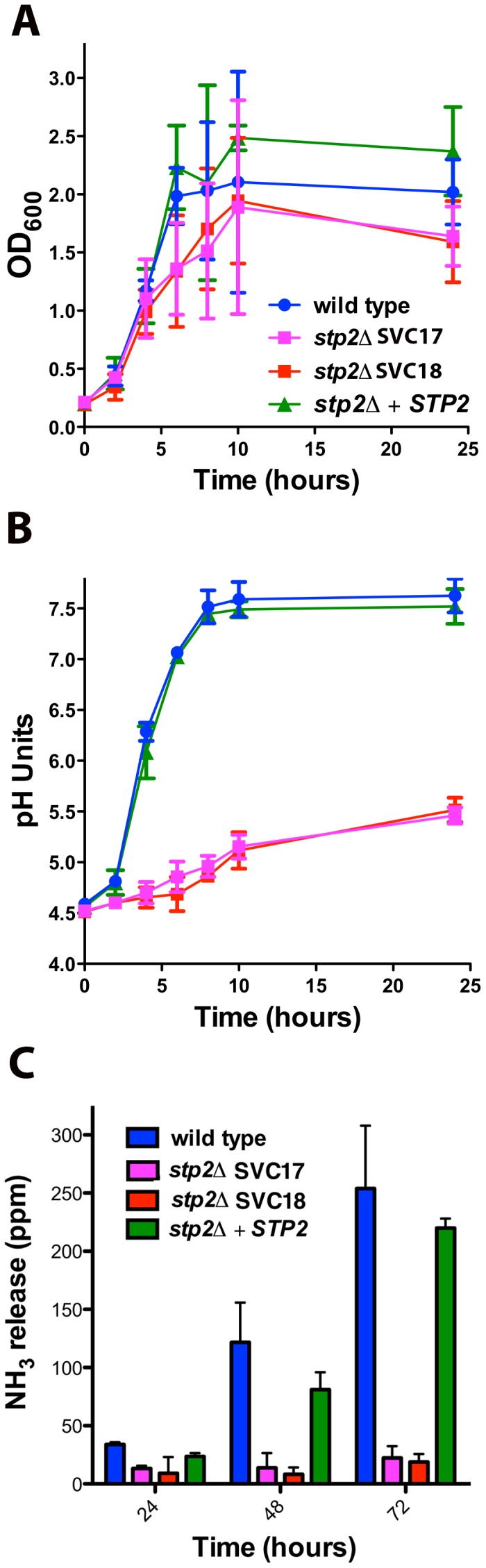
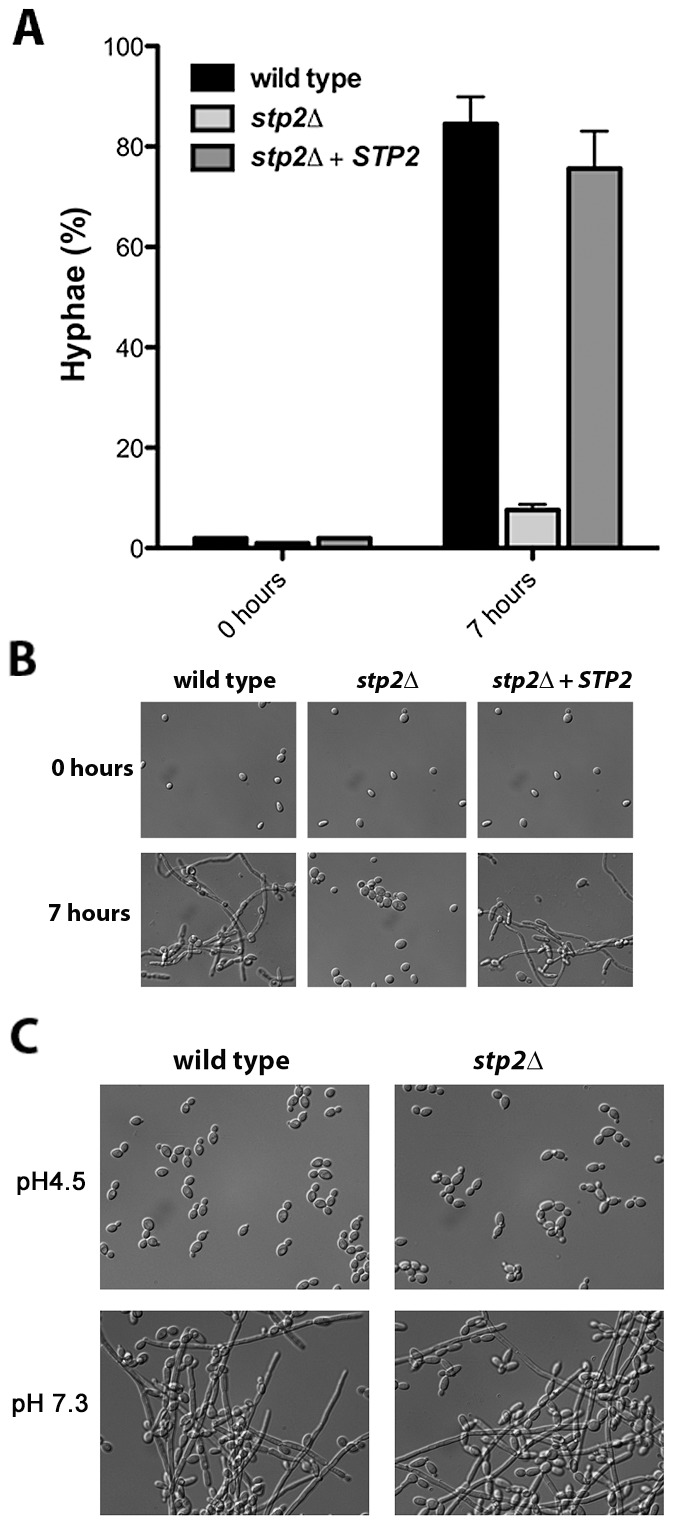
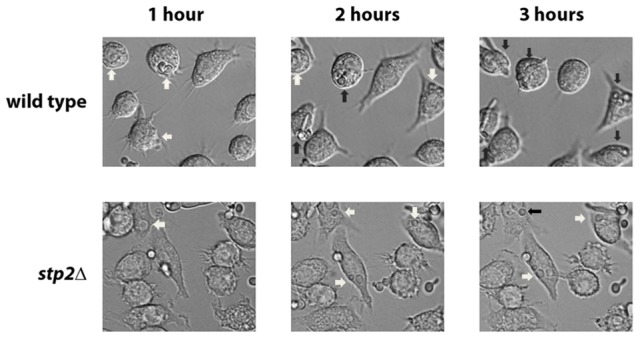
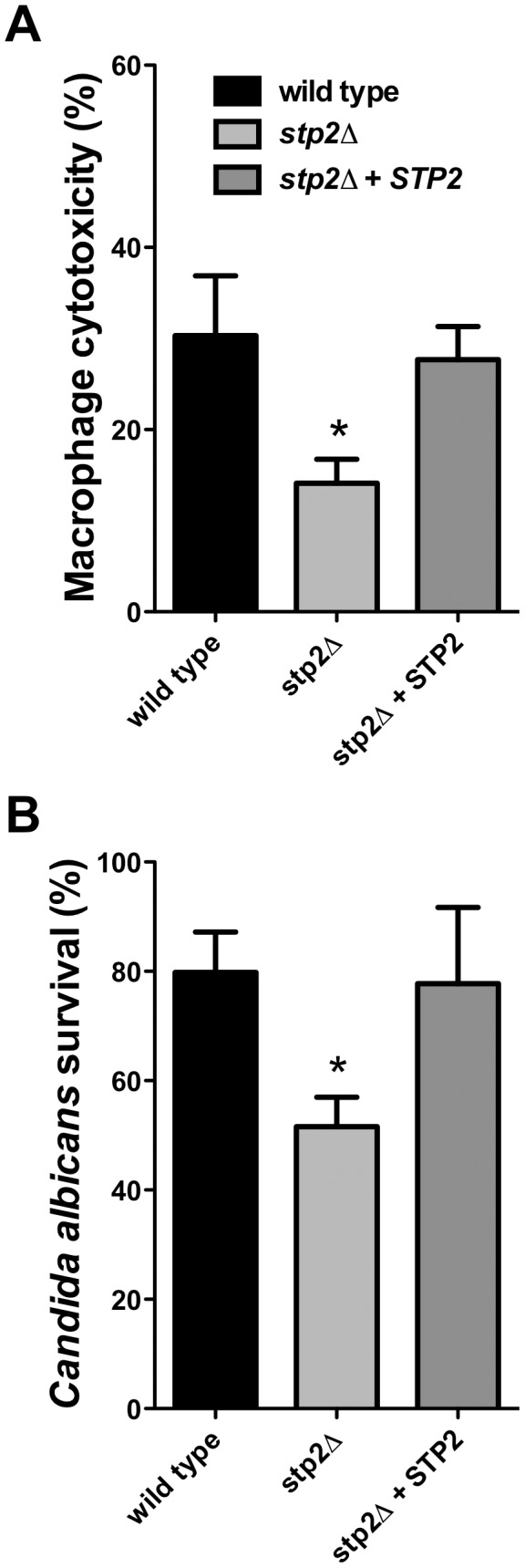
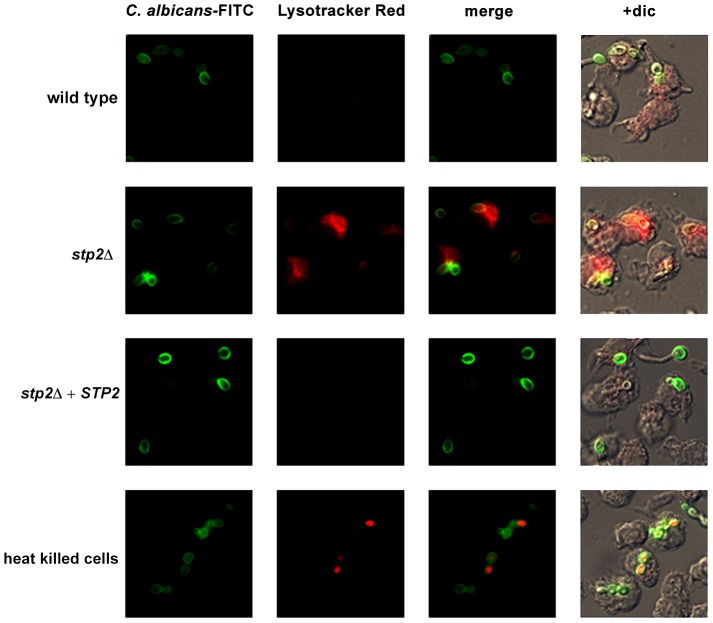
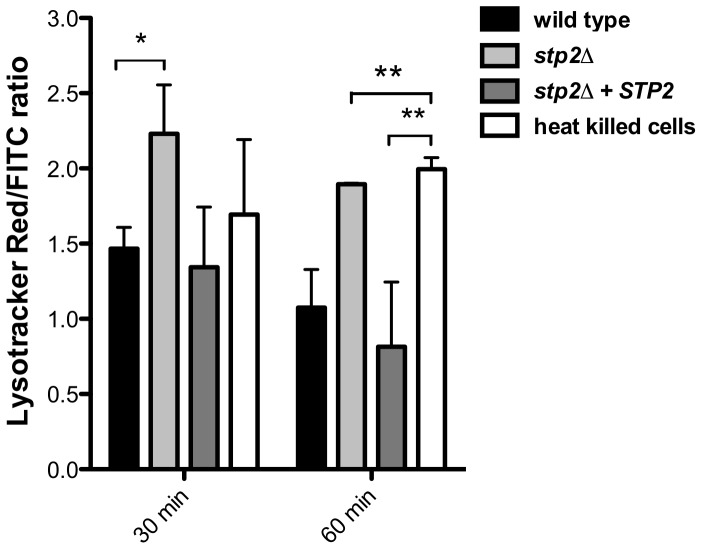
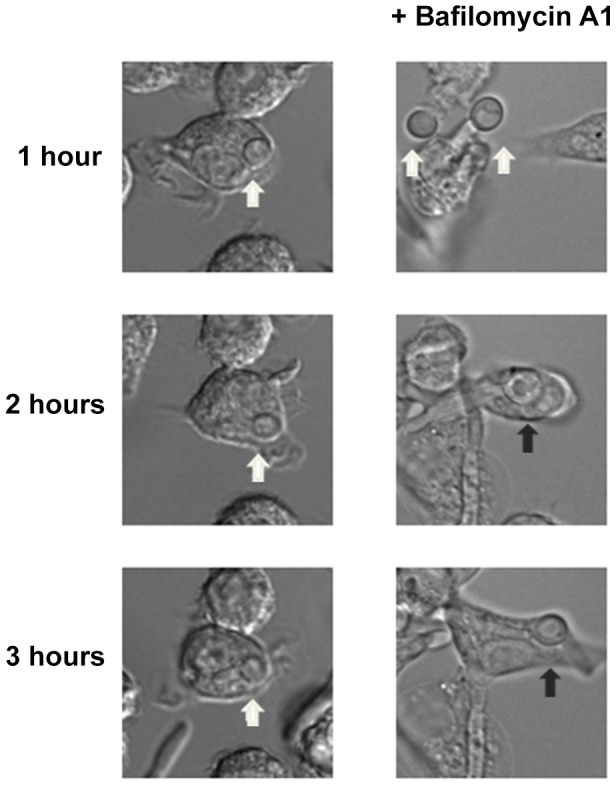
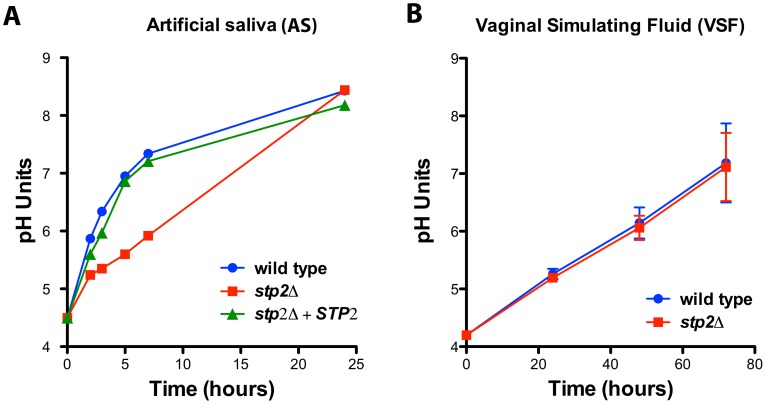
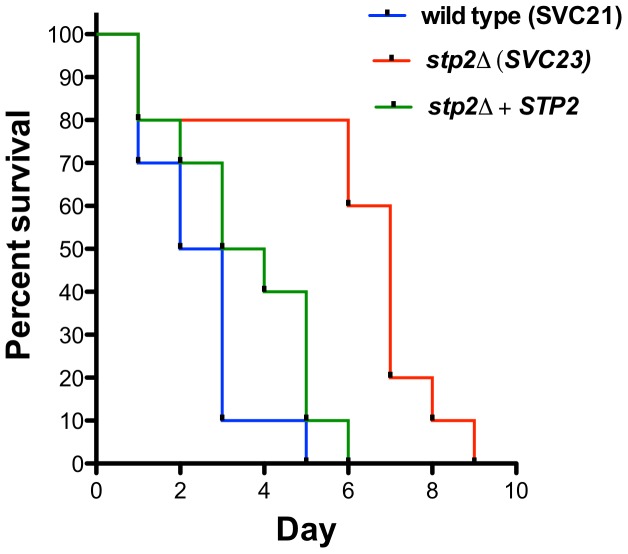
Candida albicans, the most important fungal pathogen of humans, has a unique interaction with macrophages in which phagocytosis induces a switch from the yeast to hyphal form, allowing it to escape by rupturing the immune cell. While a variety of factors induce this switch in vitro, including neutral pH, it is not clear what triggers morphogenesis within the macrophage where the acidic environment should inhibit this transition. In vitro, C. albicans grown in similar conditions in which amino acids are the primary carbon source generate large quantities of ammonia to raise the extracellular pH and induce the hyphal switch. We show here that C. albicans cells neutralize the macrophage phagosome and that neutral pH is a key inducer of germination in phagocytosed cells by using a mutant lacking STP2, a transcription factor that regulates the expression of multiple amino acid permeases, that is completely deficient in alkalinization in vitro. Phagocytosed stp2Δ mutant cells showed significant reduction in hypha formation and escaped from macrophages less readily compared to wild type cells; as a result stp2Δ mutant cells were killed at a higher rate and caused less damage to RAW264.7 macrophages. Stp2p-regulated import leads to alkalinization of the phagosome, since the majority of the wild type cells fail to co-localize with acidophilic dyes, whereas the stp2Δ mutant cells were located in acidic phagosomes. Furthermore, stp2Δ mutant cells were able to form hyphae and escape from neutral phagosomes, indicating that the survival defect in these cells was pH dependent. Finally, these defects are reflected in an attenuation of virulence in a mouse model of disseminated candidiasis. Altogether our results suggest that C. albicans utilizes amino acids to promote neutralization of the phagosomal pH, hyphal morphogenesis, and escape from macrophages.
Overview
The claims and statistics of this paper haven’t been checked yet.
Free: it reads the open-access text and checks the first 5 claims that cite a source we can check. Create a free account to check every claim.
Integrity signals
Registry
Cites
Statistics
Figures
Verification
Claims the paper makes
The claims and statistics of this paper haven’t been checked yet.
Free: it reads the open-access text and checks the first 5 claims that cite a source we can check. Create a free account to check every claim.
Claims other papers make about this one
Each is checked against this paper’s own text: does it say what the citing paper says it does?
The source backs part of the claim, not all of it — or backs it for a different population, condition or comparison.
In the citing paper
“amino acids, which are abundant inside macrophages are an important alternative carbon source for the immune evasion of C. albicans [24–28].”
From The F 1 F o -ATP synthase α subunit of Candida albicans induces inflammatory responses by controlling amino acid catabolism (2023) · cites this paper as [26]
Experimental — accuracy not yet measuredThe source backs part of the claim, not all of it — or backs it for a different population, condition or comparison.
In the citing paper
“However, amino acids, which are abundant inside macrophages, are an important alternative carbon source for C. albicans to escape macrophage killing [24–26].”
From The F 1 F o -ATP synthase α subunit of Candida albicans induces inflammatory responses by controlling amino acid catabolism (2023) · cites this paper as [26]
Experimental — accuracy not yet measuredThe source backs part of the claim, not all of it — or backs it for a different population, condition or comparison.
In the citing paper
“Phagocytized C. albicans produces NH3 through amino acid catabolism to neutralize the acidity of phagosomes, thereby inducing filamentation to destroy and escape from macrophages [26,27].”
From The F 1 F o -ATP synthase α subunit of Candida albicans induces inflammatory responses by controlling amino acid catabolism (2023) · cites this paper as [26]
Experimental — accuracy not yet measuredThe cited source says what the claim attributes to it.
In the citing paper
“Phagocytized C. albicans catabolizes amino acids to produce NH3 to neutralize the acidity of phagosomes [26,27], which induces filamentation for macrophage killing and escape [26,29], thus leading to host inflammatory responses [14].”
From The F 1 F o -ATP synthase α subunit of Candida albicans induces inflammatory responses by controlling amino acid catabolism (2023) · cites this paper as [26]
The cited source says what the claim attributes to it.
In the citing paper
“C. albicans induces filamentation by neutralizing the acidity of phagosomes through amino acid catabolism [26,27].”
From The F 1 F o -ATP synthase α subunit of Candida albicans induces inflammatory responses by controlling amino acid catabolism (2023) · cites this paper as [26]
Self-check
Percentages, sums and reported differences re-computed from the paper’s own numbers.
The self-check needs the paper’s full text.
Citations
Cites
Wisplinghoff, H., Bischoff, T., Tallent, S. M., Seifert, H., Wenzel, R. P., & Edmond, M. B. (2004) · Clinical Infectious Diseases · doi:10.1086/421946 · Cited by 4,496 · cited 1×
“rate of about 40% [3,4].”
Nonfilamentous C. albicans Mutants Are Avirulent
Lo, H.-J., Köhler, J. R., DiDomenico, B., Loebenberg, D., Cacciapuoti, A., & Fink, G. R. (1997) · Cell · doi:10.1016/s0092-8674(00)80358-x · Cited by 1,809 · cited 1×
“netic switch is required for virulence and has therefore been well studied [13,14].”
BackgroundOdds, F. C. (1979) · Medical Entomology and Zoology · Cited by 1,297
The glyoxylate cycle is required for fungal virulence
Lorenz, M. C., & Fink, G. R. (2001) · Nature · doi:10.1038/35083594 · Cited by 745 · cited 3×
“Our data suggests that this alkalinization phenomenon is driven by metabolic changes resulting from nutrient starvation imposed by the phagocyte; metabolism of non-fermentable carbon sources appears to be important during infection as disruption of some these carbon metabolic pathways impairs virulence [19,21–23].”
BackgroundSelf-citationThe SAT1 flipper, an optimized tool for gene disruption in Candida albicans
Reuß, O., Vik, Å., Kolter, R., & Morschhäuser, J. (2004) · Gene · doi:10.1016/j.gene.2004.06.021 · Cited by 742
Transcriptional Response of Candida albicans upon Internalization by Macrophages
Lorenz, M. C., Bender, J. A., & Fink, G. R. (2004) · Eukaryotic Cell · doi:10.1128/ec.3.5.1076-1087.2004 · Cited by 712 · cited 4×
“albicans within macrophages is broadly similar to that seen after nutrient starvation, including repression of translation and glycolysis and activation of metabolic pathways required to use less favored carbon sources, including the glyoxylate cycle, b-oxidation, and gluconeogenesis [17,18,21].”
BackgroundInfluentialSelf-citationSaville, S. P., Lazzell, A. L., Monteagudo, C., & Lopez-Ribot, J. L. (2003) · Eukaryotic Cell · doi:10.1128/ec.2.5.1053-1060.2003 · Cited by 655 · cited 1×
“netic switch is required for virulence and has therefore been well studied [13,14].”
BackgroundHajjeh, R. A., Sofair, A. N., Harrison, L. H., Lyon, G. M., Arthington-Skaggs, B. A., Mirza, S. A., Phelan, M., Morgan, J., Lee-Yang, W., Ciblak, M. A., et al. (2004) · Journal of Clinical Microbiology · doi:10.1128/jcm.42.4.1519-1527.2004 · Cited by 649
Noble, S. M., & Johnson, A. D. (2005) · Eukaryotic Cell · doi:10.1128/ec.4.2.298-309.2005 · Cited by 592 · cited 2×
“Numerous amino acid auxotrophic mutants retain full virulence in the mouse model, including those for leucine, arginine, trypto- phan, and histidine [57–60]; this is the basis for the genetic methodology developed by Noble and Johnson [61].”
BackgroundFradin, C., De Groot, P., MacCallum, D., Schaller, M., Klis, F., Odds, F. C., & Hube, B. (2005) · Molecular Microbiology · doi:10.1111/j.1365-2958.2005.04557.x · Cited by 455 · cited 1×
“albicans within macrophages is broadly similar to that seen after nutrient starvation, including repression of translation and glycolysis and activation of metabolic pathways required to use less favored carbon sources, including the glyoxylate cycle, b-oxidation, and gluconeogenesis [17,18,21].”
Background
Research works printed but not linked: 1
- Brown AJ (2002) Morphogenetic signaling pathways in Candida albicans In: Calderone R, editor. Candida and candidiasis. Washington: ASM Press.
Cited by
Items 101–183 of 183
Fungal mechanisms of intracellular survival: what can we learn from bacterial pathogens?
Stuckey, P. V., & Santiago-Tirado, F. H. (2023) · Infection and Immunity · doi:10.1128/iai.00434-22 · Cited by 22
“Damage of the phagosomal membrane by candidalysin could lead to phagosomal alkalinization, which would reduce the microbicidal properties of the phagolysosome while also promoting hyphal growth (99).”
BackgroundAlves, R. M. A., Mota, S. M. D. S., Silva, S. M., Rodrigues, C. F., Brown, A. J. P., Henriques, M., Casal, M., & Paiva, S. (2017) · Biofouling · doi:10.1080/08927014.2017.1392514 · Cited by 24
“Inside the human host, C. albicans faces different pH environments, from acidic to mildly basic, and the ability to adjust to these fluctuations is essential for its pathogenicity (De Bernardis et al. 1998; Davis 2009; Vylkova et al. 2011; Vylkova and Lorenz 2014).”
BackgroundHuman neutrophils dump Candida glabrata after intracellular killing
Essig, F., Hünniger, K., Dietrich, S., Figge, M. T., & Kurzai, O. (2015) · Fungal Genetics and Biology · doi:10.1016/j.fgb.2015.09.008 · Cited by 20
Respiration supports intraphagosomal filamentation and escape of Candida albicans from macrophages
Case, N. T., Westman, J., Hallett, M. T., Plumb, J. D., Farheen, A., Maxson, M. E., MacAlpine, J., Liston, S. D., Hube, B., Robbins, N., et al. (2023) · mBio · doi:10.1128/mbio.02745-23 · Cited by 20
Miramón, P., Pountain, A. W., van Hoof, A., & Lorenz, M. C. (2020) · Infection and Immunity · doi:10.1128/iai.00763-19 · Cited by 20
“Indeed, stp2Δ/Δ mutants are modestly attenuated in a mouse model of disseminated candidiasis, while the ssy1Δ/Δ mutant is not (32, 33), which may be a consequence of this expanded regulon.”
BackgroundInfluentialSelf-citationde Almeida, R. F. M., Santos, T. C. B., Silva, L. C., Suchodolski, J., Krasowska, A., Stokowa‐Sołtys, K., Puchalska, M., & Starosta, R. (2020) · Dyes and Pigments · doi:10.1016/j.dyepig.2020.108771 · Cited by 18
Veselská, T., Homutová, K., Fraile, P. G., Kubátová, A., Martínková, N., Pikula, J., & Kolařík, M. (2020) · Scientific Reports · doi:10.1038/s41598-020-73619-7 · Cited by 18
Köhler, J. R., Hube, B., Puccia, R., Casadevall, A., & Perfect, J. R. (2017) · ASM Press eBooks · doi:10.1128/9781555819583.ch39 · Cited by 44
Usher, J., Ribeiro, G. F., & Childers, D. S. (2023) · Microbiology Spectrum · doi:10.1128/spectrum.03724-22 · Cited by 17
Case, N. T., Duah, K., Larsen, B. G., Wong, C. J., Gingras, A., O’Meara, T. R., Robbins, N., Veri, A. O., Whitesell, L. J., & Cowen, L. E. (2021) · Cell Reports · doi:10.1016/j.celrep.2021.109584 · Cited by 18
“Several physical factors in the macrophage phagosome have been implicated in triggering C. albicans filamentation, including, but not limited to, nutrient deprivation (Lorenz et al., 2004), alkaline pH (Vylkova and Lorenz, 2014, 2017), and oxidative stress (Shi et al., 2007).”
GNP2 Encodes a High-Specificity Proline Permease in Candida albicans
Garbe, E., Miramón, P., Gerwien, F., Ueberschaar, N., Hansske-Braun, L., Brandt, P., Böttcher, B., Lorenz, M. C., & Vylkova, S. (2022) · mBio · doi:10.1128/mbio.03142-21 · Cited by 18
“The functionality of this pathway is crucial for fungal growth on multiple amino acids and linked to pathogenicity, as stp2D or SPS component mutants are attenuated in vivo (16, 35, 36).”
BackgroundSelf-citationSchrevens, S., Durandau, E., Tran, V. D. T., & Sanglard, D. (2022) · Virulence · doi:10.1080/21505594.2022.2095716 · Cited by 17
Böttcher, B., Hoffmann, B., Garbe, E., Weise, T., Cseresnyés, Z., Brandt, P., Dietrich, S., Driesch, D., Figge, M. T., & Vylkova, S. (2020) · Frontiers in Microbiology · doi:10.3389/fmicb.2020.00794 · Cited by 18
Self-citationHan, Q., Pan, C., Wang, Y., Wang, N., Wang, Y., & Sang, J. (2019) · Fungal Genetics and Biology · doi:10.1016/j.fgb.2019.103240 · Cited by 16
IRE1α promotes phagosomal calcium flux to enhance macrophage fungicidal activity
McFadden, M. J., Reynolds, M. B., Michmerhuizen, B. C., Olafsson, E. B., Marshall, S. A., Davis, F. A., Schultz, T. L., Iwawaki, T., Sexton, J. Z., O’Riordan, M. X., et al. (2025) · Cell Reports · doi:10.1016/j.celrep.2025.115694 · Cited by 13
Wilson, H. B., & Lorenz, M. C. (2023) · Infection and Immunity · doi:10.1128/iai.00087-23 · Cited by 14
“albicans neutralized the phagosome, triggering the induction of hyphal growth due to the increase in pH (20).”
BackgroundSelf-citationHan, Q., Pan, C., Wang, Y., Zhao, L., Wang, Y., & Sang, J. (2019) · Frontiers in Microbiology · doi:10.3389/fmicb.2019.02943 · Cited by 15
“The antifungal drug caspofungin (CAS) is a non-competitive inhibitor of β-1,3-glucan synthase and commonly used clinically to treat a variety of fungal infections, including C. albicans infections (Walker et al., 2010).”
BackgroundMacrophage pyroptosis induced by Candida albicans
Zhang, F.-Y., Lian, N., & Li, M. (2024) · Pathogens and Disease · doi:10.1093/femspd/ftae003 · Cited by 12
Pedro, N. A., Fontebasso, G., Pinto, S. N., Alves, M. M., & Mira, N. P. (2023) · Microbial Cell · doi:10.15698/mic2023.04.795 · Cited by 13
Hassan, M. I. A., Keller, M., Hillger, M., Binder, U., Reuter, S., Herold, K., Telagathoti, A., Dahse, H., Wicht, S., Trinks, N., et al. (2021) · Computational and Structural Biotechnology Journal · doi:10.1016/j.csbj.2021.01.023 · Cited by 11
Huang, X., Chen, G., Wu, L., Zou, Y., Zhang, L., Li, S., Li, K., Jiang, Z., Zhang, Y., Chen, X., et al. (2025) · Nature Communications · doi:10.1038/s41467-025-62953-x · Cited by 12
Research progress on the function and regulatory pathways of amino acid permeases in fungi
Yang, Y., Li, Y., & Zhu, J. K. (2024) · World Journal of Microbiology and Biotechnology · doi:10.1007/s11274-024-04199-1 · Cited by 10
Methylcitrate cycle gene MCD is essential for the virulence of Talaromyces marneffei
Feng, J., He, L., Xiao, X., Chen, Z., Chen, C., Chu, J., Lu, S., Li, X., Mylonakis, E. E., & Xi, L. (2019) · Medical Mycology · doi:10.1093/mmy/myz063 · Cited by 9
Zawrotniak, M., Juszczak, M., & Rąpała‐Kozik, M. (2023) · Yeast · doi:10.1002/yea.3842 · Cited by 8
“C. albicans has a number of mechanisms to avoid phagocytosis, that is, changing the pH inside the phagosome, or rapid growth leading to release from the vesicle (Vylkova & Lorenz, 2014, 2017).”
BackgroundDiez‐Orejas, R., Casarrubios, L., Feito, M. J., Rojo, J. M., Vallet‐Regí, M., Arcos, D., & Portolés, M. T. (2021) · International Immunopharmacology · doi:10.1016/j.intimp.2021.107457 · Cited by 8
“Therefore, the conditions we have employed for these phagocytosis studies have been settled down taking into account previous studies [42-45].”
MethodCommensal to Pathogen Transition of Candida albicans
Niemiec, M. J., Kapitan, M., Polke, M., & Jacobsen, I. D. (2017) · Elsevier eBooks · doi:10.1016/b978-0-12-809633-8.12077-1 · Cited by 9
Diverse mechanisms control amino acid‐dependent environmental alkalization by Candida albicans
Silao, F. G. S., Valeriano, V. D., Uddström, E., Falconer, E., & Ljungdahl, P. O. (2024) · Molecular Microbiology · doi:10.1111/mmi.15216 · Cited by 10
“…deficiency observed in a strain lacking STP2 (Silao et al., 2020), which has been extensively referenced as an alkalization-deficient strain (Danhof et al., 2016; Hollomon et al., 2022; Miramon et al., 2020; Miramon & Lorenz, 2016; Todd et al., 2019; Vylkova et al., 2011; Vylkova & Lorenz, 2014).”
BackgroundResultInfluentialLiu, X., Li, Z., Hu, Y., Tao, L., & Wang, H. (2026) · International Journal of Molecular Sciences · doi:10.3390/ijms27031515 · Cited by 7
“[69,70]”
Arévalo‐Jaimes, B. V., & Torrents, E. (2024) · Current Research in Microbial Sciences · doi:10.1016/j.crmicr.2024.100316 · Cited by 8
“…of C. albicans to alkalinize the media and the influence of pH on S. aureus virulence (Regassa and Betley, 1992, Regassa, et al., 1992, Todd et al., 2019a, Vylkova and Lorenz, 2014), we evaluated whether the appearance of S. aureus colony variants induced by C. albicans was related to pH changes.”
Molecular design of a pathogen activated, self-assembling mechanopharmaceutical device
Willmer, A. R., Nie, J., la Rosa, M. V. G. D., Wen, W., Dunne, S., & Rosania, G. R. (2022) · Journal of Controlled Release · doi:10.1016/j.jconrel.2022.05.029 · Cited by 8
Characterization of extracellular nucleotide metabolism inCandida albicans
Rodrigues, L., Russo-Abrahão, T., Cunha, R. A., Gonçalves, T., & Meyer‐Fernandes, J. R. (2015) · FEMS Microbiology Letters · doi:10.1093/femsle/fnv212 · Cited by 6
Challenges posed by fungi to host immunity: Mechanisms of immune evasion
Gu, Y., Wang, H., Wang, Y.-S., Wang, L., & Jia, X.-M. (2026) · hLife · doi:10.1016/j.hlife.2025.12.008 · Cited by 5
“Ca. albicans utilizes the Stp2-Ato5 pathway to neutralize phagosomal pH, promote hyphal morphogenesis, and facilitate escape from macrophages [112,113].”
Deletion of the ATP2 Gene in Candida albicans Blocks Its Escape From Macrophage Clearance
Zhang, Y., Tang, C., Zhang, Z., Li, S., Zhao, Y., Weng, L., & Zhang, H. (2021) · Frontiers in Cellular and Infection Microbiology · doi:10.3389/fcimb.2021.643121 · Cited by 5
“albicans can also adapt to or even alkalize the acidic environment within macrophages, creating more favorable conditions for its survival and escape (Vylkova and Lorenz, 2014).”
BackgroundMethodVega-Vásconez, A., Castillo-Patiño, D. L., Garza-Cervantes, J. A., Santacruz, A., & Morones‐Ramírez, J. R. (2026) · Antibiotics · doi:10.3390/antibiotics15030279 · Cited by 4
“Sustained acid stress increases the energetic demand needed to maintain intracellular pH homeostasis, thereby limiting fungal growth [21].”
Zhao, Y., Zou, W., Su, C., & Lu, Y. (2026) · iFungi · doi:10.26599/ifungi.2026.9670011 · Cited by 4
Surviving the Storm: How Candida Species Master Adaptation for Pathogenesis
Rana, A., Gupta, N., Asif, S., & Thakur, A. (2024) · Springer eBooks · doi:10.1007/978-981-97-4909-6_5 · Cited by 5
Candida albicans Commensalism and Human Diseases
Chen, C., & Huang, X. (2018) · Springer eBooks · doi:10.1007/978-1-4939-7534-1_10 · Cited by 5
Li, S., Liu, Y., Weng, L., Zhao, Y., Zhang, Y., Zhang, Z., Yang, Y., Chen, Q., Liu, X., & Zhang, H. (2023) · Virulence · doi:10.1080/21505594.2023.2190645 · Cited by 3
“01% vol/vol) [26,27] was added and pipetted into a 12-well plate.”
BackgroundMethodInfluentialCandidiasis and opportunistic mycosis in human
Tedila, H., Assefa, A., & Haji, F. (2019) · Novel Research in Microbiology Journal · doi:10.21608/nrmj.2019.28105 · Cited by 6
“and can in severe cases cause life-threatening systemic infections (Vylkova and Lorenz, 2014).”
BackgroundScott, J., & Amich, J. (2021) · Elsevier eBooks · doi:10.1016/b978-0-12-818731-9.00059-8 · Cited by 5
Gu, Y., Wang, Y., Wang, H., & Jia, X.-M. (2026) · iFungi · doi:10.26599/ifungi.2026.9670008 · Cited by 2
A novel Candida glabrata doxycycline-inducible system for in vitro/in vivo use
Schrevens, S., & Sanglard, D. (2022) · FEMS Yeast Research · doi:10.1093/femsyr/foac046 · Cited by 3
“During invasive infection, C. glabrata is phagocytosed by macrophages (Kasper et al. 2015) and an important nitrogen source inside the phagolysosome could be amino acids, which was shown during C. albicans infection (Vylkova and Lorenz 2014).”
BackgroundHyphal swelling induced in the phagosome of macrophages
Alonso, M. F., Bain, J. M., Erwig, L. P., Brown, A. J. P., & Gow, N. A. R. (2024) · Fungal Biology · doi:10.1016/j.funbio.2024.08.011 · Cited by 3
Candida Infections: An Update on Host Immune Defenses and Anti-Fungal Drugs
Gao, N., & Chen, C. (2016) · doi:10.11979/idtm.201601005 · Cited by 2
Wang, Y., Wang, N., Liu, J., Zhang, Y., Li, X., & Han, Q. (2021) · FEMS Yeast Research · doi:10.1093/femsyr/foab010 · Cited by 3
Christou, S., Evans, S., Knafler, H., Rooij, I. I. S., Ayscough, K. R., & Johnston, S. A. (2025) · Molecular Microbiology · doi:10.1111/mmi.70032 · Cited by 1
The Changing Face of Candida in Southeast Asia
Espiritu, L. M., Capule, P. R. D., Casulla, L. Y., Yu, P. K., Carascal, M. B., Ombao, D. J. N., Notarte, K. I., Guerrero, J. J. G., & Chaturvedi, V. P. (2025) · Springer eBooks · doi:10.1007/978-981-95-2640-6_6 · Cited by 1
Guo, H., Huang, T., Zhao, J. X., Chen, H., & Chen, G. (2018) · Applied Microbiology and Biotechnology · doi:10.1007/s00253-018-9010-9 · Cited by 1
Host-Induced Stress Response in Human Pathogenic Fungi
Viana, R., Pais, P., Cavalheiro, M., Galocha, M., & Teixeira, M. C. (2021) · Elsevier eBooks · doi:10.1016/b978-0-12-819990-9.00035-4 · Cited by 1
Characterization of the ATO Gene Family in Alternative Carbon Metabolism
Danhof, H. A. (2016) · Digital Commons-TMC (Texas Medical Center)
[Progress on the role of Toll-like receptors in Candida albicans infections].
Yun, Z., & Jianping, P. (2016) · PubMed Central · doi:10.3785/j.issn.1008-9292.2016.05.14
Capilla, B. H. (2016) · Tesis Doctorals en Xarxa (Consorci de Serveis Universitaris de Catalunya) · Cited by 1
Xie, J. L. (2017) · TSpace (University of Toronto) · Cited by 2
The impact of lemongrass, oregano, and thyme essential oils on Candida albicans’ virulence factors
Eddins, J. M. (2021) · Access Microbiology · doi:10.1099/acmi.cc2021.po0018
“An acidic environment inhibits the ability of Candida albicans to switch to the more virulent hyphal phase (Vylkova & Lorenz, 2014).”
BackgroundChronic invasive candidiasis in murine CARD9-deficiency
Landekic, M. (2021) · eScholarship@McGill (McGill) · doi:10.82308/17175 · Cited by 1
Hall, R. A. (2020) · Faculty Opinions – Post-Publication Peer Review of the Biomedical Literature · doi:10.3410/f.734004638.793579588
Interactions Between Intracellular Fungal Pathogens and Host Phagocytes
Case, N. T., Robbins, N., & Cowen, L. E. (2022) · Elsevier eBooks · doi:10.1016/b978-0-12-821618-7.00042-0
Physiology and metabolism of fungal pathogens
Gow, N. A. R., & Brown, A. J. P. (2017) · Oxford University Press eBooks · doi:10.1093/med/9780198755388.003.0003
Hube, B., & Kurzai, O. (2017) · Oxford University Press eBooks · doi:10.1093/med/9780198755388.003.0011
Hube, B., & Brunke, S. (2020) · Faculty Opinions – Post-Publication Peer Review of the Biomedical Literature · doi:10.3410/f.737216998.793573821
Pál, S. E. (2022) · SZTE Repository of Dissertations (University of Szeged) · doi:10.14232/phd.11334
McFadden, M. J., Reynolds, M. B., Michmerhuizen, B. C., Olafsson, E. B., Anderson, F. M., Schultz, T. L., O’Riordan, M. X., & O’Meara, T. R. (2023) · bioRxiv (Cold Spring Harbor Laboratory) · doi:10.1101/2023.10.02.560560
Meza‐Davalos, T., García-Ortega, L. F., & Mancera, E. (2025) · Molecular Microbiology · doi:10.1111/mmi.70012
“The mutants ace2 , fgr15 , rap1 , rca1 , ssn6 , and stp2 showed deviant morphology in both species and are in agreement with previous reports in C. albicans (Braun et al. 2001; Homann et al. 2009; Hwang et al. 2003; Moran et al. 2007; Mulhern et al. 2006; Vylkova and Lorenz 2014).”
Sukted, J., Junsuntonpass, A., Homchan, A., Mongkolsuk, S., Pakotiprapha, D., & Matangkasombut, O. (2025) · Scientific Reports · doi:10.1038/s41598-025-12238-6
Garbe, E., Schäuble, S., Böttcher, B., Jesse, R., Driesch, D., van Wijlick, L., Elshafee, O., Schille, T. B., Hube, B., Panagiotou, G., et al. (2025) · mSystems · doi:10.1128/msystems.00226-25 · Cited by 1
“Our analyses focused on the metabolic changes in the fungal response to amino acid starvation using the uptake-deficient strain stp2 Δ, whose growth is hindered in amino acid-rich medium (23).”
Self-citationZhang, C., Xu, C., Wang, Y., Huang, J., & Zhao, X. (2025) · Microorganisms · doi:10.3390/microorganisms13122852
“…affects the infection strategy of pathogens and the defense mechanism of host plants [11]. ammonia released during amino acid catabolism can neutralize the acidic phagosome environment, facilitating yeast-to-hypha transition and immune escape, a process dependent on regulators like Stp2p [12,13].”
Bantel, Y. (2019) · OPUS Publication Server of the University of Stuttgart (University of Stuttgart) · doi:10.18419/opus-10679
Iwuchukwu, N. C. (2024) · Spectrum Research Repository (Concordia University)
Le granulome à Candida : modèle de persistance pour l’étude de l’interaction hôte-pathogène
Misme‐Aucouturier, B. (2017) · theses.fr (ABES) · doi:10.70675/417f4a06z6c24z44b4z83c1z00d64e72fb36
Assessment of the metabolome in genomically diverse Candida albicans isolates
Alaban, L. R. (2022) · theses.fr (ABES) · doi:10.70675/6127ebd7z2b67z4728z960dzdc64762b4c70
candida albicans sur puce : approche biomécanique de la plasticité morphogénétique de c. albicans
Albert, L. (2022) · theses.fr (ABES) · doi:10.70675/1f188066z3dd4z4ecbz8c2fzf2377b89514f · Cited by 2
Interactions hôte-candida au cours des péritonites fongiques graves de réanimation
Novy, E. (2024) · theses.fr (ABES) · doi:10.70675/bb875beazbffcz45cdz85b2z2ac1b68c7226
Peng, X., Xie, Y., Wang, R., Chen, W., Yu, H., & Song, Z. (2026) · International Journal of Molecular Sciences · doi:10.3390/ijms27146437
Wang, J., Chen, H., & Tang, J. (2026) · Microbiological Research · doi:10.1016/j.micres.2026.128654
Oliveira, R. S., Gordijo, M. C., Segura, W. D., Manfio, P. H. C., de Moraes, L. B., Lima, S. F., Serrano, S. M. T., Chaves, A. F. A., & Batista, W. L. (2026) · Journal of Proteome Research · doi:10.1021/acs.jproteome.6c00370
Patitz, J. J., Nieuwenhuizen, N. E., Solomatina, A., Bachelot, Y., Krüger, T., Svensson, C., Hoeppener, S., Zimmermann, A.-K., Blango, M. G., Martin, R., et al. (2026) · Journal of Extracellular Vesicles · doi:10.1002/jev2.70363
“In contrast to other phagocytic cells, human neutrophils inhibit intracellular filamentation of C. albicans and efficiently kill engulfed fungal cells (Olivier et al. 2022 ; Vylkova and Lorenz 2014 ; Wozniok et al. 2008 ).”
Candida albicans reprograms Staphylococcus aureus glycolytic metabolism to drive enhanced virulence
Wan, X., Wu, Y. Q., Yang, Q., Wu, R., Chen, T., & Luo, Z. (2026) · Virulence · doi:10.1080/21505594.2026.2728465
“C. albicans -mediated amino acid deamination contributes to environmental alkalinization [37,38].”
From confrontation to co-adaptation: the dynamic dialogue of Candida albicans and macrophages
Miramón, P., Wilson, H. B., & Lorenz, M. C. (2026) · Microbiology and Molecular Biology Reviews · doi:10.1128/mmbr.00191-22
Self-citationFang, X., Jiang, B., Li, W., Xu, X., Xu, L., Xiao, Z., Shi, W., Jiang, Y., & Lu, H. (2026) · bioRxiv (Cold Spring Harbor Laboratory) · doi:10.64898/2026.10.29.762984
Guan, B., Li, Y., Li, Q., Wu, J., Yi, J., Li, X., He, J., & Li, M. (2026) · Journal of Oral Microbiology · doi:10.1080/20002297.2026.2744234
Metadata
- Authors
- Vylkova, S., & Lorenz, M. C.
- Affiliations
- The University of Texas Health Science Center at Houston (US)
- Corresponding author
- Lorenz, Michael C.
- ORCID
- Vylkova, Slavena
- Venue
- PLoS Pathogens
- Publisher
- Public Library of Science (PLoS)
- Published
- 2014-03-13
- Volume
- 10
- Issue
- 3
- Pages
- e1003995
- ISSN
- 1553-7366 (ISSN-L)
- 1553-7374
- PMC
- PMC3953444
- OpenAlex
- W2022323546
- Cited by
- 174
- References
- 68
- Citations by year
- 2026: 8 · 2025: 7 · 2024: 10 · 2023: 11 · 2022: 13 · 2021: 19 · 2020: 22 · 2019: 18 · 2018: 16 · 2017: 21 · 2016: 13 · 2015: 11 · 2014: 5
- FWCI
- 6.84
- Type
- journal article
- Language
- en
- Open access
- gold
- doi.org
- Locations
- PLoS Pathogens (publishedVersion, cc-by)
- Europe PMC (PubMed Central) (publishedVersion, cc-by)
- PubMed Central (publishedVersion, cc-by)
- PubMed (publishedVersion)
- DOAJ (DOAJ: Directory of Open Access Journals) (submittedVersion)
- Figshare (submittedVersion, cc-by)
- Funders
- National Institute of Allergy and Infectious Diseases (R01AI075091)
- Topics
- Life Sciences › Biochemistry, Genetics and Molecular Biology › Molecular Biology › Fungal and yeast genetics research
- Health Sciences › Medicine › Infectious Diseases › Antifungal resistance and susceptibility
- Health Sciences › Medicine › Infectious Diseases › Fungal Infections and Studies
- Keywords
- Candida albicans, phagosomal pH, hyphal morphogenesis, amino acid transport, macrophage escape, phagocytosis, yeast-to-hypha transition, virulence attenuation, systemic candidiasis, RAW 264.7 macrophages, ammonia
- MeSH terms
- Amino Acids, Animals, Biological Transport, Candida albicans, Candidiasis, Cell Line, Female, Fungal Proteins, Hydrogen-Ion Concentration, Macrophages, Mice, Inbred ICR, Morphogenesis, Phagosomes, Virulence, Hyphae, Mice
About these checks
Registry, retraction, Cites and statistics results are computed, not judged, with one exception: a printed reference that no index lists is read once by a model before it counts as a citation error. Claims are extracted by a model and kept only when their quote appears verbatim in the text; each cited source is then checked, with a model’s help, for whether it says what the claim relies on. Those verdicts can be wrong — read the claim’s quote and the cited source before relying on one.
Statistics and arithmetic are recomputed, not judged.
Confidence bands are shown only for fields calibrated on our annotated test set. None is calibrated yet, so no band is shown.
What counts as a claim ›How we measure confidence ›How we check this ›
Are you an author, or do you see a problem with this page? Request a review
Data sources
Bibliographic data: Semantic Scholar, OpenAlex, Crossref.
Contains information from the Semantic Scholar Academic Graph Datasets, made available under the ODC Attribution License (ODC-BY 1.0).
Semantic Scholar’s data is described in: Kinney, R., et al. (2023). The Semantic Scholar Open Data Platform. arXiv:2301.10140.
