

IL-1α Signaling Is Critical for Leukocyte Recruitment after Pulmonary Aspergillus fumigatus Challenge
Open accessThe DOI matches its Crossref record; 82 of the 82 references it cites were found in a registry or an index.
Abstract
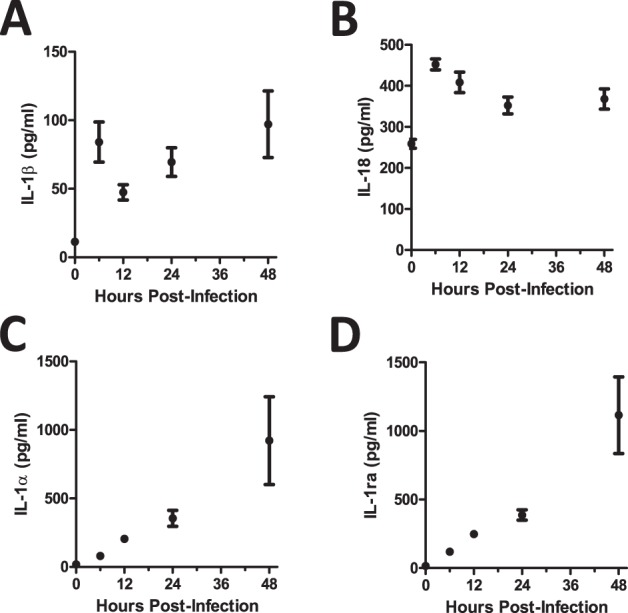
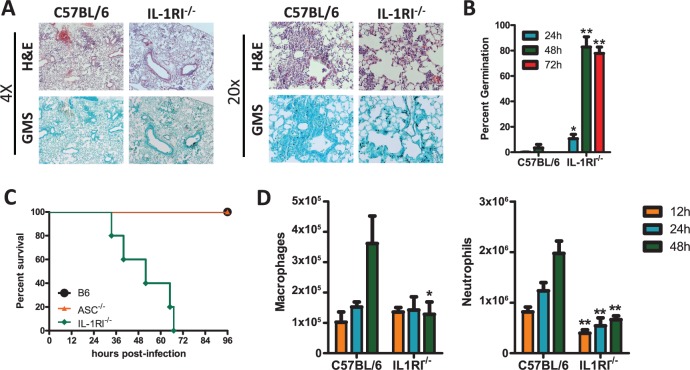
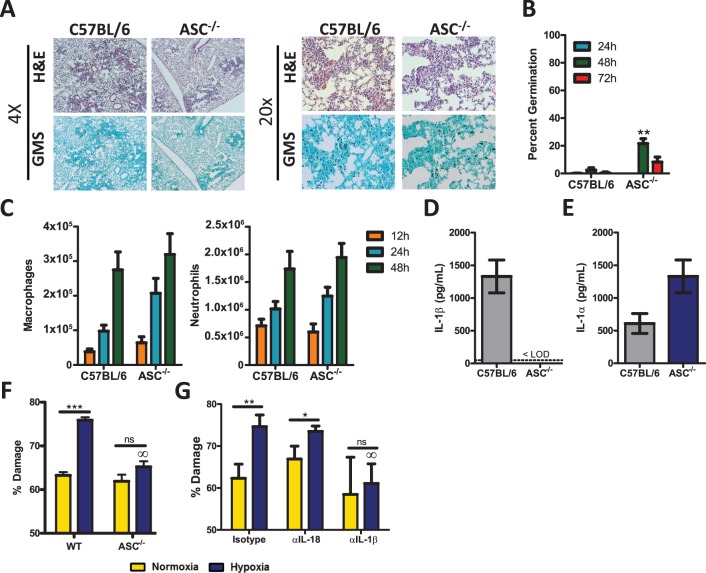
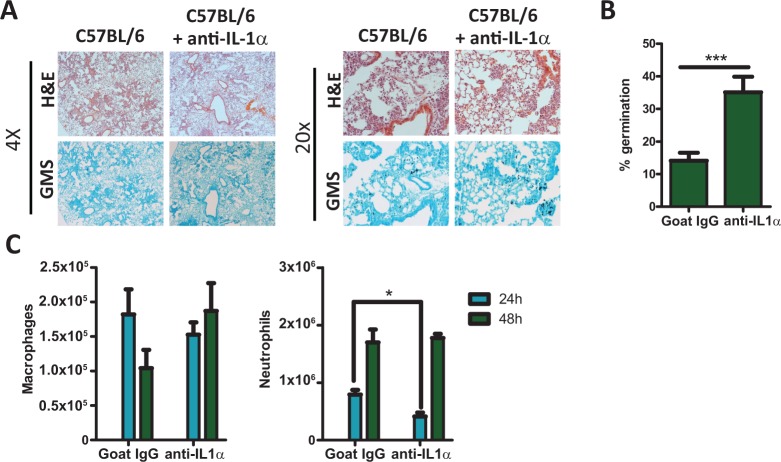
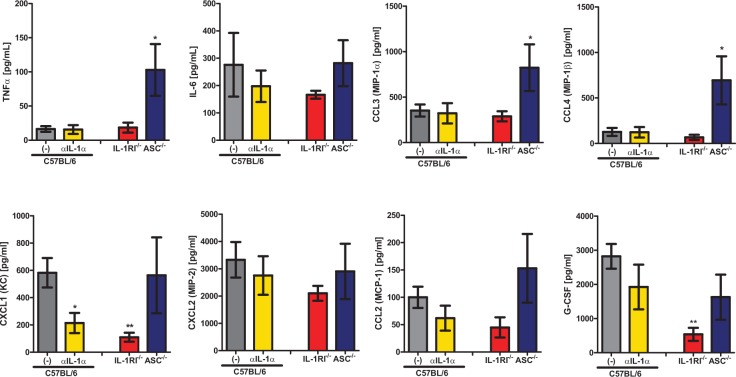
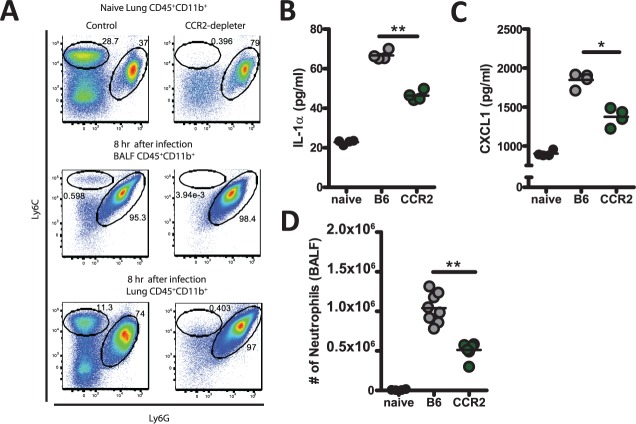
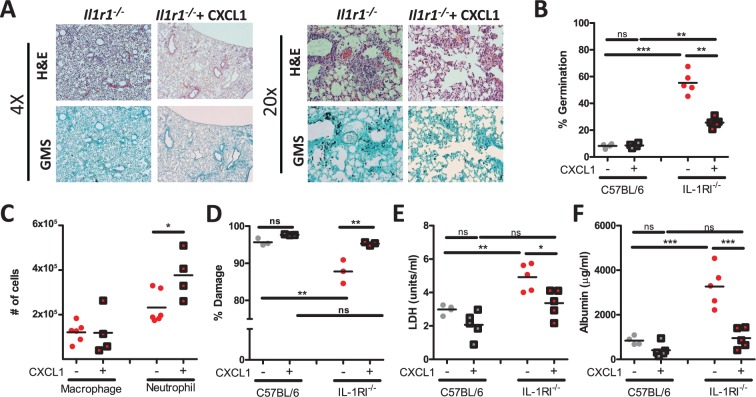
Aspergillus fumigatus is a mold that causes severe pulmonary infections. Our knowledge of how A. fumigatus growth is controlled in the respiratory tract is developing, but still limited. Alveolar macrophages, lung resident macrophages, and airway epithelial cells constitute the first lines of defense against inhaled A. fumigatus conidia. Subsequently, neutrophils and inflammatory CCR2+ monocytes are recruited to the respiratory tract to prevent fungal growth. However, the mechanism of neutrophil and macrophage recruitment to the respiratory tract after A. fumigatus exposure remains an area of ongoing investigation. Here we show that A. fumigatus pulmonary challenge induces expression of the inflammasome-dependent cytokines IL-1β and IL-18 within the first 12 hours, while IL-1α expression continually increases over at least the first 48 hours. Strikingly, Il1r1-deficient mice are highly susceptible to pulmonary A. fumigatus challenge exemplified by robust fungal proliferation in the lung parenchyma. Enhanced susceptibility of Il1r1-deficient mice correlated with defects in leukocyte recruitment and anti-fungal activity. Importantly, IL-1α rather than IL-1β was crucial for optimal leukocyte recruitment. IL-1α signaling enhanced the production of CXCL1. Moreover, CCR2+ monocytes are required for optimal early IL-1α and CXCL1 expression in the lungs, as selective depletion of these cells resulted in their diminished expression, which in turn regulated the early accumulation of neutrophils in the lung after A. fumigatus challenge. Enhancement of pulmonary neutrophil recruitment and anti-fungal activity by CXCL1 treatment could limit fungal growth in the absence of IL-1α signaling. In contrast to the role of IL-1α in neutrophil recruitment, the inflammasome and IL-1β were only essential for optimal activation of anti-fungal activity of macrophages. As such, Pycard-deficient mice are mildly susceptible to A. fumigatus infection. Taken together, our data reveal central, non-redundant roles for IL-1α and IL-1β in controlling A. fumigatus infection in the murine lung.
Overview
The claims and statistics of this paper haven’t been checked yet.
Free: it reads the open-access text and checks the first 5 claims that cite a source we can check. Create a free account to check every claim.
Integrity signals
Registry
Cites
Statistics
Figures
Verification
Claims the paper makes
The claims and statistics of this paper haven’t been checked yet.
Free: it reads the open-access text and checks the first 5 claims that cite a source we can check. Create a free account to check every claim.
Claims other papers make about this one
Each is checked against this paper’s own text: does it say what the citing paper says it does?
The source backs part of the claim, not all of it — or backs it for a different population, condition or comparison.
In the citing paper
“A critical role of IL-1α/IL-1R1/MyD88 signaling activation in lung-resident cells and ECs was associated with protective immunity against Aspergillus via early Cxcl1/Cxcl2-dependent neutrophil recruitment (191, 195).”
From Aspergillus fumigatus and Aspergillosis in 2019 (2019) · cites this paper as [195]
Experimental — accuracy not yet measuredThe cited source says what the claim attributes to it.
In the citing paper
“Significant advances have been made in elucidating the main innate immune players and effector pathways for efficient control of Aspergillus infection in mouse models with the use of transgenic mice (189–202).”
From Aspergillus fumigatus and Aspergillosis in 2019 (2019) · cites this paper as [195]
Self-check
Percentages, sums and reported differences re-computed from the paper’s own numbers.
The self-check needs the paper’s full text.
Citations
Cites
Hidden Killers: Human Fungal Infections
Brown, G. D., Denning, D. W., Gow, N. A. R., Levitz, S. M., Netea, M. G., & White, T. C. (2012) · Science Translational Medicine · doi:10.1126/scitranslmed.3004404 · Cited by 4,284 · cited 2×
“fumigatus and anti-fungal drugs have a modest rate of success in limiting high mortality rates typicaly due to late diagnosis of IPA [1,2,4].”
Toll-like receptors and their crosstalk with other innate receptors in infection and immunity
Kawai, T., & Akira, S. (2011) · Immunity · doi:10.1016/j.immuni.2011.05.006 · Cited by 3,658 · cited 2×
“We next questioned whether leukocyte recruitment was diminished inMyd88-deficient mice because it is the key signaling adapter for IL-1RI, as well as TLRs [27,43], andMyd88-deficient mice have an impaired ability to control pulmonary A. fumigatus growth [44].”
Activation and regulation of the inflammasomes
Latz, E., Xiao, T. S., & Stutz, A. (2013) · Nature Reviews Immunology · doi:10.1038/nri3452 · Cited by 2,884 · cited 7×
“Here we show that A. fumigatus pulmonary challenge induces expression of the inflammasomedependent cytokines IL-1β and IL-18 within the first 12 hours, while IL-1α expression continually increases over at least the first 48 hours.”
InfluentialmTOR- and HIF-1α–mediated aerobic glycolysis as metabolic basis for trained immunity
Cheng, S.-C., Quintin, J., Cramer, R. A., Shepardson, K. M., Saeed, S., Kumar, V., Giamarellos-Bourboulis, E. J., Martens, J. H. A., Rao, N. A., Aghajanirefah, A., et al. (2014) · Science · doi:10.1126/science.1250684 · Cited by 2,224 · cited 1×
“fumigatuschalenge [60], which can be regulated by dectin-1 agonists such asβ-glucan [70].”
Self-citationThe interleukin-1 family: back to the future
Garlanda, C., Dinarello, C. A., & Mantovani, A. (2013) · Immunity · doi:10.1016/j.immuni.2013.11.010 · Cited by 1,945 · cited 7×
“IL1RI, together with IL1RAcP, is the high-afinity receptor for both IL-1αand IL-1β[27].”
InfluentialRomani, L. (2011) · Nature Reviews Immunology · doi:10.1038/nri2939 · Cited by 1,793
Interleukin-1 Type II Receptor: A Decoy Target for IL-1 That Is Regulated by IL-4
Colotta, F., Re, F., Muzio, M., Bertini, R., Polentarutti, N., Sironi, M., Giri, J. G., Dower, S. K., Sims, J. E., & Mantovani, A. (1993) · Science · doi:10.1126/science.8332913 · Cited by 980 · cited 1×
“Interestingly, dexamethasone induces the expression and release of IL-1RI [75].”
Lieschke, G., Grail, D., Hodgson, G., Metcalf, D., Stanley, E., Cheers, C., Fowler, K., Basu, S., Zhan, Y., & Dunn, A. (1994) · Blood · doi:10.1182/blood.v84.6.1737.1737 · Cited by 962
Marr, K. A., Carter, R. A., Boeckh, M., Martin, P., & Corey, L. (2002) · Blood · doi:10.1182/blood-2002-05-1496 · Cited by 957
Pollock, J. D., Williams, D. A., Gifford, M. A. C., Li, L. L., Du, X., Fisherman, J., Orkin, S. H., Doerschuk, C. M., & Dinauer, M. C. (1995) · Nature Genetics · doi:10.1038/ng0295-202 · Cited by 921
Cited by
Items 101–133 of 133
TREM1 regulates antifungal immune responses in invasive pulmonary aspergillosis
Bernal‐Martínez, L., Gonçalves, S. M., de Andrés, B., Cunha, C., González-Jiménez, I., Lagrou, K., Mellado, E., Gaspar, M.-L., Maertens, J., Carvalho, A., et al. (2021) · Virulence · doi:10.1080/21505594.2021.1879471 · Cited by 11
“fumigatus infections, although reduced cytokine-driven inflammation can contribute to less damage in the lungs, impaired innate immune response and a lower capacity to mount early cytokine responses represent a primary risk factor for susceptibility, particularly in an immunosuppressed host [47].”
BackgroundUsefulness of animal models of aspergillosis in studying immunity against Aspergillus infections
Mirkov, I. I., Aleksandrov, A. P., Lazovic, B., Glamočlija, J., & Kataranovski, M. V. (2019) · Journal de Mycologie Médicale · doi:10.1016/j.mycmed.2019.01.006 · Cited by 10
Neuroimmune Responses in a New Experimental Animal Model of Cerebral Aspergillosis
Sullivan, B. N., Baggett, M. A., Guillory, C., Jones, M., & Steele, C. H. (2022) · mBio · doi:10.1128/mbio.02254-22 · Cited by 8
Liu, H., Lin, J., Phan, Q. T., Bruno, V. M., & Filler, S. G. (2024) · mBio · doi:10.1128/mbio.02671-24 · Cited by 9
An immunopathogenic perspective of interleukin-1 signaling
Lin, X., Twelkmeyer, T., Wang, S., Xu, R., Wang, F., Zhang, C., & Tang, H. (2020) · Cellular and Molecular Immunology · doi:10.1038/s41423-020-0475-y · Cited by 29
Depletion of Extracellular Chemokines by Aspergillus Melanin
Graf, K. T., Liu, H., Filler, S. G., & Bruno, V. M. (2023) · mBio · doi:10.1128/mbio.00194-23 · Cited by 9
IL-27 Negatively Controls Antifungal Activity in a Model of Invasive Pulmonary Aspergillosis
Liu, S., Chen, D., Luo, Q., Gong, Y., Yin, Y., & Cao, J. (2020) · American Journal of Respiratory Cell and Molecular Biology · doi:10.1165/rcmb.2019-0391oc · Cited by 9
Kumar, S., Sunagar, R., & Gosselin, E. J. (2020) · Vaccines · doi:10.3390/vaccines8020193 · Cited by 8
“Importantly, leukocyte recruitment is likely affected by the cytokines released by the action of Trivalent-FP, because IL-1α, which is induced by Trivalent-FP (Figure 6B), plays a critical role in recruitment of leukocytes [60,61].”
BackgroundCommander-in-chief: monocytes rally the troops for defense against aspergillosis
Wang, K., Espinosa, V., & Rivera, A. (2023) · Current Opinion in Immunology · doi:10.1016/j.coi.2023.102371 · Cited by 8
Self-citationYan, X., Shu, Y., He, J., Zhao, J., Li, J., Xie, J., Sun, Y., Zhao, Z., & Peng, S. (2018) · Stem Cells and Development · doi:10.1089/scd.2018.0143 · Cited by 7
They shall not grow mold: Soldiers of innate and adaptive immunity to fungi
Woodring, T. S., Deepe, G. S., Levitz, S. M., Wüthrich, M., & Klein, B. S. (2022) · Seminars in Immunology · doi:10.1016/j.smim.2022.101673 · Cited by 10
Kanjanapruthipong, T., Sukphopetch, P., Reamtong, O., Isarangkul, D., Muangkaew, W., Thiangtrongjit, T., Sansurin, N., Fongsodsri, K., & Ampawong, S. (2021) · Microbial Ecology · doi:10.1007/s00248-021-01750-7 · Cited by 8
Hain, S., & Drummond, R. A. (2021) · Elsevier eBooks · doi:10.1016/b978-0-12-818731-9.00102-6 · Cited by 8
Could the Lung Be a Gateway for Amphotericin B to Attack the Army of Fungi?
Patricio, B. F. D. C., Pereira, J. O. D. S. L., Sarcinelli, M. A., de Moraes, B. P. T., Rocha, H. V. A., & Gonçalves-de-Albuquerque, C. F. (2022) · Pharmaceutics · doi:10.3390/pharmaceutics14122707 · Cited by 5
“The early phase lung ECs induce CXC chemokine release via IL-1B/MyD88/IL-1R-dependent, and in the late phase, the neutrophils migrations are driven in response via a CARD-9-dependent CXC chemokine [54,55].”
BackgroundAltmeier, S., & LeibundGut‐Landmann, S. (2017) · Springer eBooks · doi:10.1007/978-3-319-50842-9_2 · Cited by 5
Wang, S., Yuan, A., Zeng, L., Hou, S., Wang, M., Li, L., Cai, Z., & Zhong, G. (2020) · The Journal of Microbiology · doi:10.1007/s12275-021-0347-x · Cited by 5
Novel Host Pathways Govern Epithelial Cell Invasion of Aspergillus fumigatus
Liu, H., Shetty, A. C., Ibrahim, A. S., Filler, S. G., & Bruno, V. M. (2023) · Microbiology Spectrum · doi:10.1128/spectrum.00084-23 · Cited by 4
Cytosolic receptors and signaling in antifungal immunity
Khau, S., Désoubeaux, G., Si‐Tahar, M., Biquand, É., & Briard, B. (2025) · The EMBO Journal · doi:10.1038/s44318-025-00627-6 · Cited by 3
“Furthermore, loss of IL-1R increases susceptibility to invasive pulmonary aspergillosis (IPA) by impairing neutrophil recruitment and their survival (Ralph et al, 2021; Caffrey et al, 2015).”
Guo, Y., Aufiero, M. A., Mills, K. A. M., Grassmann, S. A., Kim, H., Gjonbalaj, M., Zumbo, P., Billips, A., Mar, K. B., Yu, Y., et al. (2025) · Journal of Clinical Investigation · doi:10.1172/jci190107 · Cited by 3
Self-citationSun, Y., Cui, X., & Zhang, Y. (2025) · Journal de Mycologie Médicale · doi:10.1016/j.mycmed.2025.101598 · Cited by 2
Laverty, S., Felton, I. C., Casey, M., Hopwood, B., Simmonds, N. J., Armstrong-James, D. P. H., Shah, A., & Kelleher, P. (2026) · EBioMedicine · doi:10.1016/j.ebiom.2026.106131 · Cited by 2
King, J., Dambuza, I. M., Reid, D. M., Yuecel, R., Brown, G. D., & Warris, A. (2023) · Frontiers in Cellular and Infection Microbiology · doi:10.3389/fcimb.2023.1241770 · Cited by 3
“Whilst IL-1a, rather than IL-1b, has been shown to be critical for early neutrophil recruitment in both Aspergillus infection (Bagaitkar et al., 2015; Caffrey et al., 2015) and sterile peritoneal inflammation (Bagaitkar et al.”
BackgroundDevelopment of a murine model to study the cerebral pathogenesis of Aspergillus fumigatus
Kelty, M. T., & Beattie, S. R. (2023) · mSphere · doi:10.1128/msphere.00468-23 · Cited by 2
“These transcription factors regulate pro-inflammatory gene expression, including IL-1 and IL-12 family cytokines, both of which are important in anti-Aspergillus immunity (35– 37).”
BackgroundIFN Receptor 2 Regulates TNF-α–Mediated Damaging Inflammation during Aspergillus Pulmonary Infection
Rynda‐Apple, A., Servin, J. R., Lenz, J., Roemer, J., Benson, E. E., Hall, M. N., & Shepardson, K. M. (2024) · The Journal of Immunology · doi:10.4049/jimmunol.2200686 · Cited by 2
Self-citationWójtowicz, A., Lamoth, F., & Bochud, P. (2017) · Springer eBooks · doi:10.1007/978-3-319-50842-9_6 · Cited by 1
Assing, K., Laursen, C. B., Campbell, A. J., Beck, H. C., & Davidsen, J. R. (2024) · Journal of Fungi · doi:10.3390/jof10050314 · Cited by 2
“The pulmonary immune response to Aspergillus is complex and involves genetic susceptibility loci [19], MBL-status [20], as well as dynamic components such as prior or present medication [21] and fungal growth kinetics [22].”
BackgroundDutta, O., Masso-Silva, J. A., Wang, K., & Rivera, A. (2017) · Current Pharmacology Reports · doi:10.1007/s40495-017-0111-4 · Cited by 2
“Indeed, CCR2 cell ablation leads to diminished expression of IL-1α and CXCL1 24 hours after challenge with Aspergillus conidia and subsequent reduction in early neutrophil recruitment [82].”
BackgroundSelf-citationCaracterização da sinalização via IL-1R durante a infecção experimental por Leishmania infantum
Oliveira, P. A. S. (2017) · Digital Library of Theses and Dissertations (Universidade de São Paulo) · doi:10.11606/d.17.2017.tde-30032017-135957
Ketelut-Carneiro, N. (2018) · Digital Library of Theses and Dissertations (Universidade de São Paulo) · doi:10.11606/t.17.2018.tde-08062017-093404 · Cited by 1
Vu, C. T. B., Ritprajak, P., Leelahavanichkul, A., & Thammahong, A. (2018) · Chula Digiverse · doi:10.58837/chula.the.2018.383
Self-citationLau, L. S., Lichtenberger, S., Taira, C. L., Klein, B. S., & Wüthrich, M. (2026) · PLoS Pathogens · doi:10.1371/journal.ppat.1014282
Interferon crosstalk at the lung barrier in viral and fungal infection
Brochero, M. I. V., & Rivera, A. (2026) · Infection and Immunity · doi:10.1128/iai.00295-26
“Expressing Dectin-1 constitutively, they detect swollen conidia within phagolysosomes and produce IL-1α and IL-1β, establishing an inflammatory milieu that supports leukocyte recruitment and subsequent activation of interferon-producing cells (60–62, 72).”
Self-citationImmune mechanisms underlying airway mycosis–related allergic airway diseases
Luong, A., Kheradmand, F., Knight, J. M., Sun, H., & Corry, D. B. (2026) · Elsevier eBooks · doi:10.1016/b978-0-443-23636-5.00005-8
Metadata
- Authors
- Caffrey, A. K., Lehmann, M. M., Zickovich, J. M., Espinosa, V., Shepardson, K. M., Watschke, C. P., Hilmer, K. M., Thammahong, A., Barker, B. M., Rivera, A., Cramer, R. A., & Obar, J. J.
- Affiliations
- Montana State University (US)
- Rutgers New Jersey Medical School (US)
- Dartmouth College (US)
- Translational Genomics Research Institute (US)
- Corresponding author
- Obar, Joshua J.
- ORCID
- Venue
- PLOS Pathogens
- Publisher
- Public Library of Science (PLoS)
- Published
- 2015-01-28
- Volume
- 11
- Issue
- 1
- Pages
- e1004625
- ISSN
- 1553-7366 (ISSN-L)
- 1553-7374
- PMC
- PMC4309569
- OpenAlex
- W2079809398
- Cited by
- 132
- References
- 82
- Citations by year
- 2026: 4 · 2025: 8 · 2024: 7 · 2023: 10 · 2022: 9 · 2021: 15 · 2020: 13 · 2019: 7 · 2018: 19 · 2017: 21 · 2016: 12 · 2015: 7
- FWCI
- 15.28
- Type
- journal article
- Language
- en
- Open access
- gold
- doi.org
- Licence
- Locations
- PLoS Pathogens (publishedVersion, cc-by)
- PubMed Central (publishedVersion, cc-by)
- PubMed (publishedVersion)
- DOAJ (DOAJ: Directory of Open Access Journals) (submittedVersion, cc-by-sa)
- Figshare (submittedVersion, cc-by)
- Funders
- M.J. Murdock Charitable Trust
- Memorial Sloan-Kettering Cancer Center
- Montana State University
- National Institutes of Health (5t32dk007301-35, GM106394, DK007301, T32-DK007301)
- Genentech
- National Cancer Institute (R21CA167238)
- National Institute of General Medical Sciences (GM-103500, P30GM106394, P30GM103415, P30GM110732, P20GM103500, GM103415)
- National Institute of Allergy and Infectious Diseases (R01AI081838)
- National Institute of Diabetes and Digestive and Kidney Diseases (T32-DK007301)
- Topics
- Health Sciences › Medicine › Infectious Diseases › Antifungal resistance and susceptibility
- Life Sciences › Biochemistry, Genetics and Molecular Biology › Molecular Biology › Inflammasome and immune disorders
- Health Sciences › Medicine › Pulmonary and Respiratory Medicine › Asthma and respiratory diseases
- Keywords
- IL-1α, IL-1β, IL-18, Aspergillus fumigatus, pulmonary aspergillosis, leukocyte recruitment, neutrophil recruitment, CCR2+ monocytes, CXCL1, inflammasome, IL1R1, PYCARD, alveolar macrophages, antifungal activity, fungal clearance
- MeSH terms
- Animals, Aspergillus fumigatus, Bronchial Provocation Tests, Cells, Cultured, Chemotaxis, Leukocyte, Female, Humans, Male, Mice, Inbred C57BL, Signal Transduction, Mice, Knockout, Mice, Interleukin-1alpha, Pulmonary Aspergillosis
About these checks
Registry, retraction, Cites and statistics results are computed, not judged, with one exception: a printed reference that no index lists is read once by a model before it counts as a citation error. Claims are extracted by a model and kept only when their quote appears verbatim in the text; each cited source is then checked, with a model’s help, for whether it says what the claim relies on. Those verdicts can be wrong — read the claim’s quote and the cited source before relying on one.
Statistics and arithmetic are recomputed, not judged.
Confidence bands are shown only for fields calibrated on our annotated test set. None is calibrated yet, so no band is shown.
What counts as a claim ›How we measure confidence ›How we check this ›
Are you an author, or do you see a problem with this page? Request a review
Data sources
Bibliographic data: Semantic Scholar, OpenAlex, Crossref.
Contains information from the Semantic Scholar Academic Graph Datasets, made available under the ODC Attribution License (ODC-BY 1.0).
Semantic Scholar’s data is described in: Kinney, R., et al. (2023). The Semantic Scholar Open Data Platform. arXiv:2301.10140.
