

IL-1α Signaling Is Critical for Leukocyte Recruitment after Pulmonary Aspergillus fumigatus Challenge
Open accessThe DOI matches its Crossref record; 82 of the 82 references it cites were found in a registry or an index.
Abstract
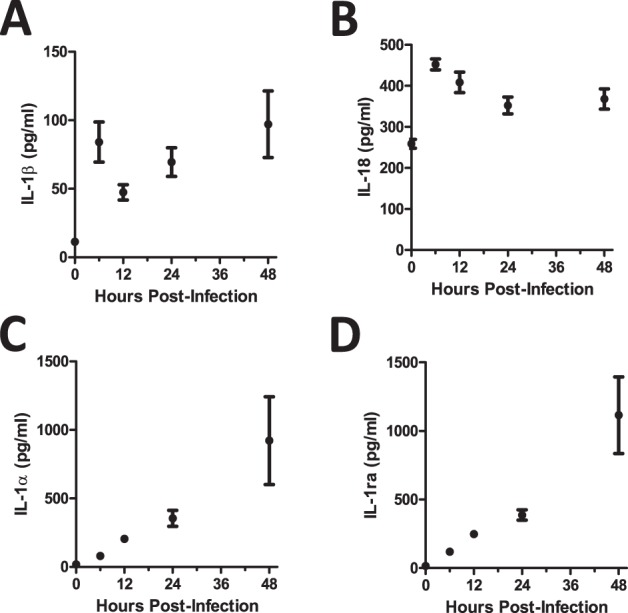
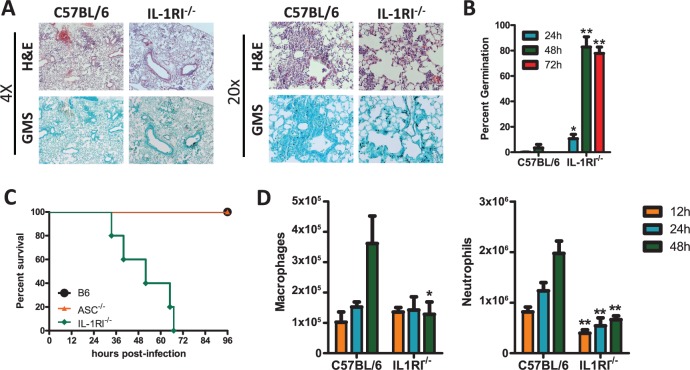
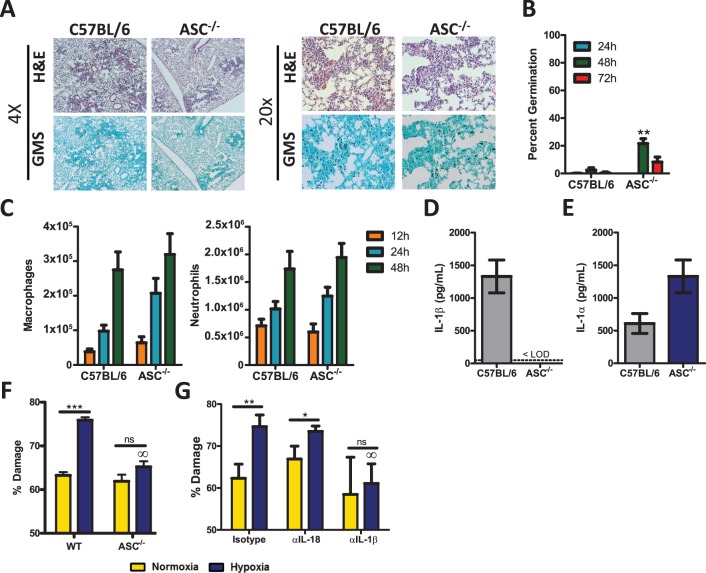
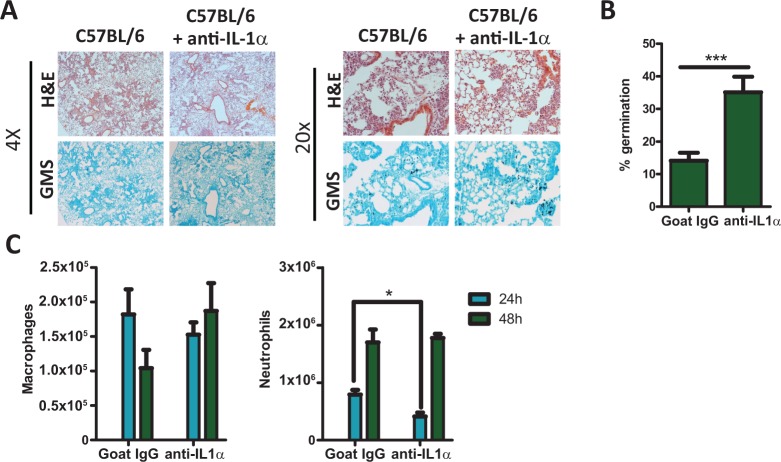
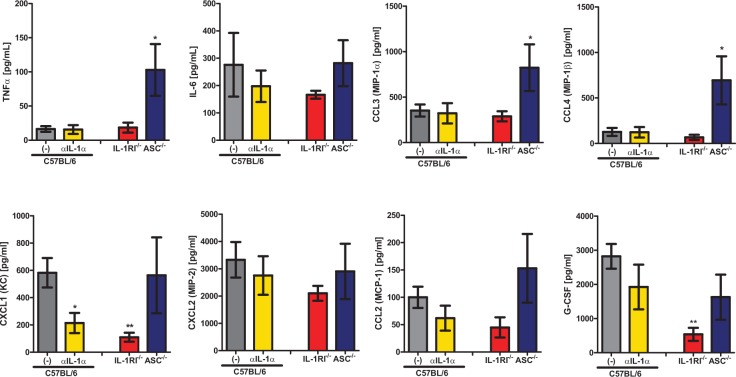
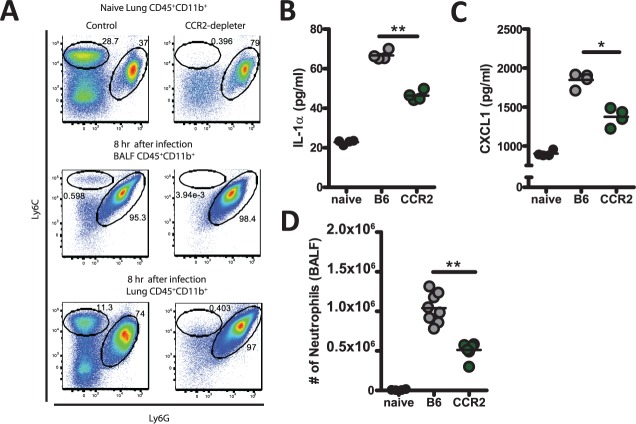
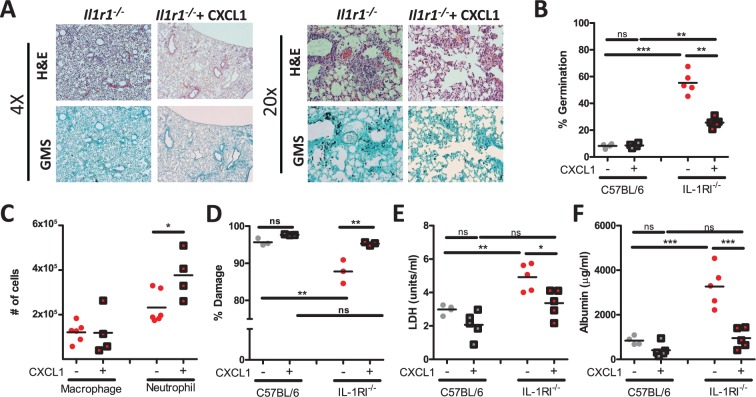
Aspergillus fumigatus is a mold that causes severe pulmonary infections. Our knowledge of how A. fumigatus growth is controlled in the respiratory tract is developing, but still limited. Alveolar macrophages, lung resident macrophages, and airway epithelial cells constitute the first lines of defense against inhaled A. fumigatus conidia. Subsequently, neutrophils and inflammatory CCR2+ monocytes are recruited to the respiratory tract to prevent fungal growth. However, the mechanism of neutrophil and macrophage recruitment to the respiratory tract after A. fumigatus exposure remains an area of ongoing investigation. Here we show that A. fumigatus pulmonary challenge induces expression of the inflammasome-dependent cytokines IL-1β and IL-18 within the first 12 hours, while IL-1α expression continually increases over at least the first 48 hours. Strikingly, Il1r1-deficient mice are highly susceptible to pulmonary A. fumigatus challenge exemplified by robust fungal proliferation in the lung parenchyma. Enhanced susceptibility of Il1r1-deficient mice correlated with defects in leukocyte recruitment and anti-fungal activity. Importantly, IL-1α rather than IL-1β was crucial for optimal leukocyte recruitment. IL-1α signaling enhanced the production of CXCL1. Moreover, CCR2+ monocytes are required for optimal early IL-1α and CXCL1 expression in the lungs, as selective depletion of these cells resulted in their diminished expression, which in turn regulated the early accumulation of neutrophils in the lung after A. fumigatus challenge. Enhancement of pulmonary neutrophil recruitment and anti-fungal activity by CXCL1 treatment could limit fungal growth in the absence of IL-1α signaling. In contrast to the role of IL-1α in neutrophil recruitment, the inflammasome and IL-1β were only essential for optimal activation of anti-fungal activity of macrophages. As such, Pycard-deficient mice are mildly susceptible to A. fumigatus infection. Taken together, our data reveal central, non-redundant roles for IL-1α and IL-1β in controlling A. fumigatus infection in the murine lung.
Overview
The claims and statistics of this paper haven’t been checked yet.
Free: it reads the open-access text and checks the first 5 claims that cite a source we can check. Create a free account to check every claim.
Integrity signals
Registry
Cites
Statistics
Figures
Verification
Claims the paper makes
The claims and statistics of this paper haven’t been checked yet.
Free: it reads the open-access text and checks the first 5 claims that cite a source we can check. Create a free account to check every claim.
Claims other papers make about this one
Each is checked against this paper’s own text: does it say what the citing paper says it does?
The source backs part of the claim, not all of it — or backs it for a different population, condition or comparison.
In the citing paper
“A critical role of IL-1α/IL-1R1/MyD88 signaling activation in lung-resident cells and ECs was associated with protective immunity against Aspergillus via early Cxcl1/Cxcl2-dependent neutrophil recruitment (191, 195).”
From Aspergillus fumigatus and Aspergillosis in 2019 (2019) · cites this paper as [195]
Experimental — accuracy not yet measuredThe cited source says what the claim attributes to it.
In the citing paper
“Significant advances have been made in elucidating the main innate immune players and effector pathways for efficient control of Aspergillus infection in mouse models with the use of transgenic mice (189–202).”
From Aspergillus fumigatus and Aspergillosis in 2019 (2019) · cites this paper as [195]
Self-check
Percentages, sums and reported differences re-computed from the paper’s own numbers.
The self-check needs the paper’s full text.
Citations
Cites
Hidden Killers: Human Fungal Infections
Brown, G. D., Denning, D. W., Gow, N. A. R., Levitz, S. M., Netea, M. G., & White, T. C. (2012) · Science Translational Medicine · doi:10.1126/scitranslmed.3004404 · Cited by 4,284 · cited 2×
“fumigatus and anti-fungal drugs have a modest rate of success in limiting high mortality rates typicaly due to late diagnosis of IPA [1,2,4].”
Toll-like receptors and their crosstalk with other innate receptors in infection and immunity
Kawai, T., & Akira, S. (2011) · Immunity · doi:10.1016/j.immuni.2011.05.006 · Cited by 3,658 · cited 2×
“We next questioned whether leukocyte recruitment was diminished inMyd88-deficient mice because it is the key signaling adapter for IL-1RI, as well as TLRs [27,43], andMyd88-deficient mice have an impaired ability to control pulmonary A. fumigatus growth [44].”
Activation and regulation of the inflammasomes
Latz, E., Xiao, T. S., & Stutz, A. (2013) · Nature Reviews Immunology · doi:10.1038/nri3452 · Cited by 2,884 · cited 7×
“Here we show that A. fumigatus pulmonary challenge induces expression of the inflammasomedependent cytokines IL-1β and IL-18 within the first 12 hours, while IL-1α expression continually increases over at least the first 48 hours.”
InfluentialmTOR- and HIF-1α–mediated aerobic glycolysis as metabolic basis for trained immunity
Cheng, S.-C., Quintin, J., Cramer, R. A., Shepardson, K. M., Saeed, S., Kumar, V., Giamarellos-Bourboulis, E. J., Martens, J. H. A., Rao, N. A., Aghajanirefah, A., et al. (2014) · Science · doi:10.1126/science.1250684 · Cited by 2,224 · cited 1×
“fumigatuschalenge [60], which can be regulated by dectin-1 agonists such asβ-glucan [70].”
Self-citationThe interleukin-1 family: back to the future
Garlanda, C., Dinarello, C. A., & Mantovani, A. (2013) · Immunity · doi:10.1016/j.immuni.2013.11.010 · Cited by 1,945 · cited 7×
“IL1RI, together with IL1RAcP, is the high-afinity receptor for both IL-1αand IL-1β[27].”
InfluentialRomani, L. (2011) · Nature Reviews Immunology · doi:10.1038/nri2939 · Cited by 1,793
Interleukin-1 Type II Receptor: A Decoy Target for IL-1 That Is Regulated by IL-4
Colotta, F., Re, F., Muzio, M., Bertini, R., Polentarutti, N., Sironi, M., Giri, J. G., Dower, S. K., Sims, J. E., & Mantovani, A. (1993) · Science · doi:10.1126/science.8332913 · Cited by 980 · cited 1×
“Interestingly, dexamethasone induces the expression and release of IL-1RI [75].”
Lieschke, G., Grail, D., Hodgson, G., Metcalf, D., Stanley, E., Cheers, C., Fowler, K., Basu, S., Zhan, Y., & Dunn, A. (1994) · Blood · doi:10.1182/blood.v84.6.1737.1737 · Cited by 962
Marr, K. A., Carter, R. A., Boeckh, M., Martin, P., & Corey, L. (2002) · Blood · doi:10.1182/blood-2002-05-1496 · Cited by 957
Pollock, J. D., Williams, D. A., Gifford, M. A. C., Li, L. L., Du, X., Fisherman, J., Orkin, S. H., Doerschuk, C. M., & Dinauer, M. C. (1995) · Nature Genetics · doi:10.1038/ng0295-202 · Cited by 921
Cited by
Aspergillus fumigatus and Aspergillosis in 2019
Latgé, J.-P., & Chamilos, G. (2019) · Clinical Microbiology Reviews · doi:10.1128/cmr.00140-18 · Cited by 1,400
Immune responses to human fungal pathogens and therapeutic prospects
Lionakis, M. S., Drummond, R. A., & Hohl, T. M. (2023) · Nature Reviews Immunology · doi:10.1038/s41577-022-00826-w · Cited by 379
Function and regulation of IL‐1α in inflammatory diseases and cancer
Malik, A., & Kanneganti, T. (2018) · Immunological Reviews · doi:10.1111/imr.12615 · Cited by 327
Iannitti, R. G., Napolioni, V., Oikonomou, V., De Luca, A., Galosi, C., Pariano, M., Massi-Benedetti, C., Borghi, M., Puccetti, M., Lucidi, V., et al. (2016) · Nature Communications · doi:10.1038/ncomms10791 · Cited by 235
Host Control of Fungal Infections: Lessons from Basic Studies and Human Cohorts
Lionakis, M. S., & Levitz, S. M. (2018) · Annual Review of Immunology · doi:10.1146/annurev-immunol-042617-053318 · Cited by 209
Latgé, J.-P., Beauvais, A., & Chamilos, G. (2017) · Annual Review of Microbiology · doi:10.1146/annurev-micro-030117-020406 · Cited by 207
Mayer-Barber, K. D., & Yan, B. (2017) · Cellular & Molecular Immunology · doi:10.1038/cmi.2016.25 · Cited by 213
Type III interferon is a critical regulator of innate antifungal immunity
Espinosa, V., Dutta, O., McElrath, C., Du, P., Chang, Y.-J., Cicciarelli, B., Pitler, A., Whitehead, I., Obar, J. J., Durbin, J. E., et al. (2017) · Science Immunology · doi:10.1126/sciimmunol.aan5357 · Cited by 202
“Depletion of CCR2+ monocytes and their derivative cells (CCR2depleted mice) impaired the activation of a protective antifungal inflammatory response and affected the production of multiple cytokines (22, 23).”
BackgroundSelf-citationReactive Oxygen Species Localization Programs Inflammation to Clear Microbes of Different Size
Warnatsch, A., Tsourouktsoglou, T.-D., Branzk, N., Wang, Q., Reincke, S., Herbst, S., Gutierrez, M., & Papayannopoulos, V. (2017) · Immunity · doi:10.1016/j.immuni.2017.02.013 · Cited by 182
“Recent work in apoptosis-associated speck-like protein containing a carboxy-terminal CARD (ASC)-deficient mice suggested that IL-1b plays no role in neutrophil recruitment and clearance of A. fumigatus, implicating monocyte-derived IL-1a instead (Caffrey et al., 2015).”
BackgroundPathogenic Fungal Infection in the Lung
Li, Z., Lu, G., & Meng, G. (2019) · Frontiers in Immunology · doi:10.3389/fimmu.2019.01524 · Cited by 174
Extrapulmonary Aspergillus infection in patients with CARD9 deficiency
Rieber, N., Gazendam, R. P., Freeman, A. F., Hsu, A. P., Collar, A. L., Sugui, J. A., Drummond, R. A., Rongkavilit, C., Hoffman, K., Henderson, C., et al. (2016) · JCI Insight · doi:10.1172/jci.insight.89890 · Cited by 171
“mouse studies showed that Card9 plays only a partial role in neutrophil pulmonary recruitment after Aspergillus challenge, being compensated by mononuclear phagocyte and epithelial cell IL-1α and Myd88 signaling (28, 33).”
BackgroundLionakis, M. S., Iliev, I. D., & Hohl, T. M. (2017) · JCI Insight · doi:10.1172/jci.insight.93156 · Cited by 153
The role of neutrophils in host defense against invasive fungal infections
Desai, J. V., & Lionakis, M. S. (2018) · Current Clinical Microbiology Reports · doi:10.1007/s40588-018-0098-6 · Cited by 131
Immune Interactions with Pathogenic and Commensal Fungi: A Two-Way Street
Underhill, D. M., & Pearlman, E. (2015) · Immunity · doi:10.1016/j.immuni.2015.10.023 · Cited by 130
“These effects appear to be mediated, at least in part, through a role for inflammatory monocytes as regulators of IL-1a and CXCL1 expression (Caffrey et al., 2015).”
BackgroundKowalski, C. H., Beattie, S. R., Fuller, K. K., McGurk, E. A., Tang, Y.-W., Hohl, T. M., Obar, J. J., & Cramer, R. A. (2016) · mBio · doi:10.1128/mbio.01515-16 · Cited by 123
Self-citationUpadhya, R., Lam, W. C., Maybruck, B., Specht, C. A., Levitz, S. M., & Lodge, J. K. (2016) · mBio · doi:10.1128/mbio.00547-16 · Cited by 123
Pathogenicity and virulence of Aspergillus fumigatus
Earle, K., Valero, C., Conn, D. P., Vere, G., Cook, P. C., Bromley, M., Bowyer, P., & Gago, S. (2023) · Virulence · doi:10.1080/21505594.2023.2172264 · Cited by 132
“Similar depletion models showed that CCR2+ monocytes were associated with impaired production of both type I and III IFNs during fungal infection, as well as decreased early expression of IL-1α, both of which lead to defective neutrophil activation [230,244].”
BackgroundIL-1 Coordinates the Neutrophil Response to C. albicans in the Oral Mucosa
Altmeier, S., Toska, A., Sparber, F., Teijeira, A., Halin, C., & LeibundGut-Landmann, S. (2016) · PLOS Pathogens · doi:10.1371/journal.ppat.1005882 · Cited by 112
Microbial volatile communication in human organotypic lung models
Barkal, L. J., Procknow, C. L., Álvarez-García, Y. R., Niu, M., Jiménez‐Torres, J. A., Brockman‐Schneider, R. A., Gern, J. E., Denlinger, L. C., Theberge, A. B., Keller, N. P., et al. (2017) · Nature Communications · doi:10.1038/s41467-017-01985-4 · Cited by 123
IL-17 and neutrophils: unexpected players in the type 2 immune response
Allen, J. E., Sutherland, T. E., & Rückerl, D. (2015) · Current Opinion in Immunology · doi:10.1016/j.coi.2015.03.001 · Cited by 81
First Line of Defense: Innate Cell-Mediated Control of Pulmonary Aspergillosis
Espinosa, V., & Rivera, A. (2016) · Frontiers in Microbiology · doi:10.3389/fmicb.2016.00272 · Cited by 77
“Moreover, they are necessary to sustain an inflammatory milieu in the lung and the antifungal activity of neutrophils (Espinosa et al., 2014; Caffrey et al., 2015).”
BackgroundSelf-citationMaler, M. D., Nielsen, P. J., Stichling, N., Cohen, I., Ruzsics, Z., Wood, C., Engelhard, P., Suomalainen, M., Győry, I., Huber, M., et al. (2017) · mBio · doi:10.1128/mbio.00670-17 · Cited by 88
Heung, L. J., Wiesner, D. L., Wang, K., Rivera, A., & Hohl, T. M. (2023) · Seminars in Immunology · doi:10.1016/j.smim.2023.101728 · Cited by 80
Self-citationBriard, B., Karki, R., Malireddi, R. K. S., Bhattacharya, A., Place, D. E., Mavuluri, J., Peters, J. L., Vogel, P., Yamamoto, M., & Kanneganti, T.-D. (2018) · Nature Microbiology · doi:10.1038/s41564-018-0298-0 · Cited by 72
Interleukin 1α Is Critical for Resistance against Highly Virulent Aspergillus fumigatus Isolates
Caffrey-Carr, A. K., Kowalski, C. H., Beattie, S. R., Blaseg, N. A., Upshaw, C. R., Thammahong, A., Lust, H. E., Tang, Y., Hohl, T. M., Cramer, R. A., et al. (2017) · Infection and Immunity · doi:10.1128/iai.00661-17 · Cited by 65
Self-citationThe Zebrafish as a Model Host for Invasive Fungal Infections
Rosowski, E. E., Knox, B. P., Archambault, L. S., Huttenlocher, A., Keller, N. P., Wheeler, R. T., & Davis, J. M. (2018) · Journal of Fungi · doi:10.3390/jof4040136 · Cited by 73
“tolerance [98], growth rate [99], and other clinically relevant phenotypes [100] have all been observed and even shown to affect host immune responses and survival [101,102].”
BackgroundSprenkeler, E. G. G., Gresnigt, M. S., & van de Veerdonk, F. L. (2016) · Cellular Microbiology · doi:10.1111/cmi.12616 · Cited by 58
Aspergillus fumigatus biology, immunopathogenicity and drug resistance
van de Veerdonk, F. L., Carvalho, A., Wauters, J., Chamilos, G., & Verweij, P. E. (2025) · Nature Reviews Microbiology · doi:10.1038/s41579-025-01180-z · Cited by 70
“The activation of interleukin-1α (IL-1α), C-X-C motif chemokine ligand 1 (CXCL1)–CXCL5 signalling in alveolar epithelia induces early neutrophil chemotaxis 53,54 .”
Role for IL-1 Family Cytokines in Fungal Infections
Griffiths, J. S., Camilli, G., Kotowicz, N. K., Ho, J., Richardson, J. P., & Naglik, J. R. (2021) · Frontiers in Microbiology · doi:10.3389/fmicb.2021.633047 · Cited by 63
Thakur, R., Anand, R., Tiwari, S., Singh, A. P., Tiwary, B. N., & Shankar, J. (2015) · Frontiers in Microbiology · doi:10.3389/fmicb.2015.00429 · Cited by 65
Desoubeaux, G., & Cray, C. (2017) · Frontiers in Microbiology · doi:10.3389/fmicb.2017.00841 · Cited by 55
“For instance, BALB/c mice are a well-known general multipurpose model allowing studying for infectious diseases, while C57BL/6 strain represents permissive background for maximal expression of most mutations, like those in genes coding for cytokines, toll-like receptors (TLRs), Dectin-1 or other receptors/proteins ass…”
BackgroundMenacing Mold: Recent Advances in Aspergillus Pathogenesis and Host Defense
Tischler, B. Y., & Hohl, T. M. (2019) · Journal of Molecular Biology · doi:10.1016/j.jmb.2019.03.027 · Cited by 60
Genetic deficiency of NOD2 confers resistance to invasive aspergillosis
Gresnigt, M. S., Cunha, C., Jaeger, M., Gonçalves, S. M., Malireddi, R. K. S., Ammerdorffer, A., Lubbers, R., Oosting, M., Raşid, O., Jouvion, G., et al. (2018) · Nature Communications · doi:10.1038/s41467-018-04912-3 · Cited by 54
Lemon, J. K., Miller, M. R., & Weiser, J. N. (2015) · Infection and Immunity · doi:10.1128/iai.00224-15 · Cited by 57
“The requirement for IL-1 sensing in macrophage recruitment during bacterial infection is less well understood; however, IL-1 sensing in the lung during fungal infection is known to enhance expression of both neutrophil and macrophage chemokines (40).”
BackgroundHelper T‐cell responses and pulmonary fungal infections
McDermott, A. J., & Klein, B. S. (2018) · Immunology · doi:10.1111/imm.12953 · Cited by 54
Ratitong, B., & Pearlman, E. M. (2021) · Current Opinion in Microbiology · doi:10.1016/j.mib.2021.07.018 · Cited by 52
Valtonen, V. (2017) · Frontiers in Immunology · doi:10.3389/fimmu.2017.00951 · Cited by 48
Gander-Bui, H. T. T., Schläfli, J., Baumgartner, J., Walthert, S., Genitsch, V., van Geest, G., Galván, J. A., Cardozo, C., Graham Martinez, C., Grans, M., et al. (2023) · Immunity · doi:10.1016/j.immuni.2023.06.023 · Cited by 47
Shepardson, K. M., Larson, K., Johns, L. L., Stanek, K., Cho, H., Wellham, J., Henderson, H., & Rynda‐Apple, A. (2018) · Frontiers in Immunology · doi:10.3389/fimmu.2018.02589 · Cited by 48
Self-citationGenetic Susceptibility to Fungal Infections and Links to Human Ancestry
Naik, B., Ahmed, S. M. Q., Laha, S., & Das, S. P. (2021) · Frontiers in Genetics · doi:10.3389/fgene.2021.709315 · Cited by 54
An Adult Zebrafish Model Reveals that Mucormycosis Induces Apoptosis of Infected Macrophages
López‐Muñoz, A., Nicolás, F. E., García‐Moreno, D., Pérez‐Oliva, A. B., Navarro-Mendoza, M. I., Hernández‐Oñate, M. Á., Herrera‐Estrella, A., Torres‐Martínez, S., Ruiz‐Vázquez, R. M., Garre, V., et al. (2018) · Scientific Reports · doi:10.1038/s41598-018-30754-6 · Cited by 51
Immunity to pathogenic fungi in the eye
Abbondante, S., Leal, S. M., Clark, H., Ratitong, B., Sun, Y., Ma, L., & Pearlman, E. M. (2023) · Seminars in Immunology · doi:10.1016/j.smim.2023.101753 · Cited by 45
Wang, J., Shao, Y., Wang, W. T., Li, S., Xin, N., Xie, F., & Zhao, C. (2017) · International Journal of Medical Microbiology · doi:10.1016/j.ijmm.2017.09.012 · Cited by 43
Gresnigt, M. S., Rekiki, A., Rasid, O., Savers, A., Jouvion, G., Dannaoui, E., Parlato, M., Fitting, C., Brock, M., Cavaillon, J.-M., et al. (2016) · Scientific Reports · doi:10.1038/srep26490 · Cited by 41
Tamiya, S., Yoshikawa, E., Ogura, M., Kuroda, E., Suzuki, K., & Yoshioka, Y. (2021) · Microbiology Spectrum · doi:10.1128/spectrum.01588-21 · Cited by 47
“in the lungs following Aspergillus fumigatus (36) and Legionella pneumophila infections (37).”
BackgroundGarth, J. M., Reeder, K. M., Godwin, M. S., Mackel, J. J., Dunaway, C. W., Blackburn, J. P., & Steele, C. H. (2017) · The Journal of Immunology · doi:10.4049/jimmunol.1602186 · Cited by 42
The inflammasomes, immune guardians at defence barriers
Palazón‐Riquelme, P., & López‐Castejón, G. (2018) · Immunology · doi:10.1111/imm.12989 · Cited by 48
BTK drives neutrophil activation for sterilizing antifungal immunity
Desai, J. V., Zarakas, M. A., Wishart, A. L., Roschewski, M. J., Aufiero, M. A., Donkó, Á., Wigerblad, G., Shlezinger, N., Plate, M., James, M. R., et al. (2024) · Journal of Clinical Investigation · doi:10.1172/jci176142 · Cited by 42
“Of note, a companion report submitted by Vargas-Blanco and colleagues found that TNF-α rescued BTKi-driven neutrophil deficits ) (95).”
BackgroundSelf-citationCaraher, E. J., Kwon, S., Haider, S. H., Crowley, G., Lee, A., Ebrahim, M., Zhang, L., Chen, L., Gordon, T., Liu, M., et al. (2017) · PLoS ONE · doi:10.1371/journal.pone.0184331 · Cited by 39
Ratitong, B., Marshall, M. E., & Pearlman, E. M. (2020) · Cell Reports · doi:10.1016/j.celrep.2021.109139 · Cited by 41
Chauhan, P., Wagner, J. G., Benninghoff, A. D., Lewandowski, R. P., Favor, O. K., Wierenga, K. A., Gilley, K. N., Ross, E. A., Harkema, J. R., & Pestka, J. J. (2021) · Frontiers in Immunology · doi:10.3389/fimmu.2021.635138 · Cited by 40
“IL-1α is constitutively expressed at high concentrations in alveolar macrophages but is also found in non-hematopoietic cells (57).”
BackgroundTriple RNA-Seq Reveals Synergy in a Human Virus-Fungus Co-infection Model
Seelbinder, B., Wallstabe, J., Marischen, L., Weiß, E., Wurster, S., Page, L., Löffler, C., Bussemer, L., Schmitt, A., Wolf, T., et al. (2020) · Cell Reports · doi:10.1016/j.celrep.2020.108389 · Cited by 39
Jensen, L. E. (2017) · Science Signaling · doi:10.1126/scisignal.aan3589 · Cited by 39
Eades, C. P., & Armstrong-James, D. P. H. (2019) · Medical Mycology · doi:10.1093/mmy/myy136 · Cited by 36
Dutta, O., Espinosa, V., Wang, K., Avina, S. L., & Rivera, A. (2020) · Frontiers in Cellular and Infection Microbiology · doi:10.3389/fcimb.2020.00321 · Cited by 38
“A particularly striking improvement in expression was seen for IL1α (Figure 4L), a previously identified important regulator of defense in mice infected with Af -CEA10 strain (Caffrey et al., 2015; Caffrey-Carr et al., 2017).”
BackgroundSelf-citationImmune responses to invasive aspergillosis: new understanding and therapeutic opportunities
Hohl, T. M. (2017) · Current Opinion in Infectious Diseases · doi:10.1097/qco.0000000000000381 · Cited by 35
Host-Derived Leukotriene B4 Is Critical for Resistance against Invasive Pulmonary Aspergillosis
Caffrey-Carr, A. K., Hilmer, K. M., Kowalski, C. H., Shepardson, K. M., Temple, R. M., Cramer, R. A., & Obar, J. J. (2018) · Frontiers in Immunology · doi:10.3389/fimmu.2017.01984 · Cited by 39
“Following A. fumigatus challenge, IL-1RI/MyD88 signaling is essential for optimal 2 Caffrey-Carr et al. LTB4 Maintain Host Resistance to A. fumigatus Frontiers in Immunology | www.frontiersin.org January 2018 | Volume 8 | Article 1984 production of CXCL1 that is necessary for early neutrophil recruitment through CXCR2…”
BackgroundMethodInfluentialSelf-citationCo-recognition of β-glucan and chitin and programming of adaptive immunity to Aspergillus fumigatus
Amarsaikhan, N., & Templeton, S. P. (2015) · Frontiers in Microbiology · doi:10.3389/fmicb.2015.00344 · Cited by 37
Wang, H., Zhou, Q., Dai, W., Feng, X., Lu, Z., Yang, Z., Liu, Y., Xie, G., Yang, Y., Shen, K., et al. (2019) · Frontiers in Pediatrics · doi:10.3389/fped.2019.00265 · Cited by 33
Wang, X., Caffrey-Carr, A. K., Liu, K.-W., Espinosa, V., Croteau, W., Dhingra, S., Rivera, A., Cramer, R. A., & Obar, J. J. (2020) · The Journal of Immunology · doi:10.4049/jimmunol.2000802 · Cited by 35
Self-citationIL-1α promotes liver inflammation and necrosis during blood-stage Plasmodium chabaudi malaria
de Menezes, M. N., de Salles, É. M., Vieira, F. S., Amaral, E. P., Zuzarte‐Luís, V., Cassado, A. D. A., Epiphânio, S., Álvarez, J. M., Alves-Filho, J. C., Mota, M. M., et al. (2019) · Scientific Reports · doi:10.1038/s41598-019-44125-2 · Cited by 45
Caspase-11-dependent IL-1α release boosts Th17 immunity against Paracoccidioides brasiliensis
Ketelut-Carneiro, N., Souza, C. O. S., Benevides, L., Gardinassi, L. G., Silva, M. C., Tavares, L., Zamboni, D. S., & Silva, J. S. (2019) · PLoS Pathogens · doi:10.1371/journal.ppat.1007990 · Cited by 38
Urban, C. F., & Backman, E. (2020) · Current Opinion in Microbiology · doi:10.1016/j.mib.2020.09.011 · Cited by 37
Souza, A. C. O., Martín‐Vicente, A., Nywening, A. V., Ge, W., Lowes, D. J., Peters, B. M., & Fortwendel, J. R. (2021) · PLoS Pathogens · doi:10.1371/journal.ppat.1009806 · Cited by 37
Anzai, F., Karasawa, T., Komada, T., Yamada, N., Miura, Y., Sampilvanjil, A., Baatarjav, C., Fujimura, K., Matsumura, T., Tago, K., et al. (2021) · ImmunoHorizons · doi:10.4049/immunohorizons.2100066 · Cited by 32
Mills, K. A. M., Westermann, F., Espinosa, V., Rosiek, E., Desai, J. V., Aufiero, M. A., Guo, Y., Liu, F. L., Mitchell, K. A., Tuzlak, S., et al. (2025) · Science Immunology · doi:10.1126/sciimmunol.adr0547 · Cited by 34
Self-citationPaving the way for predictive diagnostics and personalized treatment of invasive aspergillosis
Coelho, A., Rodrigues, F. J. S., Campos, A. N., de Lacerda, J. F., Carvalho, A., & Cunha, C. (2015) · Frontiers in Microbiology · doi:10.3389/fmicb.2015.00411 · Cited by 32
Innate Lung Defense during Invasive Aspergillosis: New Mechanisms
Garth, J. M., & Steele, C. H. (2017) · Journal of Innate Immunity · doi:10.1159/000455125 · Cited by 33
Recent developments in Aspergillus fumigatus research: diversity, drugs, and disease
Kordana, N. E., Johnson, A., Quinn, K., Obar, J. J., & Cramer, R. A. (2025) · Microbiology and Molecular Biology Reviews · doi:10.1128/mmbr.00011-23 · Cited by 29
“IL-1α signaling is critical for leukocyte recruitment during infection and strain-specific pathogenicity can, in part, be tied to altered dependency on IL-1α signaling (40, 190).”
InfluentialSelf-citationAlmeida-da-Silva, C. L. C., Ramos‐Junior, E. S., Morandini, A. C., Rocha, G. D. C., Marinho, Y., Tamura, A. S., de Andrade, K. Q., Bellio, M., Savio, L. E. B., Scharfstein, J., et al. (2018) · Immunobiology · doi:10.1016/j.imbio.2018.10.008 · Cited by 26
Aspergillus Endophthalmitis: Epidemiology, Pathobiology, and Current Treatments
Khambati, A., Wright, R. E., Das, S., Pasula, S., Sepúlveda, A., Hernandez, F., Kanwar, M., Chandrasekar, P. H., & Kumar, A. (2022) · Journal of Fungi · doi:10.3390/jof8070656 · Cited by 28
“IL-1α and IL-1β are also involved in this process [72,73].”
BackgroundGarth, J. M., Mackel, J. J., Reeder, K. M., Blackburn, J. P., Dunaway, C. W., Yu, Z., Matalon, S., Fitz, L. J., & Steele, C. H. (2018) · Infection and Immunity · doi:10.1128/iai.00944-17 · Cited by 27
“fumigatus as a result of IL-1 -mediated early (day 1) neutrophil recruitment and IL-1 -mediated macrophage antifungal responses (46).”
BackgroundBorriello, F., Zanoni, I., & Granucci, F. (2020) · European Journal of Immunology · doi:10.1002/eji.201848054 · Cited by 28
Kuipers, K., Lokken, K. L., Zangari, T., Boyer, M. A., Shin, S., & Weiser, J. N. (2018) · PLoS Pathogens · doi:10.1371/journal.ppat.1007396 · Cited by 25
NLRX1 is a key regulator of immune signaling during invasive pulmonary aspergillosis
Kastelberg, B., Tubau‐Juni, N., Ayubi, T., Leung, A., Leber, A. J., Hontecillas, R., Bassaganya-Riera, J., & Kale, S. D. (2020) · PLoS Pathogens · doi:10.1371/journal.ppat.1008854 · Cited by 26
Aspergillosis and stem cell transplantation: An overview of experimental pathogenesis studies
Al-Bader, N., & Sheppard, D. C. (2016) · Virulence · doi:10.1080/21505594.2016.1231278 · Cited by 29
Tischler, B. Y., Tosini, N. L., Cramer, R. A., & Hohl, T. M. (2020) · PLoS Pathogens · doi:10.1371/journal.ppat.1008544 · Cited by 26
Self-citationHost immune responses in the central nervous system during fungal infections
Reyes, E. Y., & Shinohara, M. L. (2022) · Immunological Reviews · doi:10.1111/imr.13101 · Cited by 23
Fungal-mediated lung allergic airway disease: The critical role of macrophages and dendritic cells
Furlong-Silva, J., & Cook, P. C. (2022) · PLoS Pathogens · doi:10.1371/journal.ppat.1010608 · Cited by 25
Shankar, J., Cerqueira, G., Wortman, J., Clemons, K., & Stevens, D. (2018) · Mycopathologia · doi:10.1007/s11046-018-0254-9 · Cited by 21
“Similar to our observations, Caffrey [50] et al.”
Ralph, B., Lehoux, M., Ostapska, H., Snarr, B. D., Caffrey-Carr, A. K., Fraser, R. S., Saleh, M., Obar, J. J., Qureshi, S. T., & Sheppard, D. C. (2021) · Frontiers in Immunology · doi:10.3389/fimmu.2021.675294 · Cited by 25
“Consistent with the reduced abundance of pulmonary neutrophils and with previous reports (12, 25), infected”
BackgroundResultSelf-citationAlarmin(g) the innate immune system to invasive fungal infections
Caffrey, A. K., & Obar, J. J. (2016) · Current Opinion in Microbiology · doi:10.1016/j.mib.2016.06.002 · Cited by 22
“fumigatus, while the inflammasome and IL-1β were necessary for optimal fungicidal activity of macrophages [29].”
Self-citationShourian, M., Ralph, B., Angers, I., Sheppard, D. C., & Qureshi, S. T. (2018) · Frontiers in Immunology · doi:10.3389/fimmu.2017.01987 · Cited by 27
“IL-1RI-deficient mice are also highly susceptible to pulmonary challenge with Aspergillus fumigatus; in this model, IL-1α has been shown to be crucial for optimal leukocyte recruitment and IL-1β has been shown to be essential for optimal activation of macrophage antifungal activity (122).”
BackgroundOrtiz, S. C., Pennington, K., Thomson, D. D., & Bertuzzi, M. (2022) · Journal of Fungi · doi:10.3390/jof8030264 · Cited by 31
“IL-1α mis-regulation can, however, lead to inflammatory disease [84,85] and, on the basis of this, Gresnigt et al.”
BackgroundReeder, K. M., Mackel, J. J., Godwin, M. S., Dunaway, C. W., Blackburn, J. P., Patel, R. P., & Steele, C. H. (2018) · Infection and Immunity · doi:10.1128/iai.00157-18 · Cited by 21
Immunomodulatory responses of differentially polarized macrophages to fungal infections
Xie, Y., Zhou, X., Zhang, J., Yu, H. B., & Song, Z. (2022) · International Immunopharmacology · doi:10.1016/j.intimp.2022.109089 · Cited by 19
Lewis, E. R. G., David, V. R., Doyle, A., Rajabi, K., Kiefer, J., Pirrotte, P., & Barker, B. M. (2015) · Eukaryotic Cell · doi:10.1128/ec.00122-15 · Cited by 19
“The cytokines TNFand IL-1 have been shown to be important for leukocyte recruitment and control of infection of the pathogen Aspergillus fumigatus in mice (12, 13).”
BackgroundSelf-citationMackel, J. J., Garth, J. M., Blackburn, J. P., Jones, M., & Steele, C. H. (2020) · The Journal of Immunology · doi:10.4049/jimmunol.1900808 · Cited by 18
“IL-1α is thought to mediate protection via CXCL1-dependent neutrophil recruitment (24).”
BackgroundLiu, Y., Zhang, Z. X., Zhou, L., Lin, T., Zhang, R., Li, M., Chen, S., Liu, X., & Liu, X. (2025) · BMC Infectious Diseases · doi:10.1186/s12879-025-10560-y · Cited by 21
“Cyto-kines IL-1, IL-1α, and IL-1β are crucial for enhancing neutrophil recruitment in the lungs during invasive aspergillus infection [16, 17].”
Fa, Z., Xie, Q., Fang, W. Y., Zhang, H., Zhang, H., Xu, J., Pan, W., Xu, J., Olszewski, M. A., Deng, X., et al. (2017) · Frontiers in Immunology · doi:10.3389/fimmu.2017.01055 · Cited by 16
“IL-1alpha signaling is critical for leukocyte recruitment after pulmonary Aspergillus fumigatus challenge.”
BackgroundObar, J. J., Hohl, T. M., & Cramer, R. A. (2016) · Cytokine · doi:10.1016/j.cyto.2016.05.015 · Cited by 18
“Following challenge with A. fumigatus the early expression of CXCR2 ligands, specifically CXCL1 and to a lesser extent CXCL5, was highly dependent on IL-1RI/ MyD88 signaling in radioresistant, CC10-expressing lung epithelial cells [15,55].”
BackgroundInfluentialSelf-citationThe Serum Level of IL-1B Correlates with the Activity of Chronic Pulmonary Aspergillosis
Zhan, M., Xu, B., Zhao, L., Li, B., Xu, L., Sun, Q., Zhang, J., Zhang, Z., & Chu, H. (2018) · Canadian Respiratory Journal · doi:10.1155/2018/8740491 · Cited by 17
“also confirmed the role of IL-1 in controlling aspergillus fumigatus infection in the murine lung and speculated the important role of IL-1 in pulmonary fungal infection [24].”
Kirkland, M. E., Stannard, M., Kowalski, C. H., Mould, D., Caffrey-Carr, A. K., Temple, R. M., Ross, B. S., Lofgren, L. A., Stajich, J., Cramer, R. A., et al. (2021) · mSphere · doi:10.1128/msphere.00922-21 · Cited by 17
“fumigatus that can rapidly germinate in the lung airways (4, 29).”
BackgroundSelf-citationHuang, S., Huang, C., Chou, K., Chan, Y., Yang, Y., & Wang, F. (2021) · Journal of Fungi · doi:10.3390/jof7100842 · Cited by 14
“GAG suppresses Th1 and Th17 cytokines by inducing the IL-1 receptor antagonist (IL-1Ra) [31] and increasing the Th2 cytokine response [6].”
BackgroundGupta, S. K., Srivastava, M., Osmanoğlu, Ö., Xu, Z., Brakhage, A. A., & Dandekar, T. (2021) · Microorganisms · doi:10.3390/microorganisms9102014 · Cited by 14
Differential Roles for IL-1α and IL-1β in Pseudomonas aeruginosa Corneal Infection
Ratitong, B., Marshall, M. E., Dragan, M., Anunciado, C. M., Abbondante, S., & Pearlman, E. M. (2022) · The Journal of Immunology · doi:10.4049/jimmunol.2200110 · Cited by 15
Nasiri-Jahrodi, A., Barati, M., Ahmadabad, H. N., Badali, H., & Morovati, H. (2024) · Human Immunology · doi:10.1016/j.humimm.2024.110763 · Cited by 12
Epithelial responses to fungal pathogens
Mills, K. A. M., Aufiero, M. A., & Hohl, T. M. (2024) · Current Opinion in Microbiology · doi:10.1016/j.mib.2024.102508 · Cited by 11
Differential In Vitro Cytokine Induction by the Species of Cryptococcus gattii Complex
Herkert, P. F., dos Santos, J. C., Hagen, F., Ribeiro‐Dias, F., Queiroz‐Telles, F., Netea, M. G., Meis, J. F. G. M., & Joosten, L. A. B. (2018) · Infection and Immunity · doi:10.1128/iai.00958-17 · Cited by 12
“IL-1 and IL-1 are important in the host defense against fungal infections, activating innate immune cells and modulating adaptive immunity (44, 45).”
BackgroundViral reactivations and fungal infections in nonresolving acute respiratory distress syndrome
Maessen, L., Boers, L. S., Heylen, J., Gréve, F. V. S., Wauters, J., Bos, L. D. J., & Feys, S. (2025) · European Respiratory Review · doi:10.1183/16000617.0153-2024 · Cited by 11
Metadata
- Authors
- Caffrey, A. K., Lehmann, M. M., Zickovich, J. M., Espinosa, V., Shepardson, K. M., Watschke, C. P., Hilmer, K. M., Thammahong, A., Barker, B. M., Rivera, A., Cramer, R. A., & Obar, J. J.
- Affiliations
- Montana State University (US)
- Rutgers New Jersey Medical School (US)
- Dartmouth College (US)
- Translational Genomics Research Institute (US)
- Corresponding author
- Obar, Joshua J.
- ORCID
- Venue
- PLOS Pathogens
- Publisher
- Public Library of Science (PLoS)
- Published
- 2015-01-28
- Volume
- 11
- Issue
- 1
- Pages
- e1004625
- ISSN
- 1553-7366 (ISSN-L)
- 1553-7374
- PMC
- PMC4309569
- OpenAlex
- W2079809398
- Cited by
- 132
- References
- 82
- Citations by year
- 2026: 4 · 2025: 8 · 2024: 7 · 2023: 10 · 2022: 9 · 2021: 15 · 2020: 13 · 2019: 7 · 2018: 19 · 2017: 21 · 2016: 12 · 2015: 7
- FWCI
- 15.28
- Type
- journal article
- Language
- en
- Open access
- gold
- doi.org
- Licence
- Locations
- PLoS Pathogens (publishedVersion, cc-by)
- PubMed Central (publishedVersion, cc-by)
- PubMed (publishedVersion)
- DOAJ (DOAJ: Directory of Open Access Journals) (submittedVersion, cc-by-sa)
- Figshare (submittedVersion, cc-by)
- Funders
- M.J. Murdock Charitable Trust
- Memorial Sloan-Kettering Cancer Center
- Montana State University
- National Institutes of Health (5t32dk007301-35, GM106394, DK007301, T32-DK007301)
- Genentech
- National Cancer Institute (R21CA167238)
- National Institute of General Medical Sciences (GM-103500, P30GM106394, P30GM103415, P30GM110732, P20GM103500, GM103415)
- National Institute of Allergy and Infectious Diseases (R01AI081838)
- National Institute of Diabetes and Digestive and Kidney Diseases (T32-DK007301)
- Topics
- Health Sciences › Medicine › Infectious Diseases › Antifungal resistance and susceptibility
- Life Sciences › Biochemistry, Genetics and Molecular Biology › Molecular Biology › Inflammasome and immune disorders
- Health Sciences › Medicine › Pulmonary and Respiratory Medicine › Asthma and respiratory diseases
- Keywords
- IL-1α, IL-1β, IL-18, Aspergillus fumigatus, pulmonary aspergillosis, leukocyte recruitment, neutrophil recruitment, CCR2+ monocytes, CXCL1, inflammasome, IL1R1, PYCARD, alveolar macrophages, antifungal activity, fungal clearance
- MeSH terms
- Animals, Aspergillus fumigatus, Bronchial Provocation Tests, Cells, Cultured, Chemotaxis, Leukocyte, Female, Humans, Male, Mice, Inbred C57BL, Signal Transduction, Mice, Knockout, Mice, Interleukin-1alpha, Pulmonary Aspergillosis
About these checks
Registry, retraction, Cites and statistics results are computed, not judged, with one exception: a printed reference that no index lists is read once by a model before it counts as a citation error. Claims are extracted by a model and kept only when their quote appears verbatim in the text; each cited source is then checked, with a model’s help, for whether it says what the claim relies on. Those verdicts can be wrong — read the claim’s quote and the cited source before relying on one.
Statistics and arithmetic are recomputed, not judged.
Confidence bands are shown only for fields calibrated on our annotated test set. None is calibrated yet, so no band is shown.
What counts as a claim ›How we measure confidence ›How we check this ›
Are you an author, or do you see a problem with this page? Request a review
Data sources
Bibliographic data: Semantic Scholar, OpenAlex, Crossref.
Contains information from the Semantic Scholar Academic Graph Datasets, made available under the ODC Attribution License (ODC-BY 1.0).
Semantic Scholar’s data is described in: Kinney, R., et al. (2023). The Semantic Scholar Open Data Platform. arXiv:2301.10140.
