

Cerebrospinal Fluid Cytokine Profiles Predict Risk of Early Mortality and Immune Reconstitution Inflammatory Syndrome in HIV-Associated Cryptococcal Meningitis
Open accessThe DOI matches its Crossref record; 54 of the 55 references it cites were found in a registry or an index.
Abstract
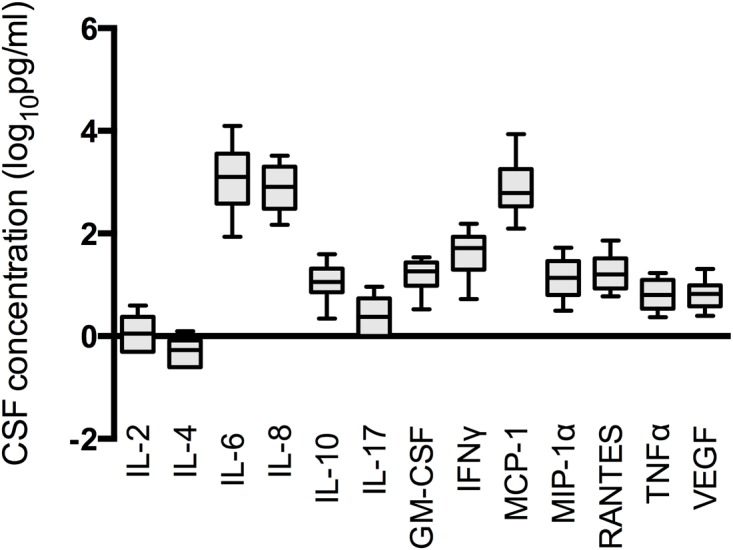
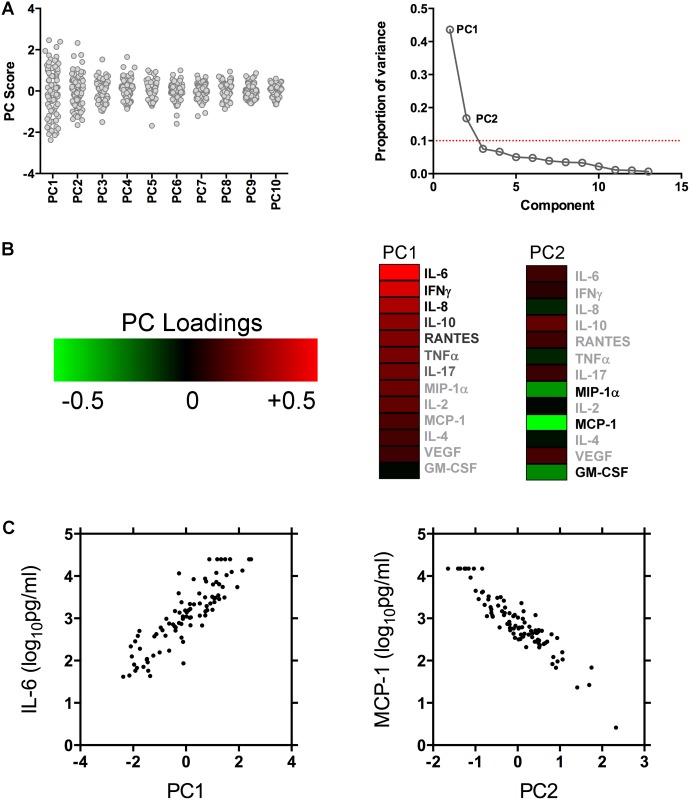
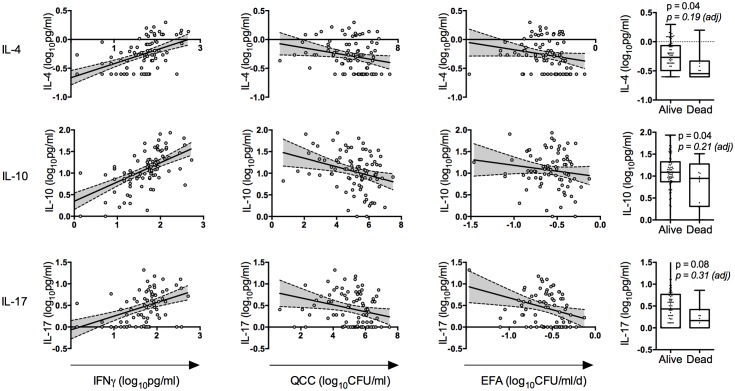
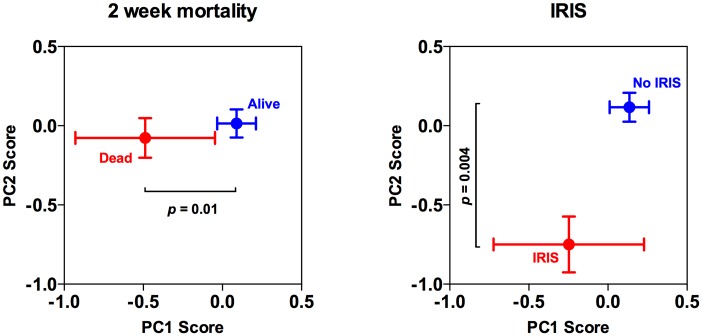
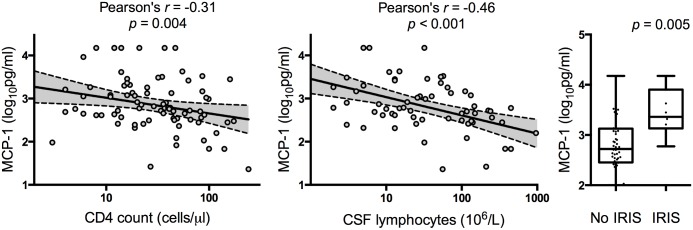
Understanding the host immune response during cryptococcal meningitis (CM) is of critical importance for the development of immunomodulatory therapies. We profiled the cerebrospinal fluid (CSF) immune-response in ninety patients with HIV-associated CM, and examined associations between immune phenotype and clinical outcome. CSF cytokine, chemokine, and macrophage activation marker concentrations were assayed at disease presentation, and associations between these parameters and microbiological and clinical outcomes were examined using principal component analysis (PCA). PCA demonstrated a co-correlated CSF cytokine and chemokine response consisting primarily of Th1, Th2, and Th17-type cytokines. The presence of this CSF cytokine response was associated with evidence of increased macrophage activation, more rapid clearance of Cryptococci from CSF, and survival at 2 weeks. The key components of this protective immune-response were interleukin (IL)-6 and interferon-γ, IL-4, IL-10 and IL-17 levels also made a modest positive contribution to the PC1 score. A second component of co-correlated chemokines was identified by PCA, consisting primarily of monocyte chemotactic protein-1 (MCP-1) and macrophage inflammatory protein-1α (MIP-1α). High CSF chemokine concentrations were associated with low peripheral CD4 cell counts and CSF lymphocyte counts and were predictive of immune reconstitution inflammatory syndrome (IRIS). In conclusion CSF cytokine and chemokine profiles predict risk of early mortality and IRIS in HIV-associated CM. We speculate that the presence of even minimal Cryptococcus-specific Th1-type CD4+ T-cell responses lead to increased recruitment of circulating lymphocytes and monocytes into the central nervous system (CNS), more effective activation of CNS macrophages and microglial cells, and faster organism clearance; while high CNS chemokine levels may predispose to over recruitment or inappropriate recruitment of immune cells to the CNS and IRIS following peripheral immune reconstitution with ART. These results provide a rational basis for future studies of immune modulation in CM, and demonstrate the potential of baseline immune profiling to identify CM patients most at risk of mortality and subsequent IRIS.
Overview
The claims and statistics of this paper haven’t been checked yet.
Free: it reads the open-access text and checks the first 5 claims that cite a source we can check. Create a free account to check every claim.
Integrity signals
Registry
Cites
Statistics
Figures
Verification
Claims the paper makes
The claims and statistics of this paper haven’t been checked yet.
Free: it reads the open-access text and checks the first 5 claims that cite a source we can check. Create a free account to check every claim.
Claims other papers make about this one
Each is checked against this paper’s own text: does it say what the citing paper says it does?
In the citing paper
“Instead, CCR2+Ly6Chi monocytes promote brain inflammation, leading to lethal immune pathology in the brain in mice as well as in humans [131, 132].”
From Mechanisms of fungal dissemination (2021) · cites this paper as [132]
Self-check
Percentages, sums and reported differences re-computed from the paper’s own numbers.
The self-check needs the paper’s full text.
Citations
Cites
Korn, T., Bettelli, E., Oukka, M., & Kuchroo, V. K. (2009) · Annual Review of Immunology · doi:10.1146/annurev.immunol.021908.132710 · Cited by 4,873 · cited 1×
“γδ T-cells, CD8 T-cells, NK cells, and neutrophils are all capable of producing the cytokine [21, 40–44], although it is not possible to determine the source of CSF IL-17 from our data.”
BackgroundWhat is principal component analysis?
Ringnér, M. (2008) · Nature Biotechnology · doi:10.1038/nbt0308-303 · Cited by 2,407
Park, B. J., Wannemuehler, K. A., Marston, B. J., Govender, N., Pappas, P. G., & Chiller, T. M. (2009) · AIDS · doi:10.1097/qad.0b013e328322ffac · Cited by 2,014 · cited 1×
“Cryptococcal meningitis (CM) is a leading cause of mortality in HIV-infected patients in lowresource settings [1, 2].”
BackgroundCombination antifungal therapies for HIV-associated cryptococcal meningitis: a randomised trial
Brouwer, A. E., Rajanuwong, A., Chierakul, W., Griffin, G. E., Larsen, R. A., White, N. J., & Harrison, T. S. (2004) · The Lancet · doi:10.1016/s0140-6736(04)16301-0 · Cited by 470 · cited 1×
“Cryptococcal clearance (early fungicidal activity, or EFA) was calculated as previously described [31].”
MethodSelf-citationDavis, M. J., Tsang, T. M., Qiu, Y., Dayrit, J. K., Freij, J. B., Huffnagle, G. B., & Olszewski, M. A. (2013) · mBio · doi:10.1128/mbio.00264-13 · Cited by 448
Induction, function and regulation of IL‐17‐producing T cells
Mills, K. H. G. (2008) · European Journal of Immunology · doi:10.1002/eji.200838535 · Cited by 385 · cited 1×
“γδ T-cells, CD8 T-cells, NK cells, and neutrophils are all capable of producing the cytokine [21, 40–44], although it is not possible to determine the source of CSF IL-17 from our data.”
BackgroundJarvis, J. N., Bicanic, T., Loyse, A., Namarika, D., Jackson, A., Nussbaum, J. C., Longley, N., Muzoora, C., Phulusa, J., Taseera, K., et al. (2014) · Clinical Infectious Diseases · doi:10.1093/cid/cit794 · Cited by 367 · cited 1×
“Differences in PC scores between patients who survived and died, and those who did and did not develop IRIS, were examined using a linear regression model adjusting for treatment group, CD4-cell count, and the previously described risk factors for mortality, baseline fungal burden and altered mental status [36].”
MethodSelf-citationKambugu, A., Meya, D. B., Rhein, J., O’Brien, M., Janoff, E. N., Ronald, A. R., Kamya, M. R., Mayanja‐Kizza, H., Sande, M. A., Bohjanen, P. R., et al. (2008) · Clinical Infectious Diseases · doi:10.1086/587667 · Cited by 300 · cited 1×
“Current treatments for CM are inadequate, with high associated mortality [3–5], and high incidence of immune reconstitution inflammatory syndrome (IRIS) amongst those who survive and start antiretroviral therapy (ART) [6–8].”
BackgroundJarvis, J. N., Meintjes, G., Rebe, K., Williams, G. N., Bicanic, T., Williams, A., Schutz, C., Bekker, L.-G., Wood, R., & Harrison, T. S. (2012) · AIDS · doi:10.1097/qad.0b013e3283536a93 · Cited by 290
Self-citationBoulware, D. R., Meya, D. B., Bergemann, T. L., Wiesner, D. L., Rhein, J., Musubire, A., Lee, S. J., Kambugu, A., Janoff, E. N., & Bohjanen, P. R. (2010) · PLoS Medicine · doi:10.1371/journal.pmed.1000384 · Cited by 279
Müller, U., Stenzel, W., Köhler, G., Werner, C., Polte, T., Hansen, G., Schütze, N., Straubinger, R. K., Blessing, M., McKenzie, A. N. J., et al. (2007) · The Journal of Immunology · doi:10.4049/jimmunol.179.8.5367 · Cited by 271 · cited 1×
“In keeping with animal models [12, 13, 19, 23, 40], our data suggests that the Th-17-type cytokine, IL-17, plays an important role in the human CNS immune response to Cryptococcus.”
Adult meningitis in a setting of high HIV and TB prevalence: findings from 4961 suspected cases
Jarvis, J. N., Meintjes, G., Williams, A., Brown, Y., Crede, T., & Harrison, T. S. (2010) · BMC Infectious Diseases · doi:10.1186/1471-2334-10-67 · Cited by 266 · cited 1×
“Cryptococcal meningitis (CM) is a leading cause of mortality in HIV-infected patients in lowresource settings [1, 2].”
BackgroundSelf-citationHIV-associated cryptococcal meningitis
Jarvis, J. N., & Harrison, T. S. (2007) · AIDS · doi:10.1097/qad.0b013e3282a4a64d · Cited by 252 · cited 1×
“Epidemiological evidence clearly points to the importance of adequate CD4 T-cell mediated immunity in the control of cryptococcal infection [27, 28], and experimental data suggest that the phenotype of the CD4 T-cell response to Cryptococcus neoformans influences the outcome of CM [9, 29].”
BackgroundSelf-citationPrecarious Balance: Th17 Cells in Host Defense
Peck, A., & Mellins, E. D. (2010) · Infection and Immunity · doi:10.1128/iai.00929-09 · Cited by 236
Bicanic, T., Wood, R., Meintjes, G., Rebe, K., Brouwer, A., Loyse, A., Bekker, L., Jaffar, S., & Harrison, T. (2008) · Clinical Infectious Diseases · doi:10.1086/588792 · Cited by 232
Self-citationKleinschek, M. A., Muller, U., Brodie, S. J., Stenzel, W., Kohler, G., Blumenschein, W. M., Straubinger, R. K., McClanahan, T., Kastelein, R. A., & Alber, G. (2006) · The Journal of Immunology · doi:10.4049/jimmunol.176.2.1098 · Cited by 227 · cited 1×
“In keeping with animal models [12, 13, 19, 23, 40], our data suggests that the Th-17-type cytokine, IL-17, plays an important role in the human CNS immune response to Cryptococcus.”
Boulware, D. R., Bonham, S. C., Meya, D. B., Wiesner, D. L., Park, G. S., Kambugu, A., Janoff, E. N., & Bohjanen, P. R. (2010) · The Journal of Infectious Diseases · doi:10.1086/655785 · Cited by 191 · cited 2×
“Understanding the host immune response to cryptococcal infection is important to enable rational development of immunomodulatory therapies, and also allow identification of patients most at risk of mortality and IRIS [3, 7, 9].”
BackgroundWormley, F. L., Perfect, J. R., Steele, C., & Cox, G. M. (2007) · Infection and Immunity · doi:10.1128/iai.00274-06 · Cited by 187
Bicanic, T., Meintjes, G., Rebe, K., Williams, A., Loyse, A., Wood, R., Hayes, M., Jaffar, S., & Harrison, T. (2009) · JAIDS Journal of Acquired Immune Deficiency Syndromes · doi:10.1097/qai.0b013e3181a56f2e · Cited by 175
Self-citationAlexander, J., & Brombacher, F. (2012) · Frontiers in Immunology · doi:10.3389/fimmu.2012.00080 · Cited by 174
Zhang, Y., Wang, F., Tompkins, K. C., McNamara, A., Jain, A. V., Moore, B. B., Toews, G. B., Huffnagle, G. B., & Olszewski, M. A. (2009) · The American Journal of Pathology · doi:10.2353/ajpath.2009.090530 · Cited by 172
Arginase activity mediates reversible T cell hyporesponsiveness in human pregnancy
Kropf, P., Baud, D., Marshall, S. E., Munder, M., Mosley, A., Fuentes, J. M., Bangham, C. R. M., Taylor, G. P., Herath, S., Choi, B., et al. (2007) · European Journal of Immunology · doi:10.1002/eji.200636542 · Cited by 164 · cited 1×
“The enzymatic activity of arginase and protein concentration of samples were measured as previously described [33].”
MethodSelf-citationVoelz, K., Lammas, D. A., & May, R. C. (2009) · Infection and Immunity · doi:10.1128/iai.00297-09 · Cited by 155
IFN-γ at the Site of Infection Determines Rate of Clearance of Infection in Cryptococcal Meningitis
Siddiqui, A. A., Brouwer, A. E., Wuthiekanun, V., Jaffar, S., Shattock, R., Irving, D., Sheldon, J., Chierakul, W., Peacock, S., Day, N., et al. (2005) · The Journal of Immunology · doi:10.4049/jimmunol.174.3.1746 · Cited by 146
Self-citationA guide to modern statistical analysis of immunological data
Genser, B., Cooper, P. J., Yazdanbaksh, M., Barreto, M. L., & Rodrigues, L. C. (2007) · BMC Immunology · doi:10.1186/1471-2172-8-27 · Cited by 141 · cited 1×
“The first principal component accounts for as much of the variability in the data as possible, and each subsequent component accounts for the highest variance possible under the constraint that it is uncorrelated with preceding components [34, 35].”
BackgroundHerring, A. C., Lee, J., McDonald, R. A., Toews, G. B., & Huffnagle, G. B. (2002) · Infection and Immunity · doi:10.1128/iai.70.6.2959-2964.2002 · Cited by 140
Arora, S., Olszewski, M. A., Tsang, T. M., McDonald, R. A., Toews, G. B., & Huffnagle, G. B. (2011) · Infection and Immunity · doi:10.1128/iai.01270-10 · Cited by 140 · cited 1×
“We found no evidence for a detrimental Th2-type response in CM patients, nor evidence for arginase activity, which in mouse models of Cryptococcal infection is associated with alternative activation of effector cells [16].”
BackgroundJarvis, J. N., Casazza, J. P., Stone, H. H., Meintjes, G., Lawn, S. D., Levitz, S. M., Harrison, T. S., & Koup, R. A. (2013) · The Journal of Infectious Diseases · doi:10.1093/infdis/jit099 · Cited by 129
Self-citationChang, C. C., Dorasamy, A., Gosnell, B. I., Elliott, J., Spelman, T. D., Omarjee, S., Naranbhai, V., Coovadia, Y. M., Ndung’u, T., Moosa, M.-Y. S., et al. (2013) · AIDS · doi:10.1097/qad.0b013e3283614a8d · Cited by 123
Stenzel, W., Müller, U., Köhler, G., Heppner, F. L., Blessing, M., McKenzie, A. N. J., Brombacher, F., & Alber, G. (2009) · American Journal Of Pathology · doi:10.2353/ajpath.2009.080598 · Cited by 105
Role of IL-17A on Resolution of Pulmonary C. neoformans Infection
Wozniak, K. L., Hardison, S. E., Kolls, J. K., & Wormley, F. L. (2011) · PLoS ONE · doi:10.1371/journal.pone.0017204 · Cited by 104 · cited 2×
“γδ T-cells, CD8 T-cells, NK cells, and neutrophils are all capable of producing the cytokine [21, 40–44], although it is not possible to determine the source of CSF IL-17 from our data.”
BackgroundWozniak, K. L., Ravi, S., Macias, S., Young, M. L., Olszewski, M. A., Steele, C., & Wormley, F. L. (2009) · PLoS ONE · doi:10.1371/journal.pone.0006854 · Cited by 99 · cited 1×
“In keeping with animal models [12, 13, 19, 23, 40], our data suggests that the Th-17-type cytokine, IL-17, plays an important role in the human CNS immune response to Cryptococcus.”
Hardison, S. E., Herrera, G., Young, M. L., Hole, C. R., Wozniak, K. L., & Wormley, F. L. (2012) · The Journal of Immunology · doi:10.4049/jimmunol.1103455 · Cited by 97
Chang, C. C., Omarjee, S., Lim, A., Spelman, T., Gosnell, B. I., Carr, W. H., Elliott, J. H., Moosa, M.-Y. S., Ndung'u, T., French, M. A., et al. (2013) · The Journal of Infectious Diseases · doi:10.1093/infdis/jit388 · Cited by 82 · cited 1×
“, who recently demonstrated that increased CNS expression of MCP-1 and MIP1α at baseline were associated with subsequent IRIS, and hypothesized that CD8+ T-cell and myeloid cell trafficking into the CNS in response to these chemokines predisposed to aberrant immune responses and excessive CNS inflammation following AR…”
BackgroundQiu, Y., Davis, M. J., Dayrit, J. K., Hadd, Z., Meister, D. L., Osterholzer, J. J., Williamson, P. R., & Olszewski, M. A. (2012) · PLoS ONE · doi:10.1371/journal.pone.0047853 · Cited by 80 · cited 1×
“Th17-type CD4 T-cell responses and cytokines appear to play a protective role [18–21], whilst Th2-type responses are associated with impaired control of infection and poor outcomes [16, 17, 22–26].”
BackgroundWozniak, K. L., Kolls, J. K., & Wormley, F. L. (2012) · BMC Immunology · doi:10.1186/1471-2172-13-65 · Cited by 77 · cited 1×
“γδ T-cells, CD8 T-cells, NK cells, and neutrophils are all capable of producing the cytokine [21, 40–44], although it is not possible to determine the source of CSF IL-17 from our data.”
BackgroundCryptococcal immune reconstitution inflammatory syndrome
Longley, N., Harrison, T. S., & Jarvis, J. N. (2013) · Current Opinion in Infectious Diseases · doi:10.1097/qco.0b013e32835c21d1 · Cited by 73
Self-citationBuchanan, K. L., & Doyle, H. A. (2000) · Infection and Immunity · doi:10.1128/iai.68.2.456-462.2000 · Cited by 72
Increased Level of Arginase Activity Correlates with Disease Severity in HIV‐Seropositive Patients
Cloke, T., Garvey, L. J., Choi, B., Abebe, T., Hailu, A., Hancock, M., Kadolsky, U. D., Bangham, C. R. M., Munder, M., Müller, I., et al. (2010) · The Journal of Infectious Diseases · doi:10.1086/653736 · Cited by 66
Self-citationManaging cryptococcosis in the immunocompromised host
Jarvis, J. N., Dromer, F., Harrison, T. S., & Lortholary, O. (2008) · Current Opinion in Infectious Diseases · doi:10.1097/qco.0b013e3283177f6c · Cited by 62 · cited 1×
“Epidemiological evidence clearly points to the importance of adequate CD4 T-cell mediated immunity in the control of cryptococcal infection [27, 28], and experimental data suggest that the phenotype of the CD4 T-cell response to Cryptococcus neoformans influences the outcome of CM [9, 29].”
BackgroundSelf-citationUicker, W. C., Doyle, H. A., McCracken, J. P., Langlois, M., & Buchanan, K. L. (2004) · Medical Mycology · doi:10.1080/13693780410001731510 · Cited by 56 · cited 1×
“These findings are consistent with animal model data demonstrating the importance of pro-inflammatory CNS cytokine responses [13, 37, 38] and microglial cell activation [38, 39] in response to cytokines such as IFNγ for host resistance to cryptococcal infection.”
ResultZhou, Q., Gault, R. A., Kozel, T. R., & Murphy, W. J. (2007) · The Journal of Immunology · doi:10.4049/jimmunol.178.9.5753 · Cited by 54 · cited 1×
“These findings are consistent with animal model data demonstrating the importance of pro-inflammatory CNS cytokine responses [13, 37, 38] and microglial cell activation [38, 39] in response to cytokines such as IFNγ for host resistance to cryptococcal infection.”
ResultChang, C. C., Lim, A., Omarjee, S., Levitz, S. M., Gosnell, B. I., Spelman, T., Elliott, J. H., Carr, W. H., Moosa, M.-Y. S., Ndung'u, T., et al. (2013) · The Journal of Infectious Diseases · doi:10.1093/infdis/jit271 · Cited by 53
Almeida, G. M., de Andrade, R. M., & Bento, C. A. M. (2001) · The Journal of Immunology · doi:10.4049/jimmunol.167.10.5845 · Cited by 46 · cited 1×
“Th17-type CD4 T-cell responses and cytokines appear to play a protective role [18–21], whilst Th2-type responses are associated with impaired control of infection and poor outcomes [16, 17, 22–26].”
BackgroundSzymczak, W. A., Sellers, R. S., & Pirofski, L. (2012) · American Journal Of Pathology · doi:10.1016/j.ajpath.2011.12.038 · Cited by 46
Uicker, W. C., McCracken, J. P., & Buchanan, K. L. (2006) · Medical Mycology · doi:10.1080/13693780500088424 · Cited by 44 · cited 1×
“In these model systems effective immunity is dependent on robust CD4 T-cell immune responses, the production of Th1-type cytokines such as interferon-γ (IFNγ), and “classical” activation of effector cells such as macrophages [10–17], leading to killing and clearance of infection.”
BackgroundLortholary, O., Dromer, F., Mathoulin‐Pélissier, S., Fitting, C., Improvisi, L., Cavaillon, J., Dupont, B., & French Cryptococcosis Study Group (2001) · The Journal of Infectious Diseases · doi:10.1086/317937 · Cited by 44 · cited 1×
“Unlike in previous smaller studies [30, 51], levels of CSF cytokines were significantly correlated with both peripheral CD4 cell count and CSF lymphocyte count.”
ResultMüller, U., Stenzel, W., Piehler, D., Grahnert, A., Protschka, M., Köhler, G., Frey, O., Held, J., Richter, T., Eschke, M., et al. (2013) · International Immunology · doi:10.1093/intimm/dxt003 · Cited by 40 · cited 1×
“Th17-type CD4 T-cell responses and cytokines appear to play a protective role [18–21], whilst Th2-type responses are associated with impaired control of infection and poor outcomes [16, 17, 22–26].”
BackgroundMüller, U., Piehler, D., Stenzel, W., Köhler, G., Frey, O., Held, J., Grahnert, A., Richter, T., Eschke, M., Kamradt, T., et al. (2012) · Mucosal Immunology · doi:10.1038/mi.2012.9 · Cited by 34 · cited 1×
“Th17-type CD4 T-cell responses and cytokines appear to play a protective role [18–21], whilst Th2-type responses are associated with impaired control of infection and poor outcomes [16, 17, 22–26].”
BackgroundAguirre, K., & Miller, S. (2002) · Glia · doi:10.1002/glia.10093 · Cited by 34 · cited 1×
“These findings are consistent with animal model data demonstrating the importance of pro-inflammatory CNS cytokine responses [13, 37, 38] and microglial cell activation [38, 39] in response to cytokines such as IFNγ for host resistance to cryptococcal infection.”
ResultChristo, P. P., Vilela, M. C., Bretas, T. L. B., Domingues, R. B., Greco, D. B., LIVRAMENTO, J. A., & Teixeira, A. L. (2009) · Journal of the Neurological Sciences · doi:10.1016/j.jns.2009.09.002 · Cited by 29 · cited 3×
“Additionally mouse models do not incorporate HIV-infection, or the effects of antifungal treatment.”
ResultInfluentialCurrent therapeutic recommendations in multiple sclerosis
Berger, T. (2009) · Journal of the Neurological Sciences · doi:10.1016/s0022-510x(09)71299-7 · Cited by 26
Induction of Protective Immunity Against Cryptococcosis
Wozniak, K. L., Hardison, S. E., Olszewski, M. A., & Wormley, F. L. (2011) · Mycopathologia · doi:10.1007/s11046-011-9505-8 · Cited by 24 · cited 1×
“In these model systems effective immunity is dependent on robust CD4 T-cell immune responses, the production of Th1-type cytokines such as interferon-γ (IFNγ), and “classical” activation of effector cells such as macrophages [10–17], leading to killing and clearance of infection.”
BackgroundTewari, A., Behera, B., Mathur, P., & Xess, I. (2012) · Mycopathologia · doi:10.1007/s11046-012-9528-9 · Cited by 23
Cited by
Maziarz, E. K., & Perfect, J. R. (2016) · Infectious Disease Clinics of North America · doi:10.1016/j.idc.2015.10.006 · Cited by 698
Cryptococcus: from environmental saprophyte to global pathogen
May, R. C., Stone, N. R. H., Wiesner, D. L., Bicanic, T., & Nielsen, K. (2016) · Nature Reviews Microbiology · doi:10.1038/nrmicro.2015.6 · Cited by 541
Self-citationCryptococcal meningitis: epidemiology, immunology, diagnosis and therapy
Williamson, P. R., Jarvis, J. N., Panackal, A. A., Fisher, M. C., Molloy, S. F., Loyse, A., & Harrison, T. S. (2017) · Nature Reviews Neurology · doi:10.1038/nrneurol.2016.167 · Cited by 480
Self-citationImmune responses to human fungal pathogens and therapeutic prospects
Lionakis, M. S., Drummond, R. A., & Hohl, T. M. (2023) · Nature Reviews Immunology · doi:10.1038/s41577-022-00826-w · Cited by 379
Myeloid Cells in the Central Nervous System
Herz, J., Filiano, A. J., Wiltbank, A. T., Yogev, N., & Kipnis, J. (2017) · Immunity · doi:10.1016/j.immuni.2017.06.007 · Cited by 332
“In line with these observations in animal models, a minimal presence of T cell responses in the CSF of patients with acute bacterial meningitis correlated with a larger number of monocytes and increased risk of mortality and inflammatory syndrome (Jarvis et al., 2015).”
Result
Metadata
- Authors
- Jarvis, J. N., Meintjes, G., Bicanic, T., Buffa, V., Hogan, L., Mo, S., Tomlinson, G., Kropf, P., Noursadeghi, M., & Harrison, T. S.
- Affiliations
- University of Cape Town (ZA)
- St George's, University of London (GB)
- Imperial College London (GB)
- University College London (GB)
- Corresponding author
- Jarvis, Joseph N.
- ORCID
- Venue
- PLOS Pathogens
- Publisher
- Public Library of Science (PLoS)
- Published
- 2015-04-08
- Volume
- 11
- Issue
- 4
- Pages
- e1004754
- ISSN
- 1553-7366 (ISSN-L)
- 1553-7374
- PMC
- PMC4390200
- OpenAlex
- W2150353529
- Cited by
- 150
- References
- 55
- Citations by year
- 2026: 10 · 2025: 8 · 2024: 12 · 2023: 10 · 2022: 15 · 2021: 15 · 2020: 9 · 2019: 13 · 2018: 16 · 2017: 20 · 2016: 14 · 2015: 8
- FWCI
- 15.17
- Type
- journal article
- Language
- en
- Open access
- gold
- doi.org
- Licence
- Locations
- PLoS Pathogens (publishedVersion, cc-by)
- PubMed Central (publishedVersion, cc-by)
- PubMed (publishedVersion)
- St George's Online Research Archive (St George's University of London) (acceptedVersion)
- LSHTM Research Online (London School of Hygiene and Tropical Medicine) (acceptedVersion)
- DOAJ (DOAJ: Directory of Open Access Journals) (submittedVersion, cc-by-sa)
- UCL Discovery (University College London) (submittedVersion)
- Figshare (submittedVersion, cc-by)
- Open University of Cape Town (University of Cape Town) (submittedVersion, cc-by)
- Spiral (Imperial College London) (submittedVersion, cc-by)
- Greater South Information System
- Funders
- Wellcome Trust (/WT081794, 098316, 84323)
- National Institute for Health and Care Research (U01AI089244, 098316, CL-2012-18-007, CL-2012-20-001)
- British Infection Society
- National Research Foundation
- University College London Hospitals NHS Foundation Trust
- National Institute of Allergy and Infectious Diseases (U01AI089244, P30AI045008)
- Topics
- Health Sciences › Medicine › Infectious Diseases › Fungal Infections and Studies
- Health Sciences › Medicine › Infectious Diseases › Infectious Diseases and Tuberculosis
- Life Sciences › Immunology and Microbiology › Microbiology › Bacterial Infections and Vaccines
- Keywords
- cryptococcal meningitis, HIV, cerebrospinal fluid cytokines, chemokines, immune reconstitution inflammatory syndrome, early mortality, macrophage activation, Th1/Th17 response, interleukin-6, interferon-gamma, MCP-1, MIP-1α, CD4+ T cells, antiretroviral therapy, immunomodulation
- MeSH terms
- Adult, Female, Humans, Male, HIV Infections, Cytokines, Meningitis, Cryptococcal, Principal Component Analysis, Immune Reconstitution Inflammatory Syndrome
About these checks
Registry, retraction, Cites and statistics results are computed, not judged, with one exception: a printed reference that no index lists is read once by a model before it counts as a citation error. Claims are extracted by a model and kept only when their quote appears verbatim in the text; each cited source is then checked, with a model’s help, for whether it says what the claim relies on. Those verdicts can be wrong — read the claim’s quote and the cited source before relying on one.
Statistics and arithmetic are recomputed, not judged.
Confidence bands are shown only for fields calibrated on our annotated test set. None is calibrated yet, so no band is shown.
What counts as a claim ›How we measure confidence ›How we check this ›
Are you an author, or do you see a problem with this page? Request a review
Data sources
Bibliographic data: Semantic Scholar, OpenAlex, Crossref.
Contains information from the Semantic Scholar Academic Graph Datasets, made available under the ODC Attribution License (ODC-BY 1.0).
Semantic Scholar’s data is described in: Kinney, R., et al. (2023). The Semantic Scholar Open Data Platform. arXiv:2301.10140.
