

The Rewiring of Ubiquitination Targets in a Pathogenic Yeast Promotes Metabolic Flexibility, Host Colonization and Virulence
Open accessThe DOI matches its Crossref record; 63 of the 63 references it cites were found in a registry or an index.
Abstract
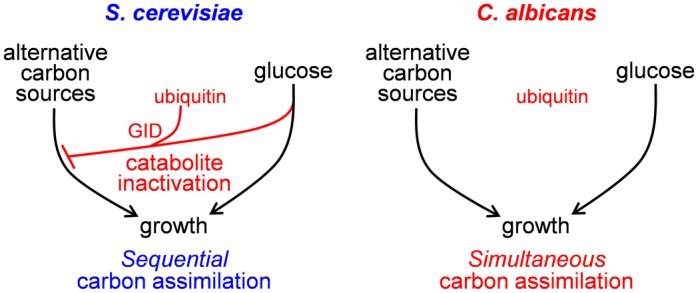
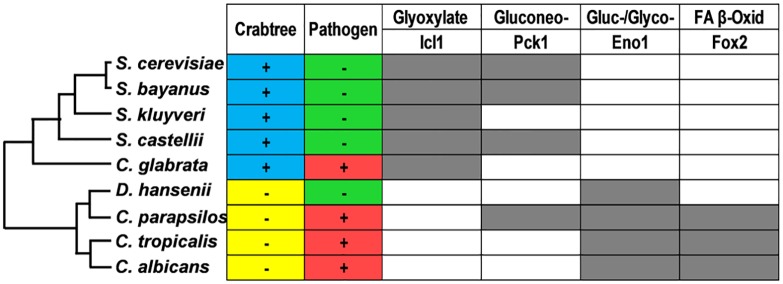
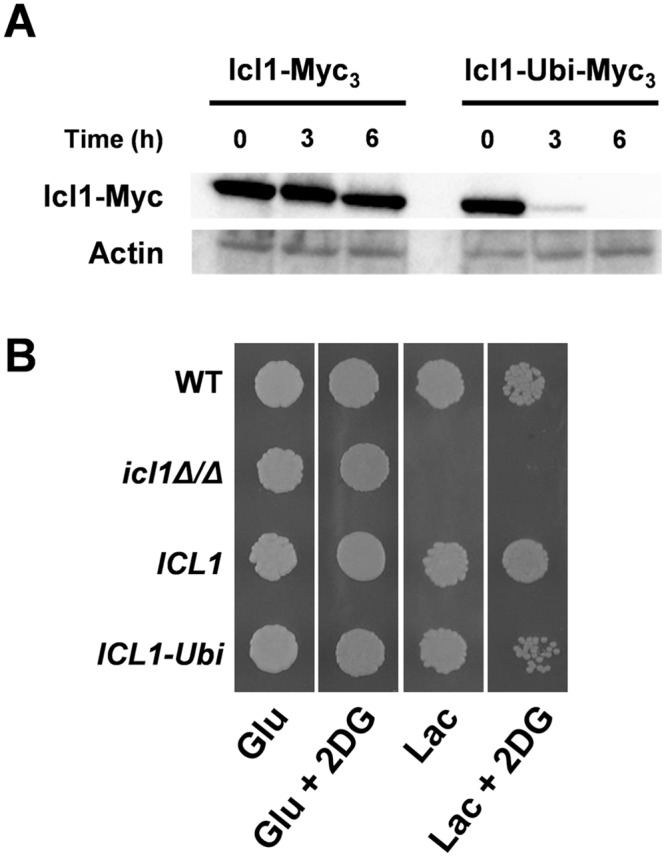
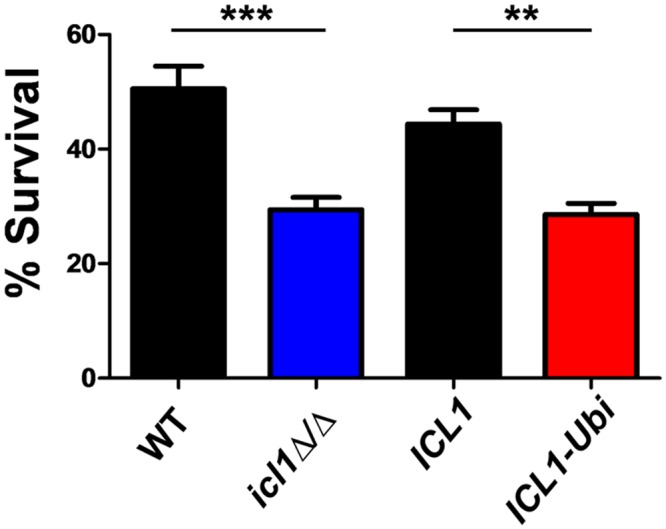
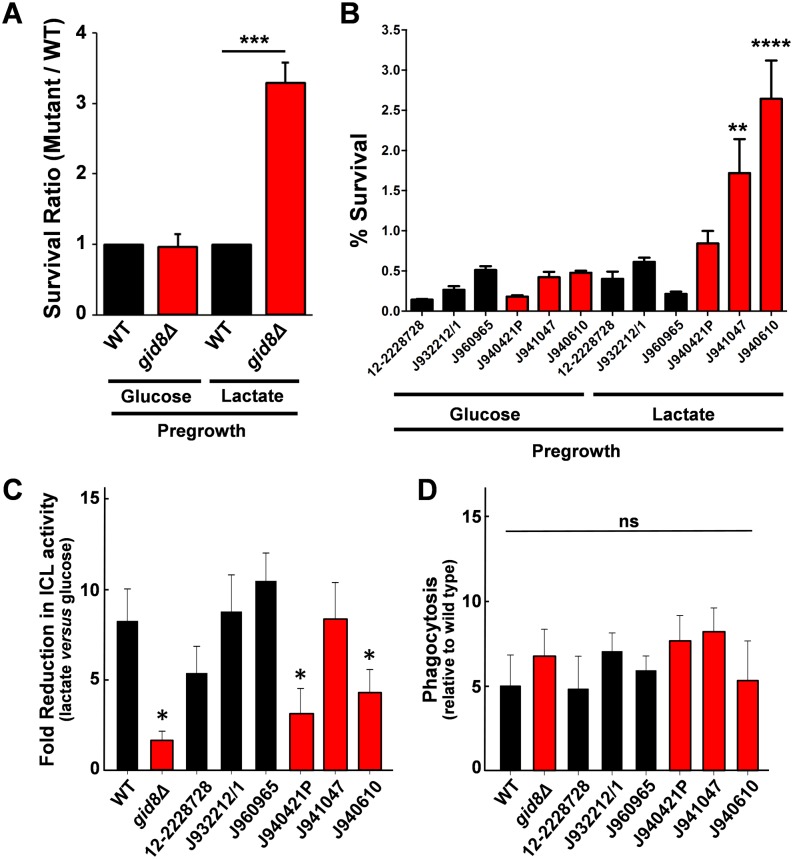
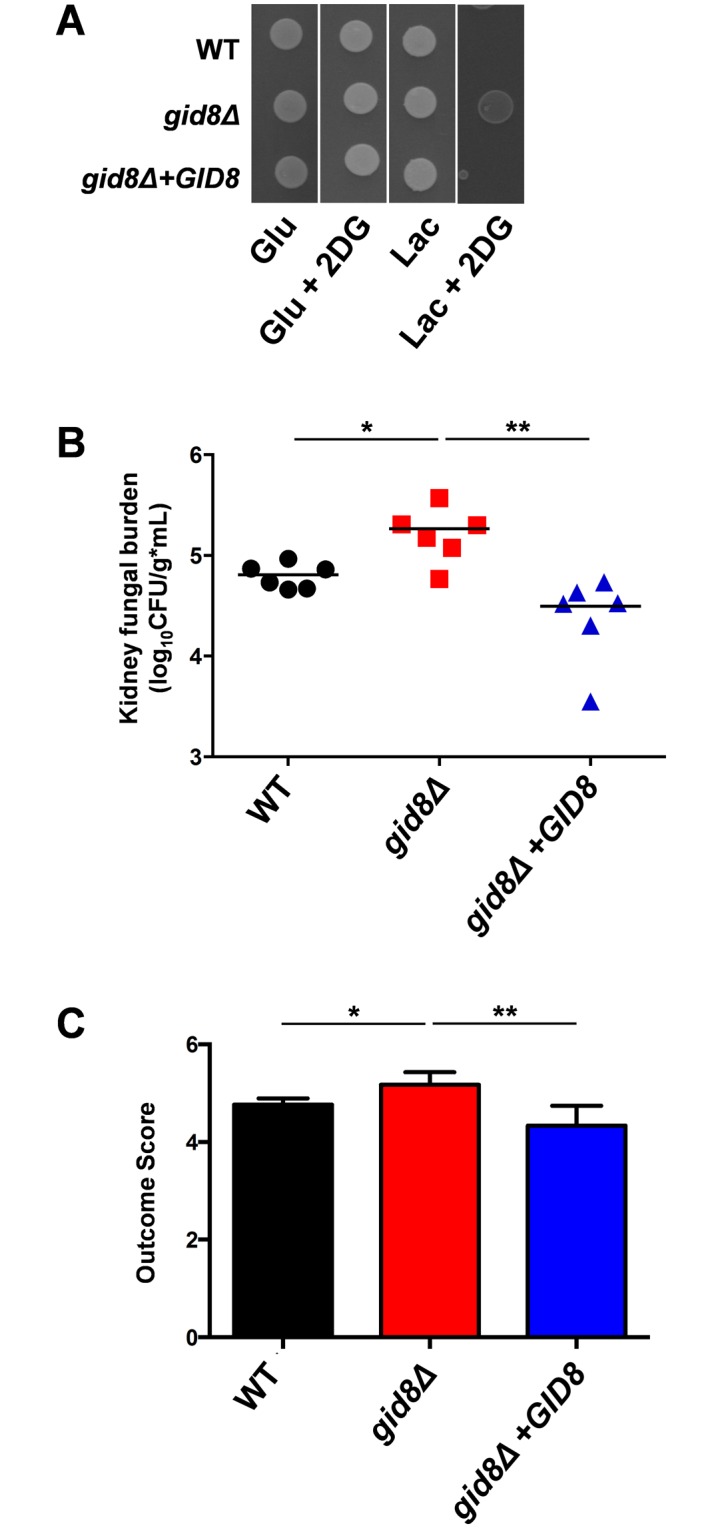
Efficient carbon assimilation is critical for microbial growth and pathogenesis. The environmental yeast Saccharomyces cerevisiae is "Crabtree positive", displaying a rapid metabolic switch from the assimilation of alternative carbon sources to sugars. Following exposure to sugars, this switch is mediated by the transcriptional repression of genes (carbon catabolite repression) and the turnover (catabolite inactivation) of enzymes involved in the assimilation of alternative carbon sources. The pathogenic yeast Candida albicans is Crabtree negative. It has retained carbon catabolite repression mechanisms, but has undergone posttranscriptional rewiring such that gluconeogenic and glyoxylate cycle enzymes are not subject to ubiquitin-mediated catabolite inactivation. Consequently, when glucose becomes available, C. albicans can continue to assimilate alternative carbon sources alongside the glucose. We show that this metabolic flexibility promotes host colonization and virulence. The glyoxylate cycle enzyme isocitrate lyase (CaIcl1) was rendered sensitive to ubiquitin-mediated catabolite inactivation in C. albicans by addition of a ubiquitination site. This mutation, which inhibits lactate assimilation in the presence of glucose, reduces the ability of C. albicans cells to withstand macrophage killing, colonize the gastrointestinal tract and cause systemic infections in mice. Interestingly, most S. cerevisiae clinical isolates we examined (67%) have acquired the ability to assimilate lactate in the presence of glucose (i.e. they have become Crabtree negative). These S. cerevisiae strains are more resistant to macrophage killing than Crabtree positive clinical isolates. Moreover, Crabtree negative S. cerevisiae mutants that lack Gid8, a key component of the Glucose-Induced Degradation complex, are more resistant to macrophage killing and display increased virulence in immunocompromised mice. Thus, while Crabtree positivity might impart a fitness advantage for yeasts in environmental niches, the more flexible carbon assimilation strategies offered by Crabtree negativity enhance the ability of yeasts to colonize and infect the mammalian host.
Overview
The claims and statistics of this paper haven’t been checked yet.
Free: it reads the open-access text and checks the first 5 claims that cite a source we can check. Create a free account to check every claim.
Integrity signals
Registry
Cites
Statistics
Figures
Verification
Claims the paper makes
The claims and statistics of this paper haven’t been checked yet.
Free: it reads the open-access text and checks the first 5 claims that cite a source we can check. Create a free account to check every claim.
Claims other papers make about this one
Each is checked against this paper’s own text: does it say what the citing paper says it does?
The check wasn’t confident either way, so it gives no verdict — never disputed.
In the citing paper
“Changes in ergosterol-rich domains can alter Pma1 localization or function without requiring direct inhibition of its catalytic site [38,39].”
From Ovotransferrin and Its γ-Core-Containing Peptides Impair Pma1-Dependent Proton Homeostasis in Candida albicans (2026) · cites this paper as [38]
Experimental — accuracy not yet measuredThe check wasn’t confident either way, so it gives no verdict — never disputed.
In the citing paper
“Pma1 activity depends not only on the enzyme itself but also on its organization within the fungal plasma membrane and on the lipid composition of surrounding microdomains.”
From Ovotransferrin and Its γ-Core-Containing Peptides Impair Pma1-Dependent Proton Homeostasis in Candida albicans (2026) · cites this paper as [38]
Experimental — accuracy not yet measured
Self-check
Percentages, sums and reported differences re-computed from the paper’s own numbers.
The self-check needs the paper’s full text.
Citations
Cites
[1] Getting started with yeast
Sherman, F. (1991) · Methods in Enzymology · doi:10.1016/0076-6879(91)94004-v · Cited by 4,067
Janke, C., Magiera, M. M., Rathfelder, N., Taxis, C., Reber, S., Maekawa, H., Moreno‐Borchart, A., Doenges, G., Schwob, E., Schiebel, E., et al. (2004) · Yeast · doi:10.1002/yea.1142 · Cited by 2,119
Carbon catabolite repression in bacteria: many ways to make the most out of nutrients
Görke, B., & Stülke, J. (2008) · Nature Reviews Microbiology · doi:10.1038/nrmicro1932 · Cited by 1,701 · cited 2×
“albicans icl1mutants, which are less pathogenic in the murine model of systemic candidiasis [1, 24, 25, 28].”
BackgroundVirulence factors of Candida albicans
Calderone, R. A., & Fonzi, W. A. (2001) · Trends in Microbiology · doi:10.1016/s0966-842x(01)02094-7 · Cited by 1,331 · cited 1×
“A range of virulence factors contribute to pathogenicity, including yeast-hypha morphogenesis, adhesins and invasins, and secreted hydrolases [42].”
BackgroundOdds, F. C. (1979) · Medical Entomology and Zoology · Cited by 1,297
Fidel, P. L., Vazquez, J. A., & Sobel, J. D. (1999) · Clinical Microbiology Reviews · doi:10.1128/cmr.12.1.80 · Cited by 953
Calderone, R. (2012) · ASM Press eBooks · Cited by 912
Muñoz-Elías, E. J., & McKinney, J. D. (2005) · Nature Medicine · doi:10.1038/nm1252 · Cited by 756
The glyoxylate cycle is required for fungal virulence
Lorenz, M. C., & Fink, G. R. (2001) · Nature · doi:10.1038/35083594 · Cited by 745 · cited 3×
“albicans cells that have been phagocytosed by macrophages [25, 28], and the glyoxylate cycle promotes resistance to neutrophil-mediated killing [37].”
BackgroundOwen, D. H., & Katz, D. F. (1999) · Contraception · doi:10.1016/s0010-7824(99)00010-4 · Cited by 718
Cited by
d'Enfert, C., Kaune, A.-K., Alaban, L.-R., Chakraborty, S., Cole, N., Delavy, M., Kosmala, D., Marsaux, B., Fróis-Martins, R., Morelli, M., et al. (2021) · FEMS Microbiology Reviews · doi:10.1093/femsre/fuaa060 · Cited by 347
Self-citationLund, P. A., De Biase, D., Liran, O., Scheler, O., Mira, N. P., Cetecioglu, Z., Fernández, E. N., Bover-Cid, S., Hall, R., Sauer, M., et al. (2020) · Frontiers in Microbiology · doi:10.3389/fmicb.2020.556140 · Cited by 307
Cell biology of Candida albicans–host interactions
da Silva Dantas, A., Lee, K. K., Raziunaite, I., Schaefer, K., Wagener, J., Yadav, B., & Gow, N. A. (2016) · Current Opinion in Microbiology · doi:10.1016/j.mib.2016.08.006 · Cited by 169
“This adaptation has resulted from the absence of catabolite inactivation due to the rewiring of ubiquitination sites in metabolic enzymes [21 ,22].”
Self-citationThe pathobiology of human fungal infections
Brown, G. D., Ballou, E. R., Bates, S., Bignell, E., Borman, A. M., Brand, A., Brown, A. J. P., Coelho, C., Cook, P. C., Farrer, R. A., et al. (2024) · Nature Reviews Microbiology · doi:10.1038/s41579-024-01062-w · Cited by 210
“assimilate sugars and alternate carbon sources simultaneously, thereby enhancing their pathogenicity 52 .”
Self-citationAdapting to survive: How Candida overcomes host-imposed constraints during human colonization
Alves, R., Barata-Antunes, C., Casal, M., Brown, A. J. P., Van Dijck, P., & Paiva, S. (2020) · PLOS Pathogens · doi:10.1371/journal.ppat.1008478 · Cited by 122
“tropicalis, and consequently, they are not subjected to glucose-induced degradation [26,27].”
BackgroundSelf-citation
Metadata
- Authors
- Childers, D. S., Raziunaite, I., Mol Avelar, G., Mackie, J., Budge, S., Stead, D., Gow, N. A. R., Lenardon, M. D., Ballou, E. R., MacCallum, D. M., & Brown, A. J. P.
- Affiliations
- University of Aberdeen (GB)
- Corresponding author
- Brown, Alistair J. P.
- ORCID
- Venue
- PLOS Pathogens
- Publisher
- Public Library of Science (PLoS)
- Published
- 2016-04-13
- Volume
- 12
- Issue
- 4
- Pages
- e1005566
- ISSN
- 1553-7366 (ISSN-L)
- 1553-7374
- PMC
- PMC4830568
- OpenAlex
- W2339307955
- Cited by
- 81
- References
- 63
- Citations by year
- 2026: 6 · 2025: 5 · 2024: 5 · 2023: 3 · 2022: 11 · 2021: 10 · 2020: 11 · 2019: 9 · 2018: 5 · 2017: 10 · 2016: 6
- FWCI
- 5.20
- Type
- journal article
- Language
- en
- Open access
- gold
- doi.org
- Licence
- Locations
- PLoS Pathogens (publishedVersion, cc-by)
- Europe PMC (PubMed Central) (publishedVersion, cc-by)
- PubMed Central (publishedVersion, cc-by)
- PubMed (publishedVersion)
- UNSWorks (University of New South Wales, Sydney, Australia) (submittedVersion, cc-by-nc-nd)
- Discovery Research Portal (University of Dundee) (submittedVersion, cc-by)
- UNSWorks (UNSW Sydney) (submittedVersion, cc-by-nc-nd)
- Aberdeen University Research Archive (Aberdeen University) (submittedVersion)
- DOAJ (DOAJ: Directory of Open Access Journals) (submittedVersion, cc-by-sa)
- Figshare (submittedVersion, cc-by)
- University of Birmingham Research Portal (University of Birmingham) (submittedVersion, cc-by)
- Funders
- Wellcome Trust (097377/Z/11/Z, 097377, 080088, 202976)
- National Centre for the Replacement, Refinement and Reduction of Animals in Research (NC/K000306/1).)
- Conselho Nacional de Desenvolvimento Científico e Tecnológico (/2014-9)
- Biotechnology and Biological Sciences Research Council (BB/K017365/1, BB/F00513X/1)
- Ciência sem Fronteiras
- Topics
- Life Sciences › Biochemistry, Genetics and Molecular Biology › Molecular Biology › Fungal and yeast genetics research
- Health Sciences › Medicine › Infectious Diseases › Antifungal resistance and susceptibility
- Life Sciences › Immunology and Microbiology › Microbiology › Yeasts and Rust Fungi Studies
- Keywords
- Candida albicans, Saccharomyces cerevisiae, ubiquitination, catabolite inactivation, Crabtree effect, catabolite repression, metabolic flexibility, glyoxylate cycle, isocitrate lyase, macrophage resistance, host colonization, virulence, alternative carbon sources, gluconeogenesis
- MeSH terms
- Animals, Candida albicans, Candidiasis, Cell Line, Female, Macrophages, Mice, Inbred BALB C, Saccharomyces cerevisiae, Virulence, Blotting, Western, Carbohydrate Metabolism, Mice, Ubiquitination
About these checks
Registry, retraction, Cites and statistics results are computed, not judged, with one exception: a printed reference that no index lists is read once by a model before it counts as a citation error. Claims are extracted by a model and kept only when their quote appears verbatim in the text; each cited source is then checked, with a model’s help, for whether it says what the claim relies on. Those verdicts can be wrong — read the claim’s quote and the cited source before relying on one.
Statistics and arithmetic are recomputed, not judged.
Confidence bands are shown only for fields calibrated on our annotated test set. None is calibrated yet, so no band is shown.
What counts as a claim ›How we measure confidence ›How we check this ›
Are you an author, or do you see a problem with this page? Request a review
Data sources
Bibliographic data: Semantic Scholar, OpenAlex, Crossref.
Contains information from the Semantic Scholar Academic Graph Datasets, made available under the ODC Attribution License (ODC-BY 1.0).
Semantic Scholar’s data is described in: Kinney, R., et al. (2023). The Semantic Scholar Open Data Platform. arXiv:2301.10140.
