

Lactoferrin binding protein B – a bi-functional bacterial receptor protein
Open accessThe DOI matches its Crossref record; 46 of the 46 references it cites were found in a registry or an index.
Abstract
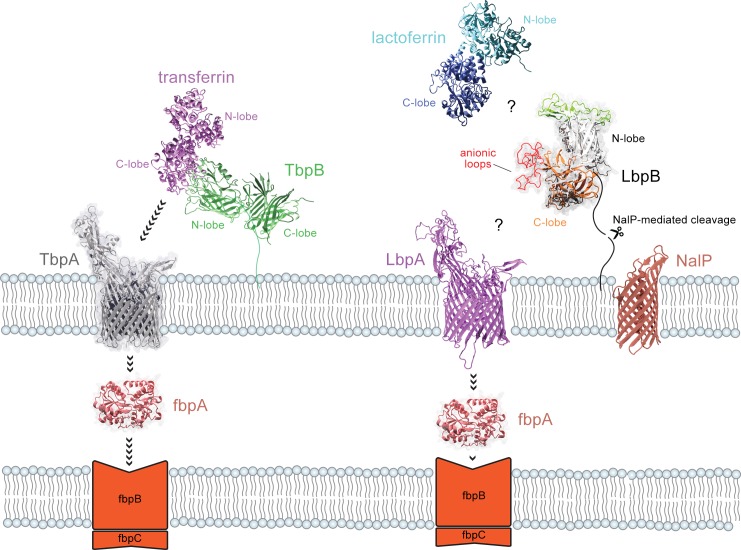
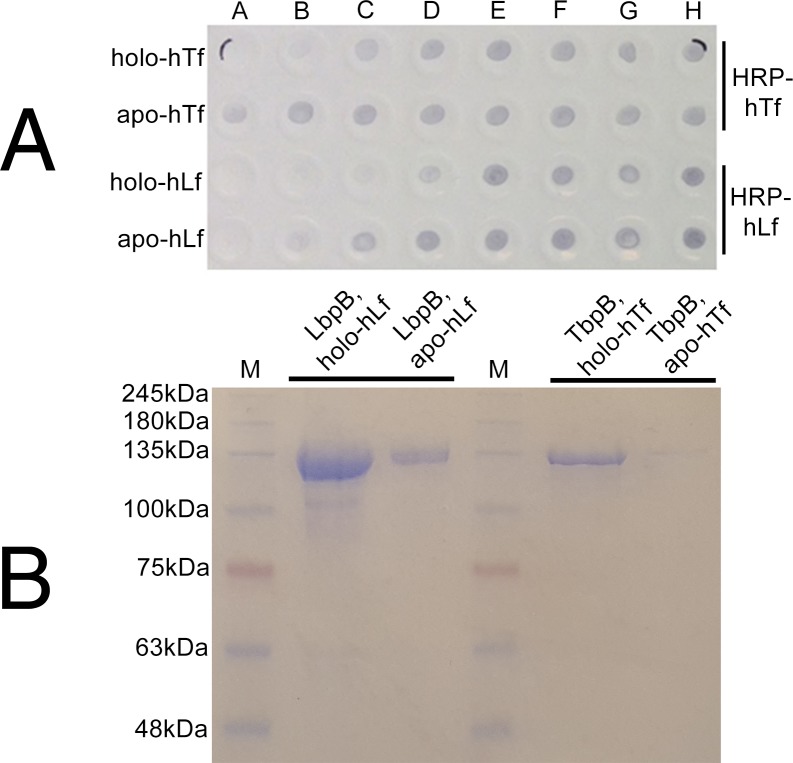
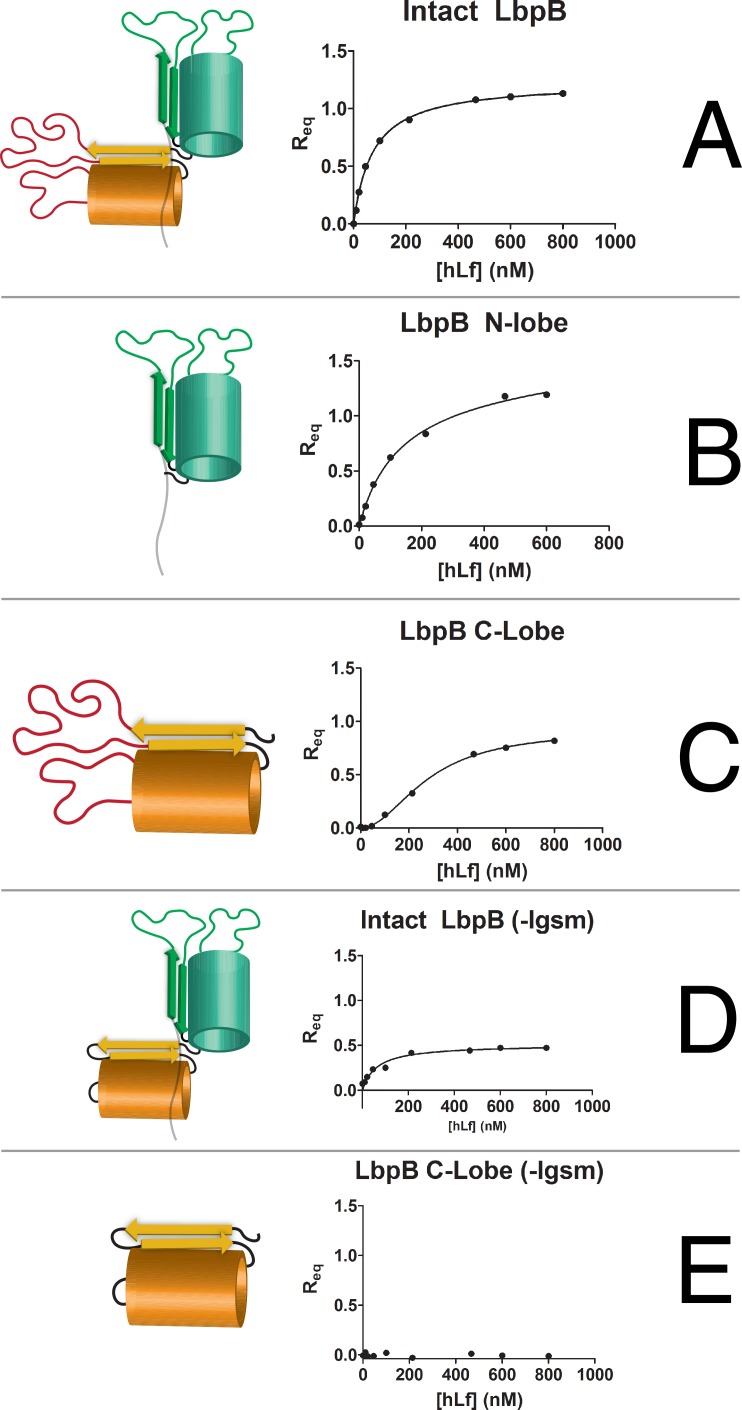
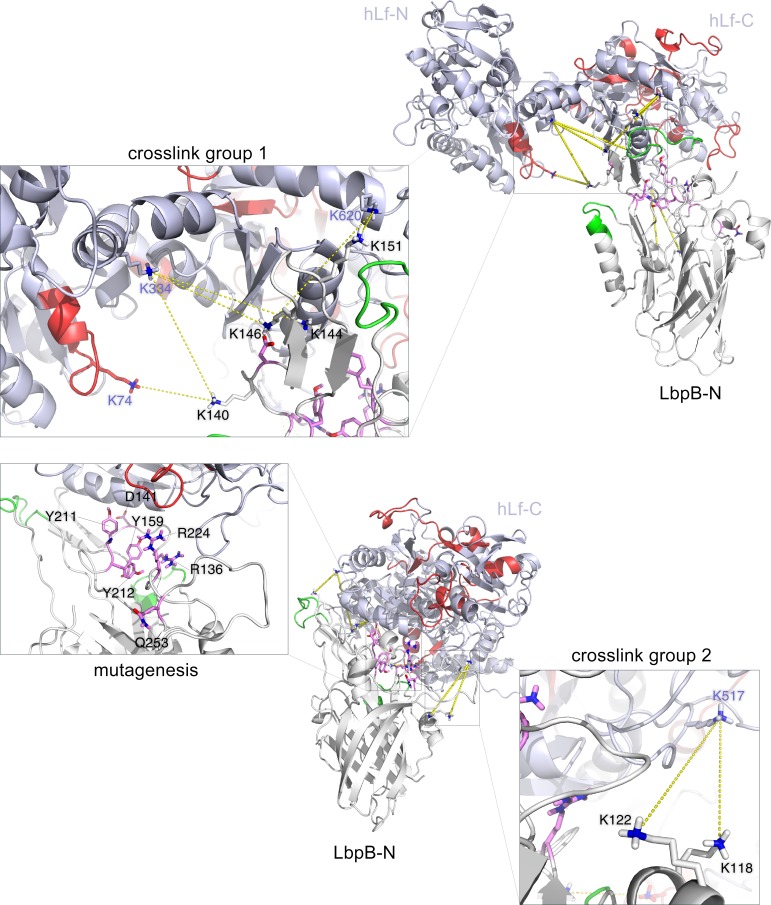
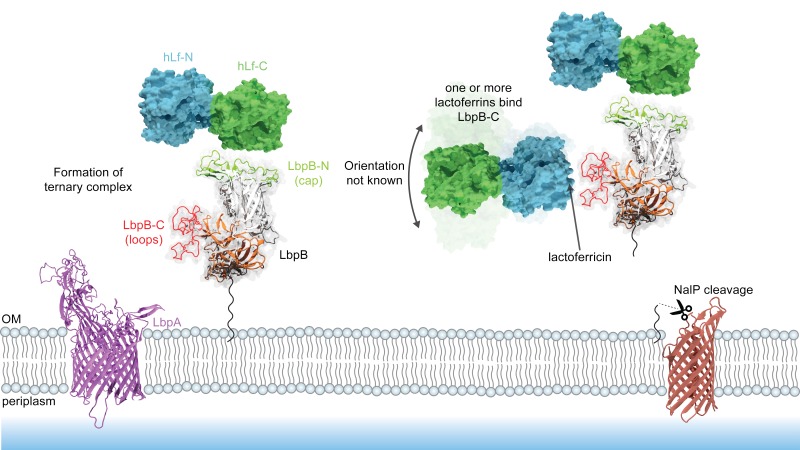
Lactoferrin binding protein B (LbpB) is a bi-lobed outer membrane-bound lipoprotein that comprises part of the lactoferrin (Lf) receptor complex in Neisseria meningitidis and other Gram-negative pathogens.Recent studies have demonstrated that LbpB plays a role in protecting the bacteria from cationic antimicrobial peptides due to large regions rich in anionic residues in the C-terminal lobe.Relative to its homolog, transferrin-binding protein B (TbpB), there currently is little evidence for its role in iron acquisition and relatively little structural and biophysical information on its interaction with Lf.In this study, a combination of crosslinking and deuterium exchange coupled to mass spectrometry, information-driven computational docking, bio-layer interferometry, and sitedirected mutagenesis was used to probe LbpB:hLf complexes.The formation of a 1:1 complex of iron-loaded Lf and LbpB involves an interaction between the Lf C-lobe and LbpB N-lobe, comparable to TbpB, consistent with a potential role in iron acquisition.The Lf N-lobe is also capable of binding to negatively charged regions of the LbpB Clobe and possibly other sites such that a variety of higher order complexes are formed.Our results are consistent with LbpB serving dual roles focused primarily on iron acquisition when exposed to limited levels of iron-loaded Lf on the mucosal surface and effectively binding apo Lf when exposed to high levels at sites of inflammation. Author summaryBacteria responsible for important infections in humans and food production animals survive and proliferate within their host by 'hijacking' iron from the host iron-binding proteins, transferrin and lactoferrin.The iron-hijacking process is mediated by a set of surface receptors that are specific for transferrin and lactoferrin from the host.In this study we focused on the receptors from important human pathogens responsible for meningitis and gonorrhea that are being targeted for development of vaccines, thus a detailed understanding of the structure and function of these proteins is needed to aid in vaccine
Overview
The claims and statistics of this paper haven’t been checked yet.
Free: it reads the open-access text and checks the first 5 claims that cite a source we can check. Create a free account to check every claim.
Integrity signals
Registry
Cites
Statistics
Figures
Verification
Claims the paper makes
The claims and statistics of this paper haven’t been checked yet.
Free: it reads the open-access text and checks the first 5 claims that cite a source we can check. Create a free account to check every claim.
Claims other papers make about this one
Each is checked against this paper’s own text: does it say what the citing paper says it does?
The source backs part of the claim, not all of it — or backs it for a different population, condition or comparison.
In the citing paper
“In some cases, obligate human bacterial pathogens, including Neisseria and Moraxella spp., exhibit species- specific binding to Fe- binding molecules such as transferrin and LTF through transferrin or LTF receptors, thus facilitating bacterial scavenging of host- restricted Fe pools 26,27 .”
From Nutritional immunity: the battle for nutrient metals at the host–pathogen interface (2022) · cites this paper as [27]
Experimental — accuracy not yet measured
Self-check
Percentages, sums and reported differences re-computed from the paper’s own numbers.
The self-check needs the paper’s full text.
Citations
Cites
In-gel digestion for mass spectrometric characterization of proteins and proteomes
Shevchenko, A., Tomas, H., Havli, J., Olsen, J. V., & Mann, M. (2006) · Nature Protocols · doi:10.1038/nprot.2006.468 · Cited by 4,942
HADDOCK: A Protein−Protein Docking Approach Based on Biochemical or Biophysical Information
Dominguez, C., Boelens, R., & Bonvin, A. M. J. J. (2003) · Journal of the American Chemical Society · doi:10.1021/ja026939x · Cited by 3,187
The HADDOCK2.2 Web Server: User-Friendly Integrative Modeling of Biomolecular Complexes
van Zundert, G. C. P., Rodrigues, J. P. G. L. M., Trellet, M., Schmitz, C., Kastritis, P. L., Karaca, E., Melquiond, A. S. J., van Dijk, M., de Vries, S. J., & Bonvin, A. M. J. J. (2016) · Journal of Molecular Biology · doi:10.1016/j.jmb.2015.09.014 · Cited by 2,785
Gene Splicing by Overlap Extension: Tailor-Made Genes Using the Polymerase Chain Reaction
Horton, R. M., Cai, Z., Ho, S. N., & Pease, L. R. (2013) · BioTechniques · doi:10.2144/000114017 · Cited by 1,289
Schatz, P. J. (1993) · Nature Biotechnology · doi:10.1038/nbt1093-1138 · Cited by 580
Leitner, A., Faini, M., Stengel, F., & Aebersold, R. (2016) · Trends in Biochemical Sciences · doi:10.1016/j.tibs.2015.10.008 · Cited by 355
Merkley, E. D., Rysavy, S., Kahraman, A., Hafen, R. P., Daggett, V., & Adkins, J. N. (2014) · Protein Science · doi:10.1002/pro.2458 · Cited by 319
Bacterial transferrin and lactoferrin receptors
Gray-Owen, S. D., & Schyvers, A. B. (1996) · Trends in Microbiology · doi:10.1016/0966-842x(96)10025-1 · Cited by 299 · cited 1×
“The ability to utilize host iron-binding glycoproteins as a source of iron for growth has been observed in Gram-negative bacteria that reside in the upper respiratory or genitourinary tracts of a variety of vertebrate hosts ranging from birds to humans [27, 28].”
Structural basis for iron piracy by pathogenic Neisseria
Noinaj, N., Easley, N. C., Oke, M., Mizuno, N., Gumbart, J., Boura, E., Steere, A. N., Zak, O., Aisen, P., Tajkhorshid, E., et al. (2012) · Nature · doi:10.1038/nature10823 · Cited by 262
Cornelissen, C. N., Kelley, M., Hobbs, M. M., Anderson, J. E., Cannon, J. G., Cohen, M. S., & Sparling, P. F. (1998) · Molecular Microbiology · doi:10.1046/j.1365-2958.1998.00710.x · Cited by 235
Cited by
Nutritional immunity: the battle for nutrient metals at the host–pathogen interface
Murdoch, C. C., & Skaar, E. P. (2022) · Nature Reviews Microbiology · doi:10.1038/s41579-022-00745-6 · Cited by 701
Lactoferrin: Structure, function, denaturation and digestion
Wang, B., Timilsena, Y. P., Blanch, E., & Adhikari, B. (2019) · Critical Reviews in Food Science and Nutrition · doi:10.1080/10408398.2017.1381583 · Cited by 514
Sienkiewicz, M., Jaśkiewicz, A., Tarasiuk, A., & Fichna, J. (2021) · Critical Reviews in Food Science and Nutrition · doi:10.1080/10408398.2021.1895063 · Cited by 140
Lactoferrin in Human Milk of Prolonged Lactation
Czosnykowska-Łukacka, M., Orczyk‐Pawiłowicz, M., Broers, B., & Królak‐Olejnik, B. (2019) · Nutrients · doi:10.3390/nu11102350 · Cited by 99
“Research has shown that the direct interaction between Lf and bacteria results in a bactericidal effect [22].”
BackgroundOhradanova‐Repic, A., Praženicová, R., Gebetsberger, L., Moskalets, T., Škrabana, R., Cehlár, O., Tajti, G., Stockinger, H. S. J., & Leksa, V. (2023) · Pharmaceutics · doi:10.3390/pharmaceutics15041056 · Cited by 74
The surface lipoproteins of gram-negative bacteria: Protectors and foragers in harsh environments
Cole, G. B., Bateman, T. J., & Moraes, T. F. (2021) · Journal of Biological Chemistry · doi:10.1074/jbc.rev120.008745 · Cited by 46
“Like TbpB and hTf, LbpB has been shown to favor binding to the iron-loaded form of hLf (59).”
BackgroundSelf-citationBiological Functions of the Secretome of Neisseria meningitidis
Tommassen, J., & Arenas, J. (2017) · Frontiers in Cellular and Infection Microbiology · doi:10.3389/fcimb.2017.00256 · Cited by 47
“However, recent biochemical analysis revealed that it preferentially binds the C-lobe of iron-loaded lactoferrin (Ostan et al., 2017), just like TbpB binds the C-lobe of iron-loaded transferrin (see above), suggesting a similar role for LbpB as for TbpB in selecting iron-loaded ligands.”
BackgroundOral fate and stabilization technologies of lactoferrin: a systematic review
Wei, Y., Feng, K., Li, S., Hu, T., Linhardt, R. J., Zong, M., & Wu, H. (2021) · Critical Reviews in Food Science and Nutrition · doi:10.1080/10408398.2021.1900774 · Cited by 31
Lactoferrin receptors in Gram-negative bacteria: an evolutionary perspective
Ostan, N., Moraes, T. F., & Schryvers, A. B. (2021) · Biochemistry and Cell Biology · doi:10.1139/bcb-2020-0079 · Cited by 31
Self-citationTargeting Intracellular Bacteria with Dual Drug-loaded Lactoferrin Nanoparticles
Andima, M., Boese, A. S., Paul, P., Koch, M., Loretz, B., & Lehr, C. (2024) · ACS Infectious Diseases · doi:10.1021/acsinfecdis.4c00045 · Cited by 25
Li, C., Liu, X., Huang, Z., Zhai, Y., Li, H., & Wu, J. (2022) · International Journal of Molecular Sciences · doi:10.3390/ijms232213719 · Cited by 21
“It regulates immunity, provides intestinal barrier protection, and resists Gram-positive and Gramnegative bacteria [22,23].”
BackgroundWu, Z., Shao, J., Zheng, J., Liu, B., Li, Z., & Shen, N. (2022) · Chinese Medical Journal · doi:10.1097/cm9.0000000000002233 · Cited by 16
“The process is also powered by the TonB system.([30,31])”
BackgroundLiu, Y., Ding, R., Jia, X., Huang, J., Yu, S.-Y., Chan, H. T., Li, W., Mao, L.-L., Zhang, L., Zhang, X.-Y., et al. (2022) · Emerging Microbes & Infections · doi:10.1080/22221751.2022.2108341 · Cited by 18
Human milk lactoferrin and lysozyme concentrations vary in response to a dietary intervention
Sindi, A. S., Stinson, L. F., Lai, C. T., Gridneva, Z., Leghi, G. E., Netting, M., Wlodek, M. E., Mühlhäusler, B. S., Zhou, X., Payne, M. S., et al. (2024) · The Journal of Nutritional Biochemistry · doi:10.1016/j.jnutbio.2024.109760 · Cited by 18
Self-citationIron transport mechanism of lactoferrin and its application in food processing
Fu, J., Liu, Y., Tan, D., & Liu, L. (2023) · Food Science and Technology · doi:10.1590/fst.121122 · Cited by 18
“(Ostan et al., 2017) Aflatoxin M1 LF resulted in a reduction in afm1-induced intestinal permeability, increased expression of claudin-3, ocludin and ZO-1 proteins, and repair of the damaged intestinal barrier.”
Testing Antimicrobial Properties of Human Lactoferrin-Derived Fragments
Ostrówka, M., Duda-Madej, A., Pietluch, F., Mackiewicz, P., & Gagat, P. (2023) · International Journal of Molecular Sciences · doi:10.3390/ijms241310529 · Cited by 16
Sawale, M., Ozadali, F., Valentine, C. J., Benyathiar, P., Drolia, R., & Mishra, D. K. (2022) · Food Control · doi:10.1016/j.foodcont.2022.109078 · Cited by 16
Antimicrobial activity of bovine lactoferrin against Gardnerella species clinical isolates
Pino, A., Mazza, T., Matthews, M.-A. H., Castellana, S., Caggia, C., Randazzo, C. L., & Gelbfish, G. A. (2022) · Frontiers in Microbiology · doi:10.3389/fmicb.2022.1000822 · Cited by 13
“The bacterial lactoferrin binding protein B has two different sites for binding hLF, one associated with obtaining iron and the other related to protection against hLF’s antimicrobial peptides (Ostan et al., 2017).”
BackgroundThe milk-derived lactoferrin inhibits V-ATPase activity by targeting its V1 domain
Santos‐Pereira, C., Rocha, J. F., Fernandes, H. S., Rodrigues, L. R., Côrte‐Real, M., & Sousa, S. F. (2021) · International Journal of Biological Macromolecules · doi:10.1016/j.ijbiomac.2021.06.200 · Cited by 12
Grossman, A. S., Gell, D. A., Wu, D. G., Carper, D. L., Hettich, R. L., & Goodrich‐Blair, H. (2024) · Journal of Bacteriology · doi:10.1128/jb.00444-23 · Cited by 11
Jiménez-Barrios, P., Jaén-Cano, C. M., Malumbres, R., Cilveti-Vidaurreta, F., Bellanco, A., Miralles, B., Recio, I., & Martínez‐Sanz, M. (2021) · LWT · doi:10.1016/j.lwt.2021.112744 · Cited by 12
Are lactoferrin receptors in Gram-negative bacteria viable vaccine targets?
Chan, C., Andisi, V. F., Ng, D., Ostan, N., Yunker, W. K., & Schryvers, A. B. (2018) · BioMetals · doi:10.1007/s10534-018-0105-7 · Cited by 13
Self-citationStructural insight into the dual function of LbpB in mediating Neisserial pathogenesis
Yadav, R., Govindan, S., Daczkowski, C., Mesecar, A. D., Chakravarthy, S., & Noinaj, N. (2021) · eLife · doi:10.7554/elife.71683 · Cited by 11
Jin, L., Li, L., Zhang, W., Zhang, R., & Xu, Y. (2021) · Systems Microbiology and Biomanufacturing · doi:10.1007/s43393-021-00066-4 · Cited by 9
“BLF is a cationic protein with positively charged regions being most prominently expressed at the N-terminus, and peptides with antibacterial activity also being located at the N-lobe [26].”
BackgroundOstan, N., Cole, G. B., Wang, F. Z., Reichheld, S. E., Moore, G., Pan, C., Yu, R., Lai, C. C.-L., Sharpe, S. J., Lee, H. O., et al. (2024) · PNAS Nexus · doi:10.1093/pnasnexus/pgae139 · Cited by 9
“Any recombinant protein containing CaHD had a high affinity (low K D s) for Lf. Surprisingly, LbpB N-lobe:Lf interactions were roughly 5-fold weaker than that of CaHD:Lf, indicating that the M. bovis LbpB may not prioritize iron acquisition through the traditional binding mechanism (35, 36).”
BackgroundSelf-citationChan, C., Ng, D., & Schryvers, A. B. (2021) · Frontiers in Microbiology · doi:10.3389/fmicb.2021.714815 · Cited by 8
Self-citationLi, H., Li, P., Yang, H., Yao, Q.-Q., Huang, S., Wang, J., & Zheng, N. (2020) · Journal of Dairy Science · doi:10.3168/jds.2019-17725 · Cited by 9
Sindi, A. S. (2025) · Microorganisms · doi:10.3390/microorganisms13102347 · Cited by 7
Innovative Strategies to Abolish Microbial Persistence in Biofilm Fortresses
Costea, D., Bădăluță, V., Zachia-Zlatea, I., Holban, A., Dițu, L., & Lazăr, V. (2026) · Biomolecules · doi:10.3390/biom16060887 · Cited by 5
Lactoferrin-based food supplements trigger toxin production of enteropathogenic Bacillus cereus
Jugert, C.-S., Didier, A., & Jeßberger, N. (2023) · Frontiers in Microbiology · doi:10.3389/fmicb.2023.1284473 · Cited by 2
Integrative Structural Model of DNA-PKcs in the Initial Steps of Non-Homologous End Joining
Hepburn, M. (2020) · doi:10.11575/prism/37902 · Cited by 2
Self-citationCryptic Tonsils and Halitosis: An Overview of the Literature and a Clinical Image
Natoli, V., Viganò, L., & Casu, C. (2019) · Cross Current International Journal of Medical and Biosciences · doi:10.36344/ccijmb.2019.v01i05.001
“These results may suggest an important involvement of this protein in protecting the development of tumours, providing new approaches to cancer therapies [18-19].”
BackgroundBalibay, Ö., Akpolat, N., & Özbek, E. (2026) · International Journal of Health Services Research and Policy · doi:10.33457/ijhsrp.1882430
Metadata
- Authors
- Ostan, N. K. H., Yu, R.-H., Ng, D., Lai, C. C.-L., Pogoutse, A. K., Sarpe, V., Hepburn, M., Sheff, J., Raval, S., Schriemer, D. C., Moraes, T. F., & Schryvers, A. B.
- Affiliations
- University of Calgary (CA)
- University of Toronto (CA)
- Corresponding author
- Schryvers, Anthony B.
- ORCID
- Venue
- PLOS Pathogens
- Publisher
- Public Library of Science (PLoS)
- Published
- 2017-03-03
- Volume
- 13
- Issue
- 3
- Pages
- e1006244
- ISSN
- 1553-7366 (ISSN-L)
- 1553-7374
- PMC
- PMC5352143
- OpenAlex
- W2594404901
- Semantic Scholar
- 813e6e8aee10de3abfc07f1a276684390663d7f4
- Cited by
- 33
- References
- 46
- Citations by year
- 2026: 2 · 2025: 1 · 2024: 4 · 2023: 4 · 2022: 6 · 2021: 8 · 2020: 3 · 2019: 2 · 2018: 1 · 2017: 2
- FWCI
- 1.77
- Type
- journal article
- Language
- en
- Update notices
- new_version (2017-03-15)
- Open access
- gold
- doi.org
- Licence
- Locations
- PLoS Pathogens (publishedVersion, cc-by)
- PubMed Central (publishedVersion, cc-by)
- PubMed (publishedVersion)
- DOAJ (DOAJ: Directory of Open Access Journals) (submittedVersion, cc-by-sa)
- Figshare (submittedVersion, cc-by)
- Libraries and Cultural Resources (University of Calgary) (submittedVersion, cc-by)
- Funders
- Institute of Infection and Immunity (MOP138273)
- Natural Sciences and Engineering Research Council of Canada (298351-2010, RGPIN 401975-1)
- Topics
- Life Sciences › Immunology and Microbiology › Microbiology › Bacterial Infections and Vaccines
- Life Sciences › Biochemistry, Genetics and Molecular Biology › Genetics › Bacterial Genetics and Biotechnology
- Life Sciences › Immunology and Microbiology › Microbiology › Antimicrobial Peptides and Activities
- Keywords
- lactoferrin, Neisseria meningitidis, iron acquisition, outer membrane lipoprotein, protein-protein interaction, TbpB, cationic antimicrobial peptides, protein complex structure, vaccine targets
- MeSH terms
- Amino Acid Sequence, Bacterial Proteins, Carrier Proteins, Interferometry, Iron, Models, Molecular, Neisseria meningitidis, Protein Binding, Mass Spectrometry, Mutagenesis, Site-Directed, Transferrin-Binding Protein B, Molecular Docking Simulation
About these checks
Registry, retraction, Cites and statistics results are computed, not judged, with one exception: a printed reference that no index lists is read once by a model before it counts as a citation error. Claims are extracted by a model and kept only when their quote appears verbatim in the text; each cited source is then checked, with a model’s help, for whether it says what the claim relies on. Those verdicts can be wrong — read the claim’s quote and the cited source before relying on one.
Statistics and arithmetic are recomputed, not judged.
Confidence bands are shown only for fields calibrated on our annotated test set. None is calibrated yet, so no band is shown.
What counts as a claim ›How we measure confidence ›How we check this ›
Are you an author, or do you see a problem with this page? Request a review
Data sources
Bibliographic data: Semantic Scholar, OpenAlex, Crossref.
Contains information from the Semantic Scholar Academic Graph Datasets, made available under the ODC Attribution License (ODC-BY 1.0).
Semantic Scholar’s data is described in: Kinney, R., et al. (2023). The Semantic Scholar Open Data Platform. arXiv:2301.10140.
