

Adaptation of Candida albicans to environmental pH induces cell wall remodelling and enhances innate immune recognition
Open accessThe DOI matches its Crossref record; 51 of the 51 references it cites were found in a registry or an index.
Abstract
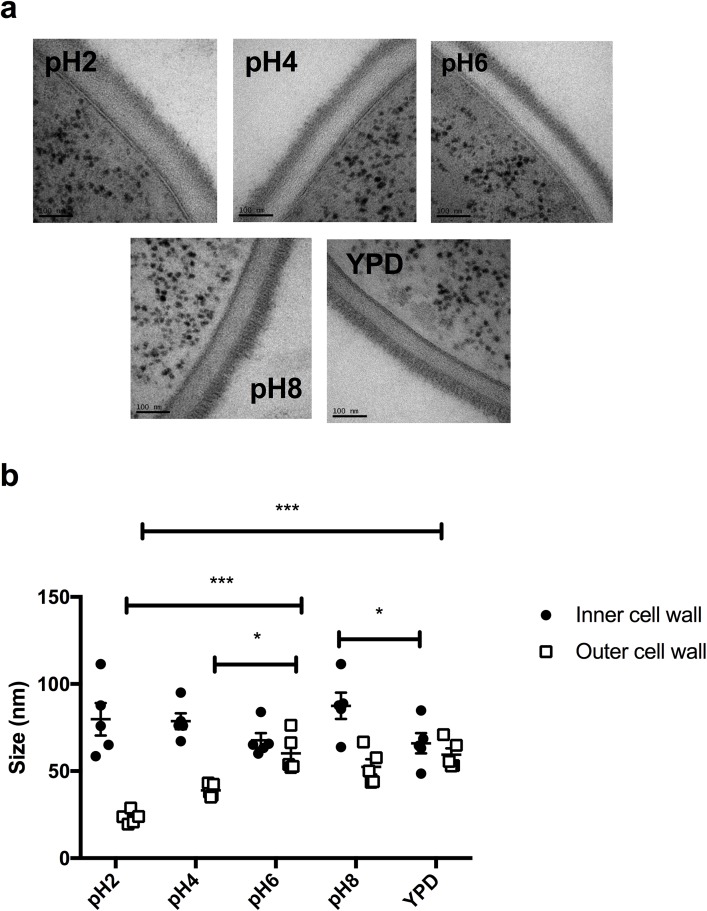
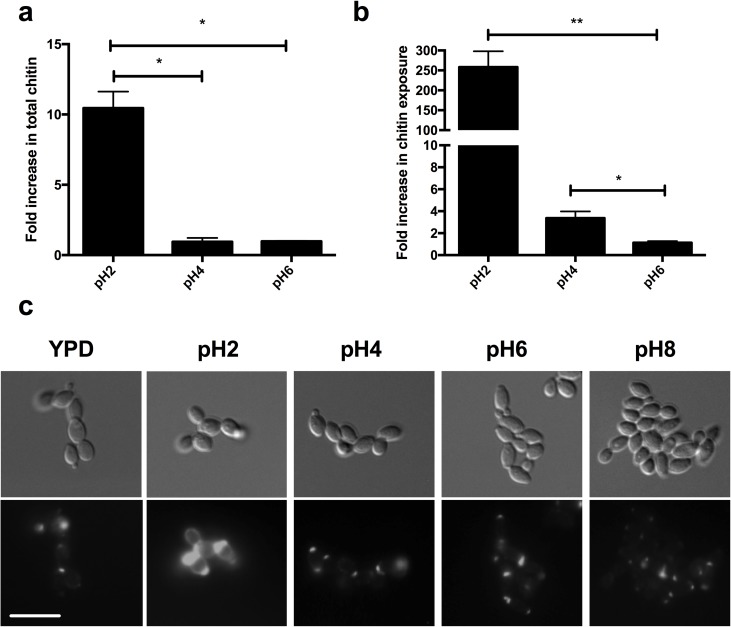
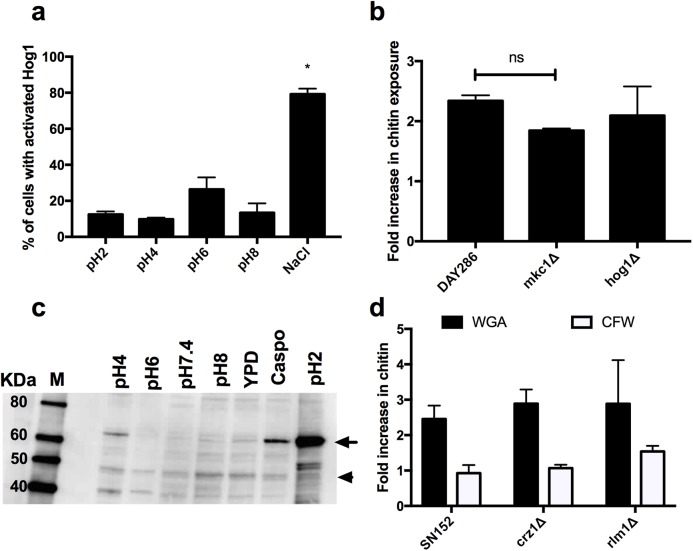
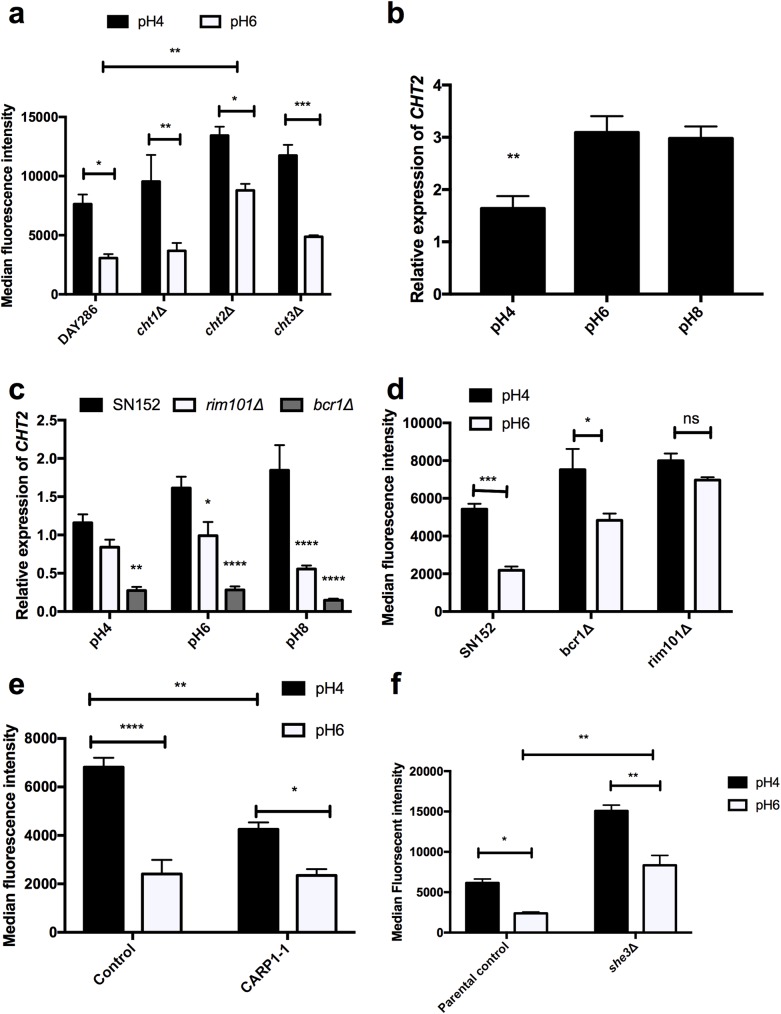
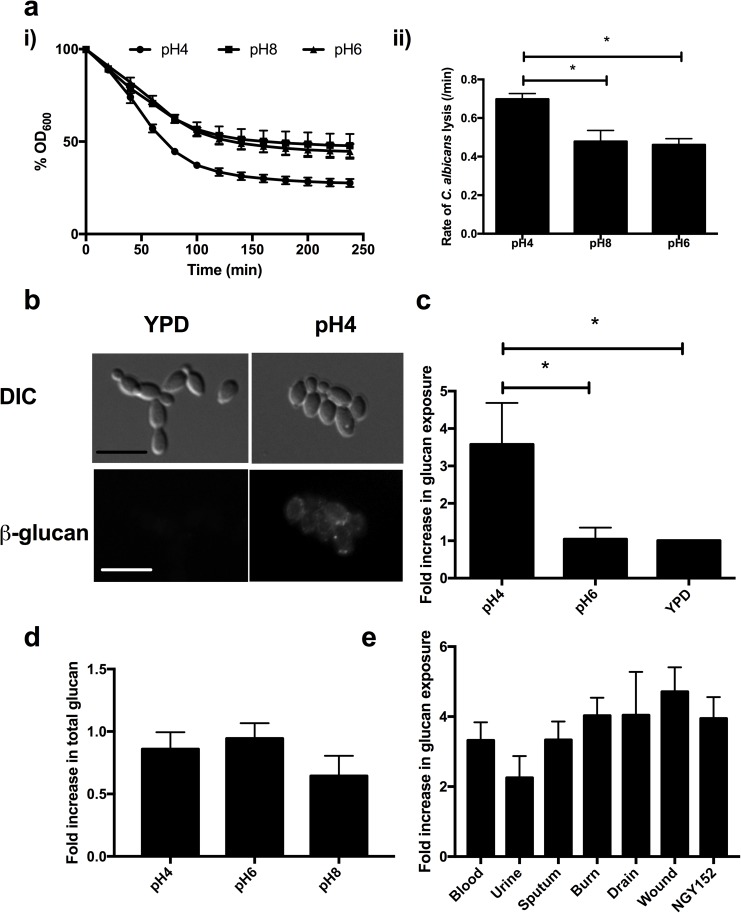
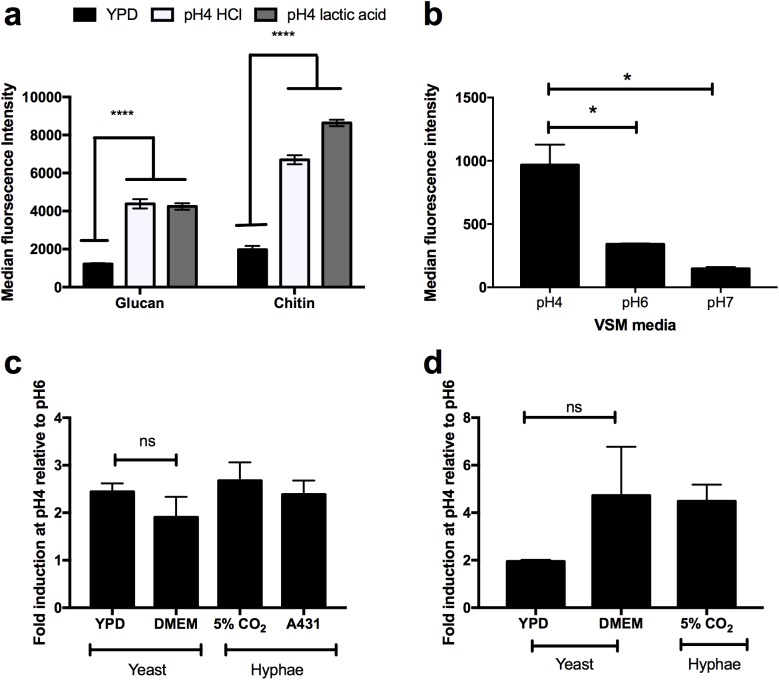
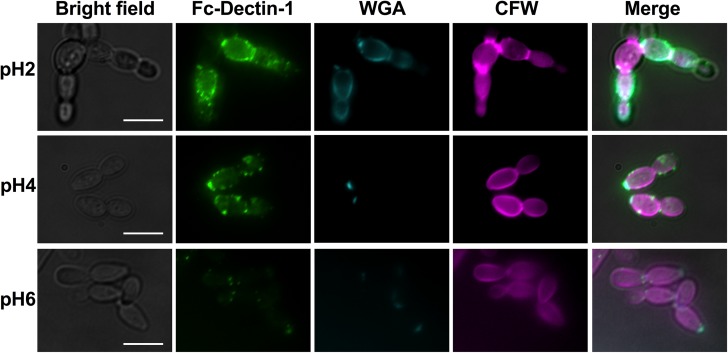
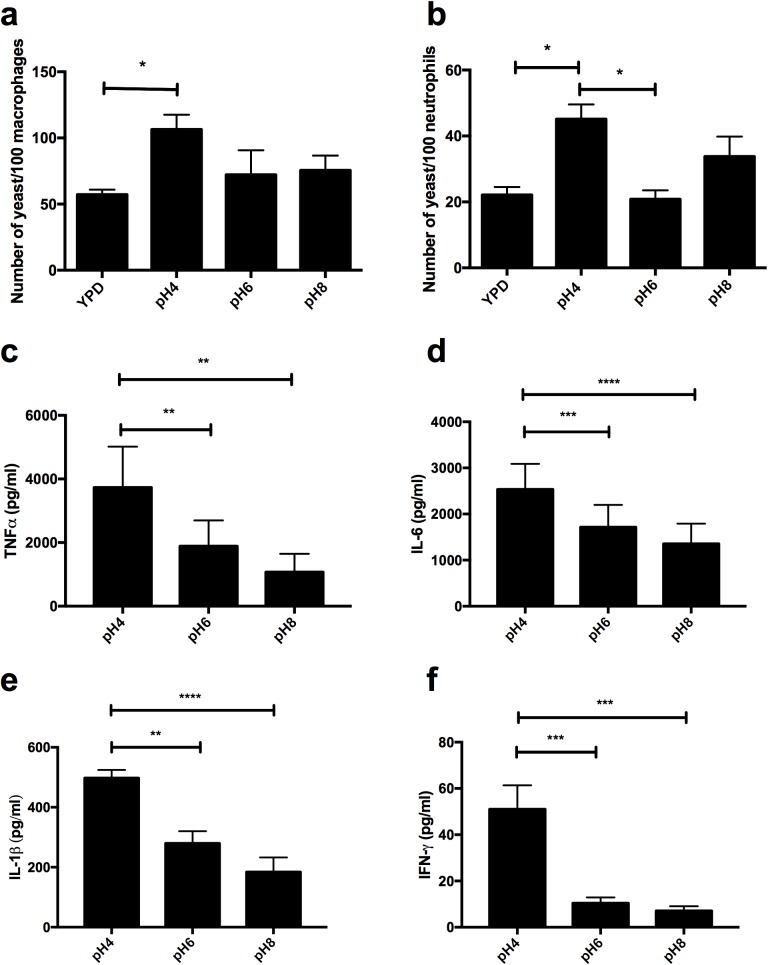
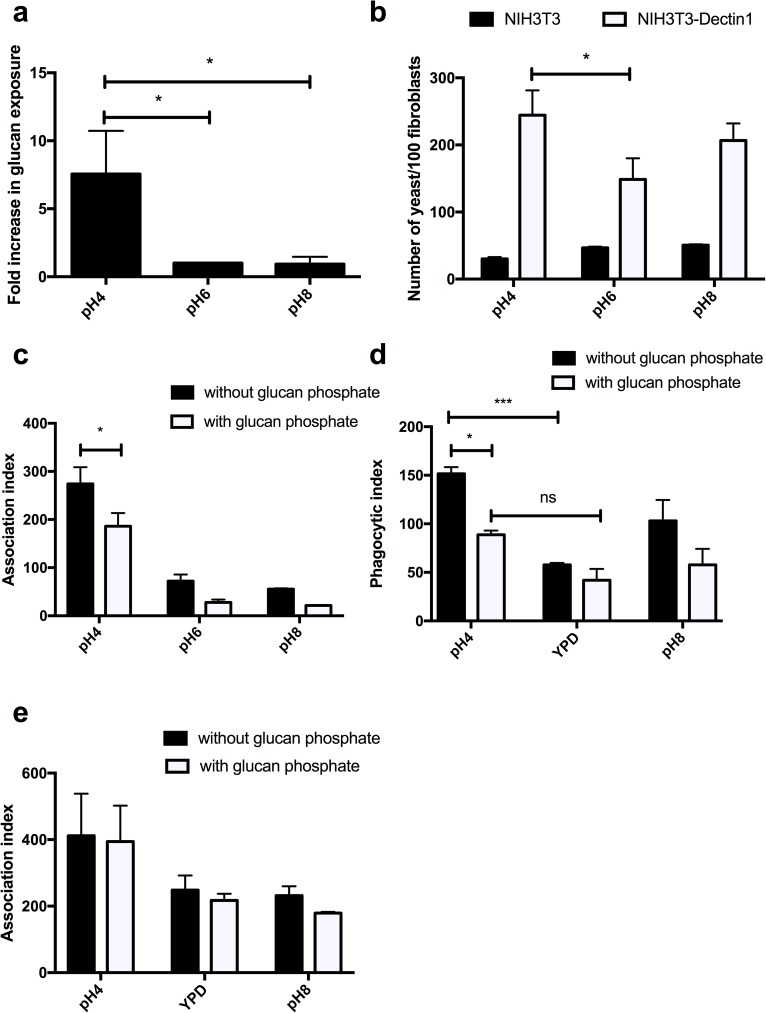
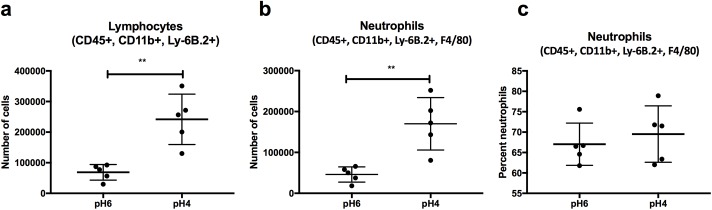
Candida albicans is able to proliferate in environments that vary dramatically in ambient pH, a trait required for colonising niches such as the stomach, vaginal mucosal and the GI tract. Here we show that growth in acidic environments involves cell wall remodelling which results in enhanced chitin and β-glucan exposure at the cell wall periphery. Unmasking of the underlying immuno-stimulatory β-glucan in acidic environments enhanced innate immune recognition of C. albicans by macrophages and neutrophils, and induced a stronger proinflammatory cytokine response, driven through the C-type lectin-like receptor, Dectin-1. This enhanced inflammatory response resulted in significant recruitment of neutrophils in an intraperitoneal model of infection, a hallmark of symptomatic vaginal colonisation. Enhanced chitin exposure resulted from reduced expression of the cell wall chitinase Cht2, via a Bcr1-Rim101 dependent signalling cascade, while increased β-glucan exposure was regulated via a non-canonical signalling pathway. We propose that this "unmasking" of the cell wall may induce non-protective hyper activation of the immune system during growth in acidic niches, and may attribute to symptomatic vaginal infection.
Overview
The claims and statistics of this paper haven’t been checked yet.
Free: it reads the open-access text and checks the first 5 claims that cite a source we can check. Create a free account to check every claim.
Integrity signals
Registry
Cites
Statistics
Figures
Verification
Claims the paper makes
The claims and statistics of this paper haven’t been checked yet.
Free: it reads the open-access text and checks the first 5 claims that cite a source we can check. Create a free account to check every claim.
Claims other papers make about this one
Each is checked against this paper’s own text: does it say what the citing paper says it does?
The source backs part of the claim, not all of it — or backs it for a different population, condition or comparison.
In the citing paper
“Changes in surface beta-glucan exposure can occur in response to a variety of stimuli, including changes in carbon sources and pH (14, 15).”
From Inhibition of Classical and Alternative Modes of Respiration in Candida albicans Leads to Cell Wall Remodeling and Increased Macrophage Recognition (2019) · cites this paper as [15]
Experimental — accuracy not yet measuredThe source backs part of the claim, not all of it — or backs it for a different population, condition or comparison.
In the citing paper
“In line with this, CSP treatment readily triggers cell wall integrity signaling involving several pathways and transcription factors, thus leading to cell wall remodeling and stress adaptations (55, 79) such as increased chitin exposure (80, 81) via the activation of chitin synthesis.”
From Transcriptomics and Phenotyping Define Genetic Signatures Associated with Echinocandin Resistance in Candida auris (2022) · cites this paper as [80]
Experimental — accuracy not yet measuredThe cited source says what the claim attributes to it.
In the citing paper
“Sherrington et al. showed that unmasking of β(1,3)-glucan and chitin occurred during adaptation to low pH (15).”
From Inhibition of Classical and Alternative Modes of Respiration in Candida albicans Leads to Cell Wall Remodeling and Increased Macrophage Recognition (2019) · cites this paper as [15]
Self-check
Percentages, sums and reported differences re-computed from the paper’s own numbers.
The self-check needs the paper’s full text.
Citations
Cites
Wisplinghoff, H., Bischoff, T., Tallent, S. M., Seifert, H., Wenzel, R. P., & Edmond, M. B. (2004) · Clinical Infectious Diseases · doi:10.1086/421946 · Cited by 4,496 · cited 1×
“The opportunistic fungal pathogen Candida albicans is a commensal in up to 80% of 60 the population, and can cause superficial mucosal infections in healthy individuals (1, 61 2) and invasive disease in immune supressed patients (3, 4).”
BackgroundBrown, G. D., & Gordon, S. (2001) · Nature · doi:10.1038/35092620 · Cited by 1,579
Sobel, J. D. (2007) · The Lancet · doi:10.1016/s0140-6736(07)60917-9 · Cited by 1,270
Conti, H. R., Shen, F., Nayyar, N., Stocum, E., Sun, J. N., Lindemann, M. J., Ho, A. W., Hai, J. H., Yu, J. J., Jung, J. W., et al. (2009) · Journal of Experimental Medicine · doi:10.1084/jem.20081463 · Cited by 1,024 · cited 1×
“Neutrophil depletion reduces inflammation and symptoms associated with VVC [42], suggesting that neutrophil recruitment in VVC is non-protective, in contrast to oral candidiasis where neutrophil recruitment and activation of Th17 responses are protective [43].”
BackgroundAn integrated model of the recognition of Candida albicans by the innate immune system
Netea, M. G., Brown, G. D., Kullberg, B. J., & Gow, N. A. R. (2008) · Nature Reviews Microbiology · doi:10.1038/nrmicro1815 · Cited by 946 · cited 2×
“These protein and carbohydrate motifs are immunogenic and play important roles in innate immune recognition [12].”
BackgroundA Recently Evolved Transcriptional Network Controls Biofilm Development in Candida albicans
Nobile, C. J., Fox, E. P., Nett, J. E., Sorrells, T. R., Mitrovich, Q. M., Hernday, A. D., Tuch, B. B., Andes, D. R., & Johnson, A. D. (2012) · Cell · doi:10.1016/j.cell.2011.10.048 · Cited by 711 · cited 1×
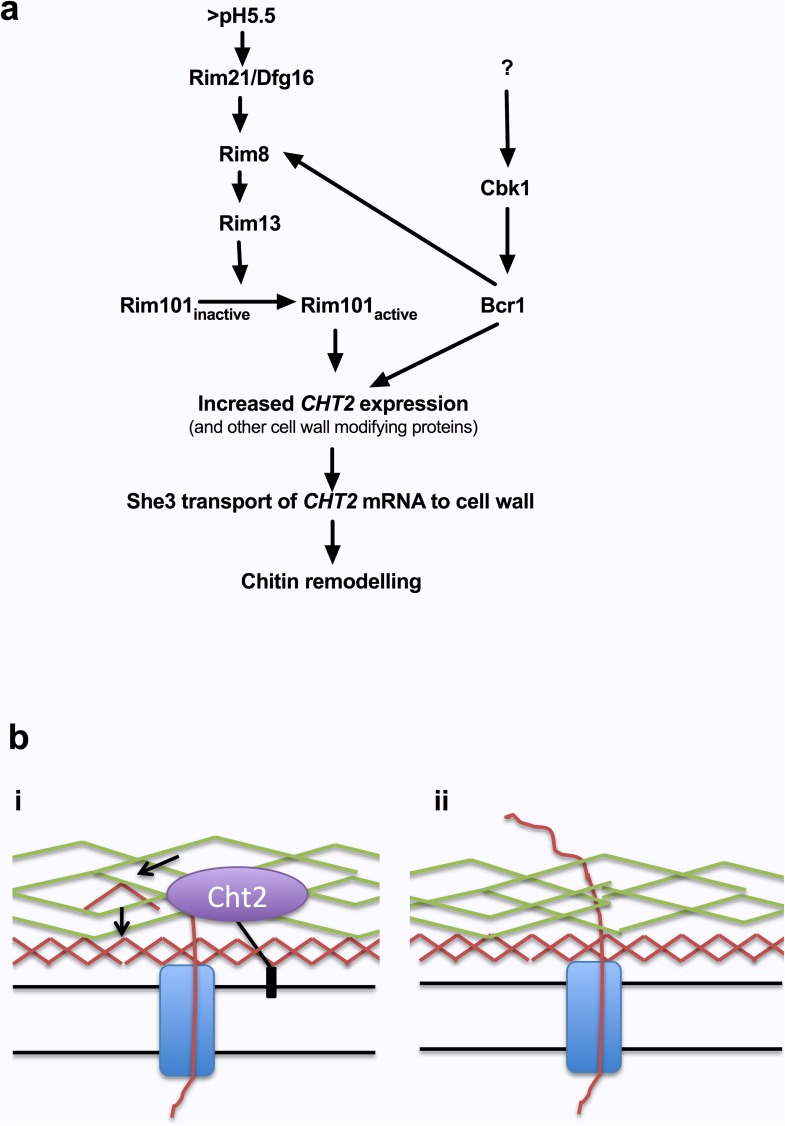
“However, Bcr1 also positively regulates RIM8 [37], suggesting that inactivation of BCR1 would also decrease processing of Rim101, linking the two pathways (Fig 12A).”
BackgroundAlmirante, B., Rodríguez, D., Park, B. J., Cuenca-Estrella, M., Planes, A. M., Almela, M., Mensa, J., Sanchez, F., Ayats, J., Gimenez, M., et al. (2005) · Journal of Clinical Microbiology · doi:10.1128/jcm.43.4.1829-1835.2005 · Cited by 566 · cited 1×
“Mucosal infections 62 increase population morbidity and are expensive to treat, while disseminated disease 63 is associated with high mortality rates (5, 6).”
BackgroundCritical Role of Bcr1-Dependent Adhesins in C. albicans Biofilm Formation In Vitro and In Vivo
Nobile, C. J., Andes, D. R., Nett, J. E., Smith, F. J., Yue, F., Phan, Q.-T., Edwards, J. E., Filler, S. G., & Mitchell, A. P. (2006) · PLoS Pathogens · doi:10.1371/journal.ppat.0020063 · Cited by 507 · cited 1×
“Bcr1 is essential for biofilm formation and controls the expression of many cell wall associated genes including HWP1, ALS1, ALS3 and HYR1 [35].”
BackgroundNosocomial Candidemia: Risk Factors and Attributable Mortality
Wenzel, R. P. (1995) · Clinical Infectious Diseases · doi:10.1093/clinids/20.6.1531 · Cited by 502 · cited 1×
“Mucosal infections increase population morbidity and are expensive to treat, while disseminated disease is associated with high mortality rates [5, 6].”
BackgroundSobel, J. D. (1997) · New England Journal of Medicine · doi:10.1056/nejm199712253372607 · Cited by 449
Research works printed but not linked: 1
- Sobel JD. Vulvovaginal candidosis. The Lancet. 2007; 369(9577): 1961– 71. 17560449 · DOI · Paper page
Cited by
Pathogenesis and virulence of Candida albicans
Lopes, J. P., & Lionakis, M. S. (2022) · Virulence · doi:10.1080/21505594.2021.2019950 · Cited by 477
d'Enfert, C., Kaune, A.-K., Alaban, L.-R., Chakraborty, S., Cole, N., Delavy, M., Kosmala, D., Marsaux, B., Fróis-Martins, R., Morelli, M., et al. (2021) · FEMS Microbiology Reviews · doi:10.1093/femsre/fuaa060 · Cited by 347
Human microbiome: an academic update on human body site specific surveillance and its possible role
Dekaboruah, E., Suryavanshi, M. V., Chettri, D., & Verma, A. K. (2020) · Archives of Microbiology · doi:10.1007/s00203-020-01931-x · Cited by 336
Lund, P. A., De Biase, D., Liran, O., Scheler, O., Mira, N. P., Cetecioglu, Z., Fernández, E. N., Bover-Cid, S., Hall, R., Sauer, M., et al. (2020) · Frontiers in Microbiology · doi:10.3389/fmicb.2020.556140 · Cited by 307
Self-citationDynamic Fungal Cell Wall Architecture in Stress Adaptation and Immune Evasion
Hopke, A., Brown, A. J. P., Hall, R. A., & Wheeler, R. T. (2018) · Trends in Microbiology · doi:10.1016/j.tim.2018.01.007 · Cited by 228
“…chitin and b -glucan are [11_TD$DIFF] recognized by the innate immune system [74,75], and C. albicans cells that have adapted to acidic conditions elicited a strong proin fl ammatory innate immune response, and enhanced neutrophil recruitment [24], immune responses characteristic of genital thrush.”
BackgroundInfluentialSelf-citation
Metadata
- Authors
- Sherrington, S. L., Sorsby, E., Mahtey, N., Kumwenda, P., Lenardon, M. D., Brown, I., Ballou, E. R., MacCallum, D. M., & Hall, R. A.
- Affiliations
- University of Birmingham (GB)
- University of Aberdeen (GB)
- University of Kent (GB)
- Corresponding author
- Hall, Rebecca A.
- ORCID
- Venue
- PLOS Pathogens
- Publisher
- Public Library of Science (PLoS)
- Published
- 2017-05-22
- Volume
- 13
- Issue
- 5
- Pages
- e1006403
- ISSN
- 1553-7366 (ISSN-L)
- 1553-7374
- PMC
- PMC5456412
- OpenAlex
- W2617351430
- Cited by
- 202
- References
- 51
- Citations by year
- 2026: 13 · 2025: 19 · 2024: 27 · 2023: 18 · 2022: 25 · 2021: 21 · 2020: 36 · 2019: 28 · 2018: 7 · 2017: 8
- FWCI
- 16.63
- Type
- journal article
- Language
- en
- Update notices
- new_version (2017-06-02)
- Open access
- gold
- doi.org
- Licence
- Locations
- PLoS Pathogens (publishedVersion, cc-by)
- Europe PMC (PubMed Central) (publishedVersion, cc-by)
- PubMed Central (publishedVersion, cc-by)
- PubMed (publishedVersion)
- Kent Academic Repository (University of Kent) (acceptedVersion)
- Aberdeen University Research Archive (Aberdeen University) (submittedVersion)
- UNSWorks (UNSW Sydney) (submittedVersion, cc-by-nc-nd)
- DOAJ (DOAJ: Directory of Open Access Journals) (submittedVersion, cc-by-sa)
- Figshare (submittedVersion, cc-by)
- University of Birmingham Research Portal (University of Birmingham) (submittedVersion, cc-by)
- UNSWorks (University of New South Wales, Sydney, Australia) (submittedVersion, cc-by-nc-nd)
- Funders
- Medical Research Council (MR/L00903X/1, MR/N006364/1, MR/J008239/1)
- Biotechnology and Biological Sciences Research Council (BB/M014525/1)
- National Centre for the Replacement, Refinement and Reduction of Animals in Research (NC/K000306/1).)
- Topics
- Health Sciences › Medicine › Infectious Diseases › Antifungal resistance and susceptibility
- Life Sciences › Biochemistry, Genetics and Molecular Biology › Molecular Biology › Fungal and yeast genetics research
- Health Sciences › Medicine › Infectious Diseases › Fungal Infections and Studies
- Keywords
- Candida albicans, cell wall remodeling, Dectin-1, innate immune recognition, inflammatory cytokines, neutrophil recruitment, vaginal candidiasis, macrophages, fungal virulence
- MeSH terms
- Animals, Candida albicans, Candidiasis, Cell Wall, Humans, Hydrogen-Ion Concentration, Immunity, Innate, Macrophages, Mice
About these checks
Registry, retraction, Cites and statistics results are computed, not judged, with one exception: a printed reference that no index lists is read once by a model before it counts as a citation error. Claims are extracted by a model and kept only when their quote appears verbatim in the text; each cited source is then checked, with a model’s help, for whether it says what the claim relies on. Those verdicts can be wrong — read the claim’s quote and the cited source before relying on one.
Statistics and arithmetic are recomputed, not judged.
Confidence bands are shown only for fields calibrated on our annotated test set. None is calibrated yet, so no band is shown.
What counts as a claim ›How we measure confidence ›How we check this ›
Are you an author, or do you see a problem with this page? Request a review
Data sources
Bibliographic data: Semantic Scholar, OpenAlex, Crossref.
Contains information from the Semantic Scholar Academic Graph Datasets, made available under the ODC Attribution License (ODC-BY 1.0).
Semantic Scholar’s data is described in: Kinney, R., et al. (2023). The Semantic Scholar Open Data Platform. arXiv:2301.10140.
