

Adaptation of Candida albicans to environmental pH induces cell wall remodelling and enhances innate immune recognition
Open accessThe DOI matches its Crossref record; 51 of the 51 references it cites were found in a registry or an index.
Abstract
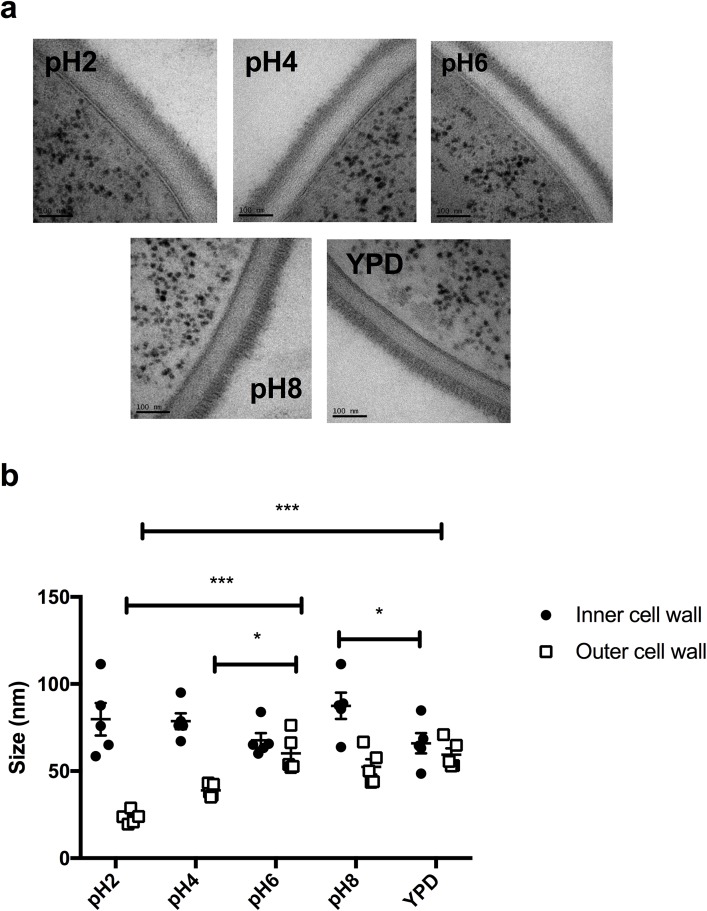
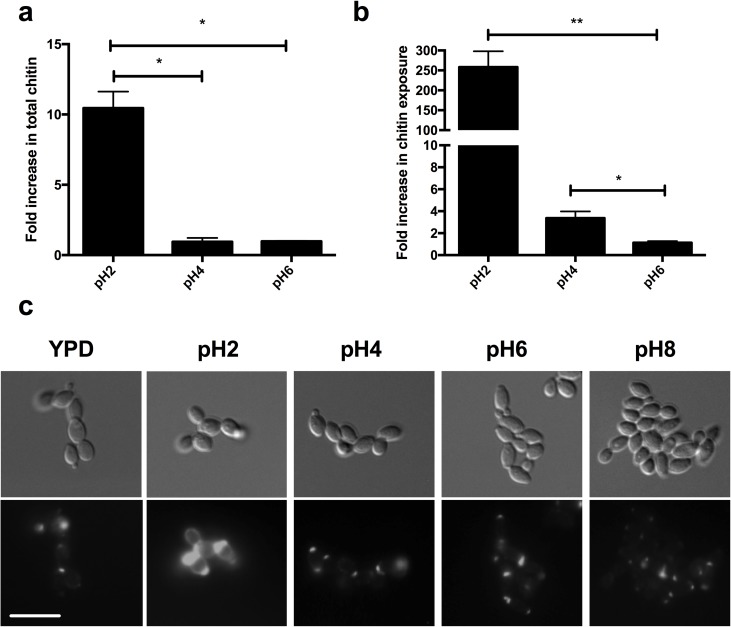
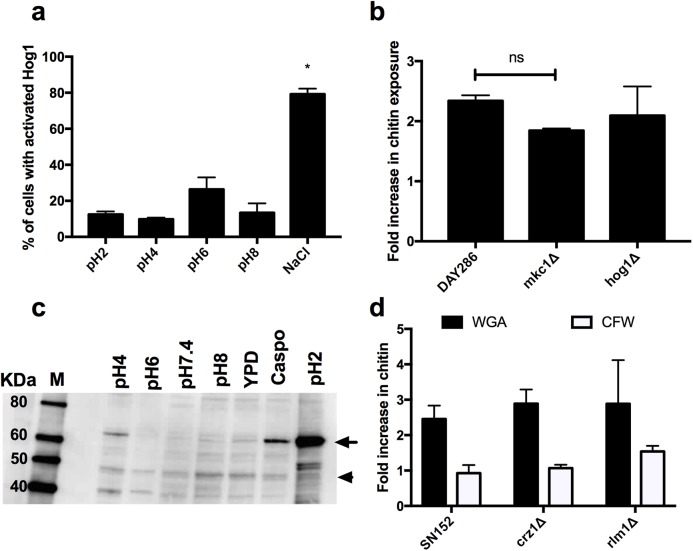
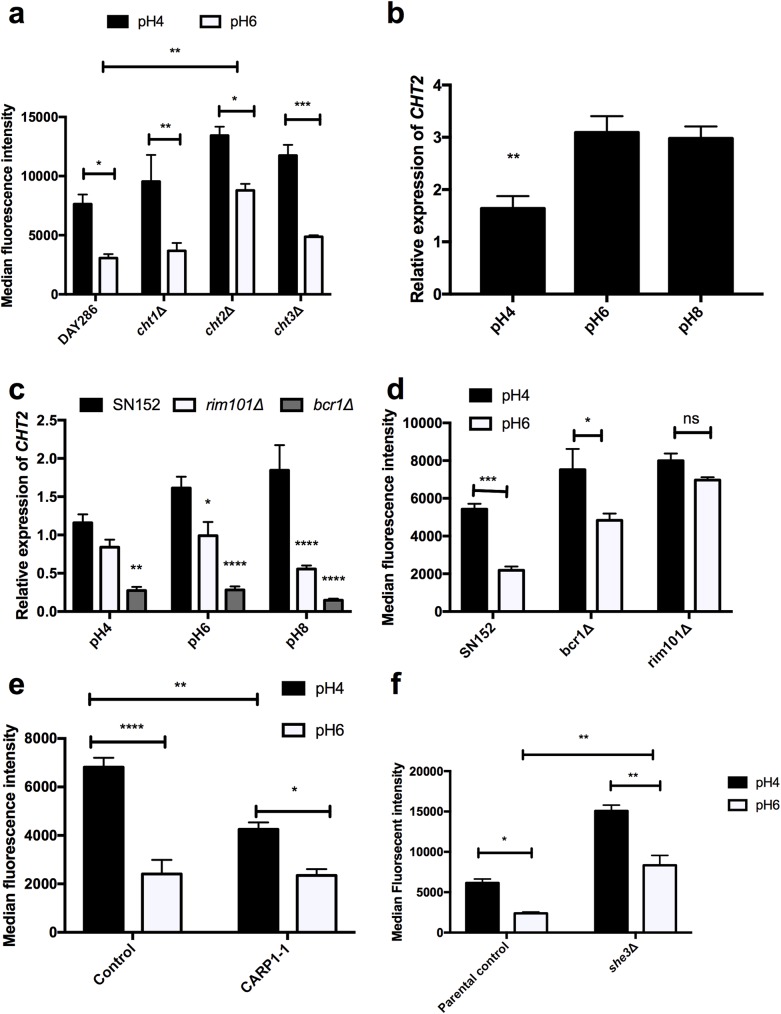
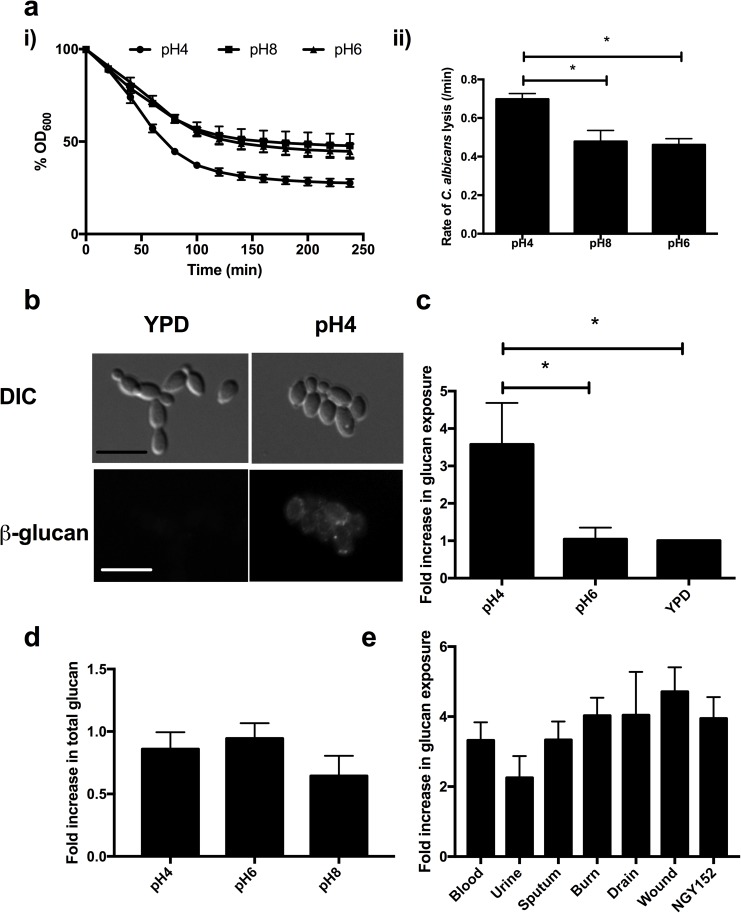
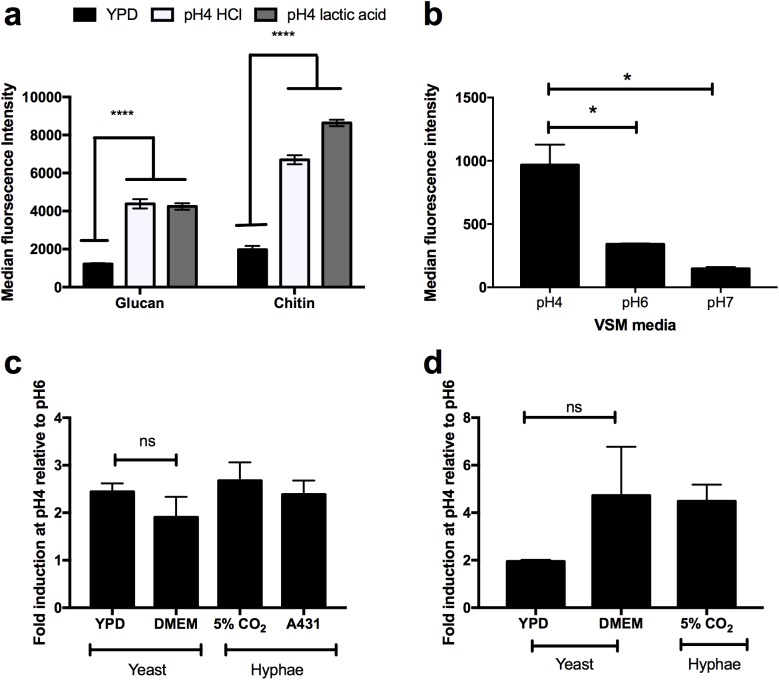
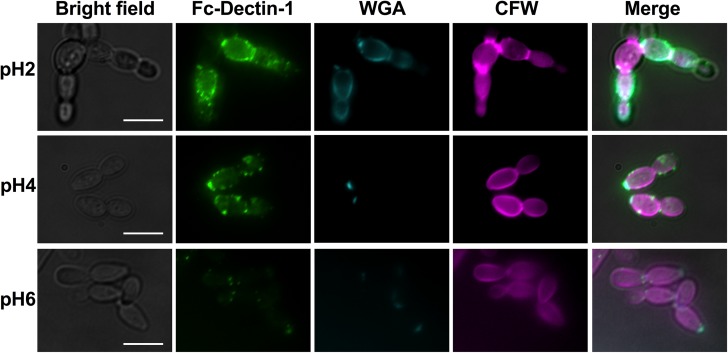
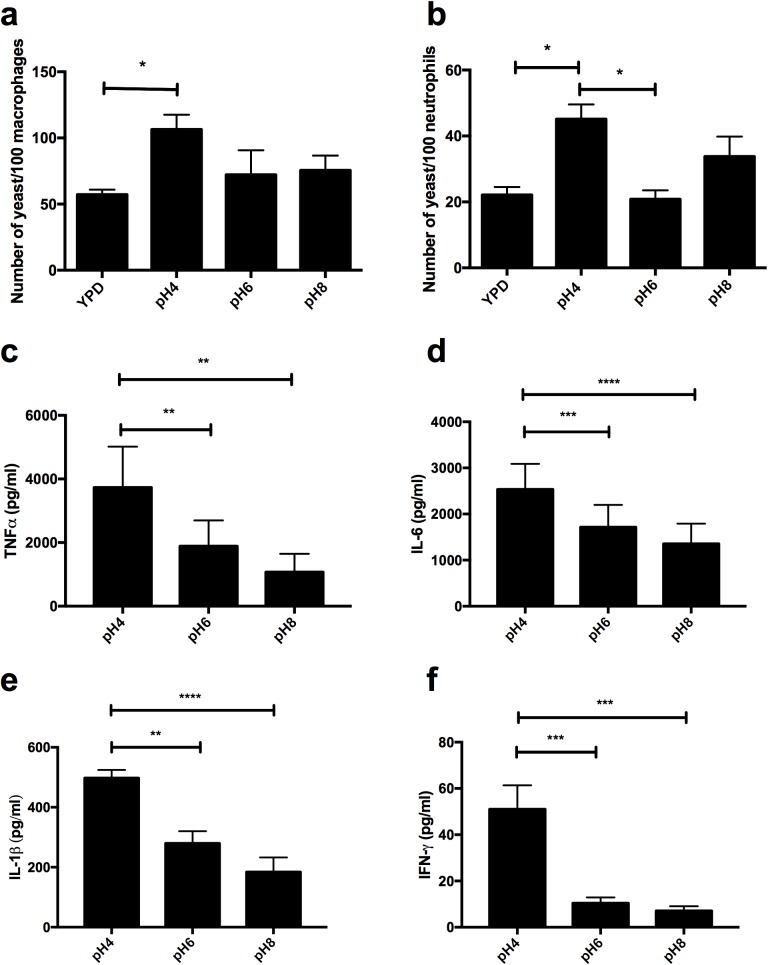
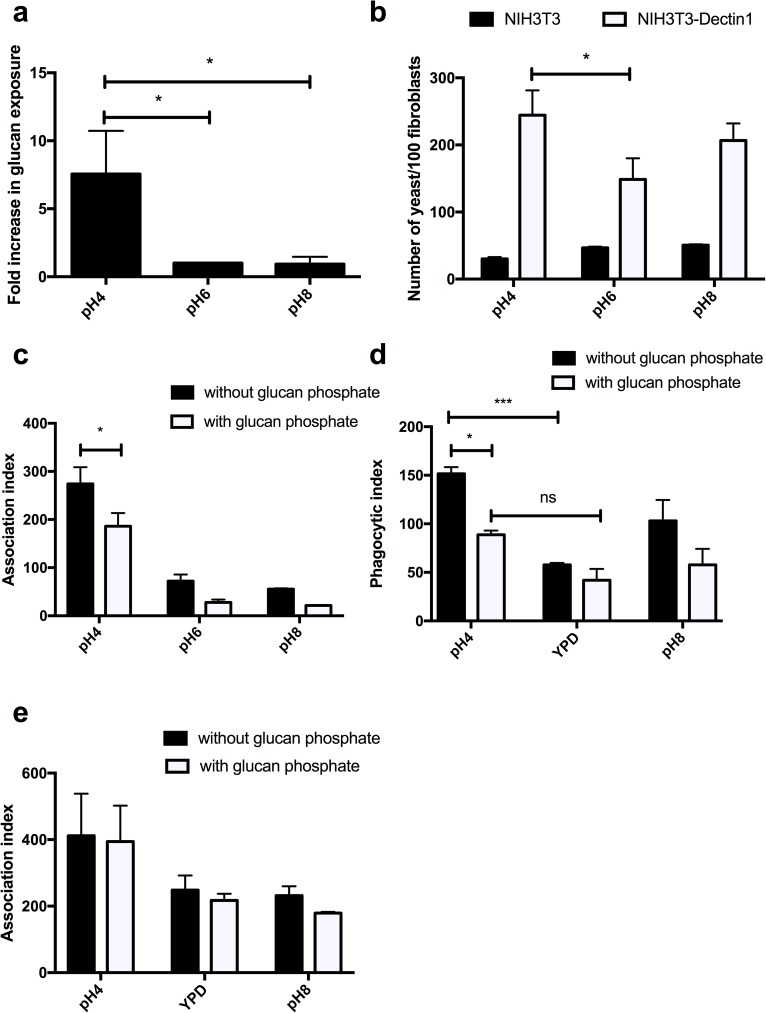
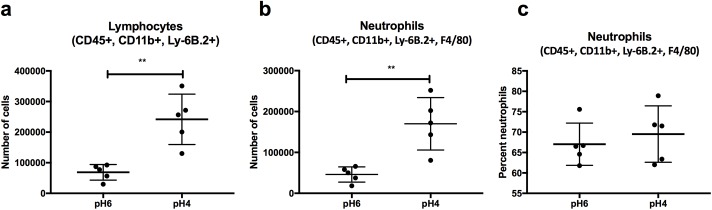
Candida albicans is able to proliferate in environments that vary dramatically in ambient pH, a trait required for colonising niches such as the stomach, vaginal mucosal and the GI tract. Here we show that growth in acidic environments involves cell wall remodelling which results in enhanced chitin and β-glucan exposure at the cell wall periphery. Unmasking of the underlying immuno-stimulatory β-glucan in acidic environments enhanced innate immune recognition of C. albicans by macrophages and neutrophils, and induced a stronger proinflammatory cytokine response, driven through the C-type lectin-like receptor, Dectin-1. This enhanced inflammatory response resulted in significant recruitment of neutrophils in an intraperitoneal model of infection, a hallmark of symptomatic vaginal colonisation. Enhanced chitin exposure resulted from reduced expression of the cell wall chitinase Cht2, via a Bcr1-Rim101 dependent signalling cascade, while increased β-glucan exposure was regulated via a non-canonical signalling pathway. We propose that this "unmasking" of the cell wall may induce non-protective hyper activation of the immune system during growth in acidic niches, and may attribute to symptomatic vaginal infection.
Overview
The claims and statistics of this paper haven’t been checked yet.
Free: it reads the open-access text and checks the first 5 claims that cite a source we can check. Create a free account to check every claim.
Integrity signals
Registry
Cites
Statistics
Figures
Verification
Claims the paper makes
The claims and statistics of this paper haven’t been checked yet.
Free: it reads the open-access text and checks the first 5 claims that cite a source we can check. Create a free account to check every claim.
Claims other papers make about this one
Each is checked against this paper’s own text: does it say what the citing paper says it does?
The source backs part of the claim, not all of it — or backs it for a different population, condition or comparison.
In the citing paper
“Changes in surface beta-glucan exposure can occur in response to a variety of stimuli, including changes in carbon sources and pH (14, 15).”
From Inhibition of Classical and Alternative Modes of Respiration in Candida albicans Leads to Cell Wall Remodeling and Increased Macrophage Recognition (2019) · cites this paper as [15]
Experimental — accuracy not yet measuredThe source backs part of the claim, not all of it — or backs it for a different population, condition or comparison.
In the citing paper
“In line with this, CSP treatment readily triggers cell wall integrity signaling involving several pathways and transcription factors, thus leading to cell wall remodeling and stress adaptations (55, 79) such as increased chitin exposure (80, 81) via the activation of chitin synthesis.”
From Transcriptomics and Phenotyping Define Genetic Signatures Associated with Echinocandin Resistance in Candida auris (2022) · cites this paper as [80]
Experimental — accuracy not yet measuredThe cited source says what the claim attributes to it.
In the citing paper
“Sherrington et al. showed that unmasking of β(1,3)-glucan and chitin occurred during adaptation to low pH (15).”
From Inhibition of Classical and Alternative Modes of Respiration in Candida albicans Leads to Cell Wall Remodeling and Increased Macrophage Recognition (2019) · cites this paper as [15]
Self-check
Percentages, sums and reported differences re-computed from the paper’s own numbers.
The self-check needs the paper’s full text.
Citations
Cites
Wisplinghoff, H., Bischoff, T., Tallent, S. M., Seifert, H., Wenzel, R. P., & Edmond, M. B. (2004) · Clinical Infectious Diseases · doi:10.1086/421946 · Cited by 4,496 · cited 1×
“The opportunistic fungal pathogen Candida albicans is a commensal in up to 80% of 60 the population, and can cause superficial mucosal infections in healthy individuals (1, 61 2) and invasive disease in immune supressed patients (3, 4).”
BackgroundBrown, G. D., & Gordon, S. (2001) · Nature · doi:10.1038/35092620 · Cited by 1,579
Sobel, J. D. (2007) · The Lancet · doi:10.1016/s0140-6736(07)60917-9 · Cited by 1,270
Conti, H. R., Shen, F., Nayyar, N., Stocum, E., Sun, J. N., Lindemann, M. J., Ho, A. W., Hai, J. H., Yu, J. J., Jung, J. W., et al. (2009) · Journal of Experimental Medicine · doi:10.1084/jem.20081463 · Cited by 1,024 · cited 1×
“Neutrophil depletion reduces inflammation and symptoms associated with VVC [42], suggesting that neutrophil recruitment in VVC is non-protective, in contrast to oral candidiasis where neutrophil recruitment and activation of Th17 responses are protective [43].”
BackgroundAn integrated model of the recognition of Candida albicans by the innate immune system
Netea, M. G., Brown, G. D., Kullberg, B. J., & Gow, N. A. R. (2008) · Nature Reviews Microbiology · doi:10.1038/nrmicro1815 · Cited by 946 · cited 2×
“These protein and carbohydrate motifs are immunogenic and play important roles in innate immune recognition [12].”
BackgroundA Recently Evolved Transcriptional Network Controls Biofilm Development in Candida albicans
Nobile, C. J., Fox, E. P., Nett, J. E., Sorrells, T. R., Mitrovich, Q. M., Hernday, A. D., Tuch, B. B., Andes, D. R., & Johnson, A. D. (2012) · Cell · doi:10.1016/j.cell.2011.10.048 · Cited by 711 · cited 1×
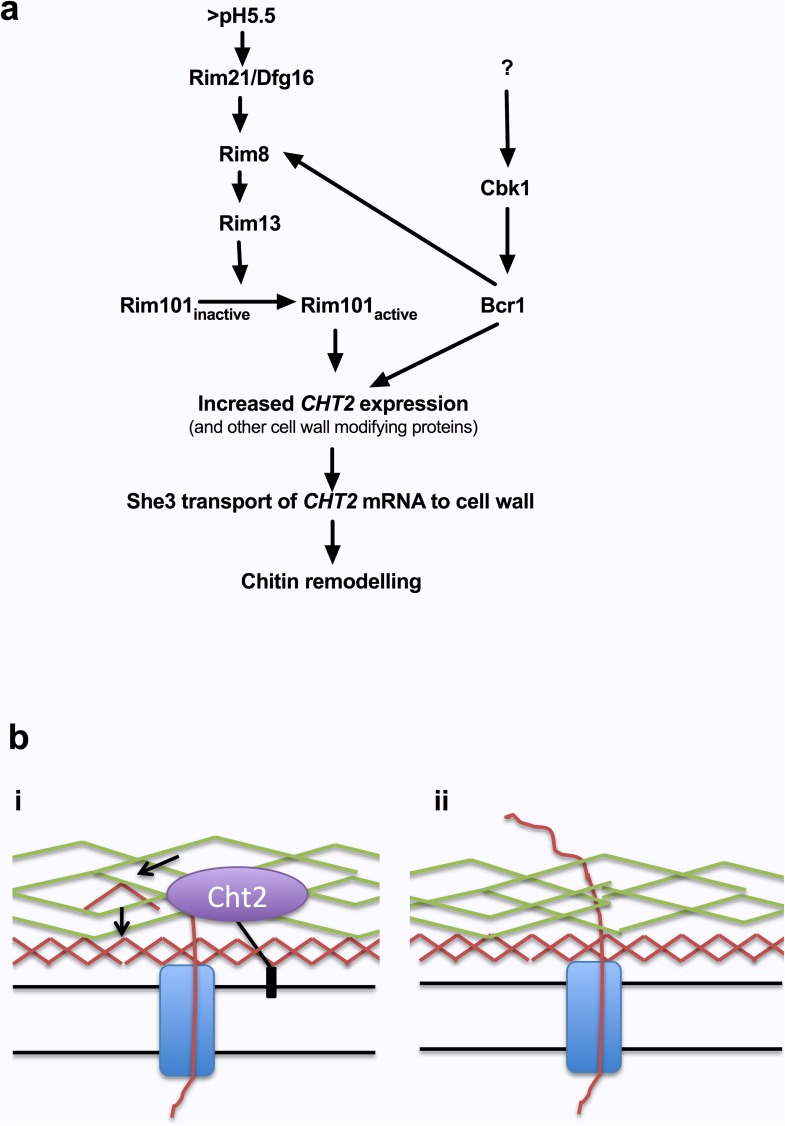
“However, Bcr1 also positively regulates RIM8 [37], suggesting that inactivation of BCR1 would also decrease processing of Rim101, linking the two pathways (Fig 12A).”
BackgroundAlmirante, B., Rodríguez, D., Park, B. J., Cuenca-Estrella, M., Planes, A. M., Almela, M., Mensa, J., Sanchez, F., Ayats, J., Gimenez, M., et al. (2005) · Journal of Clinical Microbiology · doi:10.1128/jcm.43.4.1829-1835.2005 · Cited by 566 · cited 1×
“Mucosal infections 62 increase population morbidity and are expensive to treat, while disseminated disease 63 is associated with high mortality rates (5, 6).”
BackgroundCritical Role of Bcr1-Dependent Adhesins in C. albicans Biofilm Formation In Vitro and In Vivo
Nobile, C. J., Andes, D. R., Nett, J. E., Smith, F. J., Yue, F., Phan, Q.-T., Edwards, J. E., Filler, S. G., & Mitchell, A. P. (2006) · PLoS Pathogens · doi:10.1371/journal.ppat.0020063 · Cited by 507 · cited 1×
“Bcr1 is essential for biofilm formation and controls the expression of many cell wall associated genes including HWP1, ALS1, ALS3 and HYR1 [35].”
BackgroundNosocomial Candidemia: Risk Factors and Attributable Mortality
Wenzel, R. P. (1995) · Clinical Infectious Diseases · doi:10.1093/clinids/20.6.1531 · Cited by 502 · cited 1×
“Mucosal infections increase population morbidity and are expensive to treat, while disseminated disease is associated with high mortality rates [5, 6].”
BackgroundSobel, J. D. (1997) · New England Journal of Medicine · doi:10.1056/nejm199712253372607 · Cited by 449
Research works printed but not linked: 1
- Sobel JD. Vulvovaginal candidosis. The Lancet. 2007; 369(9577): 1961– 71. 17560449 · DOI · Paper page
Cited by
Pathogenesis and virulence of Candida albicans
Lopes, J. P., & Lionakis, M. S. (2022) · Virulence · doi:10.1080/21505594.2021.2019950 · Cited by 477
d'Enfert, C., Kaune, A.-K., Alaban, L.-R., Chakraborty, S., Cole, N., Delavy, M., Kosmala, D., Marsaux, B., Fróis-Martins, R., Morelli, M., et al. (2021) · FEMS Microbiology Reviews · doi:10.1093/femsre/fuaa060 · Cited by 347
Human microbiome: an academic update on human body site specific surveillance and its possible role
Dekaboruah, E., Suryavanshi, M. V., Chettri, D., & Verma, A. K. (2020) · Archives of Microbiology · doi:10.1007/s00203-020-01931-x · Cited by 336
Lund, P. A., De Biase, D., Liran, O., Scheler, O., Mira, N. P., Cetecioglu, Z., Fernández, E. N., Bover-Cid, S., Hall, R., Sauer, M., et al. (2020) · Frontiers in Microbiology · doi:10.3389/fmicb.2020.556140 · Cited by 307
Self-citationDynamic Fungal Cell Wall Architecture in Stress Adaptation and Immune Evasion
Hopke, A., Brown, A. J. P., Hall, R. A., & Wheeler, R. T. (2018) · Trends in Microbiology · doi:10.1016/j.tim.2018.01.007 · Cited by 228
“…chitin and b -glucan are [11_TD$DIFF] recognized by the innate immune system [74,75], and C. albicans cells that have adapted to acidic conditions elicited a strong proin fl ammatory innate immune response, and enhanced neutrophil recruitment [24], immune responses characteristic of genital thrush.”
BackgroundInfluentialSelf-citationCandida albicans and Early Childhood Caries: A Systematic Review and Meta-Analysis
Xiao, J., Huang, X., Alkhers, N., Alzamil, H., Alzoubi, S., Wu, T. T., Castillo, D. A., Campbell, F., Davis, J., Herzog, K., et al. (2018) · Caries Research · doi:10.1159/000481833 · Cited by 197
“One attribute of C. albicans that makes it a successful opportunistic pathogen is its ability to adapt and proliferate in a broad range of host environments [Sherrington et al., 2017] such as acidic conditions [Cannon et al., 1995; Gunther et al., 2014; Sherrington et al., 2017].”
BackgroundCandida albicans and Candida glabrata : global priority pathogens
Katsipoulaki, M., Stappers, M. H. T., Malavia-Jones, D., Brunke, S., Hube, B., & Gow, N. A. R. (2024) · Microbiology and Molecular Biology Reviews · doi:10.1128/mmbr.00021-23 · Cited by 180
“…interaction is that between Lactobacillus and Candida spp. Lactobacilli protect against vaginal infections by Candida spp. mainly through the production of lactic acid, which acidifies the vaginal mucosa (428), resulting in enhanced recruitment of neutrophils and cytokine production (429).”
BackgroundBruno, M., Kersten, S., Bain, J. M., Jaeger, M., Rosati, D., Kruppa, M. D., Lowman, D. W., Rice, P. J., Graves, B., Ma, Z., et al. (2020) · Nature Microbiology · doi:10.1038/s41564-020-0780-3 · Cited by 145
Mechanism of Candida pathogenesis: Revisiting the vital drivers
Mba, I. E., & Nweze, E. I. (2020) · European Journal of Clinical Microbiology & Infectious Diseases · doi:10.1007/s10096-020-03912-w · Cited by 143
Pradhan, A., Avelar, G. M., Bain, J. M., Childers, D. S., Larcombe, D. E., Netea, M. G., Shekhova, E., Munro, C. A., Brown, G. D., Erwig, L. P., et al. (2018) · mBio · doi:10.1128/mbio.01318-18 · Cited by 133
“albicans cells by macrophages and neutrophils (10).”
Adapting to survive: How Candida overcomes host-imposed constraints during human colonization
Alves, R., Barata-Antunes, C., Casal, M., Brown, A. J. P., Van Dijck, P., & Paiva, S. (2020) · PLOS Pathogens · doi:10.1371/journal.ppat.1008478 · Cited by 122
“albicans to acidic environments drives cell-wall remodeling by enhancing the exposure of two key fungal PAMPs (chitin and β-glucan) at the cell surface [85].”
BackgroundInfluentialNon-canonical signalling mediates changes in fungal cell wall PAMPs that drive immune evasion
Pradhan, A., Avelar, G. M., Bain, J. M., Childers, D., Pelletier, C., Larcombe, D. E., Shekhova, E., Netea, M. G., Brown, G. D., Erwig, L., et al. (2019) · Nature Communications · doi:10.1038/s41467-019-13298-9 · Cited by 119
Lenardon, M. D., Sood, P., Dorfmueller, H. C., Brown, A. J. P., & Gow, N. A. R. (2020) · The Cell Surface · doi:10.1016/j.tcsw.2020.100047 · Cited by 110
“S1A), and relatively accurate measurements of the thickness of each cell wall layer can be made (e.g. Cheng et al., 2011; Childers et al., 2016; Hall et al., 2013; Sherrington et al., 2017).”
Self-citationInnate immune responses against the fungal pathogen Candida auris
Wang, Y., Zou, Y., Chen, X., Li, H., Yin, Z., Zhang, B., Xu, Y., Zhang, Y., Zhang, R., Huang, X., et al. (2022) · Nature Communications · doi:10.1038/s41467-022-31201-x · Cited by 107
Divergent Approaches to Virulence in C. albicans and C. glabrata: Two Sides of the Same Coin
Galocha, M., Pais, P., Cavalheiro, M., Pereira, D., Viana, R., & Teixeira, M. C. (2019) · International Journal of Molecular Sciences · doi:10.3390/ijms20092345 · Cited by 105
Fungal interactions with the human host: exploring the spectrum of symbiosis
Hall, R. A., & Noverr, M. C. (2017) · Current Opinion in Microbiology · doi:10.1016/j.mib.2017.10.020 · Cited by 127
Self-citationSpore Germination of Pathogenic Filamentous Fungi
Sephton-Clark, P., & Voelz, K. (2017) · Advances in applied microbiology · doi:10.1016/bs.aambs.2017.10.002 · Cited by 122
Structural adaptation of fungal cell wall in hypersaline environment
Fernando, L. D., Pérez-Llano, Y., Dickwella Widanage, M. C., Jacob, A., Martínez-Ávila, L., Lipton, A. S., Gunde-Cimerman, N., Latgé, J.-P., Batista-García, R. A., & Wang, T. (2023) · Nature Communications · doi:10.1038/s41467-023-42693-6 · Cited by 91
“Since variations in the structural organization of the fungal cell wall are often associated with alternations in environmental factors 32,39 – 41 , such as salinity, we hypothesize that the altered cell wall organization contributes to the survival of halophiles in hypersaline conditions.”
Immune Sensing of Candida albicans
Bojang, E., Ghuman, H., Kumwenda, P., & Hall, R. A. (2021) · Journal of Fungi · doi:10.3390/jof7020119 · Cited by 96
Self-citationWilliams, R. B., & Lorenz, M. C. (2020) · mBio · doi:10.1128/mbio.03070-19 · Cited by 87
“individual alternative carbon pathways (10, 13, 14, 26, 29, 30).”
BackgroundFungal Cell Wall Proteins and Signaling Pathways Form a Cytoprotective Network to Combat Stresses
Ibe, C., & Munro, C. A. (2021) · Journal of Fungi · doi:10.3390/jof7090739 · Cited by 85
Epitope Shaving Promotes Fungal Immune Evasion
Childers, D. S., Avelar, G. M., Bain, J. M., Pradhan, A., Larcombe, D. E., Netea, M. G., Erwig, L. P., Gow, N. A. R., & Brown, A. J. P. (2020) · mBio · doi:10.1128/mbio.00984-20 · Cited by 80
“The changes in (cid:2) -glucan exposure that accompany adaptation to host-related environmental inputs often result in altered host-fungus interactions (15–18).”
Horton, M. V., Johnson, C. J., Zarnowski, R., Andes, B. D., Schoen, T. J., Kernien, J. F., Lowman, D., Kruppa, M. D., Ma, Z., Williams, D. L., et al. (2021) · mSphere · doi:10.1128/msphere.00406-21 · Cited by 79
Mannan Molecular Substructures Control Nanoscale Glucan Exposure in Candida
Graus, M. S., Wester, M. J., Lowman, D. W., Williams, D. L., Kruppa, M. D., Martinez, C. M., Young, J. M., Pappas, H. C., Lidke, K. A., & Neumann, A. K. (2018) · Cell Reports · doi:10.1016/j.celrep.2018.07.088 · Cited by 79
“fumigatus after neutrophil attack, in low-pH conditions, and after echinocandin exposure (Amarsaikhan et al., 2017; Hopke et al., 2016; Sherrington et al., 2017; Wheeler and Fink, 2006).”
BackgroundFungal plasma membrane domains
Αθανασόπουλος, Α., André, B., Sophianopoulou, V., & Gournas, C. (2019) · FEMS Microbiology Reviews · doi:10.1093/femsre/fuz022 · Cited by 85
Kumwenda, P., Cottier, F., Hendry, A. C., Kneafsey, D., Keevan, B., Gallagher, H., Tsai, H.-J., & Hall, R. A. (2022) · Cell Reports · doi:10.1016/j.celrep.2021.110183 · Cited by 104
“Recently, remodeling of the cell wall in response to adaptation to host environments has been shown to regulate the host-pathogen interaction (Wheeler and Fink, 2006; Wheeler et al., 2008; Hall, 2015; Ballou et al., 2016; Hopke et al., 2016; Sherrington et al., 2017; Lopes et al., 2018; Pericolini et al., 2018; Pradha…”
BackgroundMethodSelf-citationAllert, S., Schulz, D., Kämmer, P., Großmann, P., Wolf, T., Schäuble, S., Panagiotou, G., Brunke, S., & Hube, B. (2022) · Virulence · doi:10.1080/21505594.2022.2026037 · Cited by 66
Nature of β-1,3-Glucan-Exposing Features on Candida albicans Cell Wall and Their Modulation
de Assis, L. J., Bain, J. M., Liddle, C., Leaves, I., Hacker, C., Peres da Silva, R., Yuecel, R., Bebes, A., Stead, D., Childers, D. S., et al. (2022) · mBio · doi:10.1128/mbio.02605-22 · Cited by 65
“Nevertheless, some b-1,3-glucan becomes exposed at septal junctions and bud scars and in punctate features on the surface of the lateral cell wall of yeast and hyphal cells (45, 47, 48, 70, 71).”
BackgroundCottier, F., Sherrington, S., Cockerill, S., del Olmo Toledo, V., Kissane, S., Tournu, H., Orsini, L., Palmer, G. E., Pérez, J. C., & Hall, R. A. (2019) · mBio · doi:10.1128/mbio.02347-19 · Cited by 63
“lated with phagocytosis rates of macrophages and neutrophils (28, 29, 33).”
BackgroundMethodInfluentialSelf-citationDuvenage, L., Walker, L. A., Bojarczuk, A., Johnston, S. A., MacCallum, D. M., Munro, C. A., & Gourlay, C. W. (2019) · mBio · doi:10.1128/mbio.02535-18 · Cited by 61
“Genes encoding chitinase Cht2 and GPI-anchored cell wall protein Pga26, previously shown to have roles in the unmasking of cell wall -glucan, were downregulated (15).”
Self-citationControl of β-glucan exposure by the endo-1,3-glucanase Eng1 in Candida albicans modulates virulence
Yang, M., Solis, N. V., Marshall, M., Garleb, R., Zhou, T., Wang, D., Swidergall, M., Pearlman, E., Filler, S. G., & Liu, H. (2022) · PLOS Pathogens · doi:10.1371/journal.ppat.1010192 · Cited by 62
Ergosterol distribution controls surface structure formation and fungal pathogenicity
Choy, H. L., Gaylord, E. A., & Doering, T. L. (2023) · mBio · doi:10.1128/mbio.01353-23 · Cited by 109
“The latter group is particularly critical during cell growth, when fungi actively remodel and thicken their cell walls in response to changes in their environment (52–54).”
Liu, Y., Lu, J. N., Sun, J. Y., Zhu, X., Zhou, L., Lu, Z., & Lu, Y. (2019) · Applied Microbiology and Biotechnology · doi:10.1007/s00253-019-10117-5 · Cited by 64
Muthamil, S., Prasath, K. G., Priya, A., Precilla, P., & Pandian, S. K. (2020) · Scientific Reports · doi:10.1038/s41598-020-61918-y · Cited by 70
Exposure of Candida albicans β (1,3)-glucan is promoted by activation of the Cek1 pathway
Chen, T., Jackson, J. W., Tams, R. N., Davis, S. E., Sparer, T. E., & Reynolds, T. B. (2019) · PLOS Genetics · doi:10.1371/journal.pgen.1007892 · Cited by 56
Tripathi, A., Liverani, E., Tsygankov, A. Y., & Puri, S. (2020) · Journal of Biological Chemistry · doi:10.1074/jbc.ra120.013413 · Cited by 56
“On the other hand, acidic conditions reduce the thickness of the inner cell wall (18) by decreasing b-1,3-glucan levels (15).”
BackgroundAustermeier, S., Kasper, L., Westman, J., & Gresnigt, M. S. (2020) · Current Opinion in Microbiology · doi:10.1016/j.mib.2020.05.007 · Cited by 55
Bacterial Vaginosis and Vulvovaginal Candidiasis Pathophysiologic Interrelationship
Sobel, J. D., & Vempati, Y. S. (2024) · Microorganisms · doi:10.3390/microorganisms12010108 · Cited by 72
“The progressively acidic environment promotes yeast cell β -glucan surface exposure, leading to further hyper-activation of the host vaginal innate immune response [47,48].”
BackgroundRoncero, C., & de Aldana, C. R. V. (2019) · Current topics in microbiology and immunology · doi:10.1007/82_2019_185 · Cited by 59
Farouk, F., Abdelmageed, M. E., Ansari, M. A., & Azzazy, H. M. E.-S. (2019) · Biotechnology Letters · doi:10.1007/s10529-019-02762-7 · Cited by 49
We need to talk about Candida tropicalis : Virulence factors and survival mechanisms
dos Santos, M. M., & Ishida, K. (2023) · Medical Mycology · doi:10.1093/mmy/myad075 · Cited by 60
Face/Off: The Interchangeable Side of Candida Albicans
Cottier, F., & Hall, R. A. (2020) · Frontiers in Cellular and Infection Microbiology · doi:10.3389/fcimb.2019.00471 · Cited by 61
“CHT2 induced a significant increase in chitin exposure at pH 6 compared to a control strain (Sherrington et al., 2017).”
BackgroundInfluentialSelf-citationEpitope shaving promotes fungal immune evasion
Childers, D. S., Avelar, G. M., Bain, J. M., Pradhan, A., Larcombe, D. E., Netea, M. G., Erwig, L. P., Gow, N. A. R., & Brown, A. J. P. (2025) · Figshare · Cited by 46
In Vitro Antifungal Activity of Silver Nanoparticles Biosynthesized with Beech Bark Extract
Mare, A. D., Ciurea, C. N., Man, A., Mareș, M., Toma, F., Berța, L., & Tanase, C. (2021) · Plants · doi:10.3390/plants10102153 · Cited by 51
“albicans can adapt to low pH values (by remodeling their cell wall), as well to higher pH values (hyphal development) [49,50].”
BackgroundPino, A., Rapisarda, A. M. C., Vitale, S. G., Cianci, S., Caggia, C., Randazzo, C. L., & Cianci, A. (2021) · Scientific Reports · doi:10.1038/s41598-021-81931-z · Cited by 51
Memory in Fungal Pathogens Promotes Immune Evasion, Colonisation, and Infection
Brown, A. J. P., Gow, N. A. R., Warris, A., & Brown, G. D. (2019) · Trends in Microbiology · doi:10.1016/j.tim.2018.11.001 · Cited by 43
“This in turn leads to the enhanced release of inflammatory cytokines by macrophages, and increased neutrophil recruitment [79].”
BackgroundA buffered media system for yeast batch culture growth
Prins, R. C., & Billerbeck, S. (2021) · BMC Microbiology · doi:10.1186/s12866-021-02191-5 · Cited by 40
Metabolic Reprogramming in the Opportunistic Yeast Candida albicans in Response to Hypoxia
Burgain, A., Tebbji, F., Khemiri, I., & Sellam, A. (2020) · mSphere · doi:10.1128/msphere.00913-19 · Cited by 49
“The -glucanase assay was performed as previously described (26).”
MethodChew, S. Y., Ho, K. L., Cheah, Y. K., Sandai, D., Brown, A. J. P., & Than, L. T. L. (2019) · International Journal of Molecular Sciences · doi:10.3390/ijms20133172 · Cited by 40
Friendly fungi: symbiosis with commensal Candida albicans
Shao, T., Haslam, D. B., Bennett, R. J., & Way, S. S. (2022) · Trends in Immunology · doi:10.1016/j.it.2022.07.003 · Cited by 41
Pericolini, E., Perito, S., Castagnoli, A., Gabrielli, E., Mencacci, A., Blasi, E., Vecchiarelli, A., & Wheeler, R. T. (2018) · PLOS ONE · doi:10.1371/journal.pone.0201436 · Cited by 40
Anticipatory Stress Responses and Immune Evasion in Fungal Pathogens
Pradhan, A., Ma, Q., de Assis, L. J., Leaves, I., Larcombe, D. E., Rondon, A. V. R., Nev, O. A., & Brown, A. J. P. (2020) · Trends in Microbiology · doi:10.1016/j.tim.2020.09.010 · Cited by 46
Fungal resilience and host–pathogen interactions: Future perspectives and opportunities
Brown, A. J. P. (2022) · Parasite Immunology · doi:10.1111/pim.12946 · Cited by 46
In Vitro Incorporation of Helicobacter pylori into Candida albicans Caused by Acidic pH Stress
Sánchez-Alonzo, K., Parra-Sepúlveda, C., Vega, S., Bernasconi, H., Campos, V. L., Smith, C. T., Sáez, K. L., & García, A. (2020) · Pathogens · doi:10.3390/pathogens9060489 · Cited by 39
“Several Candida species share the ability to grow under diverse environmental conditions, including pH ranges from 2 to 10 in different anatomical and environmental niches, even when the availability of nutrients is restricted [14,15].”
BackgroundLepczyńska, M., & Dzika, E. (2019) · Gut Pathogens · doi:10.1186/s13099-019-0287-8 · Cited by 43
Dectin-1 multimerization and signaling depends on fungal β-glucan structure and exposure
Anaya, E. U., Amin, A. E., Wester, M. J., Danielson, M. E., Michel, K. S., & Neumann, A. K. (2023) · Biophysical Journal · doi:10.1016/j.bpj.2023.07.021 · Cited by 46
Miranda, F., Tavares, V. K. F., Gomes, M. P., Neto, N. F. A., Chiappim, W., Filho, G. P., Pessoa, R. S., & Koga‐Ito, C. Y. (2023) · Water · doi:10.3390/w15234045 · Cited by 40
“According to Sherrington et al. [57], C. albicans can survive in environments with a pH ranging from 2 to 10, as it can colonize sites such as the stomach, vagina, and oral mucosa in the host.”
Suchodolski, J., Derkacz, D., Muraszko, J., Panek, J. J., Jezierska, A., Łukaszewicz, M., & Krasowska, A. (2020) · Pharmaceutics · doi:10.3390/pharmaceutics12040314 · Cited by 35
“The fungal cell wall is remodeled upon recognition of key host-derived environmental signals [59] or changes in carbon sources and pH [60,61].”
BackgroundJenull, S., Shivarathri, R., Tsymala, I., Penninger, P., Trinh, P.-C., Nogueira, F., Chauhan, M., Singh, A., Petryshyn, A., Stoiber, A., et al. (2022) · mBio · doi:10.1128/mbio.00799-22 · Cited by 32
Upadhya, R., Lam, W. C., Hole, C. R., Vasselli, J. G., & Lodge, J. K. (2023) · Frontiers in Fungal Biology · doi:10.3389/ffunb.2023.1183291 · Cited by 37
“Major variations in the content and organization of the cell wall have been reported in Candida and Cryptococcus cells grown in YPD and those grown under other laboratory culture conditions (Farkas et al., 2009; O’Meara et al., 2013; Weerasekera et al., 2016; Sherrington et al., 2017; Esher et al., 2018).”
BackgroundLrg1 Regulates β (1,3)-Glucan Masking in Candida albicans through the Cek1 MAP Kinase Pathway
Chen, T., Wagner, A. S., Tams, R. N., Eyer, J. E., Kauffman, S. J., Gann, E. R., Fernandez, E. J., & Reynolds, T. B. (2019) · mBio · doi:10.1128/mbio.01767-19 · Cited by 33
Roselletti, E., Monari, C., Sabbatini, S., Perito, S., Vecchiarelli, A., Sobel, J. D., & Cassone, A. (2019) · Frontiers in Microbiology · doi:10.3389/fmicb.2019.02669 · Cited by 38
The Vaginal Microbiome: III. The Vaginal Microbiome in Various Urogenital Disorders
Seta, F. D., Hoffmann, R., Campisciano, G., Comar, M., Verstraelen, H., Vieira‐Baptista, P., Ventolini, G., & Lev‐Sagie, A. (2021) · Journal of Lower Genital Tract Disease · doi:10.1097/lgt.0000000000000645 · Cited by 49
“Conversely, acidic environments promote β-glucan exposure on the cell wall, leading to hyperactivation of innate immune responses and significant neutrophil influx.(14) Acid-adapted fungal cells are more resistant to neutrophil killing.”
BackgroundSzymczyk‐Ziółkowska, P., Hoppe, V., Rusińska, M., Gąsiorek, J., Ziółkowski, G., Dydak, K., Czajkowska, J., & Junka, A. (2020) · Materials · doi:10.3390/ma13122822 · Cited by 36
“albicans is known for its ability to thrive in acidic conditions (including stomach environment [84]), while the optimal pH conditions for P.”
BackgroundGranger, B. L. (2018) · PLoS ONE · doi:10.1371/journal.pone.0191194 · Cited by 33
Pezzotti, G., Kobara, M., Asai, T., Nakaya, T., Miyamoto, N., Adachi, T., Yamamoto, T., Kanamura, N., Ohgitani, E., Marin, E., et al. (2021) · Frontiers in Microbiology · doi:10.3389/fmicb.2021.769597 · Cited by 33
“Conversely, C. albicans was found capable to undergo cell wall remodeling in acidic environment, which resulted in a promptly enhanced chitin contents (Sherrington et al., 2017).”
BackgroundChilders, D. S., Avelar, G. M., Bain, J. M., Larcombe, D. E., Pradhan, A., Budge, S., Heaney, H., & Brown, A. J. P. (2019) · Current topics in microbiology and immunology · doi:10.1007/82_2019_182 · Cited by 36
Manipulation of host phagocytosis by fungal pathogens and therapeutic opportunities
Jia, L., González, K., Orasch, T., Schmidt, F., & Brakhage, A. A. (2024) · Nature Microbiology · doi:10.1038/s41564-024-01780-0 · Cited by 47
“In response to the hostile environment inside the host (for example, high temperature, hypoxia, nutrient limitation and acidic pH), fungal pathogens have been shown to remodel their cell wall, thereby decreasing the number of PAMPs 57–61 (Fig.”
The Auto-Brewery Syndrome: A Perfect Metabolic “Storm” with Clinical and Forensic Implications
Dinis‐Oliveira, R. J. (2021) · Journal of Clinical Medicine · doi:10.3390/jcm10204637 · Cited by 63
“In general, Saccharomyces cerevisiae and Candida albicans are acidophilic and, as such, grow better under acidic conditions in the optimal pH range of 4 to 6 [1,43,44].”
BackgroundCell surface display of proteins on filamentous fungi
Urbar-Ulloa, J., Montaño‐Silva, P., Ramírez-Pelayo, A. S., Fernández-Castillo, E., Amaya-Delgado, L., Rodríguez‐Garay, B., & Verdín, J. (2019) · Applied Microbiology and Biotechnology · doi:10.1007/s00253-019-10026-7 · Cited by 29
Liu, J., Li, Q., Wang, C., Shao, J., Wang, T., Wu, D., Ma, K., Yan, G., & Yin, D. (2020) · Biofouling · doi:10.1080/08927014.2020.1759559 · Cited by 27
“When under stress, such as exposure to antifungal drugs, it will initiate cell wall remodeling by unmasking b-glucan and/or chitin, which are two of the crucial pathogen-associated molecular patterns (PAMP) (Ene et al. 2012; Morschh€auser et al. 2016; Sherrington et al. 2017; Guirao-Abad et al. 2018; Lopes et al. 2018…”
BackgroundMethodInfluentialAvelar, G. M., Dambuza, I. M., Ricci, L., Yuecel, R., Mackenzie, K. S., Childers, D. S., Bain, J. M., Pradhan, A., Larcombe, D. E., Netea, M. G., et al. (2022) · The Cell Surface · doi:10.1016/j.tcsw.2022.100084 · Cited by 26
“albicans is a moving target for the immune system because yeast cells alter the exposure of β-glucan on their cell surface in response to specific environmental inputs (Ballou et al., 2016; Sherrington et al., 2017; Pradhan et al., 2019; Pradhan et al., 2018; Cottier et al., 2019).”
BackgroundPadder, S. A., Ramzan, A., Tahir, I., Rehman, R. U., & Shah, A. H. (2022) · Critical Reviews in Microbiology · doi:10.1080/1040841x.2021.1935447 · Cited by 27
A human commensal-pathogenic fungus suppresses host immunity via targeting TBK1
Luo, G., Zhang, J., Wang, T., Cui, H., Bai, Y., Luo, J., Zhang, J., Zhang, M., Di, L., Yuan, Y., et al. (2024) · Cell Host & Microbe · doi:10.1016/j.chom.2024.07.003 · Cited by 30
Qu, D., & Miao, X. (2020) · Chemosphere · doi:10.1016/j.chemosphere.2020.129046 · Cited by 43
Chen, T., Wagner, A. S., & Reynolds, T. B. (2022) · Frontiers in Fungal Biology · doi:10.3389/ffunb.2022.842501 · Cited by 25
“This change is proposed to lead to longer chitin fibrils due to decreasedmicrofibril processing by Cht2, thus impairing efficient remodeling of the inner cell wall layer and enhancing exposure of chitin at the cell surface.”
BackgroundInfluentialCaspofungin-induced β(1,3)-glucan exposure in Candida albicans is driven by increased chitin levels
Wagner, A. S., Lumsdaine, S. W., Mangrum, M. M., & Reynolds, T. B. (2023) · mBio · doi:10.1128/mbio.00074-23 · Cited by 26
“In contrast, growth in acidic pH or in the presence of the short-chain fatty acid acetate or butyrate induces unmasking (28, 30, 31).”
BackgroundMitracarpus frigidus: A promising antifungal in the treatment of vulvovaginal candidiasis
Campos, L. M., de Melo, L., Lemos, A. S. D. O., Guedes, M. C. M. R., Silva, T. P. D., de Figueiredo, G. F., Reis, J. L., Rocha, V. N., Melo, R. C. N., Araújo, M. G. D. F., et al. (2018) · Industrial Crops and Products · doi:10.1016/j.indcrop.2018.07.038 · Cited by 29
Li, Q., Liu, J., Shao, J., Da, W., Shi, G., Wang, T., Wu, D., & Wang, C. (2019) · Frontiers in Microbiology · doi:10.3389/fmicb.2019.01600 · Cited by 28
Environmental and genetic regulation of white‐opaque switching in Candida tropicalis
Zheng, Q., Zhang, Q., Bing, J., Ding, X., & Huang, G. (2017) · Molecular Microbiology · doi:10.1111/mmi.13862 · Cited by 26
“Rim101, Crz2 and Bcr1 have recently been reported to be involved in the regulation of cell wall remodeling in response to acidic pH conditions in C. albicans (Sherrington et al., 2017).”
BackgroundHan, Q., Wang, N., Pan, C., Wang, Y., & Sang, J. (2019) · Molecular Microbiology · doi:10.1111/mmi.14335 · Cited by 24
Ma, K., Chen, M., Liu, J., Ge, Y., Wang, T., Wu, D., Yan, G., Wang, C., & Shao, J. (2021) · Journal of Leukocyte Biology · doi:10.1002/jlb.4ab0221-324rrrr · Cited by 23
Wagner, A. S., Hancock, T. J., Lumsdaine, S. W., Kauffman, S., Mangrum, M. M., Phillips, E. K., Sparer, T. E., & Reynolds, T. B. (2021) · PLoS Pathogens · doi:10.1371/journal.ppat.1009839 · Cited by 21
Detection and survival of Candida albicans in soils
Sautour, M., Lemaître, J.-P., Ranjard, L., Truntzer, C., Basmaciyan, L., Depret, G., Hartmann, A., & Dalle, F. (2021) · Environmental DNA · doi:10.1002/edn3.230 · Cited by 30
Inactivation of the Complement Lectin Pathway by Candida tropicalis Secreted Aspartyl Protease-1
Valand, N., Brunt, E., Gazioglu, O., Yeşilkaya, H., Mitchell, D. A., Horley, N., Arroo, R., Kishore, U., Wallis, R., & Girija, U. V. (2022) · Immunobiology · doi:10.1016/j.imbio.2022.152263 · Cited by 24
“During the remodelling of the fungal cell wall, increased exposure of β-glucan and chitin components, activates the complement system, facilitating their recognition by macrophages, neutrophils and stimulating the production of pro-inflammatory cytokines (Sherrington et al., 2017).”
BackgroundDa, W., Shao, J., Li, Q., Shi, G., Wang, T., Wu, D., & Wang, C. (2019) · Frontiers in Microbiology · doi:10.3389/fmicb.2019.00034 · Cited by 23
“albicans is subjected to different environmental cues including antifungal agents (Morschhäuser et al., 2016; Sherrington et al., 2017).”
BackgroundMethodDonders, G. G. G., Grincevičienė, Š., Ruban, K., & Bellen, G. (2020) · Diagnostic Microbiology and Infectious Disease · doi:10.1016/j.diagmicrobio.2020.115024 · Cited by 23
Schaefer, S., Melodia, D., Pracey, C. P., Corrigan, N. A., Lenardon, M. D., & Boyer, C. A. (2024) · Biomacromolecules · doi:10.1021/acs.biomac.3c01038 · Cited by 21
Self-citationSelisana, S. M. G., Chen, X., Mahfudhoh, E., Bowolaksono, A., Rozaliyani, A., Orihara, K., & Kajiwara, S. (2024) · Medical Microbiology and Immunology · doi:10.1007/s00430-024-00795-y · Cited by 27
“We recommend checking for chitin exposure levels across a wide range of pH, as unmasking of cell wall in C. albicans may induce non-protective hyperactivation of the immune system during growth in acidic environment [23].”
BackgroundResultInfluentialKhona, D. K., Roy, S., Ghatak, S., Huang, K., Jagdale, G. S., Baker, L. A., & Sen, C. K. (2021) · Bioelectrochemistry · doi:10.1016/j.bioelechem.2021.107921 · Cited by 22
Fakhruddin, K. S., Samaranayake, L. P., Egusa, H., Ngo, H. C., & Pesee, S. (2021) · Journal of Oral Microbiology · doi:10.1080/20002297.2021.1964277 · Cited by 26
“In addition, both of these species appear to have the capacity for cell-wall remodelling for survival, in the face of adverse ecological pH [42], in addition, to possessing twin attributes of surface adherence and robust biofilm-producing potential essential for successful colonization [43– 47].”
BackgroundSilva, V. K. A., Bhattacharya, S., Oliveira, N. K., Savitt, A. G., Zamith‐Miranda, D., Nosanchuk, J. D., & Fries, B. C. (2022) · mBio · doi:10.1128/mbio.00190-22 · Cited by 23
“cellular growth, and cell division (19).”
Larcombe, D. E., Bohovych, I., Pradhan, A., Ma, Q., Hickey, E., Leaves, I., Cameron, G. A., Avelar, G. M., de Assis, L. J., Childers, D. S., et al. (2023) · PLoS Pathogens · doi:10.1371/journal.ppat.1011505 · Cited by 22
Post-transcriptional control of fungal cell wall synthesis
Hall, R. A., & Wallace, E. W. J. (2022) · The Cell Surface · doi:10.1016/j.tcsw.2022.100074 · Cited by 24
“albicans to host-specific environmental cues and antifungals affects exposure of the key immuno-stimulatory epitope betaglucan, modulating immune recognition of the pathogen (Wheeler et al. 2008; Sherrington et al. 2017; Hopke et al. 2016; Ballou et al. 2016; Pradhan et al. 2019, Pradhan et al., 2018; Lopes et al. 201…”
BackgroundSelf-citationDerkacz, D., & Krasowska, A. (2023) · International Journal of Molecular Sciences · doi:10.3390/ijms24043966 · Cited by 18
“albicans remodels its CW to evade the host’s immune system [17].”
BackgroundJawhara, S. (2020) · Antibiotics · doi:10.3390/antibiotics9070385 · Cited by 24
Farh, M. E.-A., Abdellaoui, N., & Seo, J. (2021) · Frontiers in Microbiology · doi:10.3389/fmicb.2021.672661 · Cited by 21
Protein-Protein Interactions in Candida albicans
Schoeters, F., & Dijck, P. V. (2019) · Frontiers in Microbiology · doi:10.3389/fmicb.2019.01792 · Cited by 21
Hameed, S., Hans, S., Singh, S., Dhiman, R., Monasky, R. C., Pandey, R. P., Thangamani, S., & Fatima, Z. (2021) · Pathogens · doi:10.3390/pathogens10080942 · Cited by 20
Lorenzo-Villegas, D. L., Gohil, N. V., Lamo, P., Gurajala, S., Bagiu, I. C., Vulcănescu, D. D., Horhat, F. G., Sorop, V. B., Diaconu, M. M., Sorop, M. I., et al. (2023) · Life · doi:10.3390/life13102099 · Cited by 23
“However, resistance patterns are on the rise, with C. auris being among the most significant multidrug-resistant species, while C. krusei and C. glabrata are intrinsically resistant to echinocandins [4,12–15].”
Background
Metadata
- Authors
- Sherrington, S. L., Sorsby, E., Mahtey, N., Kumwenda, P., Lenardon, M. D., Brown, I., Ballou, E. R., MacCallum, D. M., & Hall, R. A.
- Affiliations
- University of Birmingham (GB)
- University of Aberdeen (GB)
- University of Kent (GB)
- Corresponding author
- Hall, Rebecca A.
- ORCID
- Venue
- PLOS Pathogens
- Publisher
- Public Library of Science (PLoS)
- Published
- 2017-05-22
- Volume
- 13
- Issue
- 5
- Pages
- e1006403
- ISSN
- 1553-7366 (ISSN-L)
- 1553-7374
- PMC
- PMC5456412
- OpenAlex
- W2617351430
- Cited by
- 202
- References
- 51
- Citations by year
- 2026: 13 · 2025: 19 · 2024: 27 · 2023: 18 · 2022: 25 · 2021: 21 · 2020: 36 · 2019: 28 · 2018: 7 · 2017: 8
- FWCI
- 16.63
- Type
- journal article
- Language
- en
- Update notices
- new_version (2017-06-02)
- Open access
- gold
- doi.org
- Licence
- Locations
- PLoS Pathogens (publishedVersion, cc-by)
- Europe PMC (PubMed Central) (publishedVersion, cc-by)
- PubMed Central (publishedVersion, cc-by)
- PubMed (publishedVersion)
- Kent Academic Repository (University of Kent) (acceptedVersion)
- Aberdeen University Research Archive (Aberdeen University) (submittedVersion)
- UNSWorks (UNSW Sydney) (submittedVersion, cc-by-nc-nd)
- DOAJ (DOAJ: Directory of Open Access Journals) (submittedVersion, cc-by-sa)
- Figshare (submittedVersion, cc-by)
- University of Birmingham Research Portal (University of Birmingham) (submittedVersion, cc-by)
- UNSWorks (University of New South Wales, Sydney, Australia) (submittedVersion, cc-by-nc-nd)
- Funders
- Medical Research Council (MR/L00903X/1, MR/N006364/1, MR/J008239/1)
- Biotechnology and Biological Sciences Research Council (BB/M014525/1)
- National Centre for the Replacement, Refinement and Reduction of Animals in Research (NC/K000306/1).)
- Topics
- Health Sciences › Medicine › Infectious Diseases › Antifungal resistance and susceptibility
- Life Sciences › Biochemistry, Genetics and Molecular Biology › Molecular Biology › Fungal and yeast genetics research
- Health Sciences › Medicine › Infectious Diseases › Fungal Infections and Studies
- Keywords
- Candida albicans, cell wall remodeling, Dectin-1, innate immune recognition, inflammatory cytokines, neutrophil recruitment, vaginal candidiasis, macrophages, fungal virulence
- MeSH terms
- Animals, Candida albicans, Candidiasis, Cell Wall, Humans, Hydrogen-Ion Concentration, Immunity, Innate, Macrophages, Mice
About these checks
Registry, retraction, Cites and statistics results are computed, not judged, with one exception: a printed reference that no index lists is read once by a model before it counts as a citation error. Claims are extracted by a model and kept only when their quote appears verbatim in the text; each cited source is then checked, with a model’s help, for whether it says what the claim relies on. Those verdicts can be wrong — read the claim’s quote and the cited source before relying on one.
Statistics and arithmetic are recomputed, not judged.
Confidence bands are shown only for fields calibrated on our annotated test set. None is calibrated yet, so no band is shown.
What counts as a claim ›How we measure confidence ›How we check this ›
Are you an author, or do you see a problem with this page? Request a review
Data sources
Bibliographic data: Semantic Scholar, OpenAlex, Crossref.
Contains information from the Semantic Scholar Academic Graph Datasets, made available under the ODC Attribution License (ODC-BY 1.0).
Semantic Scholar’s data is described in: Kinney, R., et al. (2023). The Semantic Scholar Open Data Platform. arXiv:2301.10140.
