

VCAM1/VLA4 interaction mediates Ly6Clow monocyte recruitment to the brain in a TNFR signaling dependent manner during fungal infection
Open accessThe DOI matches its Crossref record; 60 of the 60 references it cites were found in a registry or an index.
Abstract
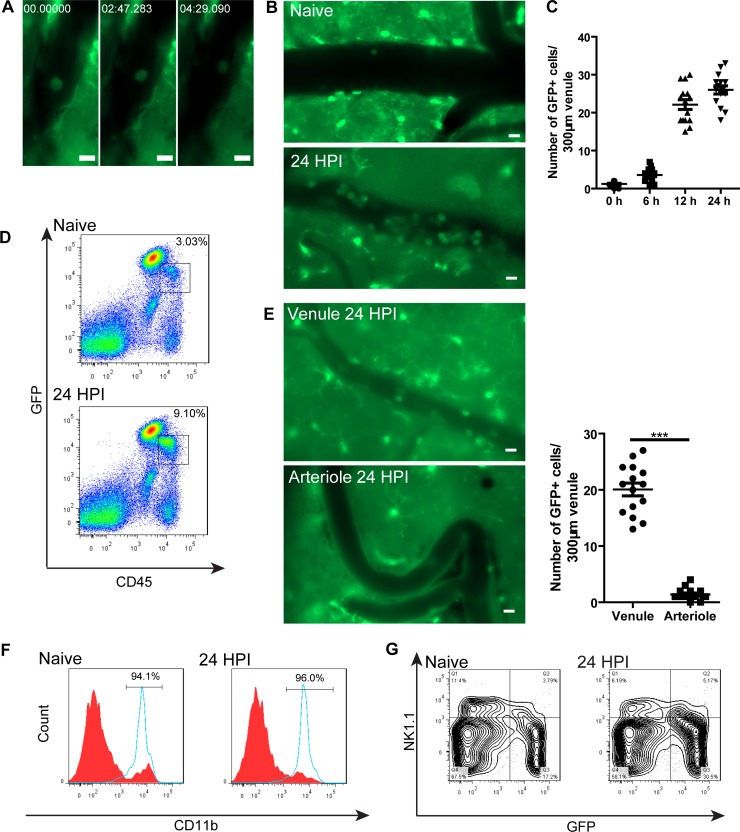
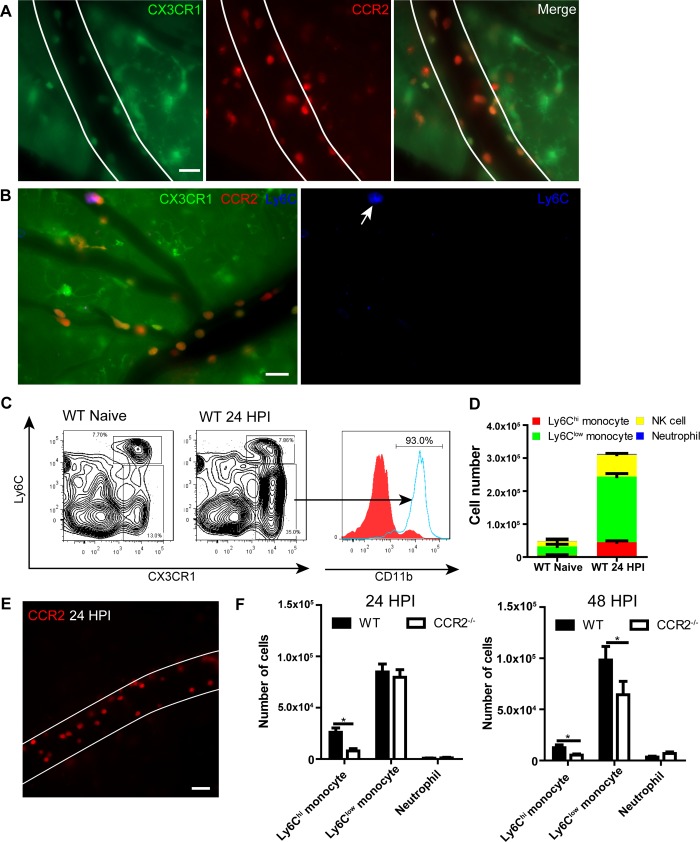
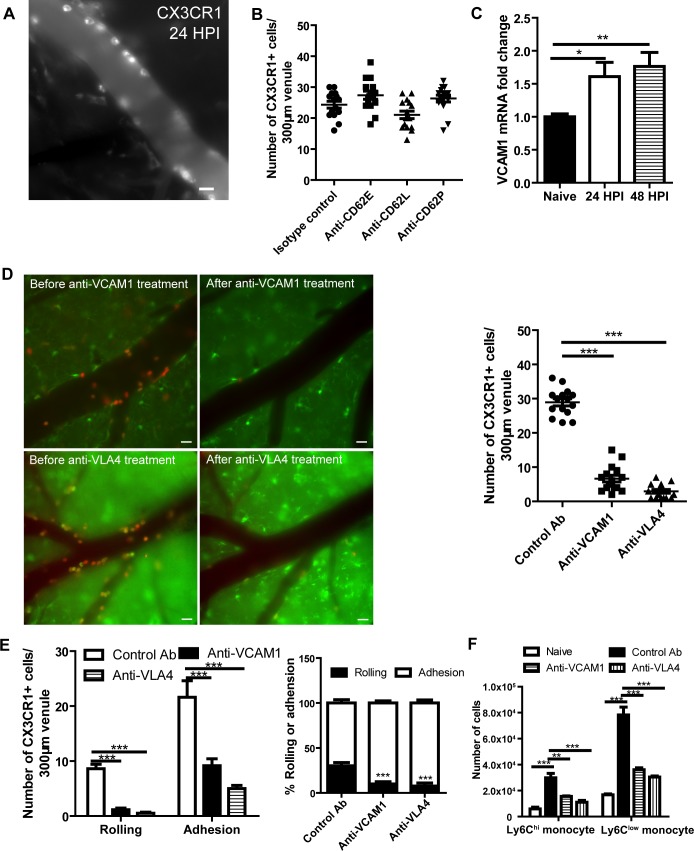
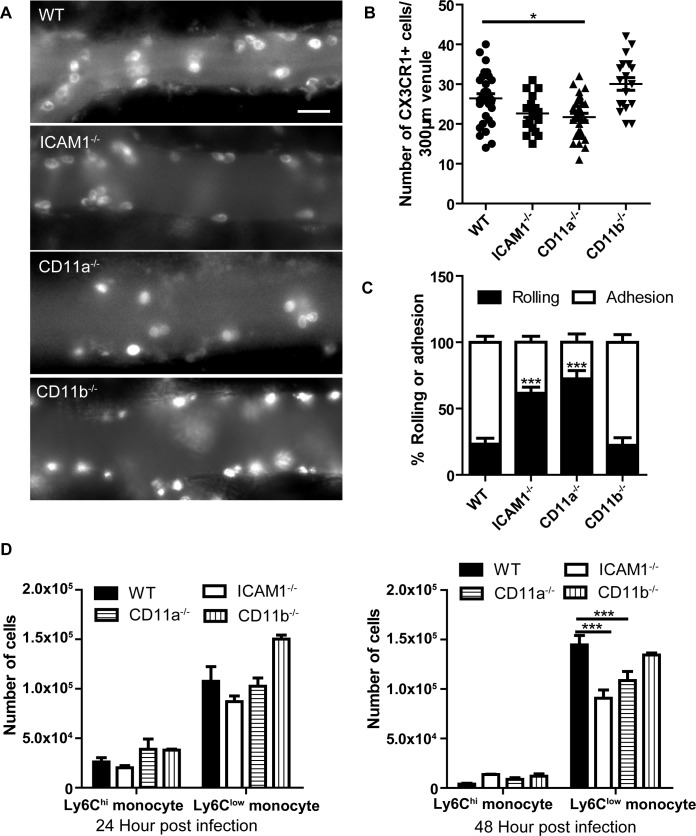
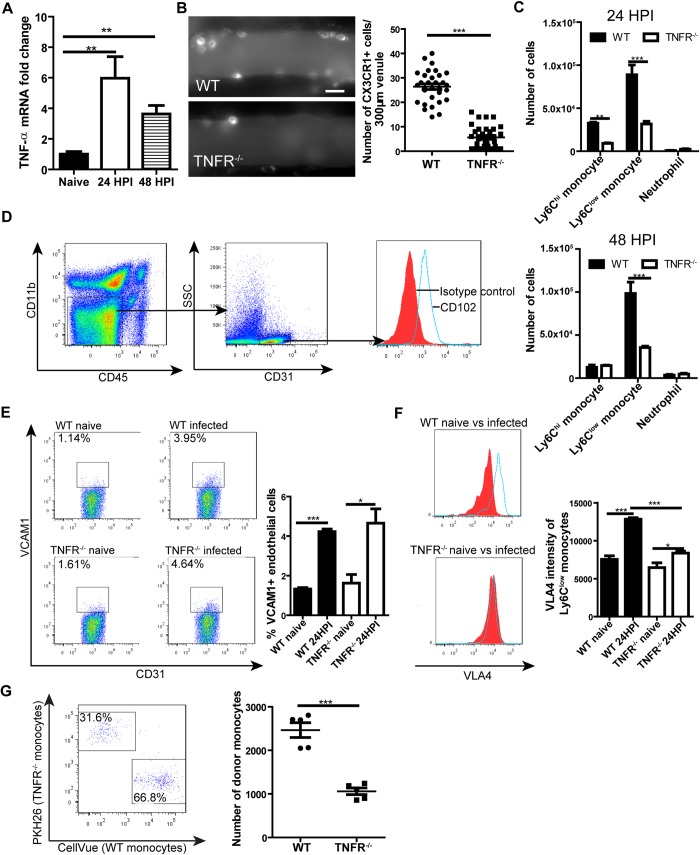
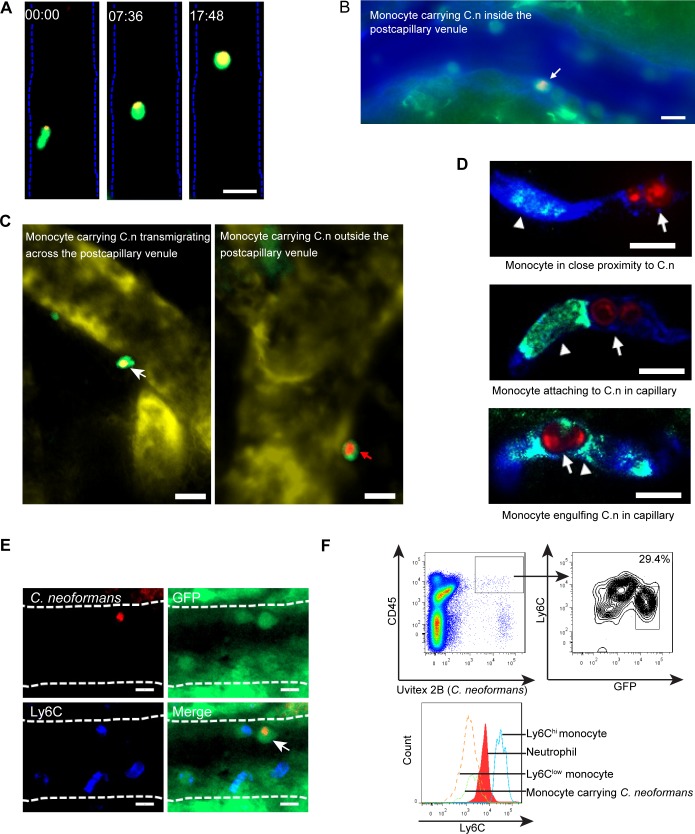
Monocytes exist in two major populations, termed Ly6C hi and Ly6C low monocytes.Compared to Ly6C hi monocytes, less is known about Ly6C low monocyte recruitment and mechanisms involved in the recruitment of this subset.Furthermore, the role of Ly6C low monocytes during infections is largely unknown.Here, using intravital microscopy, we demonstrate that Ly6C low monocytes are predominantly recruited to the brain vasculature following intravenous infection with Cryptococcus neoformans, a fungal pathogen causing meningoencephalitis.The recruitment depends primarily on the interaction of VCAM1 expressed on the brain endothelium with VLA4 expressed on Ly6C low monocytes.Furthermore, TNFR signaling is essential for the recruitment through enhancing VLA4 expression on Ly6C low monocytes.Interestingly, the recruited Ly6C low monocytes internalized C. neoformans and carried the organism while crawling on and adhering to the luminal wall of brain vasculature and migrating to the brain parenchyma.Our study reveals a substantial recruitment of Ly6C low monocytes to the brain and highlights important properties of this subset during infection. Author summaryMonocytes are white blood cells, circulating in the bloodstream and playing important roles during infections.There are two subsets of monocytes in mice: Ly6C hi and Ly6C low monocytes.In contrast to the recruitment of Ly6C hi monocytes shown in other infection models, we observed the predominant recruitment of Ly6C low monocytes to the brain post-capillary venules during intravenous infection with C. neoformans, a fungal pathogen
Overview
The claims and statistics of this paper haven’t been checked yet.
Free: it reads the open-access text and checks the first 5 claims that cite a source we can check. Create a free account to check every claim.
Integrity signals
Registry
Cites
Statistics
Figures
Verification
Claims the paper makes
The claims and statistics of this paper haven’t been checked yet.
Free: it reads the open-access text and checks the first 5 claims that cite a source we can check. Create a free account to check every claim.
Claims other papers make about this one
Each is checked against this paper’s own text: does it say what the citing paper says it does?
The cited source says what the claim attributes to it.
In the citing paper
“During intravenous infection with C. neoformans, CX3CR1+Ly6Clow monocytes are recruited to the brain vasculature starting at 12 hours post infection [129]. Through the use of intravital microscopy, these cells were observed to engulf C. neoformans in brain vasculature and carry the yeast as they crawled on and adhered to the luminal wall of brain vasculature, and migrated to the brain parenchyma [”
From Mechanisms of fungal dissemination (2021) · cites this paper as [129]
The cited source says what the claim attributes to it.
In the citing paper
“In this regard, intravital microscopy has been recently used to study fungal dissemination through the imaging of dynamic interactions between fungal cells and endothelial cells as well as phagocytes [17, 91–93, 116, 129, 229].”
From Mechanisms of fungal dissemination (2021) · cites this paper as [129]
Self-check
Percentages, sums and reported differences re-computed from the paper’s own numbers.
The self-check needs the paper’s full text.
Citations
Cites
Blood Monocytes Consist of Two Principal Subsets with Distinct Migratory Properties
Geissmann, F., Jung, S., & Littman, D. R. (2003) · Immunity · doi:10.1016/s1074-7613(03)00174-2 · Cited by 3,391
Monocyte recruitment during infection and inflammation
Shi, C., & Pamer, E. G. (2011) · Nature Reviews Immunology · doi:10.1038/nri3070 · Cited by 3,015 · cited 10×
“Adhesion mole- cules expressed by monocytes include L-selectin, PSGL1, CD11a, CD11b, and VLA4, while endothelial cells express P-selectin, E-selectin, ICAM1 and VCAM1 [2].”
BackgroundInfluentialJung, S., Aliberti, J., Graemmel, P., Sunshine, M. J., Kreutzberg, G. W., Sher, A., & Littman, D. R. (2000) · Molecular and Cellular Biology · doi:10.1128/mcb.20.11.4106-4114.2000 · Cited by 2,632
Monitoring of Blood Vessels and Tissues by a Population of Monocytes with Patrolling Behavior
Auffray, C., Fogg, D., Garfa, M., Elain, G., Join-Lambert, O., Kayal, S., Sarnacki, S., Cumano, A., Lauvau, G., & Geissmann, F. (2007) · Science · doi:10.1126/science.1142883 · Cited by 1,973 · cited 3×
“In contrast, Ly6C monocytes have been shown to crawl along the endothelium of blood vessels in the dermis, mesentery, and kidney to scavenge microparticles from the luminal side in a steady state [7, 8], acting as luminal blood macrophages [1].”
BackgroundMethodResultGlobal burden of disease of HIV-associated cryptococcal meningitis: an updated analysis
Rajasingham, R., Smith, R. M., Park, B. J., Jarvis, J. N., Govender, N. P., Chiller, T. M., Denning, D. W., Loyse, A., & Boulware, D. R. (2017) · The Lancet Infectious Diseases · doi:10.1016/s1473-3099(17)30243-8 · Cited by 1,861 · cited 1×
“Cryptococcus neoformans is an encapsulated pathogenic fungus, accounting for 180,000 deaths worldwide annually [18].”
BackgroundMonocytes and macrophages: developmental pathways and tissue homeostasis
Ginhoux, F., & Jung, S. (2014) · Nature Reviews Immunology · doi:10.1038/nri3671 · Cited by 1,840 · cited 3×
“Monocytes play a prominent role in infections and inflammation [1, 2].”
BackgroundSerbina, N. V., & Pamer, E. G. (2006) · Nature Immunology · doi:10.1038/ni1309 · Cited by 1,669 · cited 2×
“During infection and inflammation, Ly6C monocytes are rapidly recruited to tissues in a CCR2-dependent manner [2, 6].”
BackgroundImmune and Inflammatory Mechanisms of Atherosclerosis
Galkina, E., & Ley, K. (2009) · Annual Review of Immunology · doi:10.1146/annurev.immunol.021908.132620 · Cited by 1,437
Human CD14dim Monocytes Patrol and Sense Nucleic Acids and Viruses via TLR7 and TLR8 Receptors
Cros, J., Cagnard, N., Woollard, K., Patey, N., Zhang, S.-Y., Senechal, B., Puel, A., Biswas, S. K., Moshous, D., Picard, C., et al. (2010) · Immunity · doi:10.1016/j.immuni.2010.08.012 · Cited by 1,249 · cited 1×
“The corresponding populations in humans are CD14CD16 and CD14CD16 monocytes, respectively [5].”
BackgroundSubpopulations of Mouse Blood Monocytes Differ in Maturation Stage and Inflammatory Response
Sunderkötter, C., Nikolic, T., Dillon, M. J., van Rooijen, N., Stehling, M., Drevets, D. A., & Leenen, P. J. M. (2004) · The Journal of Immunology · doi:10.4049/jimmunol.172.7.4410 · Cited by 1,124
Research works printed but not linked: 1
- Carlin LM, Stamatiades EG, Auffray C, Hanna RN, Glover L, Vizcay-Barrena G, et al Nr4a1-dependent Ly6Clow monocytes monitor endothelial cells and orchestrate their disposal. Cell. 2013; 153(2): 362– 375. 10.1016/j.cell.2013.03.010 23582326 PMC3898614 · DOI · Paper page
Cited by
Mechanisms of fungal dissemination
Strickland, A. B., & Shi, M. (2021) · Cellular and Molecular Life Sciences · doi:10.1007/s00018-020-03736-z · Cited by 127
Self-citationGuo, W., Li, Z., Anagnostopoulos, G., Kong, W. T., Zhang, S., Chakarov, S., Shin, A., Qian, J., Zhu, Y., Bai, W., et al. (2024) · Immunity · doi:10.1016/j.immuni.2024.08.016 · Cited by 109
Monocyte‐related cytokines/chemokines in cerebral ischemic stroke
Bai, M., Sun, R., Cao, B., Feng, J., & Wang, J. (2023) · CNS Neuroscience & Therapeutics · doi:10.1111/cns.14368 · Cited by 108
“28,29 Activated classical monocytes enter the site of inflammation by adhering to the endothelial surface through interactions with integrins and other adhesion molecules in the bloodstream and infiltrating the vascular walls.”
BackgroundChen, Y., Shi, Z. W., Strickland, A. B., & Shi, M. (2022) · Journal of Fungi · doi:10.3390/jof8101069 · Cited by 123
“neoformans, adhere to the luminal wall of the brain microvasculature, and transmigrate to the parenchyma [46].”
BackgroundSelf-citationThe Translational Potential of Microglia and Monocyte-Derived Macrophages in Ischemic Stroke
Wicks, E. E., Ran, K. R., Kim, J. E., Xu, R., Lee, R. P., & Jackson, C. M. (2022) · Frontiers in Immunology · doi:10.3389/fimmu.2022.897022 · Cited by 92
Metadata
- Authors
- Sun, D., Zhang, M., Sun, P., Liu, G., Strickland, A. B., Chen, Y., Fu, Y., Yosri, M., & Shi, M.
- Affiliations
- Virginia–Maryland College of Veterinary Medicine (US)
- Al-Azhar University (EG)
- Corresponding author
- Shi, Meiqing
- ORCID
- Venue
- PLOS Pathogens
- Publisher
- Public Library of Science (PLoS)
- Published
- 2020-02-26
- Volume
- 16
- Issue
- 2
- Pages
- e1008361
- ISSN
- 1553-7366 (ISSN-L)
- 1553-7374
- PMC
- PMC7062284
- OpenAlex
- W3007916327
- Cited by
- 34
- References
- 60
- Citations by year
- 2025: 9 · 2024: 5 · 2023: 7 · 2022: 6 · 2021: 4 · 2020: 3
- FWCI
- 3.59
- Type
- journal article
- Language
- en
- Update notices
- new_version (2020-03-09)
- Open access
- gold
- doi.org
- Licence
- Locations
- PLoS Pathogens (publishedVersion, cc-by)
- PubMed Central (publishedVersion, cc-by)
- PubMed (publishedVersion)
- University Libraries (University of Maryland) (submittedVersion)
- DOAJ (DOAJ: Directory of Open Access Journals) (submittedVersion, cc-by-sa)
- Figshare (submittedVersion, cc-by)
- Digital Repository at the University of Maryland (University of Maryland College Park)
- Funders
- National Institutes of Health (AI131219, AI131905)
- National Natural Science Foundation of China (81671563)
- Topics
- Health Sciences › Medicine › Infectious Diseases › Fungal Infections and Studies
- Health Sciences › Medicine › Immunology and Allergy › Cell Adhesion Molecules Research
- Life Sciences › Neuroscience › Neurology › Neuroinflammation and Neurodegeneration Mechanisms
- Keywords
- monocyte recruitment, Cryptococcus neoformans, fungal infection, meningoencephalitis, cerebral vasculature, postcapillary venules, monocyte phagocytosis, intravital microscopy
- MeSH terms
- Animals, Brain, Cryptococcosis, Cryptococcus neoformans, Disease Models, Animal, Female, Male, Meningoencephalitis, Mice, Inbred C57BL, Monocytes, Mycoses, Signal Transduction, Receptors, Tumor Necrosis Factor, Vascular Cell Adhesion Molecule-1, Integrin alpha4beta1, Mice
About these checks
Registry, retraction, Cites and statistics results are computed, not judged, with one exception: a printed reference that no index lists is read once by a model before it counts as a citation error. Claims are extracted by a model and kept only when their quote appears verbatim in the text; each cited source is then checked, with a model’s help, for whether it says what the claim relies on. Those verdicts can be wrong — read the claim’s quote and the cited source before relying on one.
Statistics and arithmetic are recomputed, not judged.
Confidence bands are shown only for fields calibrated on our annotated test set. None is calibrated yet, so no band is shown.
What counts as a claim ›How we measure confidence ›How we check this ›
Are you an author, or do you see a problem with this page? Request a review
Data sources
Bibliographic data: Semantic Scholar, OpenAlex, Crossref.
Contains information from the Semantic Scholar Academic Graph Datasets, made available under the ODC Attribution License (ODC-BY 1.0).
Semantic Scholar’s data is described in: Kinney, R., et al. (2023). The Semantic Scholar Open Data Platform. arXiv:2301.10140.
