

The DOI matches its Crossref record; 193 of the 198 references it cites were found in a registry or an index.
Tryptophan Metabolism in Central Nervous System Diseases: Pathophysiology and Potential Therapeutic Strategies
Open accessAbstract
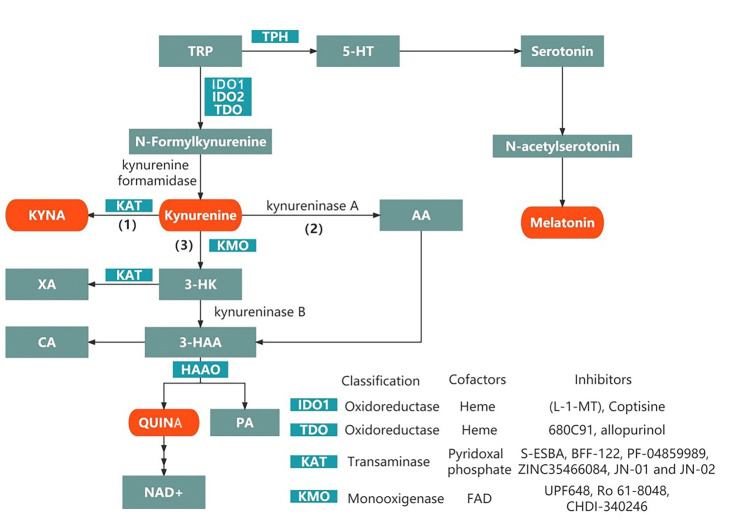
The metabolism of L-tryptophan (TRP) regulates homeostasis, immunity, and neuronal function. Altered TRP metabolism has been implicated in the pathophysiology of various diseases of the central nervous system. TRP is metabolized through two main pathways, the kynurenine pathway and the methoxyindole pathway. First, TRP is metabolized to kynurenine, then kynurenic acid, quinolinic acid, anthranilic acid, 3-hydroxykynurenine, and finally 3-hydroxyanthranilic acid along the kynurenine pathway. Second, TRP is metabolized to serotonin and melatonin along the methoxyindole pathway. In this review, we summarize the biological properties of key metabolites and their pathogenic functions in 12 disorders of the central nervous system: schizophrenia, bipolar disorder, major depressive disorder, spinal cord injury, traumatic brain injury, ischemic stroke, intracerebral hemorrhage, multiple sclerosis, Alzheimer's disease, Parkinson's disease, amyotrophic lateral sclerosis, and Huntington's disease. Furthermore, we summarize preclinical and clinical studies, mainly since 2015, that investigated the metabolic pathway of TRP, focusing on changes in biomarkers of these neurologic disorders, their pathogenic implications, and potential therapeutic strategies targeting this metabolic pathway. This critical, comprehensive, and up-to-date review helps identify promising directions for future preclinical, clinical, and translational research on neuropsychiatric disorders.
Overview
The claims and statistics of this paper haven’t been checked yet.
Run the check — free, no account needed. It reads the open-access text and checks the sources it cites.
Integrity signals
Registry
Cites
Statistics
Figures
Verification
Claims the paper makes
The claims and statistics of this paper haven’t been checked yet.
Run the check — free, no account needed. It reads the open-access text and checks the sources it cites.
Claims other papers make about this one
Each is checked against this paper’s own text: does it say what the citing paper says it does?
The cited source says what the claim attributes to it.
In the citing paper
“Moreover, inflammation induces the activation of indoleamine 2,3-dioxygenase (IDO) and diverts TRP metabolism from serotonin to KYN, reducing the availability of CNS-localized serotonin [23].”
The cited source says what the claim attributes to it.
In the citing paper
“This aligns with the notion that inflammatory conditions, despite their generation, stimulate TRP degradation and are related to increased levels of KP metabolites in the brain [23], including the neuroprotective KYNA and neurotoxic QUIN [44].”
Self-check
Percentages, sums and reported differences re-computed from the paper’s own numbers.
The self-check needs the paper’s full text.
Citations
Cites
Melatonin as an antioxidant: under promises but over delivers
Reiter, R. J., Mayo, J. C., Tan, D. X., Sainz, R. M., Alatorre-Jiménez, M. A., & Qin, L. (2016) · Journal of Pineal Research · doi:10.1111/jpi.12360 · Cited by 1,777 · cited 2×
“In the Fenton/Haber-Weiss reaction, melatonin chelates ferrous iron and copper, reducing toxic hydroxyl radicals and oxidative stress [61].”
BackgroundTryptophan metabolism as a common therapeutic target in cancer, neurodegeneration and beyond
Platten, M., Nollen, E. A. A., Röhrig, U. F., Fallarino, F., & Opitz, C. A. (2019) · Nature Reviews Drug Discovery · doi:10.1038/s41573-019-0016-5 · Cited by 1,586 · cited 7×
“The single nucleotide polymorphism of the KMO gene is related to SCZ, further supporting the notion that the decrease in the 3-HK branch in the KP pathway may cause L-KYN to convert to KYNA, which is one of the causes of SCZ [19].”
BackgroundResultInfluentialKynurenines in the mammalian brain: when physiology meets pathology
Schwarcz, R., Bruno, J. P., Muchowski, P. J., & Wu, H.-Q. (2012) · Nature Reviews Neuroscience · doi:10.1038/nrn3257 · Cited by 1,530 · cited 10×
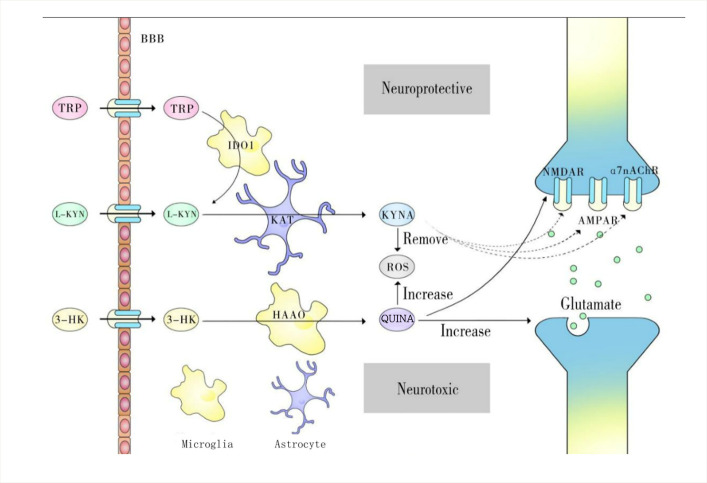
“KYNA inhibits endogenous broad-spectrum glutamate receptors, namely, N-methylD-aspartic acid receptors (NMDAR), kainite receptors, and α-amino-3-hydroxy-5-methyl-4-isoxazole-propionic acid receptors (AMPAR) [30].”
BackgroundInfluentialKynurenines: Tryptophan’s metabolites in exercise, inflammation, and mental health
Cervenka, I., Agudelo, L. Z., & Ruas, J. L. (2017) · Science · doi:10.1126/science.aaf9794 · Cited by 1,382 · cited 4×
“For example, the KYNAGPR35 interaction can reduce the inflammatory response of mononuclear macrophages to lipopolysaccharide [35] and release cytokines from human invariant natural killer cells [36].”
BackgroundInfluentialNAD + in aging, metabolism, and neurodegeneration
Verdin, E. (2015) · Science · doi:10.1126/science.aac4854 · Cited by 1,319
On the free radical scavenging activities of melatonin's metabolites, AFMK and AMK
Galano, A., Tan, D. X., & Reiter, R. J. (2012) · Journal of Pineal Research · doi:10.1111/jpi.12010 · Cited by 829 · cited 1×
“N(1)-acetyl-5-methoxykynuramine, for example, has an efficient antioxidant effect [60].”
BackgroundThe kynurenine pathway: a finger in every pie
Savitz, J. B. (2019) · Molecular Psychiatry · doi:10.1038/s41380-019-0414-4 · Cited by 805 · cited 8×
“As an antagonist of NMDARs, KYNA plays a vital role in this process [38].”
BackgroundInfluentialMaes, M., Leonard, B. E., Myint, A. M., Kubera, M., & Verkerk, R. (2011) · Progress in Neuro-Psychopharmacology and Biological Psychiatry · doi:10.1016/j.pnpbp.2010.12.017 · Cited by 700 · cited 1×
“Depression is related to decreased serotonin levels caused by TRP depletion [141] and sleep disturbances caused by decreased melatonin, both of which are symptoms in patients with ALS.”
BackgroundDiNatale, B. C., Murray, I. A., Schroeder, J. C., Flaveny, C. A., Lahoti, T. S., Laurenzana, E. M., Omiecinski, C. J., & Perdew, G. H. (2010) · Toxicological Sciences · doi:10.1093/toxsci/kfq024 · Cited by 651 · cited 2×
“Immunosuppressive effect by activating AhR [37] 5.”
BackgroundKynurenines in the CNS: recent advances and new questions
Vécsei, L., Szalárdy, L., Fülöp, F., & Toldi, J. (2013) · Nature Reviews Drug Discovery · doi:10.1038/nrd3793 · Cited by 641 · cited 8×
“*KYNA increases during acute relapse and decreases during chronic remission [22].”
BackgroundInfluential
Research works printed but not linked: 4
- Kapczinski F, Frey BN, Zannatto V (2004). [Physiopathology of bipolar disorders: what have changed in the last 10 years?]. Braz J Psychiatry, 26 Suppl 3:17-21. · DOI
- Jacobs KR, Lovejoy DB (2018). Inhibiting the kynurenine pathway in spinal cord injury: Multiple therapeutic potentials? Neural Regen Res, 13:2073-2076. · DOI
- Török N, Tanaka M, Vécsei L (2020). Searching for Peripheral Biomarkers in Neurodegenerative Diseases: The Tryptophan-Kynurenine Metabolic Pathway. Int J Mol Sci, 21: 9338 · DOI
- Oxenkrug G, van der Hart M, Roeser J, Summergrad P (2017). Peripheral Tryptophan - Kynurenine Metabolism Associated with Metabolic Syndrome is Different in Parkinson's and Alzheimer's Diseases. Endocrinol Diabetes Metab J, in press.
Cited by
Sorted by citations
de Paiva, I. H. R., Maciel, L. M., da Silva, R. S., Mendonça, I. P., de Souza, J. R. B., & Peixoto, C. A. (2024) · Food Research International · doi:10.1016/j.foodres.2024.114153 · Cited by 73
Inflammatory Pathogenesis of Post-stroke Depression
Feng, X., Ma, X., Li, J., Zhou, Q., Liu, Y., Song, J., Liu, J., Situ, Q., Wang, L., Zhang, J., et al. (2024) · Aging and Disease · doi:10.14336/ad.2024.0203 · Cited by 63
“Serotonin, a key regulator of mood, sleep and memory, is synthesized from Trp. Pro-inflammatory cytokines can accelerate Trp metabolism through the activation of IDO, reducing 5-HT synthesis and increasing neurotoxic quinolinic acid (QA) production, thus contributing to PSD [120].”
The role of the kynurenine pathway in cardiovascular disease
Yang, Y., Liu, X., Liu, X., Xie, C., & Shi, J. (2024) · Frontiers in Cardiovascular Medicine · doi:10.3389/fcvm.2024.1406856 · Cited by 71
Wang, Y., Zhang, Y., Wang, W., Zhang, Y., Dong, X., & Liu, Y. (2025) · Metabolites · doi:10.3390/metabo15030210 · Cited by 59
“This metabolic characteristic is also observed in patients with depression and bipolar disorder [175].”
Self-citationJia, P., Peng, Q., Fan, X., Zhang, Y., Xu, H., Li, J., Sonita, H., Liu, S., Le, A. C. T., Hu, Q., et al. (2024) · CNS Neuroscience & Therapeutics · doi:10.1111/cns.14853 · Cited by 59
“132 Whether the metabolites of M/M have an impact on the BBB function after ICH is also a new research direction.”
BackgroundSelf-citationTanaka, M., Szabó, Á., & Vécsei, L. (2024) · International Journal of Molecular Sciences · doi:10.3390/ijms252312767 · Cited by 65
“Historical research has uncovered their ability to generate reactive oxygen species (ROS), implicating them in the progression of neurodegenerative diseases through oxidative damage rather than excitotoxicity [80–82] (Table 1).”
InfluentialScuto, M. C., Anfuso, C. D., Lombardo, C., Fatta, E. D., Ferri, R., Musso, N., Zerbo, G., Terrana, M., Majzúnová, M., Lupo, G., et al. (2025) · International Journal of Molecular Sciences · doi:10.3390/ijms26199391 · Cited by 31
“Tryptophan (Trp) is an essential aromatic aminoacidic, which can be converted into functional molecules such as serotonin and kynurenine (KYN), both important in regulating the neuronal activity of the nervous system [140].”
Alfaro-Rodríguez, A., Reyes-Long, S., Roldán-Valadéz, E., González‐Torres, M., Bonilla‐Jaime, H., Bandala, C., Ávila-Luna, A., Bueno-Nava, A., Cabrera-Ruiz, E., Sánchez-Aparicio, P., et al. (2024) · Pharmaceuticals · doi:10.3390/ph17091205 · Cited by 29
“This process subsequently involves several steps leading to the formation of kynurenine, a process pivotal for numerous biological functions, including immune response regulation, neurotransmission, and cellular equilibrium [21].”
BackgroundInfluentialLi, Y., Wu, C., Yang, R., Tang, J., Li, Z.-Q., Yi, X., & Fan, Z.-X. (2024) · International Journal of Molecular Sciences · doi:10.3390/ijms25158539 · Cited by 26
“Meanwhile, L-tryptophan (TRP) plays an important role in the regulation of homeostasis, immunity, and neuronal function [51].”
BackgroundTargeting 5-HT Is a Potential Therapeutic Strategy for Neurodegenerative Diseases
Xing, C., Chen, H., Bi, W., Lei, T., Hang, Z., & Du, H. (2024) · International Journal of Molecular Sciences · doi:10.3390/ijms252413446 · Cited by 21
Hippocampal sclerosis: A review on current research status and its mechanisms
Zhao, T., Cui, X., Zhang, X., Zhao, M., Rastegar‐Kashkooli, Y., Wang, J., Li, Q., Jiang, C. Q., Li, N., Xing, F., et al. (2025) · Ageing Research Reviews · doi:10.1016/j.arr.2025.102716 · Cited by 25
Self-citationTryptophan metabolism and ischemic stroke: An intricate balance
Yao, C., Xie, D., Zhang, Y., Shen, Y., Sun, P., Ma, Z., Li, J., Tao, J., & Fang, M. (2025) · Neural Regeneration Research · doi:10.4103/nrr.nrr-d-24-00777 · Cited by 24
Self-citationLiu, Y., Zhao, P., Cai, Z., He, P., Wang, J., He, H., Zhu, Z., Guo, X., Ma, K., Peng, K., et al. (2024) · Chinese Medicine · doi:10.1186/s13020-024-00991-1 · Cited by 24
“Tryp-tophan metabolism is involved in regulating mood and promoting brain development, which is closely associated with central nervous system disorders [54].”
BackgroundSelf-citationQin, N., Xie, X., Deng, R., Gao, S., & Zhu, T. (2025) · Frontiers in Pharmacology · doi:10.3389/fphar.2025.1578018 · Cited by 22
Rangel, M. V. D. S., Lopes, K. G., Qin, X., & Borges, J. P. (2025) · Frontiers in Sports and Active Living · doi:10.3389/fspor.2025.1535152 · Cited by 24
Zhu, L., Shang, J., Li, Y., Zhang, Z., Fu, P., Zong, Y., Chen, S., Wang, J., Zhang, J., Wang, J., et al. (2024) · Stroke · doi:10.1161/strokeaha.124.046394 · Cited by 21
Self-citationMartos, D., Lőrinczi, B., Szatmári, I., Vécsei, L., & Tanaka, M. (2024) · International Journal of Molecular Sciences · doi:10.3390/ijms25063394 · Cited by 25
Lahariya, R., Anand, G., Kumari, B., & Priyadarshi, K. (2026) · Journal of Neuroimmunology · doi:10.1016/j.jneuroim.2026.578870 · Cited by 20
Xia, H.-H., & Huang, J. (2026) · Frontiers in Cellular and Infection Microbiology · doi:10.3389/fcimb.2025.1707850 · Cited by 18
“…as Faecalibacterium prausnitzii ) and I3A-producing lactobacilli , leads to depletion of protective metabolites, resulting in decreased levels of IPA and I3A, insuf fi cient AHR activation, weakened intestinal barrier function, and exacerbated immune imbalance (Huang et al., 2023; Xu et al., 2024).”
Neuroinflammation in Schizophrenia: An Overview of Evidence and Implications for Pathophysiology
Ermakov, E. A., Mednova, I. A., Boiko, A. S., & Ivanova, S. А. (2025) · Journal of Integrative Neuroscience · doi:10.31083/jin27636 · Cited by 29
“This process gives rise to a multitude of neuroactive compounds that exert various effects on brain function and dysfunction [157].”
Wang, M., Liu, Y., Zhong, L., Wu, F., & Wang, J. (2025) · Frontiers in Immunology · doi:10.3389/fimmu.2025.1533343 · Cited by 17
“…regulate neurotransmitter activity (26); Trp metabolites are involved in mood and cognitive regulation and possess anti-in fl ammatory properties (27); BAs contribute to neurotransmitter regulation, in fl ammation inhibition, and cognitive enhancement (28); TMAO may increase the risk of stroke,…”
Self-citationCentral post-stroke pain: advances in clinical and preclinical research
Yuan, X., Hu, S., Fan, X.-C., Jiang, C., Xu, Y., Hao, R.-C., Xu, Z., Yu, Y., Rastegar-Kashkooli, Y., Huang, L., et al. (2024) · Stroke and vascular neurology · doi:10.1136/svn-2024-003418 · Cited by 16
Self-citationKis-György, R., Körtési, T., Anicka, A., & Nagy-Grócz, G. (2024) · Current Issues in Molecular Biology · doi:10.3390/cimb46110750 · Cited by 17
Wang, R., Gan, C., Mao, R., Chen, Y., Yan, R., Li, G., Xiong, T., & Guo, J. (2025) · Frontiers in Immunology · doi:10.3389/fimmu.2024.1477902 · Cited by 13
The role of metal ions in stroke: Current evidence and future perspectives
Wang, S., Qin, M., Fan, X., Jiang, C. Q., Hou, Q., Ye, Z., Zhang, X., Yang, Y., Xiao, J., Wallace, K. L., et al. (2024) · Ageing Research Reviews · doi:10.1016/j.arr.2024.102498 · Cited by 13
Self-citationTanaka, M., Araujo, A. C., Valenti, V. E., Guiguer, E. L., Catharin, V. C. S., Gualhardi, C. M., de Souza Bastos Mazuqueli Pereira, E., de Alvares Goulart, R., de Argolo Haber, R. S., de Carvalho, A. C. A., et al. (2026) · International Journal of Molecular Sciences · doi:10.3390/ijms27052370 · Cited by 13
Peripheral tryptophan-kynurenine pathway dysfunction in first-episode schizophrenia
Li, M., Wu, Y., Xu, Y., Huang, X., Gao, K., Hu, N., Zhu, S., Wang, C., & Liang, S. (2025) · Scientific Reports · doi:10.1038/s41598-025-86390-4 · Cited by 13
“An elevated QUIN/KYNA ratio suggests a shift towards neurotoxic metabolite production, potentially impairing neuroprotective mechanisms and resulting in increased levels of neurotoxic 3-HK and QUIN, while levels of neuroprotective KYNA and XA are reduced 12,32 .”
Plaatjie, O. N., van Furth, A. M., van der Kuip, M., & Mason, S. (2024) · Frontiers in Neurology · doi:10.3389/fneur.2024.1403312 · Cited by 16
Zhang, J., Zhou, Y., Mei, X., Yan, S., Mao, J. Y., Li, Y., Bian, Z., Li, L., Ji, D., Lu, T., et al. (2026) · Journal of Neuroinflammation · doi:10.1186/s12974-026-03763-w · Cited by 16
“PD patients exhibit reduced KYNA levels in the striatum and CSF, coupled with elevated QA concentrations in the striatum and cortex [238].”
Exercise-driven changes in tryptophan metabolism leading to healthy aging
Asante, D. M., Vyavahare, S. S., Shukla, M., McGee‐Lawrence, M. E., Isales, C. M., & Fulzele, S. (2025) · Biochimie · doi:10.1016/j.biochi.2025.11.004 · Cited by 11
Smadja, D., & Abreu, M. (2025) · Frontiers in Neuroscience · doi:10.3389/fnins.2025.1475376 · Cited by 12
Galantamine-Memantine Combination in the Treatment of Parkinson’s Disease Dementia
Frost, E. D., Shi, S. X., Byroju, V. V., Rissardo, J. P., Donlon, J., Vigilante, N. F., Murray, B. P., Walker, I. M., McGarry, A. J., Ferraro, T. N., et al. (2024) · Brain Sciences · doi:10.3390/brainsci14121163 · Cited by 17
Duan, A., Qiu, Y., Song, B., Tao, Y., Wang, M., Yin, Z., Xie, M., Chen, Z., Wang, Z., & Sun, X. (2024) · Biomedicines · doi:10.3390/biomedicines12061178 · Cited by 10
“Kynurenate levels, also known as kynurenic acids (KYNAs) [19], are a downstream product of kynure-nine created through a kynurenic pathway that exhibits a neuroprotective effect in TBI [43].”
BackgroundInvolvement of the tryptophan-kynurenine pathway in the pathogenesis of autoimmune diseases
Chen, A.-Y., Zhao, Y., Wang, Y., Wei, W., Hu, W. M., & Chang, Y. (2025) · Experimental Gerontology · doi:10.1016/j.exger.2025.112837 · Cited by 13
“…by pro-inflammatory factors IFN-γ , it was hypothesized that MS patients would exhibit central nervous system (CNS) inflammation primarily during the acute phase rather than the chronic neurodegenerative phase, with increasing involvement of KP metabolism in MS progression (Huang et al., 2023).”
Liu, H.-X., Yang, M.-K., Li, Y.-C., Liu, C.-X., Li, G.-P., Meng, X.-L., Pei, K., & Wen, S.-Y. (2025) · Phytomedicine · doi:10.1016/j.phymed.2025.156623 · Cited by 11
Fu, P., Zong, Y., Dai, Y., Zhu, L., Chen, S., Rastegar-Kashkooli, Y., Wang, J.-M., Zhang, J.-W., Wang, J., & Jiang, C. (2024) · Theranostics · doi:10.7150/thno.101680 · Cited by 11
“Therefore, preventing toxic lymphocyte migration from the bloodstream or other immune organs to the brain is a promising way of treating ICH [10, 11].”
BackgroundSelf-citationThe neuroimmune mechanism of pain induced depression in psoriatic arthritis and future directions
Wang, X., Wu, L., Liu, J., Ma, C., Liu, J., & Zhang, Q. (2024) · Biomedicine & Pharmacotherapy · doi:10.1016/j.biopha.2024.117802 · Cited by 12
Eggertsen, P. P., Palmfeldt, J., Pedersen, A. R., Frederiksen, O.-V., Olsen, R. K. J., & Nielsen, J. F. (2024) · Journal of the Neurological Sciences · doi:10.1016/j.jns.2024.123016 · Cited by 9
“In a sensitivity analysis, participants with a history of previous psychological and/or psychiatric treatment ( n = 37) were excluded because kynurenine metabolites are known to be associated with psychiatric disorders [16].”
BackgroundInfluentialDong, J., Xie, T., Shi, C., Feng, G., Zhang, H., Xu, Z., & Dong, L. (2025) · Journal of Inflammation Research · doi:10.2147/jir.s543912 · Cited by 12
“135 TRP is primarily catabolized through the kynurenine pathway (KP), serotonin pathway, and indole pathway, yielding bioactive compounds such as kynurenine (KYN), 5-hydroxytryptamine (5-HT), and various indole derivatives.”
Association between small intestine bacterial overgrowth and psychiatric disorders
Bogielski, B., Michalczyk, K., Głodek, P., Tempka, B., Gębski, W., & Stygar, D. M. (2024) · Frontiers in Endocrinology · doi:10.3389/fendo.2024.1438066 · Cited by 14
“Moreover, in the striatum of patients with PD, decreased kynurenic acid levels are accompanied by an increase in neurotoxic quinolinic acid (64).”
BackgroundChehadi, A. C., Pereira de Lima, E., Detregiachi, C. R. P., Santos de Argollo Haber, R., Catharin, V. M. C. S., Fornari Laurindo, L., Engracia Valenti, V., Machado Galhardi, C., Tanaka, M., & Maria Barbalho, S. (2026) · International Journal of Molecular Sciences · doi:10.3390/ijms27010465 · Cited by 8
“The problem deepens when pro-inflammatory cytokines activate indoleamine 2,3-dioxygenases (IDOs), shunting Trp down the KYN track, exhausting 5-HT, and generating neurotoxic QA [10,13].”
InfluentialGu, Y., Wang, M., & Mao, Y. (2026) · Frontiers in Neuroendocrinology · doi:10.1016/j.yfrne.2026.101247 · Cited by 9
Oso, T. A., Ahmed, M. M., Okesanya, O. J., Adebayo, U. O., Obadeyi, K. B., Othman, Z. K., & Lucero‐Prisno, D. E. (2025) · Journal of Alzheimer s Disease · doi:10.1177/13872877251407700 · Cited by 9
“74 Notably, indole metabolites, such as 3-indolepropionic acid, are neuroprotective, and their reduction after brain injury is closely linked to extreme neurological results, often in a sex-speci fi c manner.”
Chen, X., Zhu, M., Shi, Q., Huang, Z., Zhu, J., Sun, P., Zhang, H., Yang, L., Chen, X., Zhang, Y., et al. (2025) · European Journal of Medicinal Chemistry · doi:10.1016/j.ejmech.2025.117597 · Cited by 8
Self-citationExploring the role of ubiquitination modifications in migraine headaches
Zhu, Q., Yang, J., Shi, L., Zhang, J., Zhang, P., Li, J., & Song, X. (2025) · Frontiers in Immunology · doi:10.3389/fimmu.2025.1534389 · Cited by 5
Gonçalves, M., Rodrigues‐Santos, P., Januário, C., Cosentino, M., & Pereira, F. C. (2024) · International Immunopharmacology · doi:10.1016/j.intimp.2024.112062 · Cited by 9
Pinheiro, F. I., Araújo-Filho, I., Rêgo, A. C. M., de Azevedo, E. P., Cobucci, R. N., & Gúzen, F. P. (2024) · Ageing Research Reviews · doi:10.1016/j.arr.2024.102250 · Cited by 10
O’Regan, G., Plummer, Z., Christie, B. R., Shultz, S. R., & Allen, J. (2026) · Journal of Neuroinflammation · doi:10.1186/s12974-026-03717-2 · Cited by 11
“Both 3-HK and QA promote the production of reactive oxygen species (ROS), increasing oxidative stress, cellular damage, and apoptosis [31–33].”
Liu, T., Ma, Y., Zhang, M., & Wei, J. (2025) · Research · doi:10.34133/research.1084 · Cited by 4
“In PD, Lewy body deposition in the raphe nucleus causes degeneration of serotonergic neurons, reducing Trp uptake and TPH2 expression to disrupt the same pathway [ 168 ].”
Nutritional effects on mucosal integrity and immune function
Cundra, L. B., Vallabhaneni, M., Houston, K., Saadeh, M., Vargas, A., D’Souza, S. M., & Johnson, D. A. (2024) · Exploration of Immunology · doi:10.37349/ei.2024.00130 · Cited by 10
Nie, L., He, J., Wang, J., Wang, R., Huang, L., Jia, L., Kim, Y. T., BHAWAL, U. K., Fan, X., Zille, M., et al. (2023) · Comprehensive physiology · doi:10.1002/cphy.c230007 · Cited by 17
Self-citationHumanized rodent models of neurodegenerative diseases and other brain disorders
Zhang, X., Wang, J., Zhang, J., Jiang, C., Liu, X., Wang, S., Zhang, Z., Rastegar‐Kashkooli, Y., Dialameh, F., Peng, Q., et al. (2025) · Neuroscience & Biobehavioral Reviews · doi:10.1016/j.neubiorev.2025.106112 · Cited by 7
Self-citationZhang, Y., Chen, F., Yu, M., Li, Y., Chen, S., Choudhary, M. I., Liu, X., & Jiang, N. (2025) · Behavioral and Brain Functions · doi:10.1186/s12993-025-00268-z · Cited by 5
“These findings are consistent with prior research suggesting that abnormal activation of the TRP-KYN pathway and increased 3-HK levels may contribute to hippocampal dysfunction [28].”
Self-citationChen, M., Zhang, J.-H., Yang, H., Lei, L., Yang, L.-J., Wang, S.-X., & Yu, H.-Q. (2026) · Frontiers in Immunology · doi:10.3389/fimmu.2026.1764491 · Cited by 5
“This approach advances our understanding of how speci fi c microbial metabolites, including kynurenic acid, may contribute to developing more effective pain management strategies (36, 37).”
Szabó, Á., Galla, Z., Spekker, E., Martos, D., Szűcs, M., Fejes-Szabó, A., Fehér, Á., Takeda, K., Ozaki, K., Inoue, H., et al. (2025) · Cells · doi:10.3390/cells14211711 · Cited by 11
Li, X.-Y., Yu, W.-K., Wu, J.-H., He, W.-J., Cheng, Y.-N., Gao, K., Wei, Y.-H., & Li, Y.-S. (2025) · Scientific Reports · doi:10.1038/s41598-024-84362-8 · Cited by 5
Decreased hippocampal neurogenesis and post-stroke depression
Tang, X., Ran, L., & Li, W. (2026) · Frontiers in Psychiatry · doi:10.3389/fpsyt.2026.1761408 · Cited by 5
“This directly leads to reduced central 5-HT availability and the production of potentially neurotoxic catabolites (115 – 117).”
Al-Matarneh, T. M., El-Said, Y. A. M., Ibrahim, W. W., & El-Tanbouly, D. M. (2025) · European Journal of Pharmacology · doi:10.1016/j.ejphar.2025.178408 · Cited by 6
Wu, S.-N., Wang, Y.-J., Gao, Z.-H., Liutkevičienė, R., & Rovite, V. (2025) · Journal of Clinical Medicine · doi:10.3390/jcm14093117 · Cited by 4
“Previous studies have shown that the reduction in the astrocytic formation of KYNA could enhance glutamatergic tone in the hippocampus as well as cognitive abilities and synaptic plasticity [94,98–100].”
Li, S., Zhou, L., Ren, J., Zhang, Q., & Xiao, X. (2024) · The Journal of Nutritional Biochemistry · doi:10.1016/j.jnutbio.2024.109830 · Cited by 3
Shen, H., Zhang, Y., Shao, Y., Chen, S., Yin, P., Liu, X., Wang, L., Zhang, L., Jin, Y., Wang, Y., et al. (2024) · Neuroreport · doi:10.1097/wnr.0000000000002099 · Cited by 5
“Tryptophan is metabolized through two main pathways, the kynure-nine pathway and the methoxyindole pathway, both of which are involved in the biosynthesis of proteins that are essential for neuronal construction and maintenance [24,25].”
Self-citationSamriti, Kaur, A., Kaur, A., & Goel, R. (2024) · Brain Research · doi:10.1016/j.brainres.2024.149246 · Cited by 4
Christensen, J., Vlassopoulos, E., Barlow, C. K., Schittenhelm, R. B., Li, C. N., Sgro, M., Warren, S., Semple, B. D., Yamakawa, G. R., Shultz, S. R., et al. (2024) · Experimental Neurology · doi:10.1016/j.expneurol.2024.114969 · Cited by 4
Fongsaran, C., Dineley, K. T., Paessler, S., & Cisneros, I. E. (2024) · Pathogens · doi:10.3390/pathogens13050397 · Cited by 3
“Moreover, inflammation induces the activation of indoleamine 2,3-dioxygenase (IDO) and diverts TRP metabolism from serotonin to KYN, reducing the availability of CNS-localized serotonin [23].”
BackgroundZhao, Z., Dong, M., Mu, Z., ZHENG, Z., & ZHANG, Z. (2025) · Journal of Pharmaceutical Analysis · doi:10.1016/j.jpha.2025.101521 · Cited by 4
“These include indole, kynurenine, and indole-3-acetic acid (IAA) [16,118].”
Zhang, H.-Y., Zhong, Y., Shao, J.-L., Sun, K., Zhang, L., Zhang, Y., Xiao, Y., Zuo, X.-Y., Li, Z.-X., Zeng, T., et al. (2025) · Translational Stroke Research · doi:10.1007/s12975-025-01342-4 · Cited by 3
“The metabolism of L-tryptophan is intricately linked not only to gut microbiota but also to the regulation of homeostasis, immune response, and neuronal function [27, 28].”
Self-citationMetabolic dysfunction contributes to mood disorders after traumatic brain injury
Liu, L., Jia, P., Liu, T., Liang, J., Dang, Y., Rastegar‐Kashkooli, Y., Li, Q., Liu, J., Man, J., Zhao, T., et al. (2024) · Ageing Research Reviews · doi:10.1016/j.arr.2024.102652 · Cited by 3
Self-citationZhai, Z., Guo, C., Liang, L., Du, S.-J., & Du, Y. (2026) · Talanta: The International Journal of Pure and Applied Analytical Chemistry · doi:10.1016/j.talanta.2026.129686 · Cited by 2
Wang, X.-Q., Wang, Y., Ye, Z.-H., Zhang, Z., & Cen, S.-F. (2026) · Frontiers in Microbiology · doi:10.3389/fmicb.2026.1868164 · Cited by 2
Moradi, A., Ebrahimian, A., Talebi, M., & Naseri, A. (2026) · BMC Neurology · doi:10.1186/s12883-026-05075-1 · Cited by 2
“Kynurenine and quinolinic acid are metabolites of this pathway which have immunomodulatory and neurotoxic effects leading to worsening of mood and sleep [97, 98].”
Yan, J., Zhao, Z., Li, J.-H., Zhou, X., Fang, L., Ni, A.-Y., Li, J.-Y., Qian, Q.-H., Wang, Z.-J., Wang, H.-L., et al. (2025) · Journal of Environmental Science · doi:10.1016/j.jes.2025.10.031 · Cited by 2
Yang, L., Chen, H., Zeng, M., Lu, Y., Chen, X., Cao, Z., Zhong, F., Yang, X., Shen, A., Su, Y., et al. (2025) · Frontiers in Immunology · doi:10.3389/fimmu.2025.1669845 · Cited by 2
Wang, Y., Shi, Q., Gan, W., Xu, F., Liu, H., Zhang, L.-Q., Zhang, R.-R., Chen, J., Zhang, Z., & Shi, X.-Z. (2026) · Journal of Hazardous Materials · doi:10.1016/j.jhazmat.2026.142156 · Cited by 1
Self-citationTan, Y., Peng, G., Abudouwanli, A., Zhao, W., Sun, Q., Yang, M., Ogawa, H., Okumura, K., & Niyonsaba, F. (2026) · Clinical Reviews in Allergy & Immunology · doi:10.1007/s12016-026-09172-4 · Cited by 1
Dong, J., Cao, Y., Chen, X., Xie, T., Zhang, X., Zhao, Q., Shi, C., Miao, Q., Xu, Z., Yan, L., et al. (2026) · Chinese Medicine · doi:10.1186/s13020-026-01408-x · Cited by 1
“The gut microbiota can produce metabolites beneficial for SCI repair, among which the tryptophan metabolic pathway is of particular importance [26, 27].”
Self-citationThe Hidden Metabolic Roots of Epilepsy
Rubio, C., Carpinteyro, S., Serrano‐García, N., Parra, H. R., Pérez-Villavicencio, J., Lee, Á., Mercado-Pimentel, R., & Rubio‐Osornio, M. (2026) · Biomedicines · doi:10.3390/biomedicines14040764 · Cited by 2
“Neuroactive metabolites, including quinolinic acid and kynurenic acid, traverse the BBB and influence glutamatergic transmission [129].”
Altered Cerebrospinal Fluid Tryptophan-Kynurenine Pathway Metabolism in Multiple System Atrophy.
Nagao, R., Kawabata, K., Mizutani, Y., Shima, S., Ueda, A., Ito, M., Maeda, Y., Mouri, A., & Watanabe, H. (2026) · Movement Disorders · doi:10.1002/mds.70210 · Cited by 1
Nguyen, H. L., Le, L. T., Nguyen, T. G., Nguyen, Q. T., van Nguyen, H., & Le, N. T. (2025) · NMCD. Nutrition Metabolism and Cardiovascular Diseases · doi:10.1016/j.numecd.2025.104468 · Cited by 1
Ido1 or Ido2 deficiency in myeloid-derived cells attenuates TMEV-induced ictogenesis
Kaswan, Z. A. M., Brooks, A. K., Hurtado, M., Chen, E. Y., Steelman, A. J., & McCusker, R. H. (2025) · Journal of Neuroimmunology · doi:10.1016/j.bbi.2025.07.017 · Cited by 7
“These data clearly indicate that deletion of Ido1 or Ido2 in neurons or astrocytes, which have been shown to produce Kyn and then the downstream neuroprotective/anti-ictogenic metabolite kynurenic acid (KynA) [70, 71] , does not exacerbate seizure incidence.”
Myasthenia Gravis and Depression: A Multifaceted Exploration through Omics and Beyond
Guo, Z., Zheng, Y., & Balmer, L. A. (2025) · ALPHA PSYCHIATRY · doi:10.31083/ap38754 · Cited by 2
“For instance, alterations in tryptophan metabolism, leading to decreased serotonin synthesis, have been observed in both MG and depression [9,10].”
PET Imaging of Neurofibromatosis Type 1 with a Fluorine-18 Labeled Tryptophan Radiotracer
Yue, X.-Y., Stauff, E., Boyapati, S., Langhans, S. A., Xu, W., Makrogiannis, S., Okorie, U., Okorie, A. M., Kandula, V., Kecskemethy, H., et al. (2024) · Pharmaceuticals · doi:10.3390/ph17060685 · Cited by 1
Rangel, M. V. D. S., Paz, G. A., de Souza, M. D. G. C., Kupjetz, M., Chirino, T. Y. W., Zimmer, P., Farinatti, P., & Borges, J. P. (2026) · The FASEB Journal · doi:10.1096/fj.202603422r
“The balance between these branches is critical for maintaining immune and neuronal homeostasis, positioning the KYN pathway as a promising therapeutic target [12–14].”
Pingge, H. E., Chang, H., Wu, H., Kang, Q., Shaoang, W. A. N. G., Xu, L., & Wang, Z. (2026) · European Journal of Pharmacology · doi:10.1016/j.ejphar.2026.179440
Li, L.-Y., Zhang, Y.-H., Wang, Z.-S., Li, J.-H., Han, H., Zhang, J.-M., Liu, C., Shang, C.-F., Shang, G.-W., Ji, Y.-H., et al. (2026) · Materials Today Bio · doi:10.1016/j.mtbio.2026.103661
“As one of the three major metabolites of intestinal microorganisms, Tryptophan exhibits significant biological effects in neurological diseases [33].”
Self-citationVirobiome-mediated regulation of microbiota–gut–brain axis signaling and neuroimmune homeostasis
Afkhamian, A., Natanzi, A. S., Jafaridarabjerdi, M., Aghaei, S., Haghjou, A., Shafiei, M., Bashkandi, A. H., Shahraki, S., Reiter, R. J., Kashani, H. H., et al. (2026) · Cell Communication and Signaling · doi:10.1186/s12964-026-03067-9
“Together, KYNA and QUIN help regulate glutamate homeostasis, neurotransmitter balance, and microglial reactivity, making their modulation by the gut microbiome a promising target for managing neuroinflammatory disorders [219].”
Wang, Z.-X., Hu, Y., Li, J.-M., Wang, X.-Y., Yuan, B.-Y., Li, J.-M., Luo, Y.-M., & Ma, Q.-F. (2026) · Brain Circulation · doi:10.4103/bc.bc_194_25
Dietary Tryptophan Requirements in Adults Aged >60 Years Is Not Affected by Sex or Decades of Age
Wang, Z., Tomlinson, C., Pencharz, P. B., Li, B., Kong, D., Elango, R., & Courtney‐Martin, G. (2026) · Journal of Nutrition · doi:10.1016/j.tjnut.2026.101827
Guo, M., Zhang, Z.-H., Cao, L.-P., Wang, S.-H., Xiao, Y., Wang, L.-L., & Zhao, J.-X. (2026) · Journal of Pharmaceutical and Biomedical Analysis · doi:10.1016/j.jpba.2026.117729
Arıcı, Ö. Ö., Najri, B. A., Kavak, E., Çağlar, A., Kıvrak, A., & Kıvrak, H. (2026) · ACS Omega · doi:10.1021/acsomega.6c02081
Weng, R., Dong, G., Tang, J., & Zhao, Y. (2026) · Brain and Behavior · doi:10.1002/brb3.71547
Thirumalai, J., Mohammed, A. A. F., & Jeslin, G. N. (2026) · SN Comprehensive Clinical Medicine · doi:10.1007/s42399-026-02557-8
Indole-Derived Compounds as Redox-Modulators: Antioxidant Mechanisms in Neuronal Protection
Singh, A. A., Arukha, A. P., & Song, M. (2026) · Molecules · doi:10.3390/molecules31132323
“…kynuramine metabolites, trace quantities of tryptamine, aminergic neurotransmitter serotonin (5-hydroxytryptamine, 5-HT), and products of the kynurenine pathway of tryptophan metabolism, such as 3-hydroxykynurenine, 3-hydroxyanthranilic acid, quinolinic acid, and kynurenic acid [25].”
Liu, Q.-L., Wu, D.-H., Teng, L.-H., Lin, G., Hua, H., & Liang, Z.-H. (2026) · Toxicology in Vitro · doi:10.1016/j.tiv.2026.106279
Hu, F., Pan, Y., Lu, N., He, J., Zhang, R., Wu, X., Zhang, T., Zhou, H., & Shi, H. (2026) · PeerJ · doi:10.7717/peerj.21385
Self-citationInsights from LC-MS-based cerebrospinal fluid metabolomics in tuberculous meningitis
Plaatjie, O. N., van Furth, A. M., van der Kuip, M., & Mason, S. (2026) · Frontiers in Molecular Biosciences · doi:10.3389/fmolb.2026.1861630
Qiu, S.-Y., Cai, S., Xie, R., Liu, C., & He, Y.-Z. (2026) · Journal of Pineal Research · doi:10.1111/jpi.70154
Tong, X., Zhan, X., & Zhu, X. (2026) · Progress in Neuro-Psychopharmacology and Biological Psychiatry · doi:10.1016/j.pnpbp.2026.111796
Jiang, M.-C., Wang, J., Zhang, J., Zhang, Y., & Li, J. (2026) · European Journal of Integrative Medicine · doi:10.1016/j.eujim.2026.102703
Self-citationMikawa, S., Ishimaru, Y., & Okamura, Y. (2026) · Veterinary Sciences · doi:10.3390/vetsci13040308
“Tryptophan, an essential amino acid, produces various metabolites with important physiological activities and has been associated with neurological and liver diseases [7,8].”
Wang, L., Shen, T., Huang, S., Wang, R., Hu, Y., Zhong, L., Xie, Z., Luo, Y., & Li, S. (2026) · Brain Circulation · doi:10.4103/bc.bc_78_25
Metadata
- Authors
- Huang, Y., Zhao, M., Chen, X., Zhang, R., Le, A., Hong, M., Zhang, Y., Jia, L., Zang, W., Jiang, C., Wang, J., Fan, X., & Wang, J.
- Affiliations
- First Affiliated Hospital of Zhengzhou University (CN)
- Zhengzhou University (CN)
- Washington University in St. Louis (US)
- Sinai Hospital (US)
- University of Washington (US)
- Fifth Affiliated Hospital of Zhengzhou University (CN)
- Corresponding author
- Wang, Junmin
- Fan, Xiaochong
- Wang, Jian
- ORCID
- Venue
- Aging and disease
- Publisher
- Aging and Disease
- Published
- 2023
- Volume
- 14
- Issue
- 3
- Pages
- 858
- ISSN
- 2152-5250 (ISSN-L)
- PMC
- PMC10187711
- OpenAlex
- W4312580438
- Cited by
- 138
- References
- 198
- Citations by year
- 2026: 45 · 2025: 55 · 2024: 36 · 2023: 2
- FWCI
- 1.76
- Type
- journal article
- Language
- en
- Open access
- gold
- doi.org
- Licence
- cc-by
- Locations
- Aging and Disease (publishedVersion, cc-by)
- PubMed Central (publishedVersion, cc-by)
- PubMed (publishedVersion)
- Funders
- Zhengzhou University
- Topics
- Life Sciences › Neuroscience › Biological Psychiatry › Tryptophan and brain disorders
- Life Sciences › Biochemistry, Genetics and Molecular Biology › Biochemistry › Amino Acid Enzymes and Metabolism
- Health Sciences › Medicine › Pharmacology (medical) › Treatment of Major Depression
- Keywords
- tryptophan metabolism, kynurenine pathway, central nervous system disorders, schizophrenia, bipolar disorder, major depressive disorder, spinal cord injury, traumatic brain injury, ischemic stroke, intracerebral hemorrhage, multiple sclerosis, Alzheimer's disease, Parkinson's disease, amyotrophic lateral sclerosis, Huntington's disease, kynurenic acid, quinolinic acid, serotonin, melatonin, biomarkers, treatment options
About these checks
Registry, retraction, Cites and statistics results are computed, not judged, with one exception: a printed reference that no index lists is read once by a model before it counts as a citation error. Claims are extracted by a model and kept only when their quote appears verbatim in the text; each cited source is then checked, with a model’s help, for whether it says what the claim relies on. Those verdicts can be wrong — read the claim’s quote and the cited source before relying on one.
Statistics and arithmetic are recomputed, not judged.
Confidence bands are shown only for fields calibrated on our annotated test set. None is calibrated yet, so no band is shown.
What counts as a claim ›How we measure confidence ›How we check this ›
Are you an author, or do you see a problem with this page? Request a review
